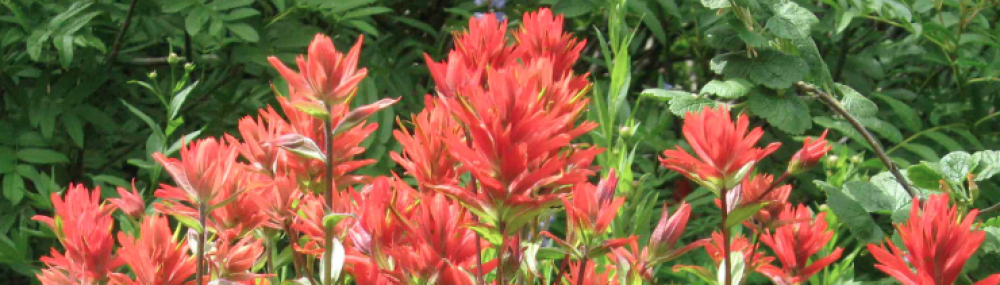
We have enjoyed a fabulous season of flowers, thanks to extra moisture from late snow-melt then rains into August.
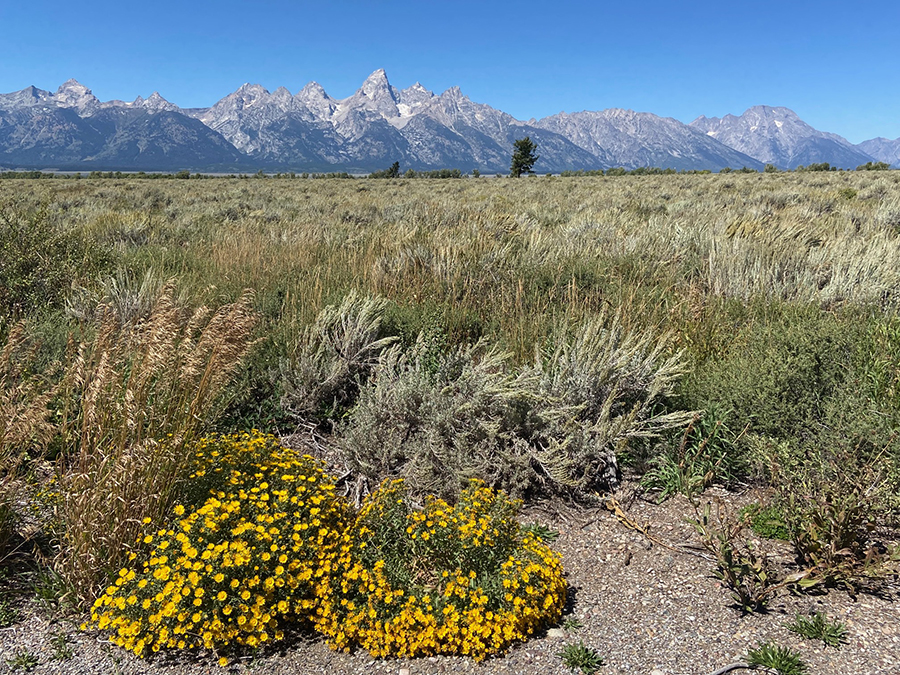
The valley has a few die-hard yellow composites and some tough blue asters along roadways. Higher up, remnant mid-summer flowers persist—such as Yarrow, Giant Red Paintbrushes, and Scarlet Gilia—but most late season bloomers are aster look-alikes. As always, the Composite Family (formally Asteraceae) steals the show for color be it yellows or blues, and some whites. Indeed, this highly successful family is deemed to be the most advanced plant family and is found around the world.

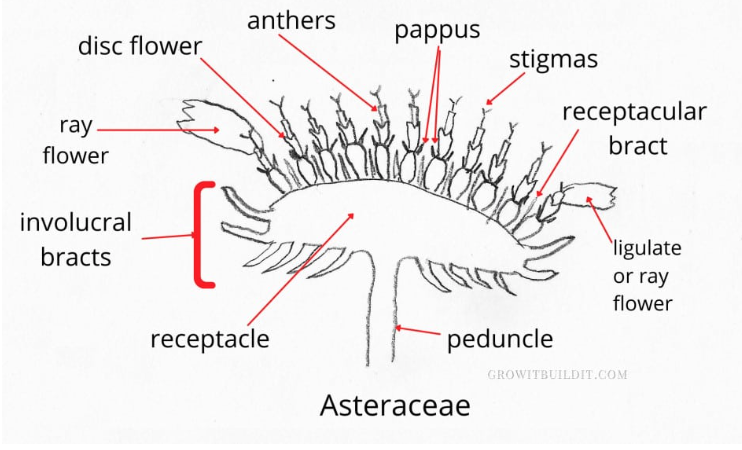
As so many of the species below are composites, here is a simple diagram of the basic flower plan for reference. Many flowers – disc and/or ray flowers – sit upon a platform or “receptacle” and are surrounded by protective bracts. Bracts are particularly helpful in ID:
Flowers along Grand Teton National Park roads and drier slopes:
Yellows:

Showy Golden-eye – Vigueria/Heliomeris multiflora – has been flowering all August and continues as into September. Averaging about 2 ½’ tall, the leaves are oblong and opposite up the thin stems. Flowers hang out singly on the branching stems. Note the yellow ray flowers fade in color: they are slightly lighter at the tips and slightly darker toward the center.

This subtlety is likely a significant contrast to an insect’s vision—a bull’s-eye to draw them in.
Gumweed – Grindelia squarrosa – is indeed gummy. Bright-yellow flowers line park roads.

Notice the cup of bracts that surrounds the many yellow flowers—both ray and disc.
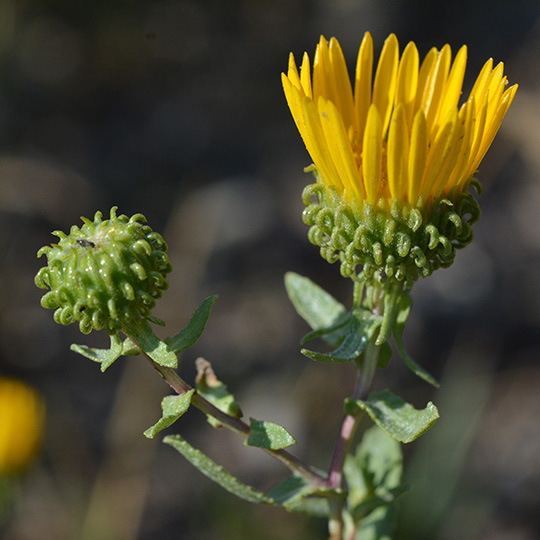
The bracts curve downward into points. The leaves are more-or-less blunt ovals about ½-1” long with slight teeth. While definitely native to elsewhere in Wyoming, this “weedy” species appears to be a fairly recent newcomer to Teton County.
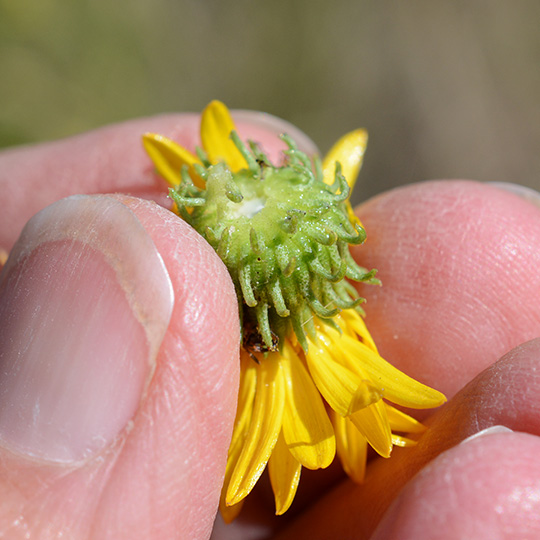
Most parts of the 1’ plants ooze a clear pitch-like sap if torn. The fresh sap from a flower head has been shown to reduce inflammation from “acid venoms” injected by bites of snakes or spiders, including recluse brown spiders. Depending on where it is growing, plants absorb and concentrate selenium from the soil. And different parts have been used carefully as various medicinal treatments. (reference: John Mionczynski)
Another late August bloomer is 6-12”-tall and wide-spreading Golden Aster – Heterotheca depressa. The pale-yellow flowers are now mostly going to seeds which are readily dispersed by wind.
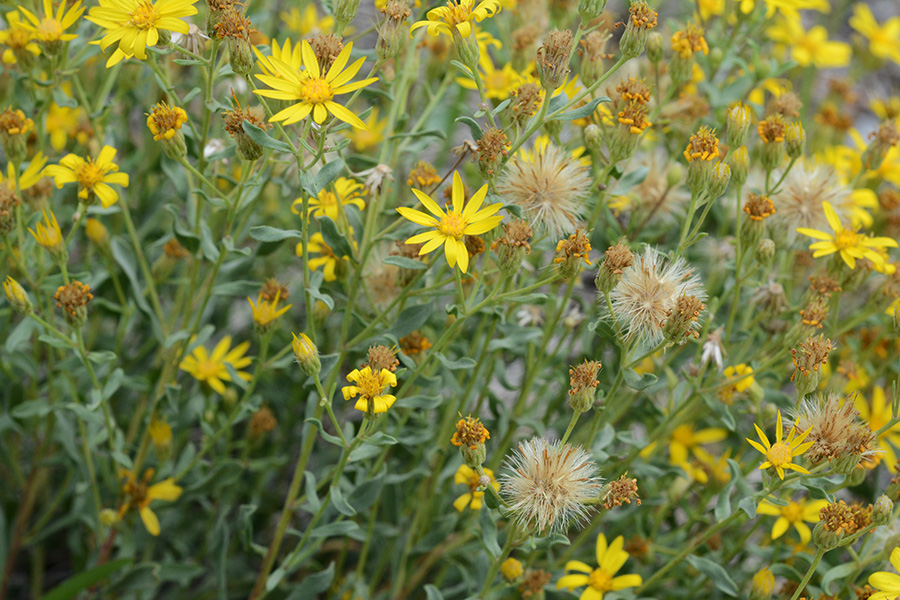
Look for the 1/2″ -1”-long, oblong leaves with fine hairs that add a grayish tinge to the plants. It is most frequent around Moose and north along the park road.
All of a sudden do you smell something like freshly oiled macadam roads while hiking? Look under foot; you will likely find the aptly named Tarweed – Madia glomerata.
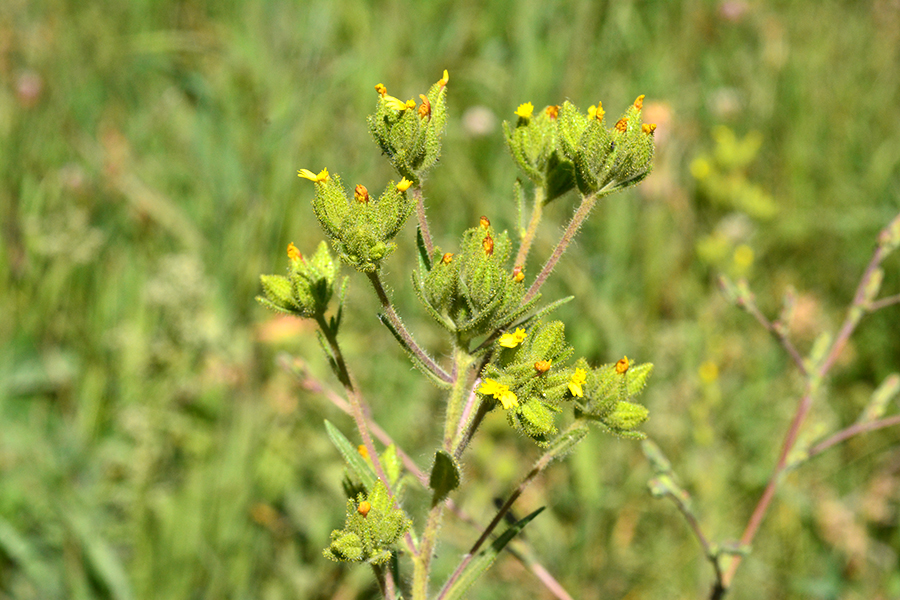
This 6”-1’ plant has glandular hairs which contain a pungent resin. Only 1-3 yellow ray flowers and a very few disc flowers are found in each ¼” head. Despite the tiny flowers, native bees are attracted to the nectar, and the seeds are favored by birds and small mammals. These annuals are used in restoration projects in disturbed soils to prevent erosion and start the healing process as other plants move in.
Of particular appeal to pollinators of all sorts—bees, butterflies, flies – are shrubby rabbitbrushes. Pollinators are clutching to any nectar source they can find at this late season. The two obvious species blooming now in the valley floor are in two different genera.

The tallest and showiest species is Rubber Rabbitbrush – Ericameria nauseosa var. nauseosa. Flower heads are bright yellow on this 3-4’+ shrub; the straight stems have alternating very narrow green leaves 2” long.
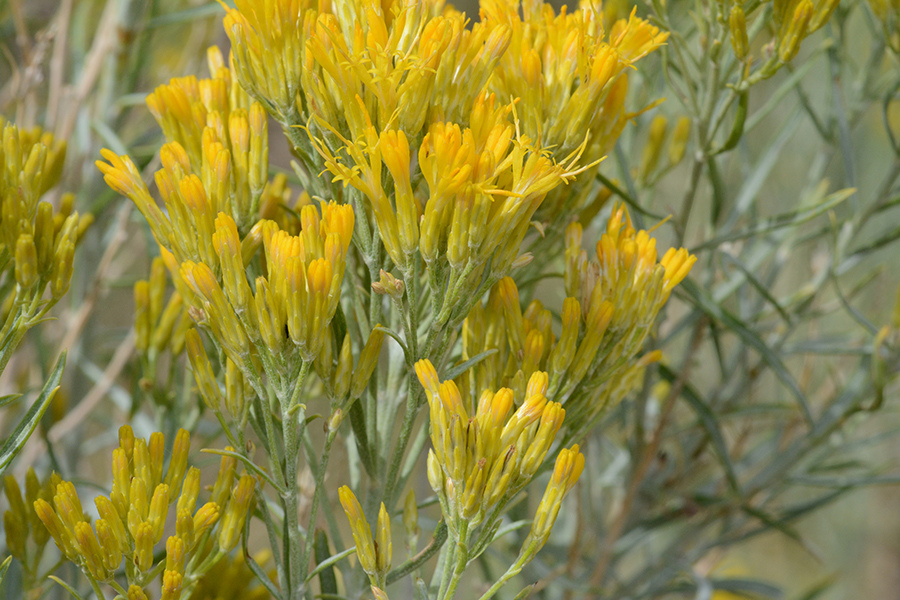
The grayish stems are “tomentose”: covered tightly with many fine gray hairs.

The common name alludes to the fact that the plants exude a white sticky sap which was considered a source of rubber back in 1904. It is currently being studied as an allergy-free form of latex.
The other species in bloom often called Green Rabbitbrush – Chrysothamnus viscidifolius – has slightly twisted sticky (viscid) leaves. Plants are usually only a foot or two high and also thrive in dry soils.
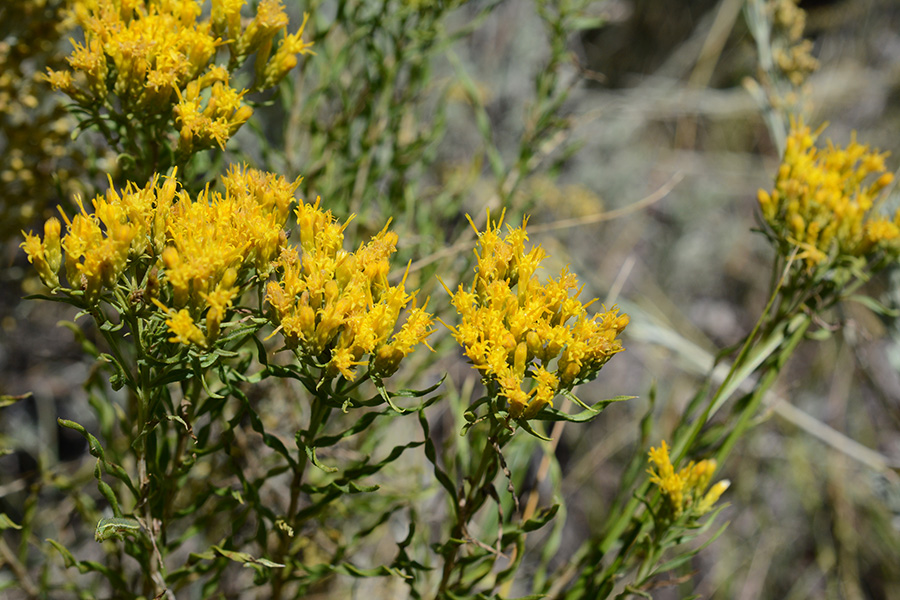
It has slightly twisted sticky (viscid) leaves more or less hairy.
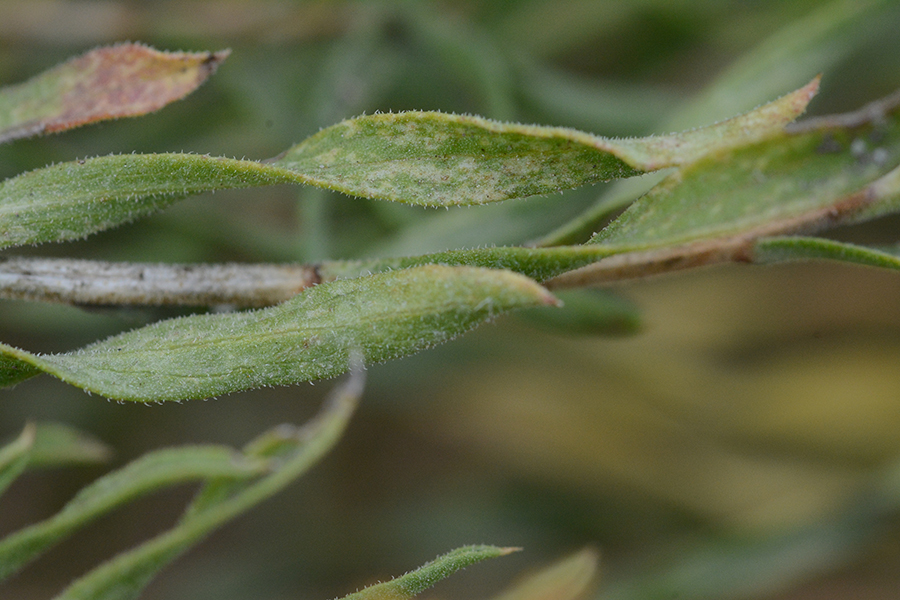
Both these species have several varieties in Teton County, so be aware of variations in appearance.
Some late blue “asters” from valley roads and higher elevations
Below are several different kinds of “asters”. Taxonomists keep shifting the names around.in part because they are now using DNA as a definitive way to tell how closely plants are related. Thus many of the following species that were in the genus “Aster” are now in genera such as Symphyotrichum, Euephalus, Eurybia…not easy to pronounce or to tell apart. Lay people still call those in this look-alike group Asters. The visible differences (vs, microscopic DNA) are often most obvious in the bracts that surround the head of these composites. Identification provides botanical puzzles that are more rewarding than solving crossword puzzles or Sudoku, at least in this author’s thinking. Each plant has its own association with its setting.
Pacific Aster – Symphyotrichum ascendens – has been blooming since early August, often alongside Showy Golden-eye. The genus SySymphyotrichum is a large group of American Asters which have bracts of varied lengths overlapping like untidy shingles.

In this species the flowers are blue,
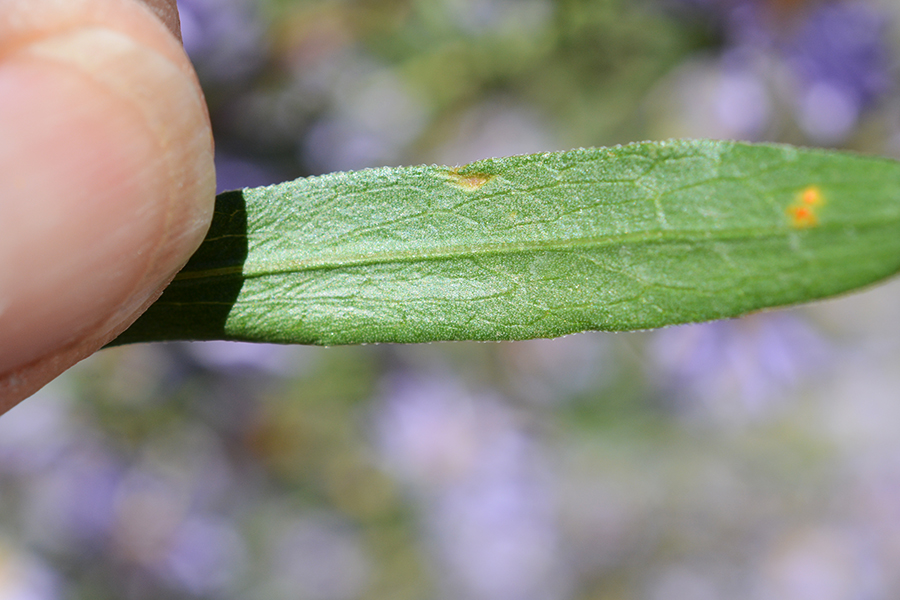
and the leaves are linear with veins that form elongate patterns.
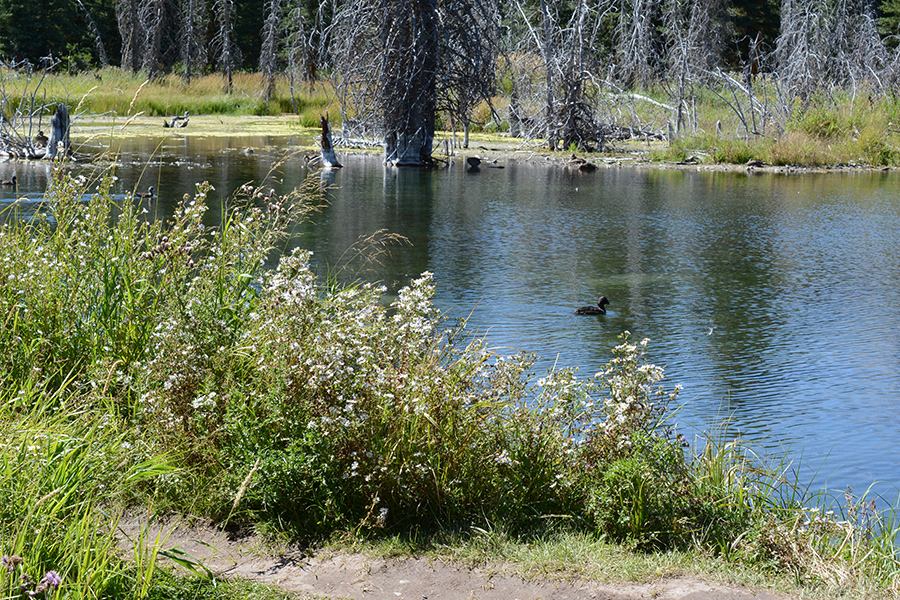
Eaton’s Aster – Symphyotrichum eatonii – grows in moist areas. It is blooming around the beaver ponds at Schwalbacher’s Landing in the park and along stream sides.
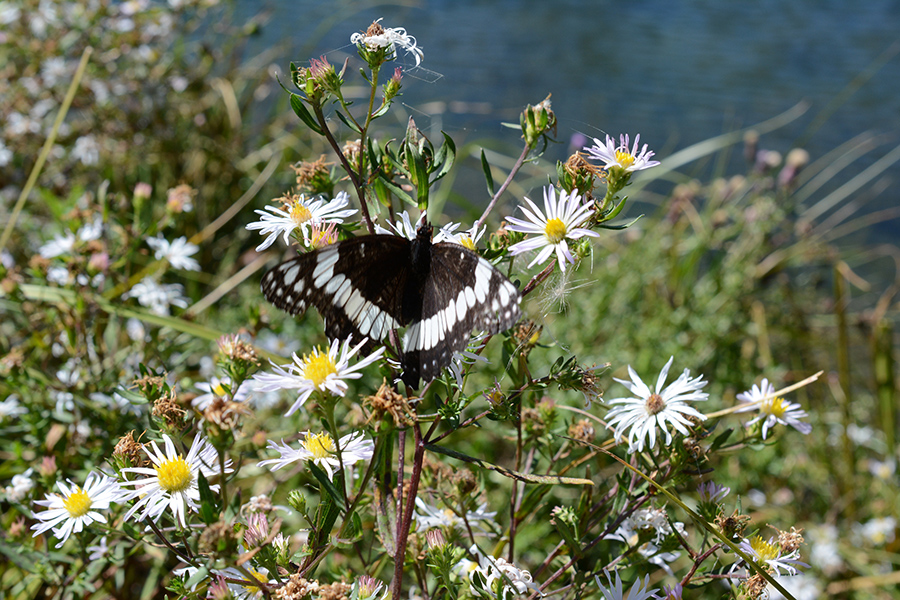
Flowers are abundant on the top third or more of the 3-4’ plants, attracting this Weidemeyer’s Admiral butterfly.
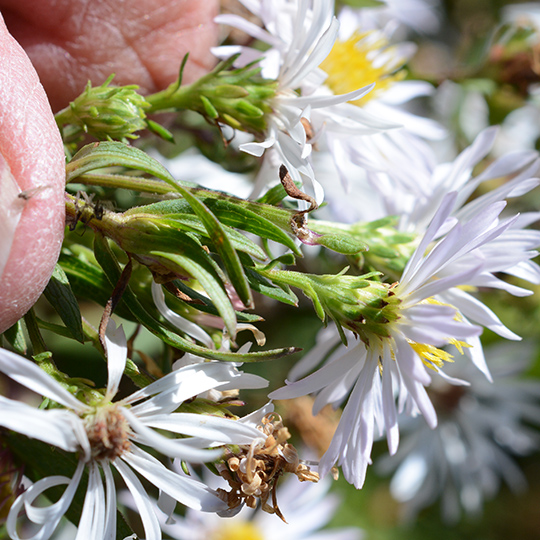
This species also has the shingle-like green bracts. The leaves are narrow and 3-4” long near the top.
Thickstem Mountain Aster – Eurybia integrifolia – indeed has thickish, slightly zigzagging stems which are covered in glandular sticky hairs.

The untidy bracts are also glandular and tend to curl outward. The flower heads are a notable deep violet.
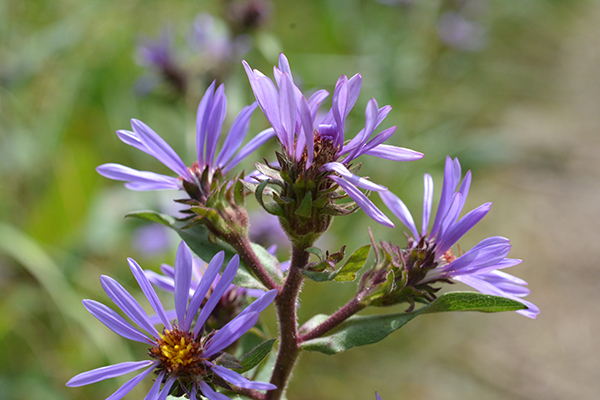
Overall, the plants usually grow 2-3’ tall with the leaves at the base up to 6” long, which become shorter and clasping as they alternate up the stem.
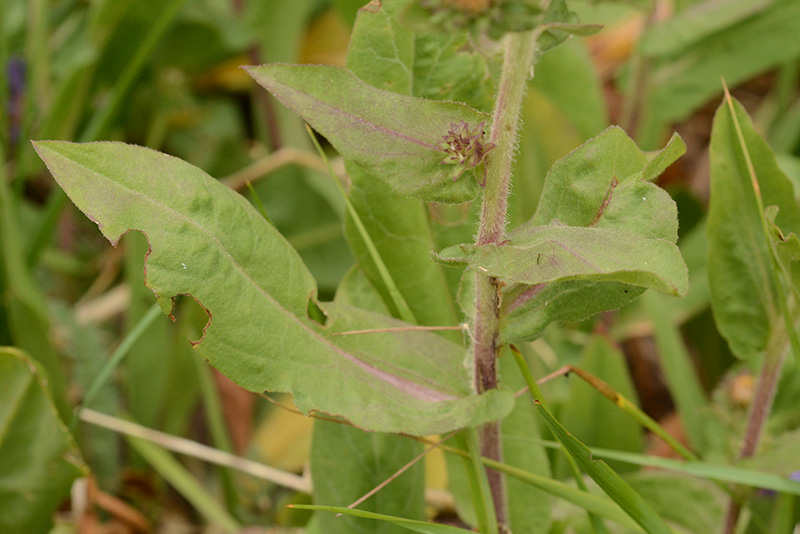
Found scattered in dry sites in the valley or high on Teton Pass grows Hoary Tansyaster – Machaeranthera canescens.
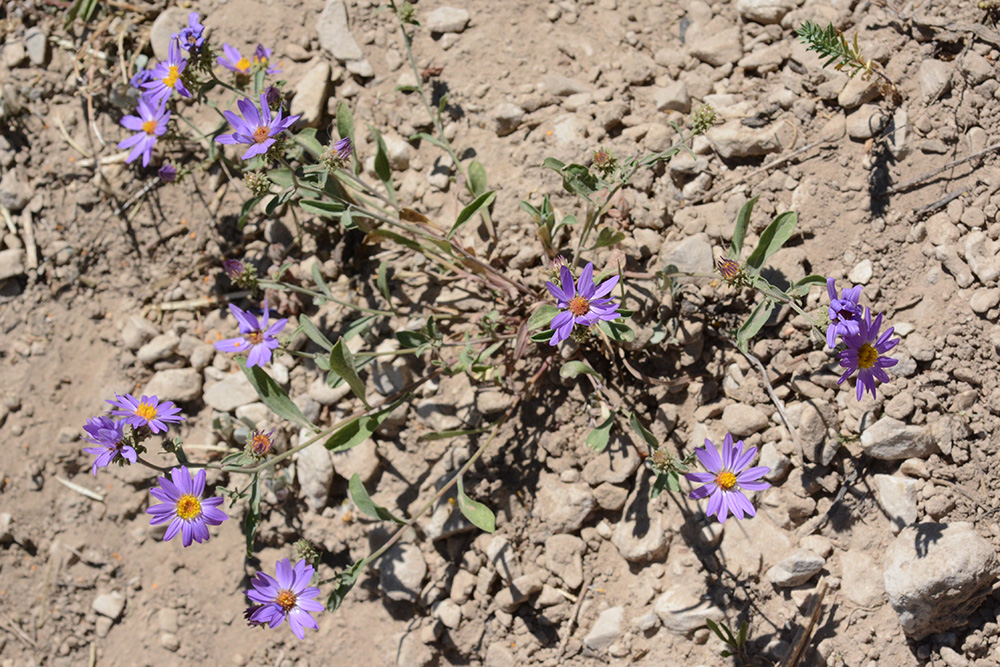
The deep-purple ray flowers accentuate the yellow disc flowers in the center.

The surrounding bracts are small, stiffly hairy, and curl outwards. The 6-12” stems are wiry with thin leaves often with spiny teeth – (another name is Spiny Aster).
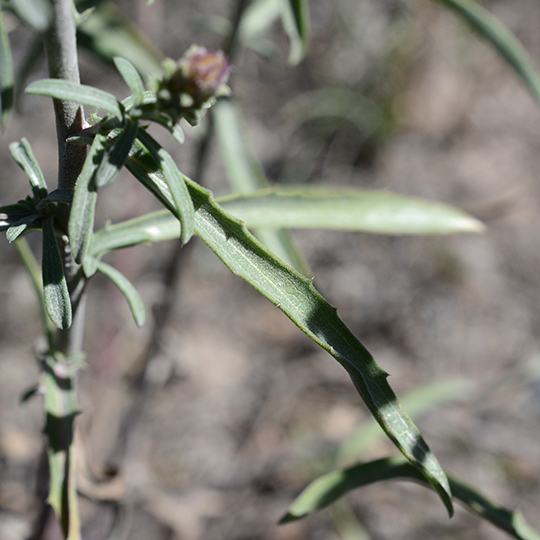
The plants are sticky and fragrant. This rather delicate looking plant is very durable.
Opposite in character and found in moister, higher elevations is the more rambunctious Leafy-bracted Aster – Sympiotrichum foliaceum var. foliaceum.

It is a strong grower up to 3 or more feet tall with 8” leaves at the base. Flower heads are blue with many ray flowers. The bracts are foliaceous – like little leaves.
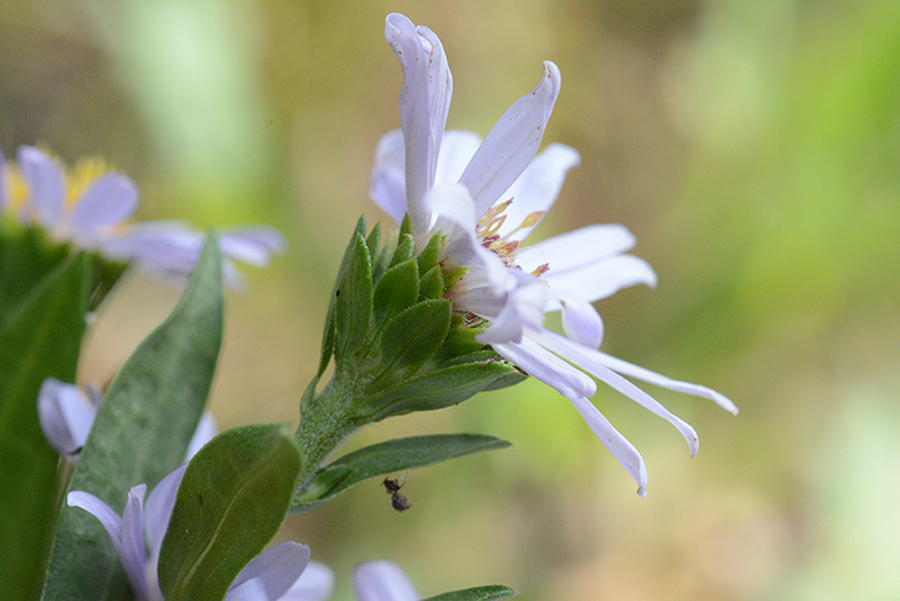
Other lower growing varieties are found at very high elevations.
Speaking of higher elevations, this is usually where I have seen Chaffy Asters. The bracts are “imbricate”, arranged like tidy shingles around the head. They are firm and usually slightly colored as seen here in Engelmann and Elegant Chaffy Asters in the photo.
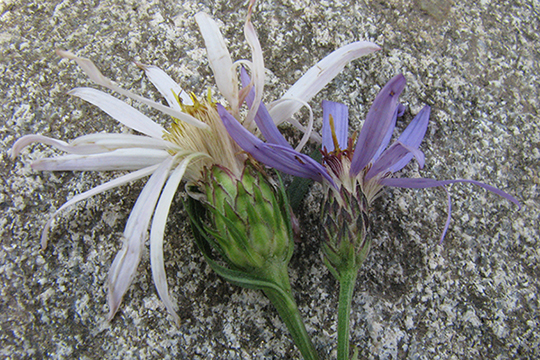
Ray flowers vary in number and depending on species can range from white to blue to violet. The leaves typically remain the same length as they alternate up the stem. You may well have noticed these plants on the trail up to Ski Lake or along the Old Pass Road, or such.
Engelmann’s Chaffy Aster – Eucephalus engelmannii – has 4-6” leaves alternating up the 4-5’ stems. Many white flower heads spread out at the summit. The white ray flowers are relatively few.

Gray Aster – formerly Eucephalus glaucus, now in the genus Herricka – has not only white flower heads but also “glaucus” or bluish-gray leaves and stems.
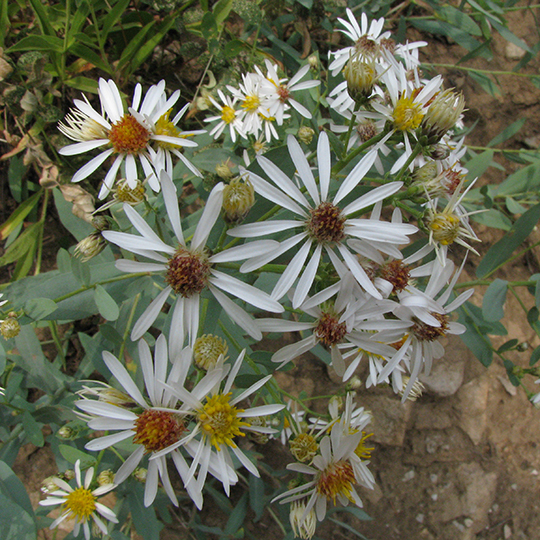
I see it in patches here and there, such as on the Old Pass trail south to Mt. Elly. Curiously, this species has had five botanical names…more than any others I have come across. Clearly the taxonomists are undecided or can I say perhaps confused?

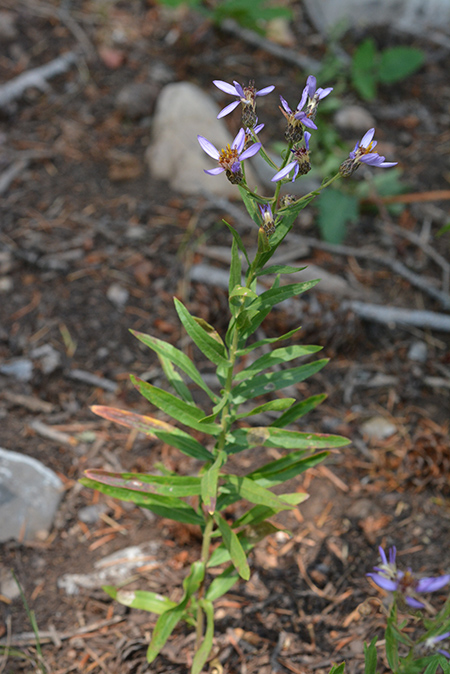
Elegant Aster – Eucephalus elegans – is indeed the most elegant of the three chaffy asters. The flowers are a deep violet-blue surrounded by a tidy set of imbricate bracts outlined in purple.
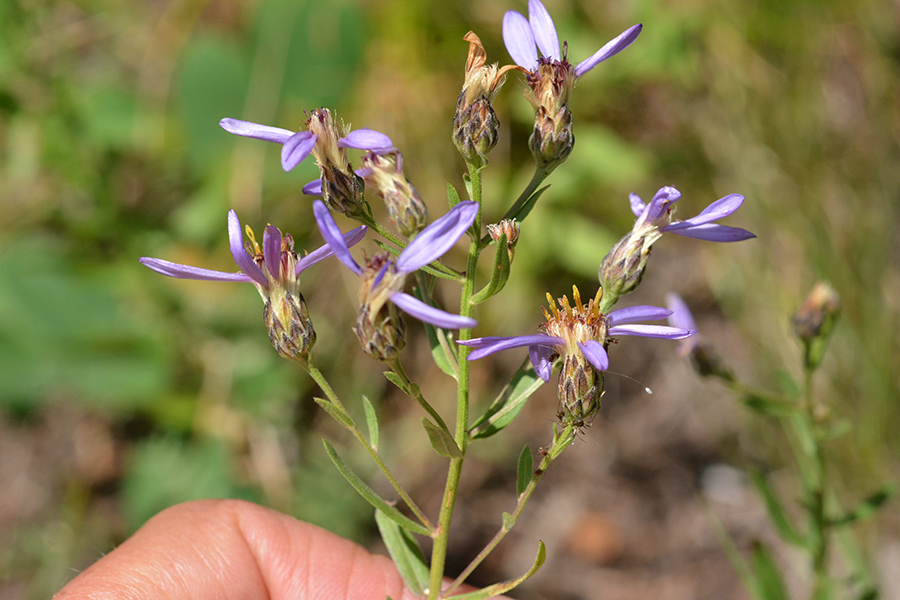
Plants are relatively small in their stature.
In the diagram below you can see both a disc and ray flower. Note that the pistil comes up through the cylinder of 5 anthers with the bilobed stigma.
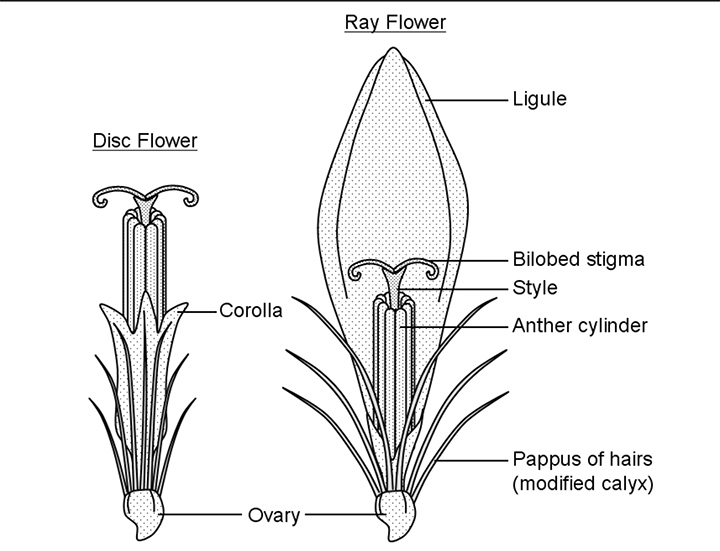
Shown below in the photo is a disc flower. You can see the closed pistil stretching up through the 5 anthers that face inwards in a circle. As of the female pistil stretches up through the anther column, the male anthers release their pollen onto the outside of the emerging straight style, where grains become available to pollinators.

This “plunger” pollination is typical of many composites.
And a dominant shrub:
Mountain Big Sagebrush – Artemisia tridentata var. vaseyana – is now blooming on Antelope Flats and other sage-dominated habitats.
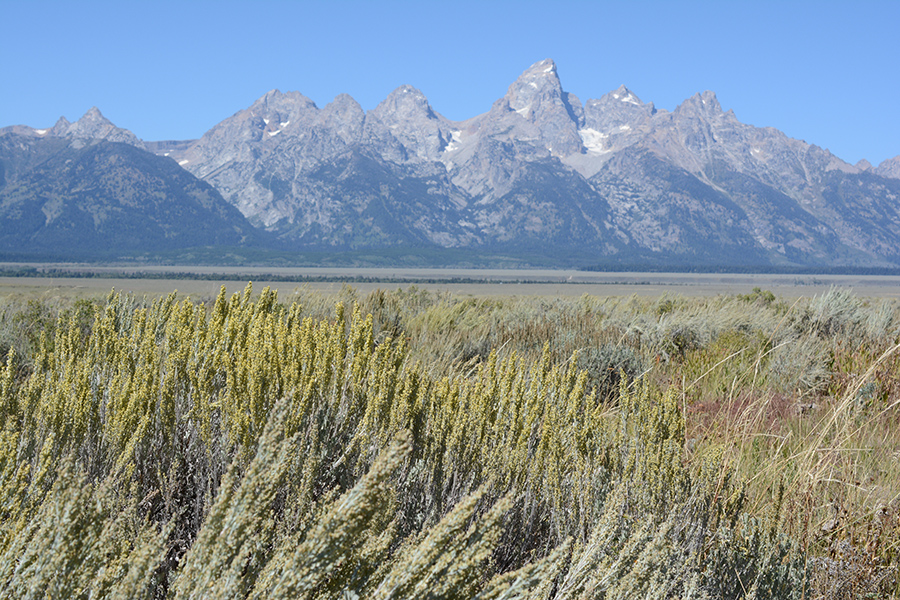
You can see the yellowish spires of the inflorescence waving in the wind. This wind-pollinated plant has light pollen grains that shake out on the wind and can be a big bother to those with allergies.
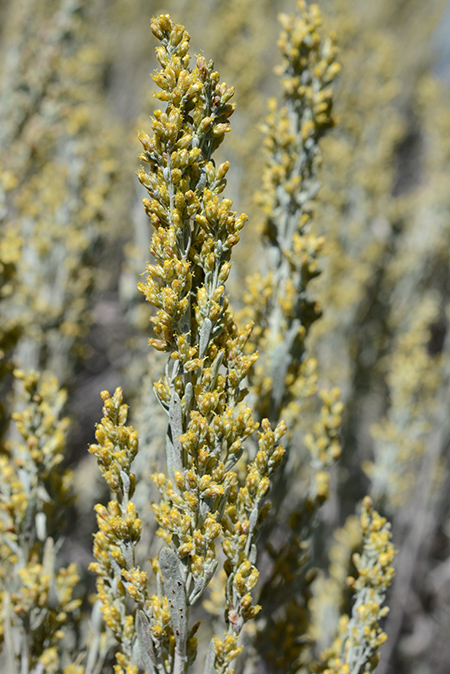
The composite flower heads are tiny and held above the foliage to enable free flow of pollen from one plant to another.
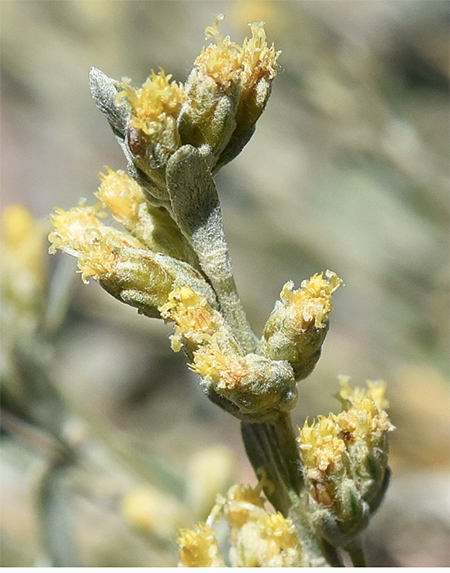
(photo by Bob Sweatt – CalFlora.org)
Flower heads have both male and female flowers. Masses of pollen grains are produced in order to increase the odds of landing on a female flower at some distance. Seeds are tiny and drop off over the fall into the spring. With a lot of luck, some will germinate in the spring and begin to form adult plants with deep taproots, well adapted to soils saturated briefly from snow melt in spring, and then dry soils throughout summer. Roots may grow 9′ or more to reach sufficient water.
Despite the plentiful sagebrush seeds, restoration of sagebrush habitat in Grand Teton National Park and elsewhere is a difficult process. Several projects by The Nature Conservancy and GTP continue to experiment with the casting of seed or planting small plants (plugs) to reestablish these essential habitats.
And one final plant not to overlook:
Harebells – Campanula rotundifolia – are remarkably sturdy for such small, delicate-looking plants.

The lowest leaves are roundish, the stem leaves are about 1 – 1 1/2″ long and very narrow – a rare shape shift for a plant. The bell-like flowers have a story about anthers and pistils.
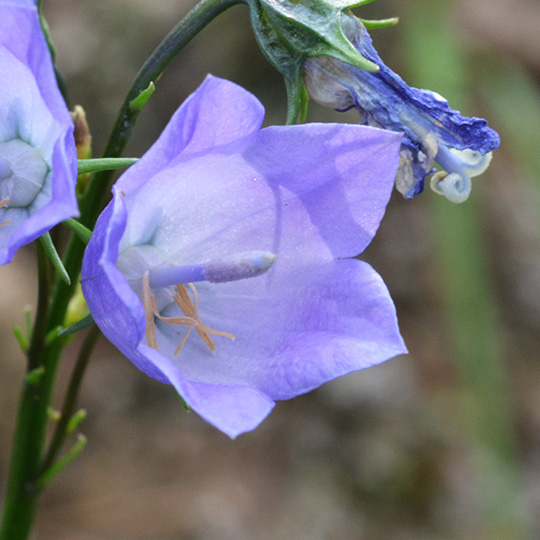
By the time flower opens, the male anthers have released their pollen onto the extending style. One can see this with a 10x handlens. You can see the brown withered anthers at the base of the pistil. The pistil continues to stretch and the stigma opens into three parts. If a pollinator doesn’t come by and gather the pollen, the flower can self-fertilize: the stigmas curl back and reach the grains from the same flower.

Harebells will continue to bloom into the end of fall.
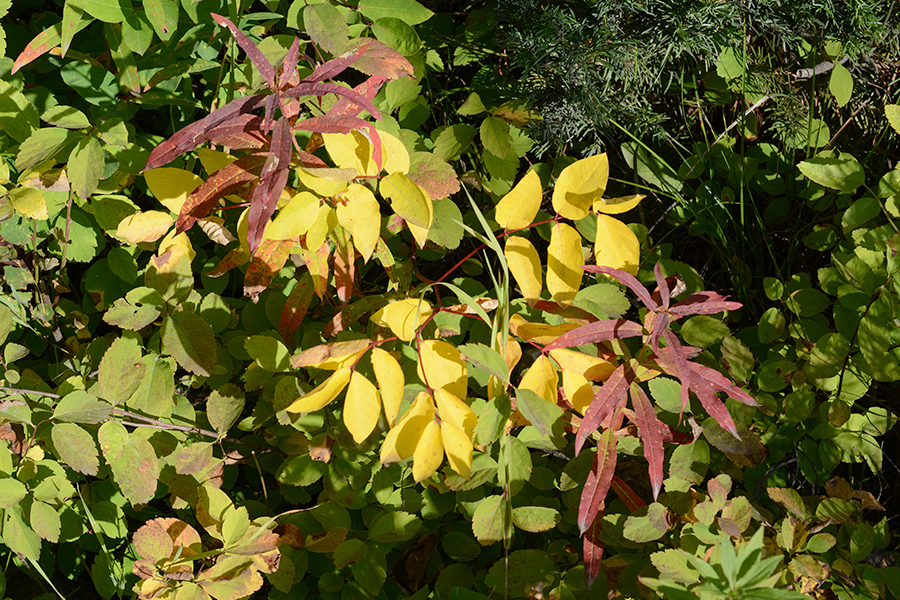
Flowers are fading, but leaves are changing color and fruits are forming and being gobbled by birds, small mammals, and bears! Autumn will become ever more bountiful and colorful as the days become shorter.
Enjoy!
Frances Clark, Wilson, WY
Sept 1, 2023
 Teton Plants