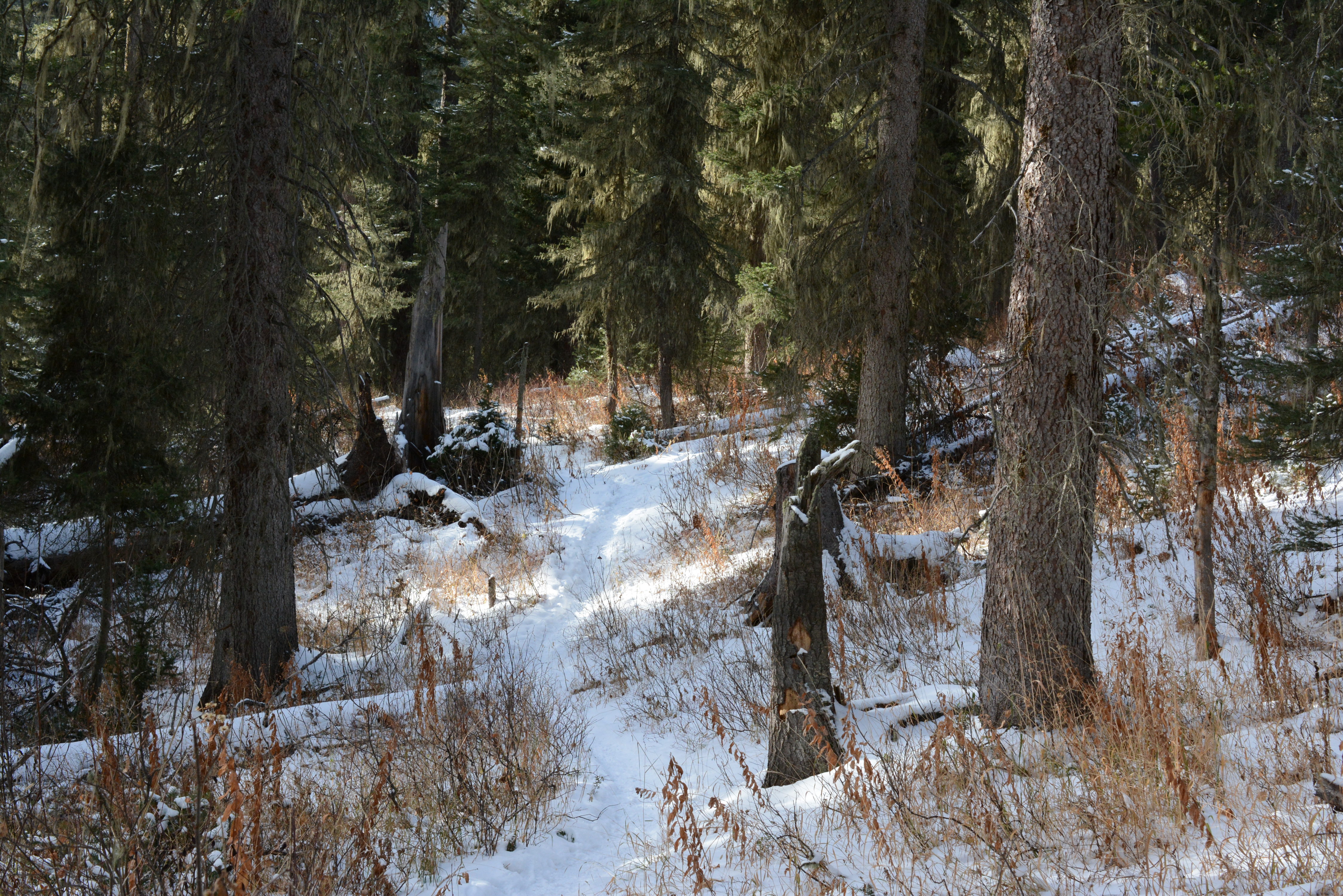
Winter weather has come to Jackson Hole. Plants are in dormancy – no growth, no blooms. However, there are still plants to see, especially trees and shrubs. This posting will focus on the evergreens.
“Evergreen”—what does that mean? Evergreen plants hold on to their leaves through the winter into spring or in the case of conifers over several winters. They form new leaves before they drop off the old leaves; therefore, the overall plant stays green. (There are evergreen tropical plants, but that is another story for another climate.)
Why are some of our plants evergreen?
The short answer: it is a survival strategy in the very cold, snowy weather. Evergreen leaves are tougher, thicker, often smaller than deciduous leaves. Leaves are able to stand up to the snow load, withstand abrasion caused by wind blasting ice grains, and photosynthesize longer—make food—at lower temperatures than deciduous woody plants. They have “invested” more in each leaf; but by keeping these food factories running over several months even years, the investment pays off. The plant survives, even prospers in the difficult conditions.
Our evergreen trees – conifers – dominate our mountains and moraines. They have needles which are thin but tough. Needles are packed with green chlorophyll which is key to photosynthesis—making energy.
Water is very limited in winter due to frozen ground, so reducing water loss is essential. Thus, much of the leaf is covered by a thick waxy covering (cuticle), and the stomates are embedded in thin white rows. Needles are often bunched together.
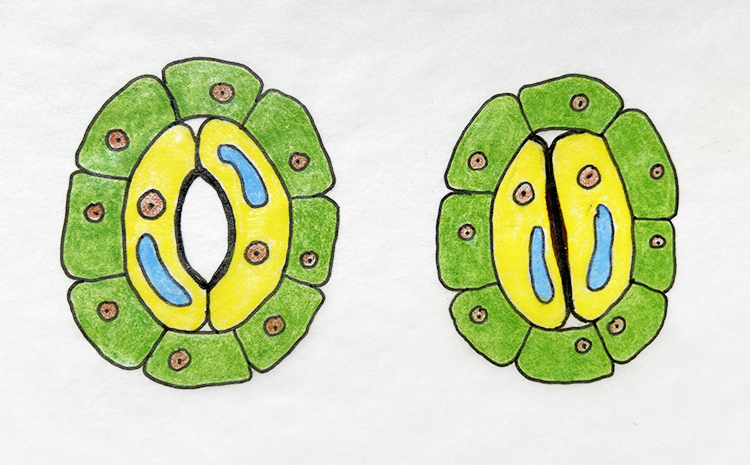
Stomates are tiny lip-like openings that take in carbon dioxide and release moisture and oxygen during the photosynthetic process of making starch. Stomates typically open during the day for photosynthesis and close at night for respiration.
Conifers have adapted to photosynthesize at relatively low temperatures. During the shoulder seasons, leaves are able to manufacture food. These intermittent times of energy production fuel the plant’s basic metabolic systems. Perennial plants have living cells–such as the cambium layer just under the bark and stem cells in buds–that need fuel during the winter. Like keeping the heat on in your house so the pipes don’t freeze. Conifers also need to fuel the living needles through the long months of winter. Evergreen needles provide enough food to keep the basic systems going and also provide a head start for new growth in spring.
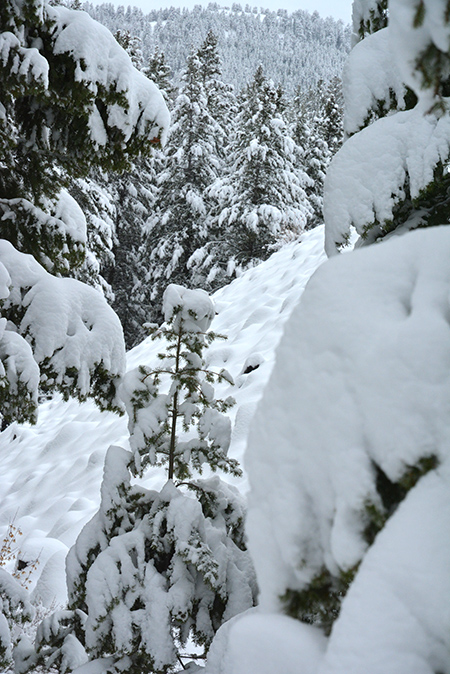
Notably, conifer habit – growth form – helps to keep the trees upright. Branches are evenly arranged around the tree for maximum exposure of leaf surface for photosynthesis and to balance the weight of snow. Branches often retain snow which helps keep the needles from drying. Or if overloaded, the conical structure and downward pointing branches of firs and spruce can shed extra weight. Others, such as Douglas-firs and Lodgepole Pines have strong branches that wave readily in strong winds, dumping off the weight.
Our conifers are essential for wintering wildlife. They provide large mammals cover from harsh winds and cold. Horizontal branches and downed trees provide routes for foraging red squirrels, Pacific martens, and other weasels. Birds of all sizes nestle into the dense branches. Seeds and buds provide nutrients for all. Tracks and bird calls are clues to the significance of conifers in winter.
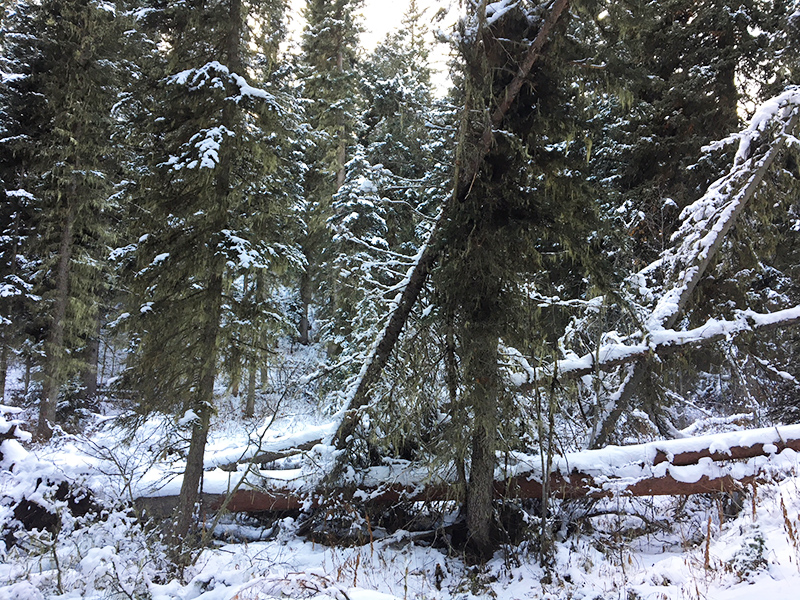
Below are the 7 evergreen trees you are likely to see.
Keys to ID include needles and twigs, buds, bark, and when available cones. The shape or habit of the plant can help ID from afar.
Pines have relatively long, narrow needles that are arranged in bunches (fascicles). Their cones develop over 18 months before maturing and releasing their seeds, usually in fall.
Lodgepole Pine – Pinus contorta – is common in Jackson Hole. Often in association with other conifers, Lodgepoles grow at the base of the Grand Tetons, over moraines, and stretch out on outwash plains in the north end of the park.

They have fascicles of two 1-2 ½” needles. The needles can stay on the tree for several years. Old needles will brown and fall off in fall–the tree in not dying.
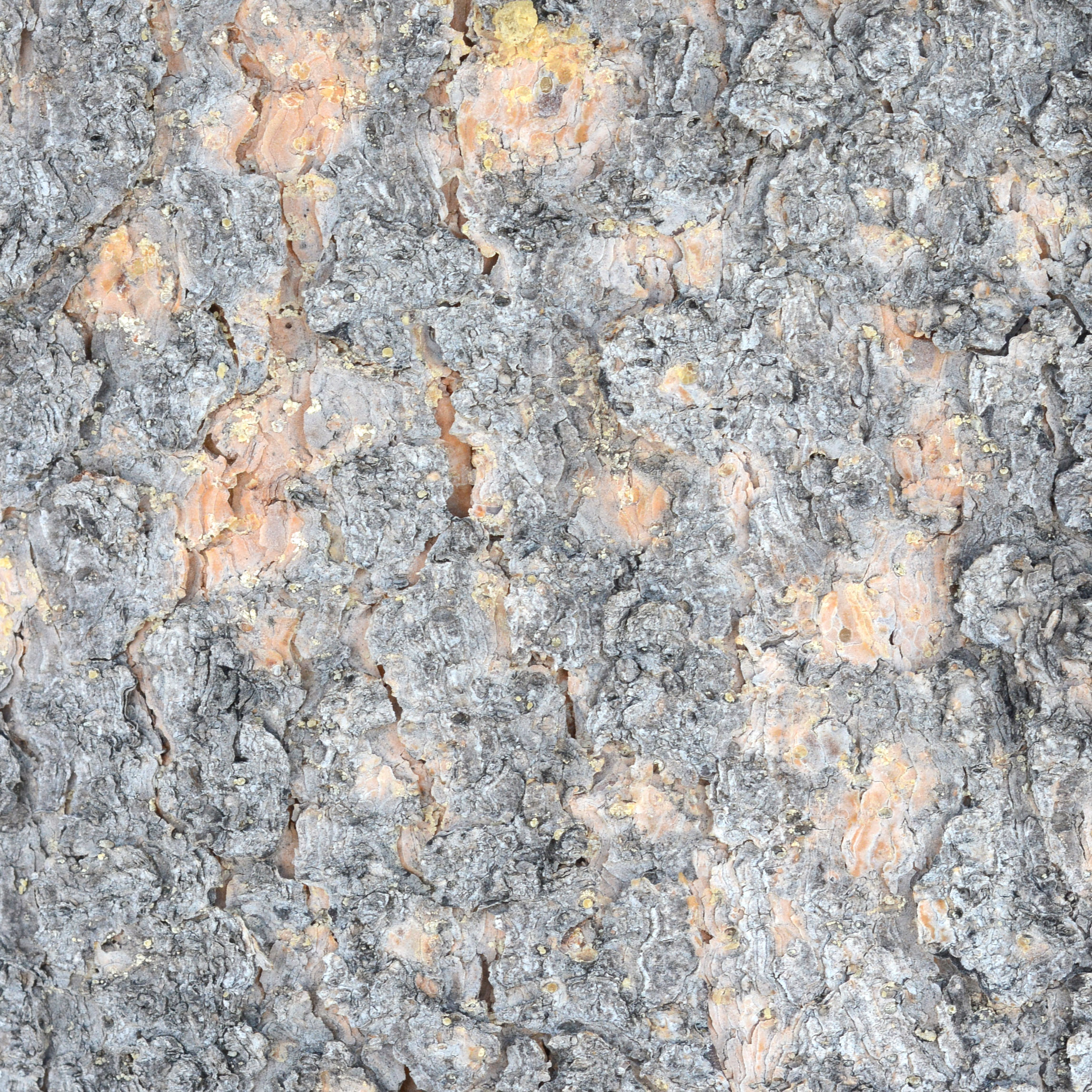
The bark is rough often with an orangey caste.
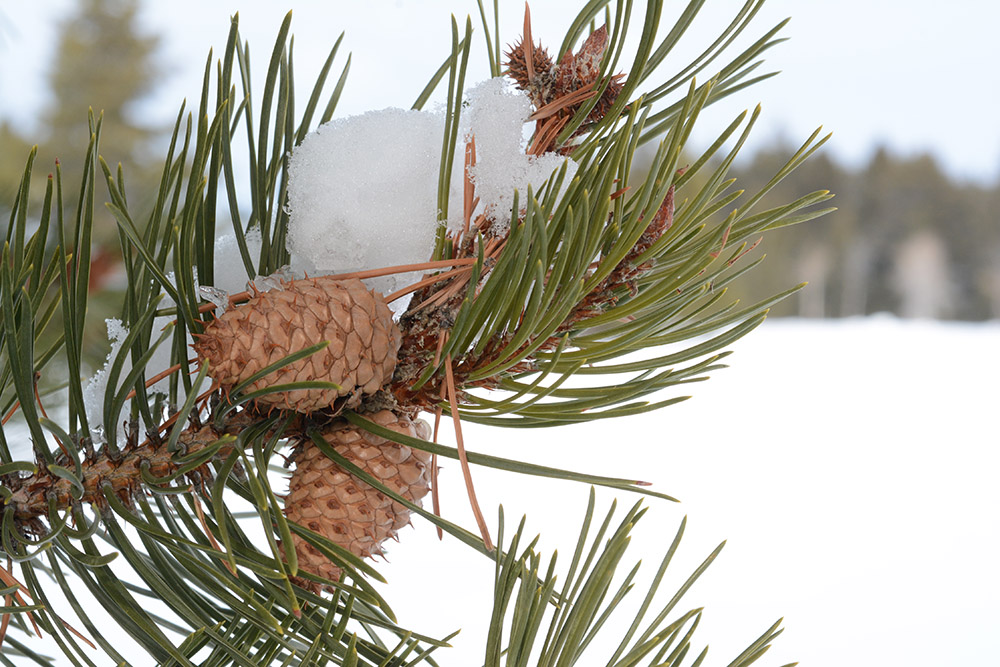
Cones are 2 ½” with sharp points on the scales to deter chewing by red-squirrels and prying by Cross-bills. Cones can open at 18 months
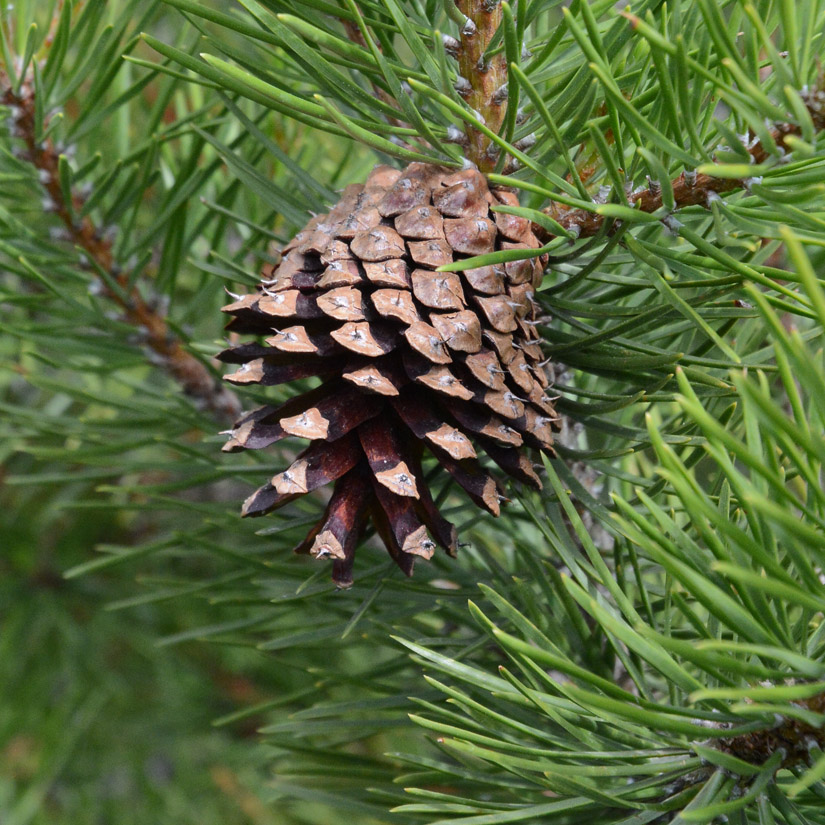
or stay closed on the tree for years until a fire causes them to open (serotinous).
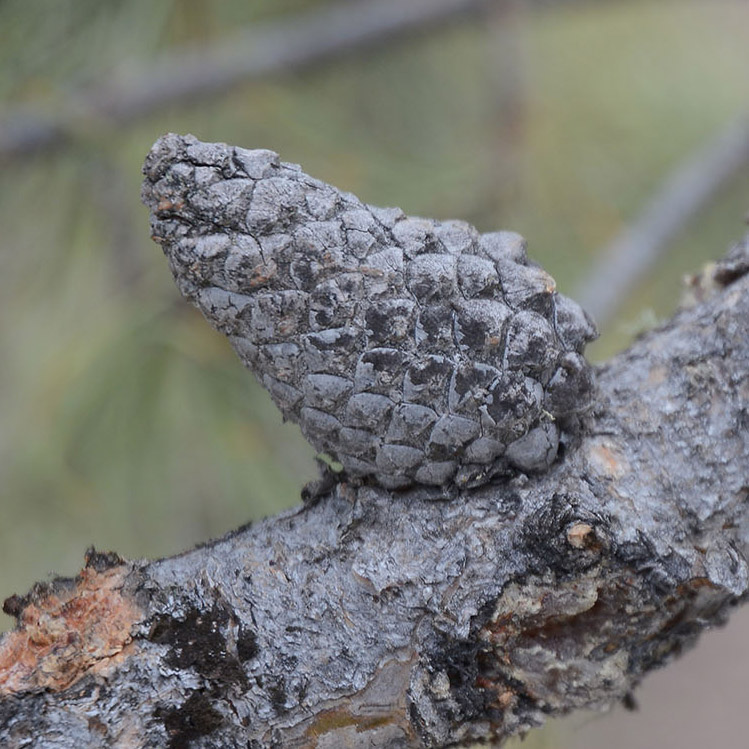
Once opened, the winged seeds fly out on the breeze. The overall habit of the tree is highly variable.
Limber Pine – Pinus flexilis – grows sparsely on dry hillsides such as on Miller Butte or the red hills out the Gros Ventre Road. The overall shape of the tree is full and branches often curl upward.
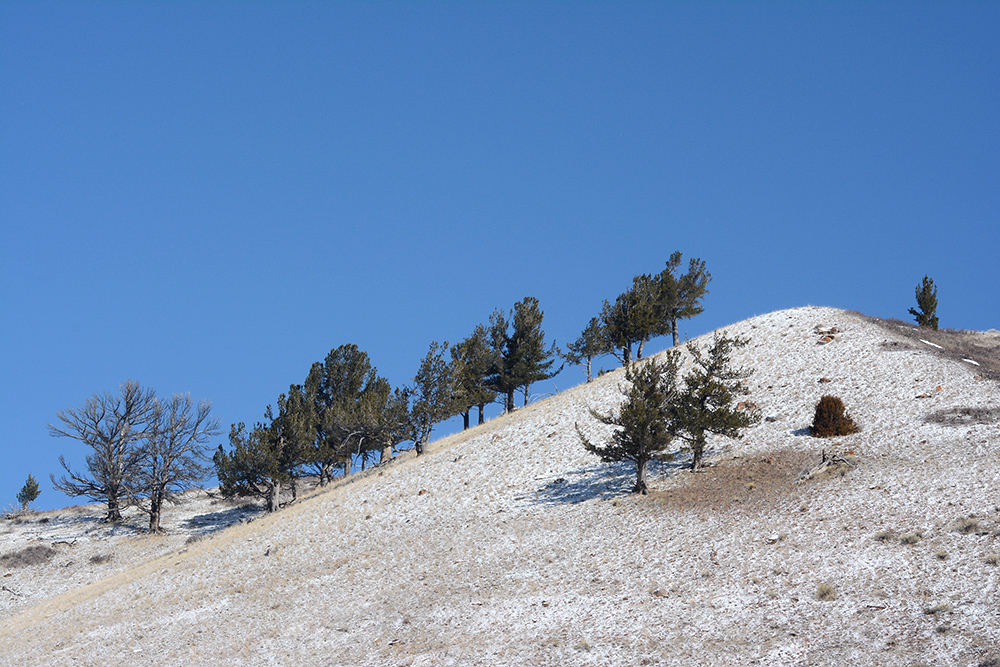
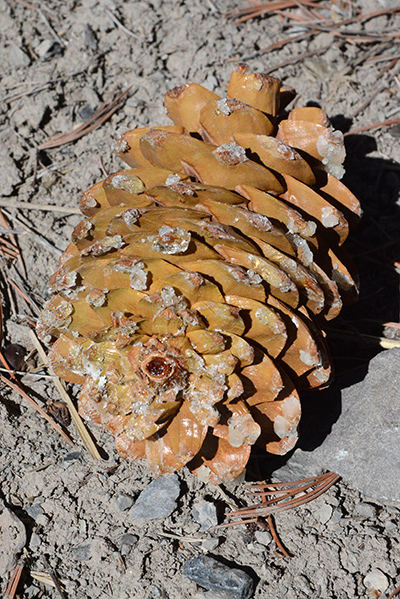
Small gray branches are flexible—hence the name – with fascicles of five 2” needles. The cones are about 3 ½” long and open fully in the fall releasing nut-like seeds, not quite as large and nutritious as those of White-bark Pine.
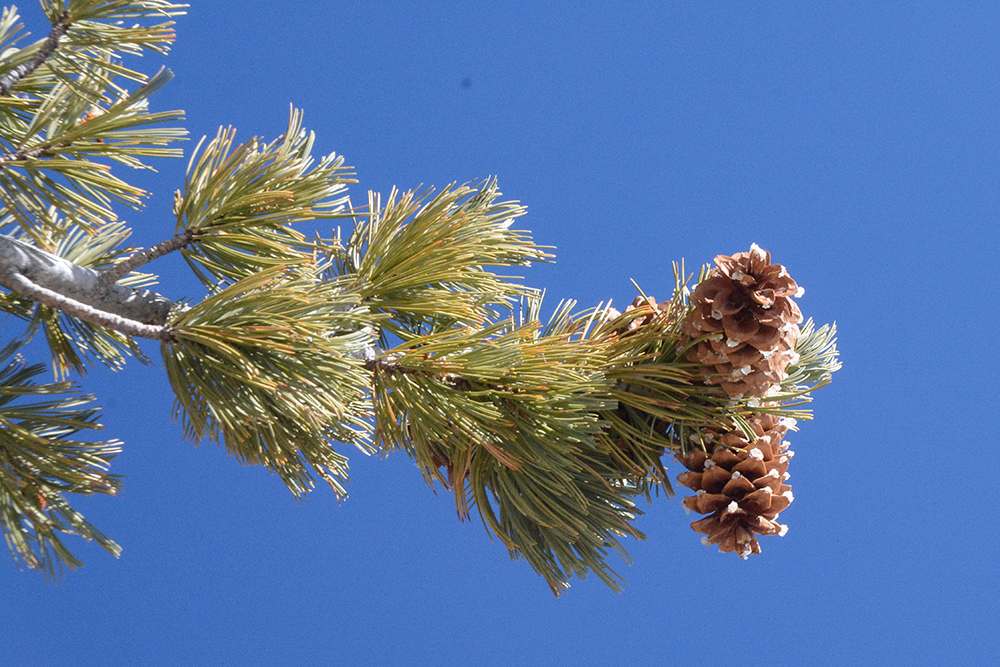
The cones then drop off.
The similar White-bark pine – Pinus albicaulis – is found at higher elevations. They, too, have 5 needles/fascicle, but the branches are not so flexible. Notably the purplish cones stay closed until the bills of Clark’s nutcrackers pry them open.
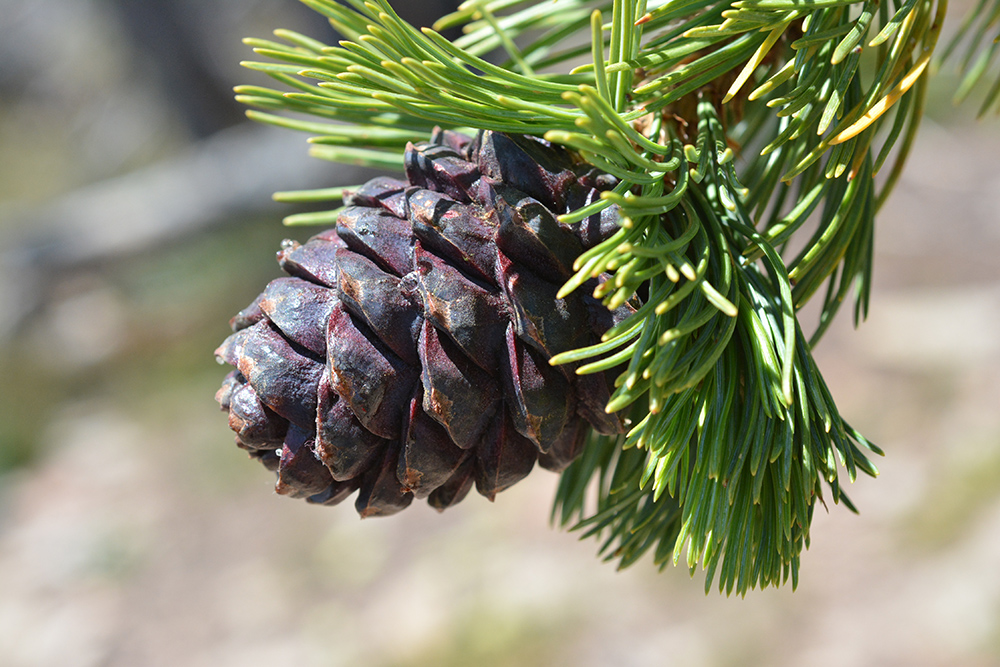

The seeds are large and highly nutritious similar to the pine nuts we eat. These seeds are essential food for the nutcrackers which cache the seeds 2-3 per hole by the thousands in fall. They have a prodigious memory that enables them to find what they need in late winter to feed their young. Red squirrels also cache the seeds, but their middens are often pillaged by grizzly bears who also find them highly nutritious. The remaining buried sees are ready to sprout come spring. It takes about 60 years for a White-bark Pine to produce cones.
Spruce, firs, Douglas-firs all have single short needles. They produce cones with smooth scales in a single growing season.
Engelmann Spruce – Picea engelmannii – grows at relatively high elevations and/or in cool ravines. They can grow very tall with rounded crowns. Cones dangle down.
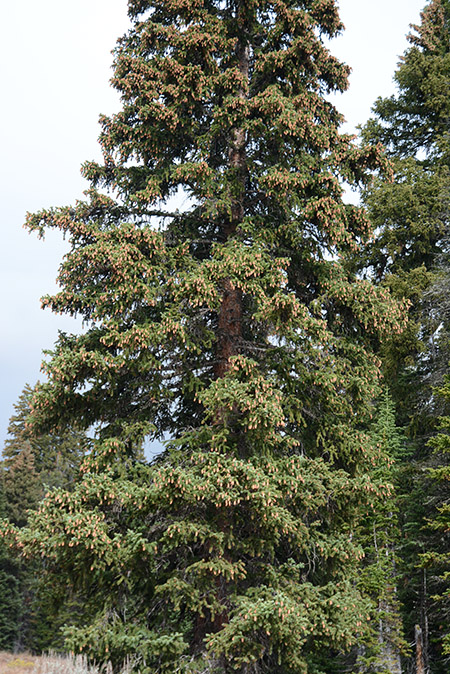
Spruces require more moisture than pines. They can live for 200-300 years and are components of old growth forests along with Subalpine Firs.
Spruces are “unfriendly”. “Shaking hands” with a spruce hurts.
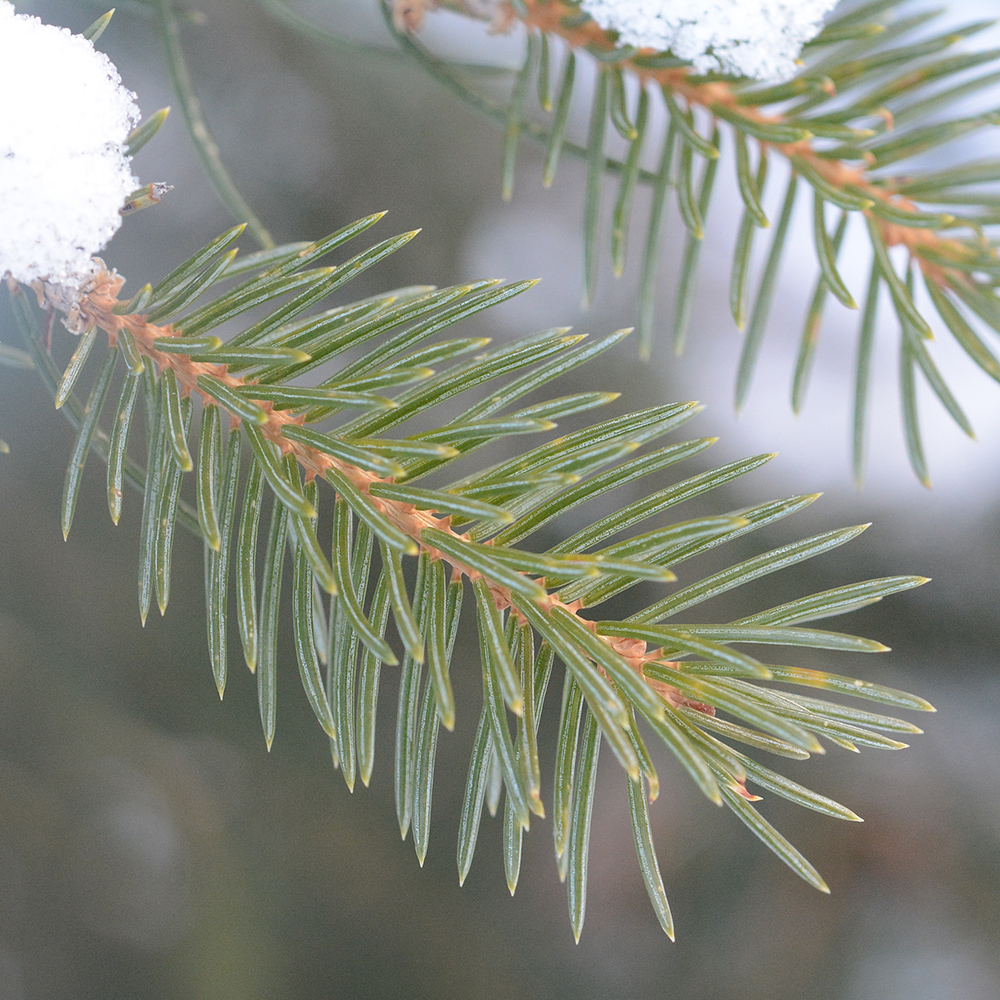
Their needles are square and pointed and set on little pegs. They are smelly when crushed. Twigs are slightly hairy–a handlens helps to see these.

Spruce bark is rough and “flakey.”

The 1 ½”-2 ½” cones are elongate and dangle from the tops of the trees. Cones will release their seeds in the fall and then fall off. Red squirrels will avidly collect cones before they open and stash them in middens for winter food. Then they defend this vital hoard vociferously..
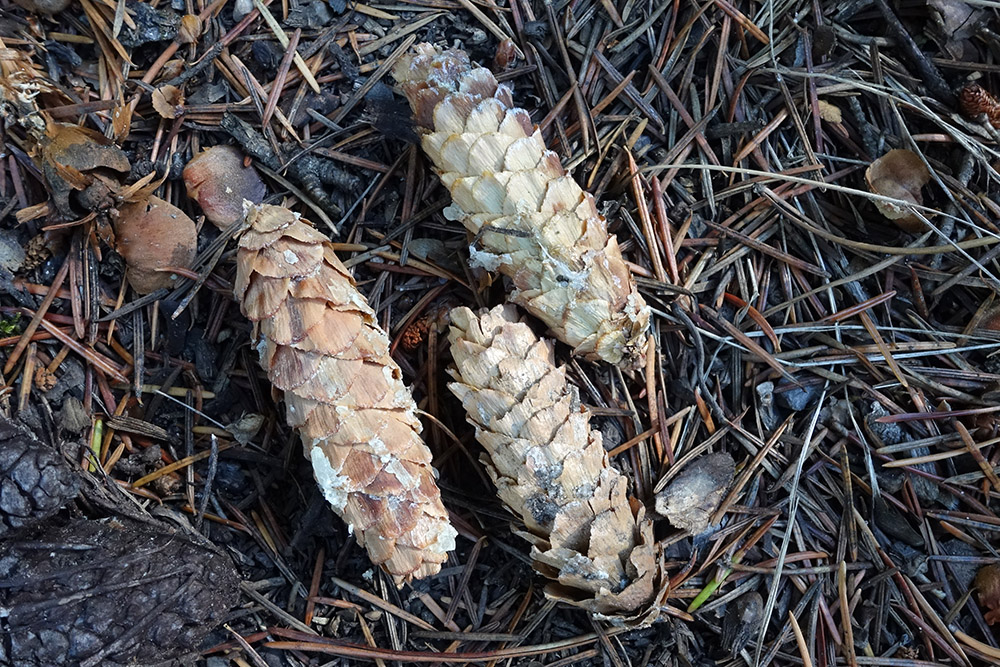
Colorado Spruce – Picea pungens – is found naturally in the flood plains of the Snake and Gros Ventre Rivers.
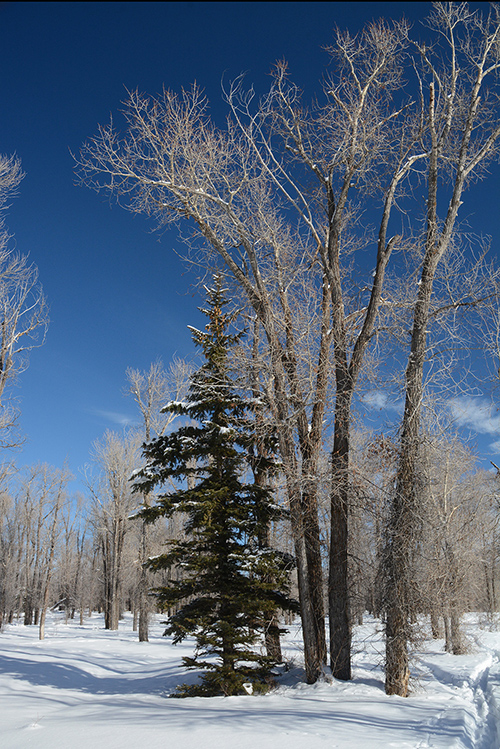
Compared to Engelmann Spruce, Colorado Spruce cones are longer 2 ½-4″, and more elongate with smoother edge scales. Also, the twigs are smooth–no hairs. The outer branches tend to hang down. The two species can be hard to separate and can hybridize.

Many people plant ornamental selections commonly called Blue Spruce or Colorado Blue Spruce. They are the same species but selected for their distinctive blue-colored needles.
Subalpine Firs – Abies lasiocarpa – often stand out for their pointed crowns.
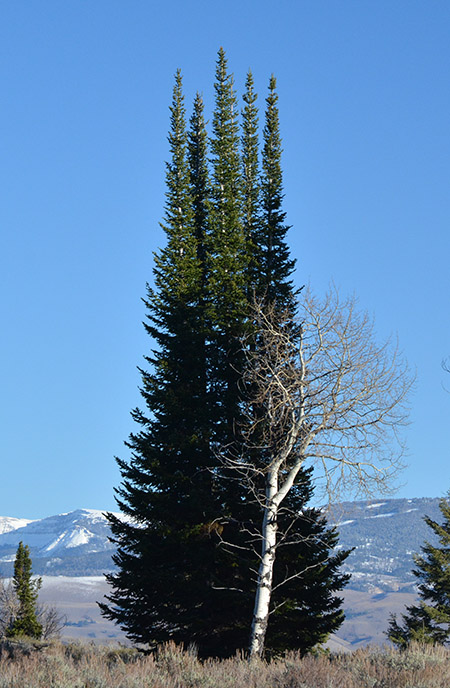
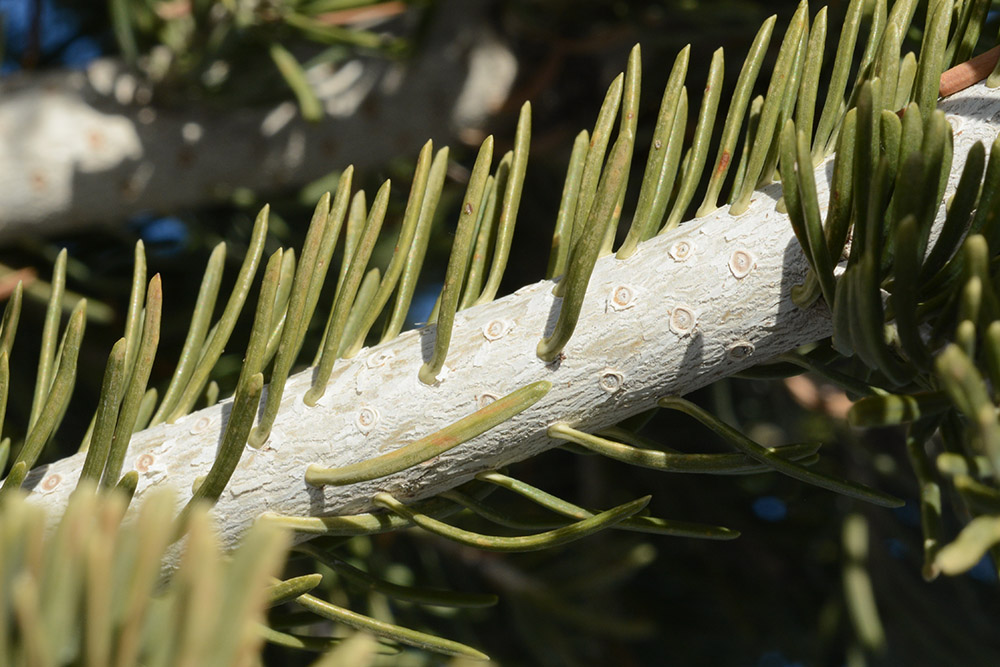
Firs are “friendly”. It is easy to shake hands with a fir. The needles are flat, soft, blunt, and embedded on the twigs as if their bases were soft like putty.
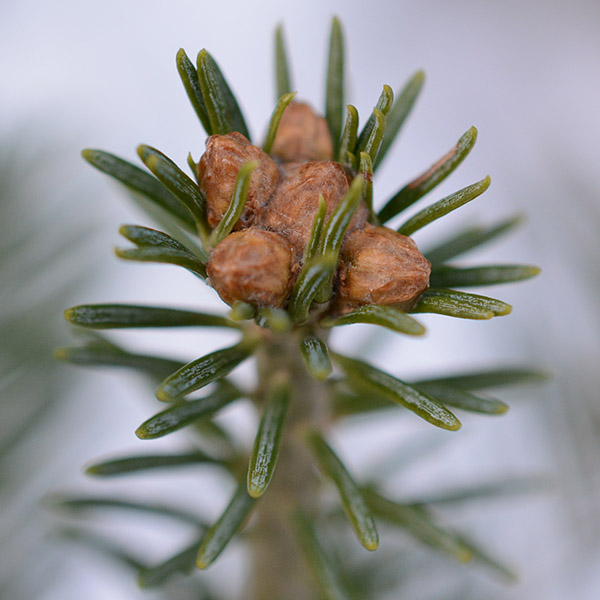
The buds are blunt.
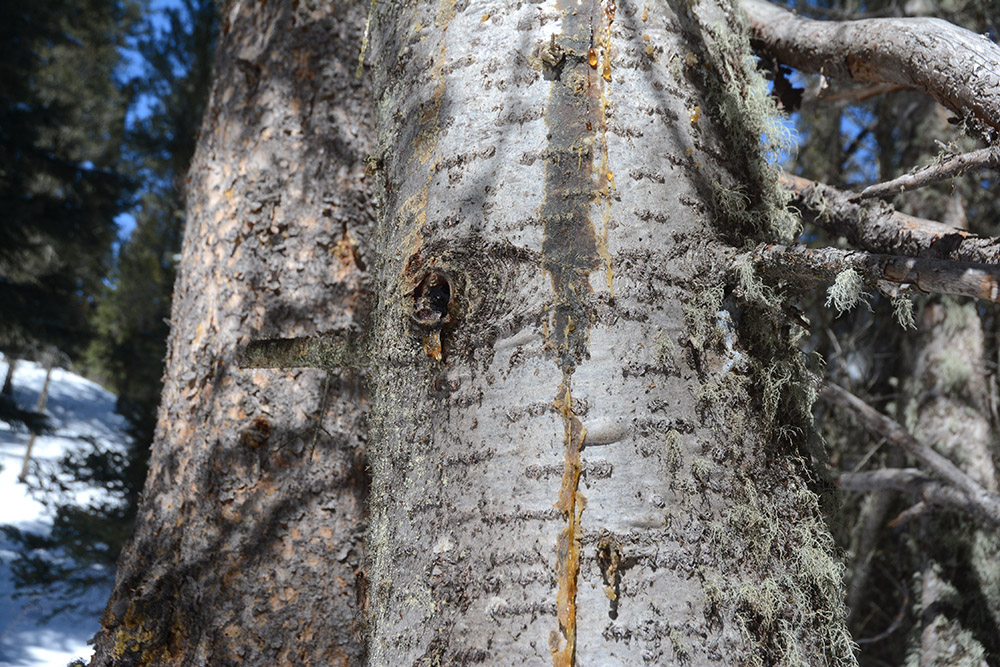
The bark is smooth and gray with irregular horizontal rows of resin. The resin fills in any wounds and has been used by people, too, to prevent infection.
Notably, the 1½ -3” cones stand upright at the top of the tree. At first they are purplish but then turn brown.
In fall, not only the seeds but also the scales will fly off in the wind, leaving a central stalk.
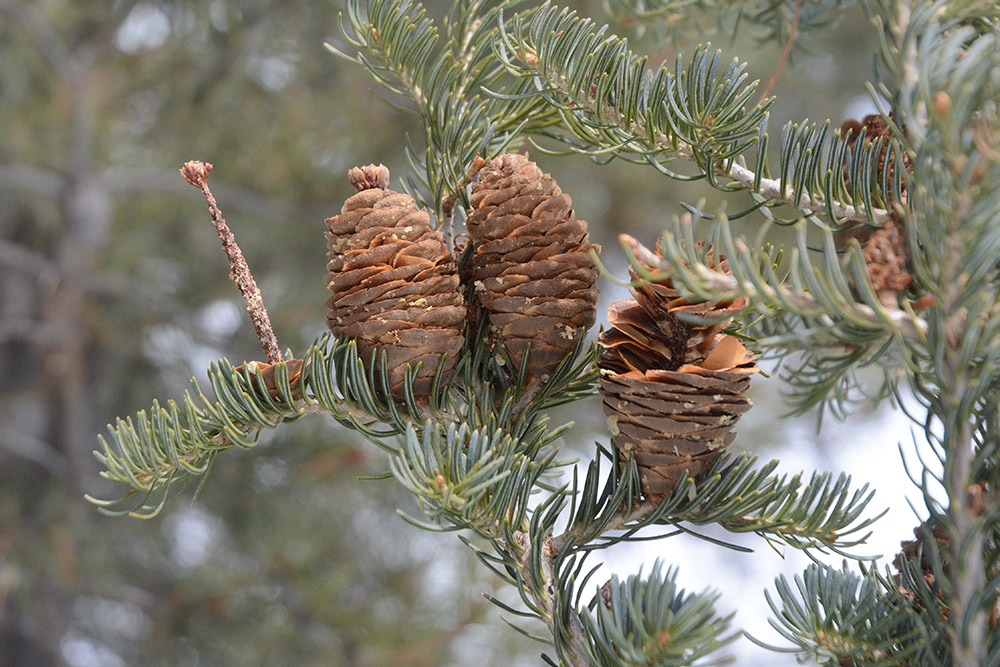
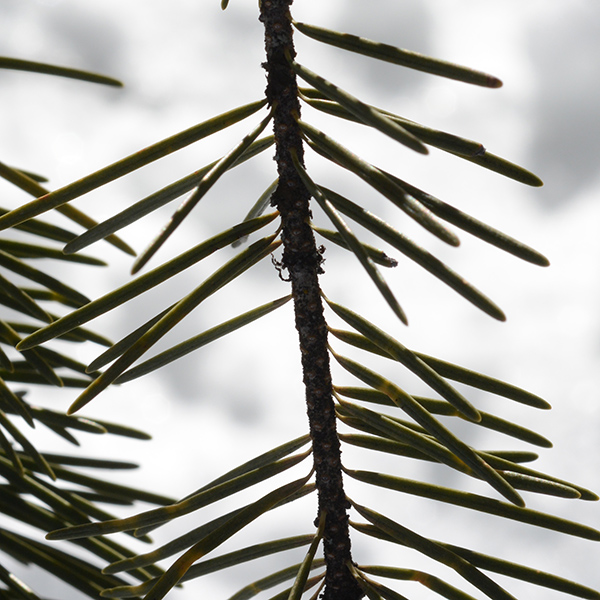
Douglas-fir – Pseudotsuga menziesii – is not a true fir. Its needles are flat with short petioles and soft to the touch.
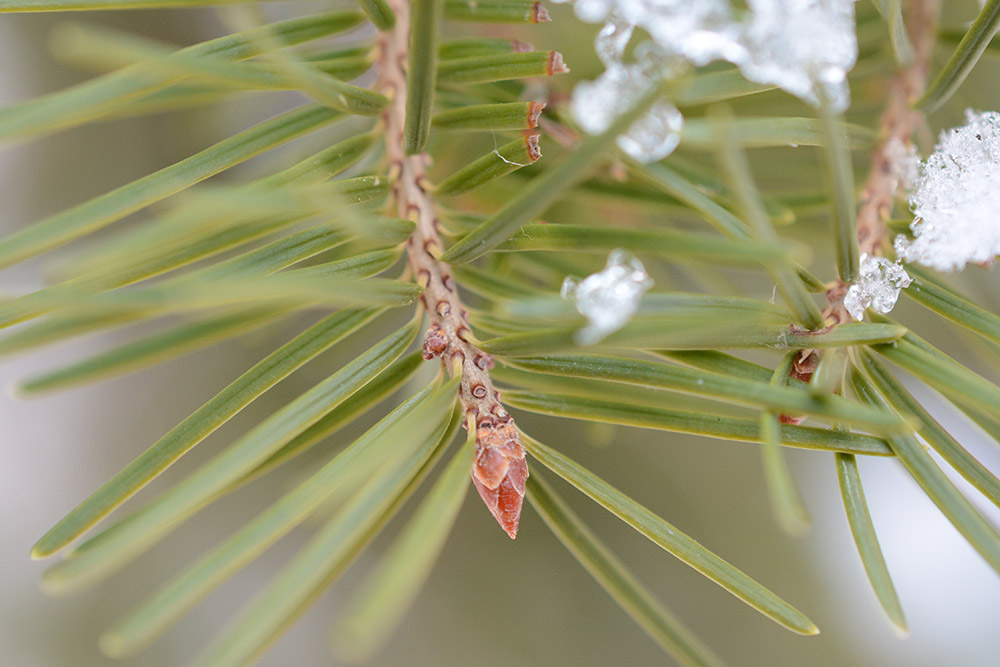
The buds are pointed.
Early years the bark is a deep gray and scaly.
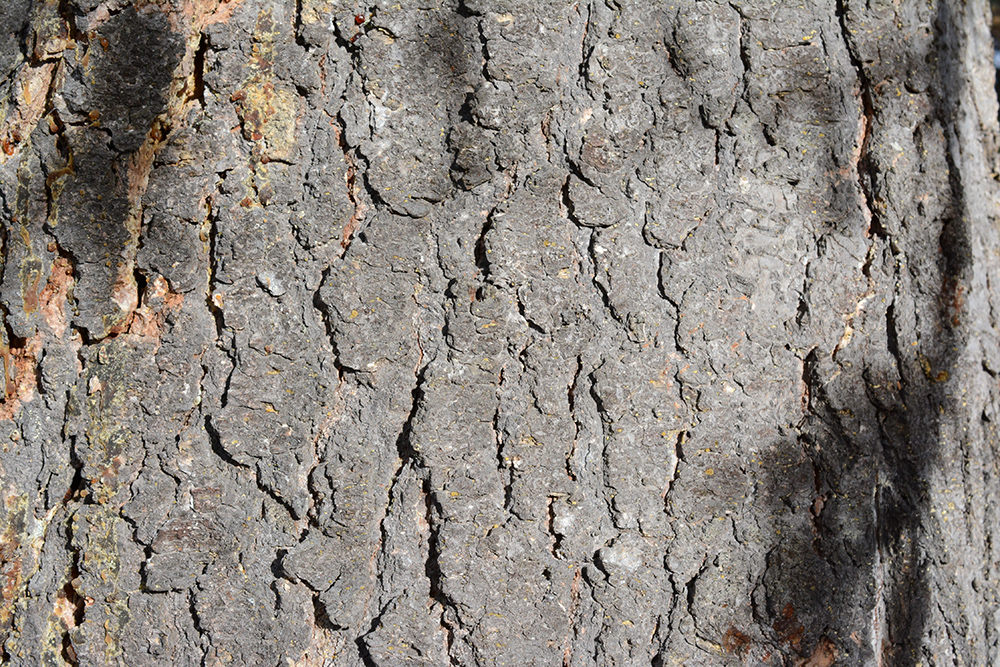
Bark thickens with age–an adaptive strategy to survive low level fires.

Doug-firs grow on dryish sunny slopes, often clear of other trees and shrubs due to their resistance to intermittent fires. Cones are the tell-tale feature for ID. The 2 ½” cones have bracts under each scale.

Some say the bracts are the tails of mice which have run under the scales to hide from owls. The dense evergreen habit often harbors owls and other birds.

Rocky Mountain Junipers – Juniper scoparium – are most visible in the dry slopes of Miller Butte or Game Creek.

They grow into various shapes, often because they are heavily browsed by deer. Their needles are “scalelike” on flattened twigs.
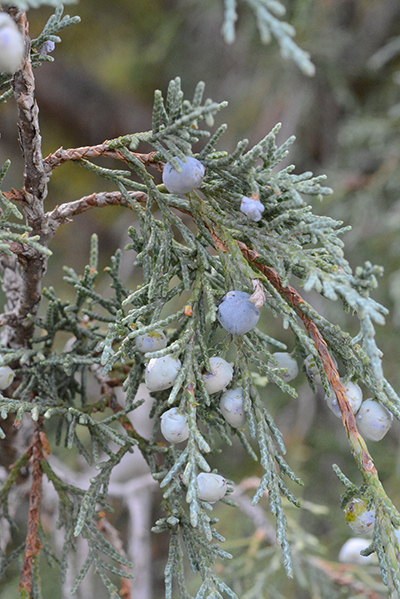
Their female cones look like bluish berries which are priority winter food for Townsend’s Solitaires, a gray, robin-sized bird which defends its territory with lovely liquid calls, and the colorful, noisy Cedar Waxwings. Male buds are on separate plants and are of little notice at this time of year. Only female plants produce cones.
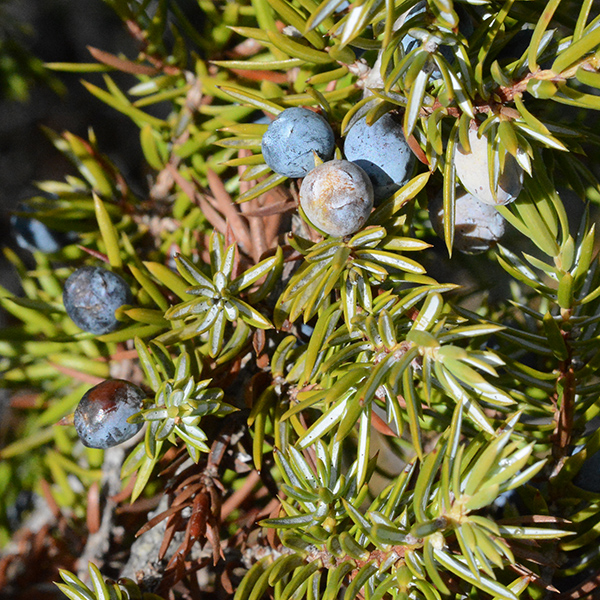
Its shrubby cousin Common Juniper – Juniperus communis – is relatively rare here and more noticeable in winter. They are sprawling 3-4′ high shrubs.
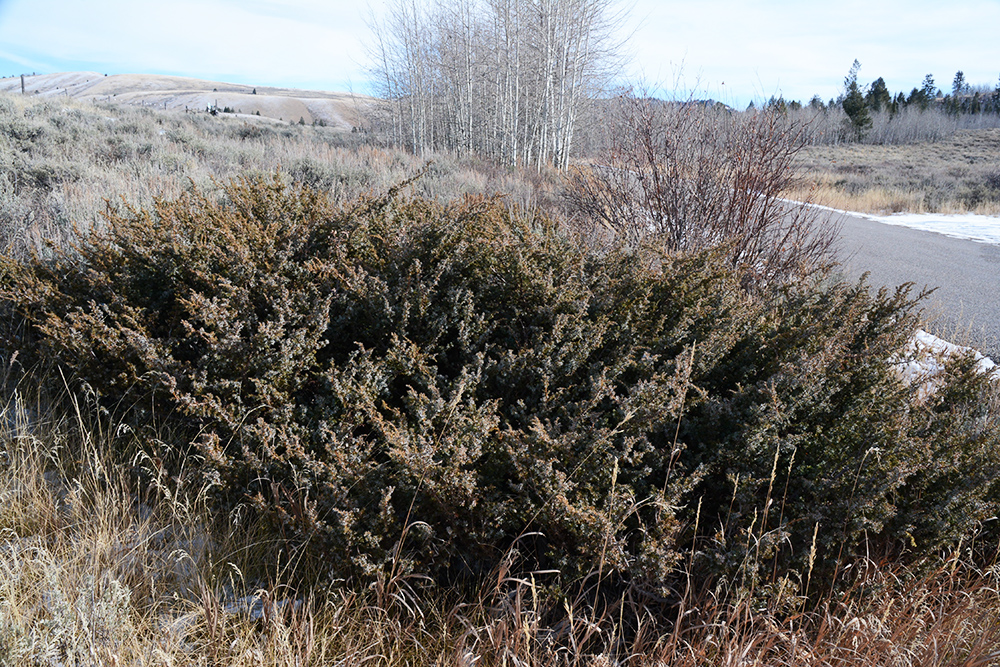
with small sharp needles. The whitish stomata are readily visible.
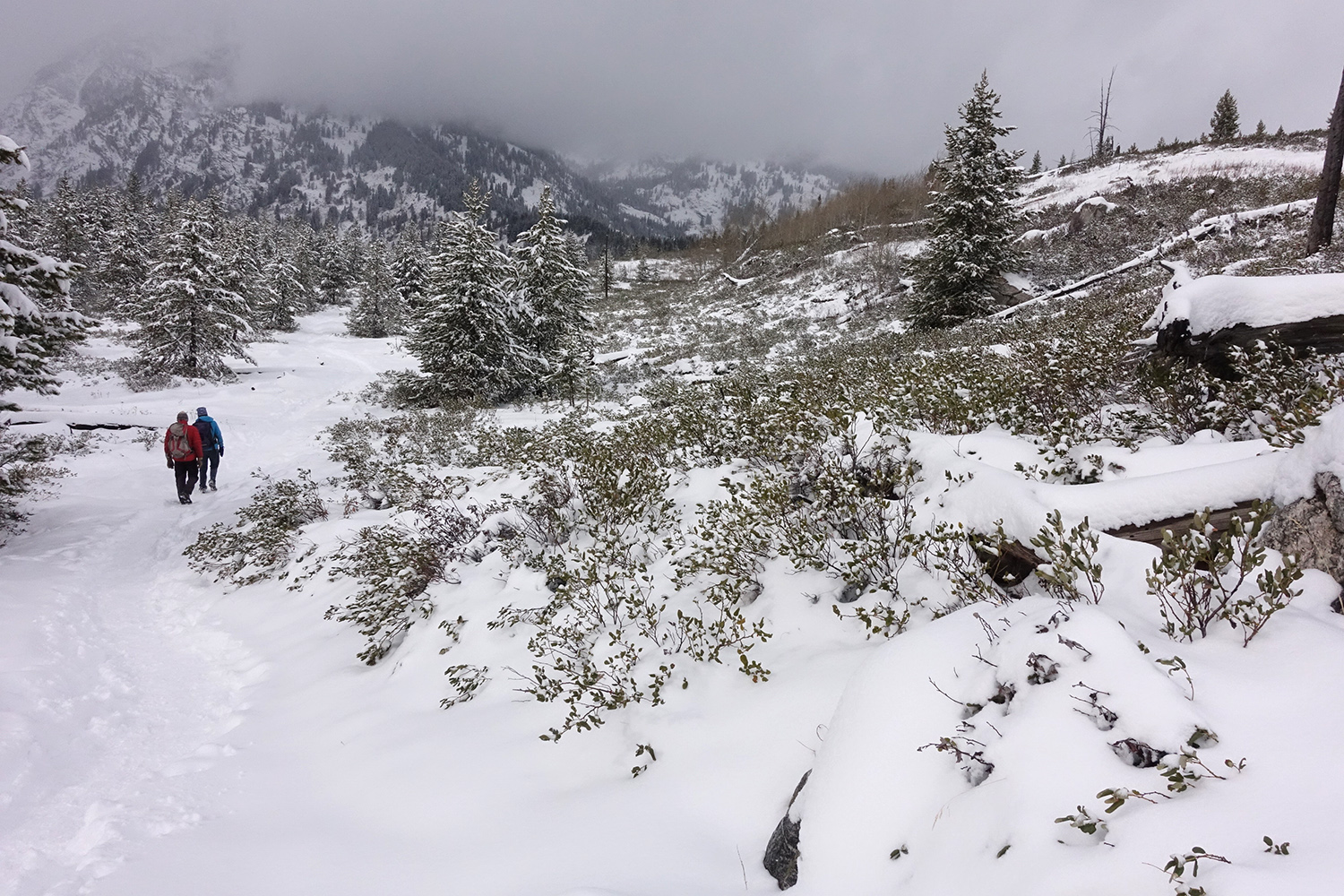
Walking around the Bradley-Taggart Lake trails, three evergreen shrubs with broad leaves can be seen.
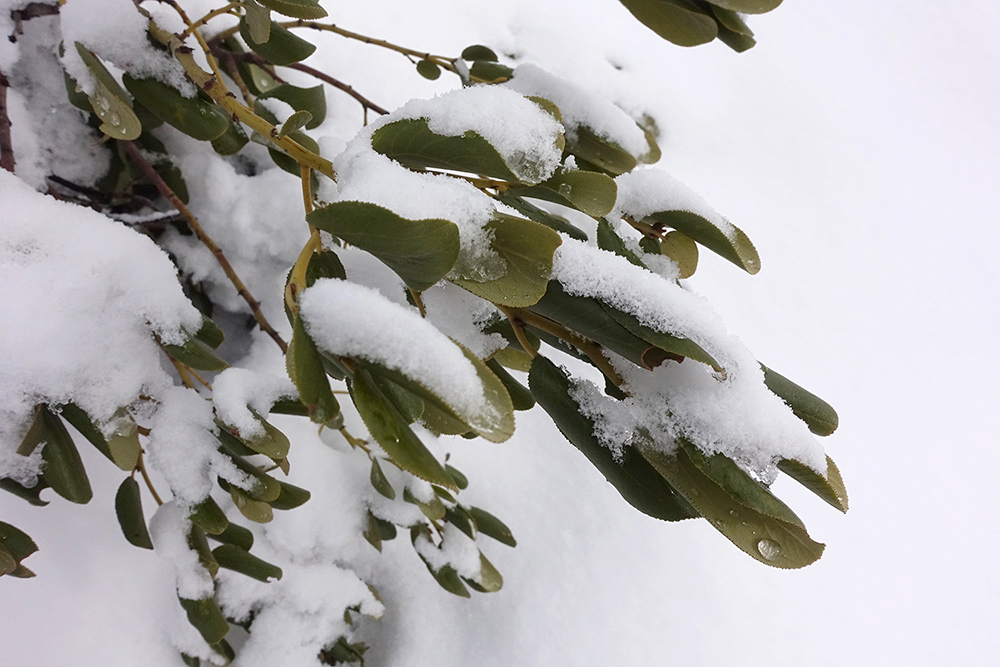
Snowbush – Ceonothus velutinus – blankets slopes after forest fires. The seeds may have lain in the soil for decades, until the extreme heat of a forest fire broke their dormancy. The mature plants are dense and sprawling. The 2-3” oval leaves have three prominent veins and a distinctive fragrance.
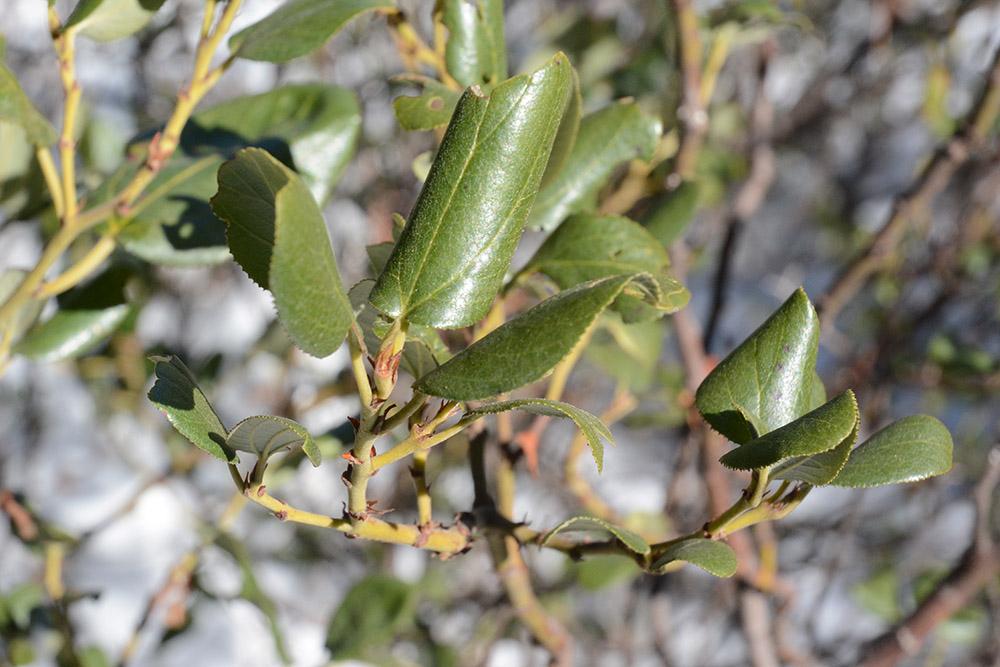
In winter they curl to prevent too much loss of water from the undersides where the stomates form.
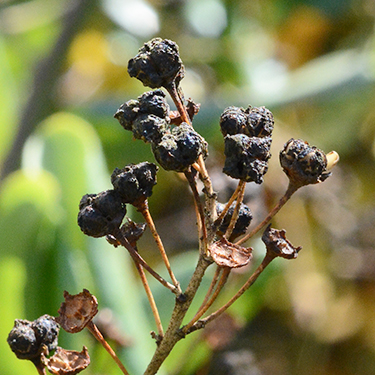
The dry fruits may still be seen.
Found in a variety of habitats from dry rocky areas to forest floors, Oregon Grape – Mahonia repens – can poke up to 2’ above the ground.
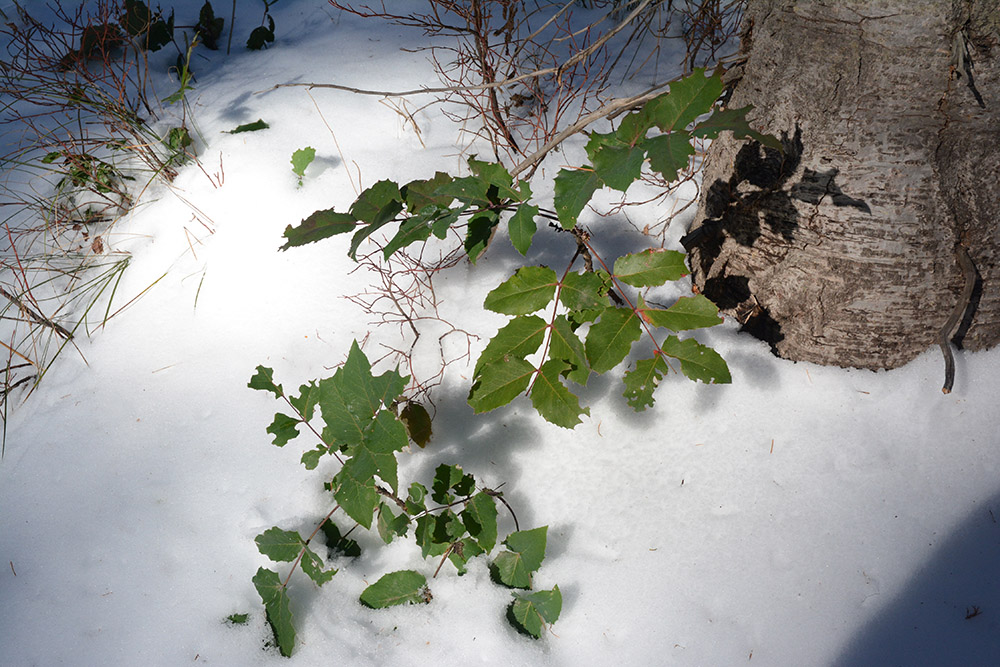
The leaves are compound with the leaflets looking like sharp holly leaves.
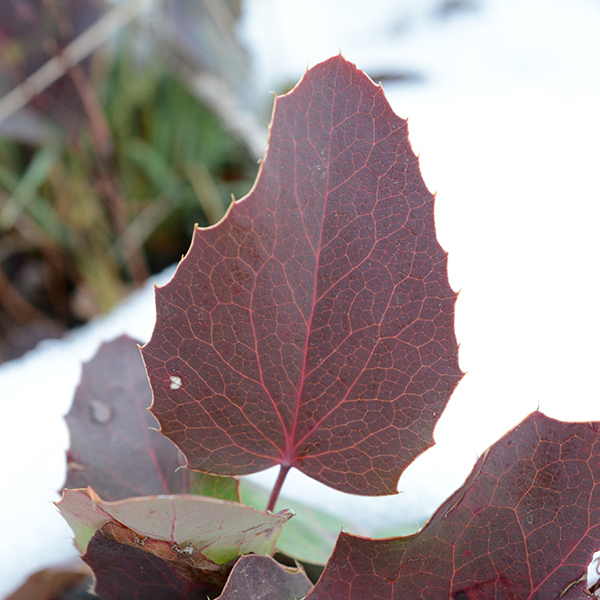
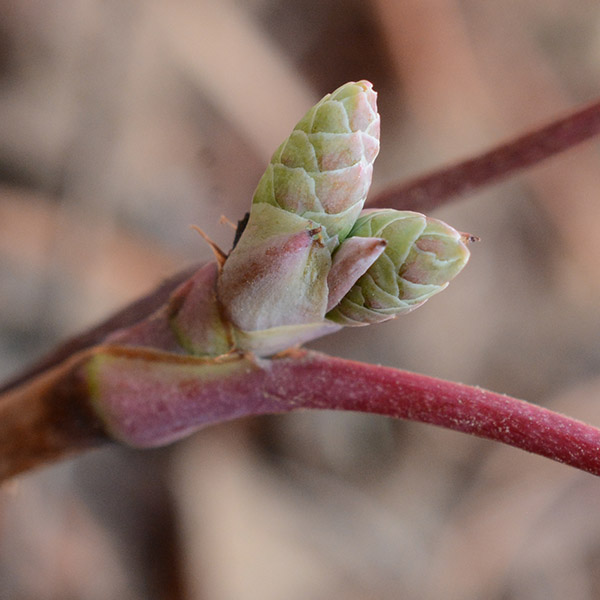
Look at the woody stem for the bud that marks the beginning of the petiole of the leaf with its holly-like leaflets.
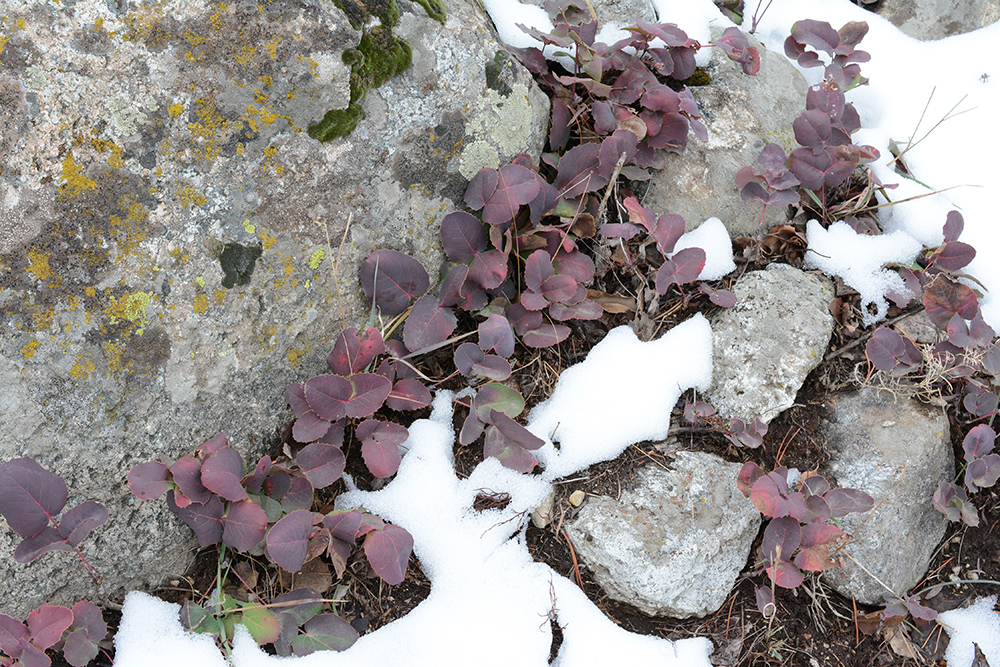
The purplish fruits may be around, but are usually eaten quickly by grouse and other birds. Winter leaves exposed to sun are purplish.
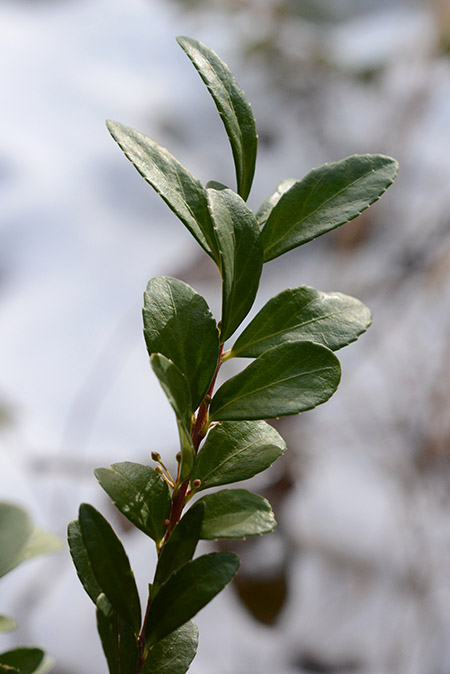
Mountain Lover – Paxistima myrisintes – is found by walking in shady to moist sites.
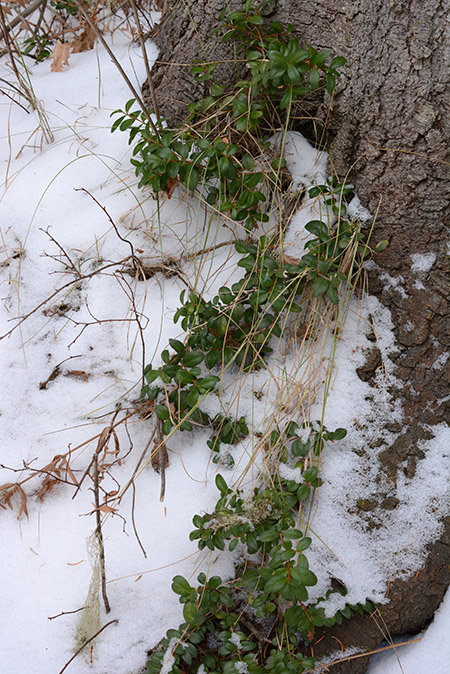
Its small ½-1” toothed oval leaves grow opposite each other on the twigs which will soon be covered with snow.
And out on the valley floor—
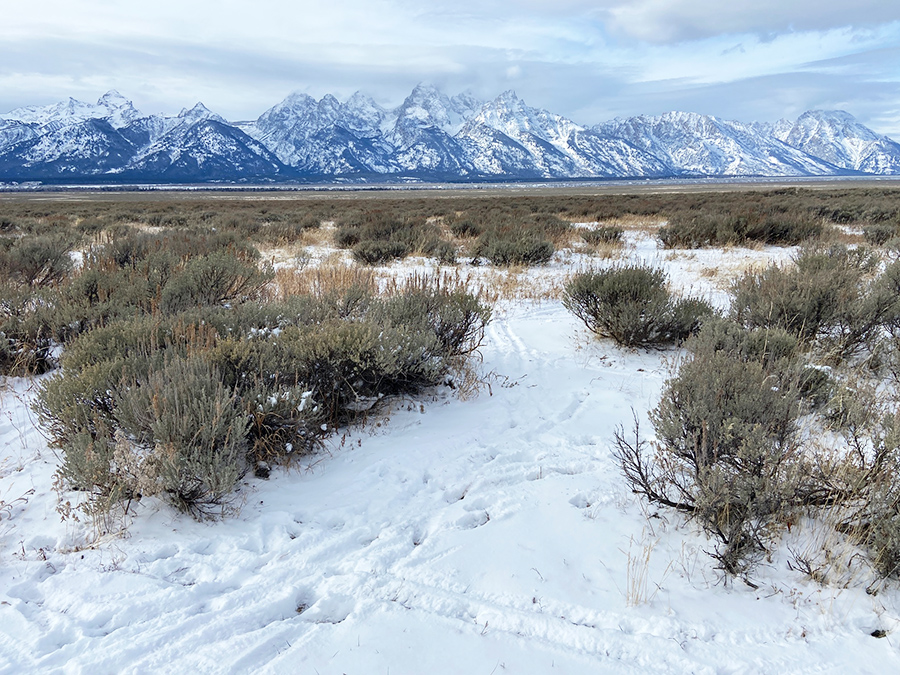
The most frequent evergreen shrub in the valley is Mountain Big Sagebrush – Artemisia tridentata var. vaseyana. Most of us are familiar with the greyish, hairy, three-toothed, <1” leaves with the distinctive aroma from terpenes.
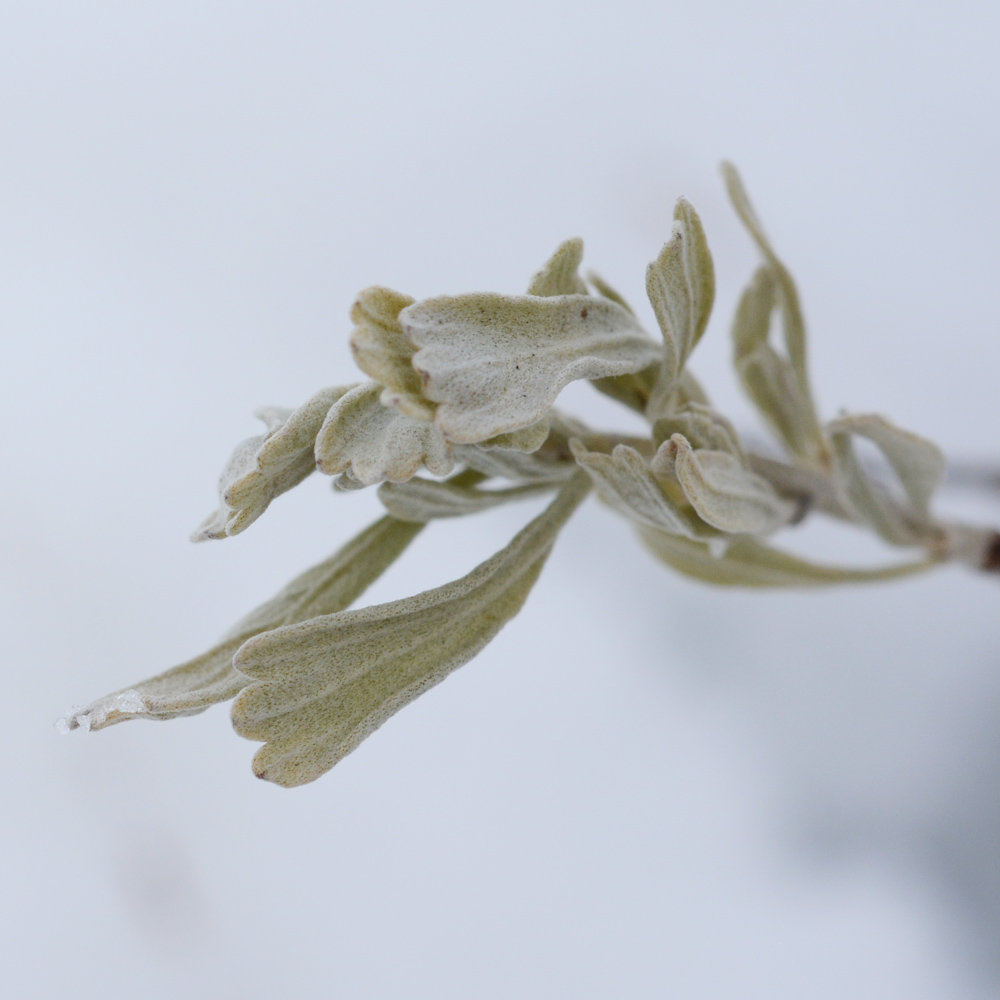
These dominant plants are essential for sage grouse who nibble on the leaves a and buds and huddle under the snow-laden branches in winter. Elk, mule deer, and bighorn sheep all browse the plants.
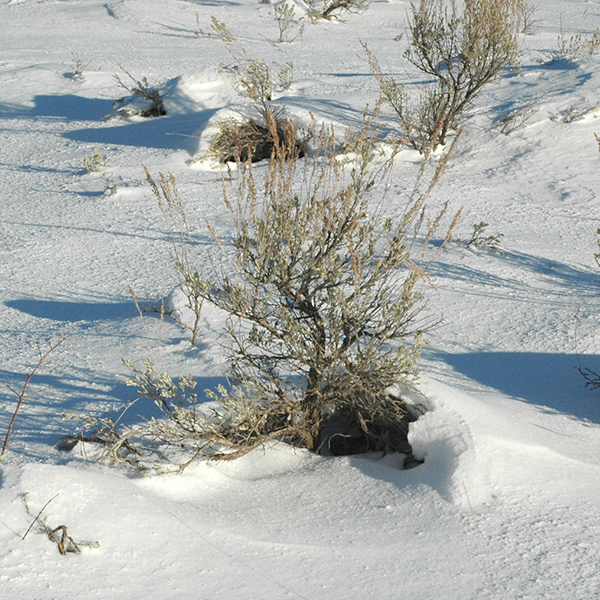
Intermixed with sagebrush on Antelope Flats is Antelope Bitterbrush – Purshia tridentata.

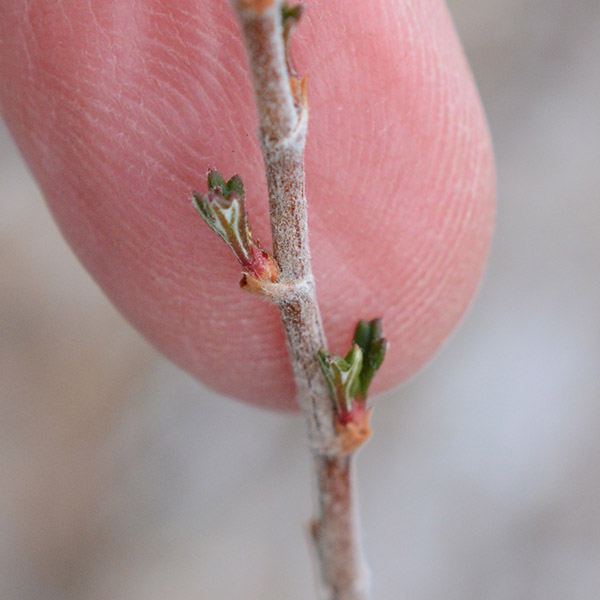
Both species produce larger leaves in the first flush of growth in spring, then add smaller leaves, more drought tolerant leaves later in the summer. They drop off the big leaves and retain the smaller leaves through winter.
Some say Antelope Bitterbrush is deciduous but a close look shows tiny leaves.
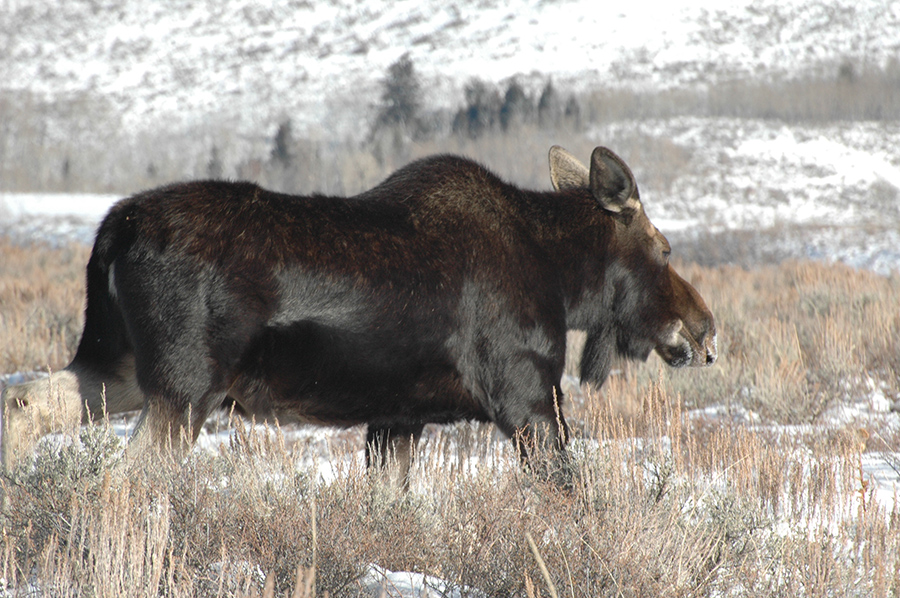
Moose munch on Antelope Bitterbrush November to December, not the nearby sagebrush..
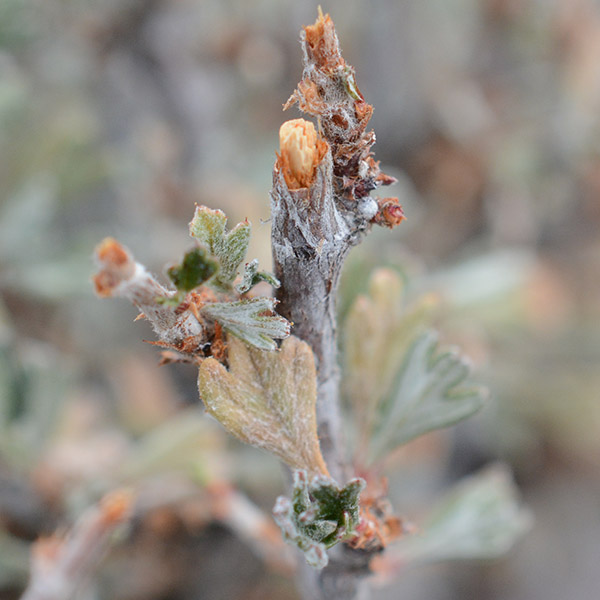
Bitterbrush has three-toothed leaves without silvery dense hairs on the surface. The surface is deep green and a bit hairy and the underside finely hairy with 3 distinctive veins. Stems are purplish.
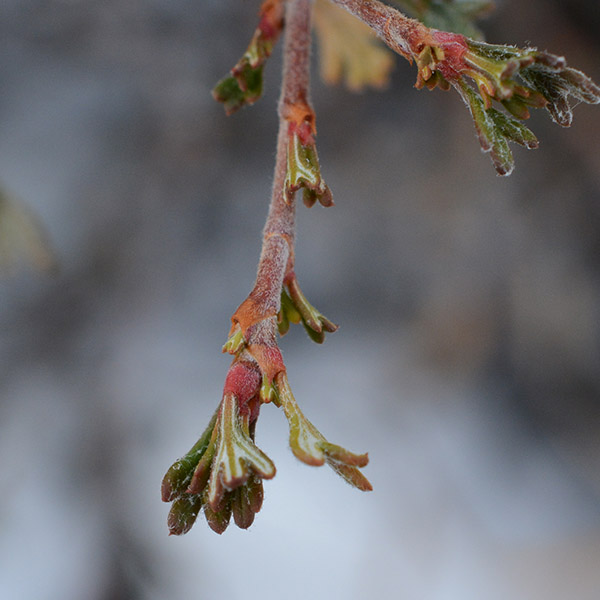
The smaller winter leaves is an adaptation to reduce water loss and protect the leaves from blowing snow crystals.
This time of year evergreens stand out. It is fun to drive and hike/ski about for these species and take a closer look. After a while you begin to recognize them from afar. They all are essential shelter and food for a variety of critters who have not migrated to warmer climes or buried themselves for the winter.
Look for the next “What’s in Winter” posting for common deciduous trees and shrubs.
November 21, 2024, updated slightly 11.26.24, 12.12.24
 Teton Plants