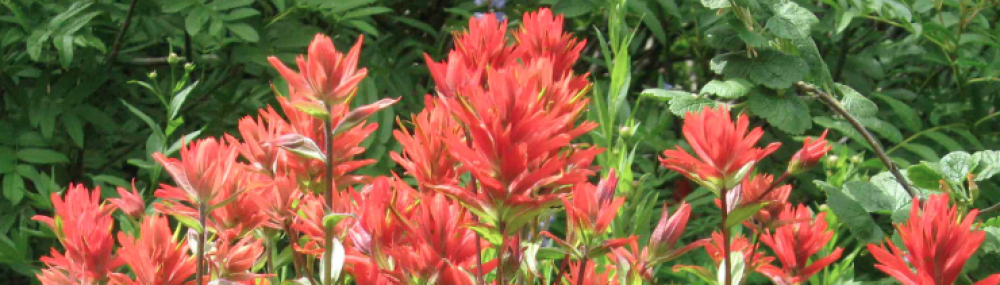
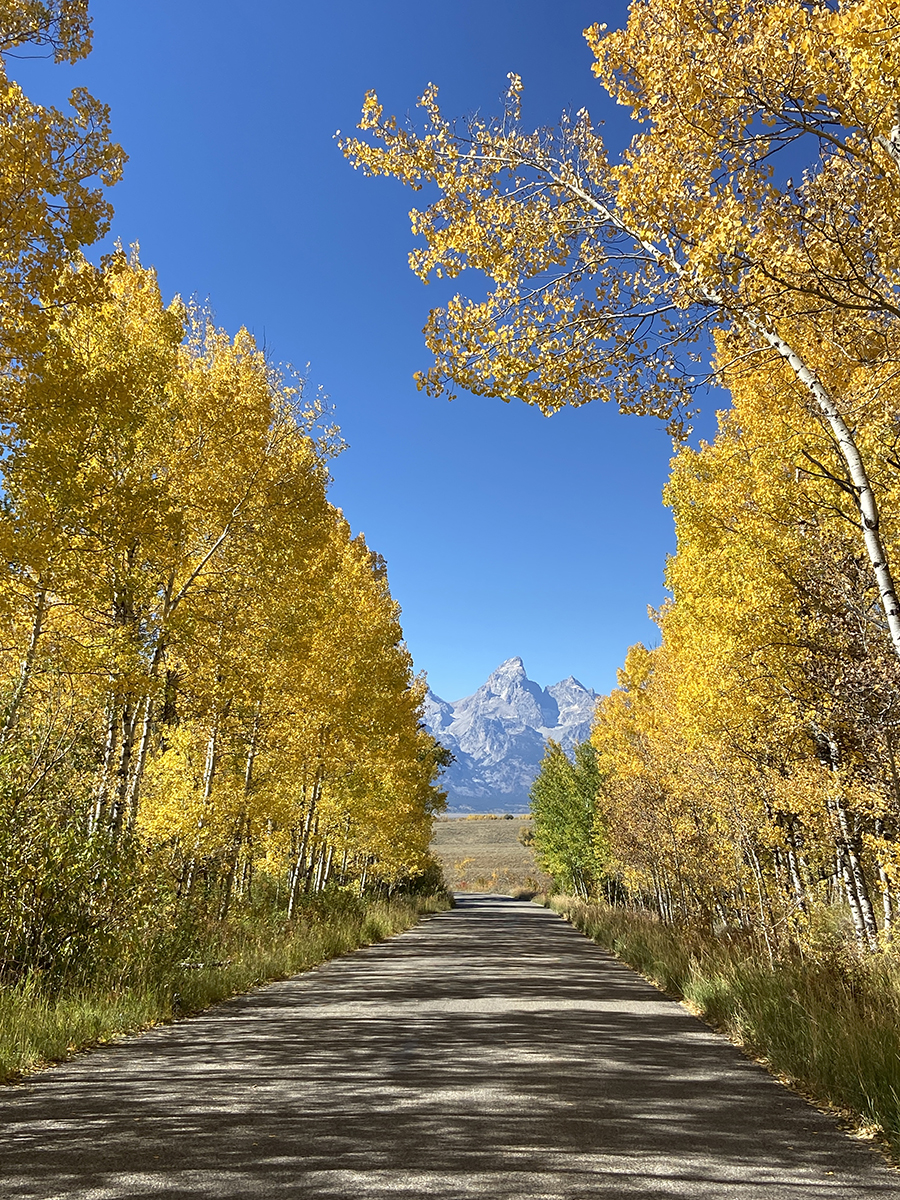
Fall colors are glorious right now and they won’t last long. Along the park trails, up the sides of canyons, across the valley, aspens and shrubs are at their peak fall brilliance. This quick posting is to encourage you to take a hike or a drive to immerse yourself in the various hues above, below, and all around you.
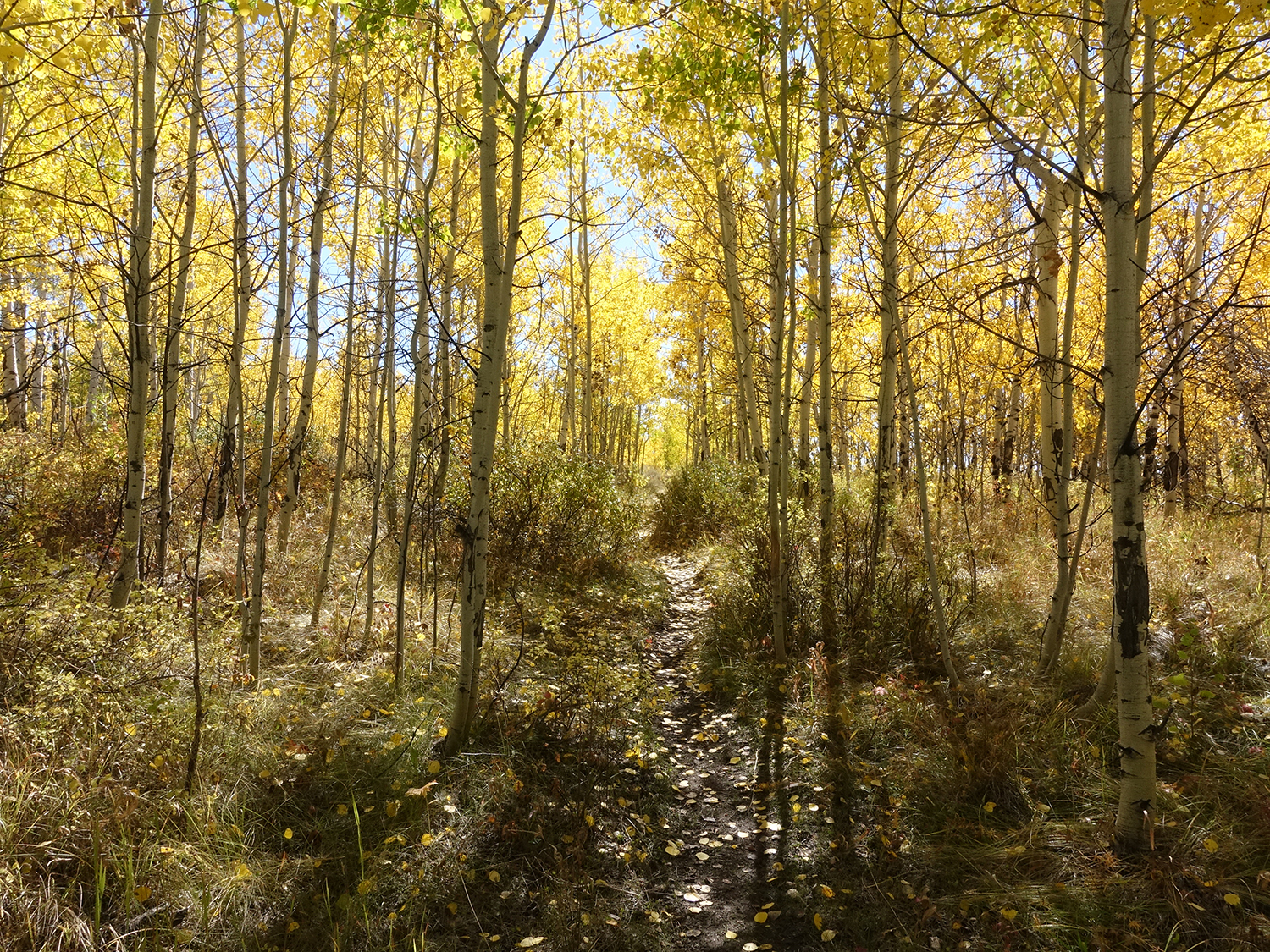
It is also an invitation to take a closer look at the amazing detail of leaves, even the buds, that together provide ID tips. The following photos are meant to increase your enjoyment of our remarkable flora.

Why are there all these colors? Very simply, as the day length shortens and light fades, the green chlorophyll cells in leaves gradually die revealing existing carotenoid pigments (oranges and yellows) or newly forming anthocyanin pigments (purple-reds). The reasons for these pigments are being researched. Here is a link to a very thorough article in the Journal of Evolutionary Biology. But for now, just enjoy this ephemeral season of color.
Deciduous Trees:
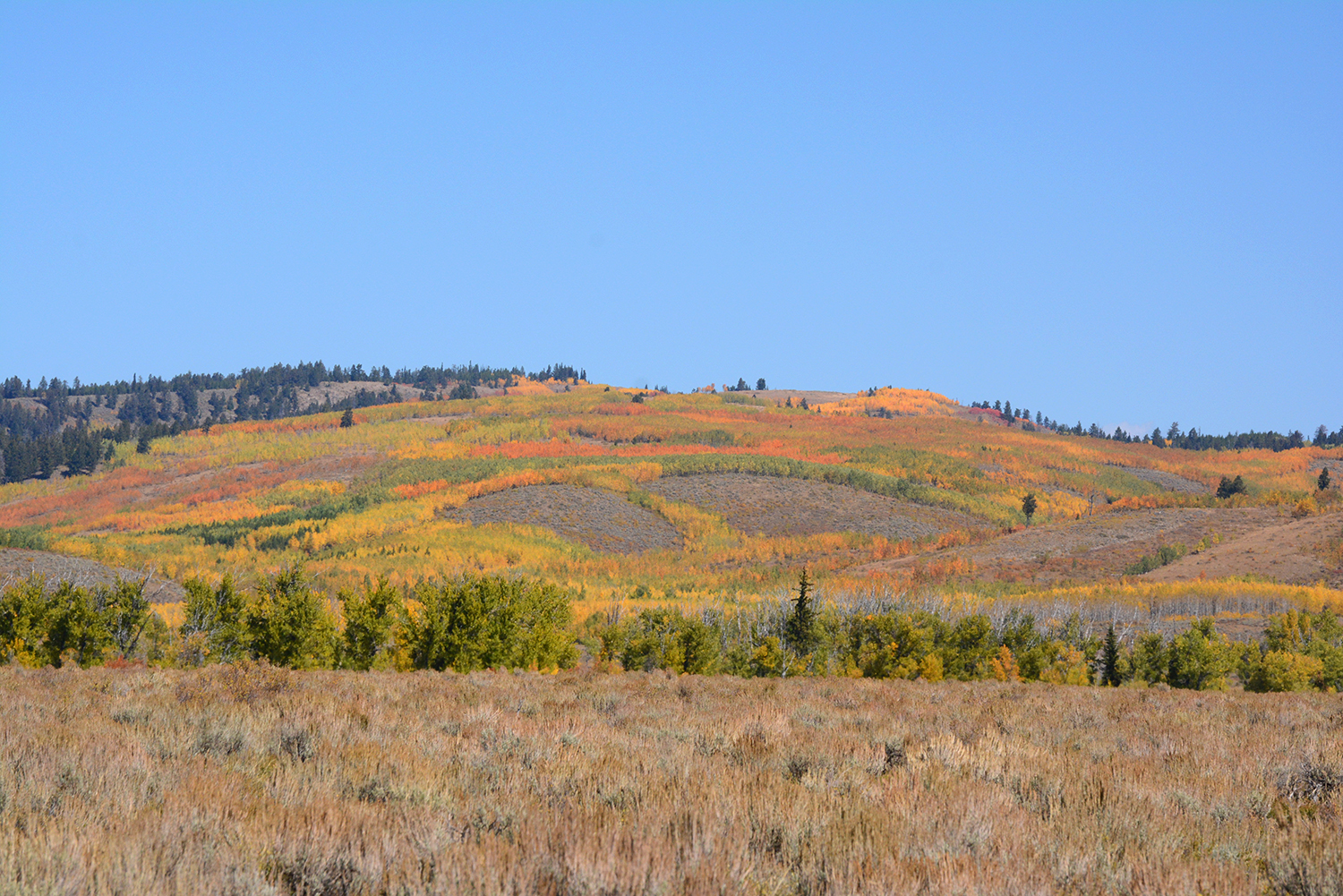
Aspens – Populus tremuloides – are the backbone of our fall color. Aspens typically grow in clones: many stems arise from connected underground roots, so many many trees are one genetic individual. Notably aspen clones have different shades of yellows to orange as seen on the south end of Shadow Mountain right now.
When looking at clones, also look at the different growth forms such as these trunks dancing

or different bark markings–such as squiggles.

Cottonwoods – Populus angustifolia, P. acuminata. P. balsamifera – are shading creek sides and the Gros Ventre and Snake River flood plains.

Tall and Short Shrubs:
Shrubs have many colors which are not always the same on the same species. Note: in the following descriptions, an artist would have a much greater vocabulary for the myriad colors than expressed here. Also the measurements are a rough estimate.
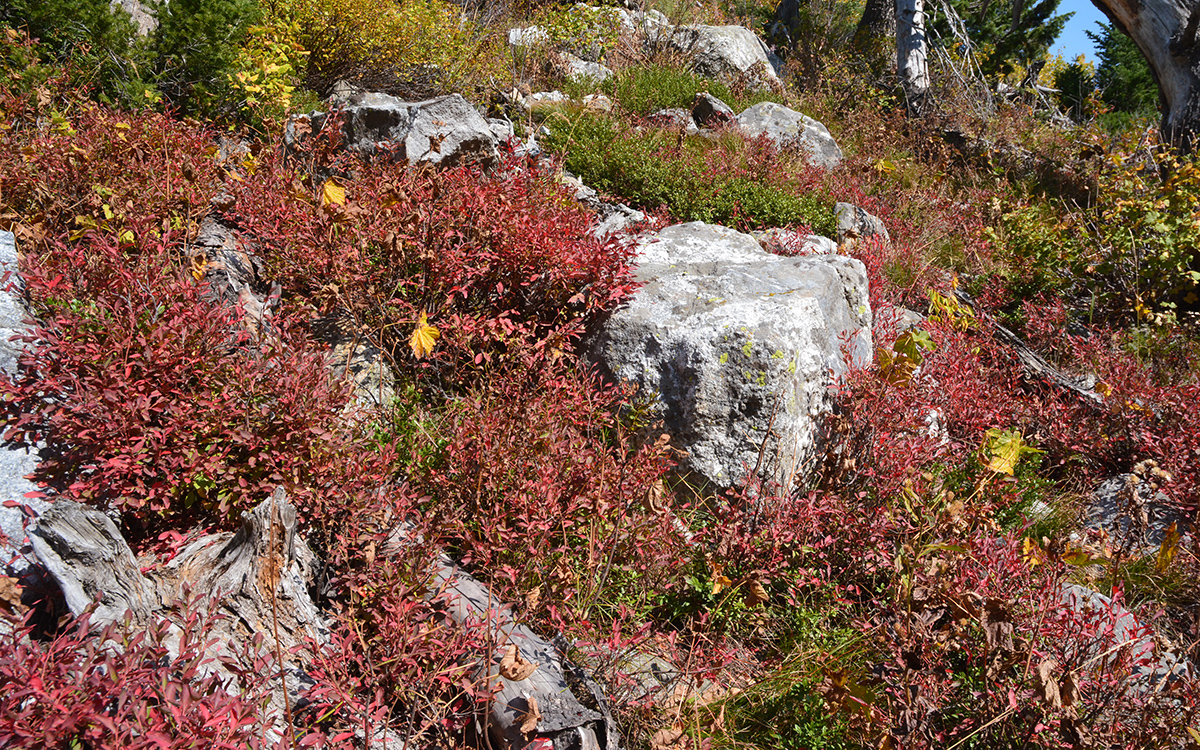
Mountain Huckleberries – Vaccinium membraceum – leaves are often a deep maroon. They are about 1″ long, pointed ovals with fine teeth.
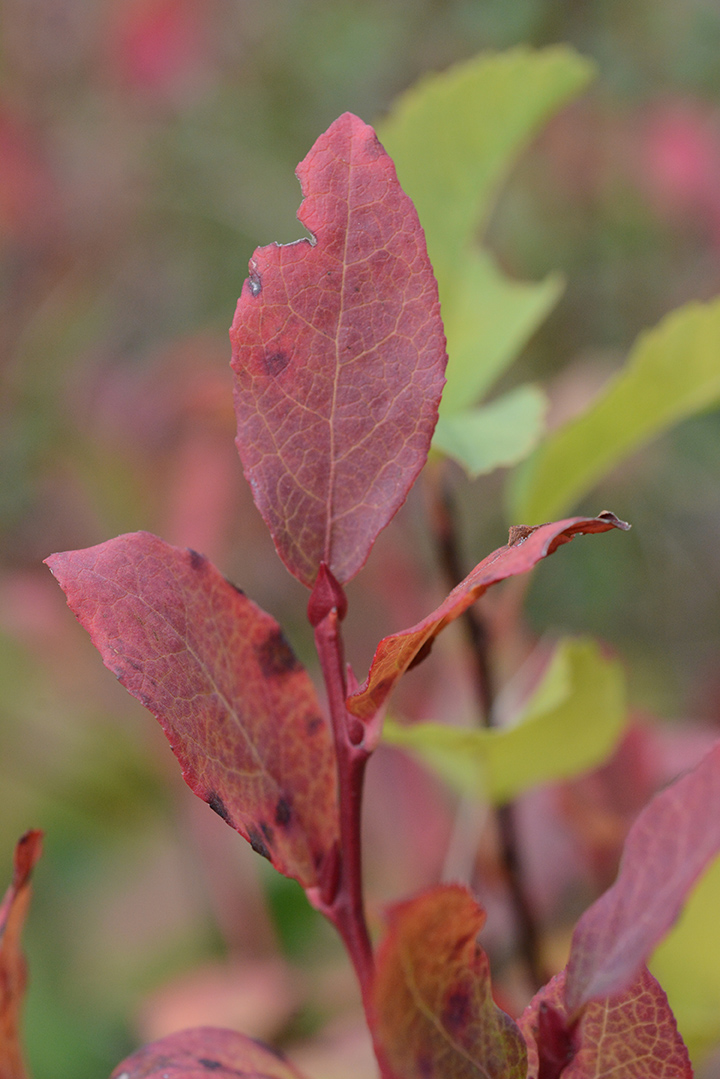
The 2-3’ shrubs stand out along the north side of Jenny Lake and elsewhere.
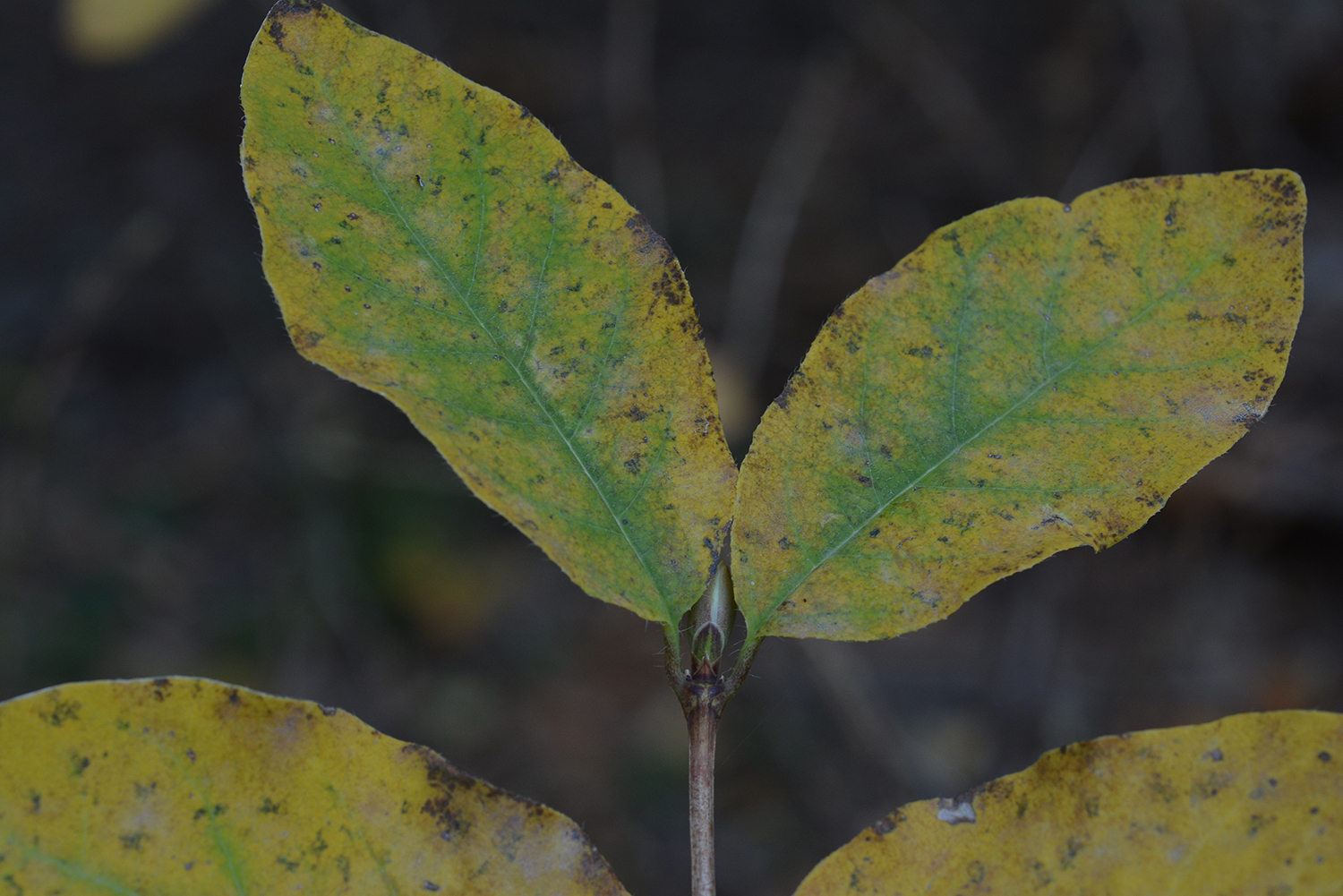
The opposite, oval leaves of Utah Honeysuckles – Lonicera utahensis – tend to be yellow and often line trails.
Lower to the ground – Spreading Dogbanes – Apocynum androsaemifolium – an herbaceous plant, brighten the understory of lodgepole pine forests.

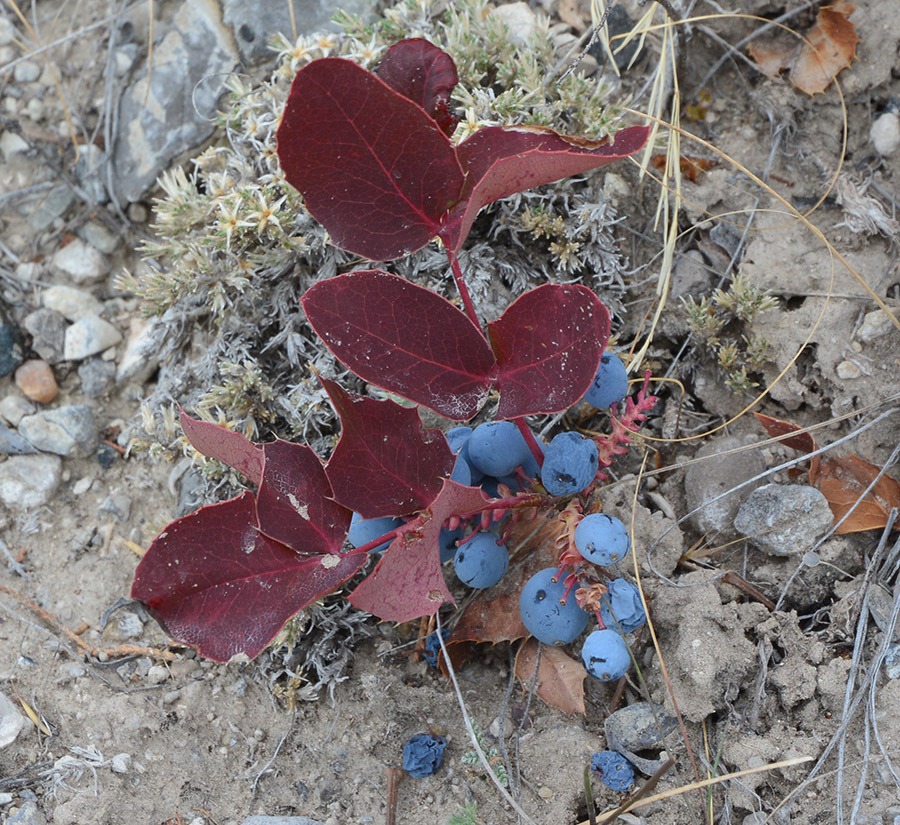
Oregon Grape – Mahonia repens – has evergreen, compound leaves. The lobes have sharp-teeth reminiscent of holly leaves.
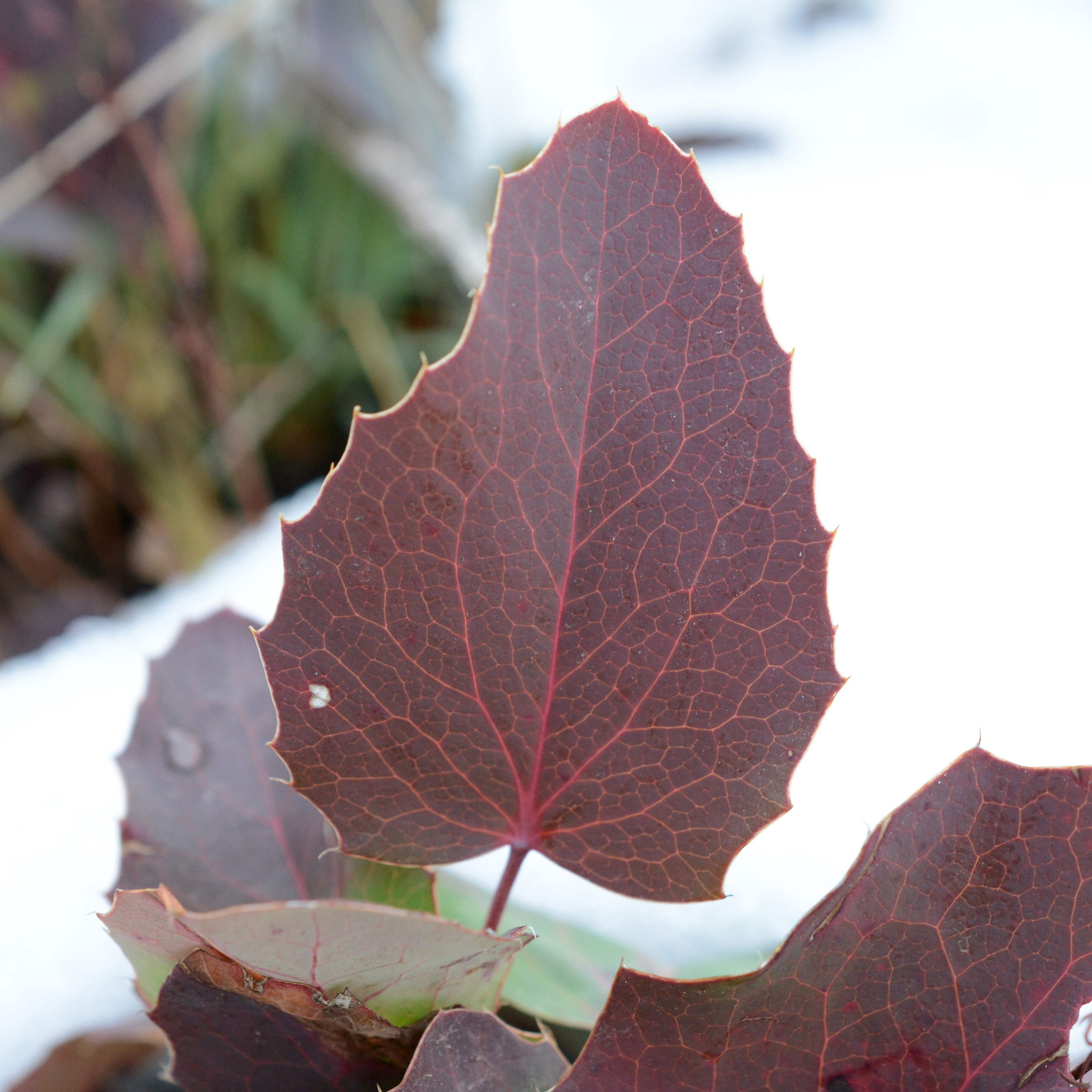
They turn a burnished purple which highlights the blue fruits. This is a highly adaptable plant often growing in sun amidst rocks or the the shade of evergreens.
The oppositely arranged, mostly three-lobed leaves of Mountain Maple – Acer glabrum – tend toward yellow-orange.

These large shrubs form yellow mounds up the slopes just north of Jenny Lake.

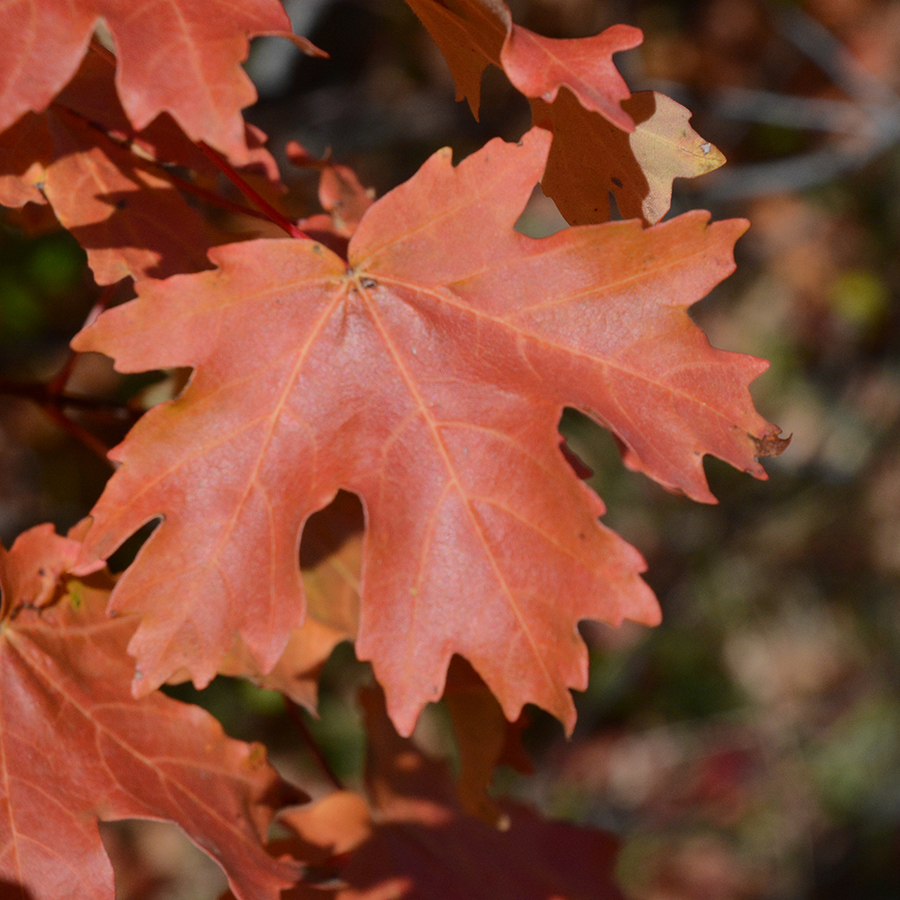
The more colorful Bigtooth Maples – Acer grandidentatum – show up in in the canyons south of Jackson. With their several lobes and ‘U” shaped indentations (sinuses), the leaves of these shrubby maples of the West look very similar to those of Sugar Maple – A. saccharum – magnificent trees of the East
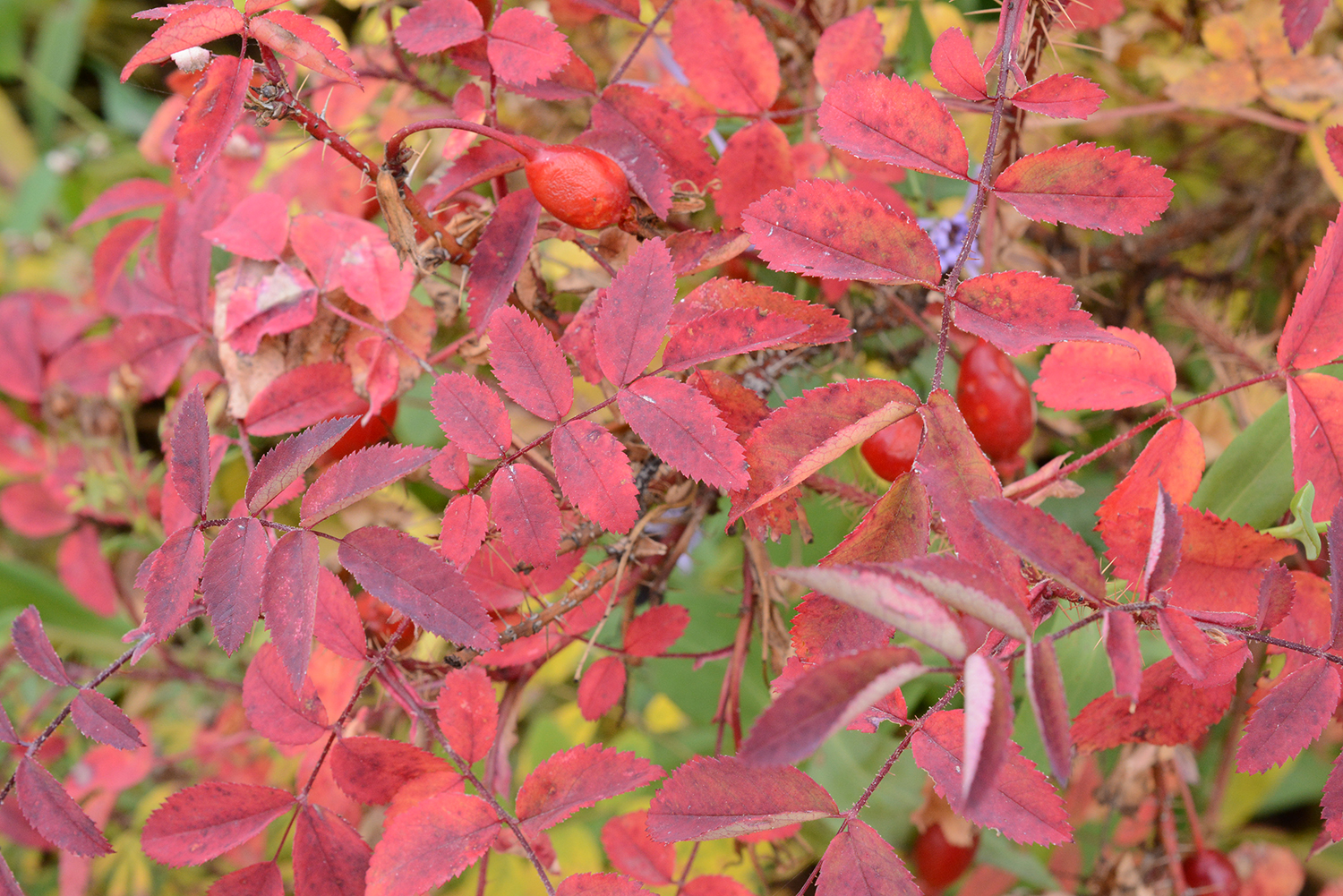
Many common shrubs are in the Rose Family:
Our native roses – Woods Rose – Rosa woodsii and Nootka Rose – R. nutkatensis – tend to color a bit later but then can be quite a show.
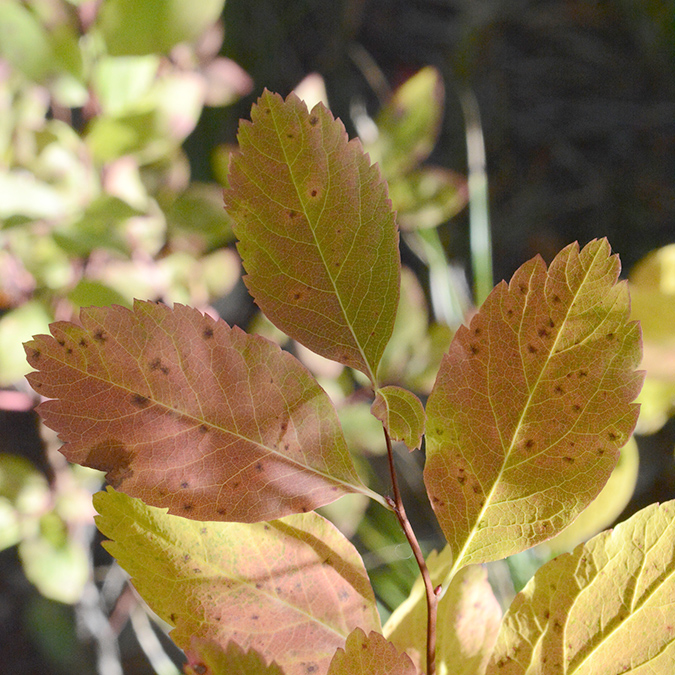
Birch-leaf Spirea – Spiraea betulifolia var. lucida/now: B. lucida – sport different colors.

Leaves are alternate and toothed near the terminus.
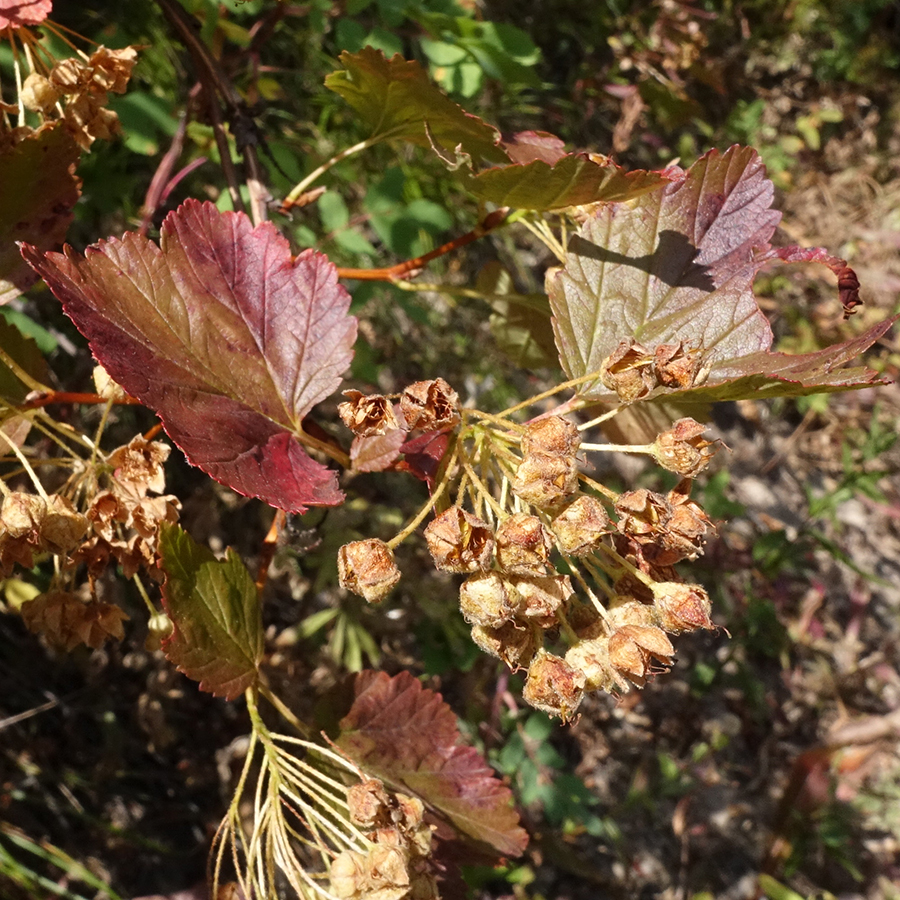
Although in the Rose Family, these low spreading shrubs do not have lush fruits but rather tiny cups with small dried fruits that split open to release 4-5 seeds (follicles).

Instead of the small dried fruits, I sometimes see odd enlargements in their place and have not determined what they are—when broken open they are dust-like—fungus, galls?

Ninebark – Physocarpus malvaceus – grows on relatively dry slopes, mostly south of Jackson along the Snake River Canyon. The 4-5’ shrubs stand out for their maroon colors. The leaves are very similar in shape to our mountain maples but are arranged alternately on the stem.

As with Spirea, they have dried, unappealing fruits.
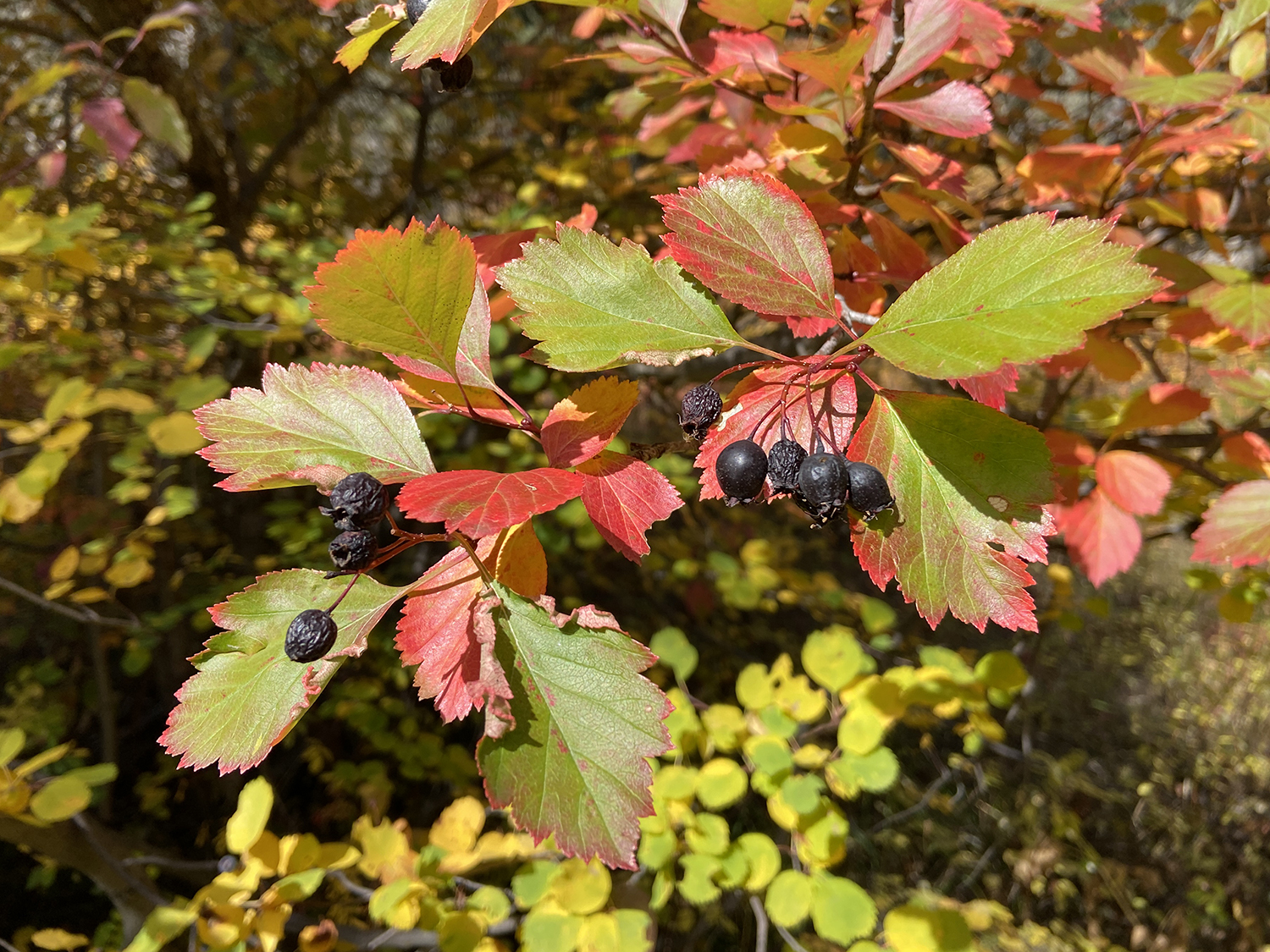
Abundant fruits of Black Hawthorn – Crataegus douglasii – are still hanging on and attracting bears along the Moose-Wilson Road and elsewhere.

Despite the 1” thorns on the branches, bears have no problem clambering into the 15-20’ high shrubs. Since late August, the green, multi-toothed leaves have become a shiny reddish hue.
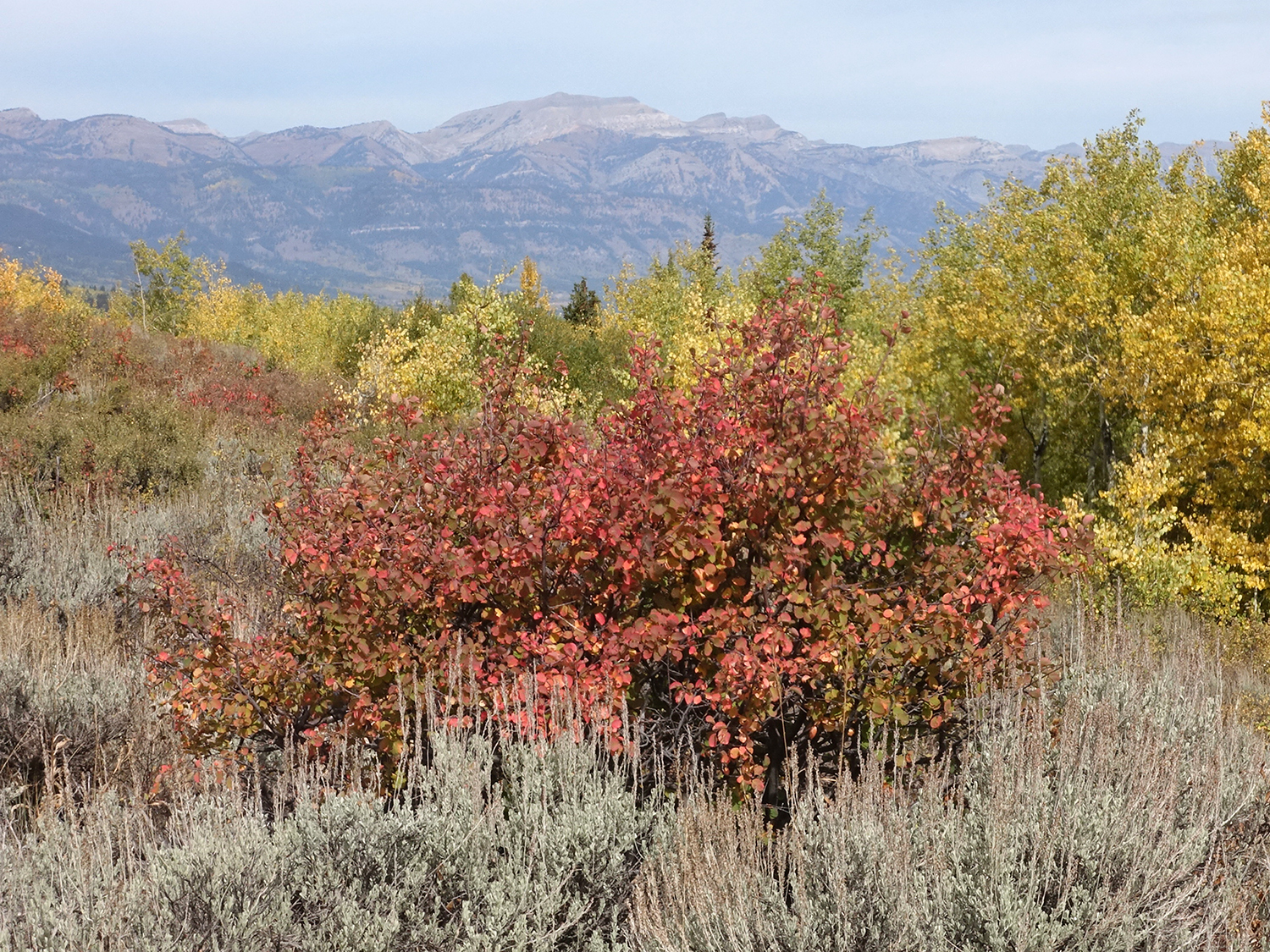
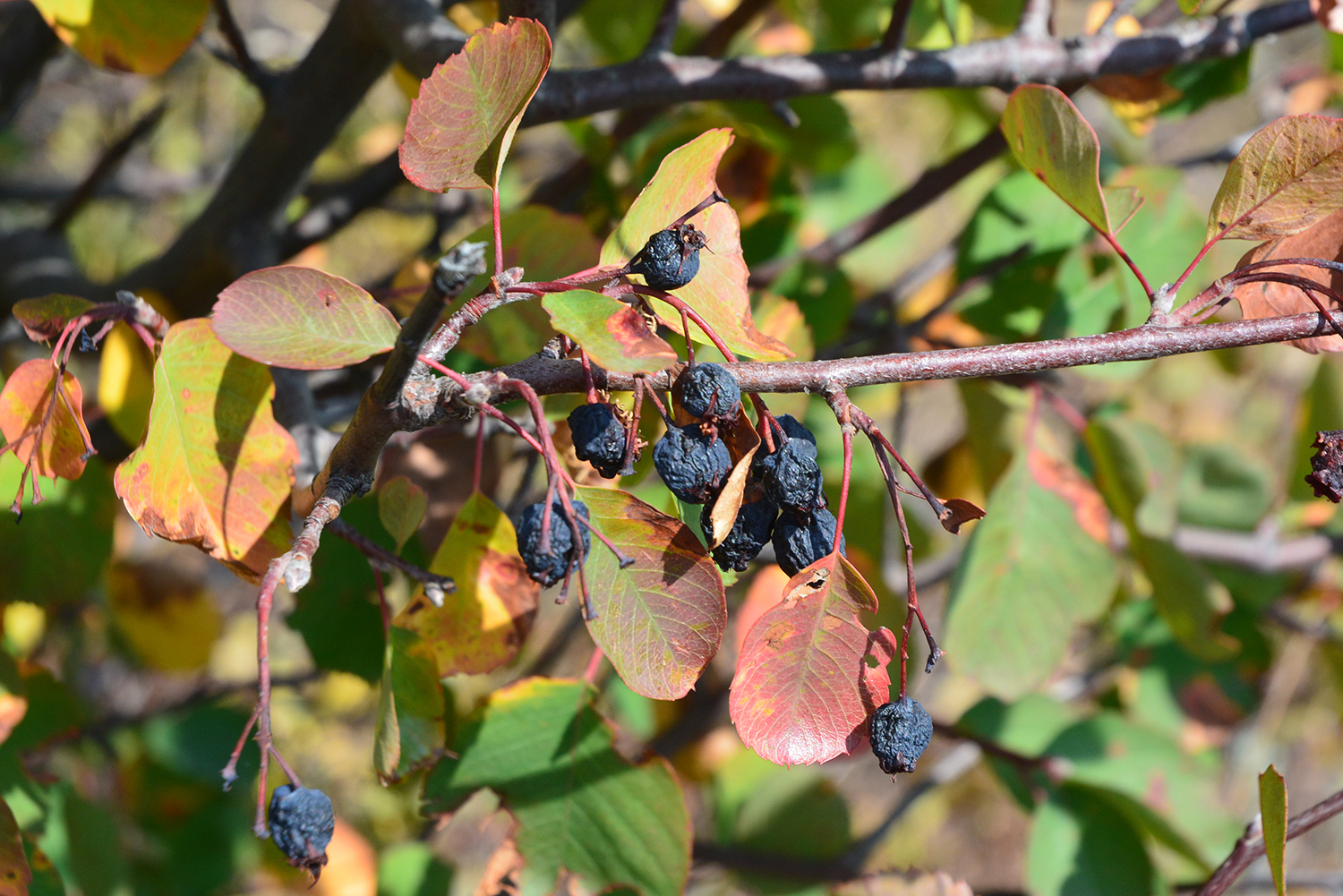
Serviceberries – Amelanchier alnifolia – appear to vary widely in color.
The blue fruits have shriveled and darkened since late August with the flavor even more concentrated and delicious until they totally shrivel up and become tasteless.
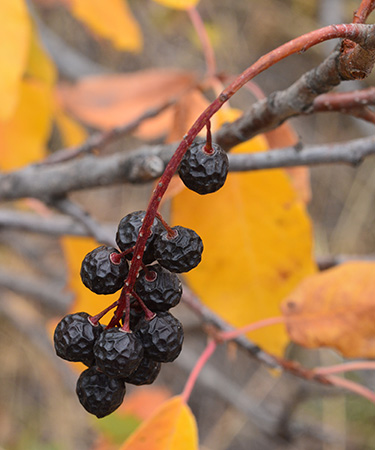
Choke Cherry – Prunus virginiana – sport 3-4″-long, toothed, oblong leaves
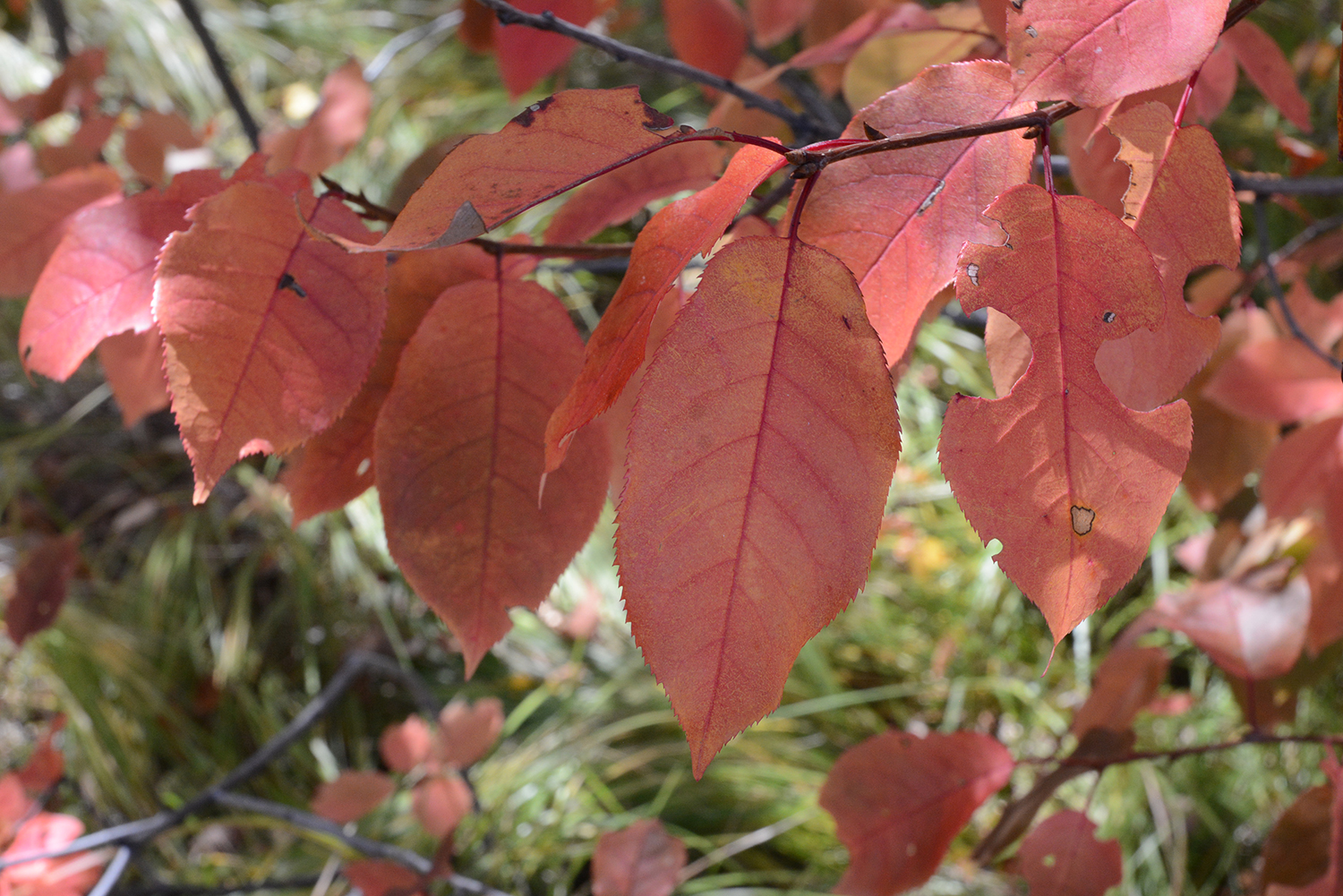
that range from yellow to pinkish-red. The dangles of purple-black fruits are fast disappearing to nourish birds and bears.
Large 5”- wide, lobed leaves of Thimbleberry – Rubus parviflorus – glow yellow on canyon slopes

or creek sides. The venation of the leaves is termed “netted”.

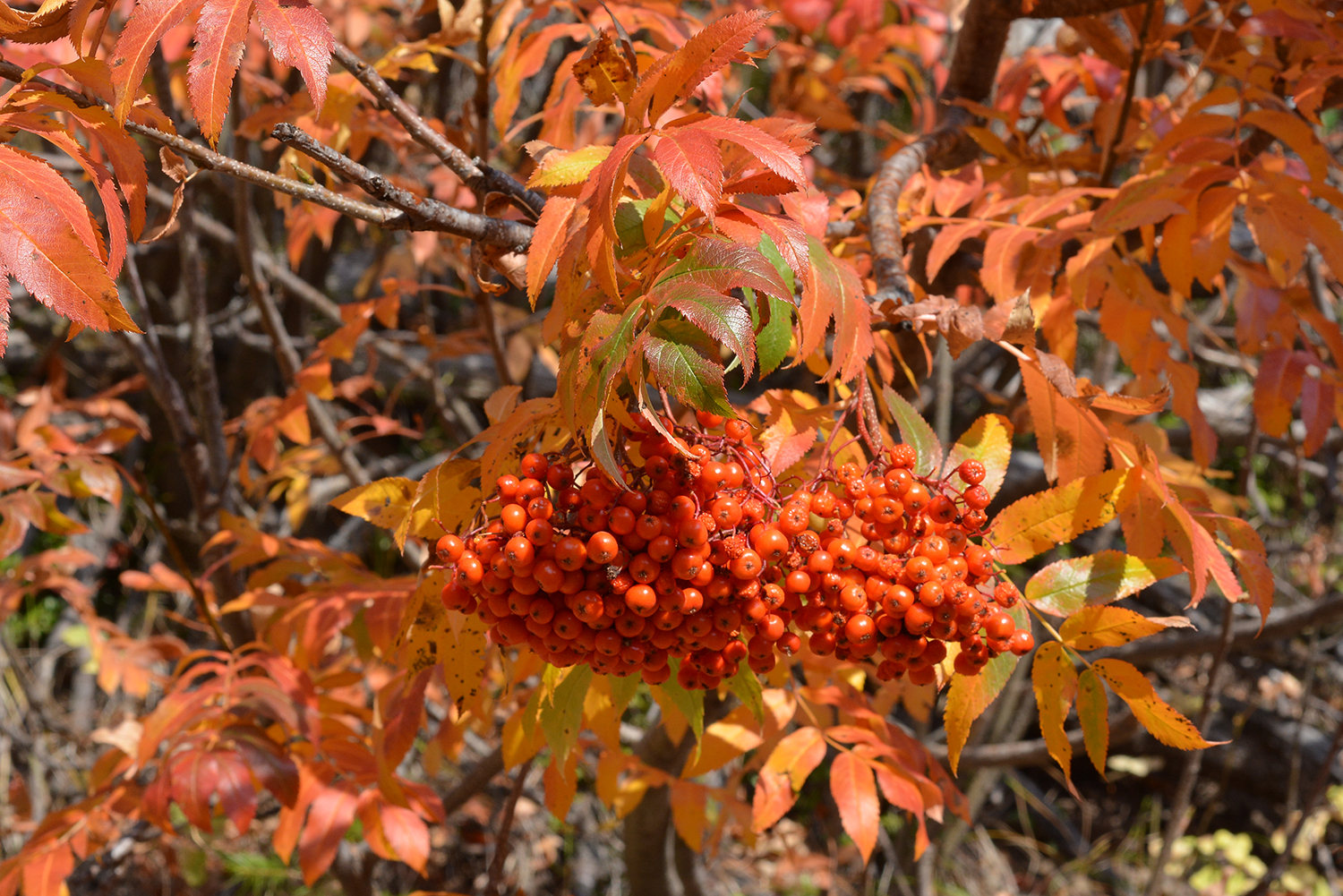
Mountain Ash – Sorbus scoparia – often grows up to 10 -15’. The deep red-oranges of the compound leaves
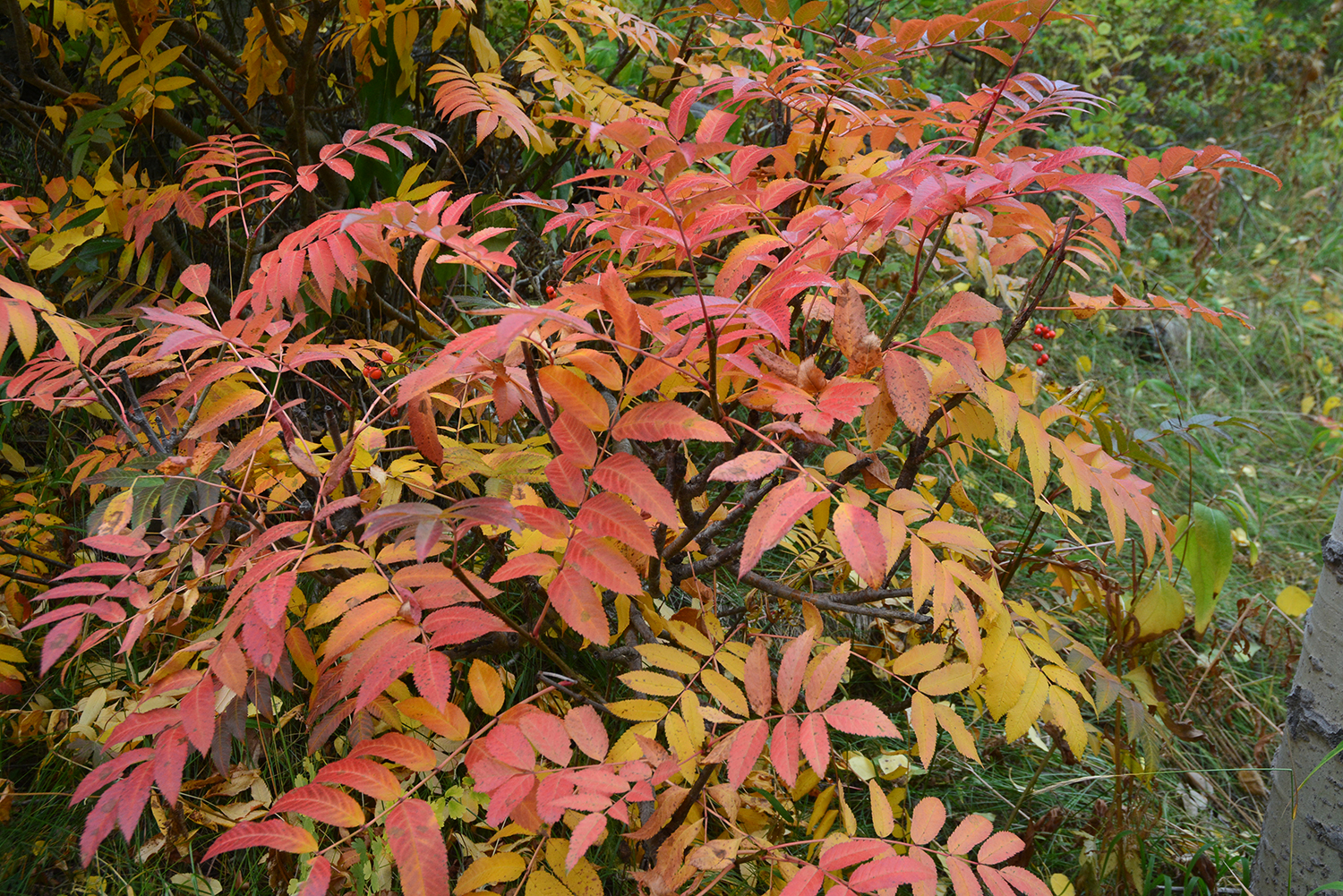
and their heavy clusters of bright orange fruits highlight relatively moist trails and mountain sides.
Don’t confuse Mountain Ash with the more robust, unrelated Red Elderberry – Sambucus racemosa. This species has larger compound, opposite leaves, and large clusters of lush fruits with a reddish hue.
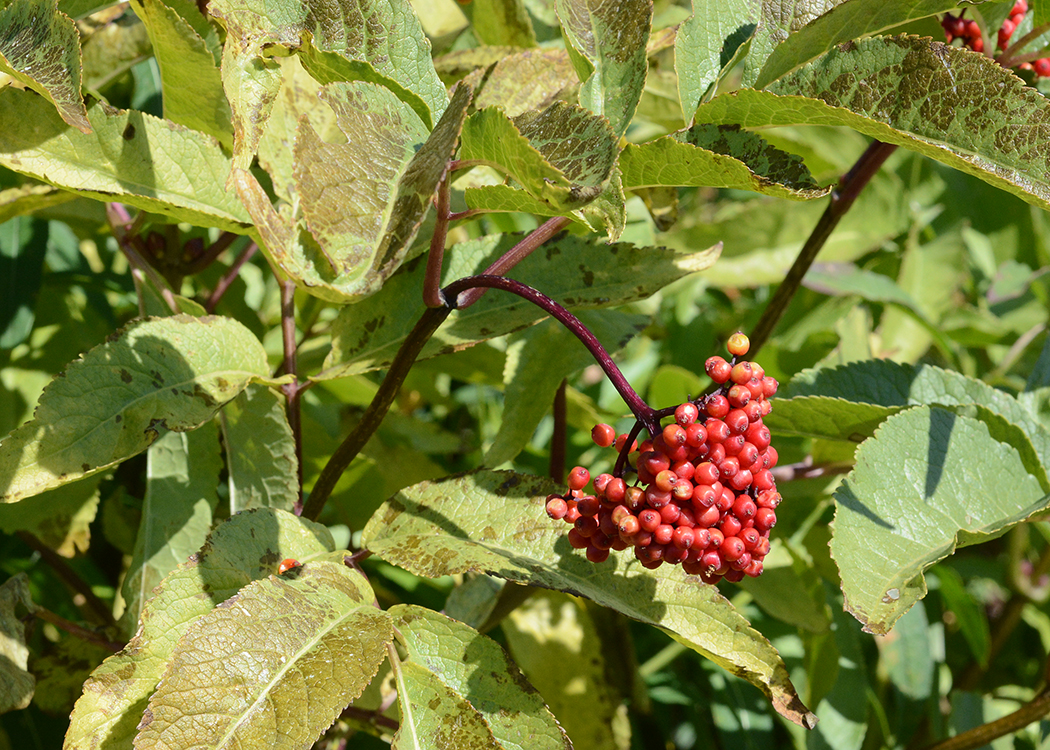
There is also a variety – S. r. var. melanocarpa – with almost black fruits. Elderberries have a rank fragrance if you break the warty, finger-thick stems. The fruits and other plant parts are poisonous with cyanogenic glycosides, so don’t eat unless you cook them thoroughly.
Red-stemmed Dogwoods – Cornus stolonifera – are a notable landscape plant not only for their white flowers and blue-to-white fruits,

but also for their deep maroon, oval, smooth opposite leaves with “parallel” veins.
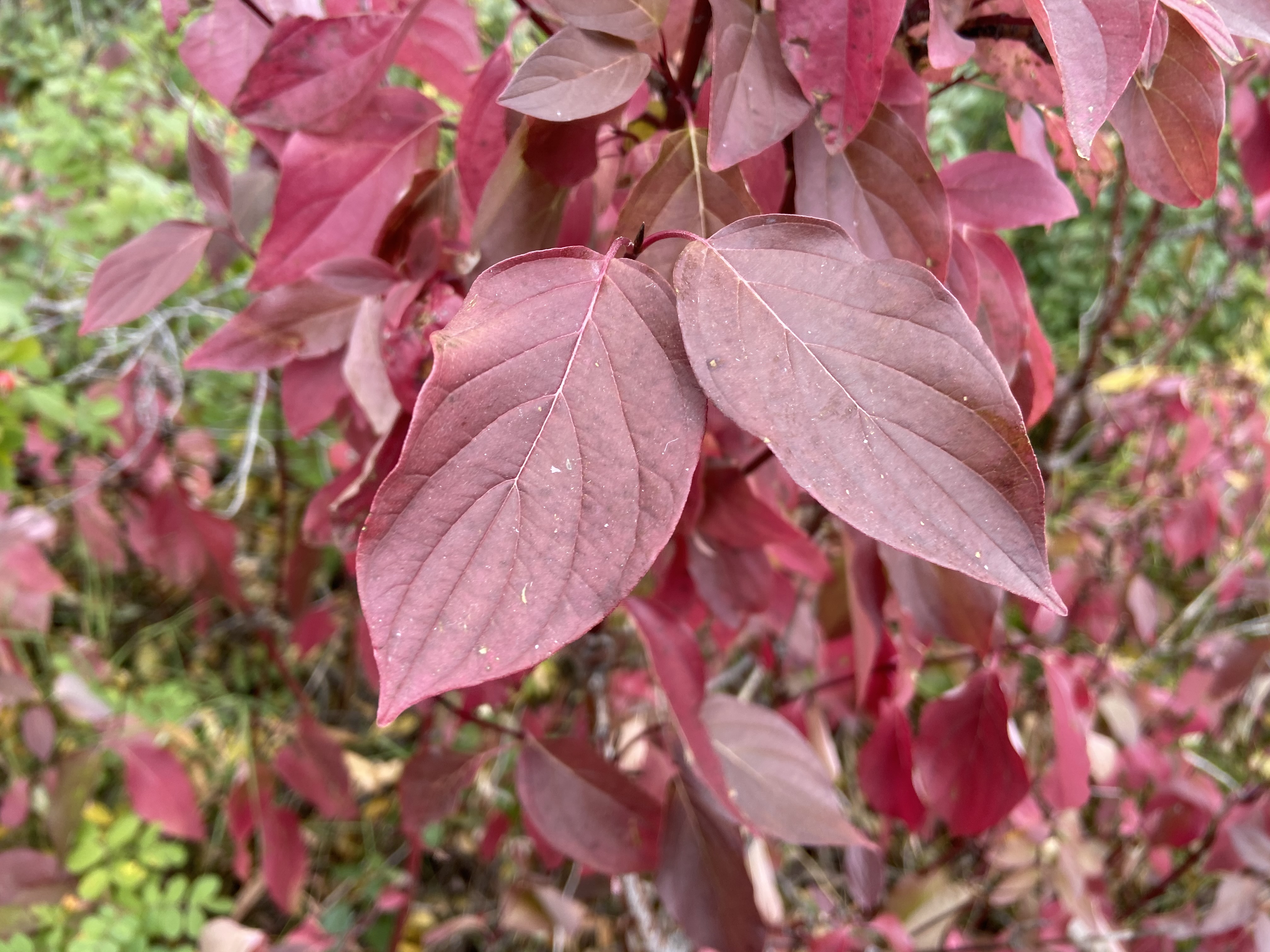
The common name is for their obviously red stems.

The 6-8’ shrubs grow naturally along stream sides, and are favored forage of moose!
Many species of Willows – Salix sp. – blend their colors on Willow Flats seen from the Jackson Lake Lodge

up Game Creek, and other large wet areas
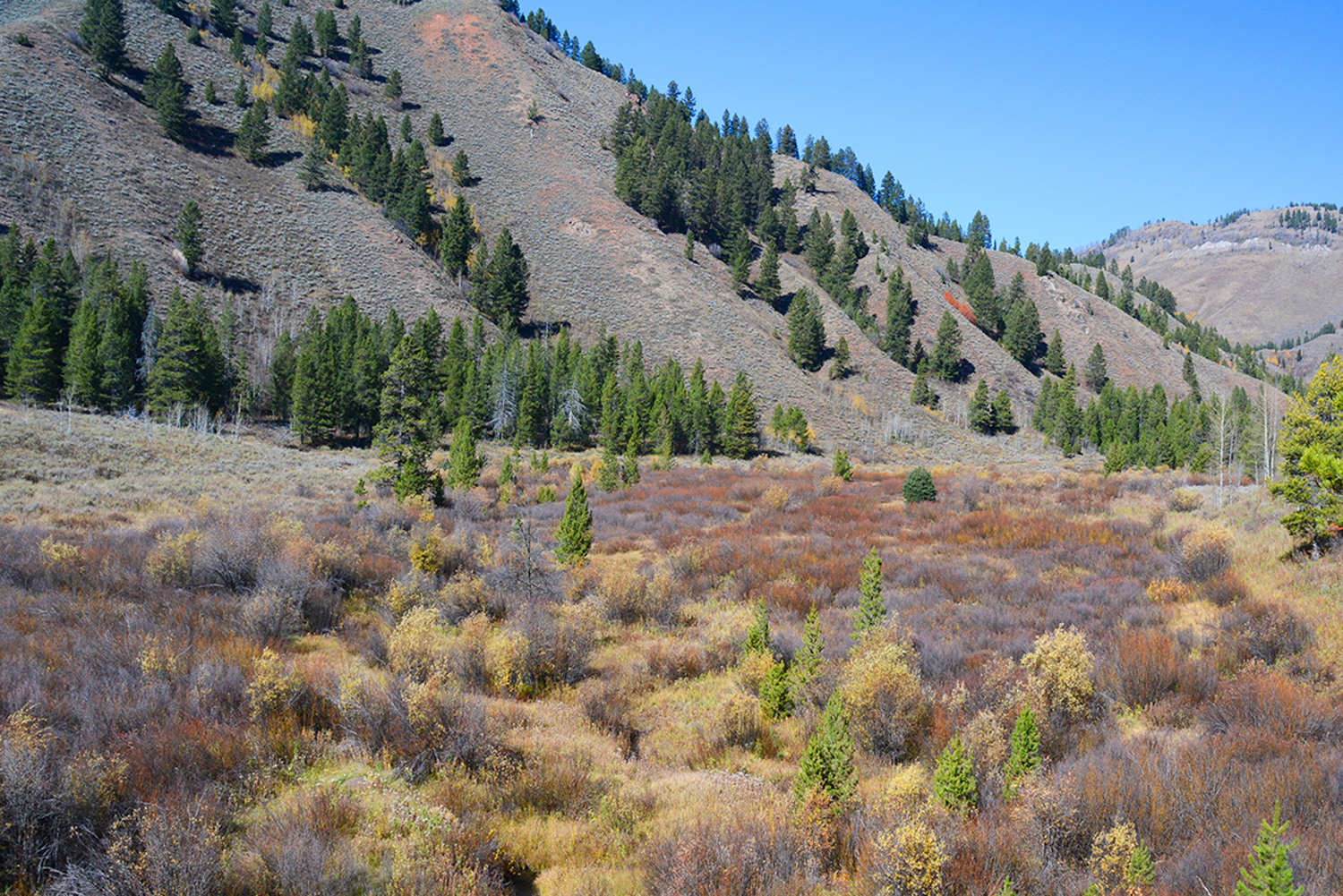
Don’t miss the show. Get out to see the fall foliage now if you can.
Frances Clark, Wilson, WY
9.27.25, slight updates 9.28.25
 Teton Plants
France’sWhat a wealth of information. Thank you. Yes.. we are getting out since returning from our good Boston trip. Do the bears only eat the fruits of the Huckleberry? Do they eat any other berries?
Abigail Freeman-Karin 🌺