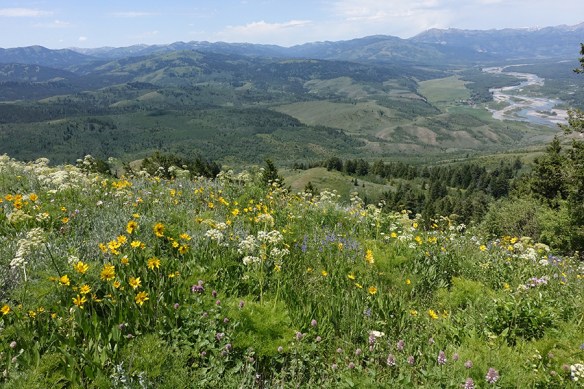
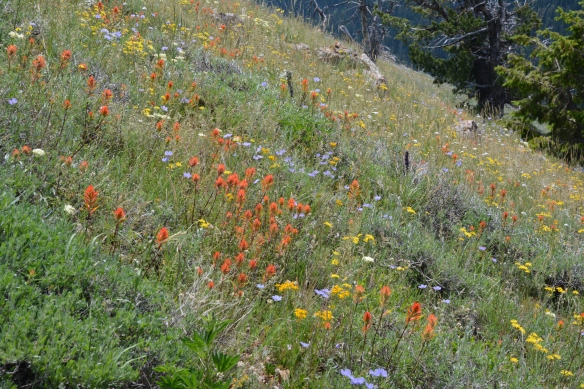
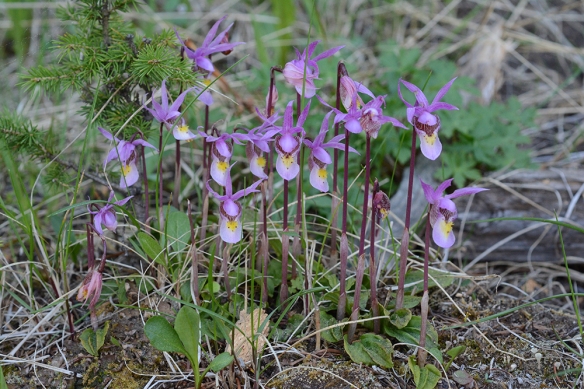
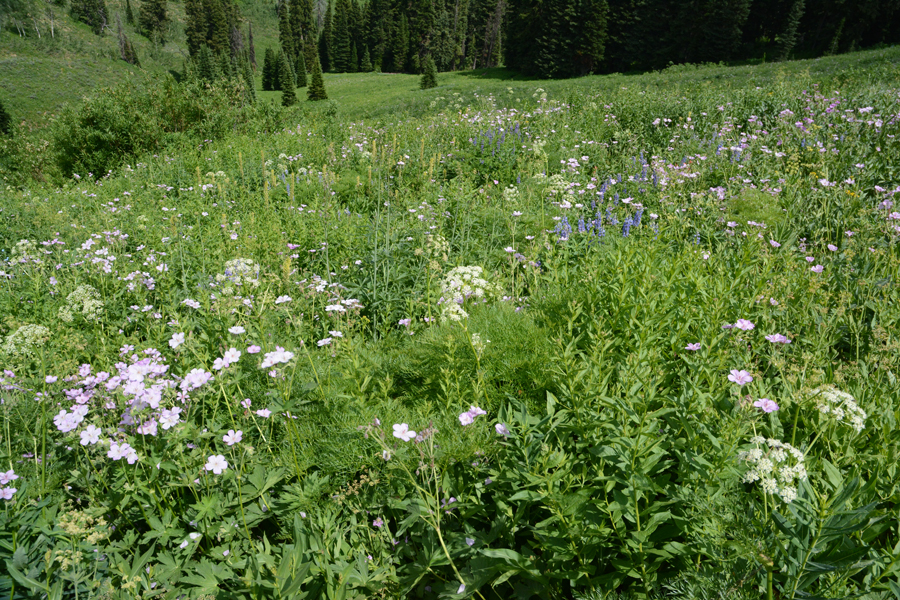
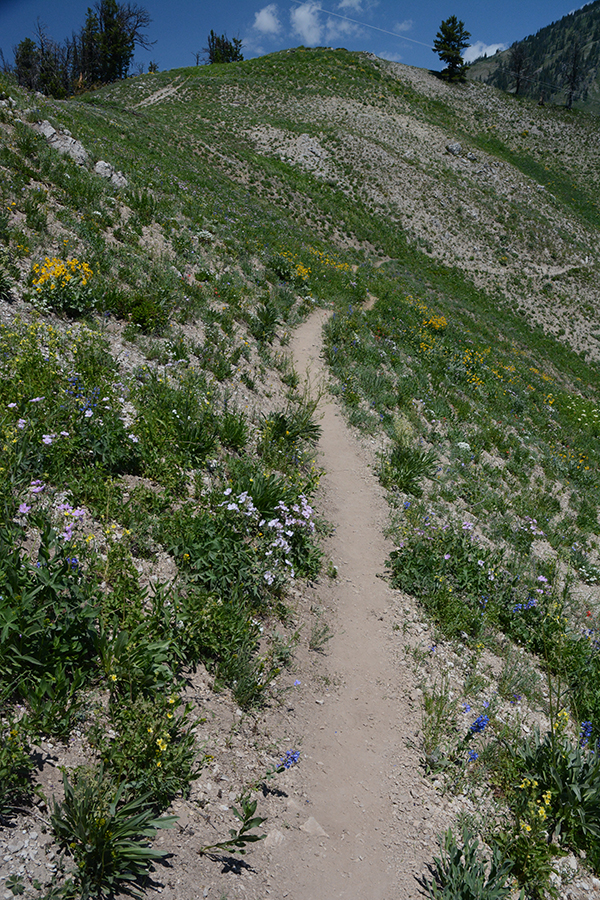
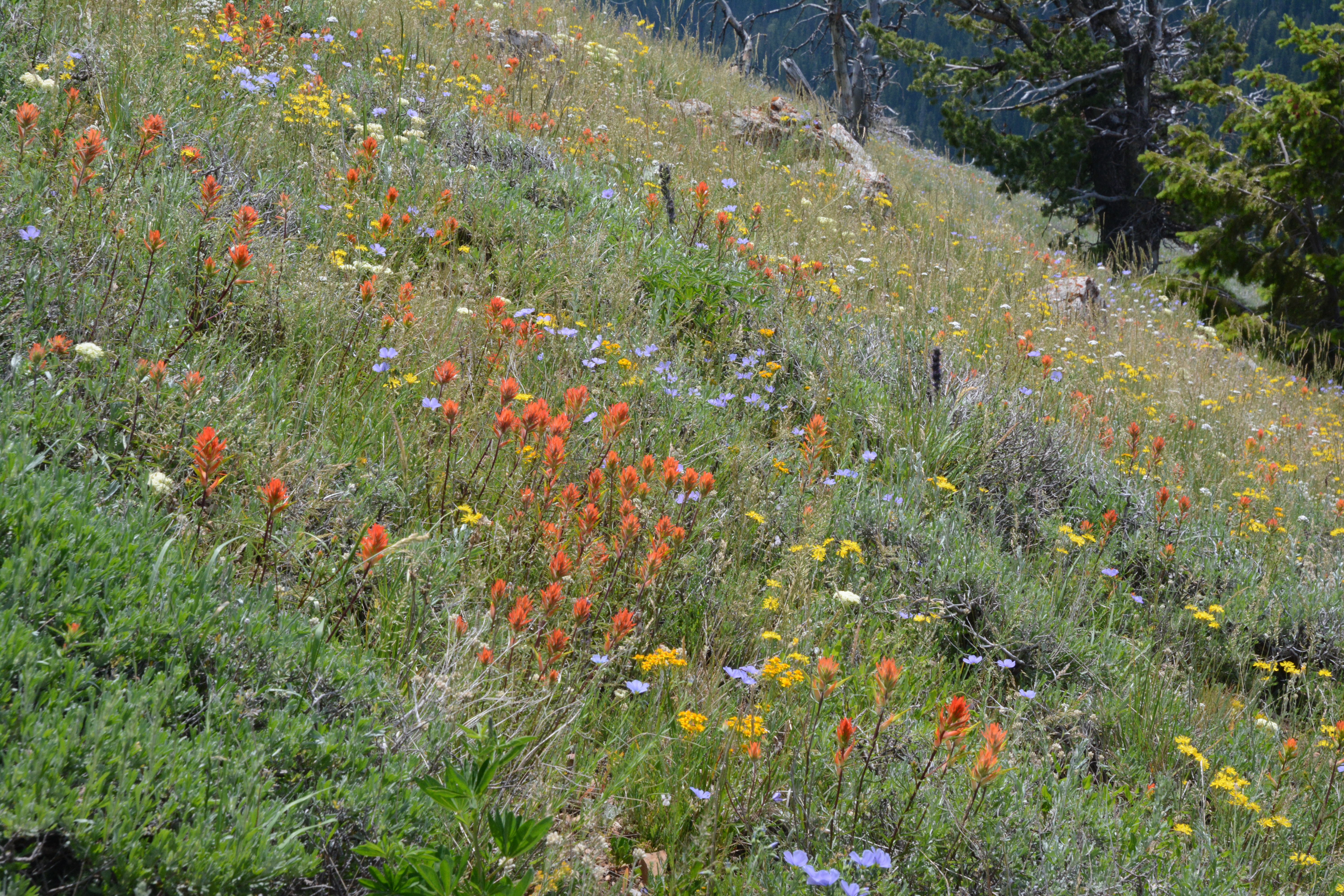
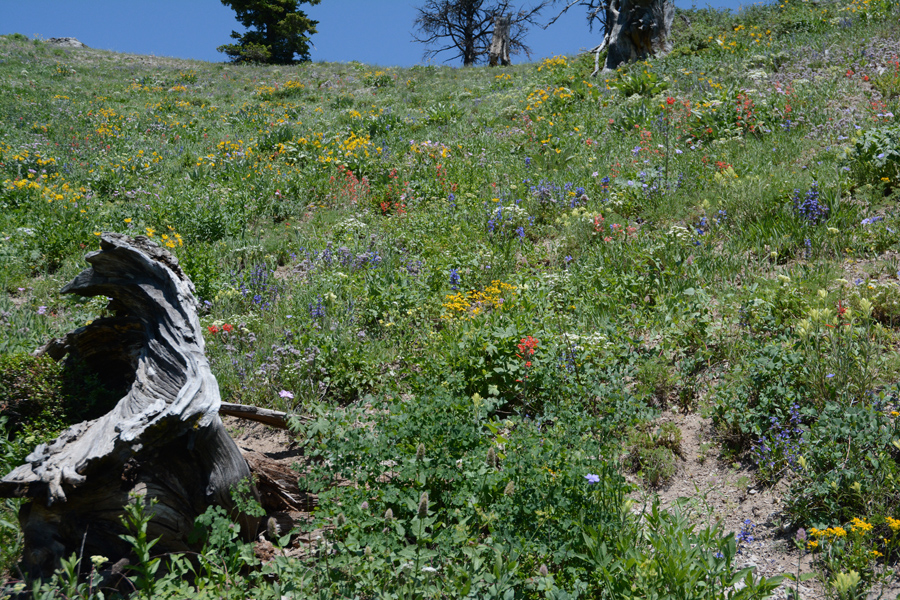
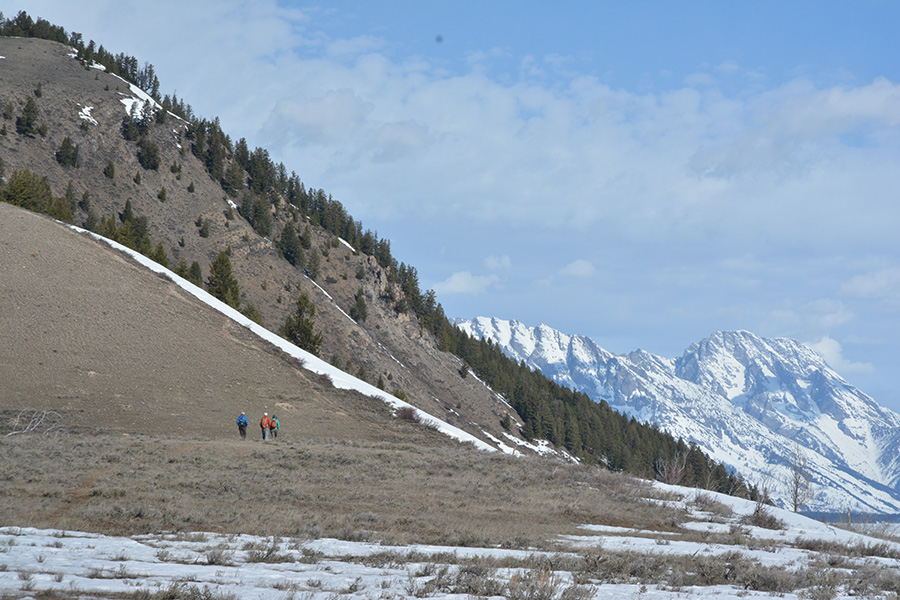
 With summer strong, flowers are blooming everywhere in and around Jackson Hole. Here are a favorite dozen (plus!) wildflowers seen on hikes this past week: around Phelps Lake and up Munger Mountain (above); the start of the Ski Lake Trail; just south of Teton Pass; and the north end of Grand Teton National Park. Lower elevations fade first while upper elevations are just emerging.
As always, it is fascinating to observe flower shapes and color and to discover which pollinators come to visit. Much is still unknown about how flowers work. Also, much of the action occurs underground. Enjoy your investigations.
Sticky Geraniums (Geranium viscosissimum) are abundant both in full sun and under the shade of aspen trees. Their wide-open pink to magenta flowers attract pollinators of various sizes. Nectar guides—dark lines—lead into the center of the flower to the reward of both nectar and pollen. Male pollen is offered first by 10 anthers, and as the flower matures, five female stigmas are then exposed to gather pollen from insect visitors. This way it is not fertilized by itself, which can cause inbreeding depression.
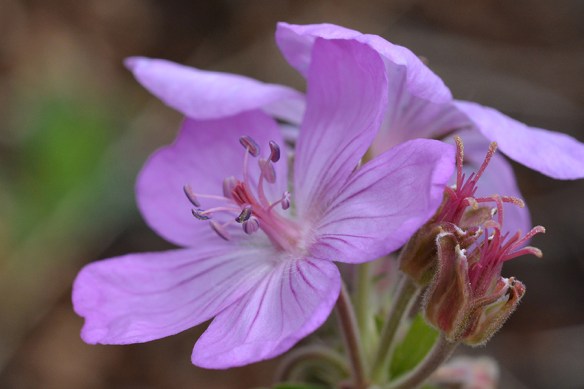
Wide open flowers invite a variety of pollinators. Here the male anthers are ready before the femail stigmas which lie in the very center of the flower.
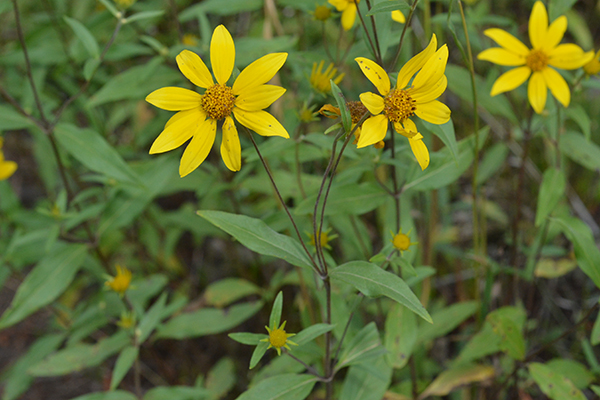
One-flowered Little Sunflowers (Helianthella uniflora) form masses of cheerful yellow on hillsides.
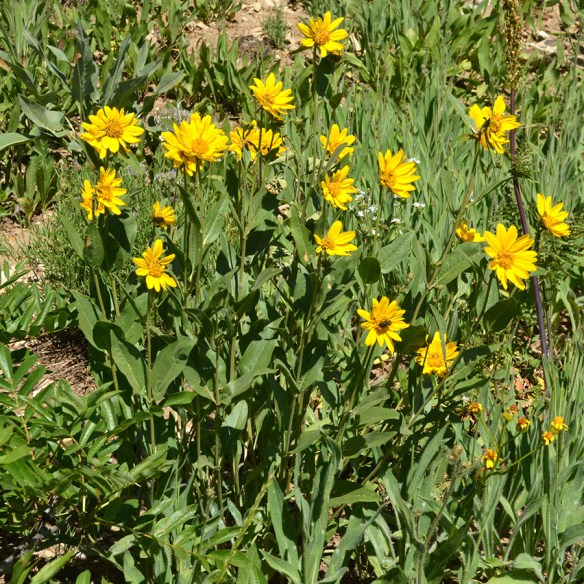
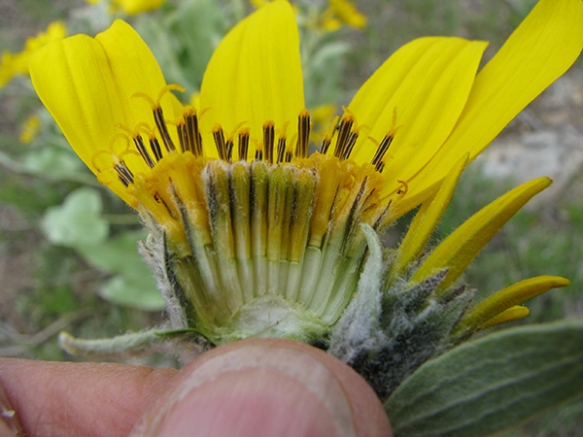
About 2-2.5’ tall, each of its many stems sports more or less opposite leaves with three strong veins. The stems are topped off with at least one 2”-wide flower head.
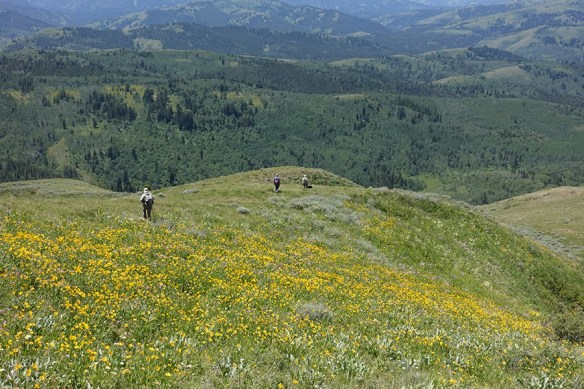
Here the Little Sunflowers are flourishing high on Munger Mountain July 4.
Its more robust relative Five-veined Little Sunflower (Helianthella quinquenervis) stands taller and glares right at you.
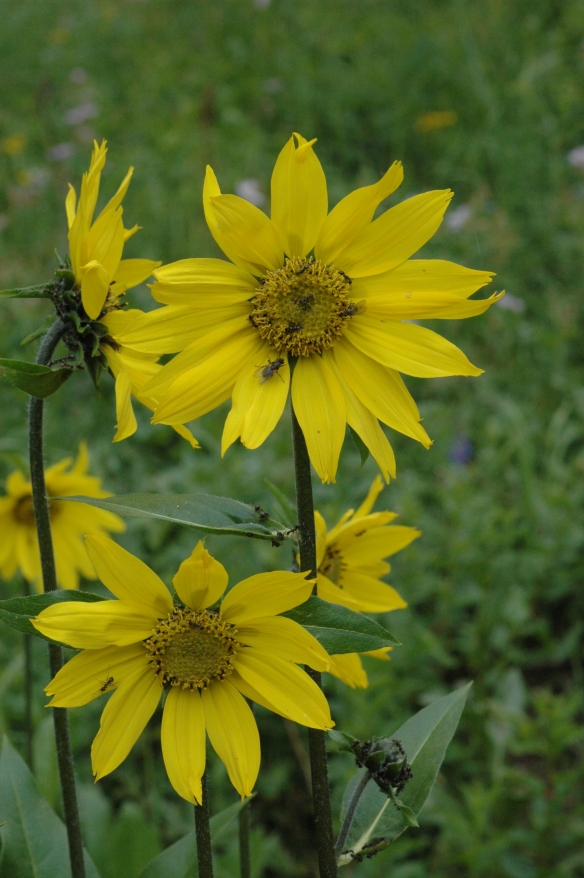
Note the number of pollinators and the individual small flowers beginning to bloom! As composites, sunflowers have many tiny flowers that unfurl in a spiral, starting on the outside. These many flowers form a “head”.
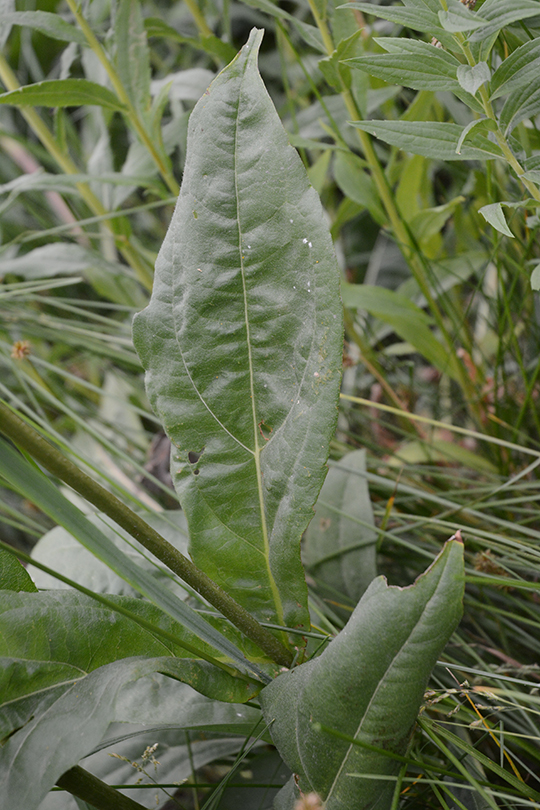
The large lower leaves have 5 distinct nerves (quinque = 5 and nervis = nerves) and plants usually have only one big 3-4” flower head per stem.
Both of these sunflowers are relatively small compared to cultivated sunflowers (Helianthus annuus) produced for oil and seed. Note, a sunflower head has many tiny flowers that bloom in a spiral sequence. Each flower will produce a fruit with a single seed—think about unshelled sunflower seeds—the shell or husk is the fruit, with a nutritious seed inside. Birds will flock to the seeds when ripe.
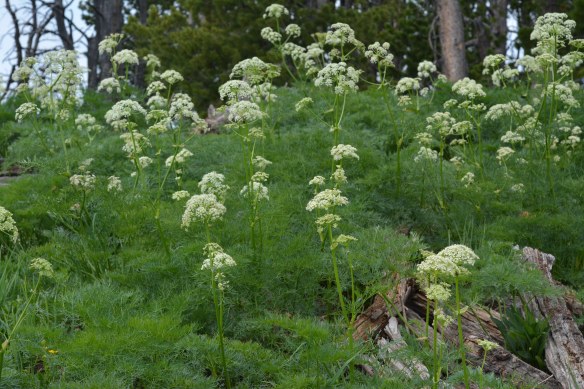
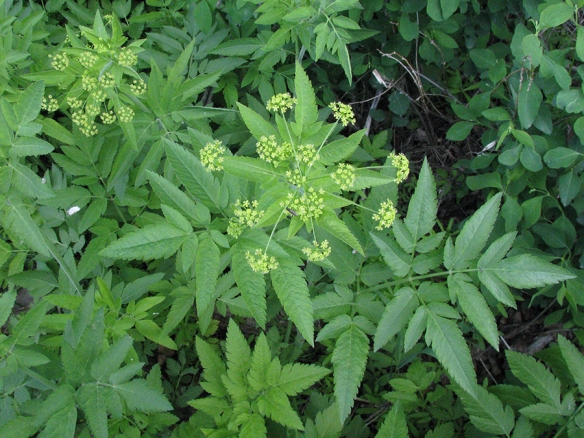
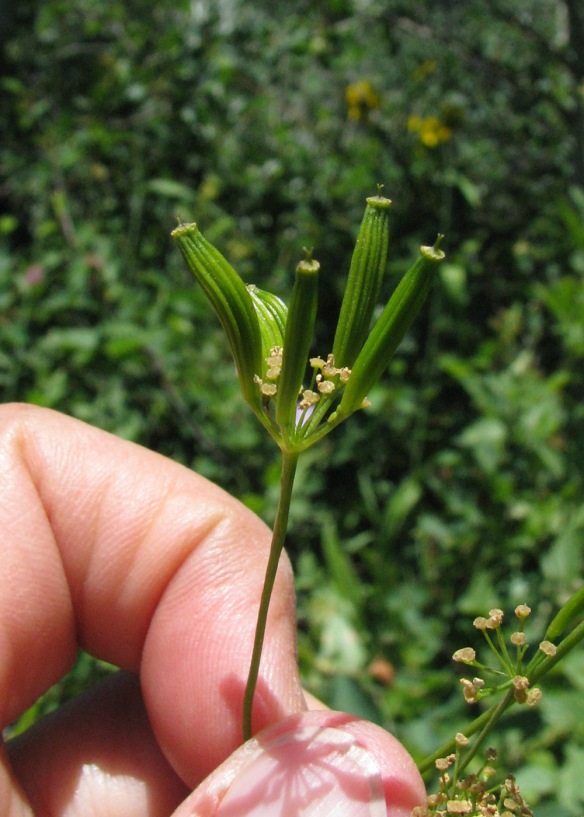
Fernleaf Lovage (Ligusticum filicinum) or osha is just coming into flower in some places. Individual tiny flowers are held out in umbels—structures similar to ribs of an umbrella. Umbels are a distinctive feature of the Parsley or former Umbelliferae Family.
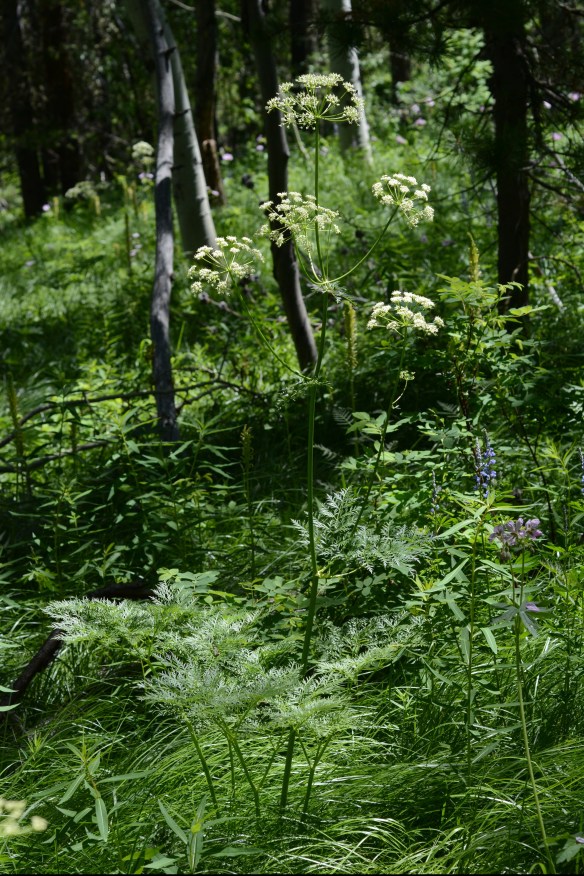
Lovage leaves are finely dissected, similarly to its relative—carrot or Queen’s Anne’s lace.
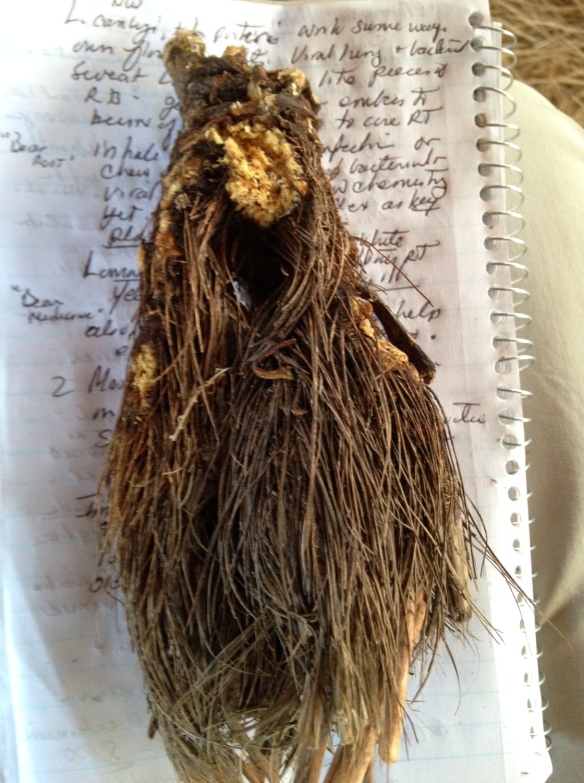
Below the frilly skirts of leaves grows a dense collection of pungent roots that Native Americans have used for centuries for medicinal purposes.
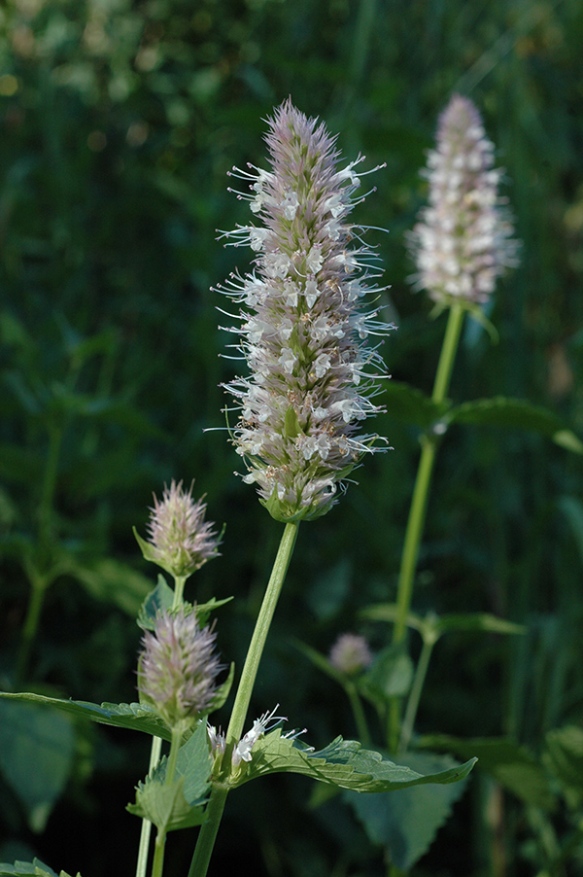
Giant Hyssop (Agastache urticifolia) is one of the few members of the fragrant mint family in Jackson Hole.
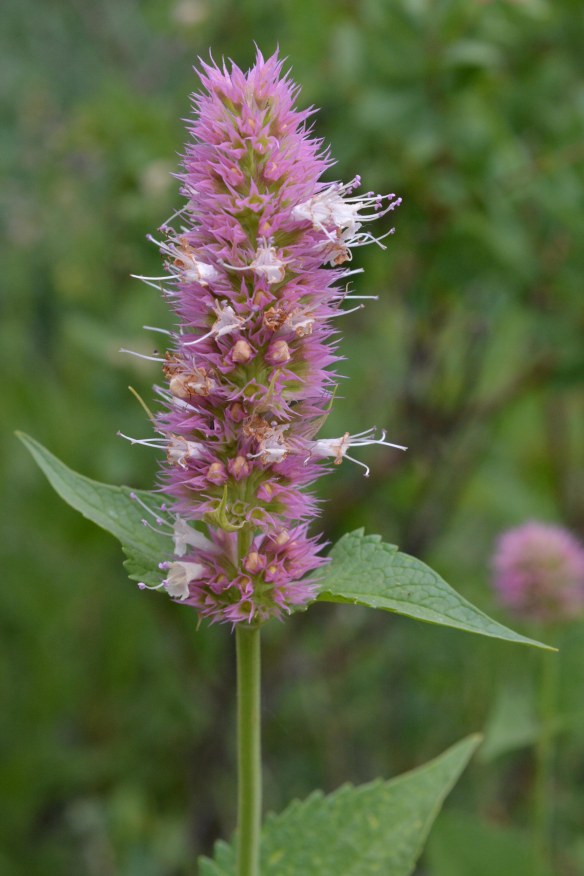
Like all mints, the 2-4’ stems of Giant Hyssop are square, the scented leaves are opposite, and the flowers “bilabiate” or “irregular” e.g. flowers have two similar halves—like our faces.
Long anthers stick out, distributing pollen on the heads of hovering hummingbirds or on bodies of pushy bees which use the lower petals as platforms. Upon visits to other hyssop flowers, these pollinators distribute pollen to female parts which form seeds.
While several of the flowers listed below have faded in southern, lower reaches of Jackson Hole, they are blooming abundantly up near Oxbow Bend and at higher elevations.
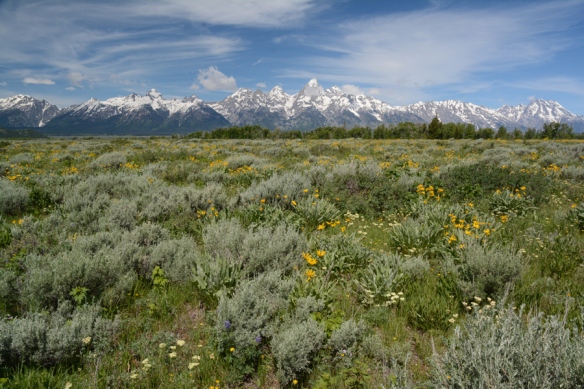
Many flowers that bloomed around Antelope Flats a few weeks ago are now blooming at higher elevations or more northern reaches of the park.
Sulphur Buckwheat (Eriogonum umbellatum) forms “clouds” of flowers above mats of ½” oval leaves.
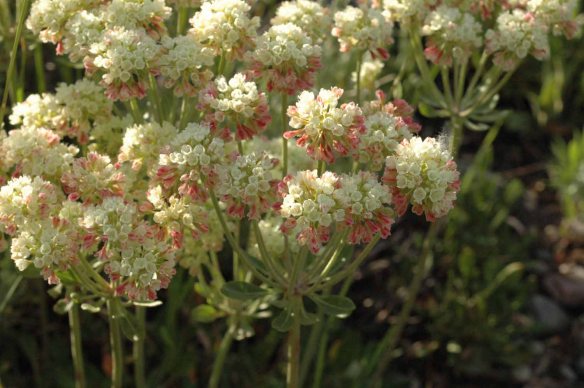
At this time of year, 1’ stems shoot up forming clouds of fluffy creamy white to yellow to rose flowers. They float low over the hillside or sageflats. At the base of the “inflorescence” is a whorl or collar of oval leaves.
Sulphur Buckwheat flowers provide valuable nectar to pollinators, such as Parnassian Butterflies. Dr. Diane Debinski of Montana State University is investigating the relation of this species and Clodius Parnassian butterflies (Parnassius clodius) near Pacific Creek to determine impacts of climate change on insect populations.
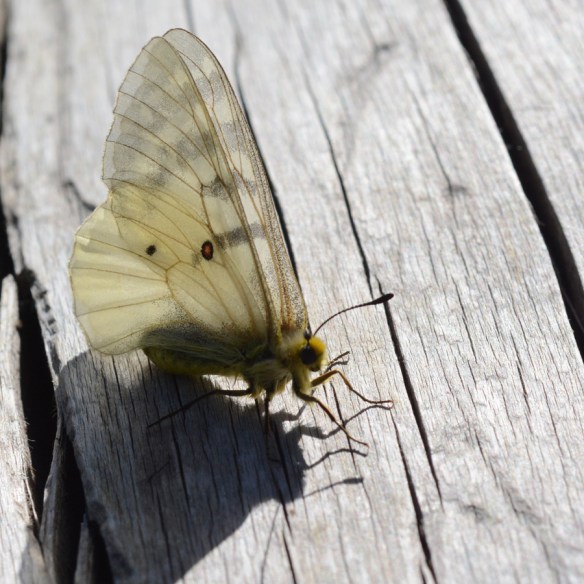
I think this is a Clodius Parnassian butterfly which is being studied. The species nectars on Sulphur Buckwheat flowers.
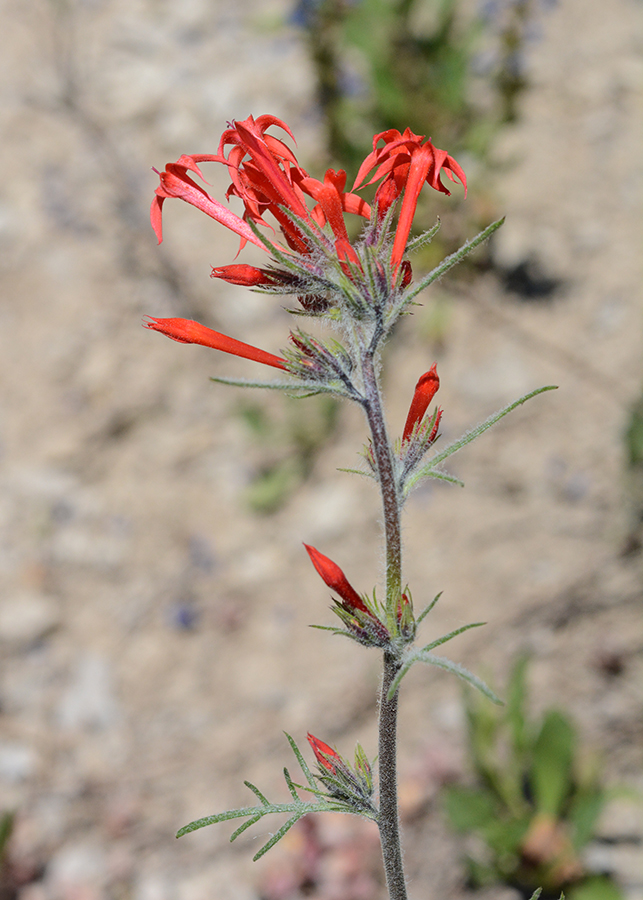
Towering up between sulphur flowers, wands of Scarlet Gilia (Ipomopsis aggregata) wave in the wind.
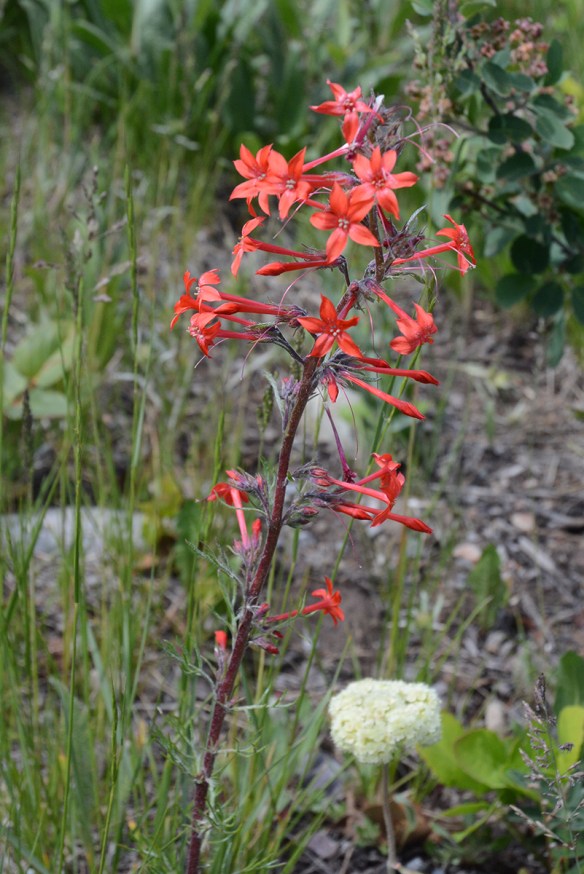 The 1-2” red trumpet flowers attract hummingbirds, which are able to hover and extend their long tongues into the deep tube to lap up (not sip) nectar. A bird’s head may be doused in pollen on one visit. On the next stop, it is poked with a sticky stigma that will collect the pollen to make seeds. Pinkish flowers later in the season attract long-tongued sphinx moths, which provide a similar pollination service.
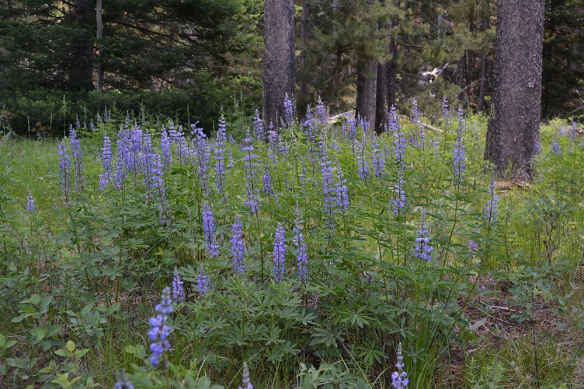
Lupines are another common flower of both sage flats and mountain slopes.
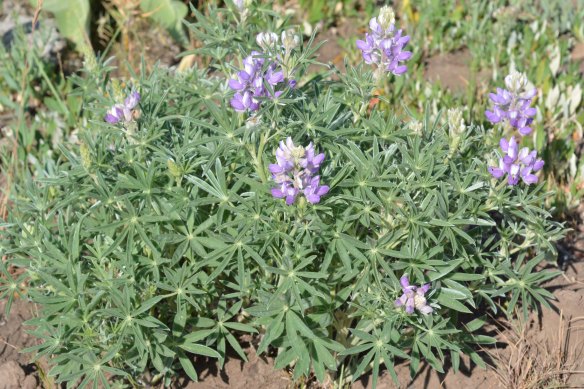
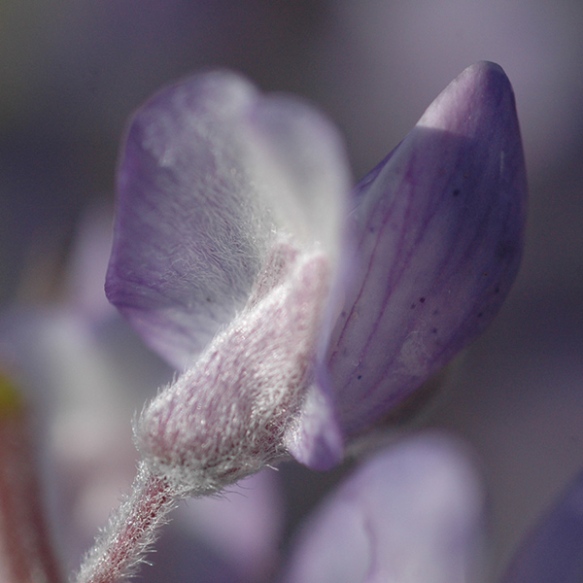
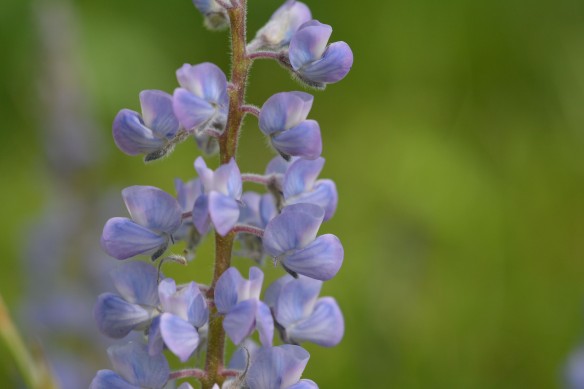
Silky lupine (Lupinus sericeus), which grows in sunny locations, has hairs on the backside of the “banner” of the pea-like flowers and very hairy palmate leaves. The hairs help protect plants from intense sun and wind of open sites.
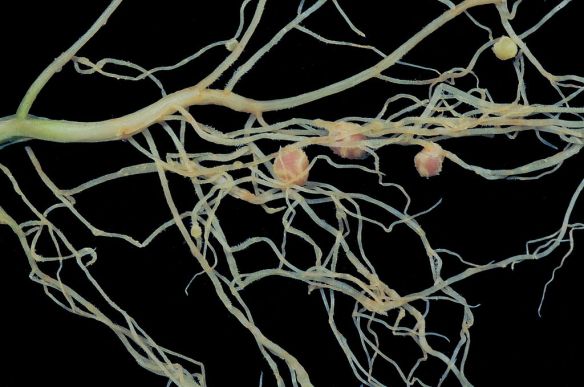
In the Pea or Legume Family, lupines can “fix nitrogen”, enabling plants to grow in poor soils. Bacteria are harbored in nodules formed by the roots. In return for the plant’s protection and some food, bacteria convert nitrogen (NH2) from the air (soil has air pockets) into a form that plants can use (NH3). For centuries, farmers have grown clovers and alfalfa—also legumes–to provide this same soil enriching function.
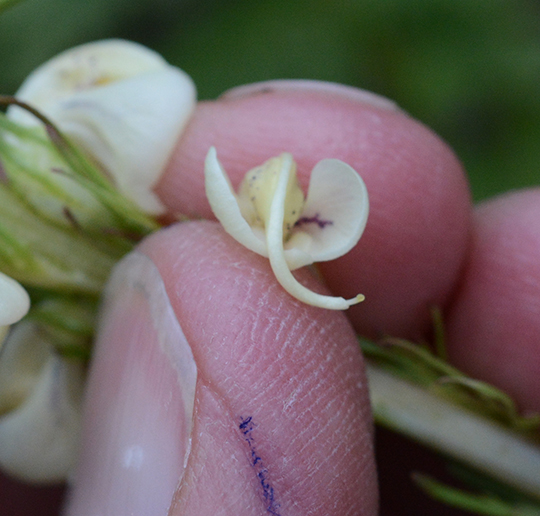
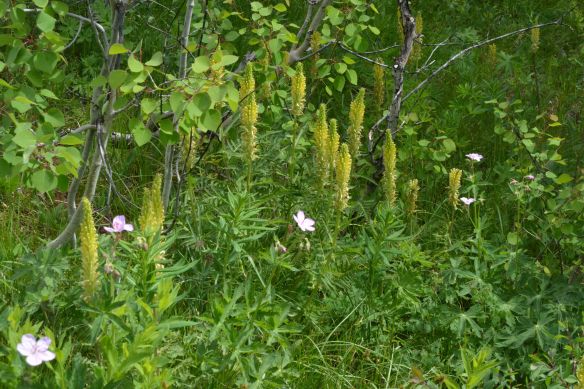
Some hillsides along the Ski Lake Trail or under aspens at Munger Mountain are dominated by spires of yellow Fernleaf Lousewort (Pedicularis bracteosa). 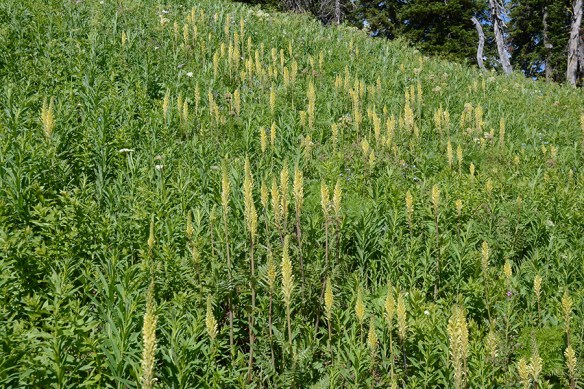 These laterally flattened, irregular flowers require bumblebees to pollinate them. Bumblebees are strong and smart enough to land on the lower lip of the flowers and push and prod their way into the throat to find nectar. In so doing, the bee gets a bunch of pollen on its body. At another flower, it distributes pollen to the stigma protruding from the top of the upper lip.
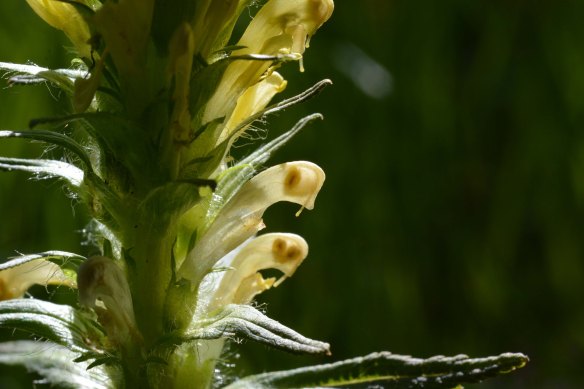
Flowers of louseworts are designed to fit specialized pollinators. Here you can see the stigma poised to tap pollen off the back of a visiting bee.
Fernleaf Louseworts are hemiparasites—they get extra nutrients and even chemical defenses from “host” plants. Roots of louseworts can attach to Arrowleaf Groundsel (see below) and Engelmann Spruce for these added benefits.
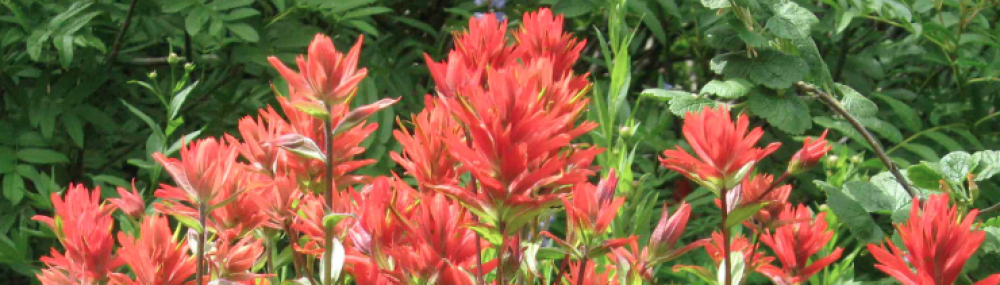
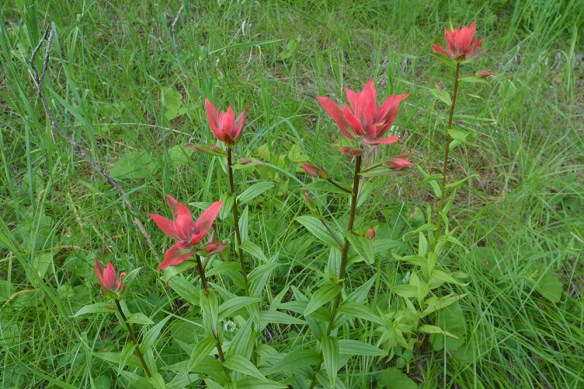
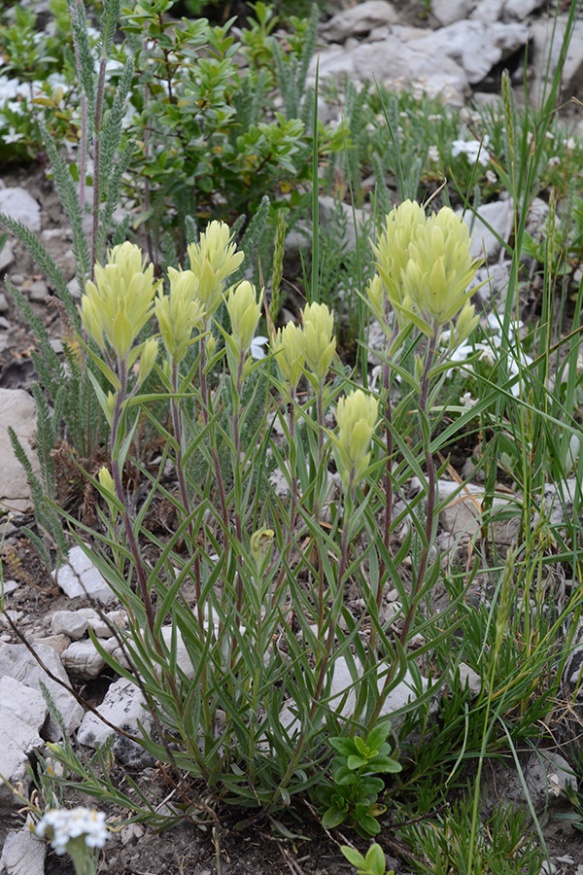
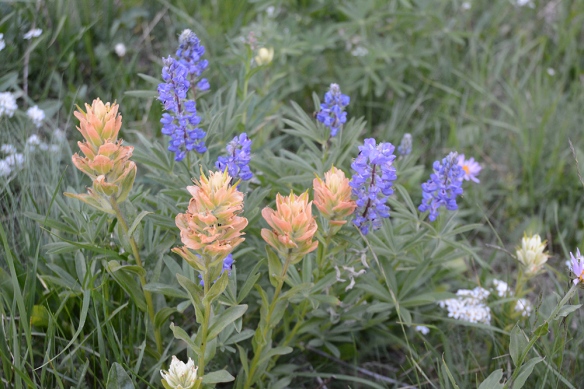
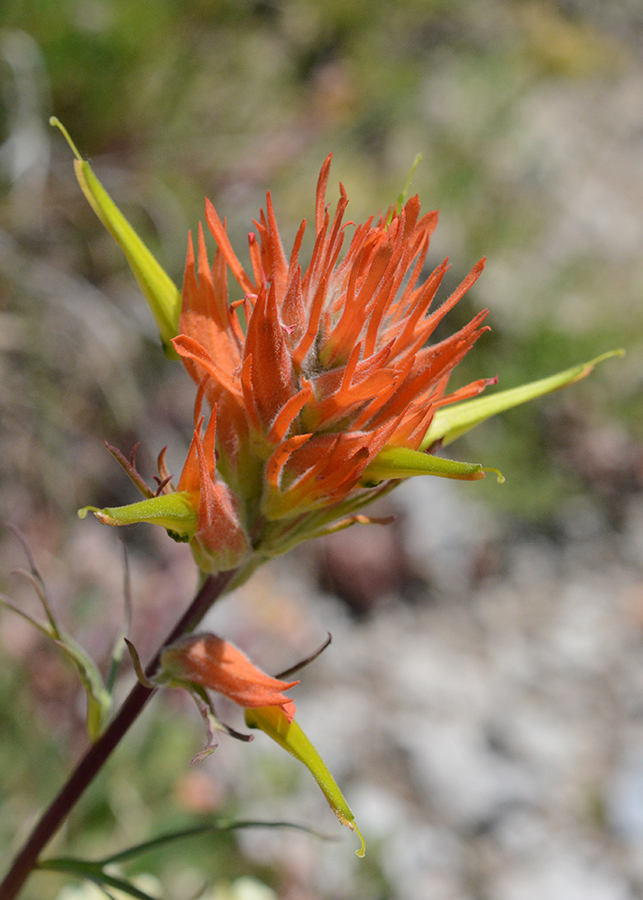
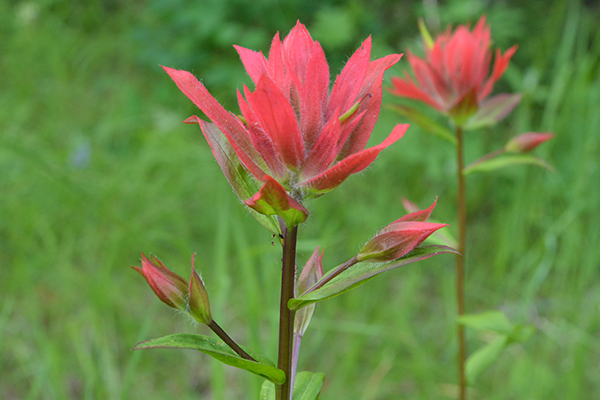
Another “free-loader” or hemi-parasite is Scarlet Indian Paintbrush (Castilleja miniata). The plants attach underground “haustoria” to a variety of different species. Scarlet paintbrushes, and other paintbrush species, are blooming at different elevations in Jackson Hole.
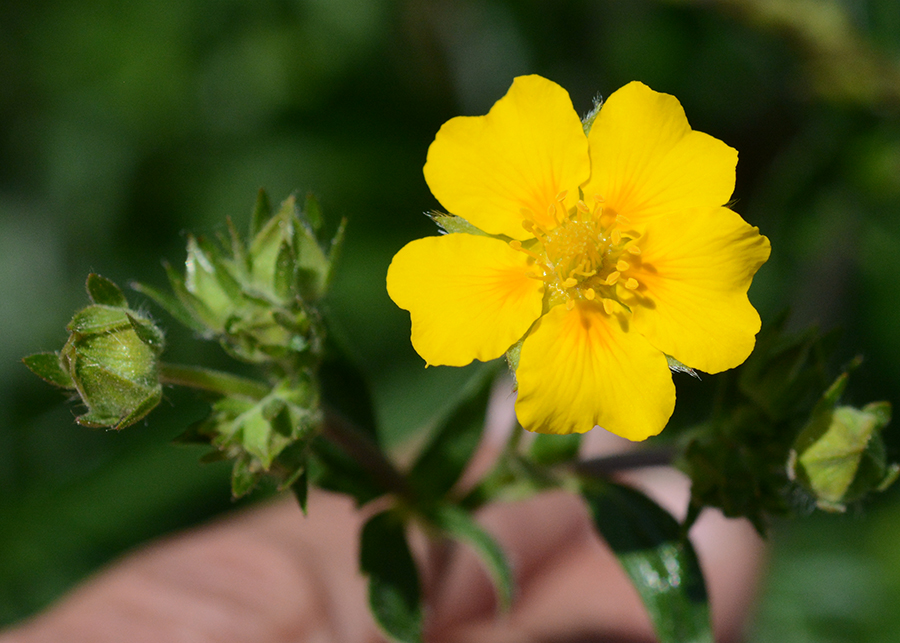
Cinquefoils (Potentilla spp.) appear pretty much everywhere. Research indicates that the yellow- to cream-colored, 5-petalled flowers of tall cinquefoils (Potentilla arguta/glandulosa) attract dozens of different types of pollinators, which is a good evolutionary trait for success. Different insects may or may not be abundant in different years.
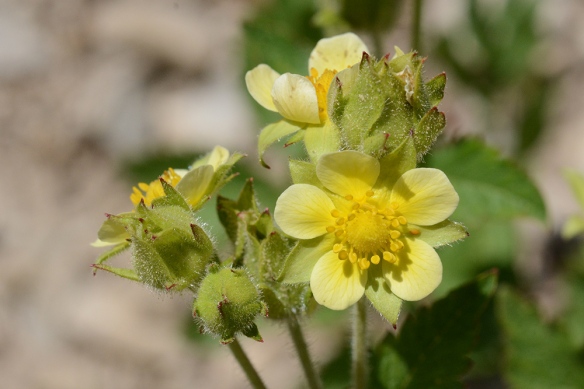
Sticky Cinquefoil (Potentilla arguta) is one of the most commonly seen species at this time. For precise ID, one counts up to 25 anthers, notes the roughly marked stigmas on smooth ovaries forming a slight cone in the center, and sees several flowers held tightly together on sticky stems. In fact, taxonomists are lumping two look-alike species and now calling the genus Drymocallis. Definitely plant geek talk, you can ignore.
By being a generalist, cinquefoils are always likely to have some pollinators visit in any given year. Note: there are several different look-alike cinquefoils.
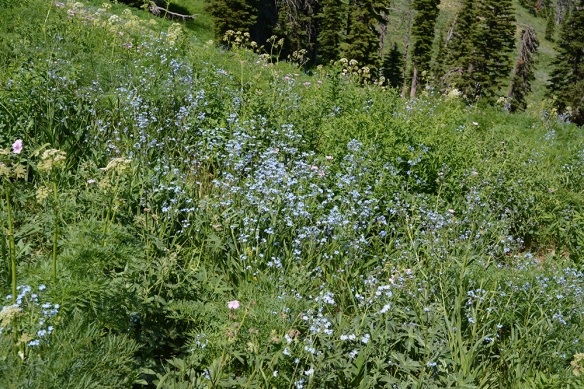
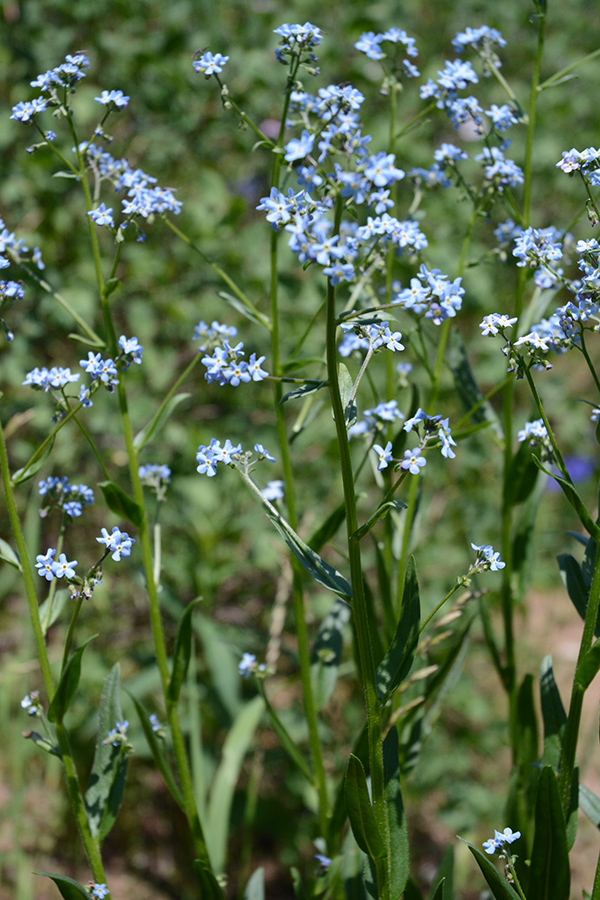
Stickseed (Hackelia micrantha) is abundant now at higher elevations, such as Teton Pass.

The blue flowers of stickseed look like fragments of heavenly blue sky.

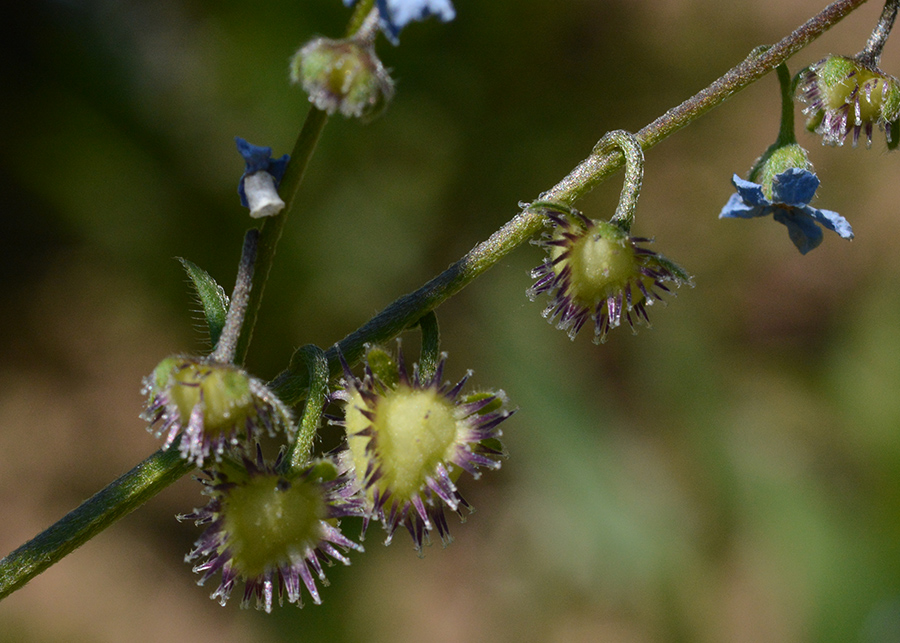
However, the fruits will not be so delightful—they have devilish fruits with barbs that will attach to your socks. You will be their unwilling disperser to new lands in a few weeks.
A few other tall meadow flowers are seen along Moose-Wilson Road and will soon bloom up higher:
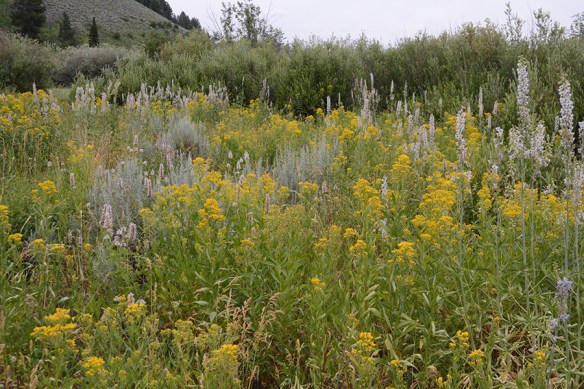
A mix of tall flowers along Moose-Wilson Road where there is plenty of moistsure and sun.
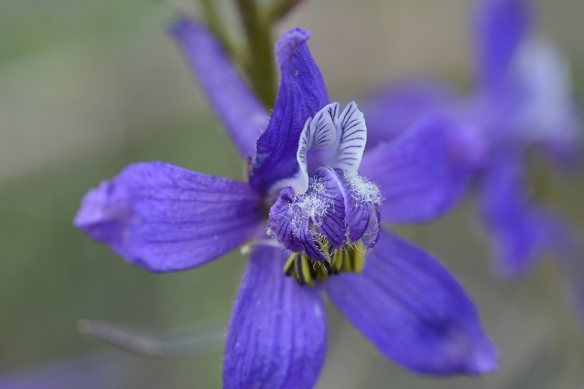
Tall Larkspurs (Delphinium occidentale) are unravelling their deep- to pale-blue stalks of flowers.
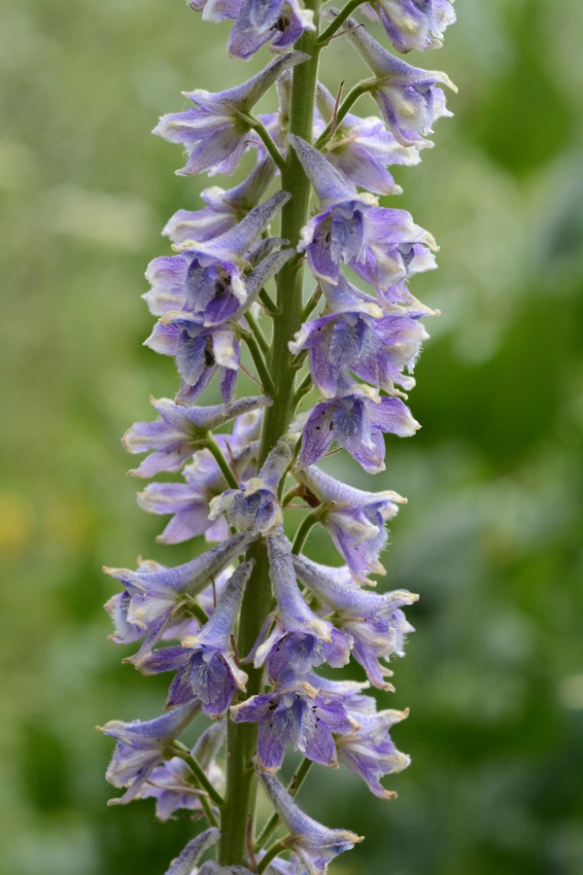
Tall Larkspur has trumpet-shaped flowers that require bee pollinators to push deeply into them to receiive their rewards.
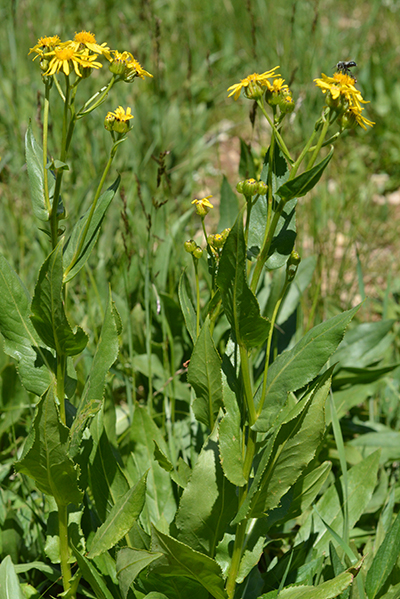
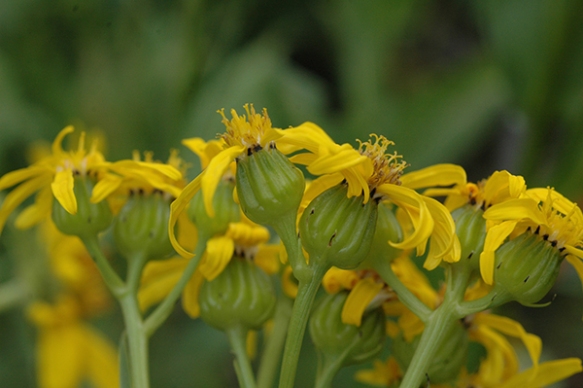
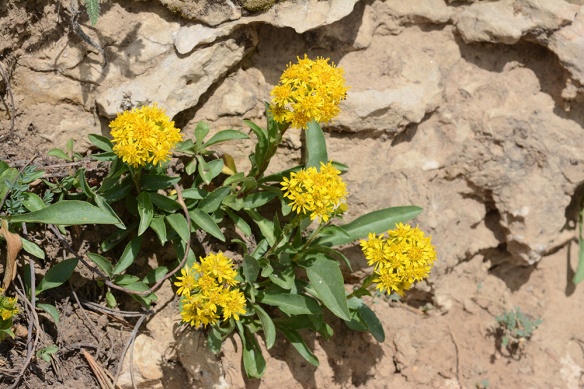
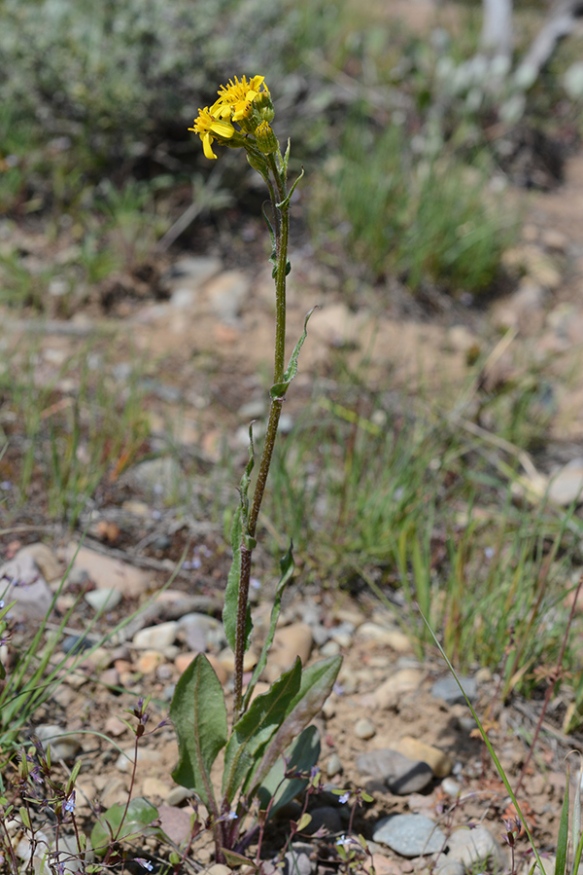
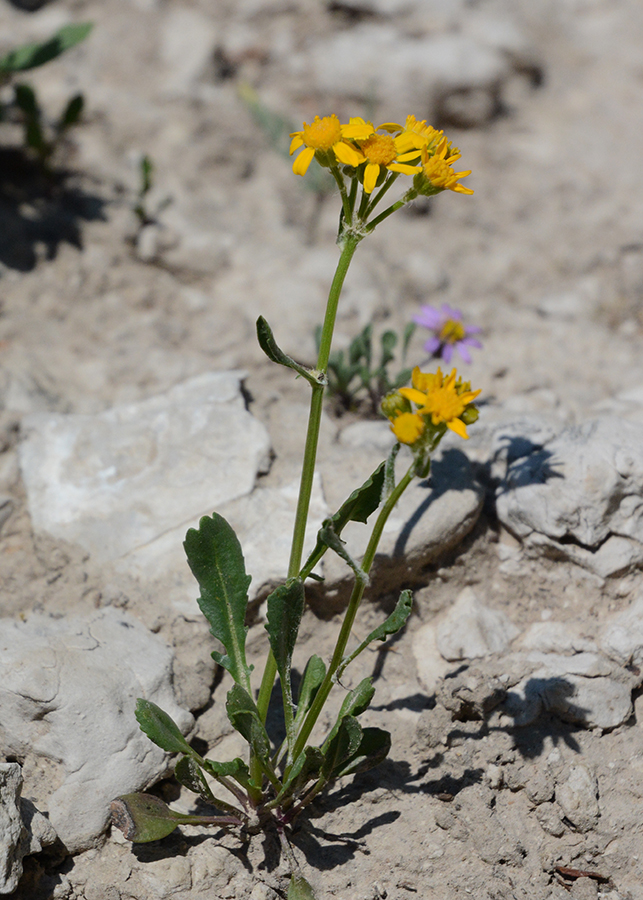
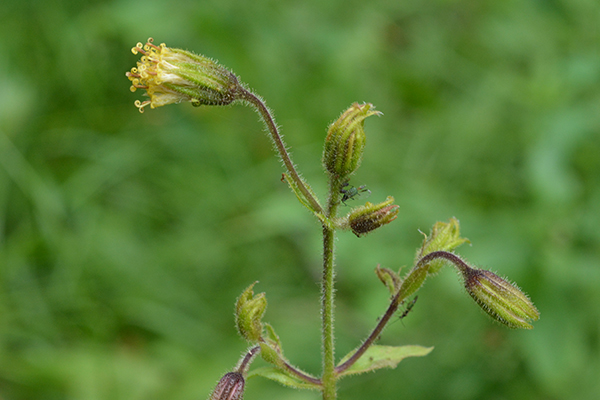
Several tall groundsels (Senecio spp.) will soon add bouquets of yellow blossoms. Typically, flower heads all have several yellow ray (petal-like) flowers surrounded by a pallisade fence of even-sized green bracts—often with black tips. The leaves are helpful identifiers to species:
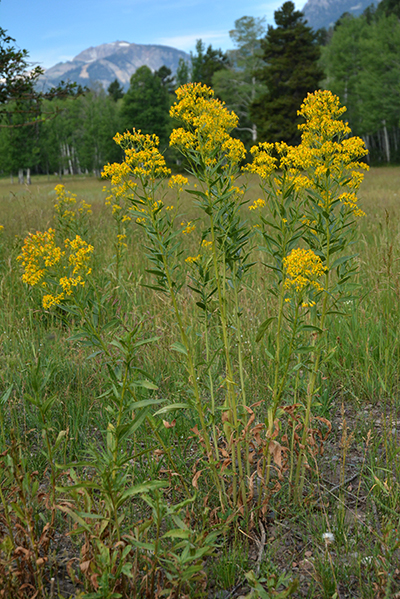
Butterweed Groundsel (Senecio serra) has oblong serrated or toothed leaves. Plants grow to 4-6’ tall.
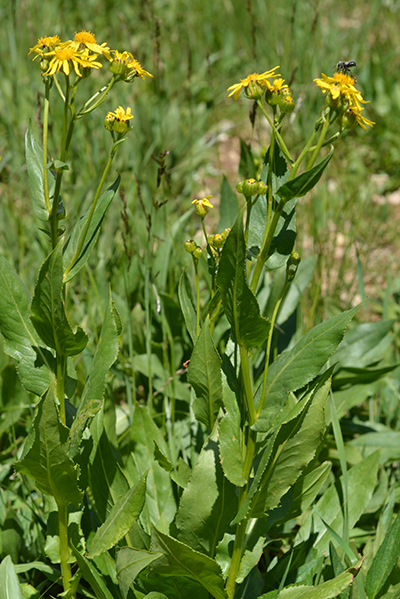
Thickleaf Groundsel (Senecio crassulus) has somewhat fleshy or succulent, smooth leaves that clasp the stem. Plants are around 12’ tall.
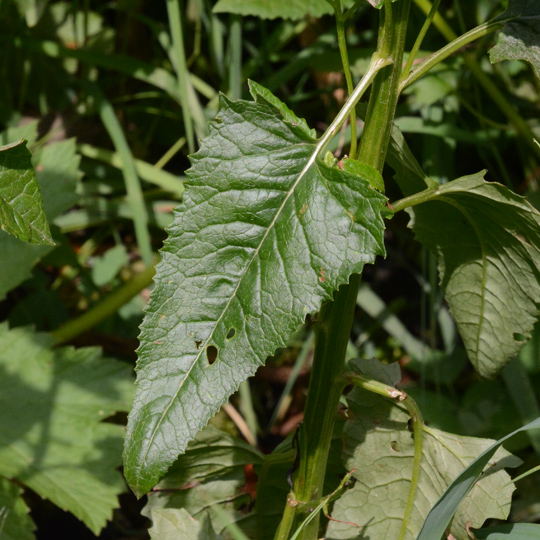
Arrowleaf Groundsel (Senecio triangularis) are found in wet areas—seeps and stream edges. Leaves are distinctly arrow-shaped and sharply toothed. They grow to 2-3’ tall.
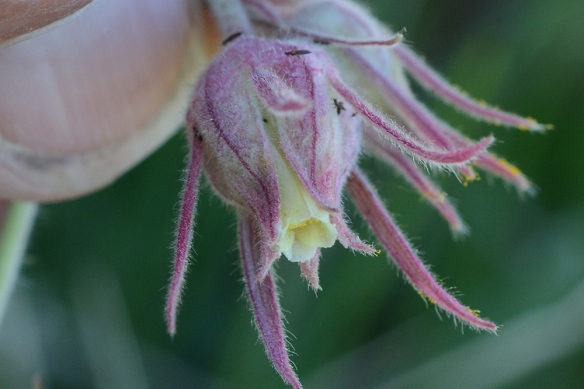
Can you guess what this is?
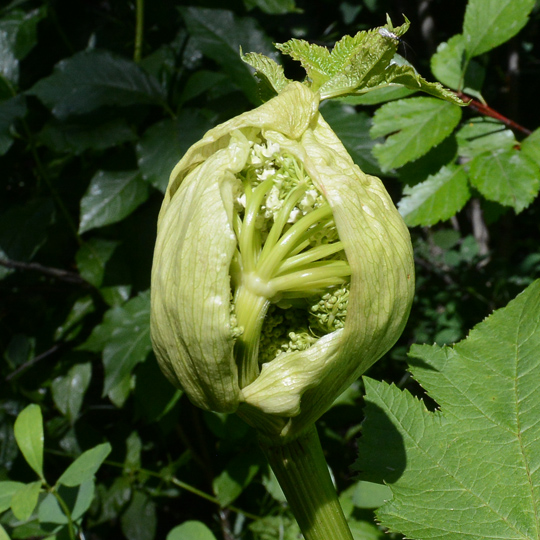
A flower bud of Cow Parsnip (Heracleum spondylium)! Cow Parsnip has the largest flower cluster (umbel) of any member of the Parsley Family in the west.

Cow Parsnip (Heracleum spondylium) grows in moist meadows and ravines where there is enough water to supply the very large leaves on 4-6’ plants.
Of course there are many more flowers to see. However, this “botanist’s dozen” is a good beginning to your explorations. Soon we will add postings for flowers growing in the forest, wetlands, and in just plain odd places.
Have fun!
Frances Clark, Teton Plants
P.S. We try very hard to be accurate. If you see an error, please let us know so that we can correct our mistakes at tetonplants@gmail.org . Thank you!
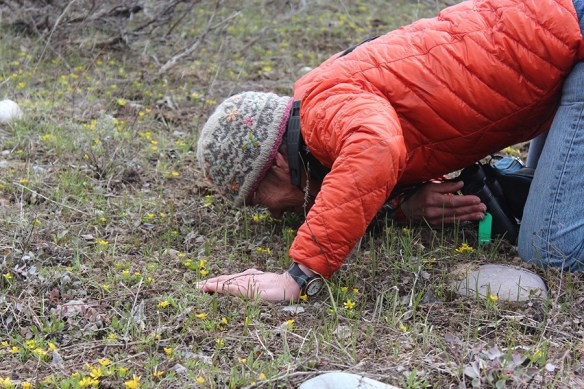
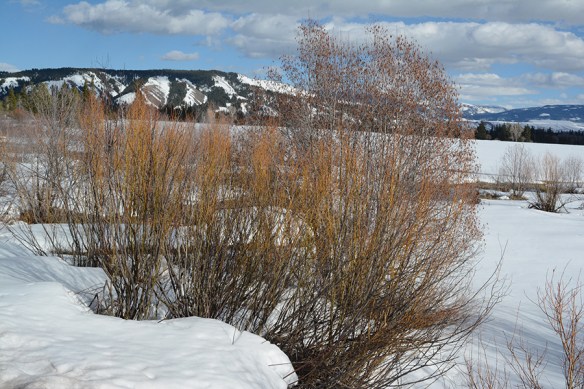

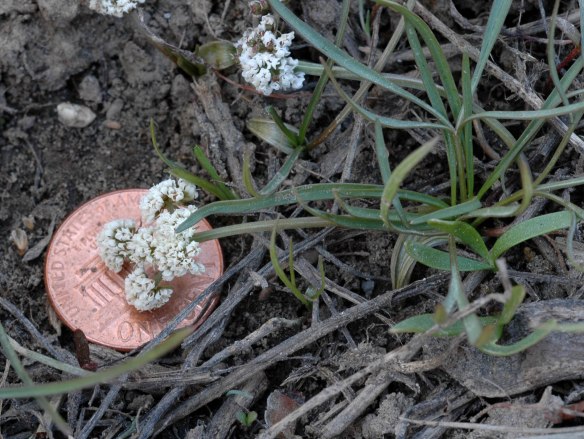
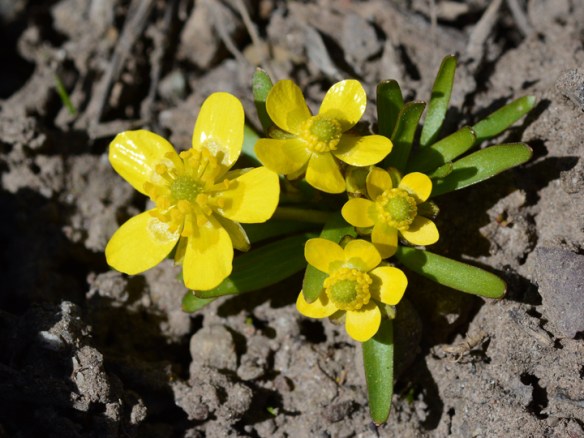
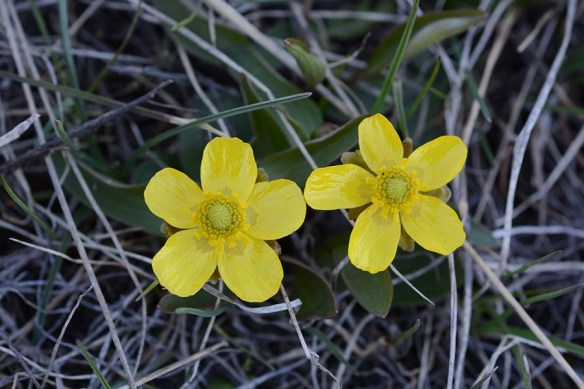
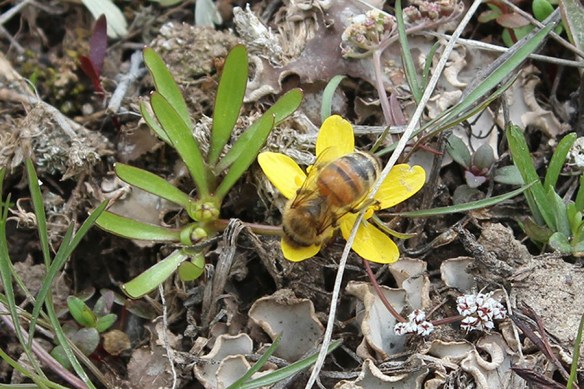
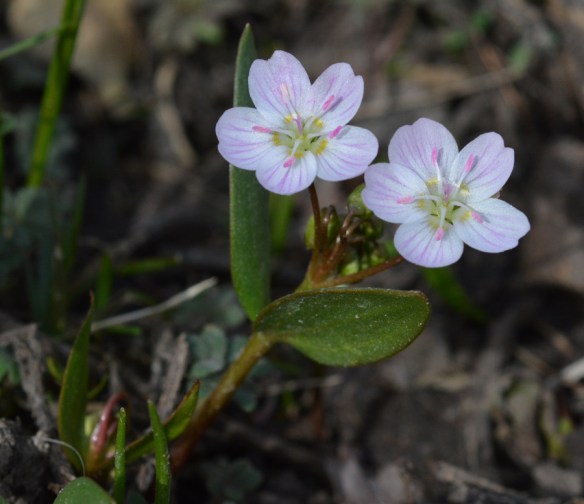
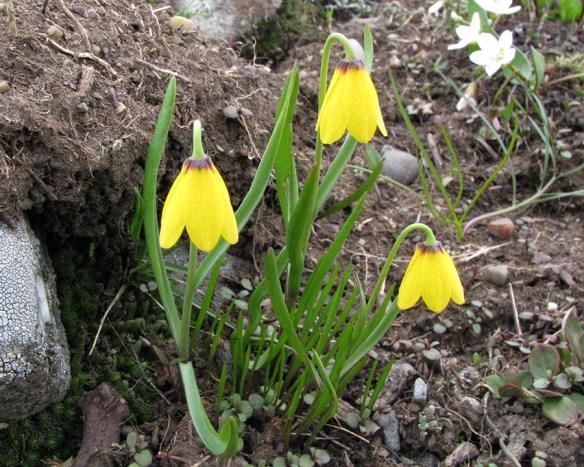
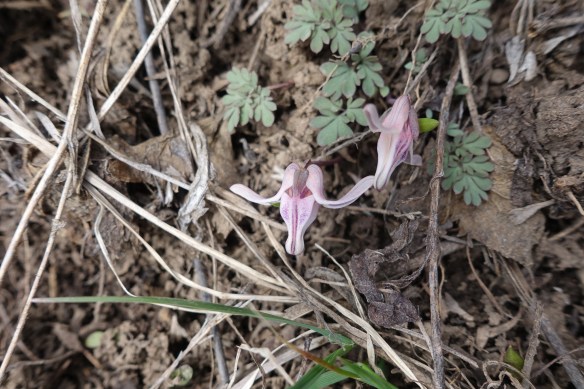
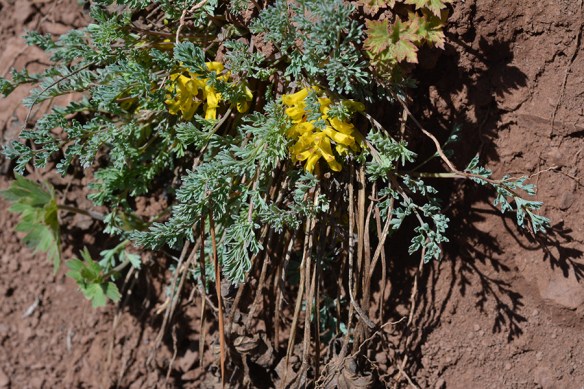
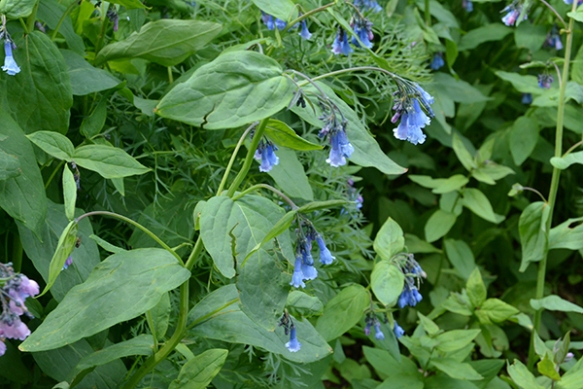
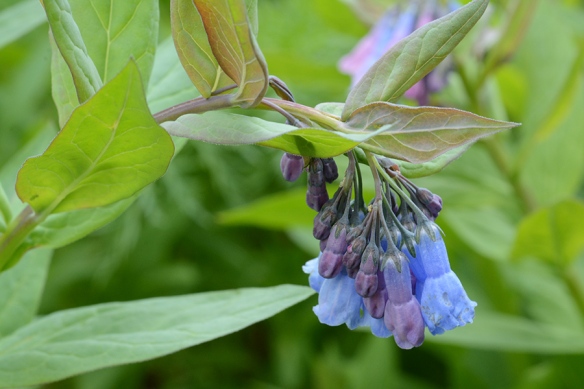
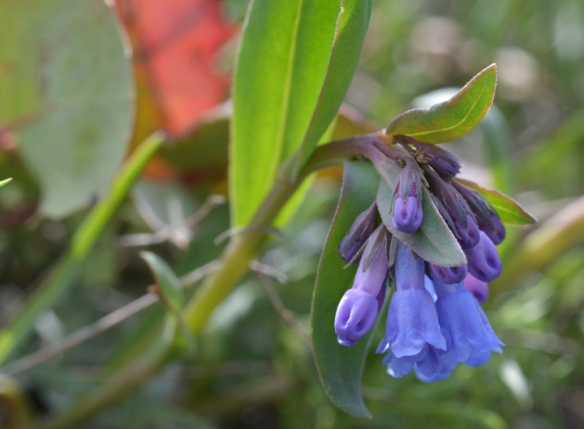
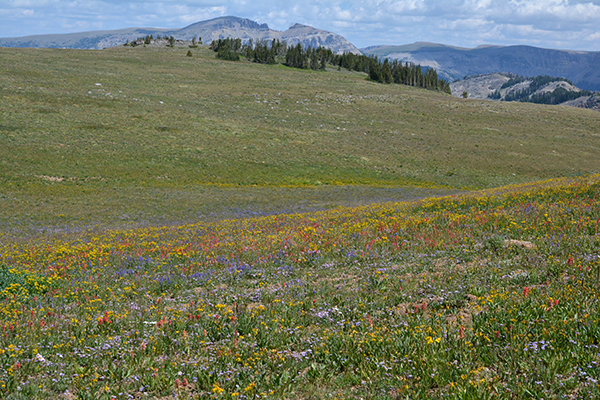
 Wildflowers are blooming strong at elevations between 8,500-10,000,’ such as Mt. Ely, above Ski Lake, Rendezvous Mountain, and other subalpine habitats of the Grand Tetons. You can find lupines, little sunflowers, geraniums, stonecrops, milfoil, mountain dandelions, and mountain bluebells that we observed at lower elevations a few weeks ago, along with new flowers found only at these higher elevations.
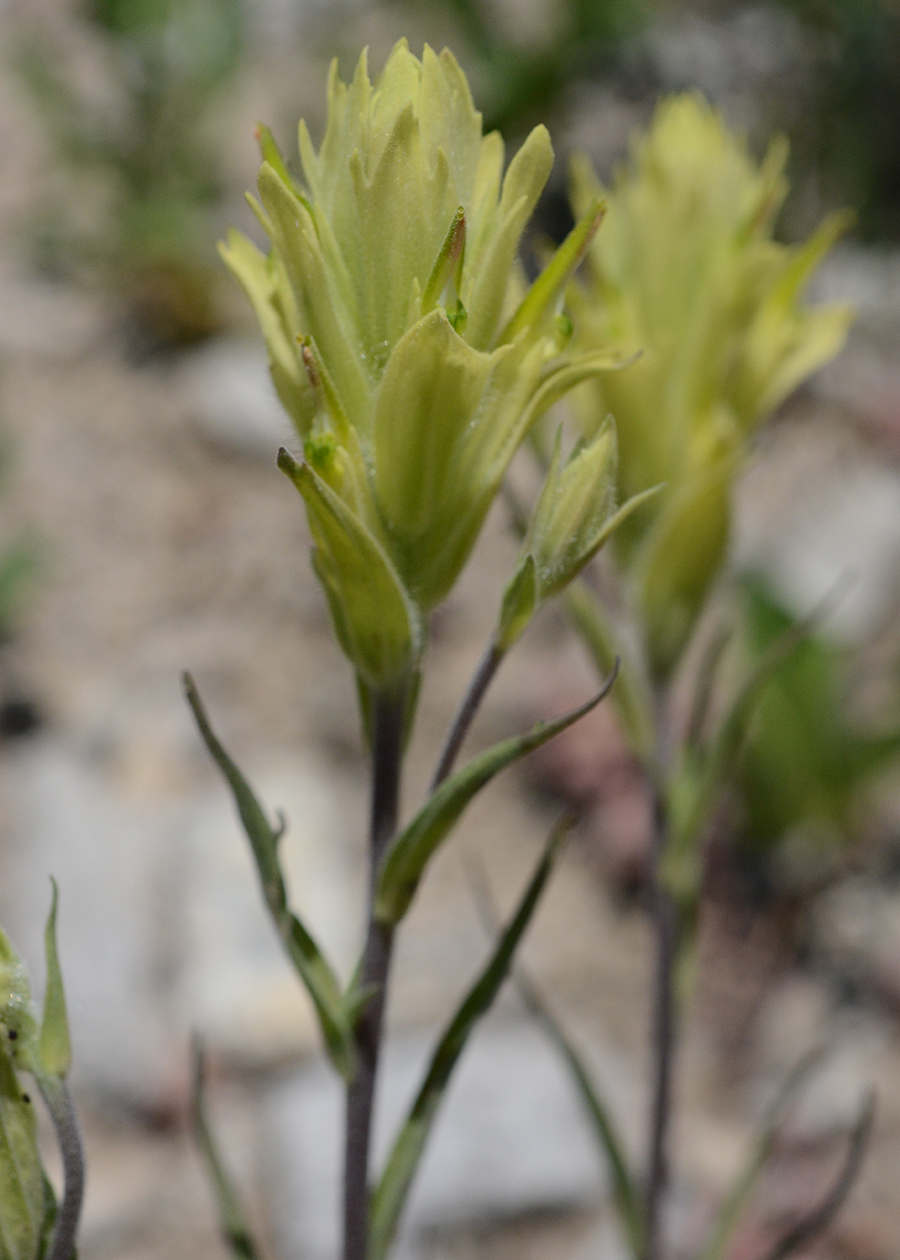
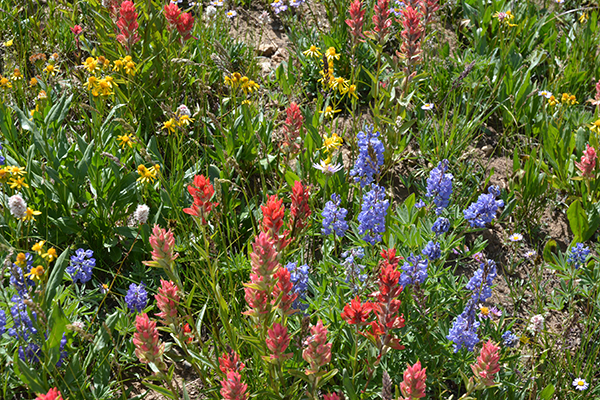
 North facing, bowl-shaped terrain—Cody Bowl and the bowl above Ski Lake–captures more snow and holds it longer. Lupines and Sulphur Paintbrush grow luxuriantly.
 Areas of recently melted snow and streams coming down the north side of Rendezvous Mountain still have Mountain Bluebells and Fernleaf Lovage.
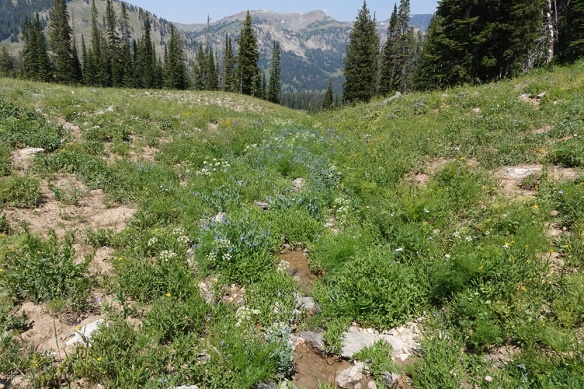 Jackson Hole receives little predictable rain in summer—typically from spotty, if often intense, thunderstorms–so snow in winter is the main source of moisture for the growing season.





 Paintbrushes are intriguing and confusing members of the Orobanche or Broomrape Family (formerly placed the Figwort or Schropulariaceae Family). Species in the genus Castilleja have unique attachments to other plant species, depending more or less on their hosts for extra carbon, water, nutrients and even chemical defenses. As such, they are termed hemiparasites. They can survive on their own but grow larger, produce more flowers and seeds, and have less predation if they attach to their host’s roots using special haustorium. Plant hosts include grasses, sagebrush, lupines, and larkspurs.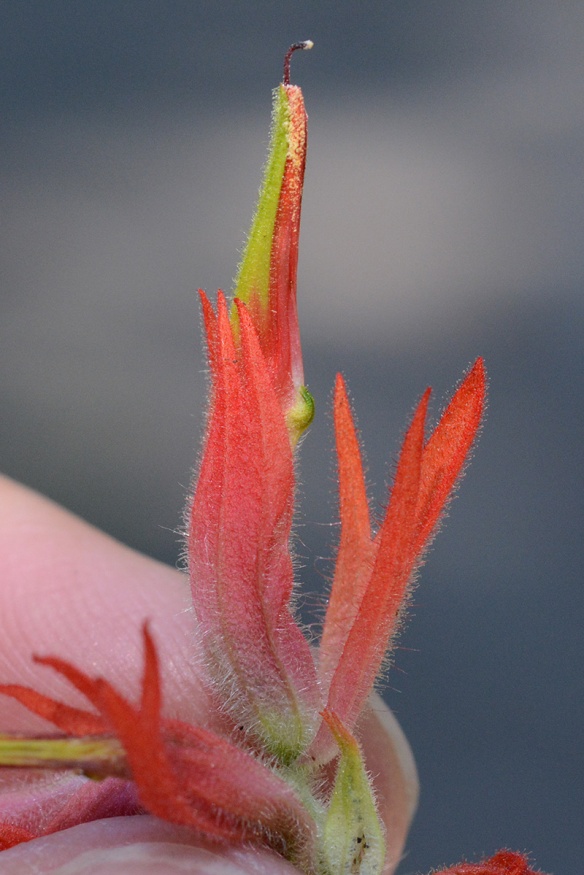
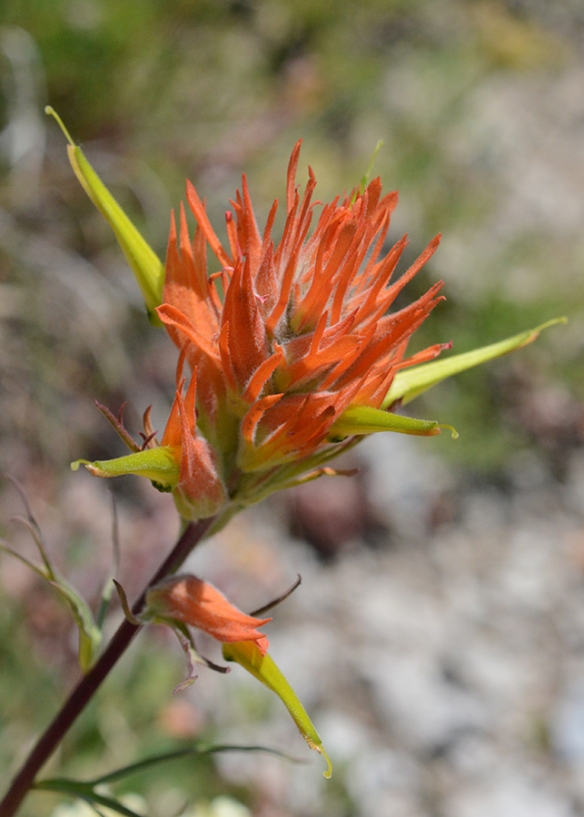
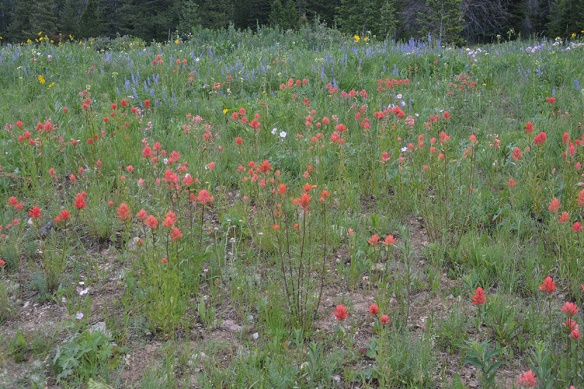
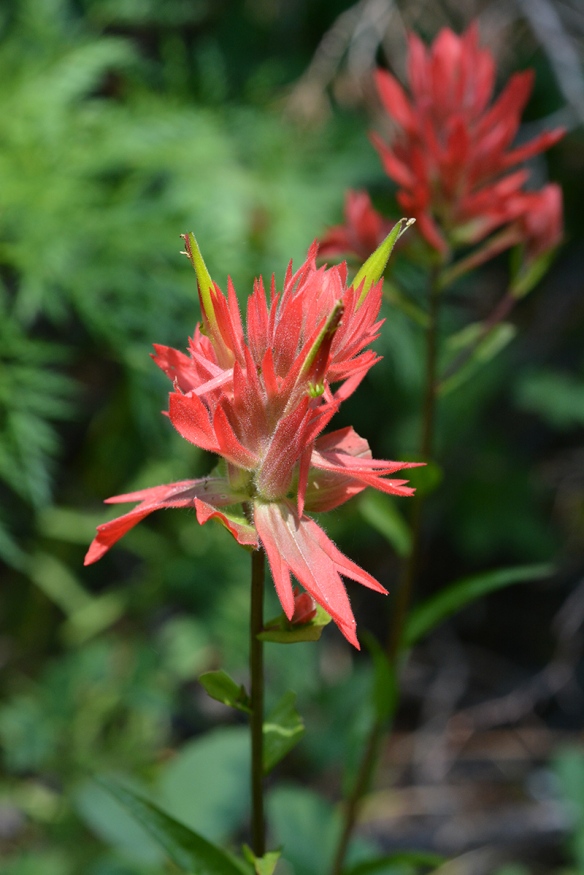
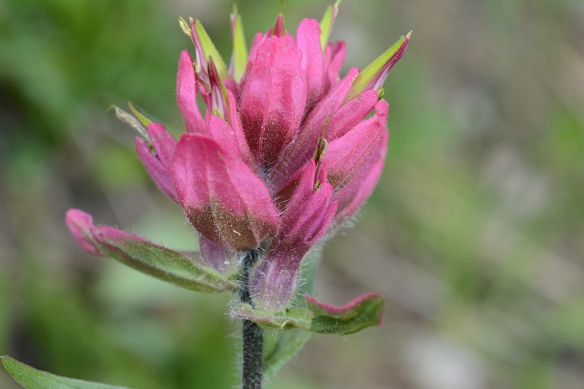
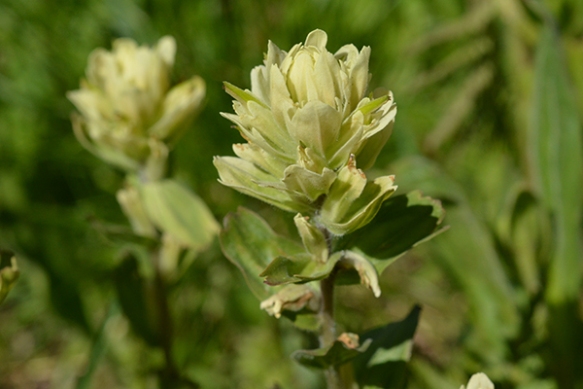


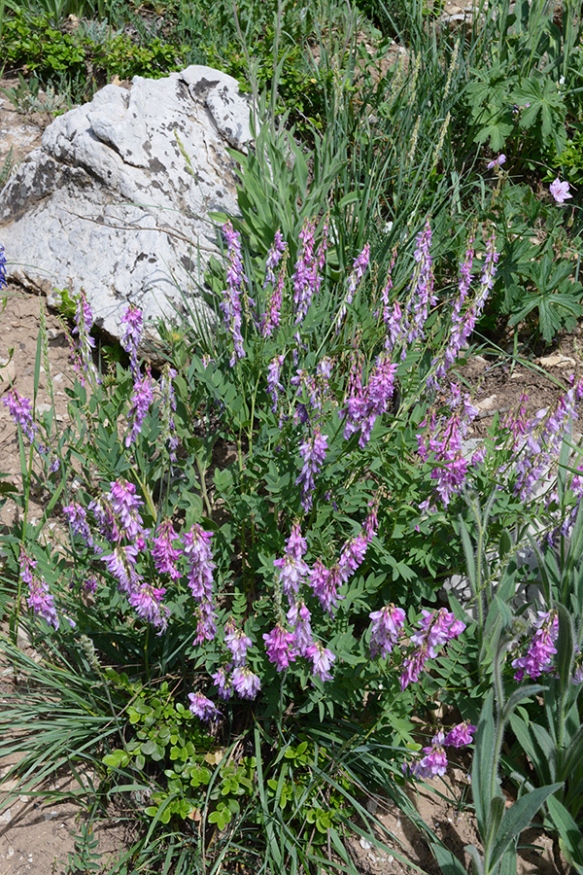

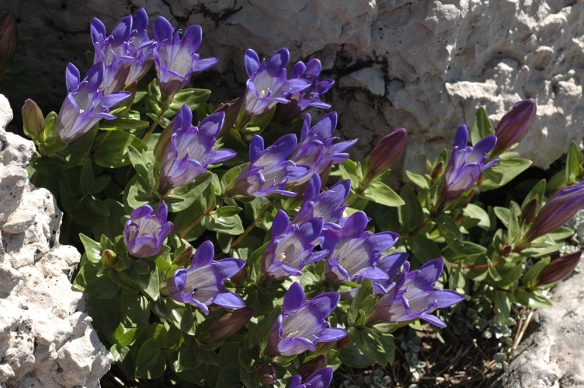

 wildflowers you may see hiking or driving throughout Jackson Hole. Enjoy skimming through the photos for their names. And if you have a moment, read the captions to find out a quick fact you can share with a friend.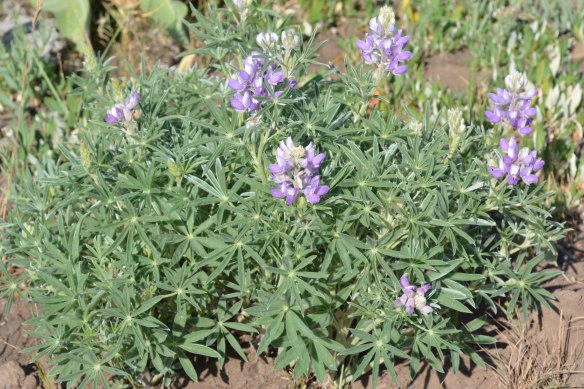

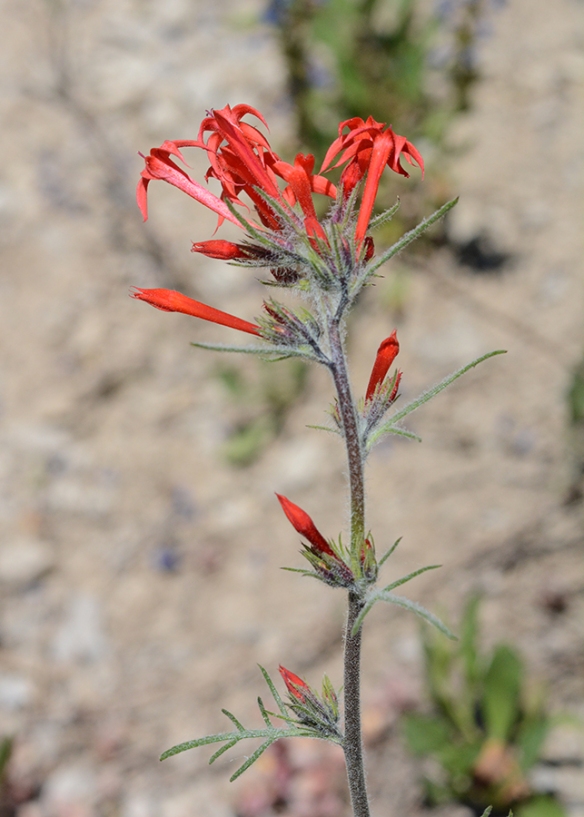
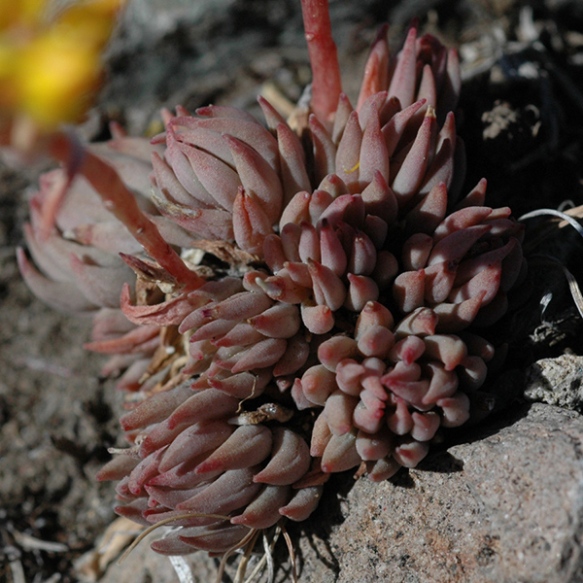
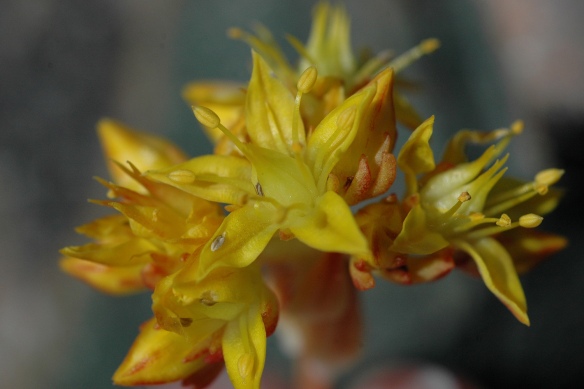
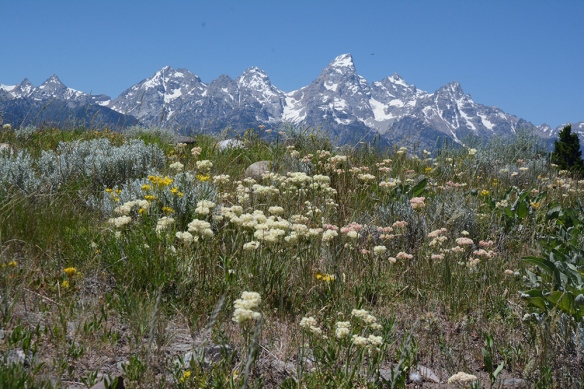
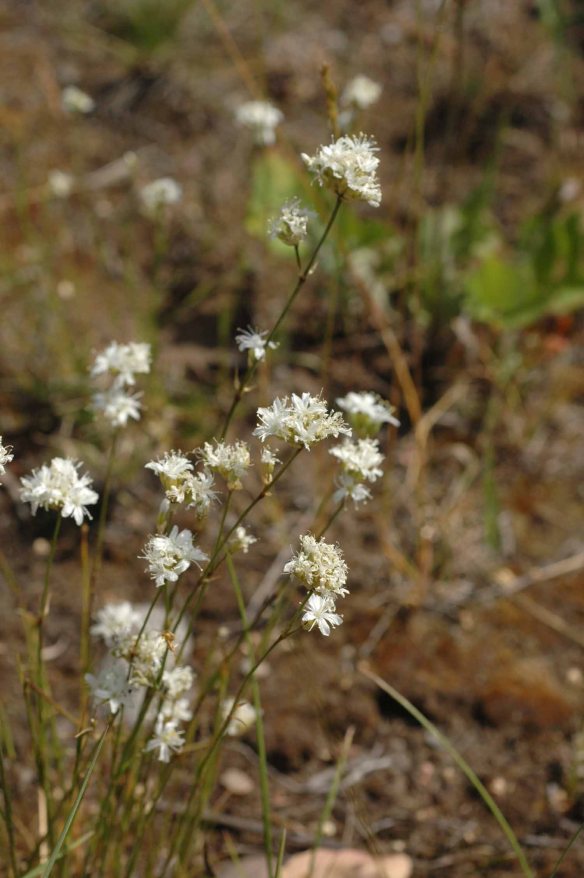


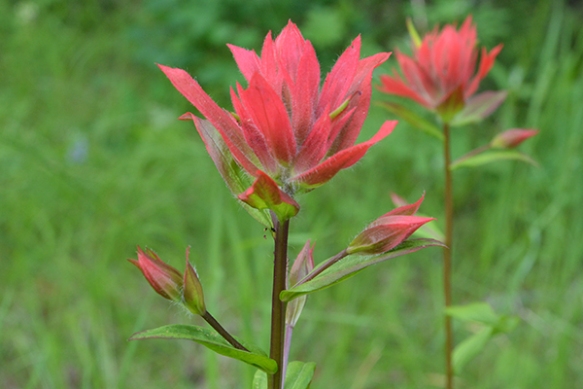
 Found in a variety of habitats, Paintbrushes – Castilleja spp. – come in different colors and shapes. They hybridize, thereby forming intermediates, making ID difficult. Paintbrush flowers are complicated: most color comes from bracts and sepals, not from petals which are often green. Bracts are modified leaves found just below each flower. Each flower has 2-4 sepals fused together. The petals form a long tube with a lip, and are often hidden inside the bracts and sepals until the flower is in full bloom. This “galea” protects the anthers and stigma until pollination.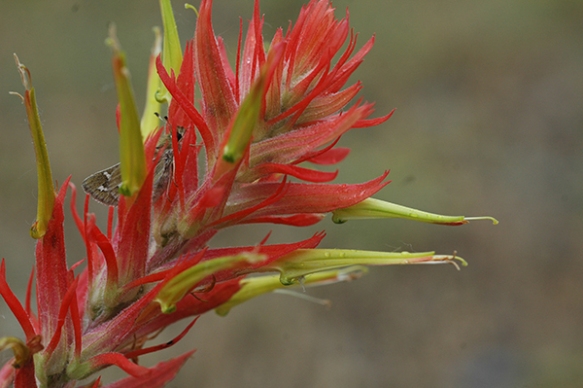

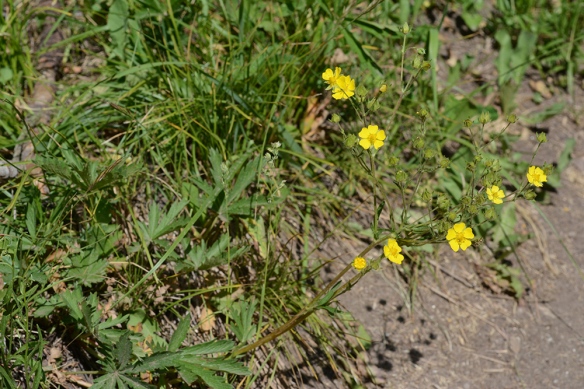
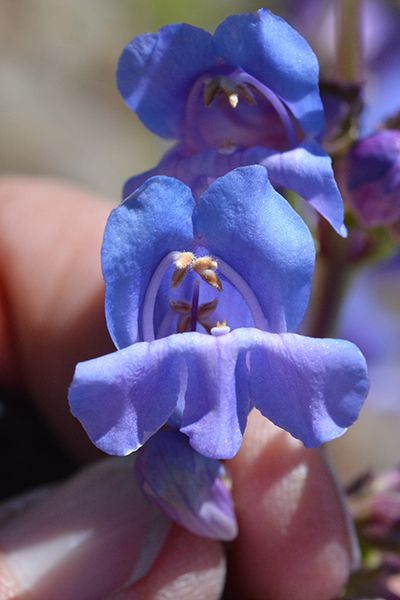
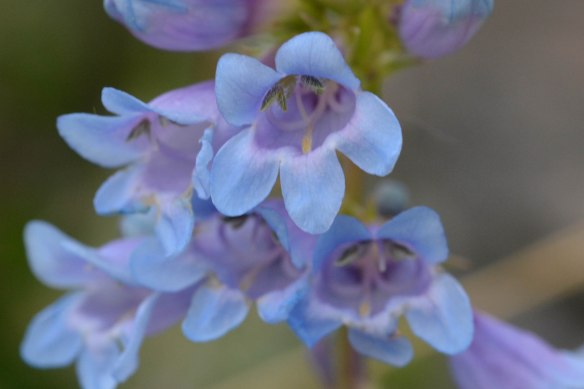
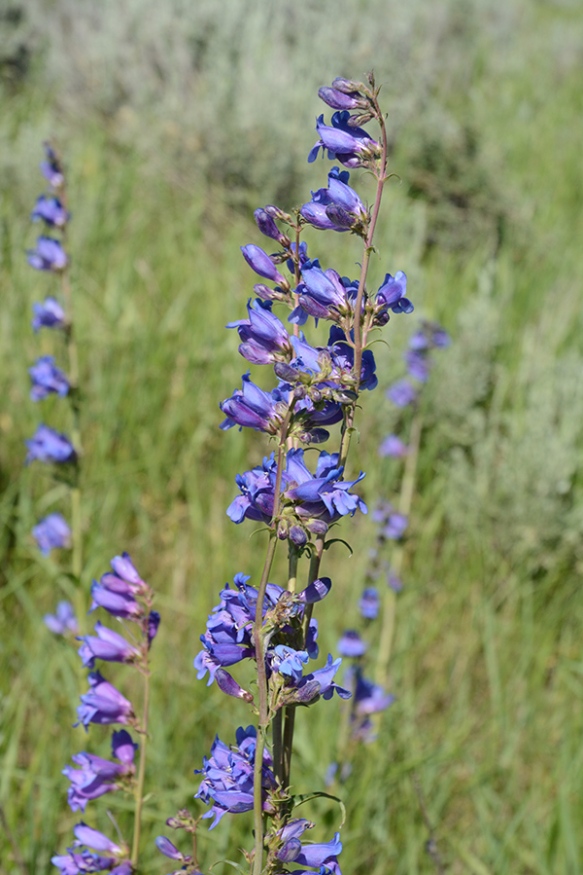
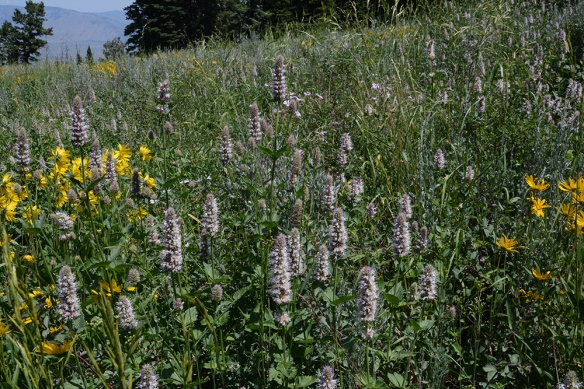

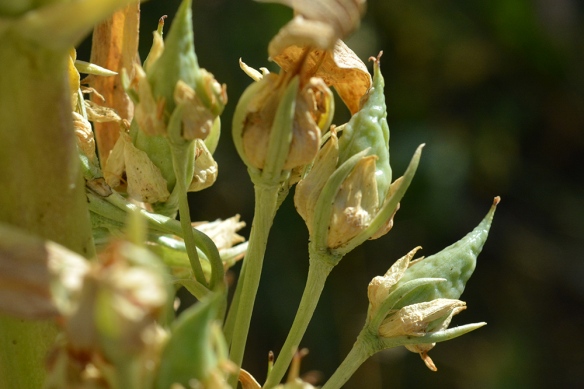

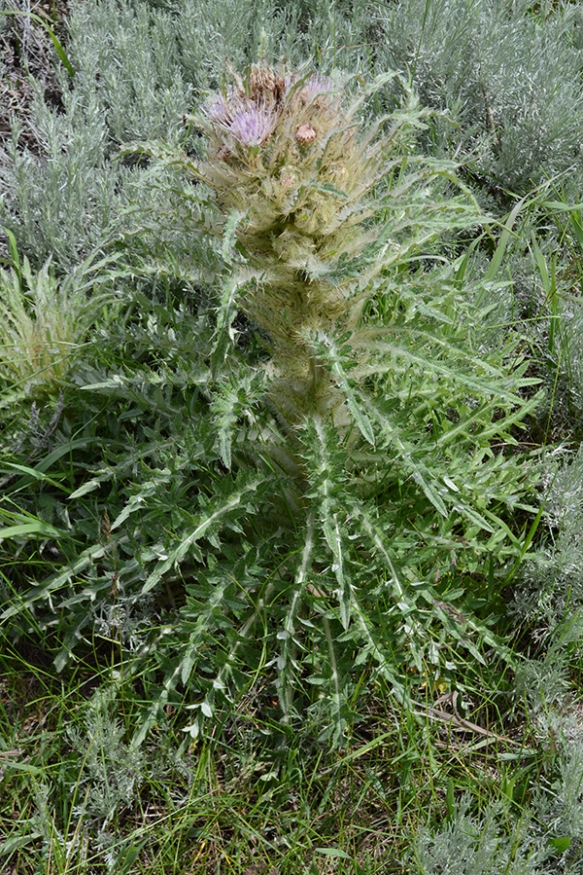

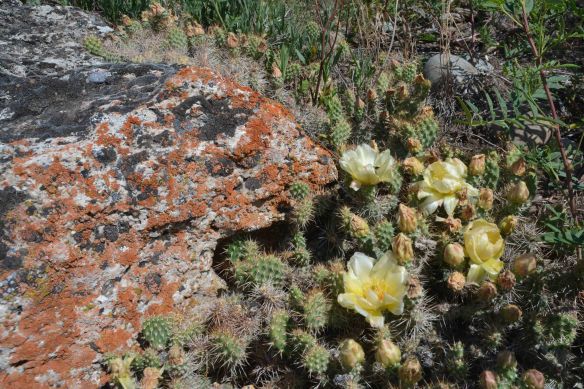
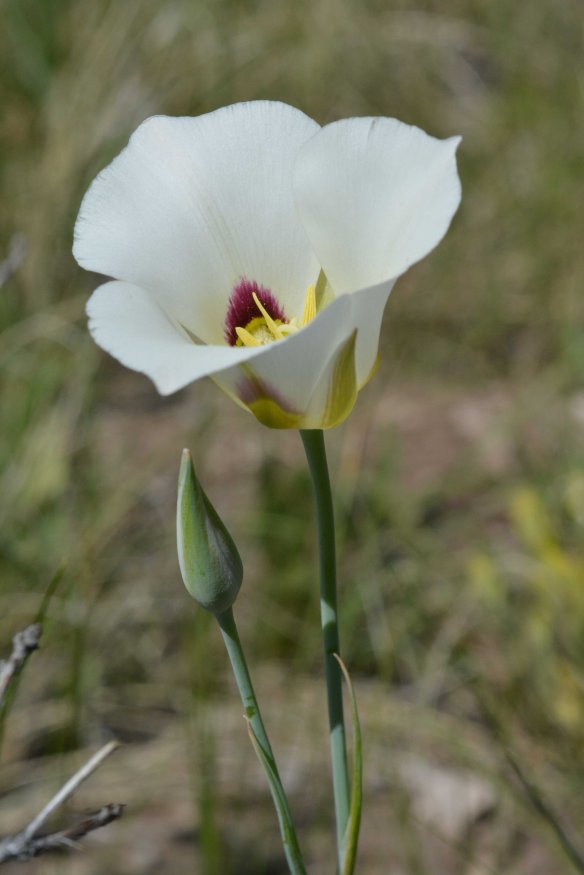
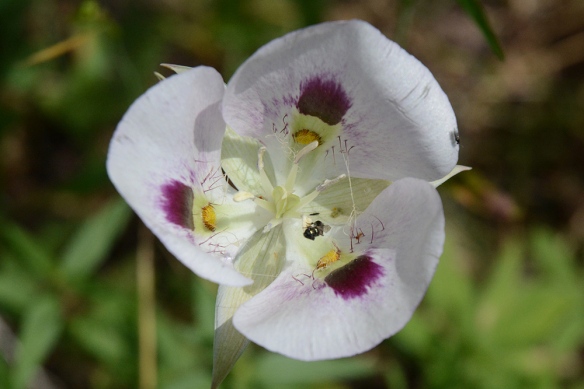
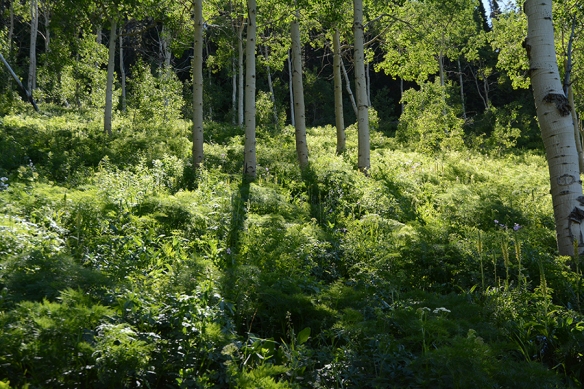
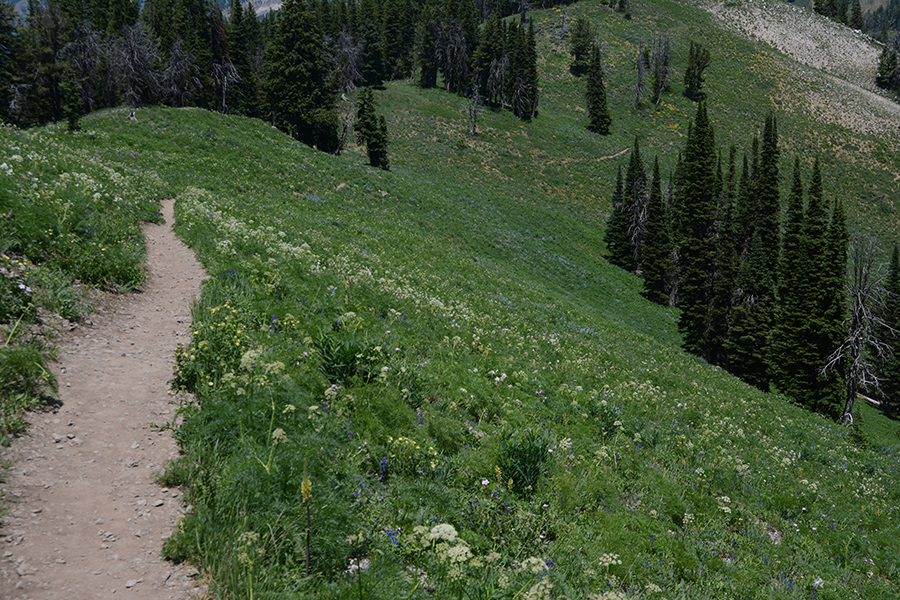
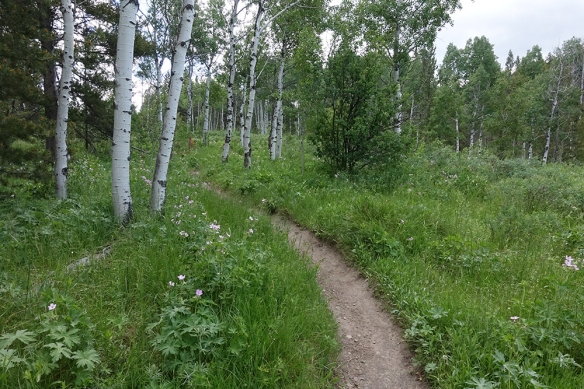 The number of fresh flowers is overwhelming hiking up Old Pass Road, Ski Lake, Munger Mountain and other trails with aspen groves and coniferous forests intermingle with meadows. The range of sun and shade, moisture and soils provides opportunities for a diversity of wildflowers to find their niche. Some plants are generalists, others are specific in their growing needs. All have evolved pollination techniques which are fascinating to observe and underground connections which we can only imagine.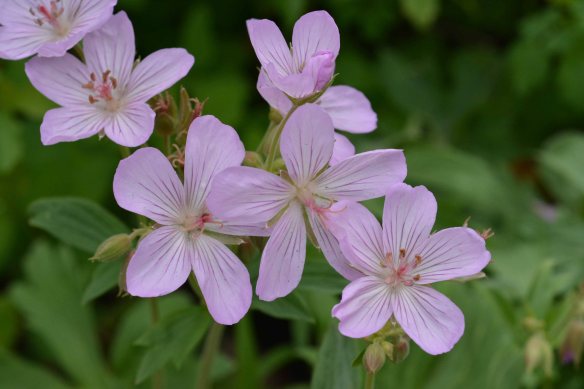































 Teton Plants