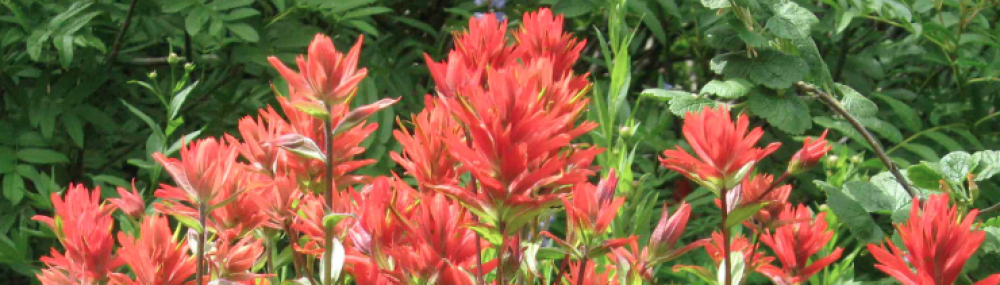

Our lush spring of overwhelming balsamroot, mule’s ears, and so many other flowers has given way to brittle leaves and early fruits. The hot weather, wind, and dryness have sapped some of the plants’ resources needed to sustain green leaves and perhaps even to fill out their fruits. Yet, there are still areas of fresh flowers at higher altitudes. And some end-of-summer, early fall flowers are providing pollinators with much needed sustenance in the valley.
This posting focuses on plant ID – with some notes on ecological values and human uses. Each species poses ID puzzles. With a 10x handlens, or by reversing your binoculars, or just good eyesight you can discern the fine features. Enjoy the pictures and read the description to see if you can find the details. Also, there are not a lot of species in bloom to confuse them with. Knowing the proper name of a plant opens the door to further knowledge.

Fireweed Show
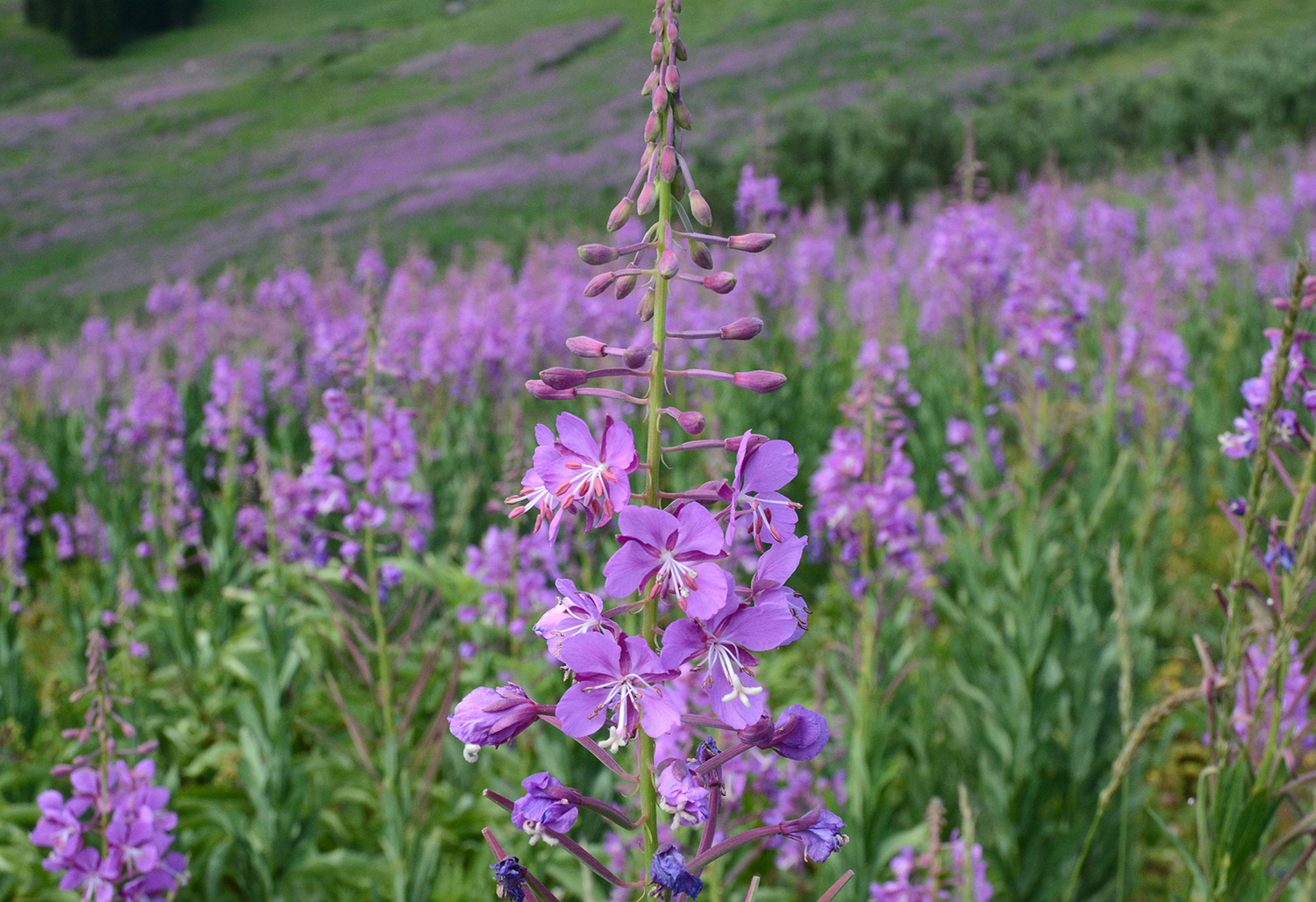
Fireweed – Epilobium/Chamerion angustifolium – creates a spectacle with its spires of magenta flowers. Look closely at the open flowers for all the parts.
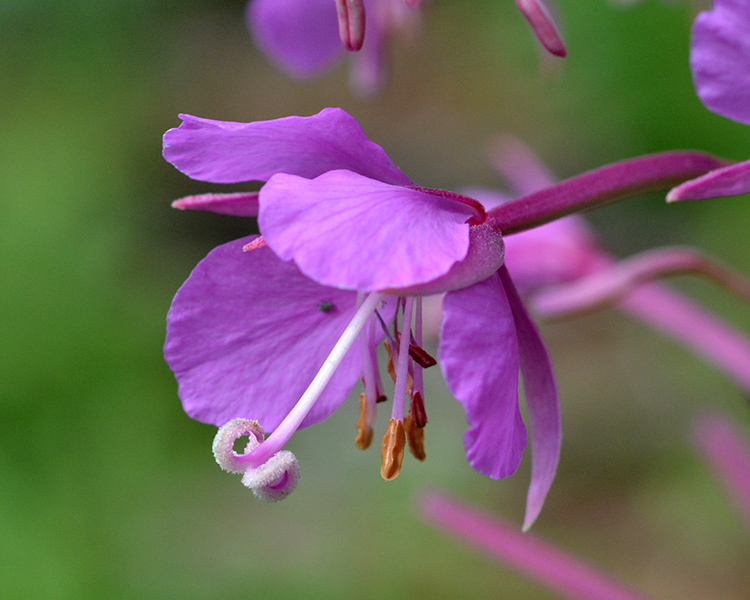
You can clearly see 4 darker, narrow sepals; 4 wider magenta petals; then several stamens surrounding the long white style with its 4-pronged stigma. Also note, the inferior ovary forming below the other flower parts, typical of the Evening Primrose family. These open flowers attract buzzing bee pollinators and also hummingbirds which hover while lapping up nectar deep in the center of the flower.
As with many flowers, the female parts and male parts mature at different times to avoid self-fertilization. Here you can see the male stamens beginning to mature.

Then as the anthers with pollen wither, the female pistil extends and the four-parted stigma unfolds its sticky surface to catch pollen being delivered by bee bodies or hummingbird heads.

Upon landing, pollen grains are then stimulated by the chemistry of the stigma to grow long tubes that will reach down within the long style to the ovary with the ovules. The pollen grains will deliver male sperm to the unfertilized eggs inside the ovules, after which seeds will form inside the inferior ovary. The ovary will mature into a elongated fruit with hundreds of seeds inside!
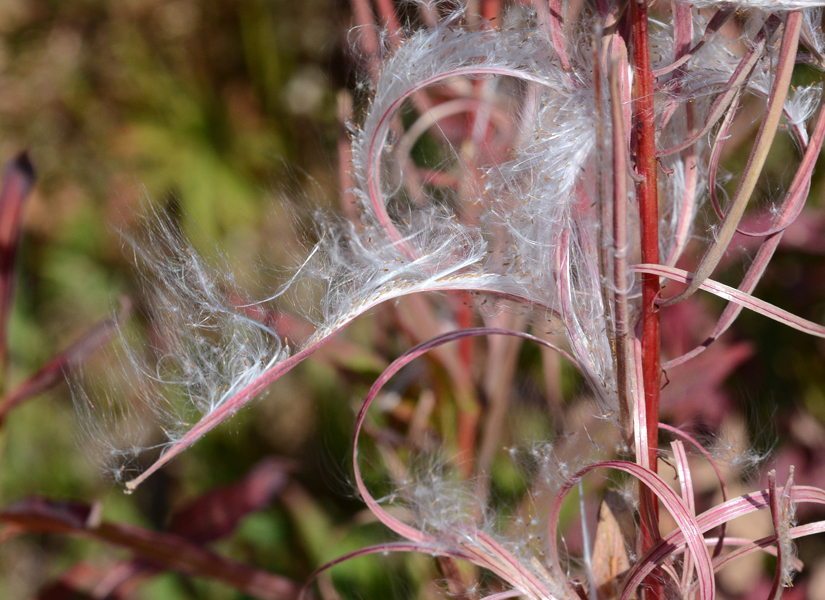
Fireweed seeds are tiny and plentiful! The deep-red, elongated fruits dry, split, and curl spilling the seeds out upon the wind. Tiny hairs can carry the seeds over 150 miles! Seeds can germinate within 10 days and lose their viability after 1-2 years. One plant can produce 80,000 seeds.

Fireweed is important forage for moose, elk, mule deer. And very surprisingly porcupines like it too!
Members of the Asteraceae or Composite Family are blooming both high and low.
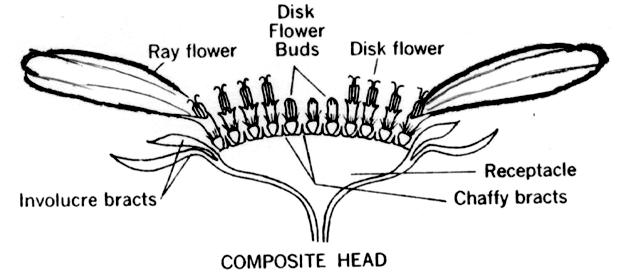
Composites have flower heads with many individual small flowers arranged on a platform–receptacle. These individual flowers may be disk flowers or ray flowers. Disk flowers have five fused petals forming a tube inside of which may be 5 inward facing anthers and a single pistil. Ray flowers are five petals fused to look like one large petal. These florets may be both male and female, only male or female, or sterile. Each fertile flower, if fertilized, will form a single fruit called a cypsela with a single seed inside. There are many many variations on this basic flower plan. Asteraceae is one of the largest, most successful plant families in the world. Its fun to look for some of these many variations.
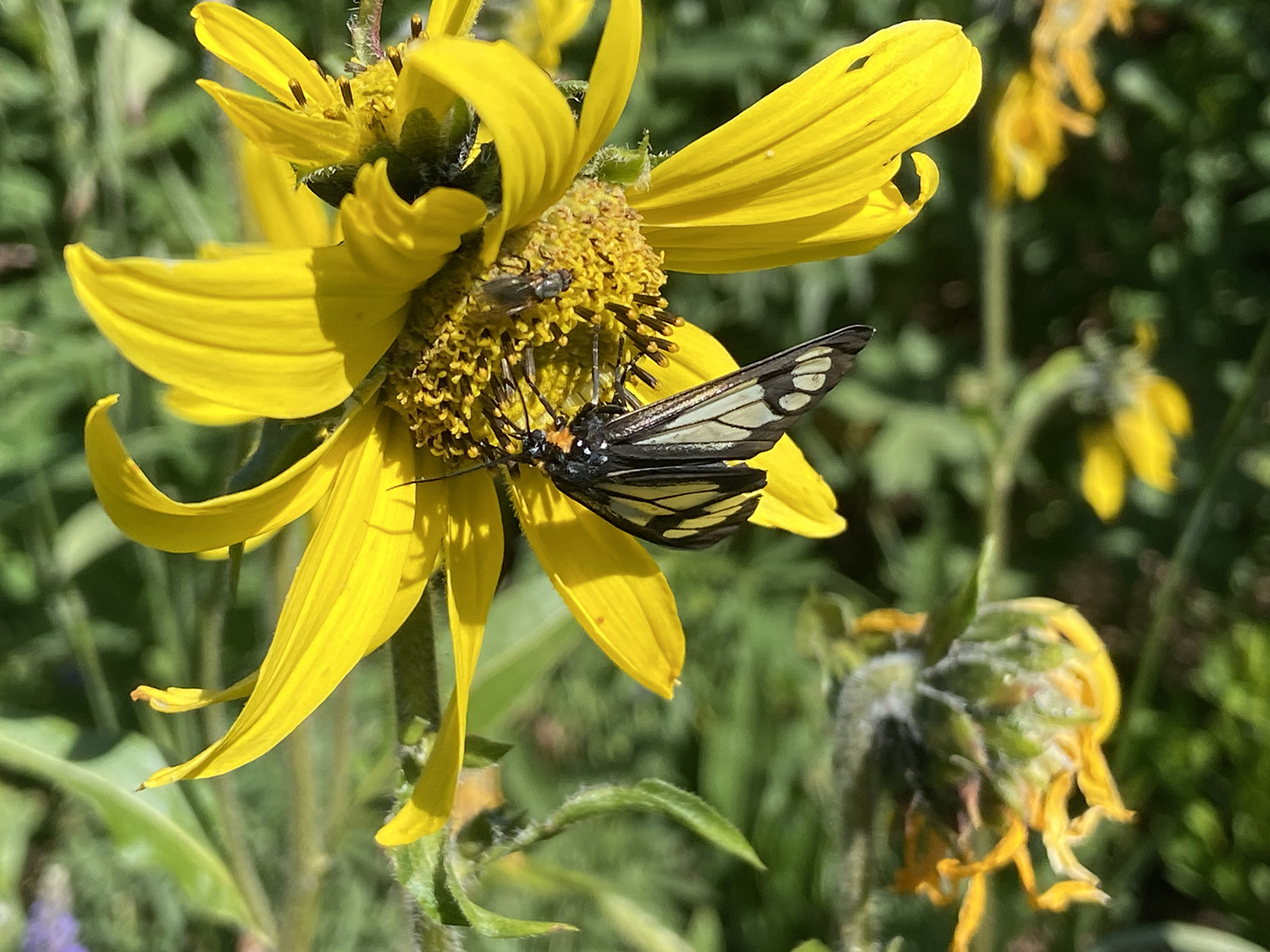
Five-nerved Little-Sunflowers – Helianthella quinquefolia – still persist and attract myriad bees, flies and other insects at high elevations.
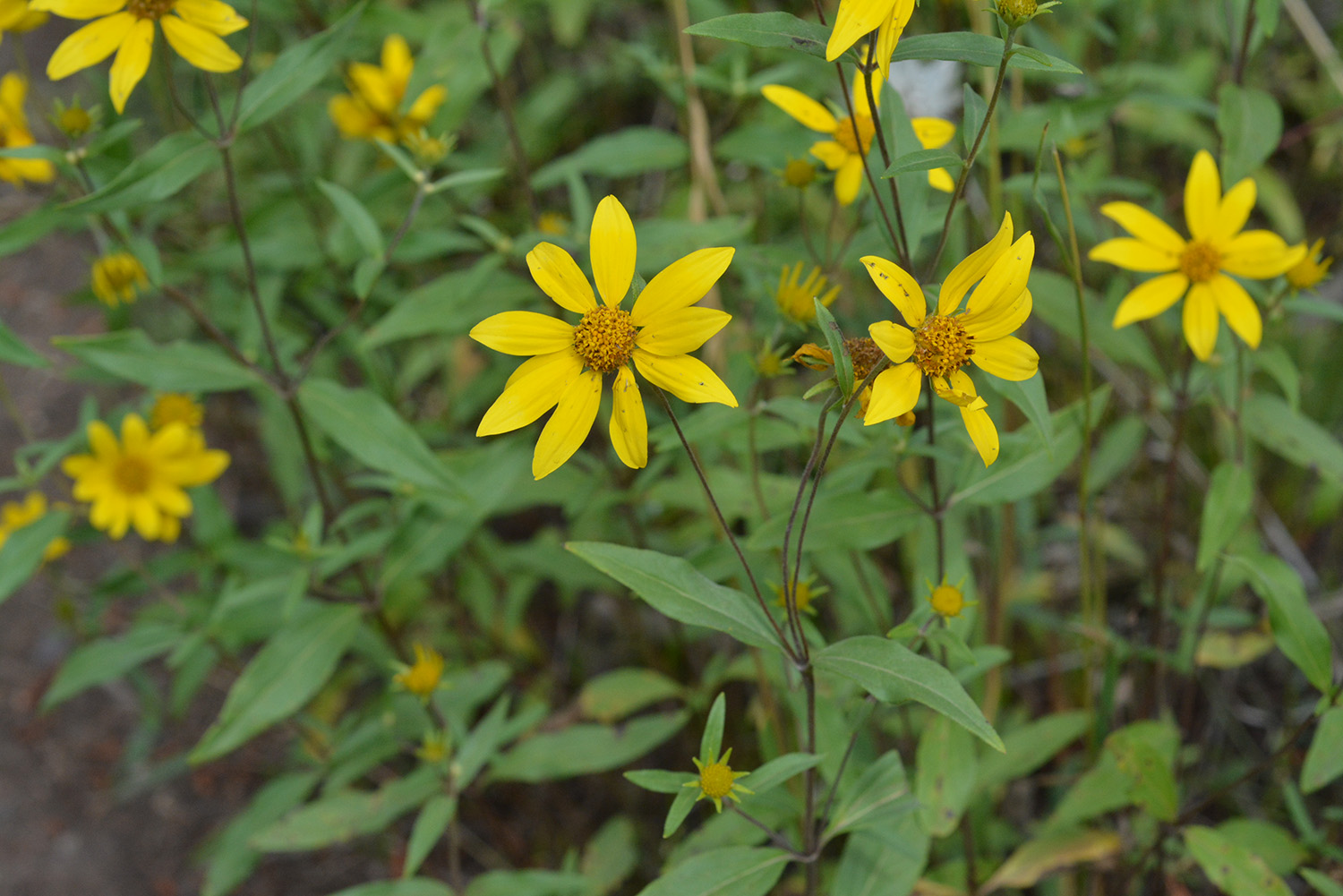
At lower elevations, flowers are fading: the ray flowers are drooping while the fruits begin to form in the center.

The fruits are like flattened sunflower seeds. They will be plucked out by birds or will just fall to the ground. There are light scale-like structures termed paleae (palea singular) between the dark individual fruits.

Golden-eyes – Vigueria multiflora – are a long-flowering yellow composite, primarily because it has so many flower heads. Below you can see the many ray flowers surrounding a spiral of developing disk flowers. They start blooming from the outside in.

The more-or-less opposite 2-3” leaves sit right upon thin 2-4’ stems. Seeds are harvested by seed-eaters such as juncos, pine siskins, and chipping sparrows. These plants grow readily in my garden in Wilson.
Asters: This is a group of different genera with common traits: a platform with a perimeter of ray flowers, many disc flowers inside, all surrounded and protected by “imbricate” bracts e.g. arranged like shingles on a roof. The bracts themselves can be distinctive and are often crucial to ID. These species will produce dried fruits (crypselas) that will be carried off on a parachute of fine hairs – a “pappus”. Here are some tips for identifying the ones mostly likely seen right now. Most are growing in light shade or near moist areas.
Thickstem Mountain Aster – Eurybia integrifolia has deep-purple to blue ray flowers, bracts that curl out somewhat, and sticky hairs that cover most parts.
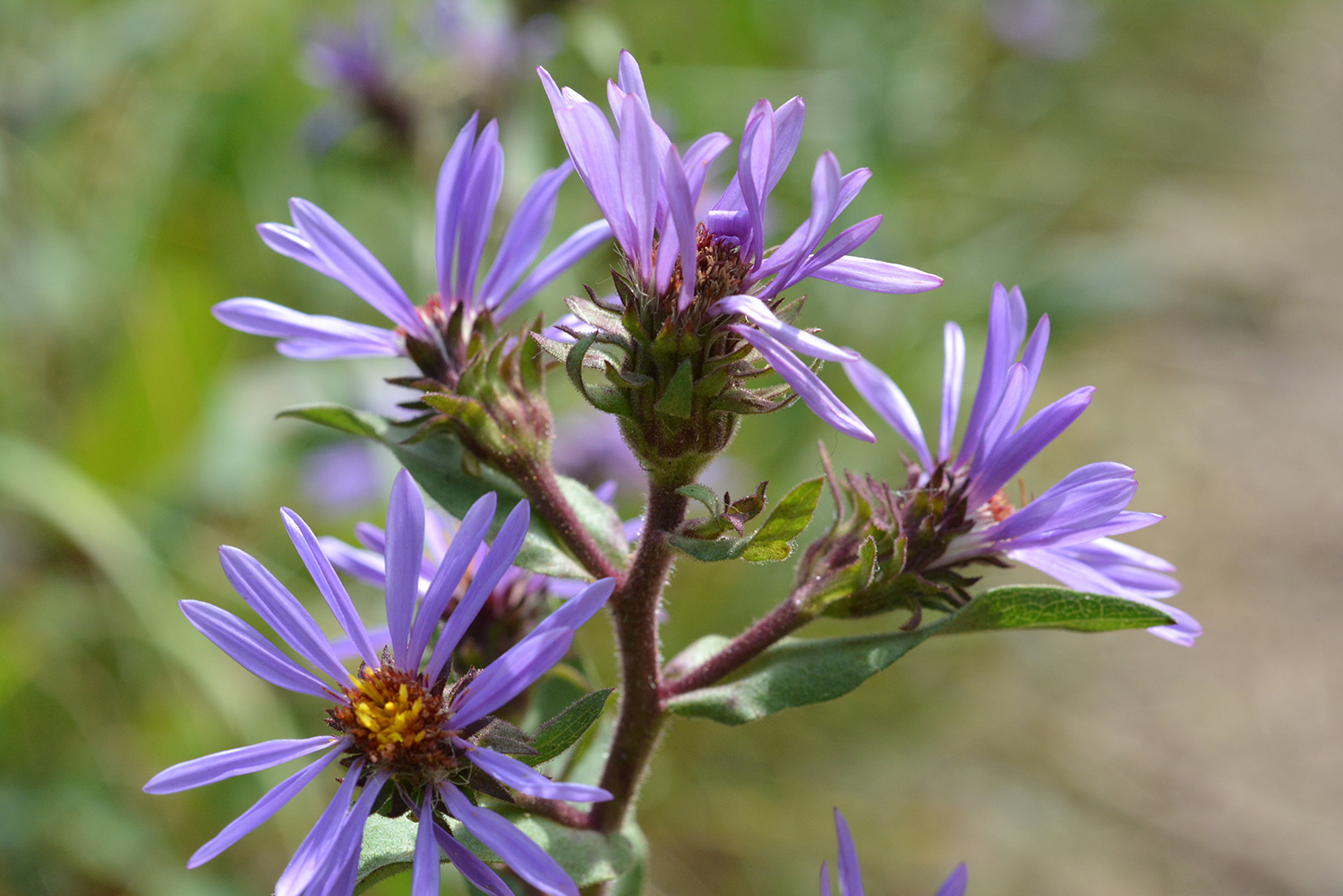
Stem leaves sit upon the slightly zig-zag thick stems and there is a cluster of basal leaves.

Engelmann Chaffy Aster – Eucephylus engelmannii – stands straight up to 3’ tall with alternating leaves. Stems are topped by several flower heads, each with white ray flowers.
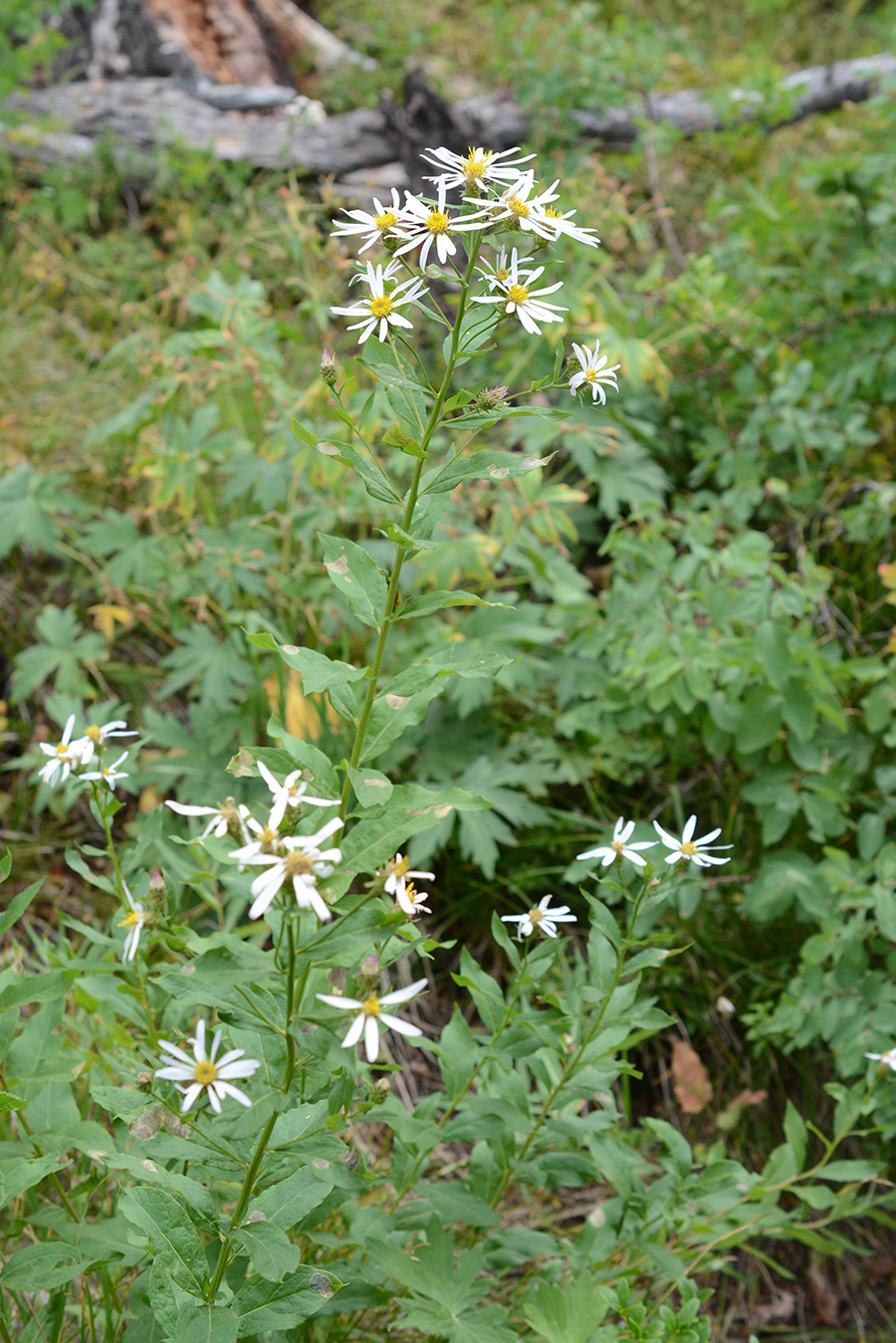
The bracts are edged by a slight fringe.

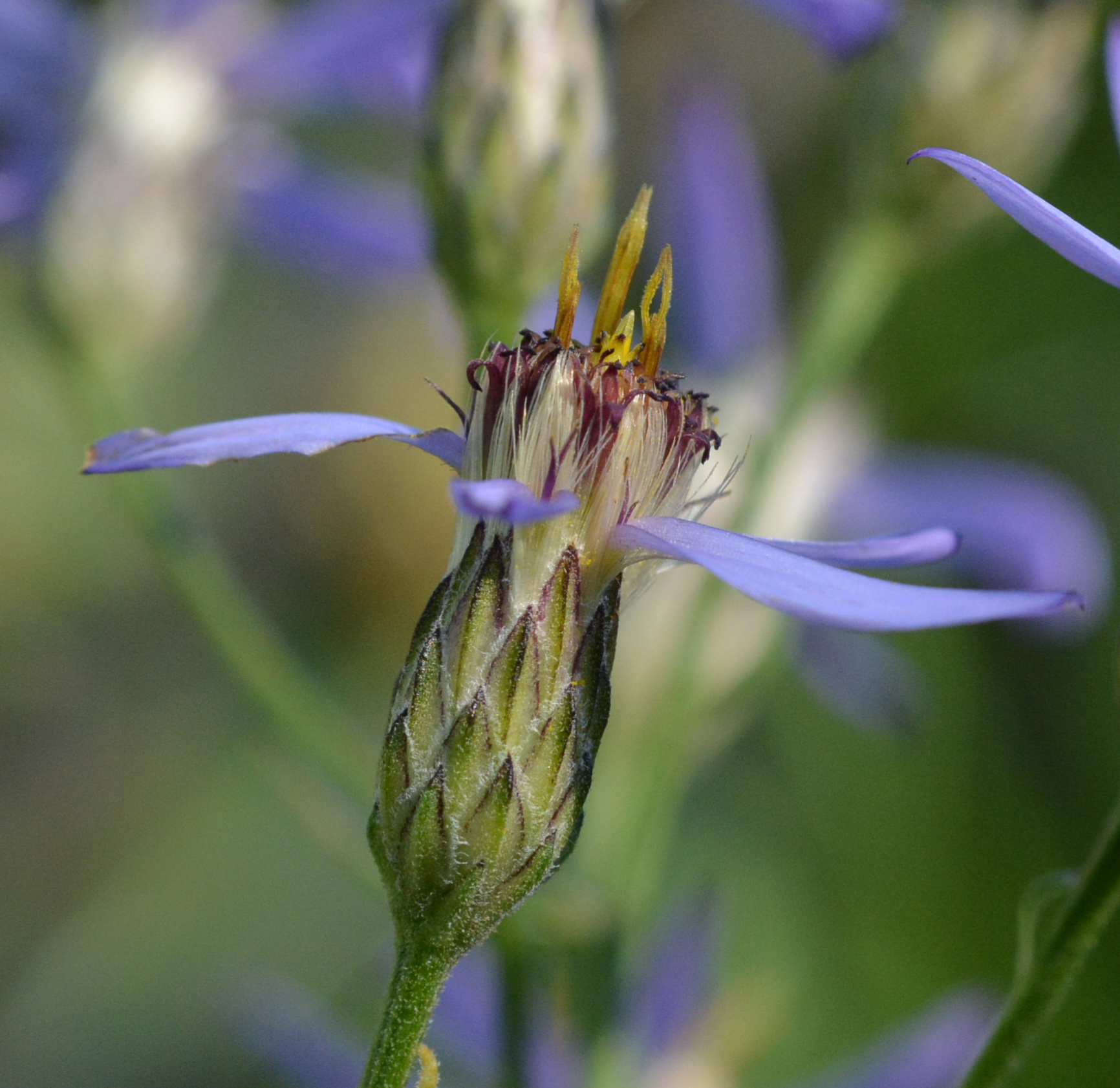
Blue-leaf Chaffy Aster – Eucephalus elegans – is smaller and more delicate than its relative. Its flower heads sport a few blue ray flowers.
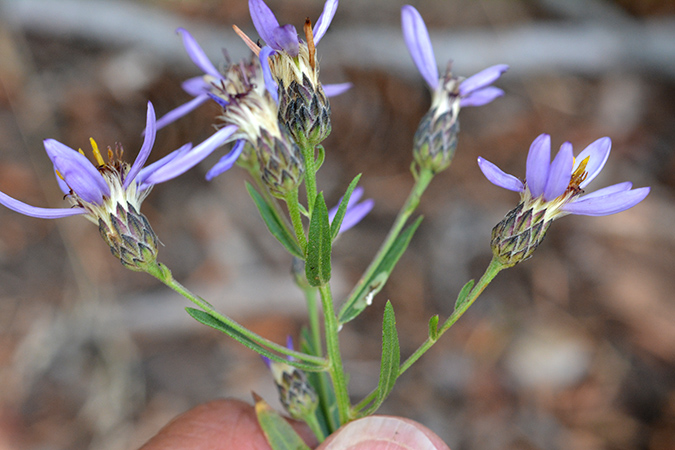
Inside are a few disk flowers, here with the folded divided stigmas pushing up through the inward facing anthers hidden inside the tiny petals. By doing so, the stigmas are pushing up and out pollen for bees to collect. A few hours or days later, the stigmas will unfurl their sticky insides and be ready for pollen to be delivered by bees arriving from other flower heads. This strategy of “plunger” fertilization helps reduce self-fertilization. Flower heads are encompassed by colored, fringed bracts.
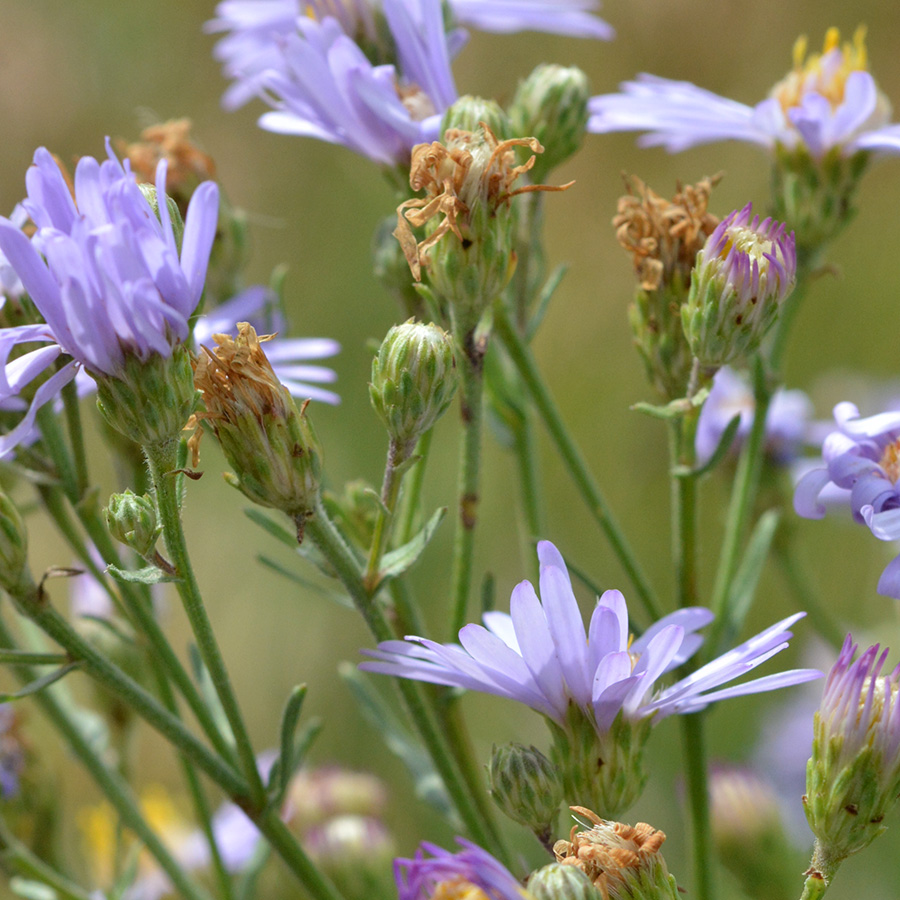
Found both at higher and lower elevation sites, primarily in sunny dry situations, Western Aster – Symphyotrichum ascendens – can be abundant.
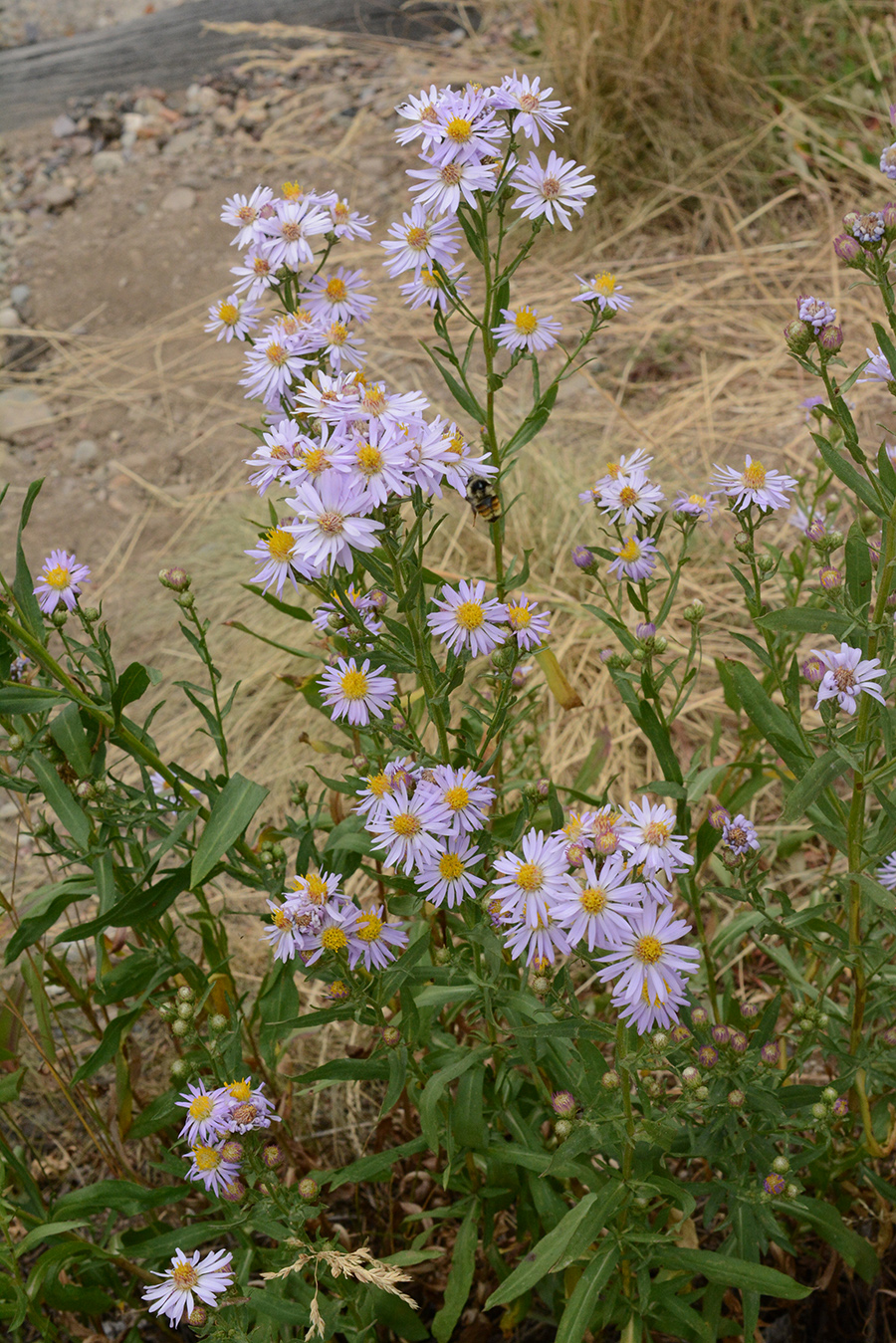
These 2-3 foot tall plants sport masses of blue flower heads above stems with many leaves. The flower bracts are imbricate, but without much distinction.
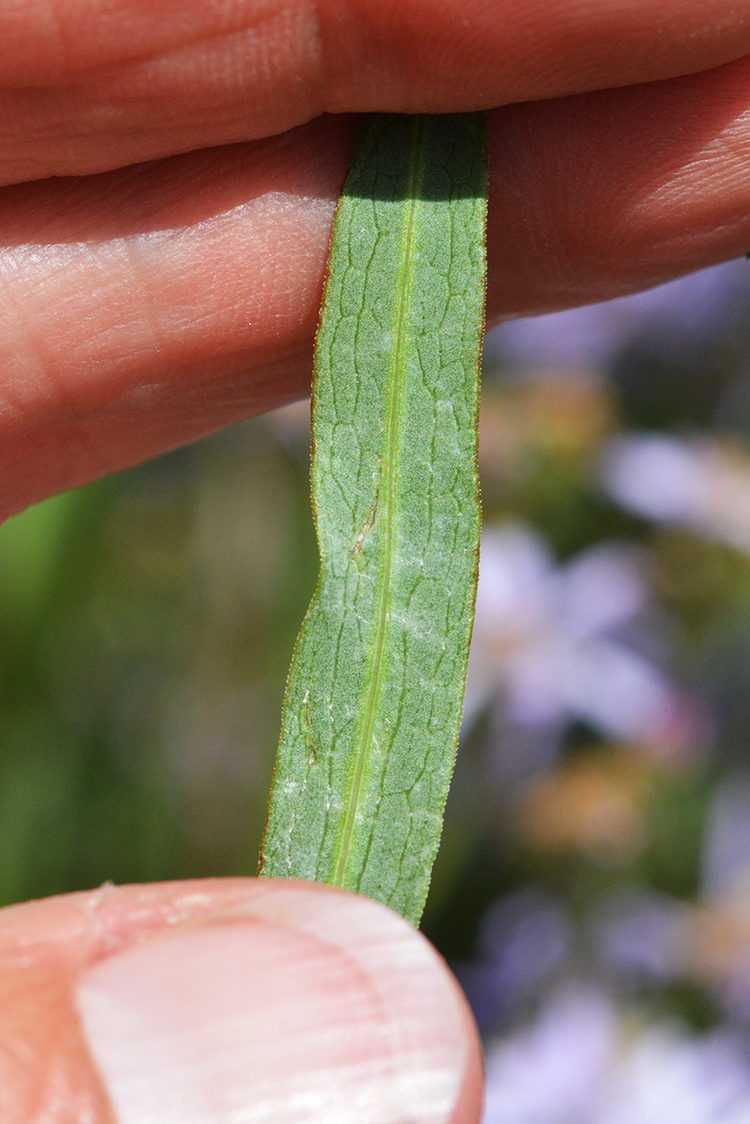
The leaves have a particular elongate pattern which helps provide definitive ID.
Most readily seen along the park roads
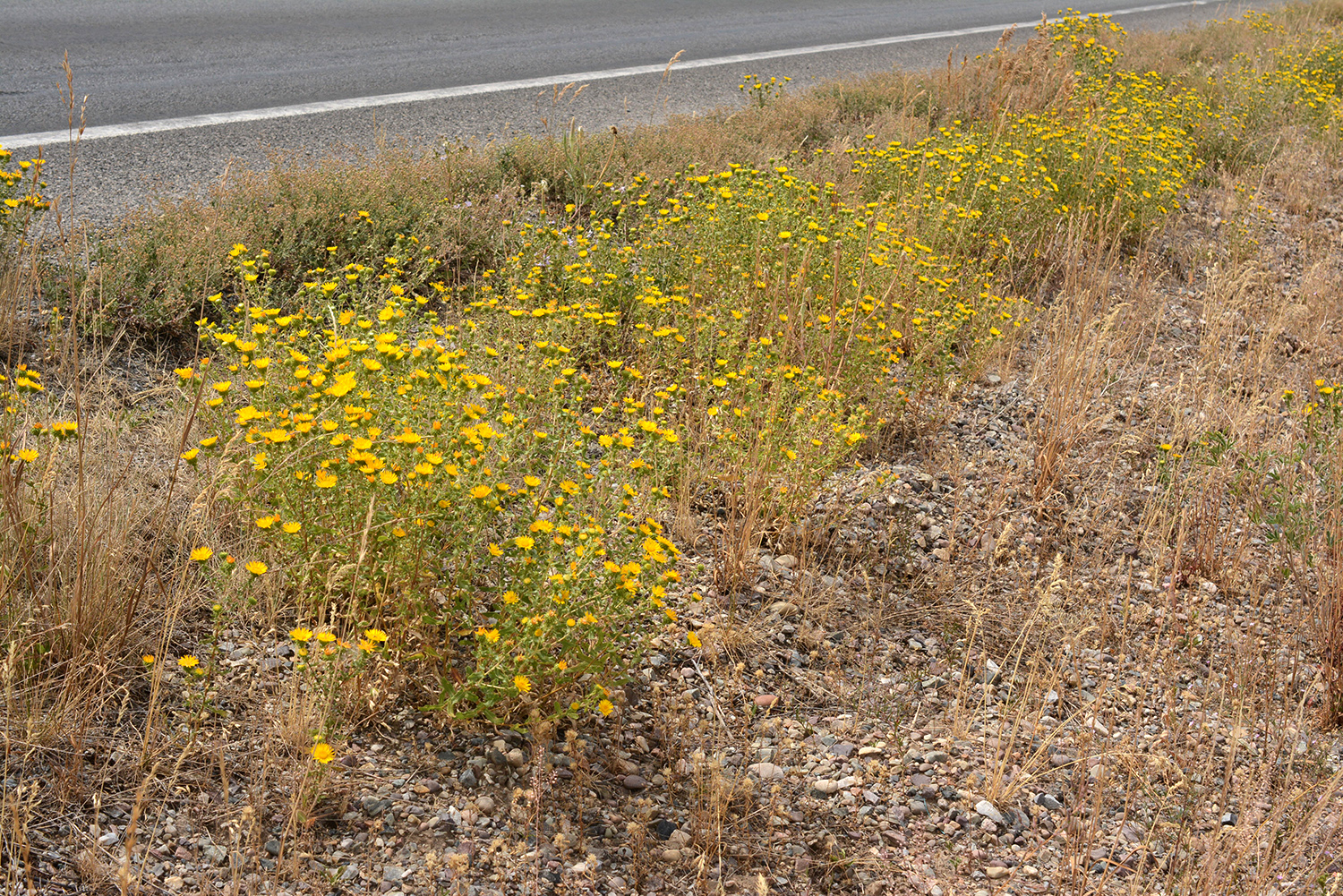
Curly-cup Gumweed – Grindelia squarrosa – grows along roadsides and in other disturbed habitats. Flower heads are very sticky and the bracts curl back and form a cup—hence the name.
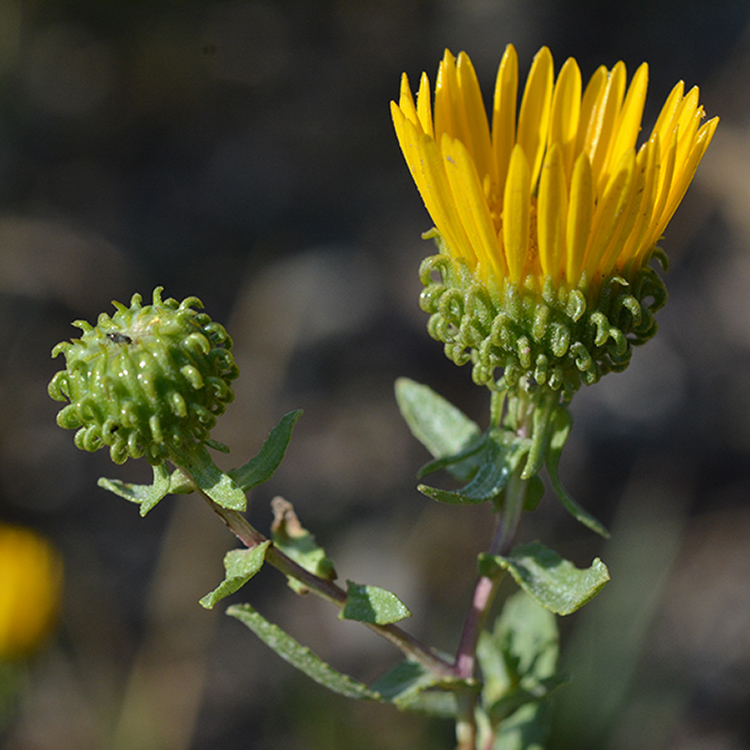
The leaves are more or less oval, slightly succulent and sticky, and toothed.
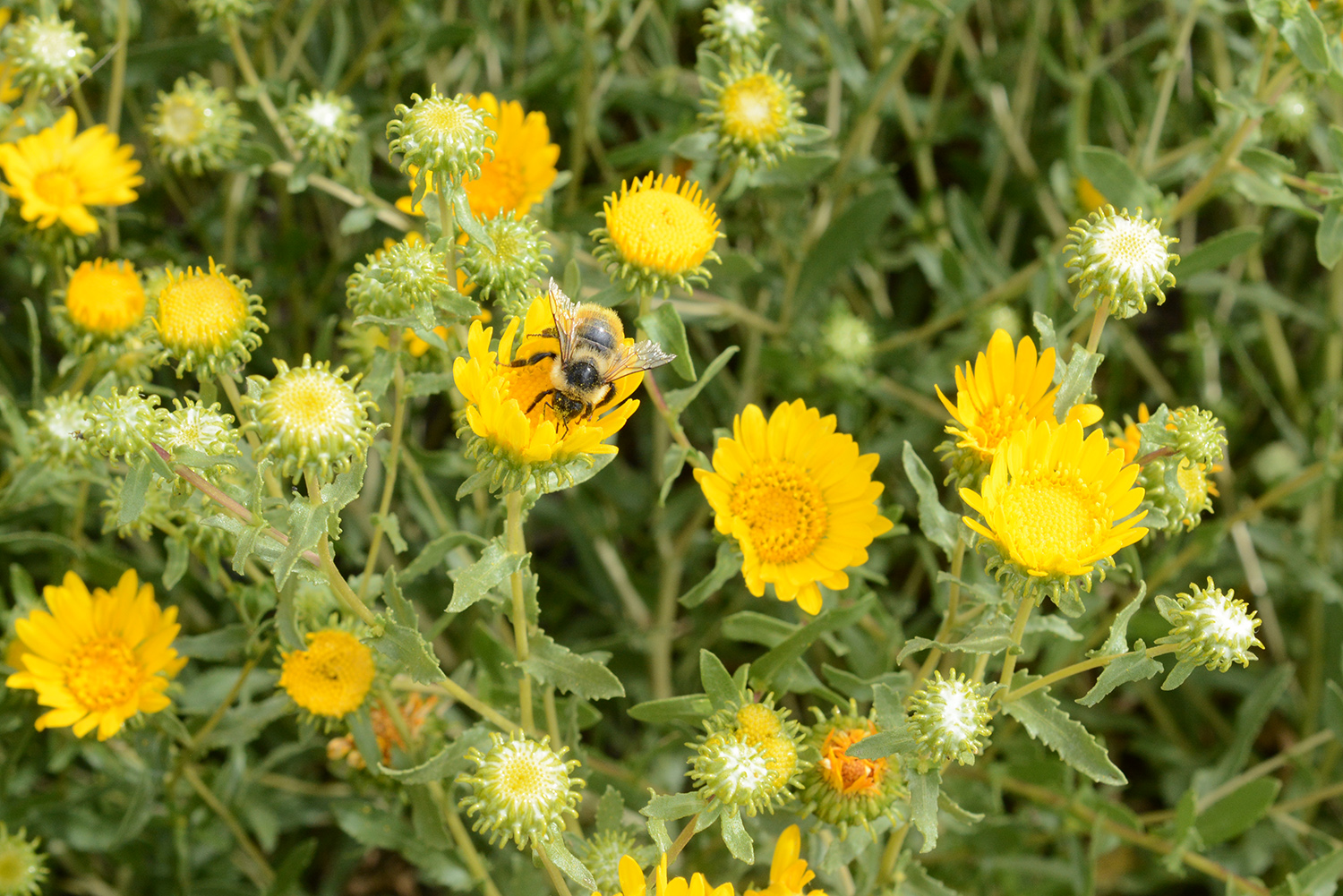
This plant has been used medicinally by indigenous people for cough medicine. Other uses include rubbing the gum on the outside of the eyes to treat snow blindness. Best always to check sound sources for medicinal uses – more reliable information is found by using the proper botanical name. Plant parts accumulate selenium which would be toxic if wildlife ate them, but usually they are avoided because they taste so nasty.
One observation not noted in the literature is the spit-like, gooey, sticky material that accumulates as flower heads first form. Perhaps this exudate protects the emerging tiny flowers from insects? It disappears/evaporates at the flower mature.

Interestingly, Curly-cup Gumweed originated in the mid-west and now has colonized throughout much of the U.S. including Teton County.
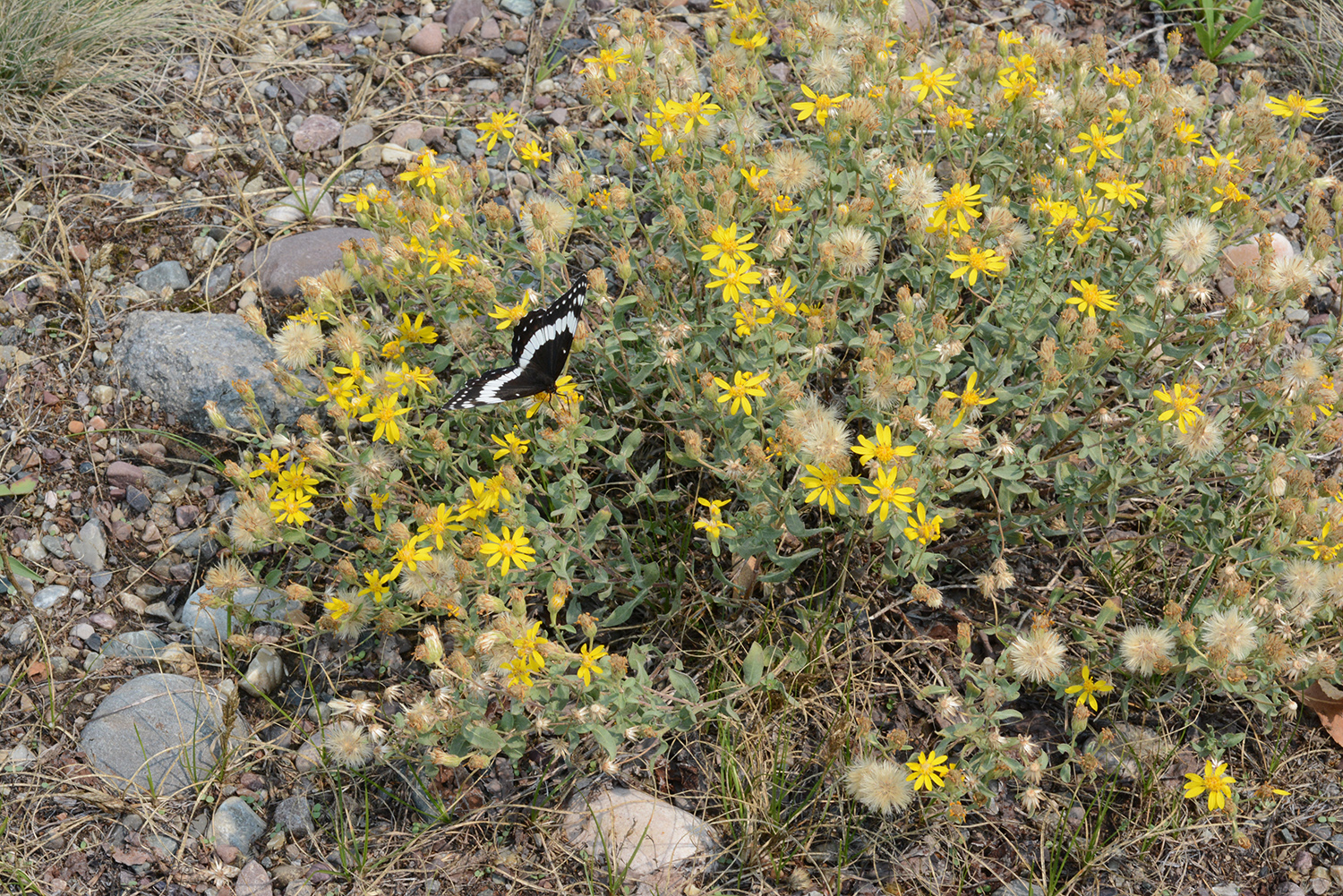
Golden Aster – Heterotheca villosa – grows in mounds about 6” or so tall. The taxonomy is somewhat unclear, but in any case, the species we have here has yellow flowers and oblong leaves alternating up the 6” stems.
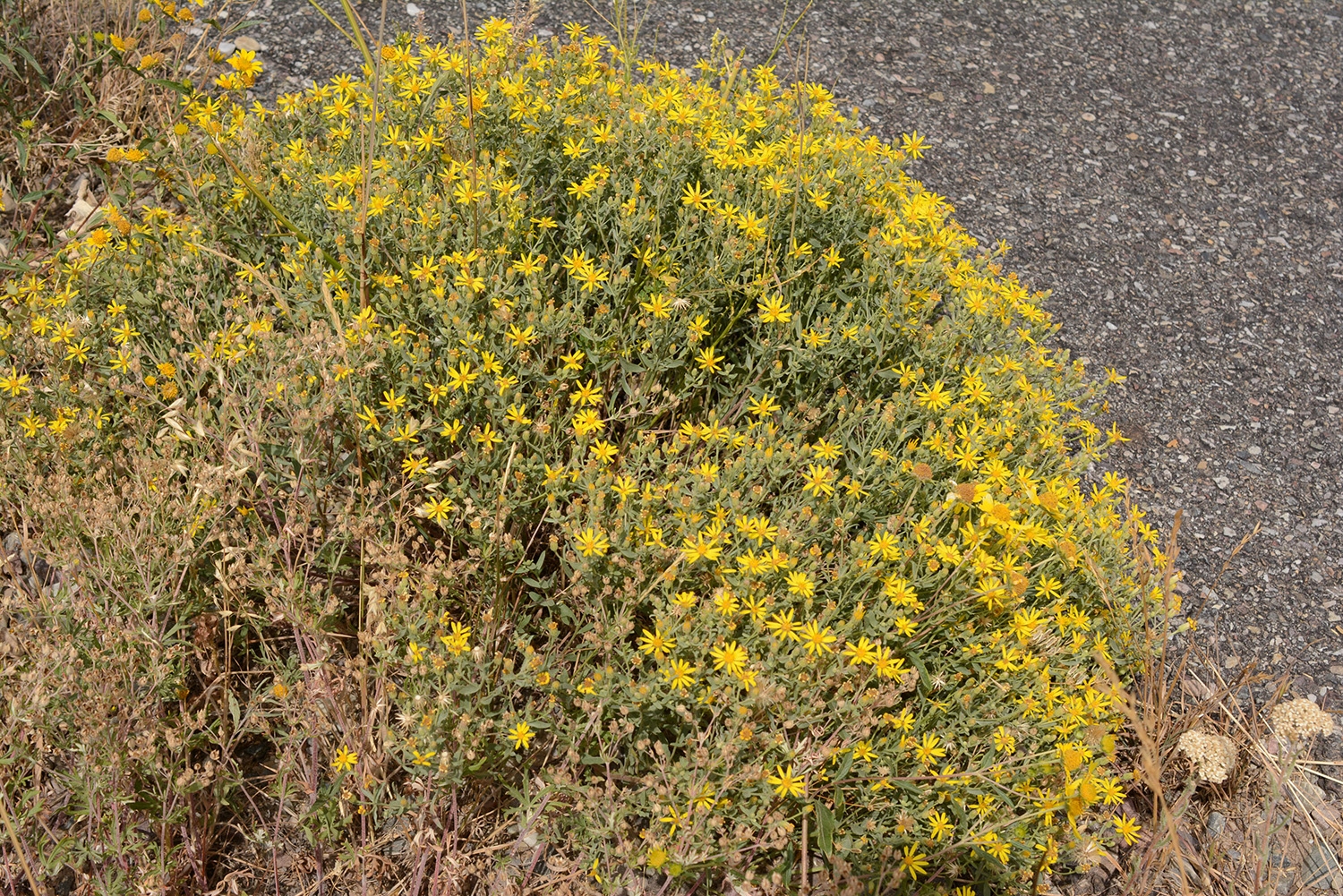
Fine hairs cover much of the plant.

The fruits have a dingy-colored pappus which enables these plants to colonize dry gravelly road sides and such.
Rand’s or Mt. Albert Goldenrod – Solidago simplex – grows sparsely along the park road. It is a relatively small goldenrod, easily overlooked.
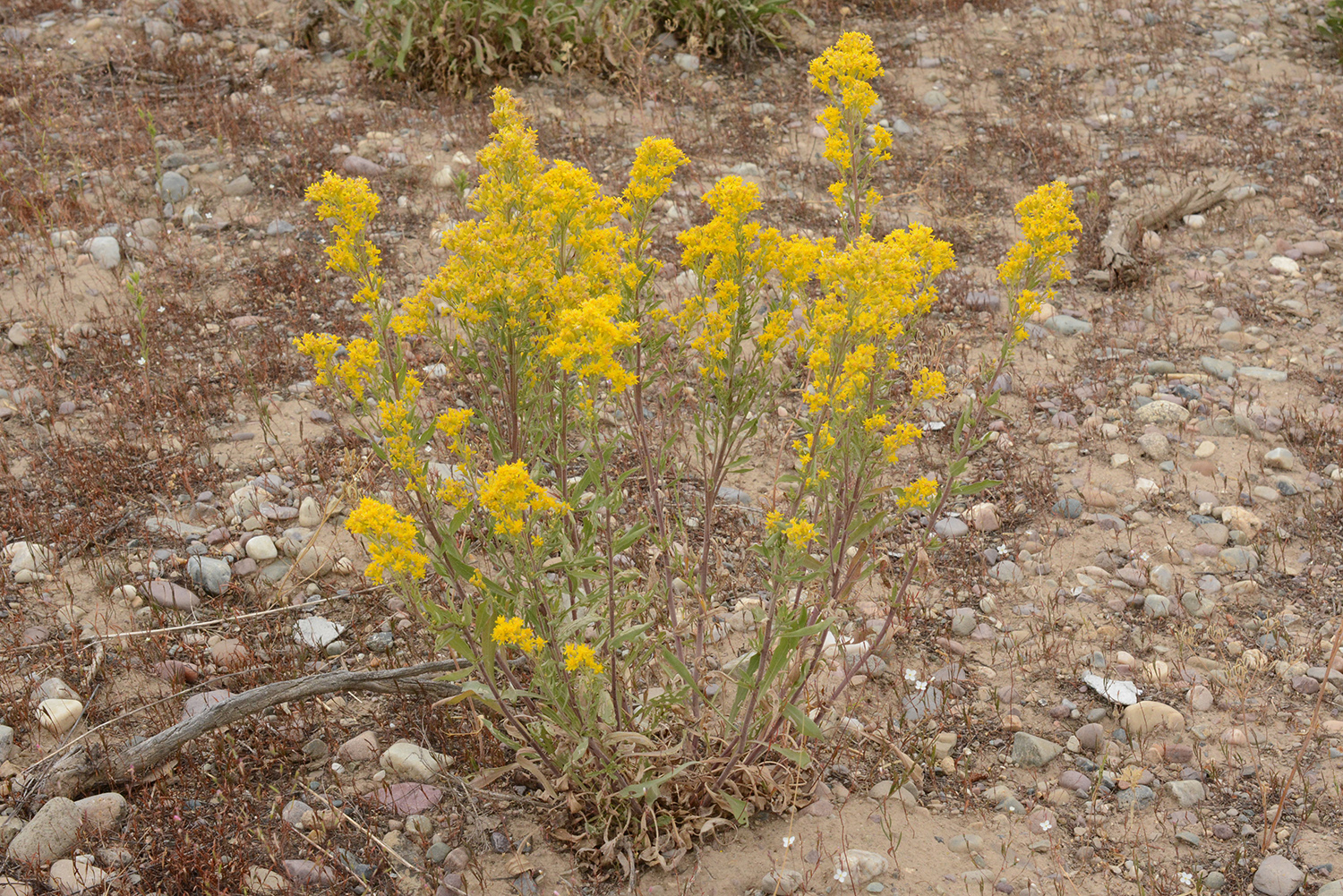
Goldenrods generally have very small flower-heads clustered together. In this case, each head has a very few disc and about 8 ray flowers.
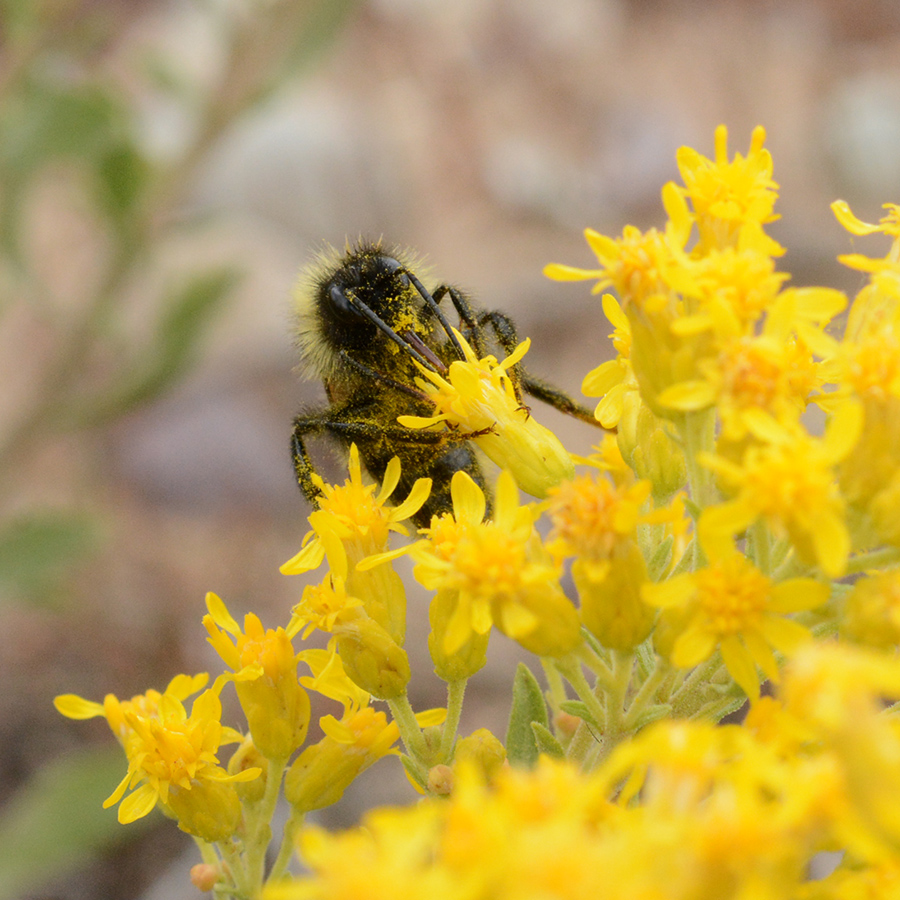
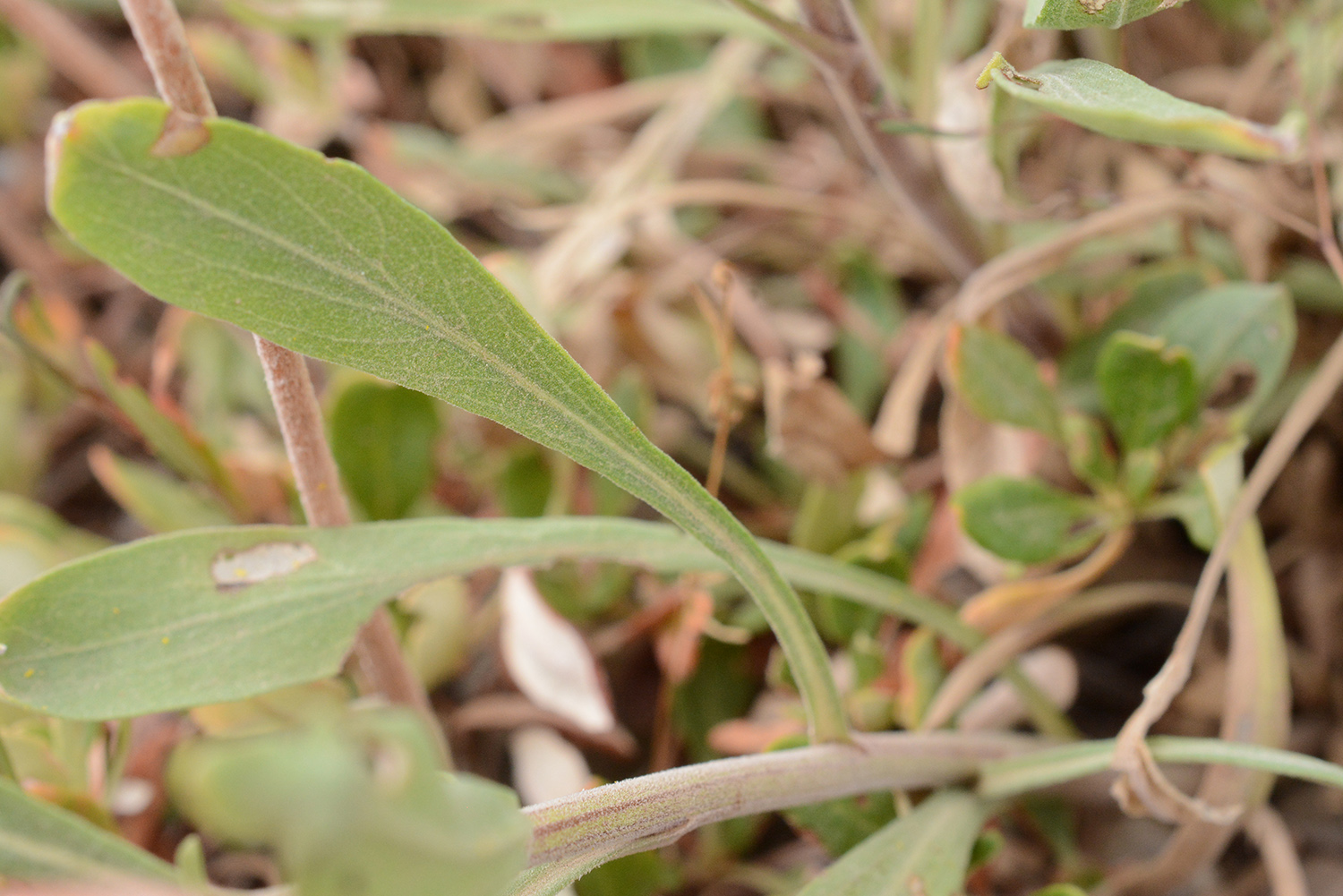
It could be confused with the common Rocky Mountain Goldenrod – S. multiradiata var. scopulorum – but S. simplex is a rarer species in Teton County and its petiole edges are smooth, not lined with stiff hairs (ciliate) as in S. multiradiata.
In comparison, perhaps nearby in a moister habitat, Canada Goldenrod – Solidago canadensis – may be growing up to 3-4′ tall.
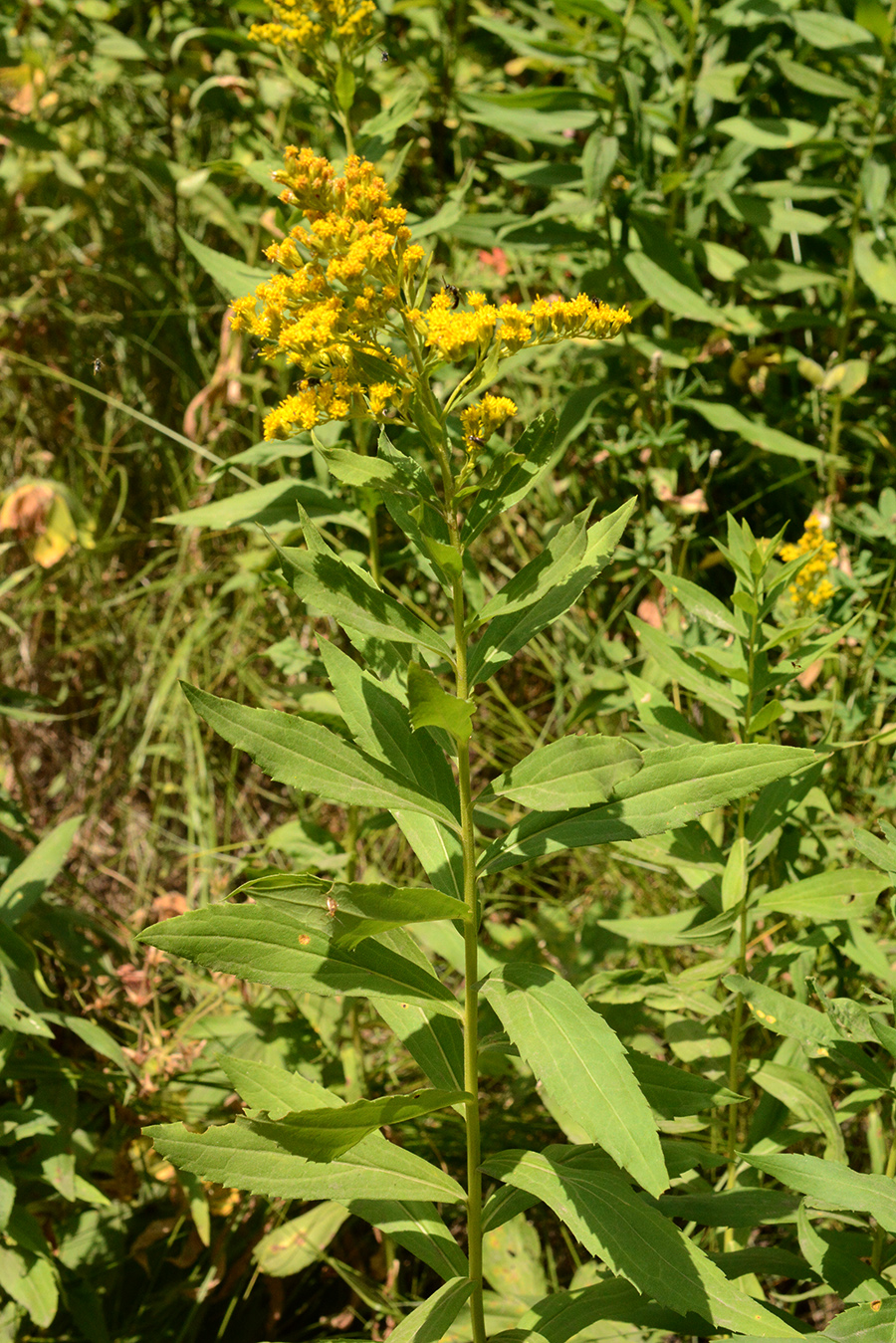
There are 2-3 large species of goldenrods in Teton County, but this Canada Goldenrod is common and notably has more-or-less even-sized leaves alternating up the stems. The leaves have three strong nerves and are toothed.
Two yellow composite shrubs:
Yellow Rabbitbrush – Chrysothamnus viscidifolius – is a 1-2’ mounded shrub with brittle, smooth twigs.
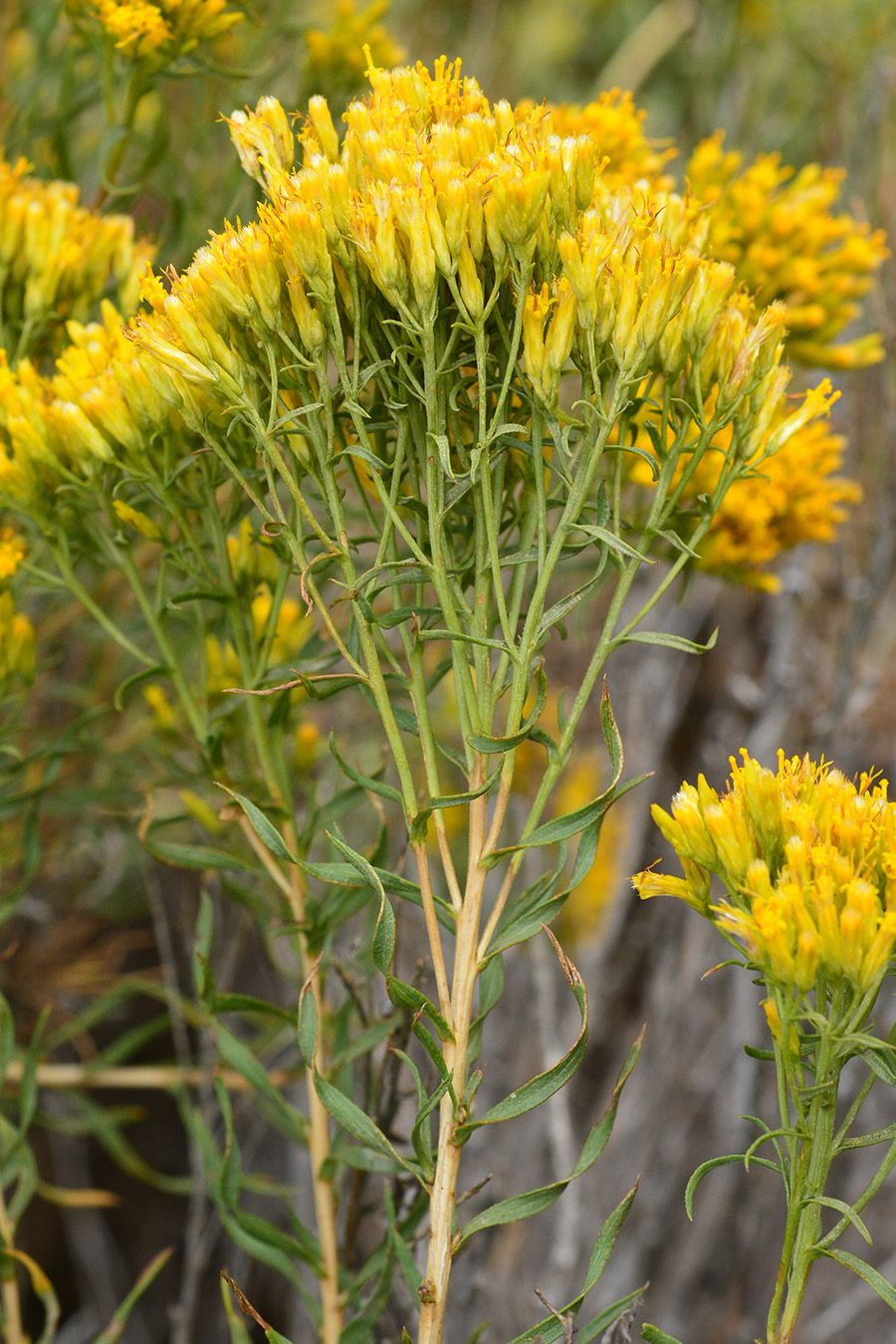
with twisted, somewhat sticky, 1”-1.5″ elongate leaves.
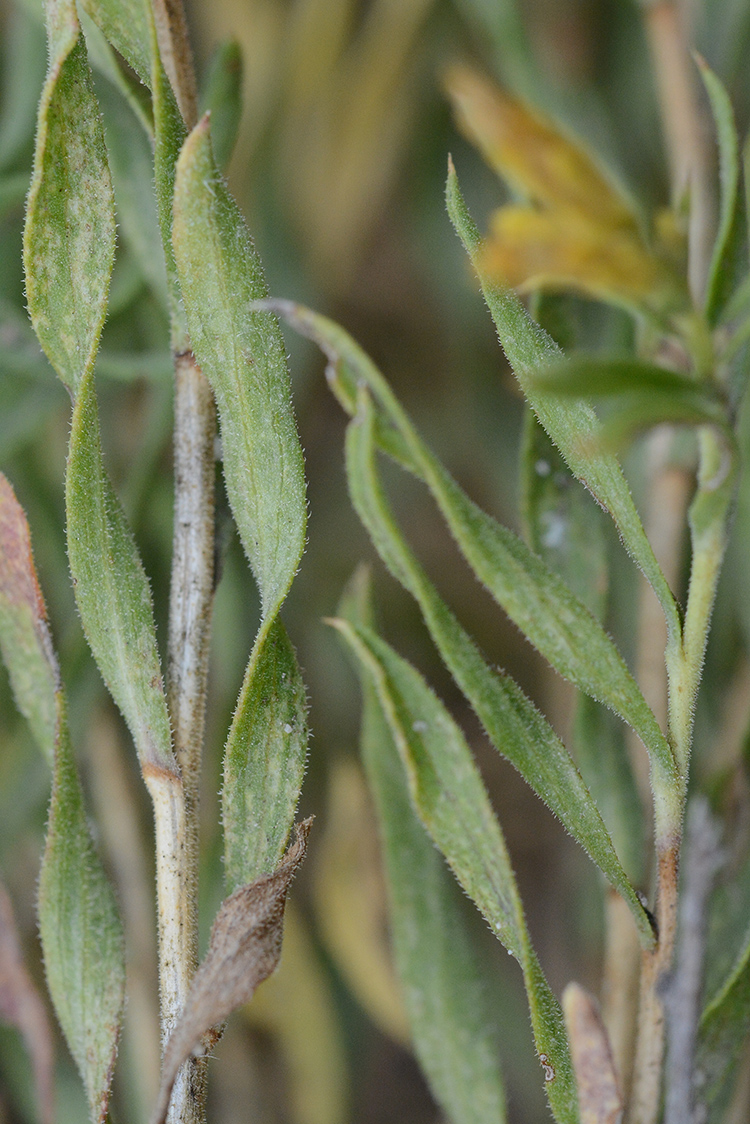
Yellow flower heads are plentiful and attract many pollinators searching for the last protein – pollen and sugar – nectar at this time of year. There are several regional varietes of this species.

Rubber Rabbitbrush – Ericameria nauseosa – also has many flower heads with elongate disk flowers

which are also appealing to many, many insects, including butterflies.

Once placed in the same genus as yellow rabbitbrush, rubber rabbitbrush is taller and the stems are covered in fine white hairs (tomentose).
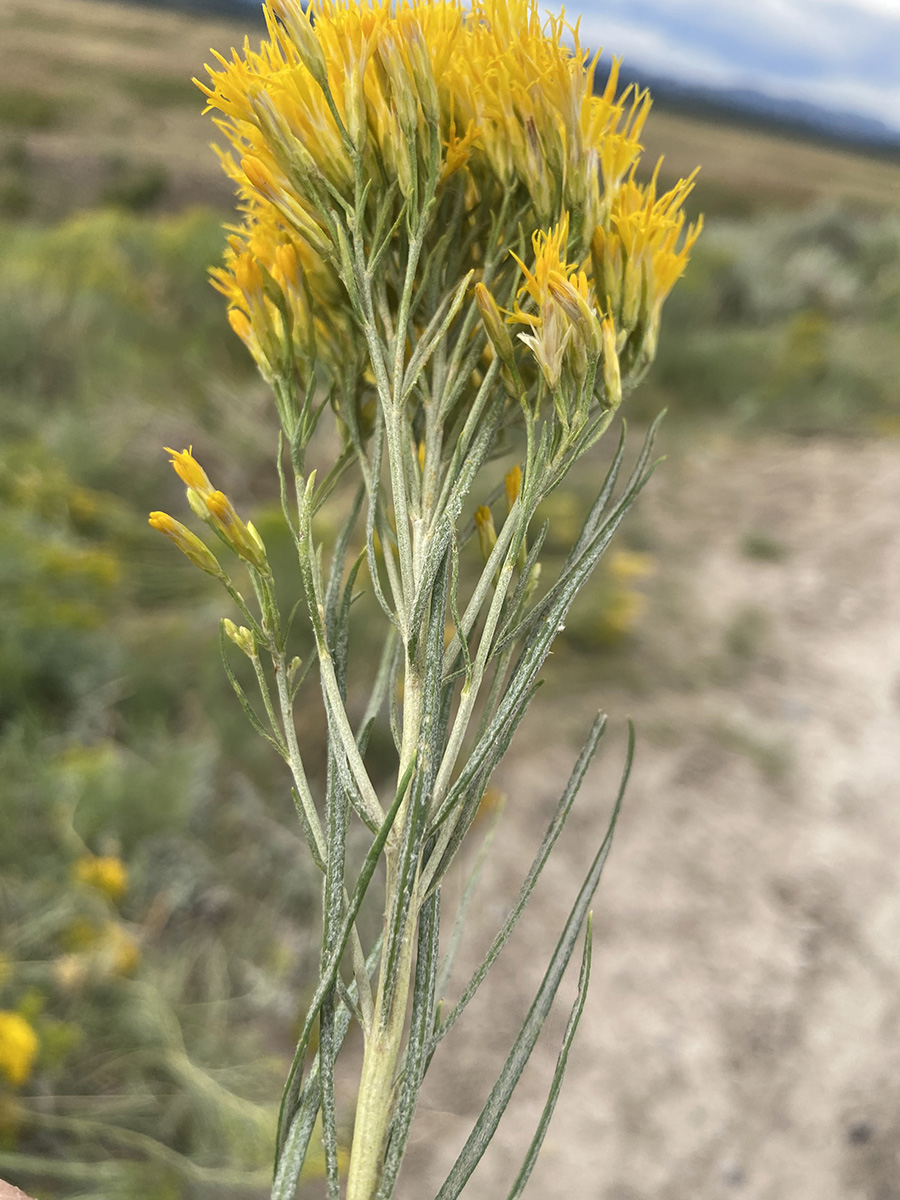
The leaves are linear and straight. Break a twig and note the distinctive smell and very bitter taste. Fresh stems are flexible and when broken exude a white sap, hence the common name. The white substance was investigated as a substitute of rubber and as an allergy-free latex. Again, there are three varieties in Teton County.
Below left is Ericameria nauseosa var. nauseosa with a overall blue-gray cast, and upper right Ericameria nauseosa var. oreophila.

Fruits are also fun finds but will be covered in the next posting.
Enjoy investigating the last of the flowers!
Frances Clark, Teton Plants
8.19.25
This posting was compiled over 2 weeks. At this time of year, flowers go fast! Still you should be able to find samples of what is shown. And there are also others out there.
As always, we welcome you comments and corrections.
(corrections: Stem leaf photo of Thick-stem aster was incorrect and was replaced with that of basal leaves.
 Teton Plants
I learned something, as usual