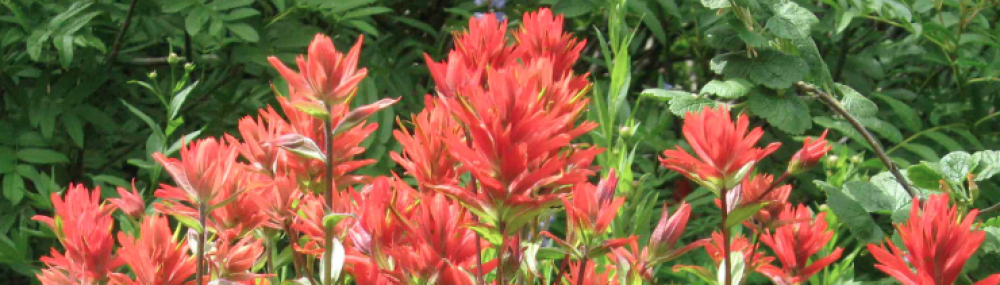
What’s in Fall: End of September 2025

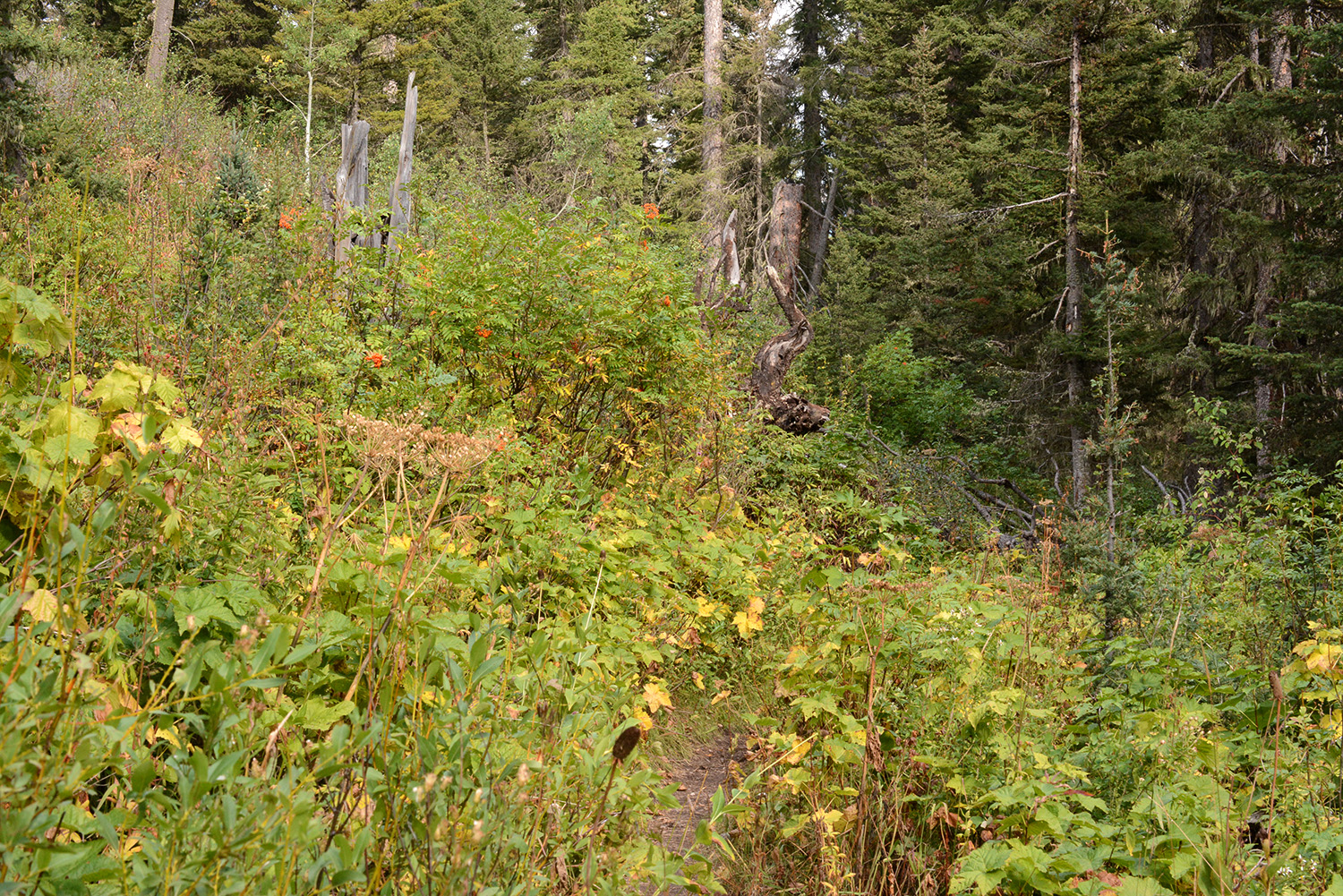
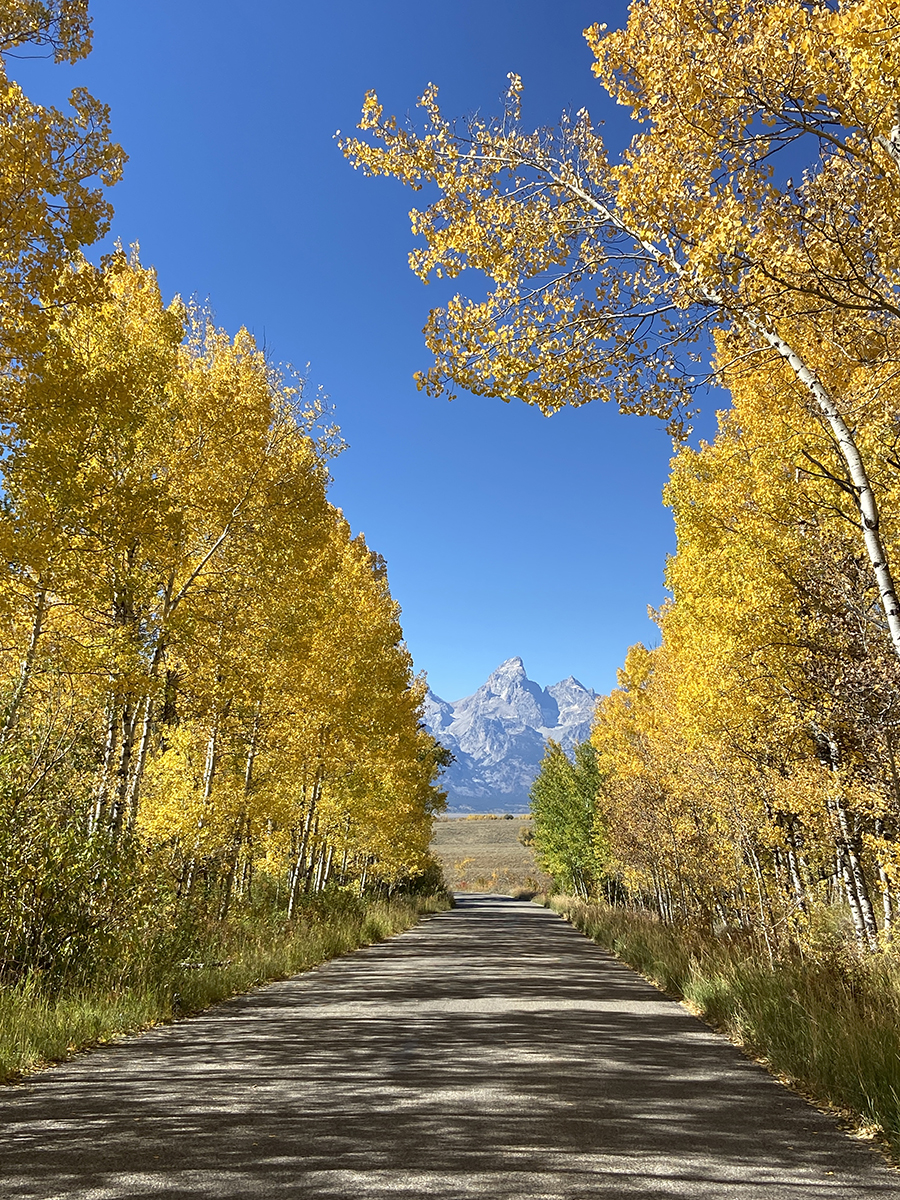
Fall colors are glorious right now and they won’t last long. Along the park trails, up the sides of canyons, across the valley, aspens and shrubs are at their peak fall brilliance. This quick posting is to encourage you to take a hike or a drive to immerse yourself in the various hues above, below, and all around you.
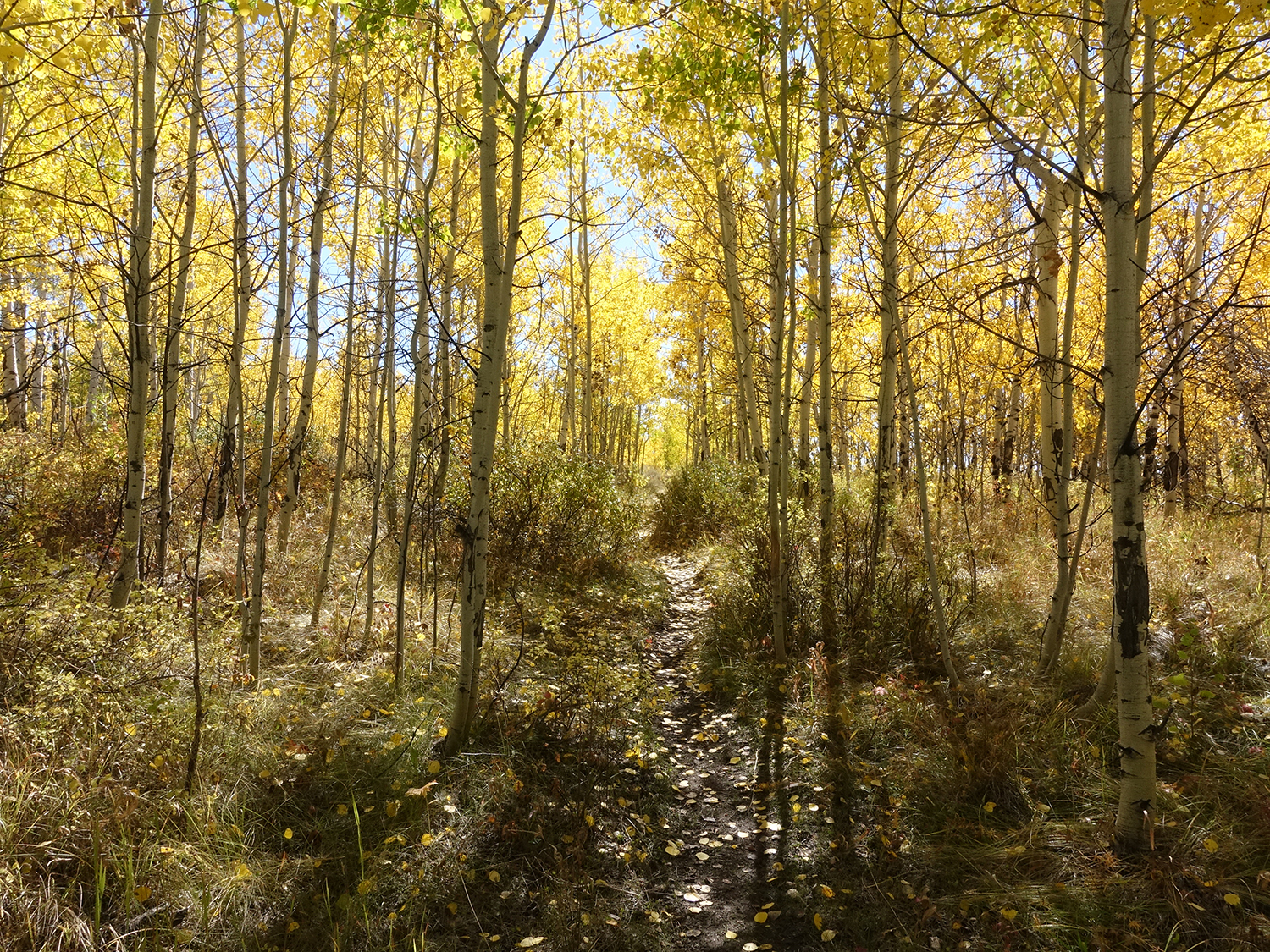
It is also an invitation to take a closer look at the amazing detail of leaves, even the buds, that together provide ID tips. The following photos are meant to increase your enjoyment of our remarkable flora. 

Why are there all these colors? Very simply, as the day length shortens and light fades, the green chlorophyll cells in leaves gradually die revealing existing carotenoid pigments (oranges and yellows) or newly forming anthocyanin pigments (purple-reds).  The reasons for these pigments are being researched. Here is a link to a very thorough article in the Journal of Evolutionary Biology. But for now, just enjoy this ephemeral season of color.

Deciduous Trees:

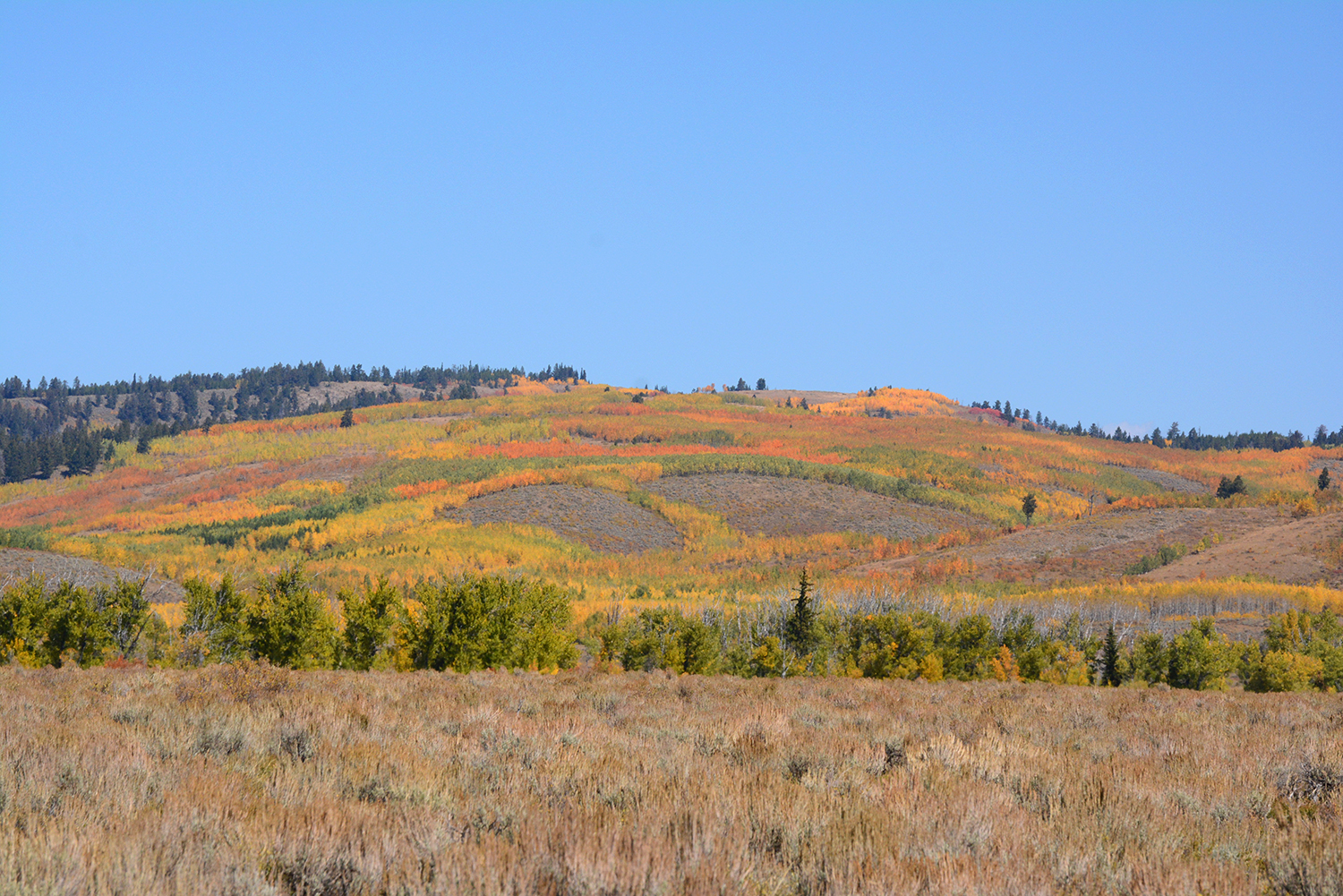
Aspens – Populus tremuloides  – are the backbone of our fall color. Aspens typically grow in clones: many stems arise from connected underground roots, so many many trees are one genetic individual. Notably aspen clones have different shades of yellows to orange as seen on the south end of Shadow Mountain right now. 
When looking at clones, also look at the different growth forms such as these trunks dancing

or different bark markings–such as squiggles.

CottonwoodsPopulus angustifolia, P. acuminata. P. balsamifera – are shading creek sides and the Gros Ventre and Snake River flood plains.

Tall and Short Shrubs:

Shrubs have many colors which are not always the same on the same species. Note: in the following descriptions, an artist would have a much greater vocabulary for the myriad colors than expressed here.  Also the measurements are a rough estimate.

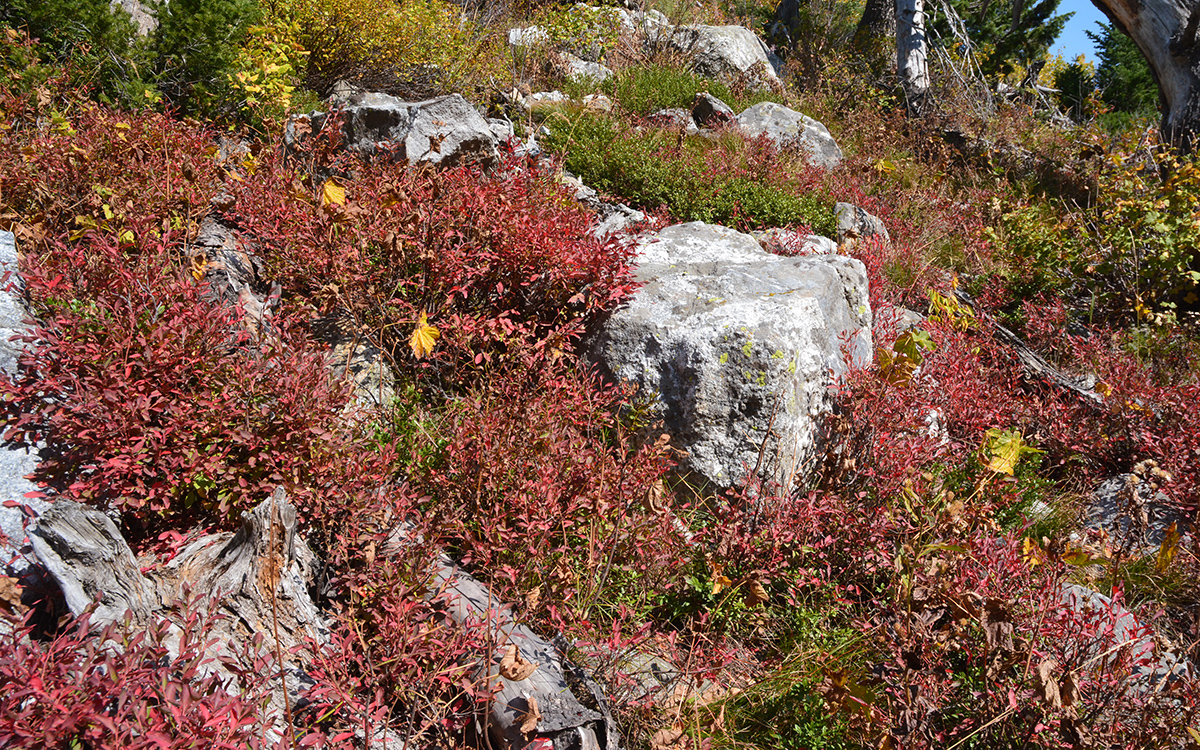
Mountain HuckleberriesVaccinium membraceum – leaves are often a deep maroon. They are about 1″ long, pointed ovals with fine teeth.
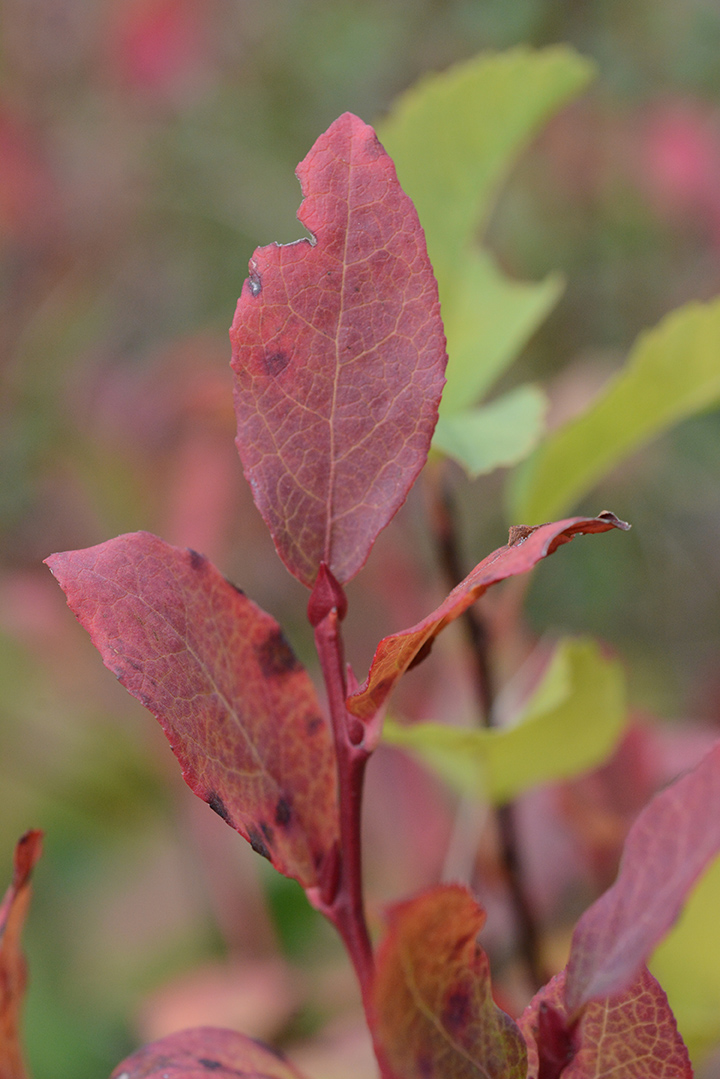
The 2-3’ shrubs stand out along the north side of Jenny Lake and elsewhere.
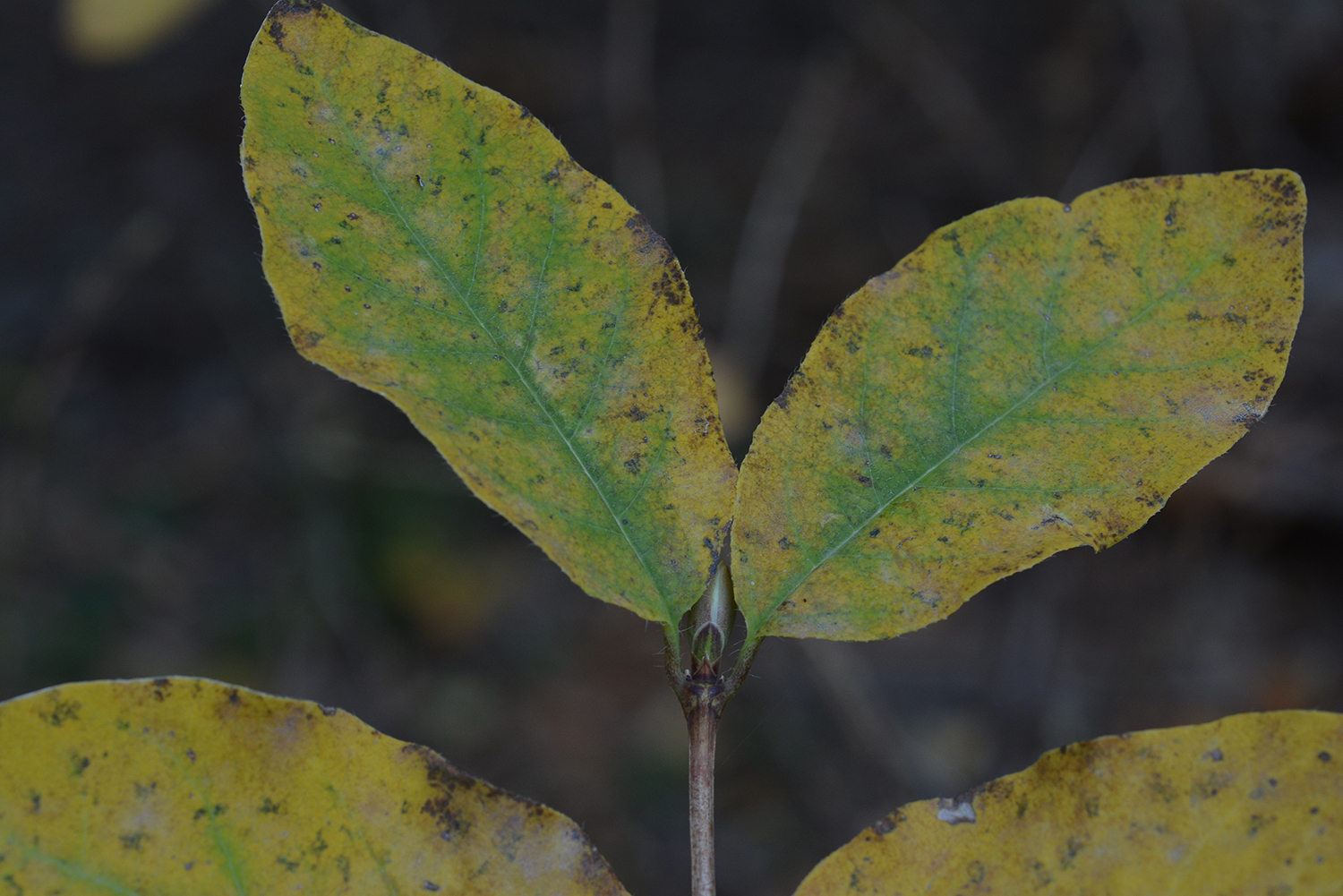
The opposite, oval leaves of Utah HoneysucklesLonicera utahensis – tend to be yellow and often line trails.
Lower to the ground – Spreading DogbanesApocynum androsaemifolium – an herbaceous plant, brighten the understory of lodgepole pine forests. 

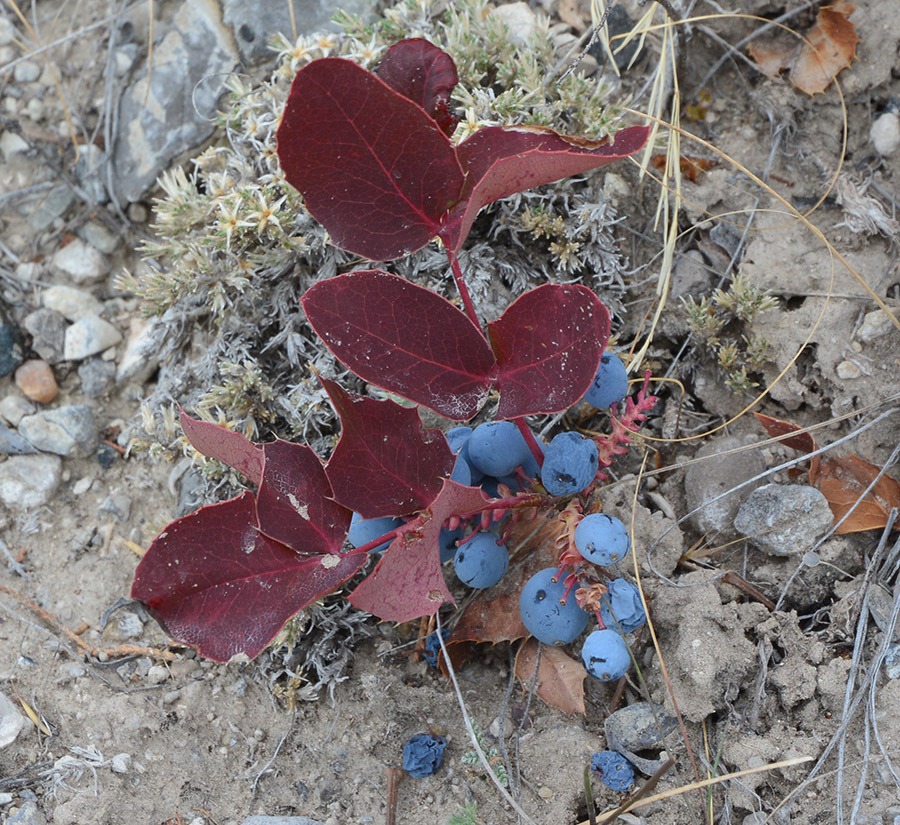
Oregon GrapeMahonia repens – has evergreen, compound leaves. The lobes have sharp-teeth reminiscent of holly leaves.
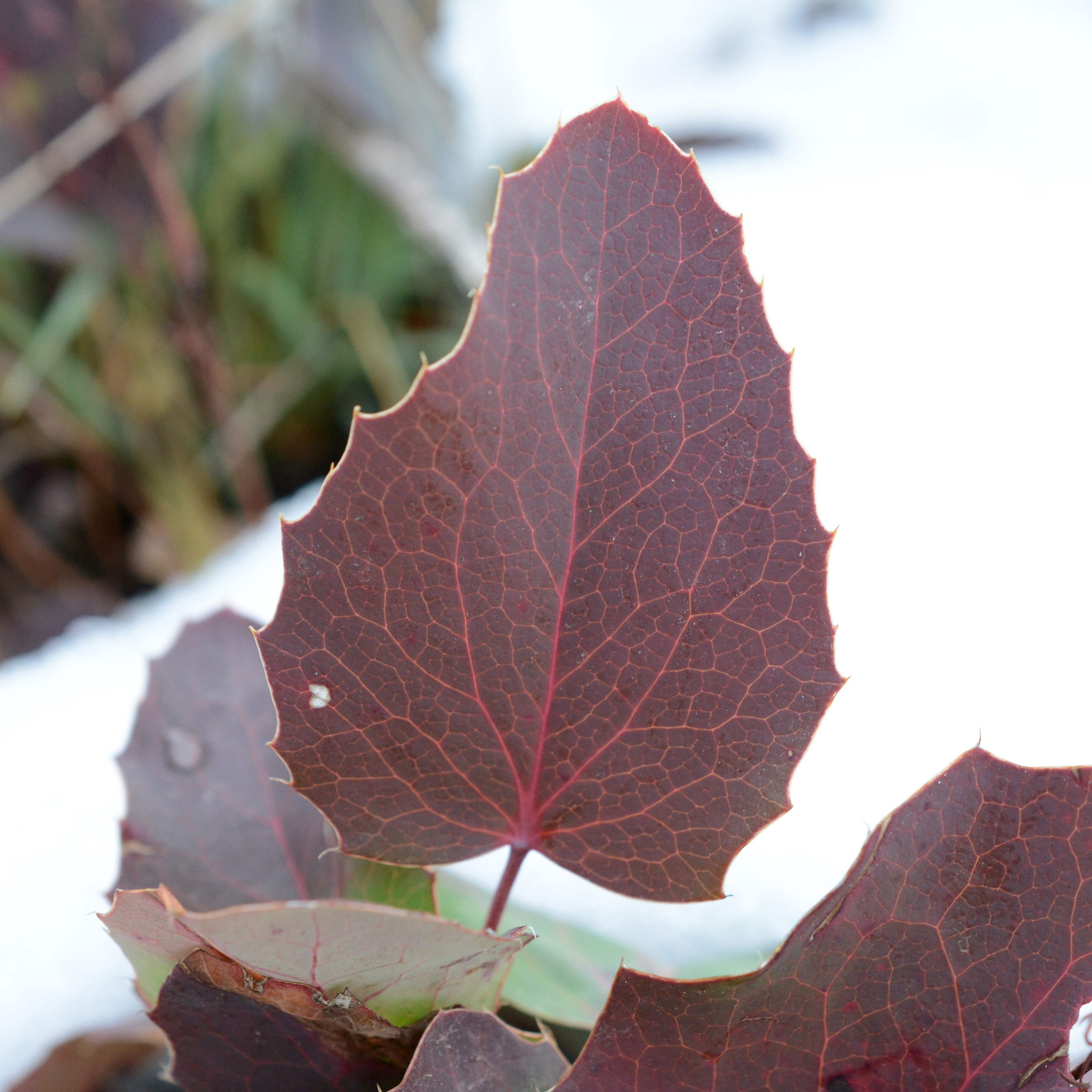
They turn a burnished purple which highlights the blue fruits. This is a highly adaptable plant often growing in sun amidst rocks or the the shade of evergreens.
The oppositely arranged, mostly three-lobed leaves of Mountain MapleAcer glabrum – tend toward yellow-orange.

These large shrubs form yellow mounds up the slopes just north of Jenny Lake.

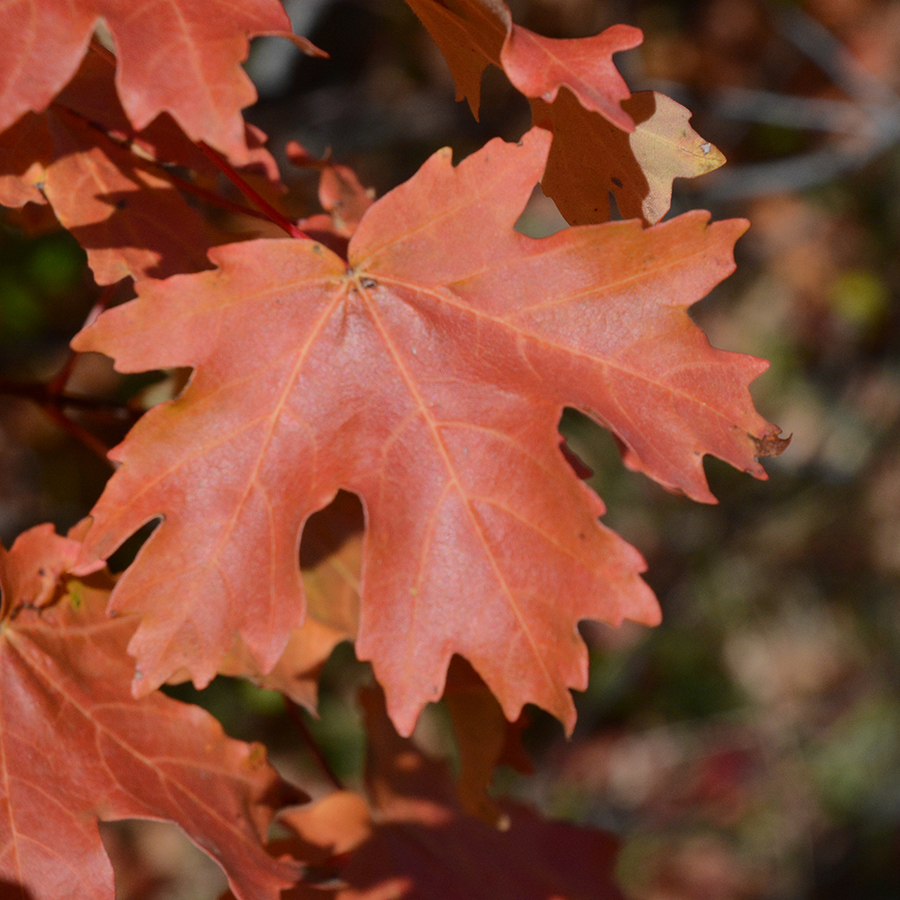
The more colorful Bigtooth MaplesAcer grandidentatum – show up in in the canyons south of Jackson. With their several lobes and ‘U” shaped indentations (sinuses), the leaves of these shrubby maples of the West look very similar to those of Sugar Maple – A. saccharum – magnificent trees of the East
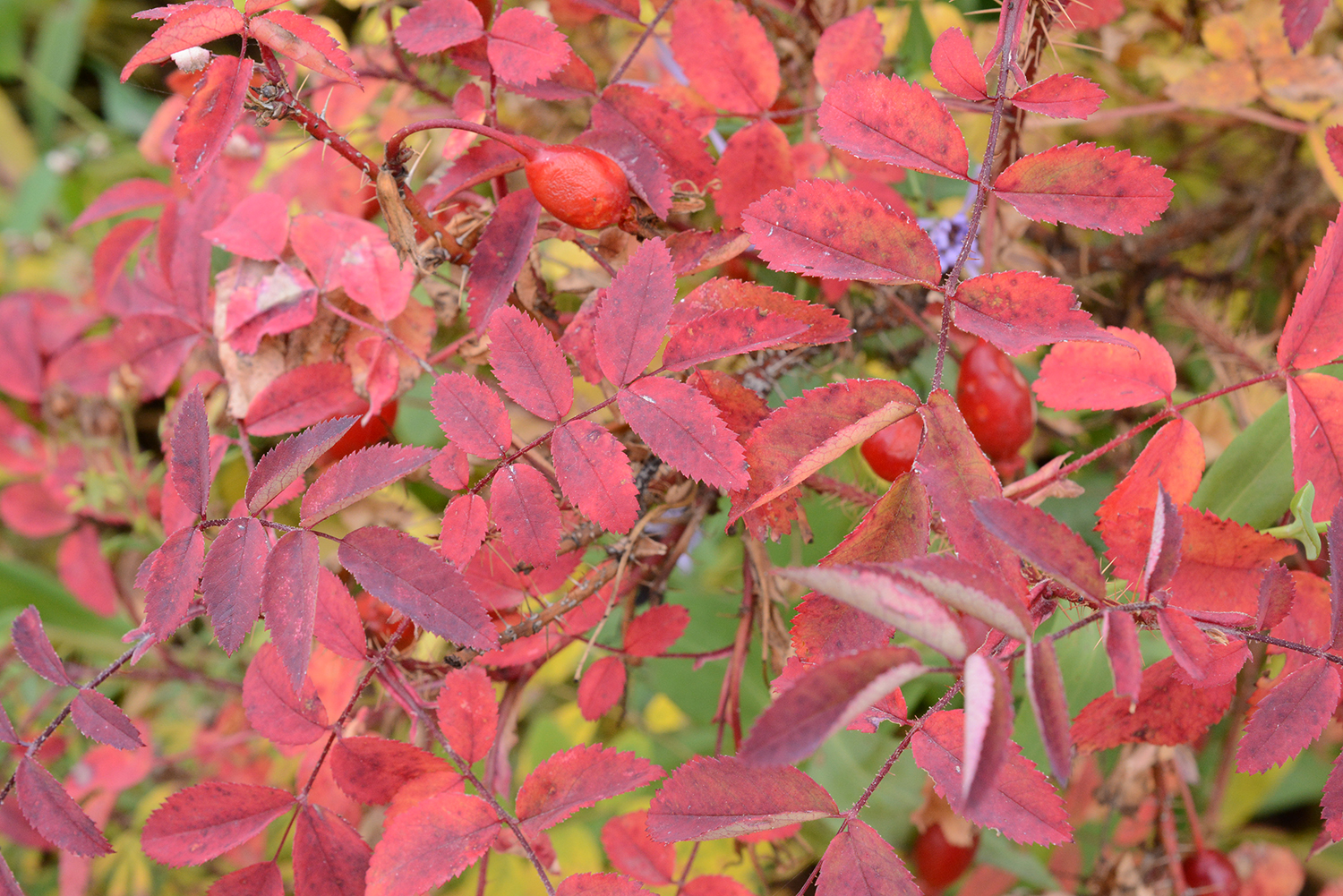
Many common shrubs are in the Rose Family:

Our native roses – Woods RoseRosa woodsii and Nootka RoseR. nutkatensis – tend to color a bit later but then can be quite a show.
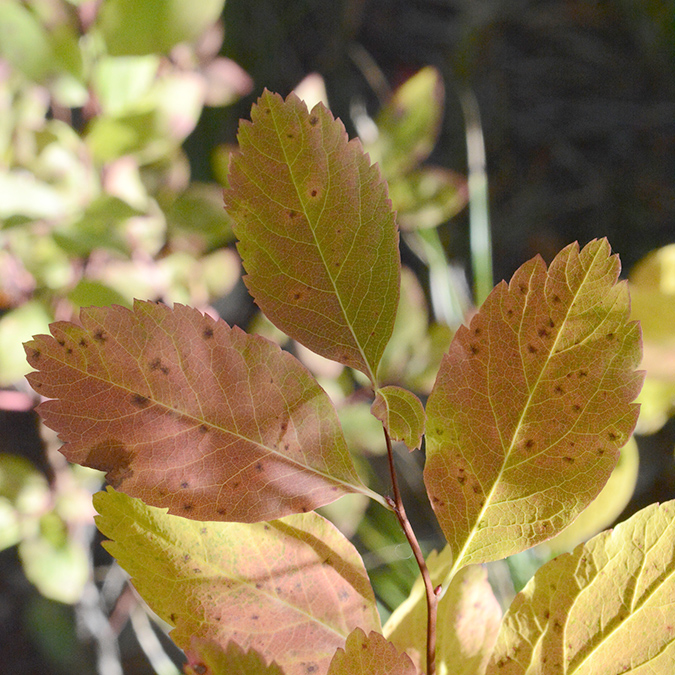
Birch-leaf SpireaSpiraea betulifolia var. lucida/now: B. lucida – sport different colors.

Leaves are alternate and toothed near the terminus.
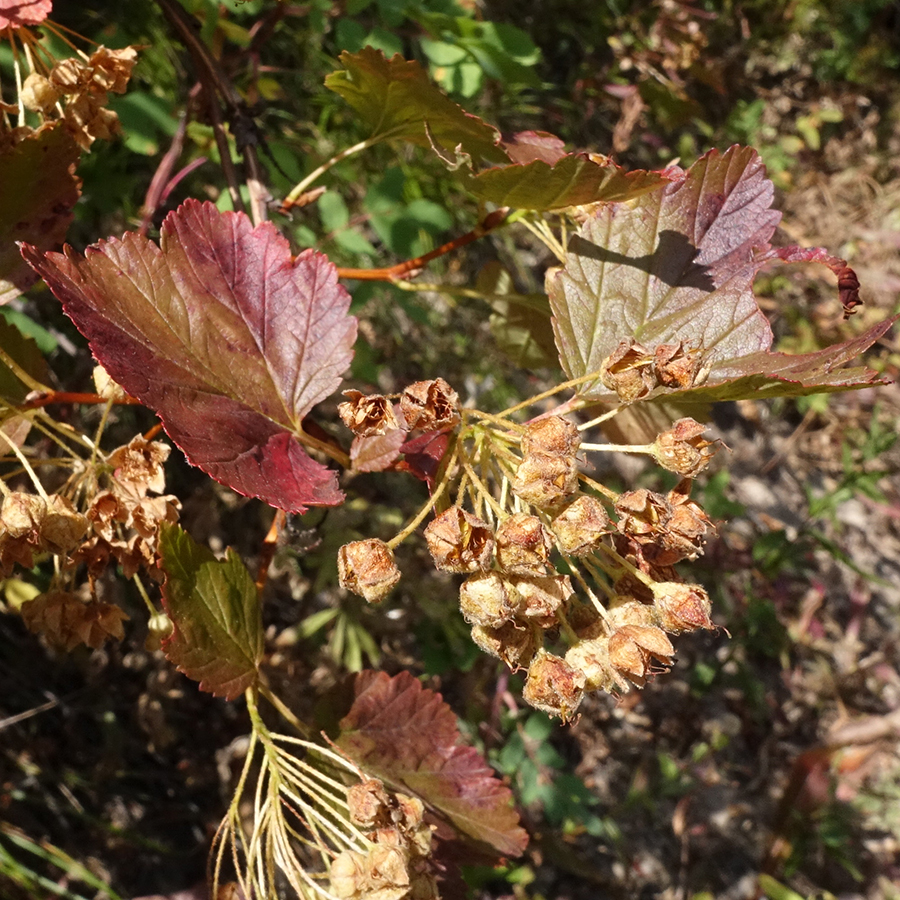
Although in the Rose Family, these low spreading shrubs do not have lush fruits but rather tiny cups with small dried fruits that split open to release 4-5 seeds (follicles).

Instead of the small dried fruits, I sometimes see odd enlargements in their place and have not determined what they are—when broken open they are dust-like—fungus, galls?

NinebarkPhysocarpus malvaceus – grows on relatively dry slopes, mostly south of Jackson along the Snake River Canyon. The 4-5’ shrubs stand out for their maroon colors. The leaves are very similar in shape to our mountain maples but are arranged alternately on the stem.

As with Spirea, they have dried, unappealing fruits.
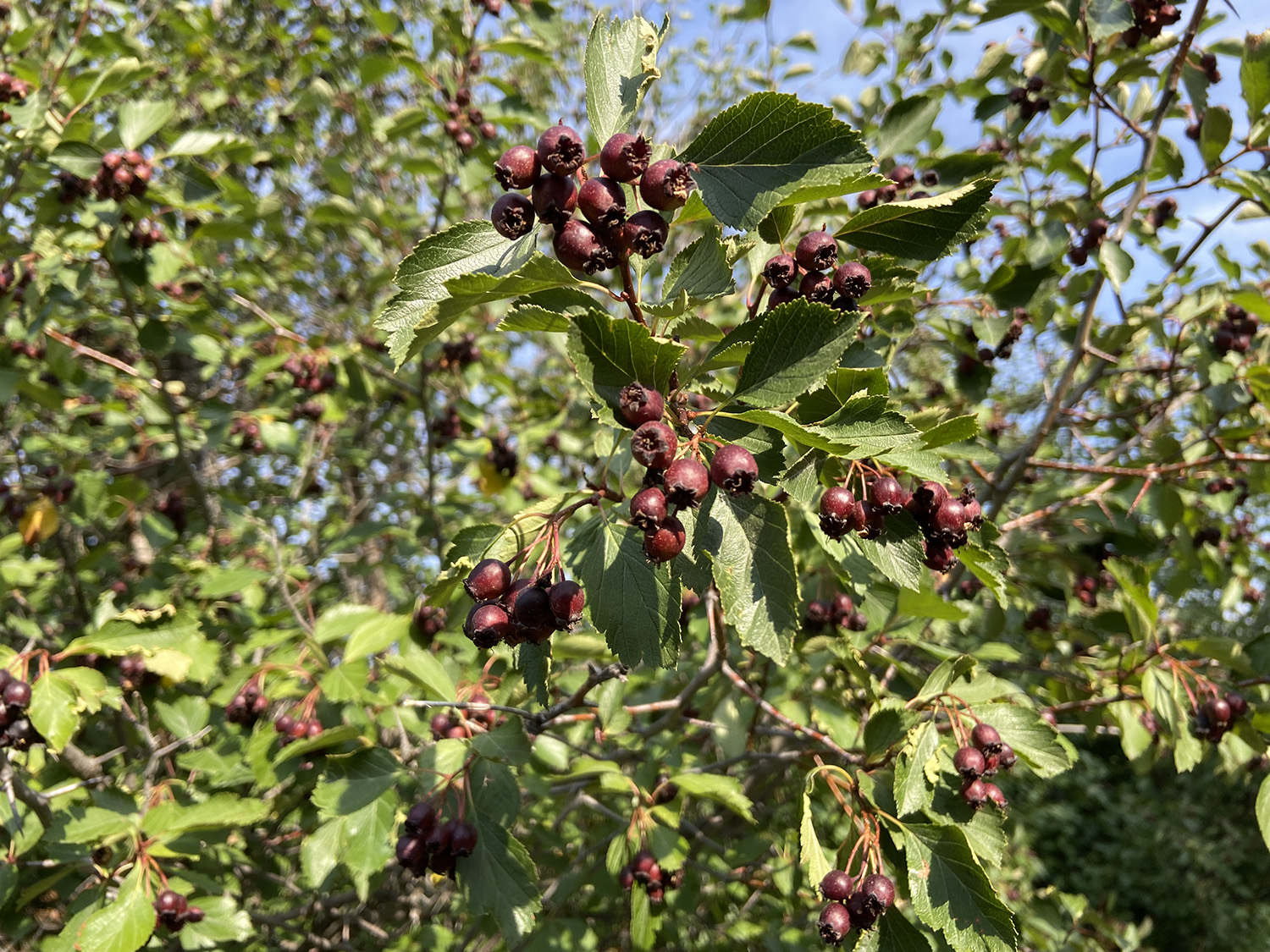
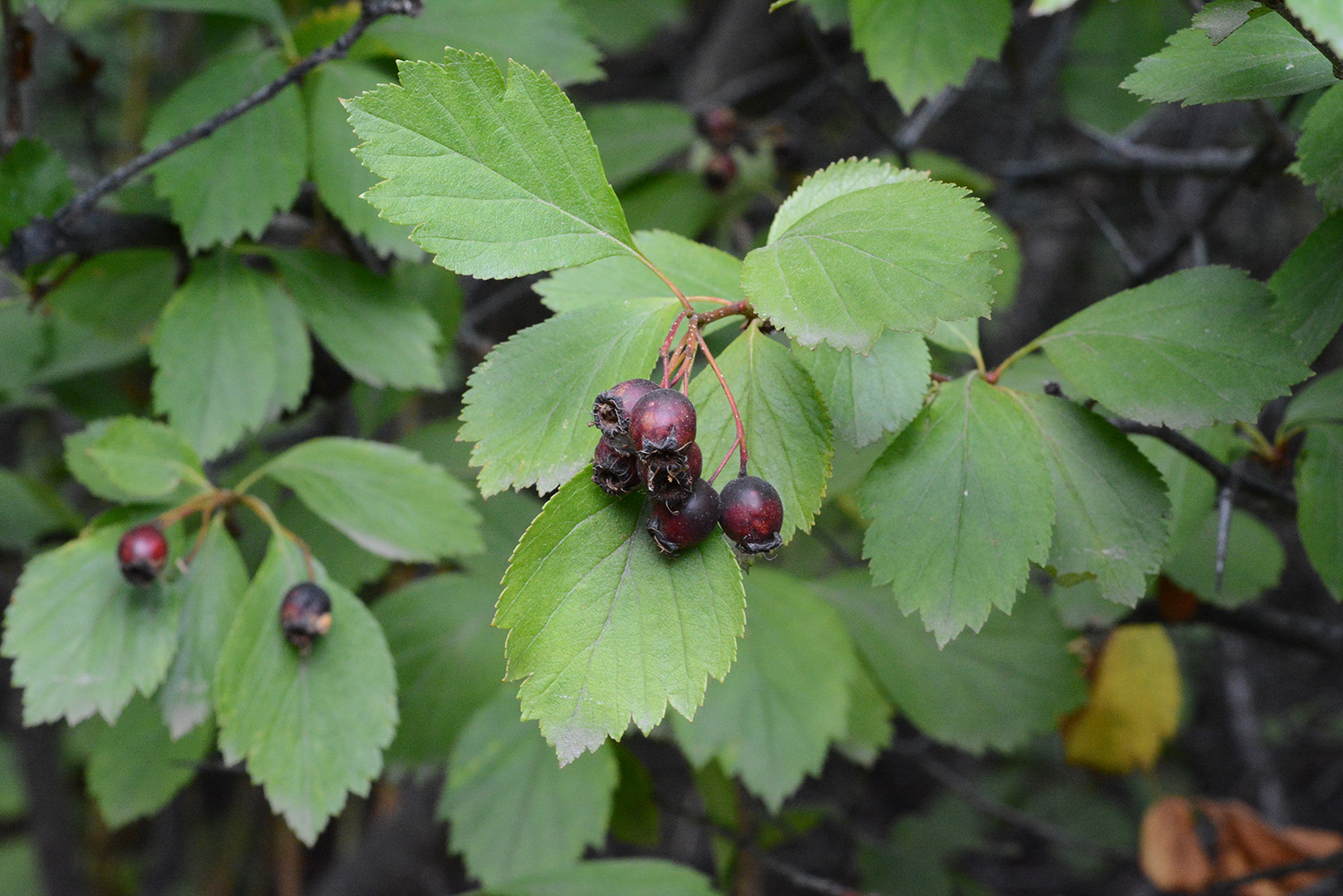
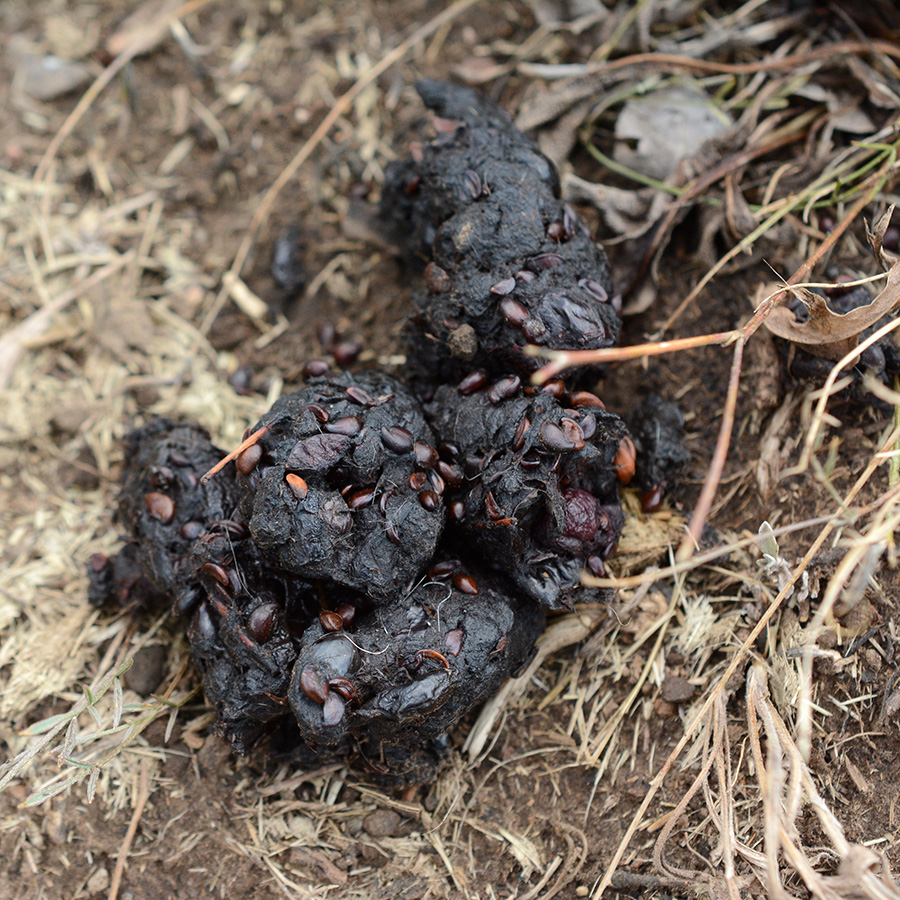
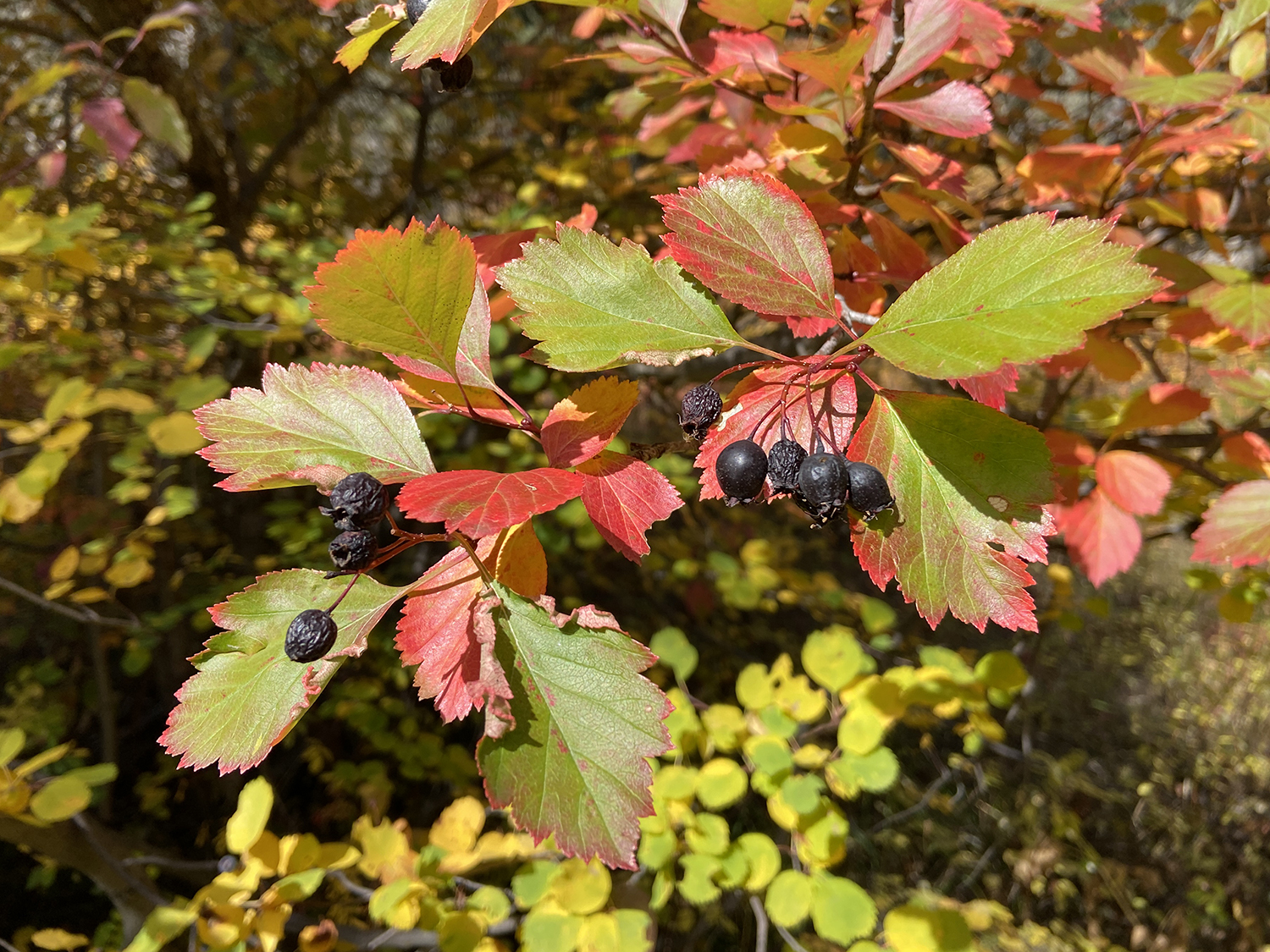
Abundant fruits of Black HawthornCrataegus douglasii – are still hanging on and attracting bears along the Moose-Wilson Road and elsewhere. 

Despite the 1” thorns on the branches, bears have no problem clambering into the 15-20’ high shrubs.  Since late August, the green, multi-toothed leaves have become a shiny reddish hue. 
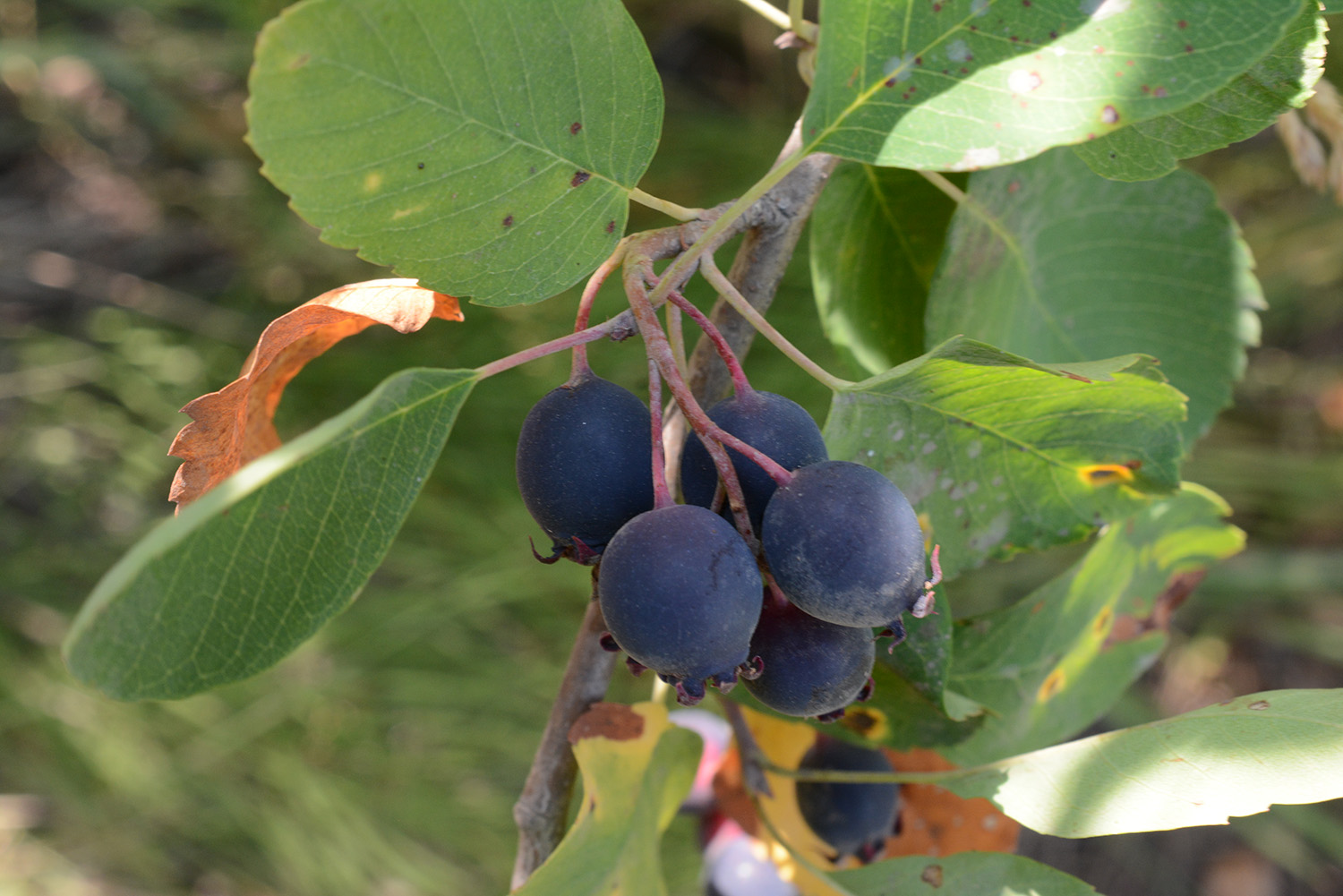
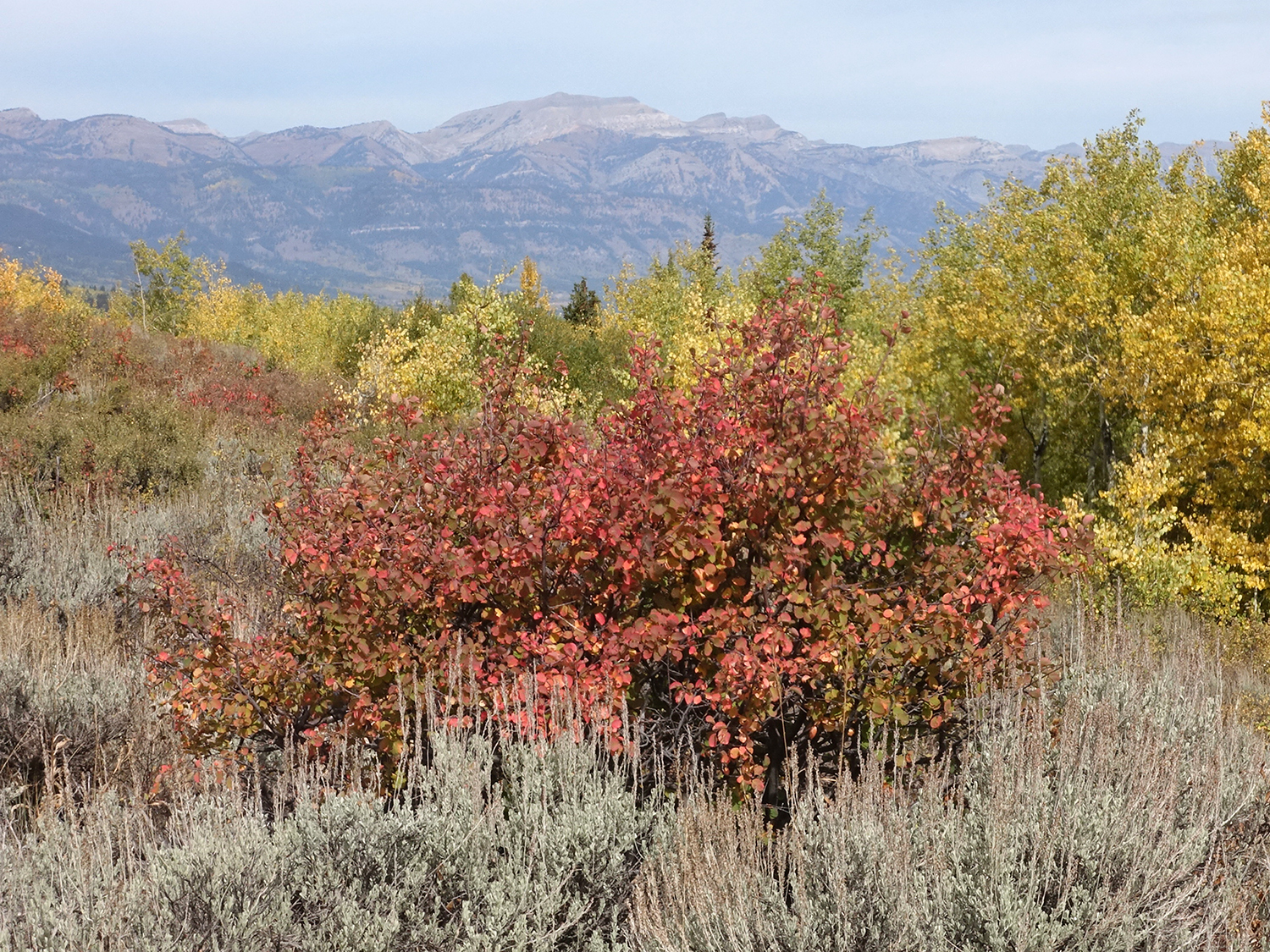
ServiceberriesAmelanchier alnifolia – appear to vary widely in color.
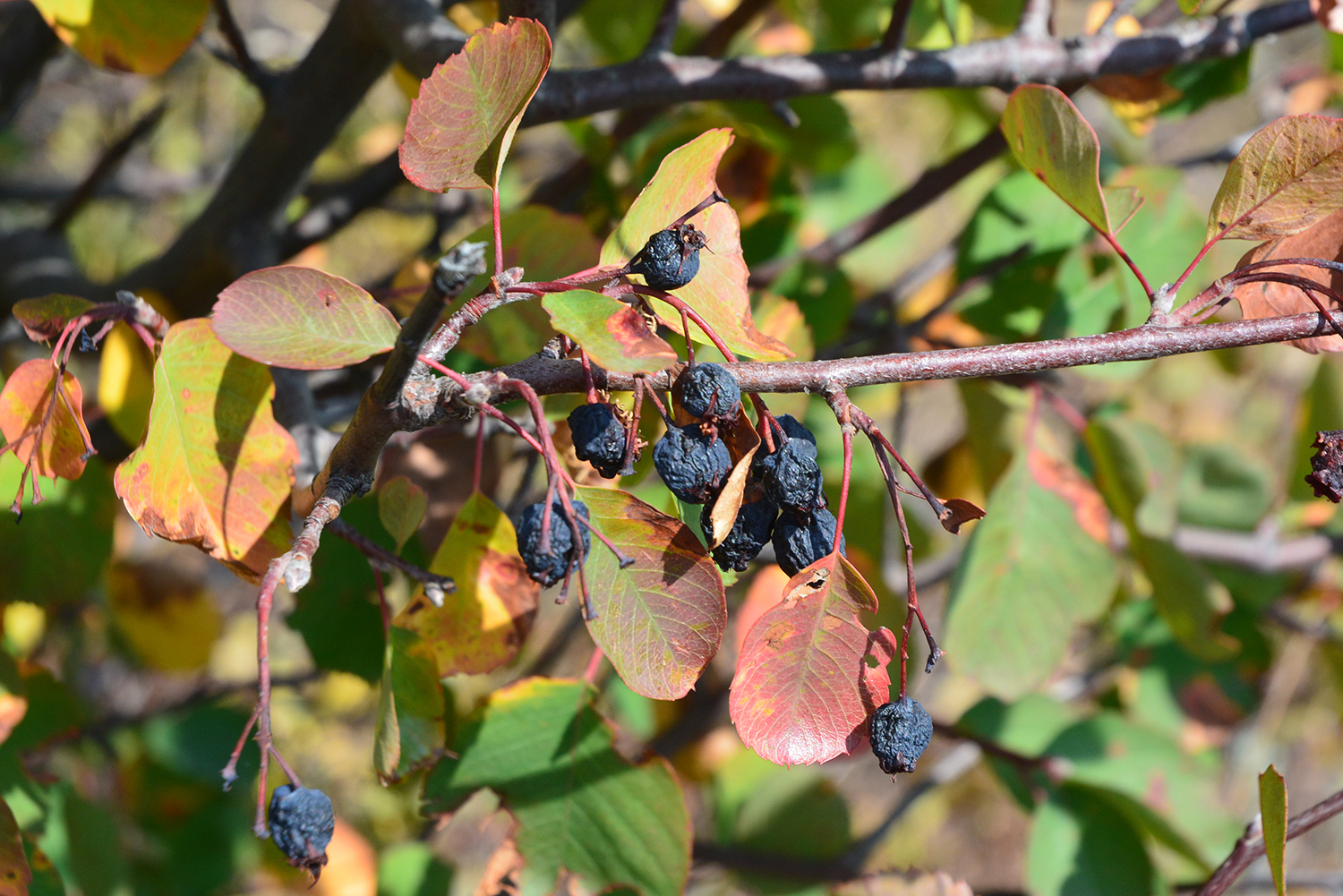
The blue fruits have shriveled and darkened since late August with the flavor even more concentrated and delicious until they totally shrivel up and become tasteless.
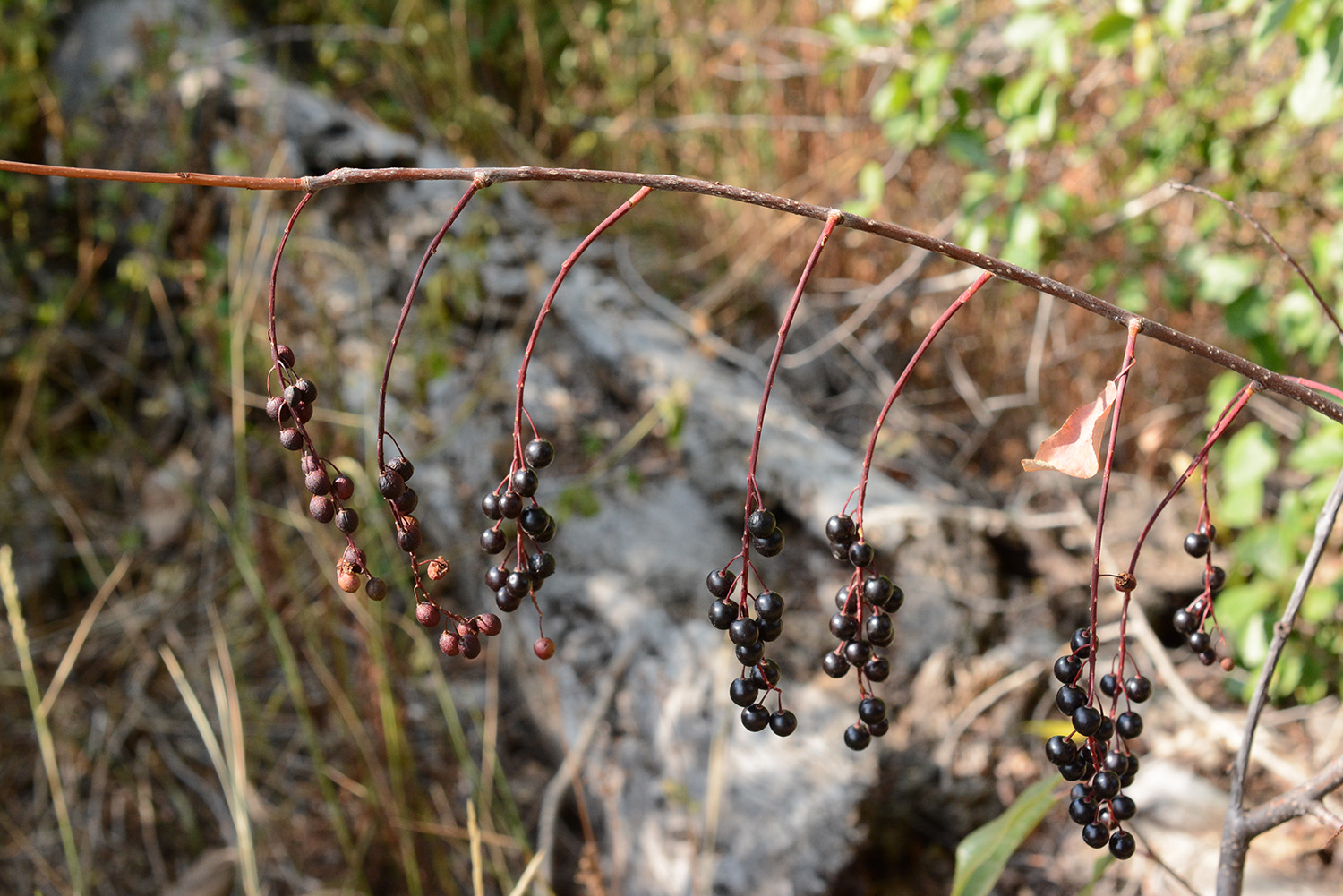
Choke CherryPrunus virginiana – sport 3-4″-long, toothed, oblong leaves
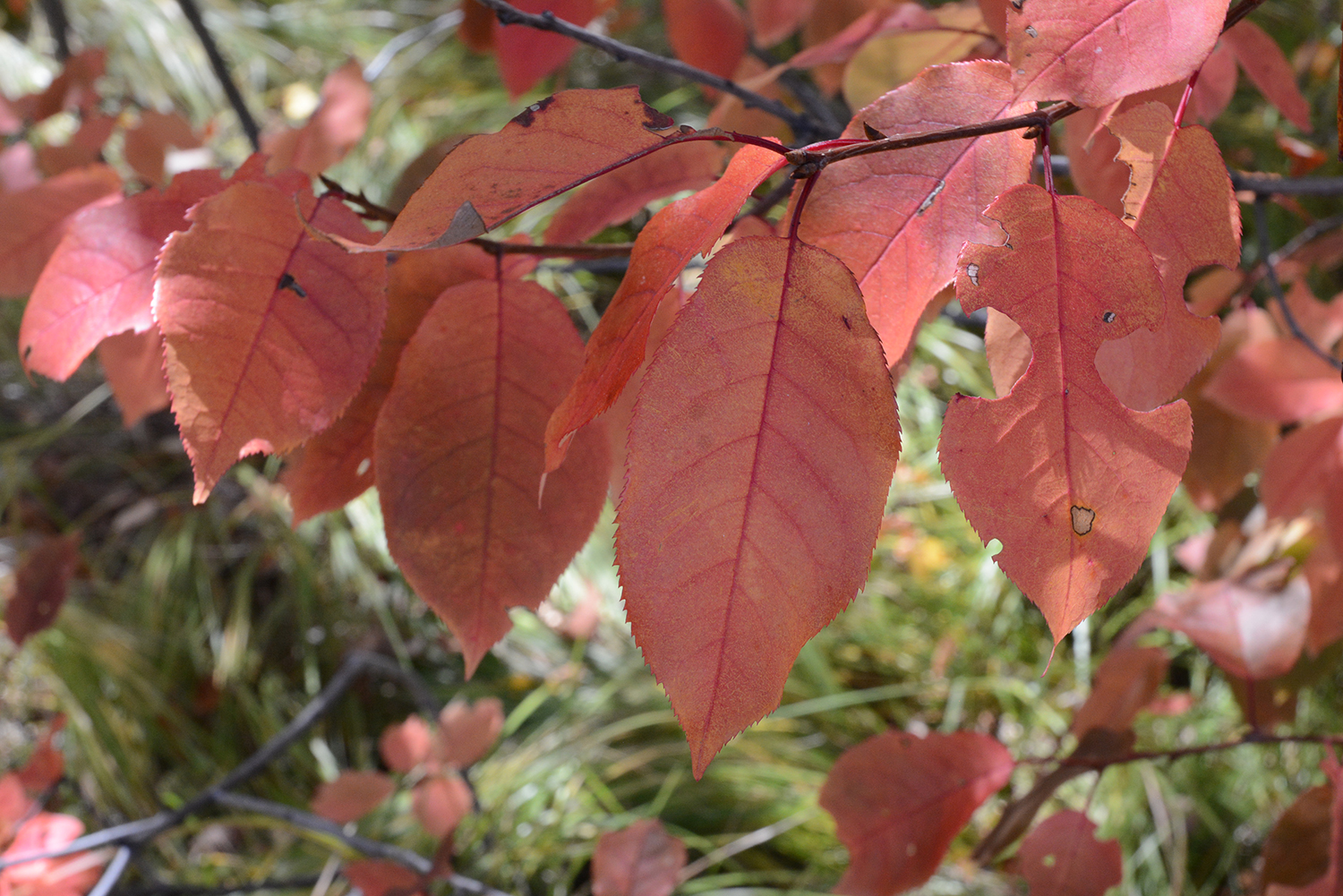
that range from yellow to pinkish-red. The dangles of purple-black fruits are fast disappearing to nourish birds and bears.
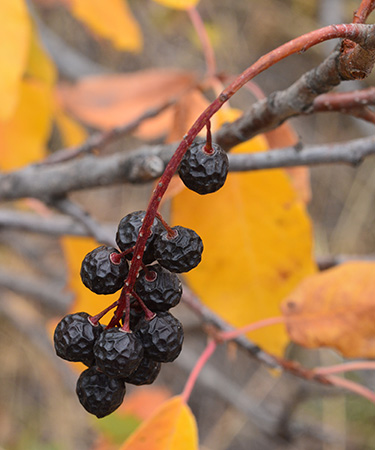
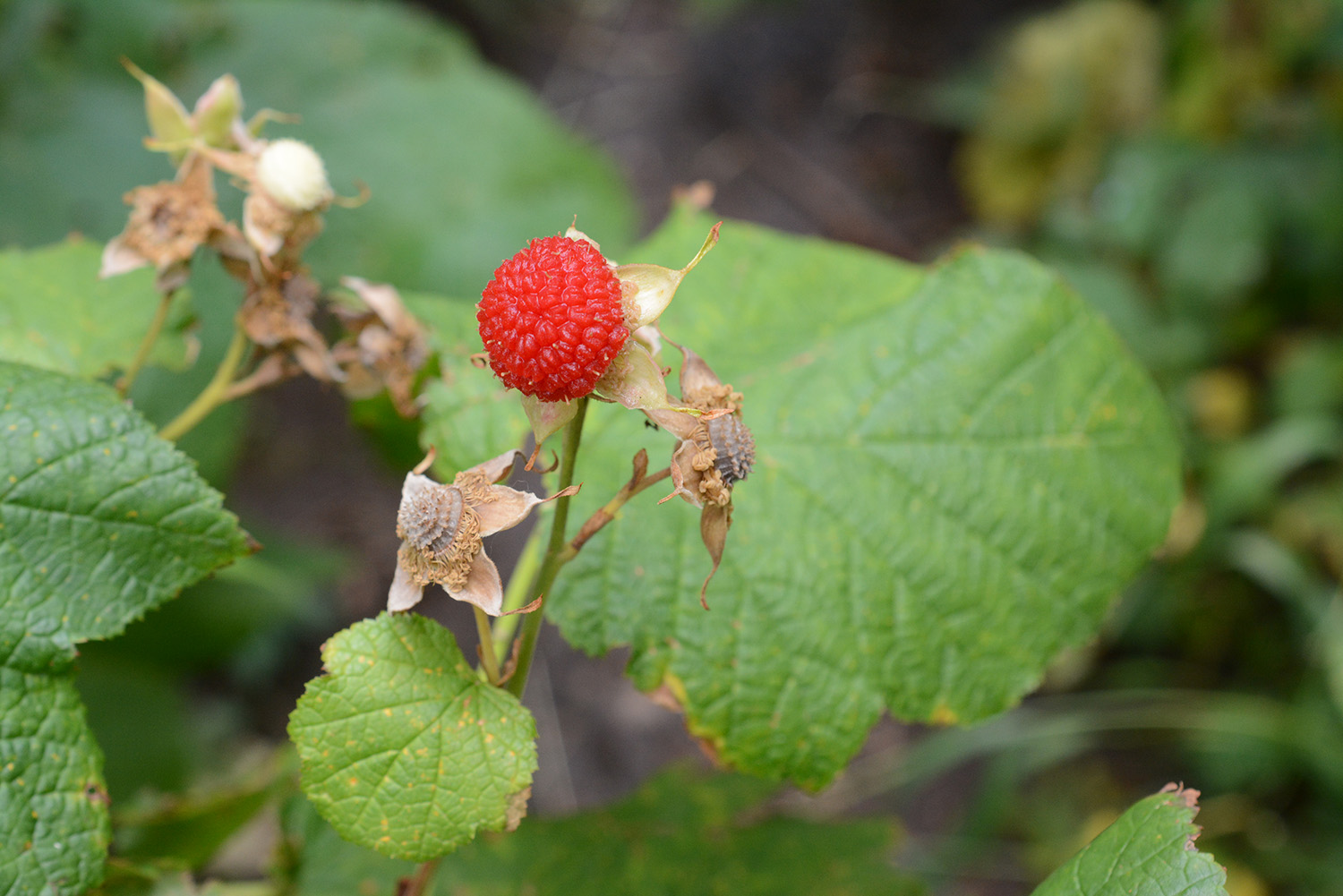
Large 5”- wide, lobed leaves of ThimbleberryRubus parviflorus – glow yellow on canyon slopes

or creek sides. The venation of the leaves is termed “netted”.

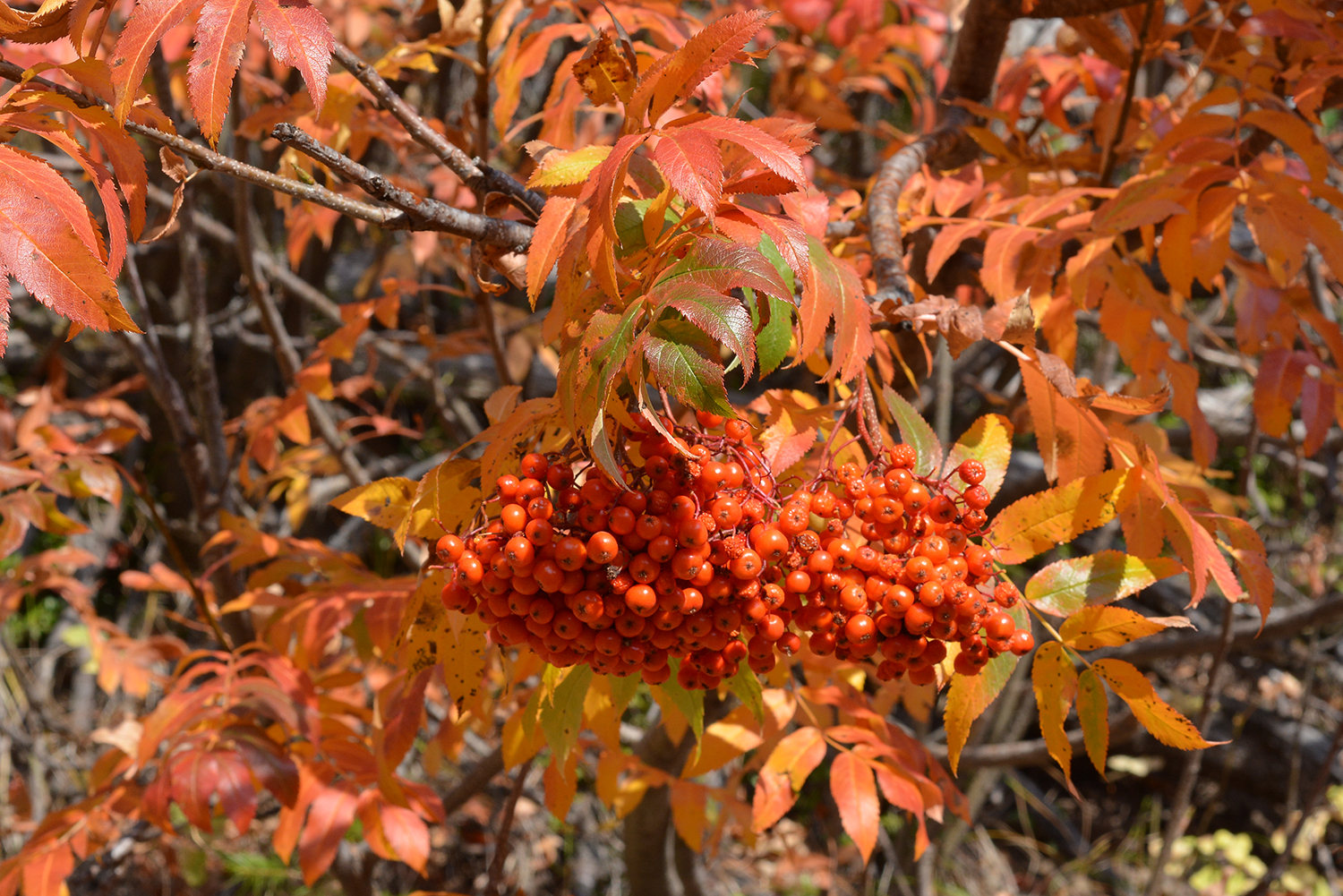
Mountain AshSorbus scoparia – often grows up to 10 -15’.  The deep red-oranges of the compound leaves
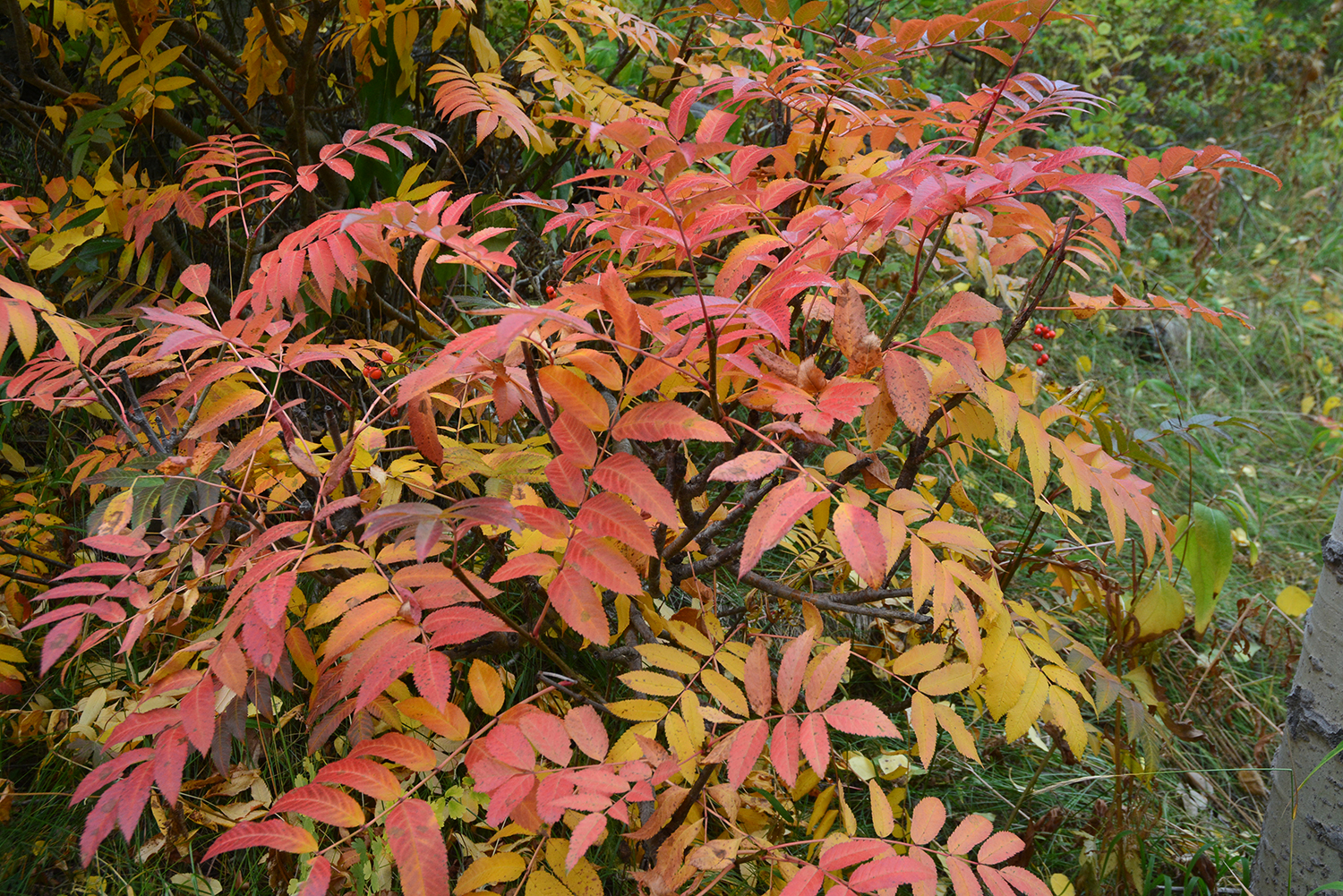
and their heavy clusters of bright orange fruits highlight relatively moist trails and mountain sides. 
Don’t confuse Mountain Ash with the more robust, unrelated Red ElderberrySambucus racemosa. This species has larger compound, opposite leaves, and large clusters of lush fruits with a reddish hue. 
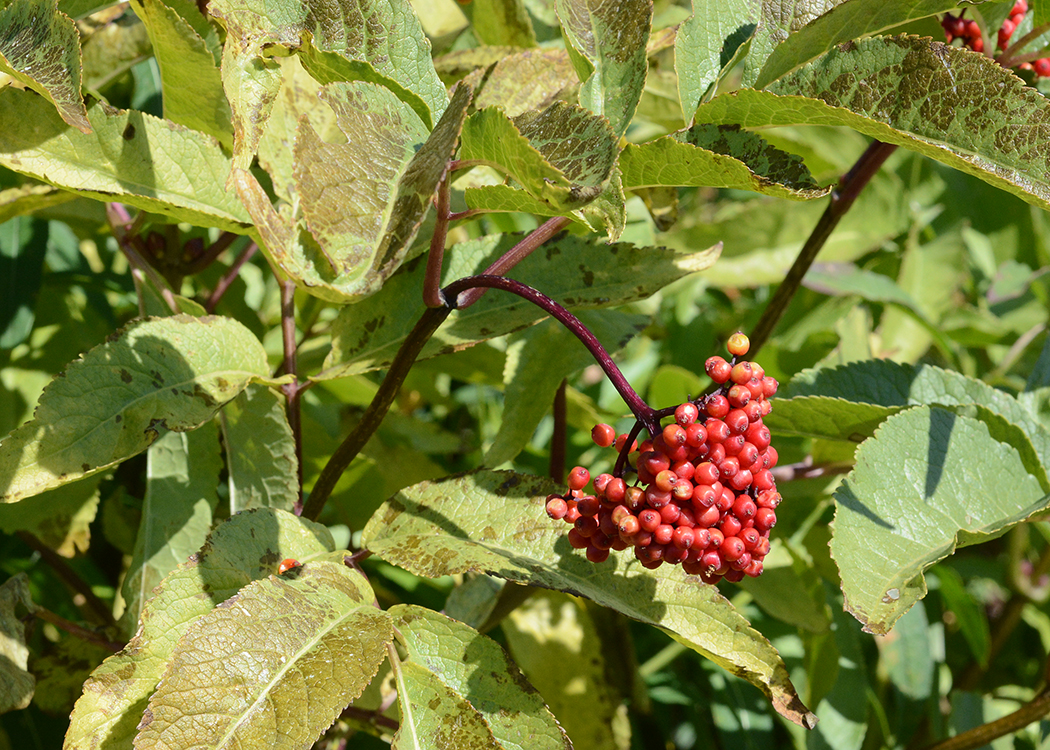
There is also a variety – S. r. var. melanocarpa – with almost black fruits. Elderberries have a rank fragrance if you break the warty, finger-thick stems.  The fruits and other plant parts are poisonous with cyanogenic glycosides, so don’t eat unless you cook them thoroughly. 

Red-stemmed DogwoodsCornus stolonifera – are a notable landscape plant not only for their white flowers and blue-to-white fruits,

but also for their deep maroon, oval, smooth opposite leaves with “parallel” veins.  
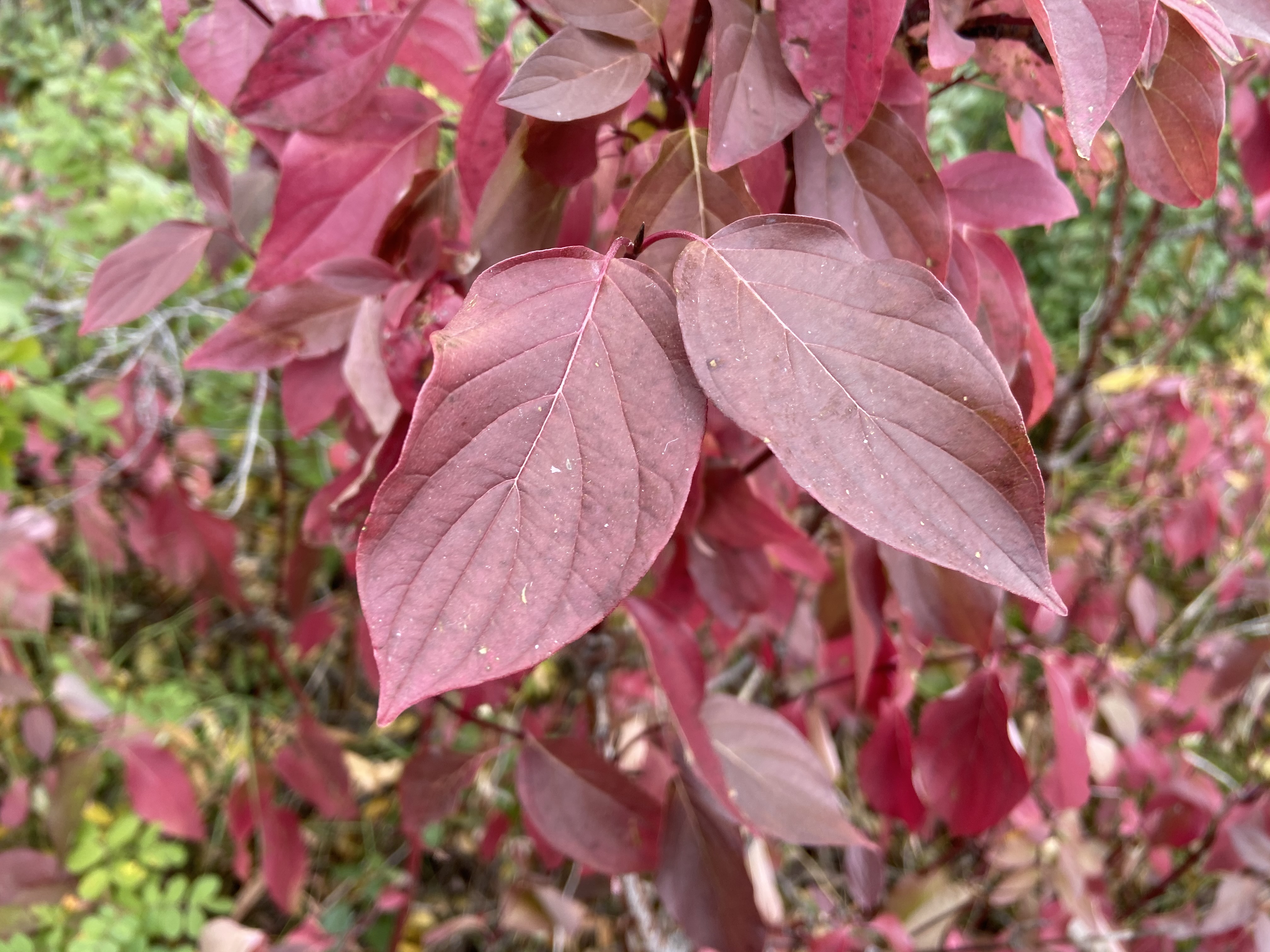
The common name is for their obviously red stems.

The 6-8’ shrubs grow naturally along stream sides, and are favored forage of moose!

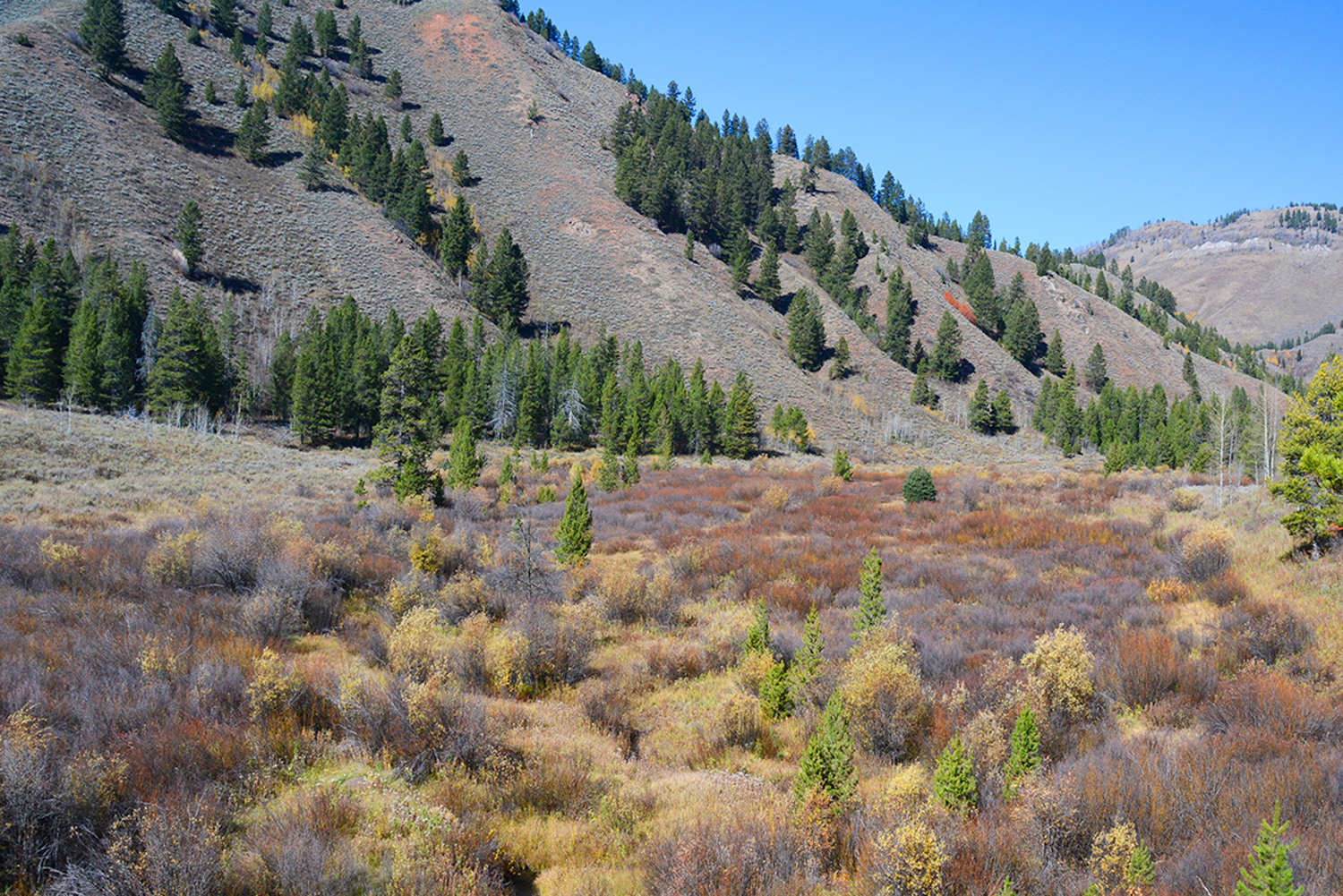
Many species of Willows Salix sp. – blend their colors on Willow Flats seen from the Jackson Lake Lodge

up Game Creek, and other large wet areas
Don’t miss the show. Get out to see the fall foliage now if you can.
Frances Clark, Wilson, WY

9.27.25, slight updates 9.28.25
What’s in Fruit? – Late Summer 2025 – Part II: Dried Fruits:

Not all fruits are brightly colored and juicy. (see “What’s in Fruit? – Late Summer 2025 – Part 1: Fleshy Fruits”). Seeds have different strategies for dispersal: Flying off on the wind, hitching a ride on fur and clothing, using gravity to settle down, and/or being ejected away from their parent plant. Luck is an essential component of seed dispersal and success.
Here are some examples of dispersal strategies. Enjoy looking at the details of how plants work.

Fruits that Stick:

Some fruits have little hooks like velcro – the notorious invasive HoundstongueCynoglossum officinale – is one such species.

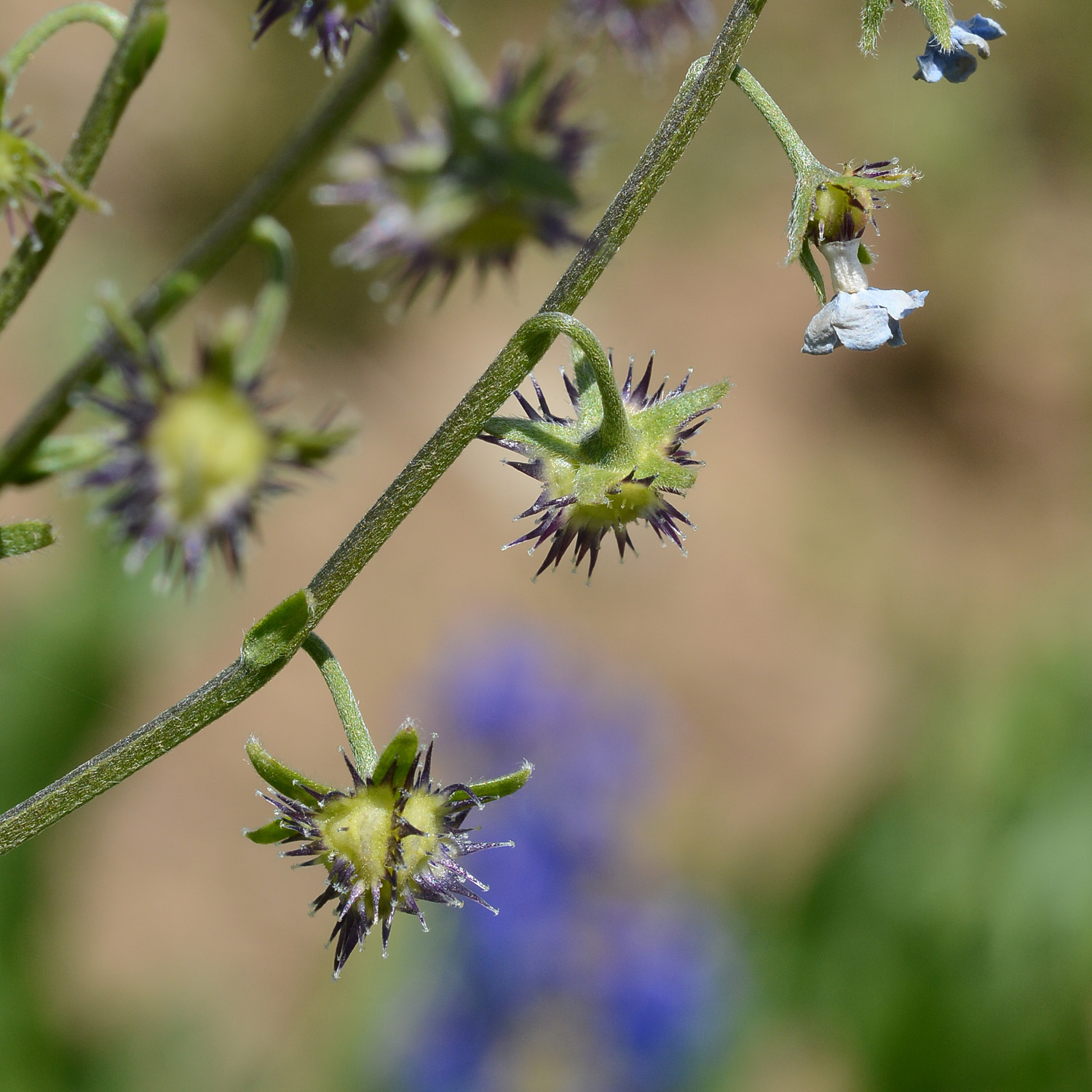
Yet, another is the pesky native appropriately called Jessica StickseedHackelia micrantha.

Sweet CicelyOsmorhiza chiliensis – fruits are called schizocarps e.g. split fruits. This is typical of the Parsley Family. In this woodland species, fruits are sharply pointed and have stiff hairs to stab and grab you.

Fly on Wings:

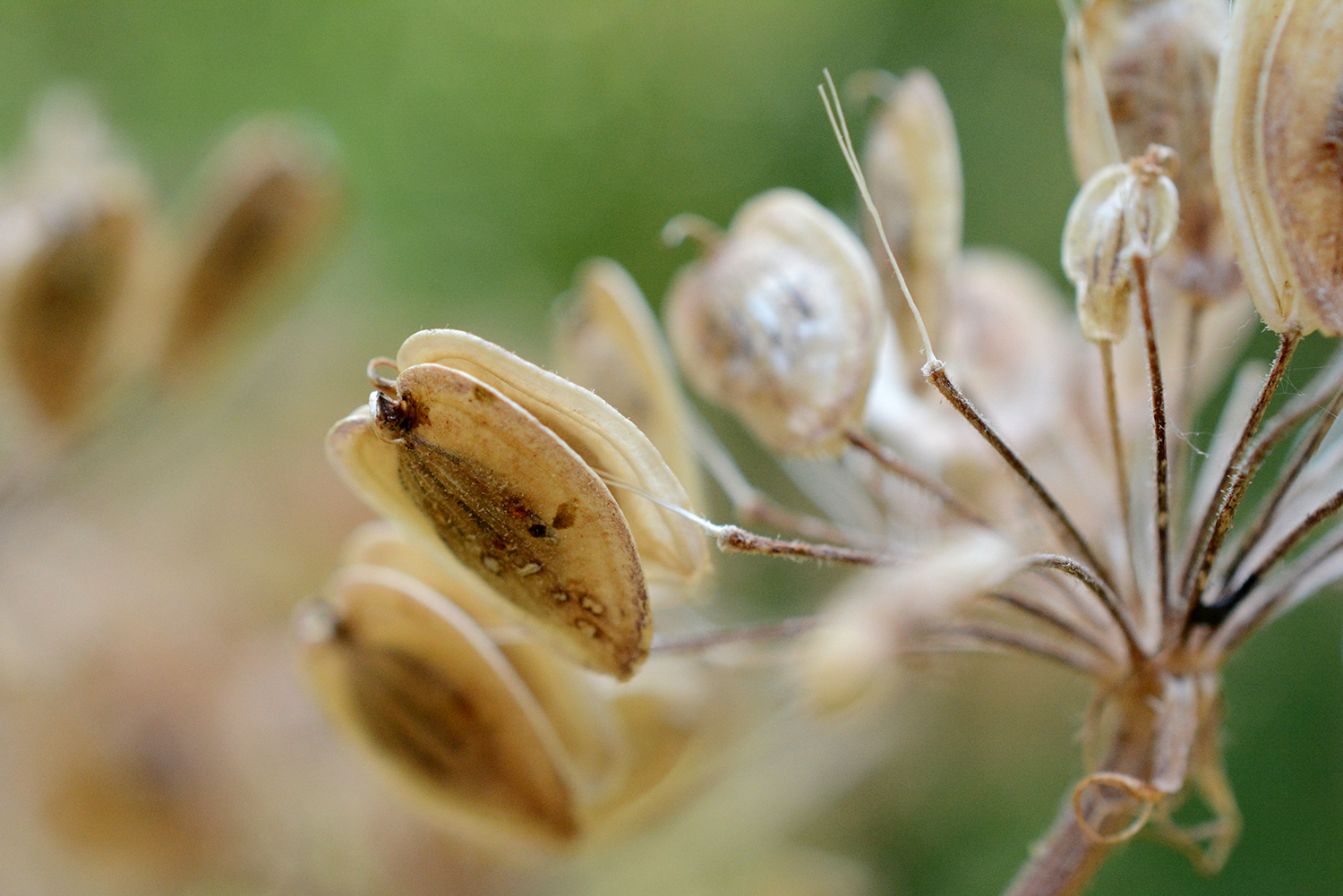
Related to Sweet Cicely above, is the very large Cow ParsnipHeracleum spondylium. It too has schizocarps held out in umbels – umbrella like structures. However, its schizocarps are flat and very thin so they skim off on the wind.

Upon a close look you can see how the two sides of the schizocarp are held together by a delicate filament. It is surprising how long these fruits will hang out there amidst the breezes. Also, note the darker seed inside inside each half. And to the upper right, you can see the left-over filaments–so very delicate looking, but sturdy.

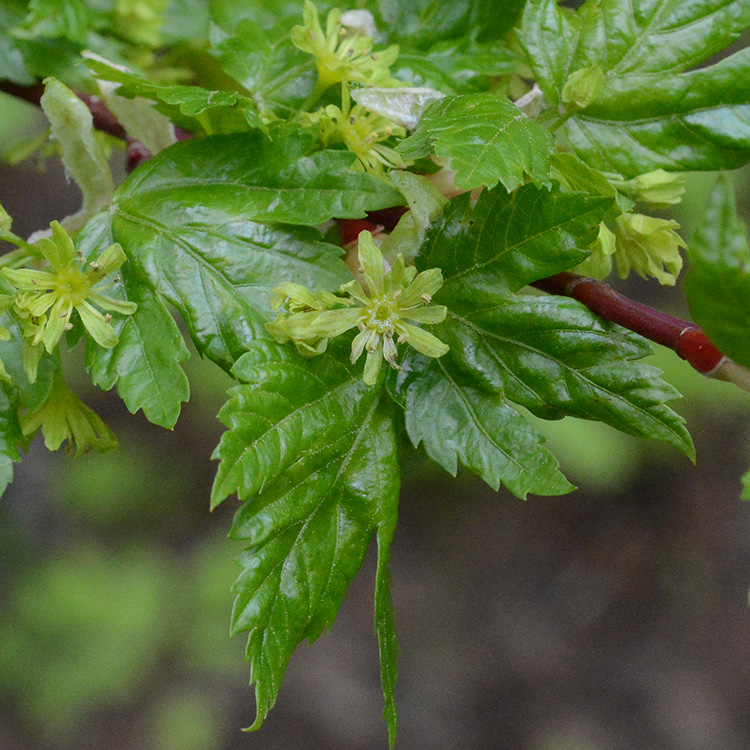
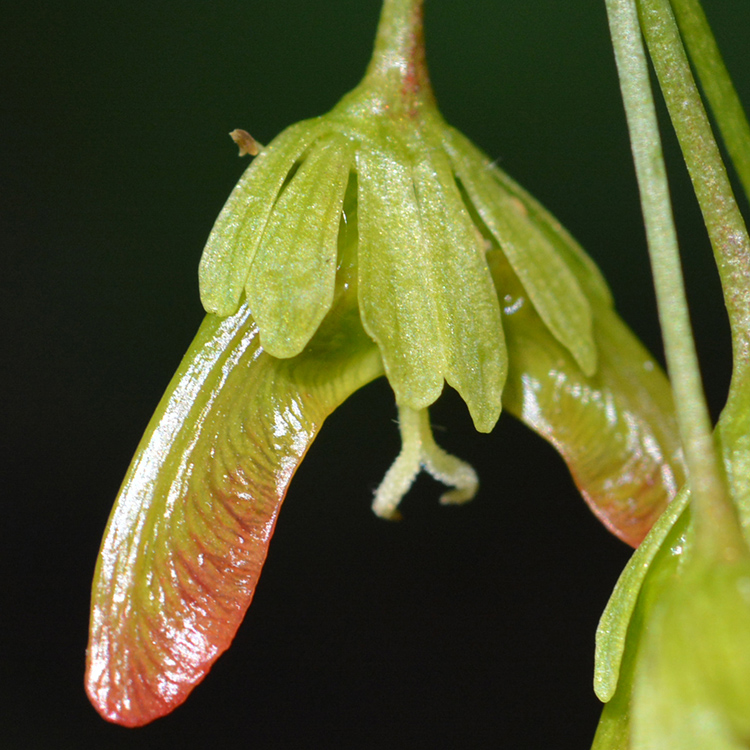
Rocky Mountain MaplesAcer glabrum – have structures called samaras. The male flowers (below) are borne on separate tall shrubs (usually)

from those with female flowers. Below you can see the two-parted stigma of the female flower ready to receive pollen.

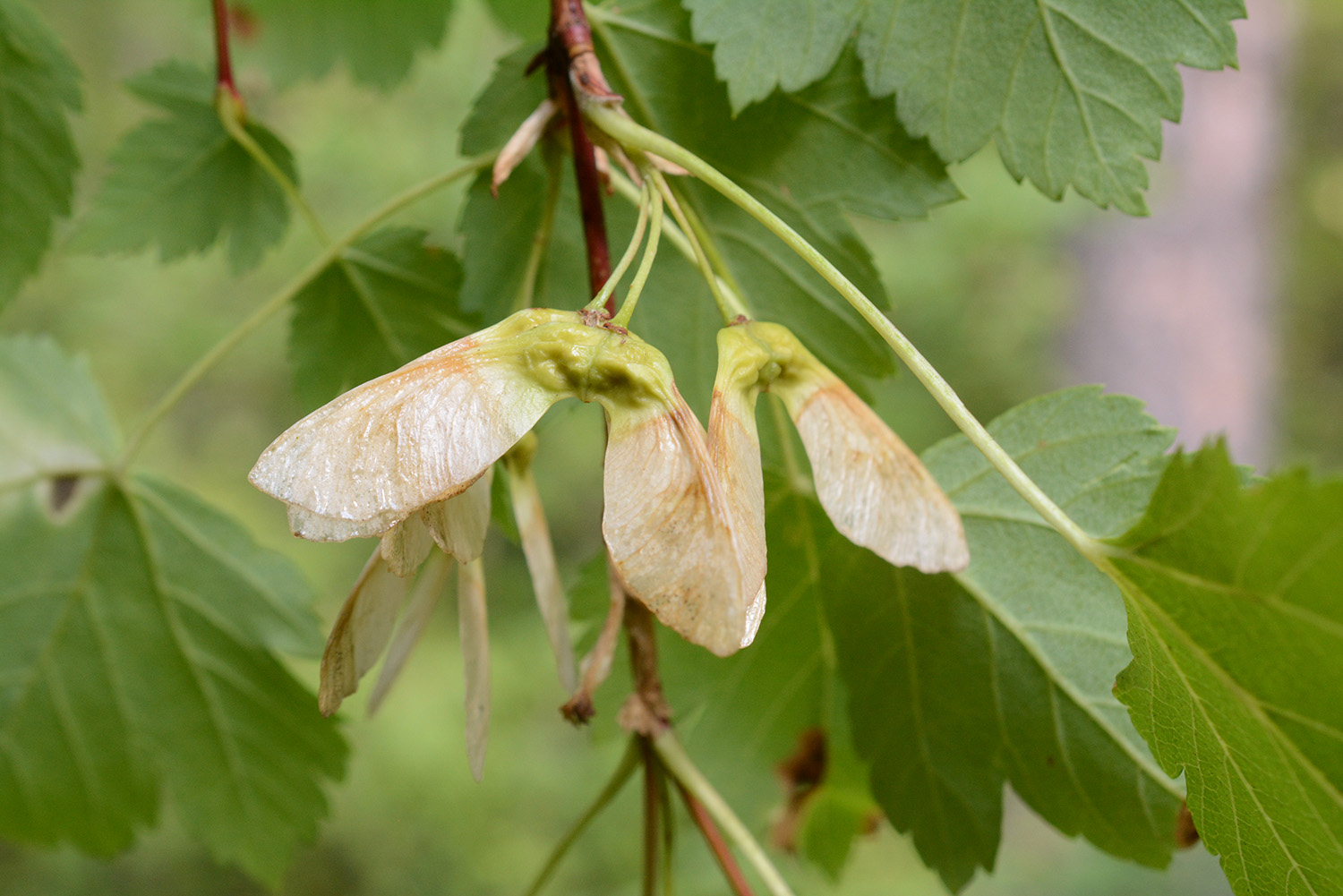
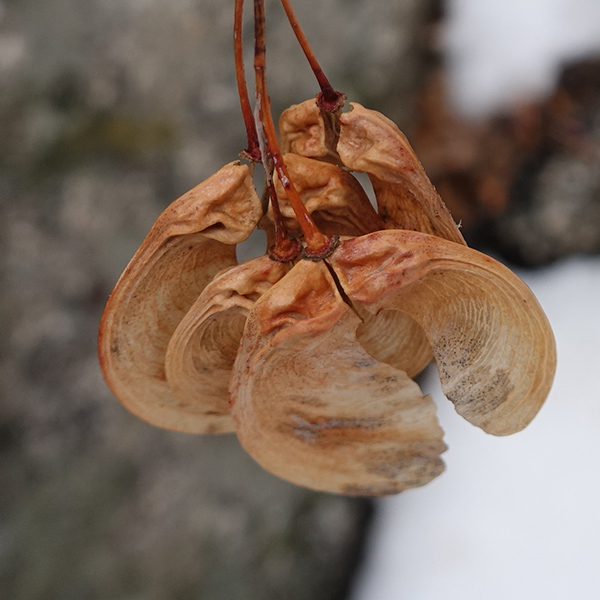
After the ovules are fertilized, the samara develops with two enclosed seeds, each with a wing derived from the ovary.

As children we used to watch the dried fruits break away from their branches and helicopter down to earth. Various birds particularly white-crowned sparrows and finches are known to eat the samaras, and moose, elk, mule deer browse heavily on maple shrubs.

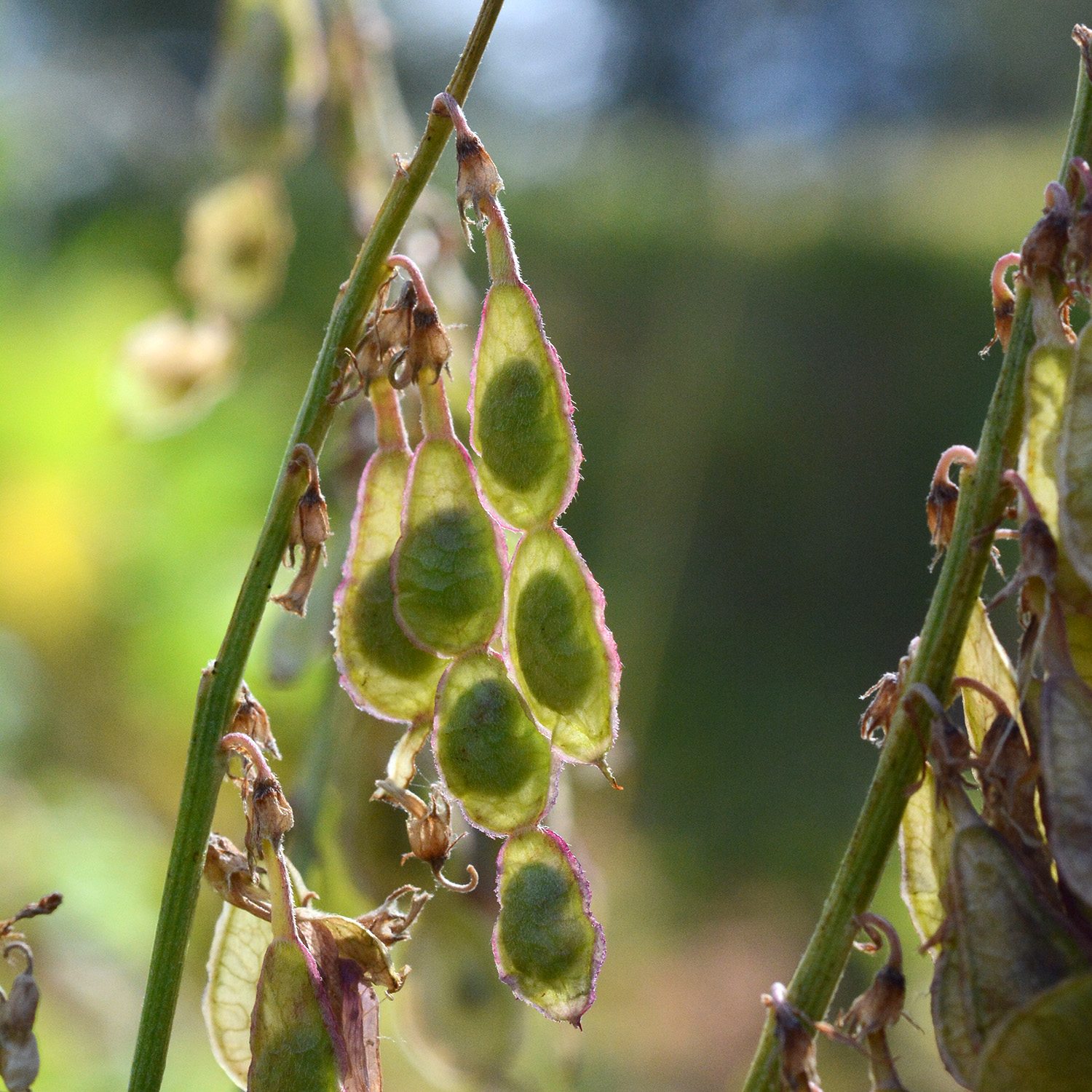
In the Legume or Pea Family, Western SweetvetchHedysarum occidentale – has flattened pods with segments called loments. When the loments dry, the segments break apart and are free to fly – like frisbees on the wind. You can see the silhouettes of the bean-shaped seeds within sections of the loment fruit.

Fly on Fluff

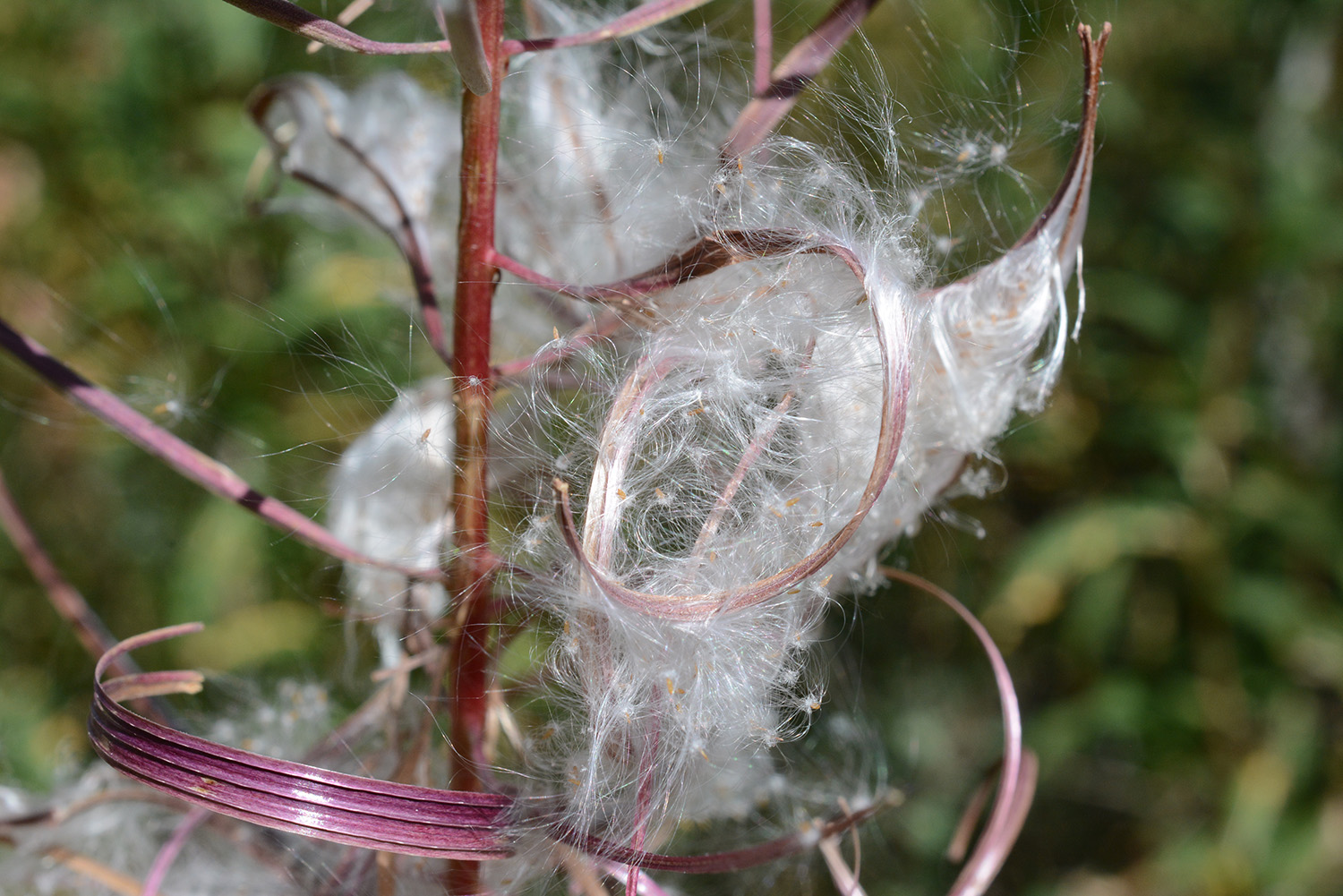
Spires of fireweed are spectacular at this time of year with their long seed pods splitting, curling, and releasing 100s of seeds upon the breeze. Each seed has a bit of fluff – non-technical term – at the tip.

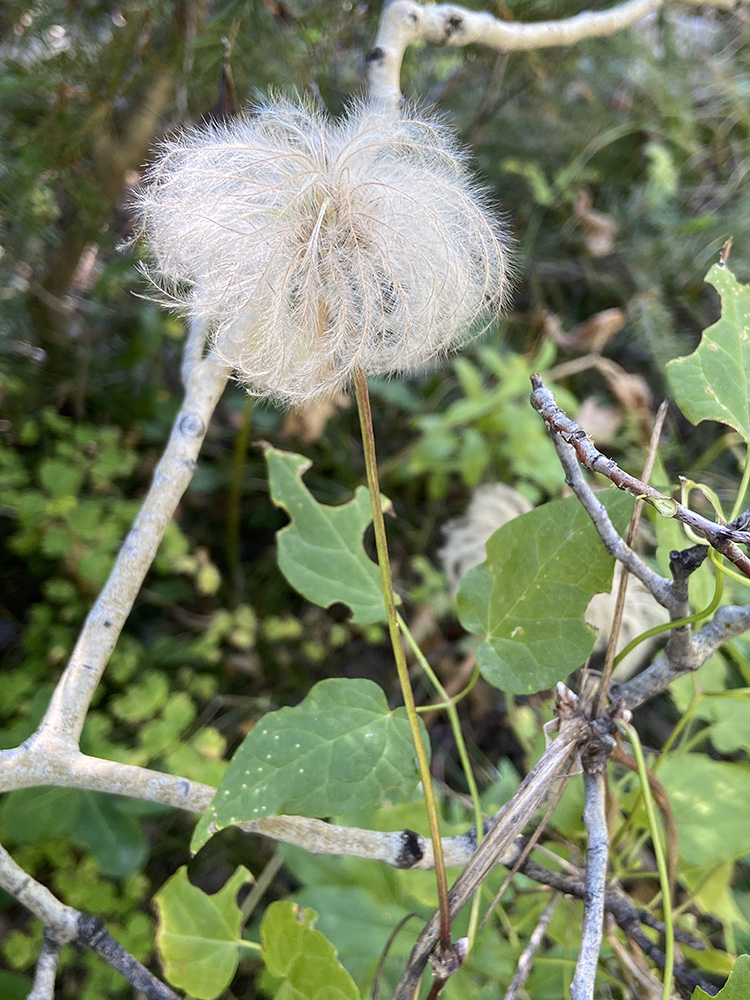
You may perhaps come across the twining Western Blue Virgin’s BowerClematis occidentalis. Growing primarily in the shade, it is a woody vine with 3-parted leaves.

The individual fruits are derived from individual pistils/carpels typical of the Buttercup Family. Fruits – technically achenes – have one seed inside and are covered in long hairs. The wind will help pry the seeds form the tangle and fly off free.

The Aster Family, covered in the last “What’s in bloom – mid August 2025”, produces fruits termed cypselas (vs. achenes) that are formed from the inferior ovary of each tiny flower. Each flower produces only one seed. Many have a pappus of fine hairs (e.g. fluff) that carries the fruits off on the wind. 

Hairy False Golden AsterHeterotheca villosa – has hairy cypselas each with a pappus of fine hairs at the top. Note there are many fruits on the platform, typical of the Aster/Composite Family.

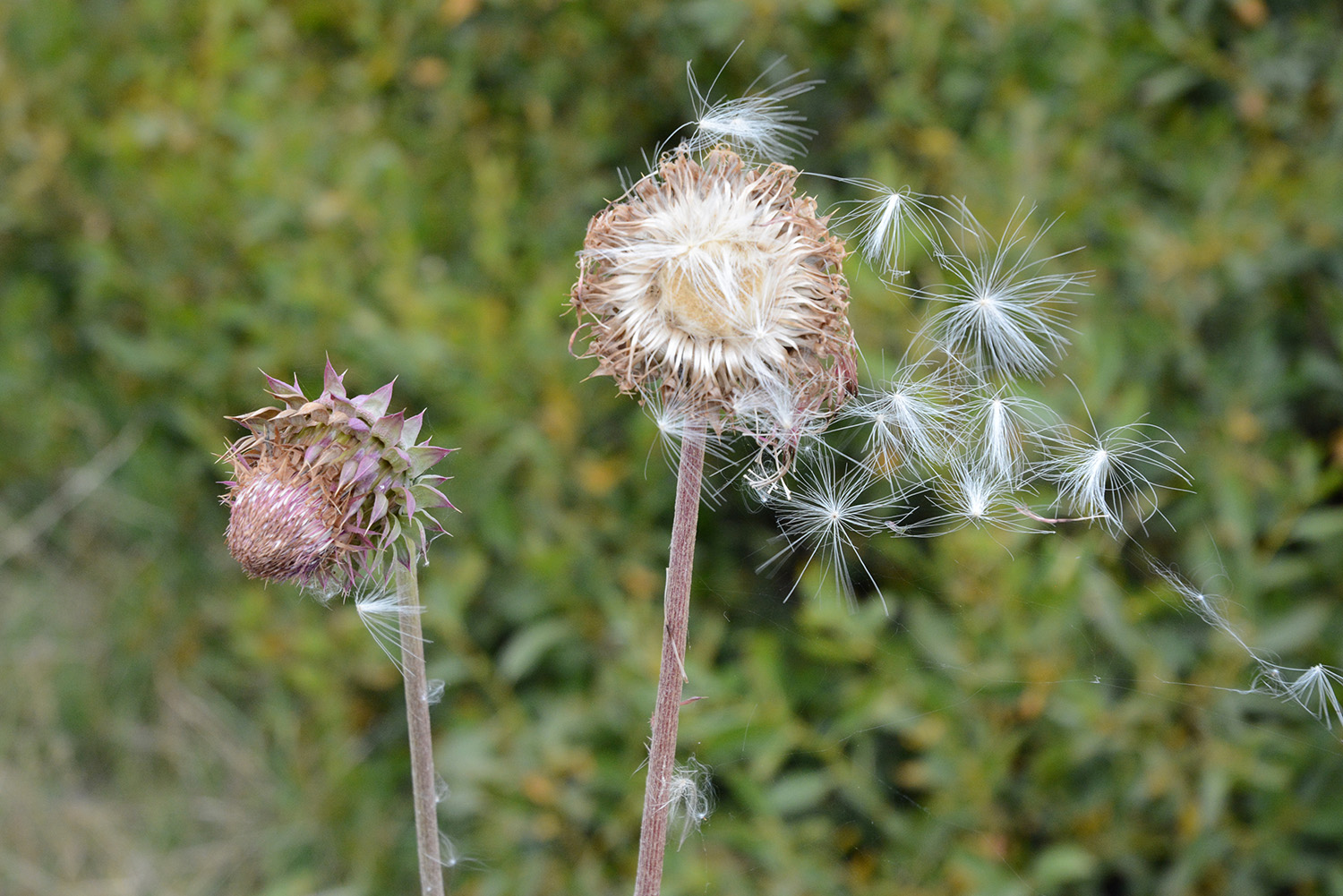
Dandelions, asters, goldenrods, rabbitbrushes and many more have this method of dispersal, including the highly invasive Musk ThistleCarduus nutans.

Habitat Heroes, trained and organized by the Teton County Weed and Pest – Meta Dittmer – and TC Conservation District – Morgan Graham, have in deed done heroic work clearing out thistles up Game Creek and other areas around the valley. More volunteers welcome! Contact Meta Dittmer.

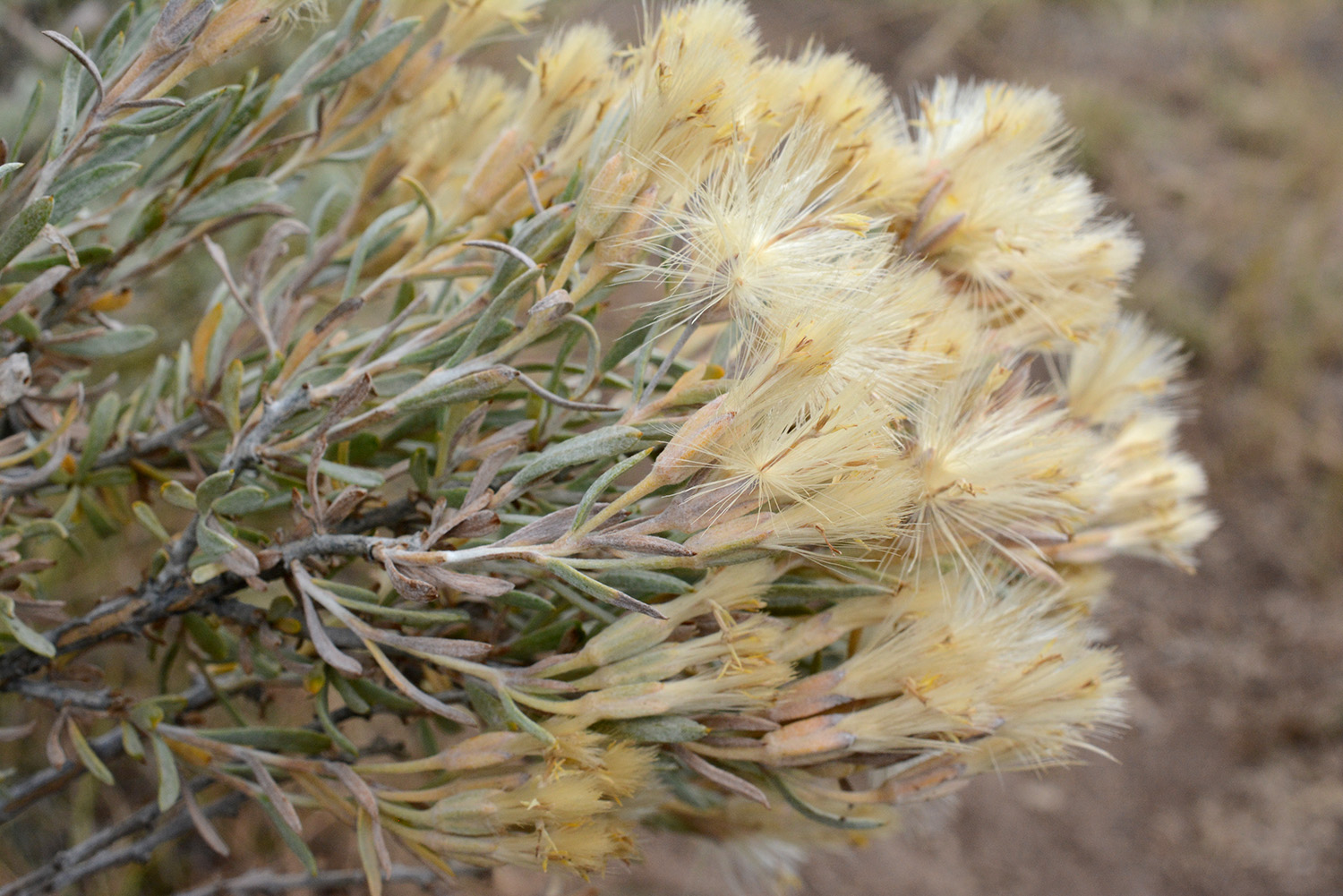
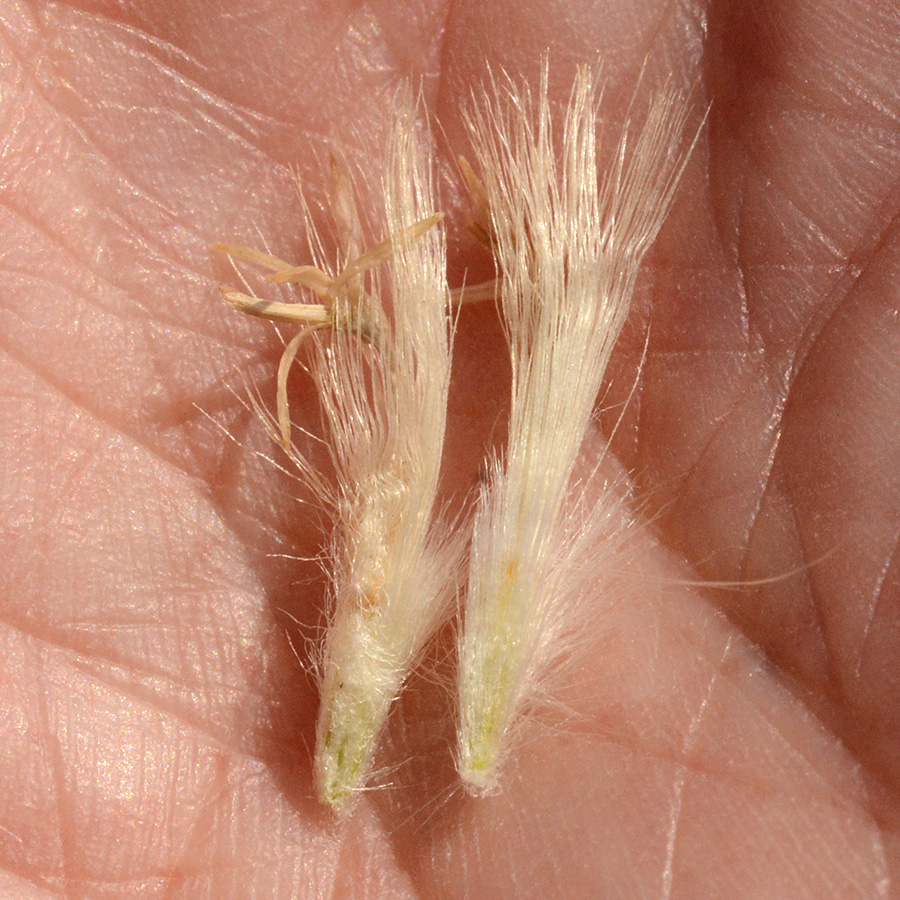
Growing amidst mountain sagebrush and rabbitbushes in dry habitats, 1-2′ shrubs of Spineless HorsebrushTetradymia canescens – stand out at this time of year. They have silvery pubescent stems and leaves topped by plumose heads of

cypselas covered in fine long hairs. These fruits are dispersed on the wind.

It is fun to pull out the handlens and see the variation in the cypselas: look at the pappus and other coverings of the fruits of the Aster Family. These details help taxonomists determine the different species of this world-wide family–the largest plant family on Earth except perhaps the Orchid Family.

Birds and Gravity (pluck and drop)

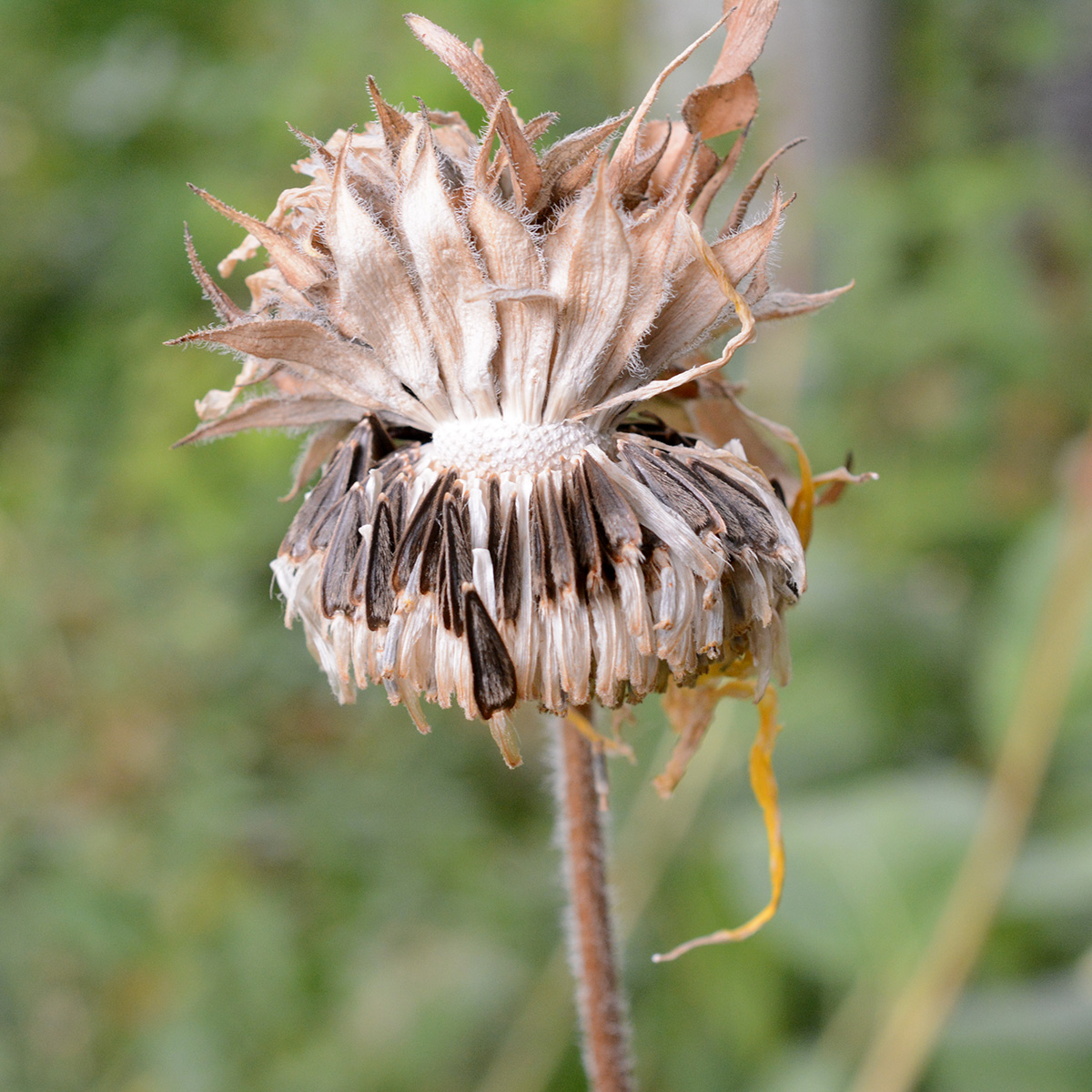
Other composite fruits have scale-like projections at the top of each cypsela. Its not clear whether this helps the cypsela hitchhike on passers-by or perhaps to deter marauders from getting to the tender fruits below. Five-nerved Little-sunflowersHelianthella quinquenerva – is an interesting example.

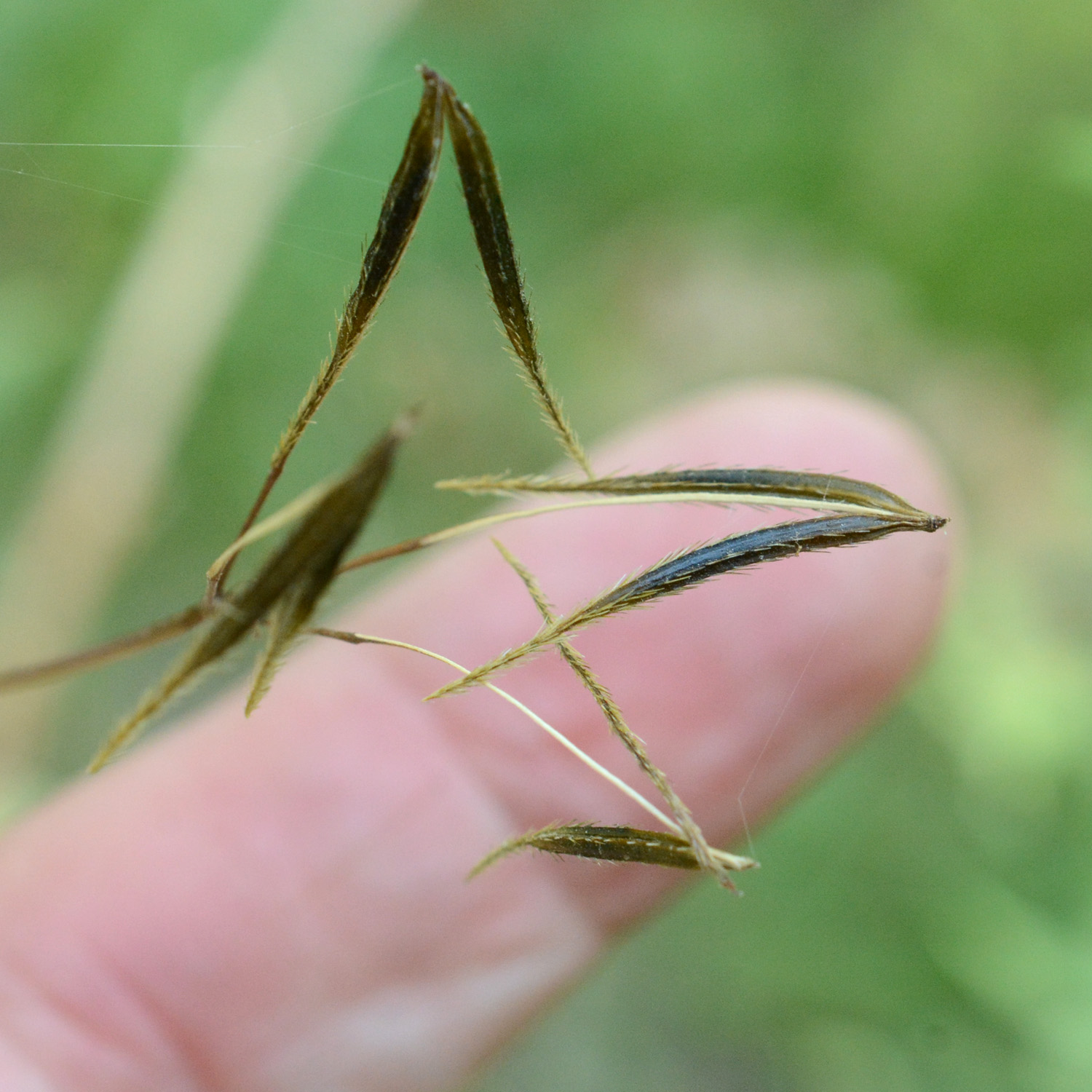
The cypselas are dark with a bit of a brush at the tips (technically a pappus of the non-fluff style). The lighter, flimsier, scale-like structures surrounding them are technically called paleae (palea singular), and are not part of the fruit itself. In this case, the paleae likely serve as barricades to insects wanting to eat the nutritious seeds.

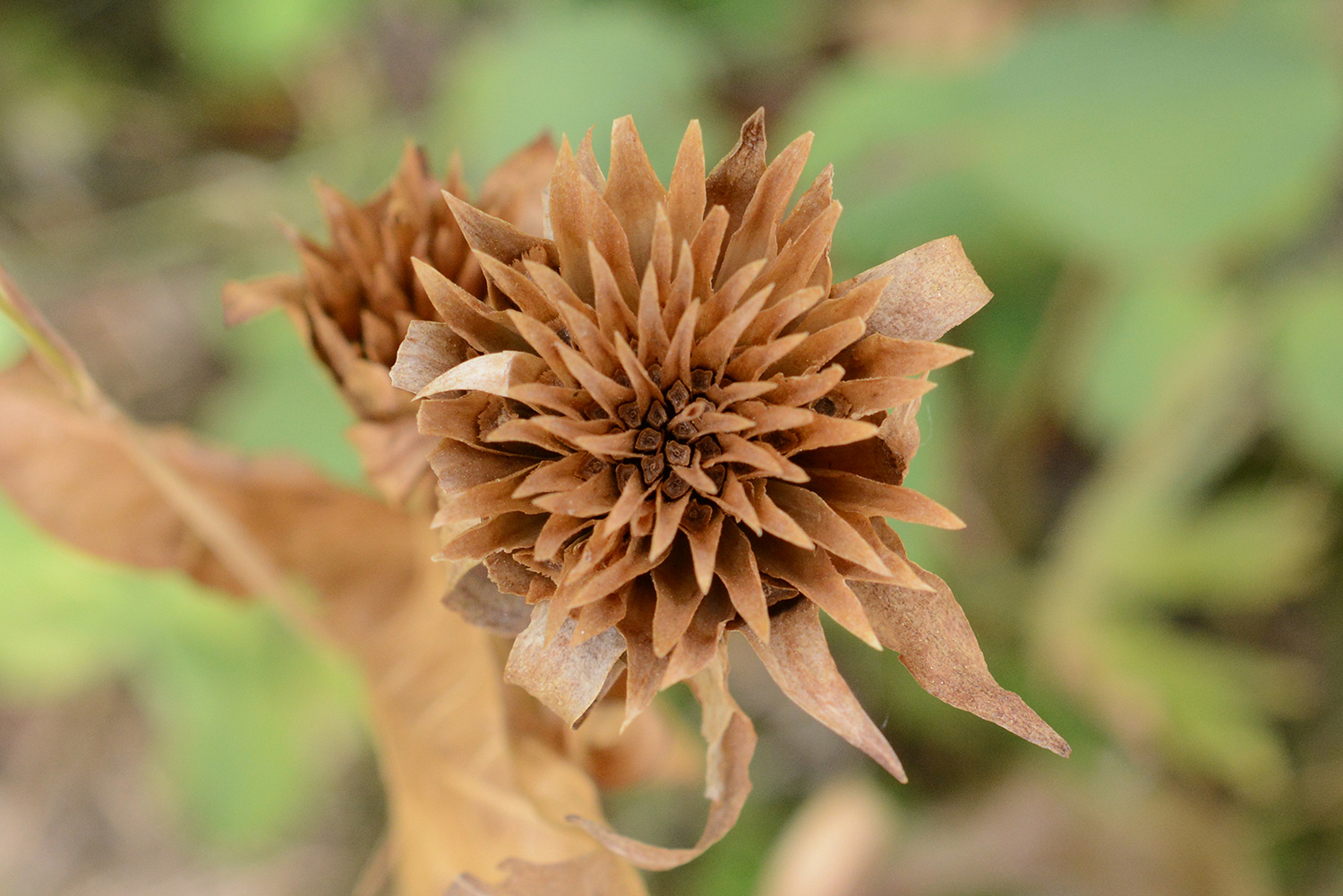
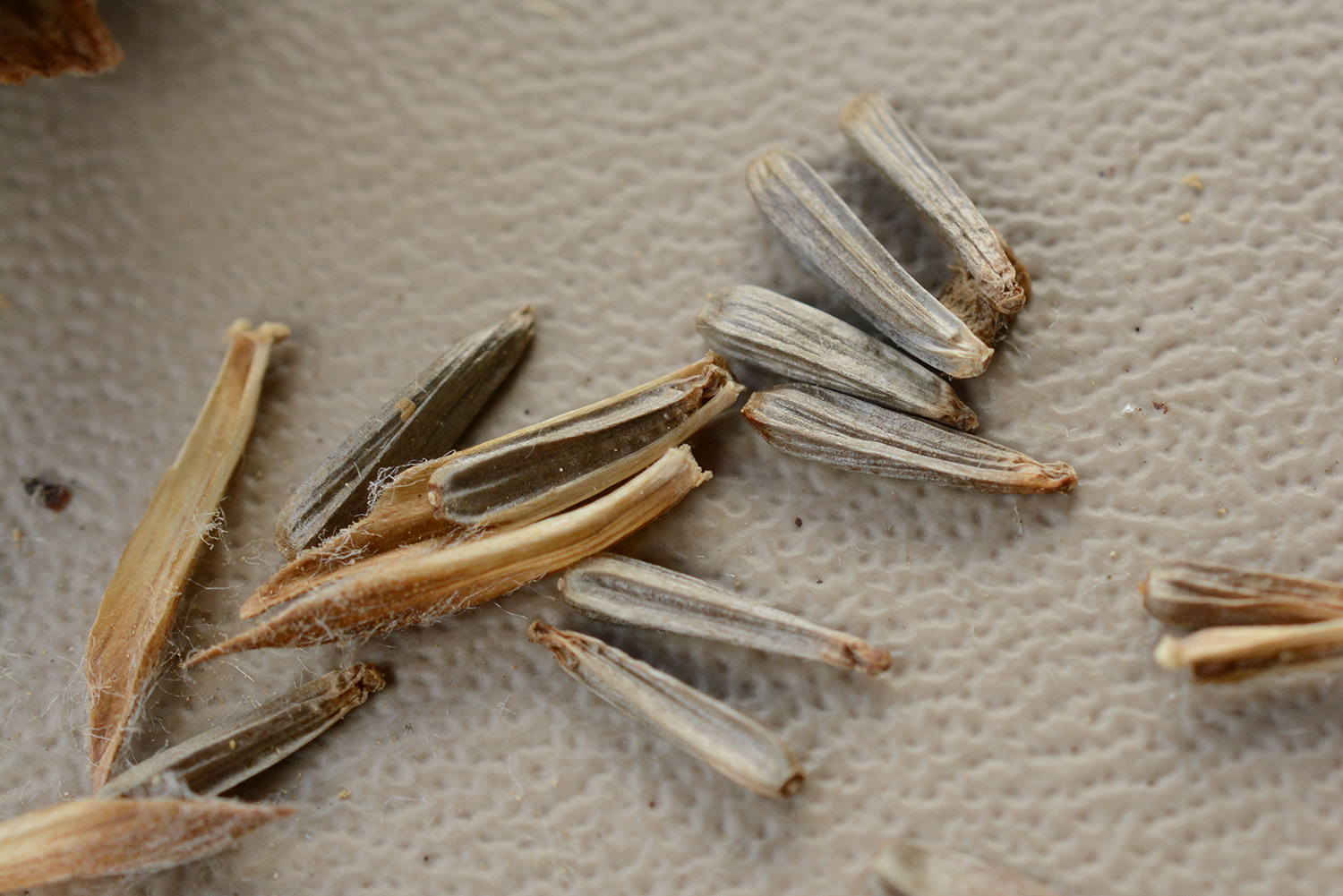
Other cypselas nestle deep inside stiff, sharp paleae as seen in Arrowleaf BalsamrootsBalsamorhiza sagittata. Look closely in the center and you will see the squarish-shaped tops of the cypselas. The sharp dividers are the paleae.

Being able to separate the fruits from the paleae is helpful when collecting seeds for restoration projects, as do the Grand Teton National Park volunteers. These Seed Heroes, led by Jasmine Cutter, have been harvesting these and other seed this summer for habitat restoration. If you wish to volunteer, contact Jasmine Cutter:

These types of fruits are often plucked out by birds, shaken out by wind, or just dropped when the heads fall apart.  

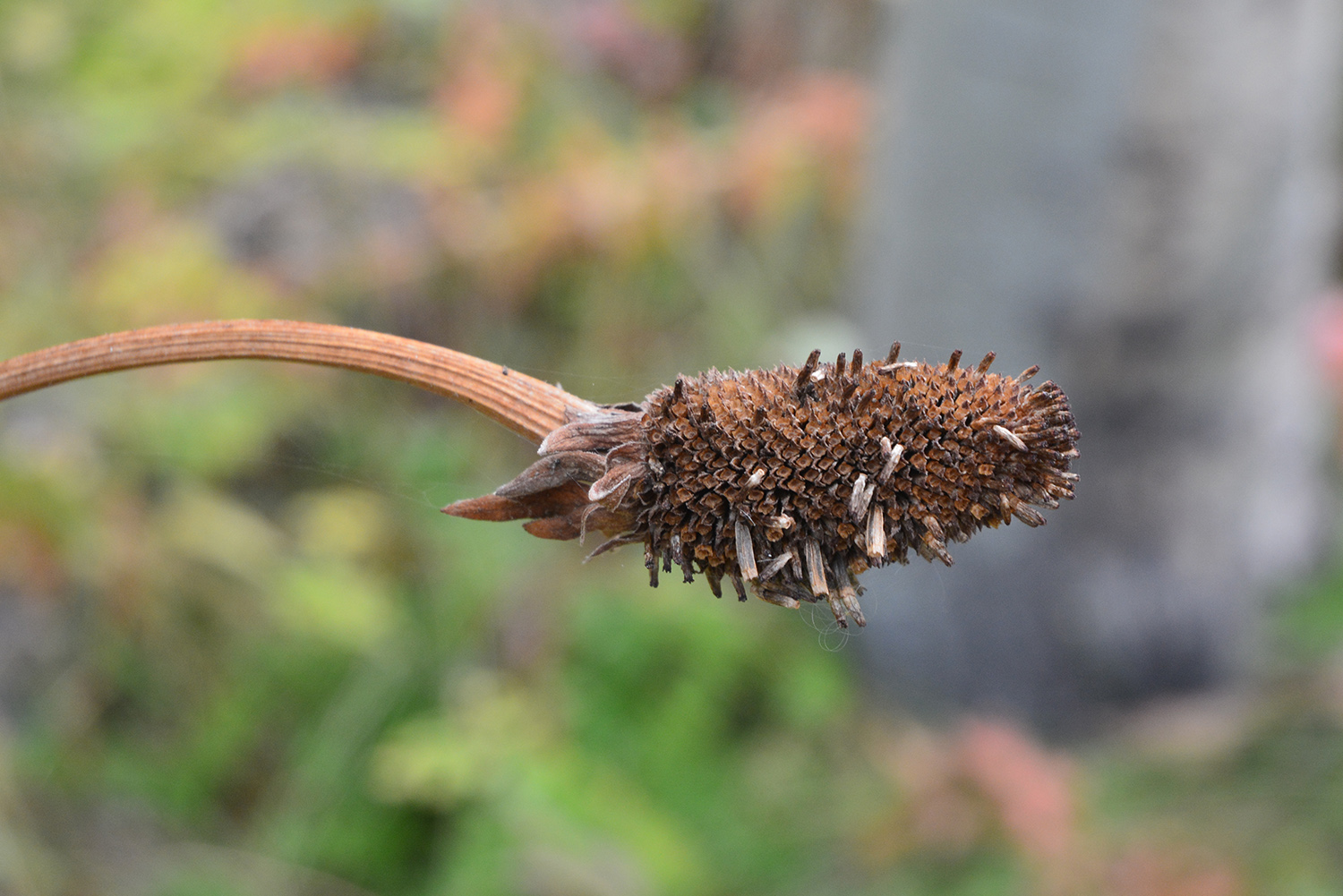
Fruits of Western or Rayless Coneflower  – Rudbeckia occidentale – sit up on the cone-like central platform – receptacle – and are distributed by birds and gravity. Interestingly, it appears that the short, tough, paleae hold the fruits in place.

Shake Outs:

Some dried fruits split open and shake out the seeds, often over time. Landing at different intervals helps increase chances of success, depending on the seed’s germination needs regarding moisture and timing.

Look for Lewis’ flax –  Linum lewisii – where the capsules split apart.

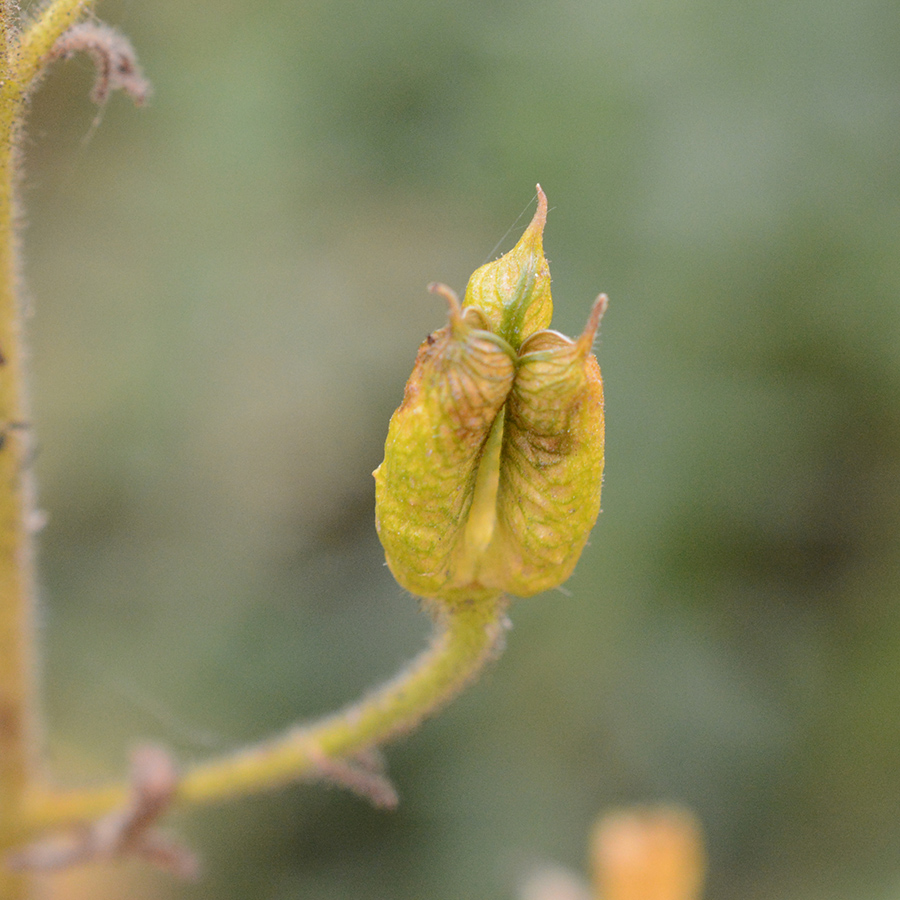
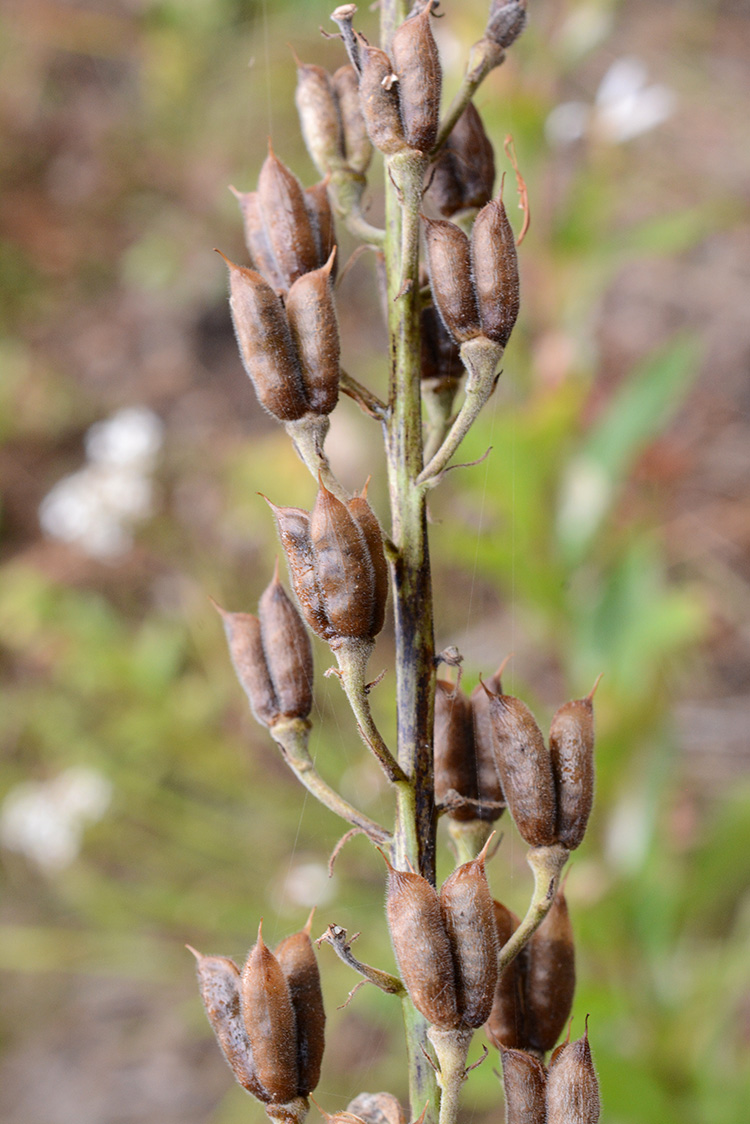
MonkshoodAconitum columbianum – have smooth follicles that gradually split open and shake out tiny rough seeds.

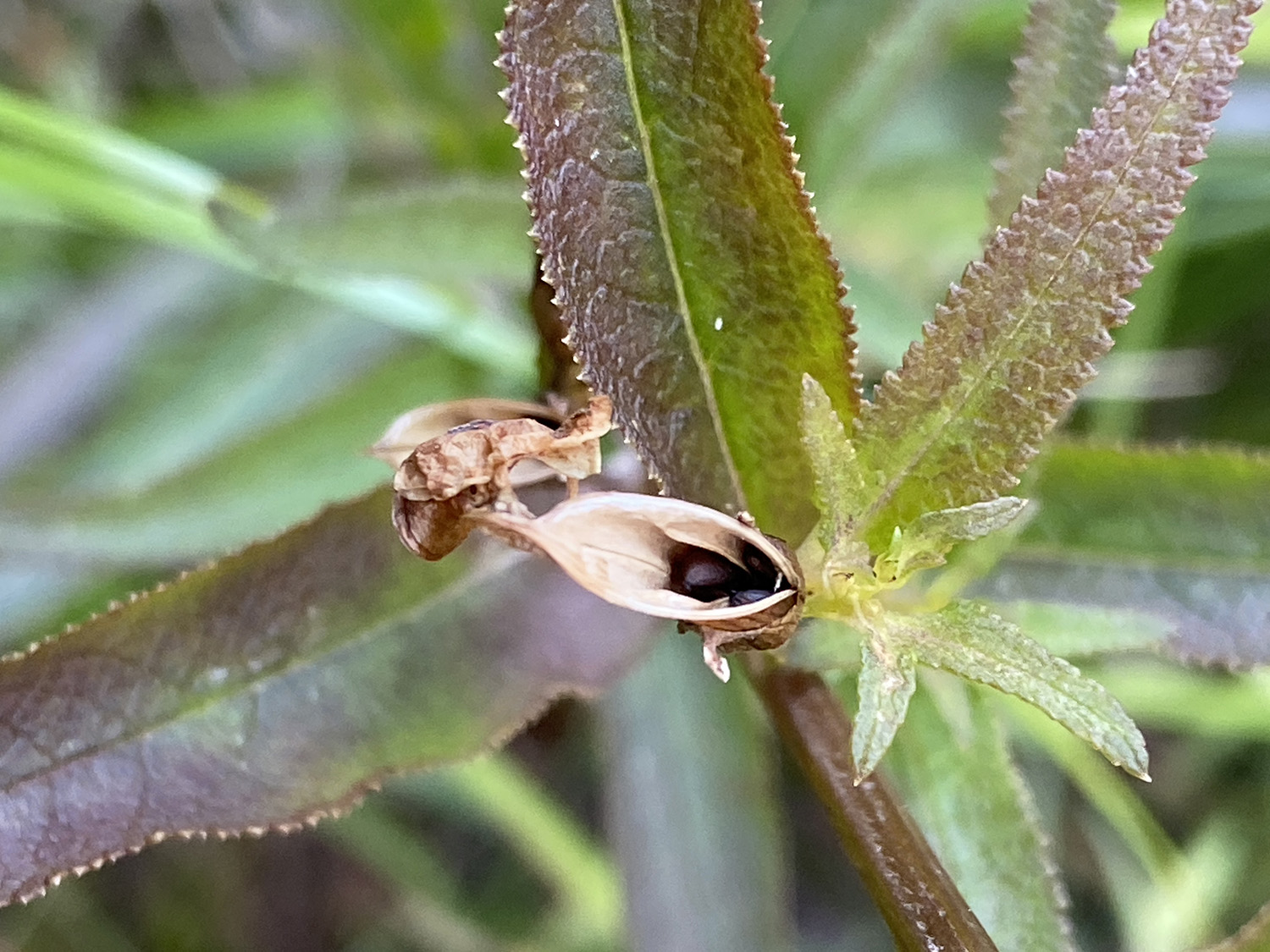
They look very similar to the fruits their relative Tall Delphinium/Larkspur Delphinium occidentale – except Monkshood fruits are smooth on hairy stems. Larkspur fruits are finely hairy,

and the stems are smooth with a bluish-gray covering that can be rubbed off (glaucous) and the lobed leaves are stalked.

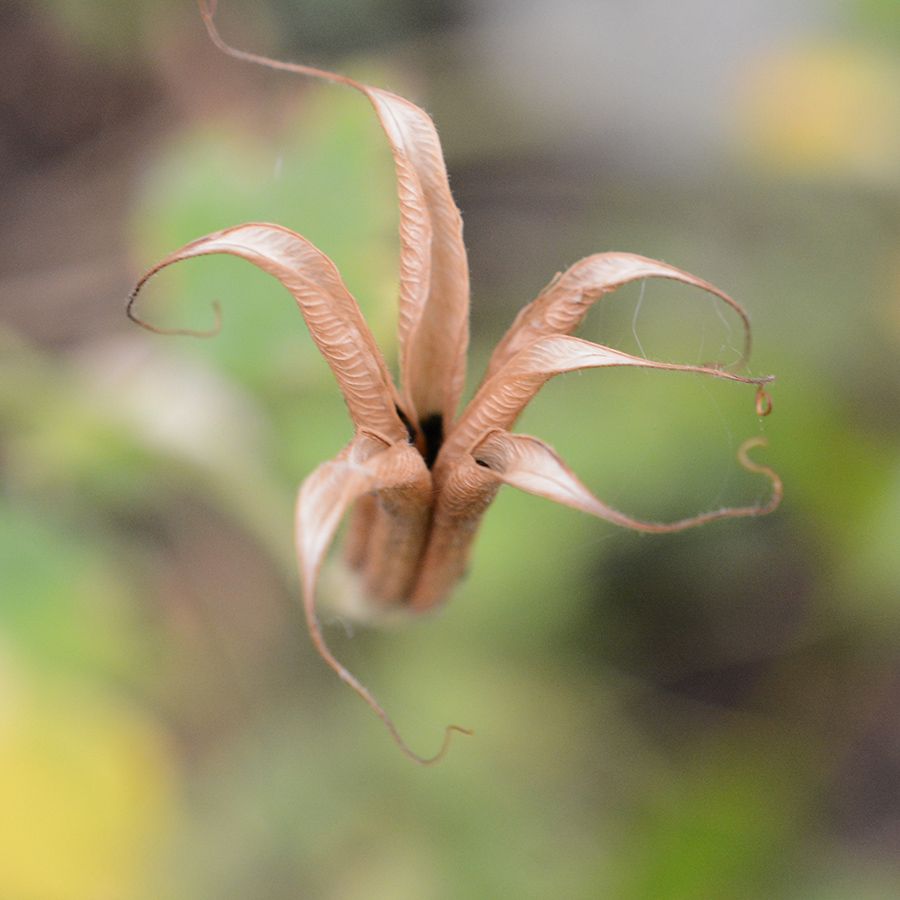
Also in the Buttercup Family, Colorado ColumbineAquilegia coerulea – have three-parted dry fruits with seeds inside.

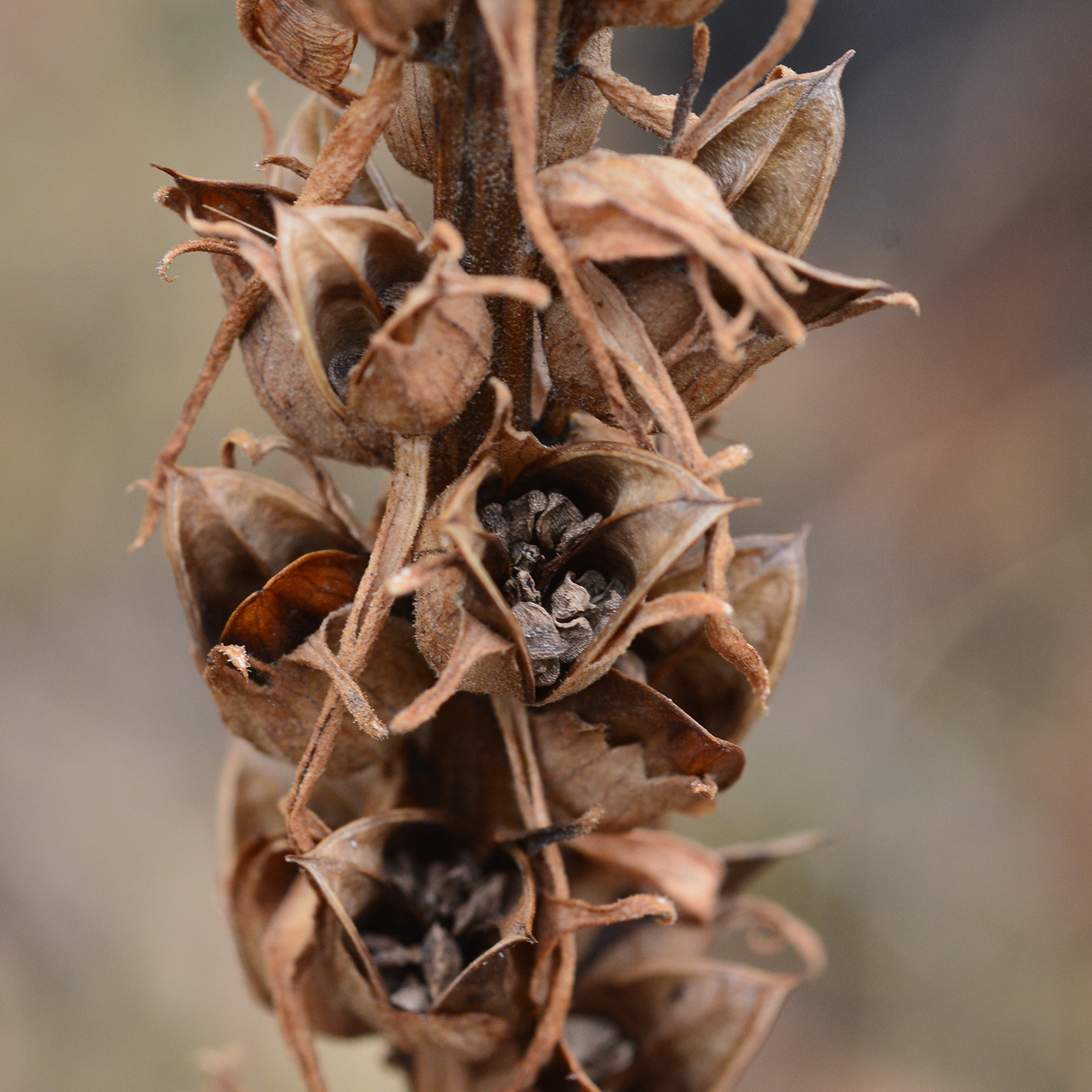
The mouth-like dried fruits of LousewortsPedicularis spp. – release seeds a few at a time. Below is Large LousewortP. procera – seen around Wally’s World and Game Creek. Look for other Lousewort fruits, as well.

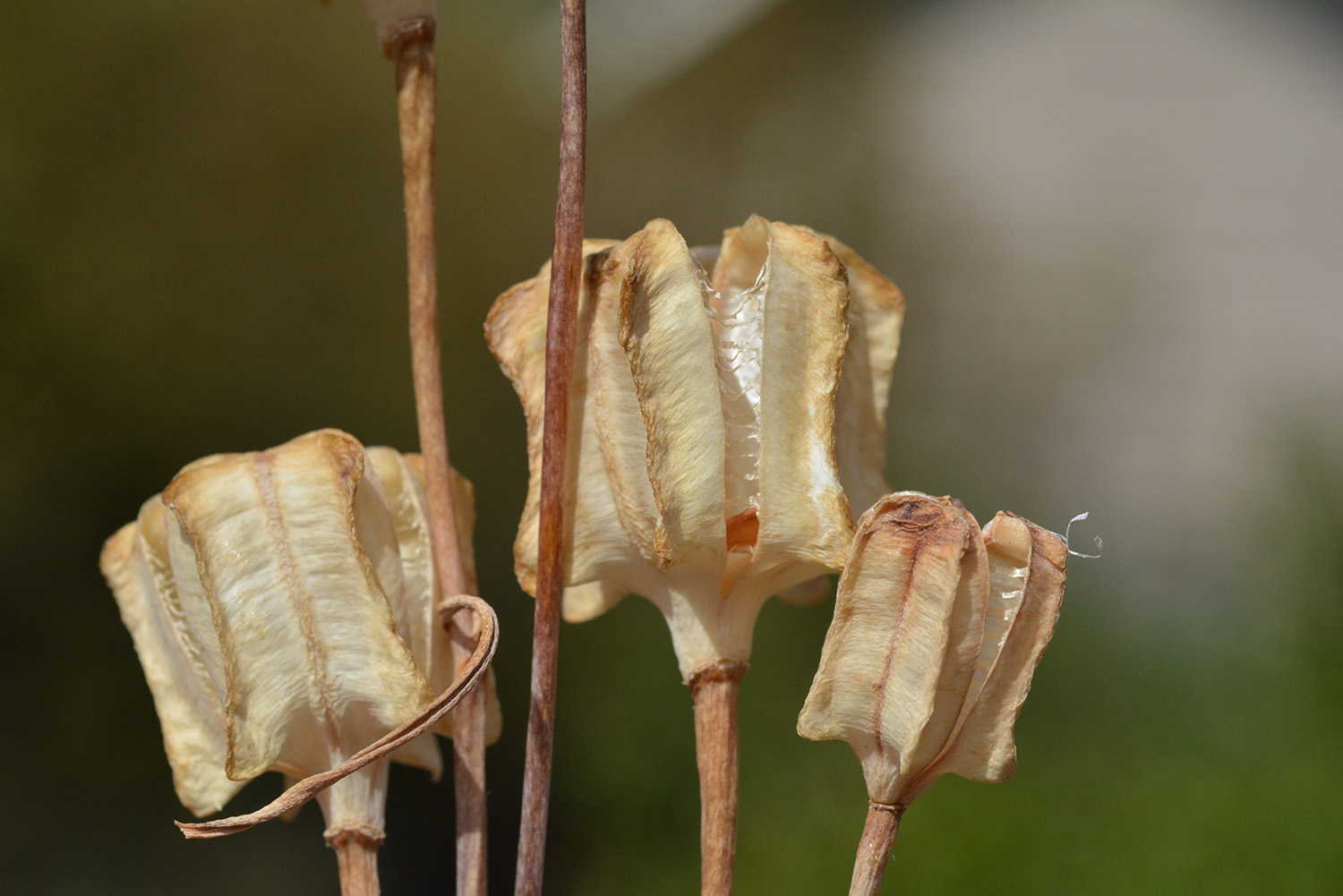
Leopard LilyFritillaria atropurpurea – are clearly seed shakers.

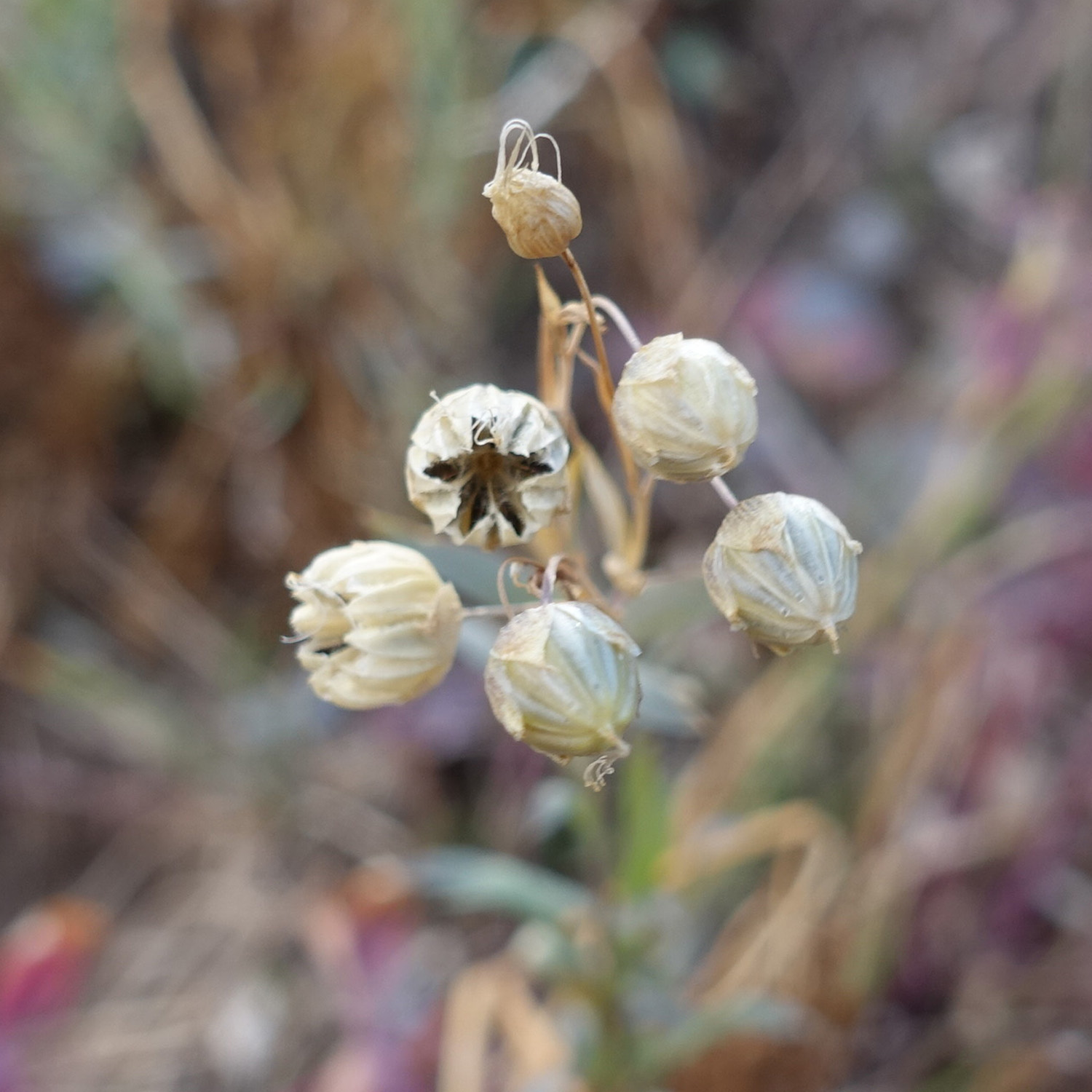
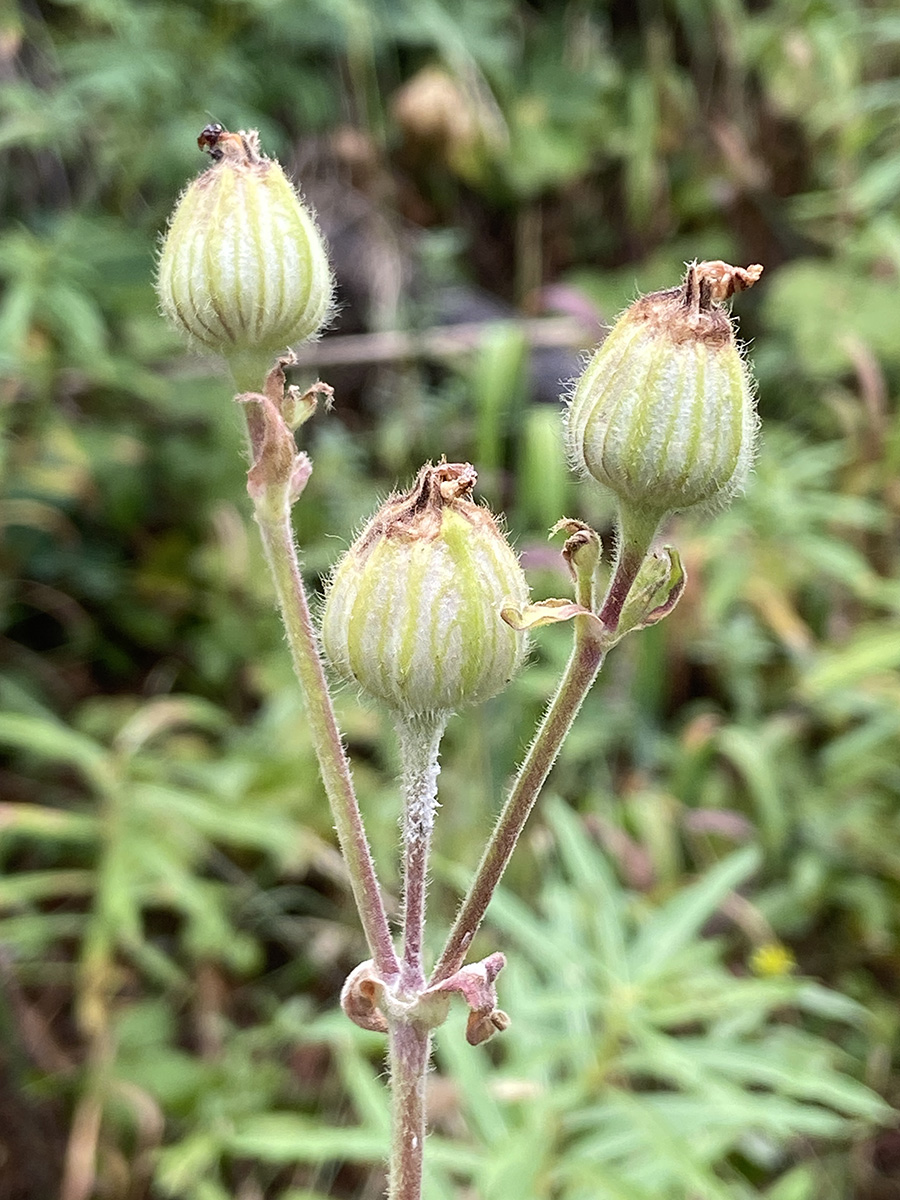
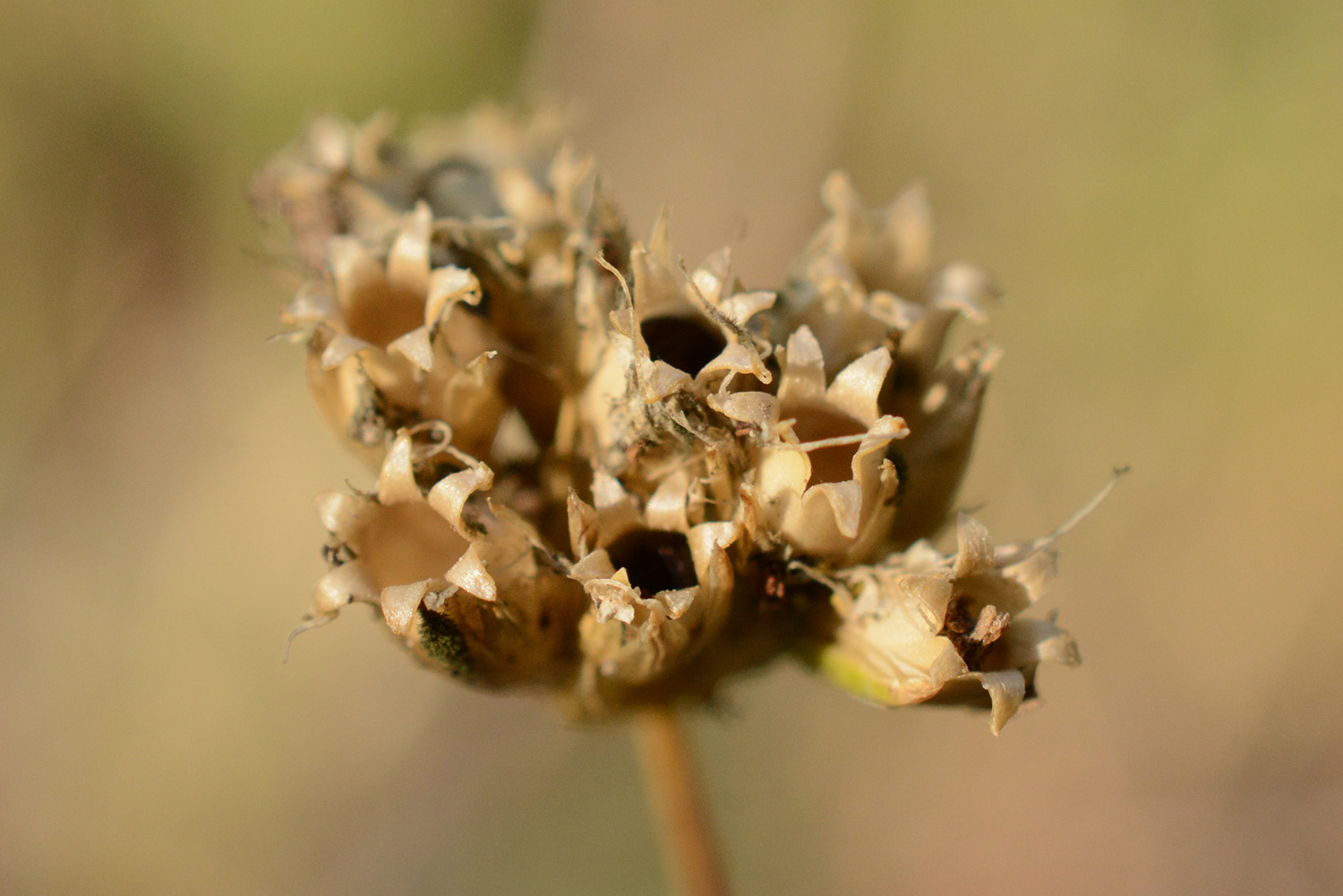
Below is the globe-like, dry fruit of non-native White Campion Silene latifolia. White Campions have separate male and female plants.

The dried petals and firm ovary form an elegant cup

that shakes out seeds.

As these plants are primarily annuals, they depend on these seeds for their future.

You can see the resemblance to its much smaller native relative Ballhead SandwortEremogone congesta, also in the Pink or Caryophyllaceae Family. Both flowers and fruits provide details of family connections.

A couple more to look for:

Orchids, such as this CoralrootCorallorhiza spp. – have dust like seeds easily scattered by the lightest breeze.

Orchid seeds rely on mycorrhizal fungi to nurture the the embryo. As this genus does not have chlorophyll, it also depends on different mycorrhizae to support adult plants.

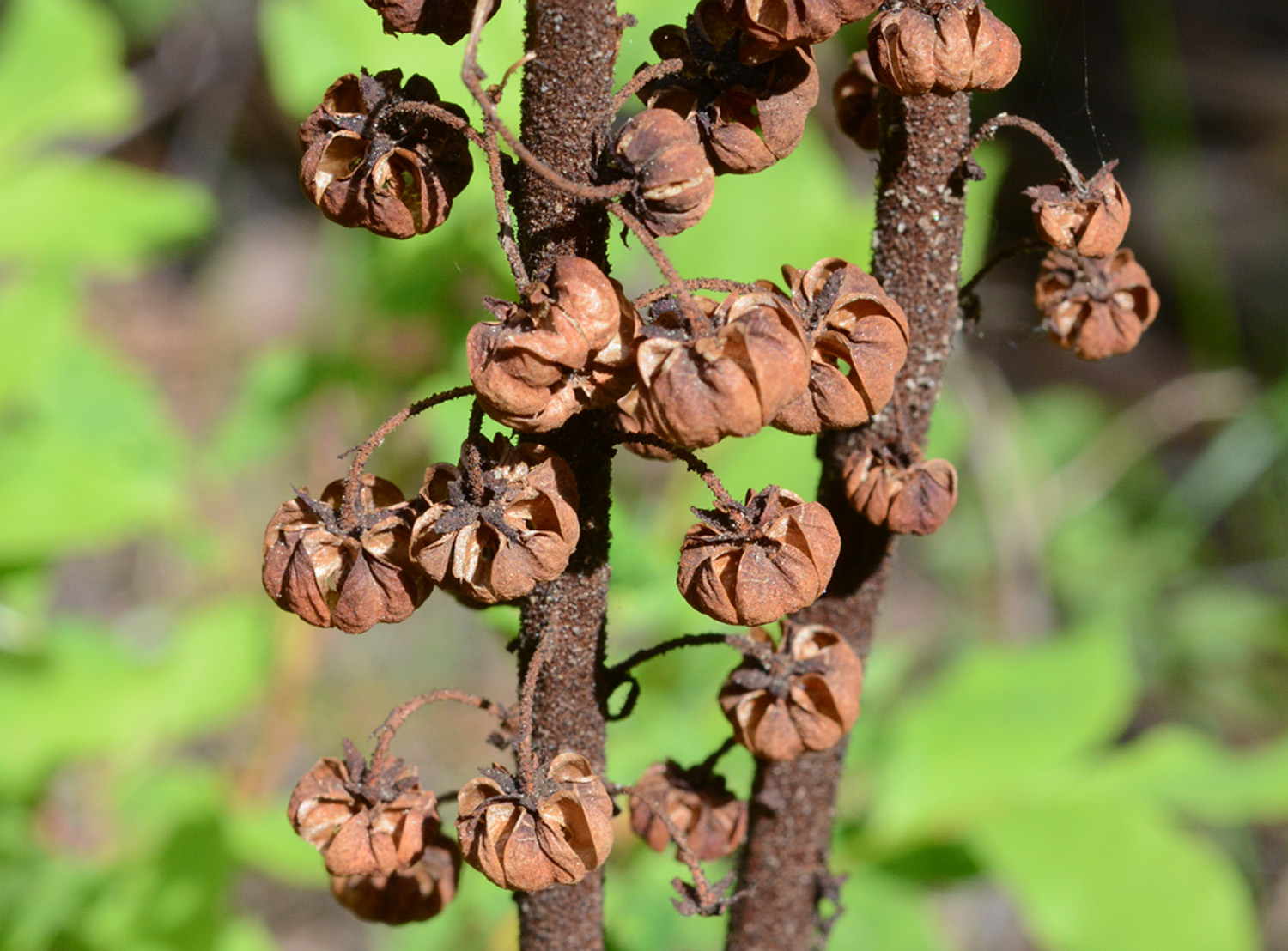
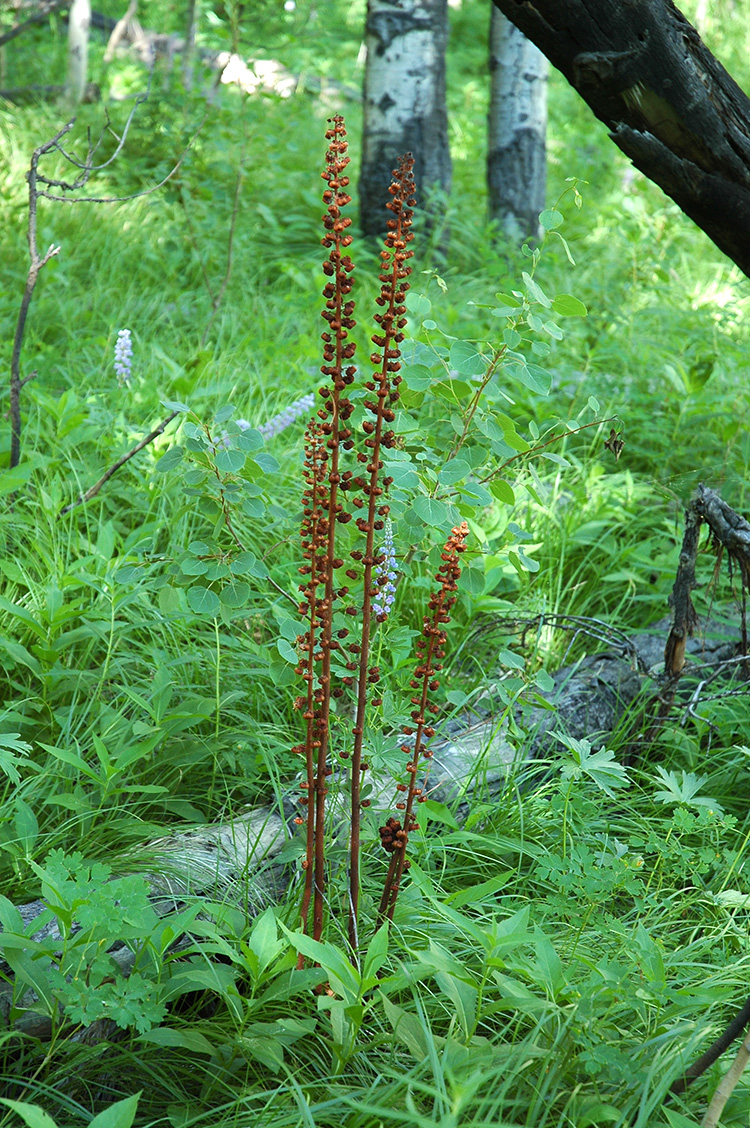
Dried fruits of PinedropsPterospora andromedea – slowly break apart and release

spectacular seeds – if you can see them. Each tiny seed is attached to a membranous wing to aid their flight to new ground. A 10x handlens reveals their delicate nature better than a camera.

As these 3-4′ plants have no chlorophyll they rely on mycorrhizal fungi to relay nutrients from various coniferous host plants.

Fruits that Fling:

Sticky geraniumGeranium viscossissimum – flowers each produce a total 5 or more seeds, usually 1-2 nestled in each of 5 separate compartments of the ovary at the base of the pistil. When the ovary begins to dry, tension builds up, the style splits apart, curls, and literally catapults the seeds several feet beyond.

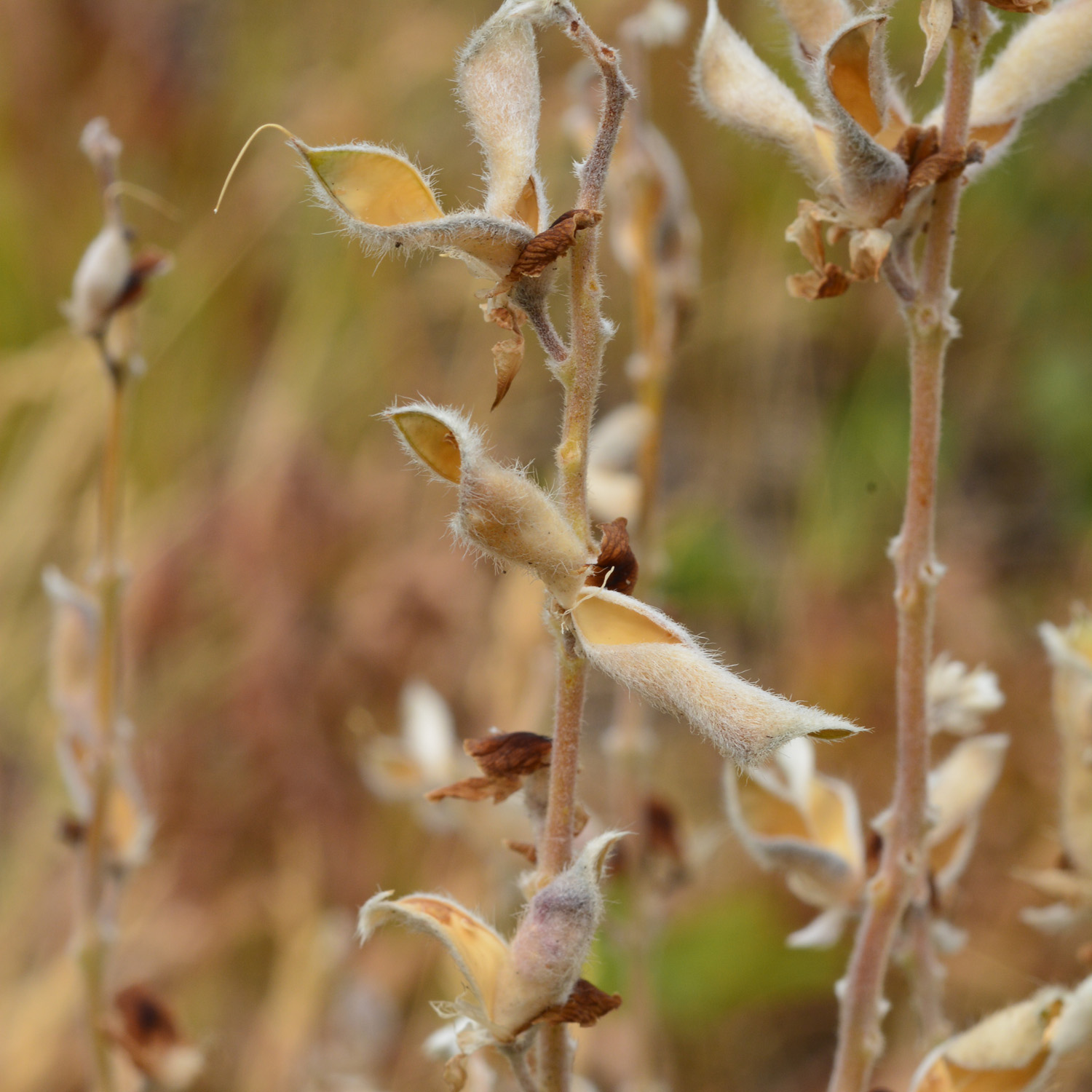
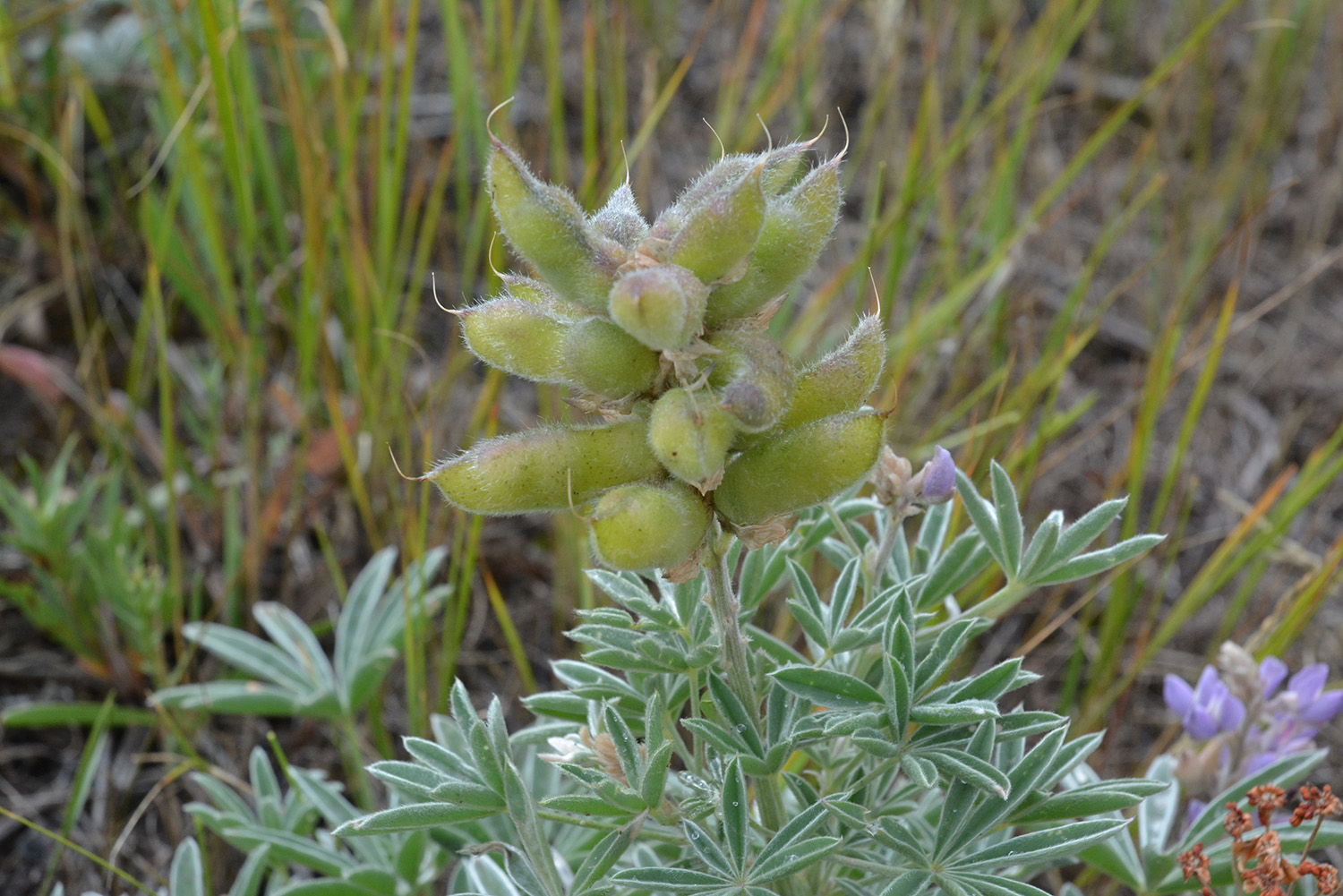
Our native lupinesLupinus spp. – are in the Pea or Legume Family/Fabaceae. As with our edible peas and beans, lupines have pods with several individual seeds inside. In lupines, these pods dry, twist, split, and eject the hard seeds beyond the parent plant.  Do not eat the seeds. Our species of lupine are poisonous – including its foliage and even more so the seeds. 

Over the next few weeks, see how many different fruits you can find, and try to figure the modes of seed dispersal.

Botanizing is fun in fall.

Frances Clark, September 1, 2025

As always, comments and corrections are most welcome.

What’s in Fruit? Late Summer 2025 – Part 1: Fleshy Fruits

This spring was moist and relatively warm so the flowers flourished and pollinators were abundant.  Thus many, many of the flowers were pollinated by bees, flies, wasps, butterflies, moths, and more, thereby, setting the stage for developing fruit. 

Fruits envelop seeds and serve to spread the seeds out into the world away from their parents. Fleshy fruits have evolved to be eaten by mammals and birds and then be excreted or regurgitated away from the parent plants. The flesh carries different kinds and levels of nutrients from starches and sugars to energy-packed lipids. The coverings are in different colors, often red, but also white, blue, black, and orange. The seeds within may be abundant to just one, but all count on wildlife to transport them elsewhere.

First, some basic botany (feel free to skip):

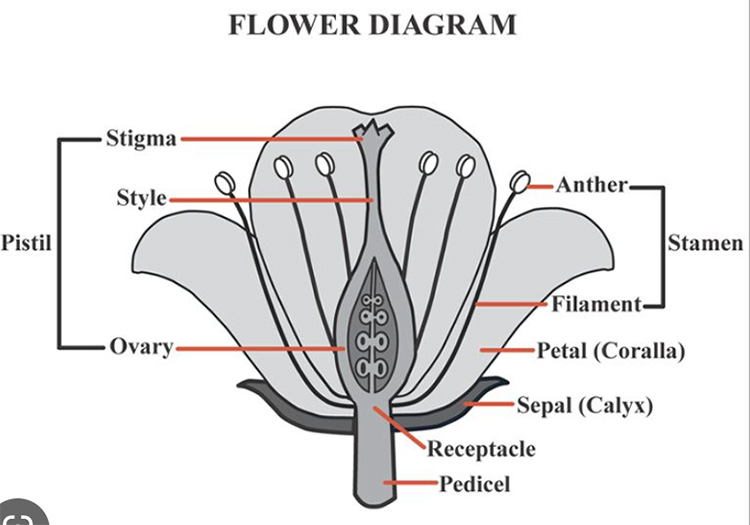
The anther, e.g. the top part of a stamen, produces male pollen grains; the stigma, the top part of the pistil, is where the pollen lands, and if compatible, grows a tube down through the style into the ovule with an egg, where it releases two sperm, one to fertilizes the egg inside the ovule, the other to form food/endosperm (a process called double fertilization). Thus a seed is formed. (Flower diagram from Pinterest:)

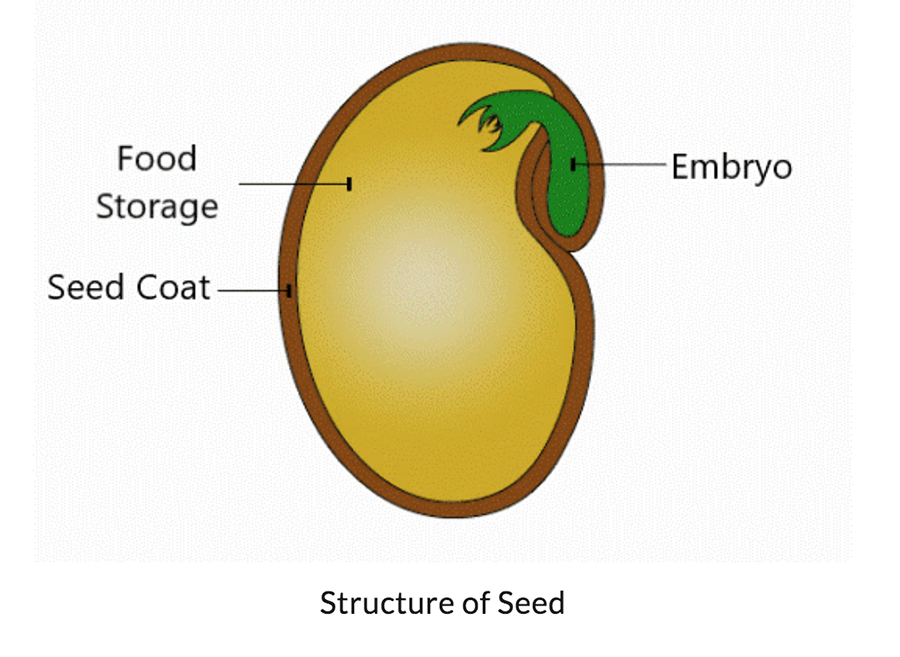
A typical seed includes a tiny plant (embryo), extra food (endosperm), and a protective seed coat. (Illus: courtesy of edurev)

These seeds in turn are enclosed inside a fruit which develops from the ovary (sometimes called a carpel). Ovules become seeds, Ovaries/carpels become fruits.

Fruits come in all sorts of shapes, sizes, structures, smells, tastes. Fruits are key to seed dispersal. This posting highlights some of the fleshy fruits you can see around the valley right now. Enjoy looking for the variations.

Lush Berries (loosely defined) – attract birds and mammals to disperse seeds

Several early blooming shrubs produced fruits that have already been scarfed up by birds and others. For instance, it is hard to find the pairs of red fruits of Utah Honeysuckle – Lonicera utahensis – and the twin black fruits held in maroon bracts of its relative Twinberry – Lonicera involucrata. Favored huckleberries – Vaccininium membraceum, V. scoparium – were in short supply or already consumed. However, other fruits are at peak and abundant.

Many wild fleshy fruits are in the Rose Family. They are related to the apples, cherries, plums pears, and peaches which we love. 

ServiceberriesAmelanchier alnifolia,

and ChokecherriesPrunus virginiana – dangle their fruits.

Black HawthornsCrataegus douglasii – are especially abundant right now along Moose-Wilson Road and around the Lawrence Rockefeller Preserve visitor center.

The orange fruits of Mountain AshSorbus scoparia – stand out above the alternating compound leaves of the 6-10′ or more shrubs.

Birds, bears, coyote, fox, and others like all these juicy fruits and deposit the seeds.

Thimbleberry – Rubus parviflora – is also in the Rose Family. These 3-4’ shrubs are found along streams or moist sites that provide enough water for the 4-6″ leaves to stay turgid. The raspberry-like fruits go fast.

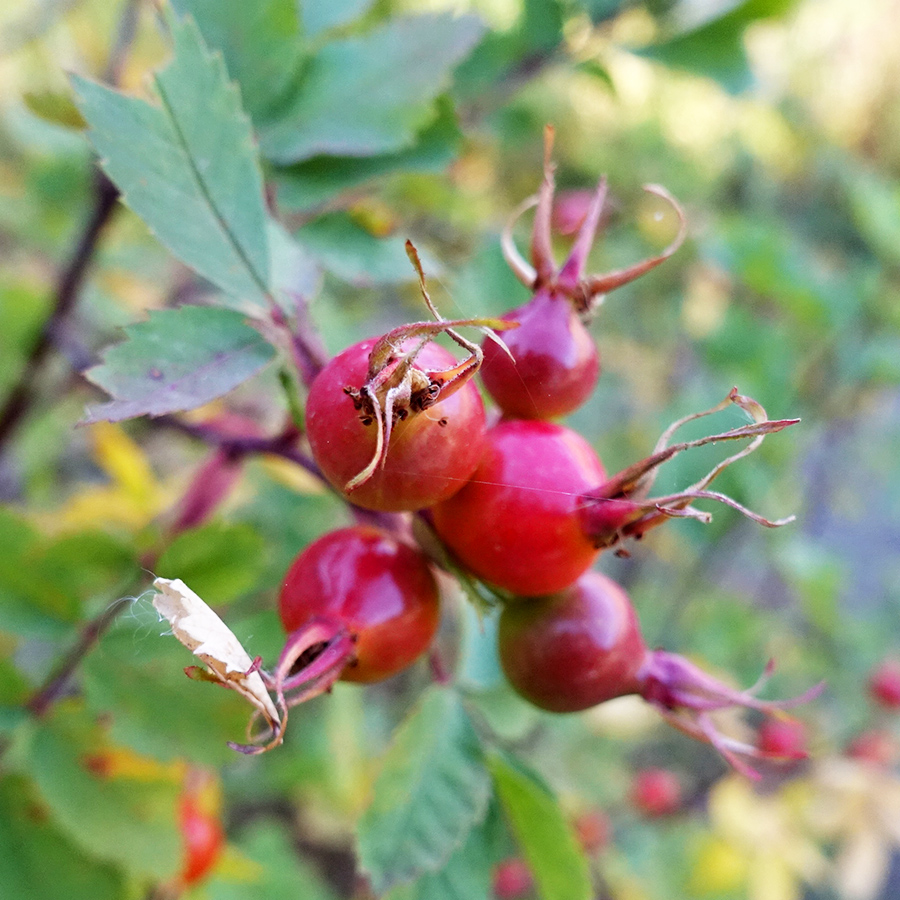
And there are also rose hips forming on Wood’s and Nootka Roses Rosa woodsii, R. nutkatensis. These leathery structures are held out on prickly stems and compound leaves typical of any rose.

Tough rose hips are usually not the preferred food at this time of year–they become important later on in winter when other food sources are more scarce. A variety of our local animals eat the fruit: mule deer, moose, and elk, bears, coyotes, and rodents, as well as some birds such as American Robins and grouse. Rose hips are high in a variety of vitamins, particularly vitamin C, as well as minerals and antioxidants. Hips have been used for making tea to ward off colds and flu.

Other Shrubs with fleshy fruits visible along shady trails:

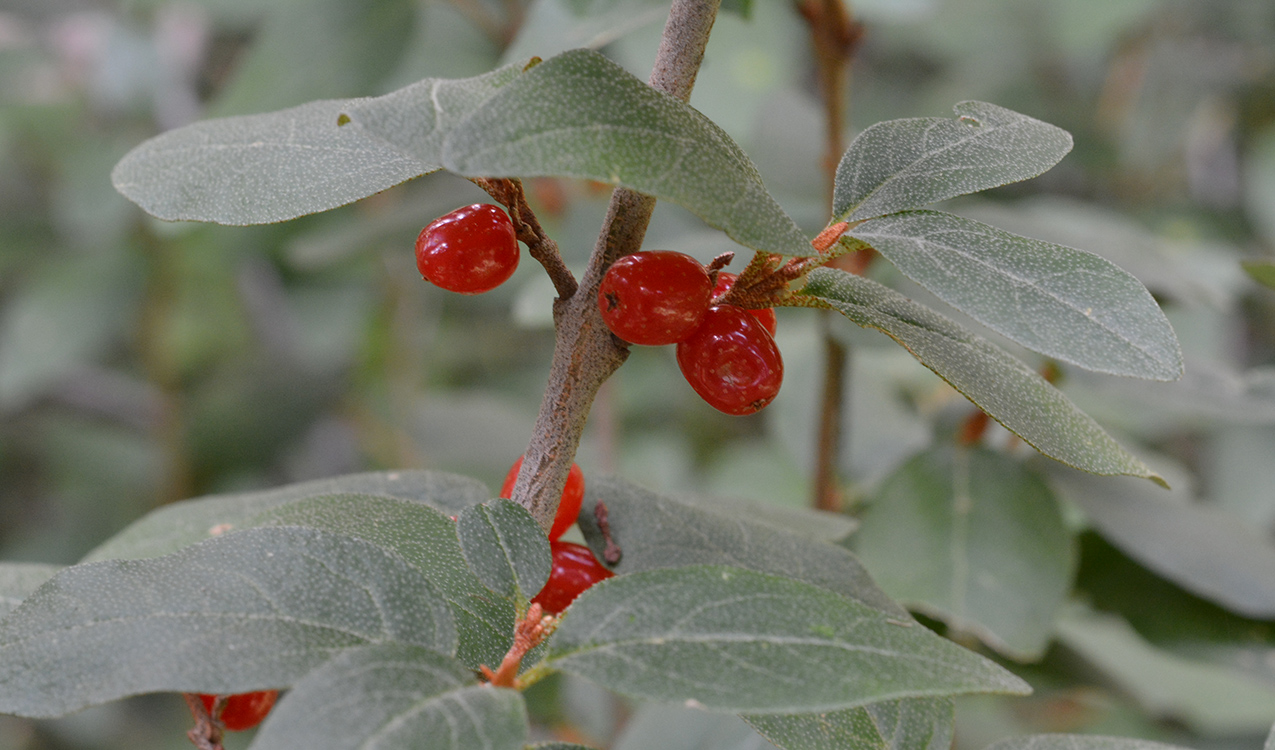
Russet BuffaloberriesShepherdia canadensis – form bright red fruits on 3-10’ shrubs.

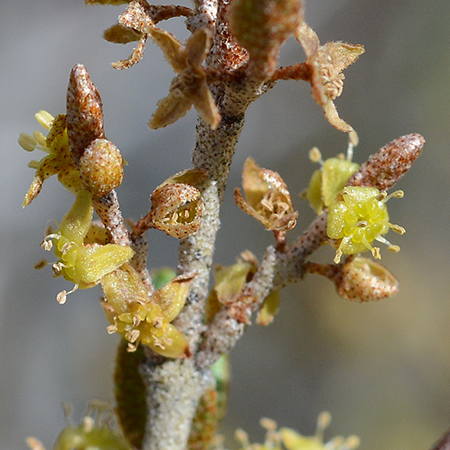
Last spring, male and female flowers bloomed on separate plants as a strategy to prevent self-fertilization. Male flowers as shown below have only stamens. The glistening, sugary, donut-like nectary at the base of the stamens attracted pollinators to pick up pollen and then fly it to another Buffaloberry plant with female flowers, also with appealing nectaries.

Only the female flowers, of course, produce fruits.

Black and grizzly bears, as well as grouse, all eat the berries. The plants can grow in relatively poor soils because they are nitrogen fixers. By adding nitrogen back into the soil, plants also provide islands of nutrients for other colonizing plants.

Red-stemmed DogwoodCornus racemosa – produce bunches of elegant white berries.

Note the distinctive opposite, oval leaves with parallel veins.

Dogwood fruits are important as they are high in lipids which have extra energy needed for migrating birds. Whole plants are especially relished by moose!

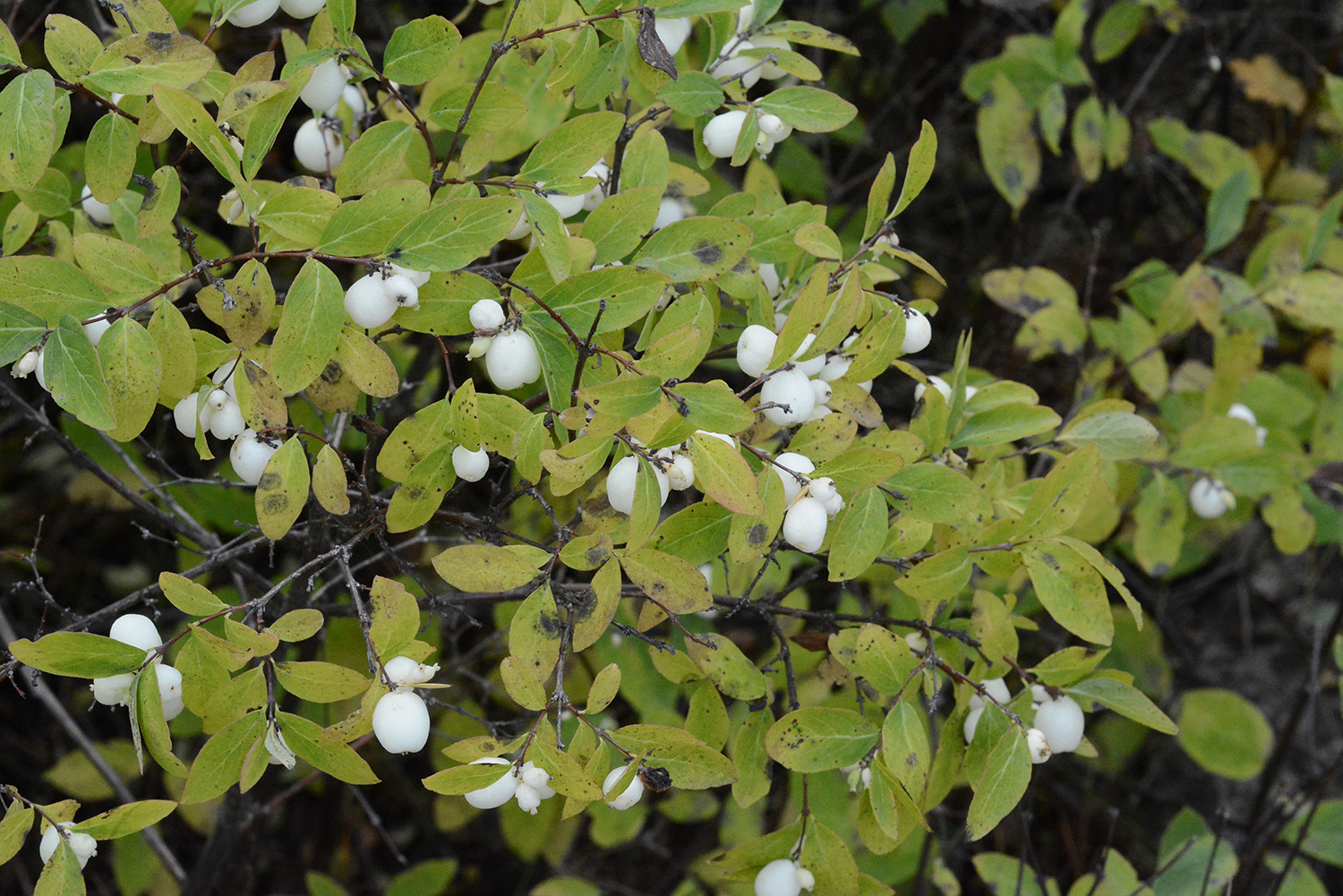
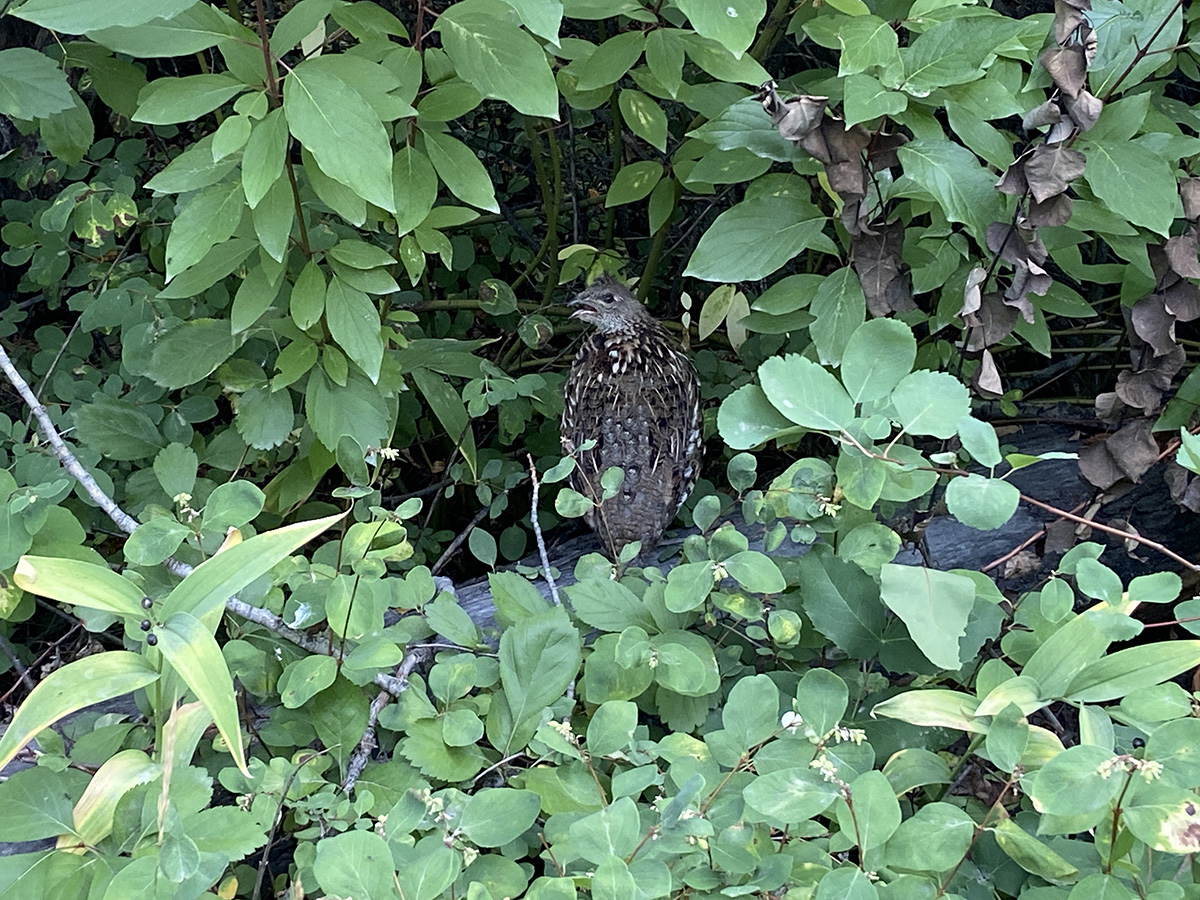
Another plant with opposite leaves and white berries, but not at all related, is SnowberrySymphoricarpos spp. Due to unappealing toxins, fruits tend to hang on a bit longer into winter when the toxins are broken down in the cold. Ruffed and Dusky Grouse, along with other birds, consume them.

Throughout the year, these twiggy shrubs provide important wildlife cover .

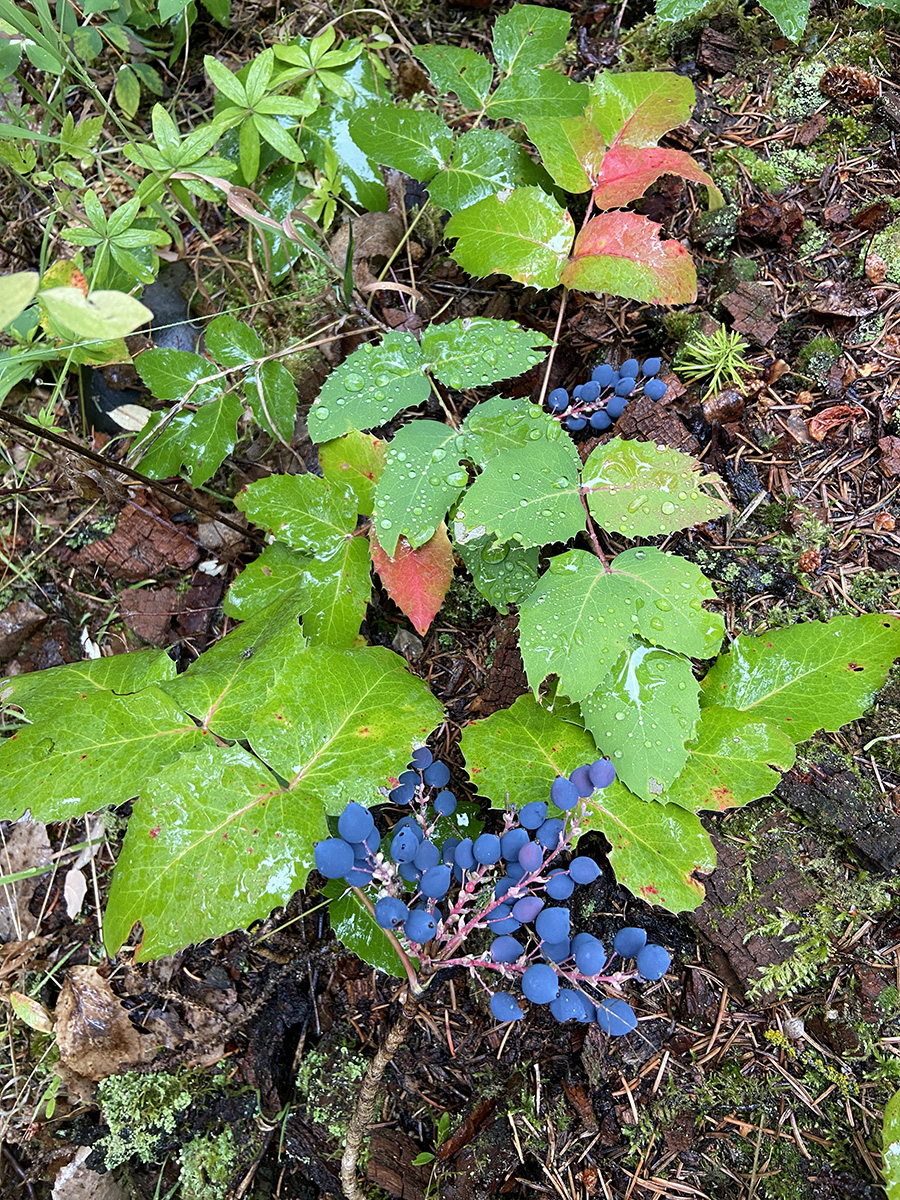
The creeping evergreen Oregon GrapeMahonia/Berberis repens – sports bunches of blue , one-seeded berries. If you gently scrape the roots, you can see a yellow color. The plants, including fruits, contain berberine, a chemical that has been used for centuries and is being researched as a potential for use of diabetes, heart disorders, and as an antioxidant. As always, know your plant and check the medical literature before using or consuming any native plant.

Wildflower berries can be seen in moist or shady spaces:

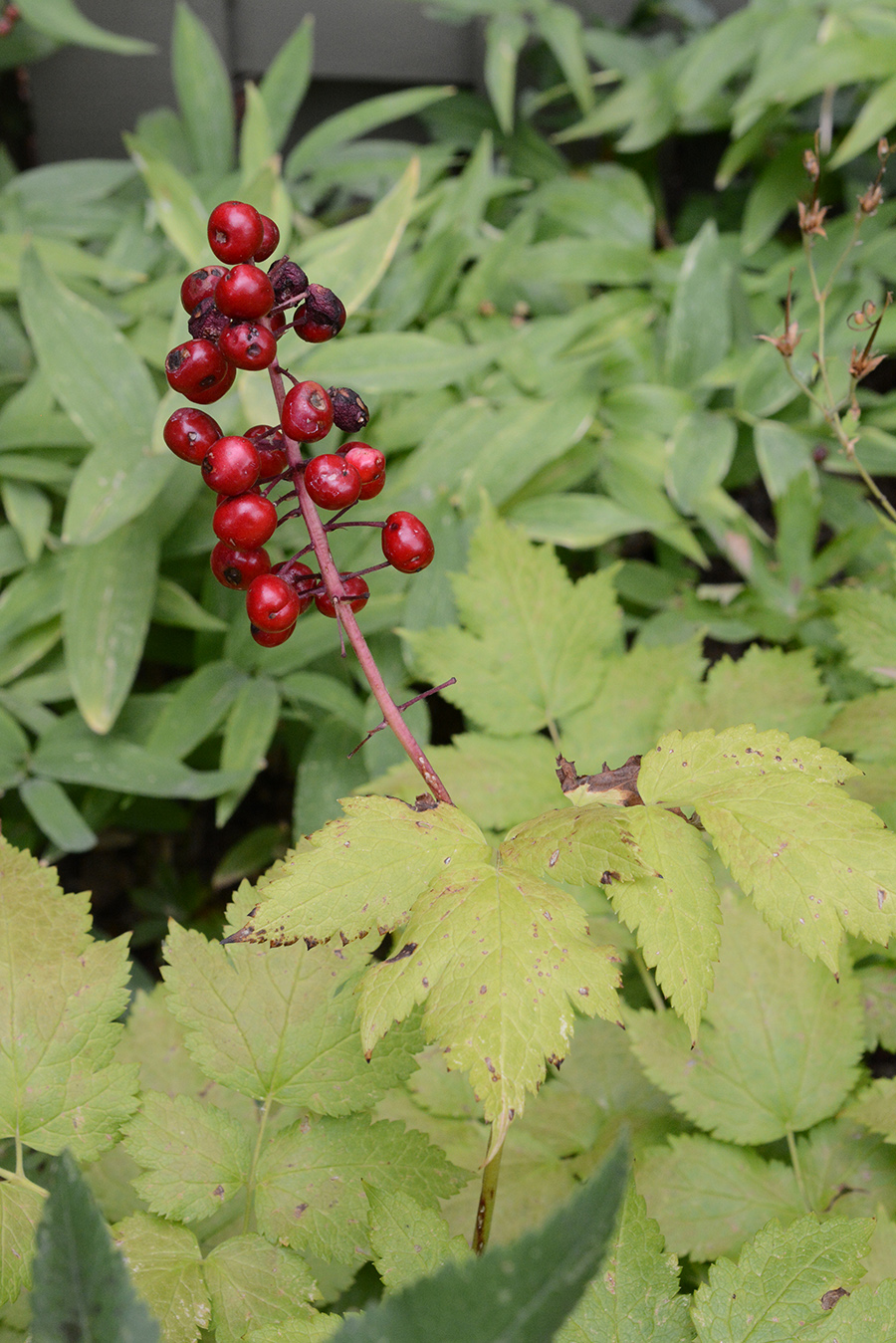
Red BaneberriesActea rubra var. rubra – literally stand out above a 2-3’ cluster of compound, toothed leaves. There is also a variety – var. neglecta – with white berries.

Do not eat! “Bane” means watch out/poison, which they are. The berries also taste terrible to us but not to the birds that eat them. They gobble up the fruits, fly off, and poop out the seeds. This plant is in the highly variable, mostly poisonous Buttercup Family – Ranunculaceae. 

Twisted stalkStreptopus amplexifolius – grows 3-5’ tall most often along streams.  Look under the arching stems

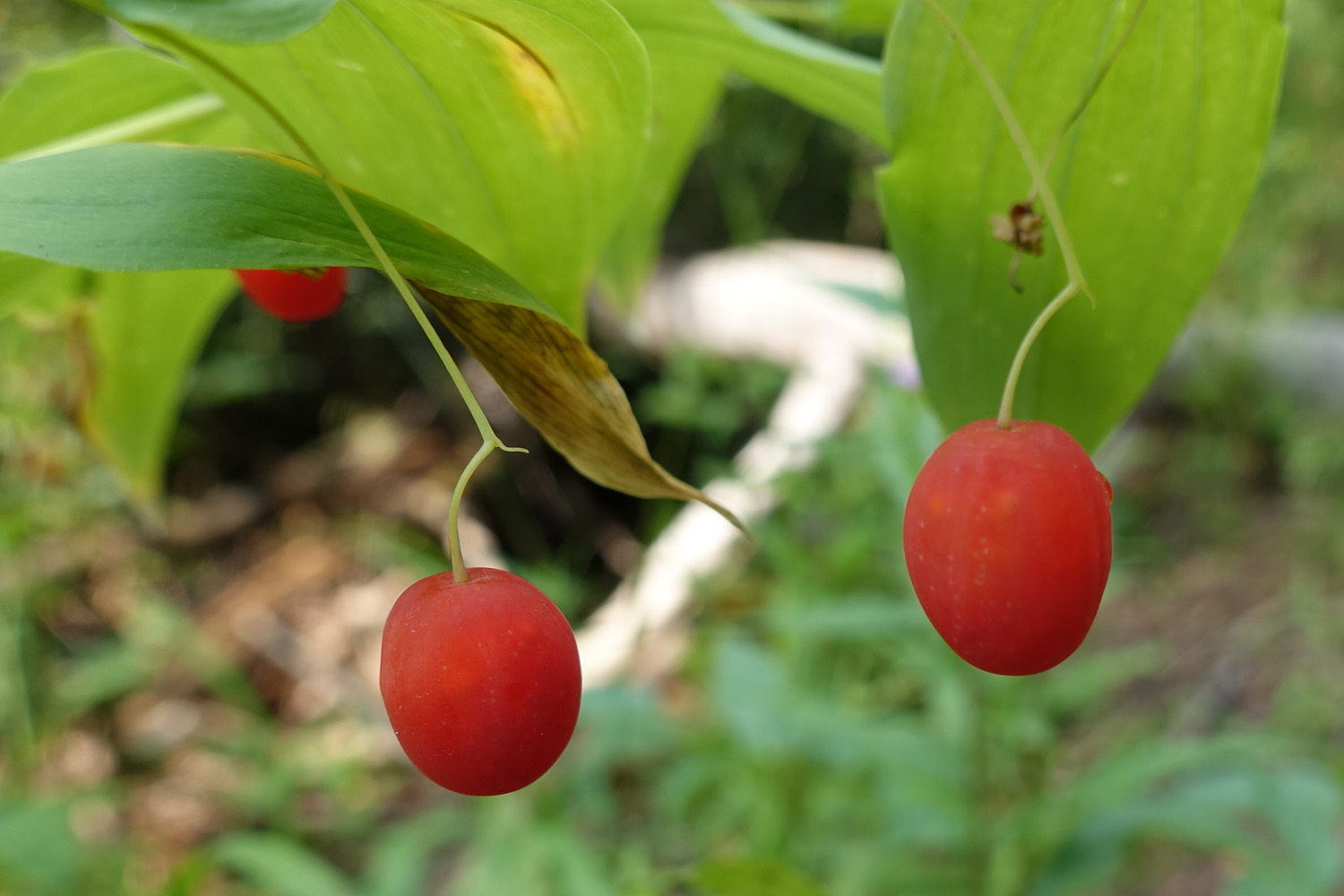
for red ovoid fruits dangling from kinked stalks.

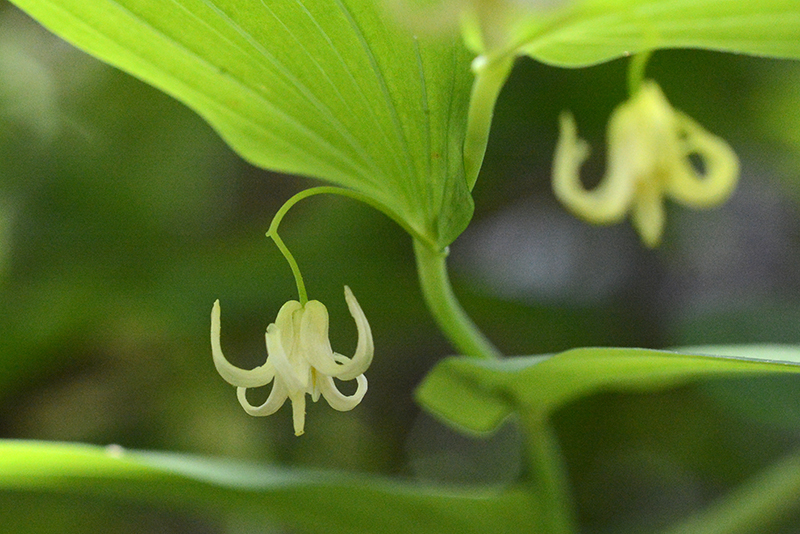
The fruits come after the delicate yellow flowers with 6 curled back tepals have been polllintated.

FairybellsProsartes trachycarpa – has lumpy, thumbnail-size fruits with an orange-then-red, velvet-like covering. These fruits are usually held in pairs on the tip the 2-3’ stalks.

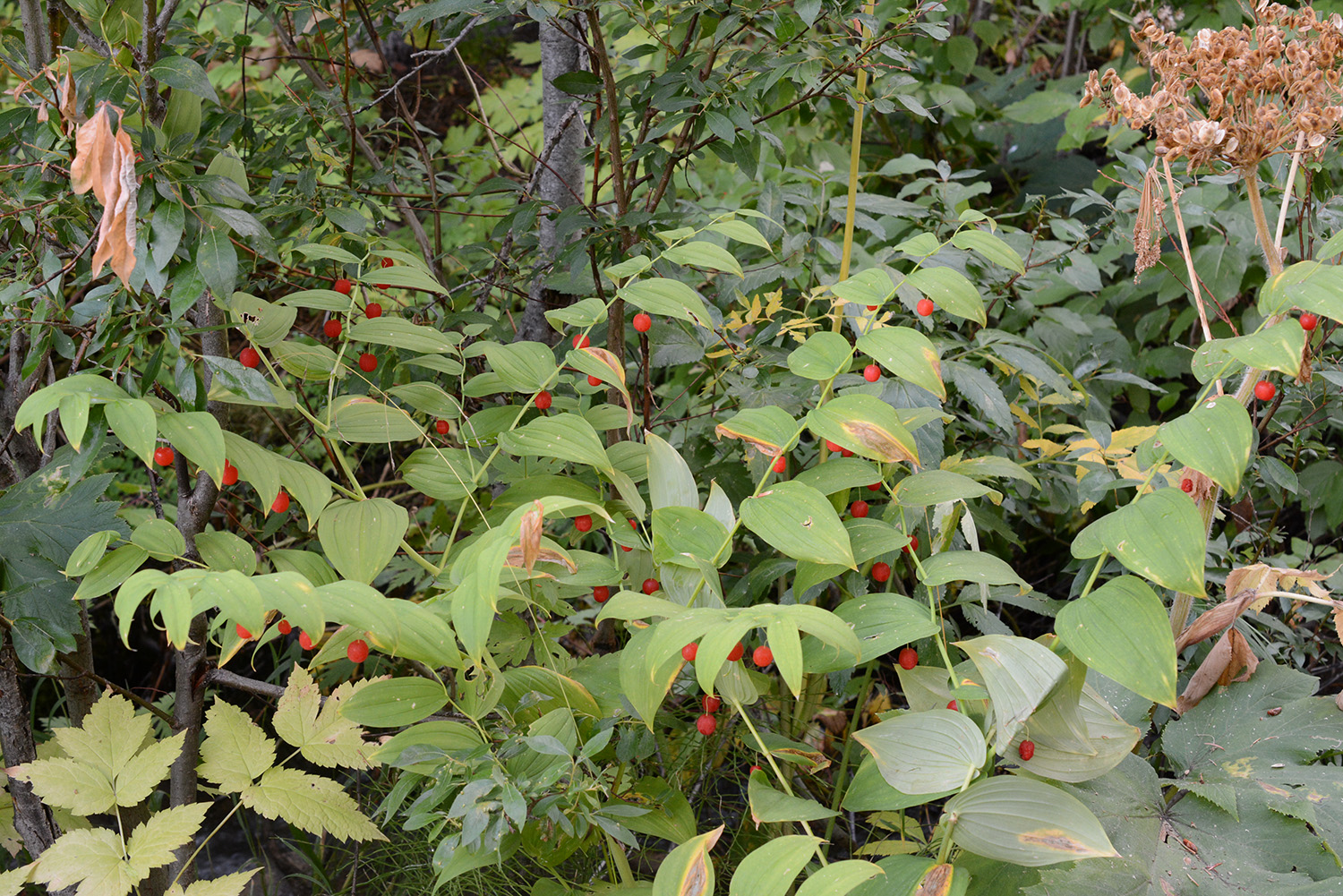
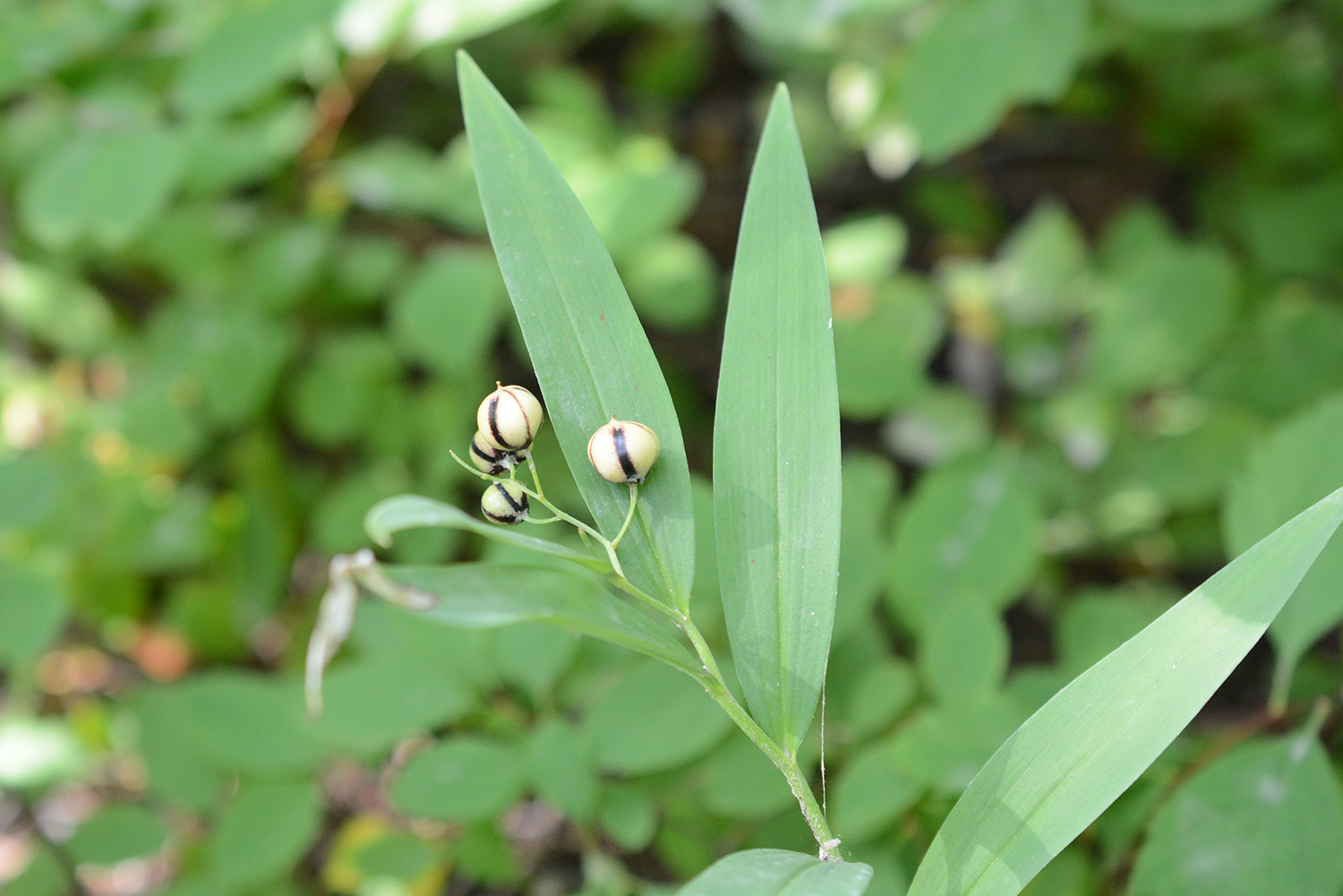
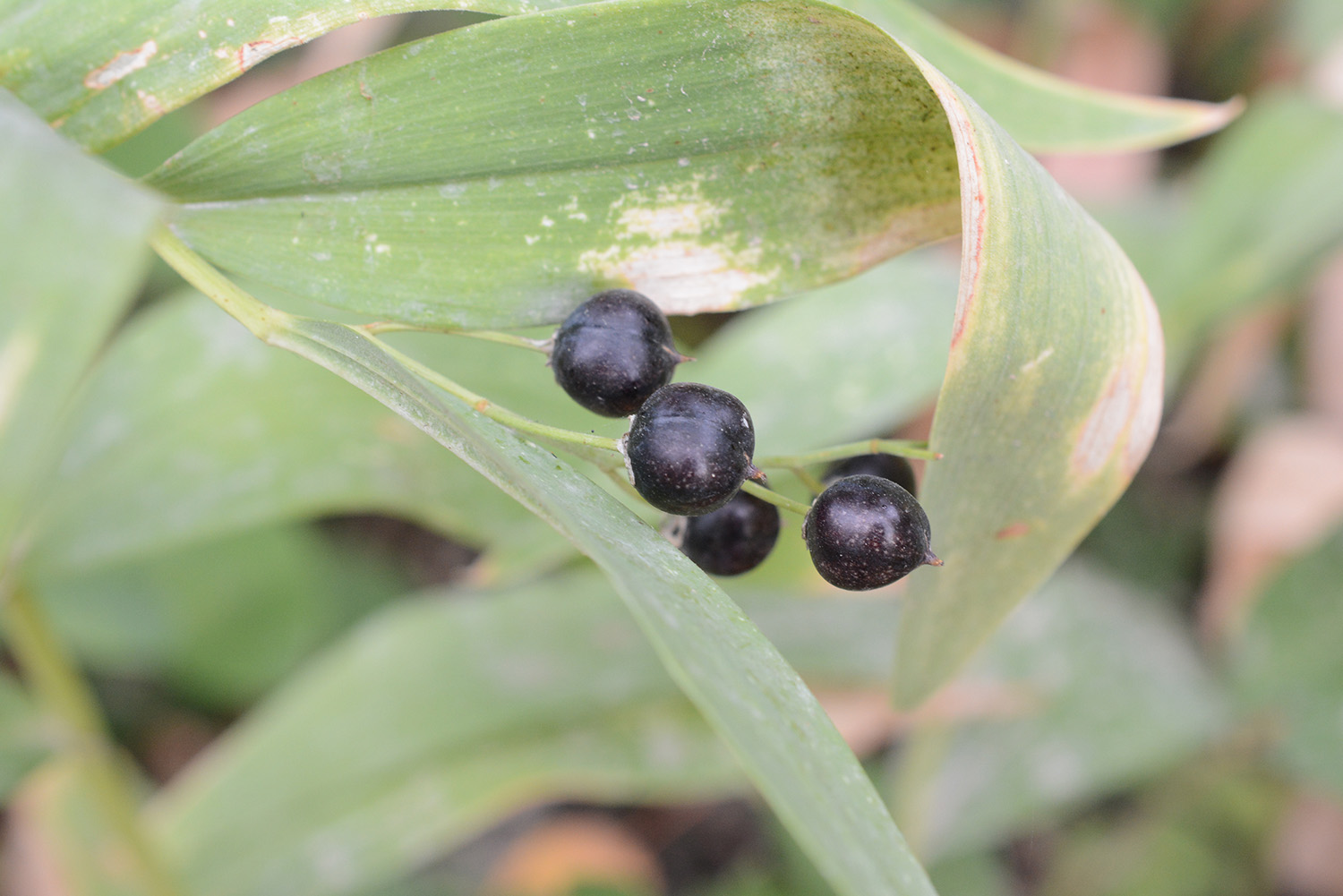
False Solomon’s SealsMaianthemum spp. – have fruits borne at the ends of arching stems with alternating leaves and parallel veins. Starry False Solomon’s SealM. stellatum – tends to be a smaller, more upright plant and fruits ripen sooner than it’s larger relative. It is interesting to watch the progression of fruit color: berries start off with a distinct stripe,

which slowly expands with a reddish wash,

and then the fruits become black.

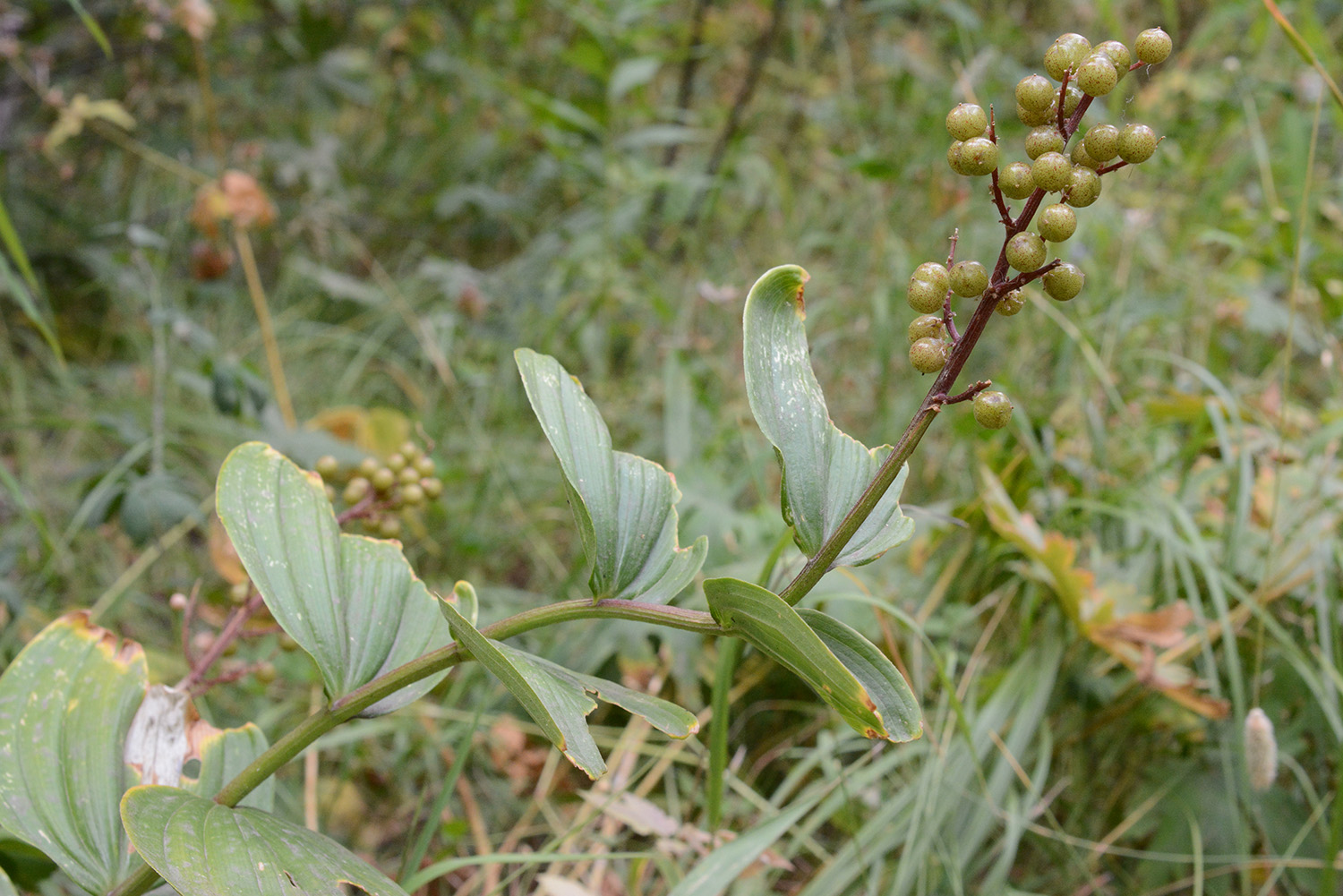
False Solomon’s SealM. racemosum – is a larger, 1-2′ arching plant with a more branched inflorescence.

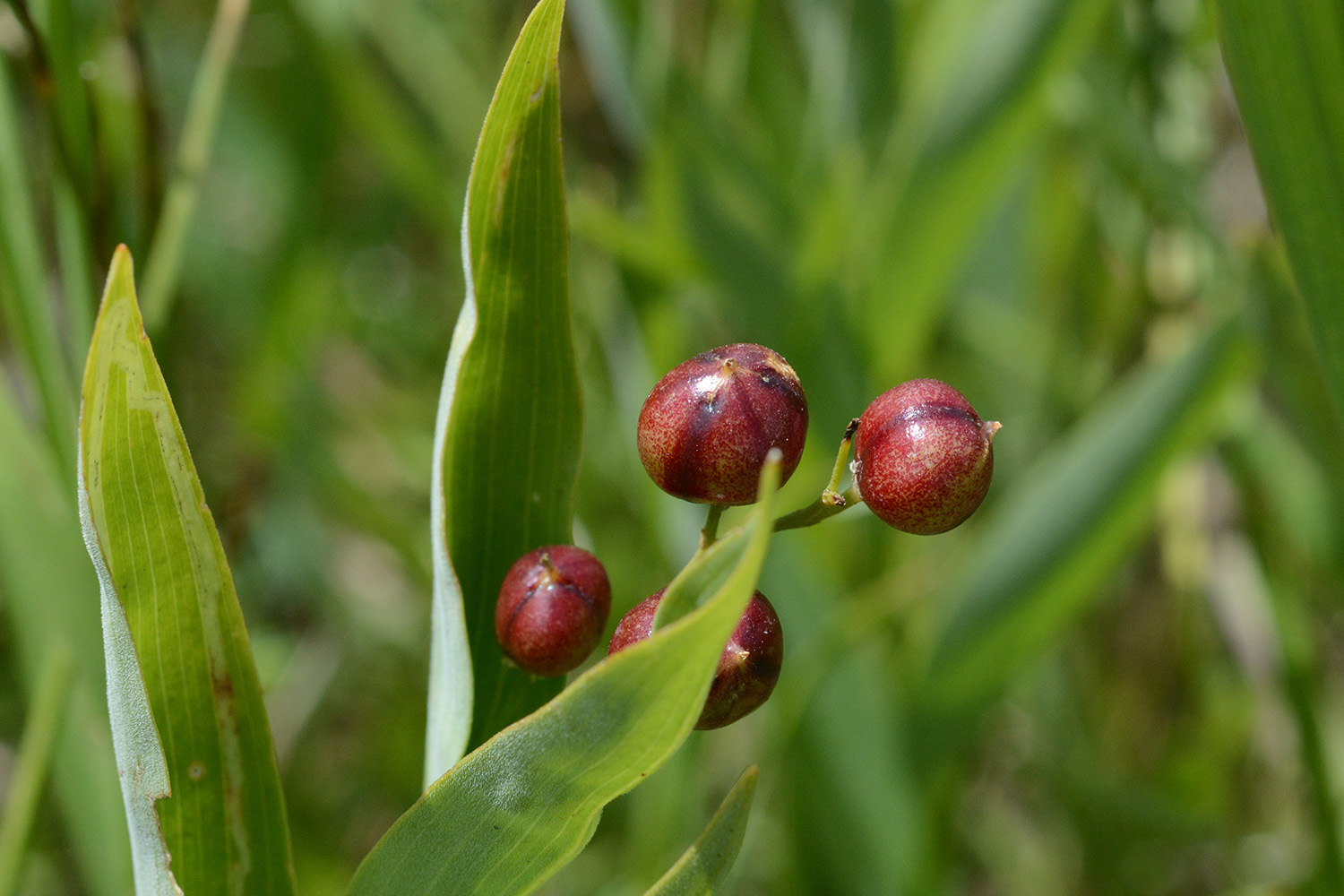
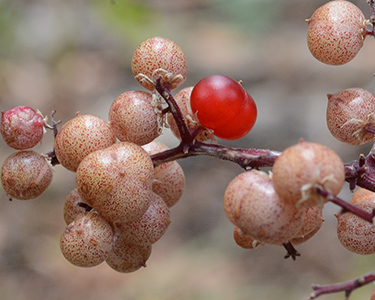
The spotted fruits eventually turn red:

Both these species have rhizomes that can be divided for home gardens.

Look for these and other fleshy fruits on your hikes. Make it a treasure hunt and enjoy the differences in color, consistency, seeds, and even in taste–a tongue tip (but not baneberry!).

And look for what may be consuming them

There are many other fruits out there…see What’s in Fruit? – Part II: Dried Fruits in the next posting.

Frances Clark, September 1, 2025

As always, your comments and corrections are most welcome! Send to our email – tetonplants@gmail.com — we will respond when we aren’t out botanizing.