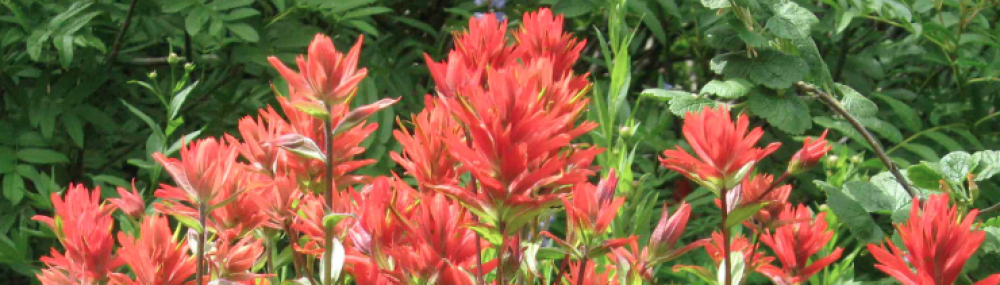
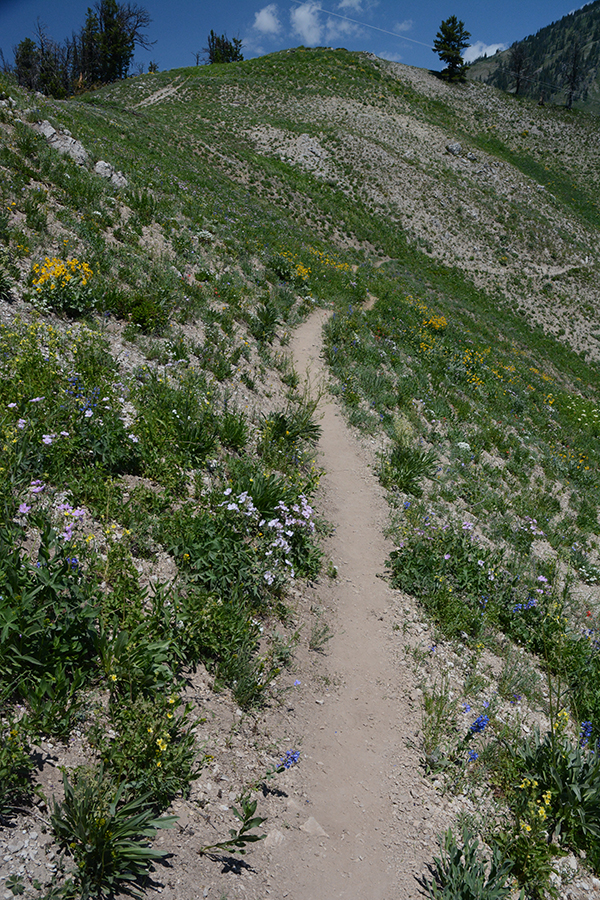
On Thursday, August 22, a friend and I took the JH Mountain Resort tram up to 10,400’ elevation for a hike down through Cody Bowl along the Rock Springs Loop trail*.
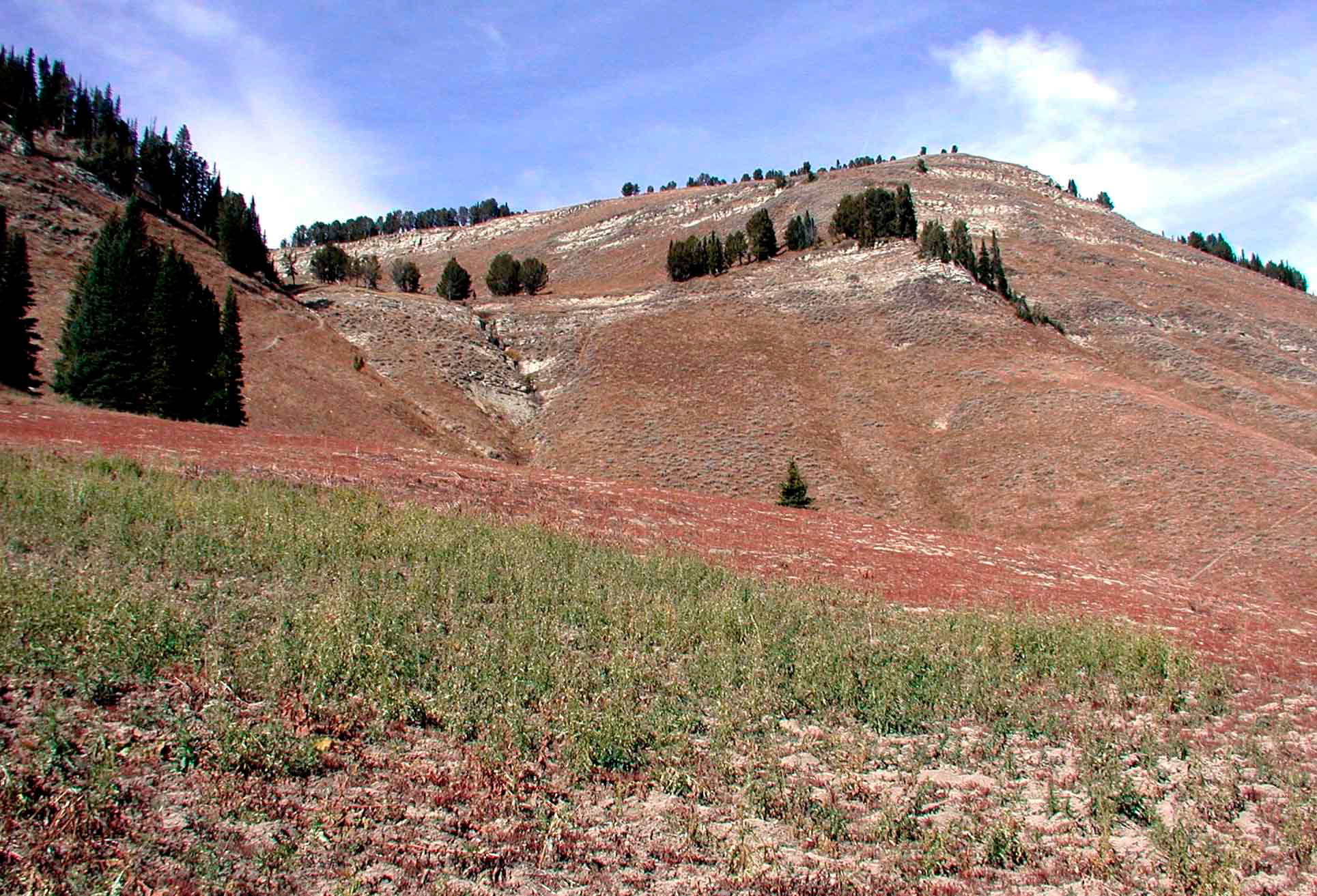
While at first glance the slopes appear barren,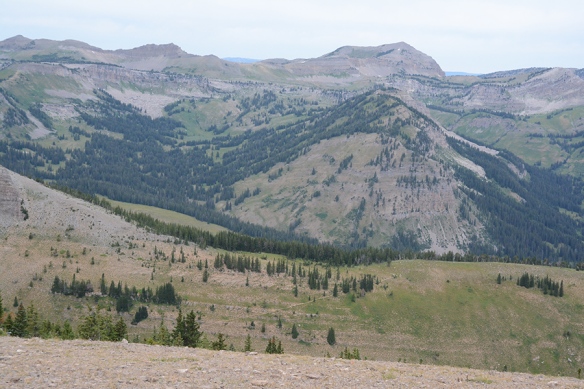
we were delighted to find so many wildflowers – from early summer favorites to late season popups – blooming together.
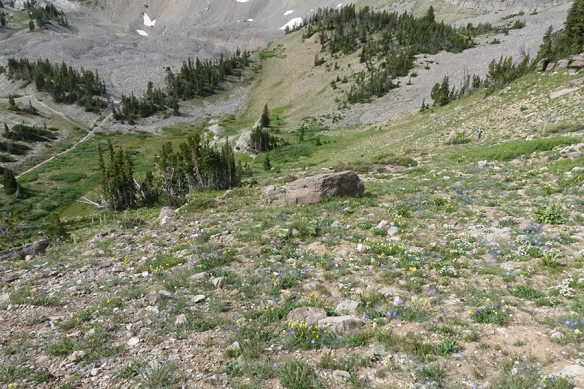
This spring snows were deep and melted late on slopes and basins in the irregular and spectacular topography of the mountains. Consequently, there was an unexpected crescendo of bloom at the end of a summer-long symphony of flowers.
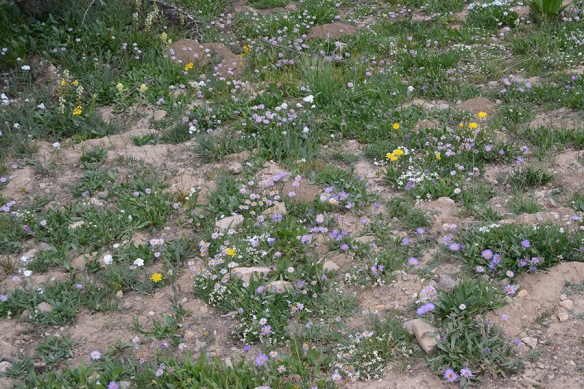
While we took the tram up and hiked only a few miles, others of you may be able to hike farther and higher to find additional locations still colorful with wildflowers.
Below is a showcase of flowers on Rendezvous Mountain with habitat and ID tidbits. Avid or novice wildflower watcher, please enjoy!
The very top of the ridge in loose rocks and drying winds
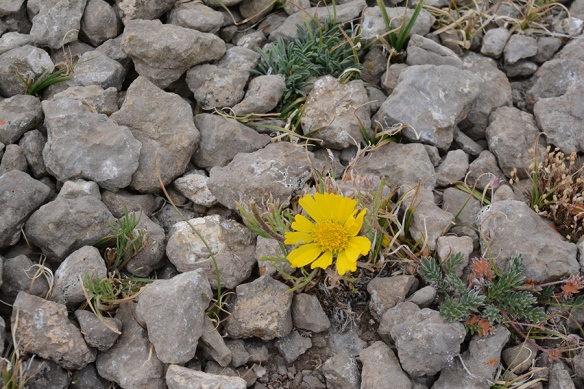
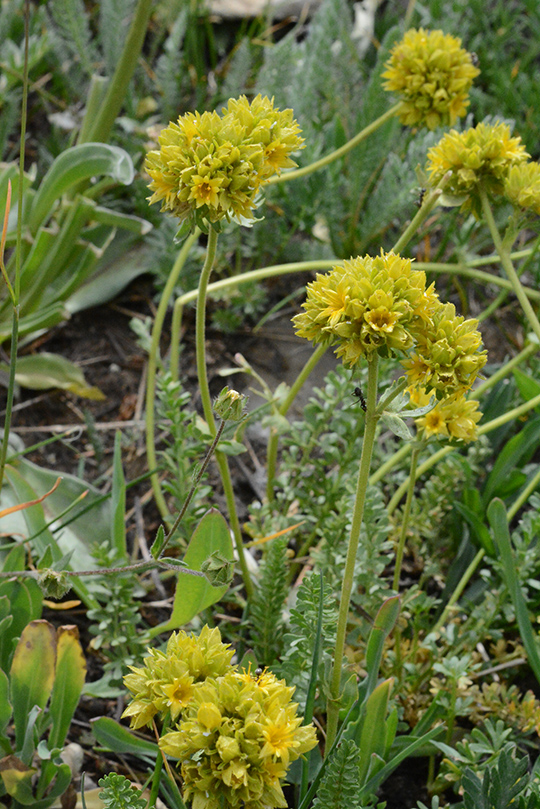
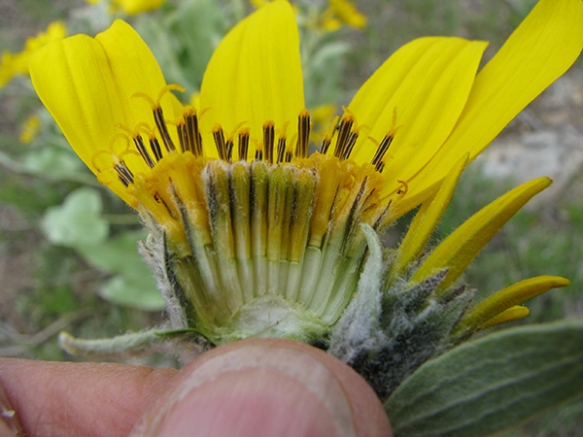
A few Old-Man-of-the-Mountain – Hymenoxys grandiflora – still bloom among the gravelly soils. They indeed look like wizened sages of the alpine.
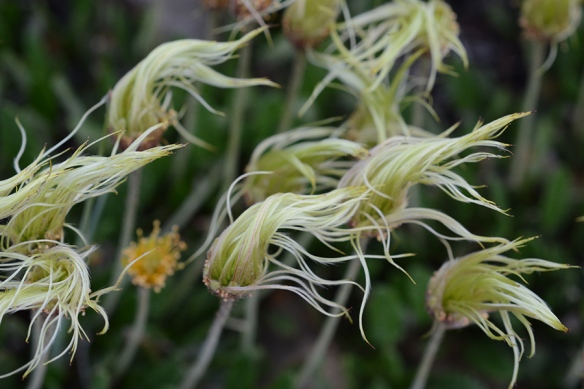
Mountain Dryad – Dryas octopetala – a member of the Rose Family which can fix its own nitrogen, inhabits these lean, exposed soils, growing in very low mats. After its saucer-like yellow flowers are pollinated, they produce twisted clusters of fruits
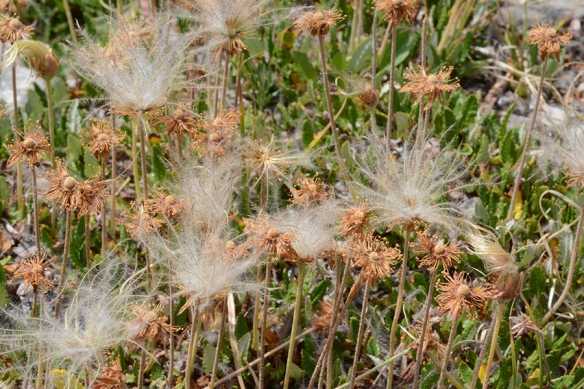
which will fly off individually to find a place to germinate in time.
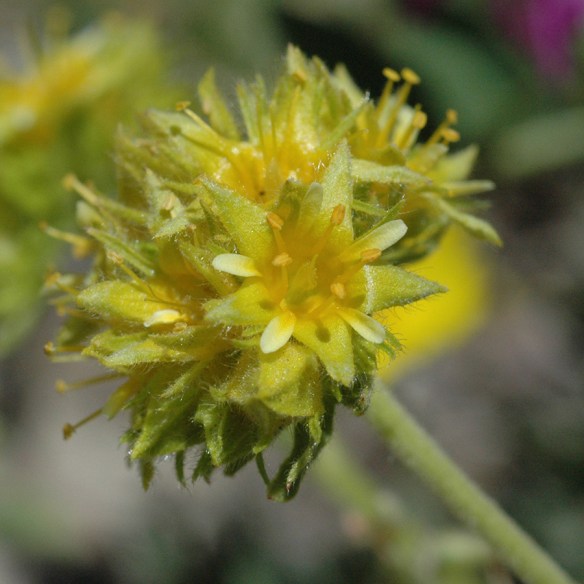
Gordon Ivesia – Ivesia gordonii – has tight heads of several yellow flowers that are beginning to fade. The “pinnately-divided” leaves are at the base: the tiny, hairy leaflets branch off from the center of the leaf. This is also in the rose family.
D—! Yellow Composites:
Two spreading yellow composites can form large patches of yellow:
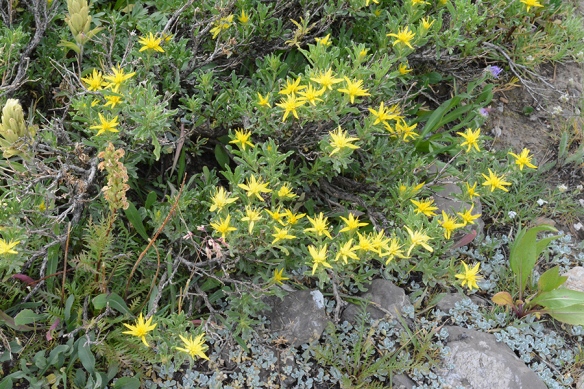
Shrubby Goldenweed – Haplopappus suffructicosus – is finishing bloom along the mountain shoulder. The whole plant is glandular and fragrant. Wide-spreading flowers are at the tips of 1-2’ woody stems. The oblong 1-2” leaves alternate up the stem.
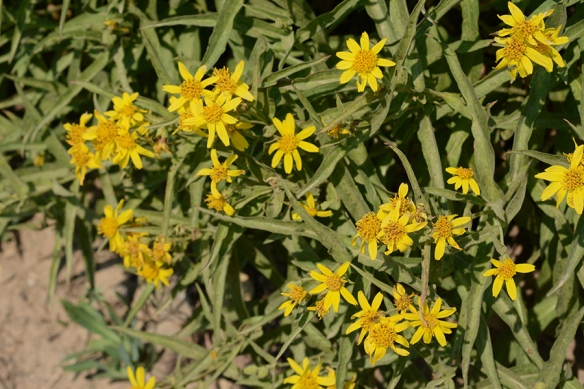
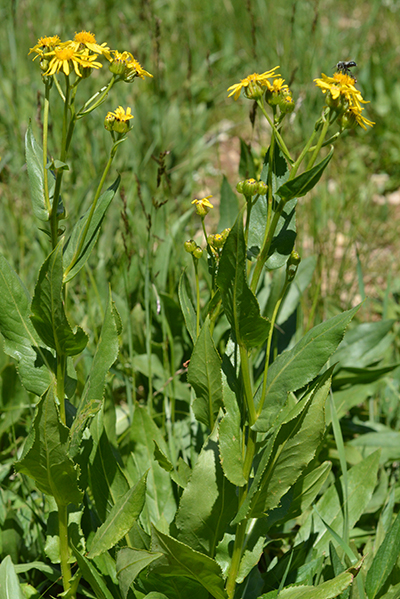
Longleaf Arnica – Arnica longifolia – is just beginning to flower near the summit. The largest of of our arnicas, these 2-2.5’ tall stems have 5-10 pairs of long opposite leaves, and several relatively small yellow flower heads at the top.
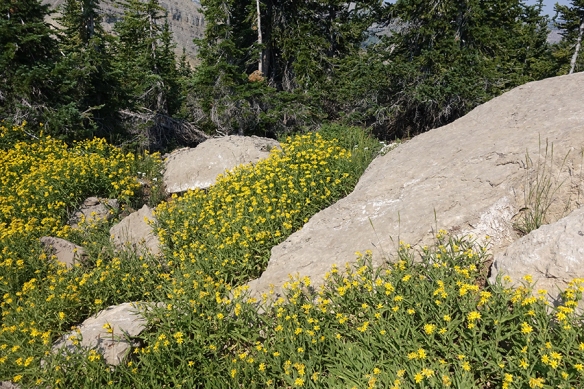
Largeleaf Arnicas form extensive colonies in rocky seeps and wet talus visible from the tram.
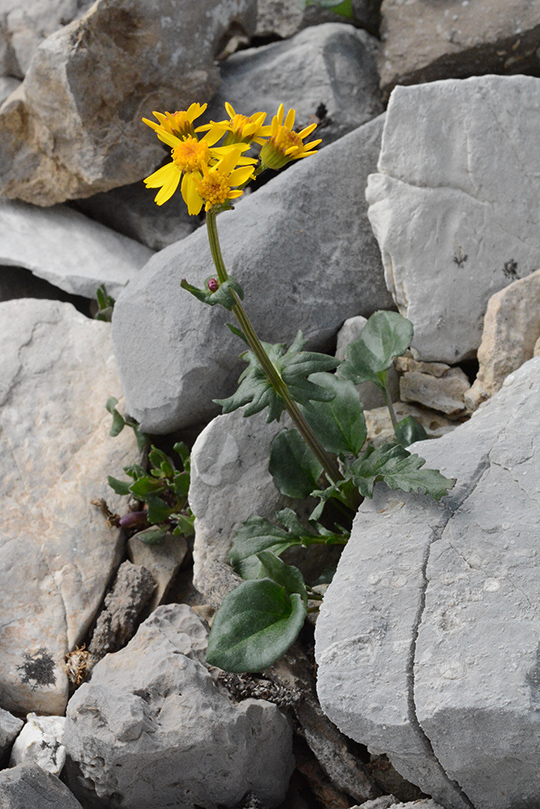
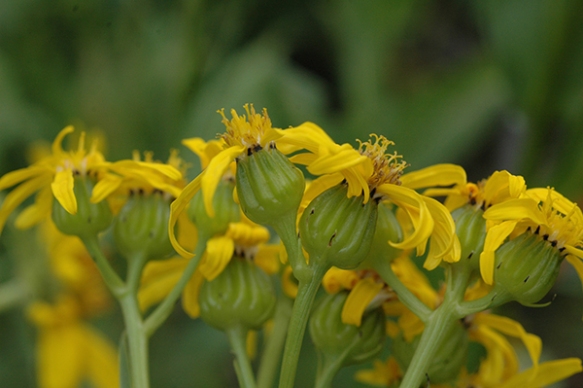
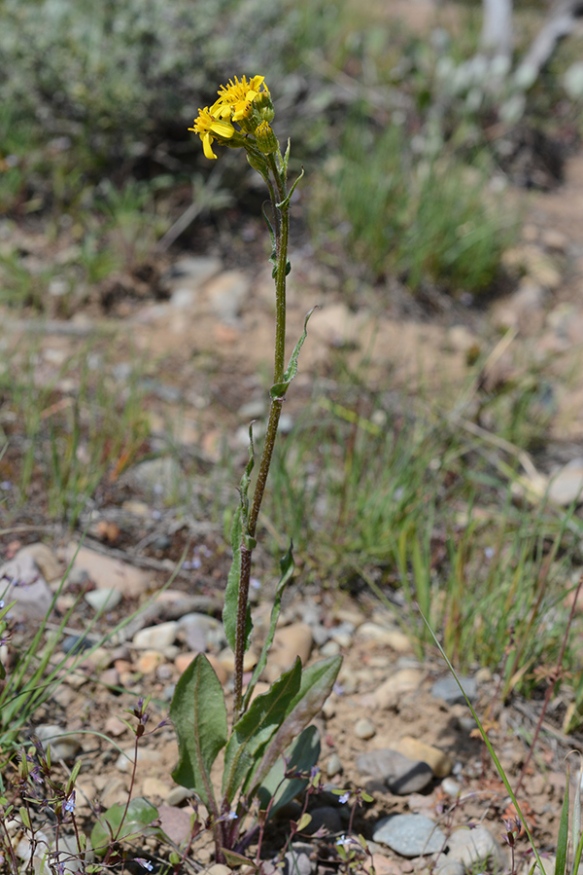
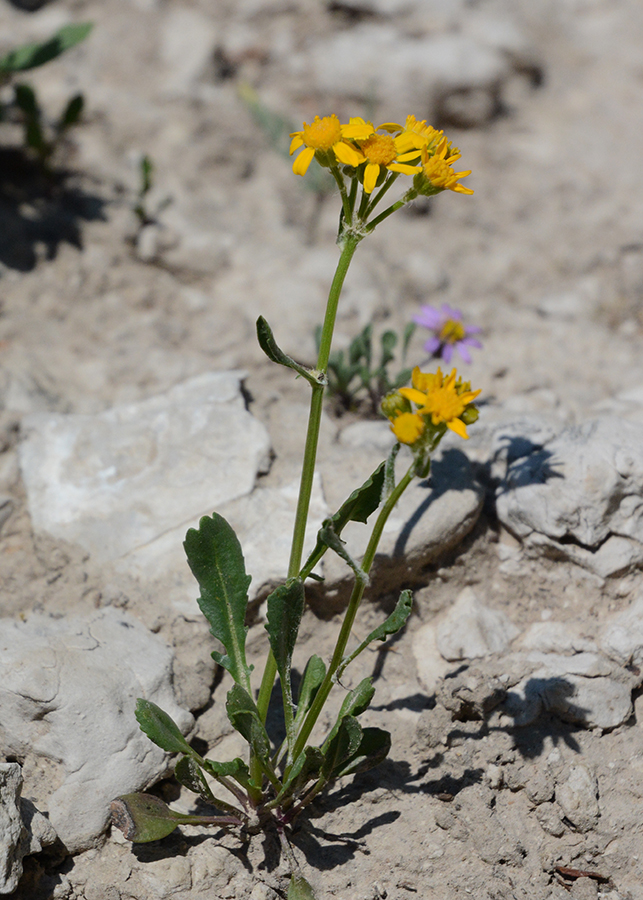
Two-leaf Groundsel – Packera/Senecio dimorphophylla – is a high-elevation species with succulent leaves, including at least one relatively large, slightly lobed leaf clasping the stem. The “two-leaf” of the name indicates the great variety in leaf shapes that adds to ID woes.
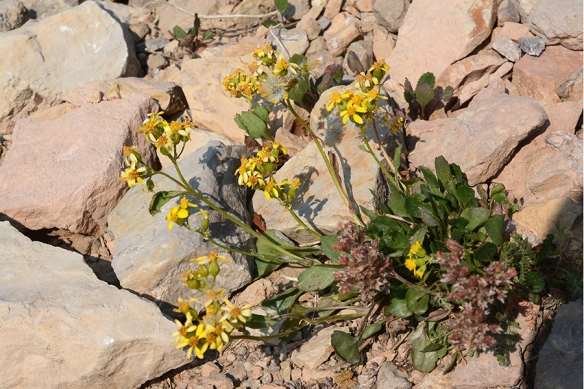
It can be mistaken for another mostly lower-elevation Twisted-leaf groundsel – Packera/Senecio streptanthifolia. It has thinner leaves, longer stems to the flowers, and is generally less compact. But they are confusing!
Several species familiar from lower elevations:
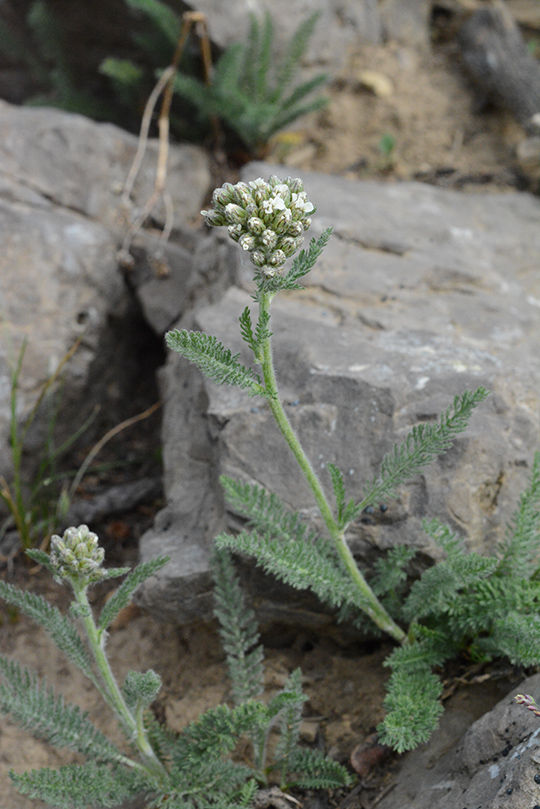
Common Yarrow – Achilea millefolium – is one of the most adaptable and widespread species growing not only within a full range of elevations, but also it spreads around the Northern Hemisphere.
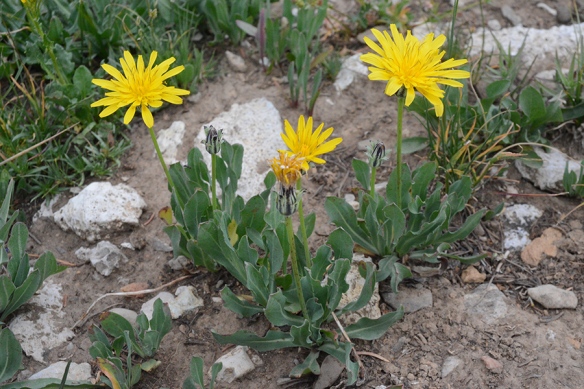
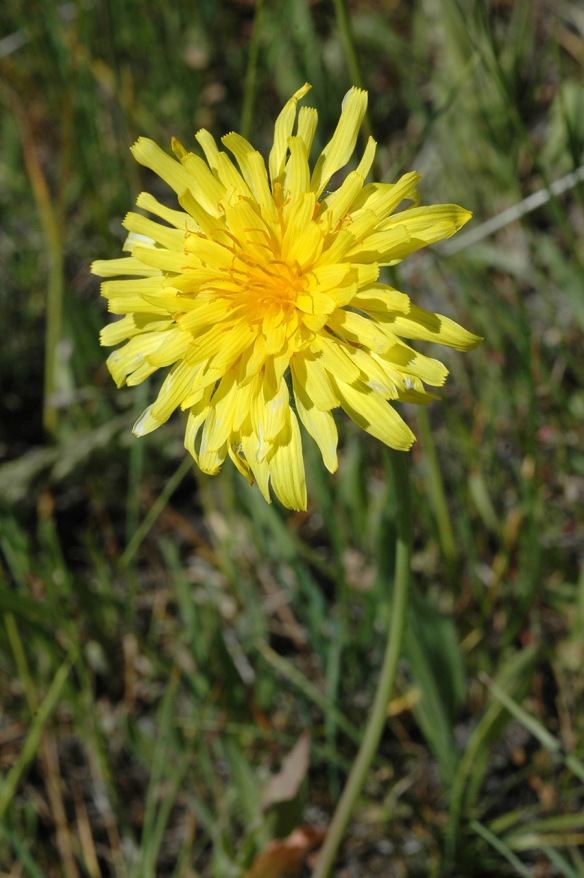
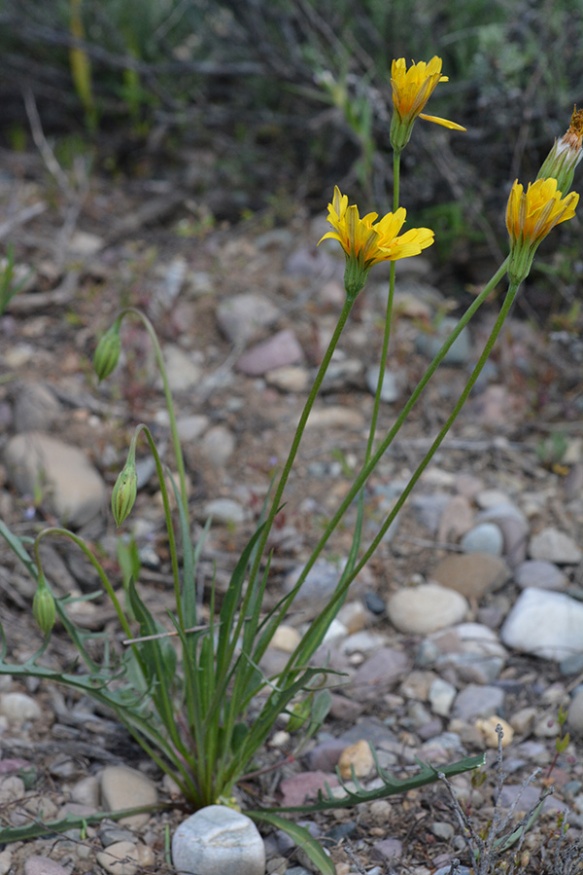
False or Mountain Dandelion – Agoseris glauca var. dasyphyllum – grows to about 6-8” with large heads of ray flowers. This native is commonly seen in the sageflats in May.
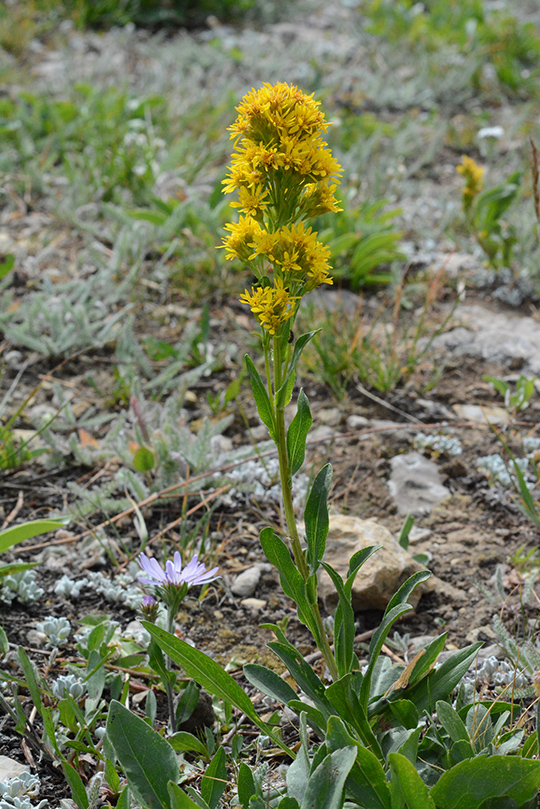
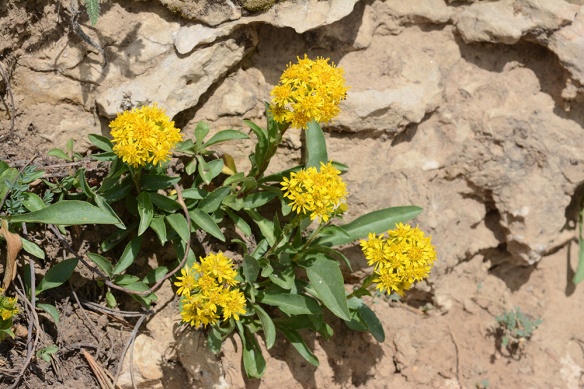
Rocky Mountain Goldenrod – Solidago multiflora – grows from 4” to 18” high depending on elevation and associated conditions. The tiny flowerheads have about 10-20 ray flowers and the lower leaves have “ciliate” hairs on the petioles.
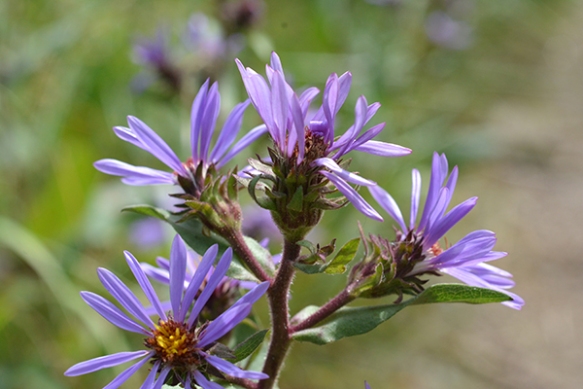
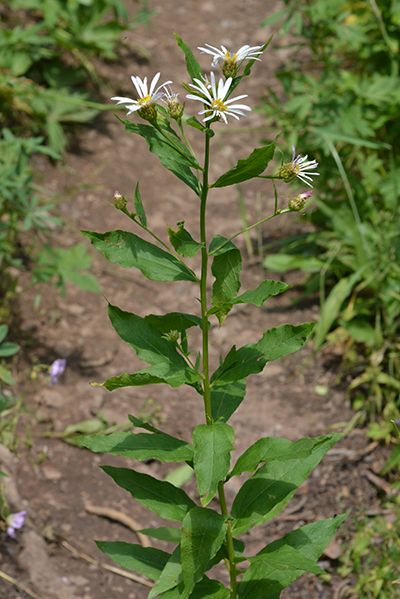
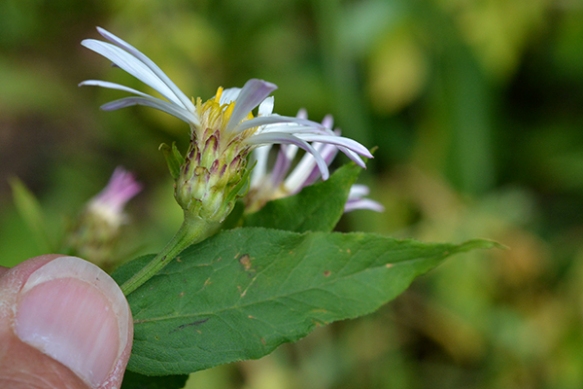
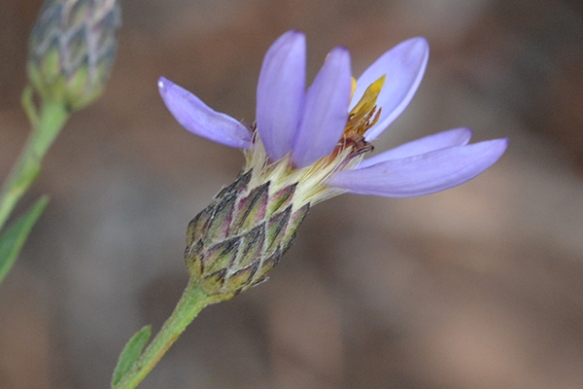
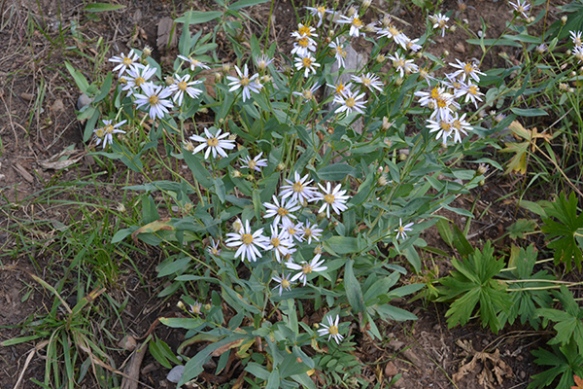
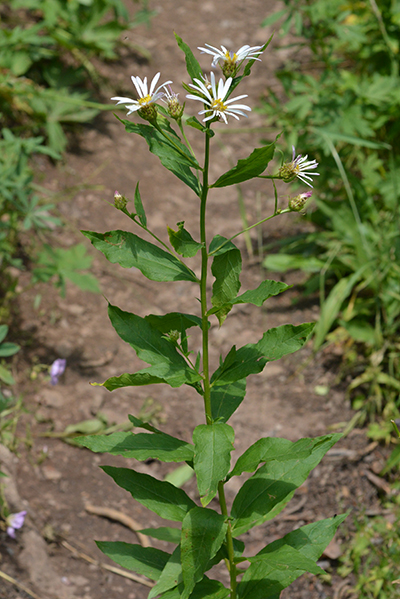
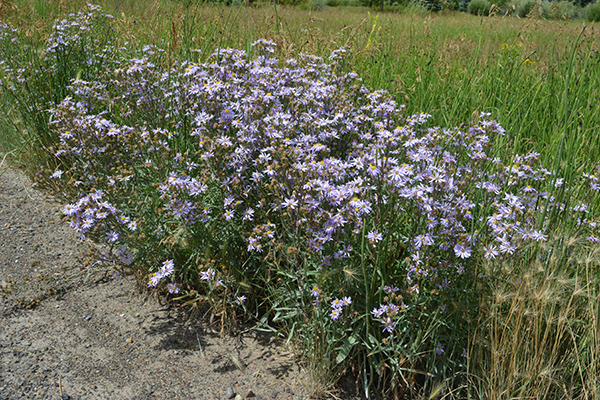
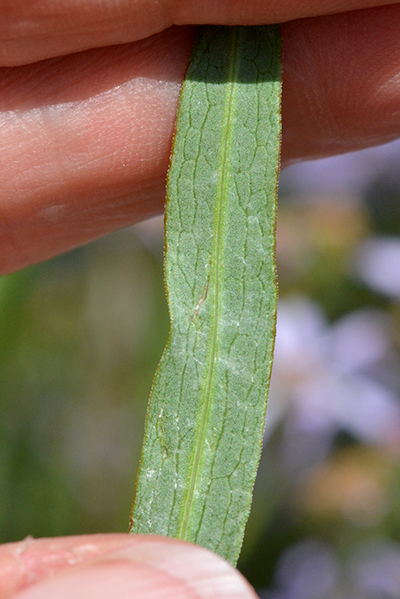
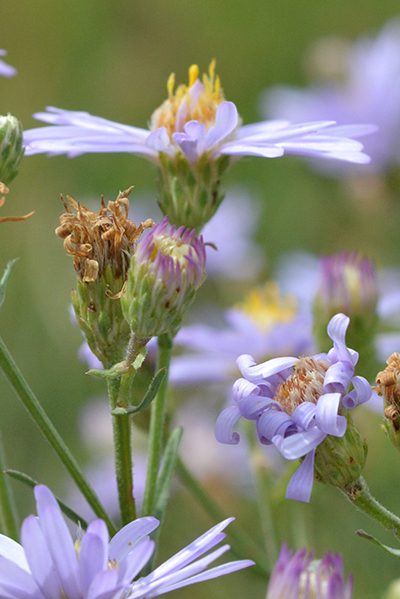
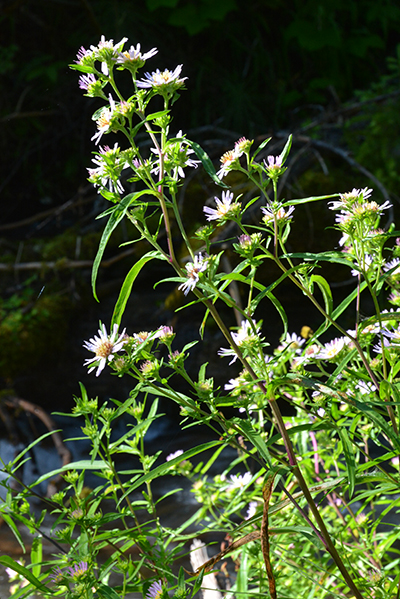
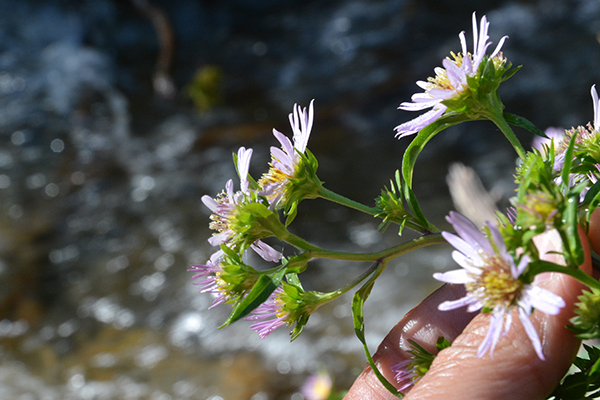
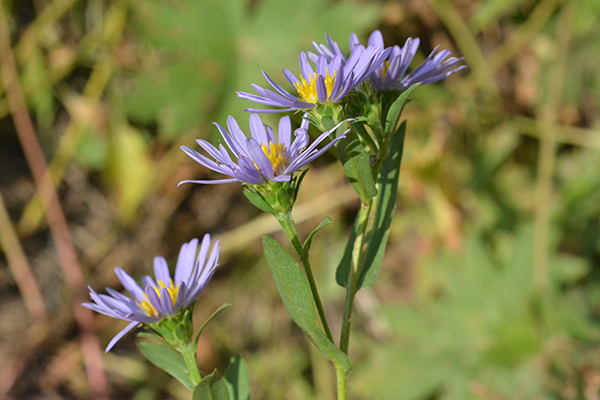
Three Fleabane Daisies and Asters look very similar. They tend to grow 1-2.5’ high with many oval leaves alternating the stem. They have blue flowers. Turn over the flower-heads and look at the “bracts” that form the green protective structure around the base. They are different!
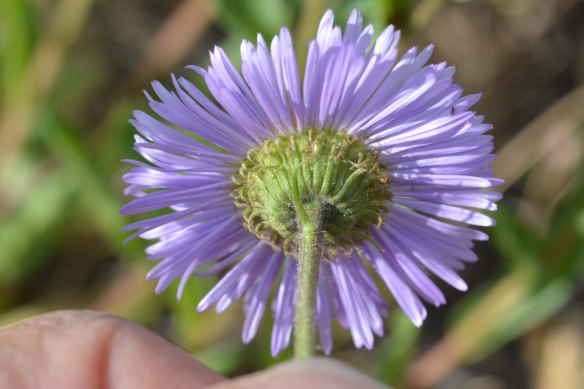
Fleabane Daisies – Erigeron sp. – have narrow, equal-length bracts.
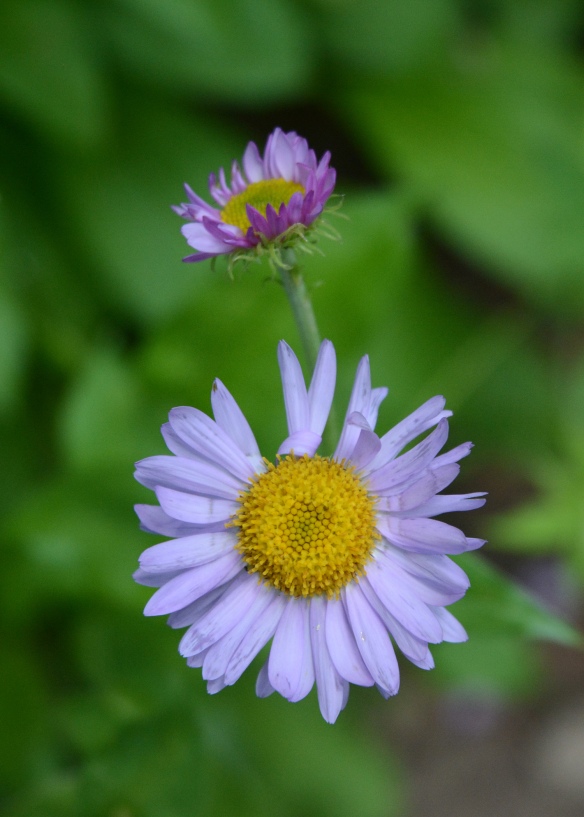
Peregrine Daisy – E. peregrinus has wider ray flowers (they look like petals)
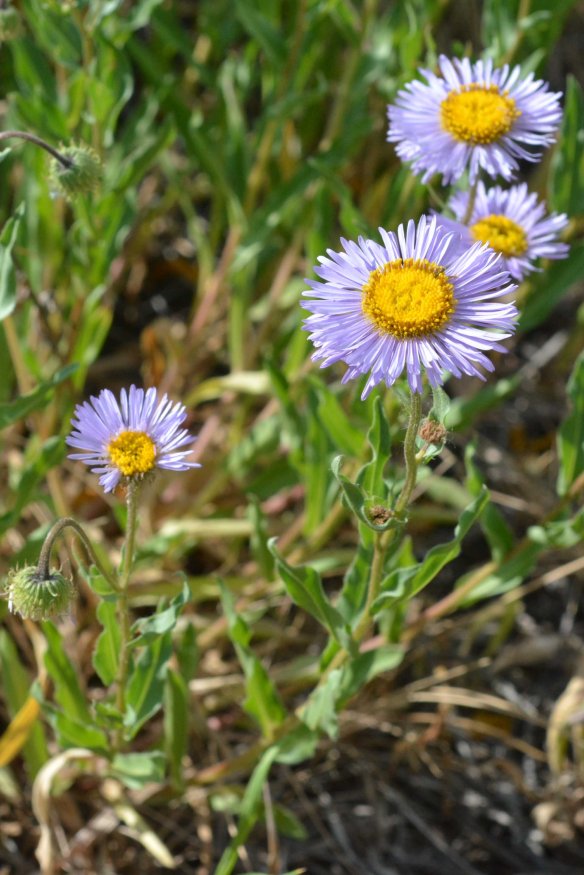
than Oregon Daisy – Erigeron speciosus (above).
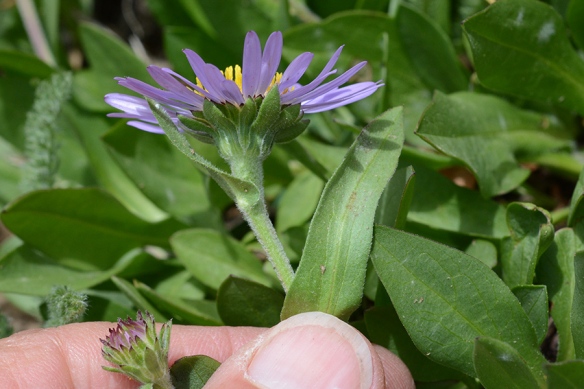
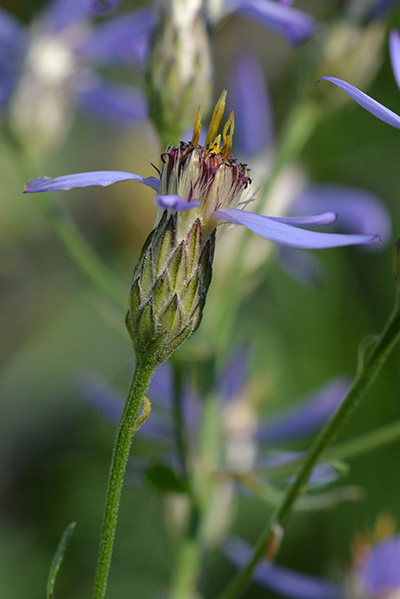
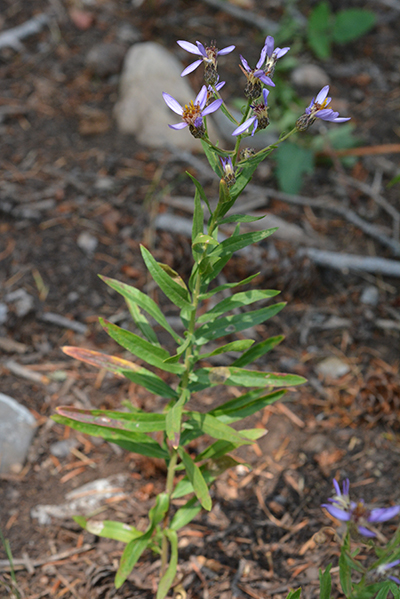
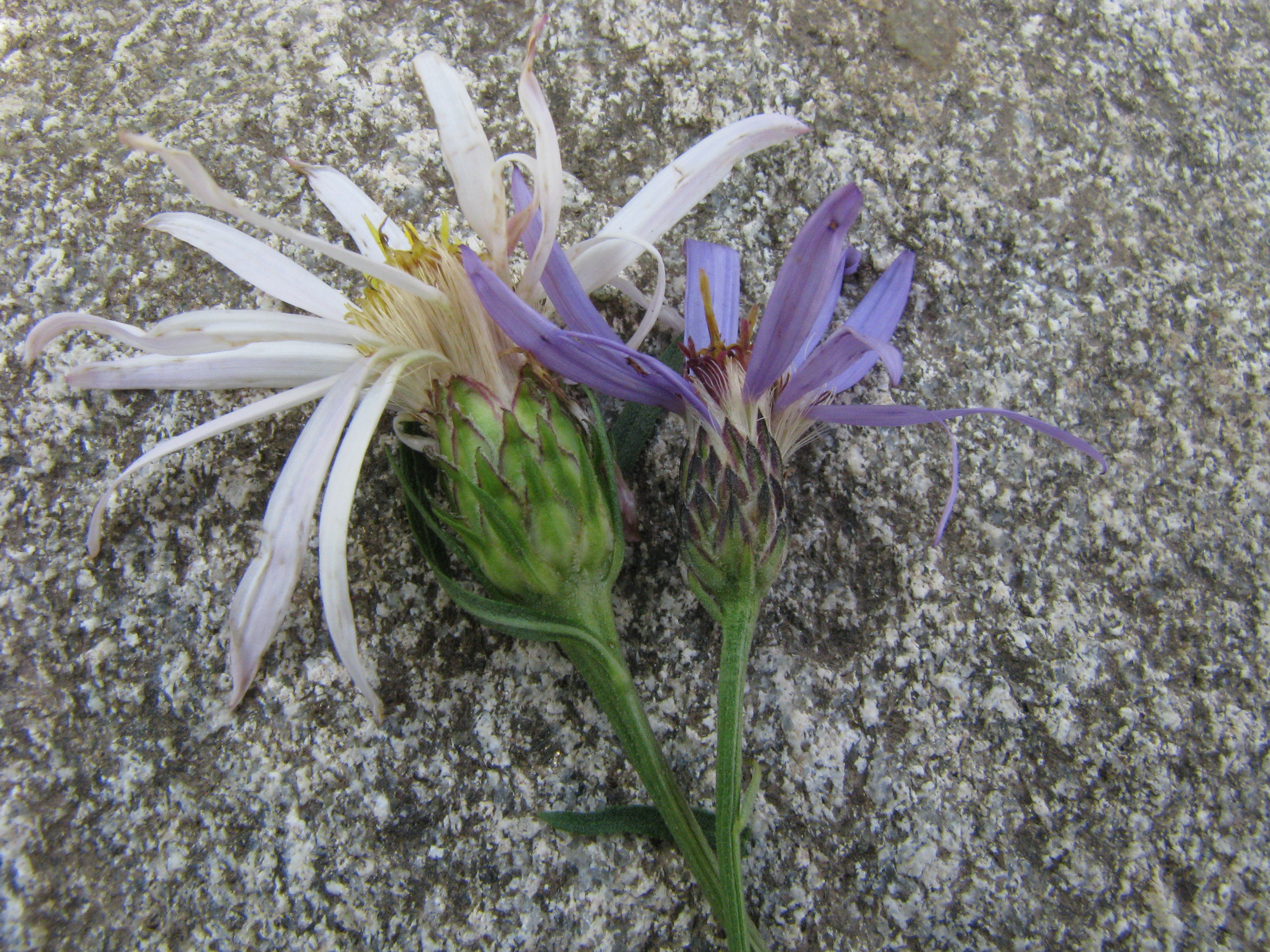
Leafybracted Aster – Symphiotrichum foliaceum – has wide ray flowers (like Peregrine Daisy) but has broad leaf-like bracts. The low growing alpine variety is “apricus” if you are into the details.
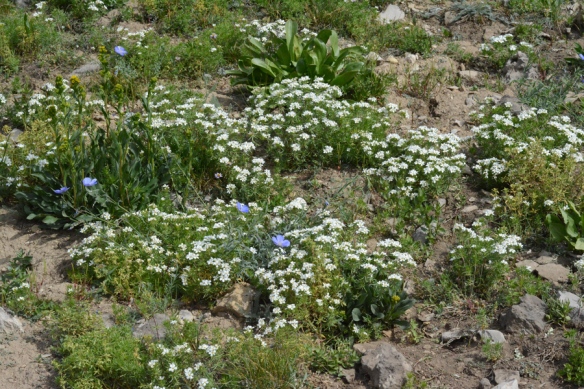
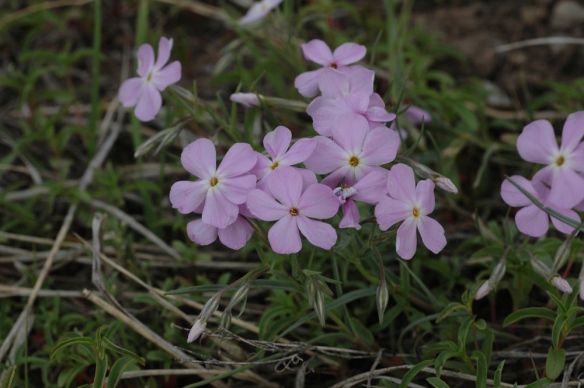
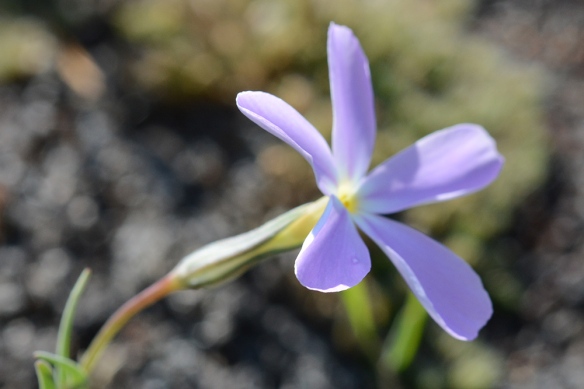
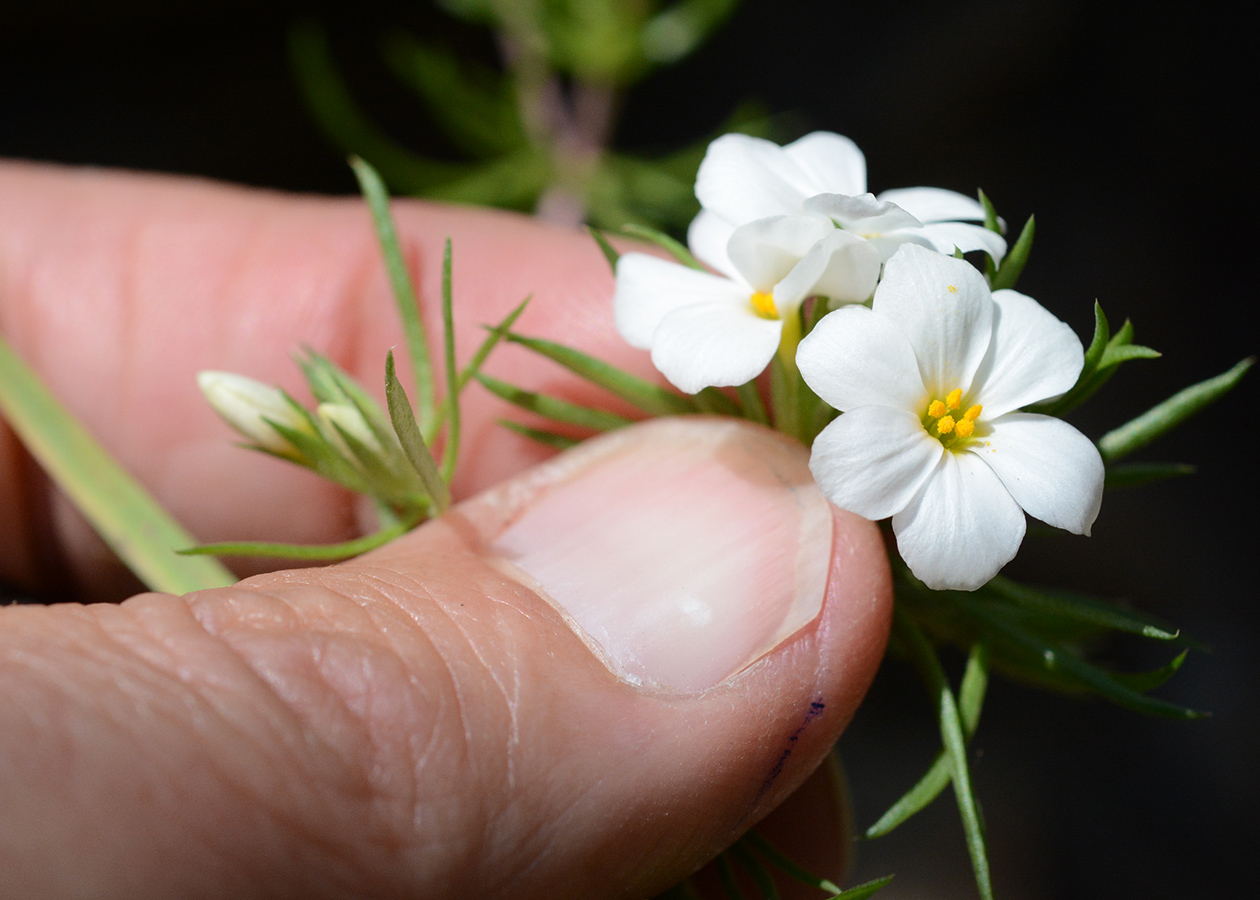
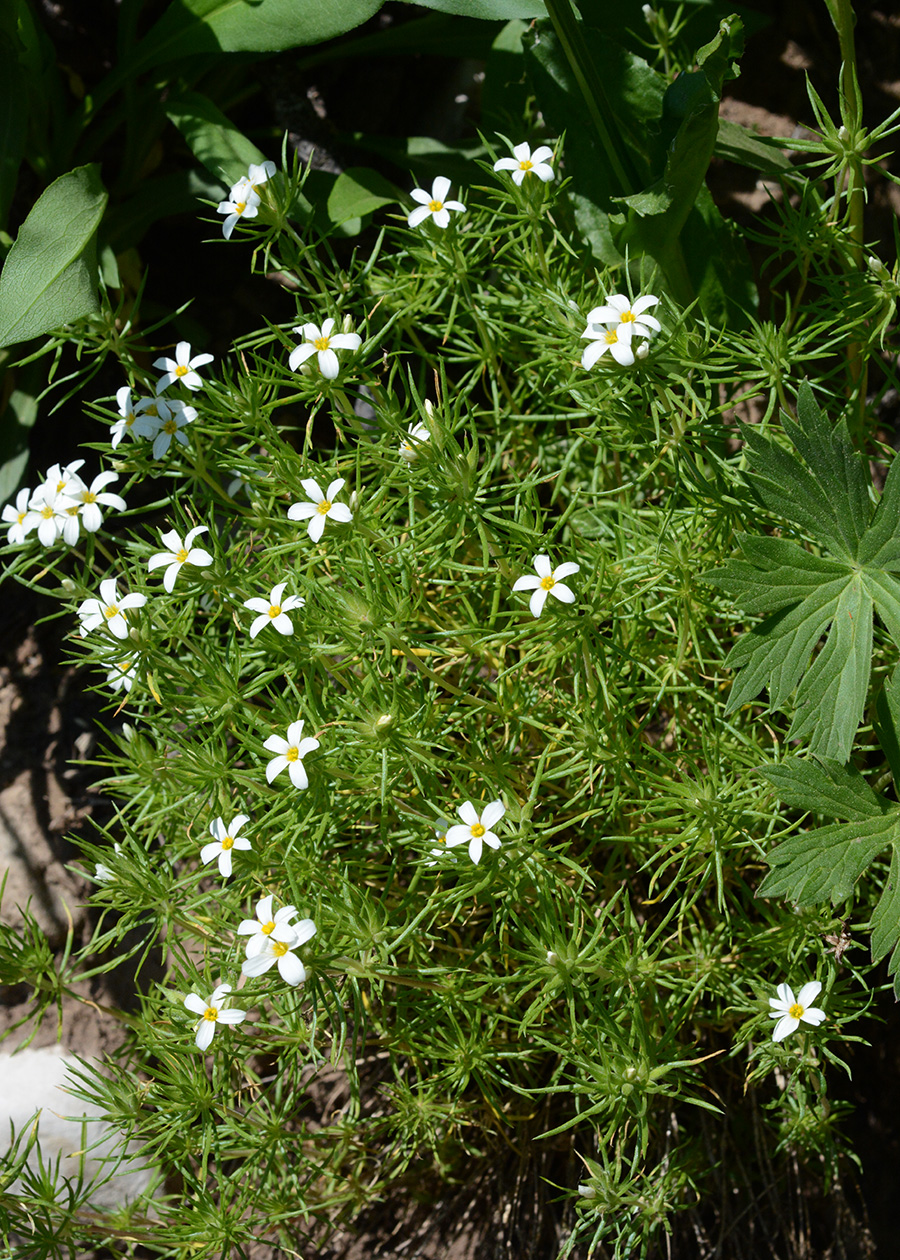
This slope is covered with phlox-like Nuttall’s Leptosiphon – Leptosiphon/Linanthus nuttalii – with dashes of common Lewis’ Flax – Linum lewisii – which are also found at lower elevations.
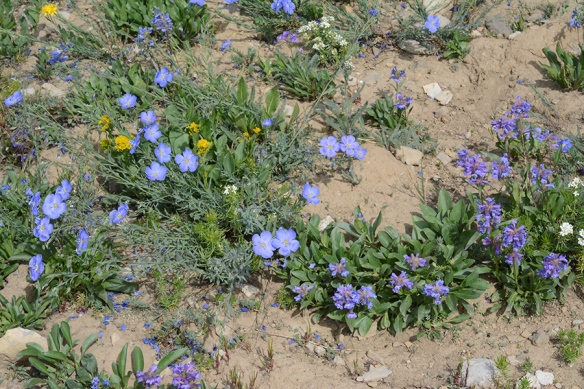
On the same slope is a mix of blue flowers: flax and penstemon.
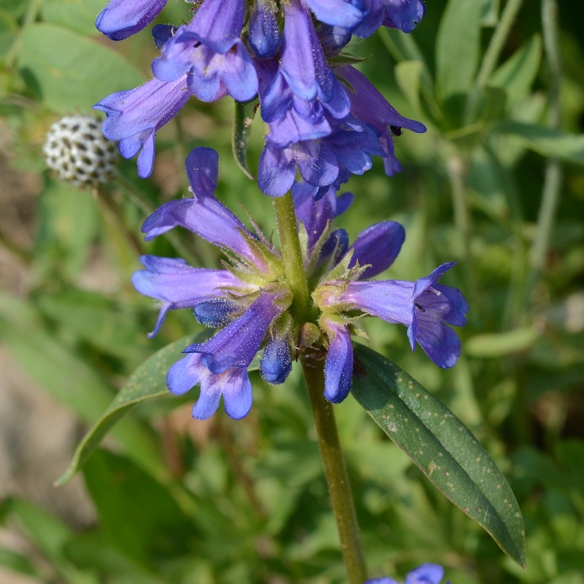
Thin-stem Penstemon – Penstemon attenuatus – seems to be one of the most common of the confusing beard-tongues. I look for the glandular hairs on the flowers, acute sepals, and inside the smooth anthers spreading at 180 degree angle to help with ID. In any case penstemons have opposite leaves, blue “irregular” flowers with curled up stamens along with a “beard’s-tongue” inside.
These subalpine species grow in patches with sufficient moisture and nutrients :
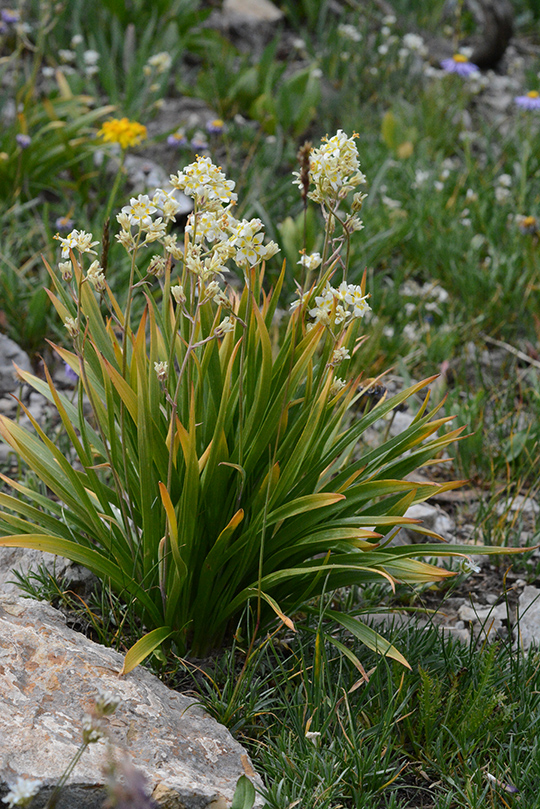
Death Camus – Zigadenus elegans – has beautiful whitish green flowers with heart-shaped yellow pools of nectar on the the 6 petals (technically here called tepals).
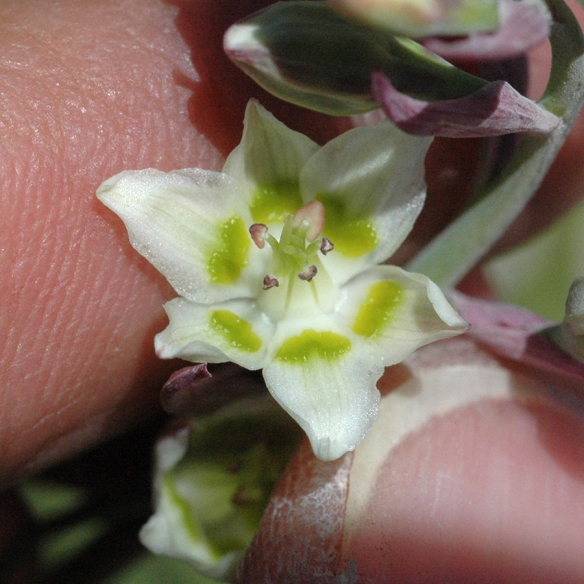
It has 6 stamens that stand around the center pistil which has 3 stigmas. Flower parts in multiples of 3 is a good indication that it is in the Lily Family. Compare it to your Easter Lily.
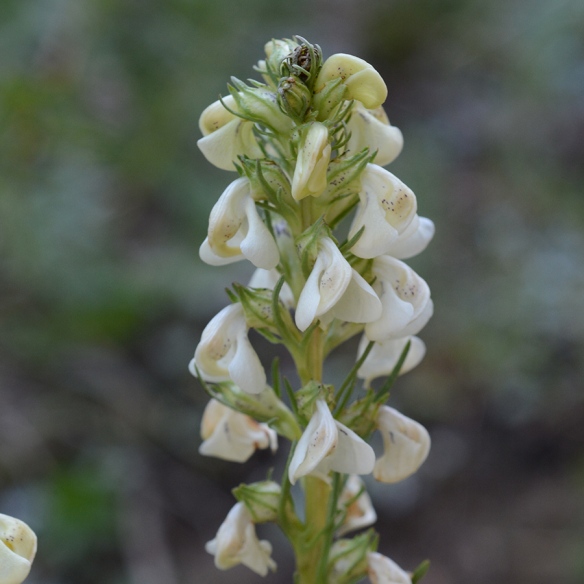
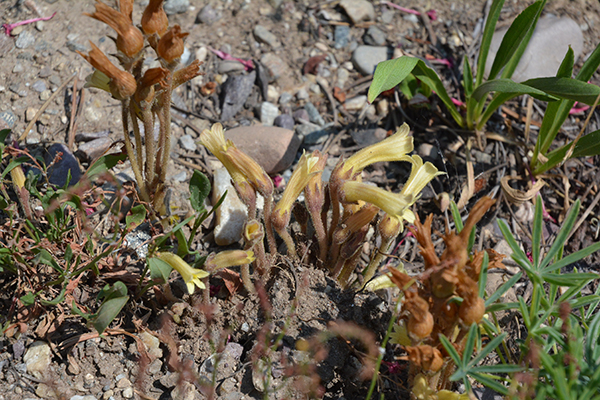
Coil-Beak Lousewort – Pedicularis contorta – has 1-foot+ stalks arrayed with white flowers that twist around their bee pollinators to position them for prescise fertilization. The lower leaves are pinnately divided, helping to differentiate it from the similar Curled Lousewort – P. racemosa – whose leaves are only toothed.
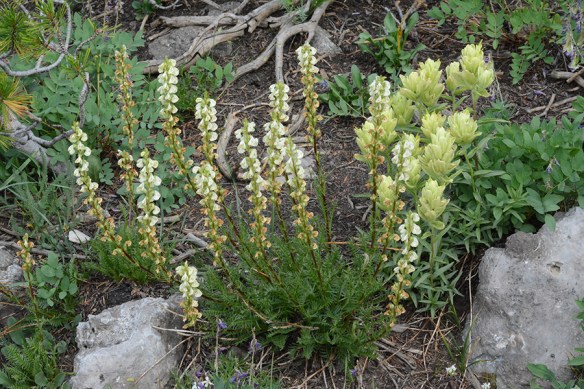
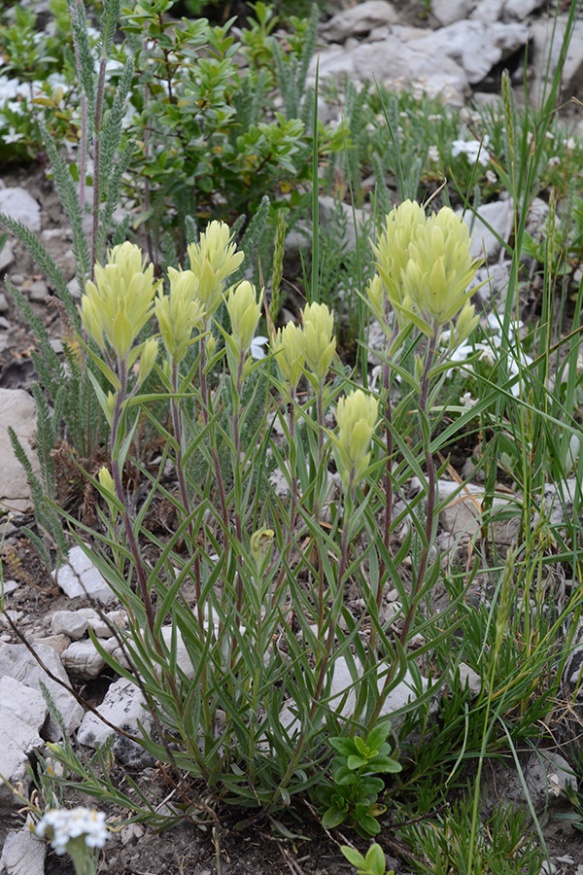
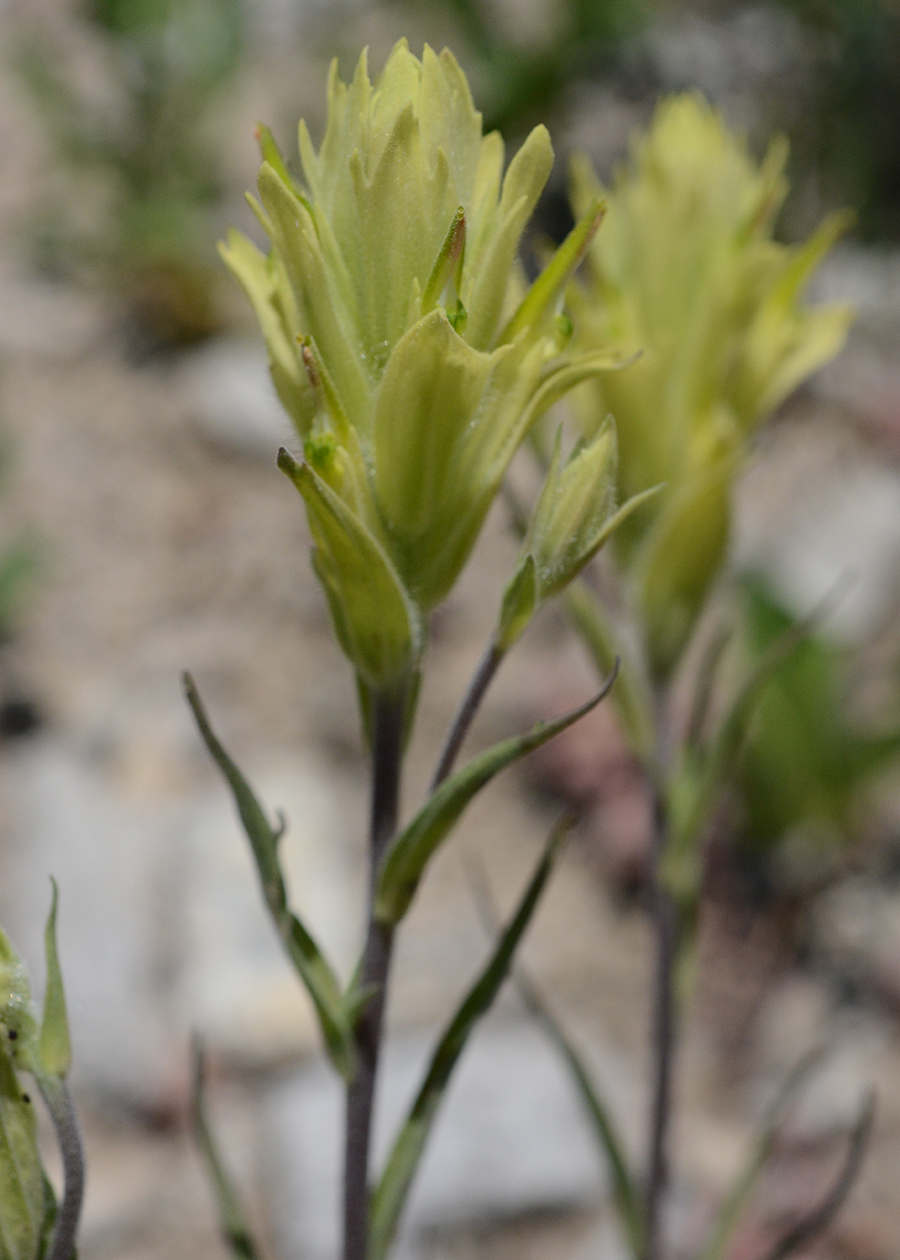
Here Coil-beak Lousewort grows with Sulphur Paintbrush – Castilleja sulphurea.
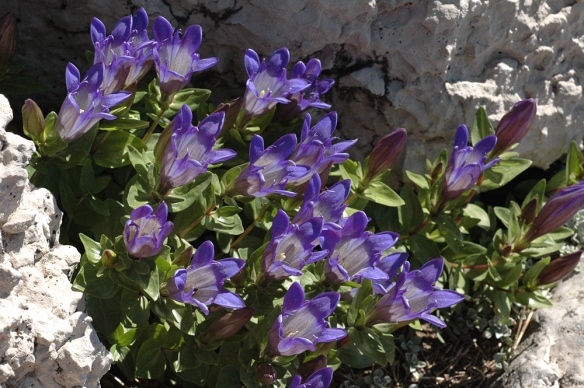
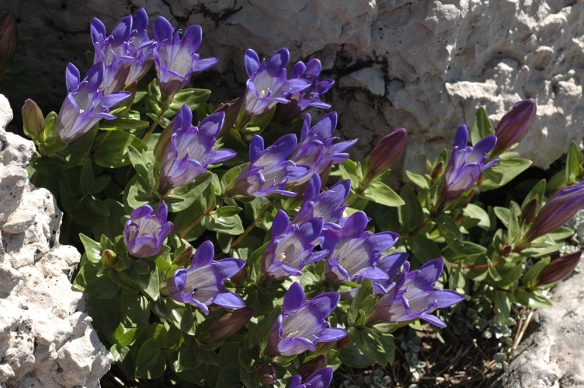
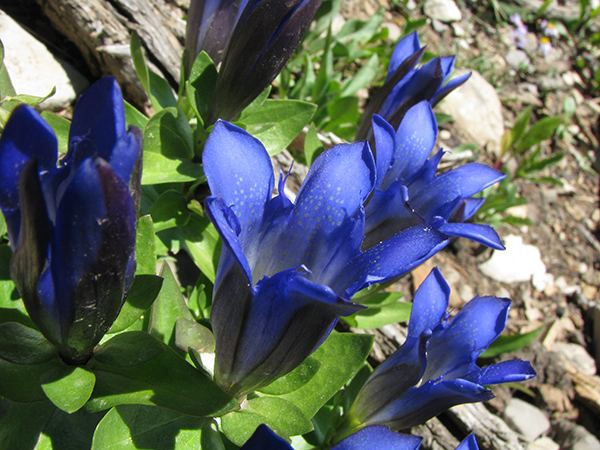
Bog/Explorer’s Gentian – Gentiana calycosa – greets you with blue goblets of flowers.
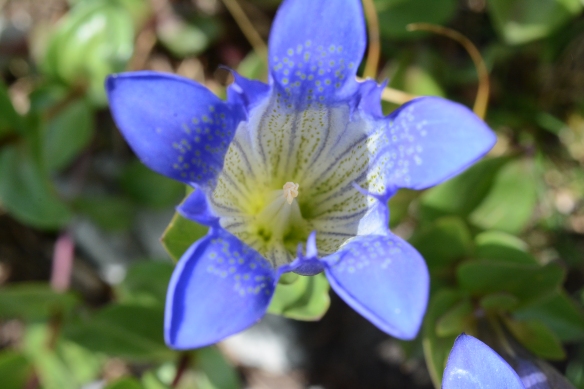
The interior lines and spots draw pollinators deep inside searching for nectar which is at the very bottom. As a consequence, the pollinator rubs against the male anthers or female stigma (they are receptive at different times) effecting fertilization for new seeds to come.
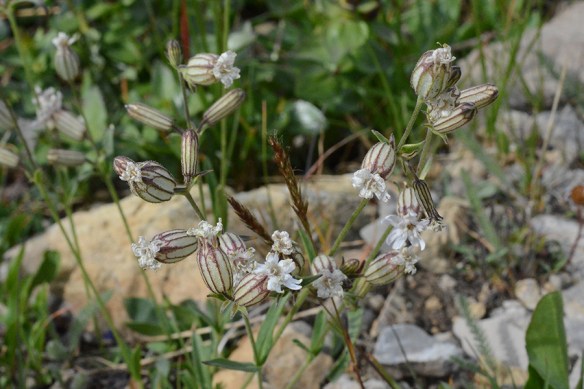
Parry’s Catchfly – Silene parryi – has a swollen calyx decorated with elegant lines: They glow like Chinese lanterns. This alpine native is related to the common, weedy bladder campion – Silene latifolia – that pops up in our gardens.
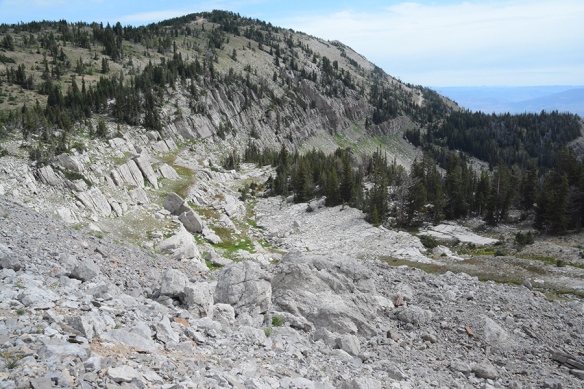
Tucked into talus rock of Cody Bowl:
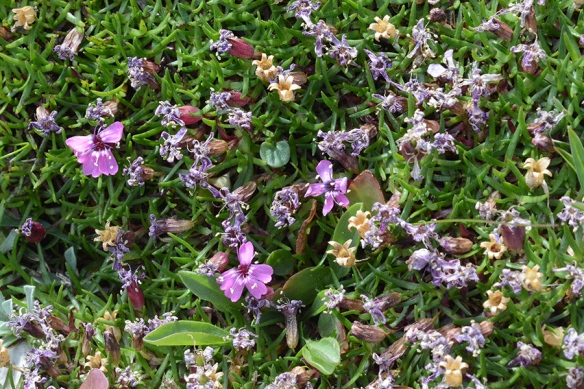
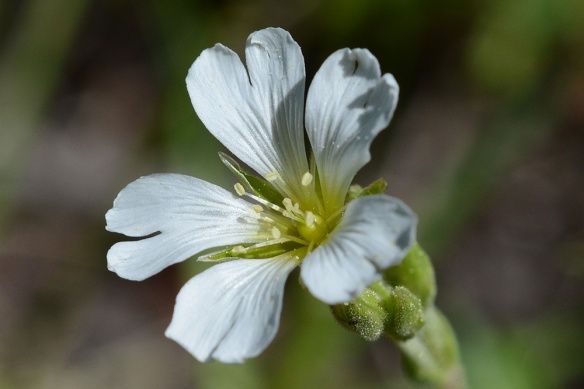
Moss Campion – Silene acaulis – is often the first alpine to bloom. This tightly growing, mounded “cushion plant” is still blooming and is also forming fruits. Plants a few inches across and an inch high can be dozens of years old. This is related to the much larger Parry’s Catchfly (see above). Both are related to carnations!
Two miniature 2-4”-tall aster-like plants are readily confused (by me anyway!). They have single blue flowerheads at the top of short stems. The leaves are mostly clustered at the base:
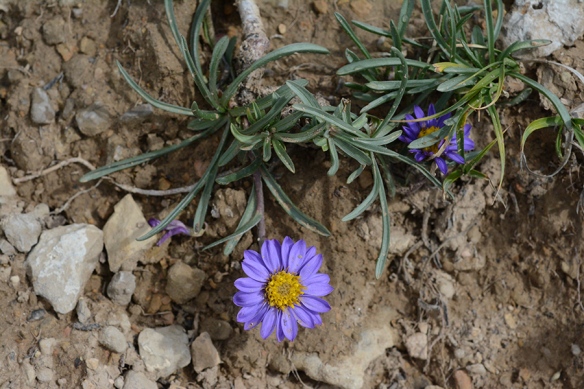
Alpine Aster – Oreostema alpigenus – has deep-blue flowers and long leaves. Note the long tap root that has been unearthed. These are very old plants.
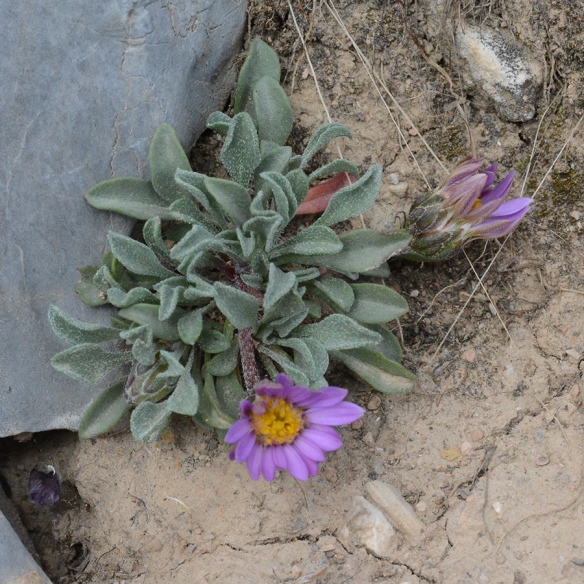
Alpine Townsendia – Townsendia montana – has much shorter, spoon-shaped leaves.
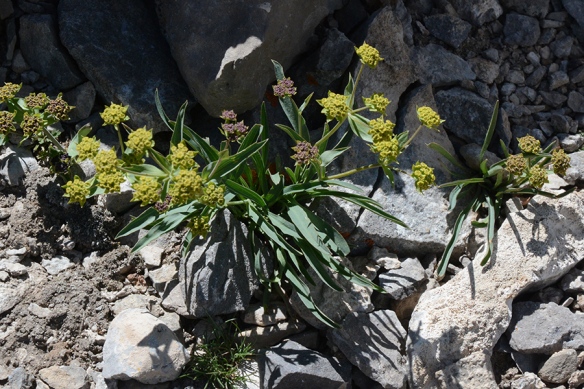
American Thorowax – Bupleurum americanum – is a member of the Parsley Family with an umbrella-like arrangement of flowers and fruits.
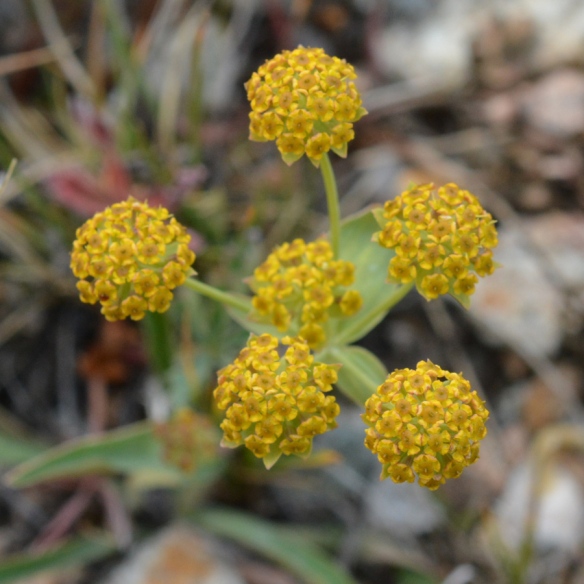
This species is unusual in having undivided leaves. It is common among the rocks here.
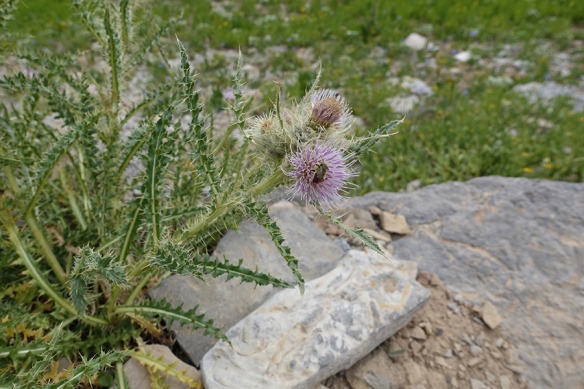
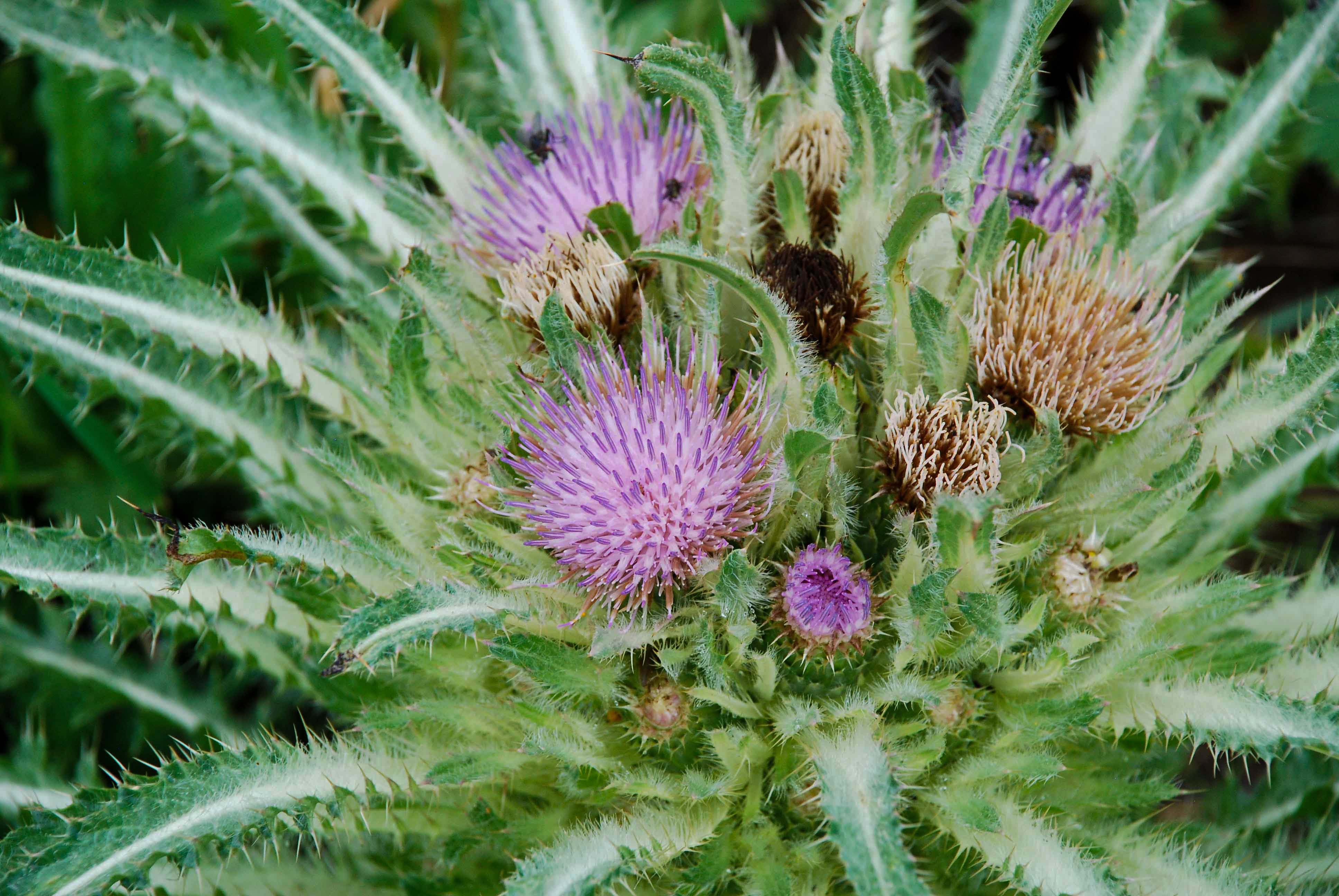
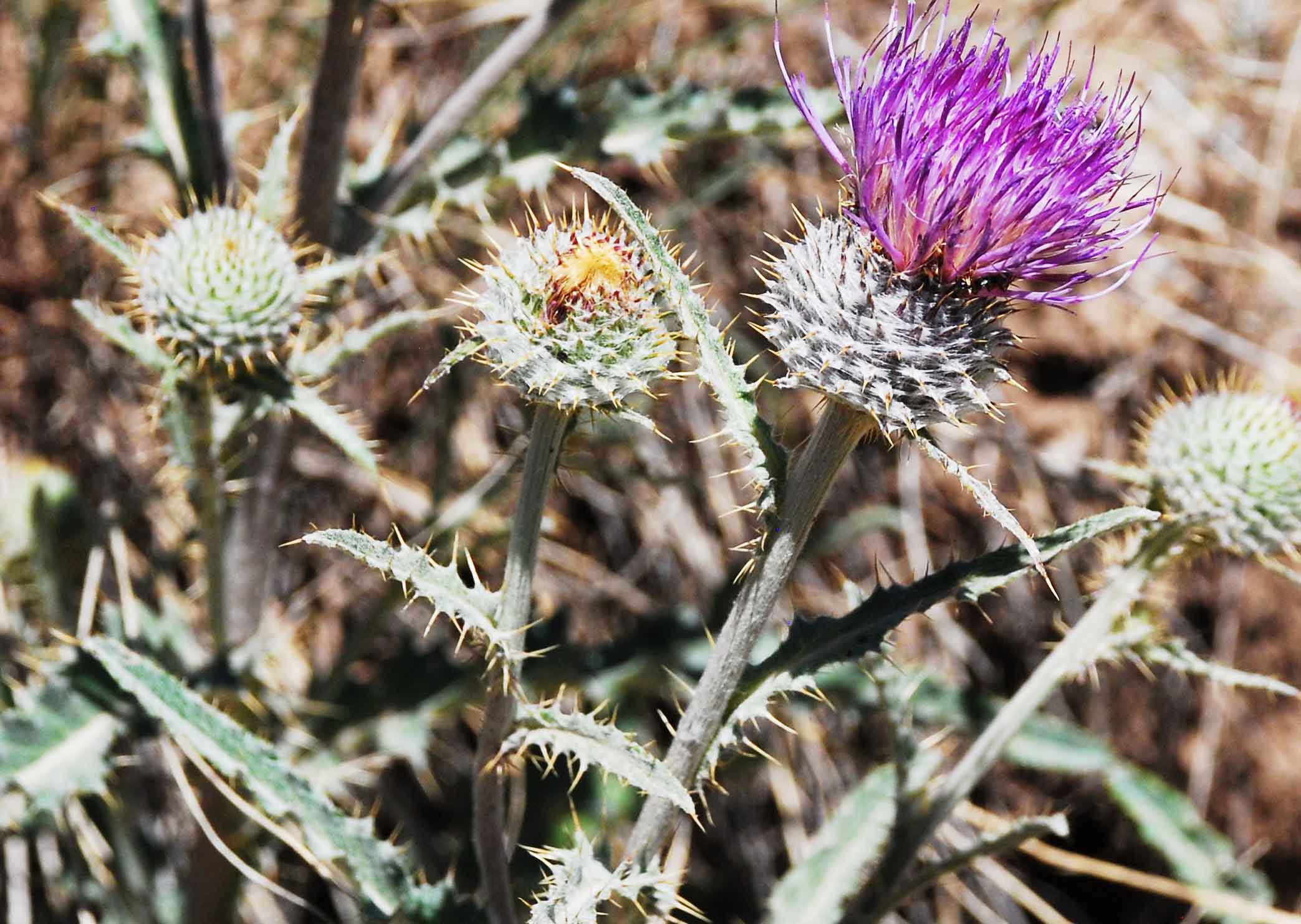
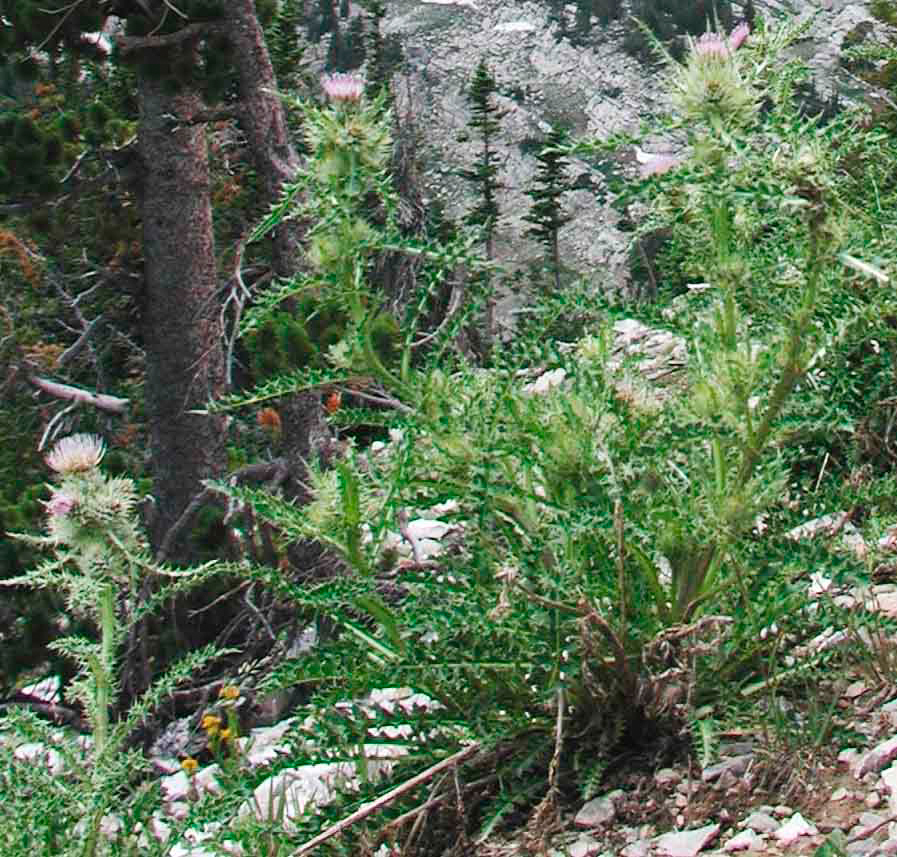
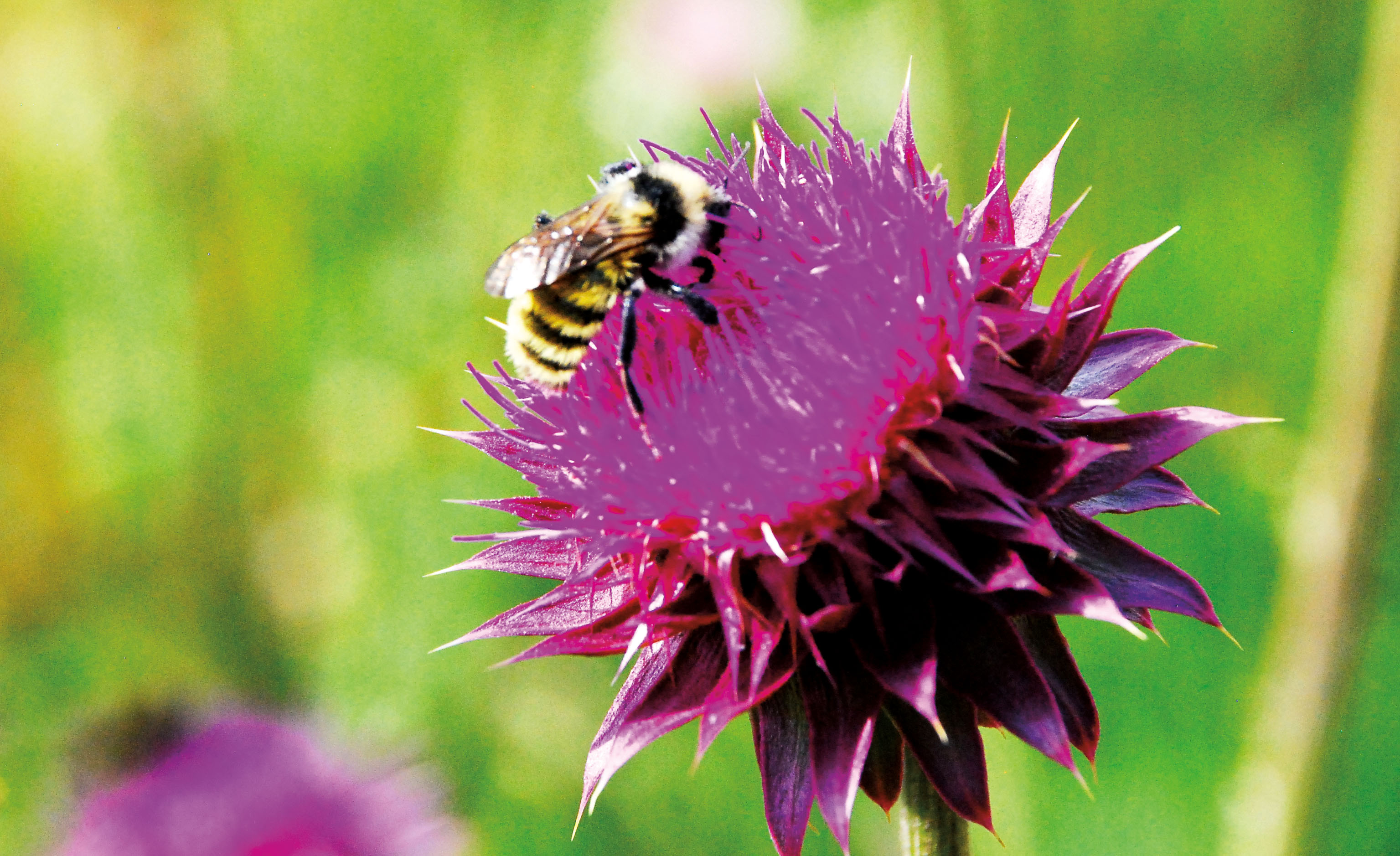
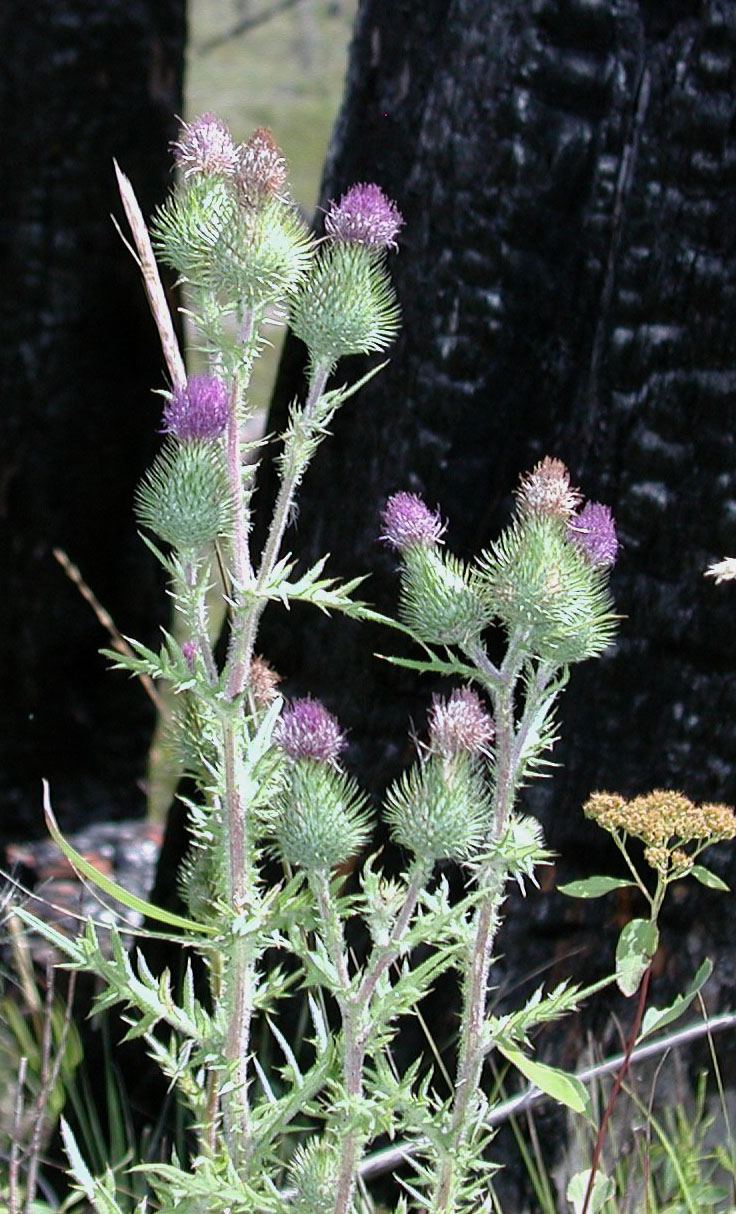
Tweedy’s Thistle – Cirsium tweedyi/eatonii – sprawls out of the rocks attracting a variety of pollinators. It is definitely one of the “good” thistles and is a native found only at high elevations.
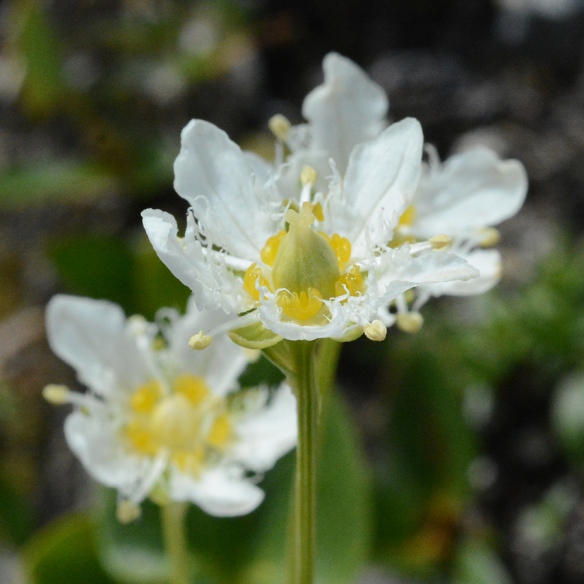
Fringed Grass-of-Parnassia – Parnassia fimbriata – is worthy of a close look at the frilled petals, lobed yellow nectaries, sculpted pistil. The oval leaves are also elegant. These plants like moisture.
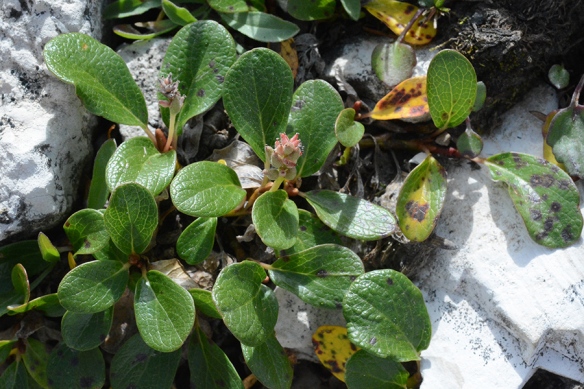
Netveined Willow – Salix reticulata – Willows are common and confusing in the alpine zones (and elsewhere!) This very low-growing species has small rounded leaves with distinctive veins (reticulate) making it is pretty easy to ID, I think…
Truly on the rocks:
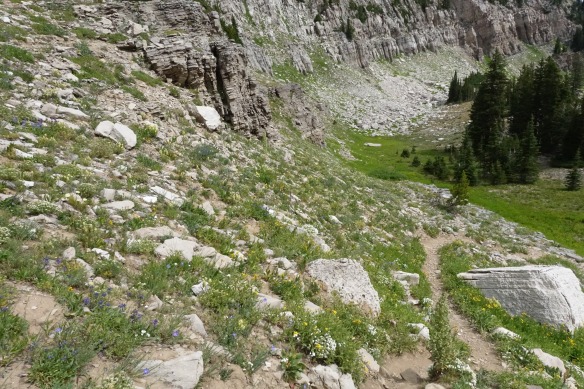
Miraculously, several plants cling onto rock faces such as found along the Rock Springs Loop trail below Cody Bowl.
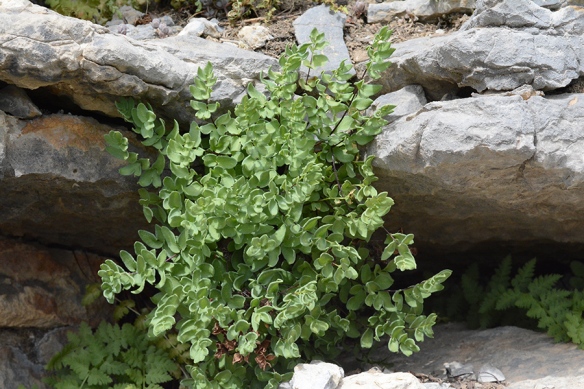
Brewer’s Cliffbrake Fern – Pellea breweri – was a new one for me. Black wiry petioles (stipes) hold out leathery evergreen leaflets.
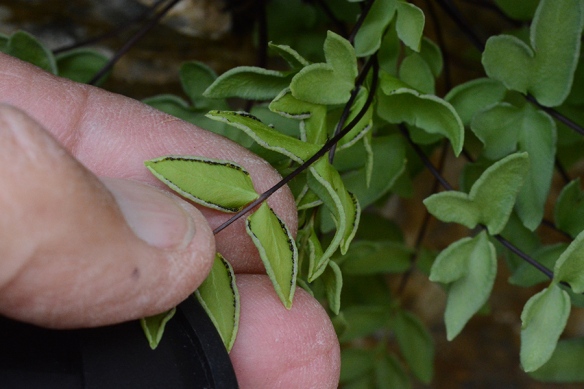
The black sori are protected by the folded leaf edges. Sori produce the spores that are key to reproduction in ferns.
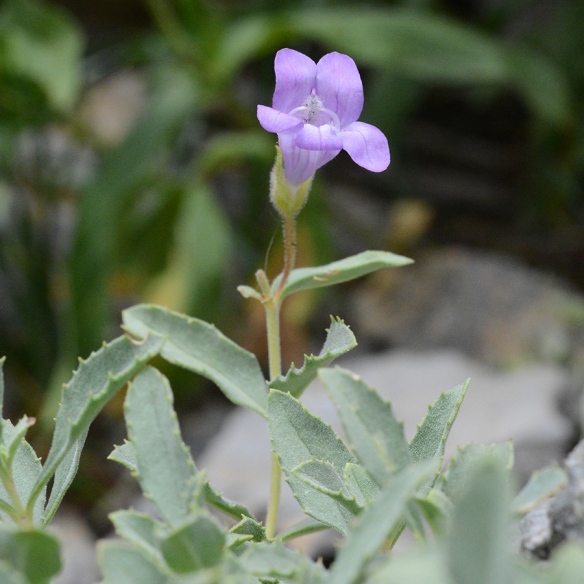
The pale lavender flowers of Mountain Penstemon – Penstemon montanus – are fading, but are still a treat to see. The plants are slightly woody and have toothed leaves (unusual for our WY species). The anthers are woolly.
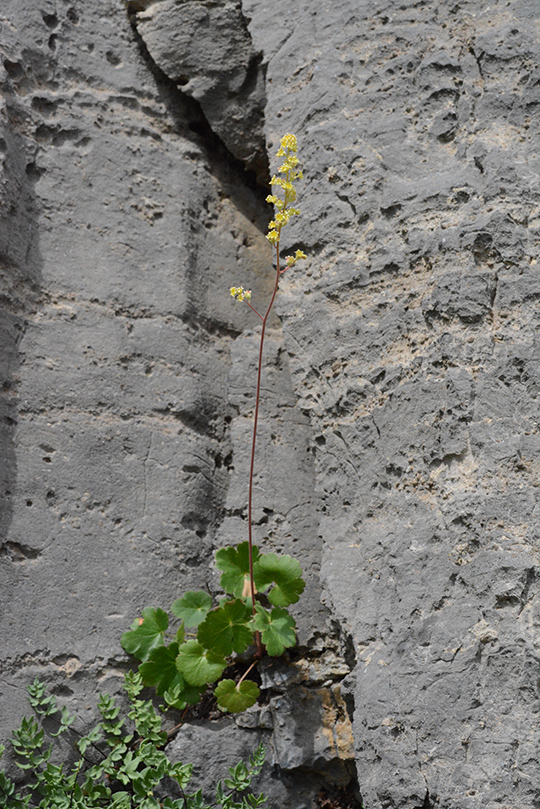
Common Alumroot – Heurchera parvifolia – is a true rock lover! It is in the Saxifrage Family. Saxi = rock
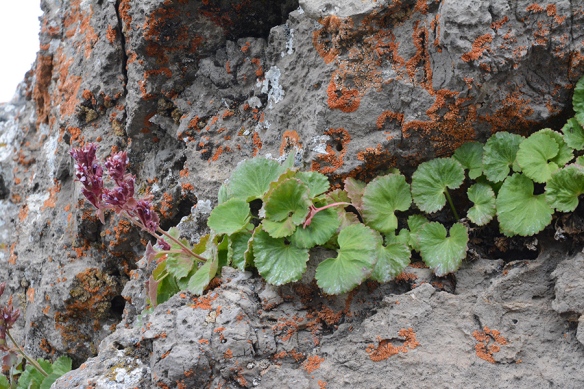
Telsonix/Boykenia – Telesonix heucheraformis thrives in a rock crevice of a large glacial erratic on the way down to Cody Bowl. You may be able to see some family resemblance with Alumroot.
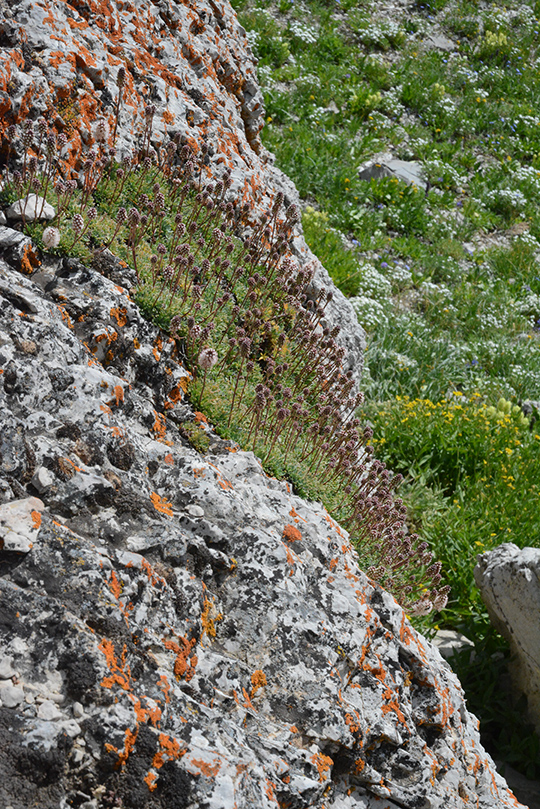
Tufted Rockmat – Petrophyton caespitosum – forms a dense carpet draped over a ledge.

No matter how you look at these plants, one can appreciate their adaptability and tenacity, growing in this challenging terrain—rock, snow, abrasive winds, drought, intense UV light, not to mention a growing season of maybe a couple of months. And consider the luck of a seed to land in the right spot in the first place and mature and reproduce throughout many years of such trials.
If you don’t get up to admire these floral athletes this year, they will be there next year to enjoy on your alpine adventures.
Frances Clark, Wilson, WY, August 24, 2019
*Note: Check on the trail conditions through the JH Mountain Resort before taking this hike. At thie time of writing, the summit-access road was closed for construction projects. High elevation and rocky trail can be difficult for some hikers. Saying that we, were able to reach safely a wonderful display of flowers from the trail!
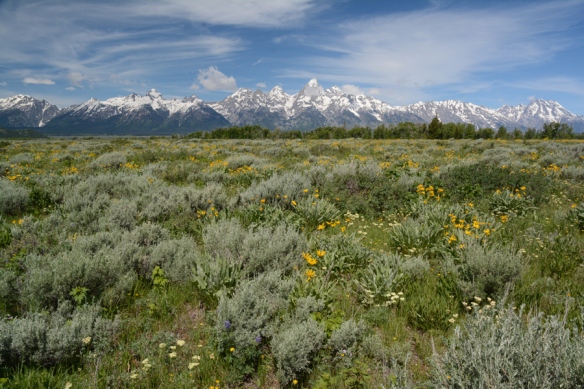
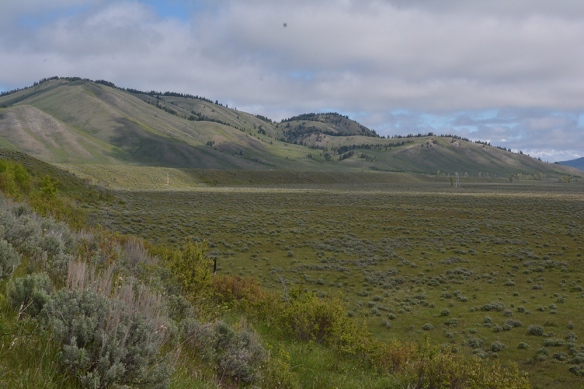
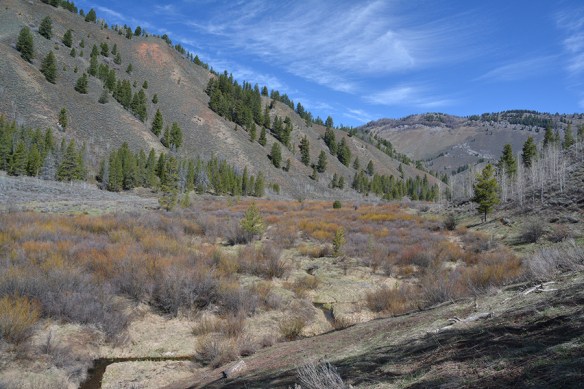 Spring sun is warming south-facing slopes of buttes and hillsides. Snow along Grand Teton National Park roads is finally retreating. Wetlands are warming. Bugs and birds are flying about. The delight is in the details of small flowers; no big show yet.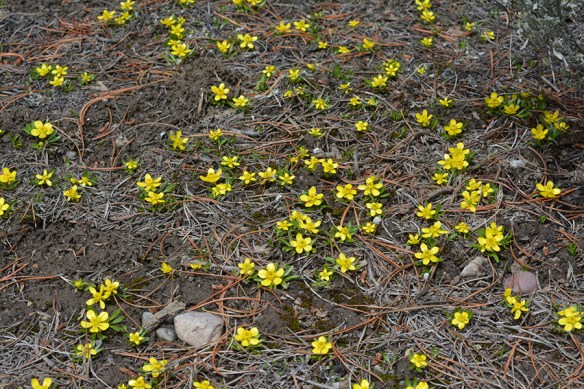
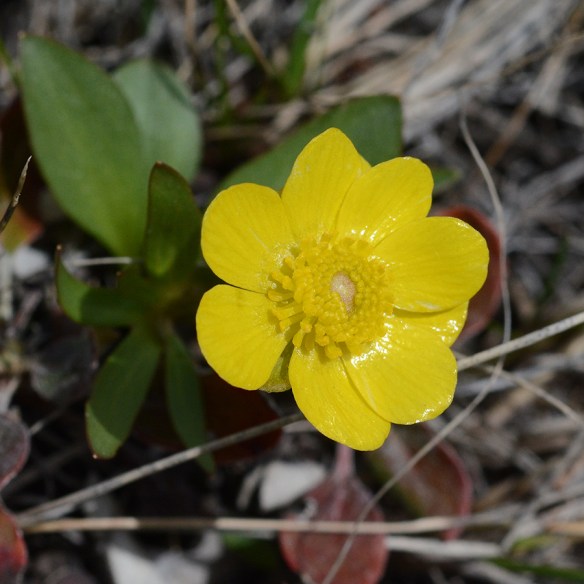
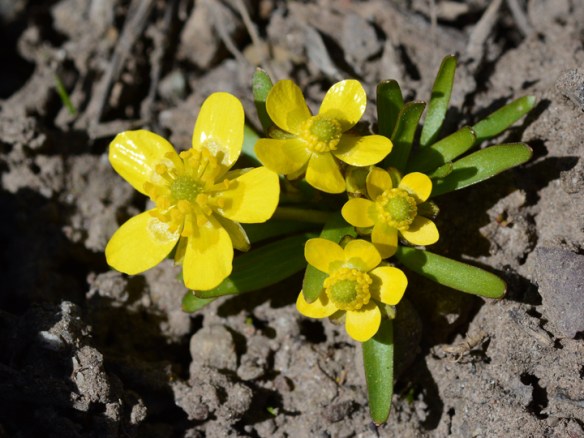
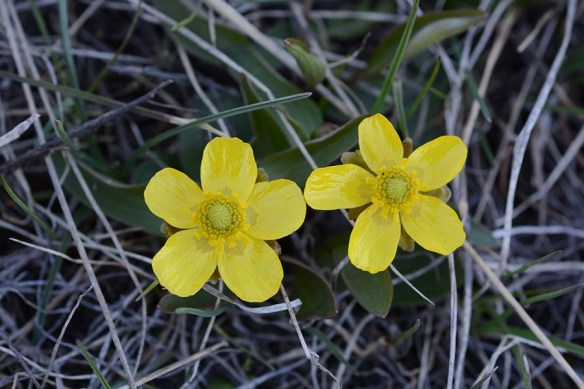
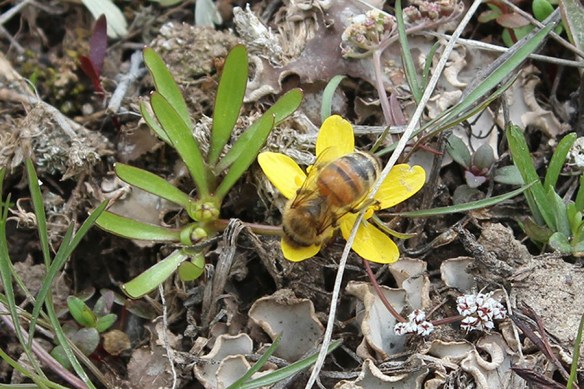
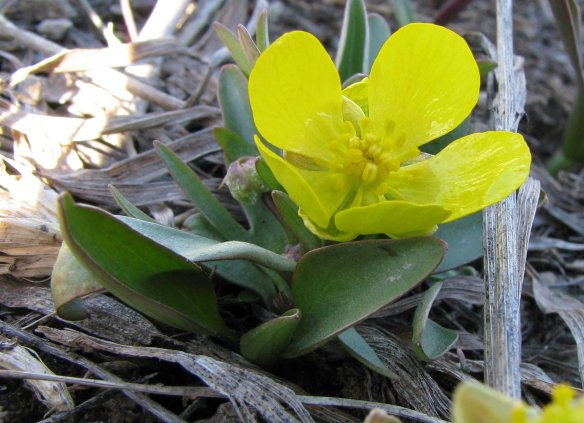 The lowest leaf of Sagebrush Buttercup – Ranunculus glaberrimus – is unlobed, the upper leaves are 3-lobed. It is a denizen of sage flats.
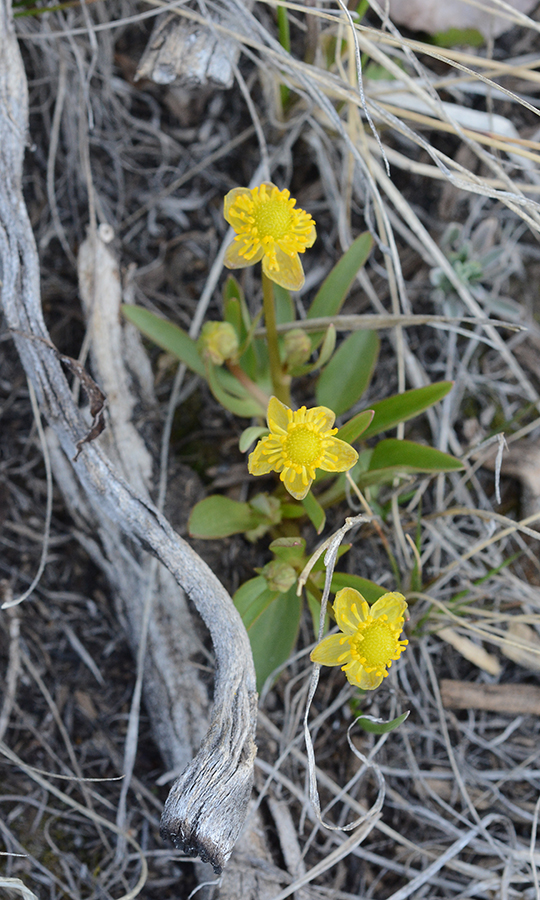 Some individual Sagebrush Buttercups don’t have petals, only sepals. I dont’ know why the flashy petals aren’t there.
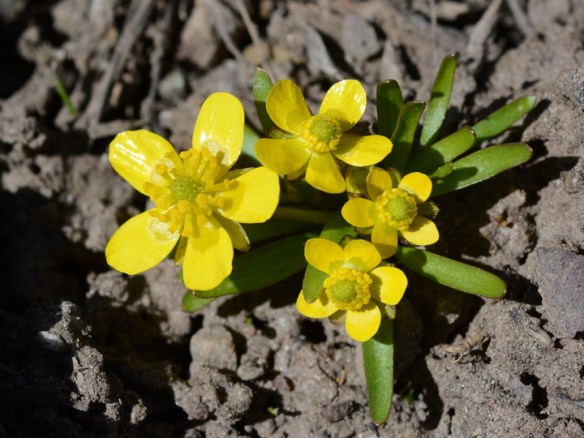 In Utah Buttercup – R. jovis – both the lower and upper leaves are lobed into three parts. Note buttercups have many separate anthers and stigmas—a common characteristic of this family. It is found in relatively moist locations, including woodland edges and openings.
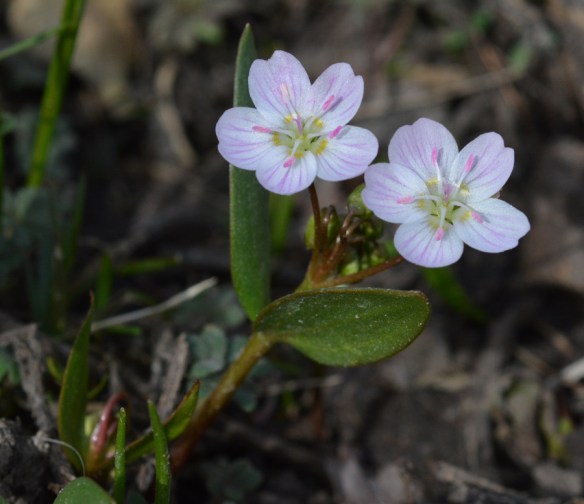
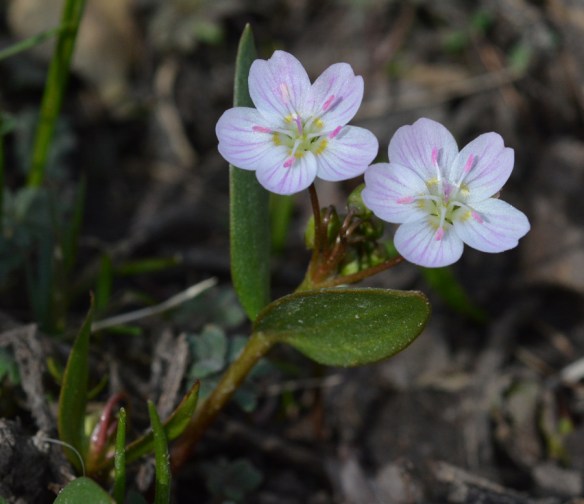 Springbeauties – Claytonia lanceolata — grow in scattered in patches. Some blooms exhibit obvious pinkish veins that direct pollinators to yellow nectaries in the center. Pollinators bump against the anthers and get dusted with pollen.
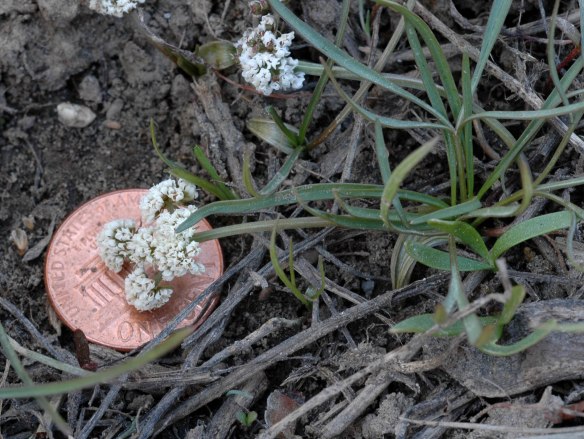
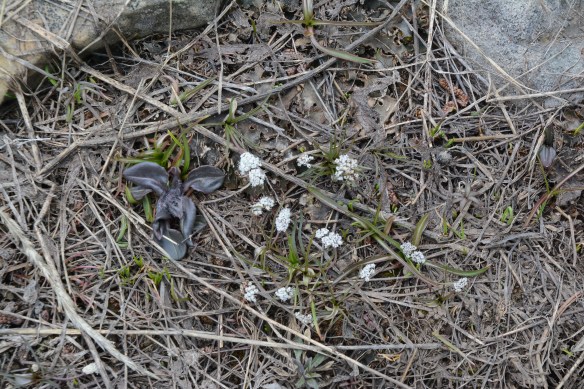 It is easy to step on Turkey Peas – Orogenia lineariifolia. The plants look like bits of lichen or stone, nothing to think about.
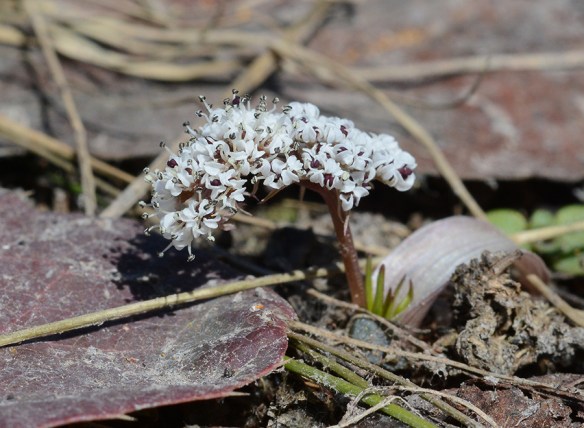 However, Turkey Peas are more interesting if you take a close look at their tiny white flower with maroon centers that together form clusters barely an inch long. Think about what tiny insects must pollinate them–likey small flies and bees.
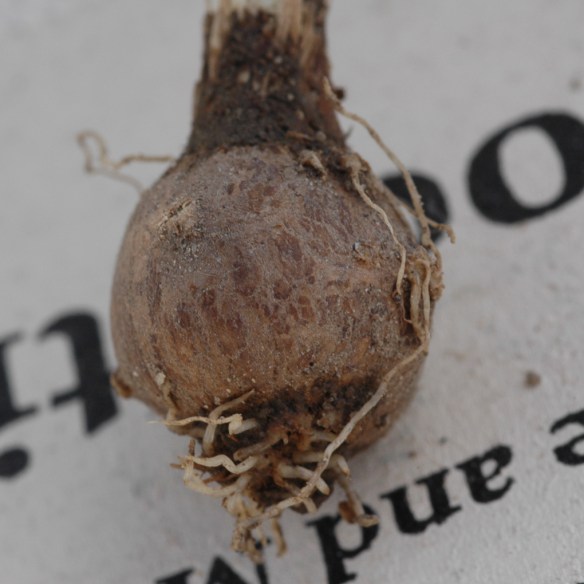
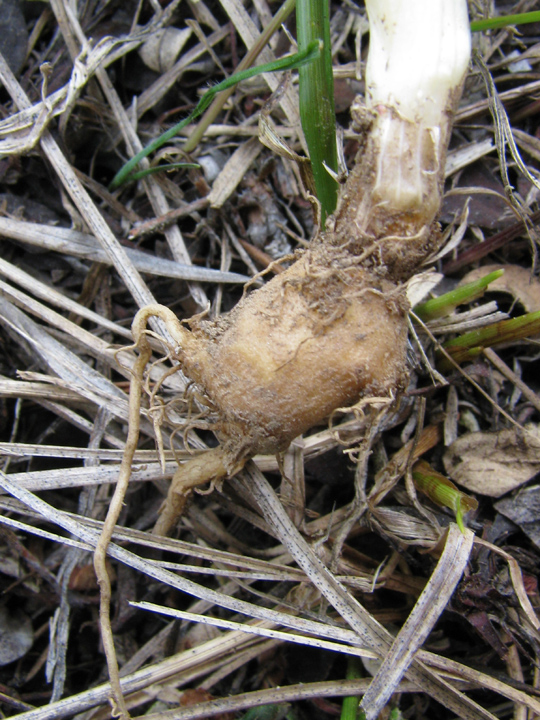
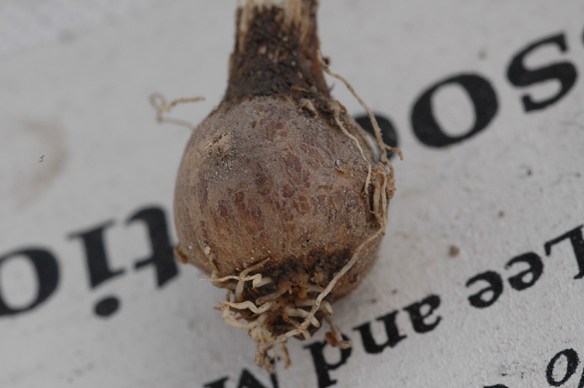 Sandhill cranes, bears, and rodents seek out the thumb-sized bulbs (“peas”) for food. (Turkeys would likely eat the bulbs if they lived in Jackson.)
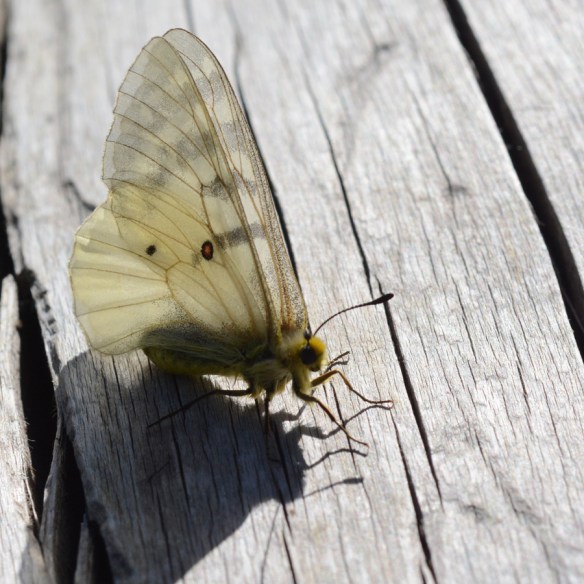
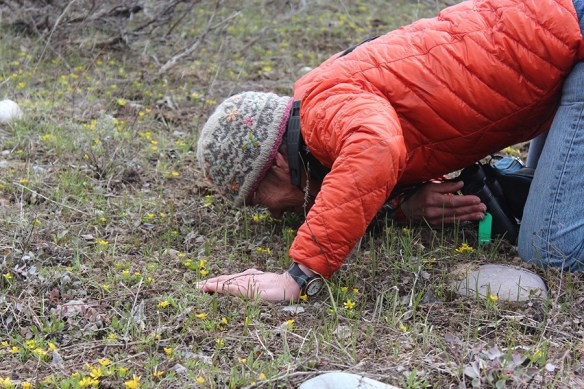
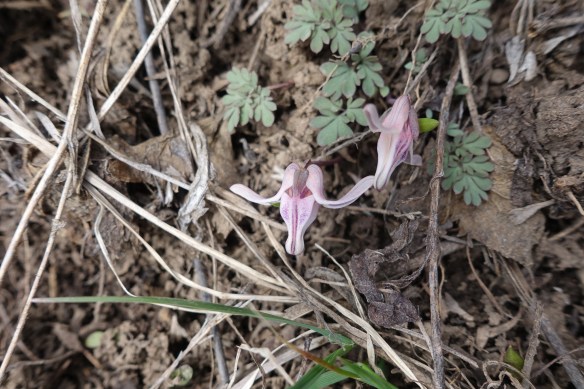
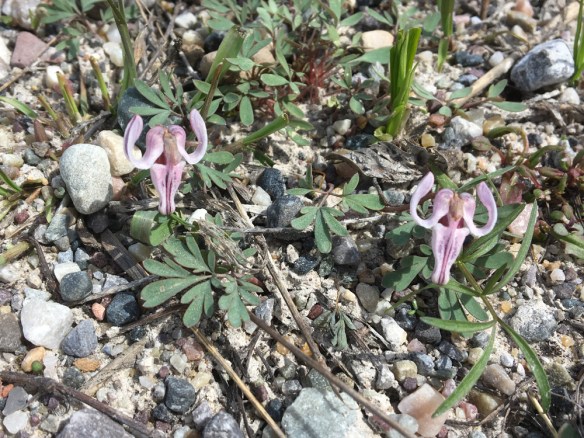 The quintessential western plant Steer’s-head – Dicentra uniflora – requires some belly botany. Scan an area for divided leaves and then get down to stare at the steer-like flowers. This is the larval host plant for the Parnassian butterfly Parnassius clodius, which Dr. Debrinski from MSU is researching in Grant Teton National Park (more info on her research below).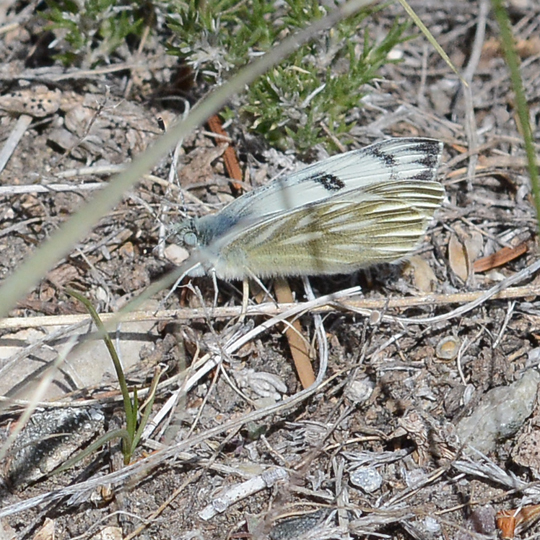
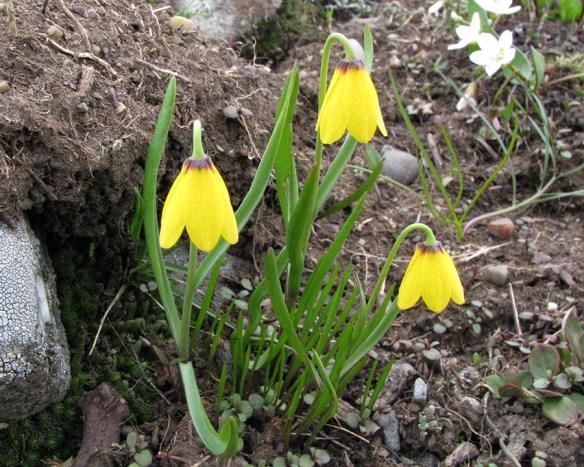 Yellowbells – Fritillaria pudica – are always cheerful! The 6-8”-high plants sprout from miniature scaly bulbs. The base of the 6 yellow tepals is said to change from red to green depending on pollination, but I can’t see any consistent difference happening to the outside flower color or anthers and pistil on the inside. Maybe you can.
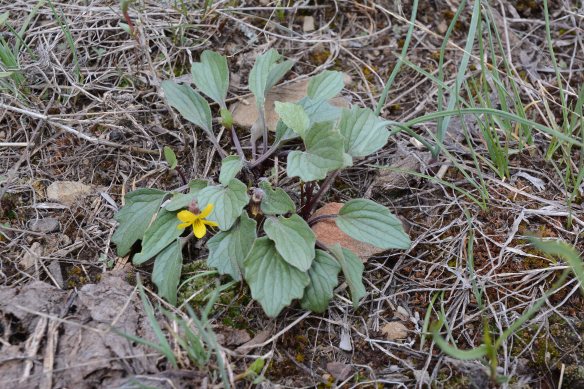 Goosefoot Violet – Viola purpurea var. venosa – has leaves shaped like goose feet with a few more toes. The back of the leaves and yellow petals are often purple, hence “purpurea” in its botanical name. Note the dark center of the flower and the convenient landing pad of petals for pollinators.
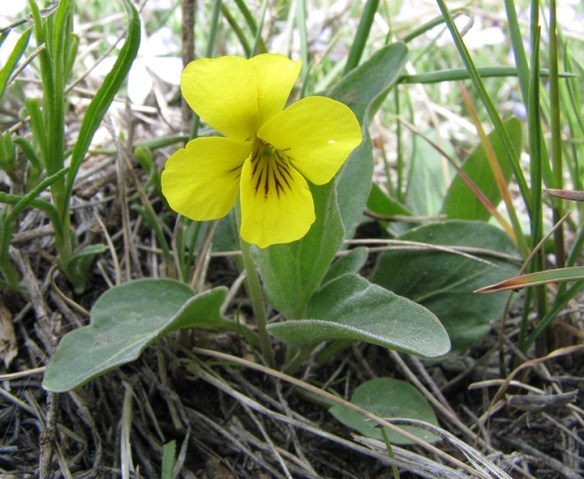 Several yellow violets intergrade in leaf features which confuse me and other botanists trying to sort out the names. This cheerful specimen is one of three look-alike species – V. vallicola, V. praemorsa, or V. nuttalii. Leaf ratios, shapes, and hairiness, as well as ultimately seed-capsule sizes, determine identification.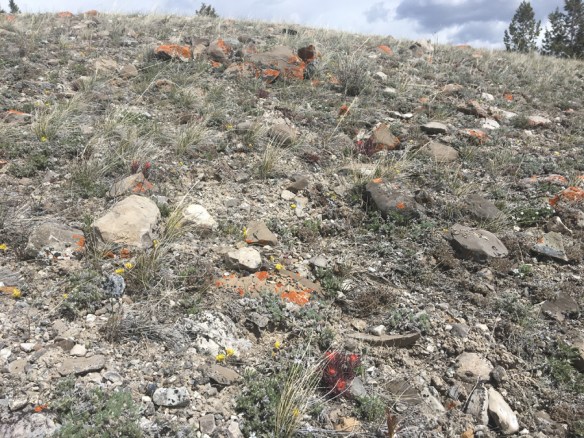
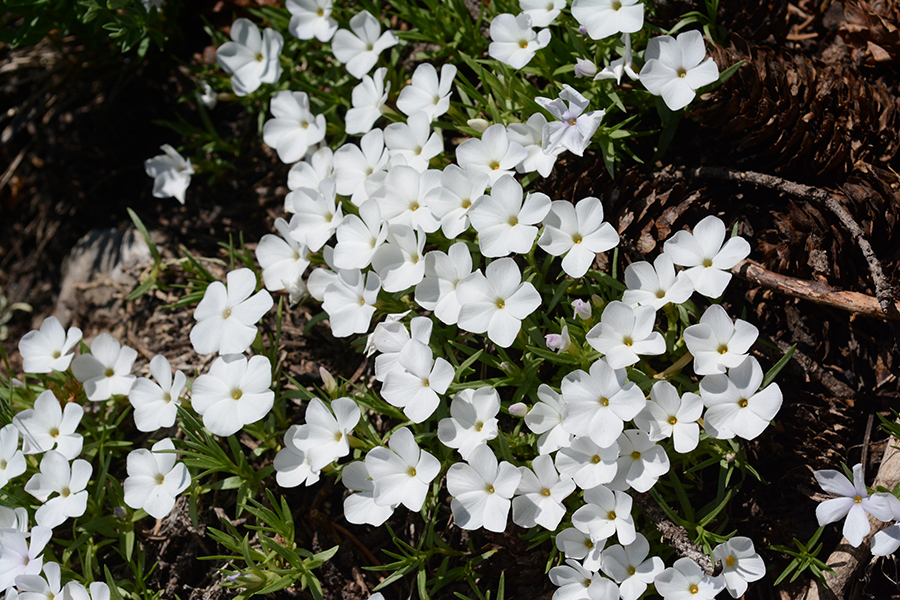
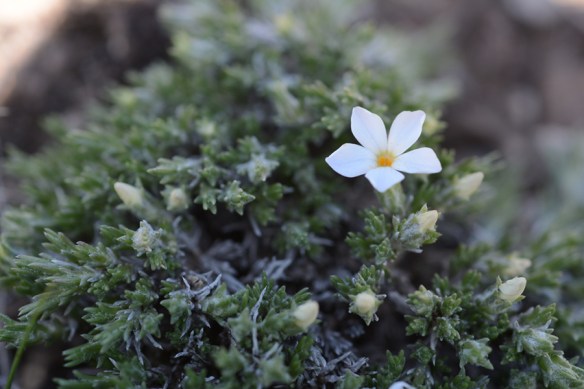 Hood’s Phlox – Phlox hoodii – is often the first out, with its white to bluish flowers. Bees and flies pick up on the sweet fragrance. They come in and land on the flared petal tips and dip their long tongues deep down the center tube for nectar. They then carry the orange pollen off to other flowers nearby. The leaves of Hood’s Phlox are opposite, very small and tight on very slow growing stems that collectively form a cushion shape. Plants inches wide can be decades old.
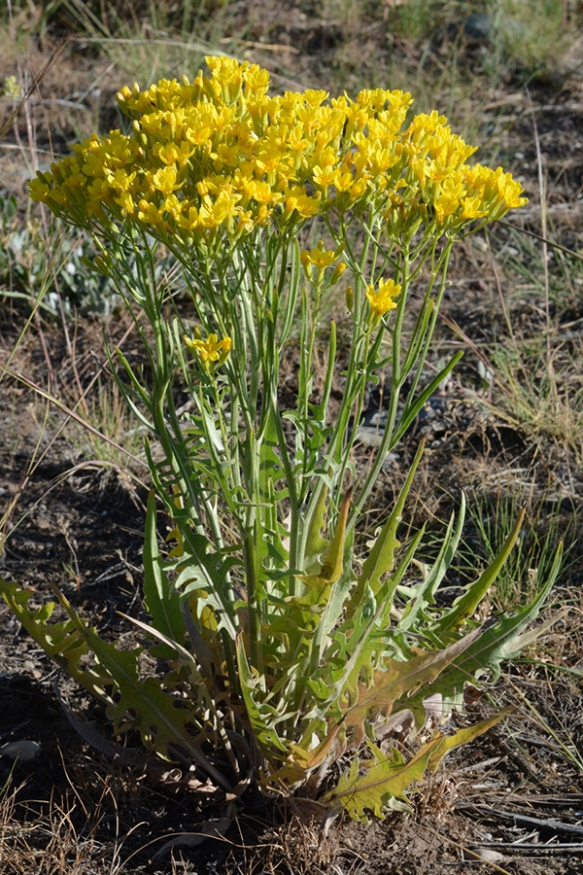
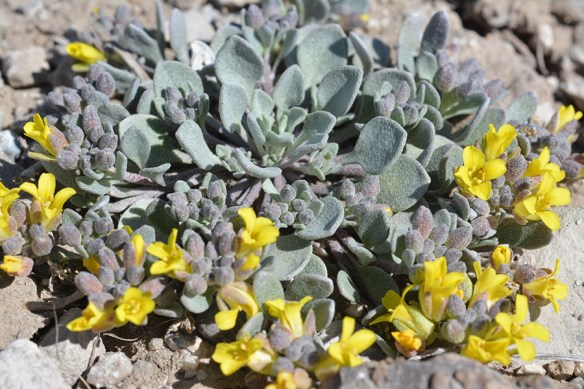 Nearby, Twinpods – Physaria didymocarpa – feature bright-yellow, 4-petalled flowers at the end of sprawling 3-4” stems. Spade-shaped, silvery leaves help identify this member of the Mustard Family. Mustards usually have 4 petals, 6 anthers (2 short, 4 long), and one 2-parted pistil.
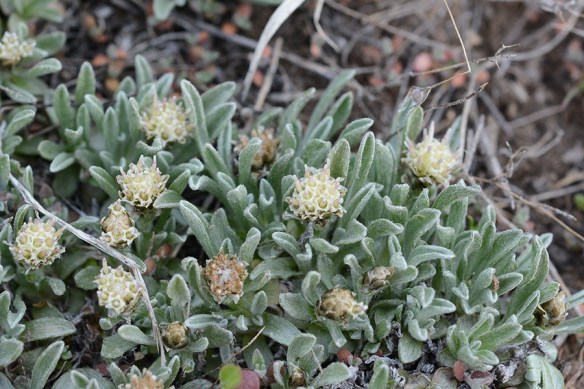 The first pussytoes to bloom is Low Pussytoes – Antennaria dimorpha. The tiny gray, finely hairy leaves form mats on the ground. Look closely for the flowers.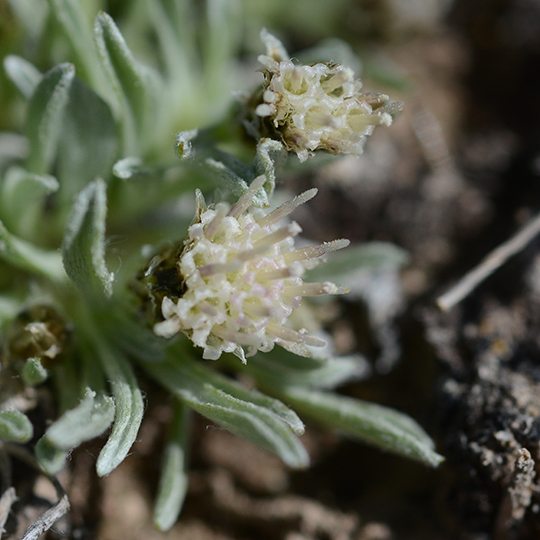
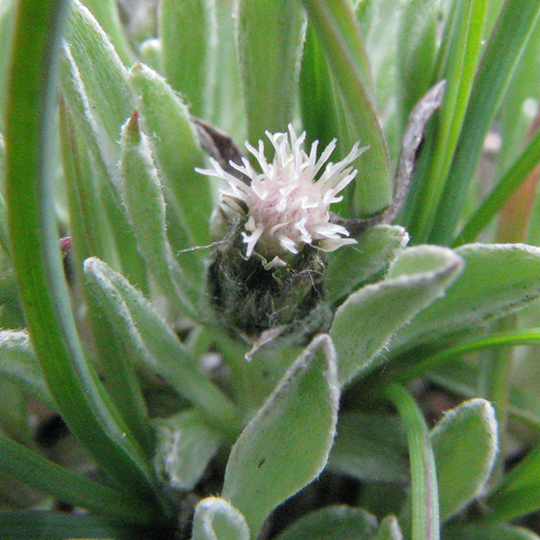
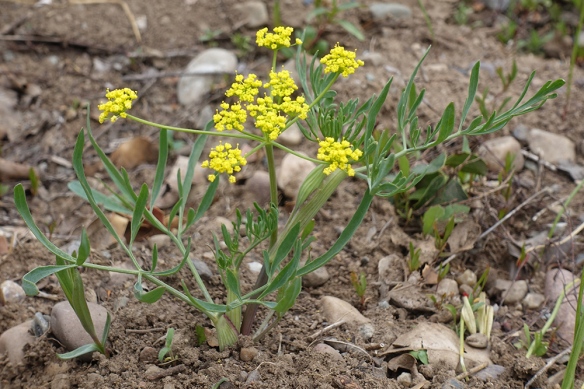
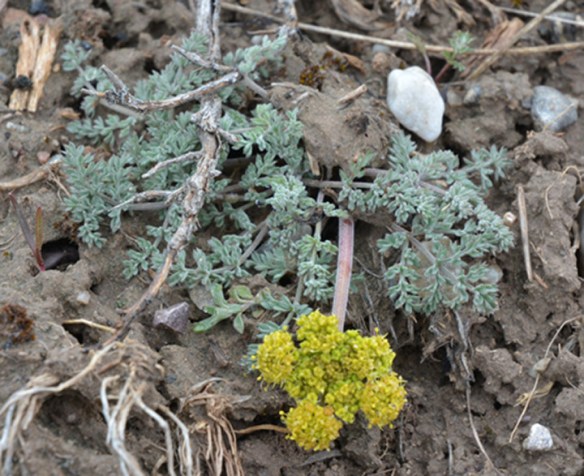 Sprawling Cymopteris – Cymopteris longipes – is spreading its whorl of dissected silvery leaves low to the ground. As a member of the Carrot Family, plants have umbels, in this case with yellow flowers.
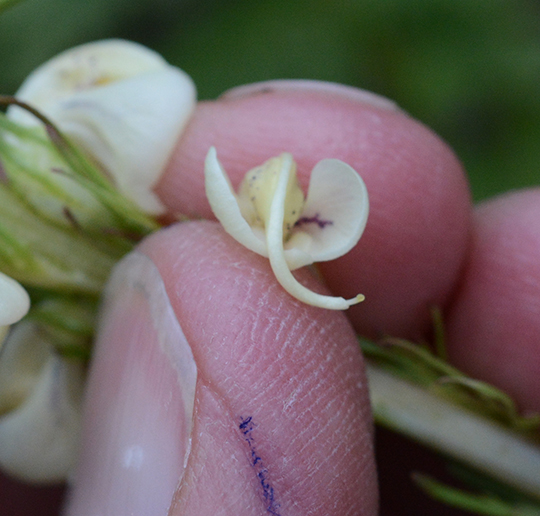
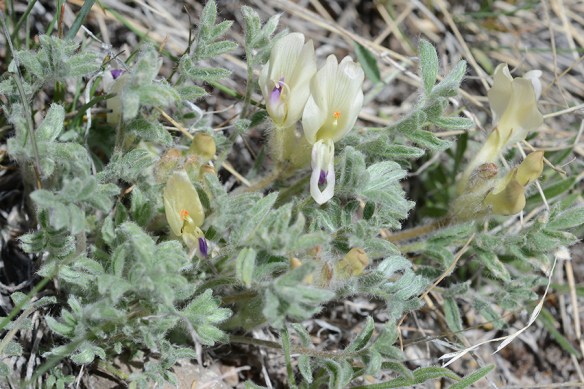 Pursh’s Milkvetch – Astragalus purshii – is also just beginning to flower on dry knolls. The pea-like flowers are slightly yellow to white with a blue bow to the keel (lower two petals). Some flowers open wide for pollinator business. Note the pinnately divided leaves are silvery hairy.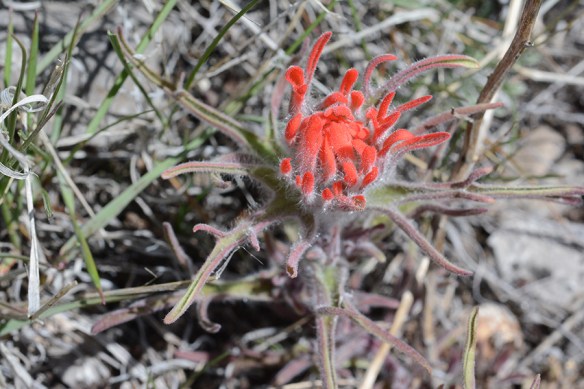
 Our local Townsendias belong to a beautiful but often confusing genus. This plant has all the features of T. leptotes: narrow leaves, whitish petals, a whorl of 4-5 rows of pointed bracts tinged with color. Apparently this species and T. montana can hybridize or self-fertilize to the point that some experts say separating the two species appears “arbitrary.” I say, let’s just enjoy the flowers if you can find them. They are pretty rare.
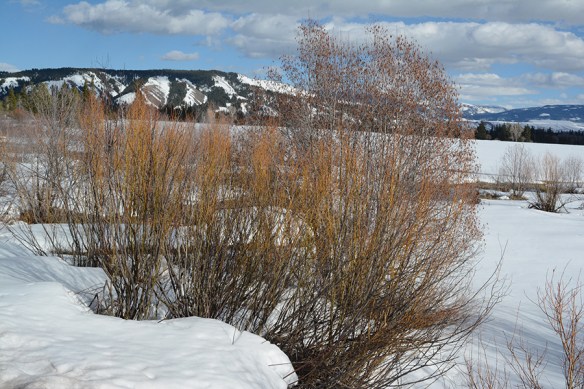
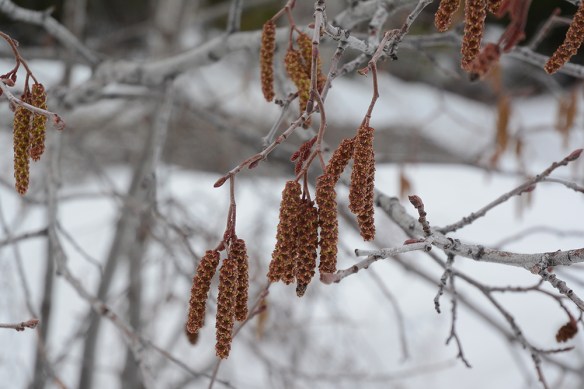 Shrub swamps throughout the valley are warming up. Ducks, moose, and beaver are moving through the waters under dangling catkins of alders and amidst thickets of pussywillows.
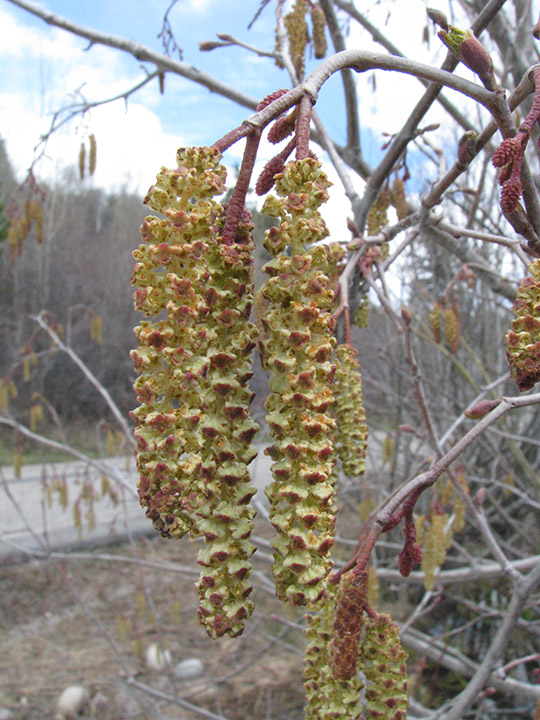
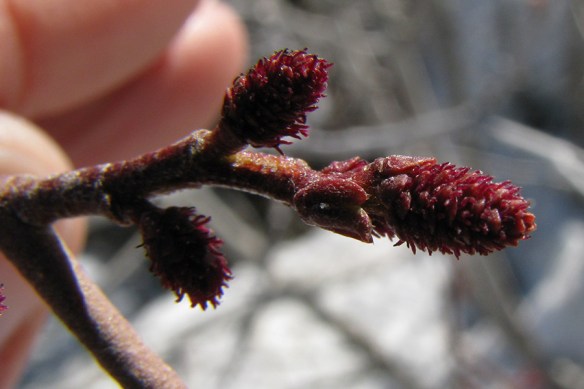
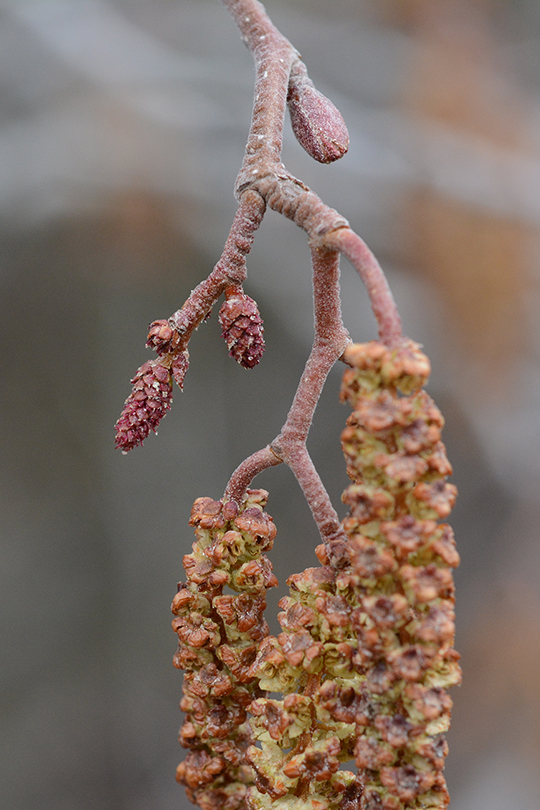 Male catkins of mountain alders – Alnus incana var. occidentalis – elongate: their pollen is released upon the wind to meet up – purely by chance – with the stigmas of female flowers (above left in photo) in separate, stout “cones.”
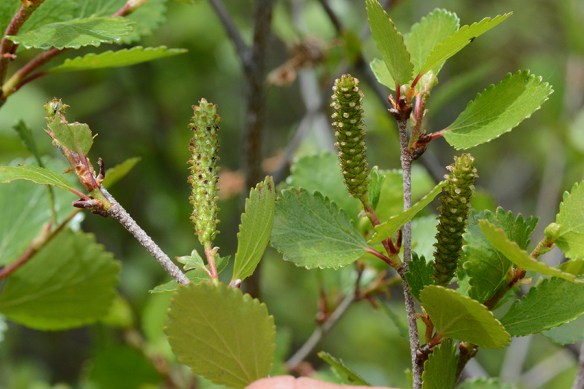 Later in May, its relative Bog Birch – Betula glandulosa – will bloom after its leaves have filled out.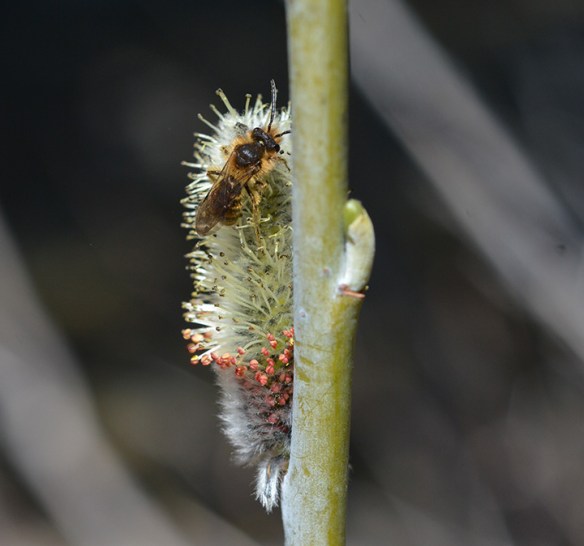
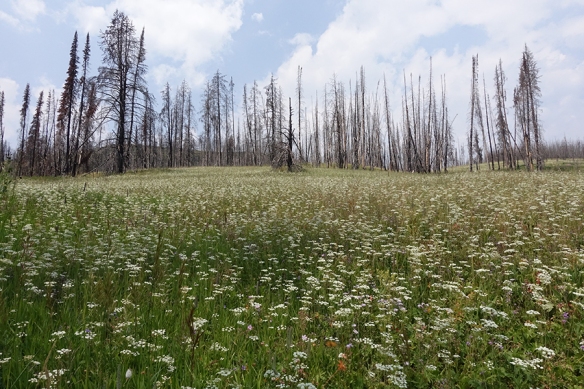 Forest fires can appear devastating at first, but for the most part nature has its systems for resilience. Depending on how hot the fire was and what plants were present both above and below ground and nearby, vegetation will return in its own due course. In some cases, plants sprout that have not been noticed in years, and indeed are triggered to flower after the heat of the moment. Others take advantage of the open ground and fly in with fresh seeds. Still others have stored seed until the magic moment. Wildlife also takes advantage of the changes.
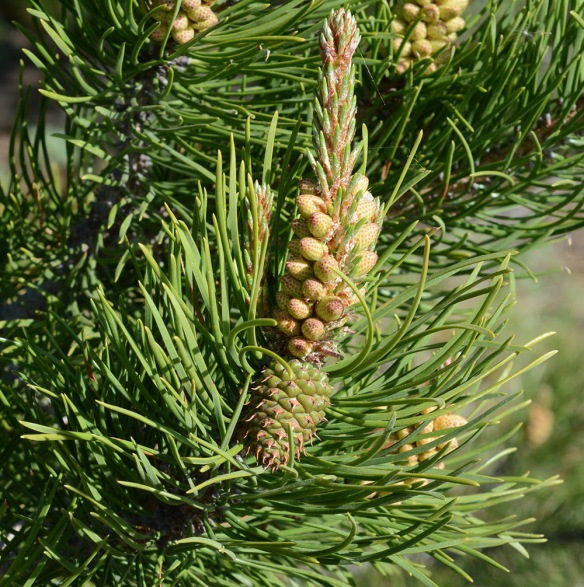
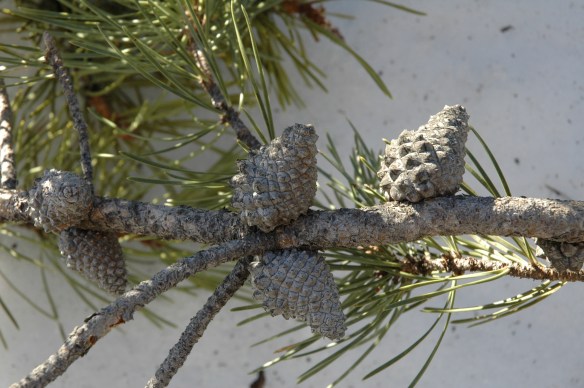 Their cones have thick scales with spine tips which protect the seeds inside from mauraders and weather for years. When a fire comes through, the resin that has sealed the scales shut melts, and cone scales open wide, releasing winged seeds upon the wind. The delicate embryos fall onto newly exposed soil, which may be enhanced by ash, and quickly germinate. Ash often contains recycled nutrients and retains warmth which helps the seeds grow. Seeds germinate quickly, giving them a headstart among competing plants. Pines in fact need sun to grow well. A truly fire adapated species!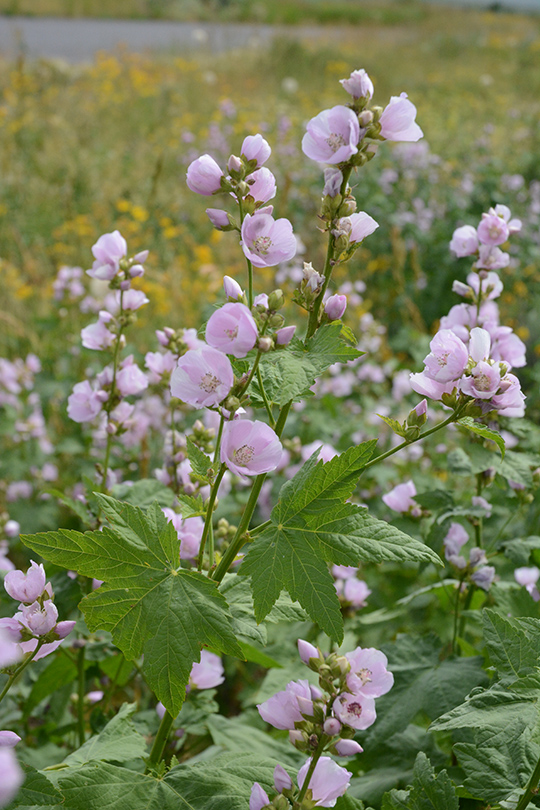
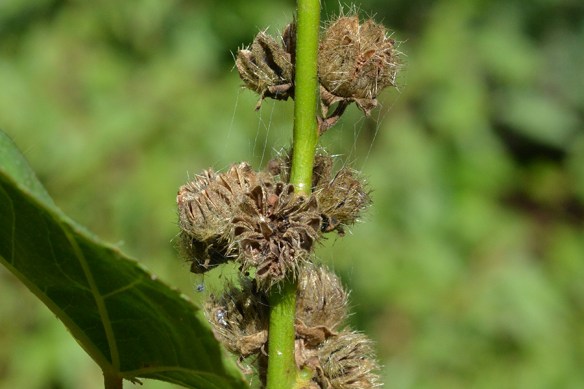
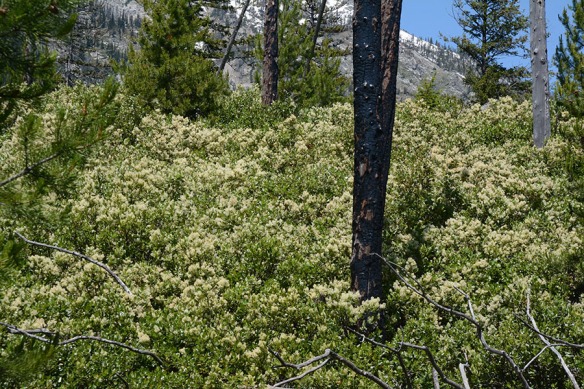
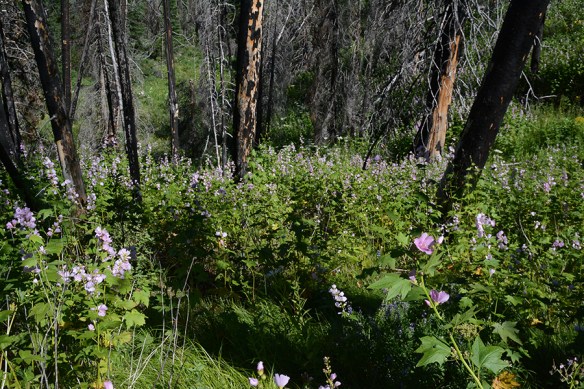 Due to a prescribed burn south of Hoback, the slopes along the trail up Palmer Creek are now covered with 4-5’ flowering Mountain Mallow plants (photo above taken 7.13.18). Soon fruits, which look like peeled hairy tangerines, will split to release seeds for the next generation decades in the future (photo below).
 Note: In mountain mallow the seedbank is in the soil, in lodgepole pine, the seedbank is in the air.
 This evergreen, resinous, sprawling shrub will shoot up new branches from old roots after a light fire. After heavy burns, it can also sprout from “Rip-van-Winkle” seeds.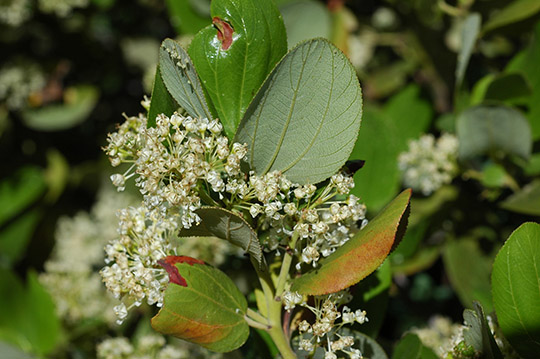
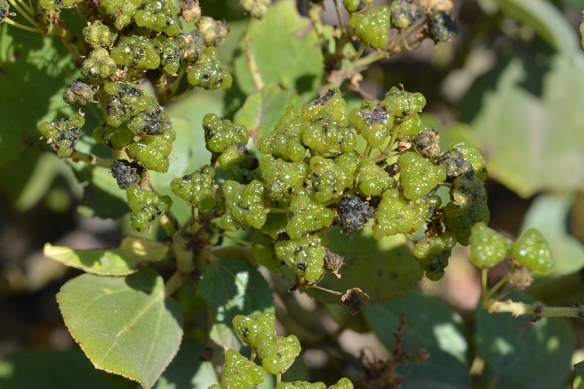
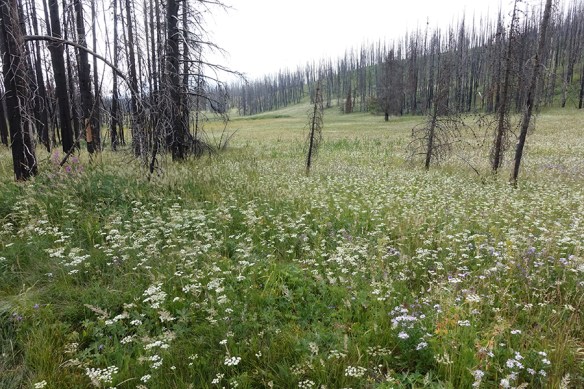 Notably, in some areas it burned through lodgepole stands that were recolonizing from a fire only a few years before. Ecologists and foresters are concerned that this unusual short “return” interval will be the pattern of future fires in this era of climate disruption.
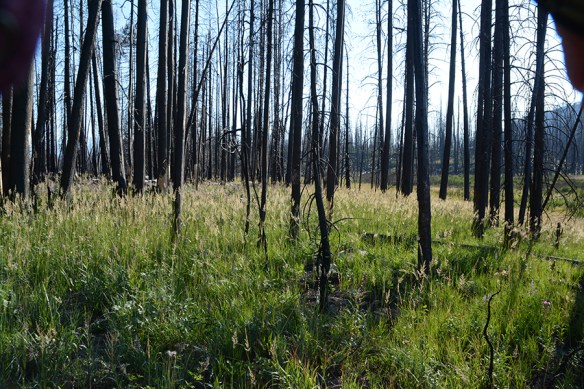 Deep fibrous roots of Pinegrass are important for holding soils, especially when soils are vulnerable to erosion after fires. Plants are blooming in profusion near the parkway.
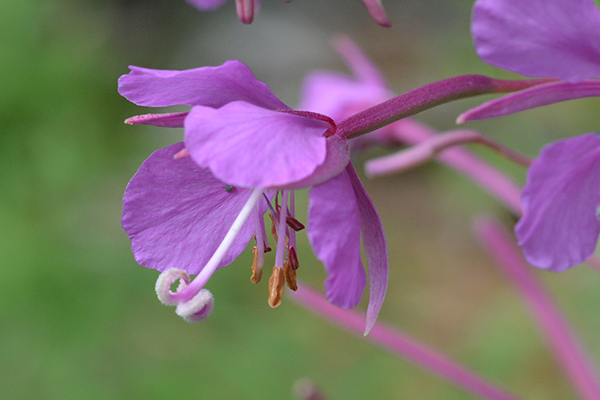
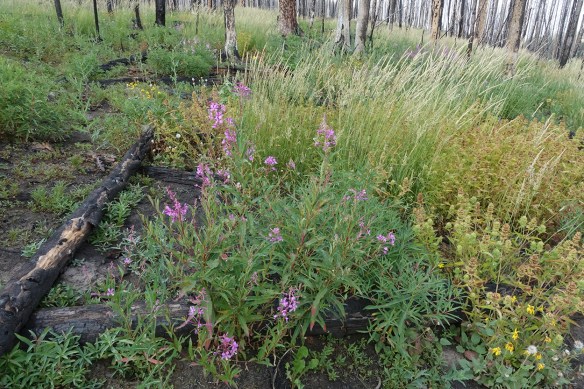 Fireweed – Epilobium/Chamerion angustifolia – is well known for showing up after fires. In the insulating soil, rhizomatous (underground creeping) stems growing 4-6” deep may have survived the above-ground heat to sprout again. Even one surviving plant can shed 1000s of seeds that can catch upon the wind, land, and germinate quickly on exposed ground. (Photo above shows both Fireweed and Pinegrass.)
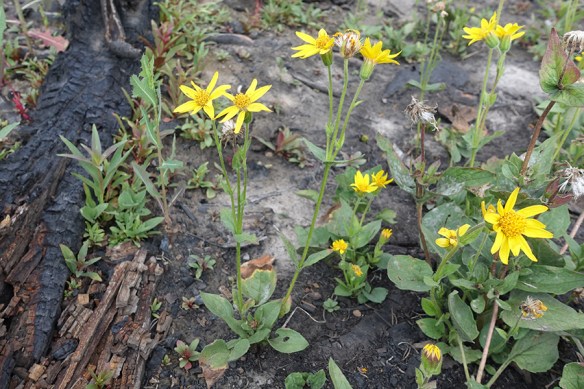 Cheerful patches of Broadleaf Arnica – Arnica latifolia – and a strange hybrid, likely Arnica X diversifolia – a cross between Heartleaf and Broadleaf arnica, are growing in charred soils (photo above).
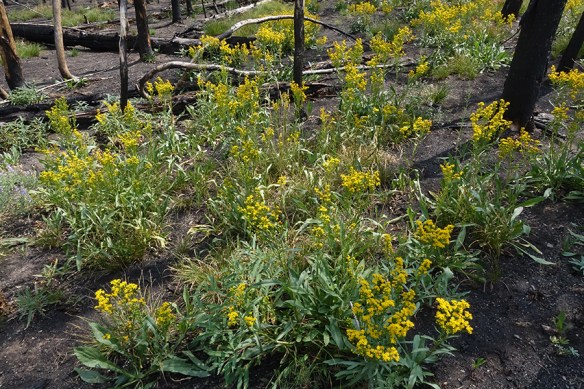 Large clumps of yellow Missouri Goldenrod – Solidago missouriensis – was dense along Grassy Lake Road, brightening the dark scene (photo above).
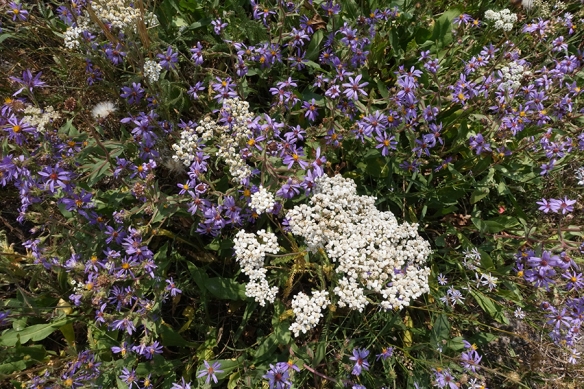 A mix of Yarrow – Achillea millefolium – and Thickstem Aster – Eurybia integrifolia – are common in fields right now, but they are also flourishing in the sun under dead lodgepole pine trees along Grassy Lake Road (photo above).
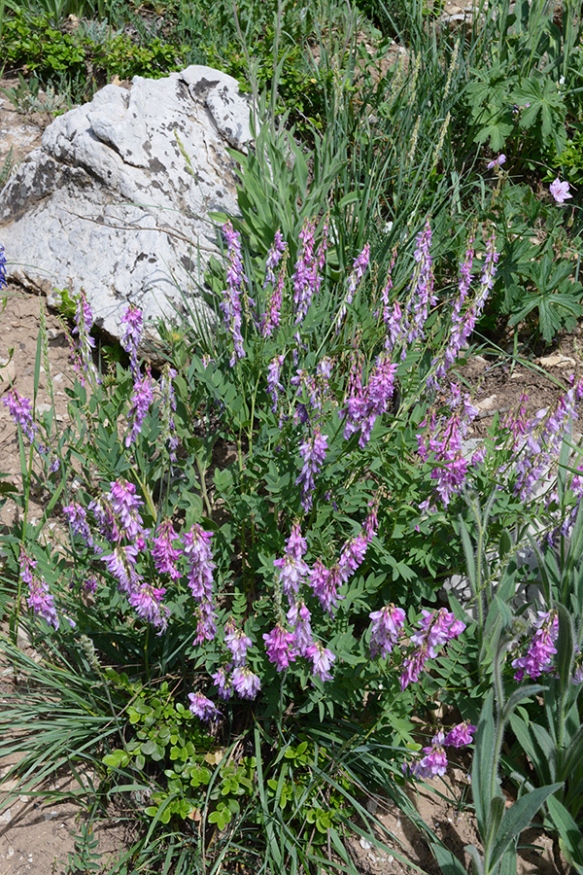
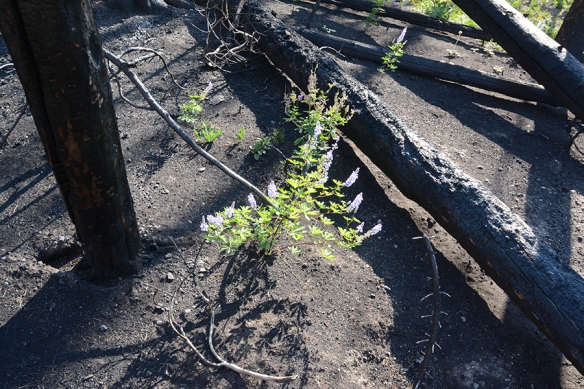 Silvery Lupine – Lupinus argenteus – seeds are “scarified” by the heat of fire, enabling buried seeds to germinate relatively quickly. As a legume, lupines have a mutually beneficial relationship with bacteria in their root nodules that can “fix” nitrogen. This provides lupines an advantage in colonizing poor soils (photo above). Their heavy seeds pop out of their pea-pod like fruits.
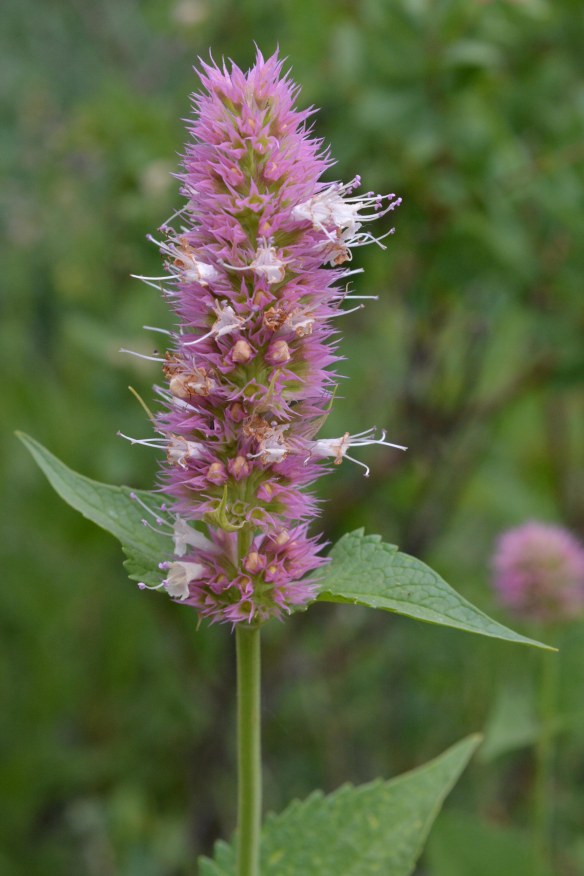
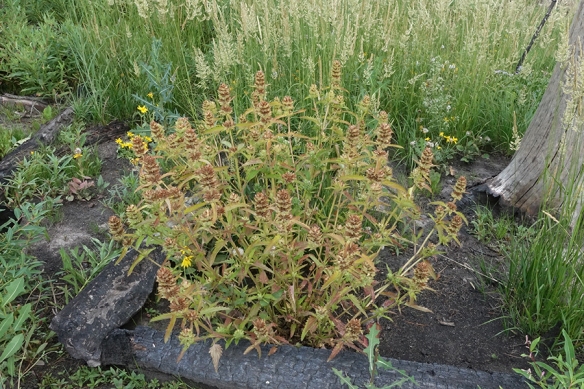 A robust member of the Mint Family – Dragonhead – Dracocephalum parviflorum – (photo above) was a new species to this botanist. Apparently it thrives in disturbed soils.
 Patches of other common meadow flowers have retained a niche as well, including Oregon Daisy – Erigeron speciosus – (photo above) with its many narrow, lavender ray flowers (ray flowers look like petals). Many perennials have deep storage roots that are often insulated by soils to heat of fire (or the cold of winter.)
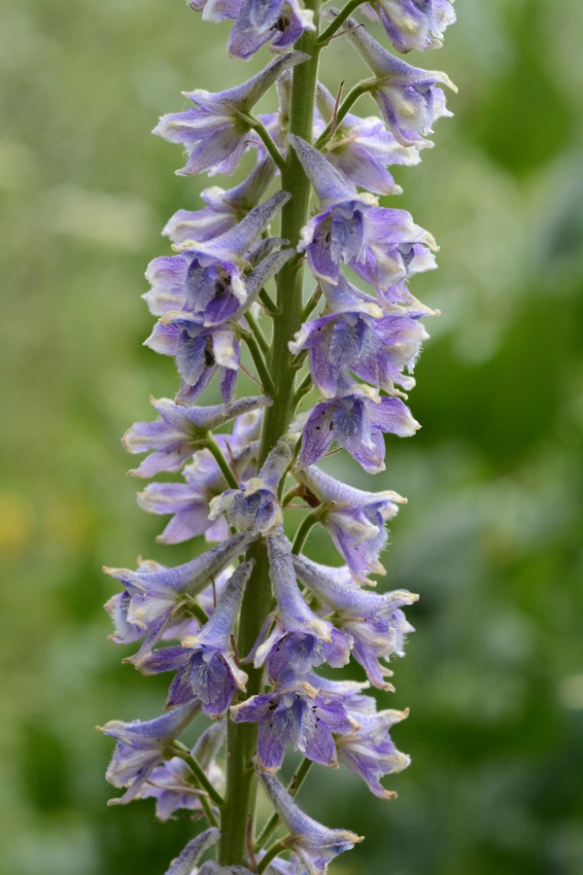
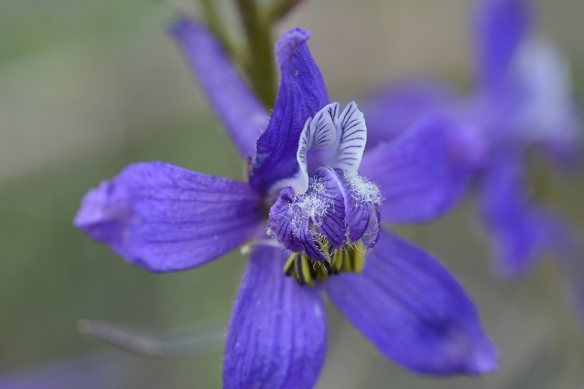
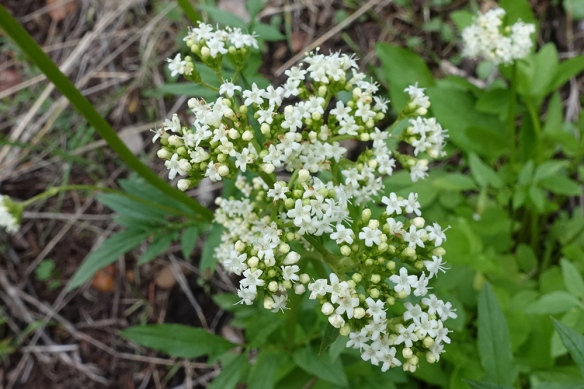
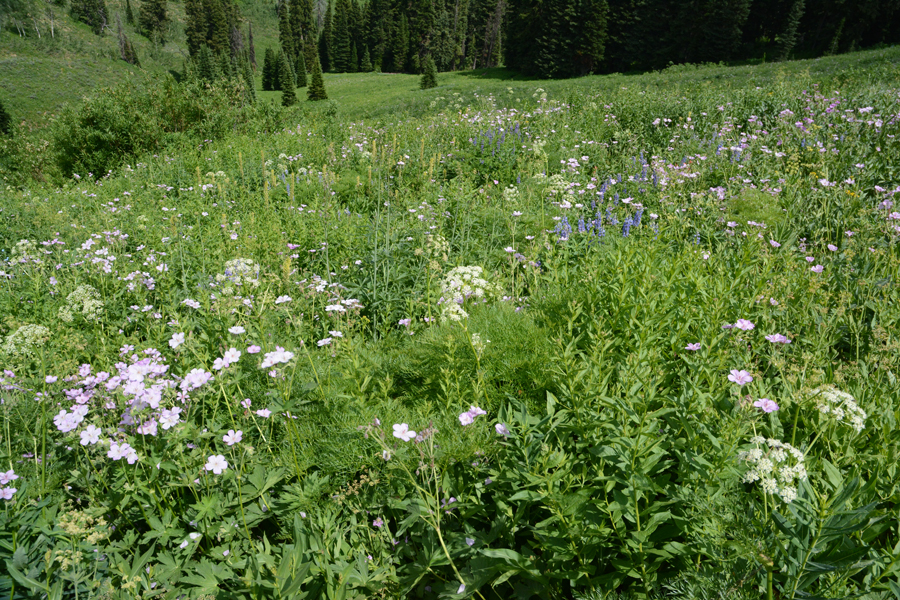
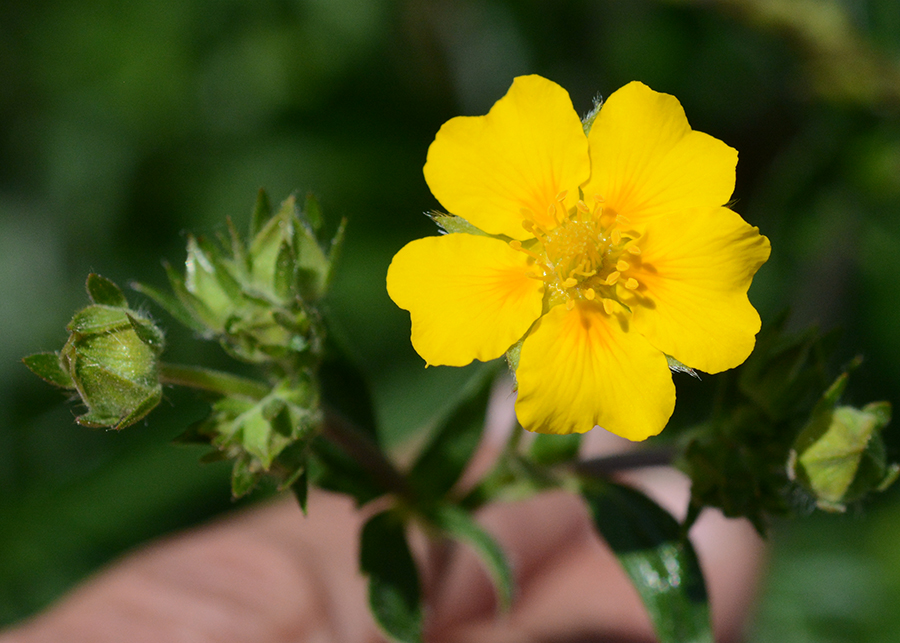
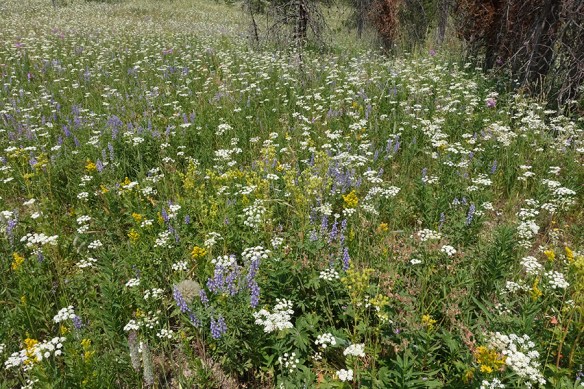 Common Yampa – Perideridia montana – has created a tapestry of white. Upon a walk through the area, one can see that many late-summer flowers which are common elsewhere as here as well: a hidden layer of Sticky Geranium – Geranium viscossimum, blue spires of Tall Delphinium – Delphinium occidentale, yellow sprays of Cinquefoil – Potentilla spp., orange-yellow Rocky Mountain Golendrod – Solidago multiradiata, and spikes of blue Silvery Lupine mix in.
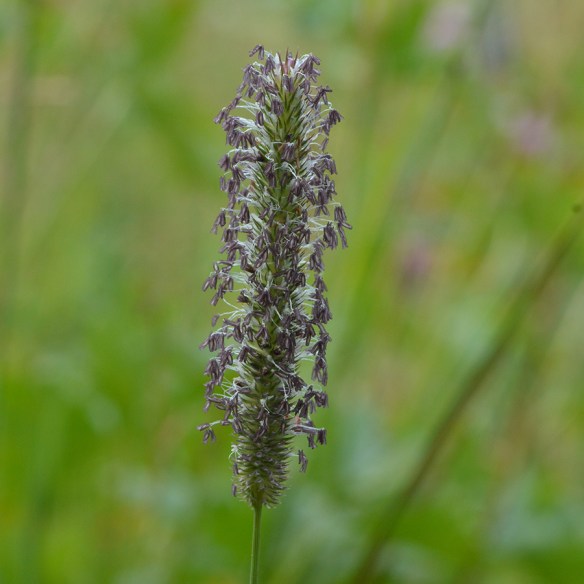 Mountain Brome – Bromus carinatus (photo below),
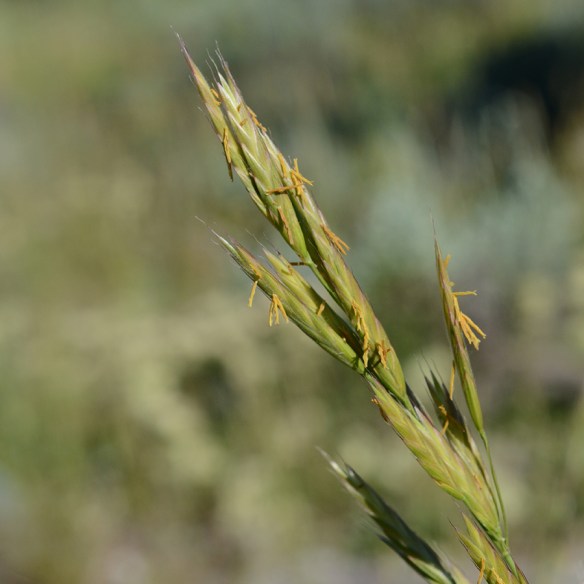 and elegant spikelets of Oniongrass – Melica spectabilis (photo below):
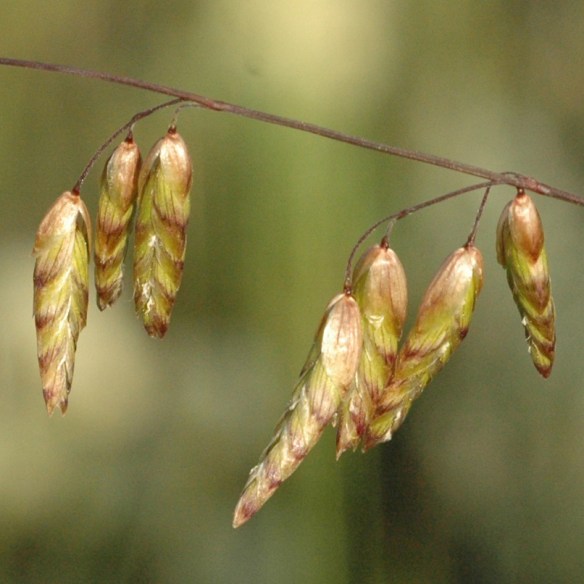 (Note all the grasses pictured above are in bloom)
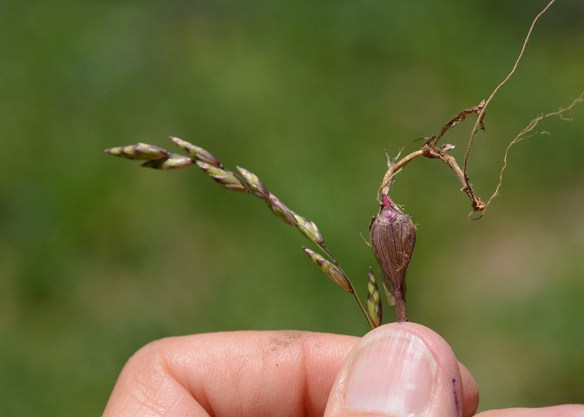 Grasses have evolved to sprout from buds at the base of their leaves – an adaptation to both browsing and fire.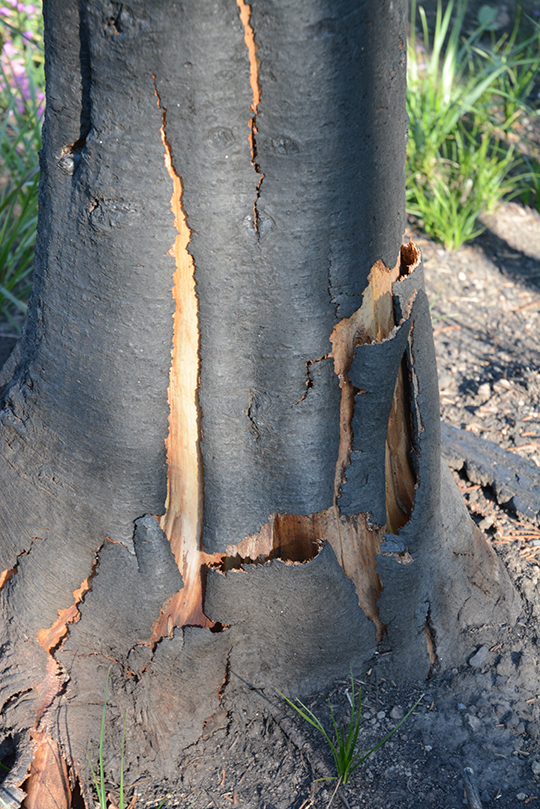
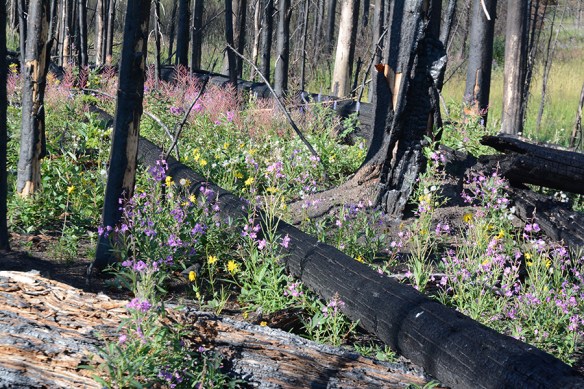
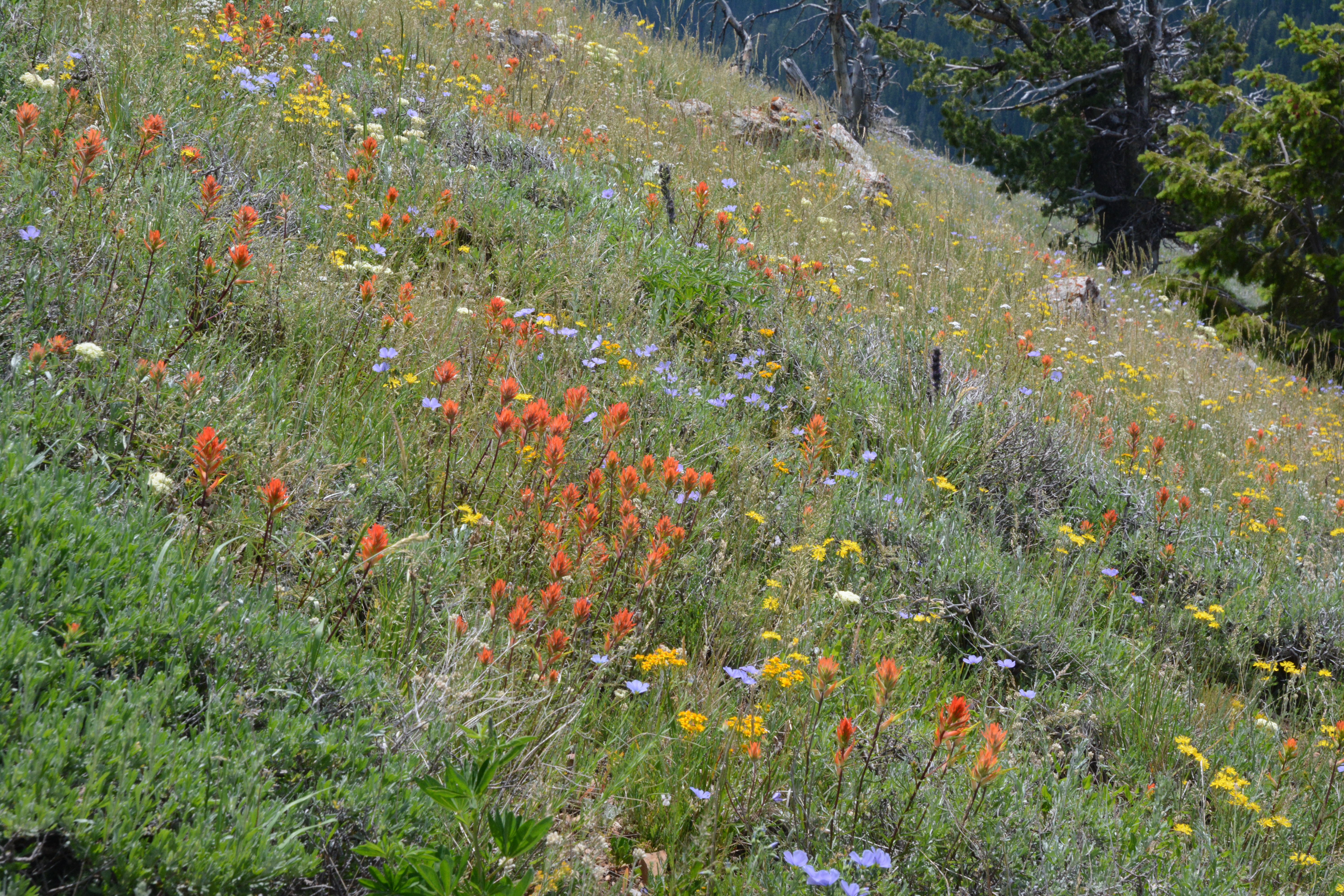
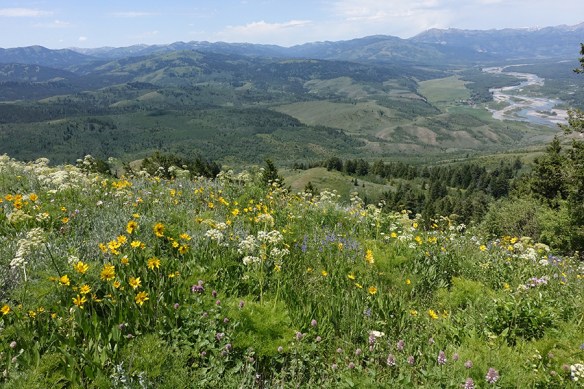 With summer strong, flowers are blooming everywhere in and around Jackson Hole. Here are a favorite dozen (plus!) wildflowers seen on hikes this past week: around Phelps Lake and up Munger Mountain (above); the start of the Ski Lake Trail; just south of Teton Pass; and the north end of Grand Teton National Park. Lower elevations fade first while upper elevations are just emerging.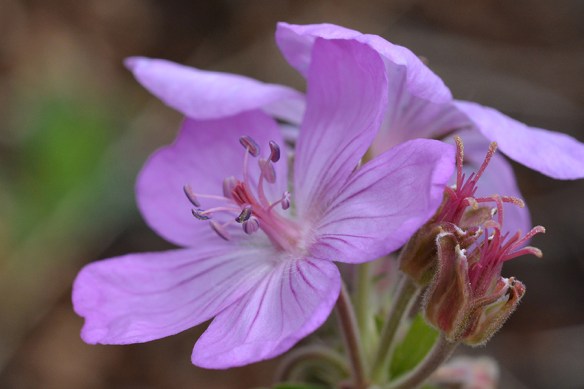
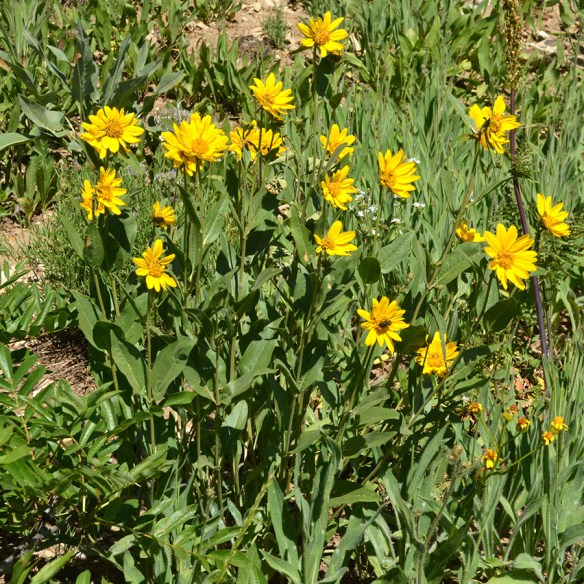
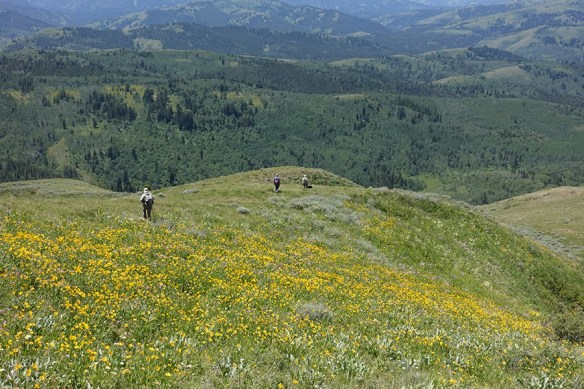
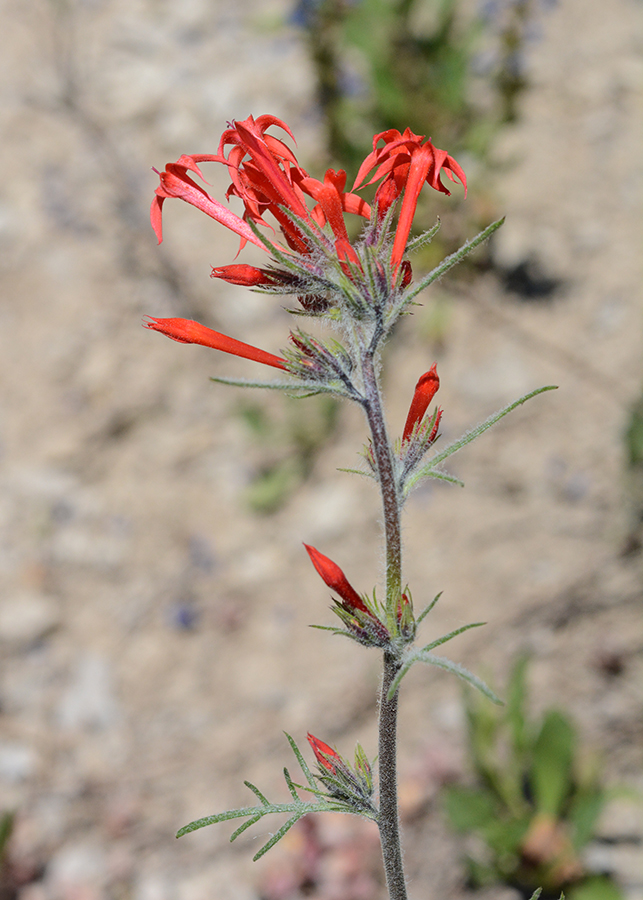
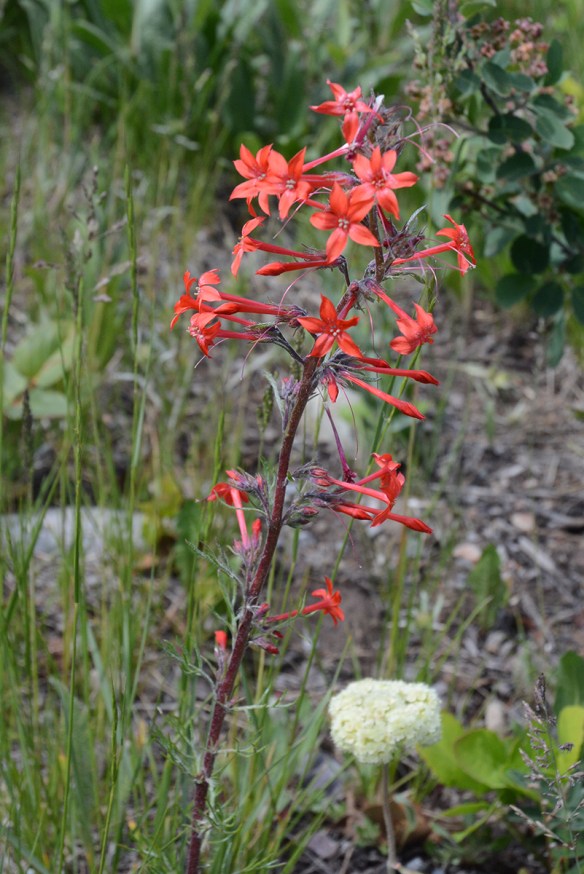 The 1-2” red trumpet flowers attract hummingbirds, which are able to hover and extend their long tongues into the deep tube to lap up (not sip) nectar. A bird’s head may be doused in pollen on one visit. On the next stop, it is poked with a sticky stigma that will collect the pollen to make seeds. Pinkish flowers later in the season attract long-tongued sphinx moths, which provide a similar pollination service.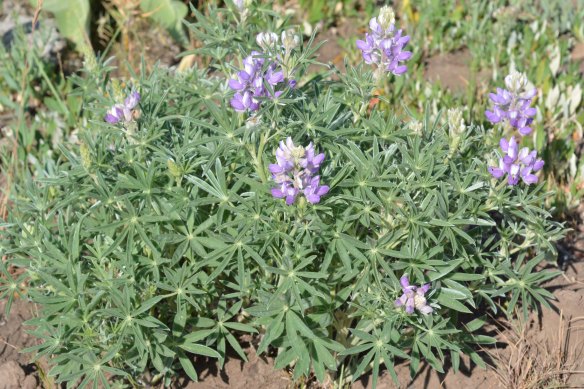
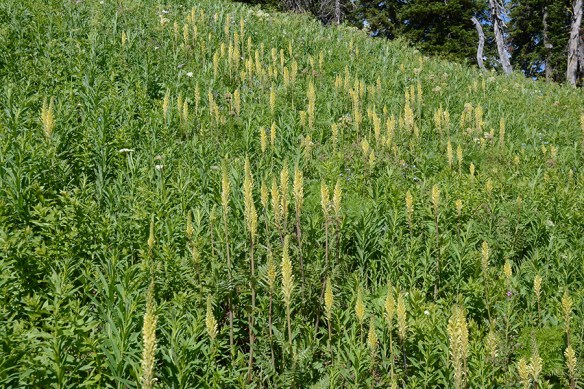 These laterally flattened, irregular flowers require bumblebees to pollinate them. Bumblebees are strong and smart enough to land on the lower lip of the flowers and push and prod their way into the throat to find nectar. In so doing, the bee gets a bunch of pollen on its body. At another flower, it distributes pollen to the stigma protruding from the top of the upper lip.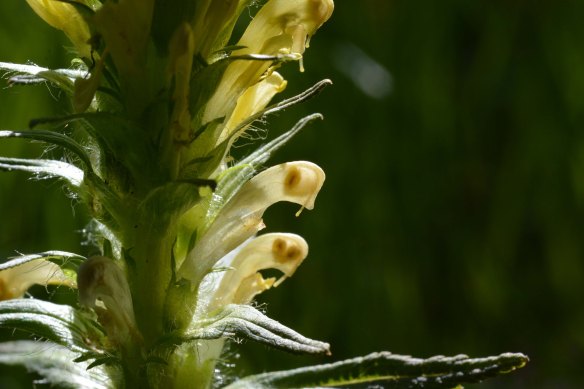
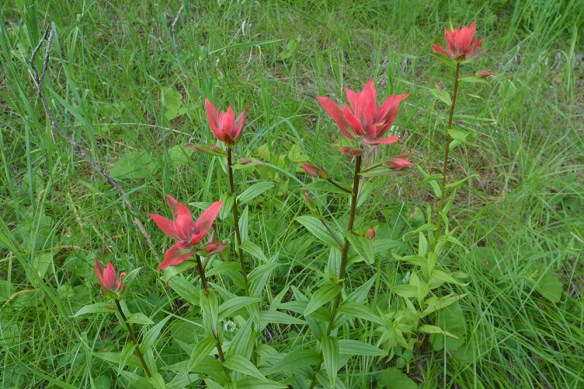
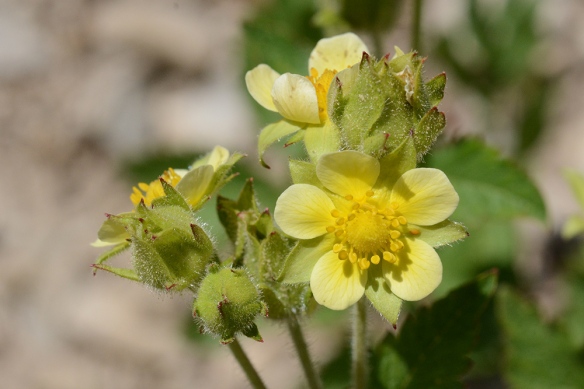


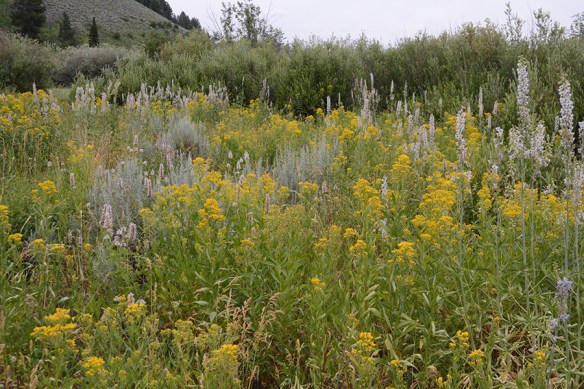
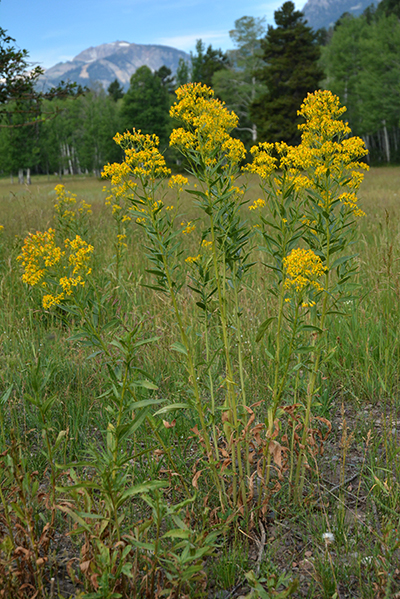
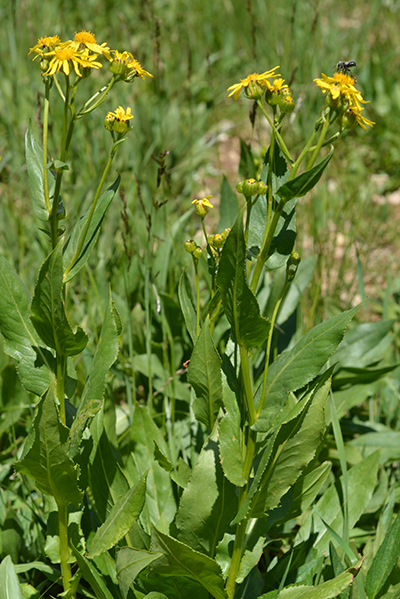
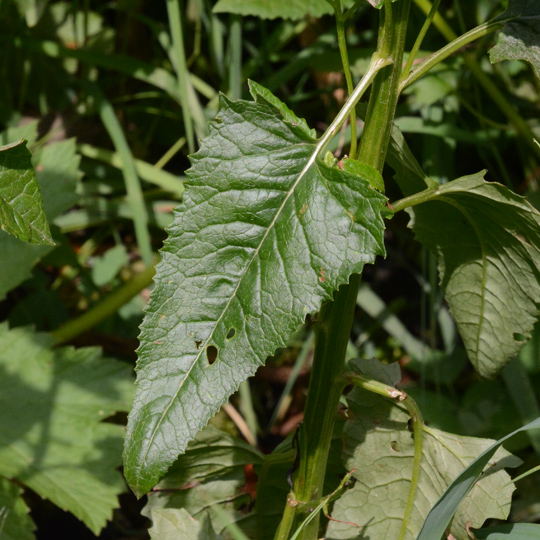
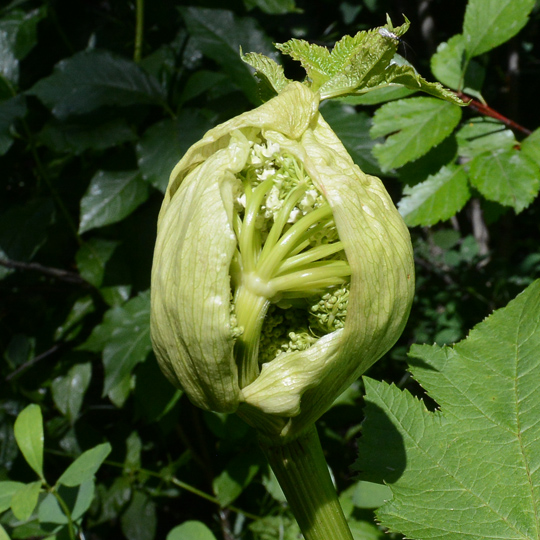


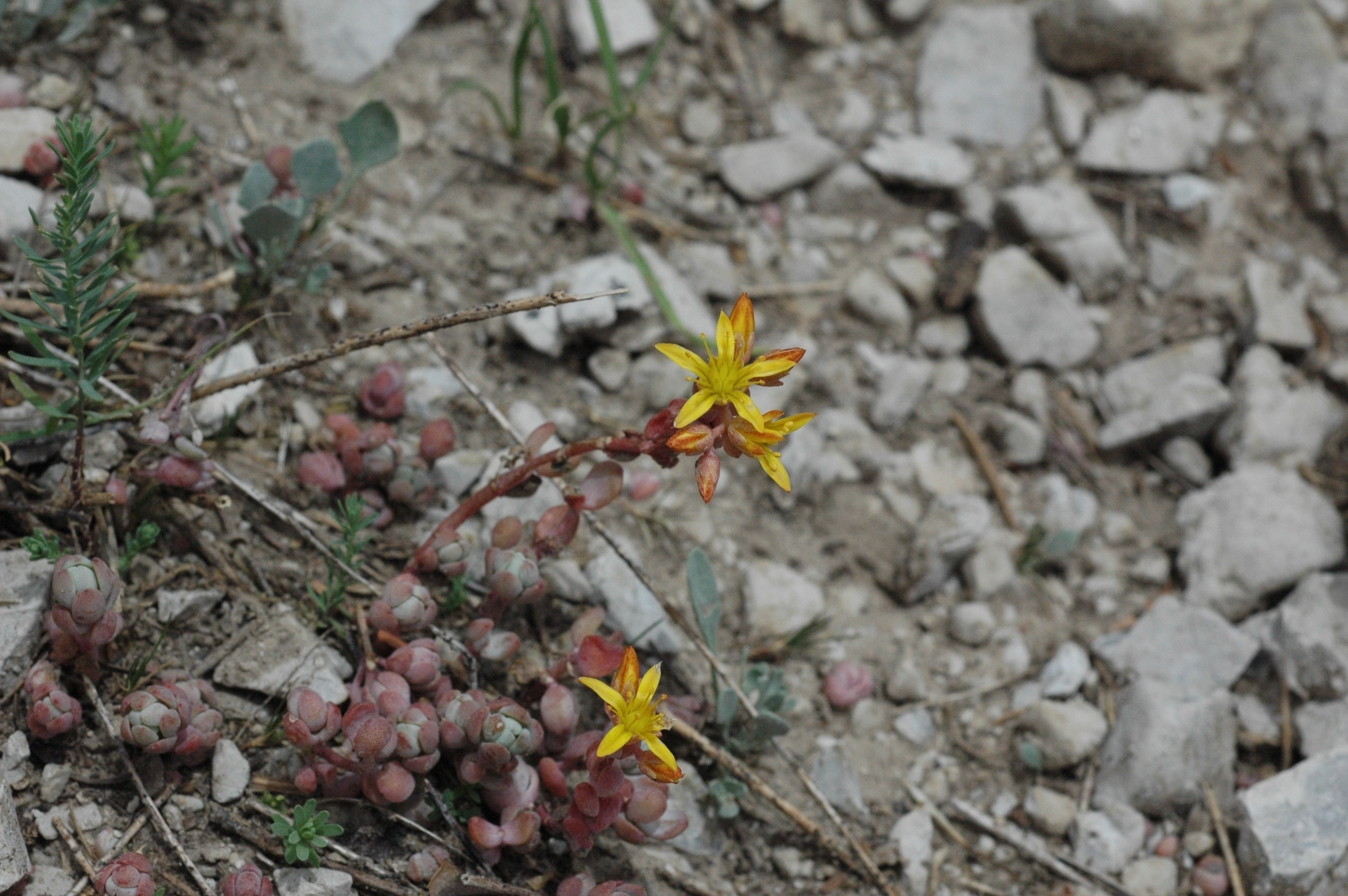
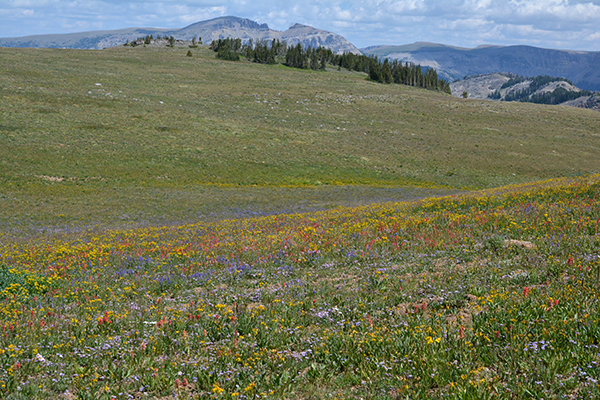
 Wildflowers are blooming strong at elevations between 8,500-10,000,’ such as Mt. Ely, above Ski Lake, Rendezvous Mountain, and other subalpine habitats of the Grand Tetons. You can find lupines, little sunflowers, geraniums, stonecrops, milfoil, mountain dandelions, and mountain bluebells that we observed at lower elevations a few weeks ago, along with new flowers found only at these higher elevations.
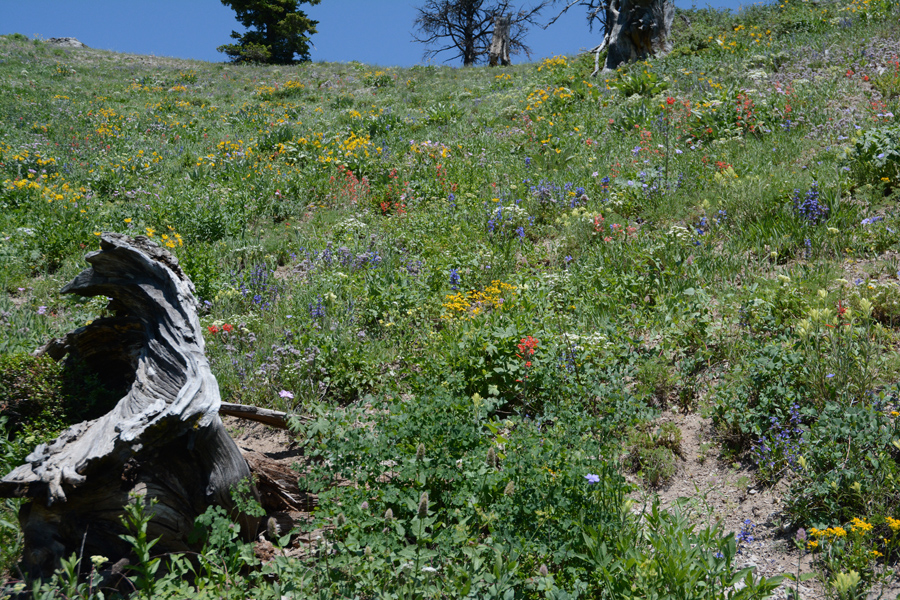
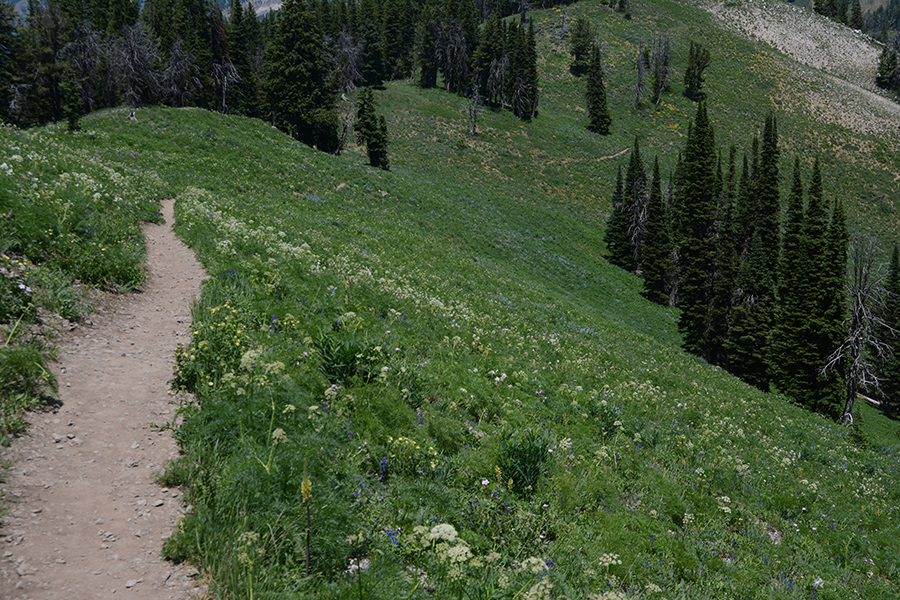
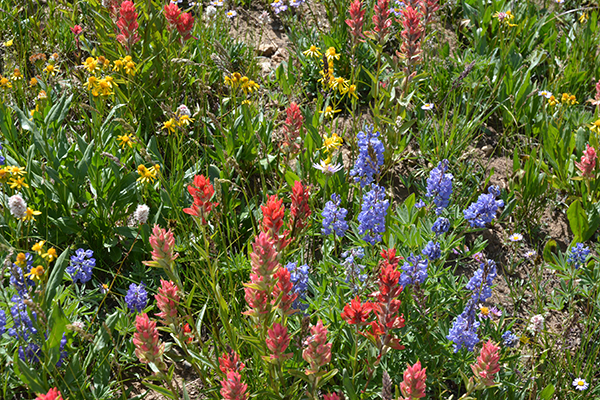
 North facing, bowl-shaped terrain—Cody Bowl and the bowl above Ski Lake–captures more snow and holds it longer. Lupines and Sulphur Paintbrush grow luxuriantly.
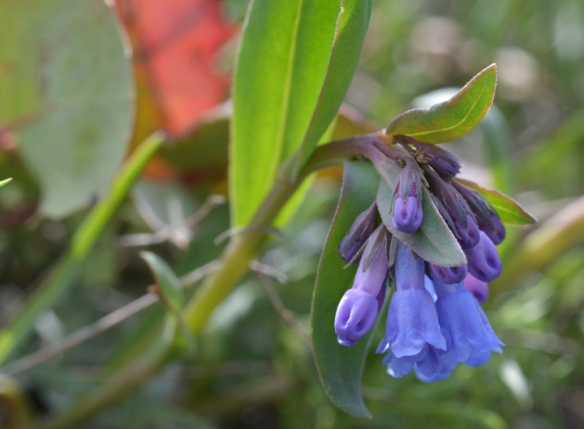
 Areas of recently melted snow and streams coming down the north side of Rendezvous Mountain still have Mountain Bluebells and Fernleaf Lovage.
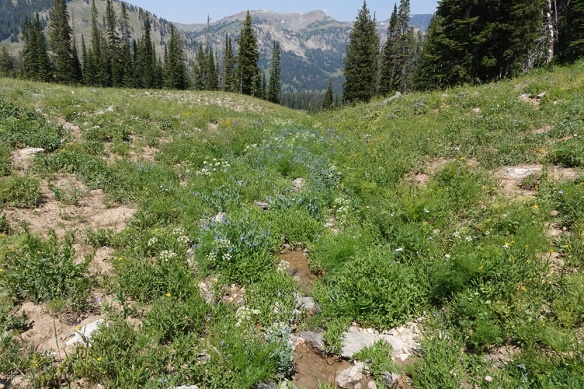 Jackson Hole receives little predictable rain in summer—typically from spotty, if often intense, thunderstorms–so snow in winter is the main source of moisture for the growing season.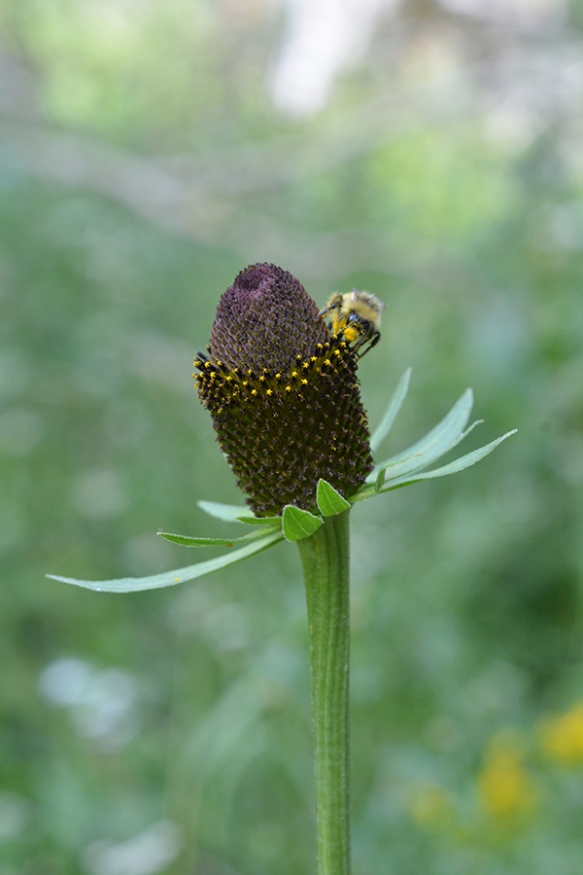


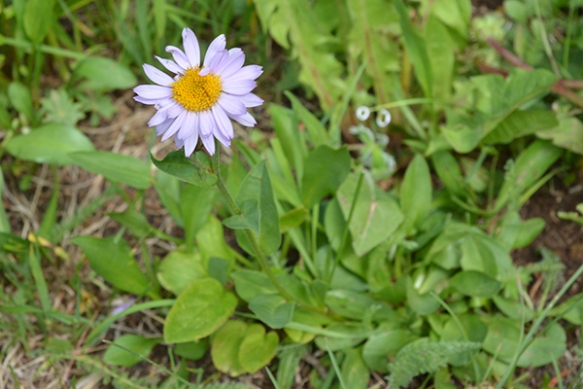
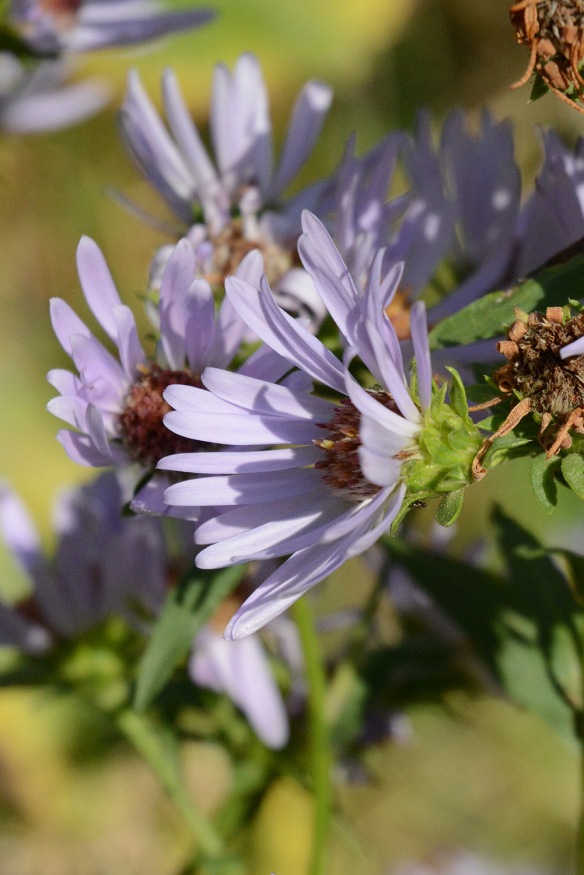



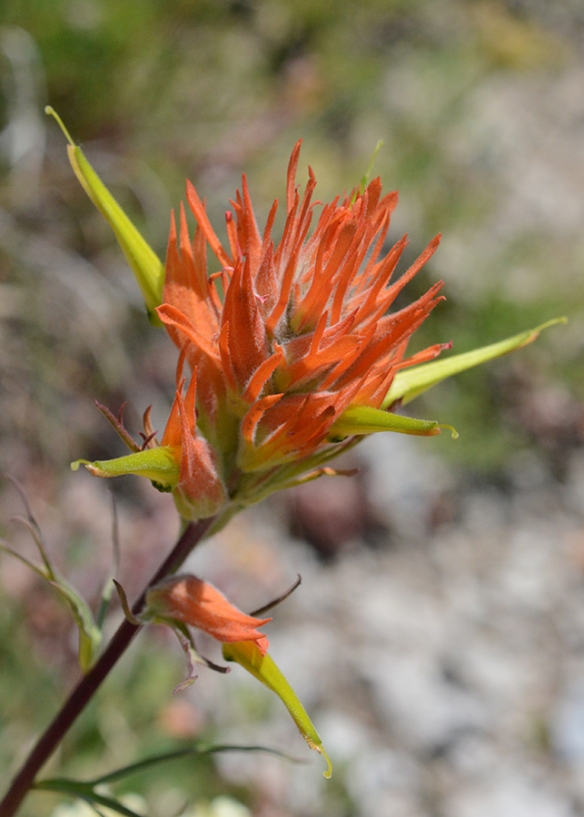
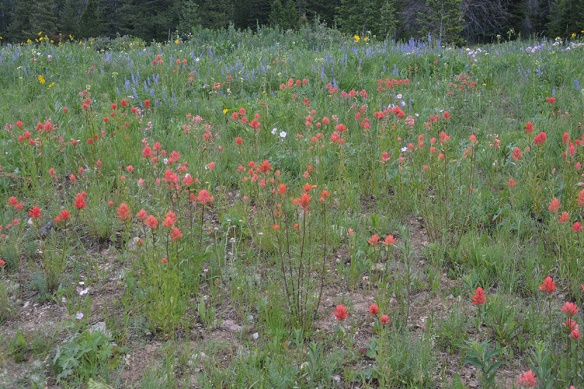
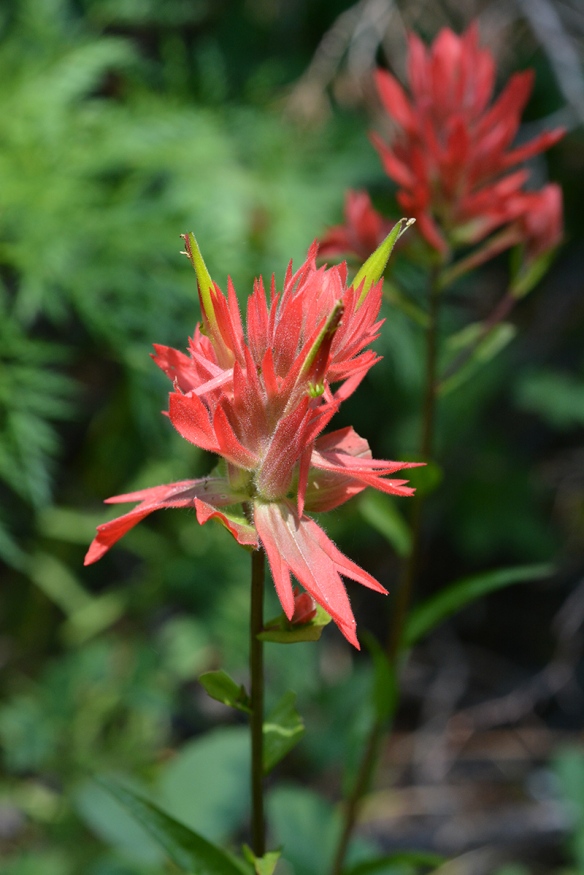
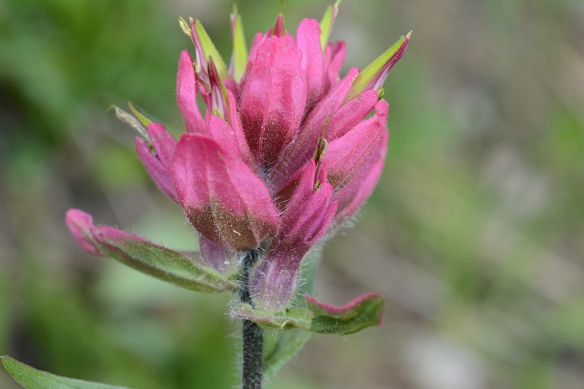
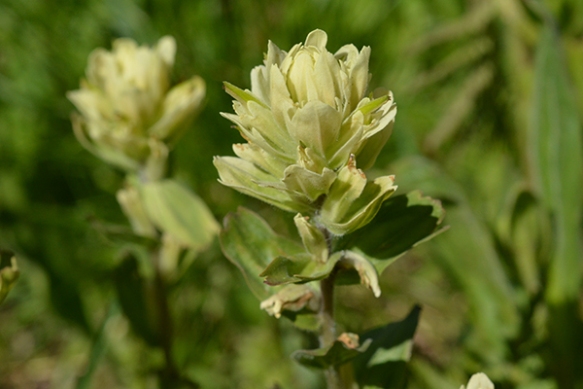
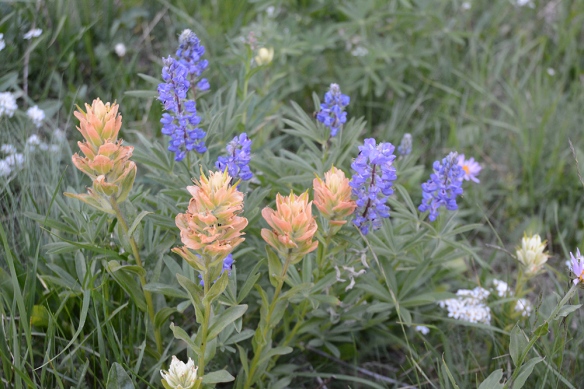
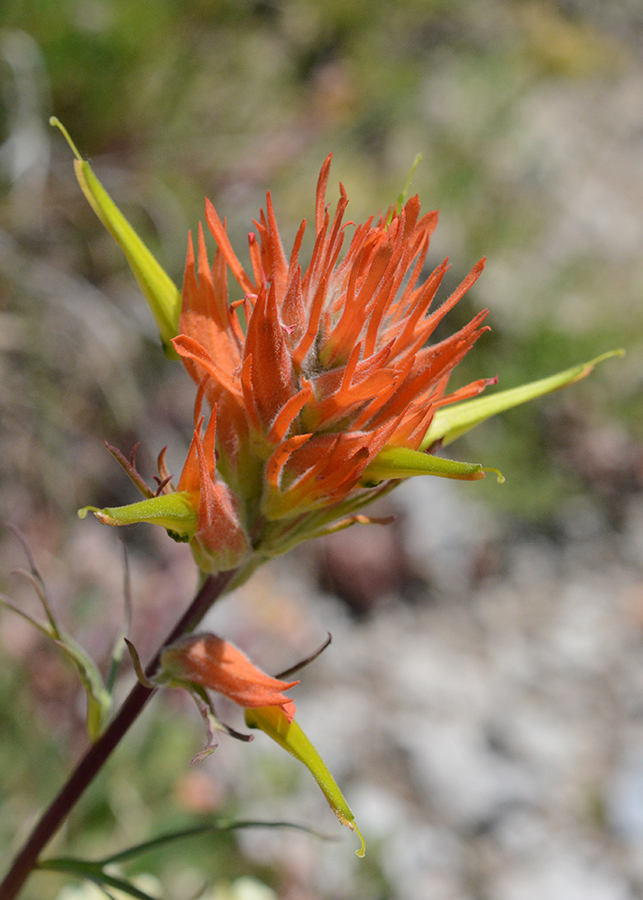
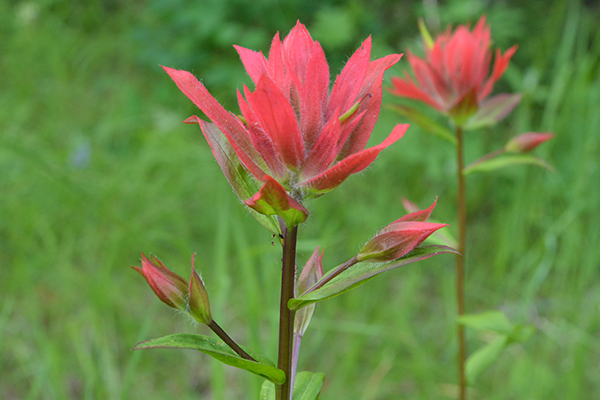
 Paintbrushes are intriguing and confusing members of the Orobanche or Broomrape Family (formerly placed the Figwort or Schropulariaceae Family). Species in the genus Castilleja have unique attachments to other plant species, depending more or less on their hosts for extra carbon, water, nutrients and even chemical defenses. As such, they are termed hemiparasites. They can survive on their own but grow larger, produce more flowers and seeds, and have less predation if they attach to their host’s roots using special haustorium. Plant hosts include grasses, sagebrush, lupines, and larkspurs.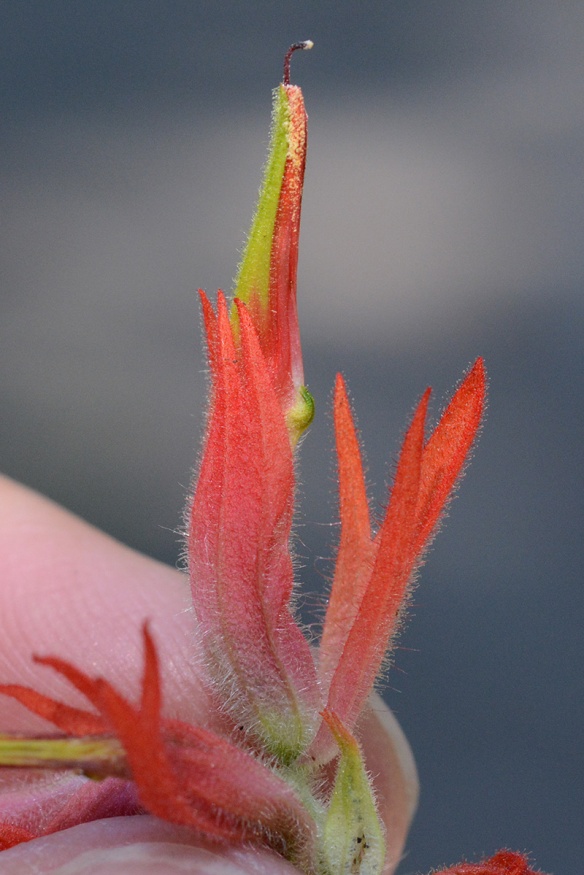
















 Teton Plants