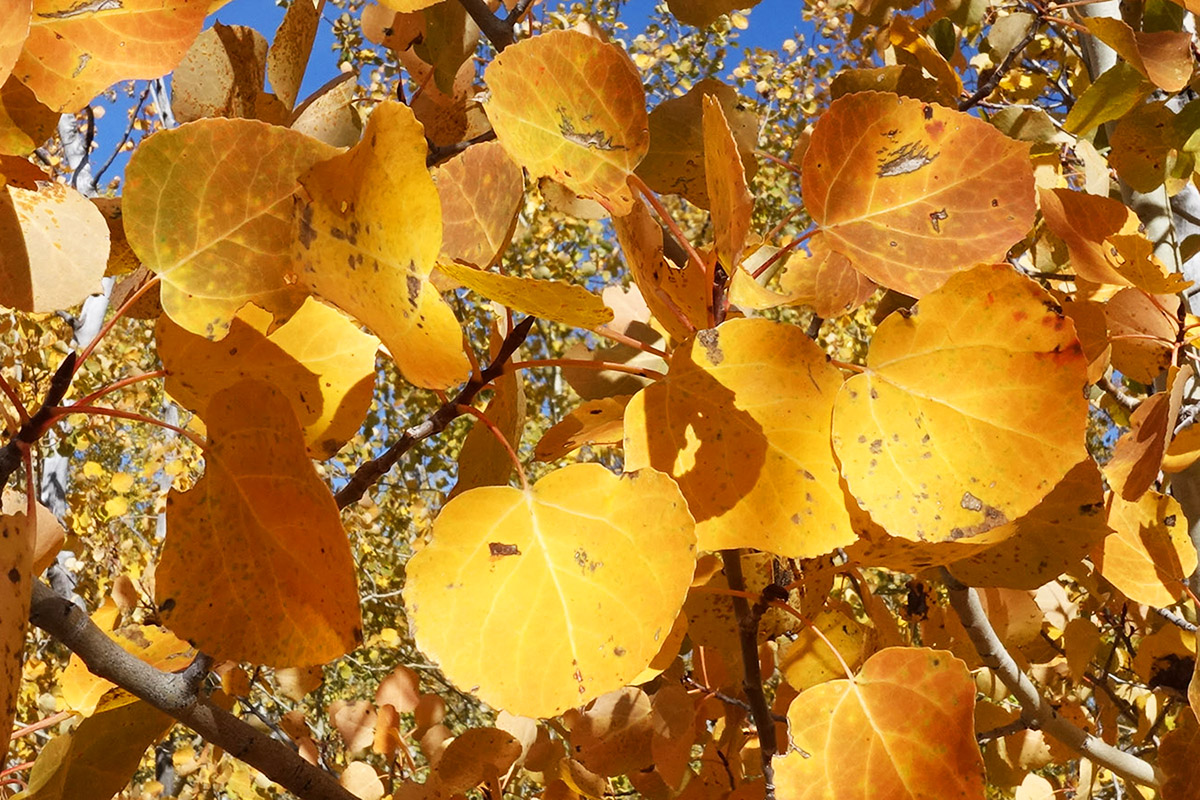
Many people are wondering what is happening to the aspens this fall.
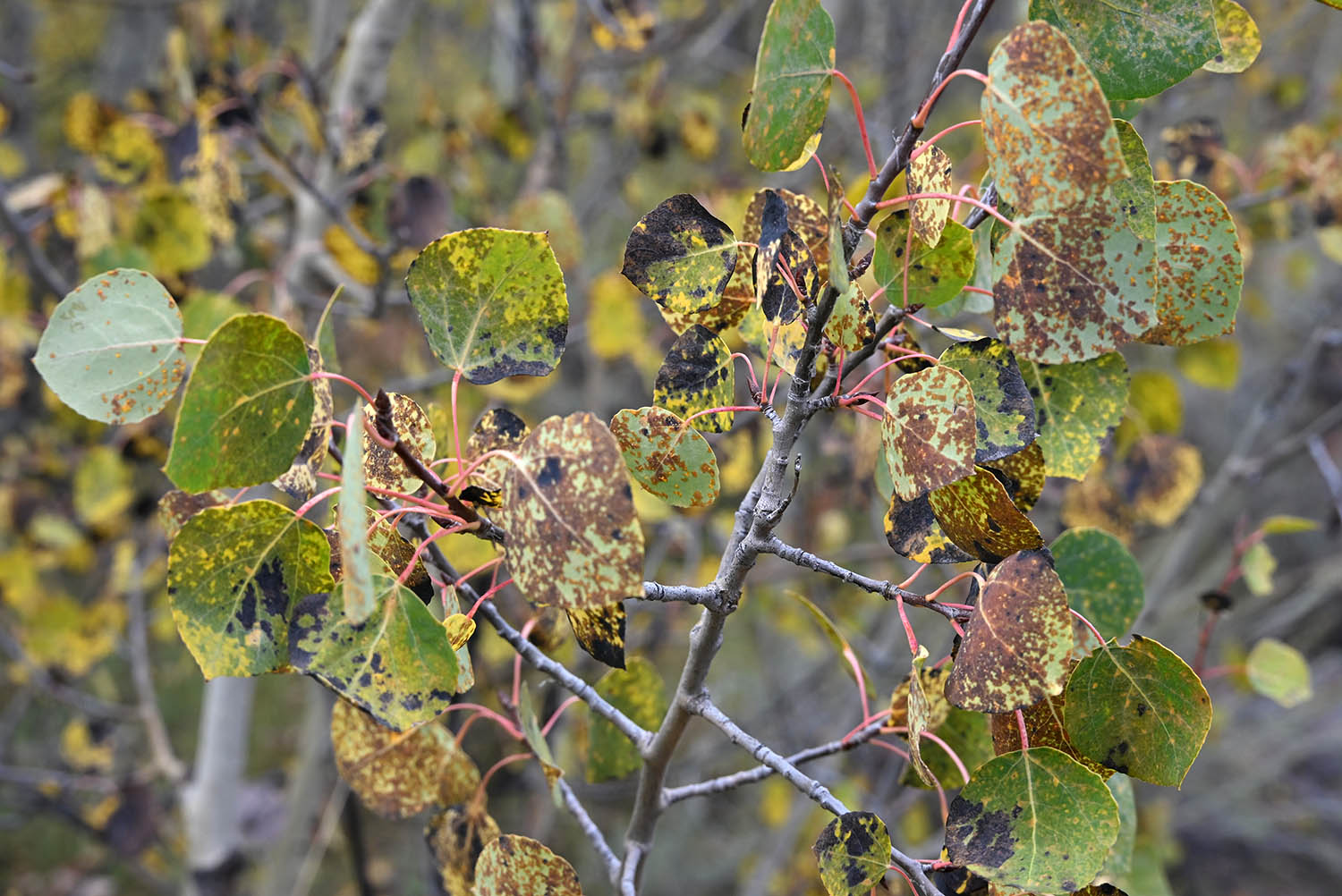
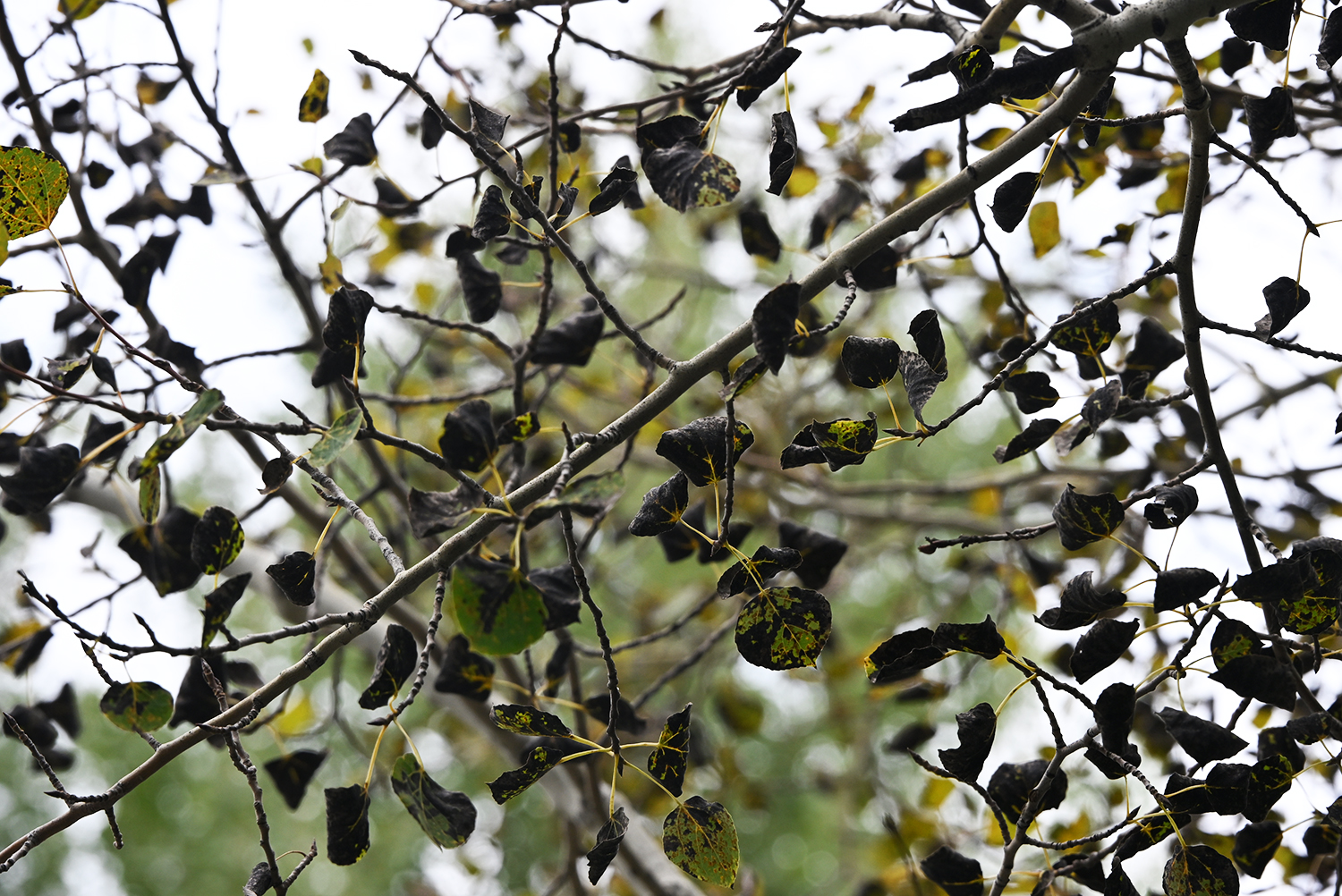
The leaves get splotchy with yellows and orange, then become encrusted with black and fall off the trees early. With some exceptions, aspens aren’t displaying the vibrant fall color we all look to as the crescendo of the growing season.
The aspens have a rust fungus – specifically Conifer-Aspen Rust – Melampsora medusae f. sp. tremuloidis. The life-cycle is termed “macrocyclic” because it involves 5 different spore stages each with its own morphology and methods. The microscopic containers producing the spores look different in color, shape and size; and the spores also have different shapes, number of nuclei and ways of spreading. The full cycle requires two different host plants: our Trembling Aspen – Populus tremuloides – more rarely Big Leaf Aspen – Populus grandidentata – and a conifer – Douglas-fir or lodgepole or limber pines here in Teton County.
The reason for the outbreak is likely due to the warm spring and relatively moist and warm summer which benefits the fungi. In their natural habitat, aspens will suffer little long-term effect, unless we get a series of bad years due to weather. Some clones may be susceptible to a secondary infection from another pathogen.
However, conifer-aspen rust can be a detriment to aspen or pine plantations and our eastern cottonwoods – P. deltoides – in northern Central U.S. European countries and New Zealand are also very concerned about it spreading as an invasive pathogen.
Below is the abbreviated story of the Conifer-Aspen rust lifecycle. There are gaps of details in the scientific research and few clear illustrations or photos of the specific phases of this particular rust variety. There are details of the reproductive cycle that are left out here. Still, just knowing the rust is complicated with so many different appearances and methods of spread can be fascinating. I hope you get intrigued at least a bit.
The technical terms of the fungal stages and illustrations are included. Note not all illustrations are from this particular species of rust – such graphics are scarce on the web. A list of references with links are at the end.
To begin the cycle: Old aspen leaves to pines:
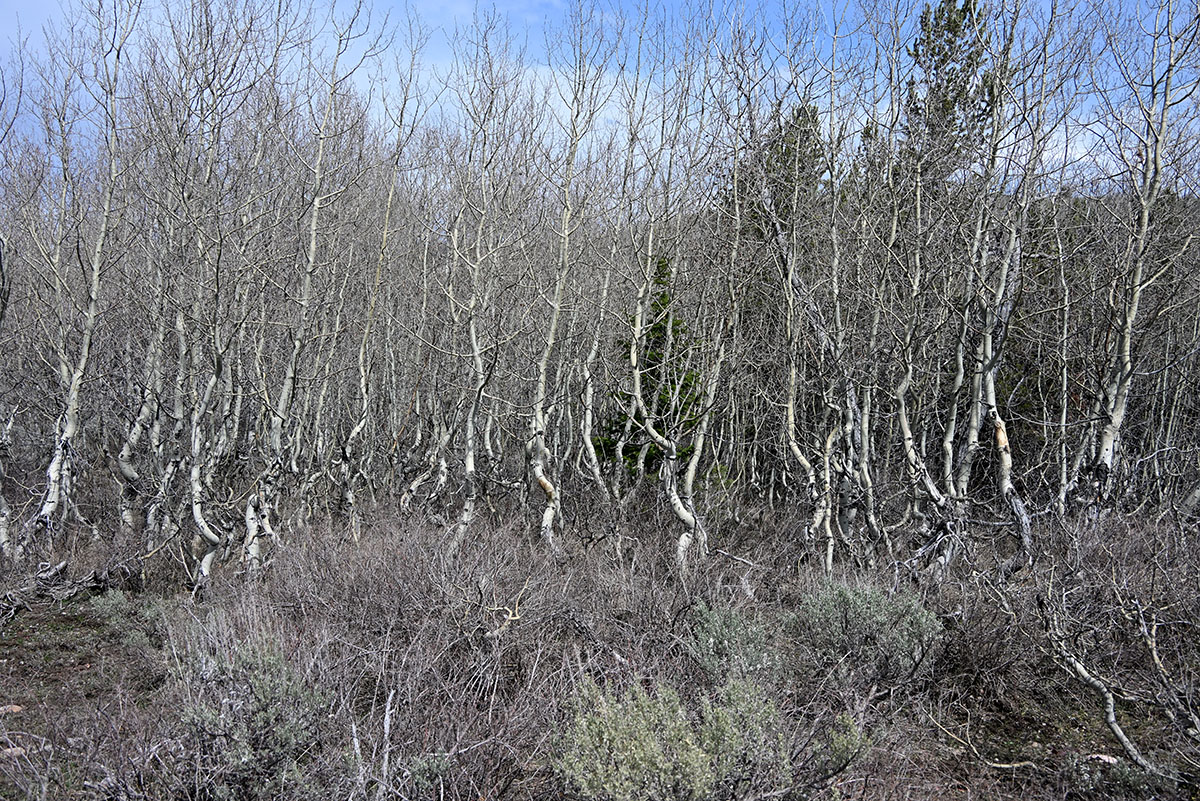
In spring, black telia concentrated on dead leaves of aspen begin to produce tiny teliospores.
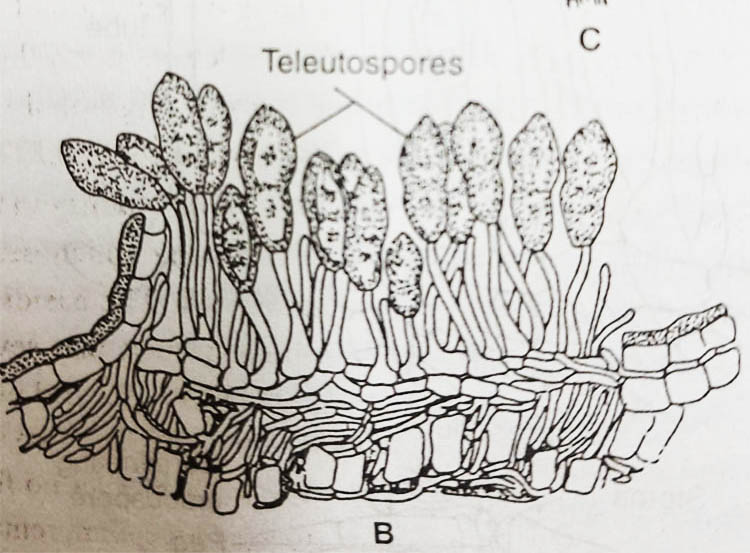
(from DOBGGC.BLOGSPOT.COM)
These spores germinate on aspen and form a septate basidium each bearing four basidiospores. Basidiospores are forcibly expelled from their structures but need water droplets to do so. (see Wikipedia for cool details)
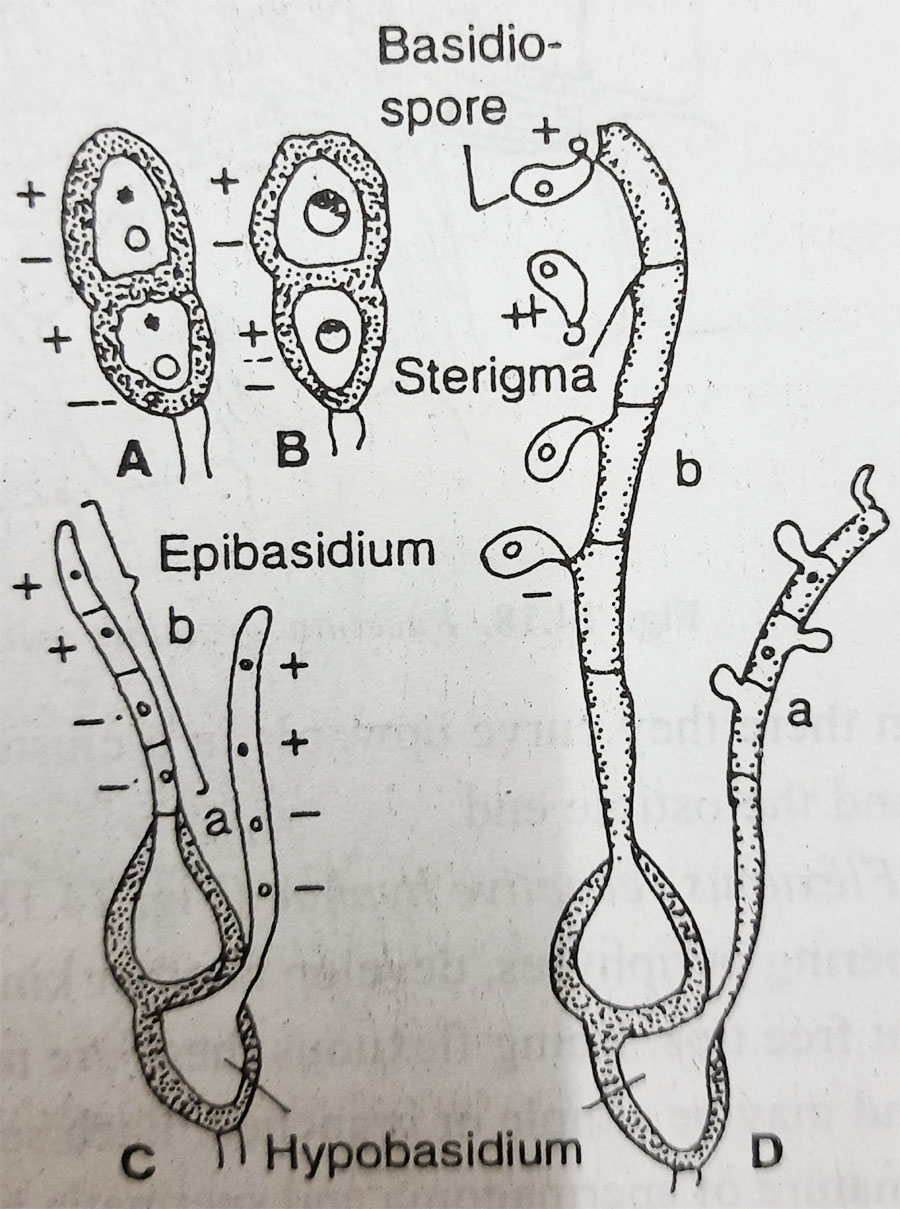
These jettisoned basidiospores spread by wind to emerging young pine or Doug-fir needles. Upon landing on the young needles these basidiospores produce volcano-like structures called spermagonia on the underside of needles.
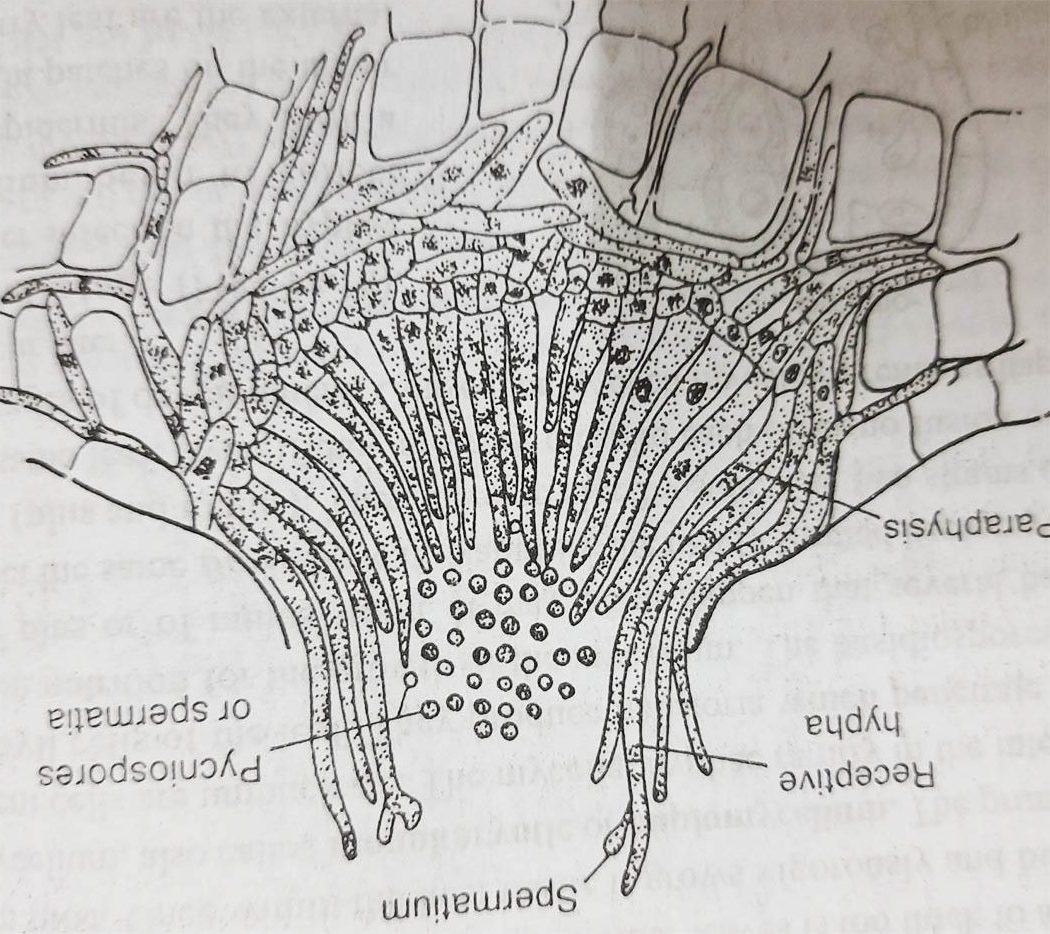
(from DOBGGC.BLOGSPOT.COM)
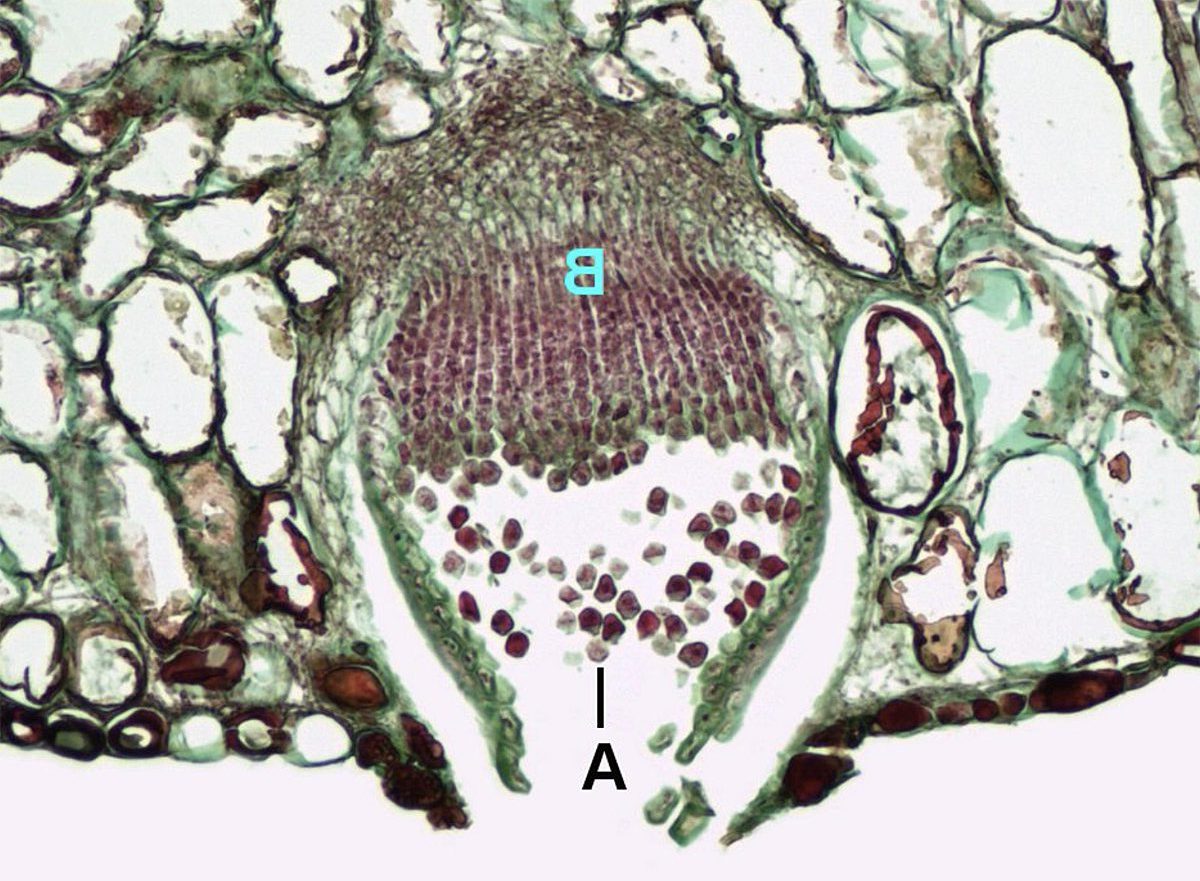
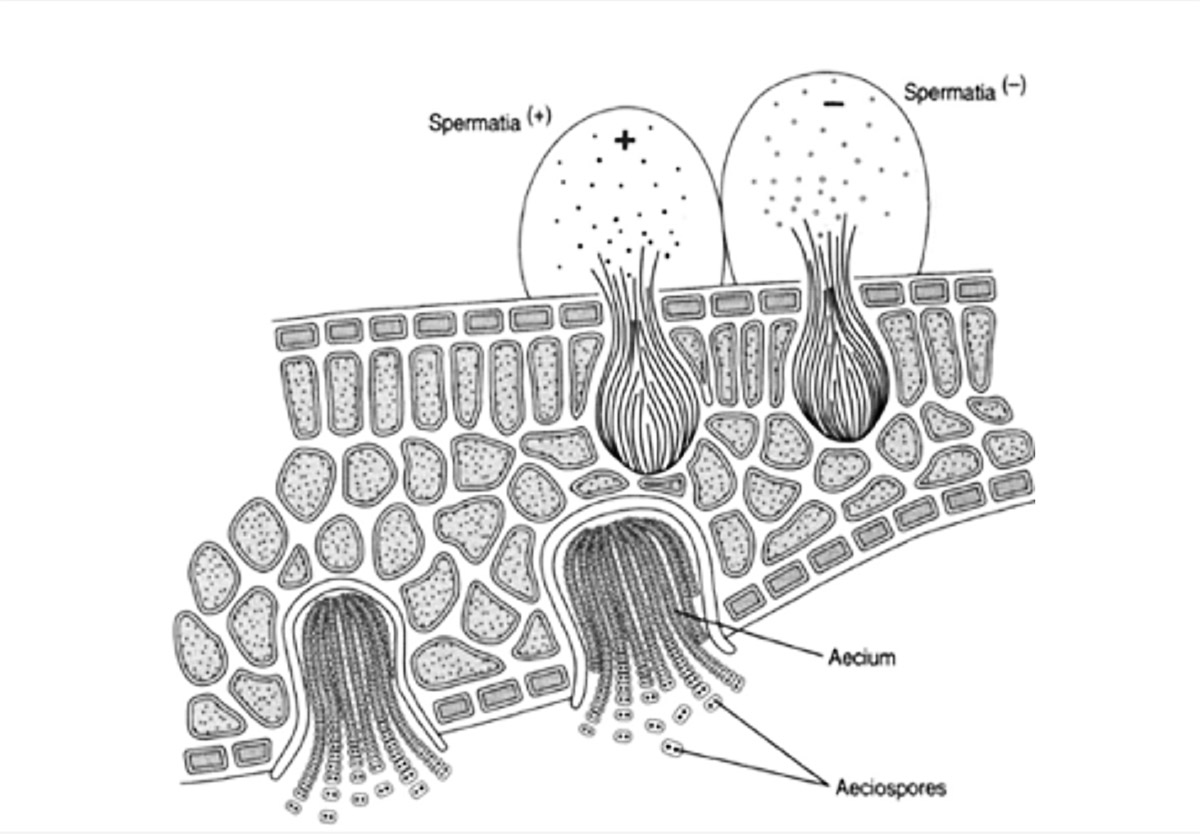
In about 10 days spermagonia produce spermatia in an oozing, sticky, sugar-rich substance. The sugary substance attracts insects which help carry the spermatia to a receptive hypha with spermatia of an opposite mating type. Wind can carry the spores, too, but mating is more chancy.
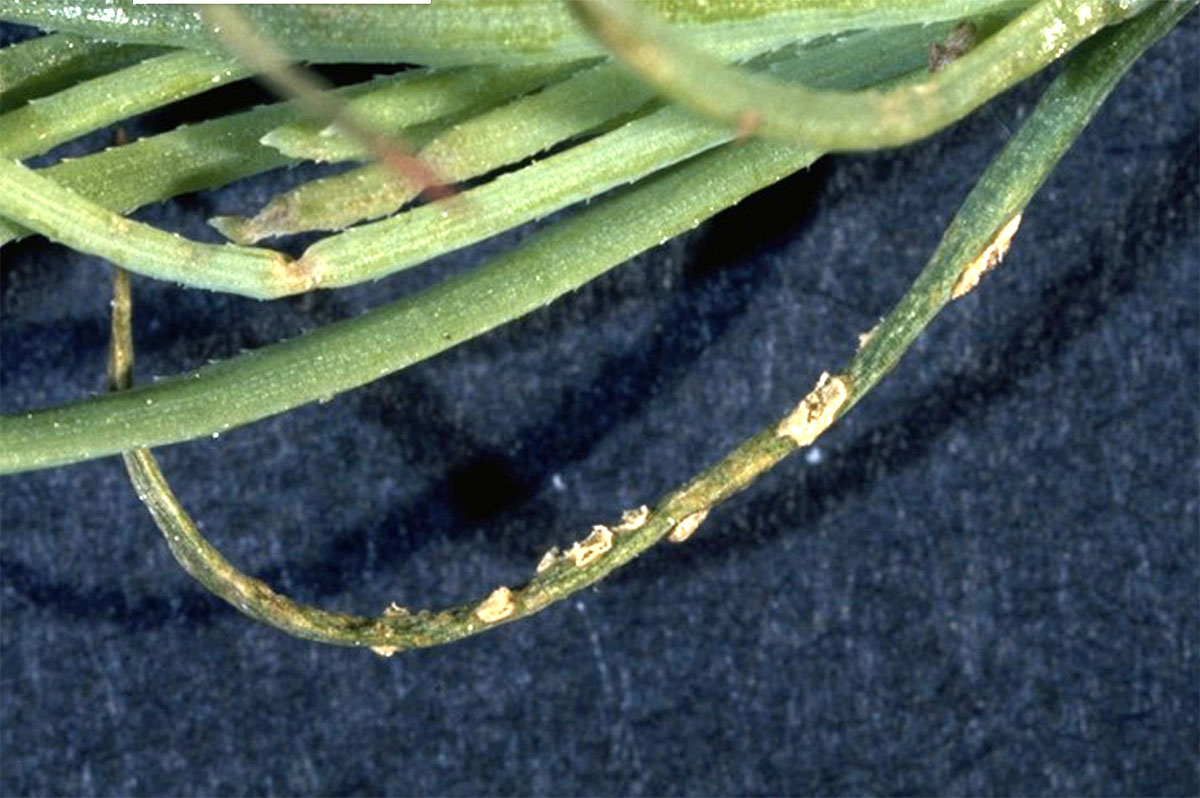
After merging, the joined spermatia form the fourth stage: aecia. These pustule-like structures develop on the undersurfaces of needles and then erupt yet a new kind of spore – aesciospores.
Pines to Aspens:
Aesciospores are then windborne to young aspen leaves. Here on the fresh aspen leaves, aseciospores give rise to yet another fungal form – uredinia. These structures form on the underside of the leaves causing yellow then orangish expanding spots.
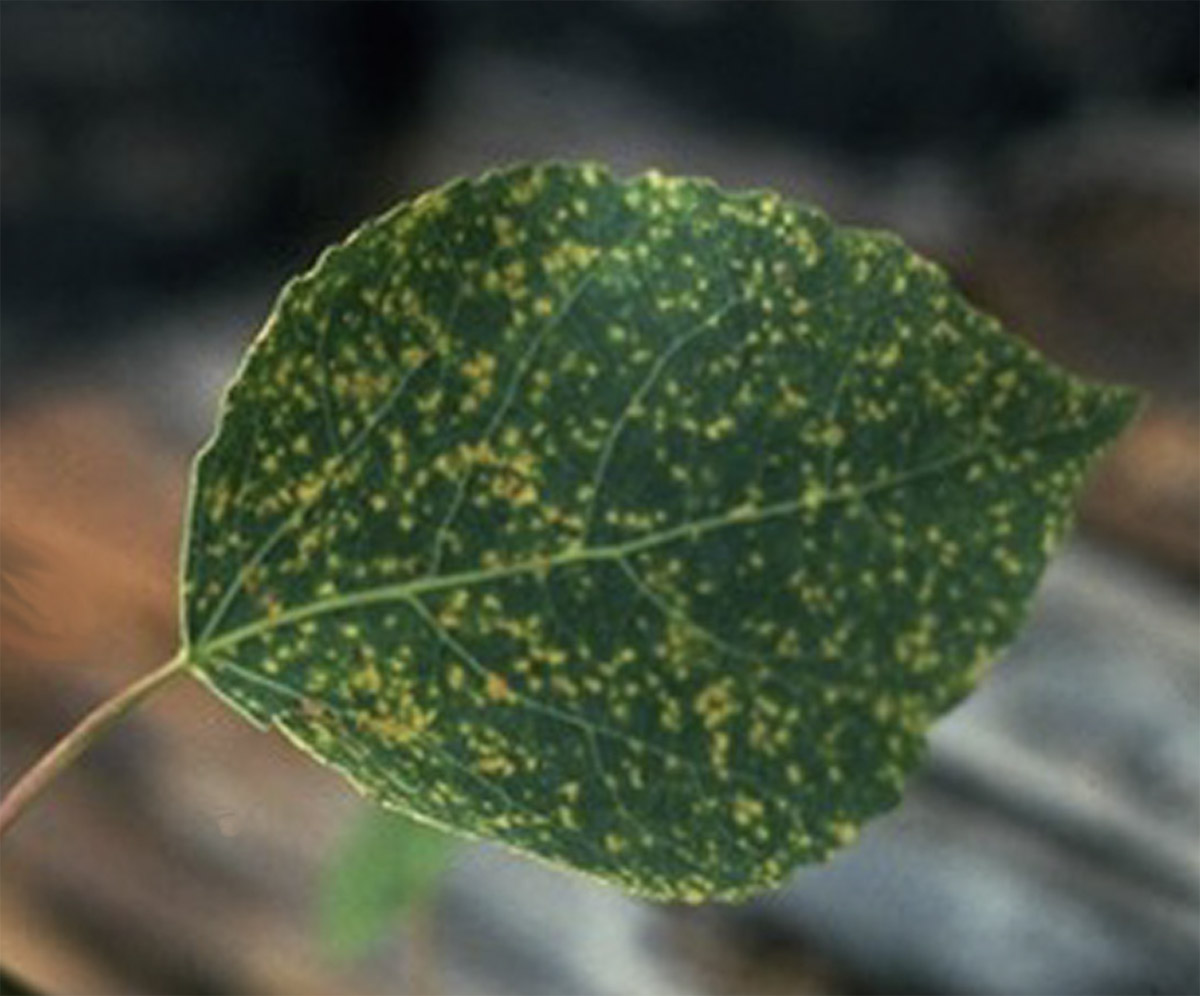
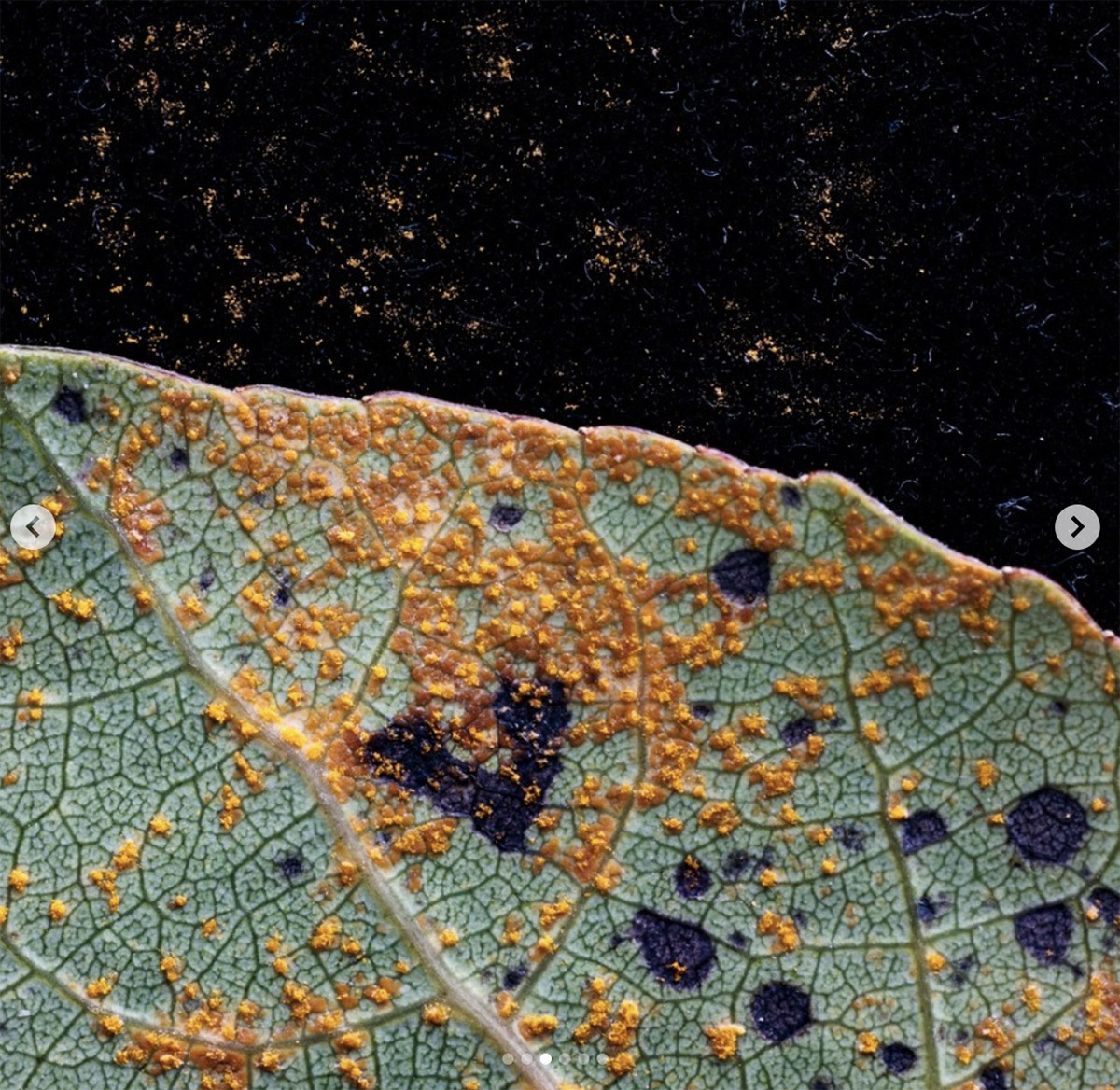
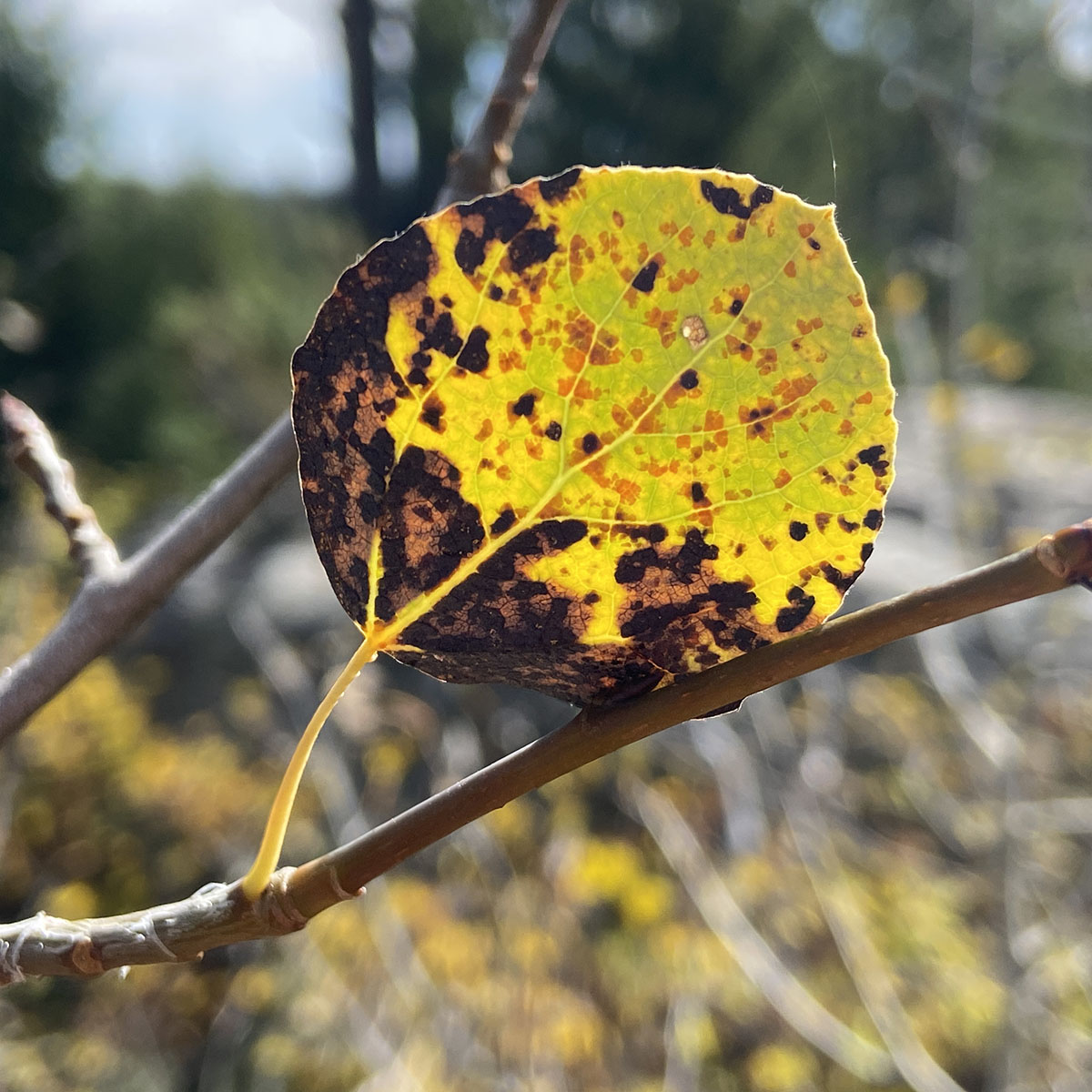
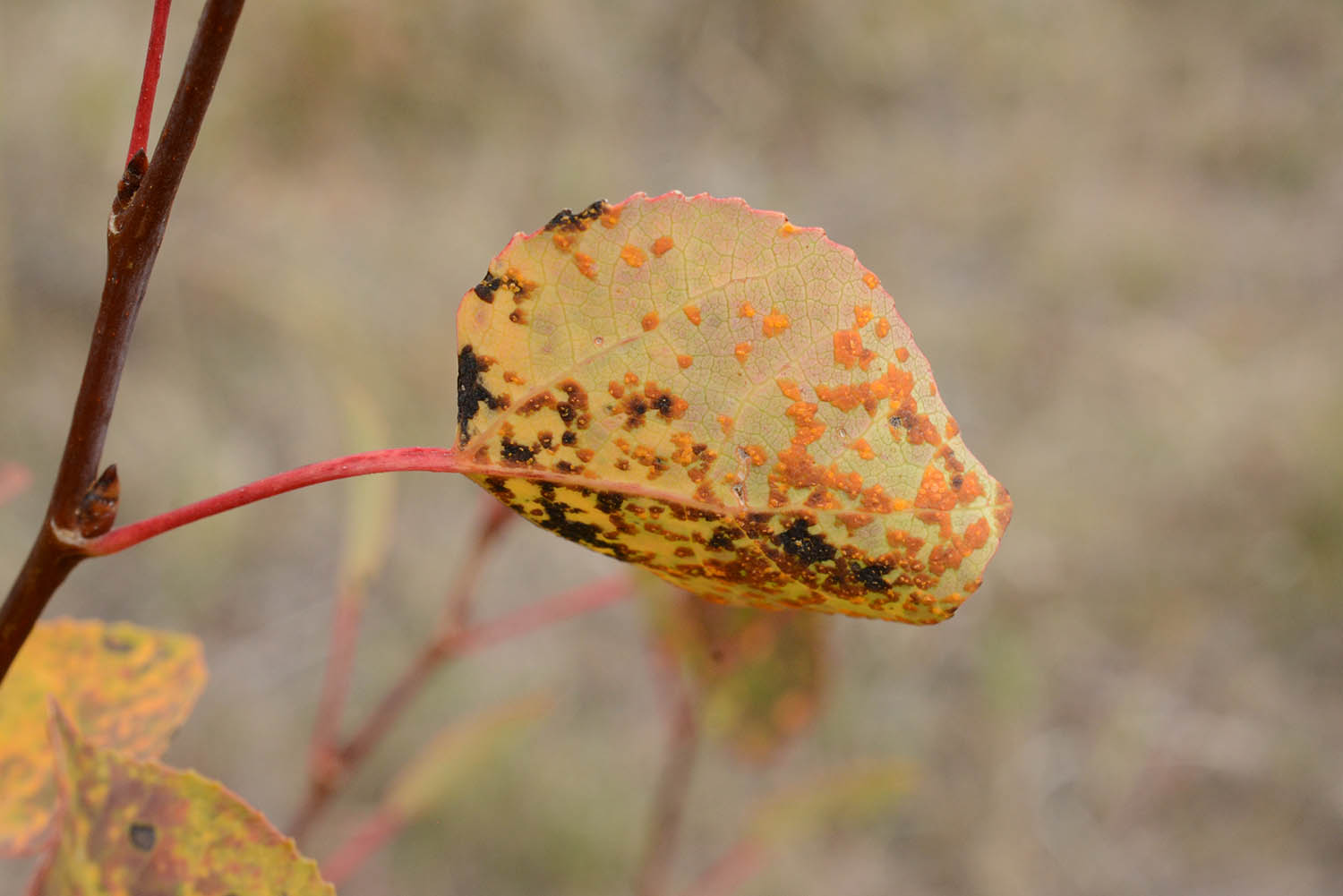
The infected areas generate 2-4 generations of pustules producing masses of urediniospores that spread leaf-to-leaf by air.
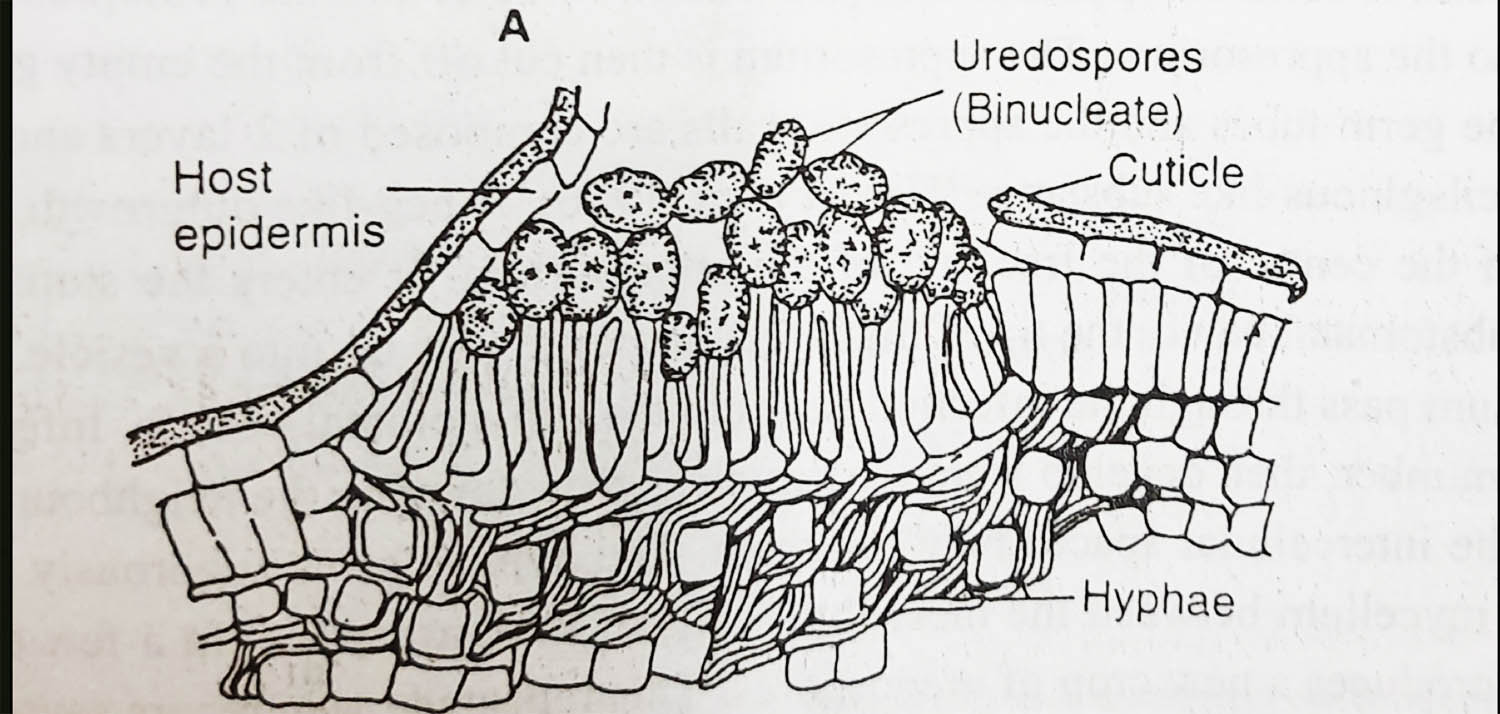
A curious detail, urediiospores generate infection hypha (root-like growths) that spread over the underside of the leaf to position and anchor themselves over stomates – the lip-like structures which open during the day to let CO2 into the leaf and water and O2 out of the leaf. (Stomata close at night to prevent water loss).
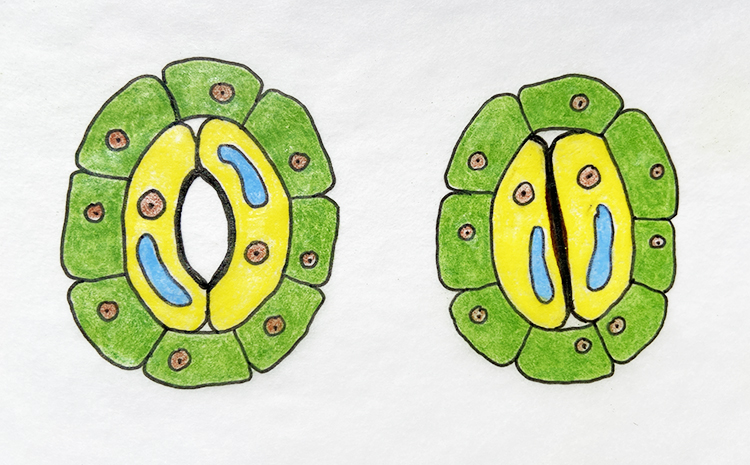
These uredinia hyphae form specialized anchor cells termed “appressoria” which produce enzymes to get through the tough waxy cover of the leaf (cuticle) into the inside of the leaf! Humid or moist conditions favor urediospore production.
As the uredinia become more dense, the leaf becomes more yellow-orange. As in other stages, but to a greater degree, the hyphae are drawing water and nutrients from the leaf cells, weakening them and thus interfering in the tree’s photosynthesis and defense systems. As such, the leaves have fewer nutrients, such as nitrogen, to transfer from the leaf to the stems and roots as reserves to sustain the plant into the next growing season.

Toward the end of the season, another fungal state telia form dense black splotches throughout the leaf thereby killing leaf cells. These blackened leaves packed with tilia drop to the ground and remain dormant through winter.

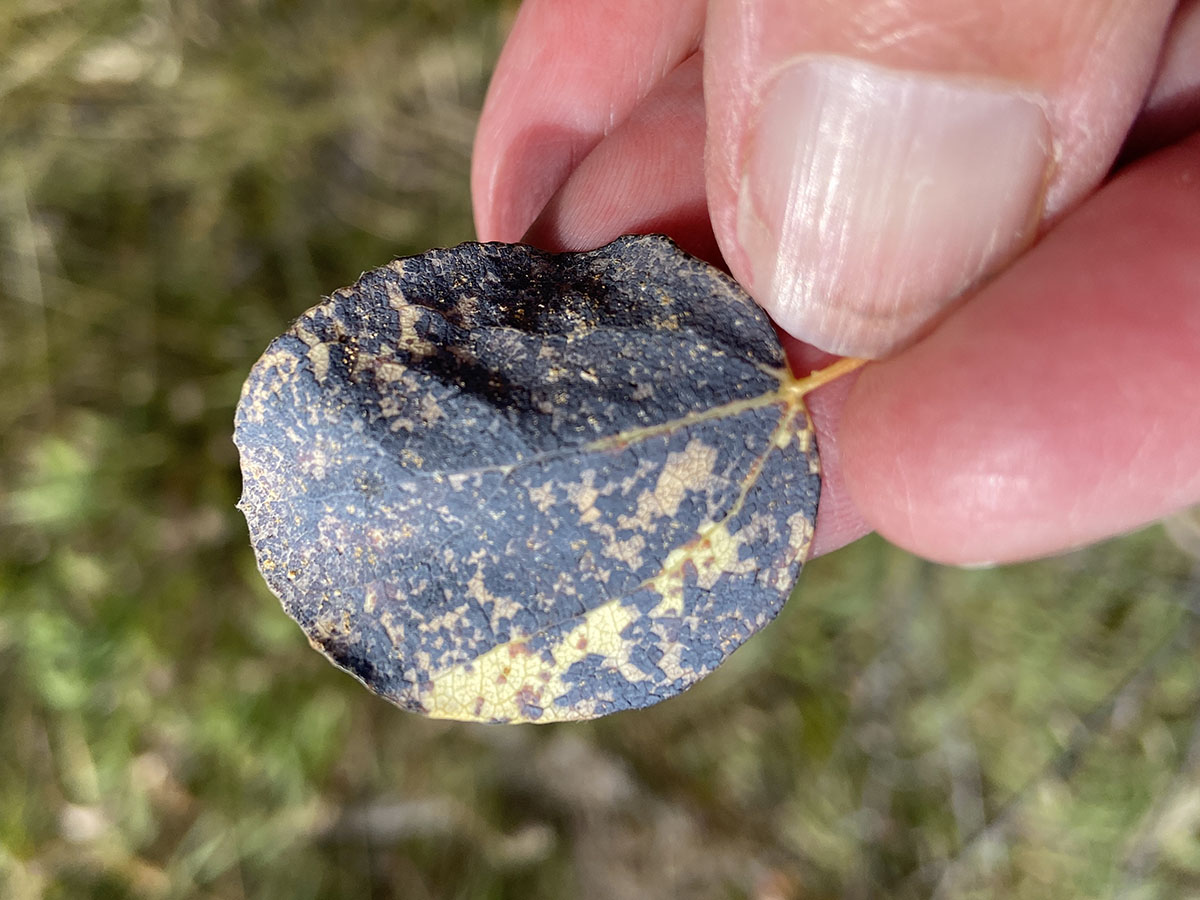
Come spring, these telia structures form teliospores which start the rust cycle all over again.
In brief – the five stages:
- On Aspens: Fallen leaves harbor telia that form teliospores
- On Aspens: Teliospores produce basidium which form basidiospores which spread to conifers
- Conifers: Basidiospores form spermogonia which produce spermatia
- Conifers: Spermatia form aecia which erupt aeciospores which spread to aspens.

- Aspens: Upon landing, aesciospores produce uredinia which produce urediniospores
- Aspens: Uredinaspores produce telia which are harboured in fallen leaves over winter
- On the ground: In spring telia produce teliospores. The cycle begins again the following spring.
Notably, the dull leaves and early leaf-drop can vary by different clones in different places around the valley. Differences in genetic resistance; vigor of the stand; microhabitat that affects warmth, moisture and wind; and overall local weather along with altitude all have an influence.

This fall, walk through the aspen groves, take a look at the leaves for signs of the rust. See the differences among the aspen clones in different locations in the valley and remember the remarkable complex cycle of this rust fungus.
Frances Clark, Teton Plants 9.22.26
Note: Conifer-Aspen rust is not related to the white-pine blister rust. White-pine blister rust – Cronartium ribicolar – is the insidious rust that is plaguing whitebark pines – Pinus alibcaulis – and other 5-needled pines. Pines are subject to various rusts, and rusts are common on many different plant species including agricultural and ornamental plants around the world such as wheat and roses.
P.S. Corrections are most welcome! This writer is not a pathologist and she found limited info with her web searches.
Some references:
Conifer-Aspen Rust: Canadian Gov link
Aspen Leaf-rust – Pacific Northwest Pest Management handbooks
Melampsora medusae – Wikipedia – has a good reference list as well as rusts caused by Melampsora spp. FAO.org
Melampsora medusae f. sp. tremuloidis – European Food and Safety Authority
Urediniospore: Science Direct
Basidium – wikipedia
Aescia and Spermatia illustrations: Biocylopeida
Appressoria – Science Direct
Girraj (India) Government College: Puccinia – another genus of rusts.

