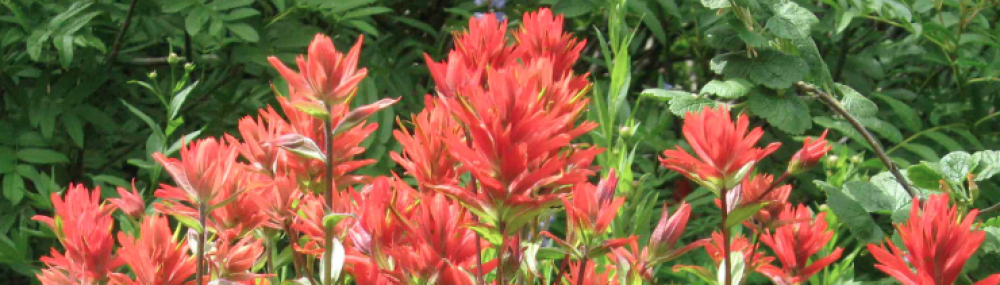

Everything appears to be in bloom!! The sagebrush steppe habitat and butte slopes are full of Sulphur Buckwheat, Sticky Geraniums, lupines, Scarlet Gilia, and yellow composites such as Little Sunflowers! One may call it a superbloom spring!
It has been hard to keep up (some of the info below is now dated)–the show keeps on changing! Some flowers in the south end of Jackson Hole and Grand Teton National Park may be fading while the same species are fresh in the north-end of the park up through Rockefeller Parkway. Yellowstone National Park roadsides are also flourishing. Below are the most common species seen right now.
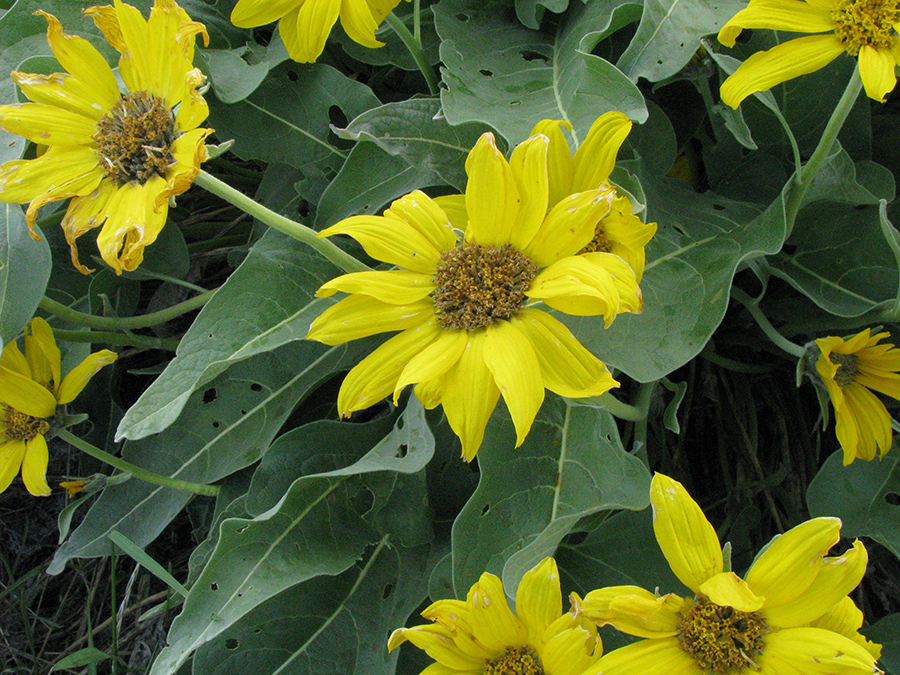
This has been an exceptional year for Arrowleaf Balsamroot – Balsamorhiza sagittata – which has been going strong these past couple of weeks on Signal Mountain, around Antelope Flats, and along Grand Teton park road, everywhere! They have arrow-shaped, grayish hairy leaves and flower heads arise from the base of the plants.
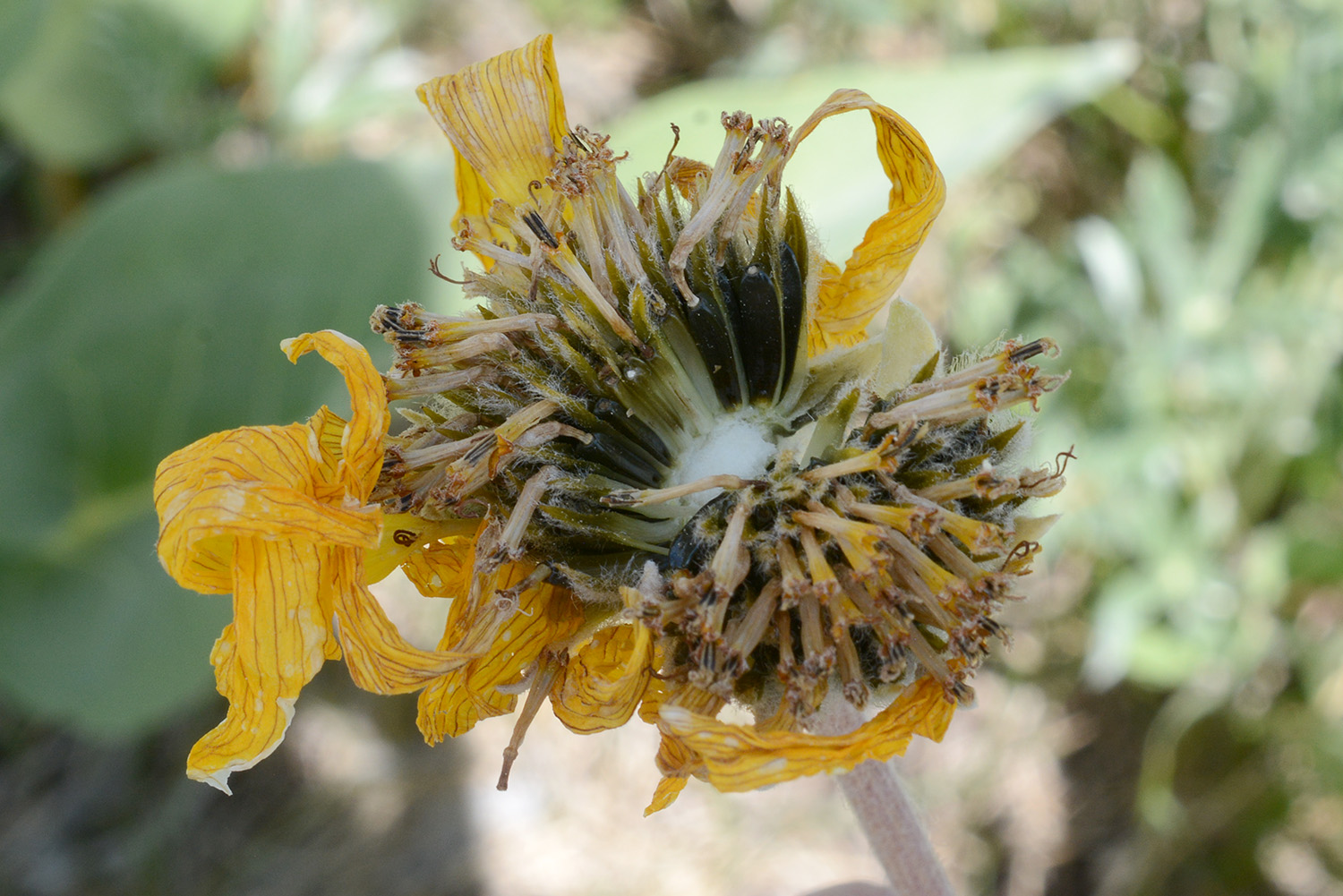
In some areas the flowers are already producing seeds that will feed birds, small mammals, and insects. The heads themselves may be alive with different grubs.
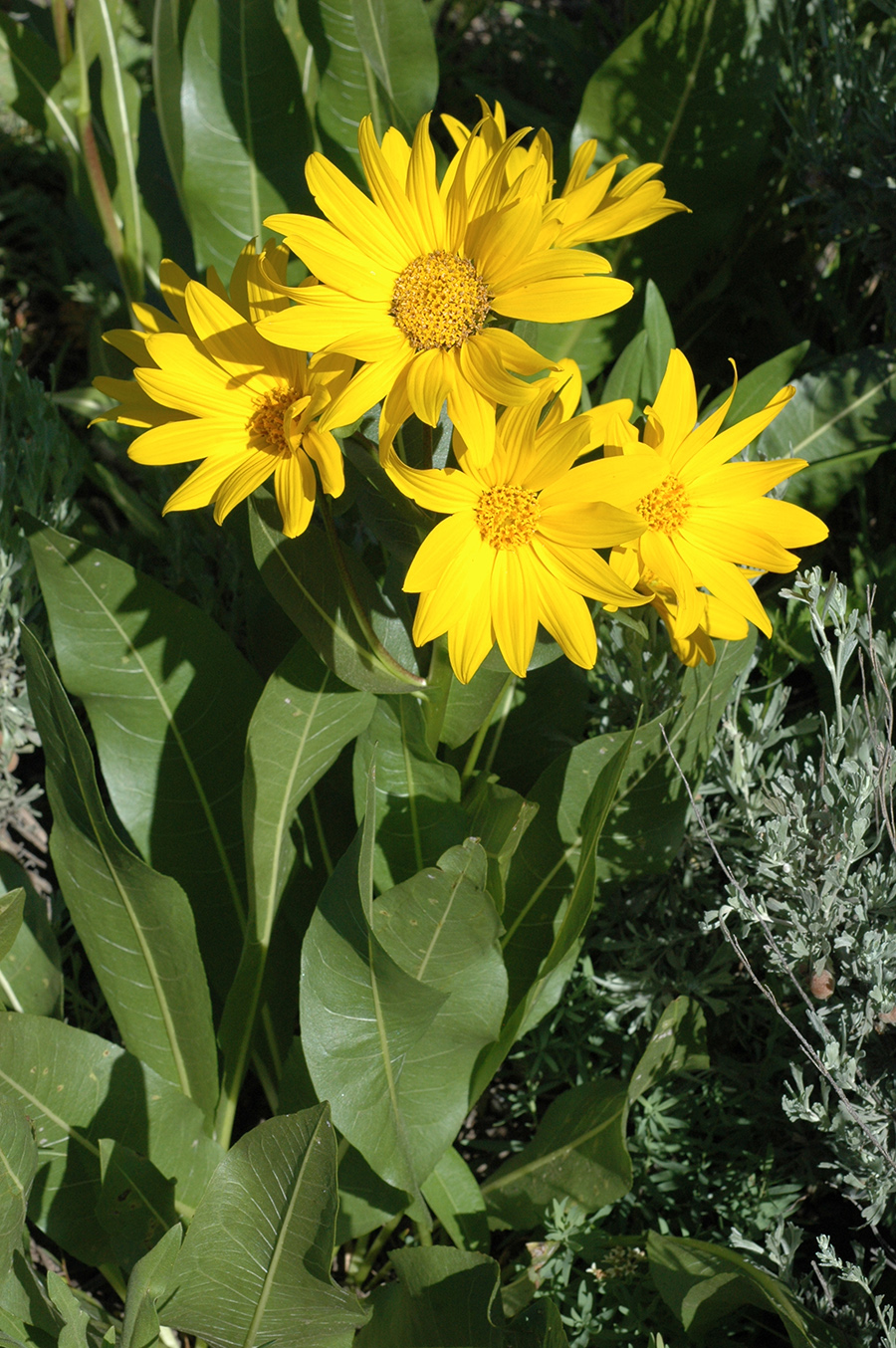
Its less common cousin, Mule’s-ears – Wyethia amplexicaulis – is coming into even bolder bloom with deeper orange-yellow flowers and dark green, oval smooth leaves near the northwest end of Blacktail Butte near the bike path, and in spots by the Oxbow Bend, and slopes elsewhere. Flowers and leaves alternate up stems and the surrounding protective bracts of the heads are greener and smooth compared to balsamroot.
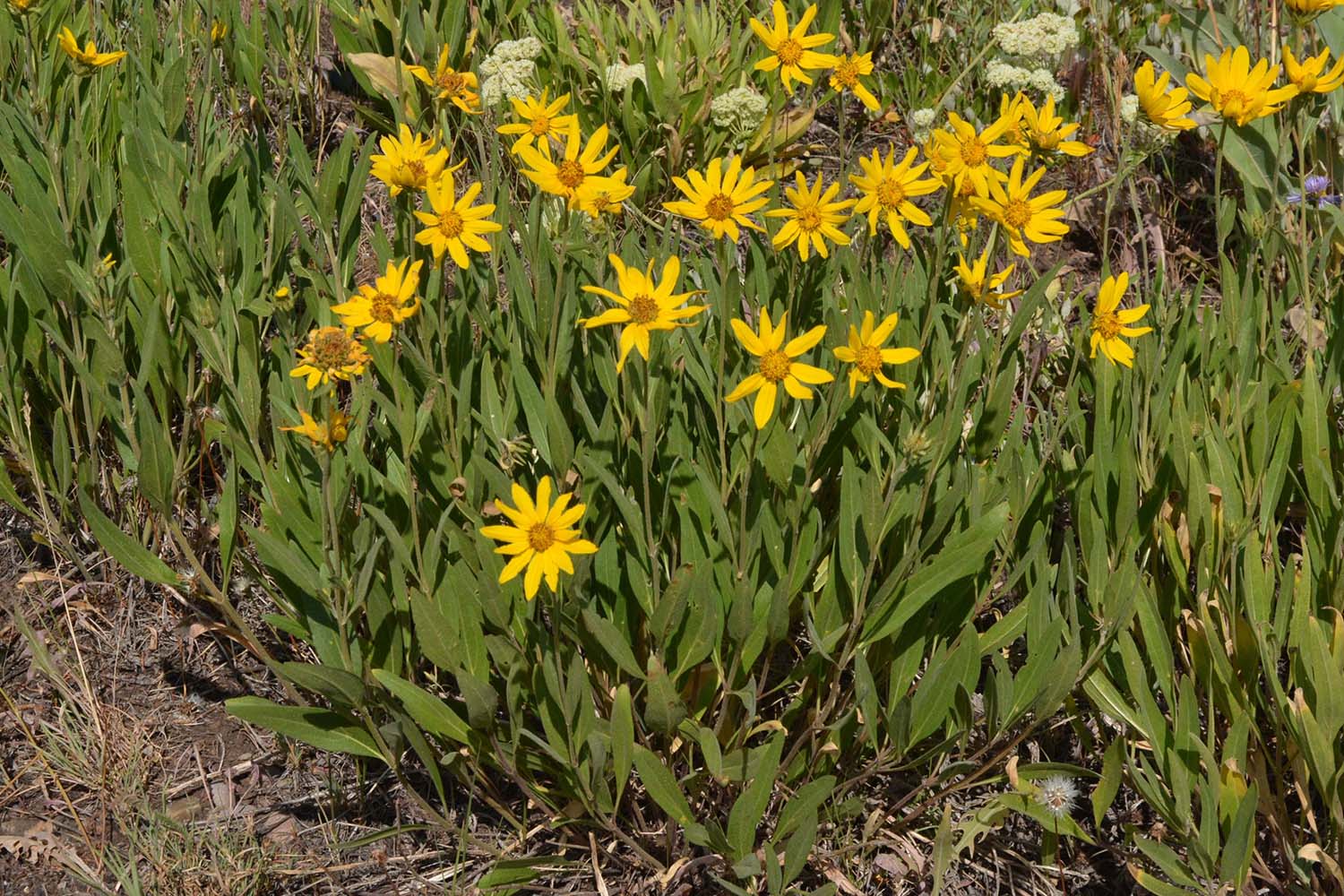
Single-flowered Little Sunflower – Helianthella unfilfora – is filling in where balsamroot is fading. The truly “sunflower” looking heads are borne singly on top of 2-3′-high stems with alternating-to-opposite leaves, usually with 3 clear nerves.
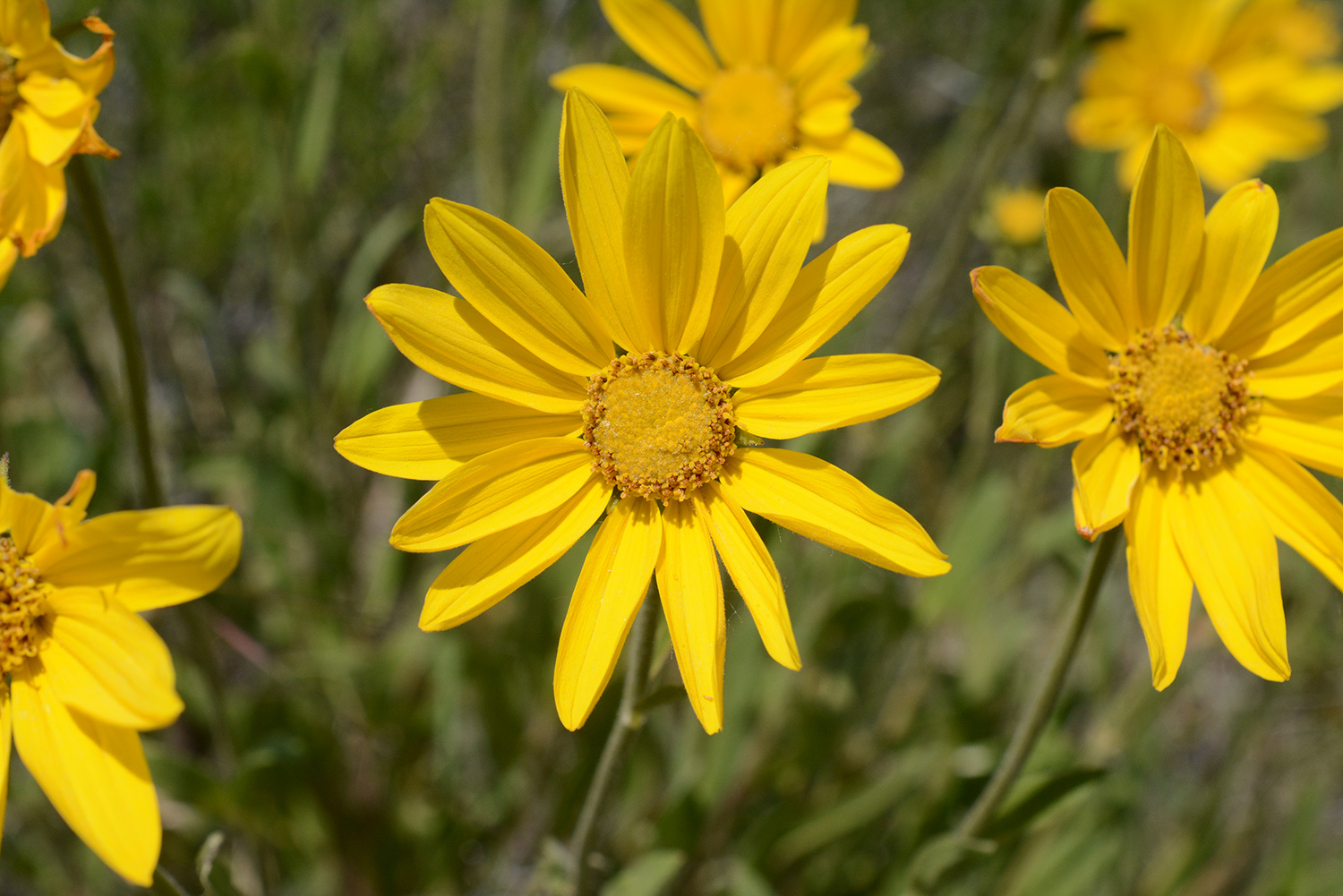
It is fascinating to see the individual flowers (remember “composite” flowers have many, many little flowers on a platform forming a “head”) start blooming from the outside edge and spiral toward the center over time. Look up “fibonacci sequence”.
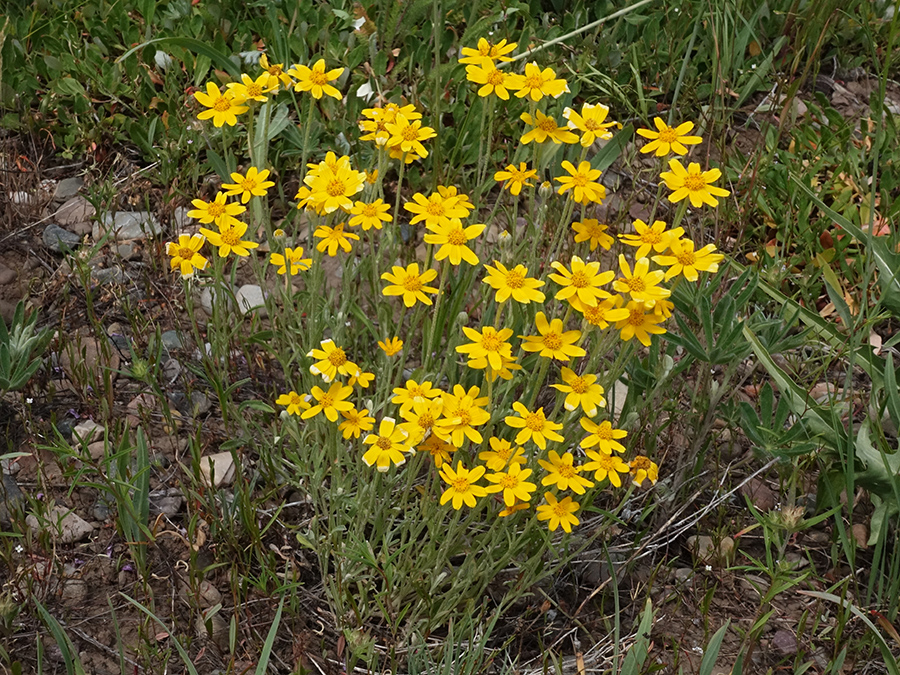
Tucked down under the taller yellow composites are 6-8″ Woolly Sunflowers – Eriophyllum lantatum.
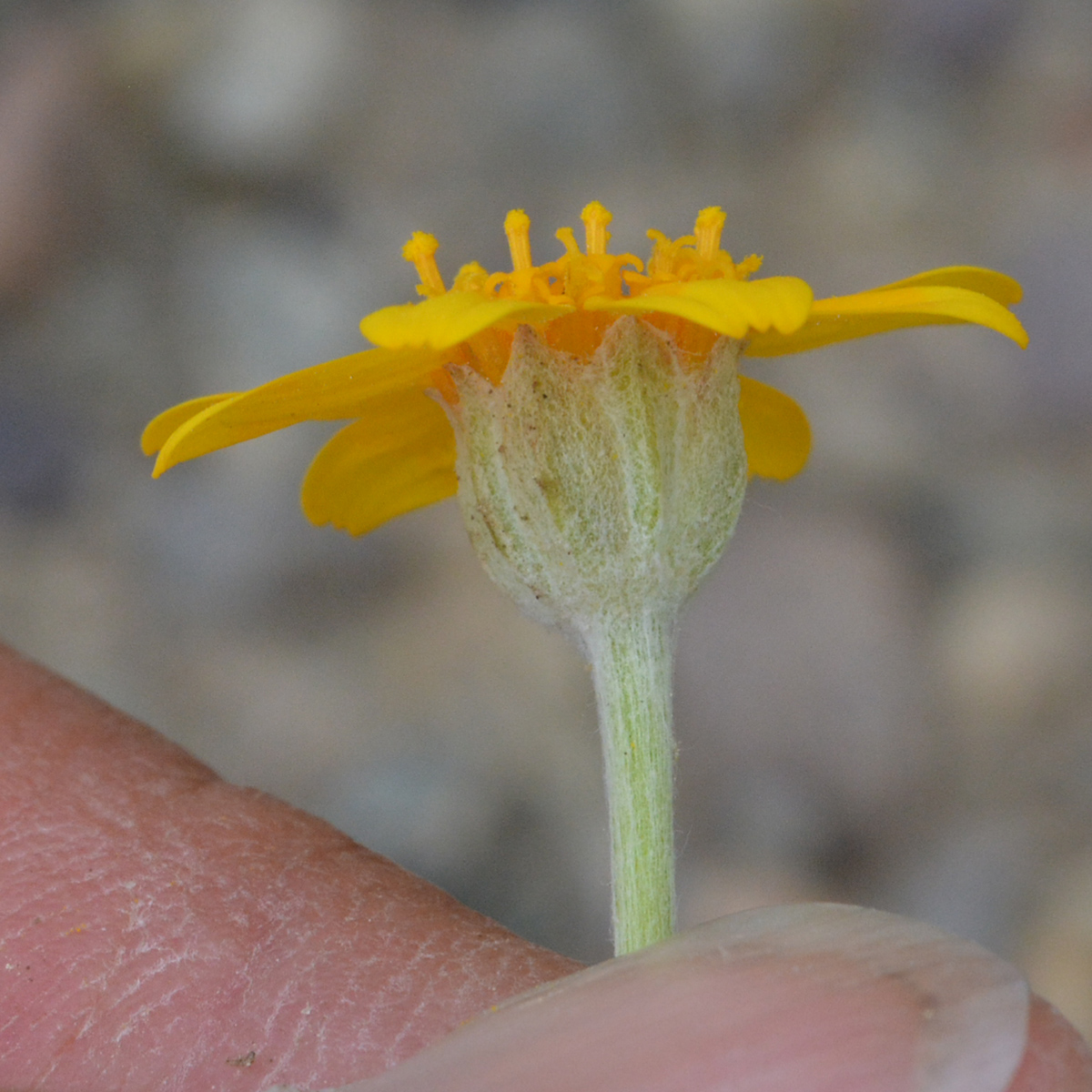
The bracts surrounding the head of both broad ray flowers and smaller disc flowers – are indeed woolly.
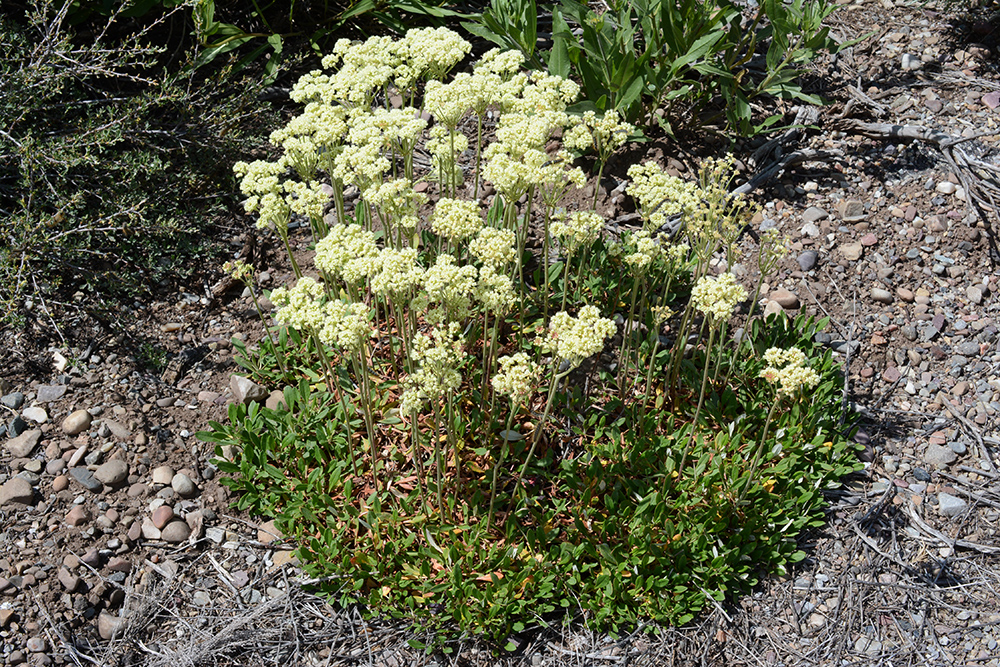
Common associates at their peak right include creamy heads of Sulphur Buckwheat – Eriogonum umbellatum. Note the more-or-less oval leaves form mats at the base, Their top surface is green, the underside pale hairy.
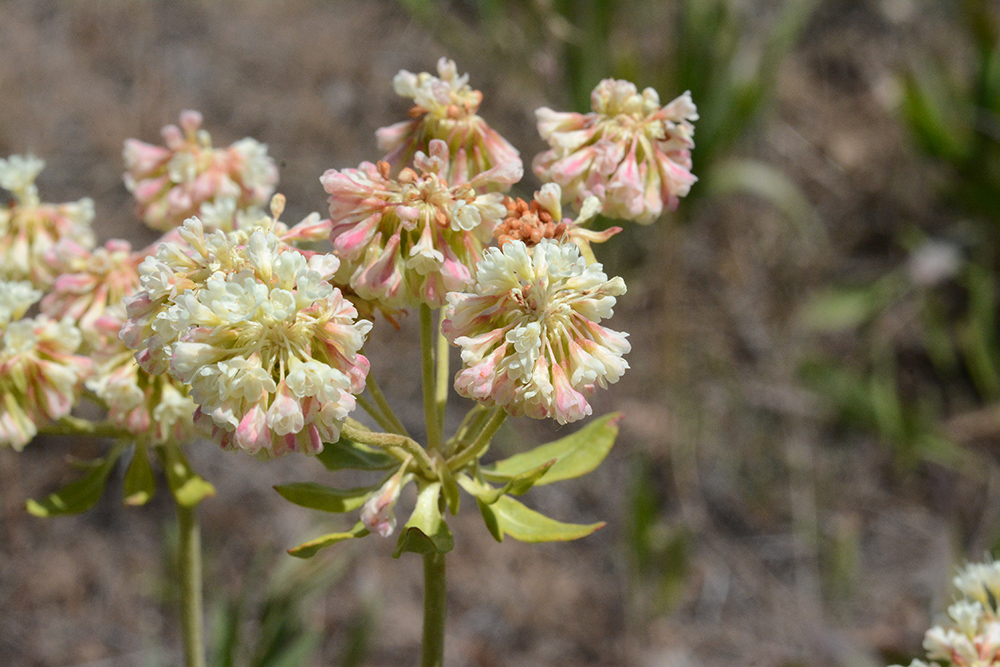
A ring or collar of leaves subtends the whorls of flowers arranged in an umbel. There are several other buckwheats in the valley, but these are the most common.
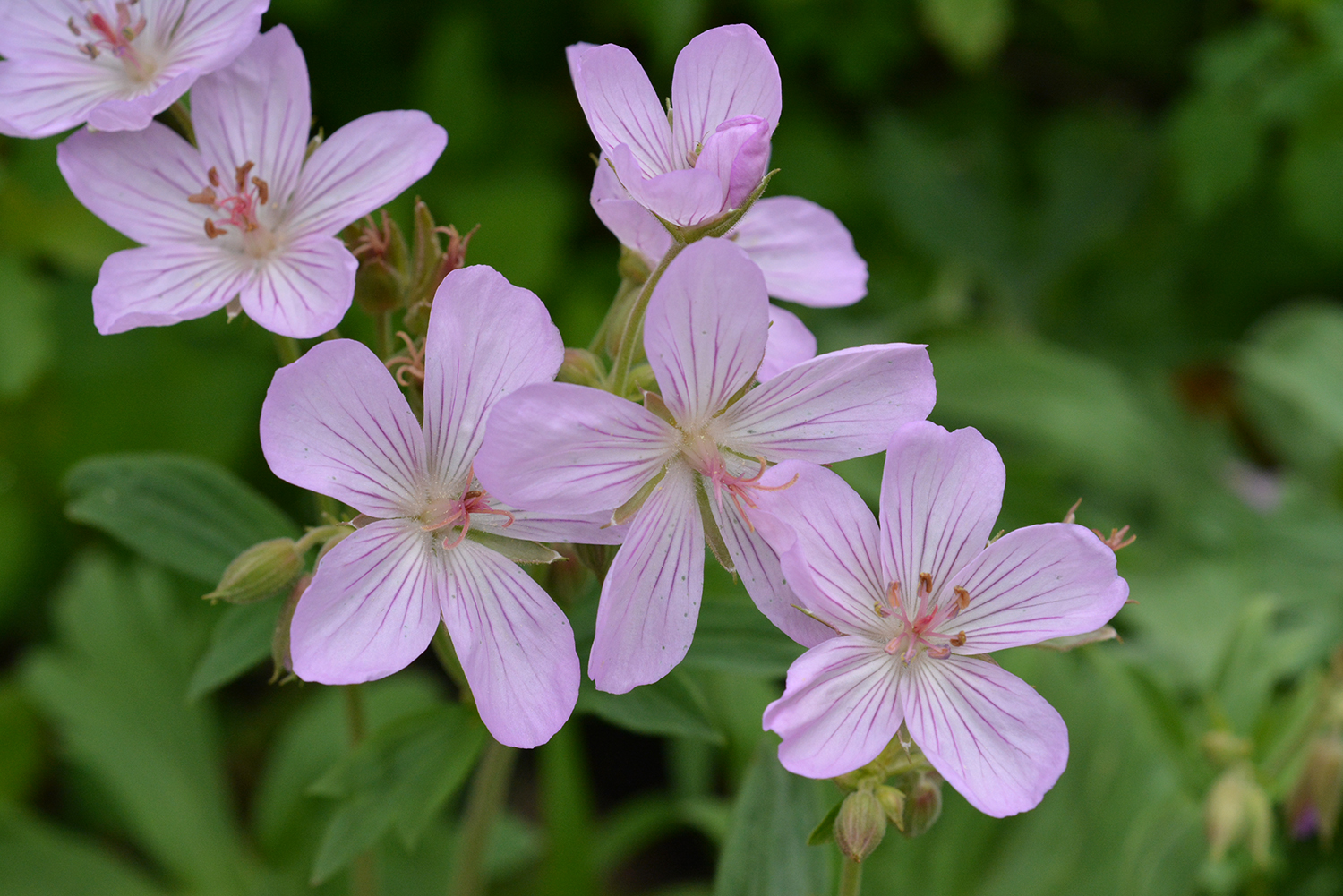
Blue-to-pink Sticky Geraniums – Geranium viscossissimum – are especially abundant this spring! The wide-open flowers attract generalist pollinators: its easy for different sizes and types of flying insects to land on the broad platform formed by the petals. Fine “nectar guides” or lines direct pollinators to the center where the nectar lies.

When nudging into the center, the insect may get pollen dumped upon it from the 10 over-arching male anthers (upper right flower). Going on to a more mature flower, the insect may rub against one of the 5 sticky female stigmas (left flower) at the top the female pistils, thereby pollinating the flower. The pollen grain will be stimulated to grow by the chemistry of the stigma, grow a tube down the style to the base where the sperm will fertilize the egg inside the ovary.

Once fertilized, the seed will begin to form, later to be catapulted by the dried fruit into the beyond.
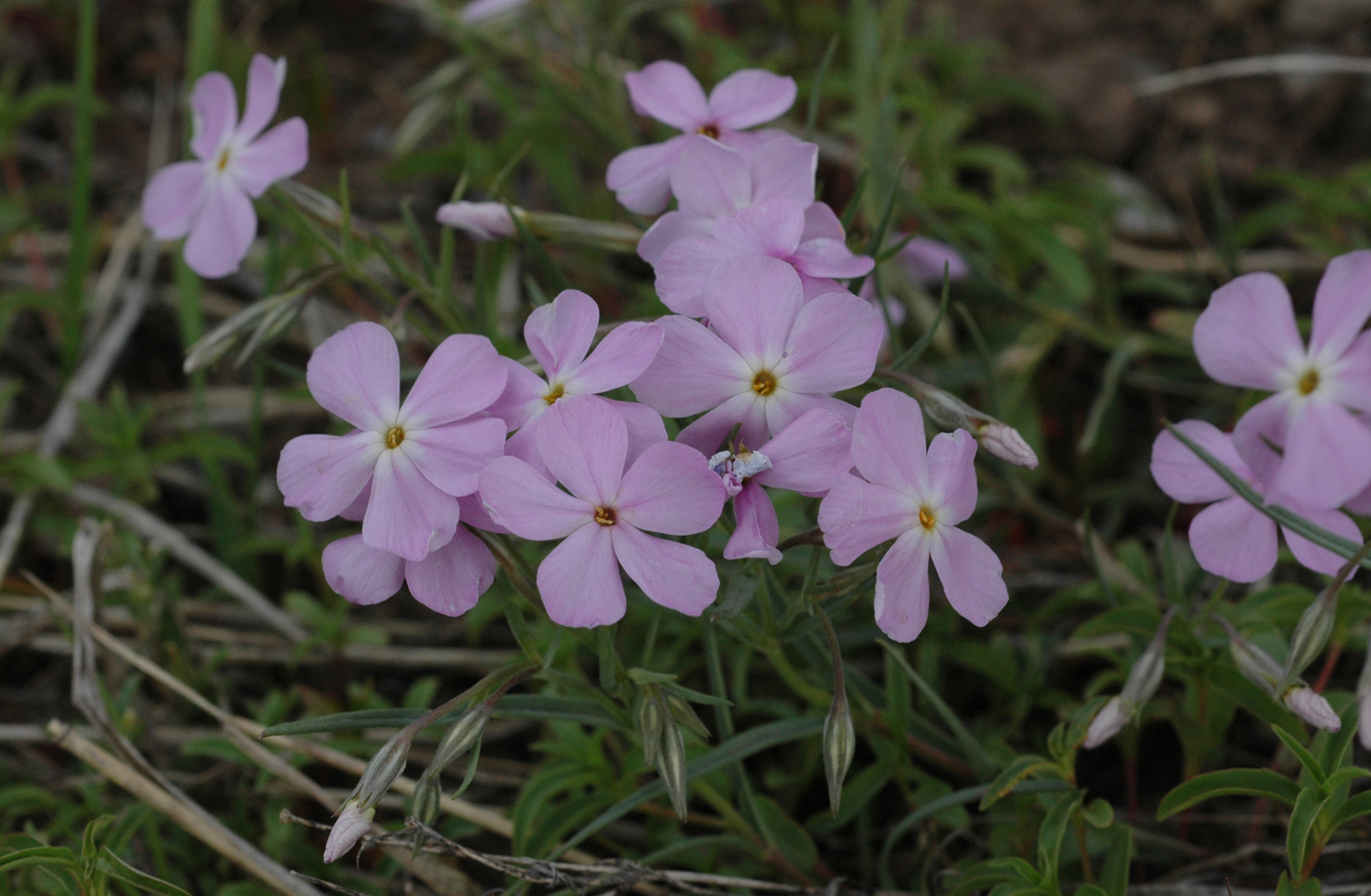
Elsewhere, there are bunches of white-to-blue-to pinkish Longleaf Phlox – Phlox longifolia – with 6-8″ stems and narrow opposite leaves. All phlox species are extremely fragrant, attracting pollinators.
Our three common lupines are extending their spires of pea-like blue flowers in different habitats.
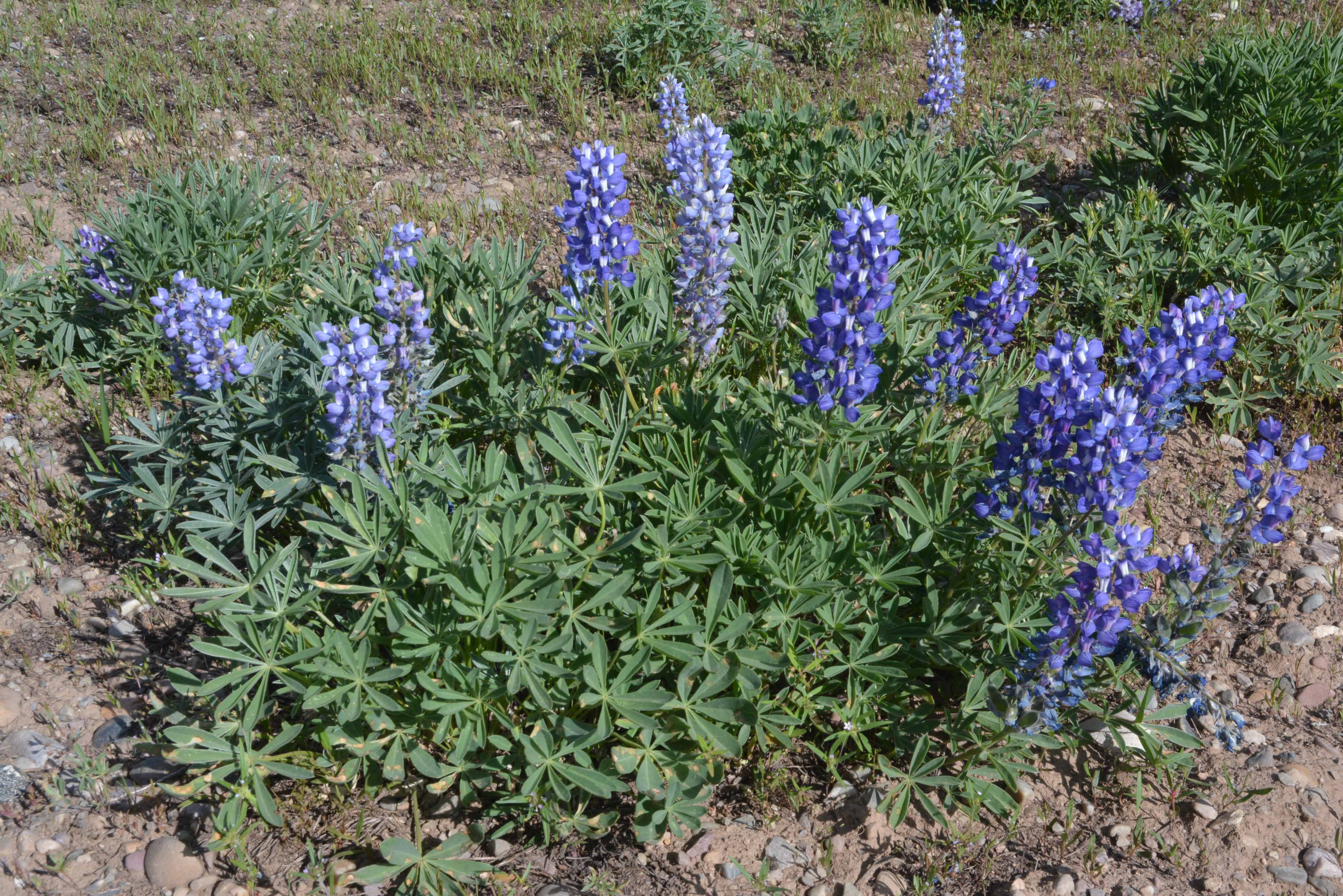
Meadow Lupine – Lupinus polyphyllus var. humicola – grows most often on relatively rocky, well-drained sites. The leaves may have 7-12 leaflets and the flowers are wide open with bold white spots at their base to guide in pollinators. As with other lupines, once pollinated the spot may become purple to signal to the pollinator to pass-it by–the nectar is gone or dried up.
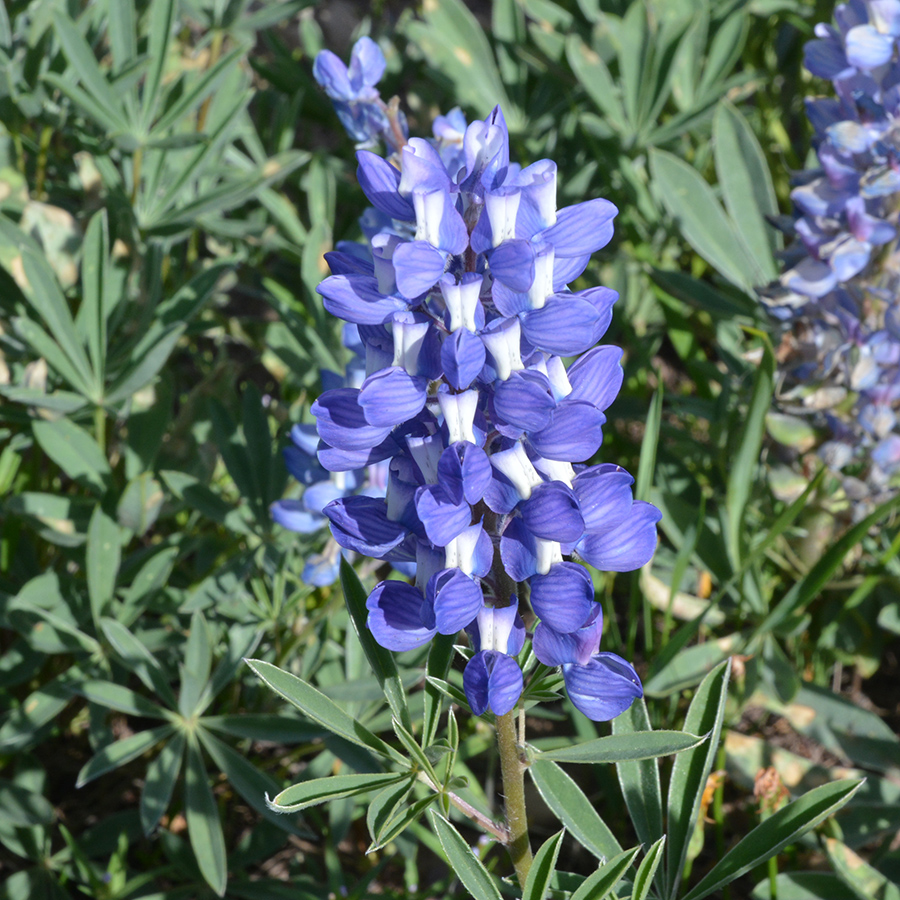
Note this is our native species, not the cultivated hybrid cousin Lupinus polyphyllus var. polyphyllus – which has become invasive not only in the U.S., but also into Europe and Asia.
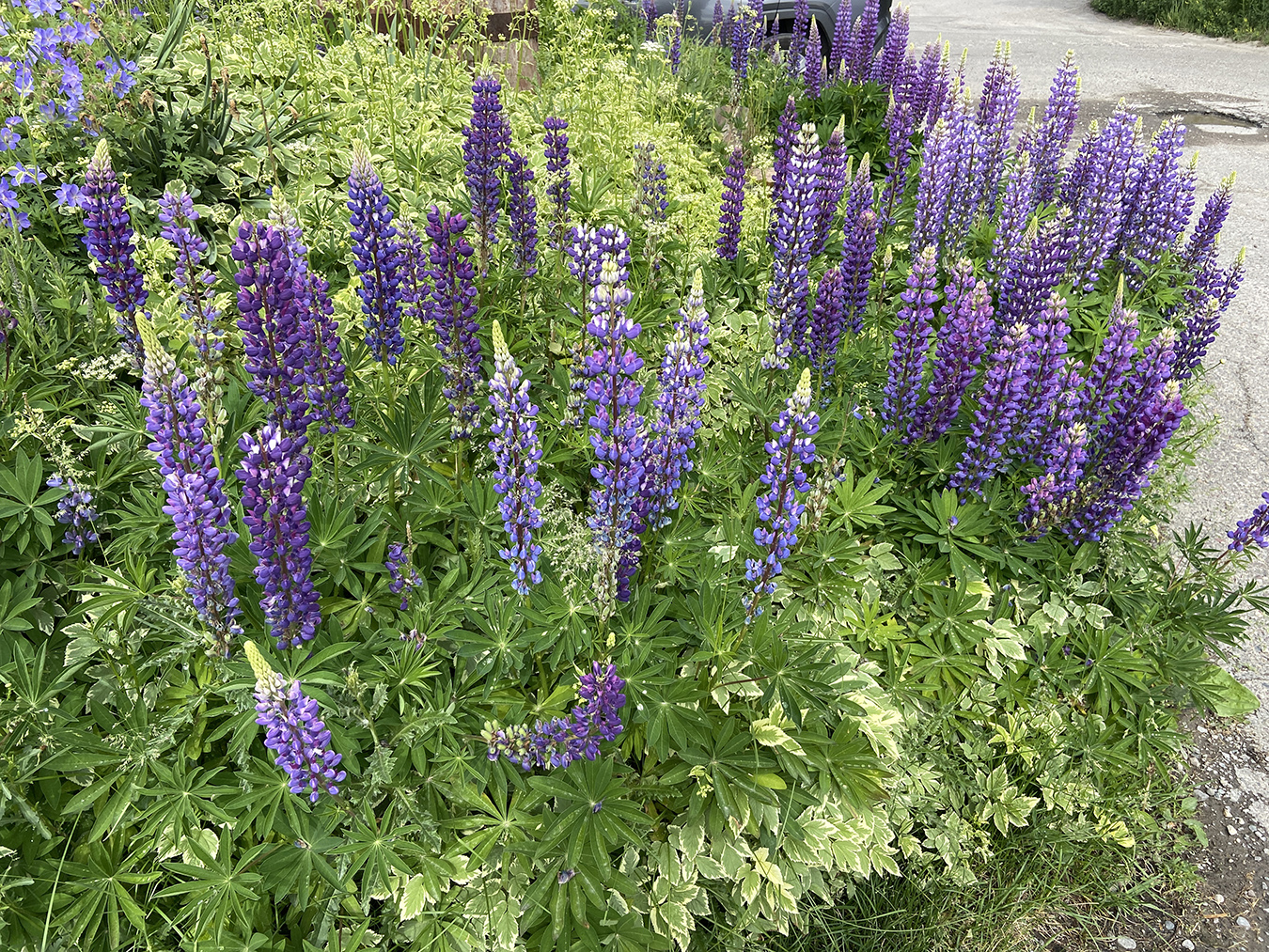
The invasive flowers are larger, the palmate leaves have 9-17 leaflets, and the flowers have no fragrance.
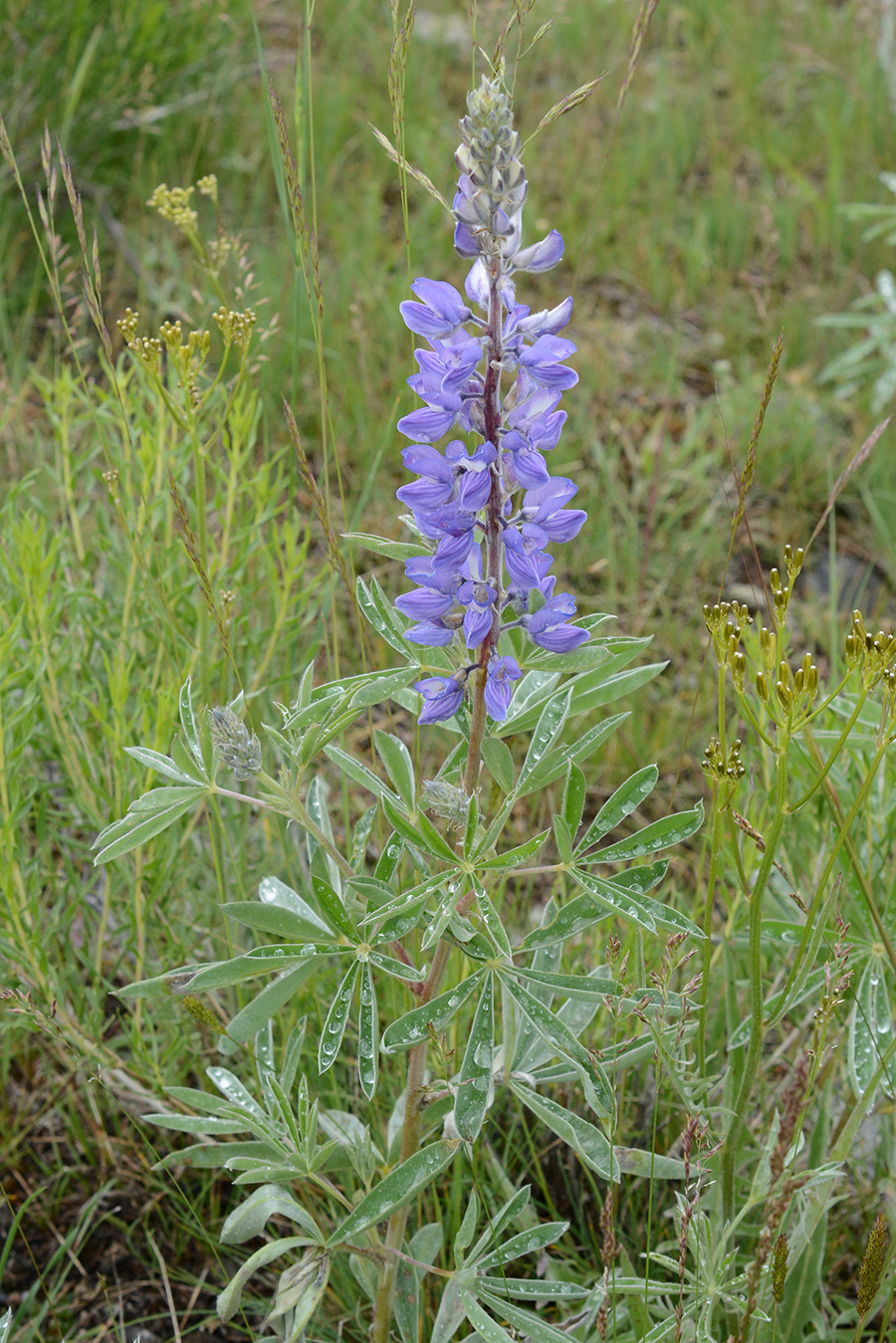
Silky Lupine – Lupinus sericeus – has silvery, hairy leaves and also hairs on the back of the upright “banner” petal.

The silvery hairs help to reflect intense light and reduce water loss, an adaptation for growing out on the sunny sageflats.
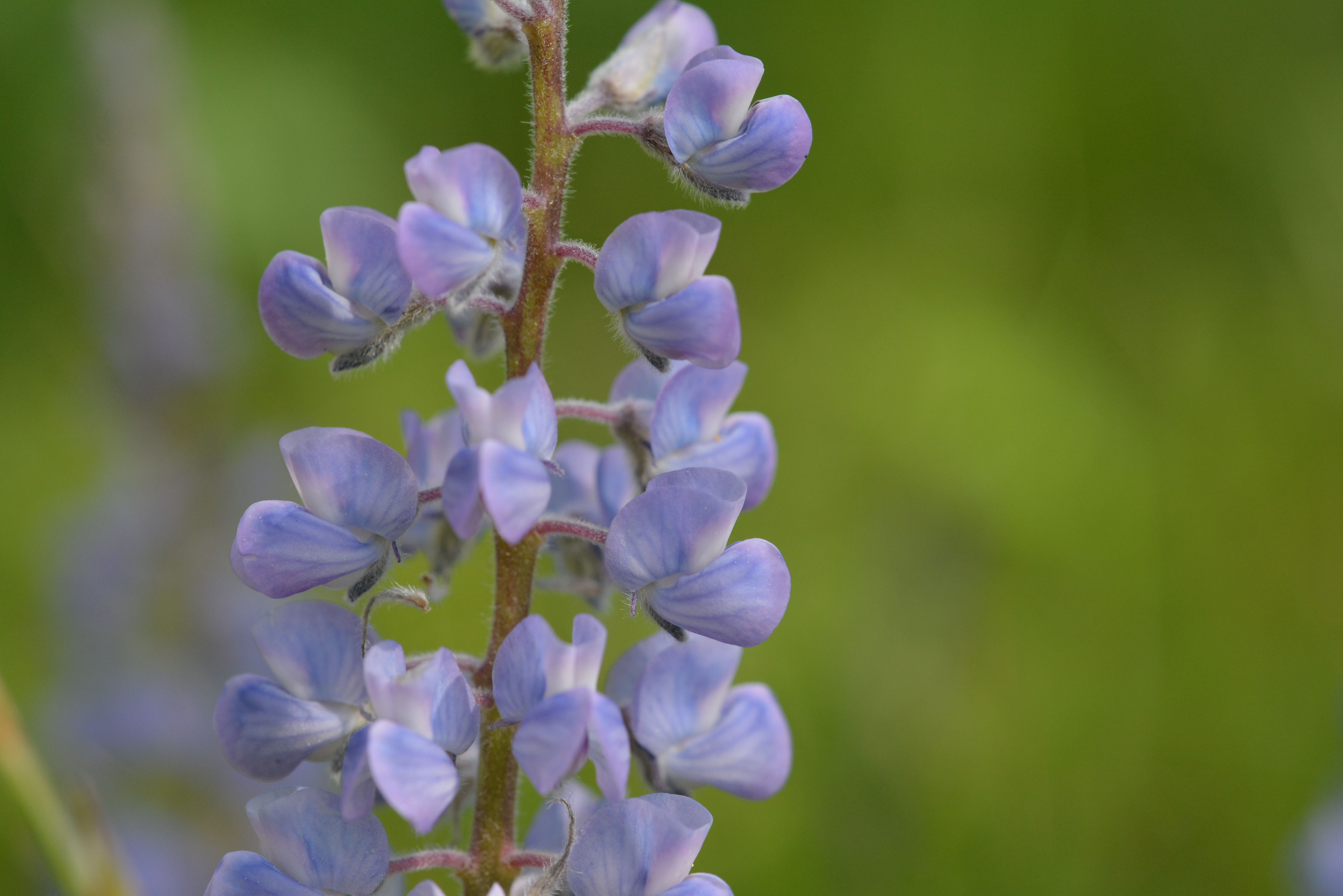
Silvery Lupine – Lupinus argenteus – often forms an understory in lodgepole pine forests, such as seen along Moose-Wilson Road and Signal Mountain. Its leaves are much less hairy and the back of the banner is hairless.
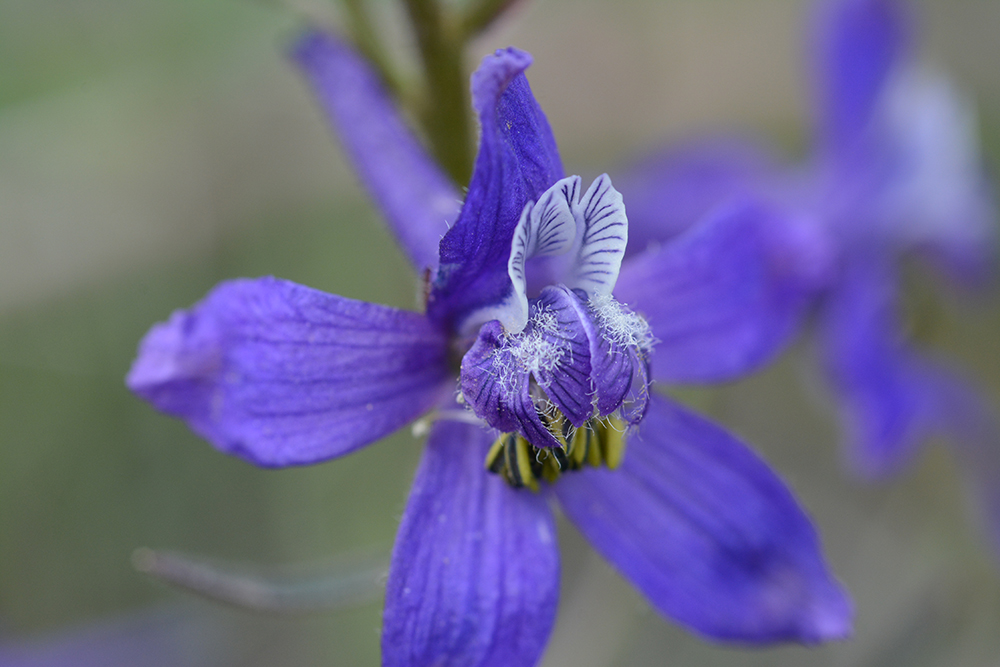
Low Larkspur – Delphinum nuttalianum – has been blooming strong over the past few weeks. Early-arriving hummingbirds hover in front of the flowers, extend their tongues deep into the back of the petal spurs to get nectar that fuels their flight. So doing, the birds get a shower of male pollen on their heads. When going on to a more mature flower, the hummingbird may reach again into the long tube for nectar, thereby, dropping off the pollen upon three protruding female stigmas. Once the flower is pollinated, it is ready to form seeds inside three maturing capsules! Large bumblebees with long probosci are active pollinators as well.

Lewis’ Flax‘s – Linum lewisii – sky-blue flowers wave about on thin but particularly strong 1-1.5′ stems. Its European relative – Linum usitatissimum (translated as “most useful”) – was one of the first fiber plants. It was used by the Phoenicians to make canvas sails and Egyptians to wrap mummies before burials in pyramids. Later peoples created a more refined linen and manufactured day-to-day linoleum and linseed oil. North American natives used Lewis’ Flax also for cordage and the seeds for health purposes. Bees and flies are common pollinators.
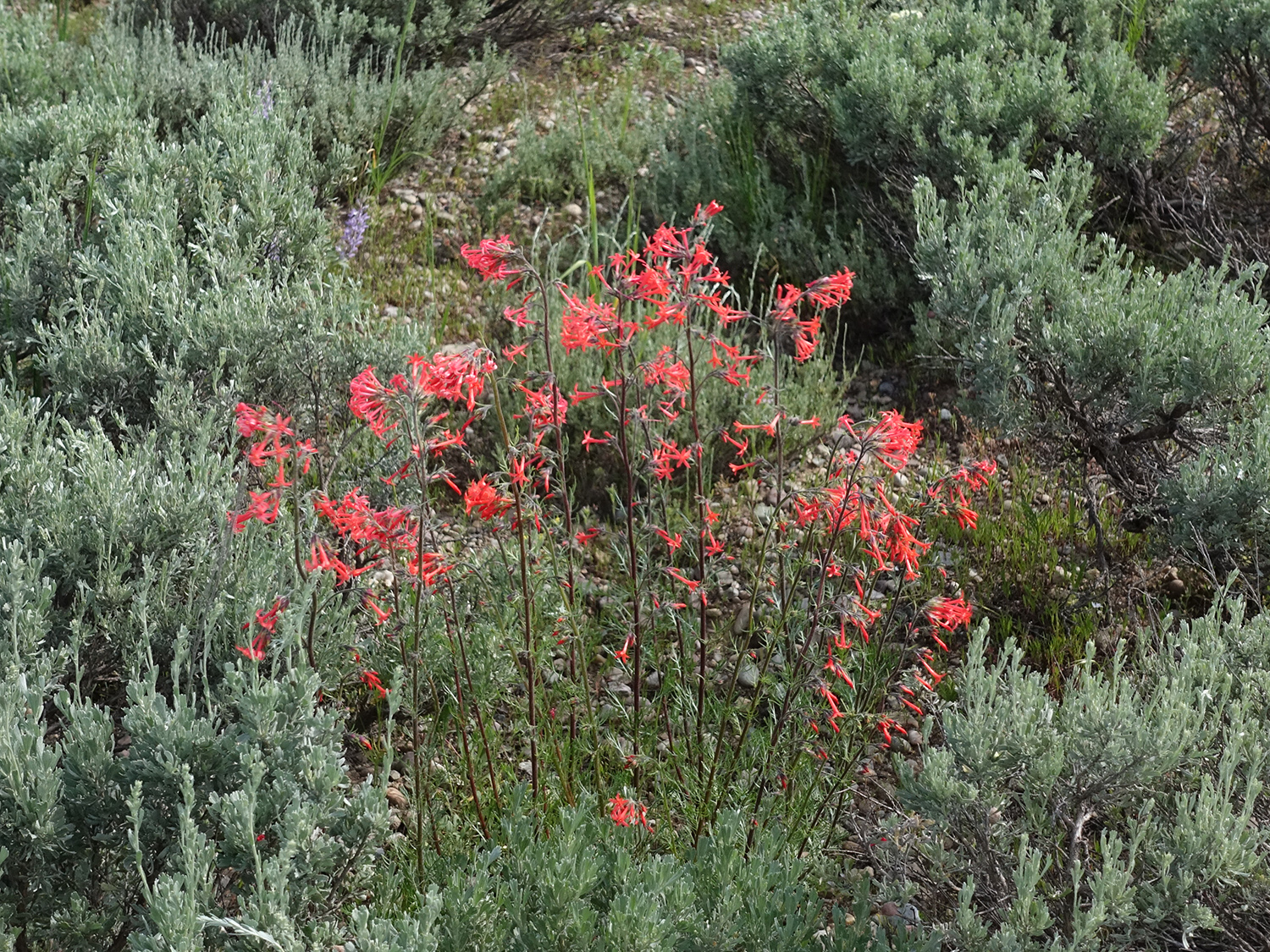
Scarlet Gilia – Ipomopsis aggregata – is remarkably abundant this year. The bright-red tubular flowers are particularly alluring to hummingbirds who readily see red, unlike many insects. Again, the acrobatic hummingbird hovers, extends its tongue way back into the tube, laps up nectar, and concurrently bonks its head gathering up pollen grains which at another flower the bird bumps off onto an extended stigma.
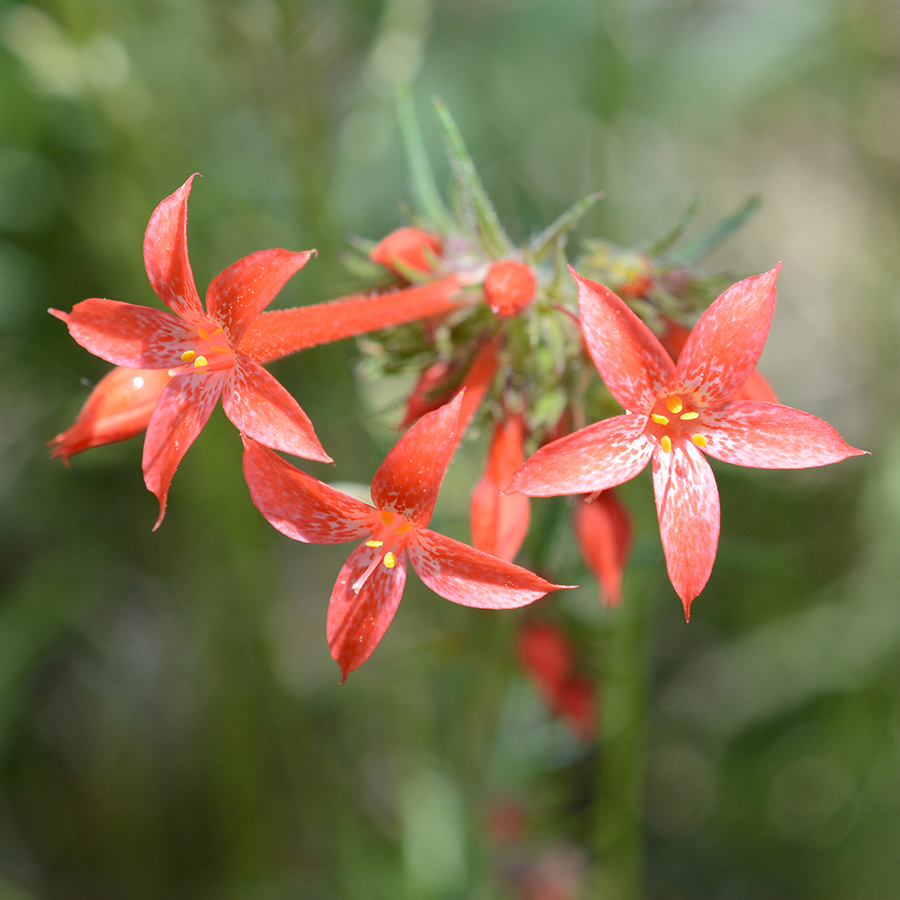
Later flowers may be paler in an appeal to moths which also can hover and have long probosci – mouth parts – to reach deep into the tubes. After flowering, plants may or may not survive another year, but the seeds will form rosettes that can survive over winter and increase in size over a couple of years.
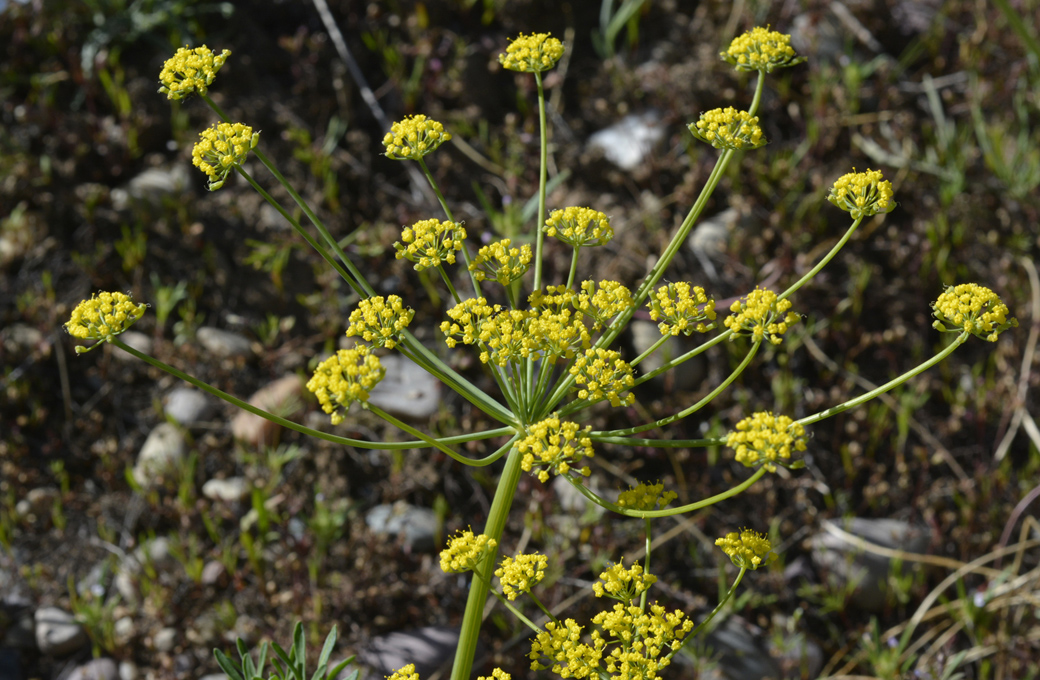
Members of the Parsley Family continue to spread their umbels. Bright-yellow sprays of Spring Parsley – Lomatium ambiguum – still lace the flats and slopes to the north.
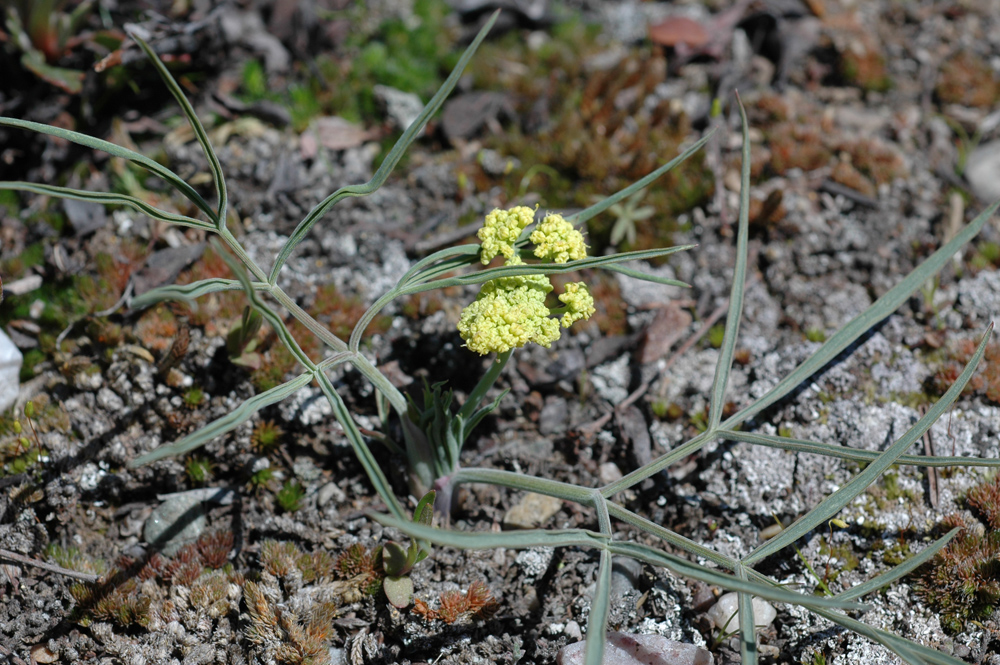
Also, look for the the pale-yellow Nine-leaf Biscuitroot – Lomatium simplex.
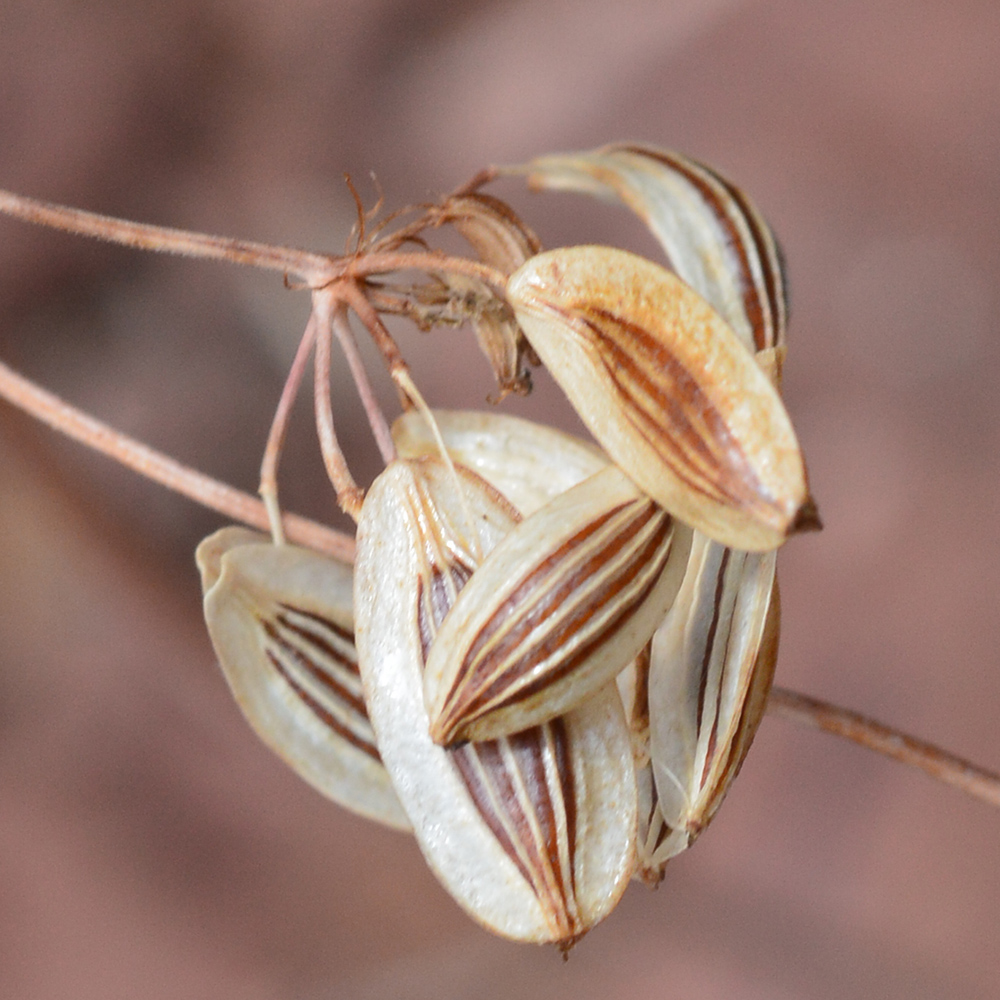
Lomatium seeds are flattened “schizocarps”–they will split and the two halves held out on a little hanger until they fly off on the wind.
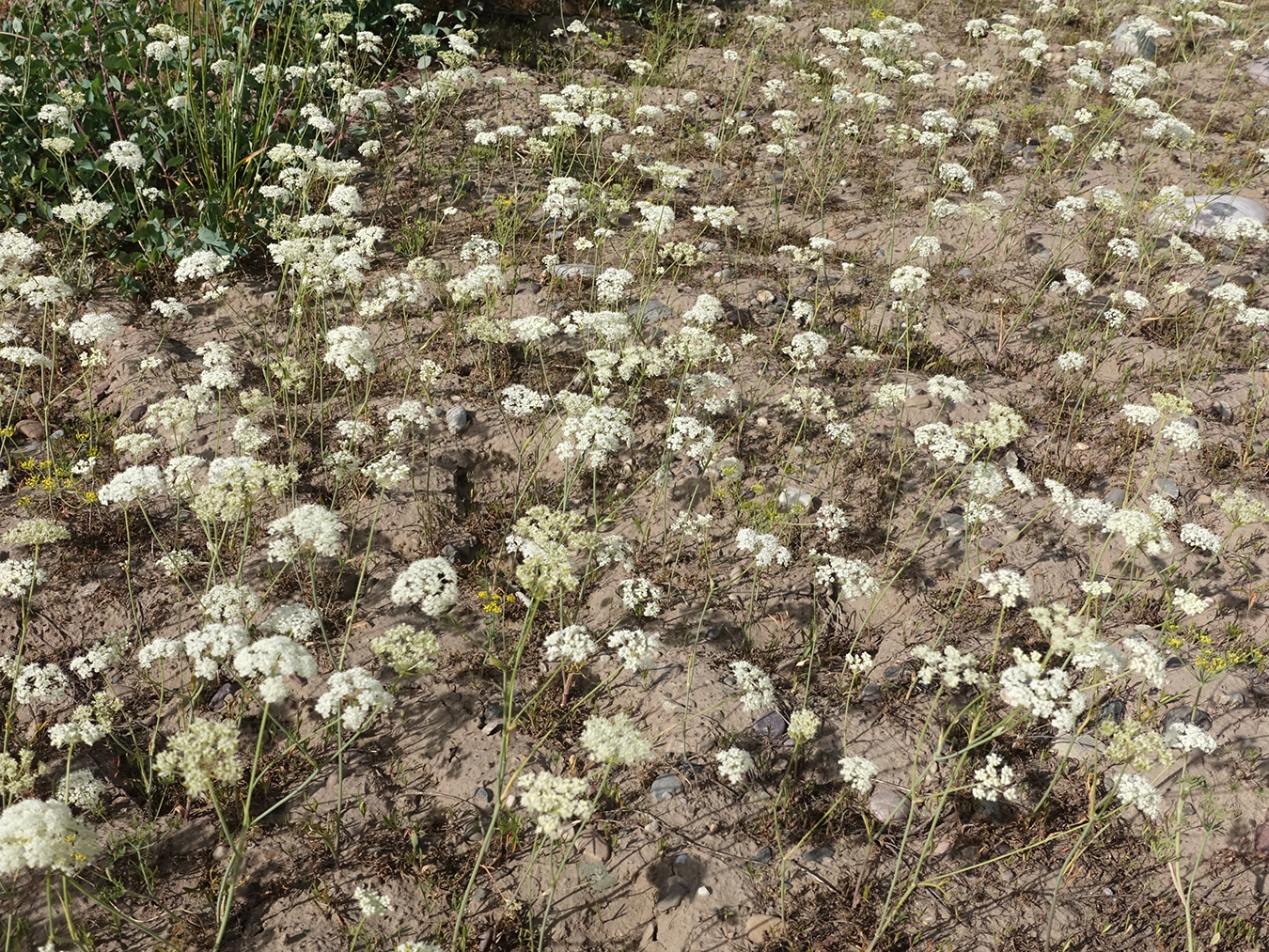
Delicate white umbels of Bolander’s Yampah – Perideridia bolanderi – are thick along the north end of Moose-Wilson Road.

They differ from the later blooming, more common Mountain or Gairdner’s Yampah – P. montana/gairdneriii – in their leaf-shape—more dissected, swollen petiole, and relatively elongate fruits.
The swollen roots of yampah and biscuit-roots are important forage for ground squirrels, pocket gophers, bears, and more.
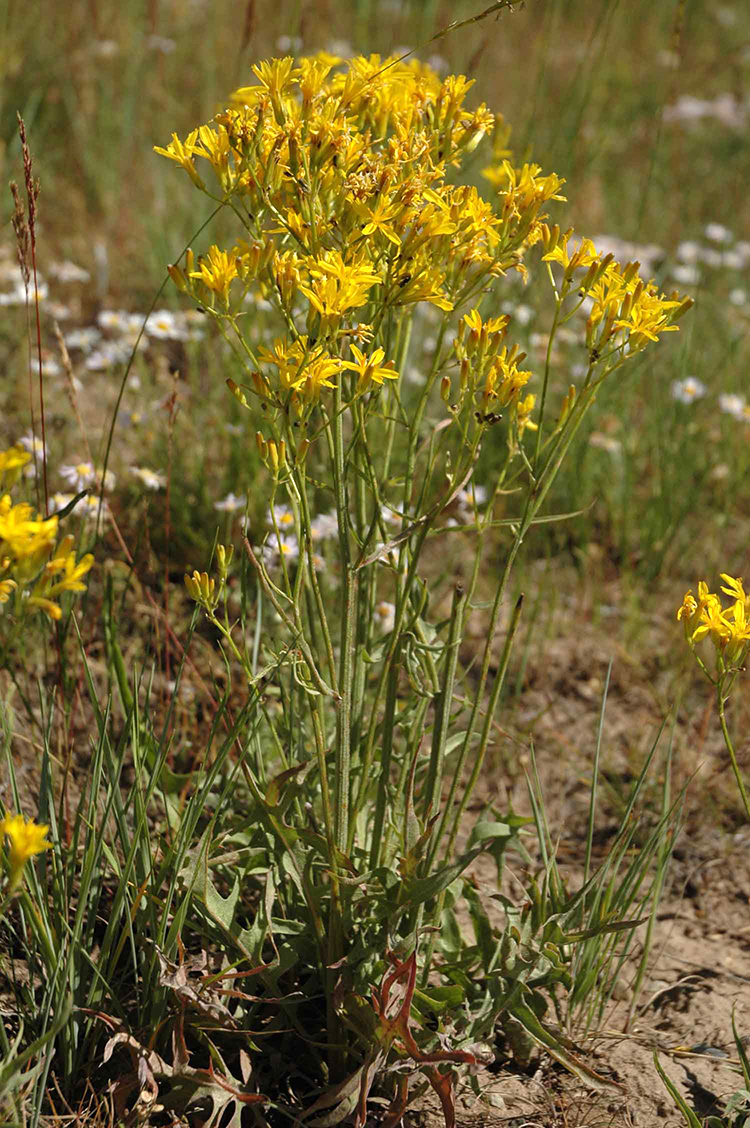
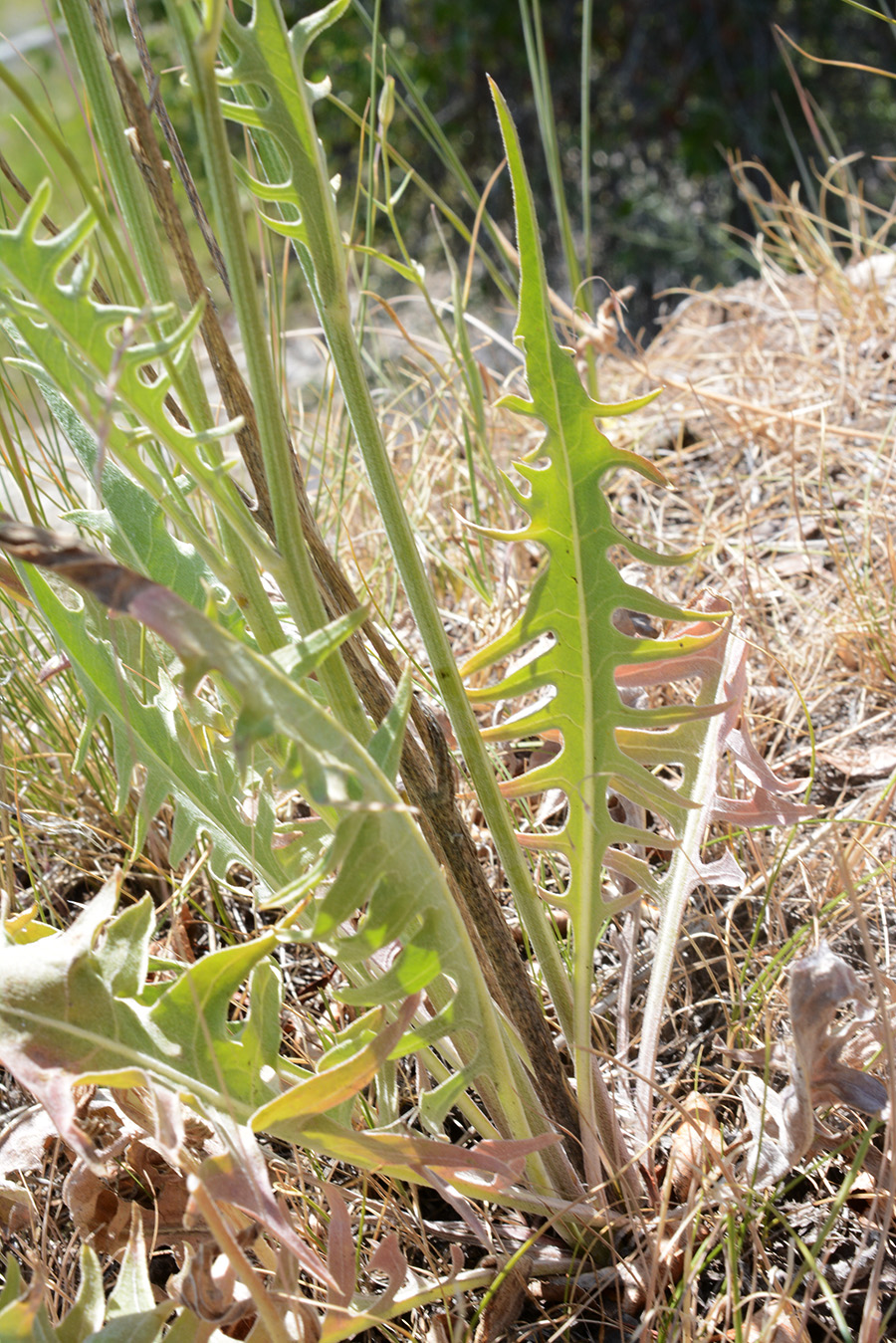
Hawksbeards – Crepis sp. – are shooting up bunches of “liguate” flower heads above groups of mostly basal groups of deeply lobed, grayish leaves. Tapertip Hawksbeard – Crepis acuminata – is one of several local species.
Shrubs are also coming and going:
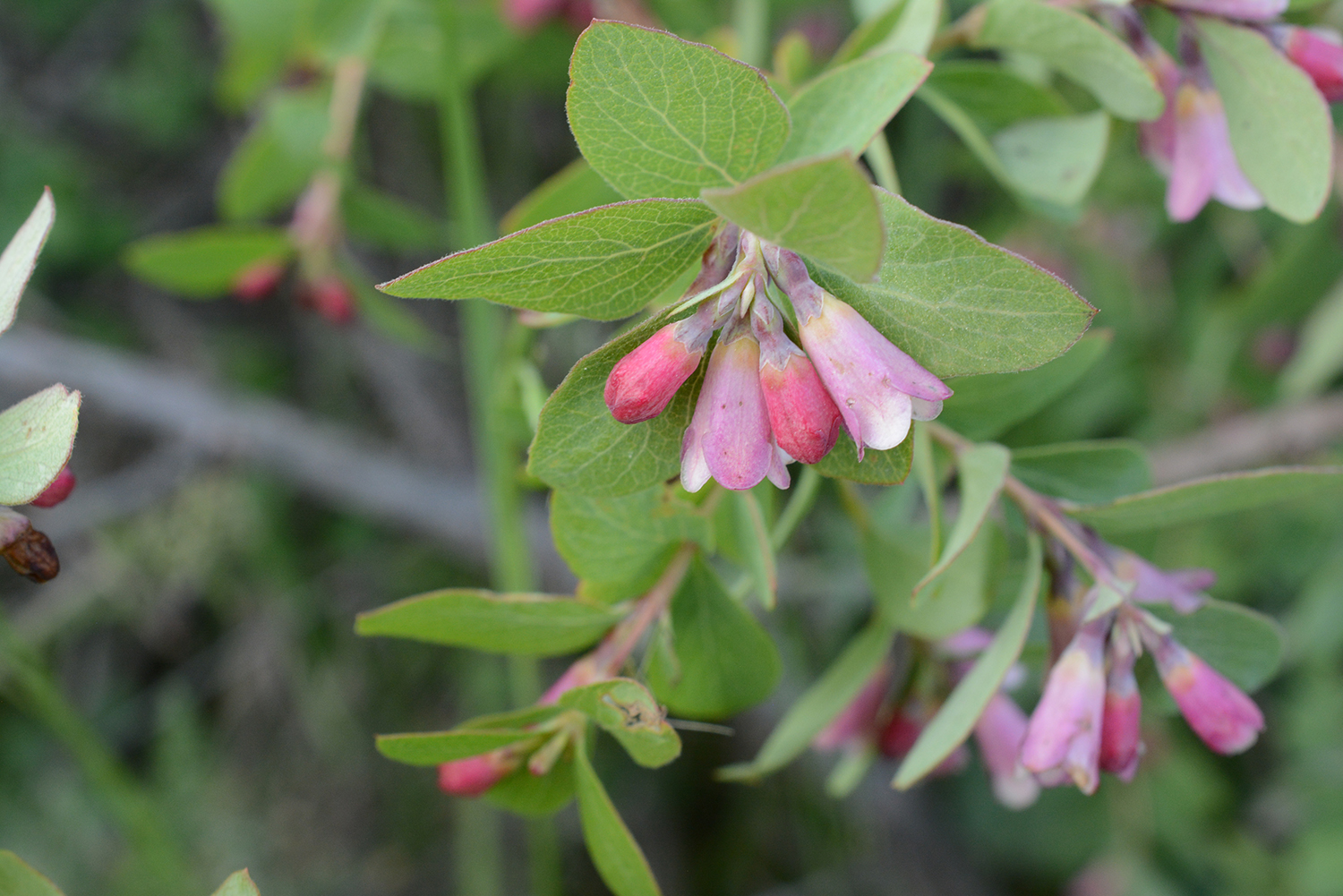
Utah Snowberry – Symphiocarpus oreophilus var. utahensis is blooming in the sage flats and up on Munger Mountain.
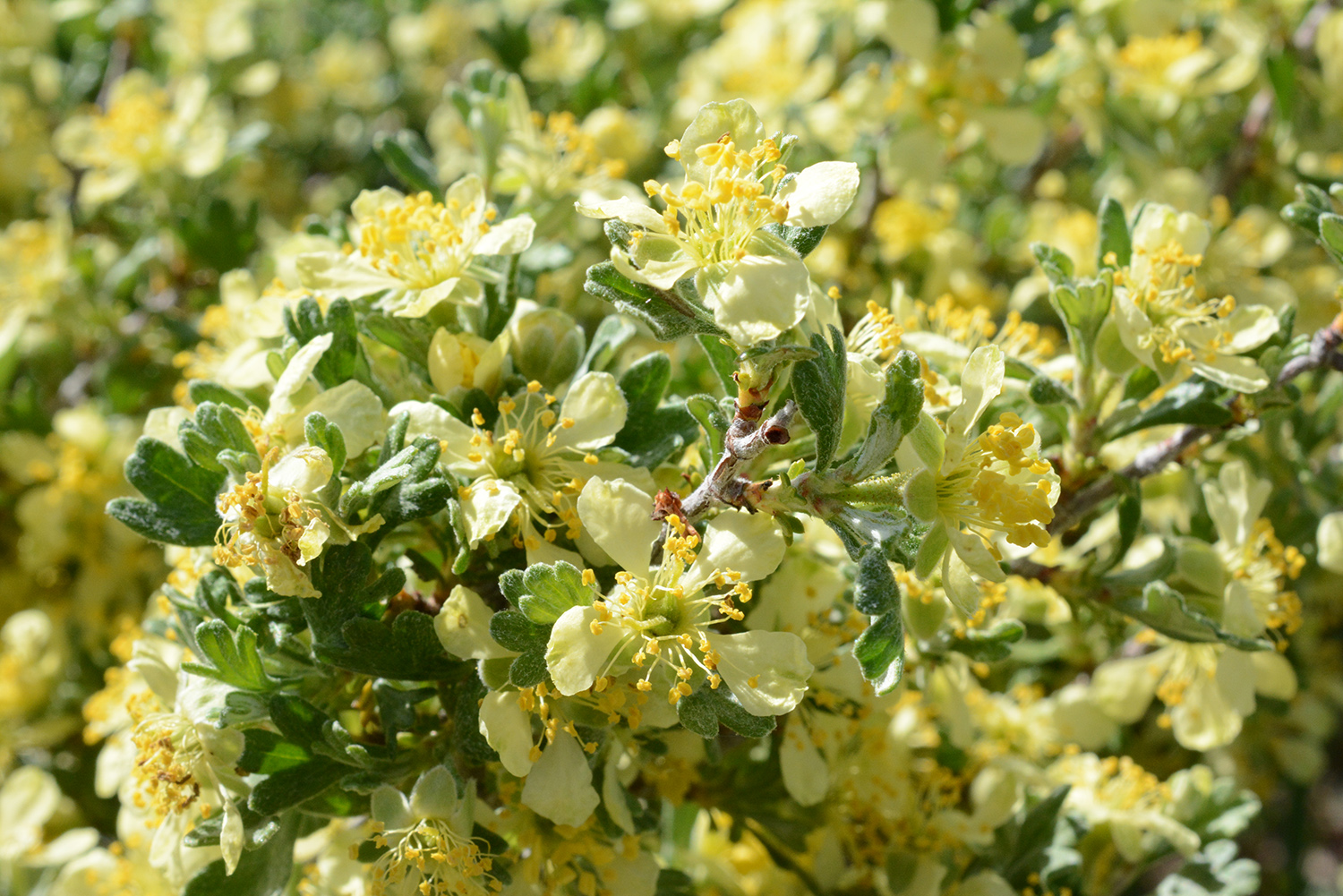
Other shrubs have attracted the attention of pollinators, but are fading fast: The highly fragrant yellow flowers of Antelopebrush – Purshia tridentata – attract dozens of bees. Note the leaves are dark green on top and hairy and lighter on the underside of the .5-1” -long, three-lobed leaves. (compare with sagebrush).
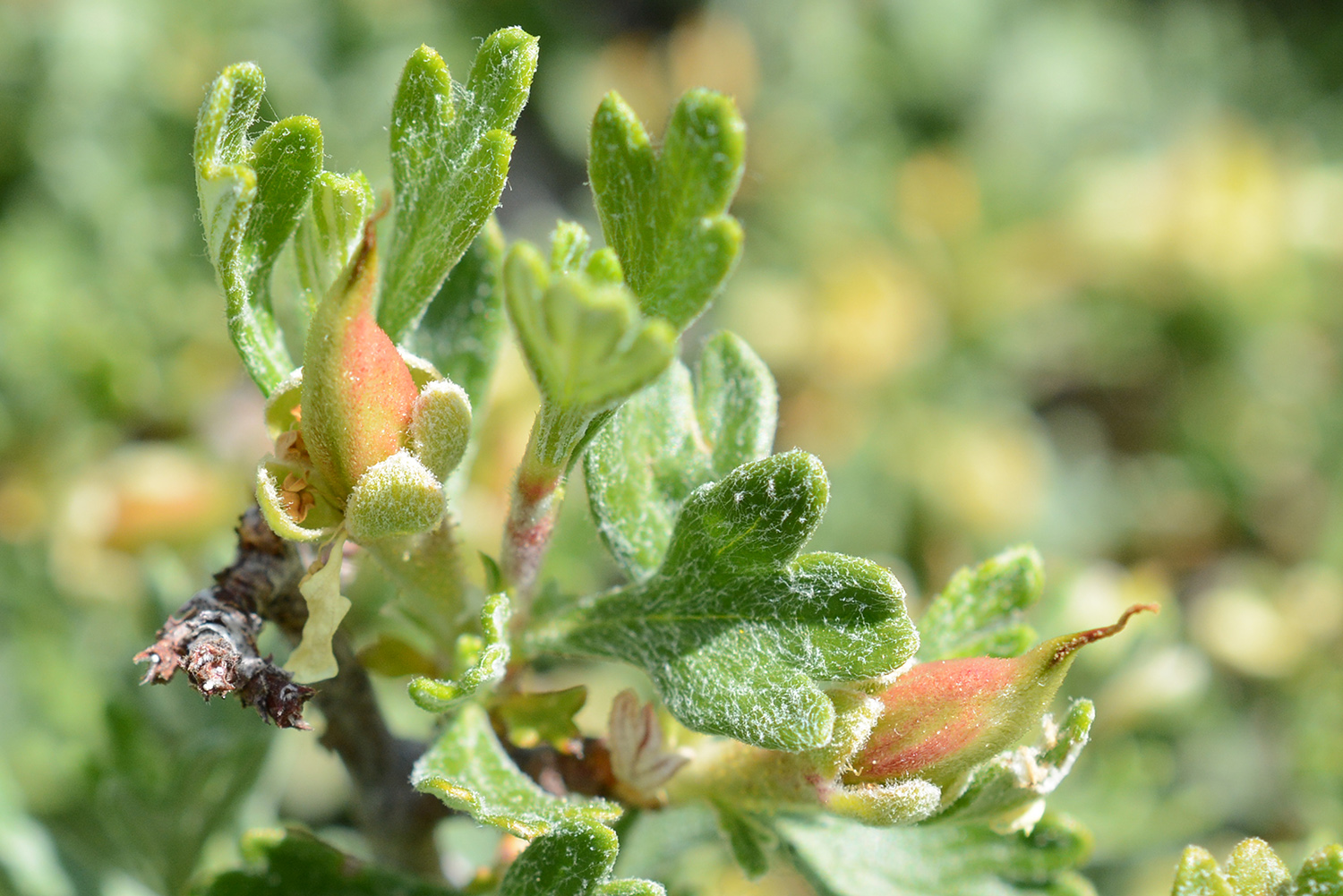
The fruits will be dry capsules that will split open to release seeds in the fall–critters from ants to small rodents thrive on these seeds and help plant them. Moose heavily browse plants in fall and winter. It also provides for many other insects and larger wildlife.
Surprisingly to this botanist, Antelopebrush “fixes nitrogen”–I think of the Pea Family as excelling at such, whereas the Rose Family is known for producing many of the fruits we and the wildlife eat, However, a few members of the large Rose Family in Teton County – our alpine Mountain Avens – Dryas octopetala – and our cliffhanger Mountain Mahogony – Cercocarpus lediflfolius – also fix nitrogen. So much to learn about plans!

Antelopebrush plants (dark green) often mingle with silvery Mountain Big Sagebrushes – Artemisia tridentata var. vaseyana, which won’t extend their wind-pollinated flower stalks until fall. However, at this time, look for galls growing on the fresh, fragrant silvery leaves—galls are made from plant cells that are stimulated by the deposit of the eggs of gall midges. (Two good references – WenatcheeNaturalist and BodieHills.)
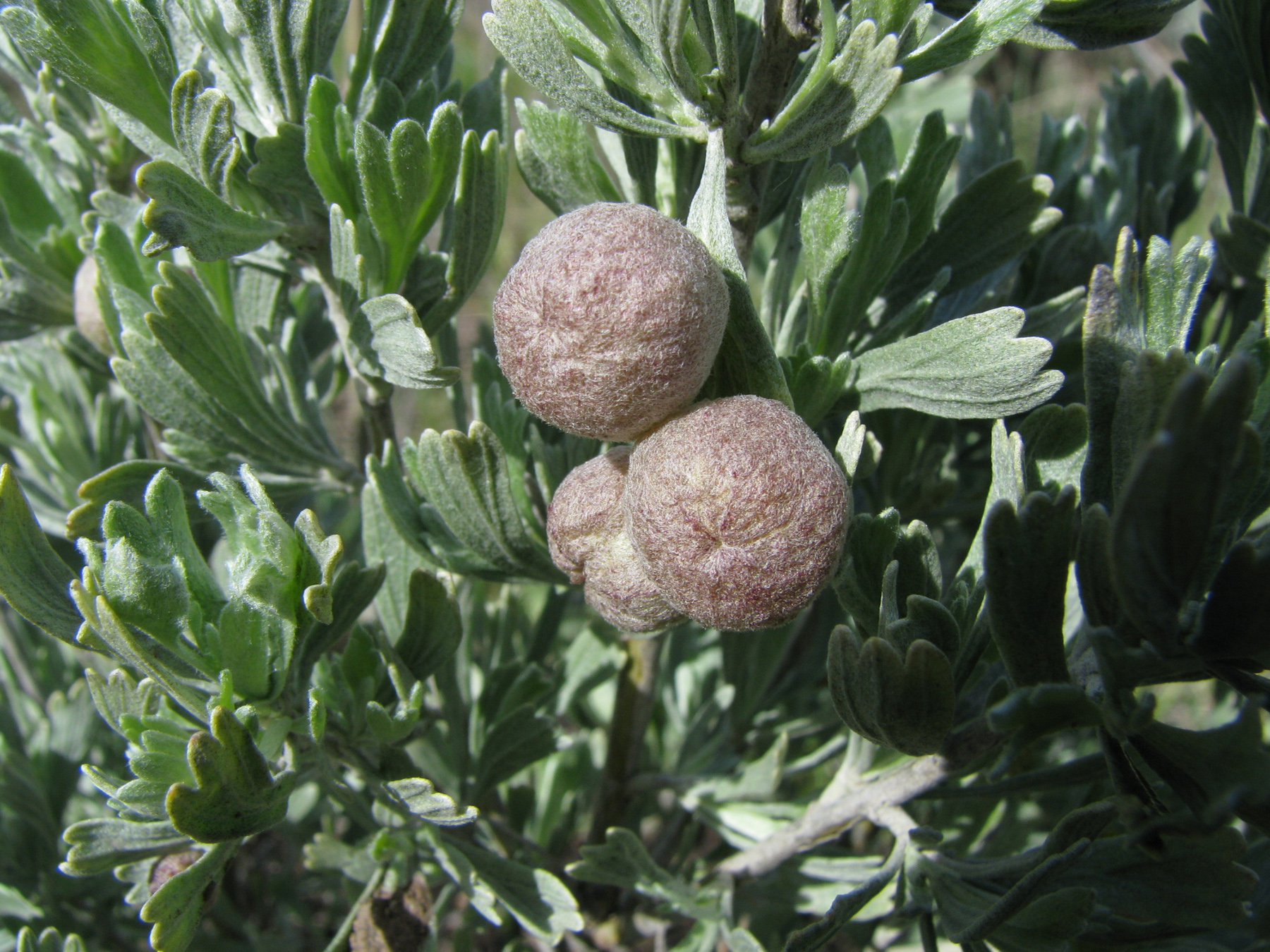
The insect chews or injects compounds similar to the plant’s hormones. In this case, the plant cells are redirected to form a globular safe-haven for the tiny gall larvae growing slowly inside. Over 32 midge and aphid species can stimulate sagebrush to form galls in our region. The one above looks like the sponge gall midge – Rhopalomyia pomum.
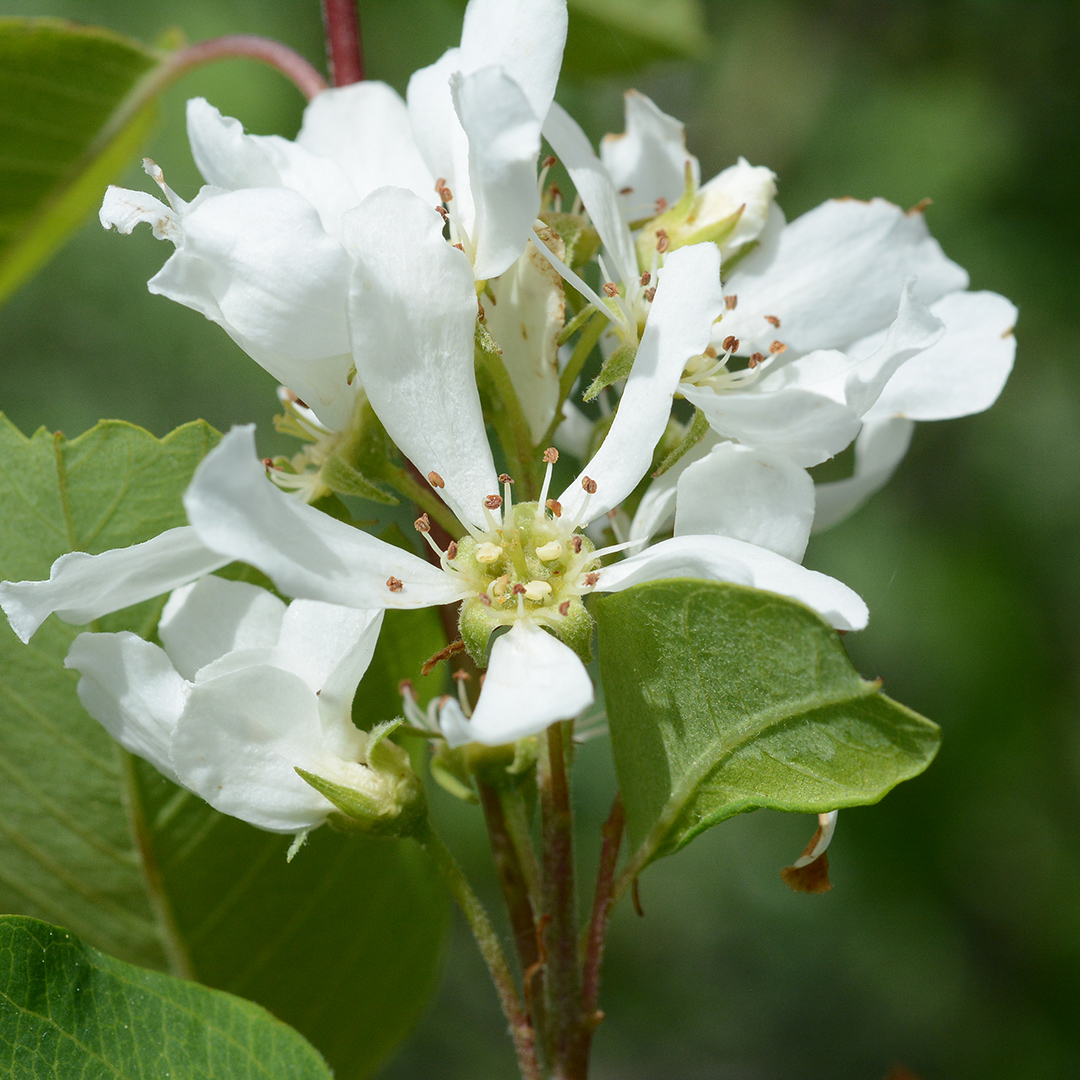
This has also been an abundant flowering year for Serviceberry – Amelanchier alnifolia, and
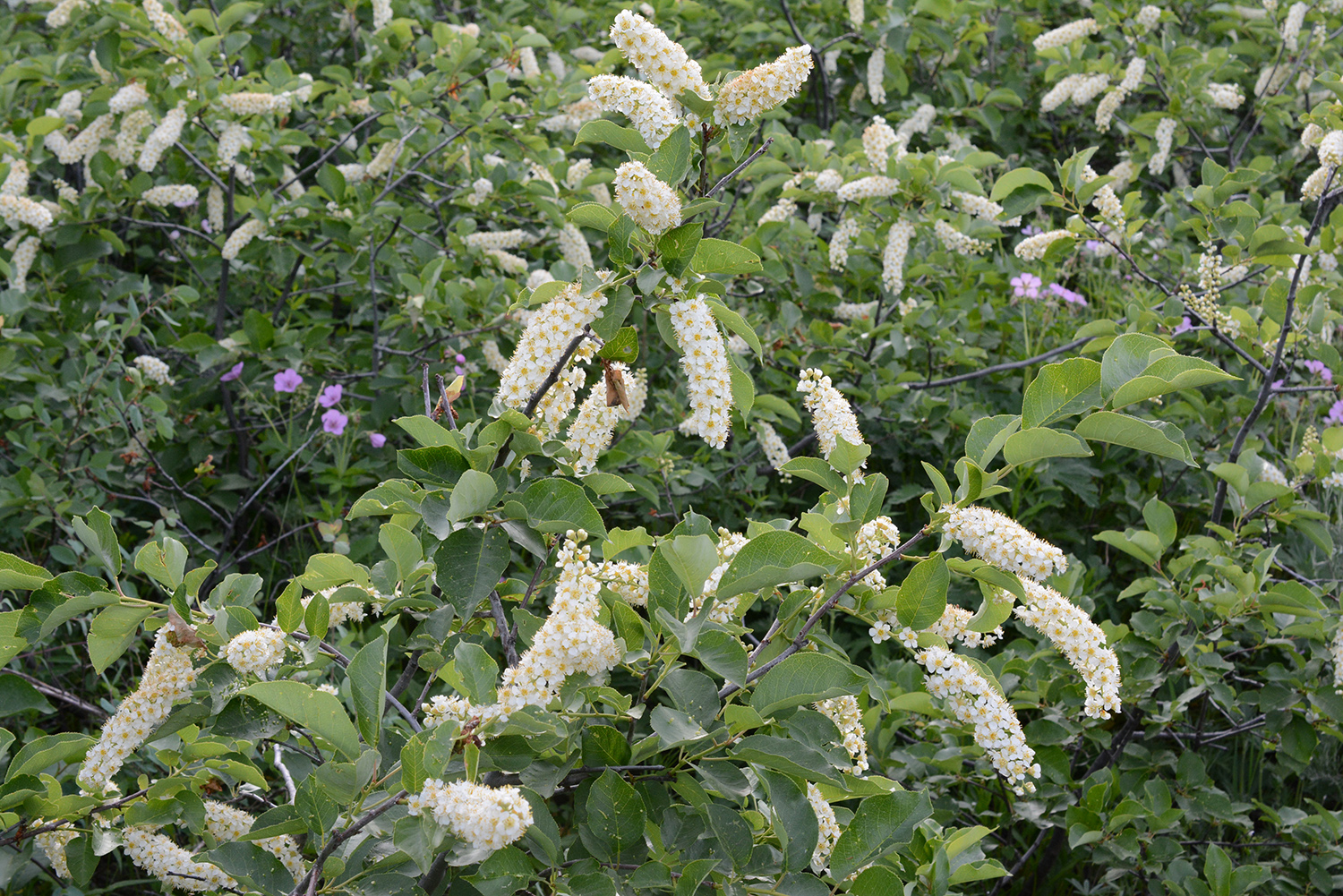
more recently Chokecherry – Prunus virginiana. This bodes well for an abundance of berries for bears come August and September.

While all seems overwhelming now, there are yet more flowers to come. Enjoy being outside as much as you can!
Frances Clark
Wilson, Wyoming
As always, questions and corrections are welcome. Email tetonplants@gmail.com, and we will respond when we aren’t out looking at plants!
(Original posting on 7.26.26 was corrected on 7.28.26)
 Teton Plants
Thanks as always for these amazing posts
Wow. Wh