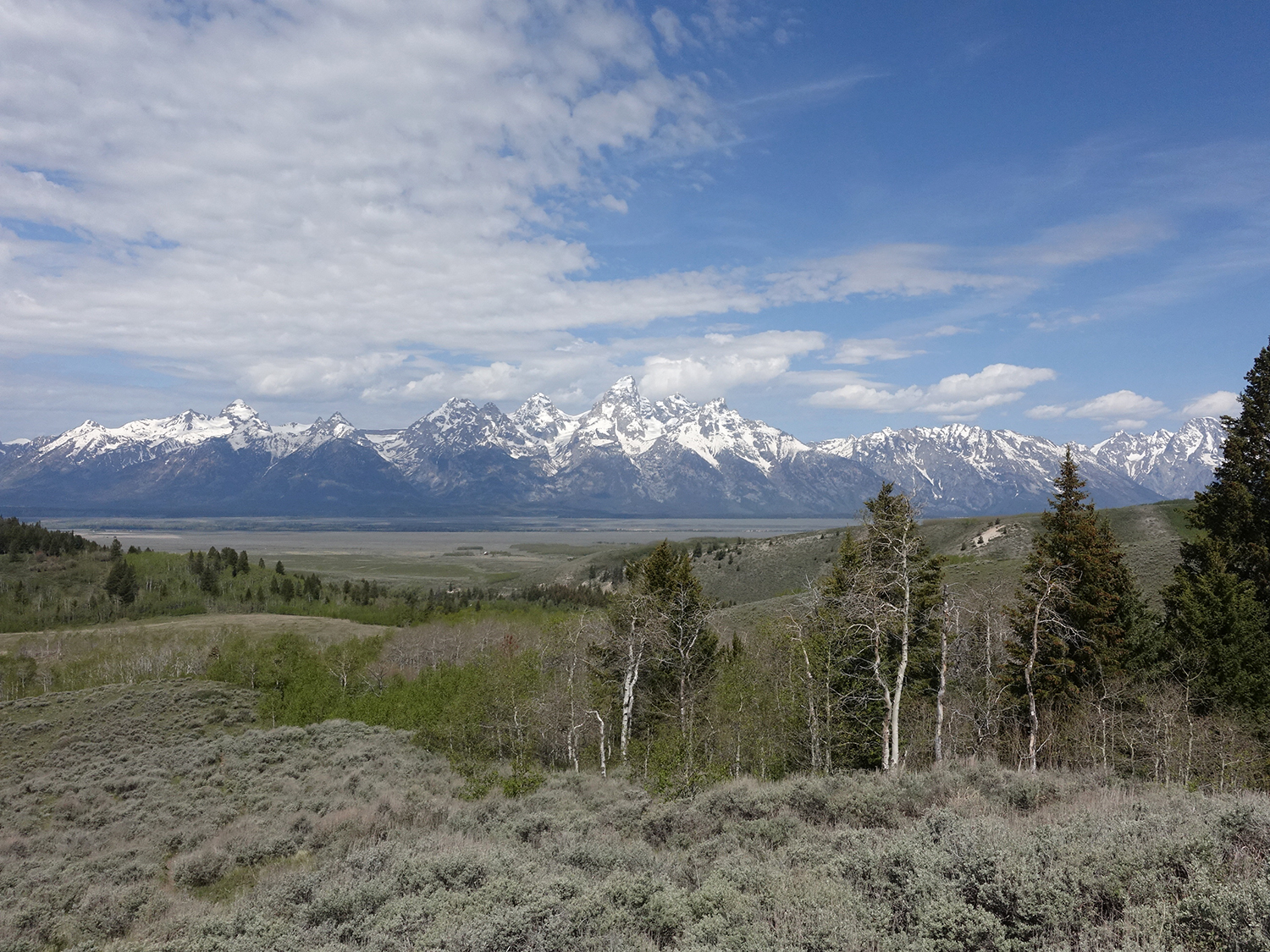
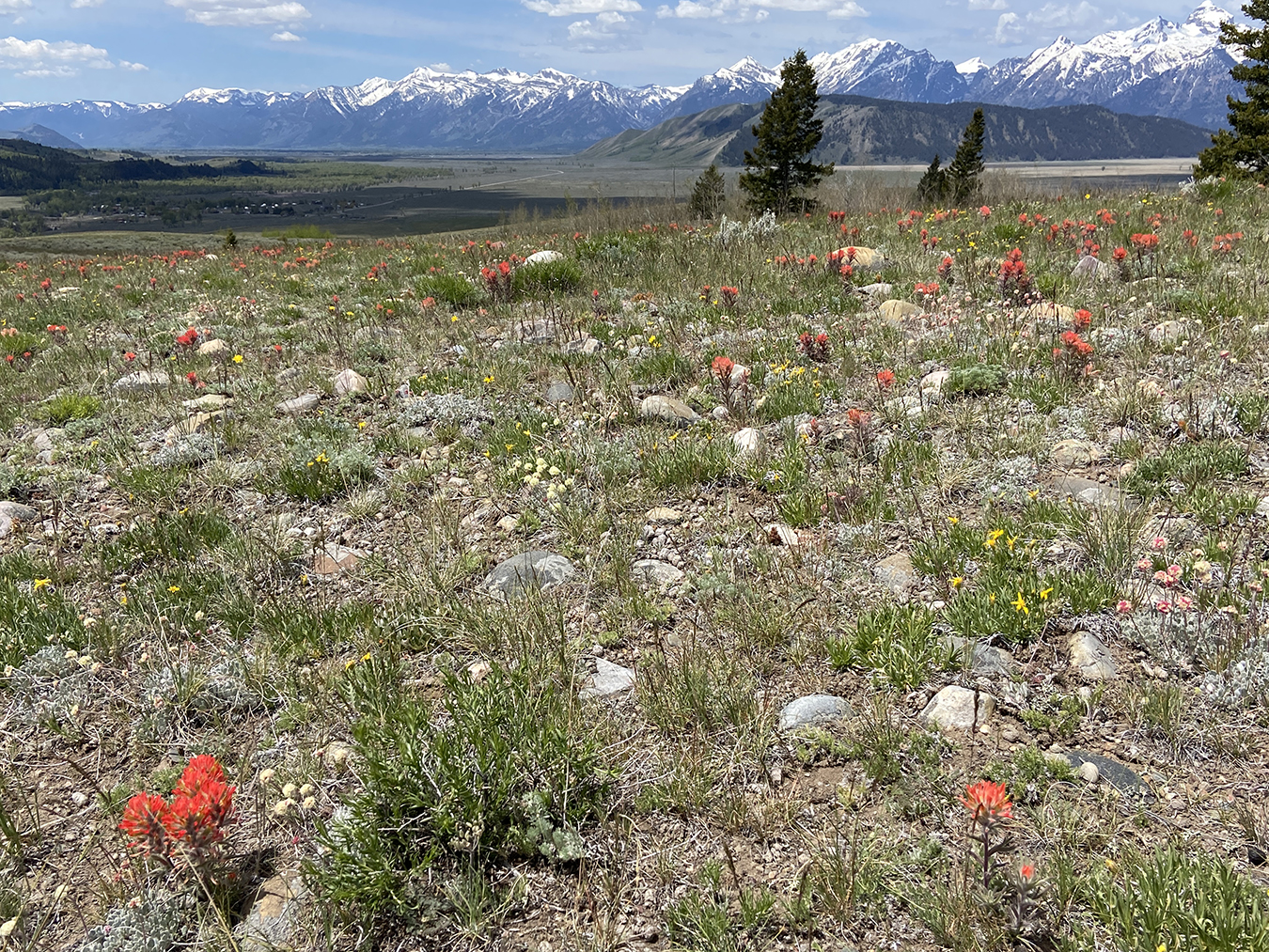
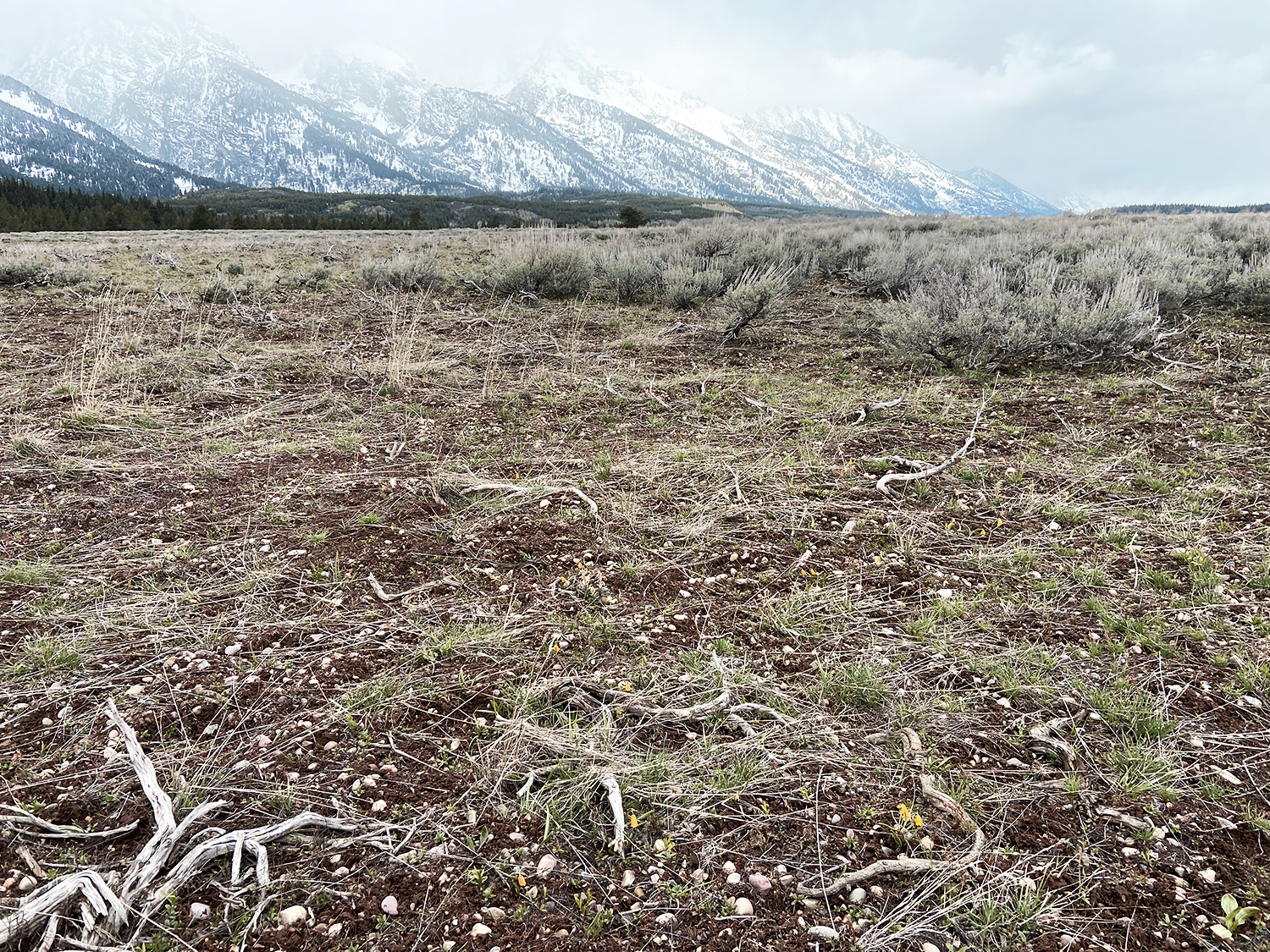
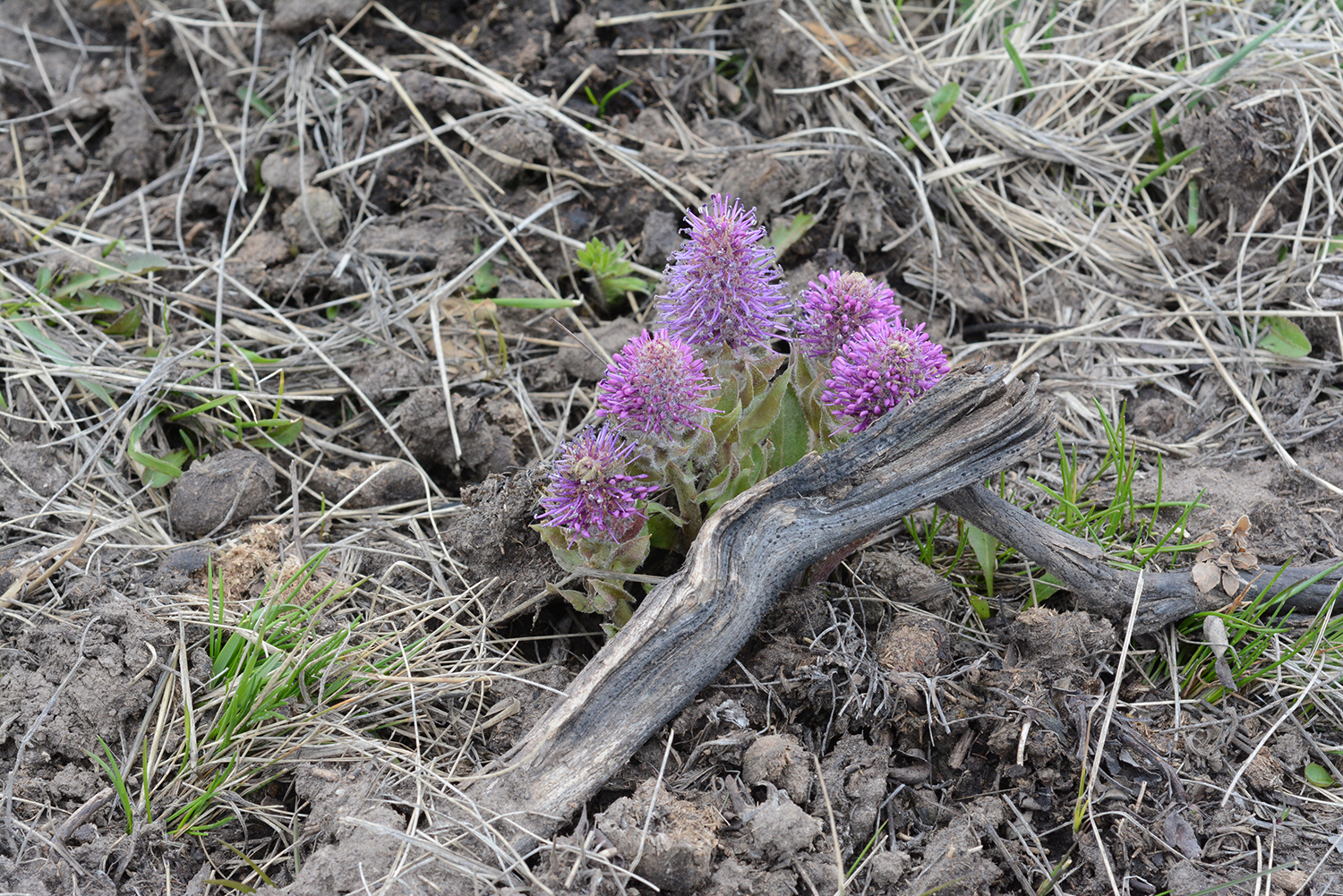
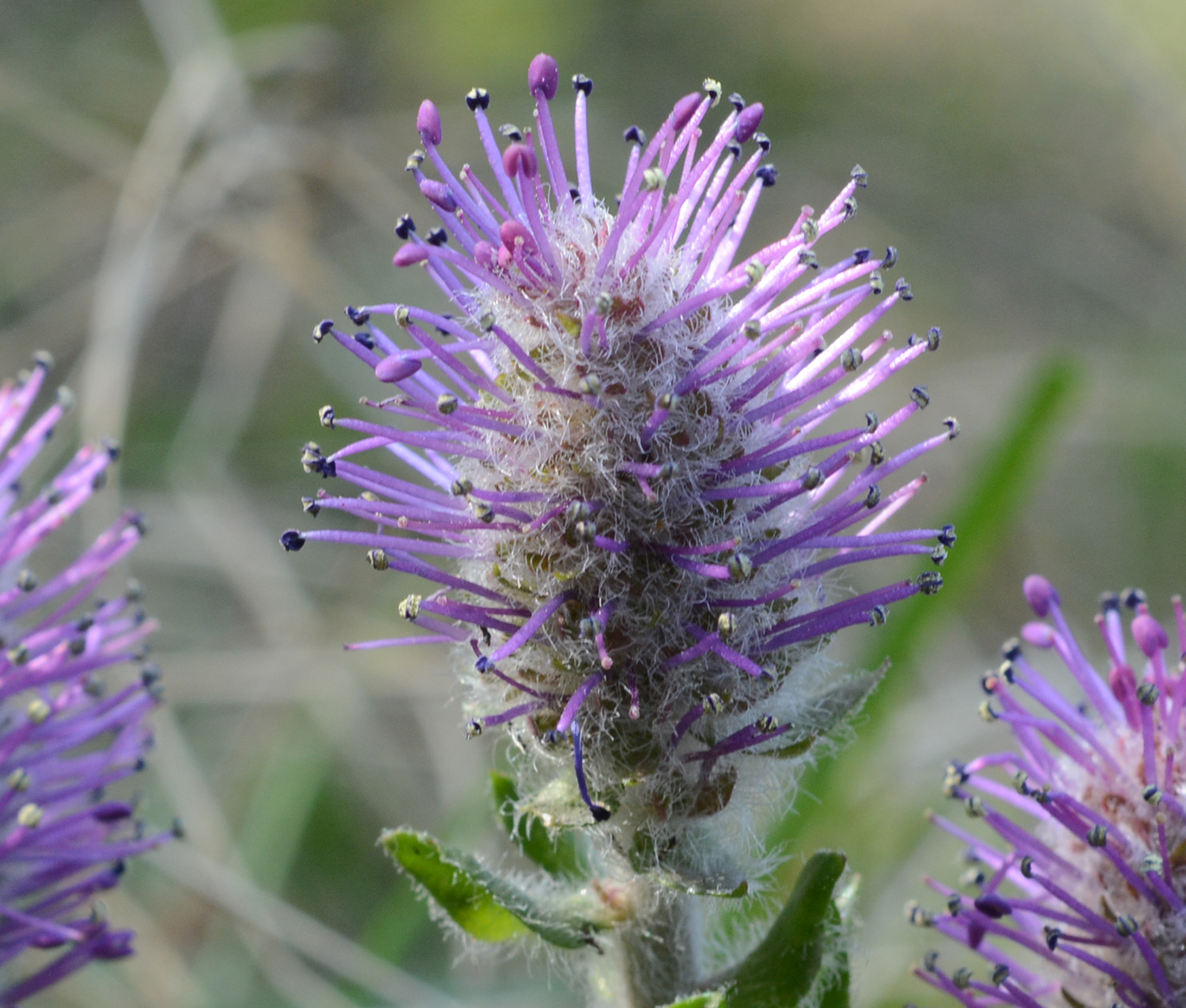
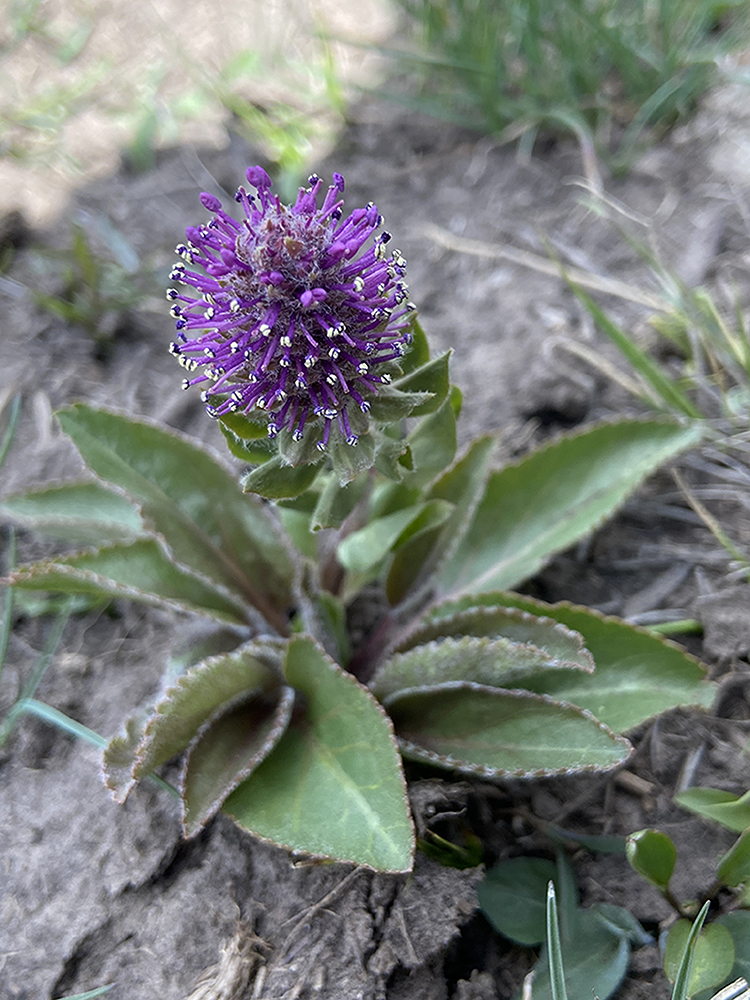
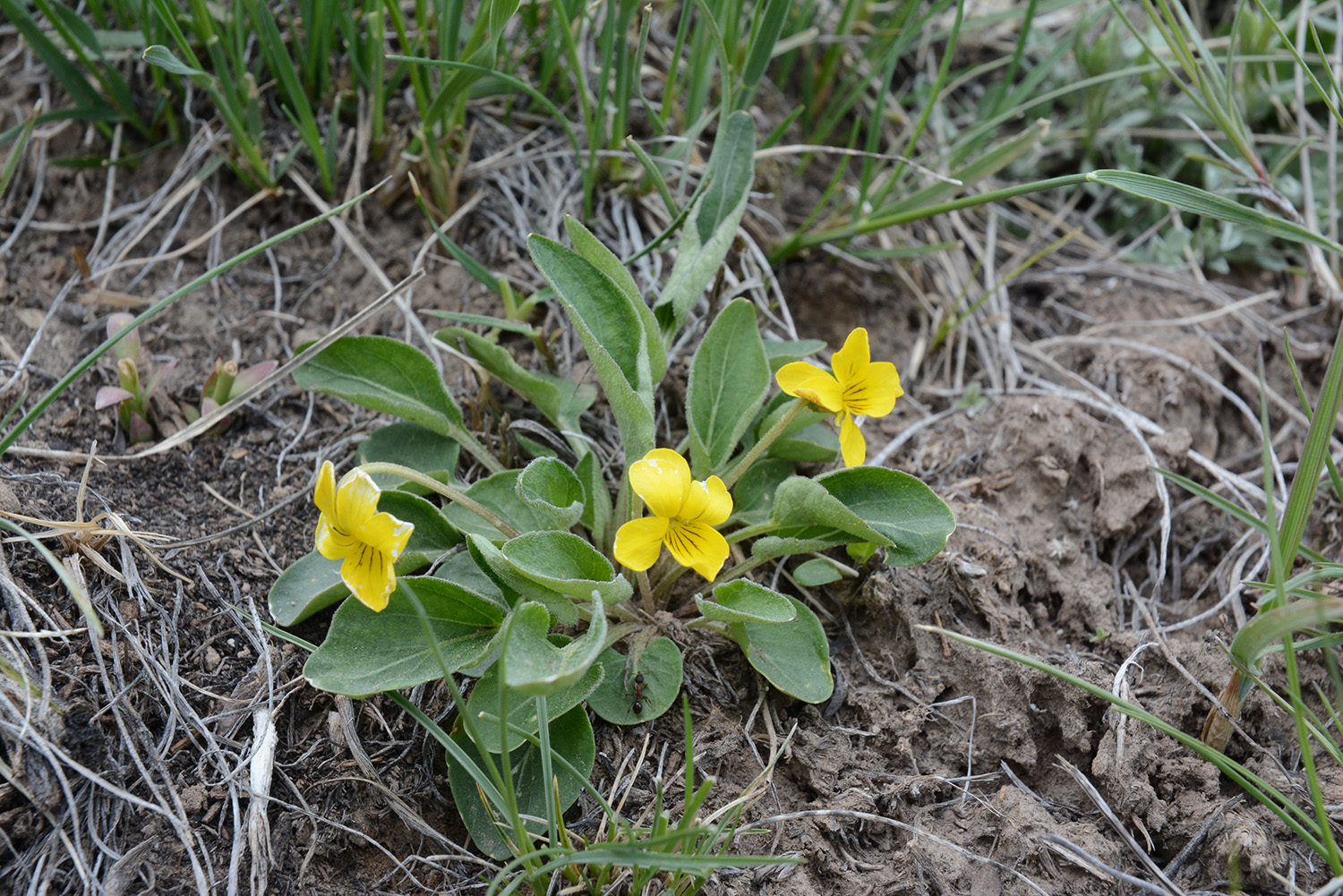
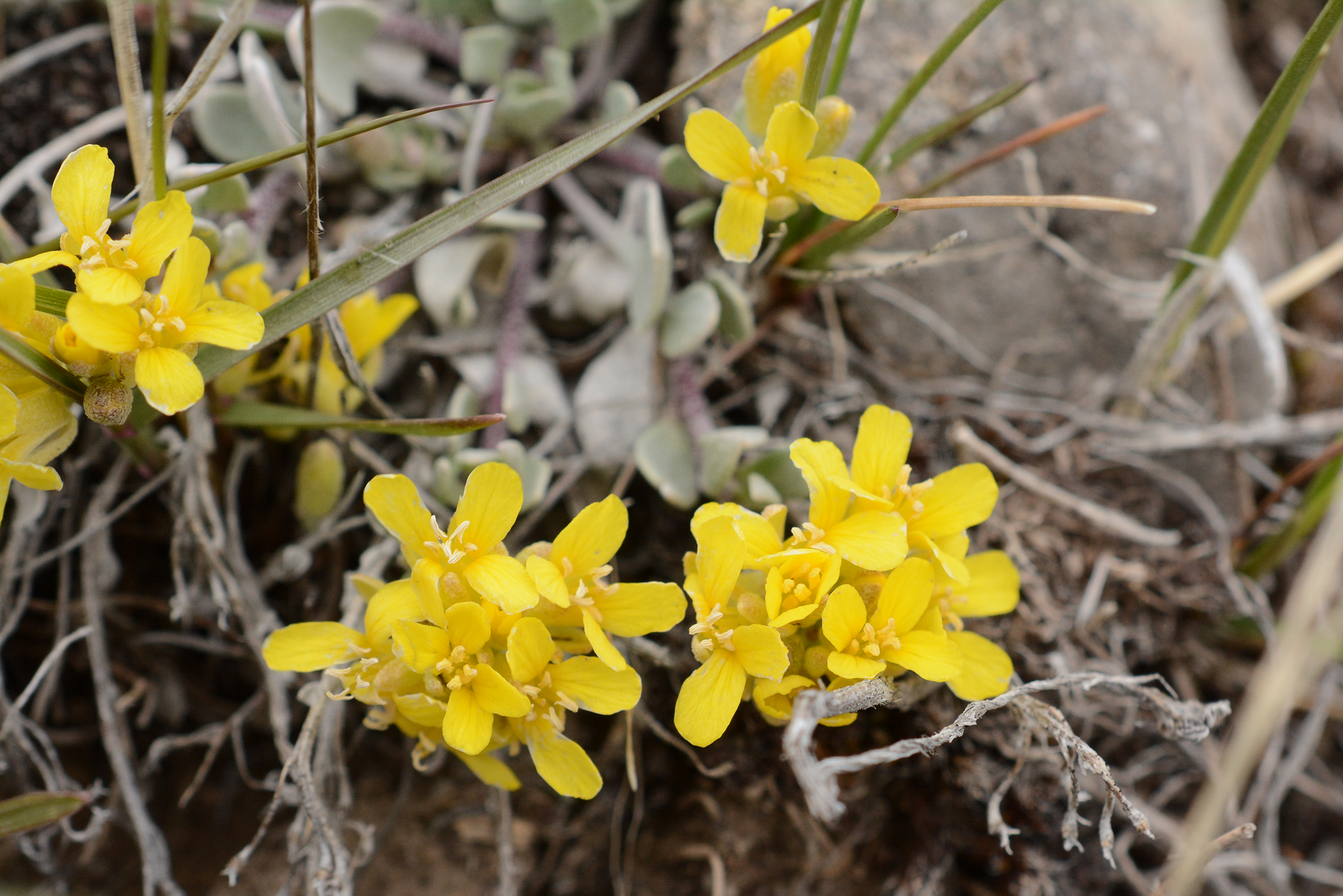
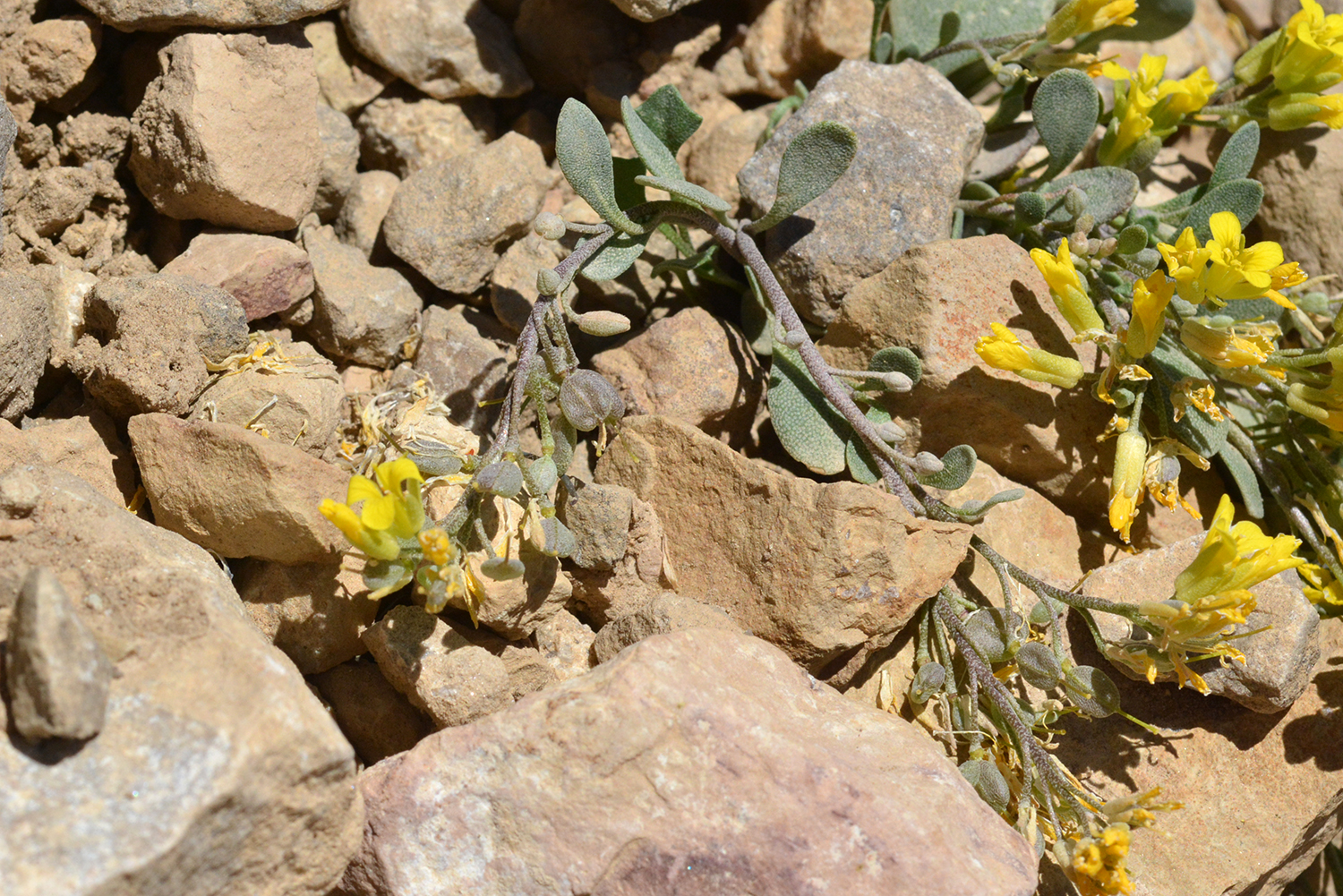
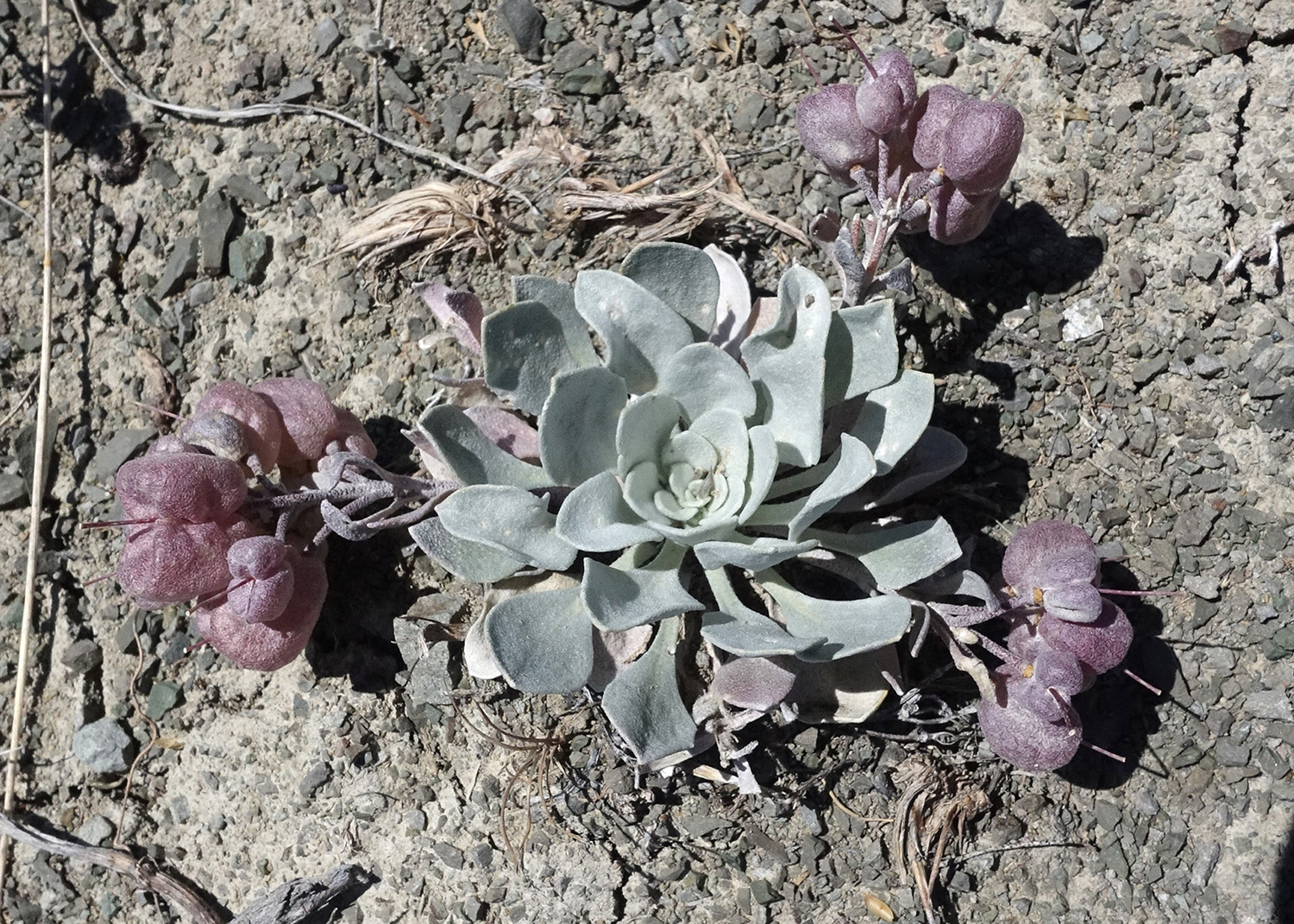
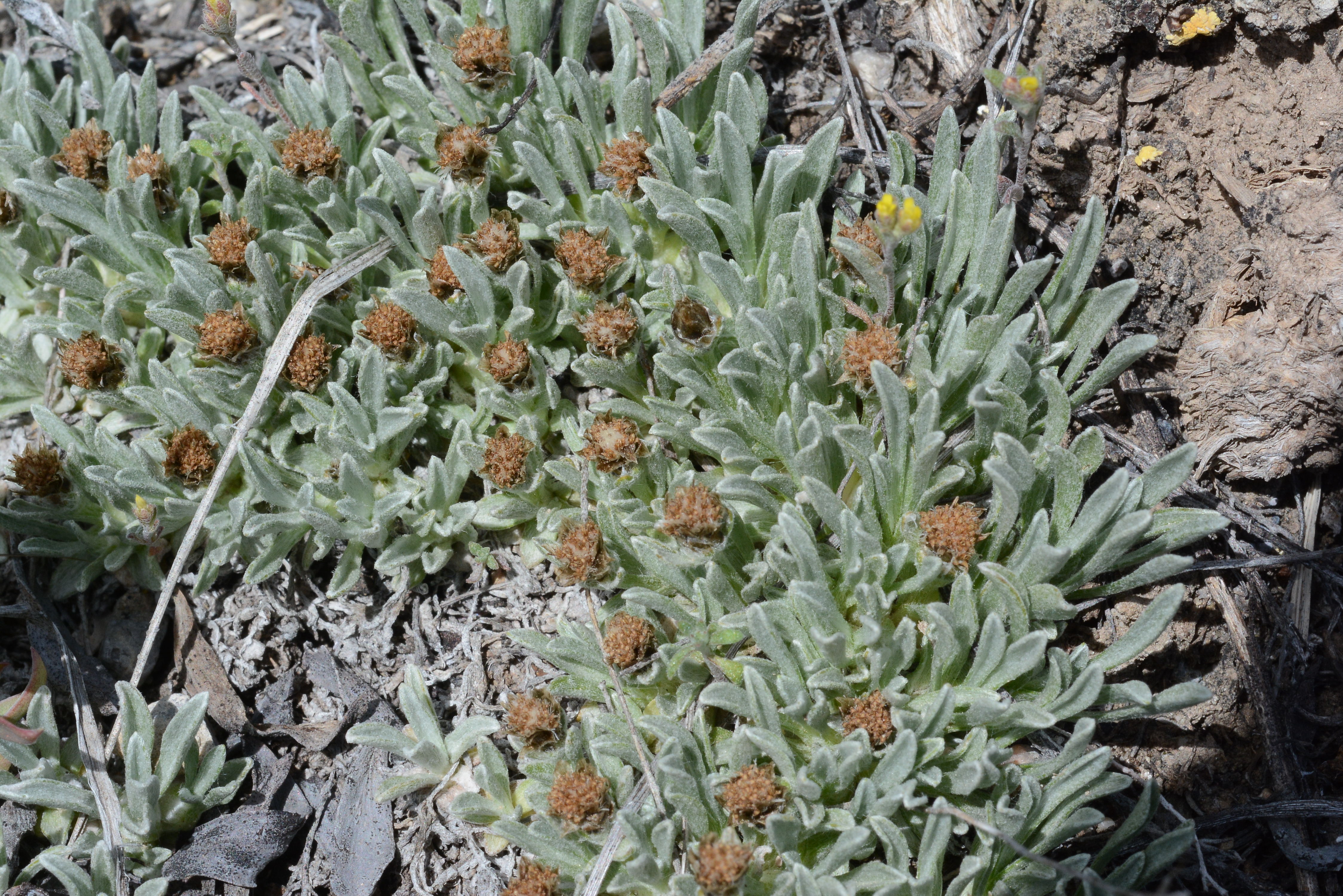
This spring in Jackson Hole has been unusual with a dry winter, early warmth, then cold, little rain, then warm, a freeze to mid-teens in mid May and then hot and windy. Flowers on dry knolls and hills have mostly faded with some bright exceptions, and new flowers in the sage flats seem delayed or sparse. And a couple appear relatively abundant. Here are some plants you may be seeing on your hikes at lower, more open elevations.
We try to provide ID details to help you really look and learn the species and then also some facts that make knowing the plant more interesting. Skim through the pictures or give a thorough read as time and curiosity permit.
Dry sites:
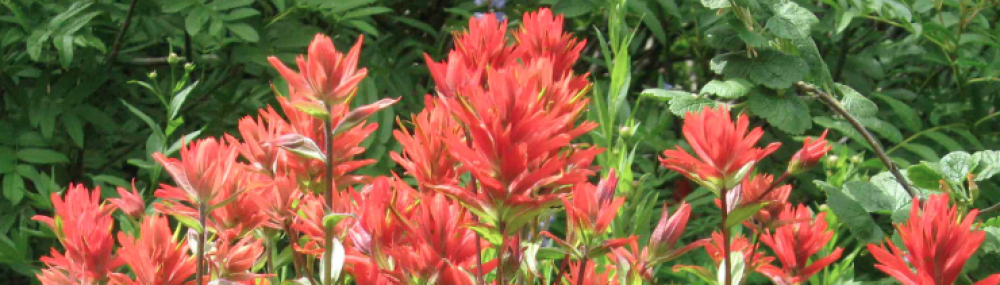
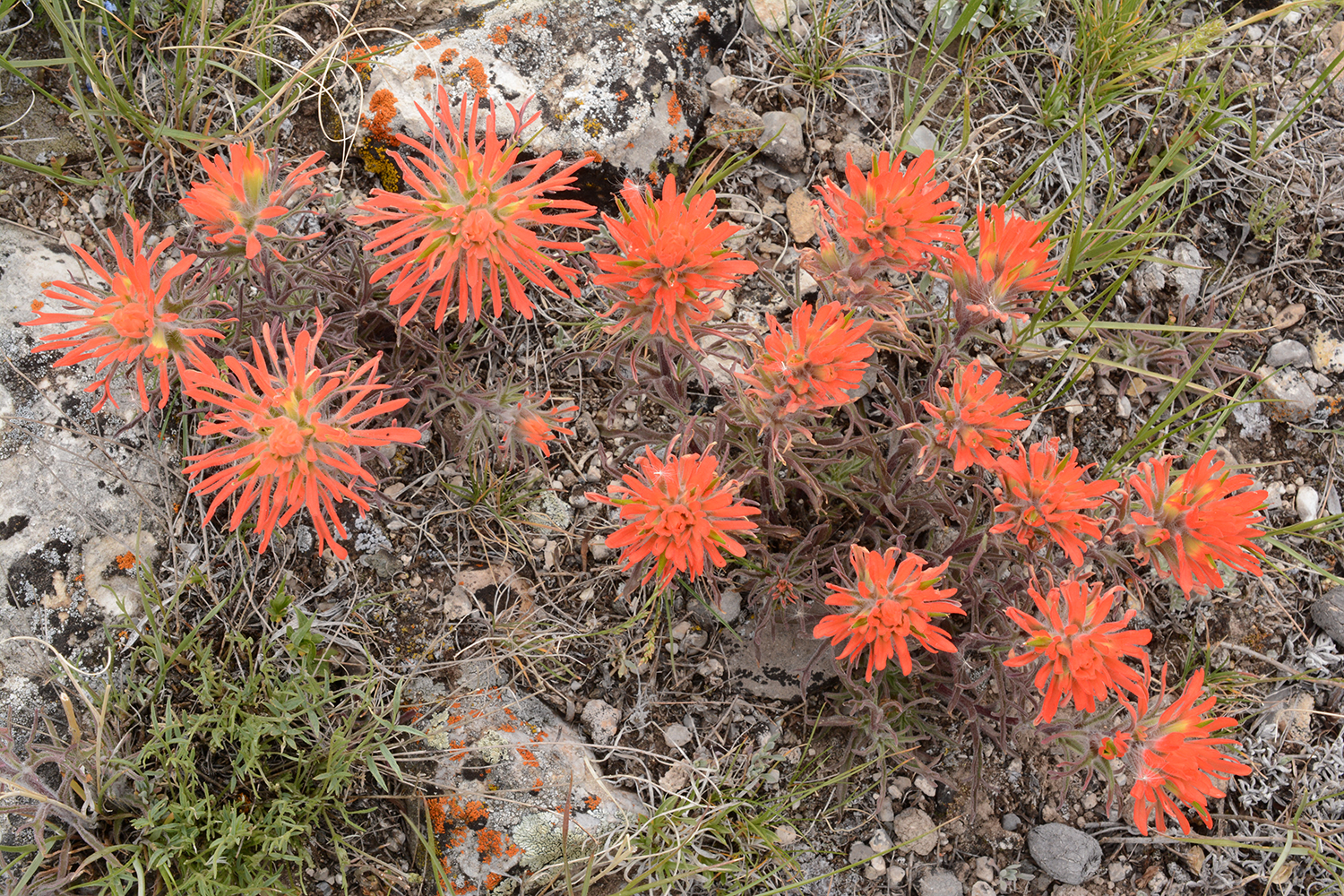
Desert Paintbrushes – Castilleja chromosa – are still blooming on dry hills. This early paintbrush is particularly hairy and stout compared to later red paintbrushes and it seems to glow. The red flowers attract hummingbirds and some bees. The plant stretches taller as it forms fruit. All paintbrushes are hemi parasitic on a range of plants including grasses and sagebrush. “Haustonia” – they look like little suckers – attach to cells in the host-plant roots and draw out nutrients which help paintbrushes produce more seeds.
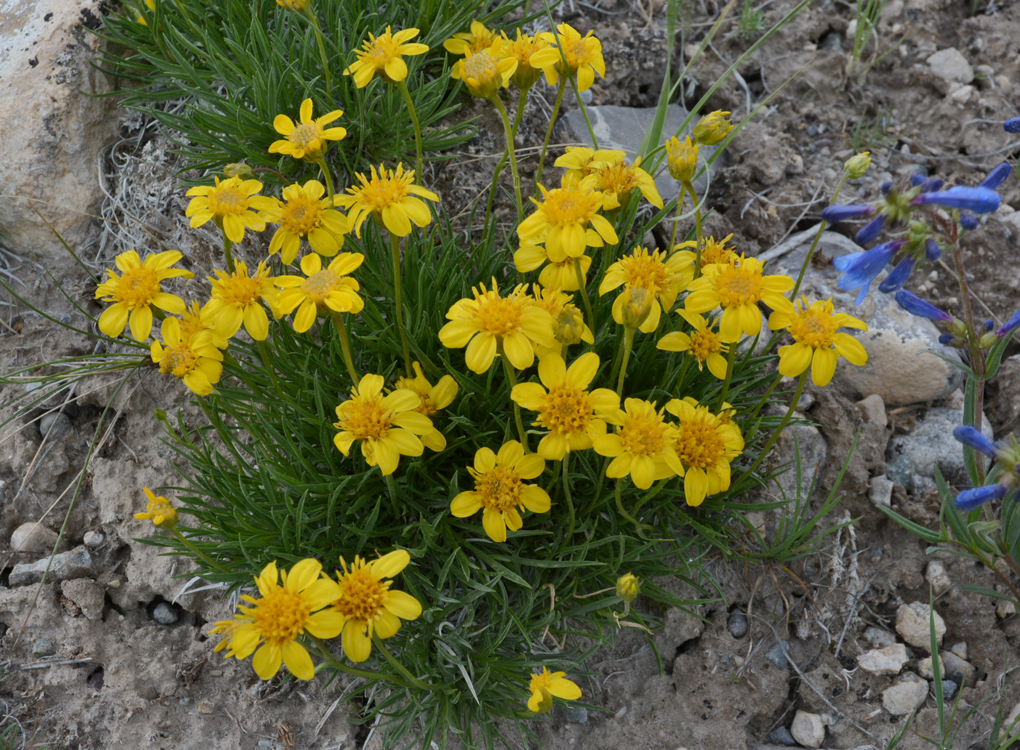
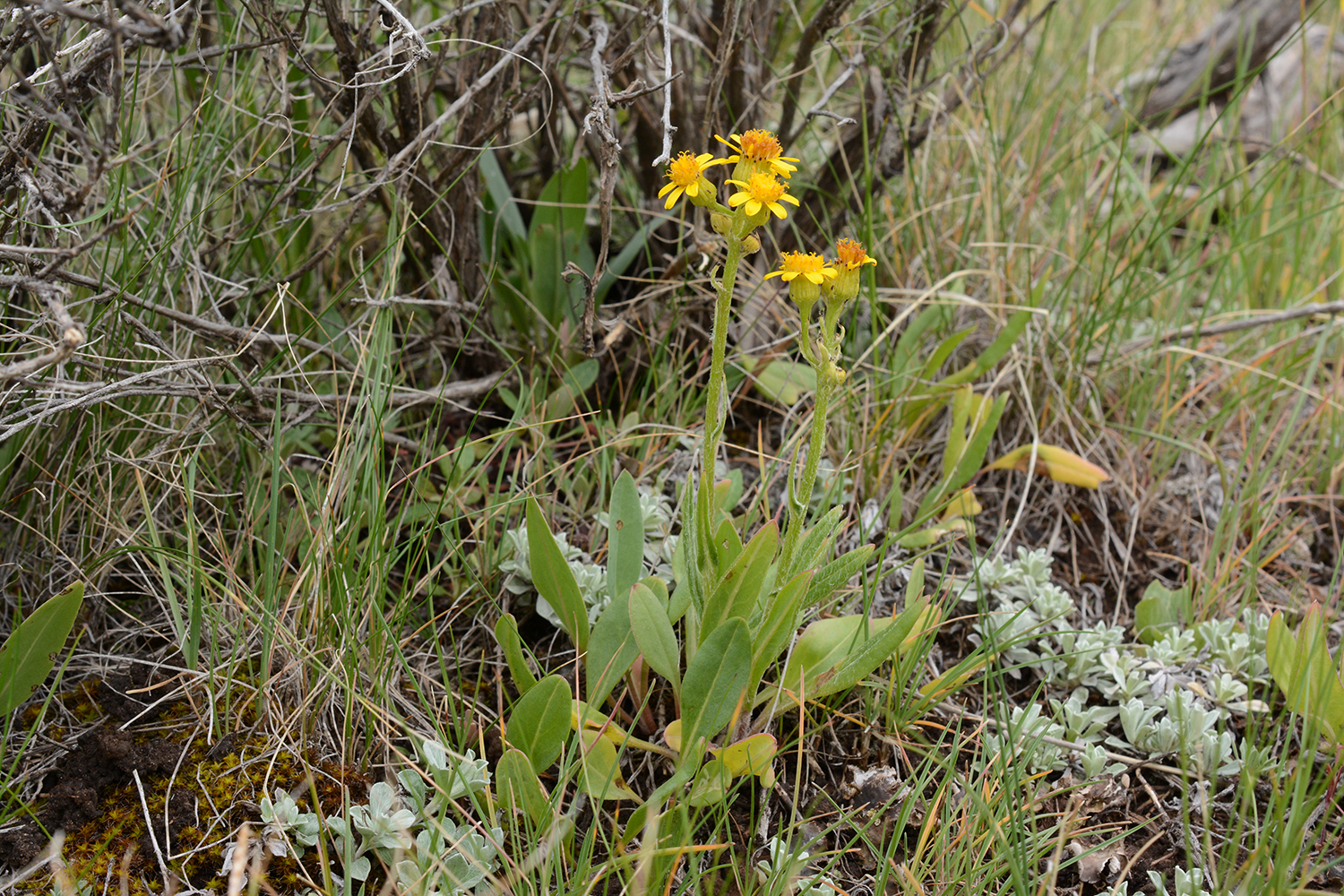
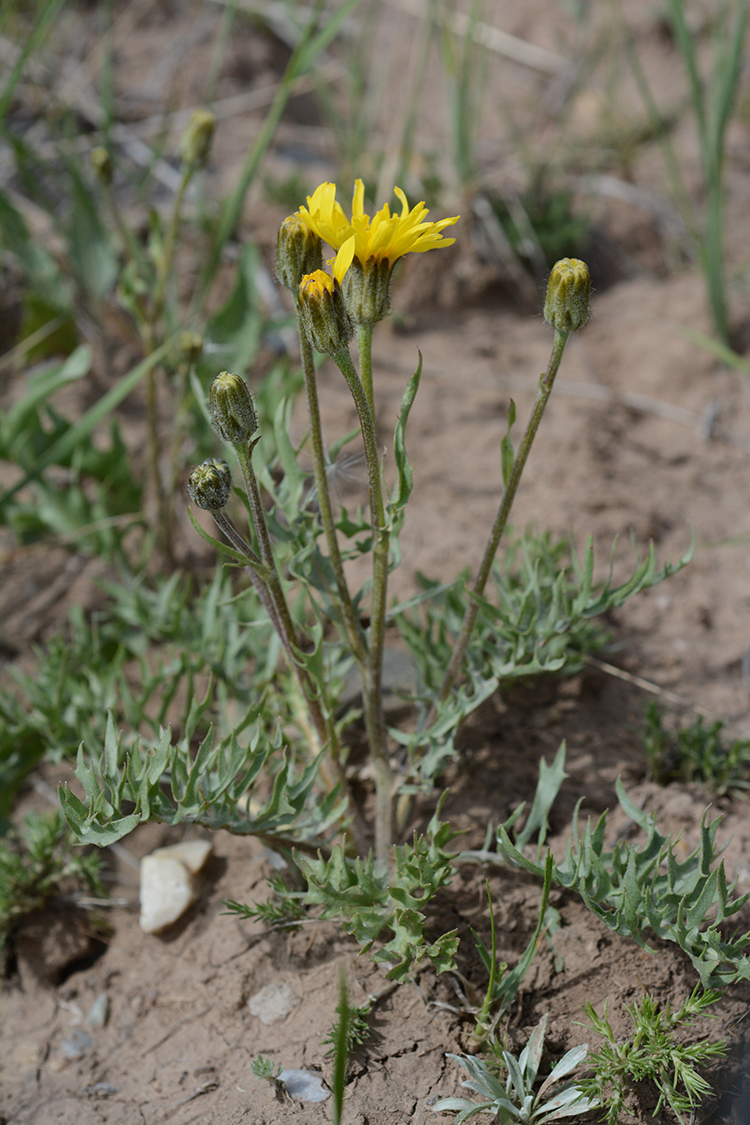
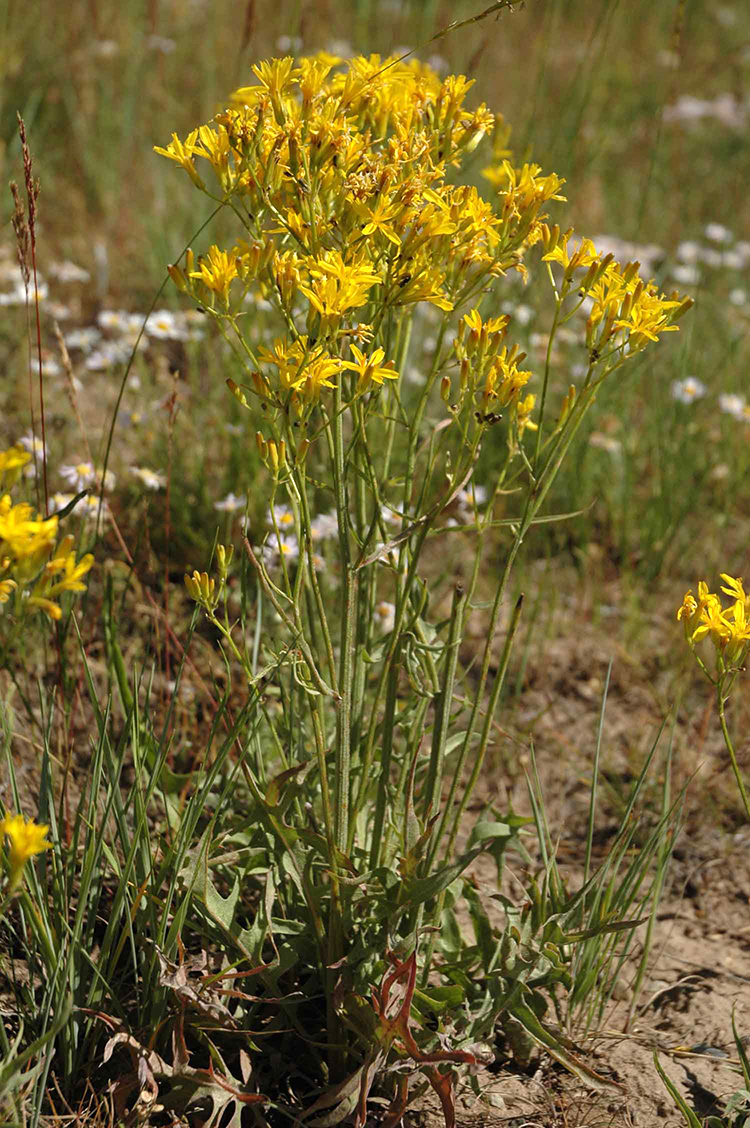
Stemless Goldenweed – Stenotus acaule – is a common yellow composite growing to 4-6” with green, slightly stiff lance-shaped leaves growing mostly from base forming mats.
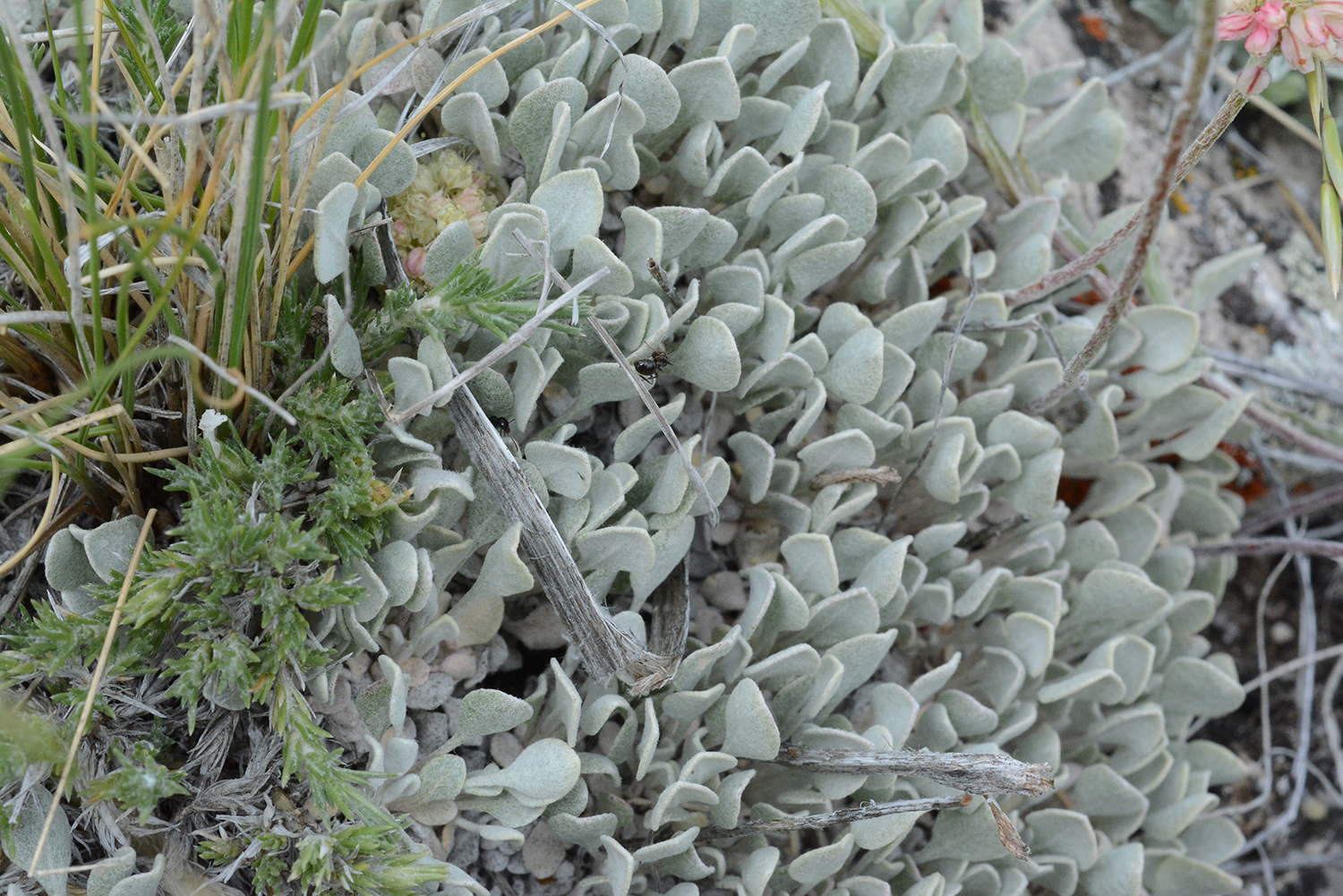
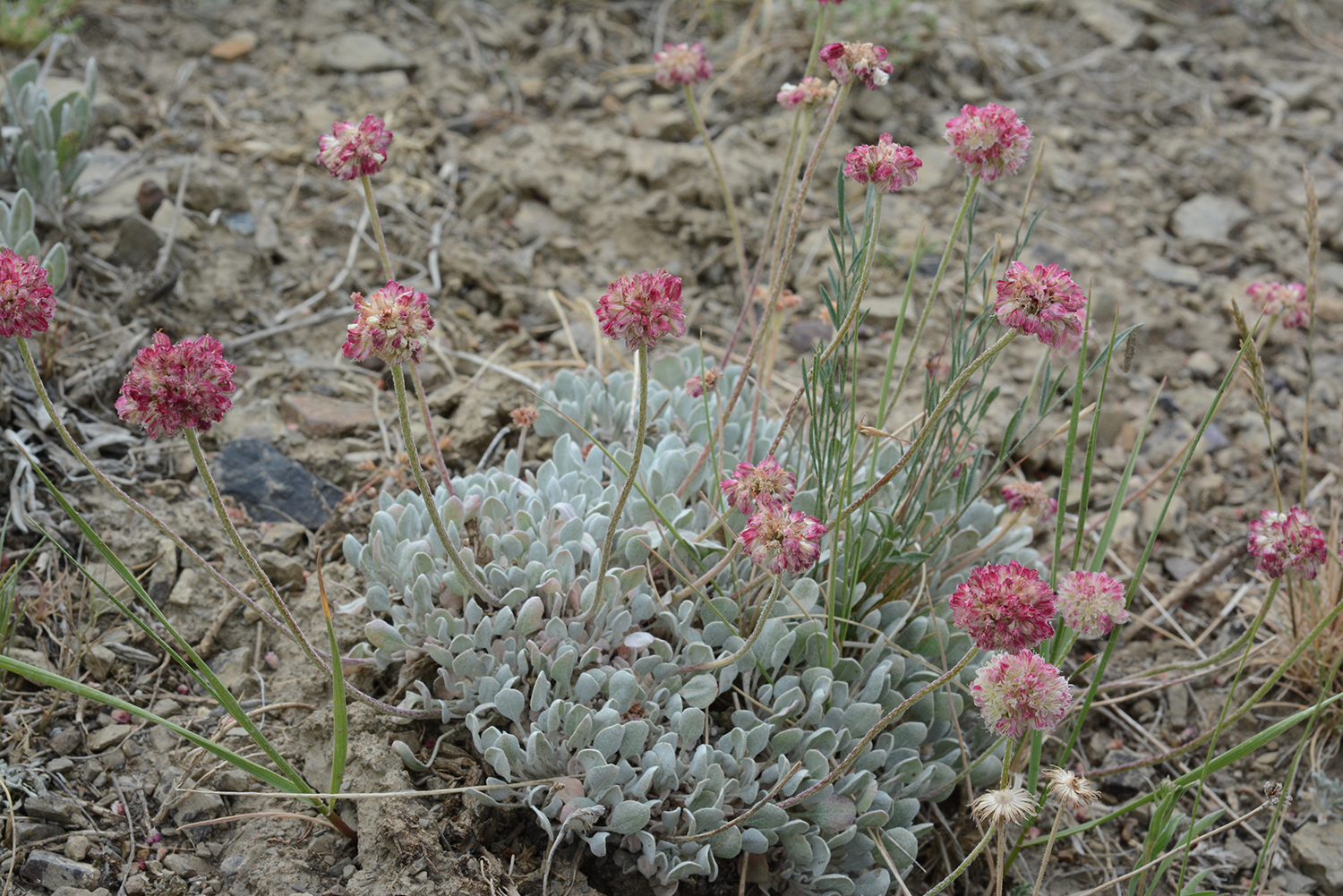
Oval-leaf Buckwheat –Eriogonum ovalifolium – is a great example of protection from water loss in hot, dry, windy sites. This Buckwheat has tiny, silvery, hairy spade-shaped leaves tucked into a tight mat. The silvery matted hairs reflect the harsh sun. During the day, plants lose over 90% of their water through tiny stomates which open to let in CO2 and release H20 (transpiration) in the process of photosynthesis. Hairs serve to increase humidity on the leaf surface as the water transpires while also reducing wind which can wick out moisture, an elegant adaptation for growing in hot, windy dry conditions.
Even the angle of the leaves affects the amount of direct sun the surface receives and being tightly clustered also reduces the force of drying wind.
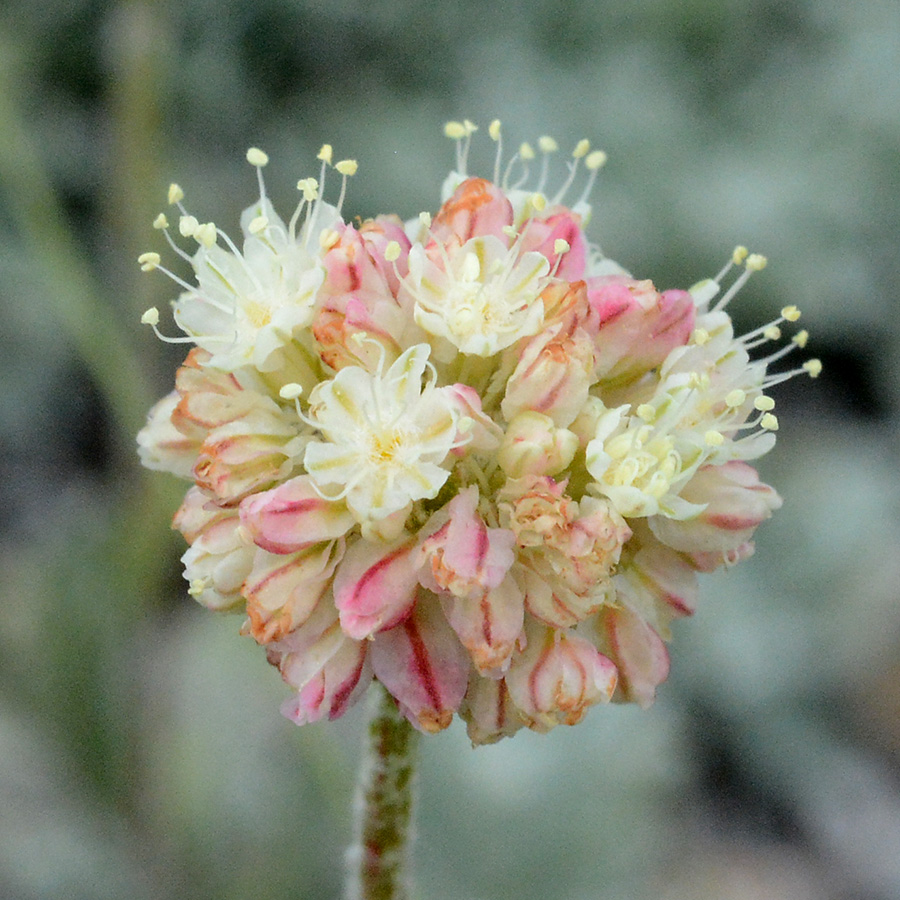
Flowers start as tight red buds nestled in the leaves then stretch up. A cluster of flowers are held out in umbels. They are in the Buckwheat or Polygonaceae Family. There are several other buckwheats that thrive in dry locations.
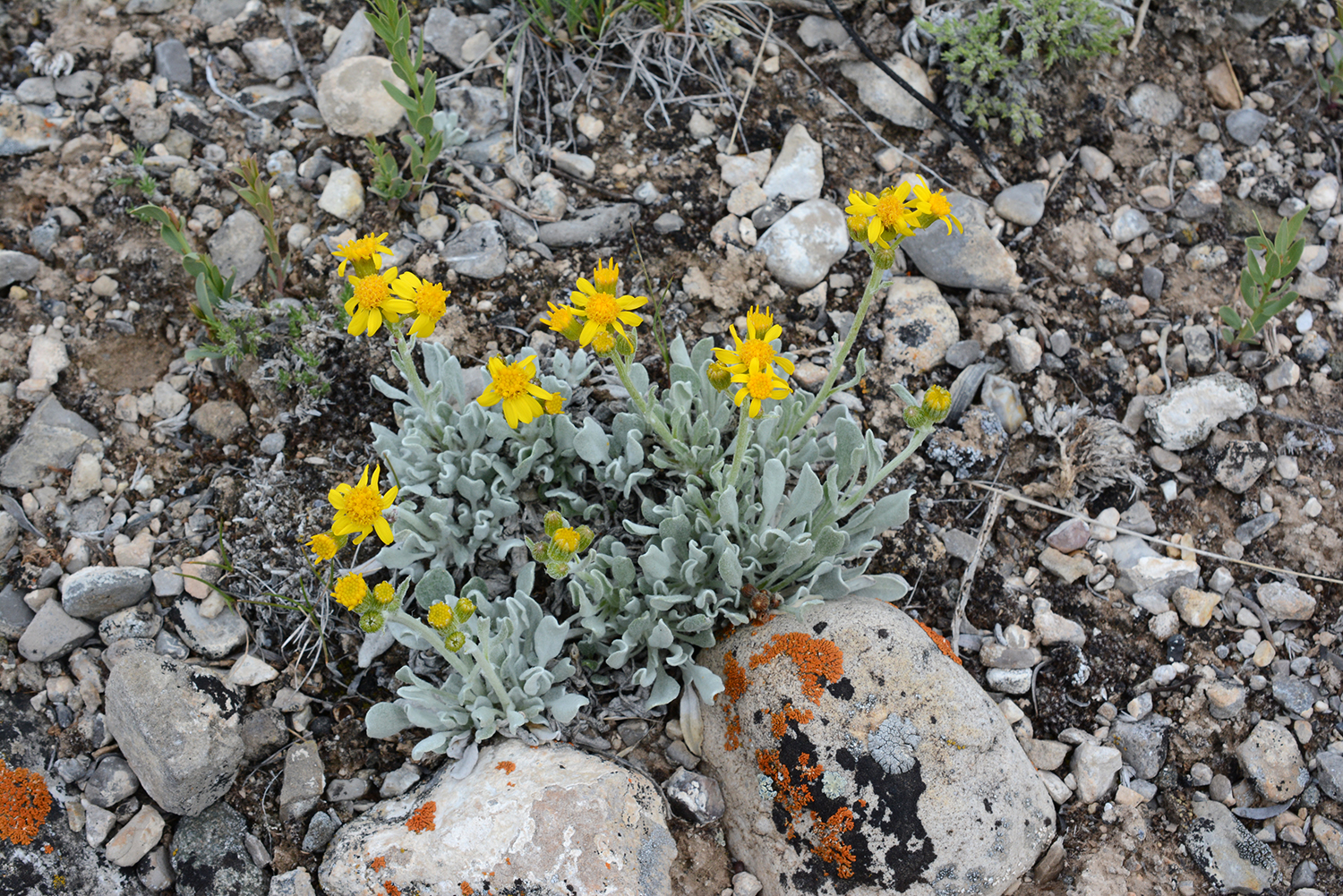
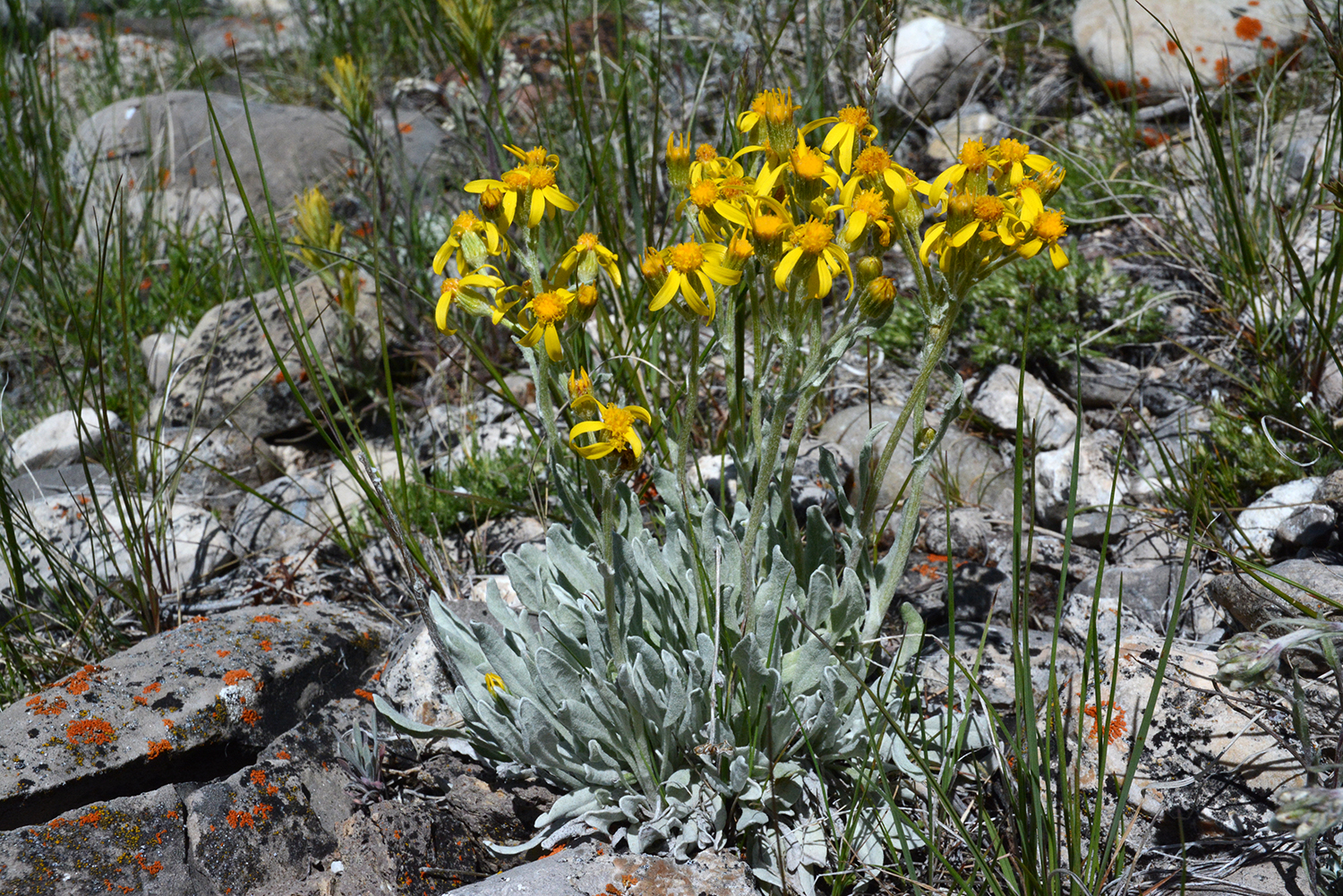
Wooly Groundsel – Packera/Senecio canus – also has very hairy, silvery leaves bunched at base; but this species in the Aster Family has bright yellow composite flowers.
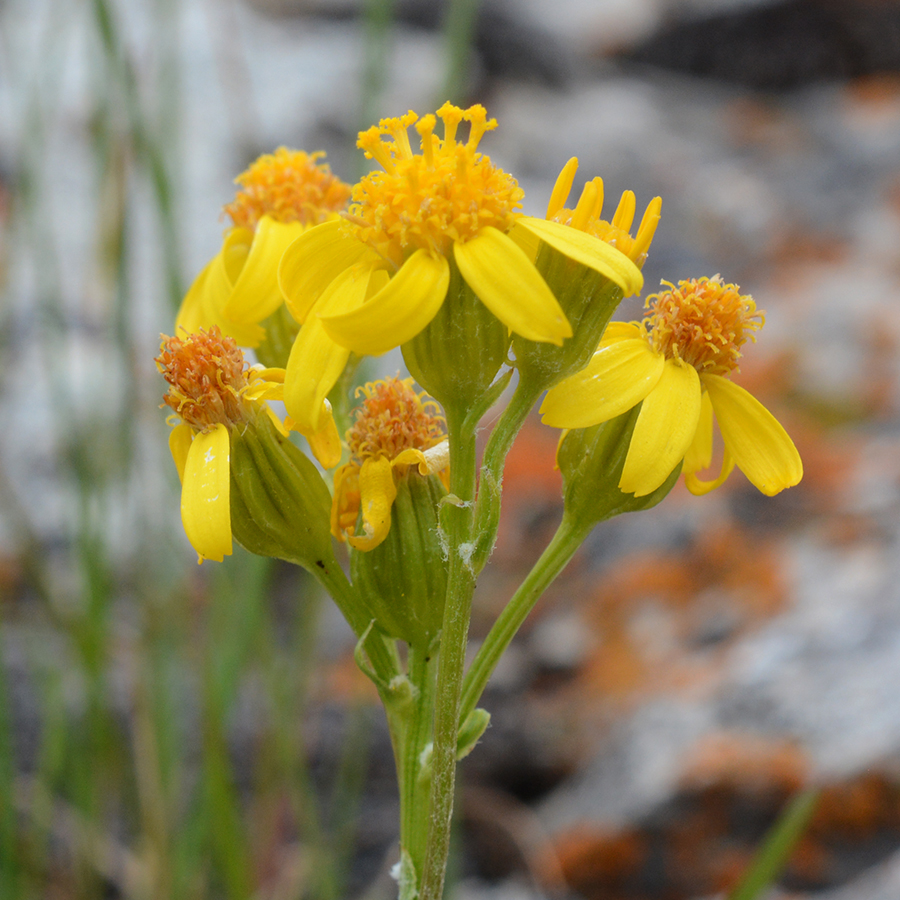
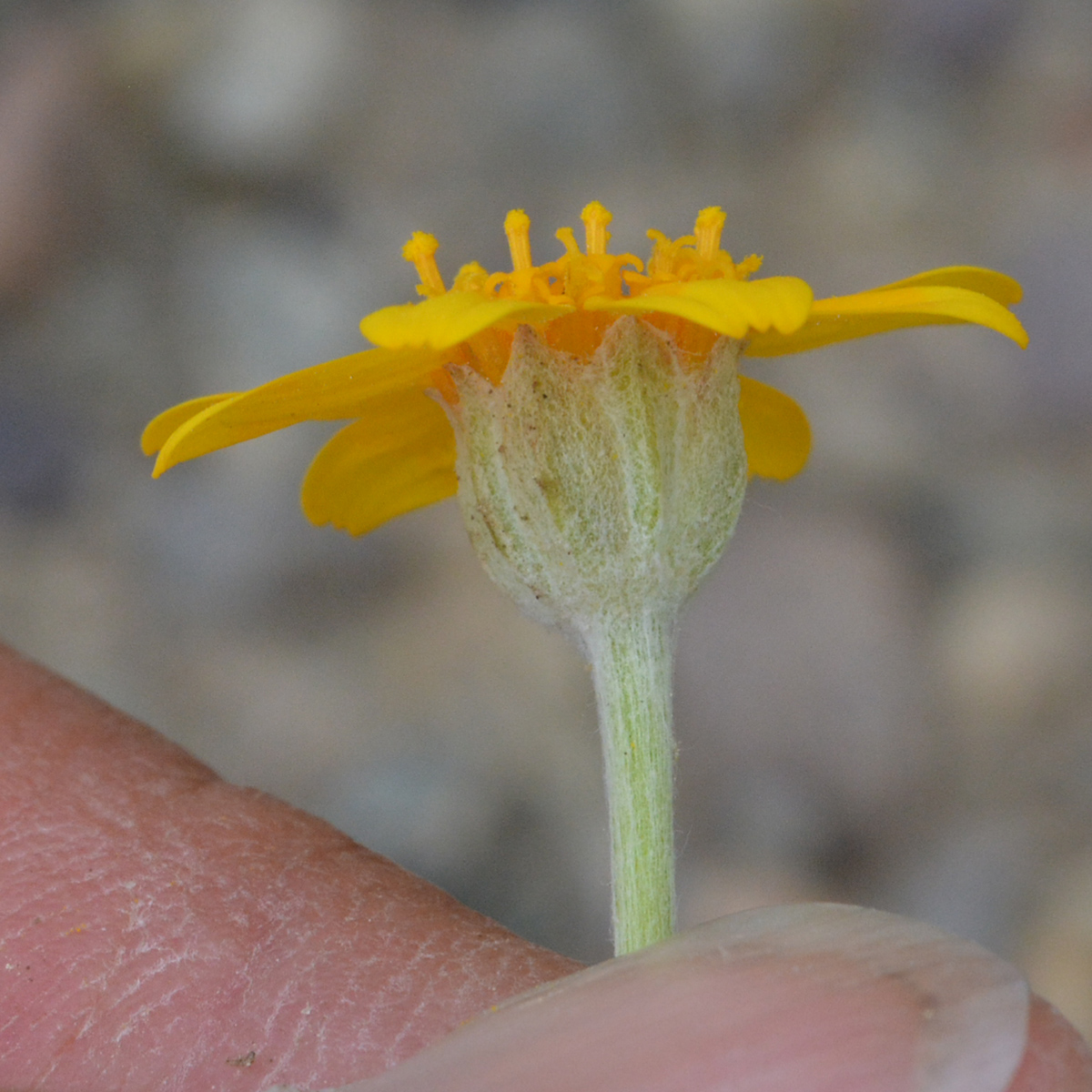
Flower heads are similar to Western Groundsels (see below), as they are closely related. Note the smooth involucral bracts without black tips, a few yellow ray flowers, and several disc flowers.
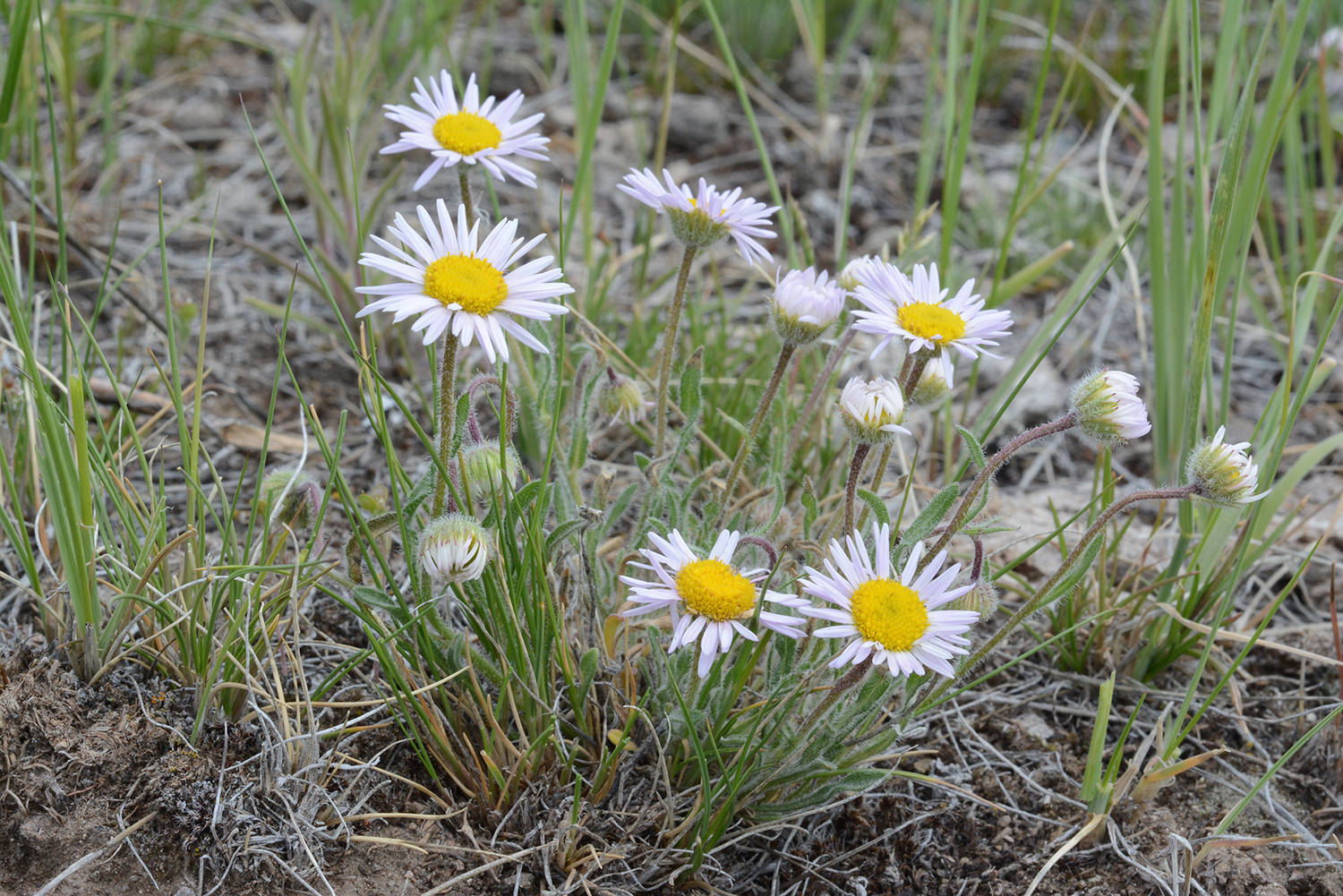
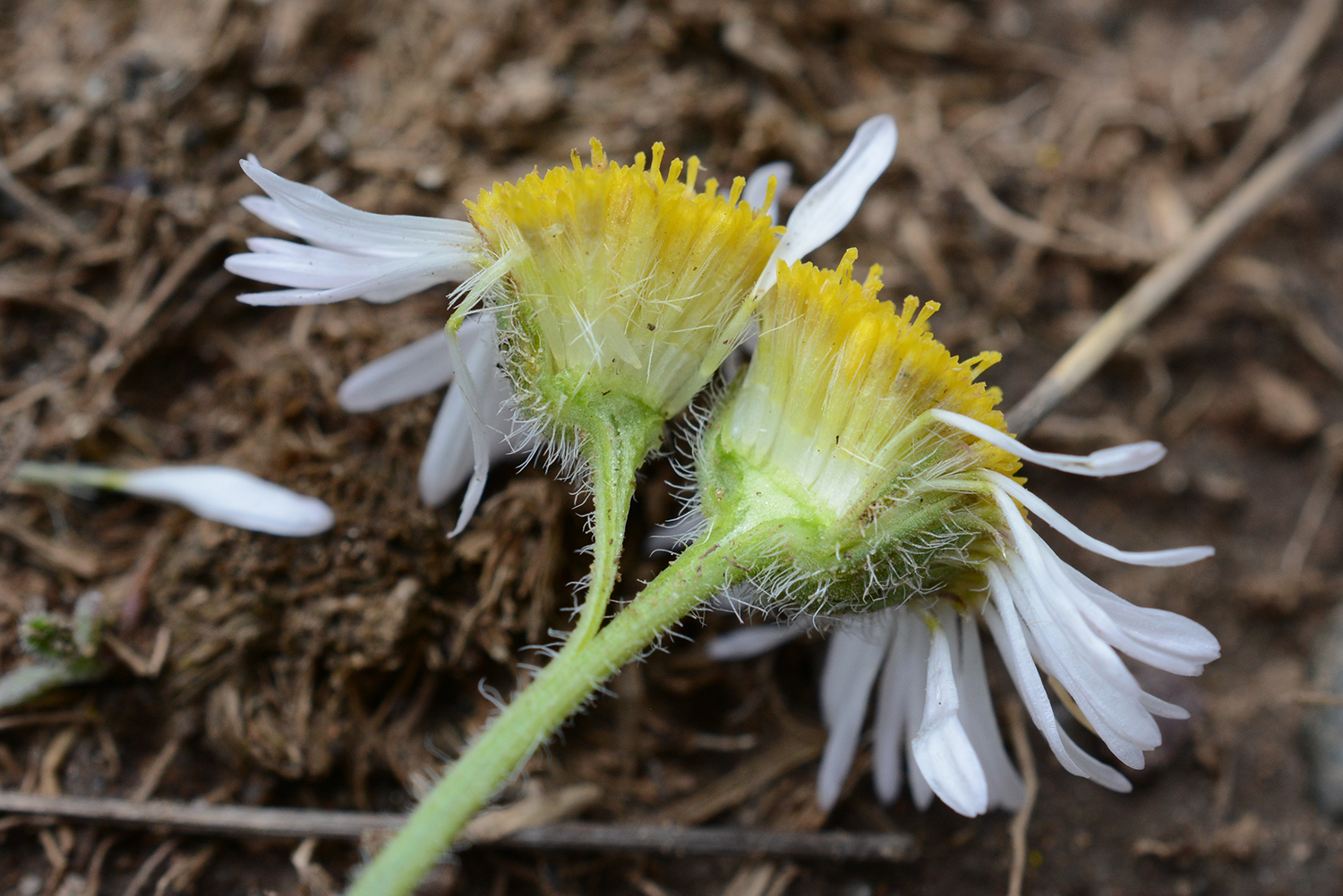
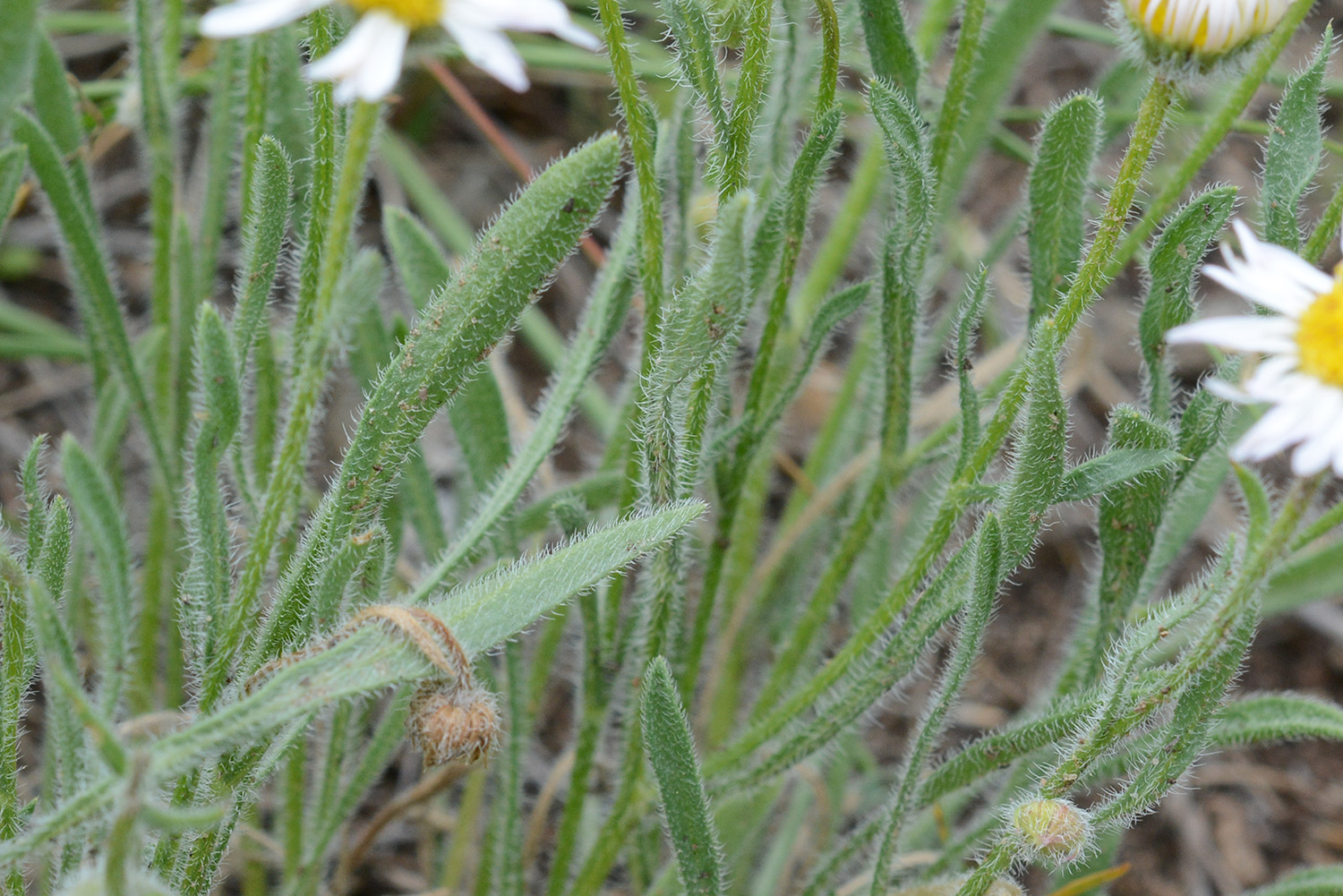
Shaggy Fleabane – Erigeron pumilus – has spreading “scaredy cat” hairs on 4-6” stems and narrow, entire 1” leaves.
The composite head includes many yellow disc flowers ringed by many white ray flowers. The whole head is surrounded by shaggy equal-length bracts.
Again, the hairs serve to reduce loss of water, and may hinder creeping insects as well.
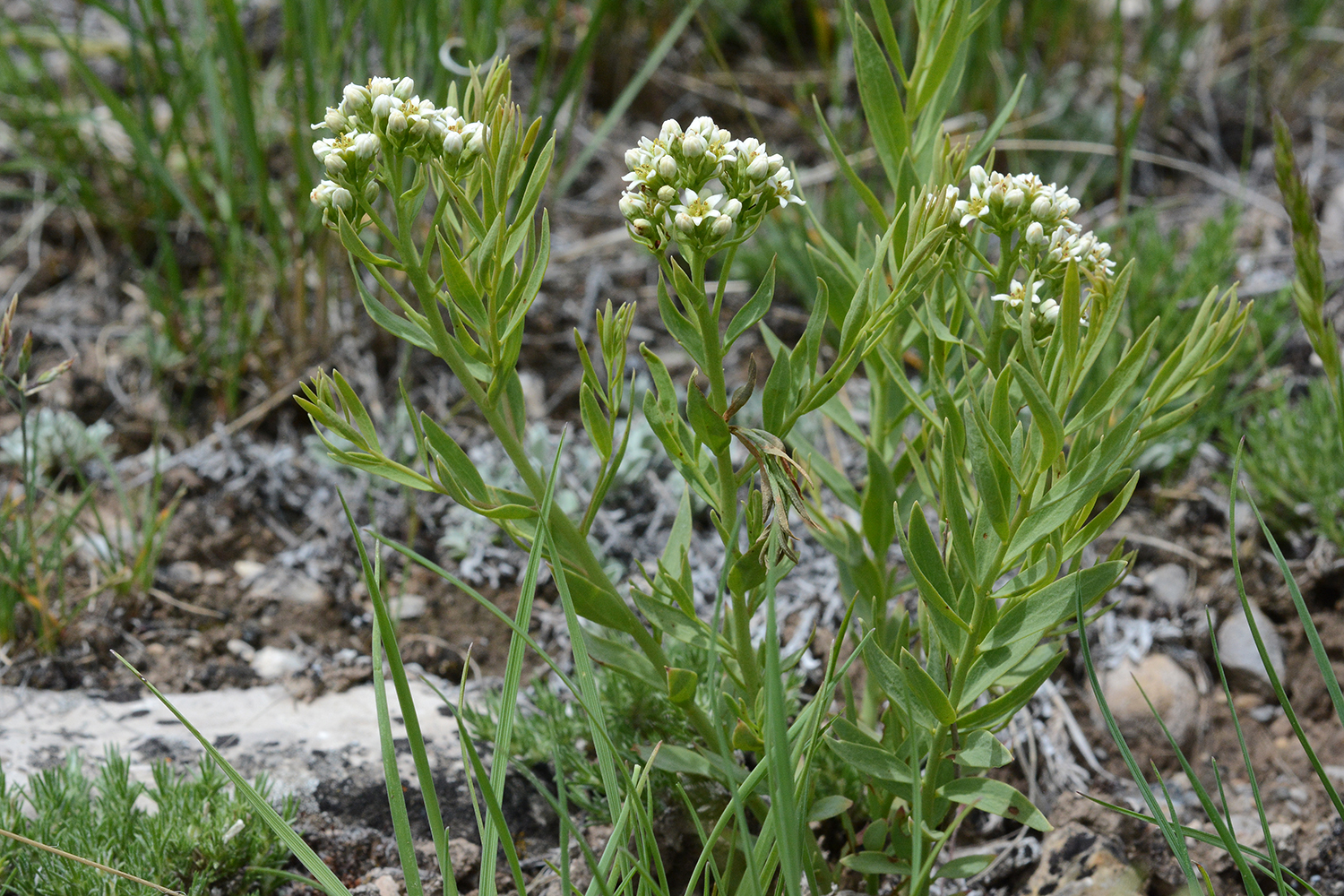
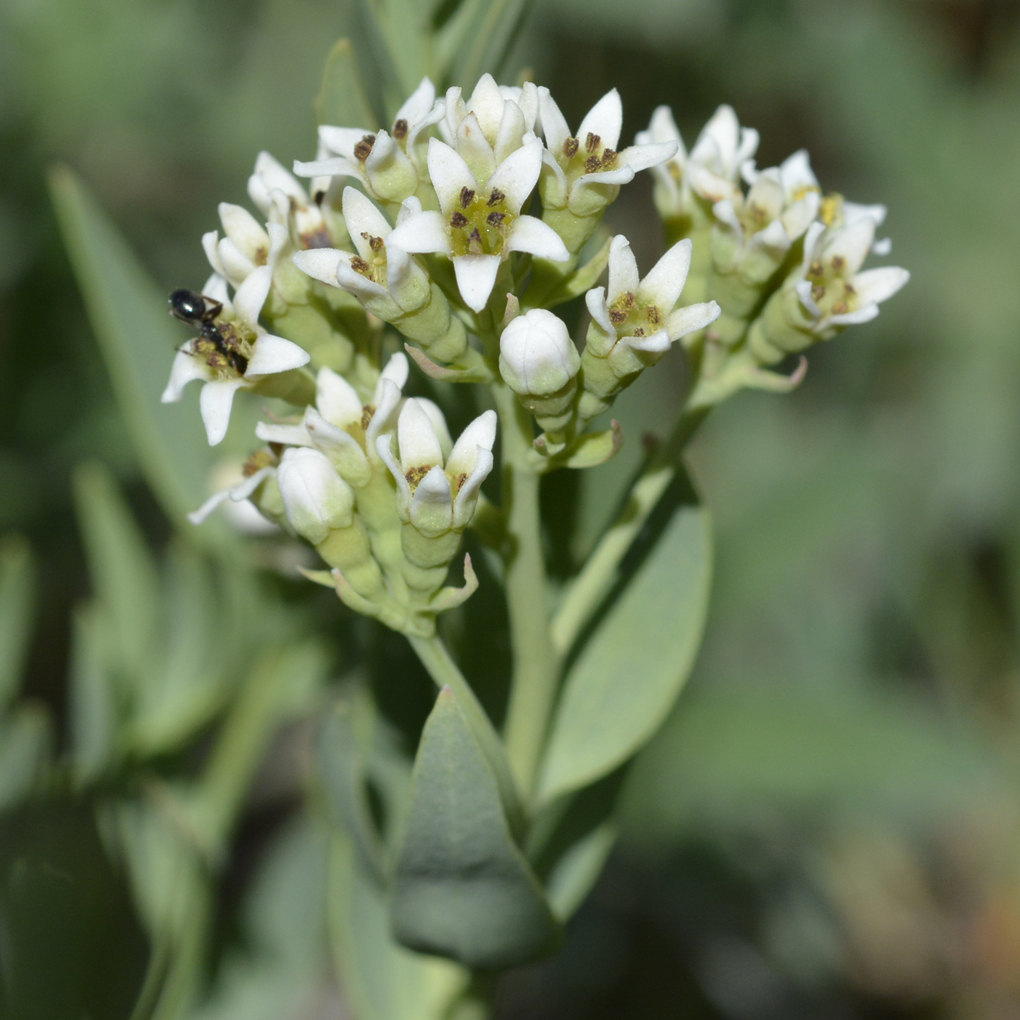
Pale Toadflax – Commandra umbellata – is a curious species. First, it is the only member of the more tropical Sandlewood Family found in Wyoming.
It is a hemi-parasite on many different species of plants: its roots attach to another plant’s roots to siphon off extra nutrients.
It is the alternate host to Commandra Blister Rust—a fungus—that can affect lodgepole pines here. The fungus alternates between the two species to complete its lifecycle. In midsummer to early fall, spores appear on the Toadflax and are carried by the wind to infect pine needles and shoots of pines. The fungus then spreads into the inner bark. One to three years later, the first evidence of the disease appears: small drops of thick, sticky, reddish-orange liquid on the diseased bark–ooze.
And Pale Toadflax has hairy anthers!
Sage flats and grasslands
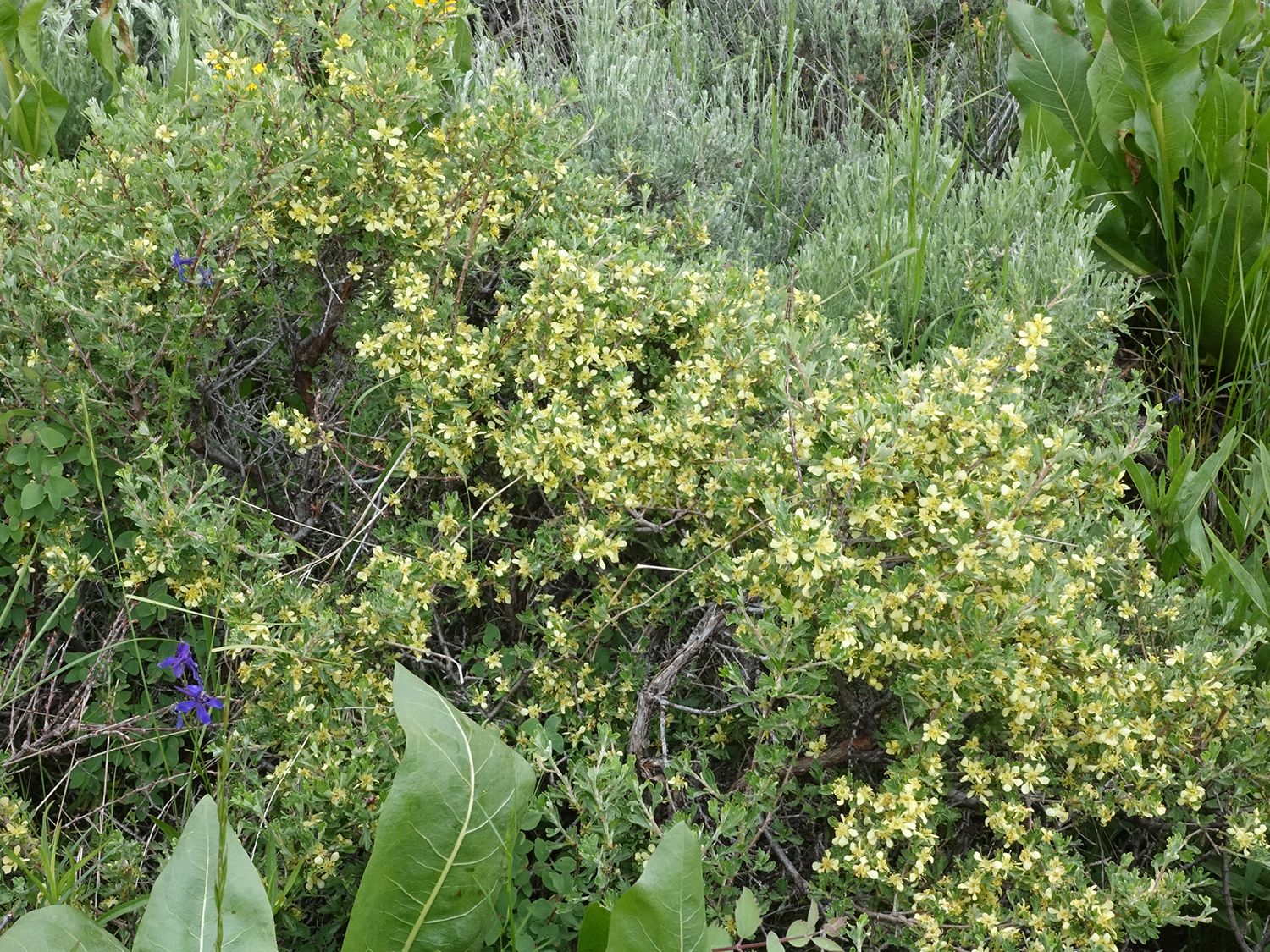
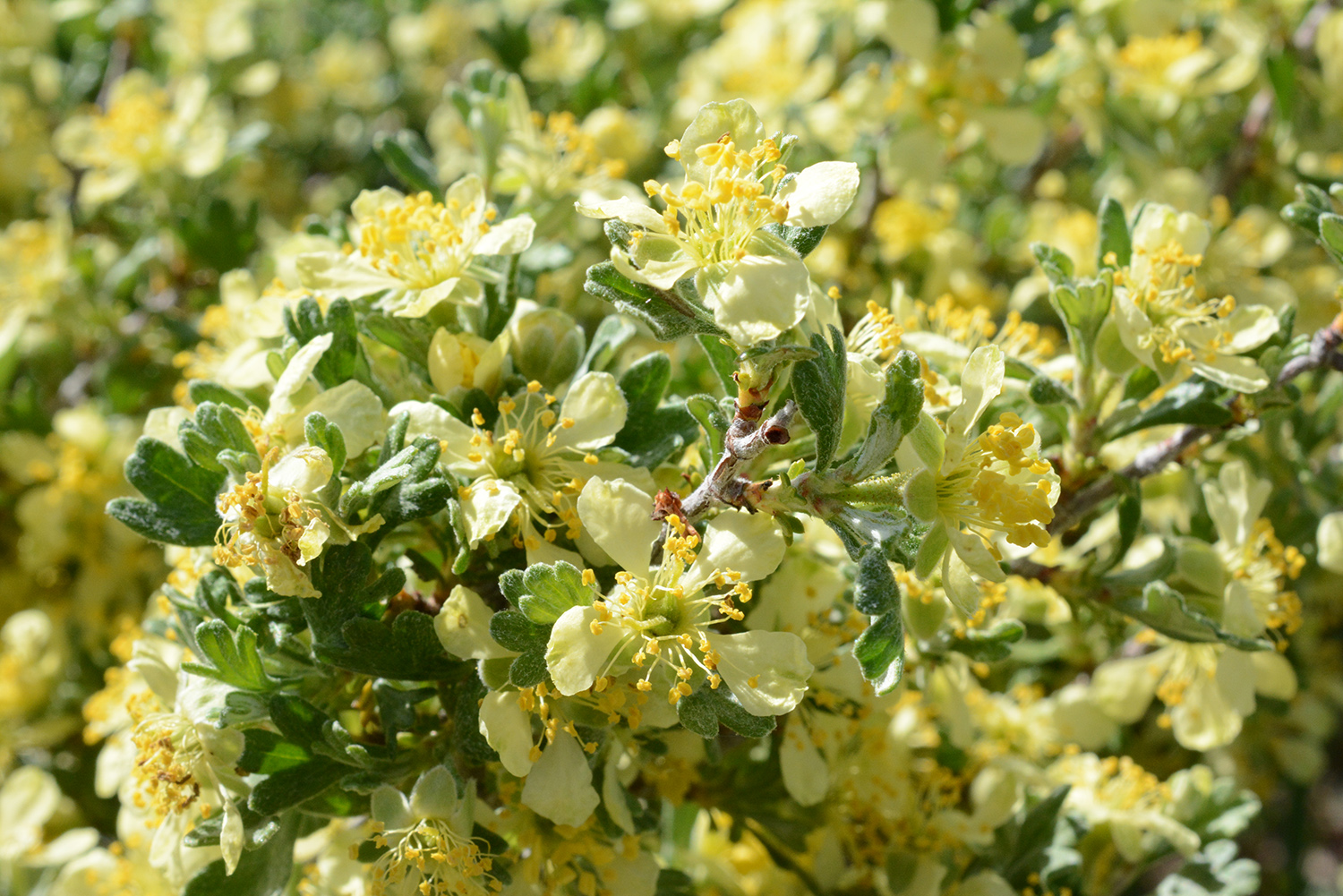
Antelopebrush – Purshia tridentata – are in full bloom right now in sage flats and slopes.
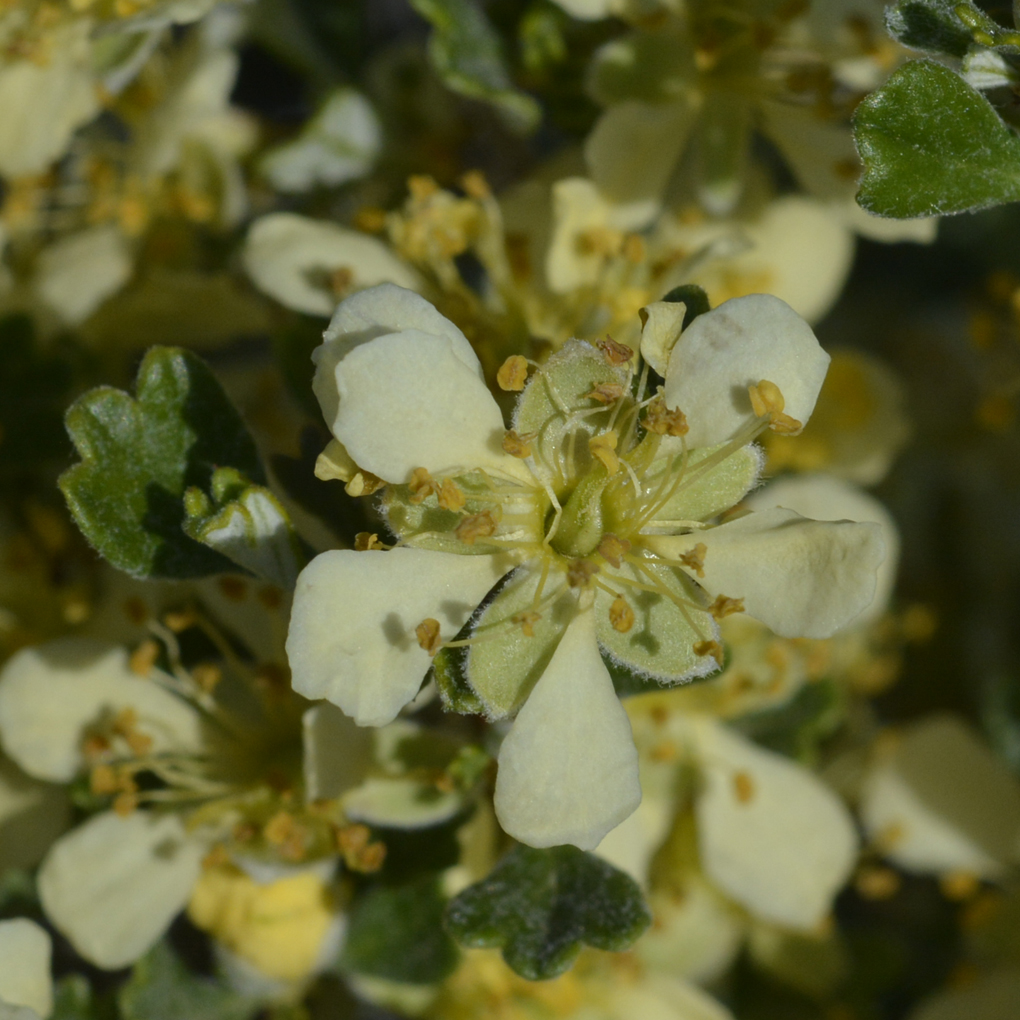
This 3-4 foot shrub has five-petalled, pale yellow, very fragrant flowers with five petals, many stamens, and a central pistil.
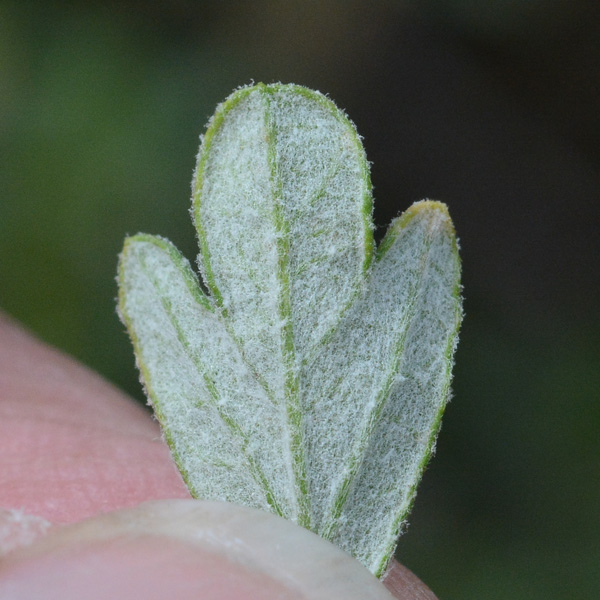
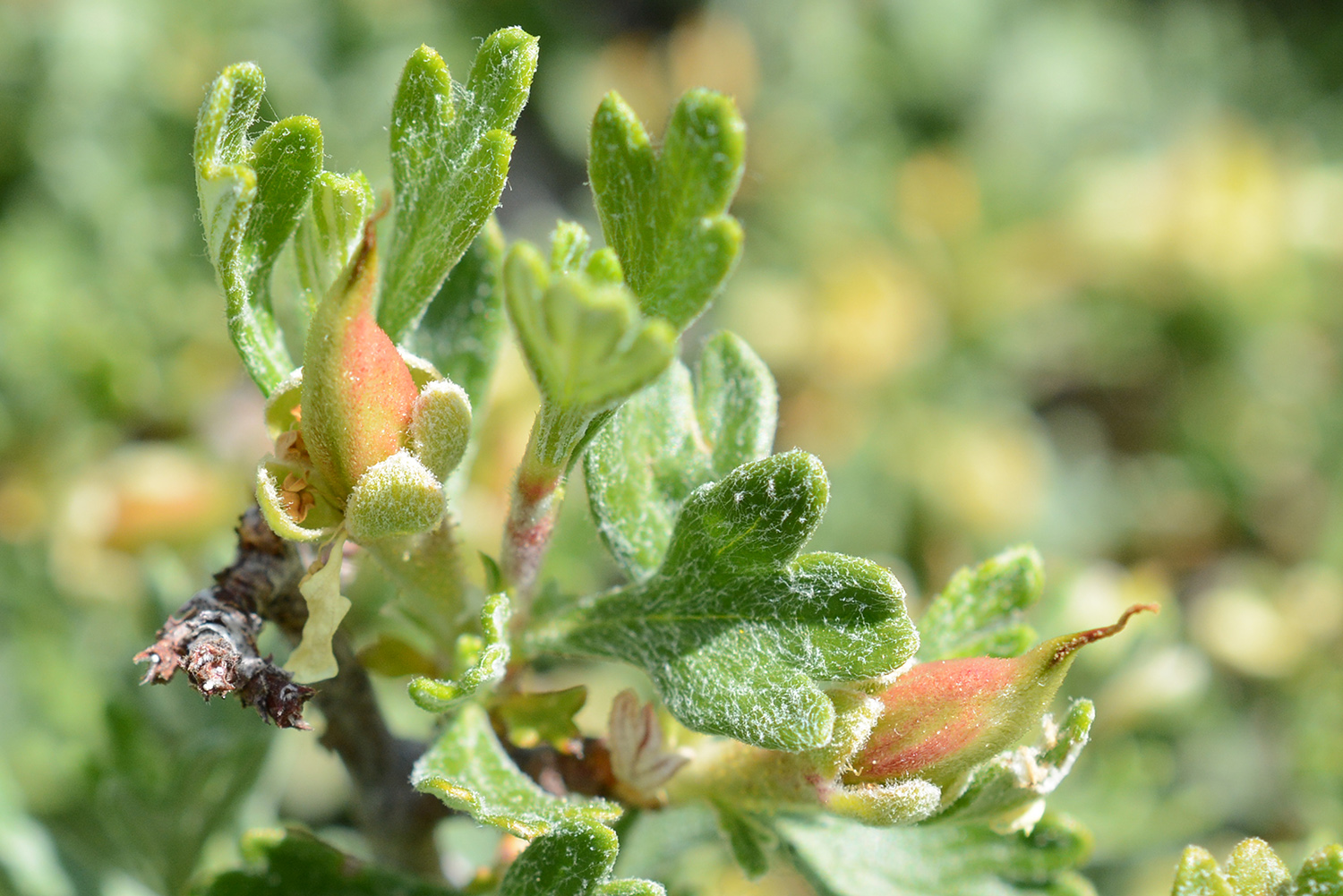
The ½” leaves have three lobes at their tips; the leaves are dark green on top and have pale, hairy undersides. Plants blend with mountain big sagebrush both in size and shape of leaves.
Antelopebrushes are favored and nutritious browse of wildlife, such as moose, especially in fall. Fruits have are dry achenes in center. The seeds are often transported by ants. It is in the Rose Family.
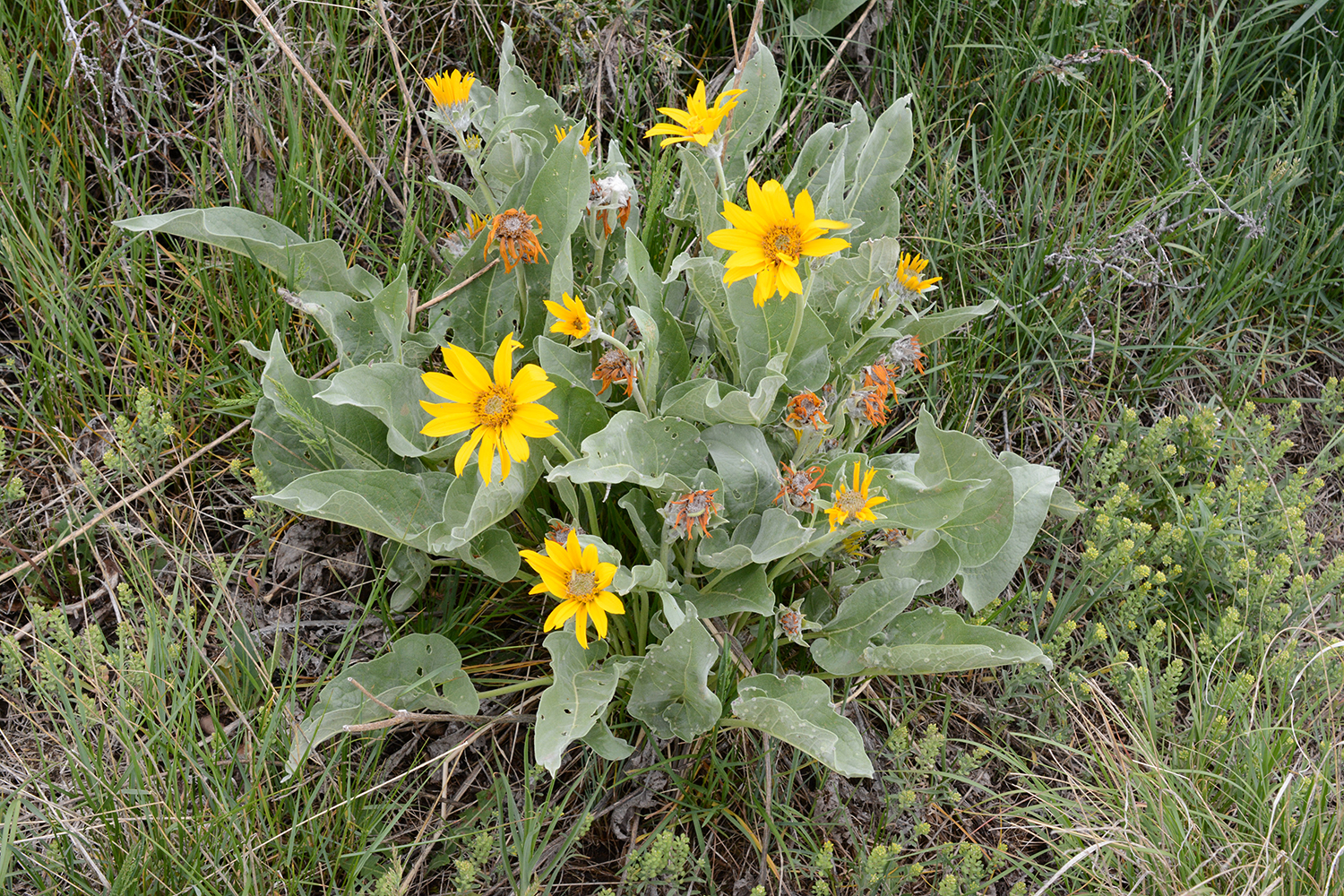
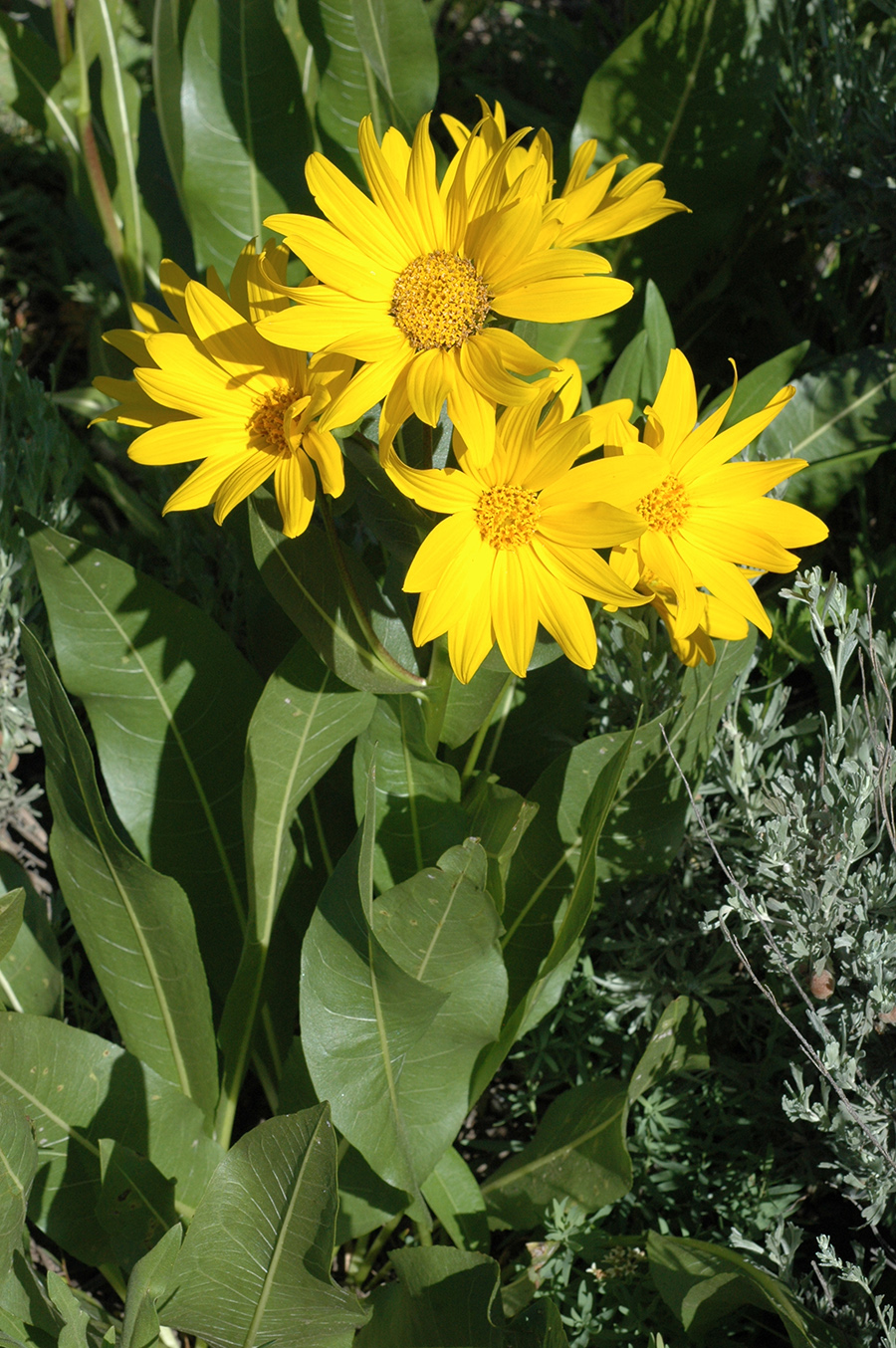
A most obvious wildflower in the sage flats and hills sides at this time of year is usually Arrowleaf Balsamroot – Balsamorhiza sagittata.
We are familiar with its large arrow-shaped, greyish basal leaves and usually many large yellow sun-flower like heads. It is unclear what is happening to the bloom this year: Flowers appear to be dried out due to drought and wind or were likely frosted during freezing temperatures of May after emerging early due to extra warm April.
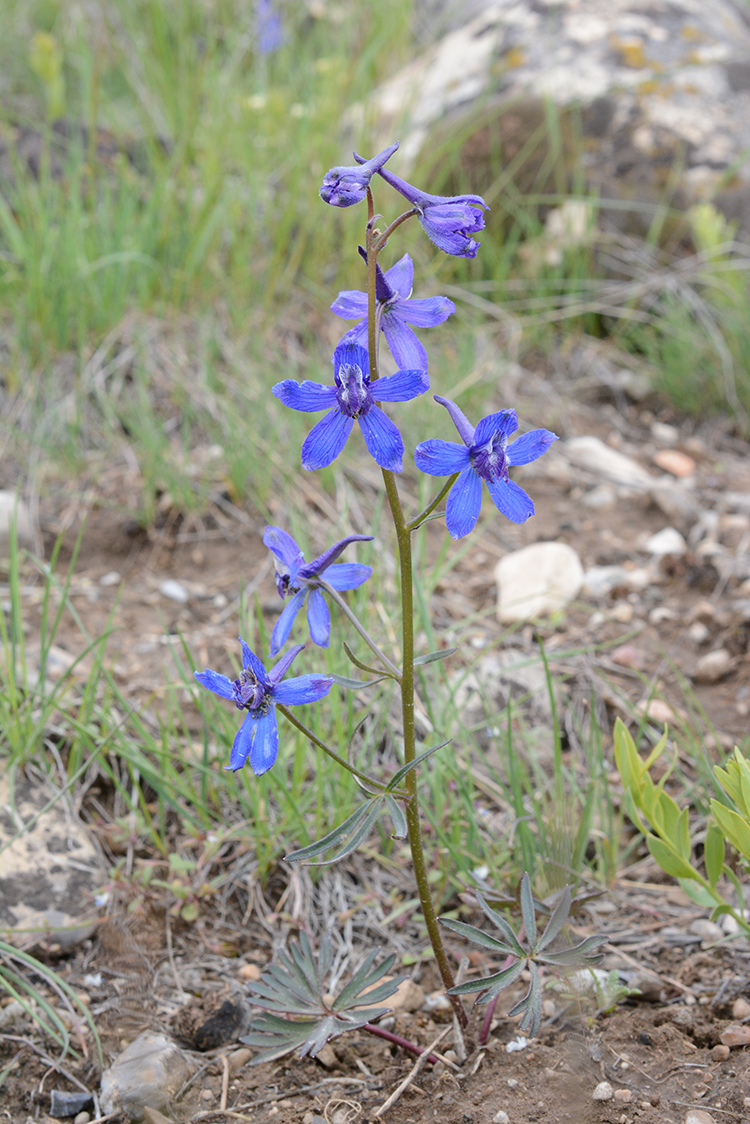
Nuttall’s Delphinium – Delphinium nuttallii – is scattered among sagebrush and in grasslands. It grows about a foot tall with palmately dissected leaves alternating up its stem.
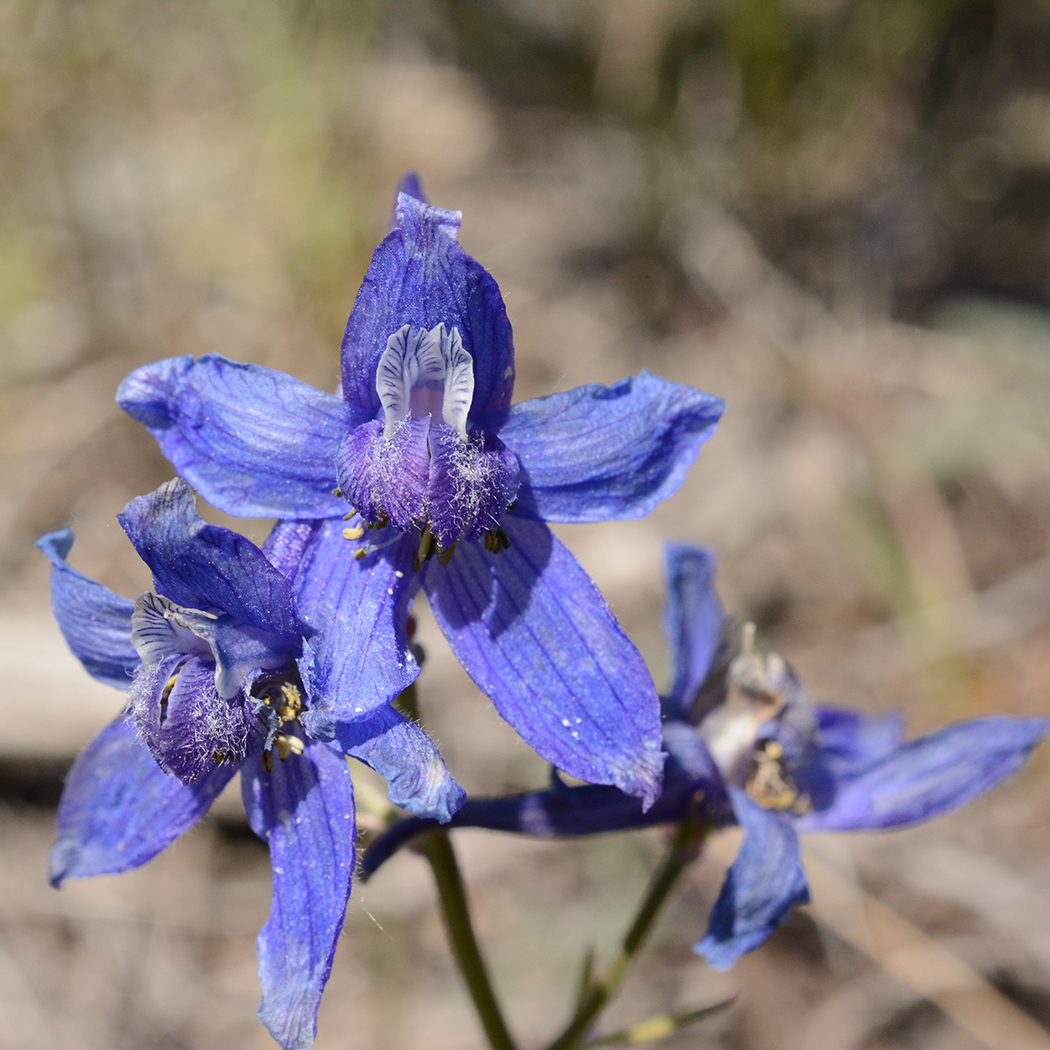
Take a close look at the flowers—and if there are many flowers about (and you are not in the National Park!), and you are curious, take time to dissect a flower to see how it all works—a story of design and success:
The “irregular” blue flowers have 5 outer blue sepals that look like petals. One upright blue sepal forms a spur out the back and four more sepals flare out to the sides and bottom. They surround 4 petals: two petals are upright and stiff, whitish with blue nectar guides. These two petals each form a tube with nectar and are tucked into the spur of the upper sepal. Two other “guard” petals droop down over a mop of yellow anthers and hidden stigmas. These also have lines and are hairy. All of this is to attract pollinators, douse them with pollen and reward them with nectar, thereby encouraging them to find another similar flower. Pollen is produced first, then the anthers shrivel and the stigmas mature. With luck a pollinator flies from a plant with pollen to a slightly more matured flower with protruding sticky stigmas. Pollen grains are thus relayed to stigmas, and stimulated by the chemistry of the stigmas grow tubes down the stigma, produce sperm and fertilize the eggs inside the ovary.
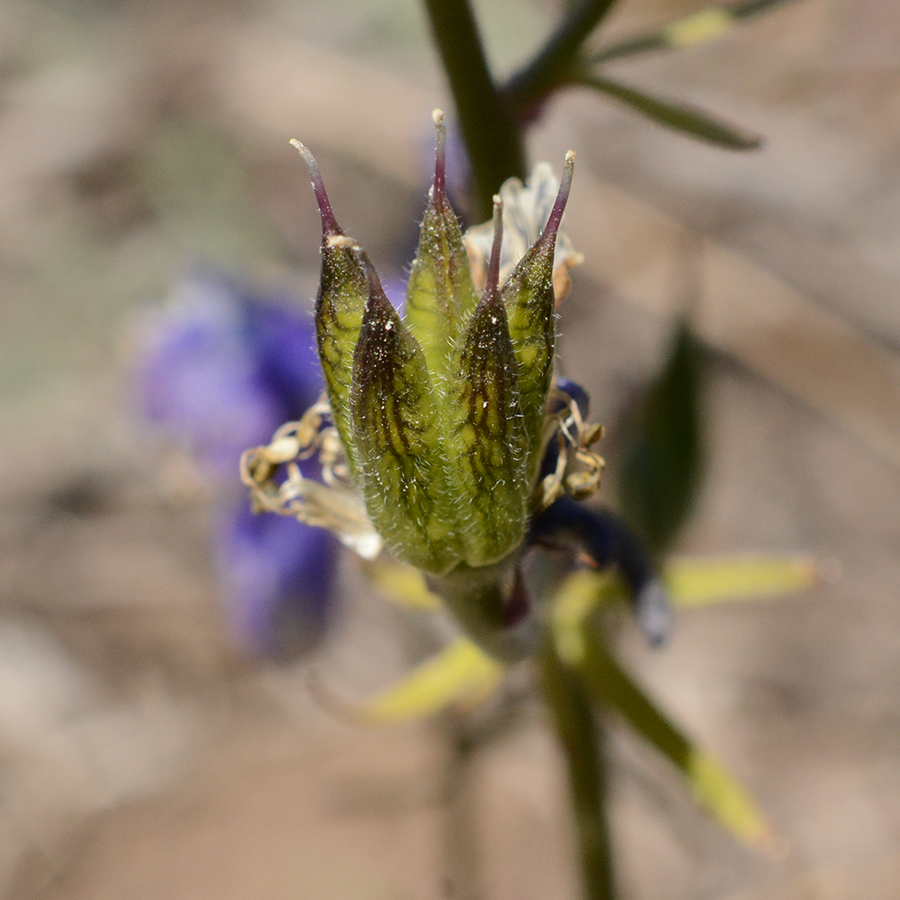
Voilà, fruits with seeds can form: 3-5 upright fruits (follicles) will dry and split open to spill out seeds.
Pollinators: Broad-billed hummingbirds depend on the nectar while migrating, along with local queen bumblebees, butterflies, and other bees and flies which relish the nectar and/or pollen for their daily needs.
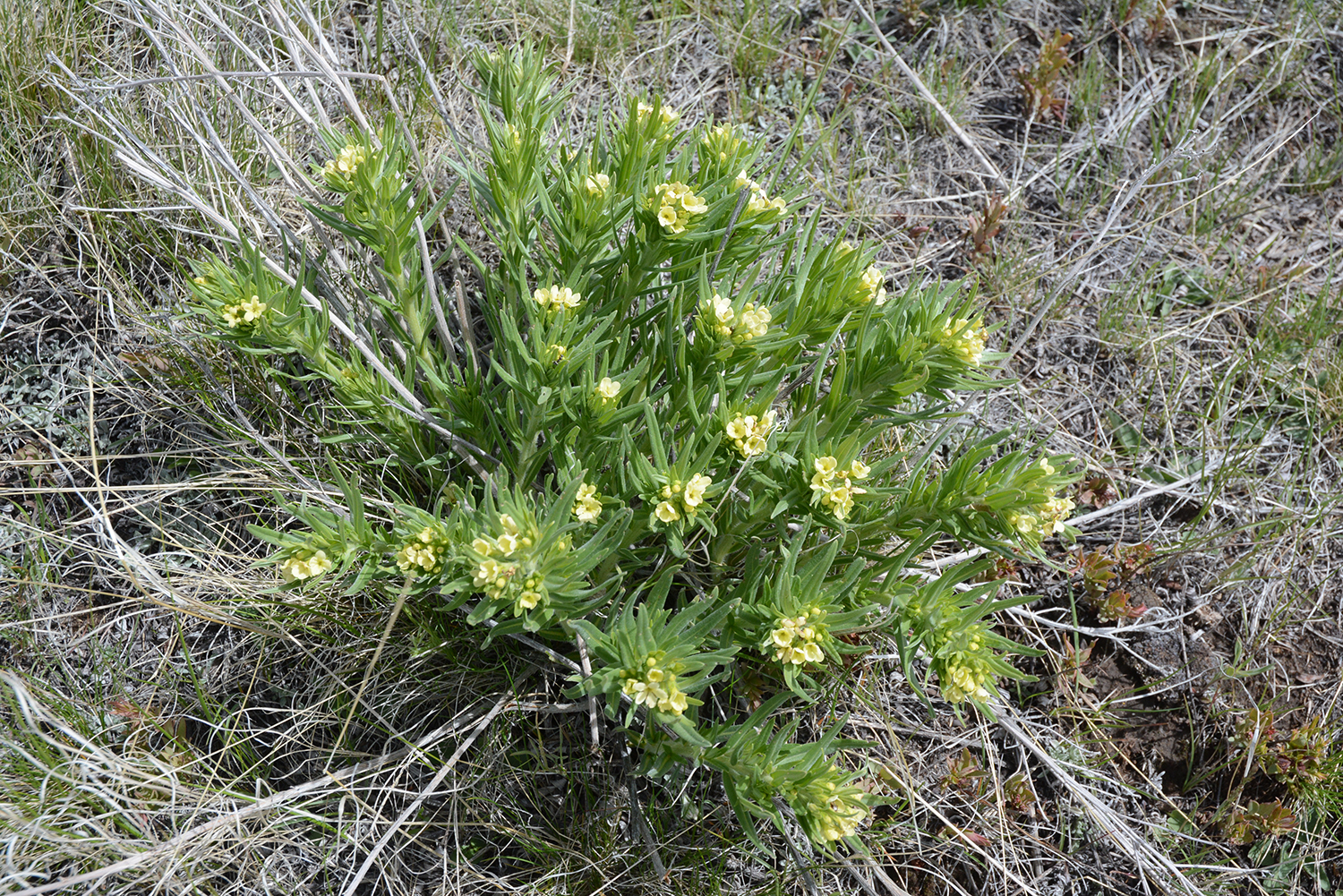
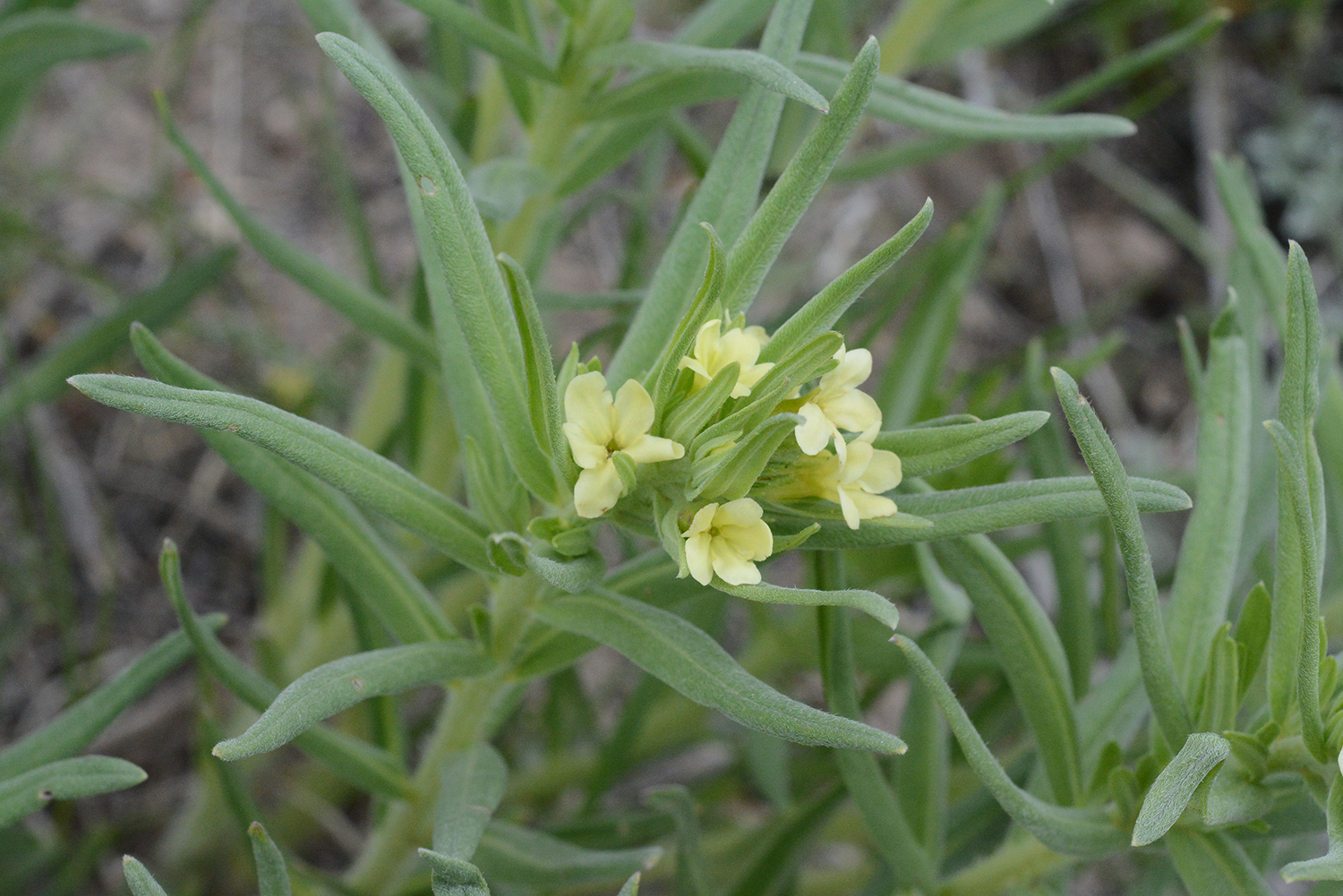
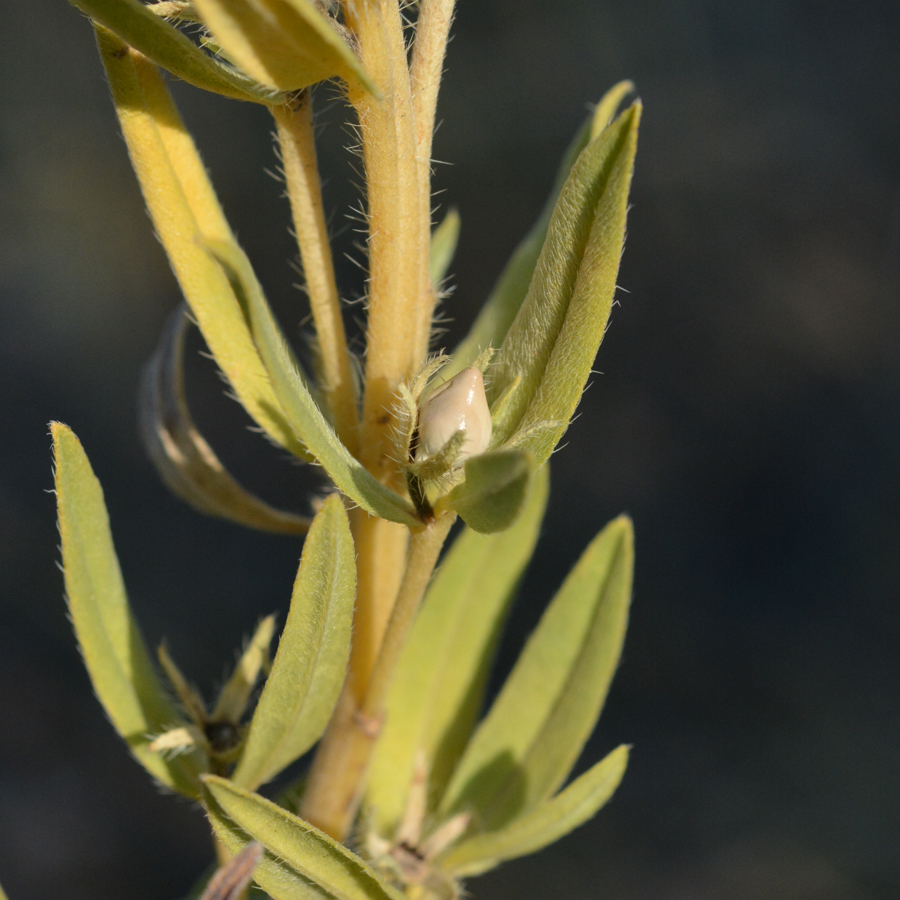
Stoneseed, Puccoon, Gromwell – Lithosperum ruderale –– are robust plants with stiff 1-2’ stems and 2-3” slightly hairy elongate leaves. Pale yellow, fragrant, tubular flowers form in the axils of the leaves.
Fruits are white and hard, giving it the name stoneseed. Plants were used by indigenous people for fertility and respiratory matters, as well as food.
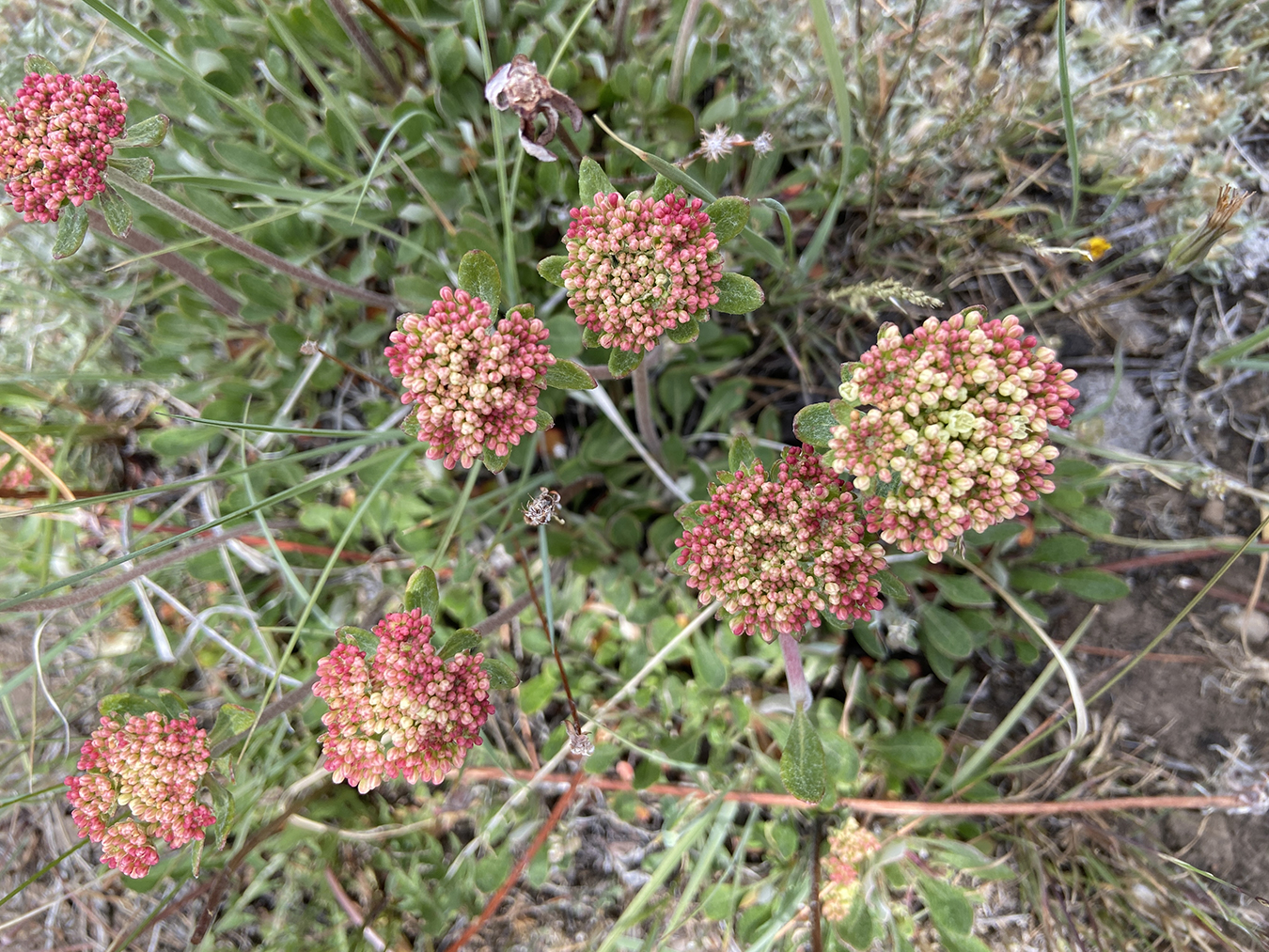
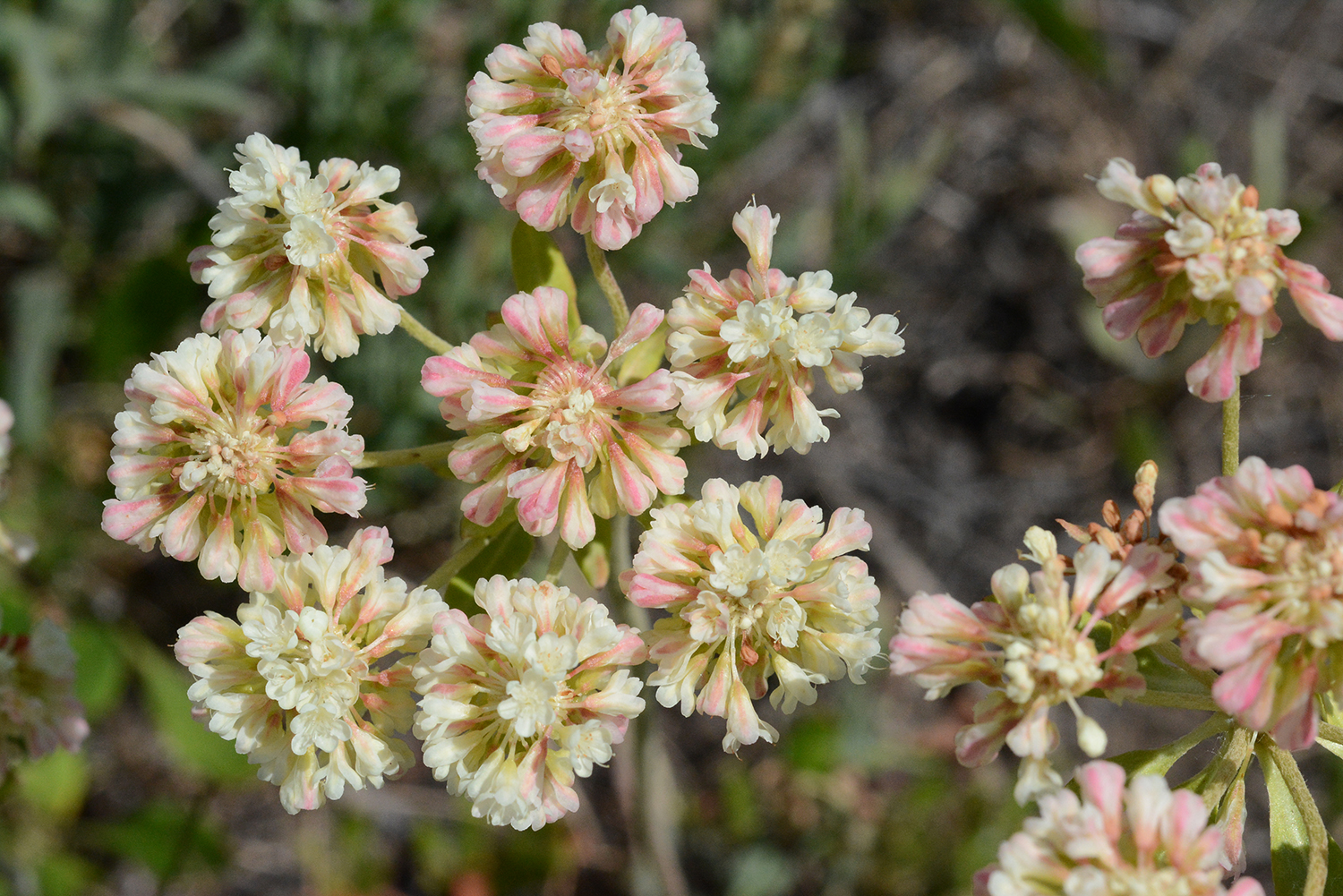
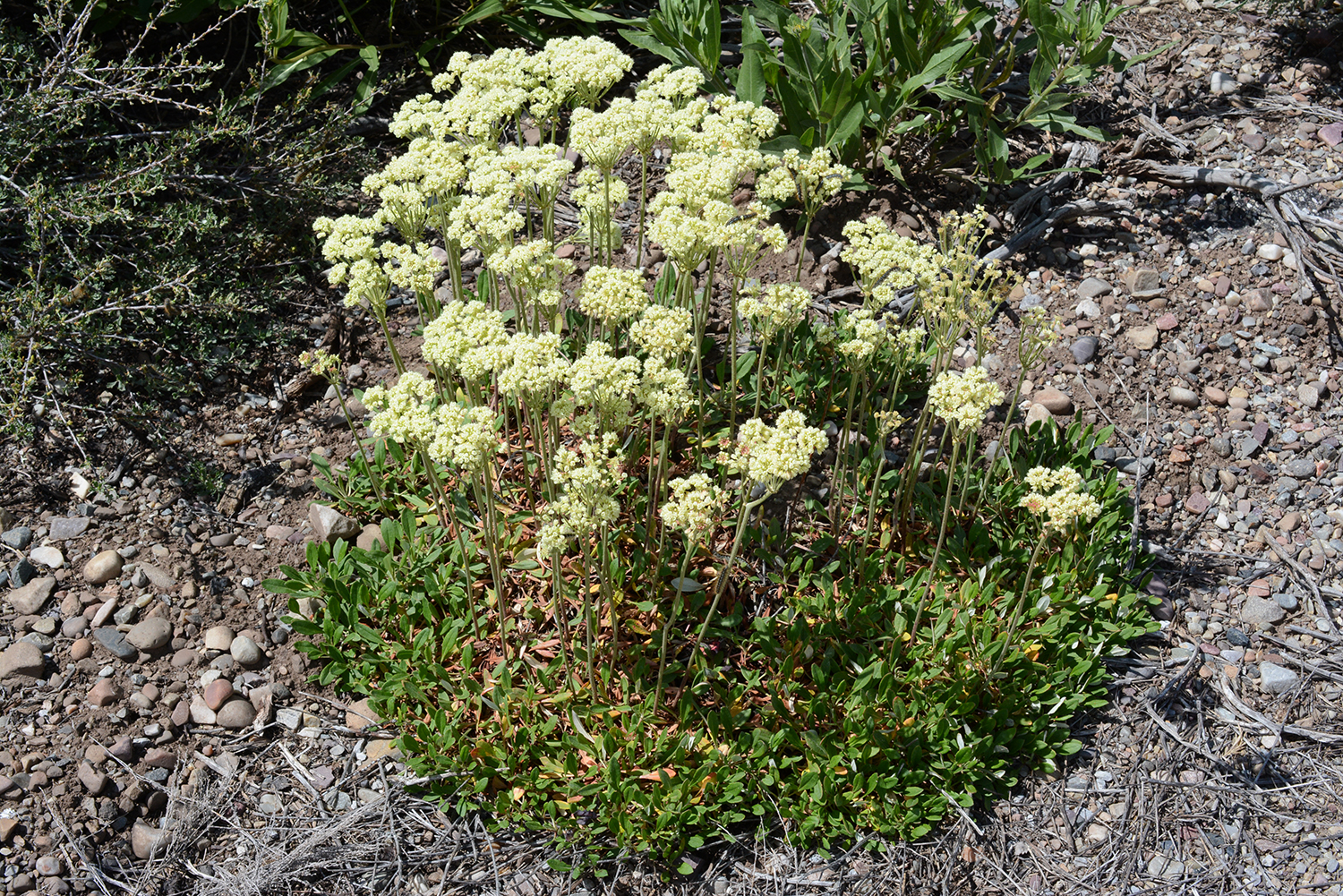
Sulphur Buckwheat – Eriogonum umbellatum – is still in mostly tight bud.
Over the next week or so many cream-colored flowers cluster together on top of to 12” stalks.
The oval basal leaves on creeping stems form extensive 1’ wide or more mats. Very common in sage flats.
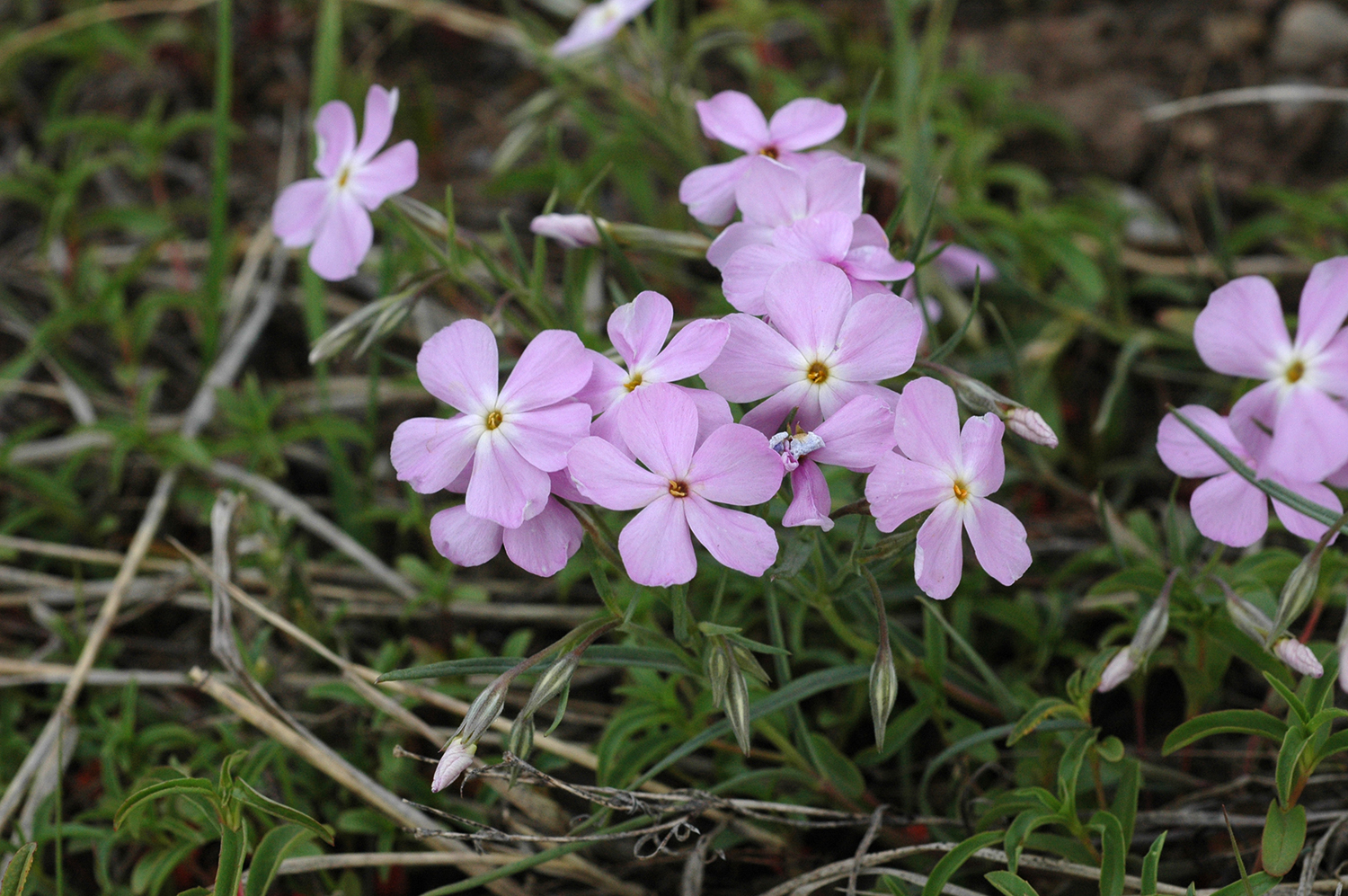
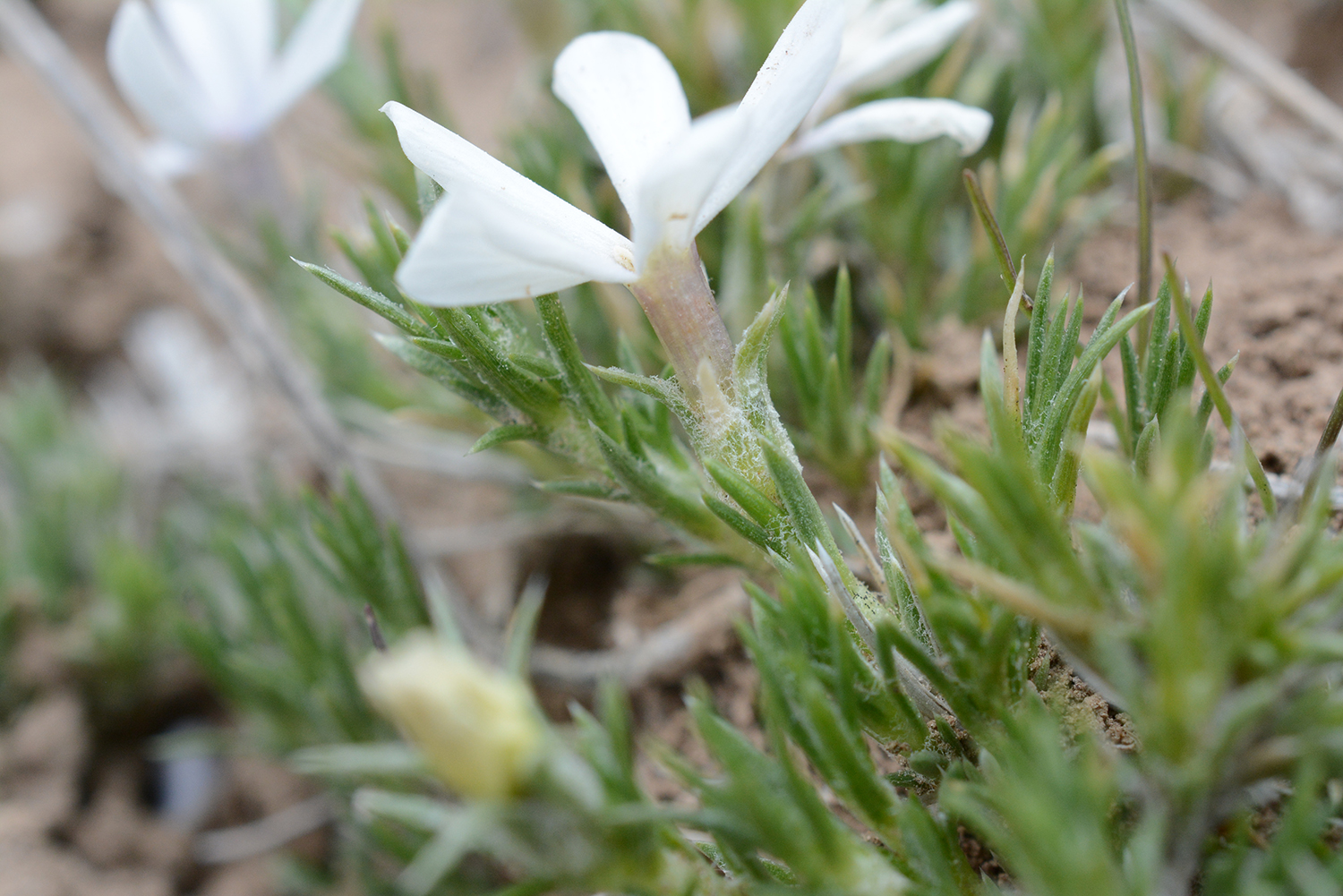
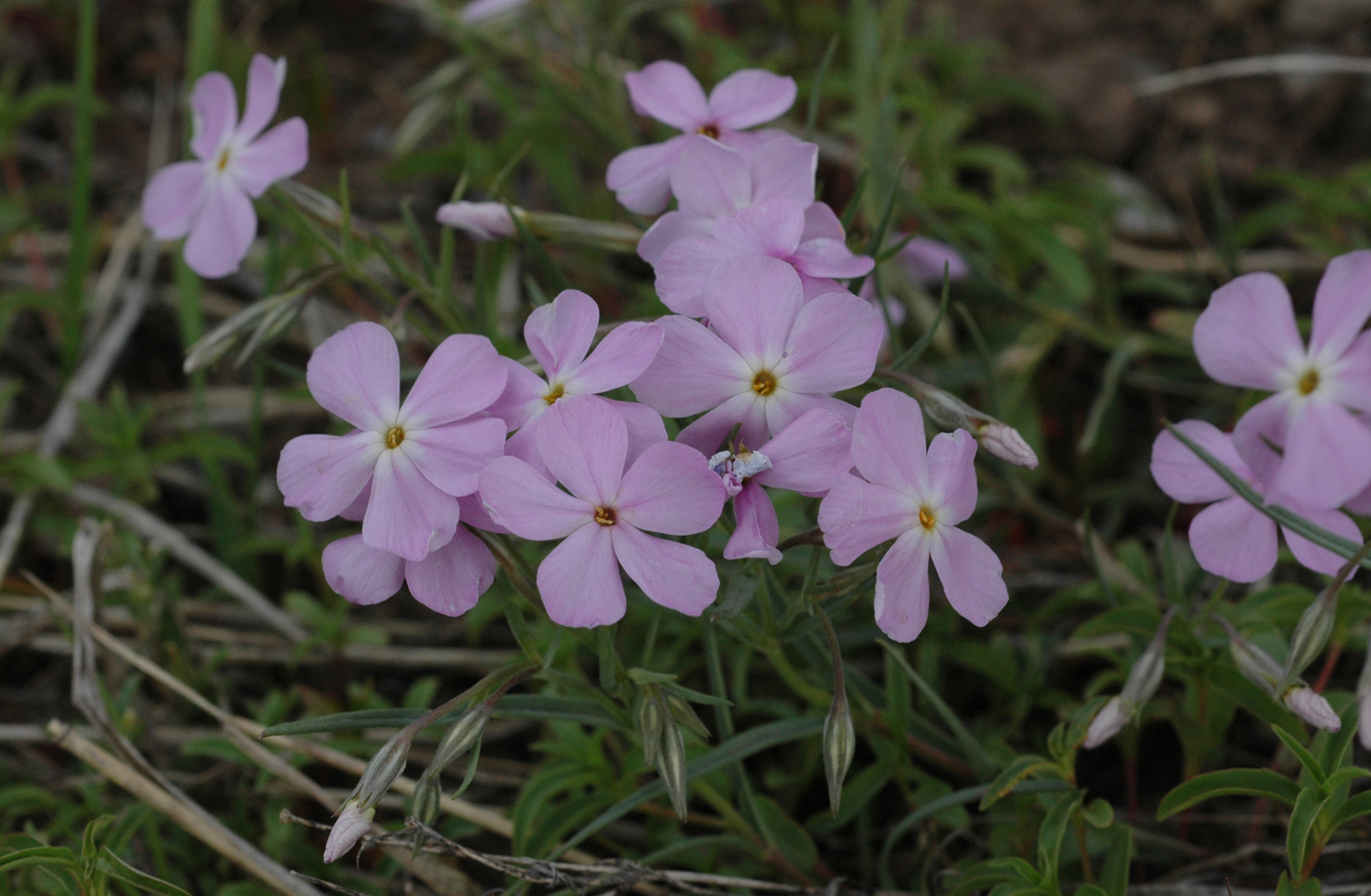
Long-leaved phlox – Phlox longifolia – are relatively lanky plants compared to their local relatives. They have white-to pink to bluish tubular fragrant flowers similar to other phlox. However their stems are around 6″ or more long with obvious opposite linear leaves. The fragrance attracts pollinators to the tubular flowers flare at the top providing landing pads for butterflies and moths whose mouth parts can reach deep down into the long tube for extra rich nectar, and in the process pick up pollen to dispense to another flower.
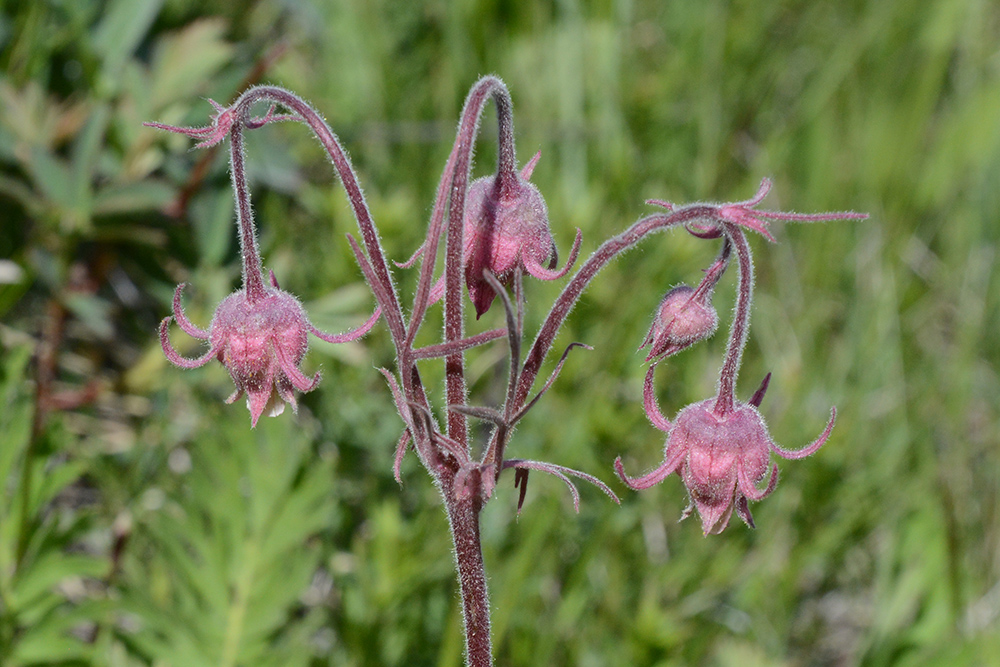
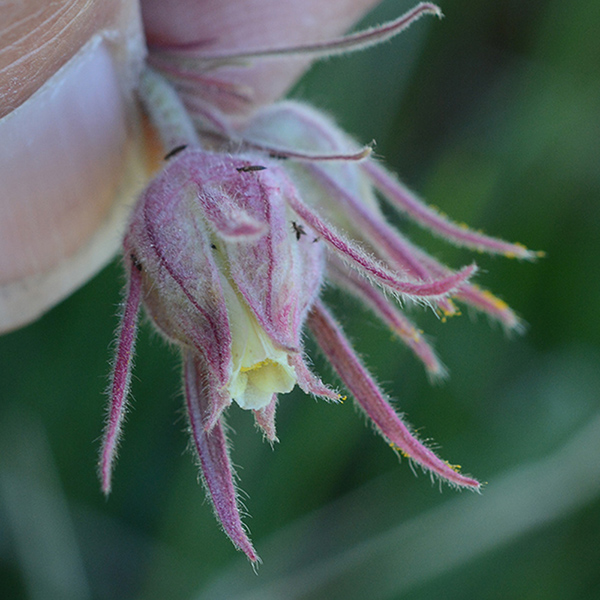
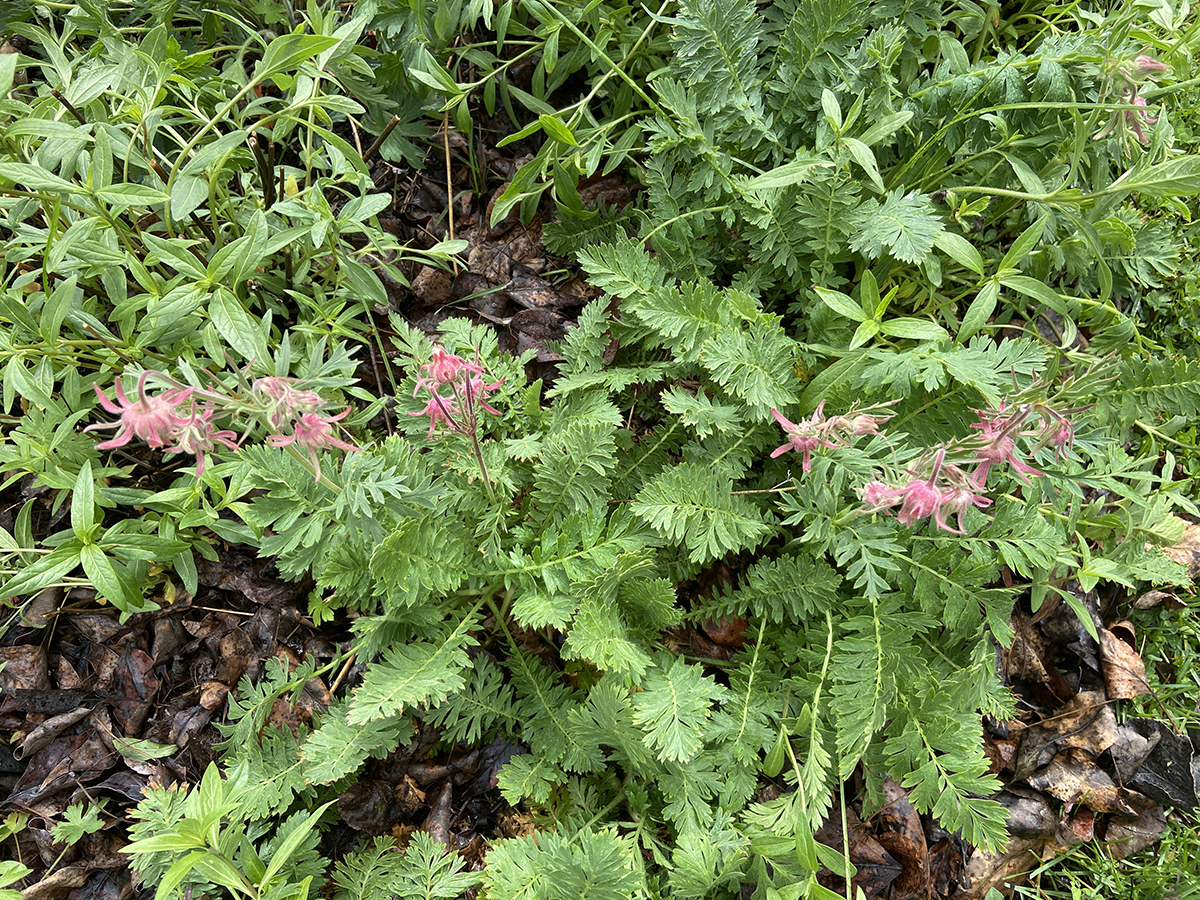
Prairie Smoke – Geum triflorum – is a plant typical of prairies and other grasslands.
Usually three flowers dangle from 12” arching stems – the outer tube of rosy sepals protect the emerging yellow petals.
The 4-6” leaves are clustered at the base and are pinnately (like a feather) divided.
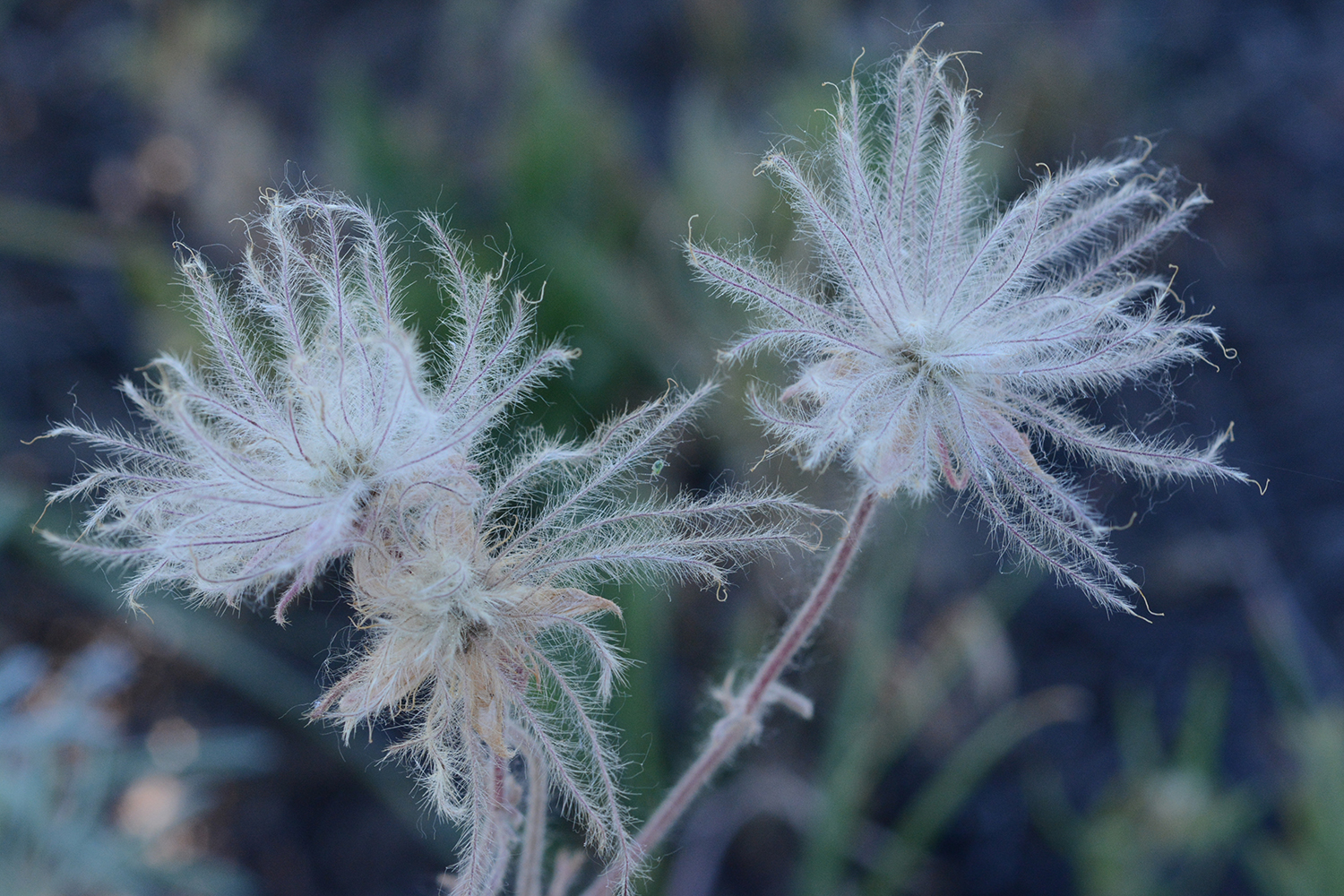
A long, curly, fluffy stigma which aids in wind dispersal is attached to each of the tiny fruits. This smoky look and its typical grassland habitat provide its common name Prairie Smoke It is the Rose Family.
This is the beginning of season for confusing yellow composites; Below are some photos and text to start you looking at the details, and if desired to do the ID. Better puzzles than Sudoko for the brain.
Basic ID featrues: Many tiny flowers sit on a platform surrounded by a protective ring of greenish structures called “bracts”. Together this is called a flower “head” – typical of a composite flower. Being the largest family in the world, there are many variations of plant size; leaf shape and arrangement; flower details of ray flowers vs. disc flowers, color, and surrounding involucral bracts. Here are a few species out now to help get a sense of the details.
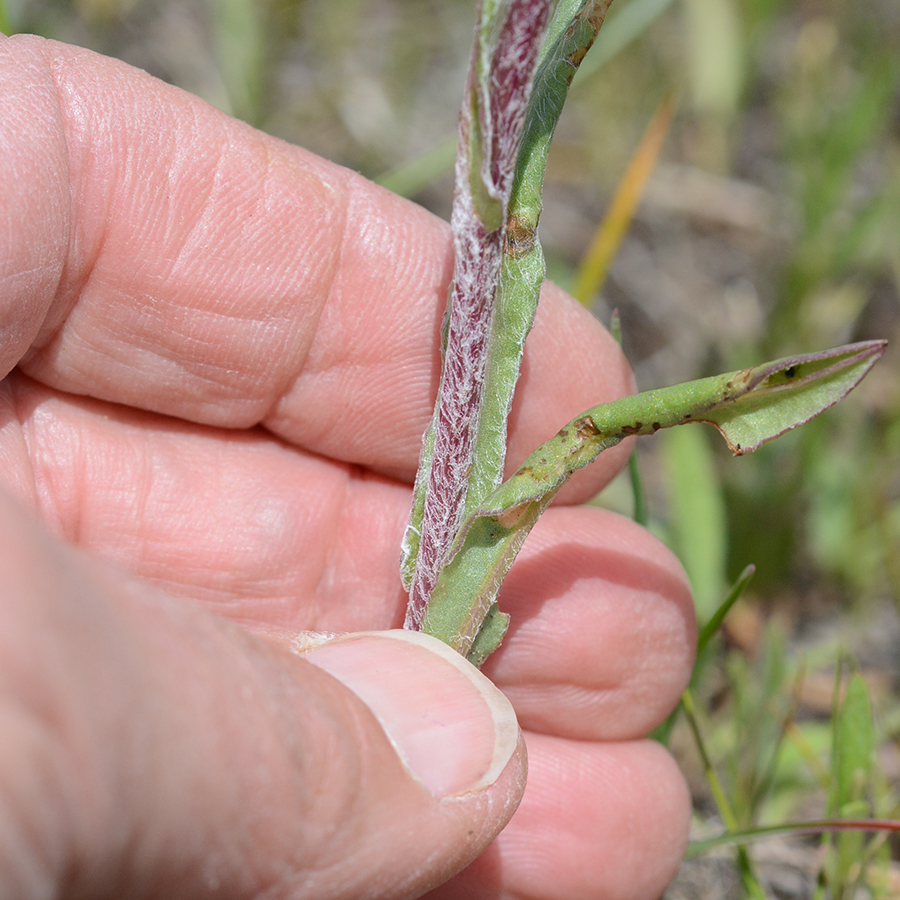
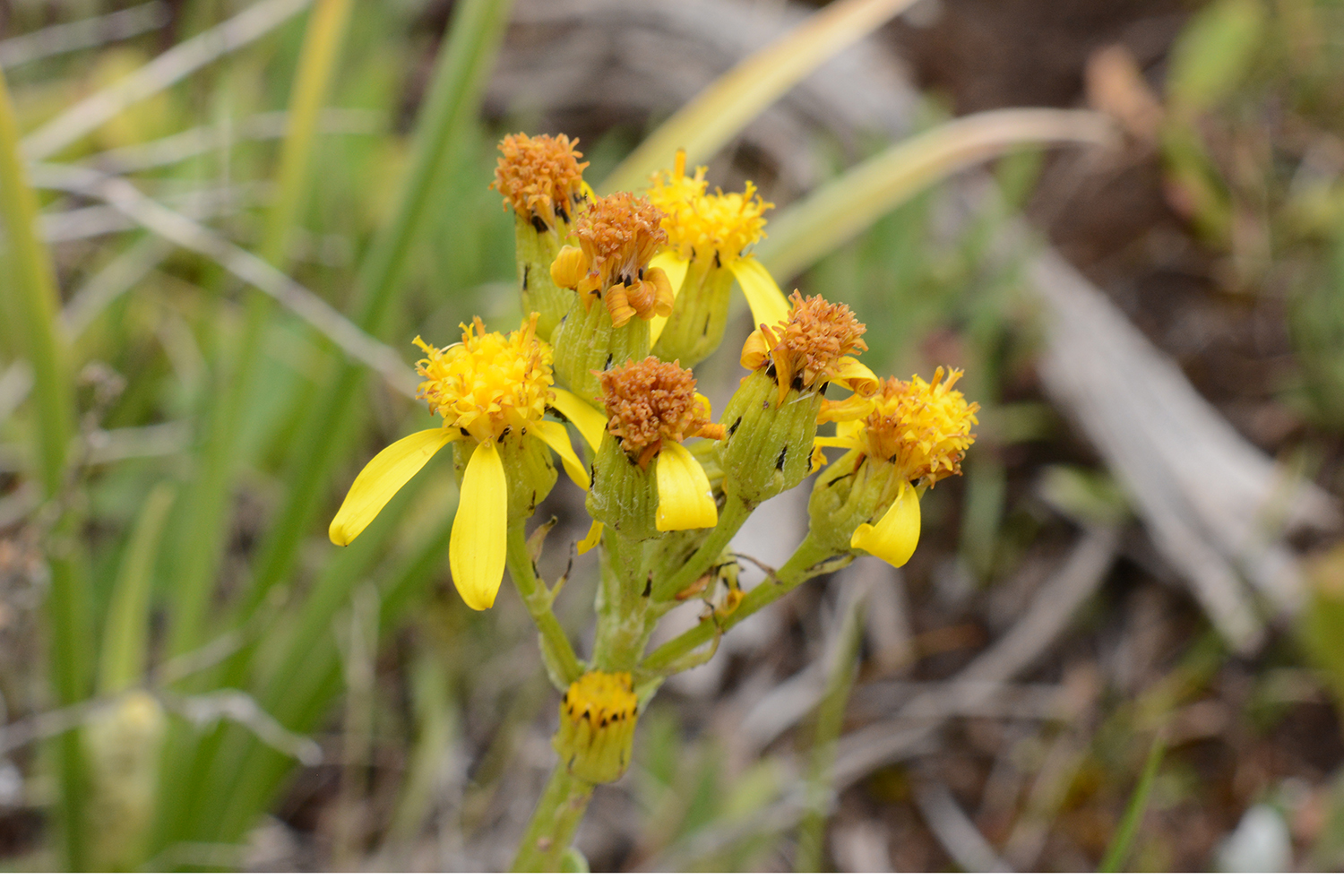
Western Groundsel – Senecio integerrimus – has several heads clustered at the top of 1-2’ tall stems. Cobwebby hairs more or less cover the 2” leaves and stem. Several larger leaves are at the base.
The hairy stems are topped by several heads.
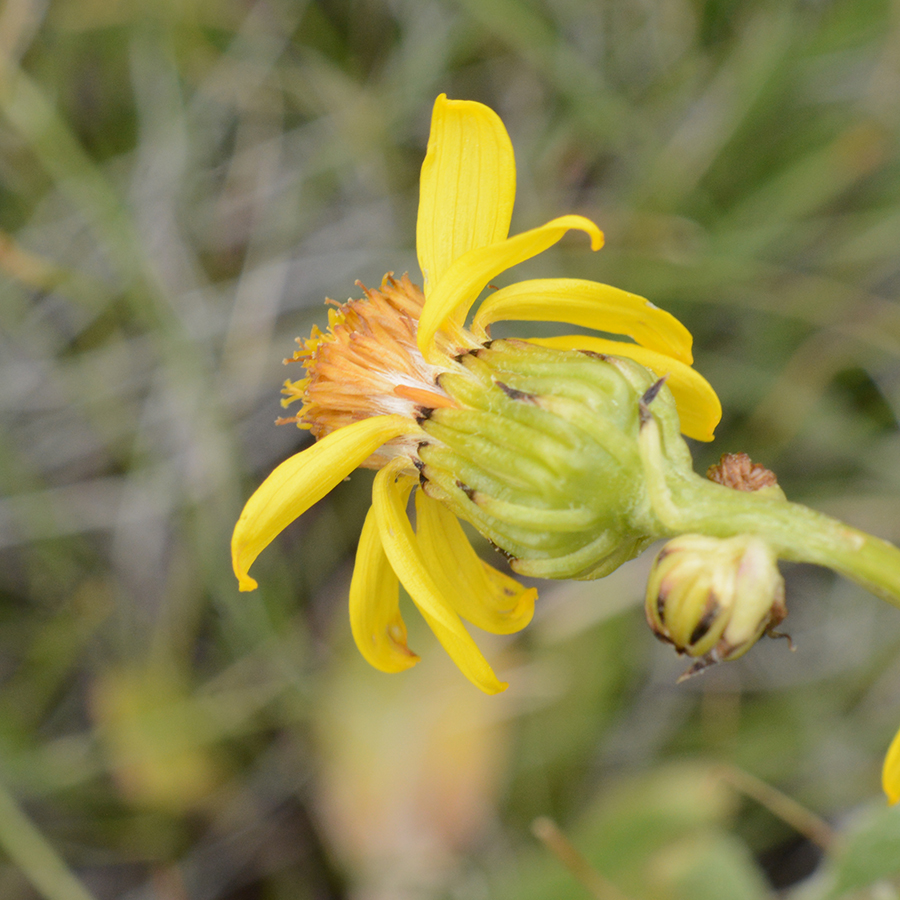
Each head has outer broad “ray” flowers–here five petals are merged together to look like one flat big petal. In the center are many tubular “disc” flowers – also with 5 petals but formed into a tiny tube. “Involucral bracts” surround and protect the broad ray and tiny disc flowers. Here the bracts are smooth and distinctly black tipped.
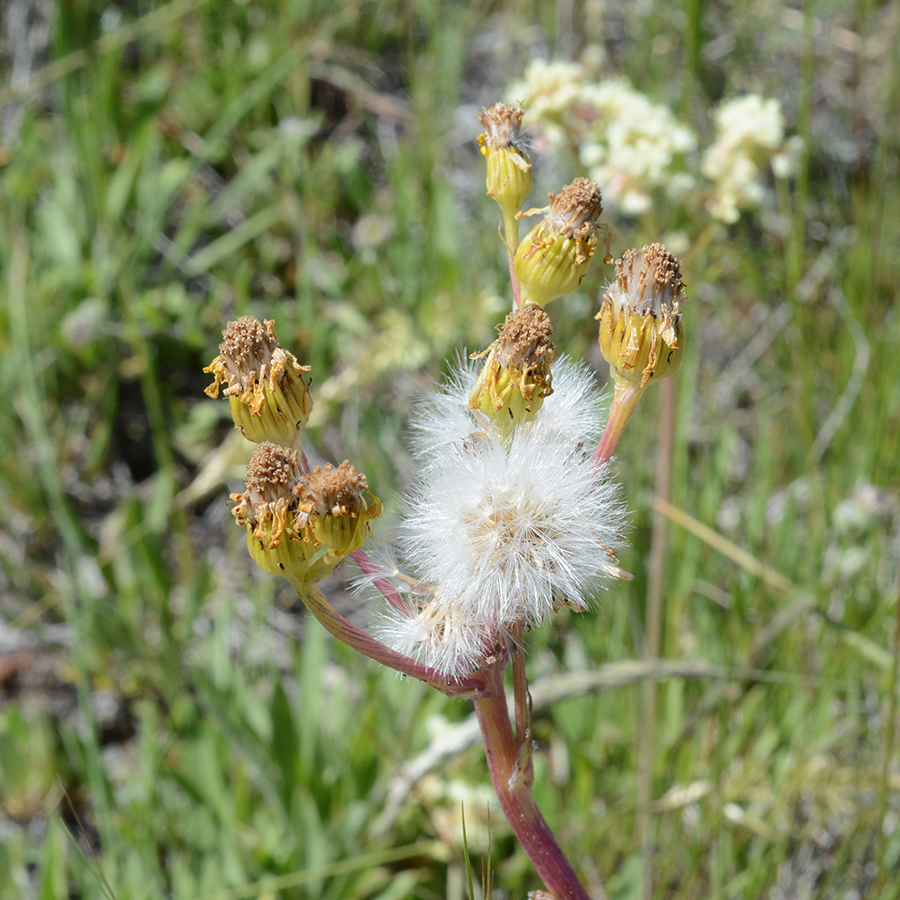
By late summer if pollinated, each individual flower produces a single tiny fruit with “fluff” at the top to help the seed disperse upon the wind.
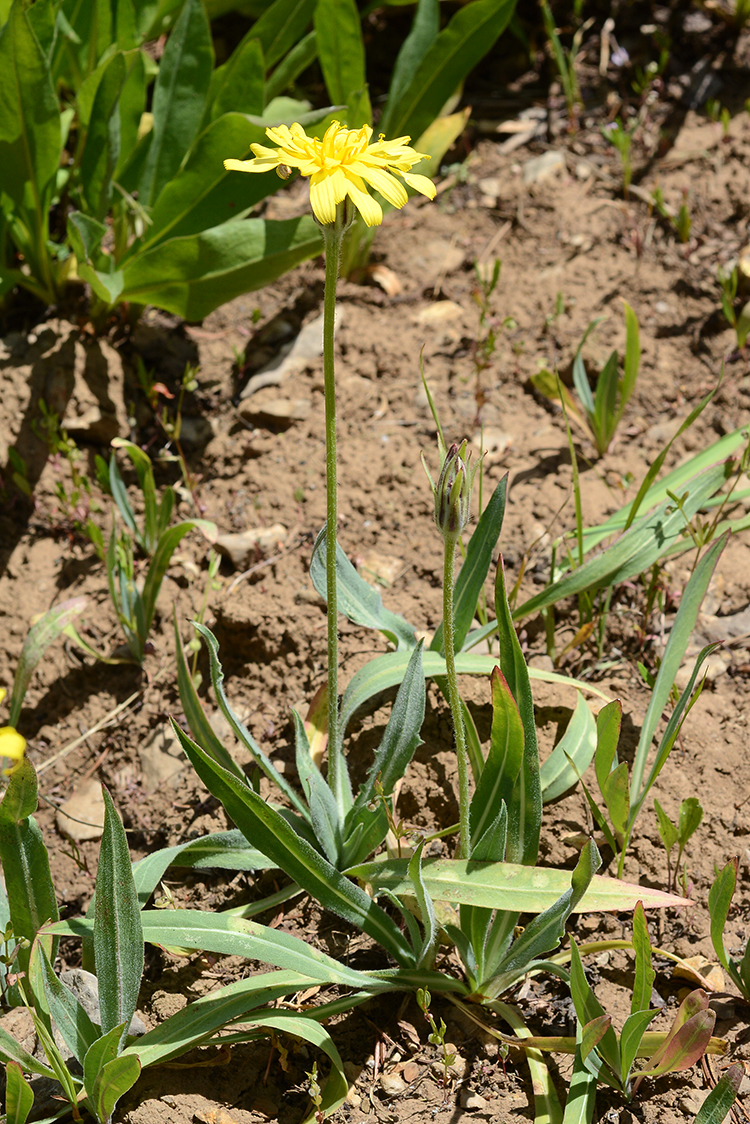
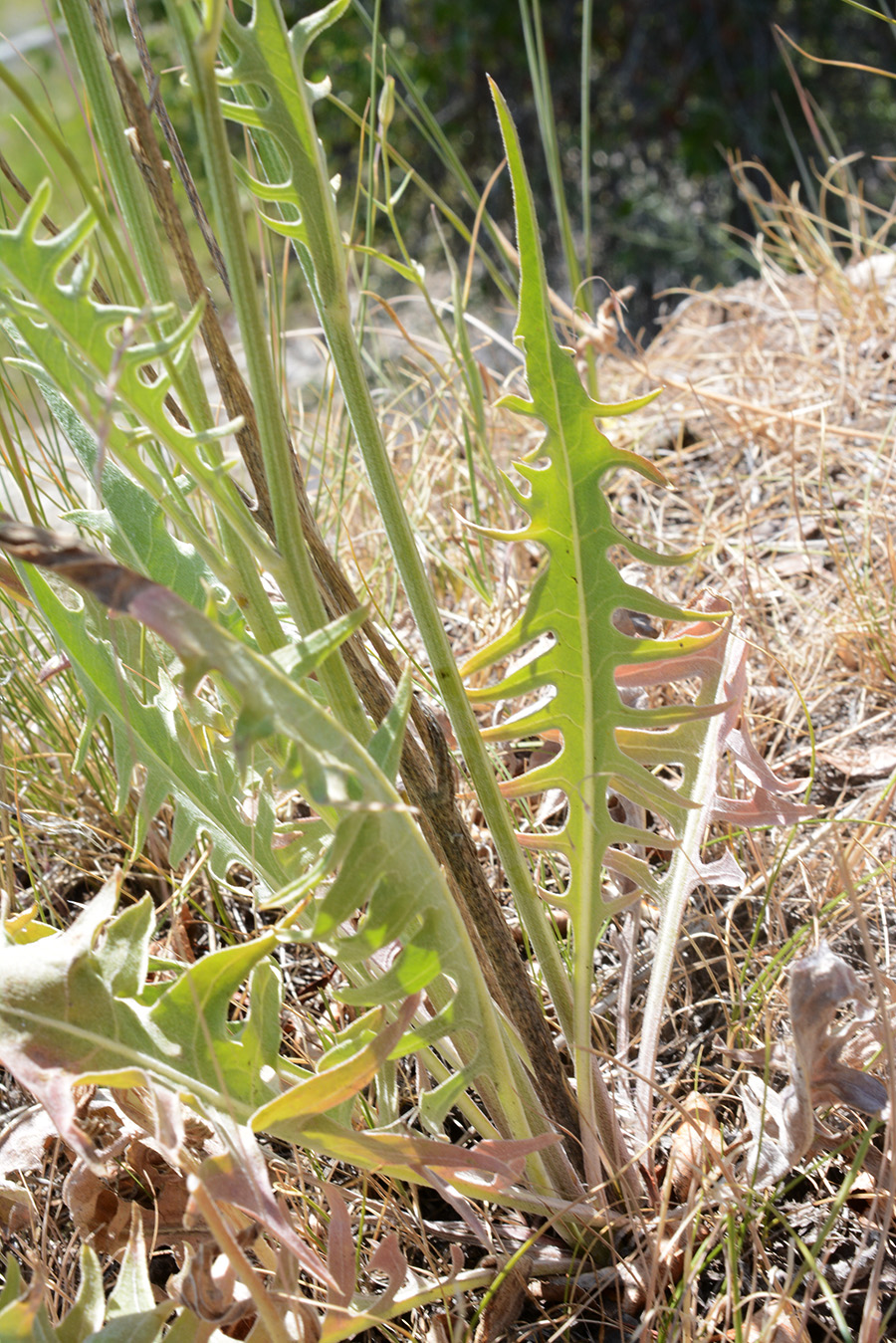
On top of a 6-12″ stem, False Dandelion – Agoseris glauca var. dasycephala – has one yellow flower head with all yellow ray flowers. Leaves are all at the base and are relatively wide, toothed or not. Another variety – A. g.var. laciniata/pauciflora has narrower toothed leaves.
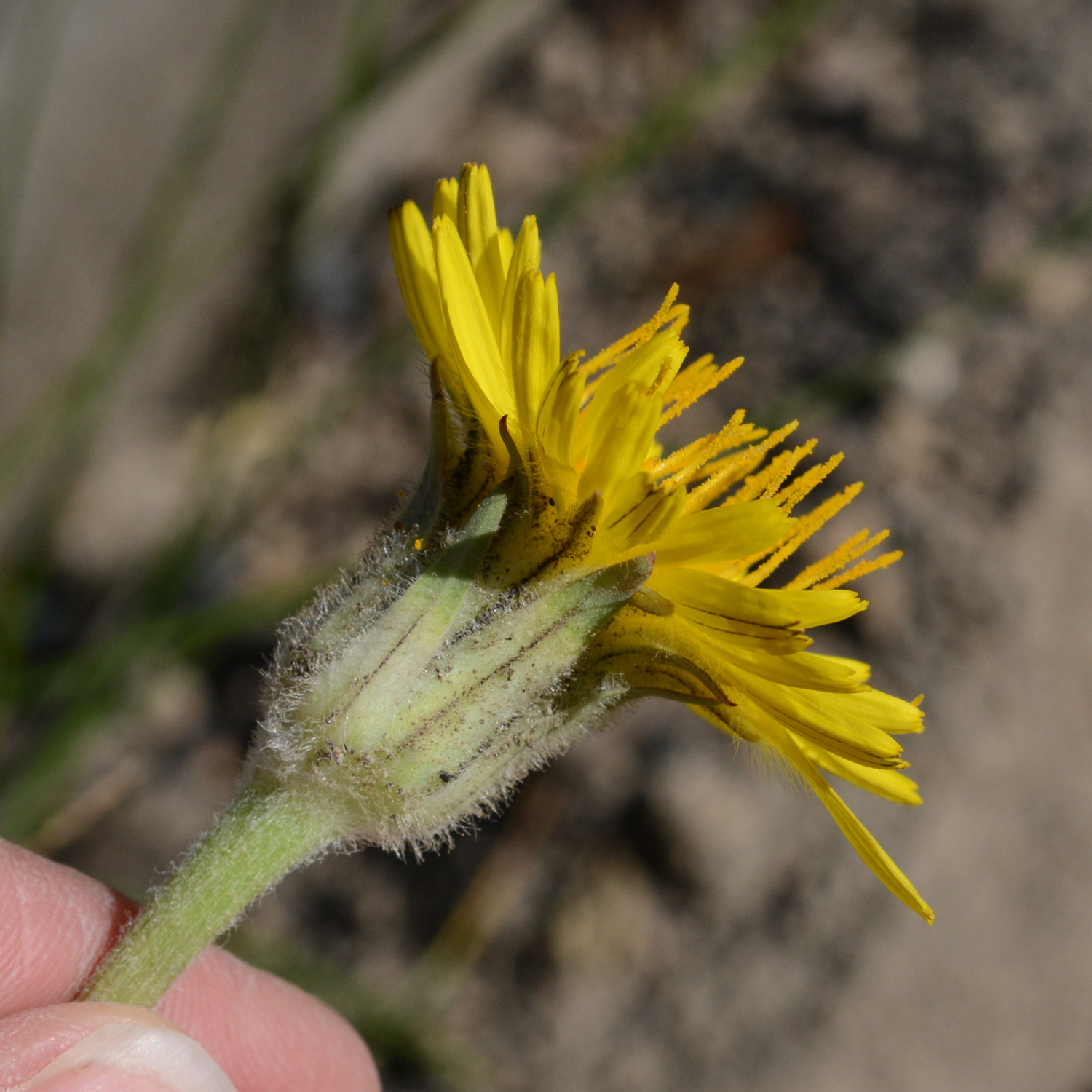
The involucral bracts are hairy and relatively broad. In the photo below, note the long slender stigmas with pollen all over them. The long stigmas, still closed, rose through a tube of inward-facing anthers, pushing out the pollen for insects to come and get it. This is called plunger pollination. Later the sigmas will unfurl into two arcs and hopefully be brought pollen from another plant or if need be, pick up remaining pollen from its own self.
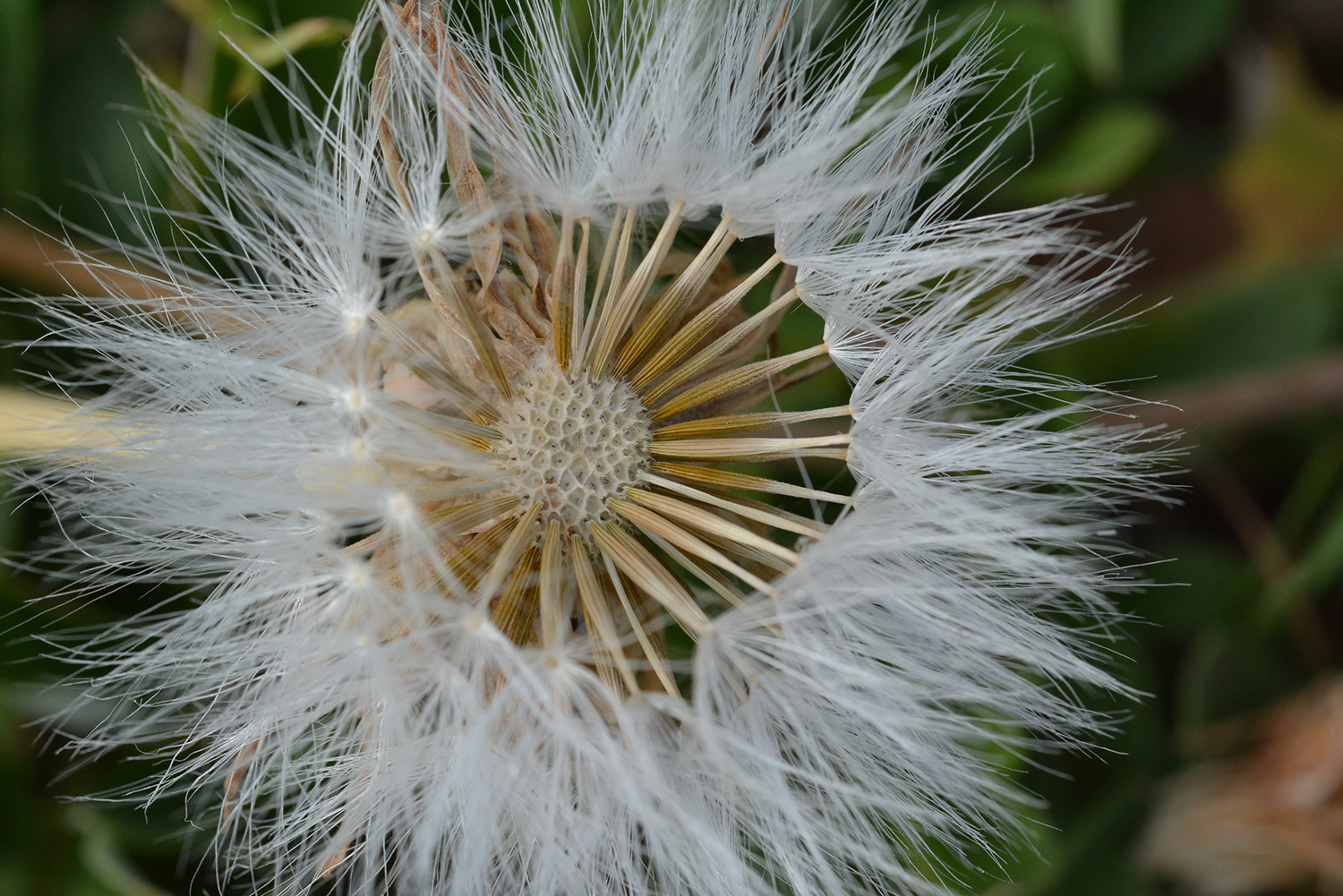
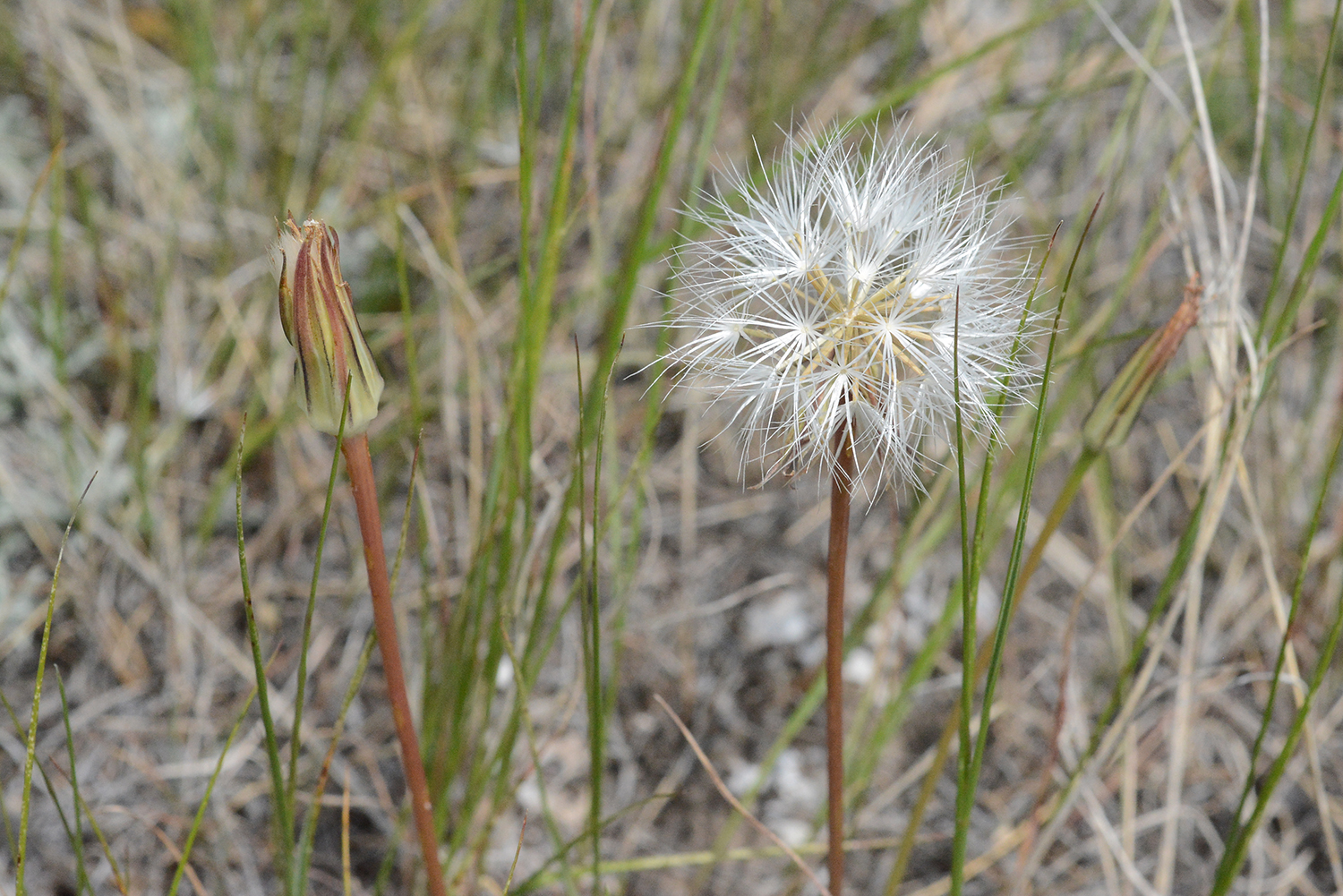
The elongated fruits are each derived from a single flower. A hairy pappus is attached at the tip to help in wind dispersal. Both the shape of the fruit and design of the pappus help in ID. Below are the spindle shaped fruits of A. glauca var. laciniata
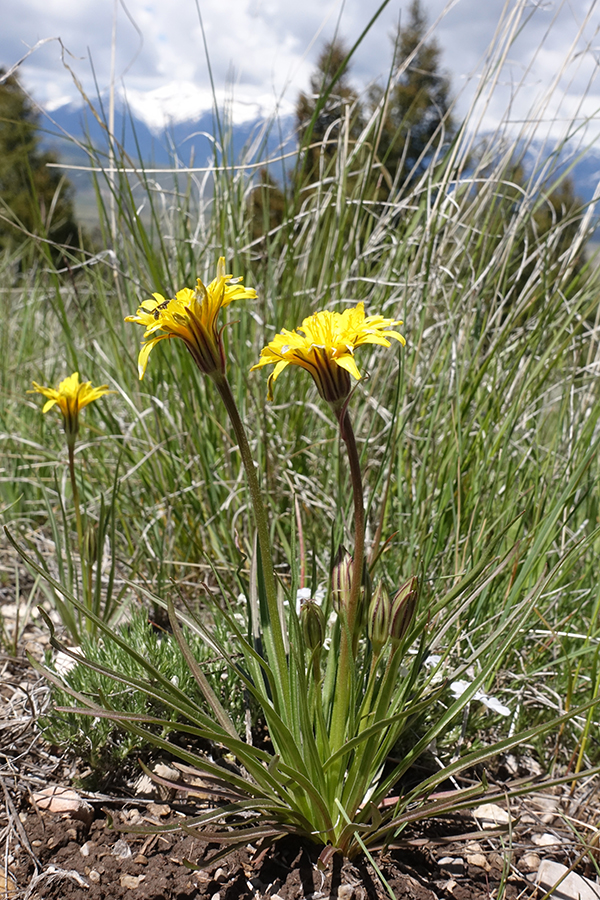
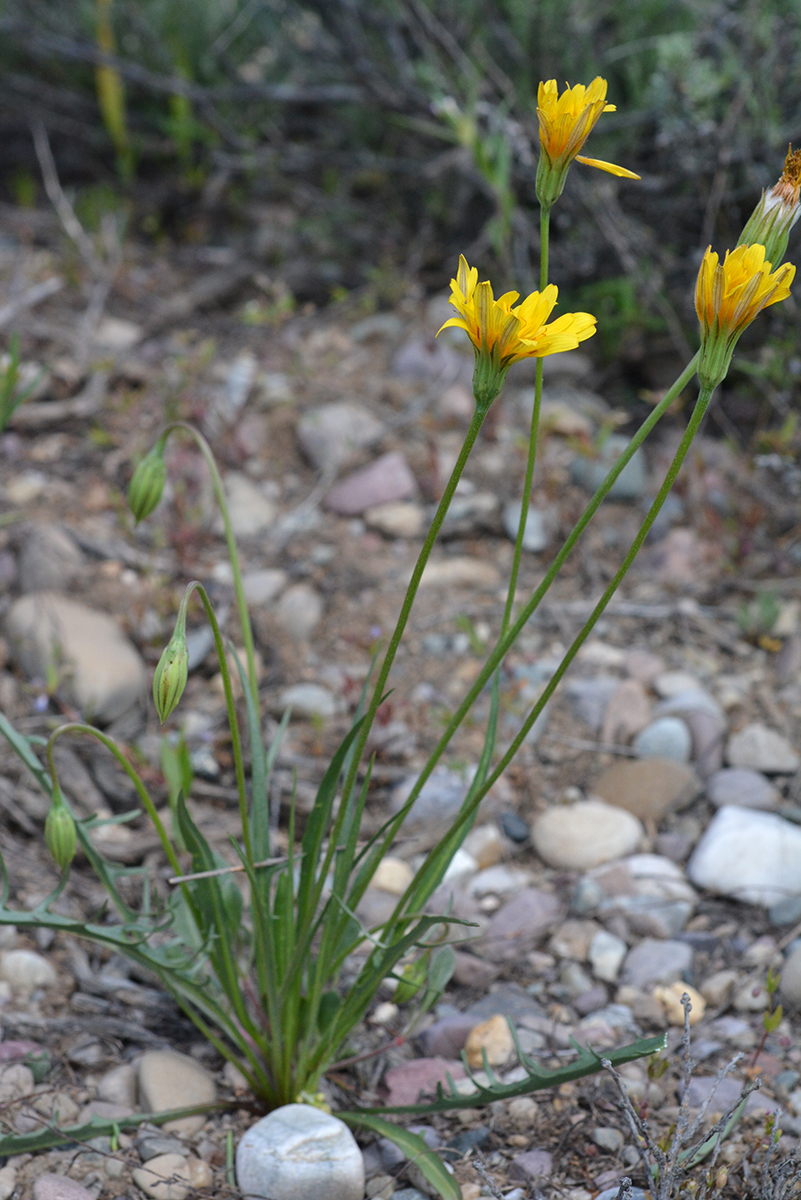
Nothocalais – Nothocalais nigrescens – Also has yellow flower heads at the tip of individual stalks and the leaves are clustered at the base; however these are very narrow linear leaves, sometimes slightly toothed. Note the buds stand up straight.
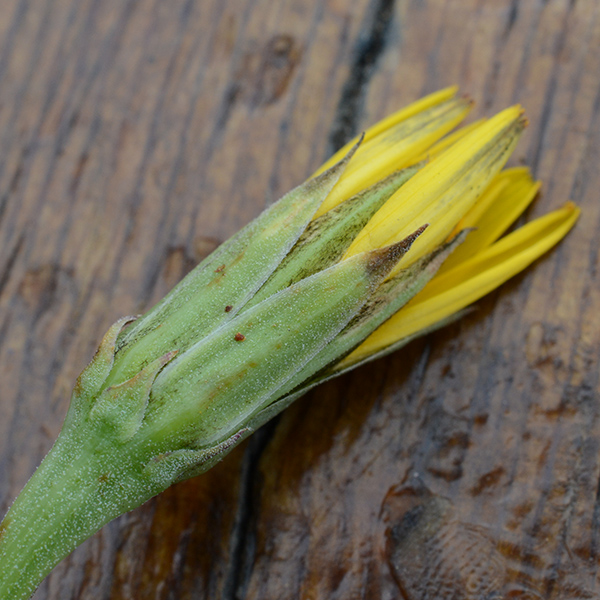
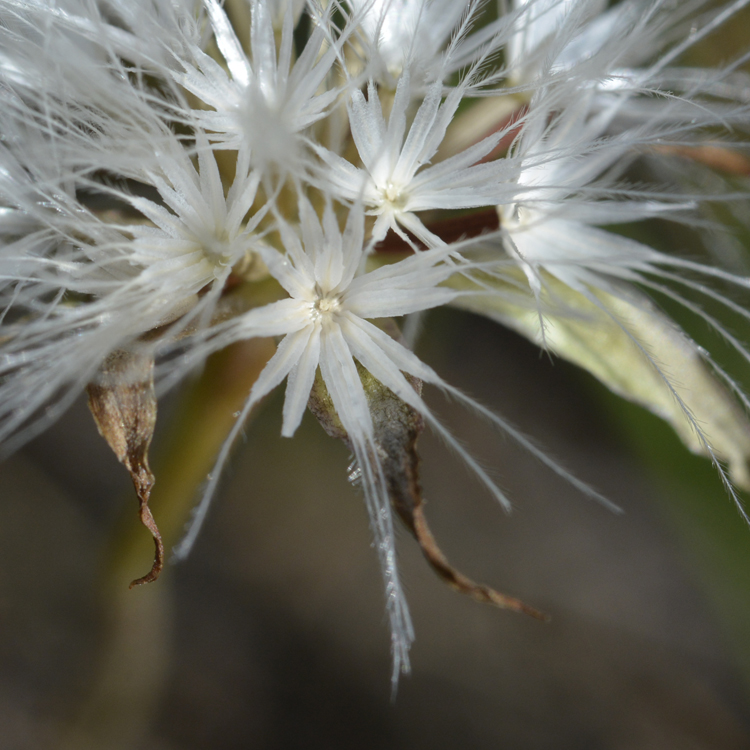
Bracts are all of a similar length, and often with a purplish stripe to them.Here is an example of the involucral bracts protecting the fruits as they develop on the left and on the right many fruits with fluff about to take off upon the wind.
Nodding Microseris –Microseris nutans–is plentiful this year so its worth knowing.
It is very easily confused with Nothocalais (reviewd above): They both have very thin, long leaves mostly at the base, and single heads with all ray flowers. However, Nodding Microseris may have some slender leaves alternating up the stem and may be slightly toothed. Notably, the buds nod, giving it its common name.
Also, each head has a few short bracts surrounding a row or two of several broad longer bracts.
Most exceptional, the pappus of each fruit is broad at the base on Nodding Microseris,
Hawksbeards – Crepis spp. – are just beginning to bloom in most places, therefore, are just mentioned here. Hawksbeards have several to many yellow flower heads, and many toothed-to-lobed leaves not only at the base and but also alternating up the branching stems. Here is an example of just one:
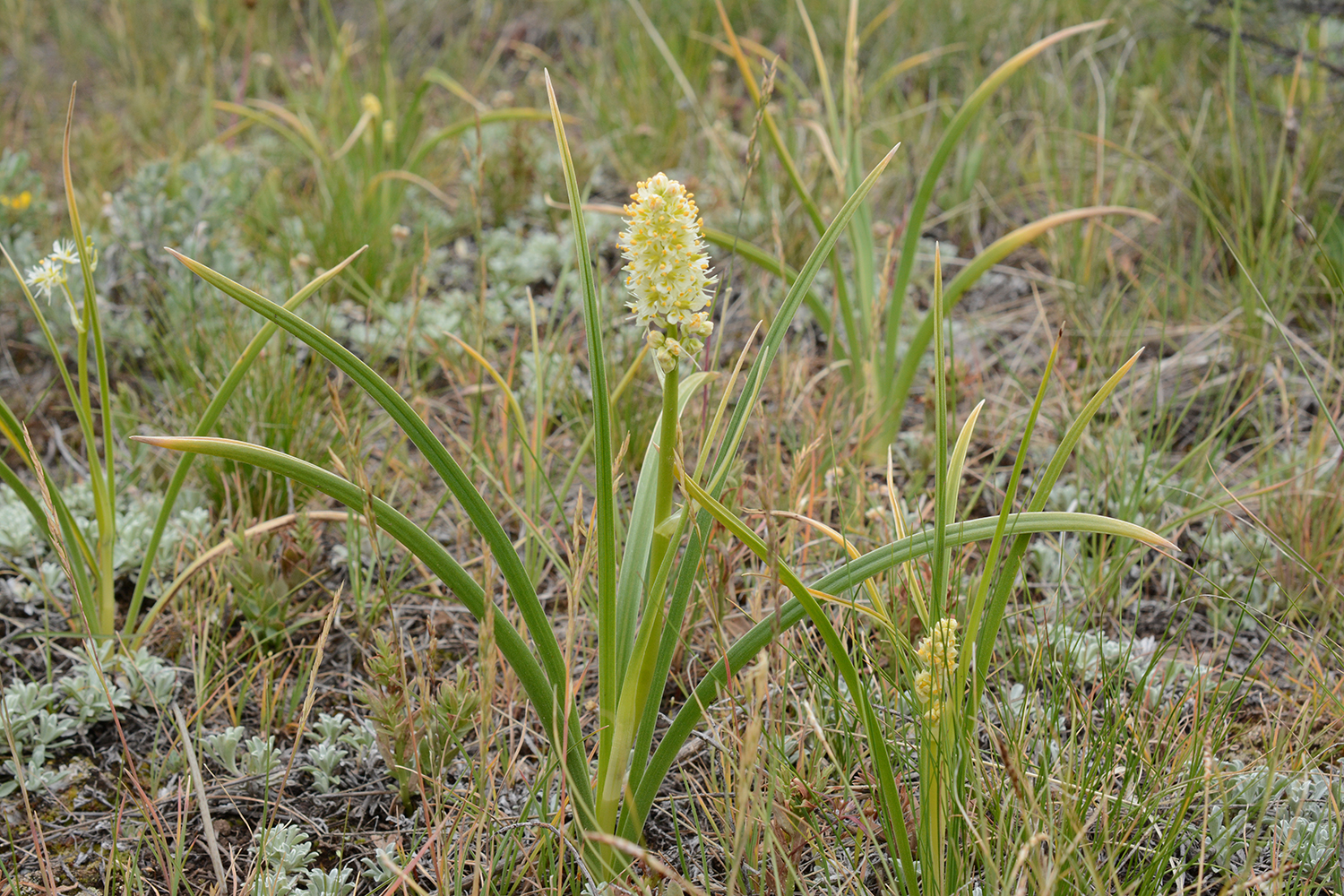
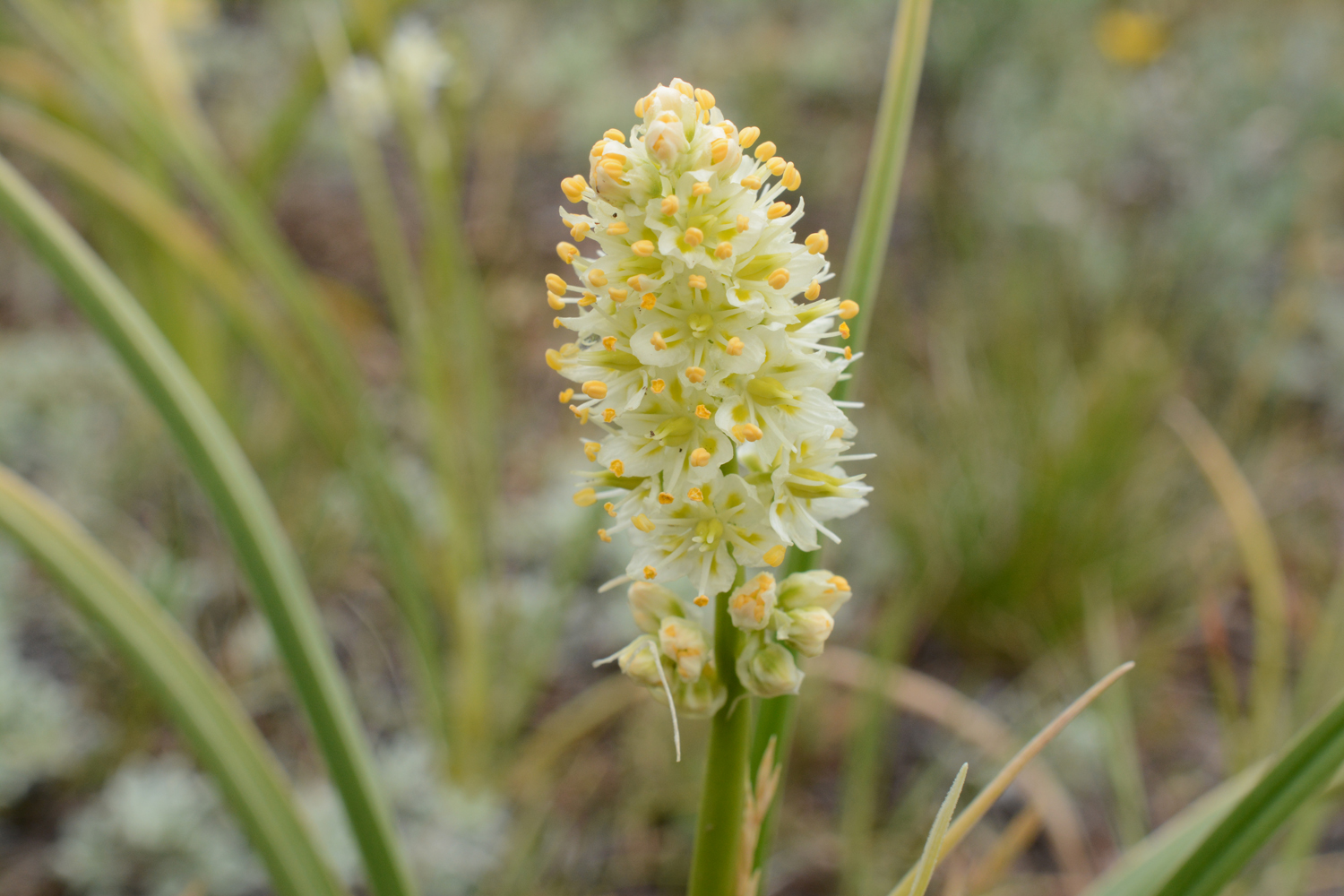
Finally, Death Camas – Toxicoscordian/Zigadenus venosum var. gramineus – is truly poisonous and has been confused with wild onions by foragers. Plants contain zygacine which causes severe gastrointestinal and cardiovascular effects if eaten. If grazed, it can also cause death to sheep and other livestock. So Death Camas truly deserves it name.
However, it is still lovely to look at!
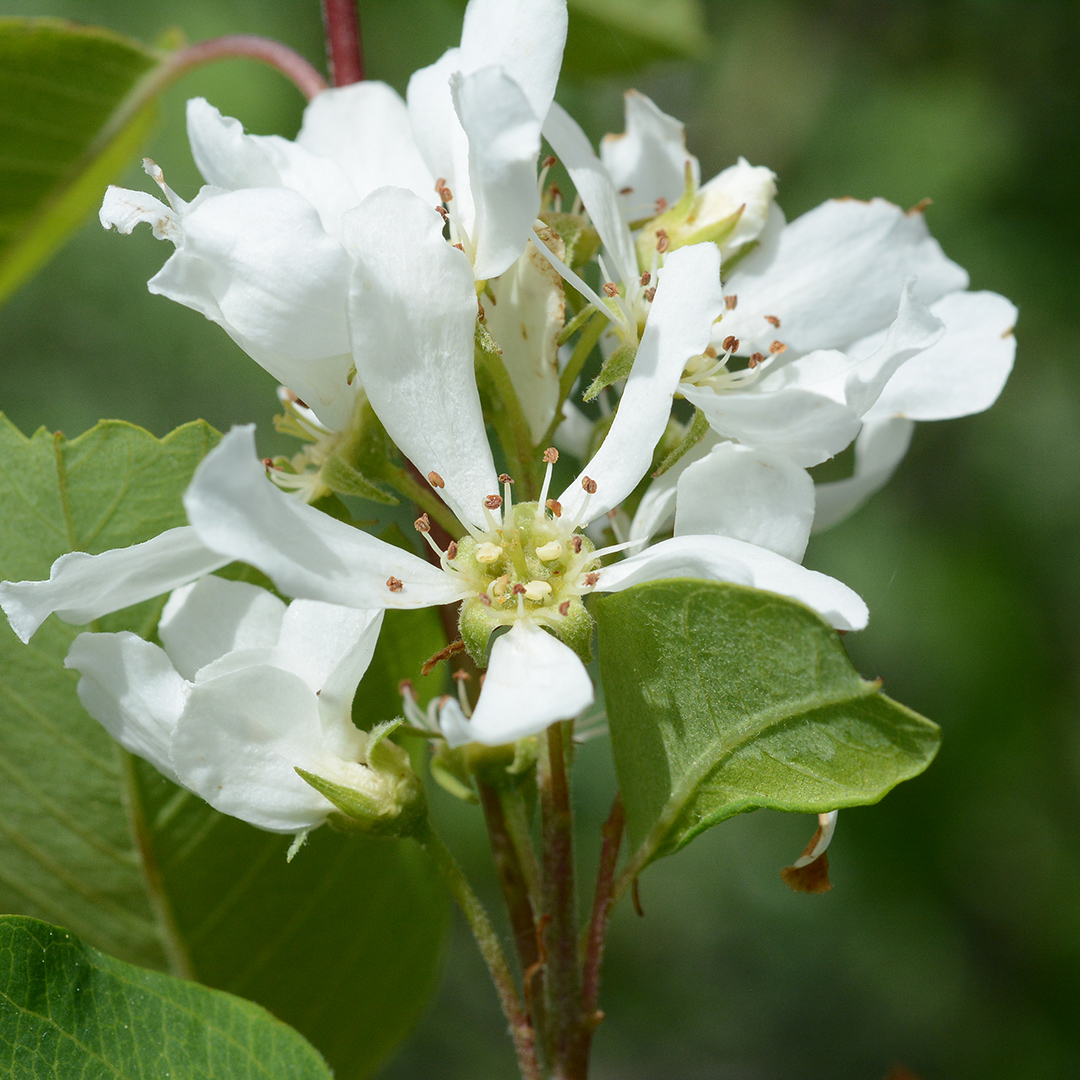
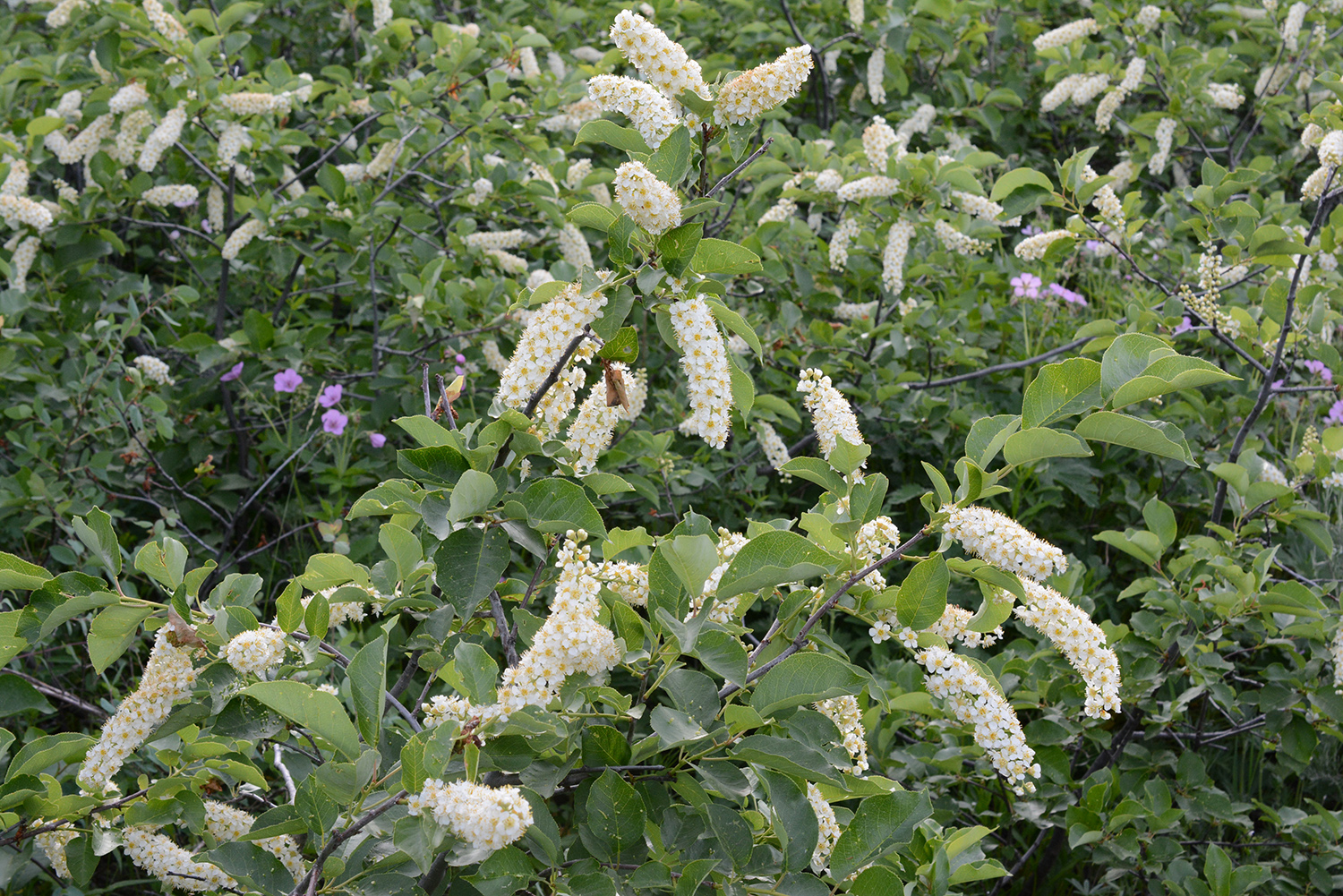
There are other plants blooming around the valley and many more to come. Serviceberry – Amelanchier alnifolia, Chokecherry – Prunus virginiana – are two notable shrubs in bloom now often seen on the edges of the dry zones. but enough for now! Do check out our past “What’s in Bloom” posts for plants seen around this time in years past.
Thank you for your interest. As always we appreciate your questions and corrections.
This post features the earliest blooming wildflowers in our valley. They are coming and going fast! It is a good time to bone-up on our botany skills – looking closely at the identifying features of not just individual species, but also some common families: Parsley, Daisy, Mustard, Pea. It also points out some of the taxonomic challenges to ID. Take your time to look closely at the photos and review the text for key ID features and then go see if you can find the species in the wild.
It is hoped that once again we can appreciate the many ways plants support other creatures from bacteria and insects to mammals and birds. And that our wildflowers provide beauty and joy to all of us!
This information was gleaned by searching the internet using botanical names and referencing .org, .edu. and .gov, not .com or social media outlets. Some references are linked to the script.
Appreciation goes to Wikipedia and the many university, non-profit, and government researchers and educators who strive to help us understand our world.
First Up:
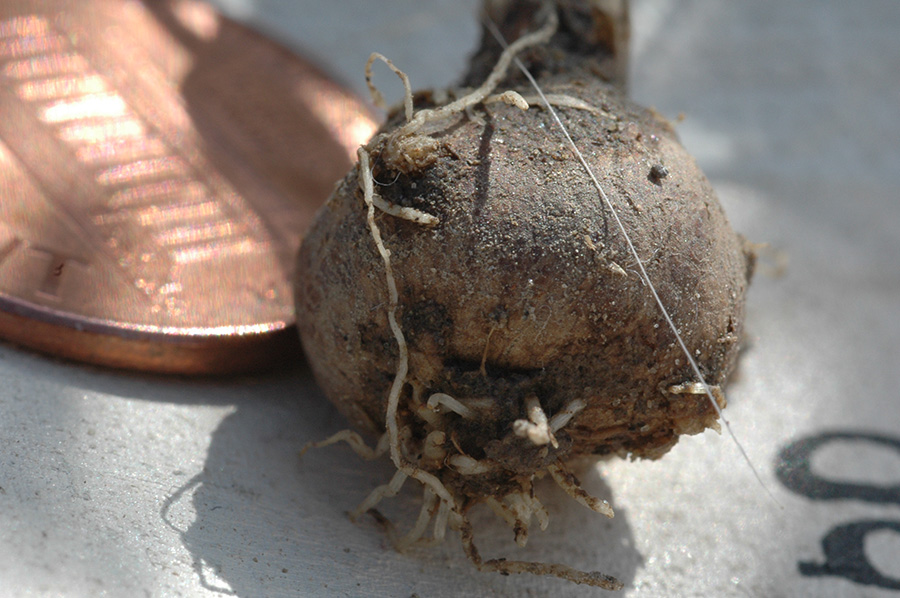
Several species emerge just as the snow melts. They use energy from small storage bulbs or corms underground to quickly sprout leaves and flowers. Over just a few weeks, fruits form, seeds are dispersed, and food is once again stored underground for the next year.
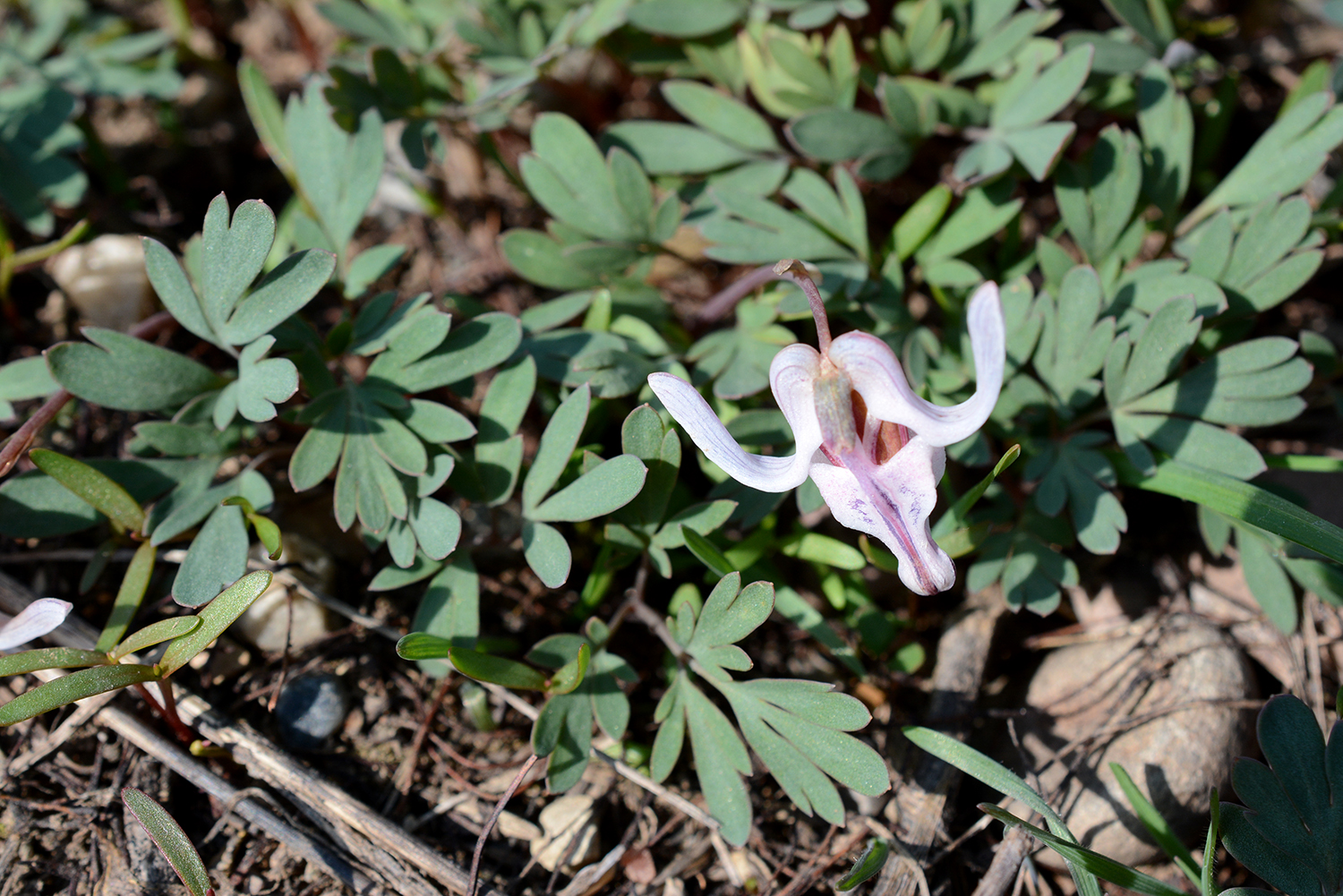
Steer’s-heads are best found by looking for the bluish-green loved leaves then the flowers.
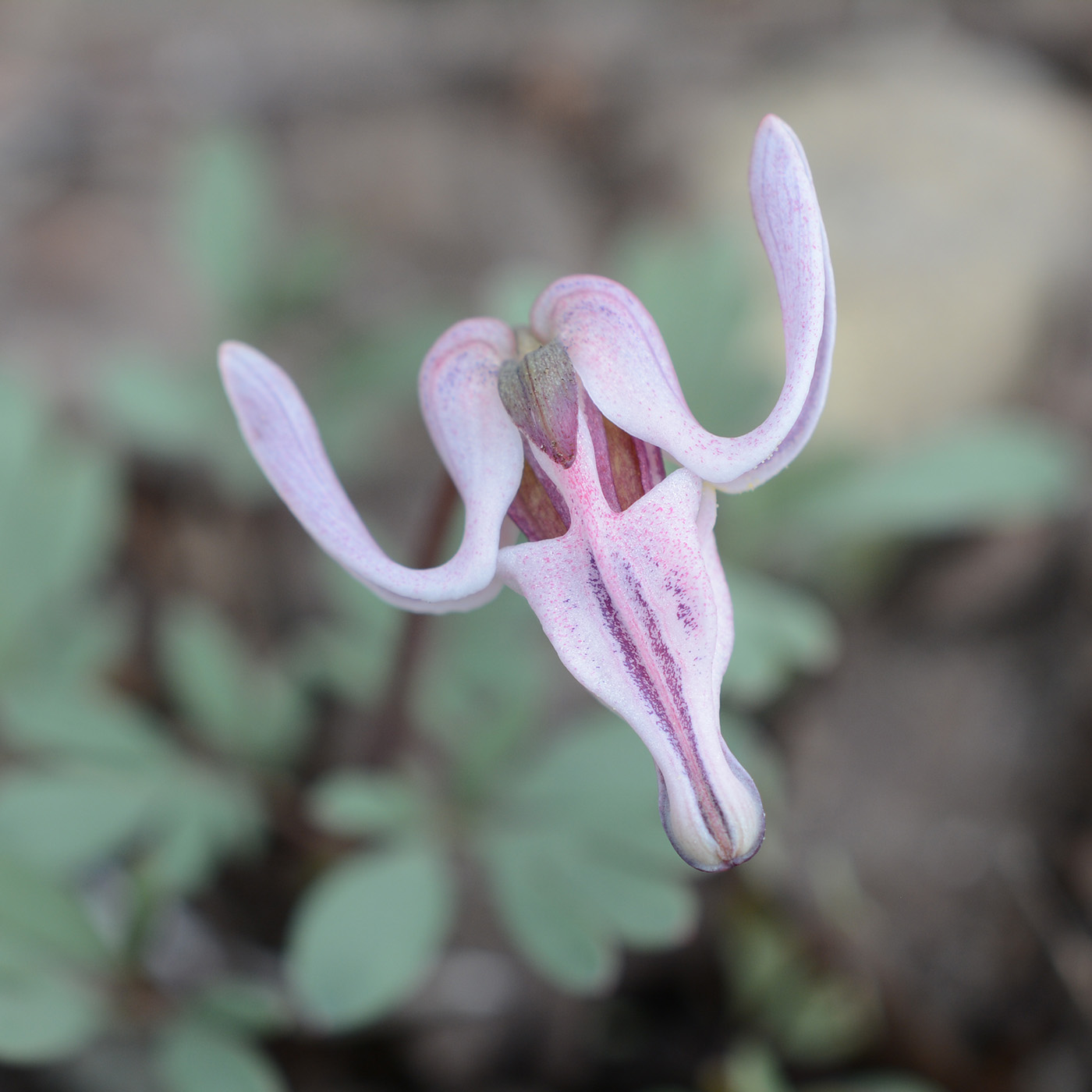
Steer’s-head – Dicentra uniflora – is quintessentially western in appearance with two outer petals curled up into horns and two more petals forming the head of what appears to be a steer. Look for rounded-lobed, compound leaves lying almost flat to the ground and then if lucky for the 3/4” nodding pinkish flowers. Plants come and go within 4-6 weeks.
The flowers are pollinated by bumblebees which can perch and pry open the petals to efficiently effect pollination. Details on how they do so are elusive.
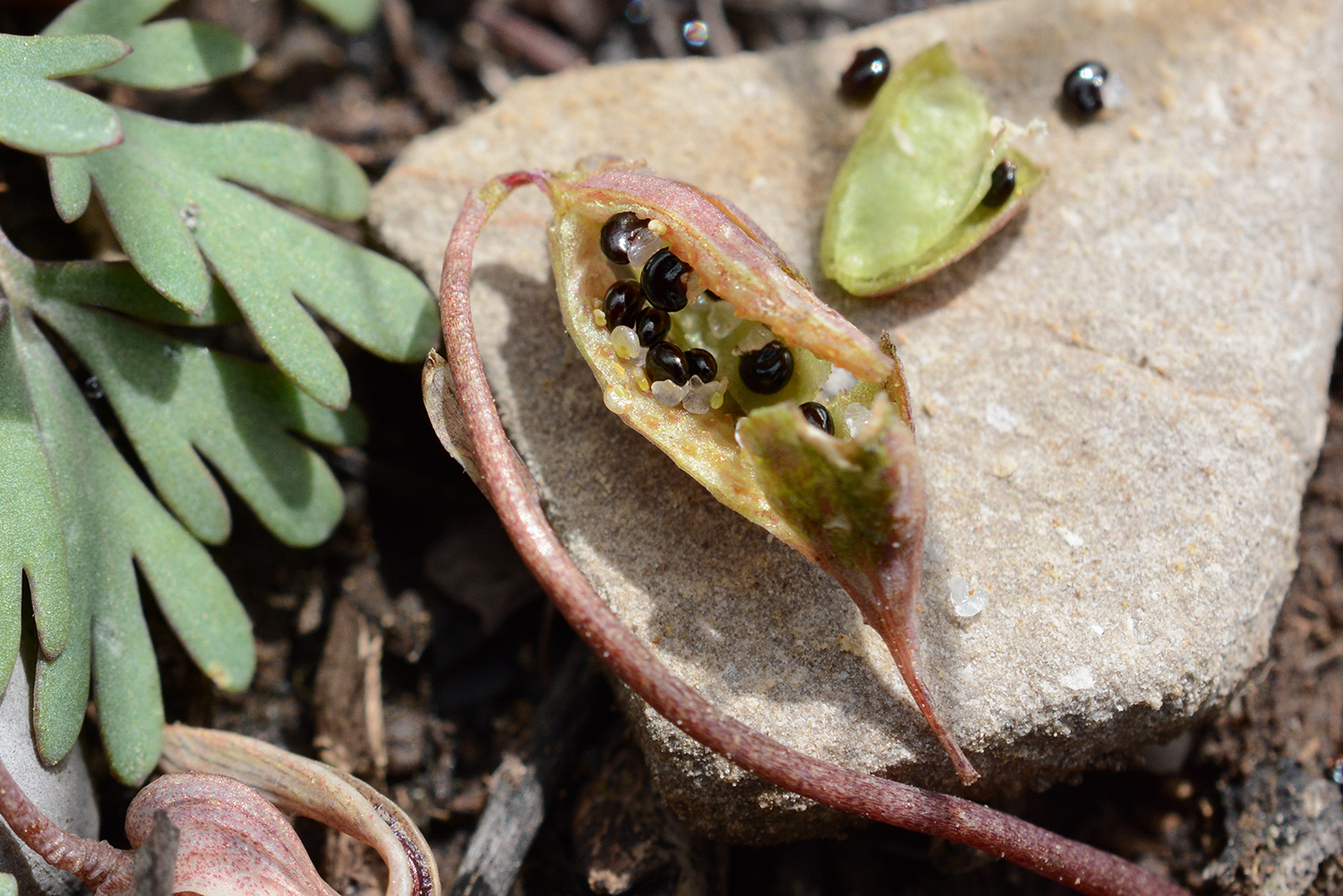
Seeds are dispersed by ants which look for the fleshy (looks white) elaisomes to feed their larvae.
The 3/4” fruits develop within 14-18 days. Ants chew through the fruits to get to the seeds. Ants are attracted by the highly nutritious fleshy elaiosome attached to the seed which they feed to their larvae. Then the ants dispose of the seed itself in an organic waste pile where it germinates. This form of seed dispersal is called myrmecochory. Buried seeds germinate much more readily than those on the soil surface.
Clodius Parnassian butterflies lay their eggs near Steers-heads – the larvae depend on the foliage in the spring. The butterflies themselves will nectar on a variety of plants. Note the black antennae and gray on whitish wings.
Furthermore, Steer’s-head is the exclusive host plant of Clodius Parnassian Butterfly – Parnassius clodius. In early spring the larvae emerge from eggs nearby and start feeding on the sprouting plants for 2-3 weeks until the larvae pupate for 10 days to become butterflies. After mating rituals, the females lay their eggs near a dormant Steer’s-head—apparently they can detect the presence of plant corms resting underground with their feet. They lay their eggs nearby and the larvae develop within the eggs to emerge once snow melts again next year.
The diminutive Steer’s-heads support bees, ants, and butterflies! Much of the research on Parnassian butterfles has been here in Grand Teton National Park by Dr. Diane Debinski.
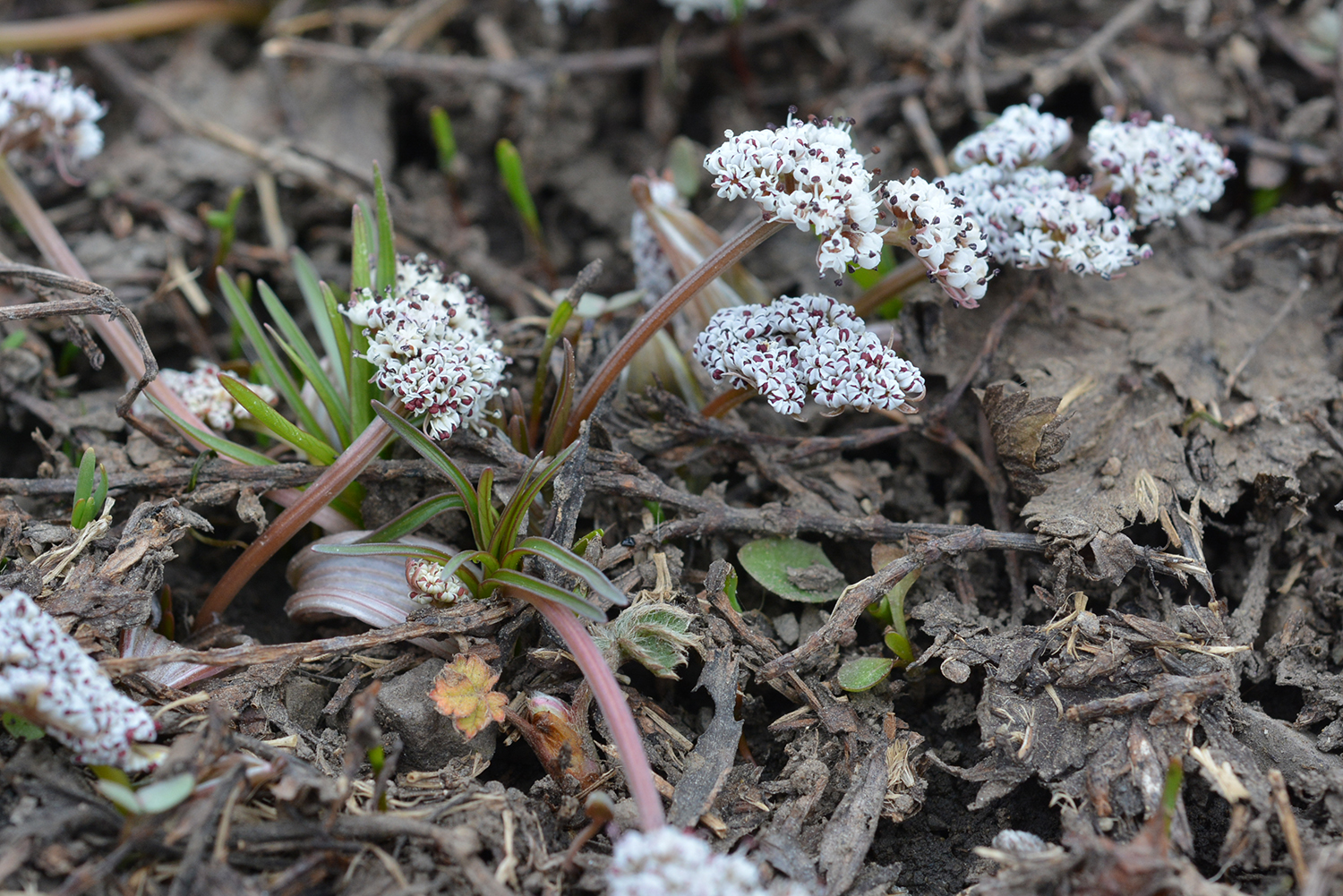
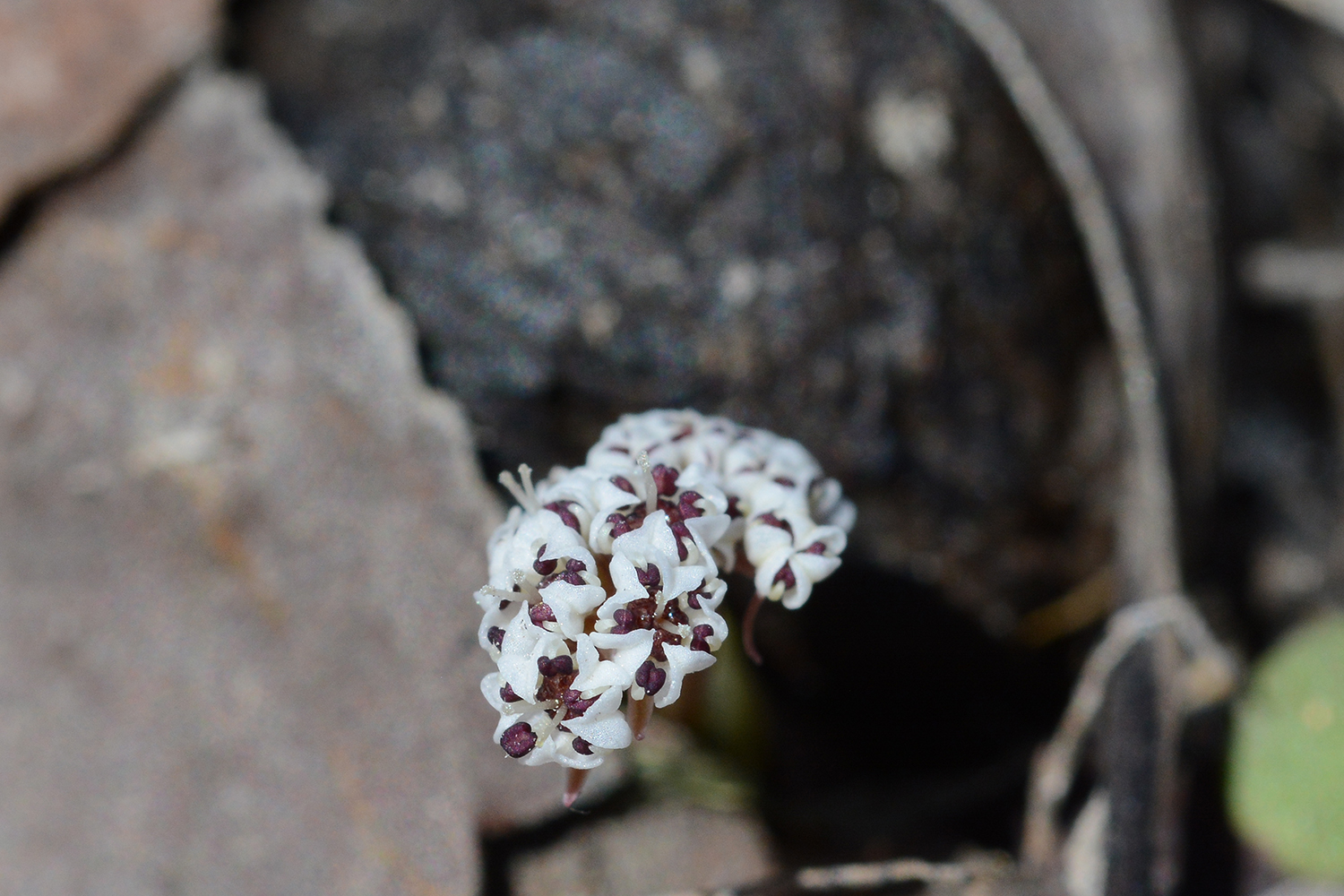
Turkey Peas – Orogenia linearifolia – are also hard-to find.
Pea-sized corms
Cranes like to eat the corms and likely turkeys if we had them.
produce 2-3” linear leaves and a quarter-sized umbel of white flowers touched with purple.
Moose poop in the background adds scale to these tiny umbels!
Fruits – which are schizocarps – are often overlook. Photo could be better.
The fruits are often over looked for good reason – they are so small and we are diverted by other flowers coming! Turkey Peas are in the Parsley/Apiaceae Family (see below).
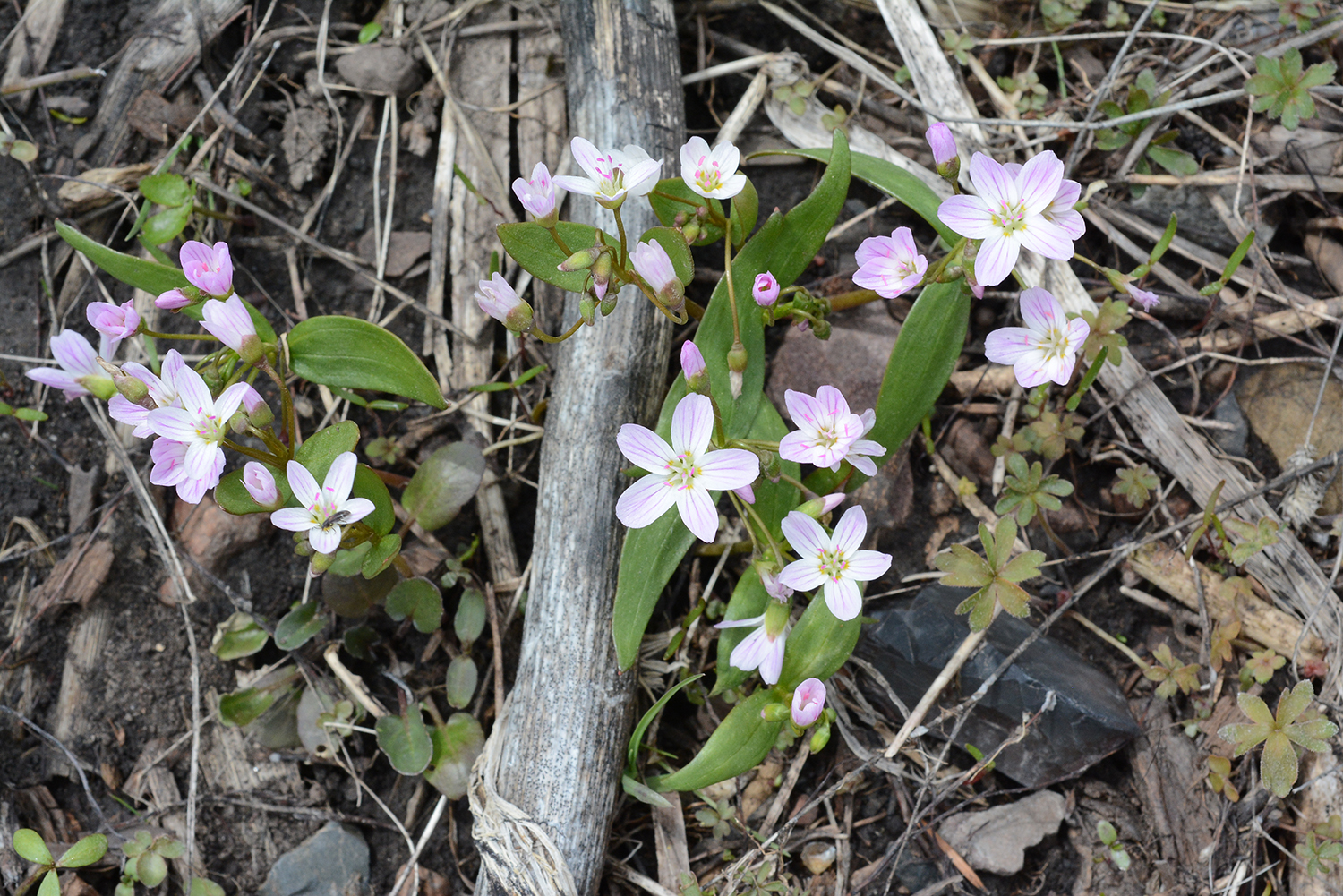
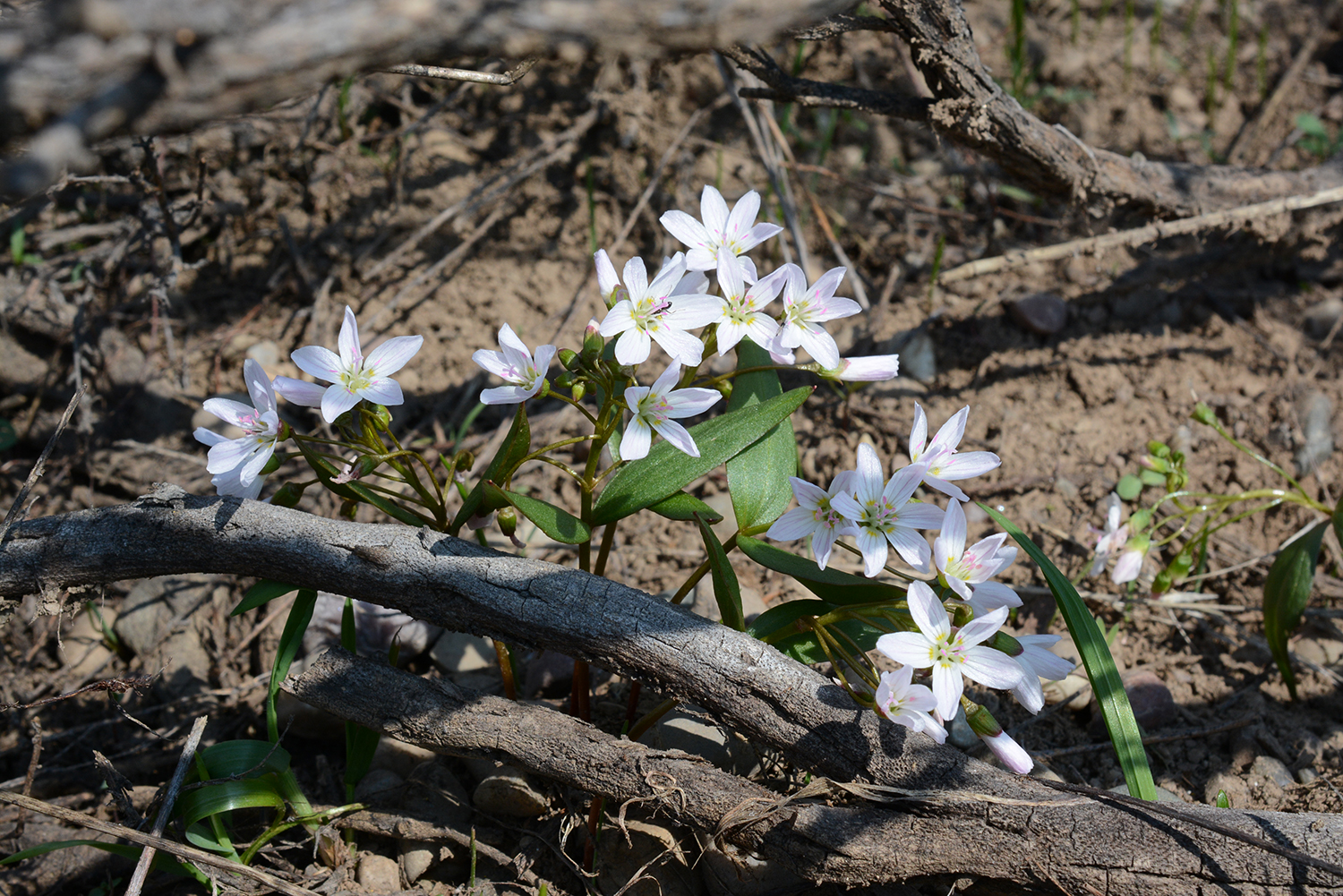
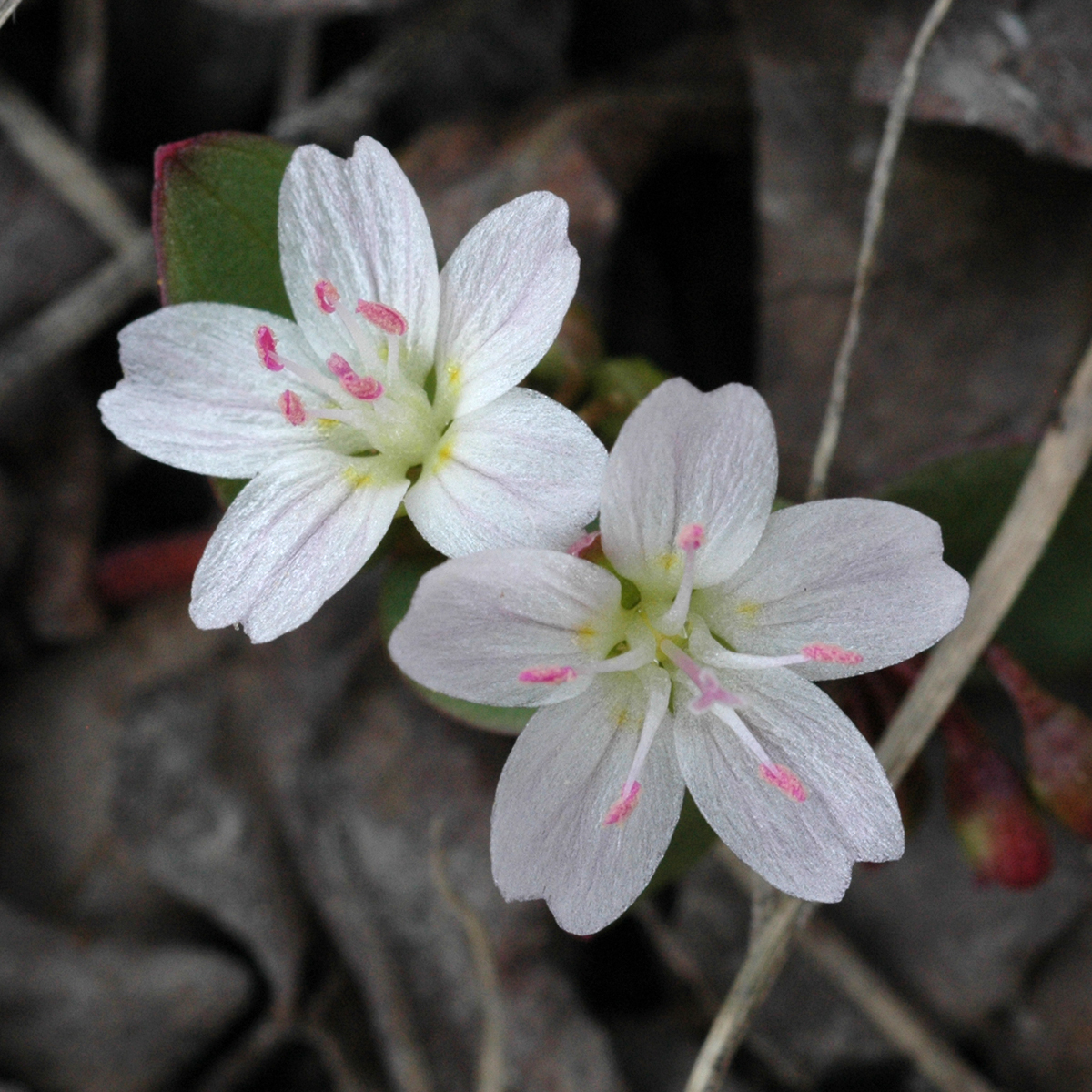
Spring Beauties – Claytonia lanceolata – are not quite so hard to find. They grow under light shade of pines and also in sagebrush. Look for two opposite linear leaves on the stem,
and wide-open white-to-pink flowers with 5 petals. Pink lines guide pollinators toward the yellow center where there are 5 stamens with pink pollen-bearing anthers and a single pistil with 3 stigmas curled outward. These early flowers serve a variety of spring pollinators. Spring Beauties are also called Mountain Potatoes: they are considered a tasty and important food plant for indigenous peoples. Portulacacea/Montiaceae.
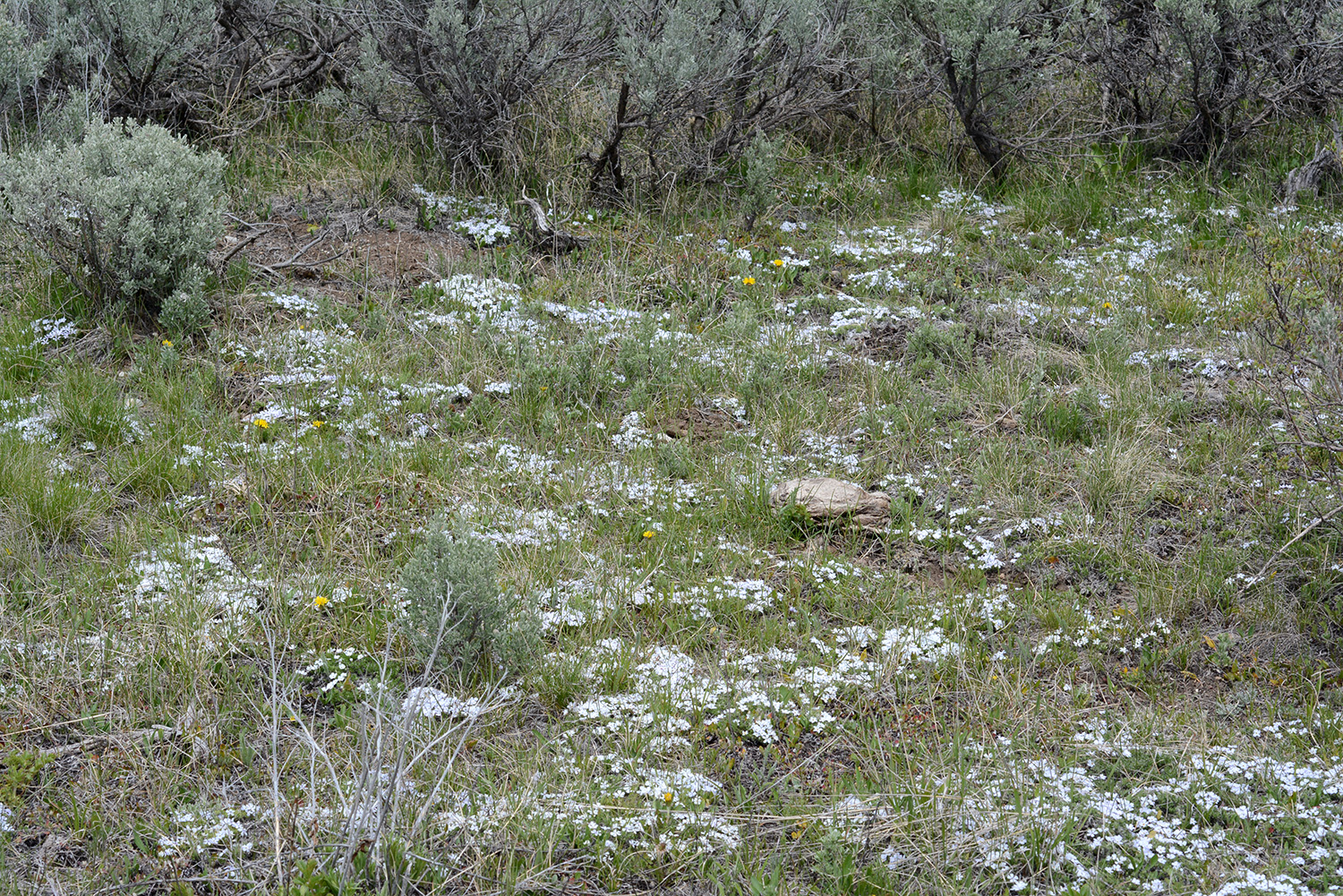
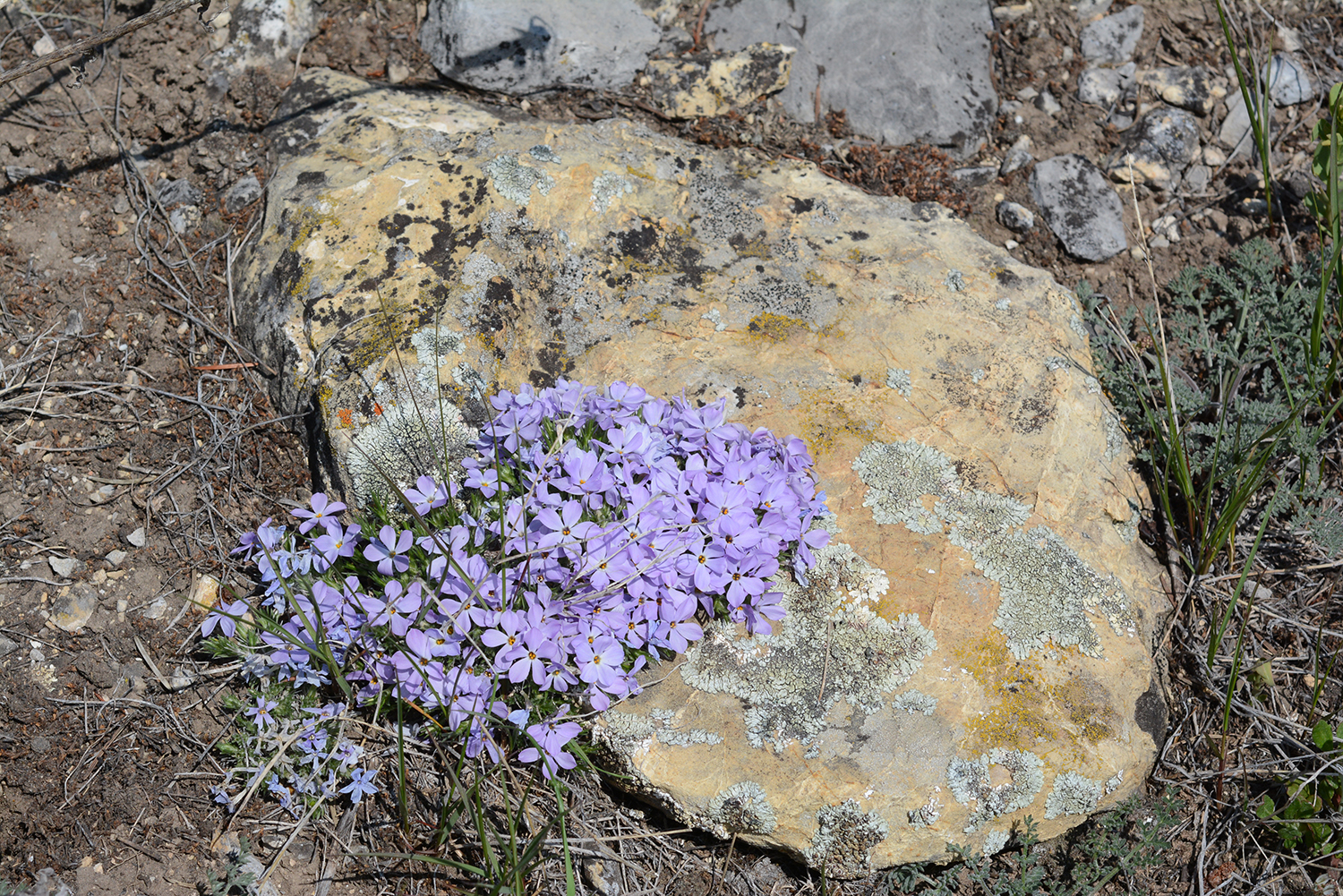
Hood’s or Spiny Phlox – Phlox hoodii – are fragrant! The mounded plants look like patches of scattered snow. Unlike the plants discussed above which rise from starchy underground bulbs or corms, this species grows from a much-branching woody root crown which forms low, tight mounds rarely over 12” wide and a few of inches high. They often do well on rocky slopes.
Hood’s phlox can be blue too. And sometimes the rocks are as beautiful as the plants.
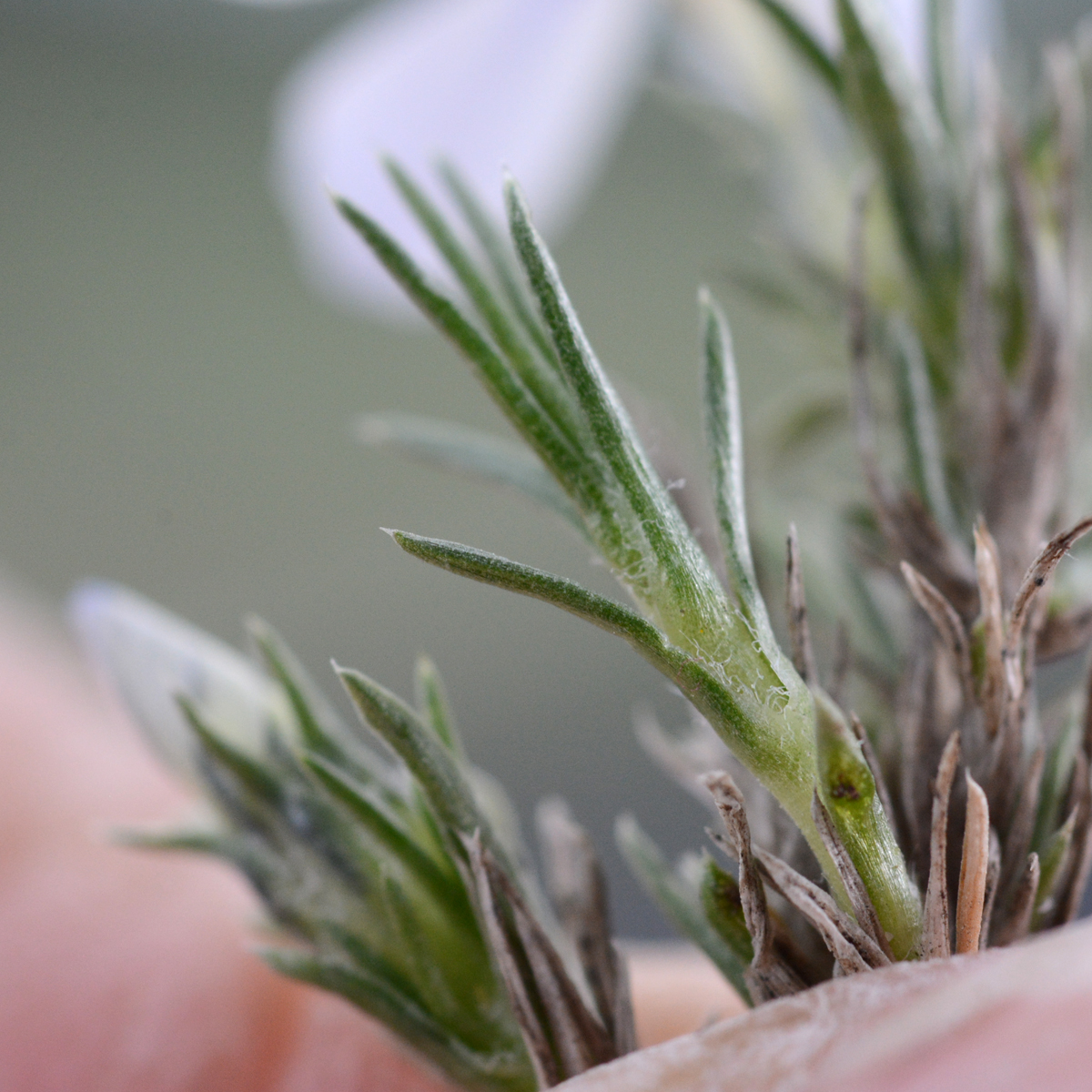
Leaves are opposite, sharp, stiff-pointed with cobwebby hairs.
Flowers are swirled in bud, and petals unfurl into tubular flowers which flare at the top.
The fragrance attracts insects to the location, but only long-tongued species can perch and probe down into the tube for nectar and pollen. Butterflies, moths, and skippers are primary pollinators, along with perhaps long-tongued bees. Two other species of phlox will appear soon.
Pollination note: Flower fragrance lures in pollinators from afar, then flower color helps them zero in to the exact location, and finally the flower structure and rewards of nectar and/or pollen determine the compatibility of plant and pollinator. Think about walking down a street, smelling donuts down an ally, then seeing a bright sign at the door, and walking in to select your favorite donut.
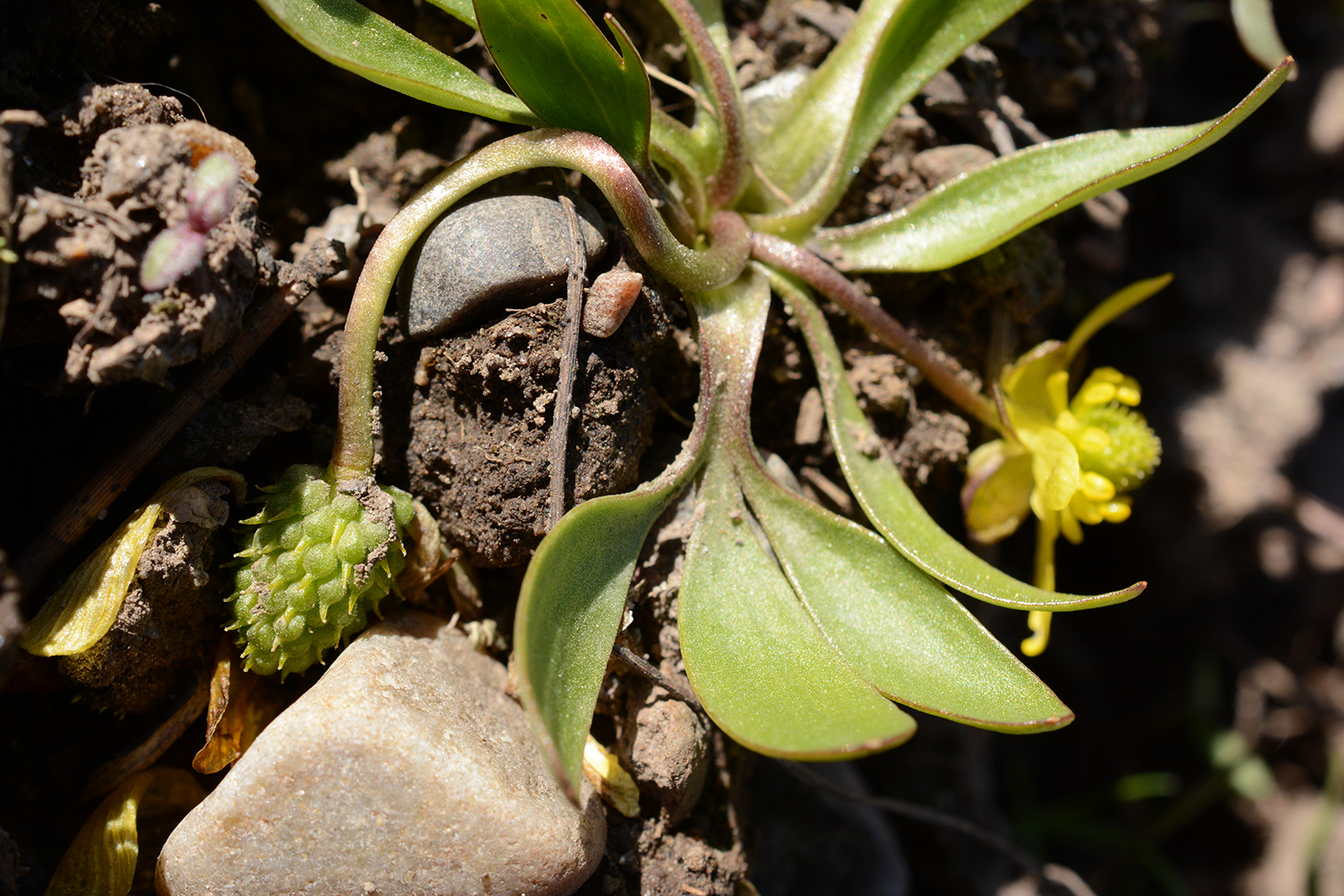
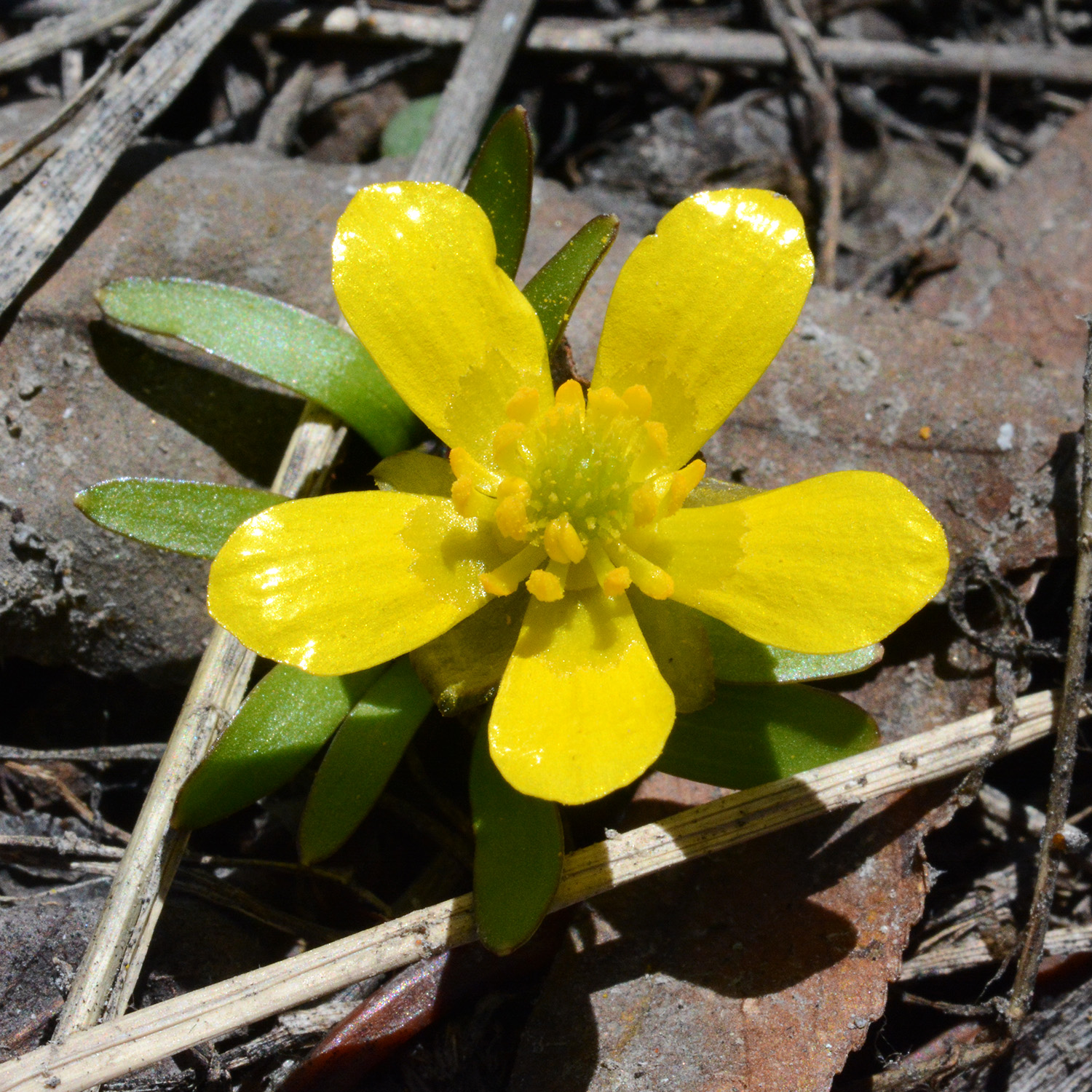
Two species of native buttercups bloom early:
Most of us are cheered in early spring by the emergence of bright-yellow buttercups. We have two species to discern.
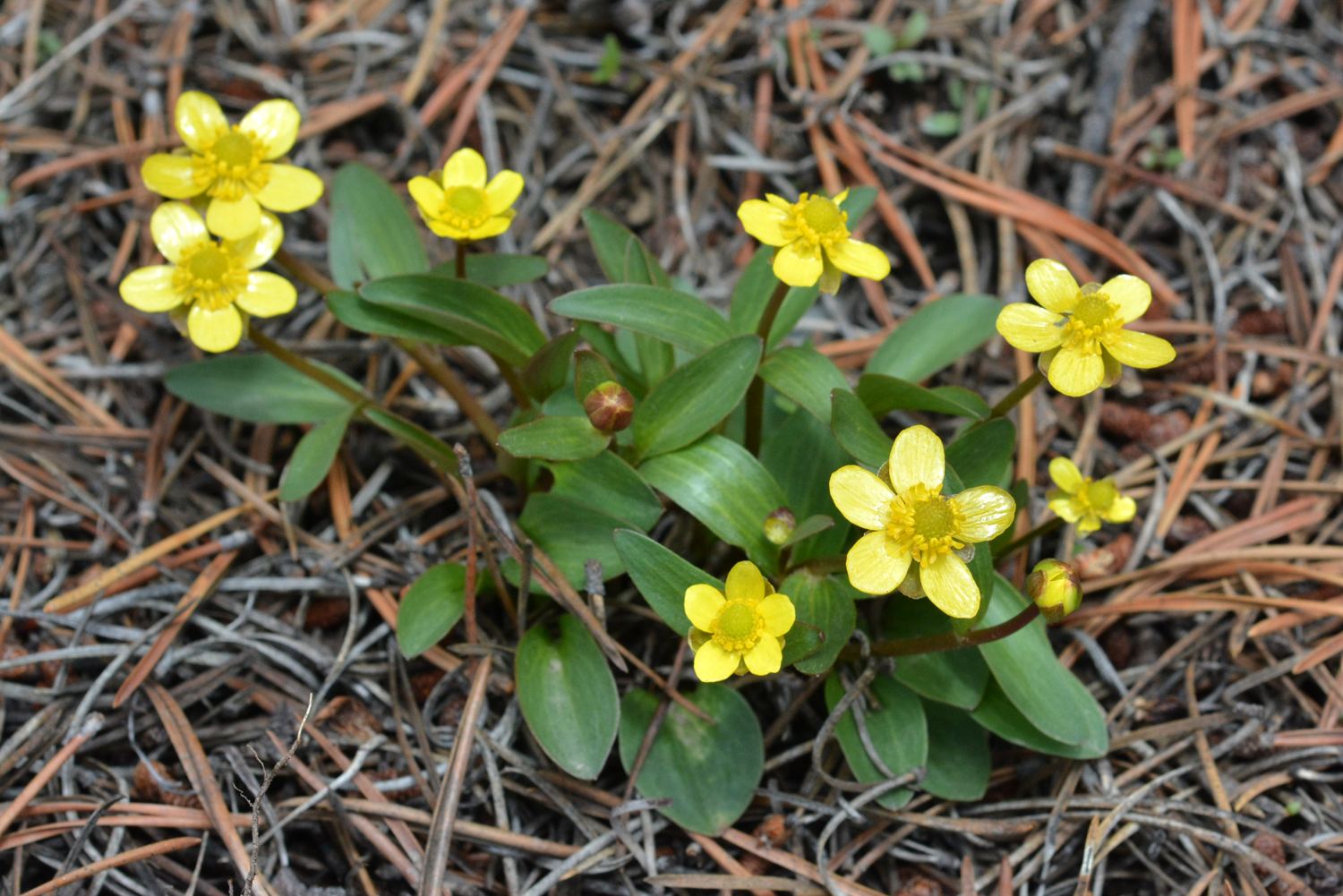
Sagebrush Buttercup – Ranunculus glaberrimus – usually has entire basal and upper leaves.
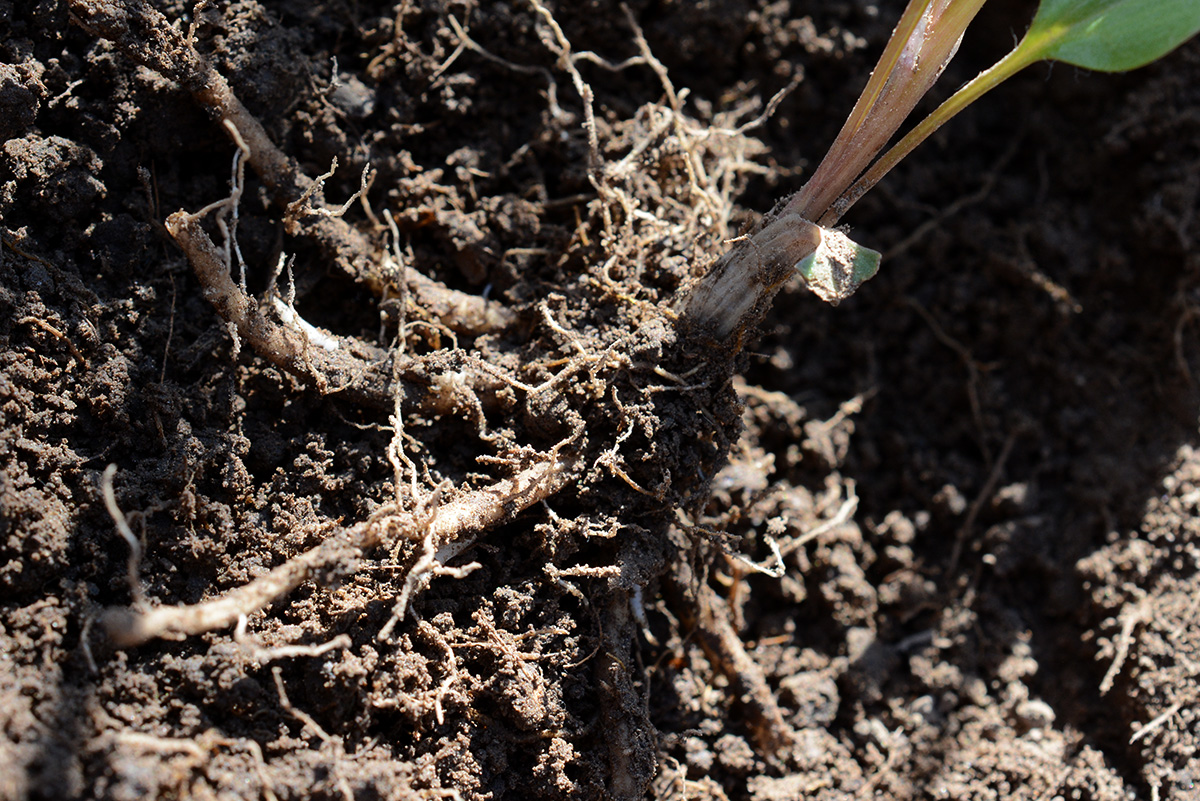
Roots are thin and fibrous:
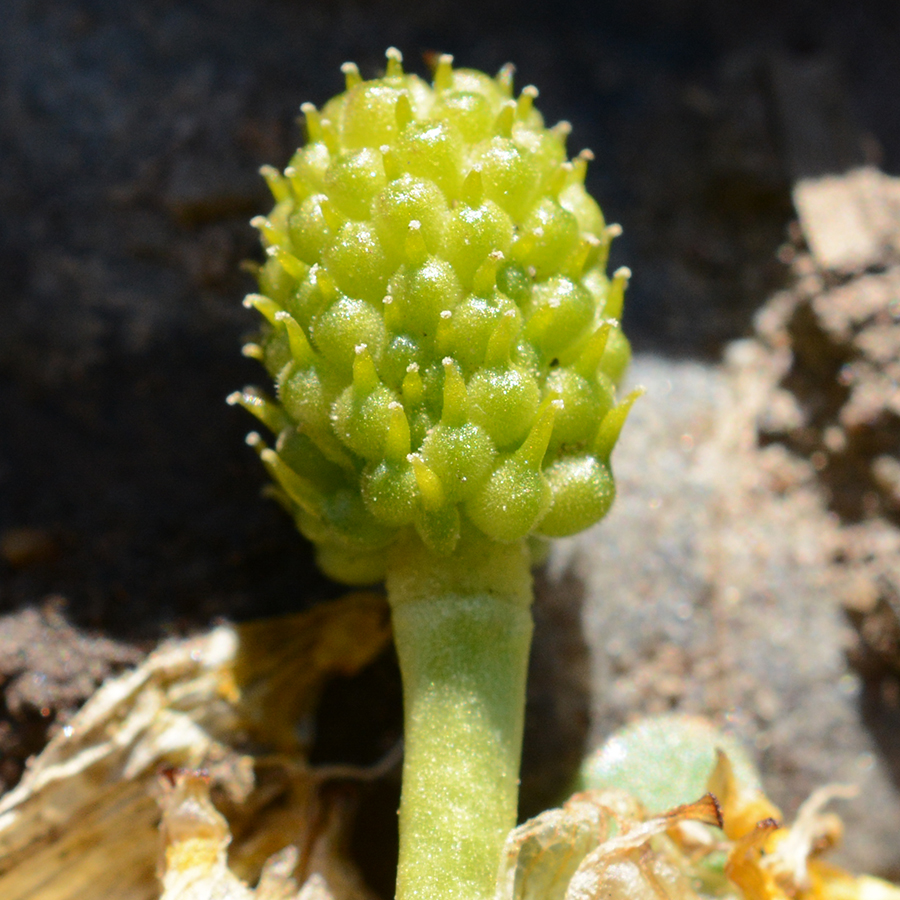
Utah Buttercup – R. jovis –– has three-lobed lower leaves
Note the many yellow anthers surround many tiny pistils, as well as the 3-parted basal eaves.
and tuberous thick roots.
Here you can see clearly the 3-parted leaf and the many tiny fruitls developing from the many ovaries of the flower.
The high gloss and rich yellow of buttercups flowers is unique in the plant world. Petals have both structural and pigmentary components that produce and enhance their color, as do some bird feathers and insects; whereas, most flowers just have pigments. The morphology and physics are extremely complex, but basically buttercup petals have a unique combination of a single, smooth outer cell layer with two reflective surfaces, an air gap, a white starch layer, and carotenoid pigments. (reference).
Also, flowers track the sun and when the sun angle is high enough, they can flash UV light to lure in insects from far away, enhancing pollination. The wide-open flowers are appealing to bees, flies, and others. The flowers’ parabolic movements can capture warmth and hence speed up pollen formation and later seed formation.
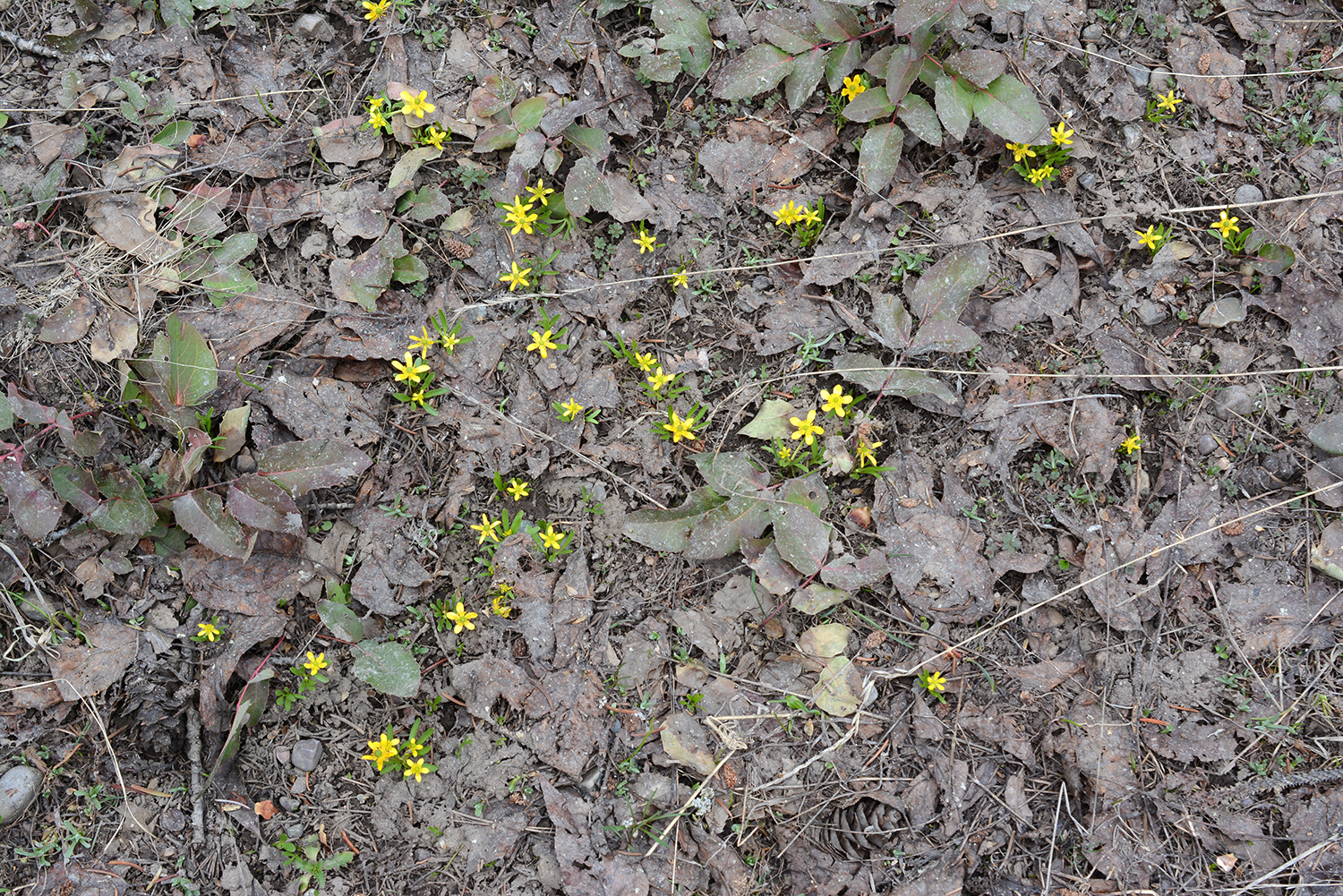
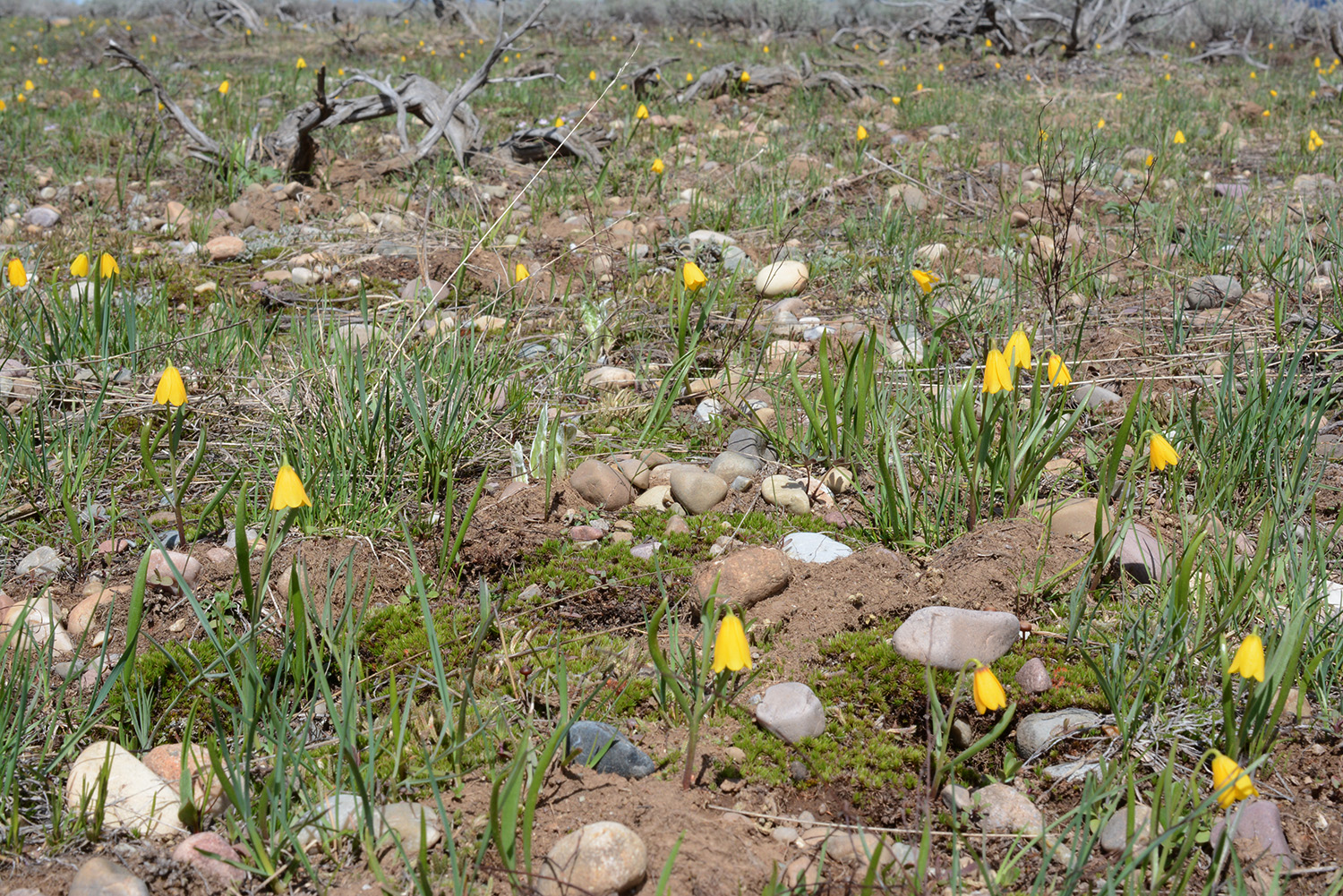
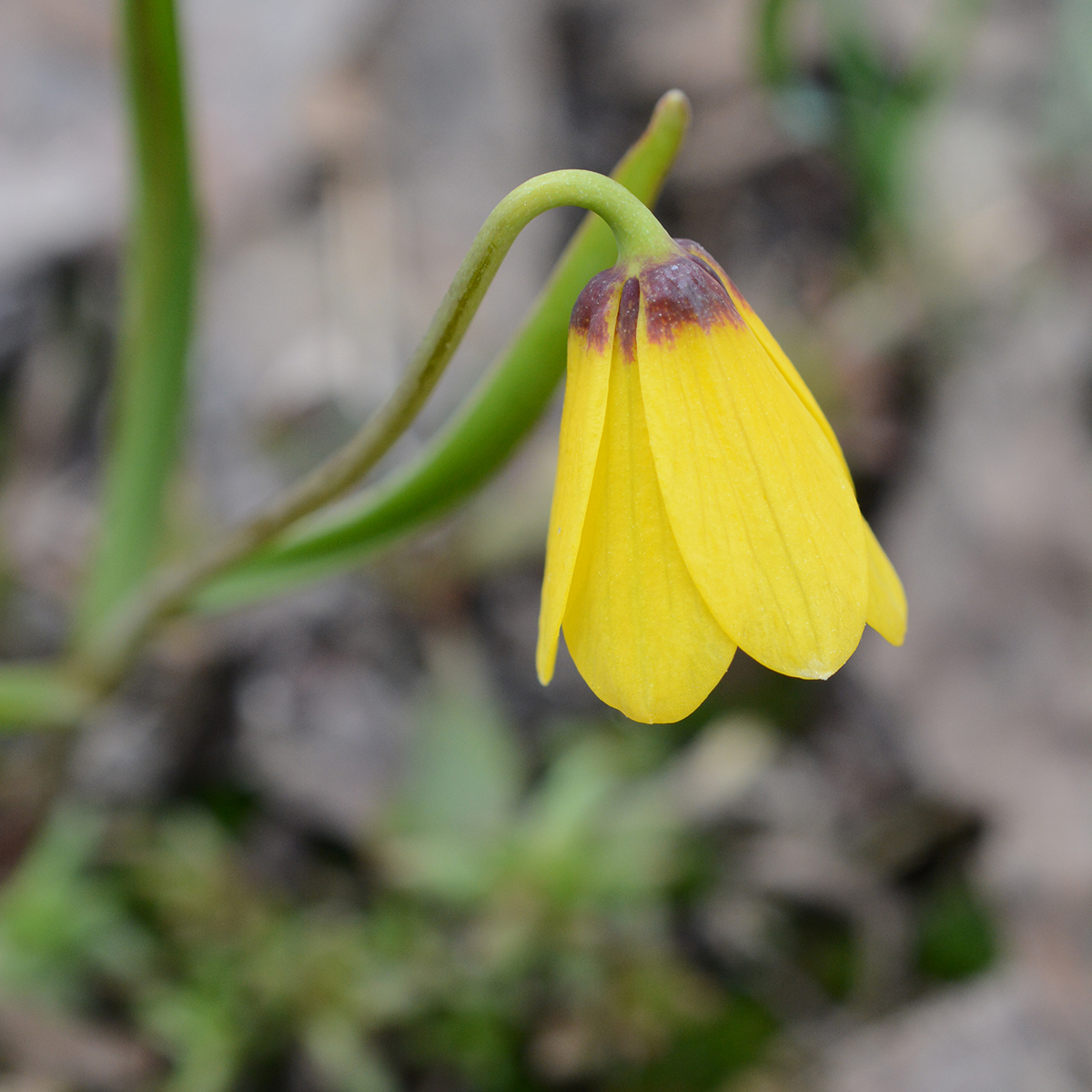
Yellowbells – Fritillaria pudica – are sprinkled across sage flats especially along the inner park road. The yellow flowers nodding on 6-8” stems appeal to low-flying insect pollinators.
Yellowbells are in the Lily Family whose parts are in multiples of threes: 3 sepals and 3 petals that look the same and are thus called tepals, 6 anthers, and a 3-parted pistil that develops into a 3–parted dry fruit.
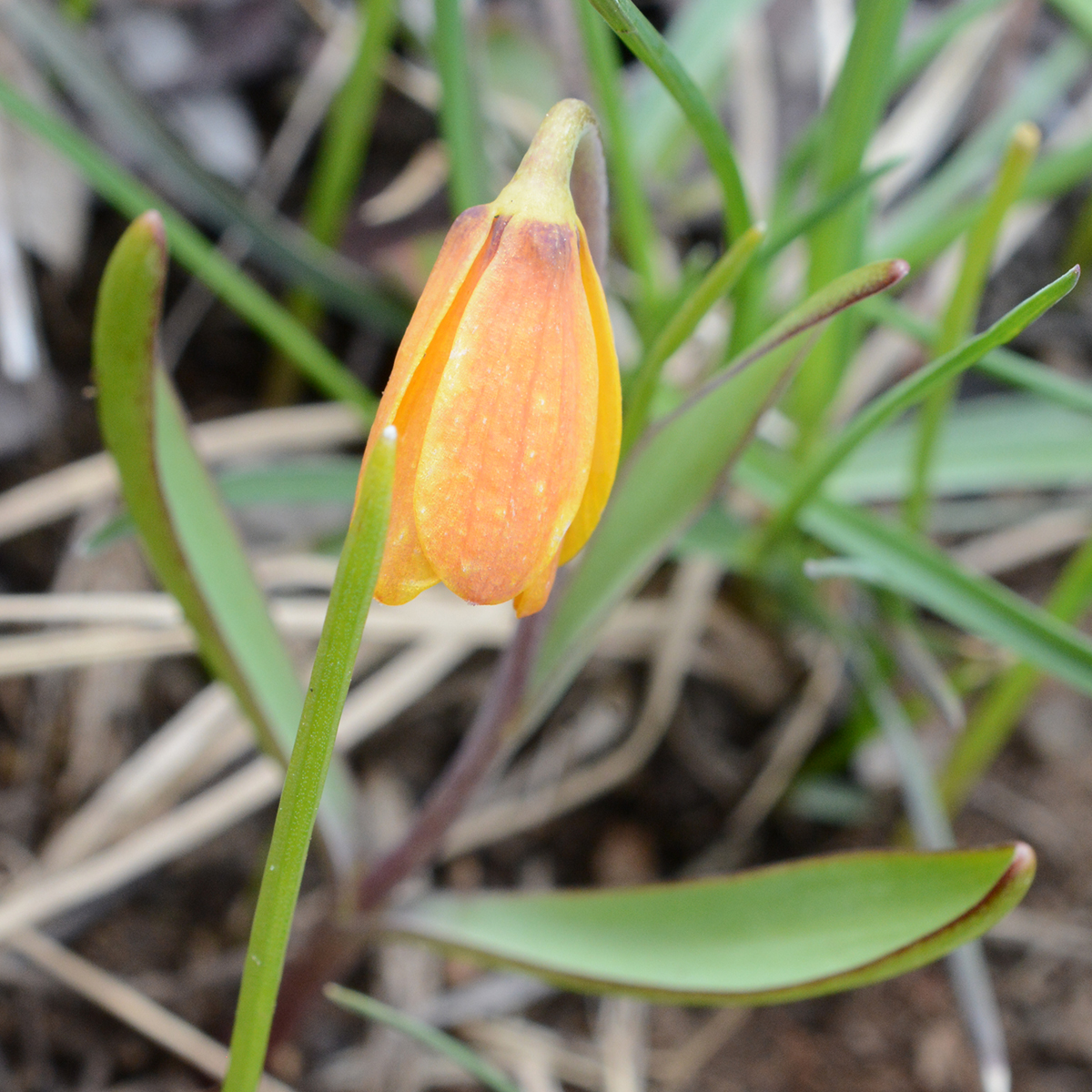
Upon pollination, the 6 yellow tepals change to orange.
This color change indicates to nearby pollinators that an individual flower has been pollinated signaling to pass it by—save energy. By pollinated plants retaining some color, they help continue to draw pollinators from a distance so that the remaining unpollinated plants in the colony have a greater opportunity for fertilization. This is termed ontogenetic color.
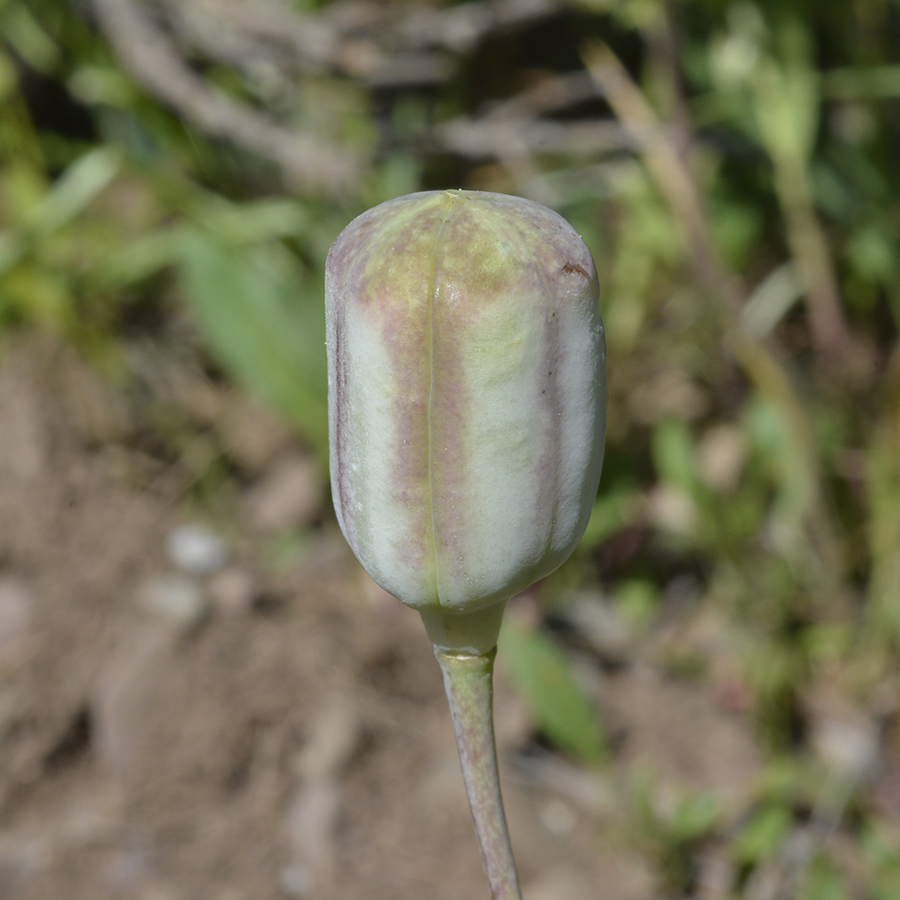
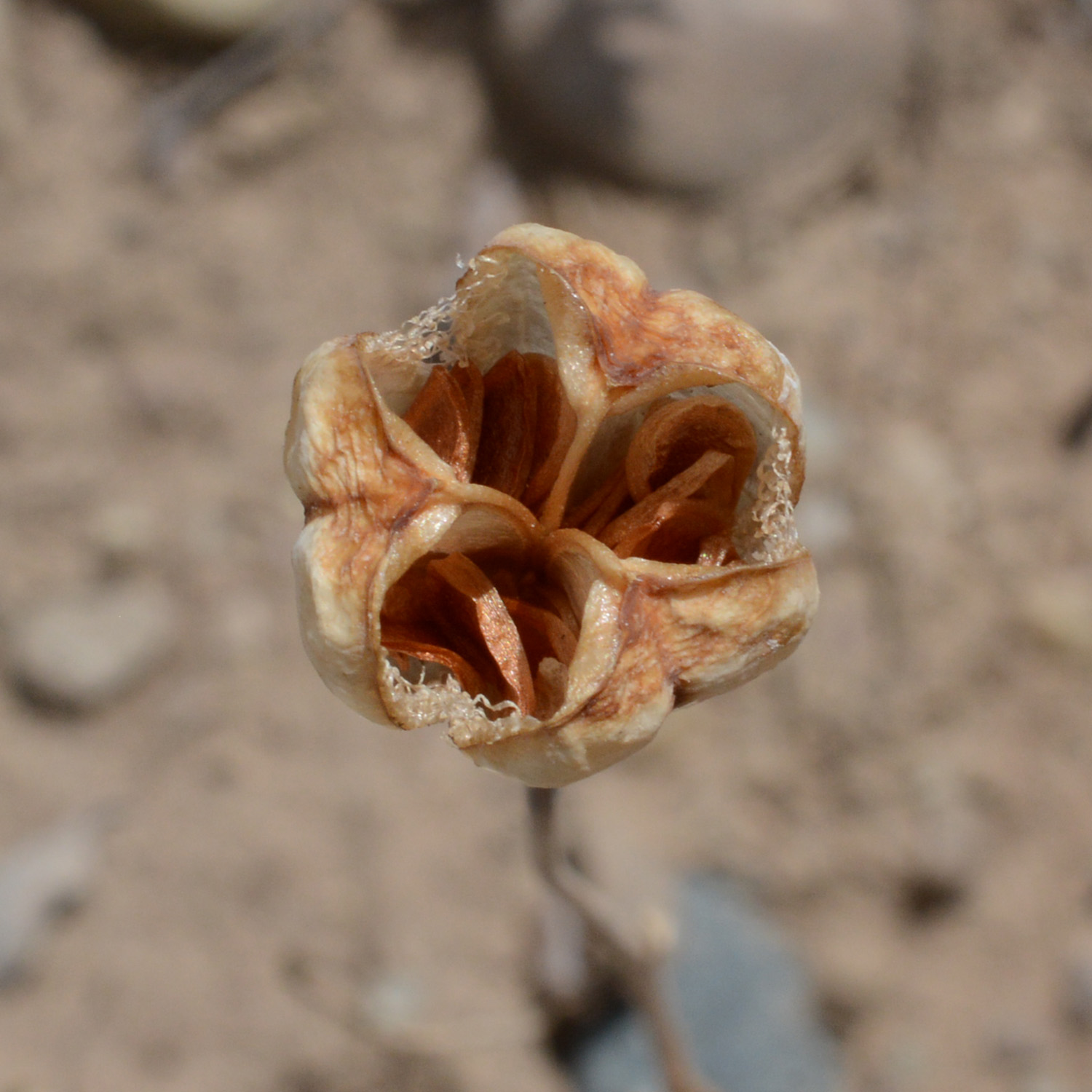
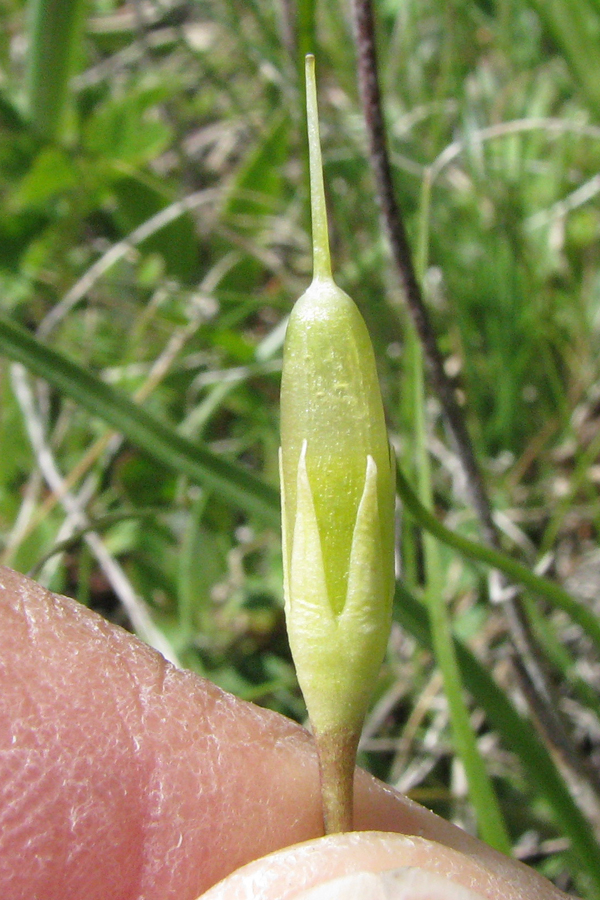
Within a few weeks plants will dry up and disappear. However, if pollinated, the Yellowbell forms a 3-parted-capsule which stands up straight. As it dries, it cracks open along three sutures and shakes out seeds upon the wind.
Wyoming Kittentails – Besseya/Synthris/Veronica wyomingensis – formerly in the Scrophulariaceae family now in Plantaginaceae, is a lovely, distinctive plant with a very confusing taxonomy.
Kittentails are worthy of a close look. The flower heads or inflorescence is comprised of dozens of tiny flowers. Individual flowers have 2 small green sepals and no petals. Flower color comes from two stamens: the blue filaments stretch up, and at their tip blue anthers swell and unfurl to release pollen. The individual flowers are nested into hairy bracts below. The result are fuzzy (kitten-like?) clusters of blue with white dots. Toothed leaves spiral up the 5-6” hairy stems. The fruits are flattened and heart-shaped.
Taxonomy of this species is challenging to say the least. The species has undergone 4 name changes. Within 5 years at the start of the 1900s, the genus name changed from Wulfenia to Syntrhis and finally to Besseya to commemorate Charles Bessey (1845-1915) an American botanist from the University of Nebraska. Bessey wrote several influential text books providing guiding principles to help standardize classification. However, recently DNA, not just structural form of flowers and fruits, has become key to analyzing genealogical relationships. Thus, as this new information evolved, Kittentails went from the genus Besseya to Synthris to Veronica and from the Figwort/Snapdragon Family to the Plantain Family (for now). (reference)
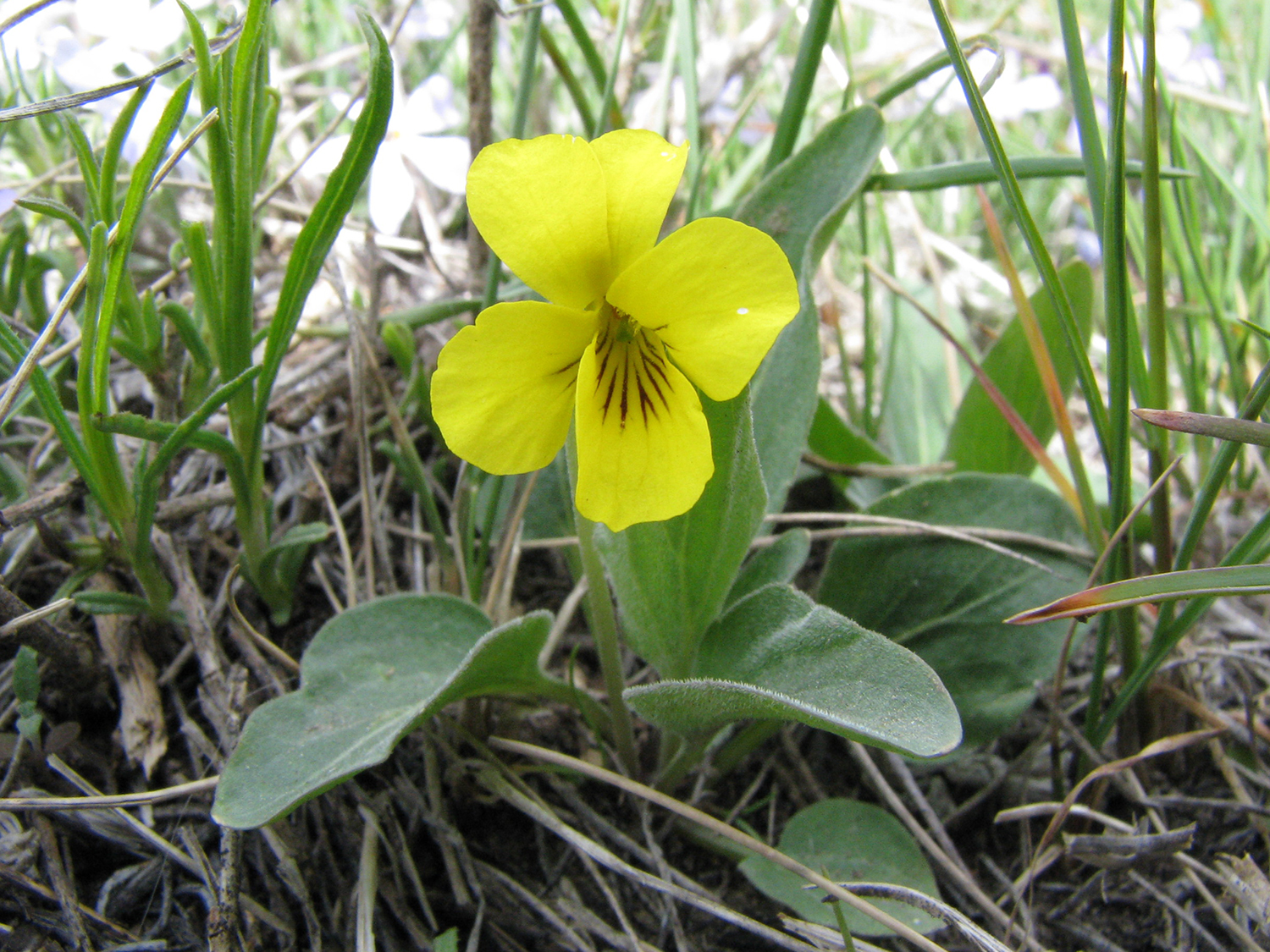
Nuttall’s Violet – Viola nuttallii – is also part of a taxonomic complex with several varieties, subspecies or different species (V. praemorsa, V. vallicola) being included or excluded – arrrgh! (reference) In any case, the basal leaves are more or less oval, often hairy, and the yellow flowers are recognizable as violets: two up-facing petals, two side petals, and one lower petal.
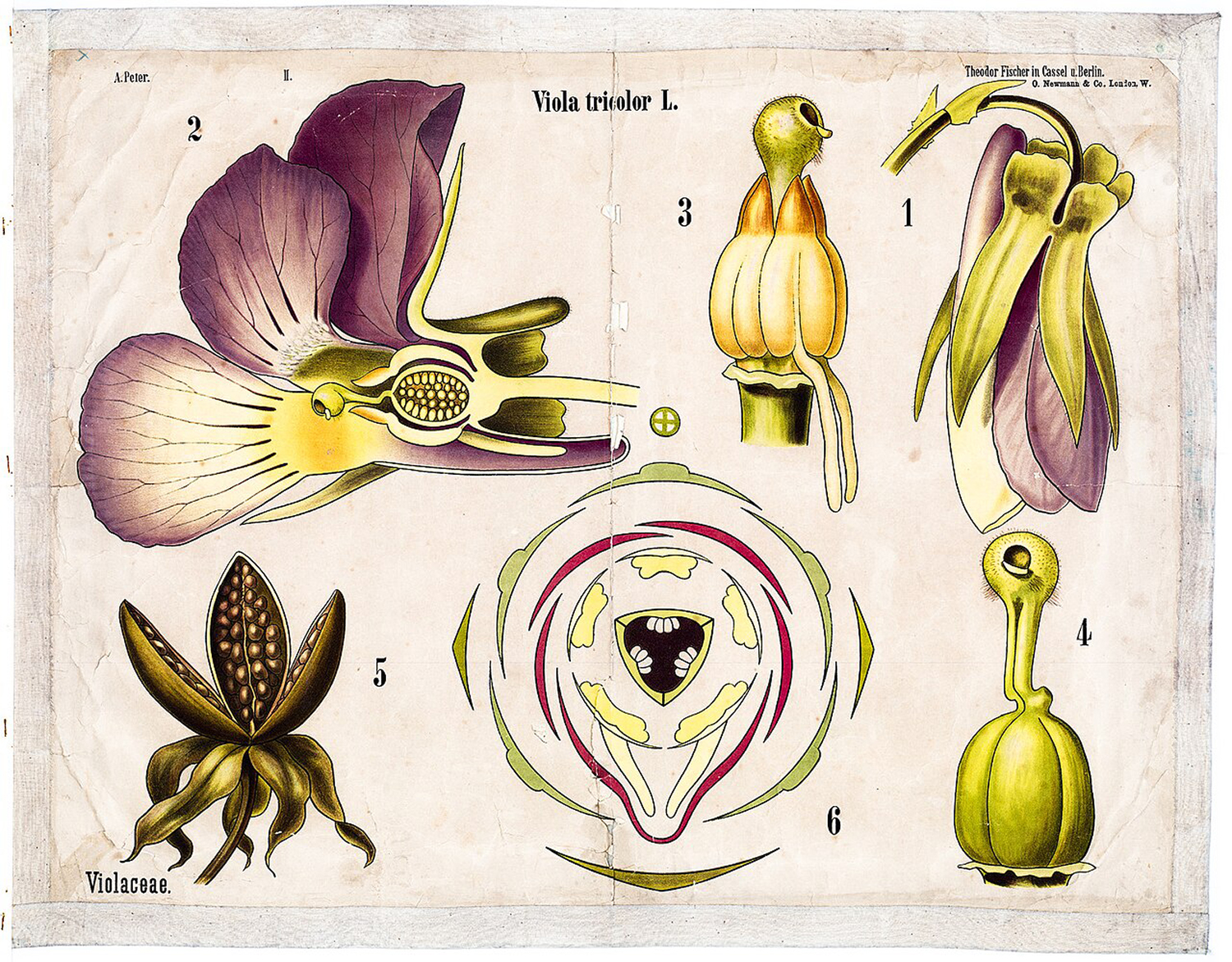
Often there are nectar guides leading toward the back of the flower to help insects reach nectar tucked in tiny spurs beyond. By moving in and out–back and forth–against the stigma and anthers (#3 in Illus.), an insect gathers pollen, as well as nectar, and carries it to another violet plant.
The insides are more complex that first meets the eye as seen in this illustration:
Nuttall’s Violet complex has yellow flowers and oblong to ovoid mostly basal leaves. The back of flower petals may be tinged in purple. Taxonomists are examining the elaborate stigmas (#4) for definitive ID.
Violets have fertile flowers which require insects to cross-fertilize. These are obvious to us and pollinators.
Cleistogamous or hidden flowers of violets
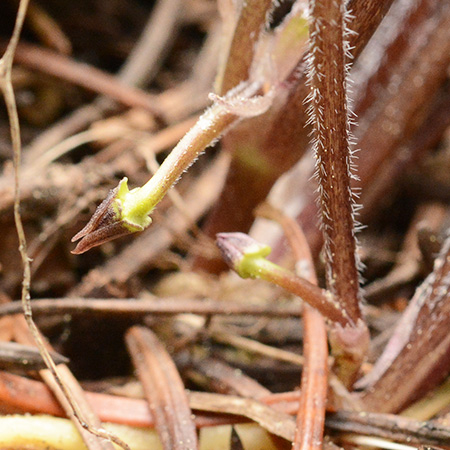
Violets also have hidden cleistogamous flowers at the base of the plants that self-fertilize. This back-up plan helps assure that there will be seeds for another generation of violets. Seeds are ejected from the 3-parted dry fruits (#5) and then dispersed by ants who seek them out for their nutritious elaiosomes.
One more thing, violets are host plants for several types of Fritillary butterfly larvae – Speyeria, Boloria spp. Eggs laid by the adults near the violet plants, hatch out larvae in spring which depend on the violet leaves to grow into butterflies.
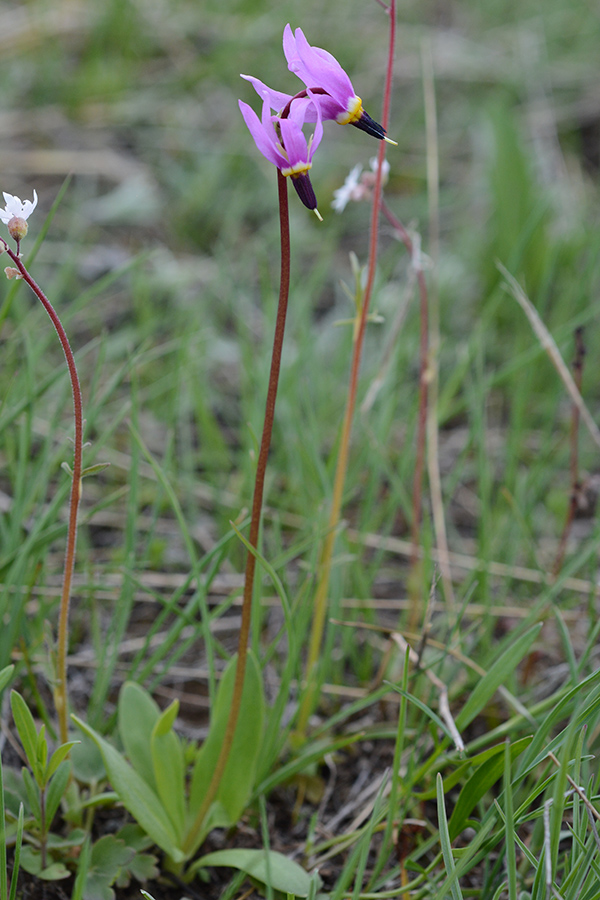
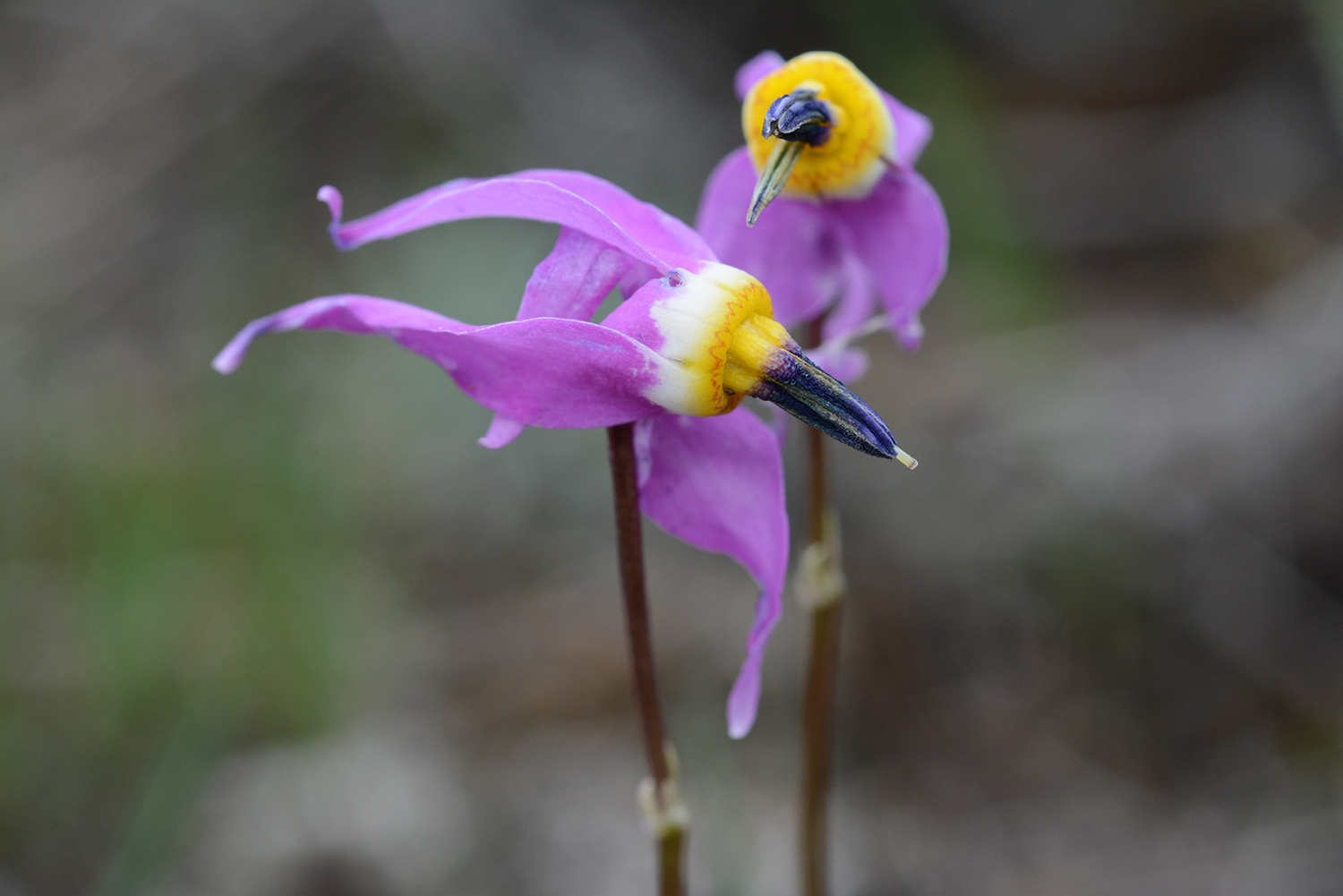
Shooting-star – Dodocatheon conjugens – is another “belly botany” plant. Their 4-5” scapes rise from a whorl of basal leaves. These stems are topped by several dangling flowers each with 5 pink petals swept back with rings of white then yellow accented with red at their base. This colorful target is further enhanced by the yellow then black of the stamens.
The flower is designed to attract primarily bumblebees which cling to tiny knobs at the base of the stamens belly up. The bee then buzzes its wings at a certain frequency and pollen will bounce out onto the bee’s belly. When the bee flies to a flower where the female stigma is receptive, it will once again cling upside down, and the pollen will stick to the protruding stigma. Only certain bees have the agility and perfect wing beat to carry out this transfer.
Note the pink petals that flare back and the white then yellow base. And the tiny red markings. This and the stamen colors serve as a bull’s-eye for bees perch upon upside down and “buzz pollinate” them.
After a flower is thus “buzz- pollinated”, a capsule will form. It will split open at the tip, and shake out seeds.
This capsule will dry and split open at the top to shake out the tiny seeds.
Pollination note: To avoid self-pollination, many plants will produce male parts first e.g. the anthers with pollen, and then the female parts e.g. ovary with eggs; or visa versa. The idea is that the pollen does not rub off on the nearby receptive female parts of the same flower – in breeding. Outcrossing – mixing up genes from different individuals – provides more opportunity of success.
What’s in Bloom – Early Spring – Representing some common Plant Families
Over the course of the season, you will likely come across members of these common families. Recognizing the family traits enables you to look more closely at the variations in the features and narrow down identification. Also the families have interesting uses and histories.
Here we include:
Carrot/Parsley Family – Apiaceae, formerly Umbelliferae – Biscuitroots, Spring Parsley
Pea or Legume Family – Fabaceae, formerly Legumosae – Milkvetch, Locoweed
Aster or Daisy Family – Asteraceae, formerly Compositae – Pussytoes, Townsendia
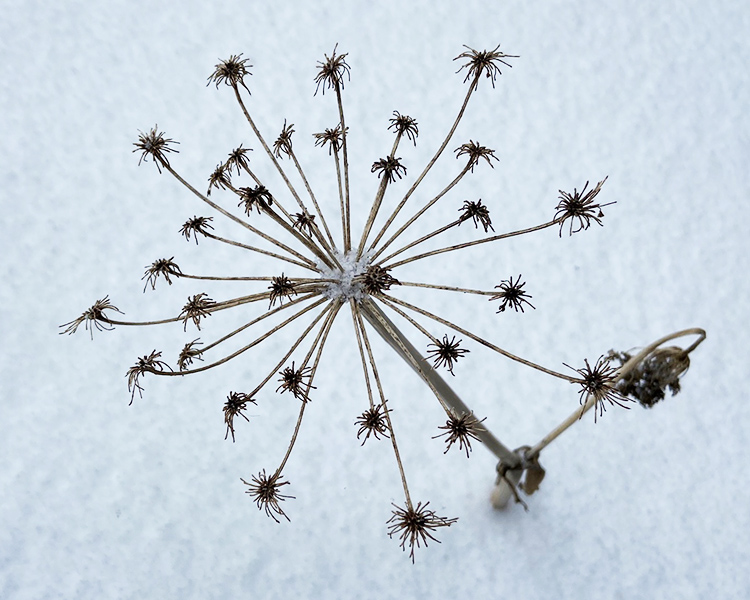
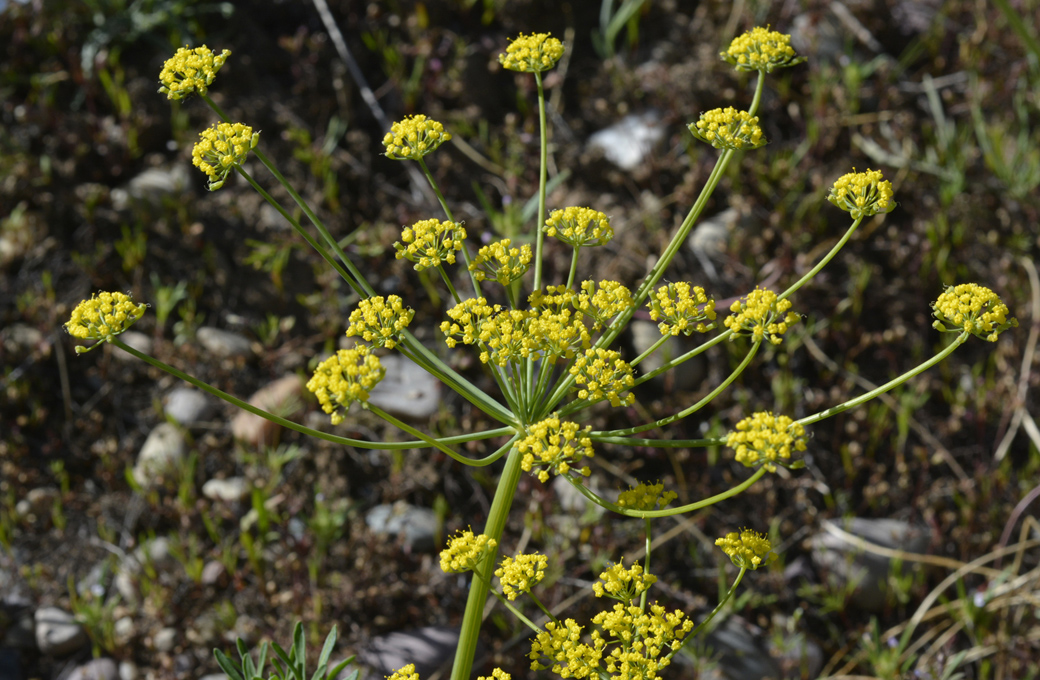
Carrot or Parsley Family – Apiaceae – has been recognizable since the time of the Ancient Greeks. The basic flower plan includes divided, mostly alternate leaves and tiny flowers arranged in “umbels”. Umbels are floral structures similar to umbrella ribs: the stem comes up and then branches from this central point outwards. Flowers are arrayed at the tips.
Umbel
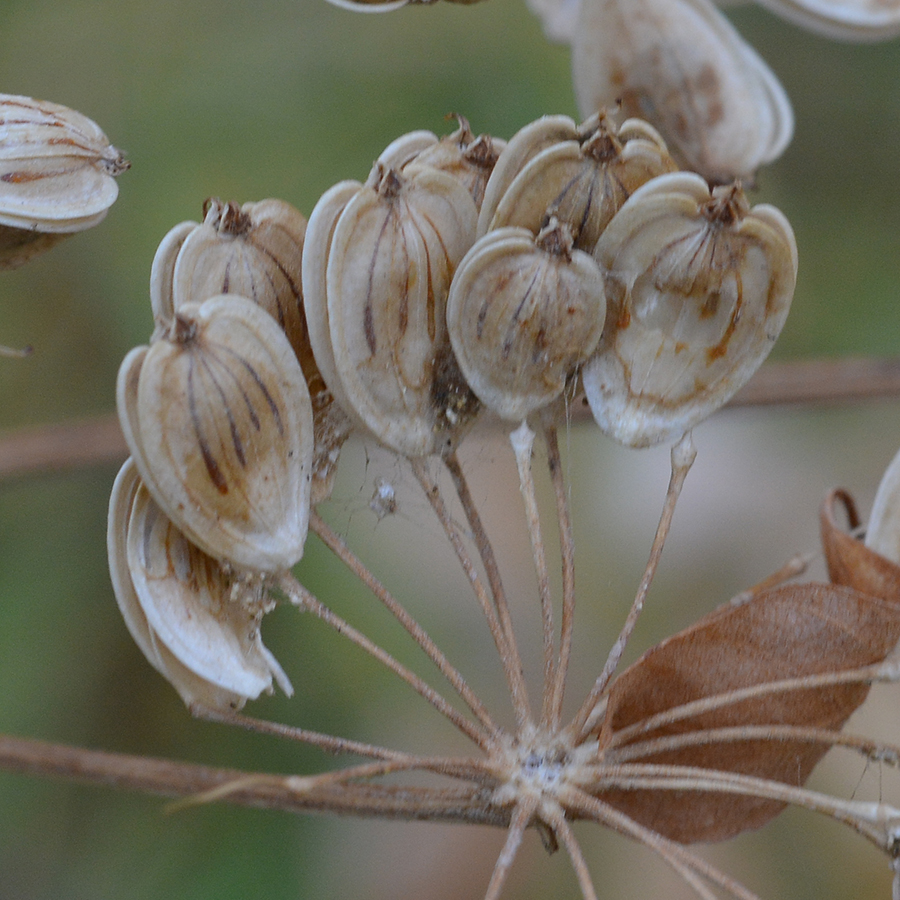
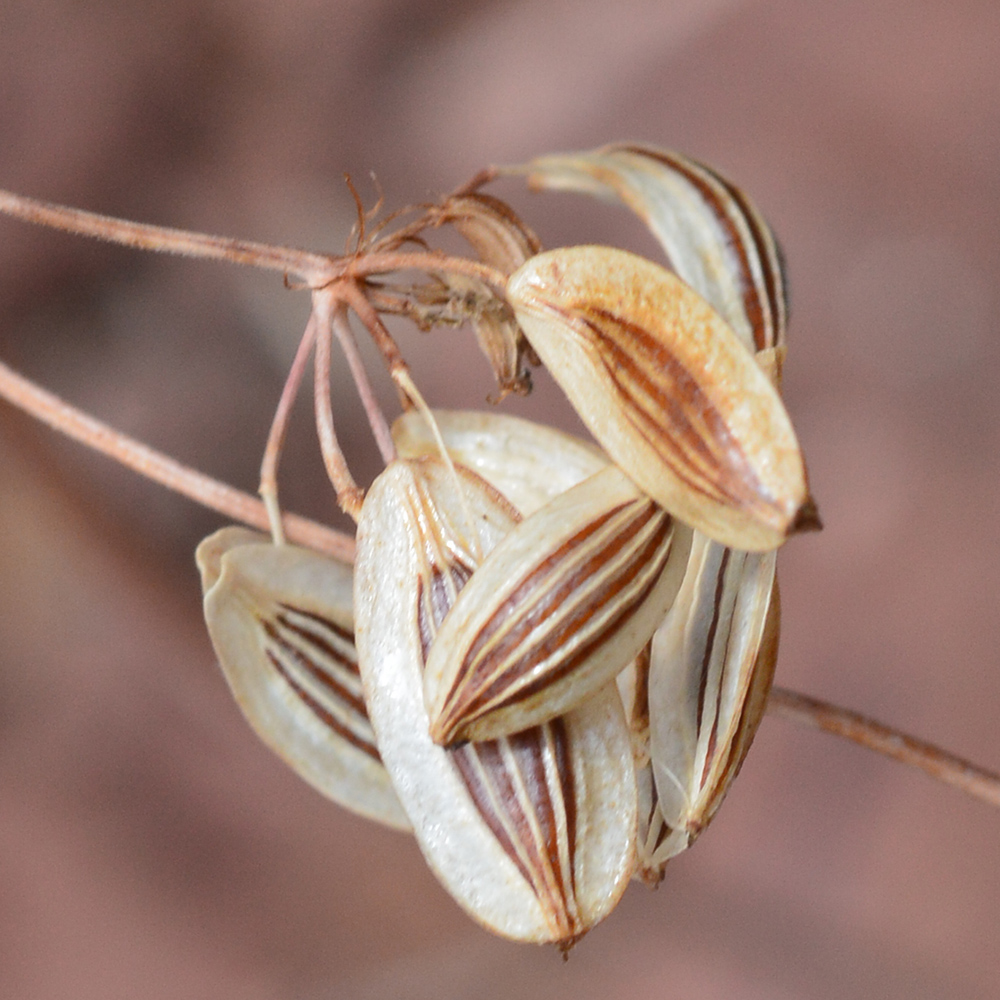
Flowers form fruits called “schizocarps” of various lengths, shapes, and venation that split in two with one seed for each side upon maturity. The pair can dangle from a fine coathanger-like structure. In many cases it is easier to ID the species when in fruit than in flower.
Schizocarp – split fruit held in an umbel.
Plants in this family are often distinctly fragrant due to many different chemicals – some are appealing to smell and taste, some are medicinal, and some are deadly. Anise, cilantro, dill, cumin, parsley, and fennel are just a few members of this family. Poison Hemlock and Water Hemlock (Conium maculatum, Cicuta spp.) are deadly relatives. Other species have chemicals which can cause blistering the skin, especially when exposed to sun: our local Cow Parsnip and its much more nasty non-native cousin Hogweed can have this effect. Plants develop myriad chemicals for defense. (reference)
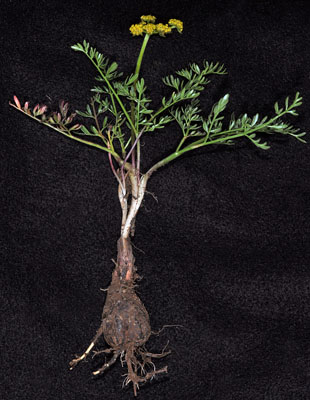
Biscuitroots – Lomatiums – have enlarged storage roots, many of which were once used for food by indigenous peoples, as well as being important for wildlife. Here are some early blooming biscuitroots. Leaf dissection, color, smell, flower color, and involucral bracts all help in ID. The fruits will be flat, rounded schizocarps. Some plants bloom while quite small and then keep expanding with warmer weather.
Lomatium cous root – from Web
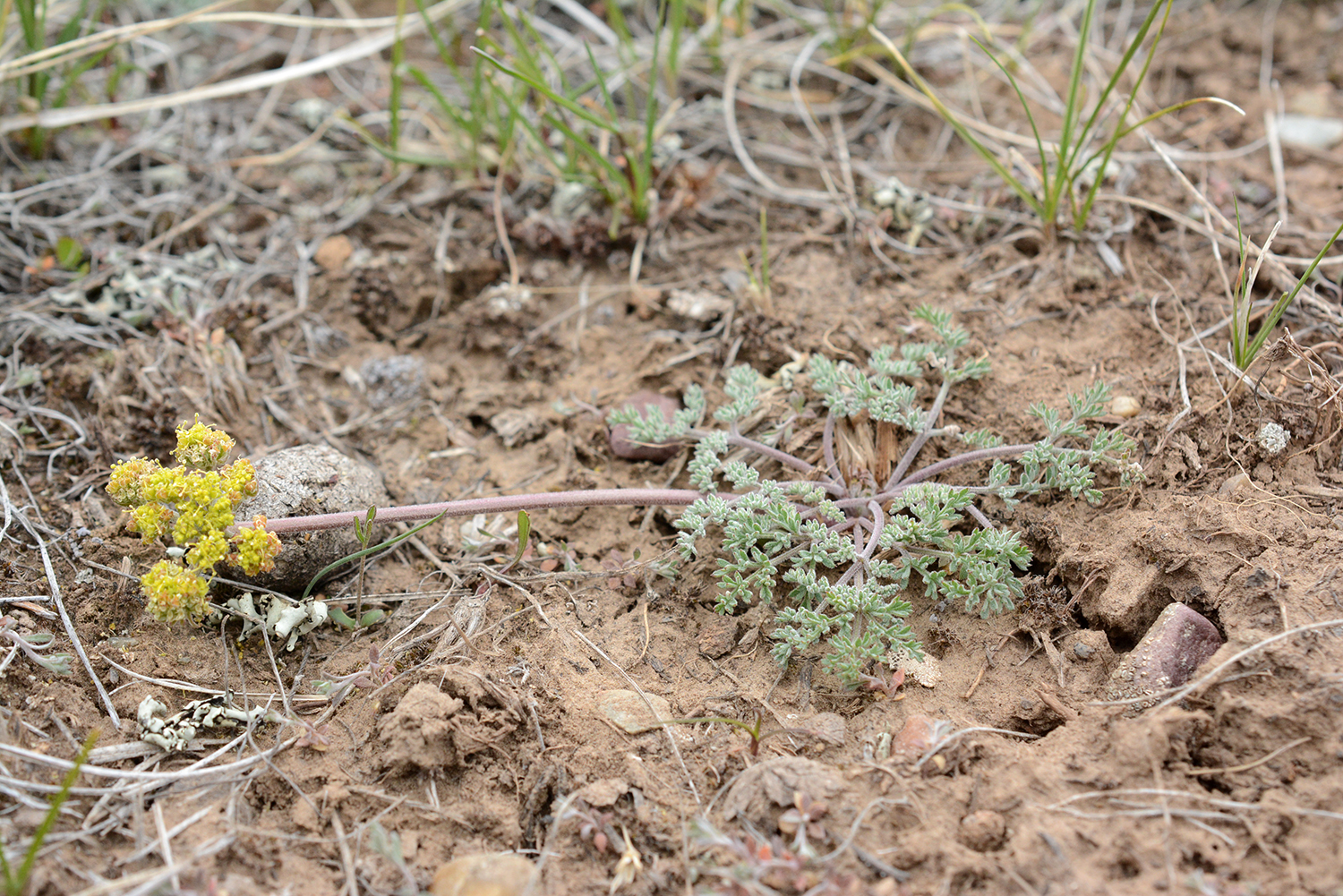
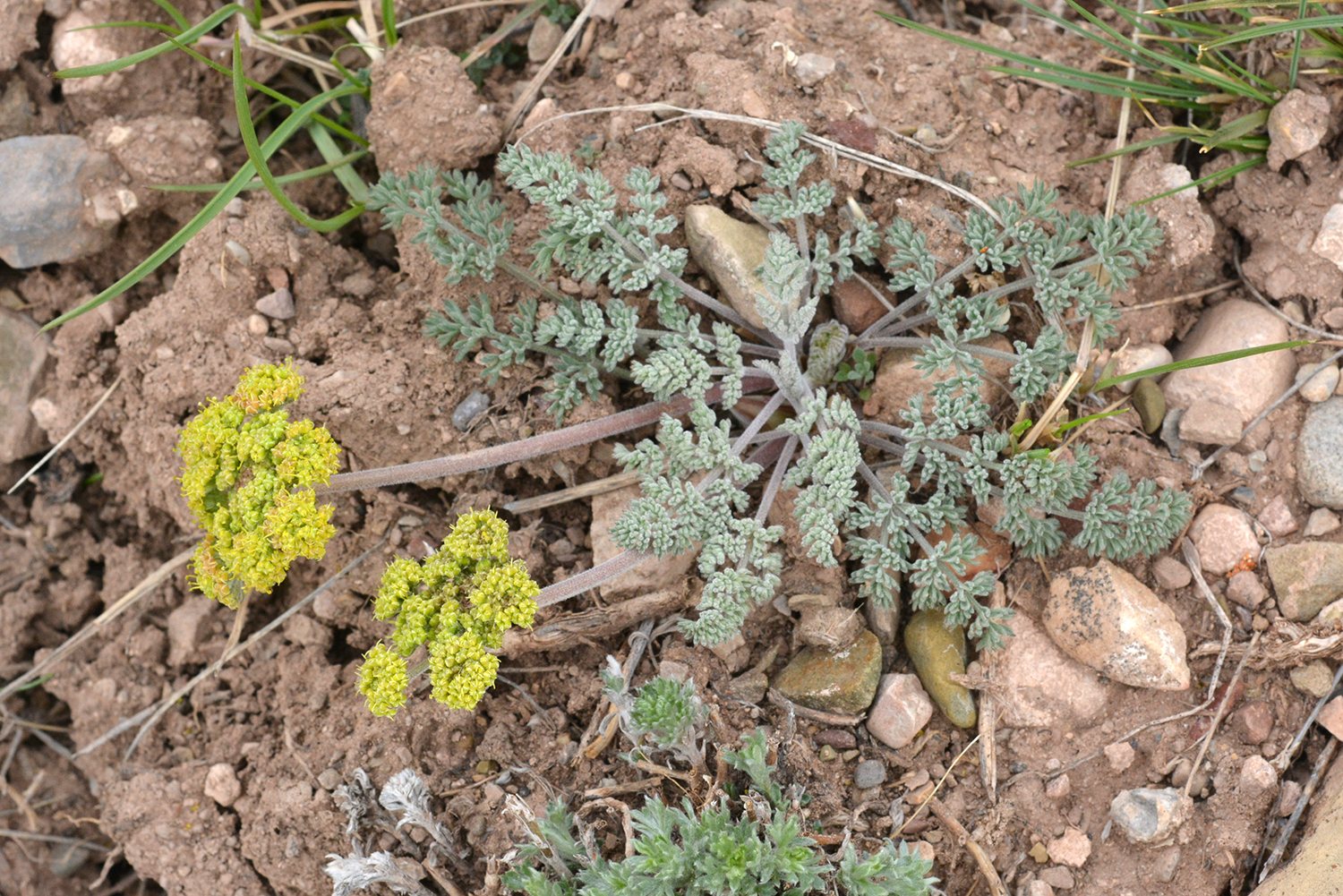
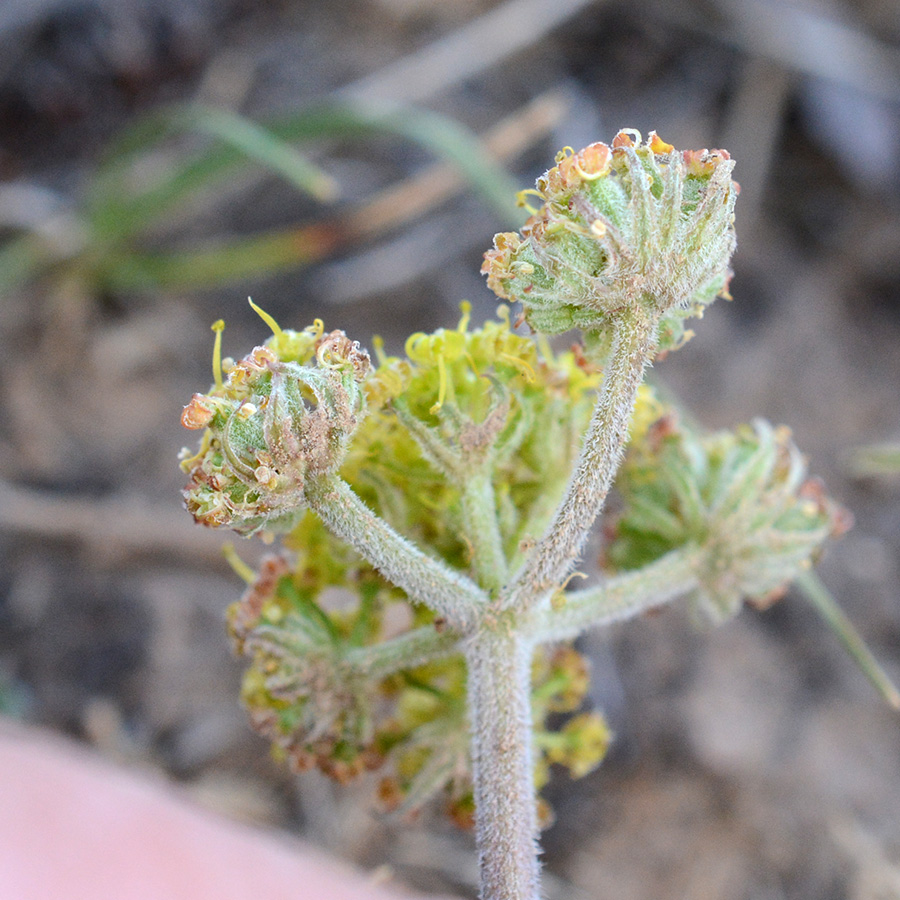
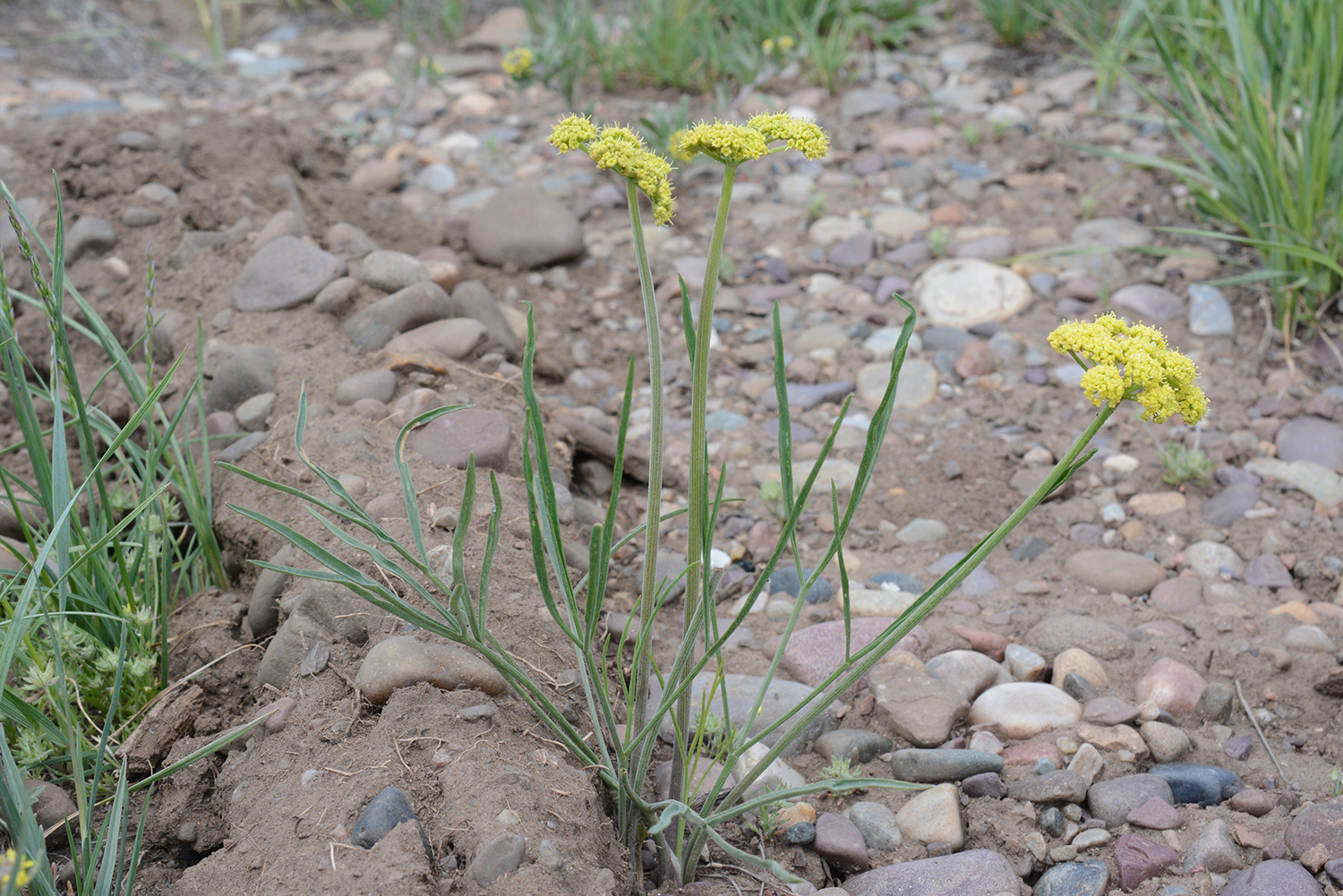
Desert Biscuitroots – Lomatium foeniculaceum – are small plants 3-4” across, maybe 2-3” tall in early spring. They are found on dry knolls.
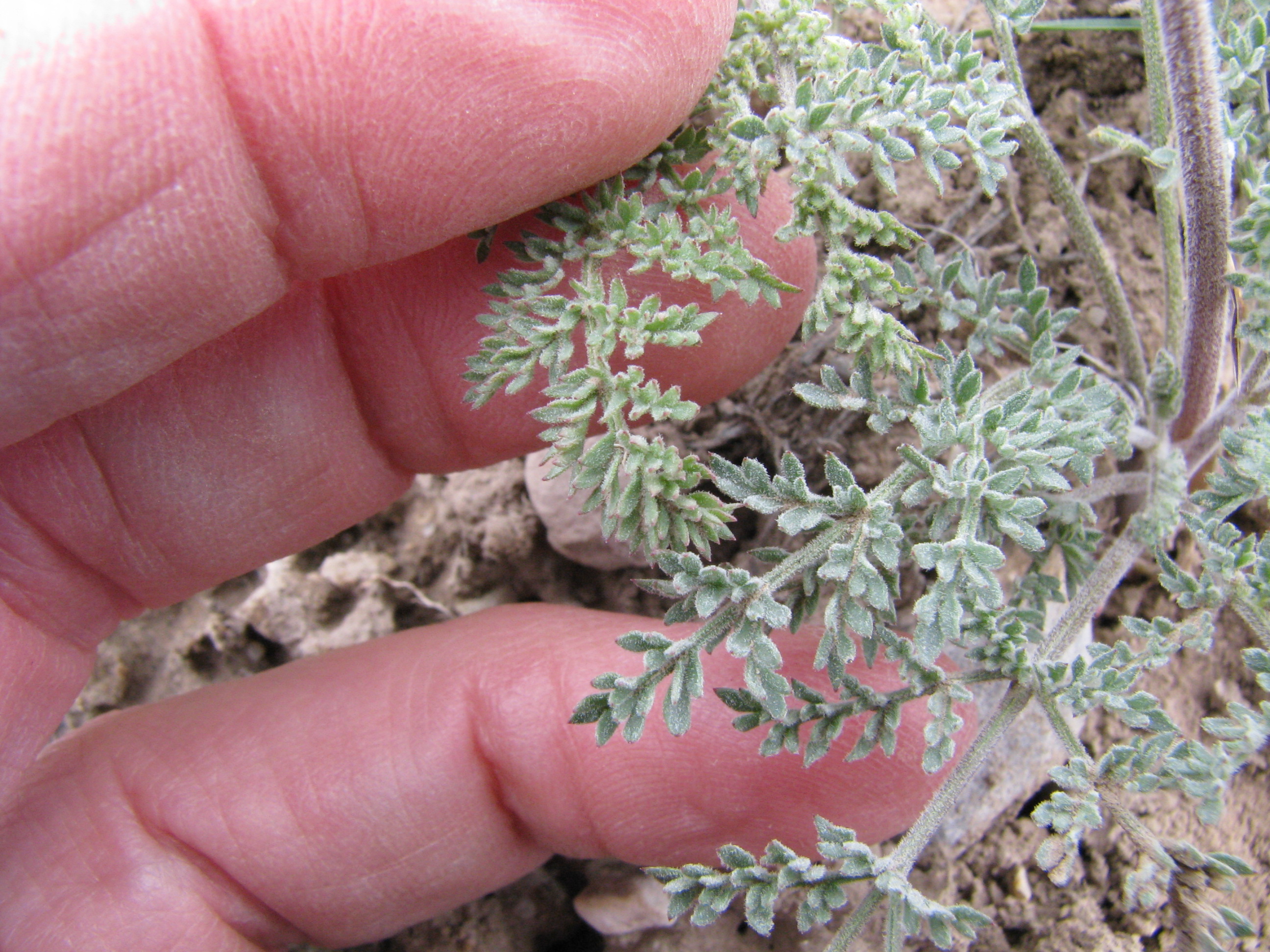
The stems and the leaves are bluish-gray hairy. Hairs help shade plant leaves and stems and also reduce wind to prevent water loss in dry locations such as dry knolls and slopes.
Flowers are pale yellow.
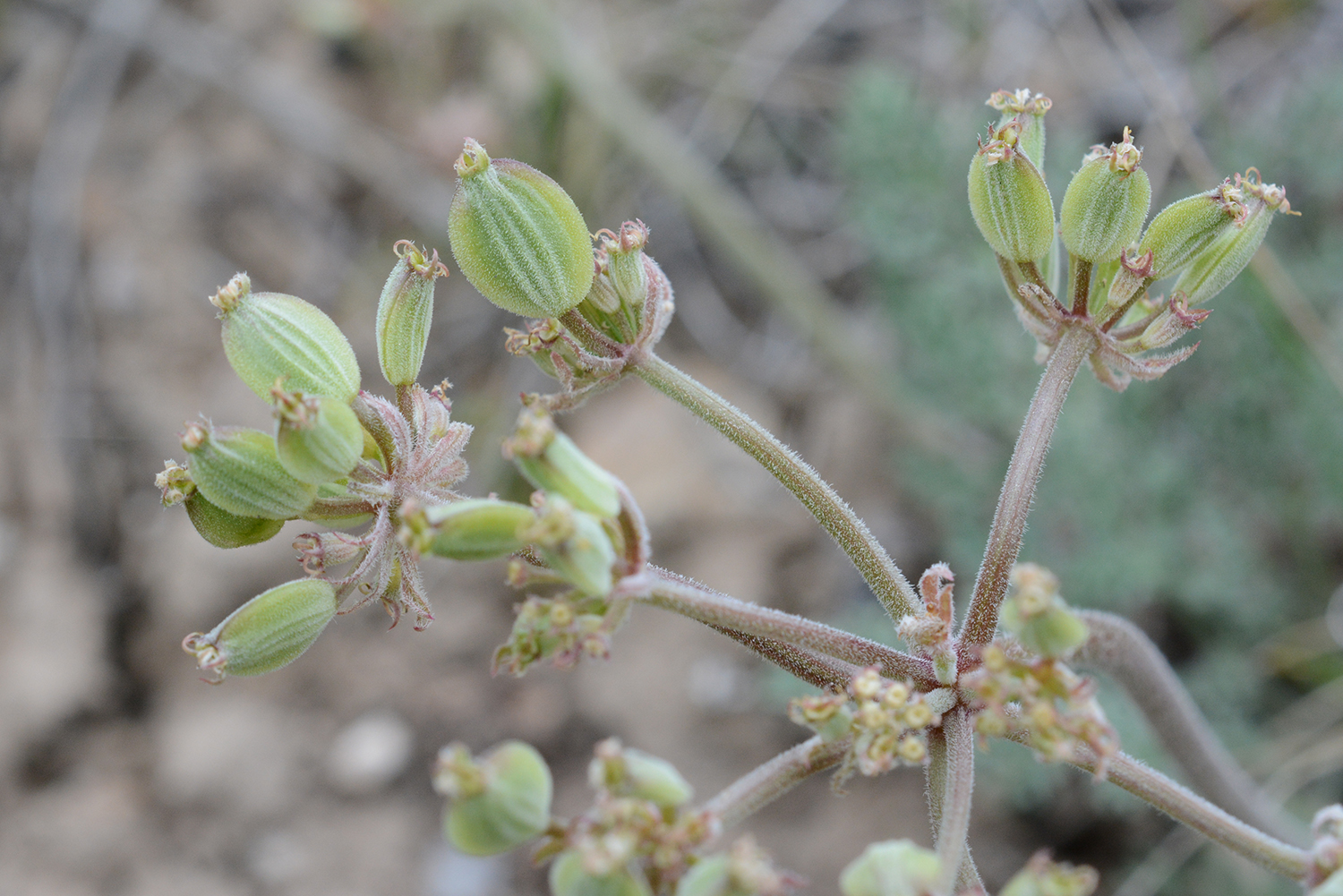
The involucels are shapely pointed and hairy. Here the fruits are beginning to form.
As they mature, fruits will slowly flatten with wide margins and low-ridged veins.
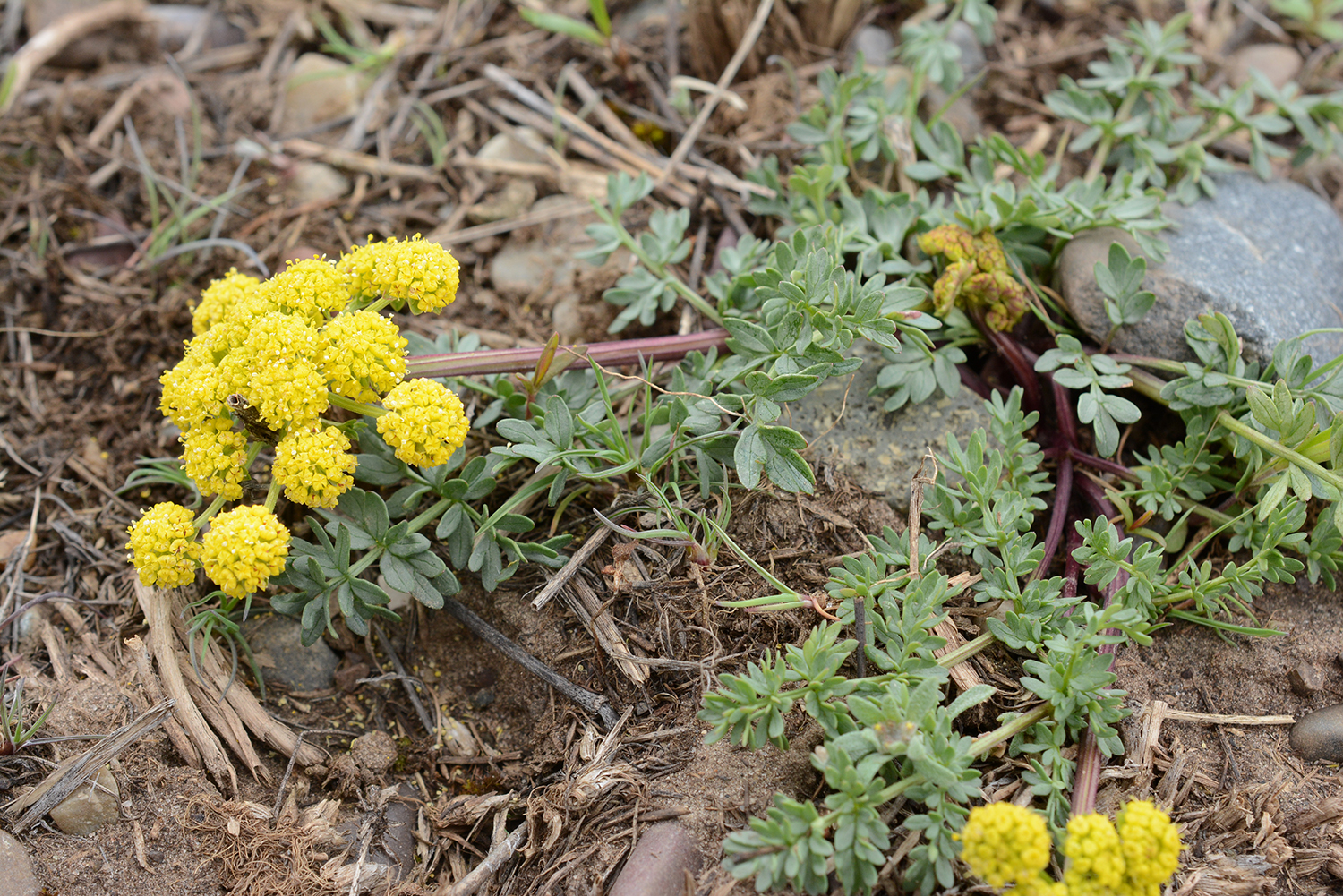
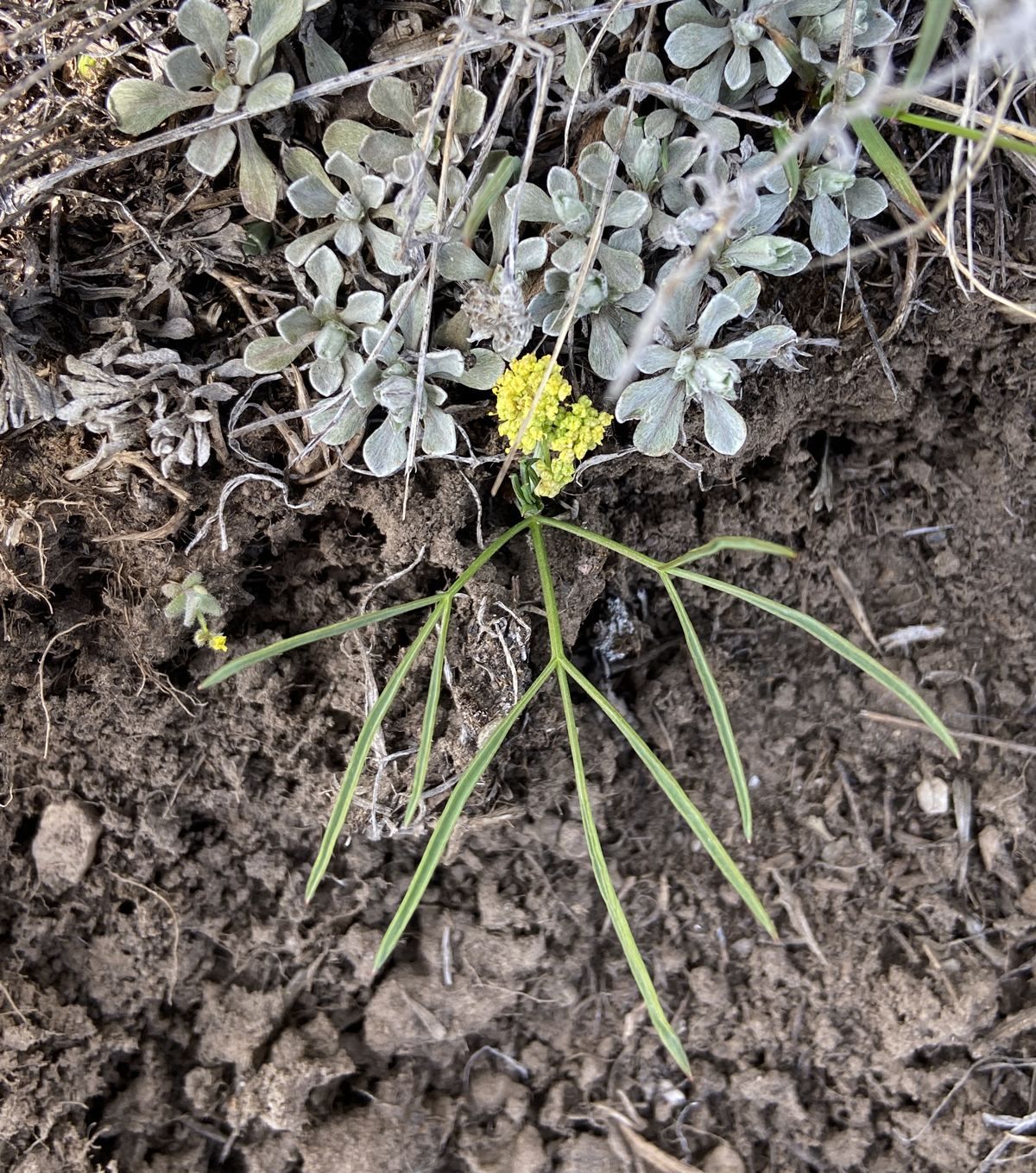
Cous Biscuitroot – Lomatium cous – has deep-green dissected leaves often with reddish petioles and umbels of bright-yellow flowers. Plants grow about 6” across and 6” or so high. Their bright flowers are obvious near the parking lot just east of the roundabout north of Jackson.
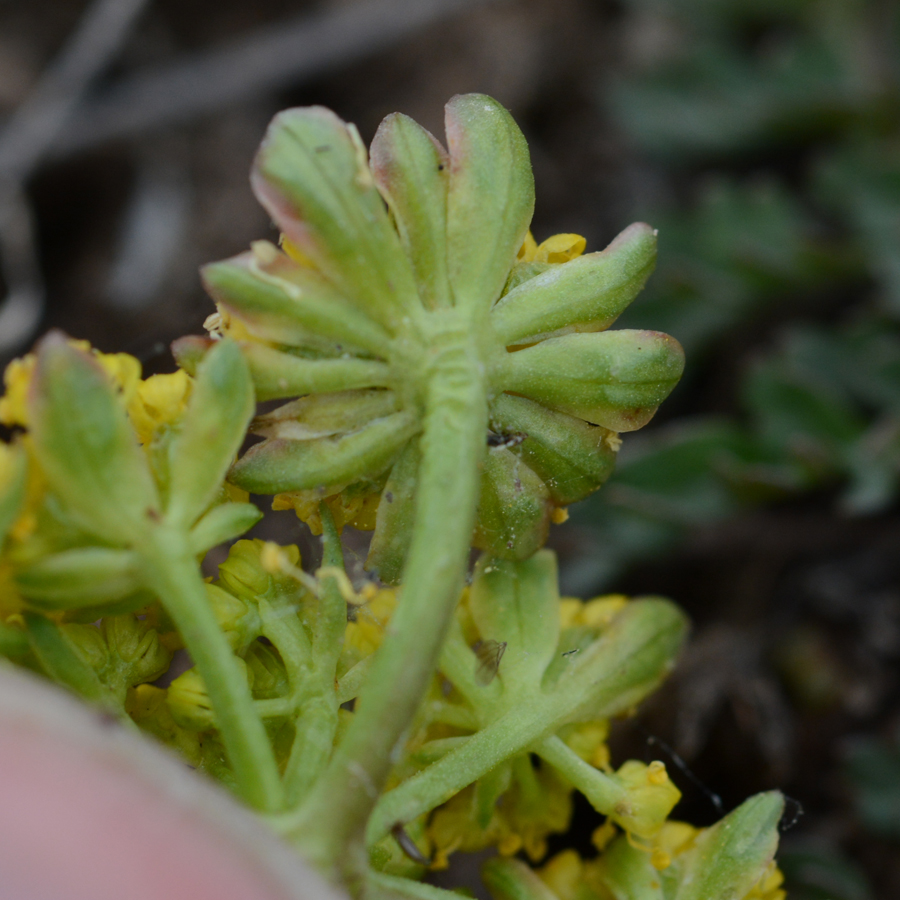
Involucels under the umbel of Cous Bisucuitroot are relatively large and rounded.
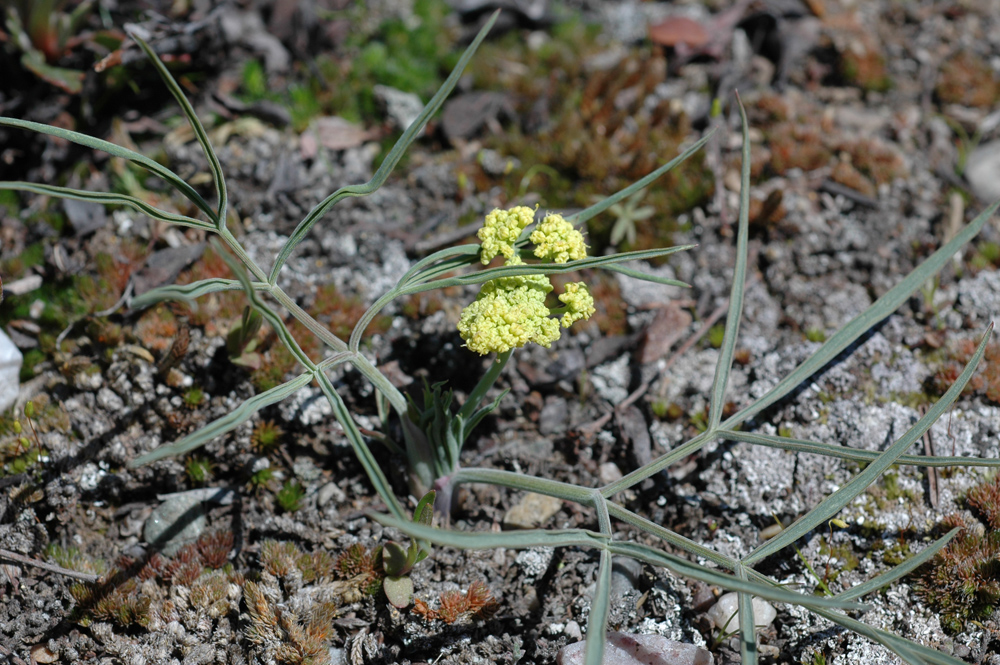
Nine-leaf Biscuitroot – Lomatium simplex/triternatum – can be hard to find at first even though they can be quite common in sagebrush habitats. The early, pale, thin, finely hairy leaves blend in with surrounding grasses. Gradually the pale-yellow umbels will rise to 6” or so and the compound leaves will spread their 9 slender segments or lobes.
A single leaf of Nine-leaf Biscuitroot – has nine thin lobes. Nine-leaf Biscuitroot schizocaprs – 2-parted fruits – have winged edges and a few distinct veins. They fly off on the wind.
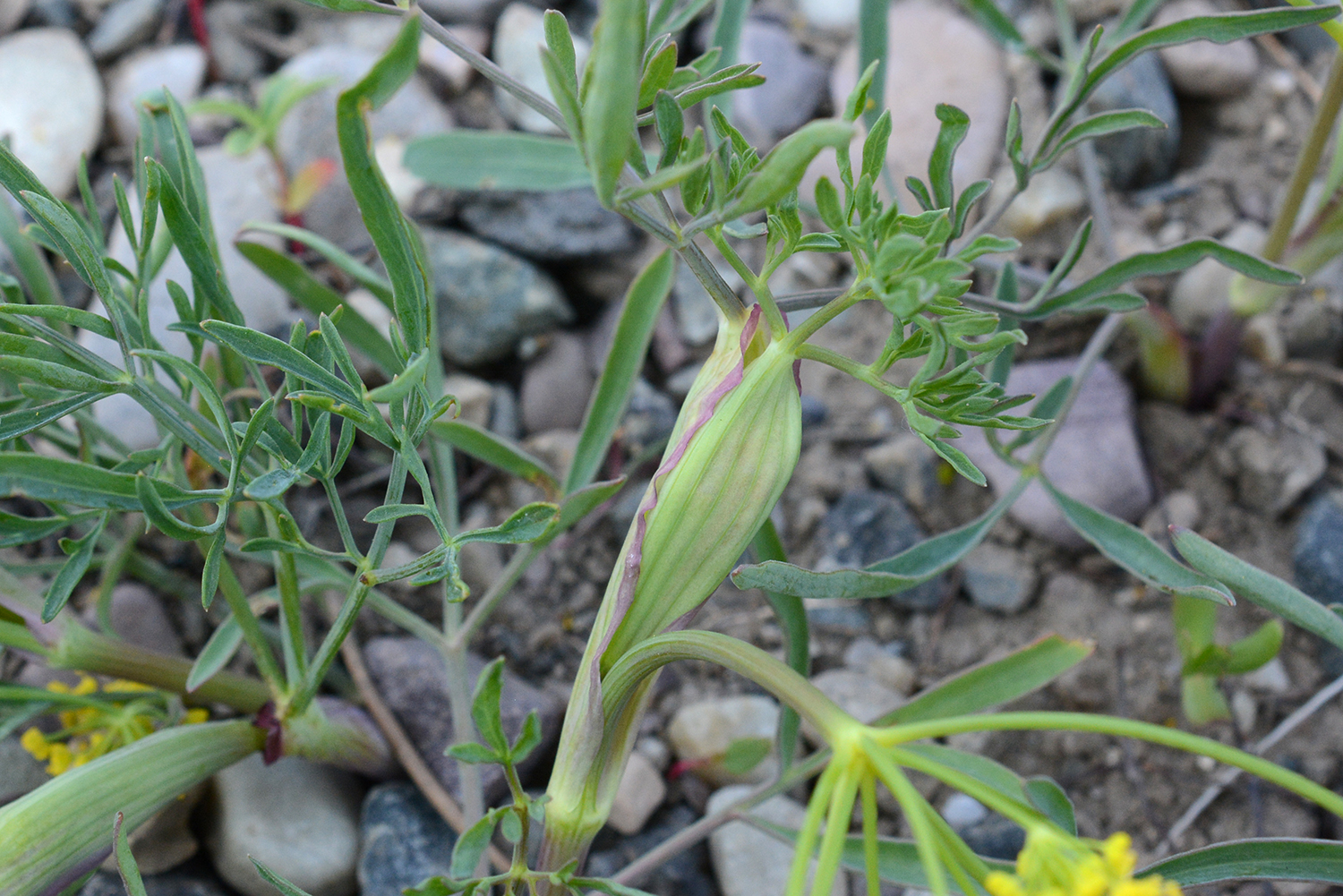
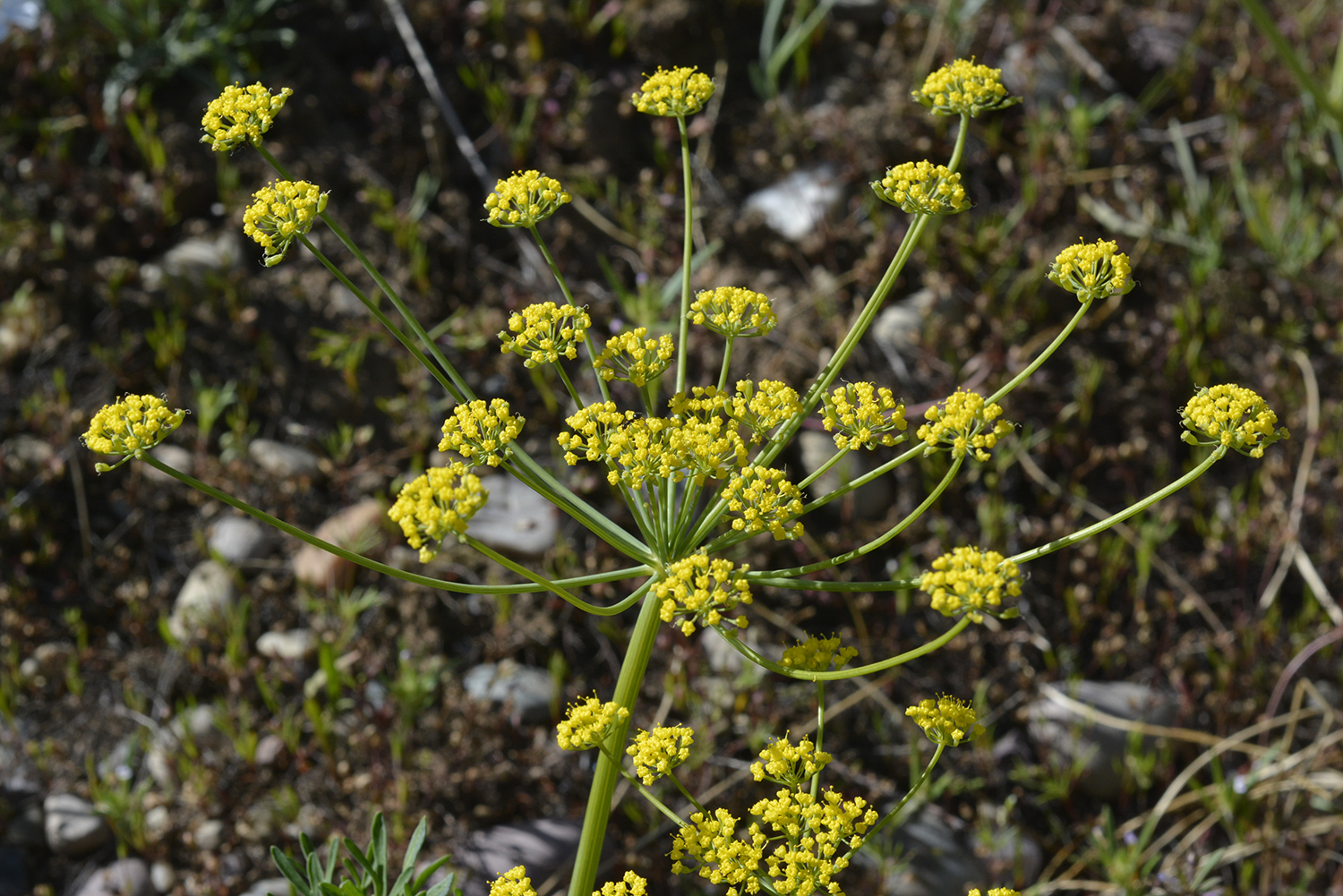
Wyeth Biscuitroot – Lomatium ambiguum – is indeed ambiguus in its features.
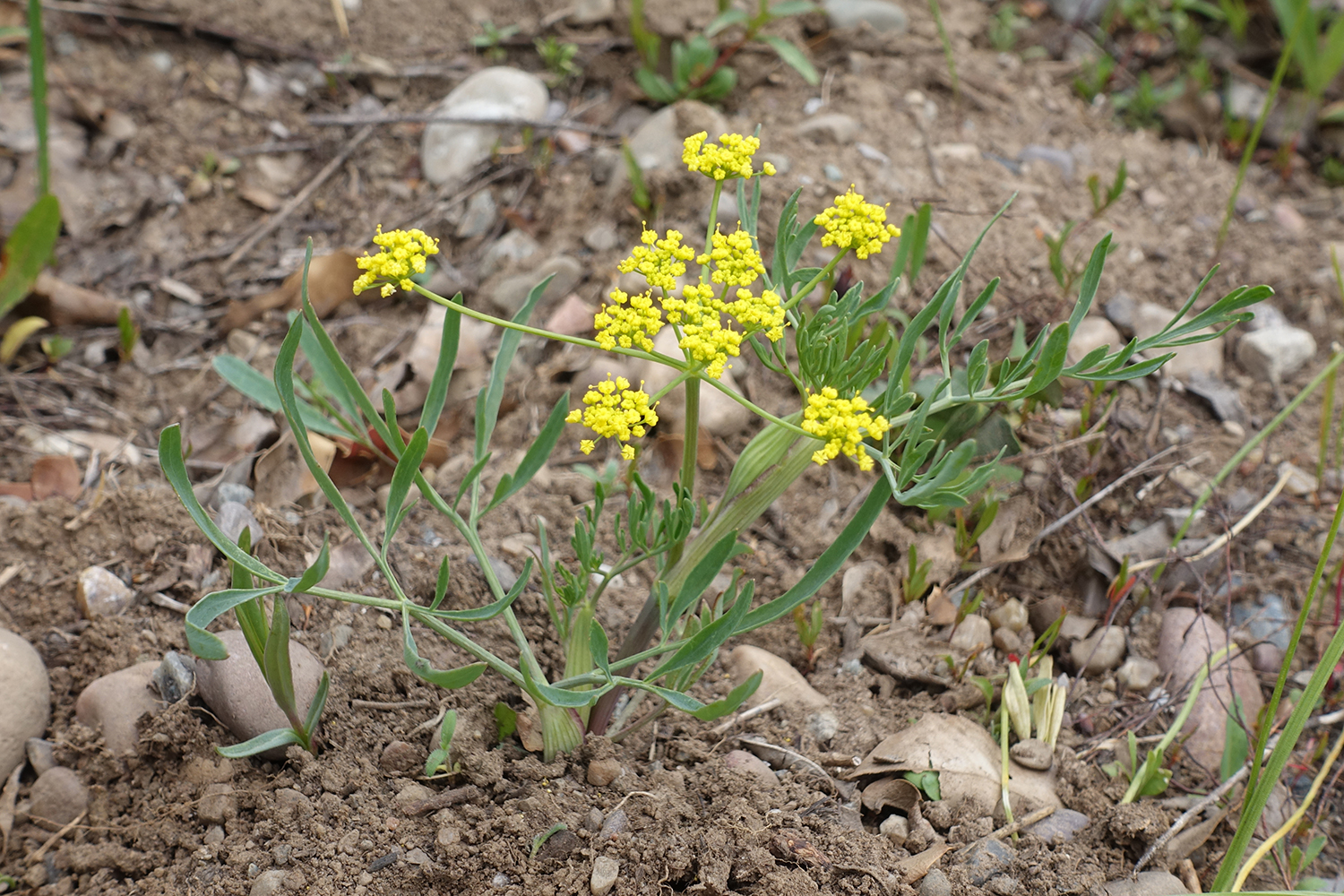
The flowers are distinctly bright yellow and spread wide with no little involucel bracts beneath the flowers – a clear difference between it and Nine-leaf Biscuitroot. The compound leaves have relatively few linear segments as in Nine-leaf Biscuitroots; however, the segments are more variable in width and usually a deeper green. They have stem leaves that have expanded leaf-sheaths.
Wyeth Biscuitroots grow up to 12” or so and often can be seen in bright colonies on slopes such as along the south end of the inner park road.
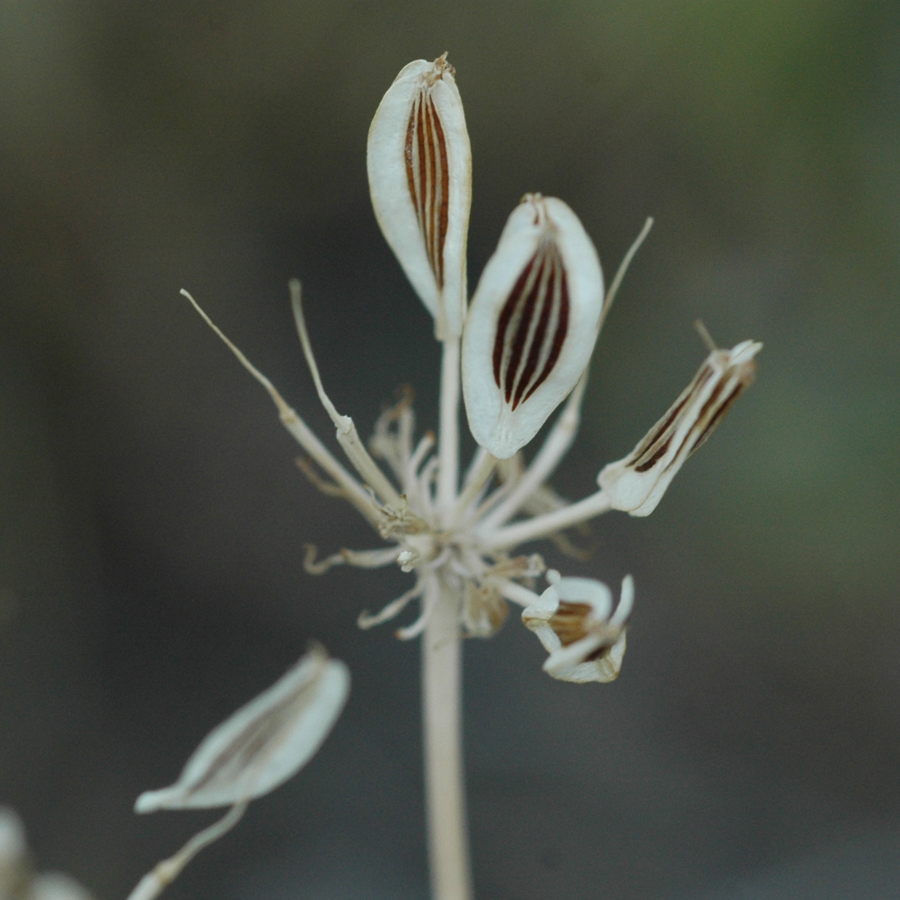
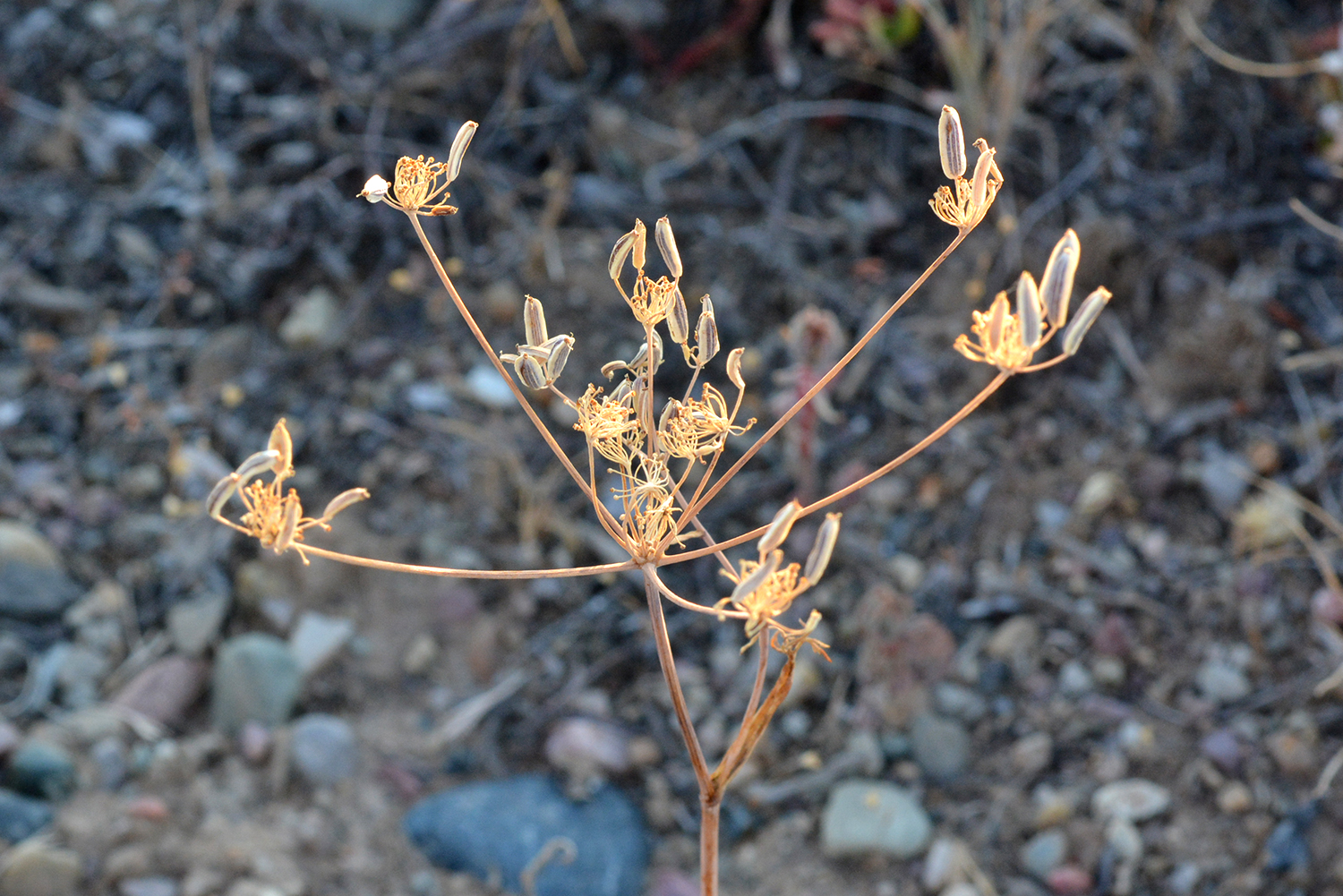
Fruits are narrow, with winged margins and a few parallel nerves.
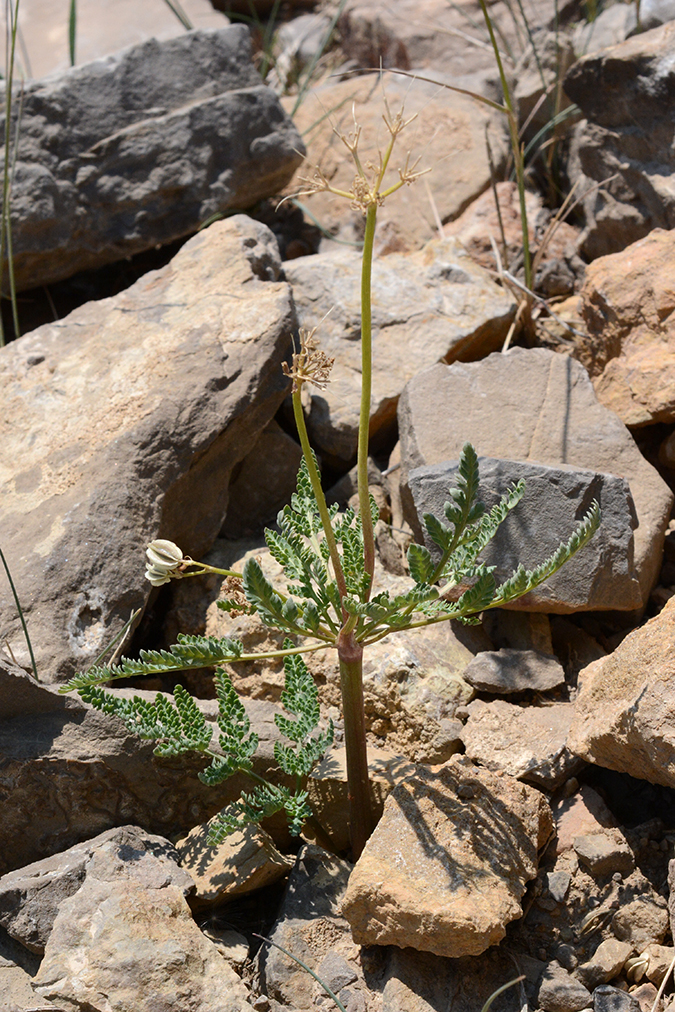
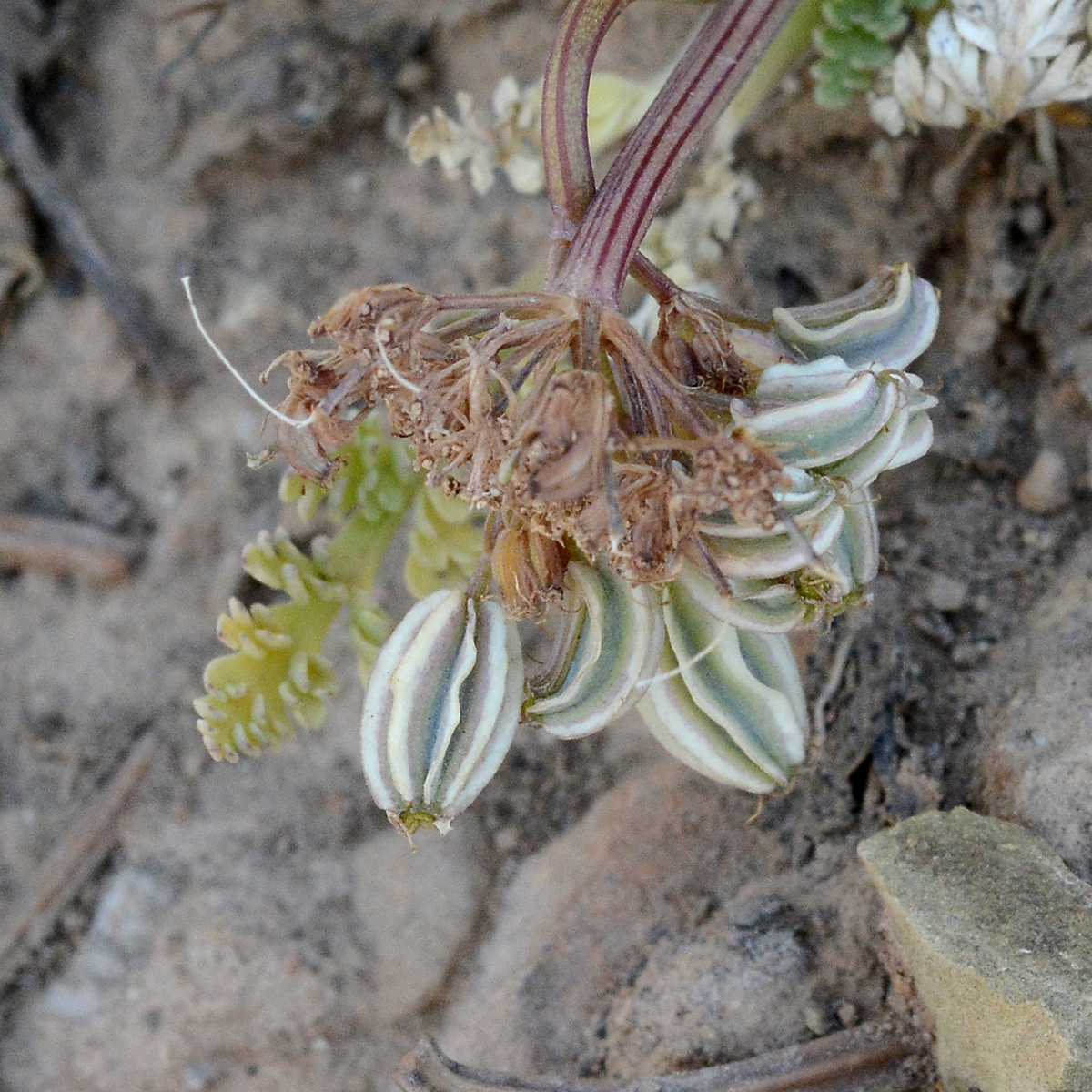
Spring Parsley – Cymopterus spp. – is just emerging. Different species can easily be confused with biscuitroots and many come out later. The fruits are a key difference: Schizocarps are winged on their veins, but these can take a while to fully mature.
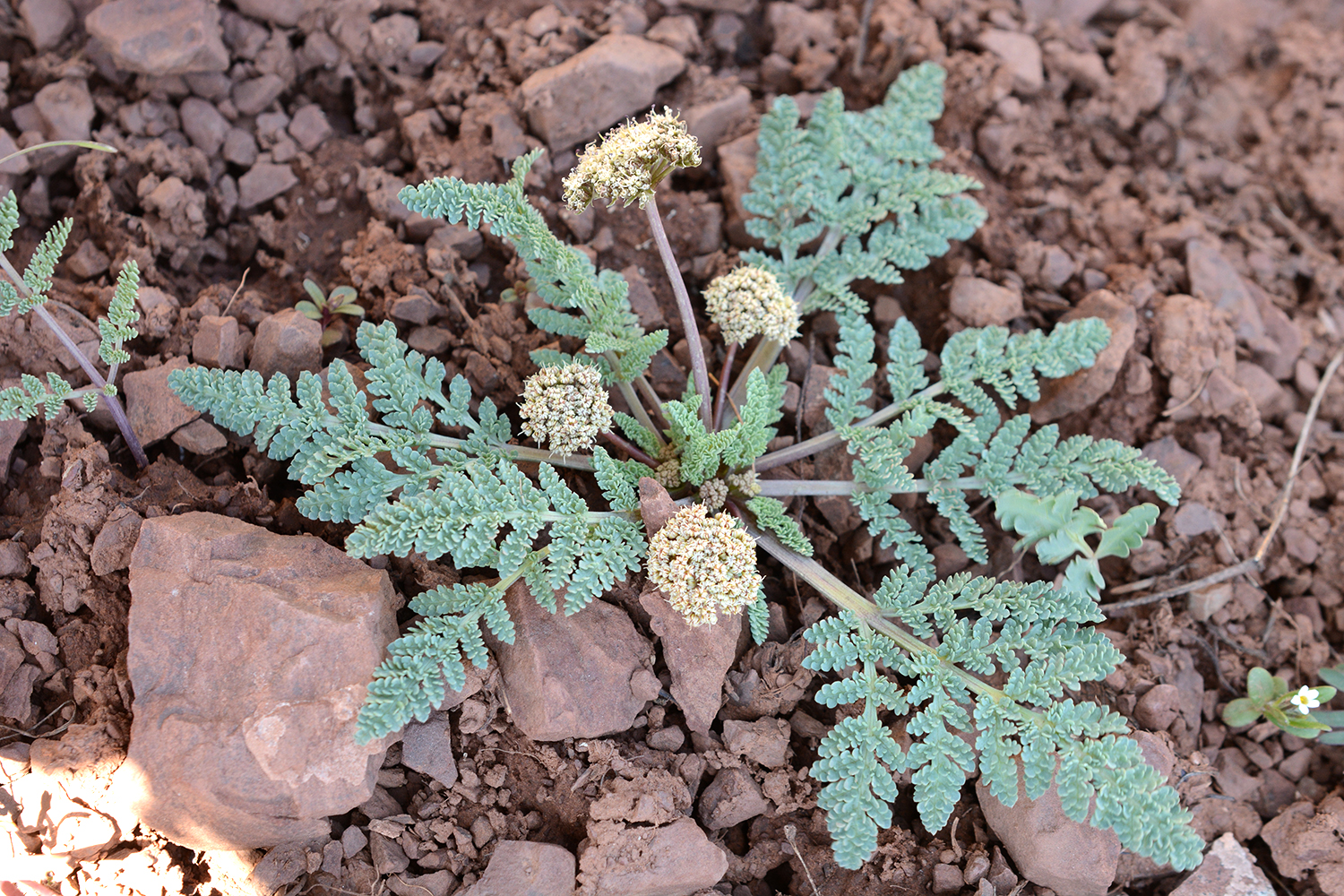
Rarely seen, Long-stalked Spring Parsley – Cymopterus longipes – has distinctively tidy divided leaves that are almost blue.
The leaves lay flat to the ground with a white umbel in the center. However, all will rise: A pseudo-scape elongates from the ground raising the whorl of leaves up several inches while the flower scape also elongates several inches.
The winged fruits will thus be lifted up into the winds to disperse.
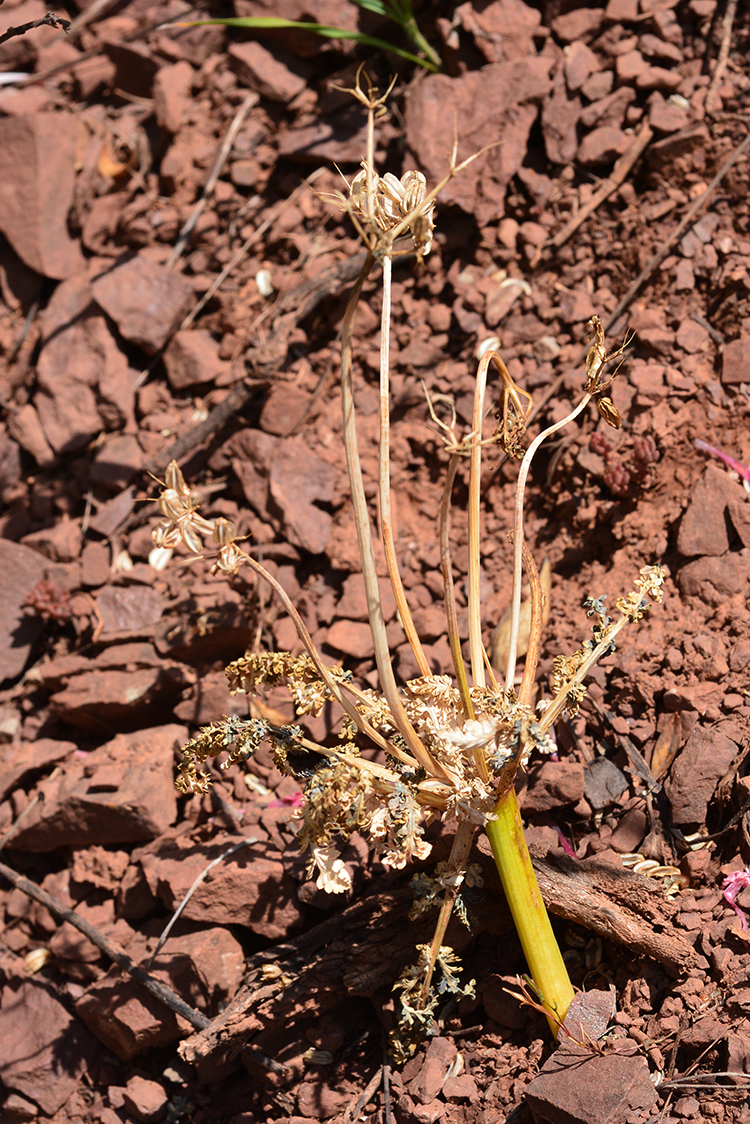
I have seen them growing in the red clay on an exposed slope near the beaver ponds of Game Creek, and much later in summer on Teton Pass.
Note how much the pseudoscape has stretched beneath the formerly basal-looking leaves and how the umbel has stretched above the leaves. This is definitely a dried up example.
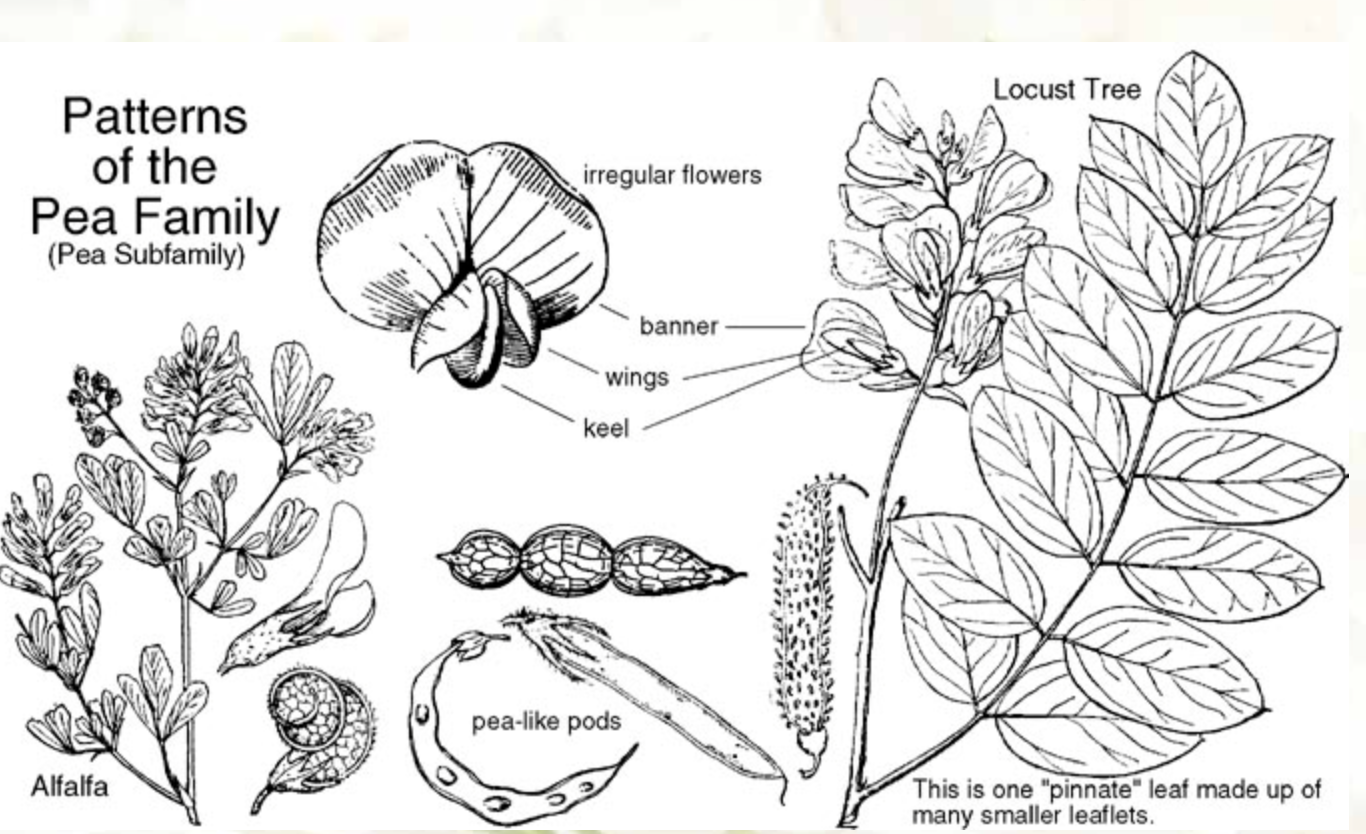
The Pea family – Fabaceae – The family is usually pretty easy to identify by its “pea-like” flowers. The flowers are bilaterally symmetrical (like our faces), each has an upright banner, often with nectar guides; a keel made up of two joined petals which hide and protect the male stamens and female pistils; and wings that more or less wrap around the keel from the sides. When insects land and push to the back of the banner for nectar, the fertile parts pop up from within the keel, thus aiding in the transfer of pollen of one flower to a mature stigma on another flower.
The fruits will typically be pea-pod like. Inside the keel and stamens, you can see the elongated ovary which contains several ovules that will form seeds with fertilization.
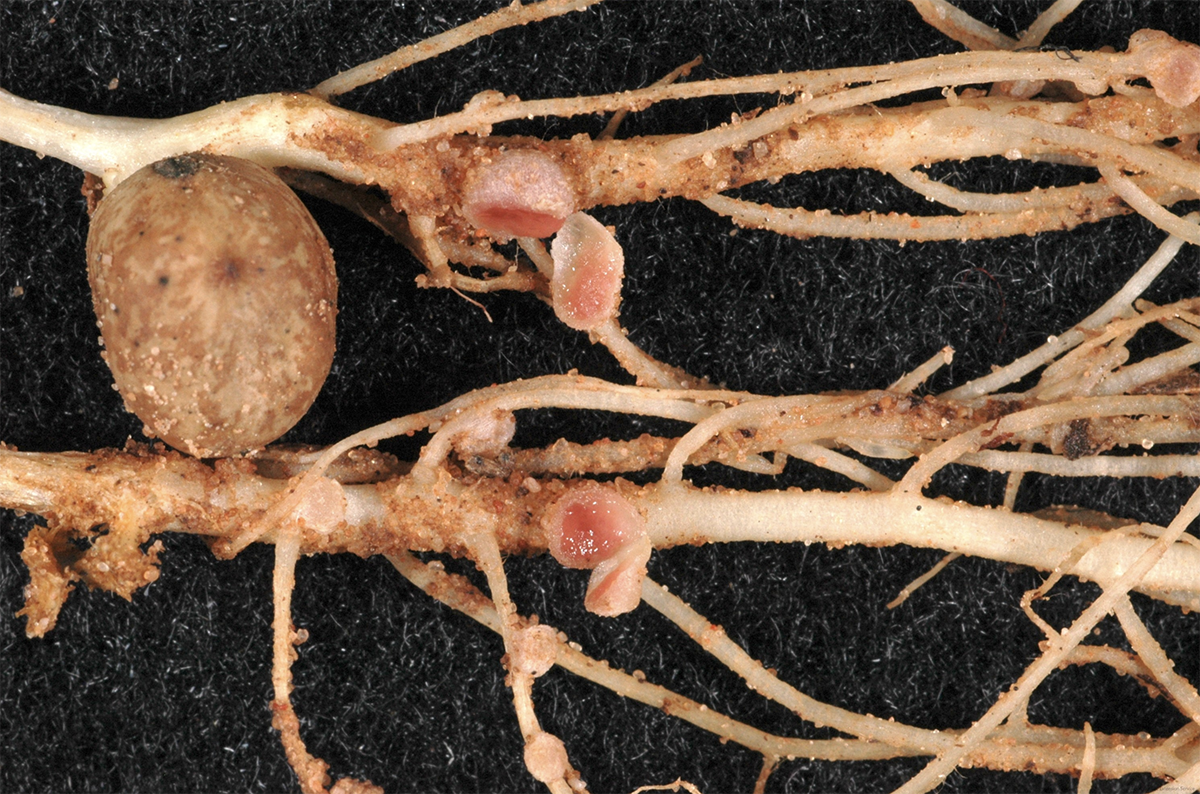
The Pea Family is important in many ways. Members of this family fix-nitrogen. Roots form round nodules to harbor rhizobia bacteria. The plant provides bacteria with carbohydrates while in exchange bacteria convert the plentiful but useless (to plants) dinitrogen (N2) in the air, including air pockets in the soil, to ammonia (NH 3) that plants and most organisms need for survival. Thus members of the Pea Family can grow in very poor soils and also enrich soils for other plant species and many other life forms. (reference)
Nodules harboring nitrogen-fiixing bacteria in the Pea Family credit
Given the ability to fix nitrogen which in turn produces proteins, nucleic acids, and DNA, the fruits – legumes – and seeds are especially nutritious as we know from eating peas, beans, soybeans, etc. On the other hand, some plants in the Astragalus and Oxytropis genera are termed locoweeds. Locoweeds contain an alkaloid, swainsonine, that affects the nervous systems of animals. (Reference)
The Pea Family – is the third largest plant family in the world with two other major branches whose flowers look different than what we see here.
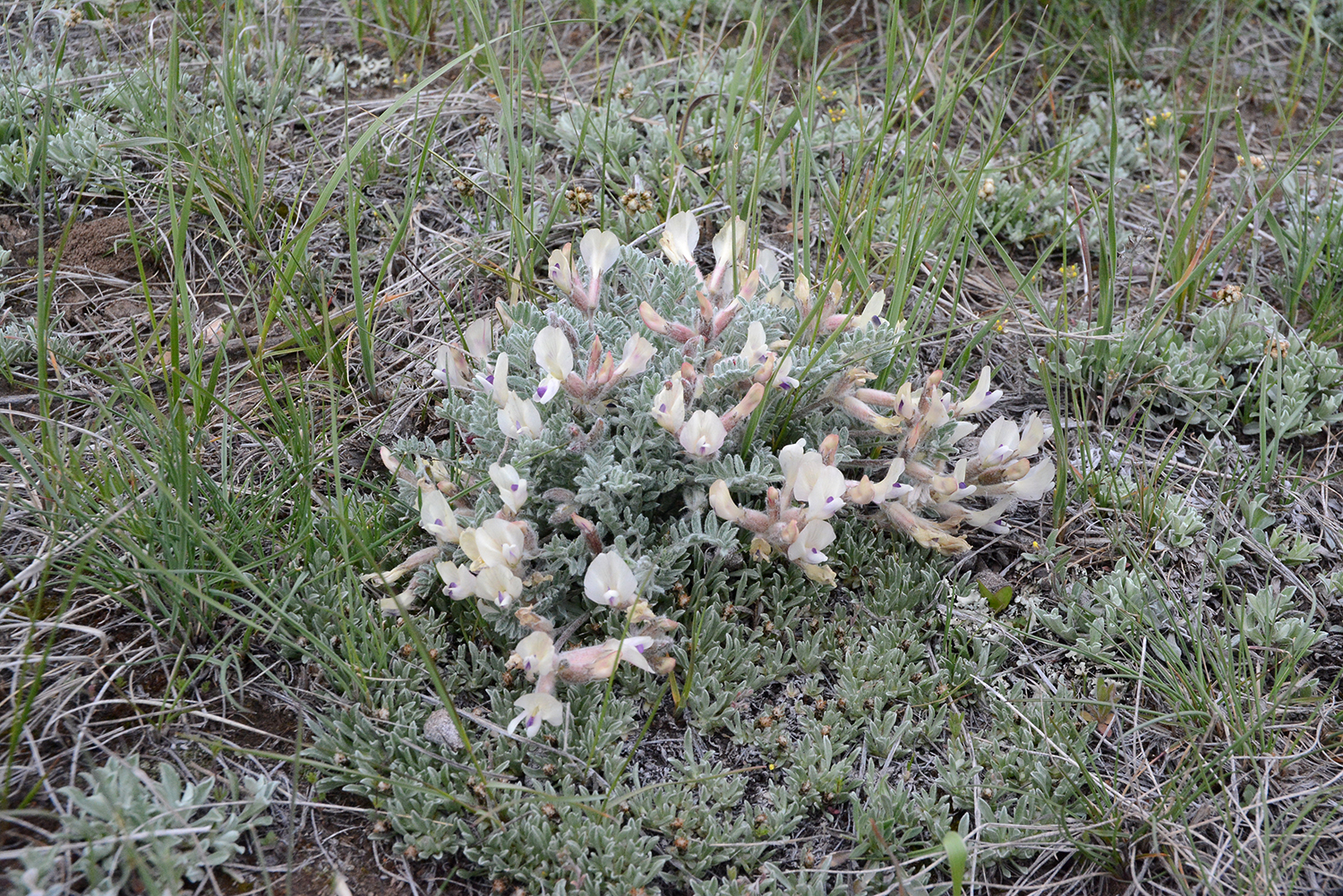
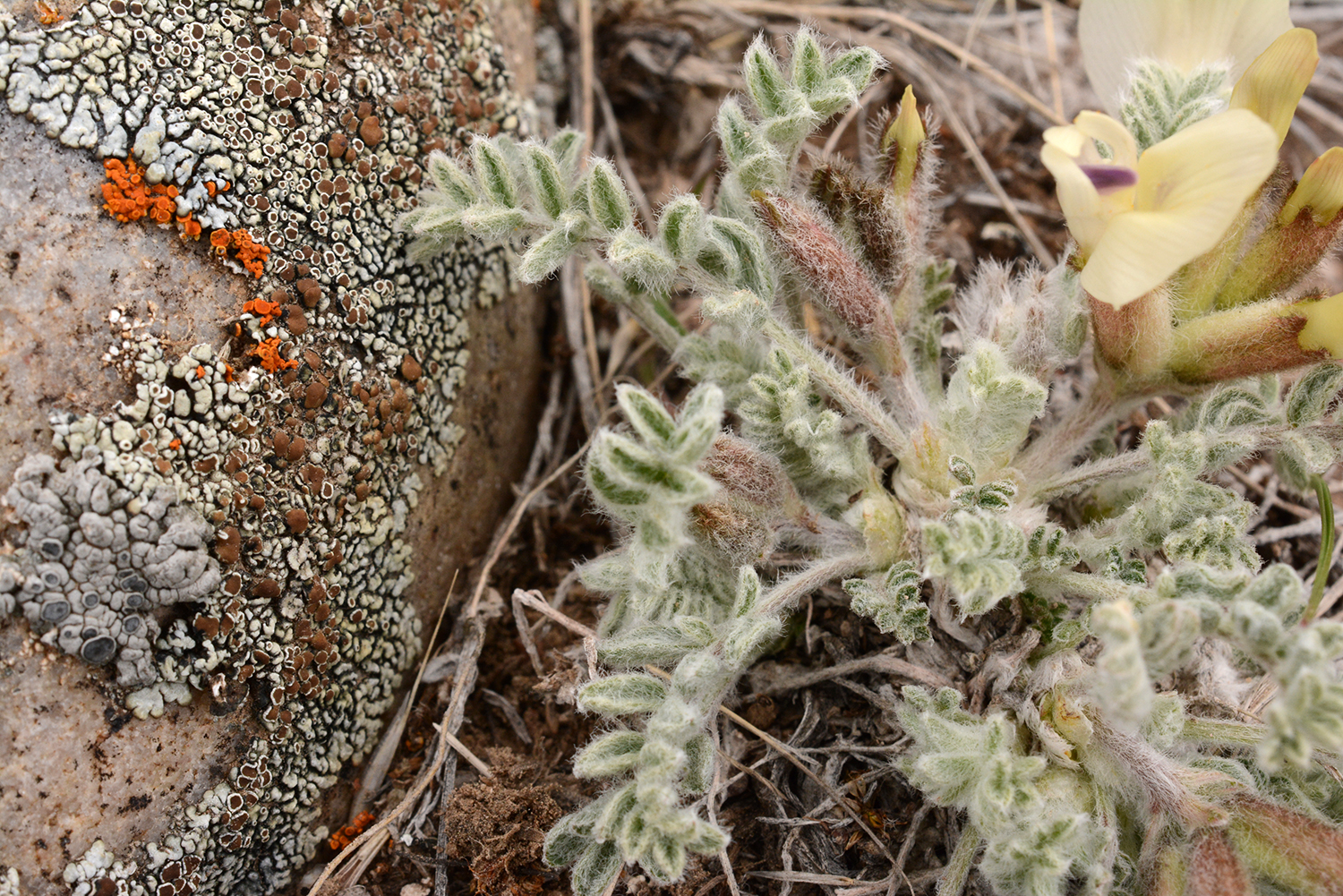
Pursh’s Milkvetch’s – Astragalus purshii – pea-shaped flowers are creamy white, the wings are longer than the keel, and the keel is upturned and tipped with purple.
Leaves are hairy and pinnately compound.
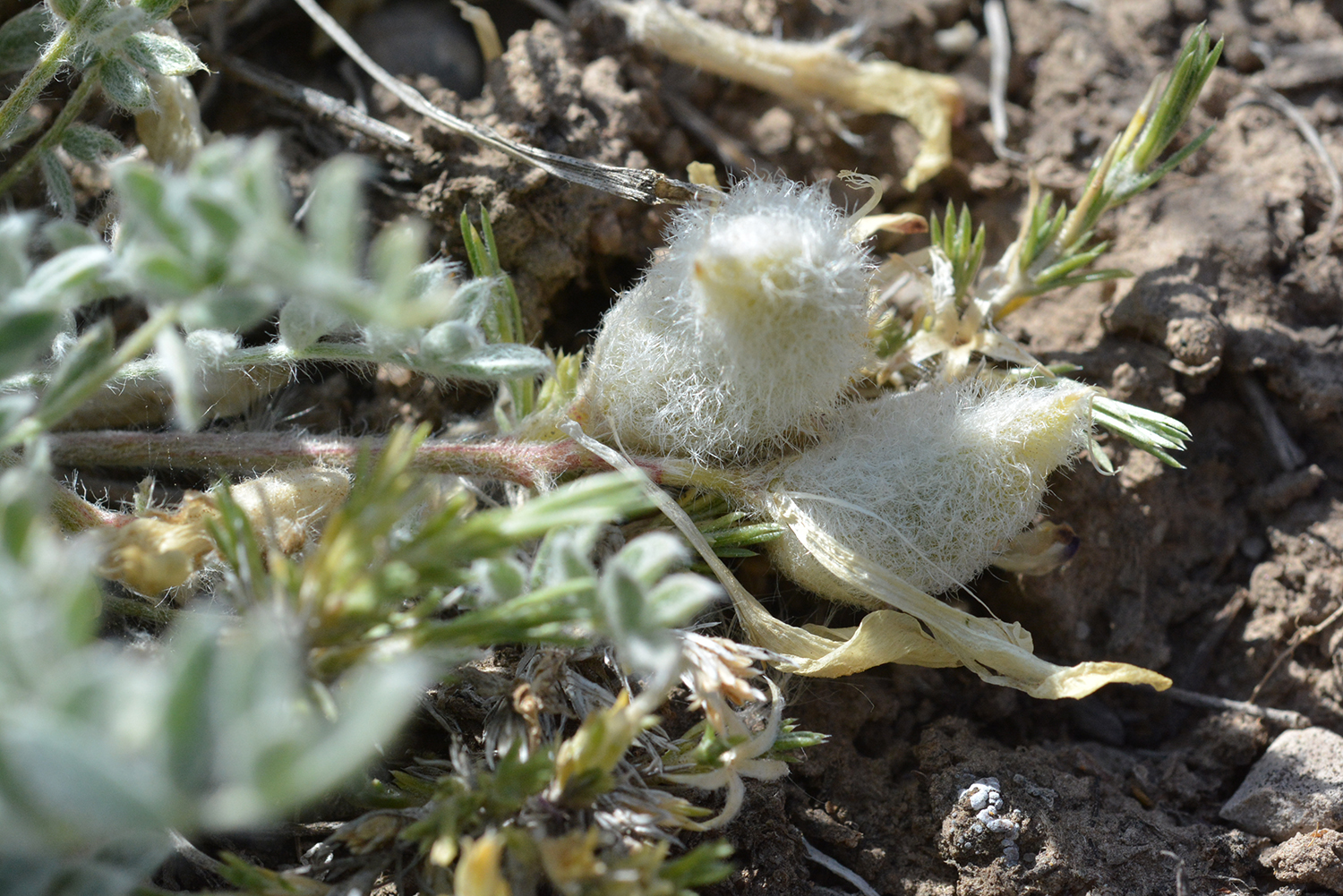
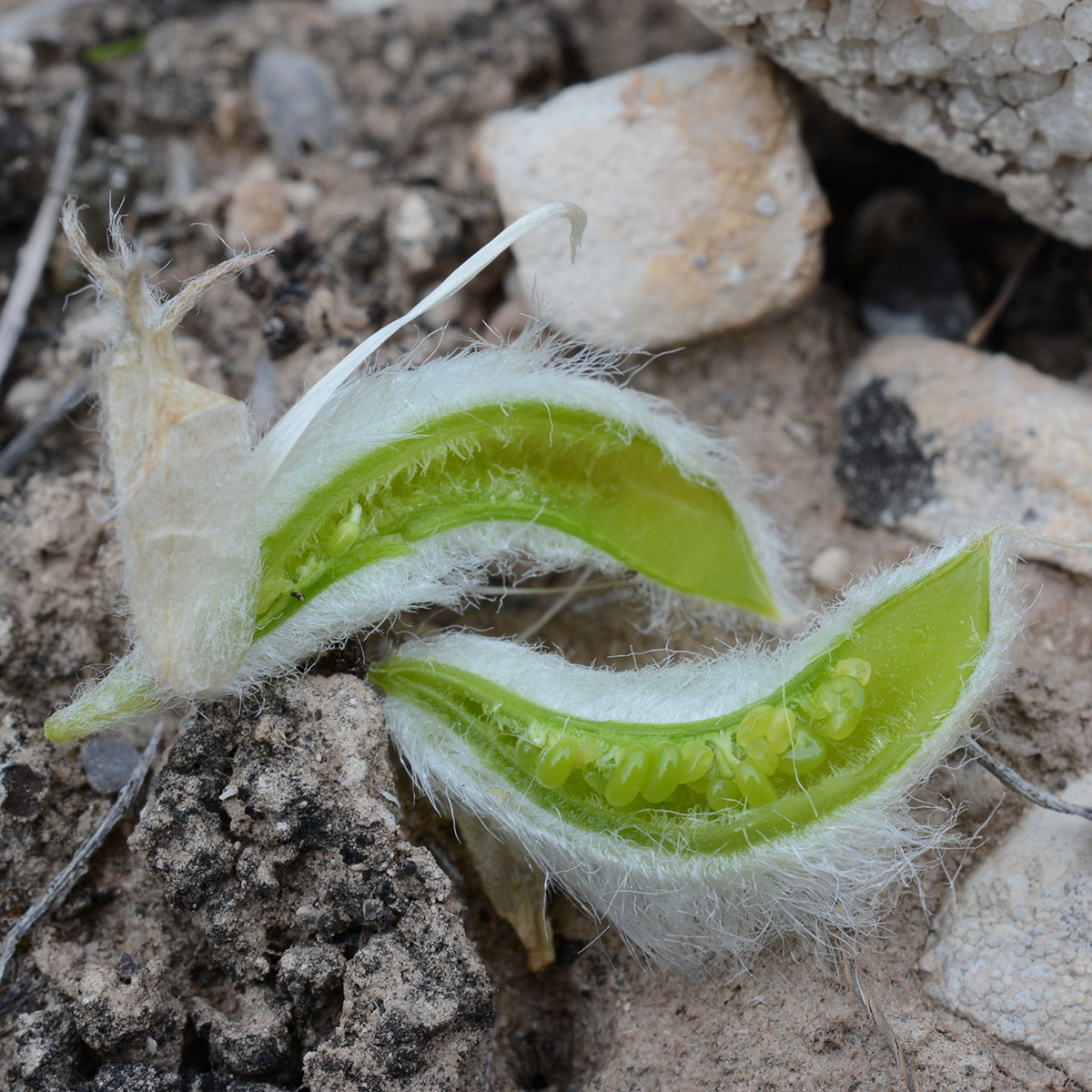
The fruit is a small, tough, very hairy, sharply tapering pod. Astragalus is the most common genus in Teton County and in the world.
Pursh’s Millkvetch seeds in a pod.
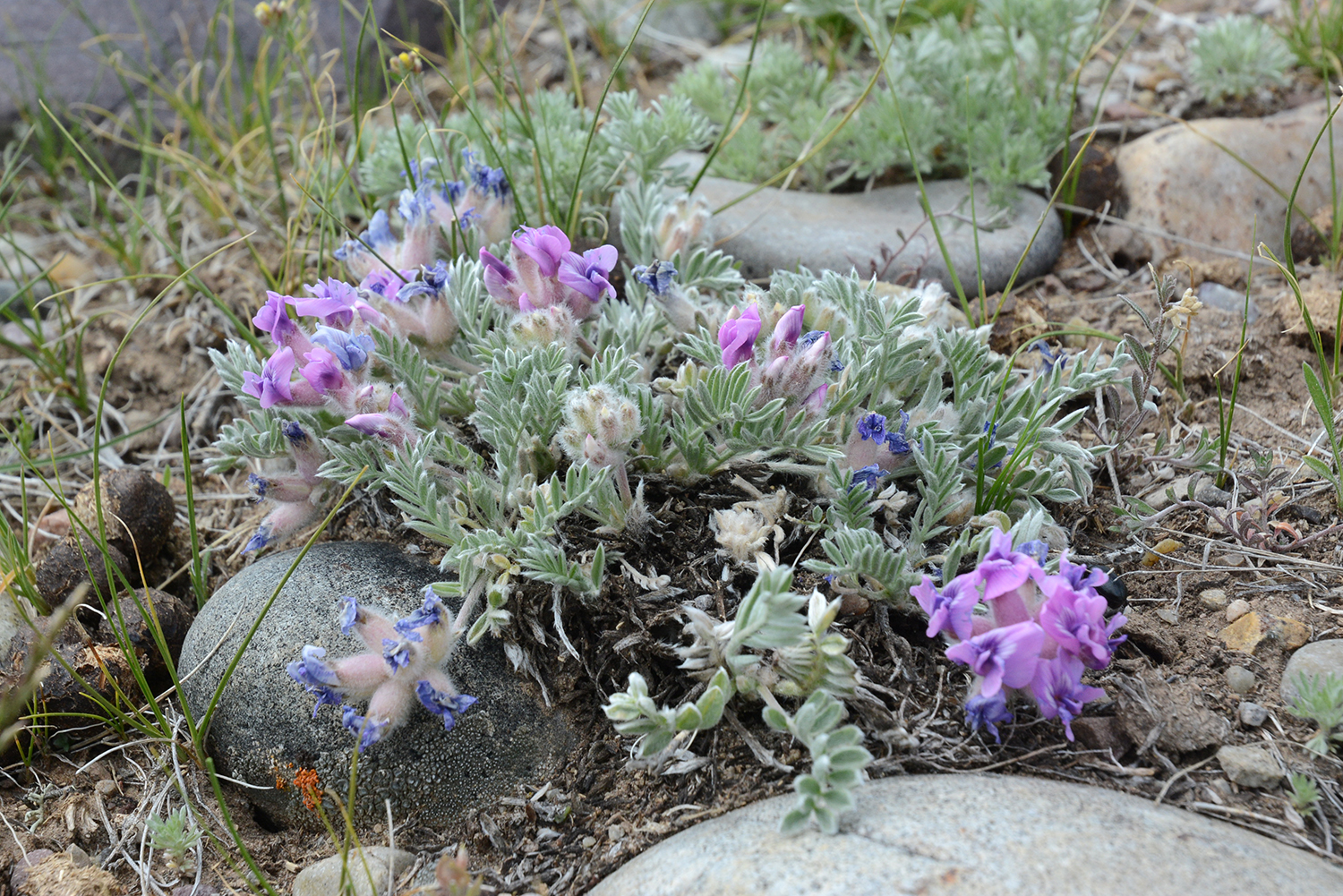
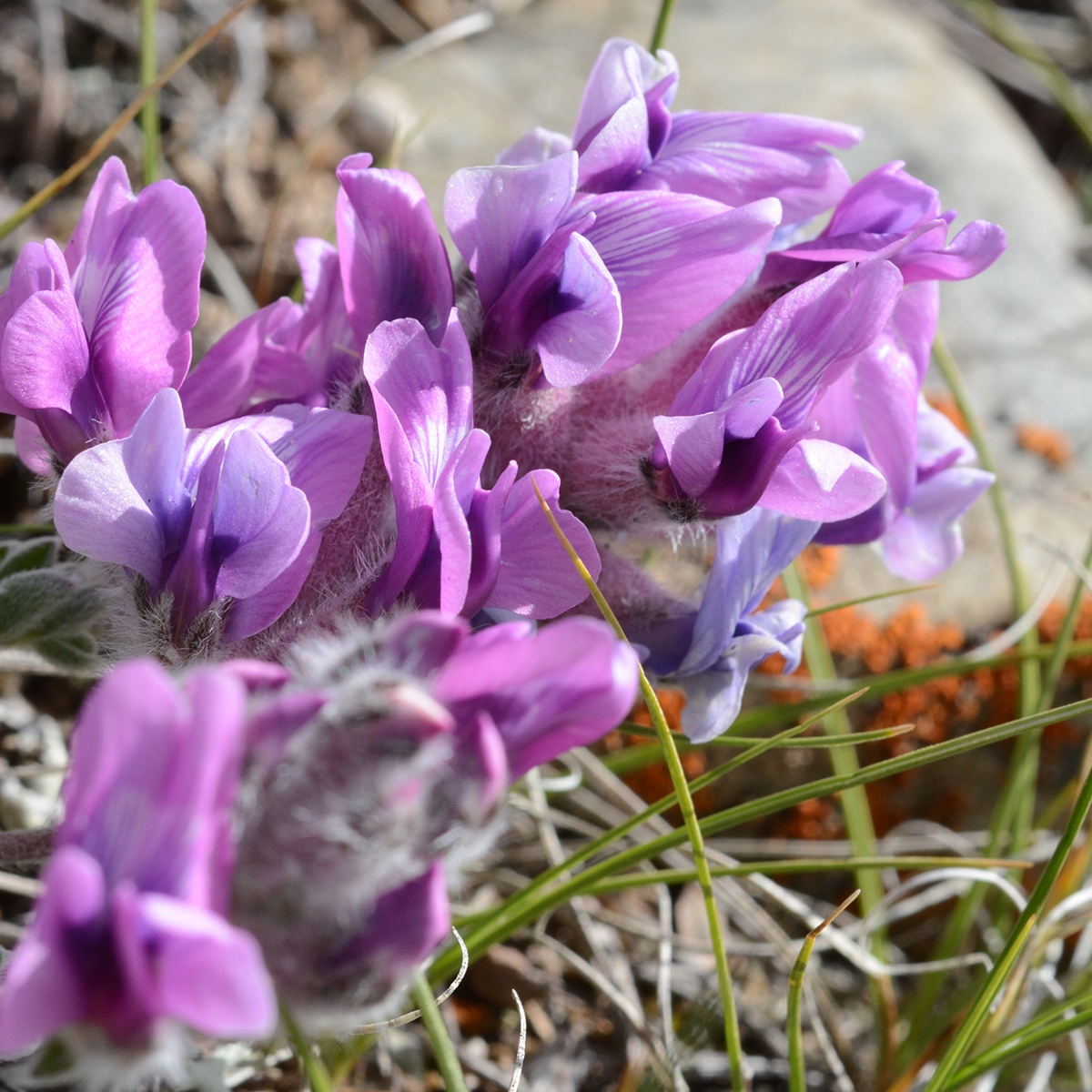
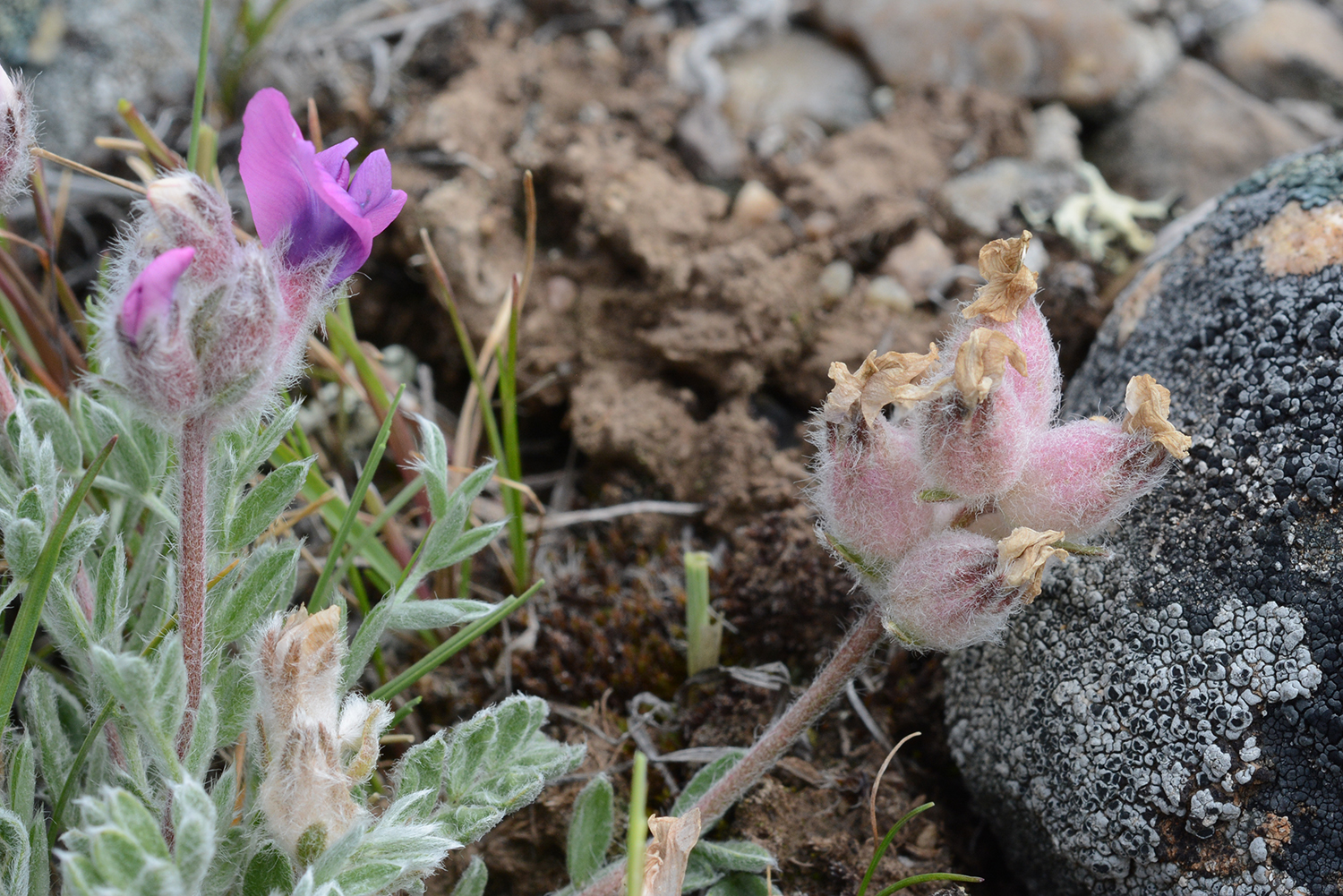
Hare’s-foot Locoweed – Oxytropis lagopus – has a recognizable pea-like, magenta flower. The banner grades from bright magenta to white at the base.
Look closely for the straight keel of Oxytropis flowers.
The keel points straight out. I think of an ox as in Oxytropis – goring you!
The calyx surrounding much of the pod is covered in long white hairs with short black hairs underneath. Leaves are usually less than 4″. They are more commonly collected in Teton County than a very similar, but larger Oxytropus besseyi which has fewer hairs on the calyx.
The Mustard Family – Brassicaceae – includes cabbage, broccoli, kale, cauliflower which are all referred to as brassicas. Flowers typically have 4 sepals, 4 petals, 6 anthers: 4 long, 2 short, and a central pistil. Fruits are highly variable. The short squat fruits (<3x as long as wide) are referred to as “silicles”, and the longer ones are “siliques” – think sleek siliques. There are many, many mustards, and ultimate ID can be based not only on details of the mature fruits, but also of hairs (trichomes)! Many species are known to hybridize, too, so all-in-all mustards can be hard to ID. Below are three species in bloom right now whose fruits will exhibit the range of fruit shapes.
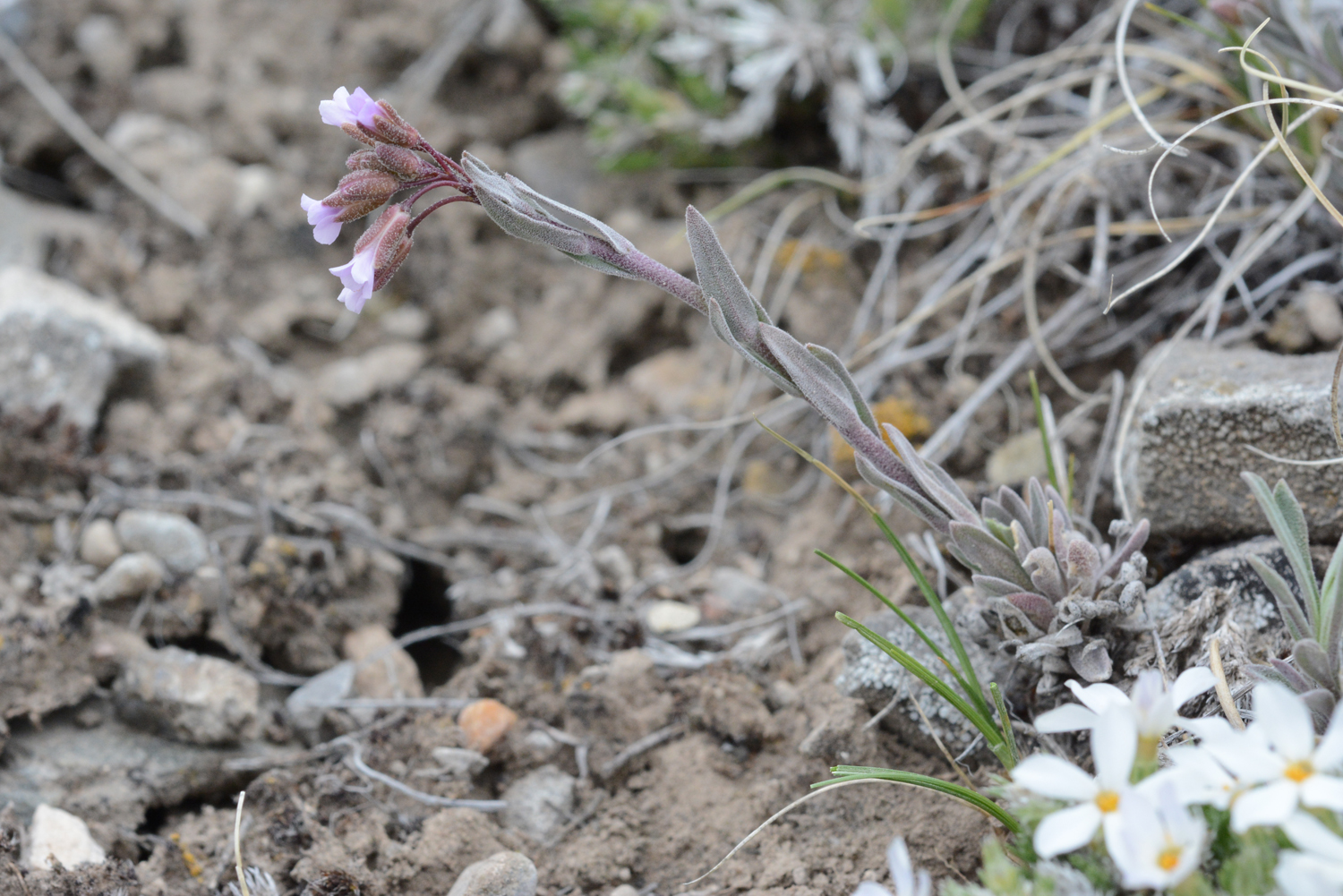
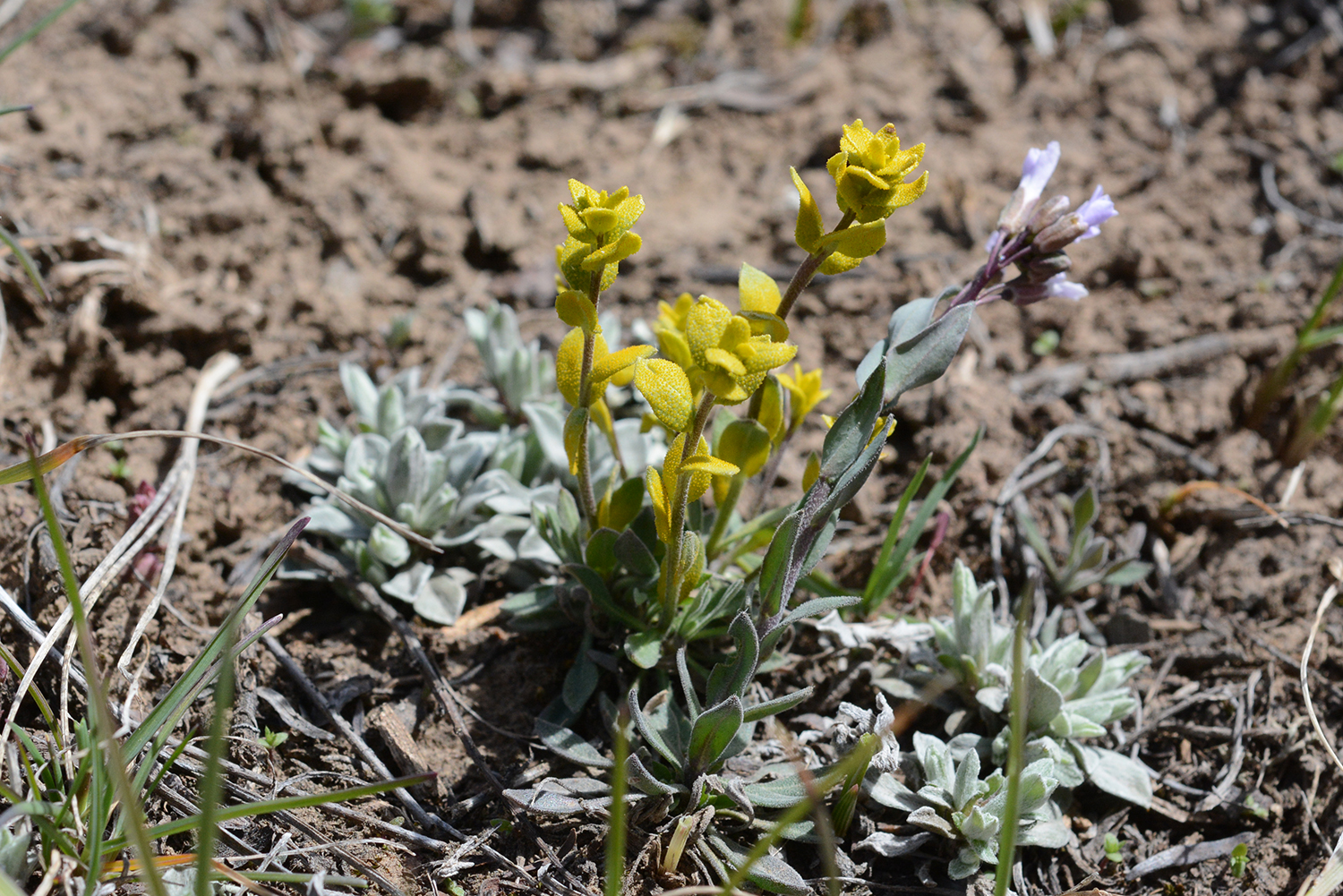
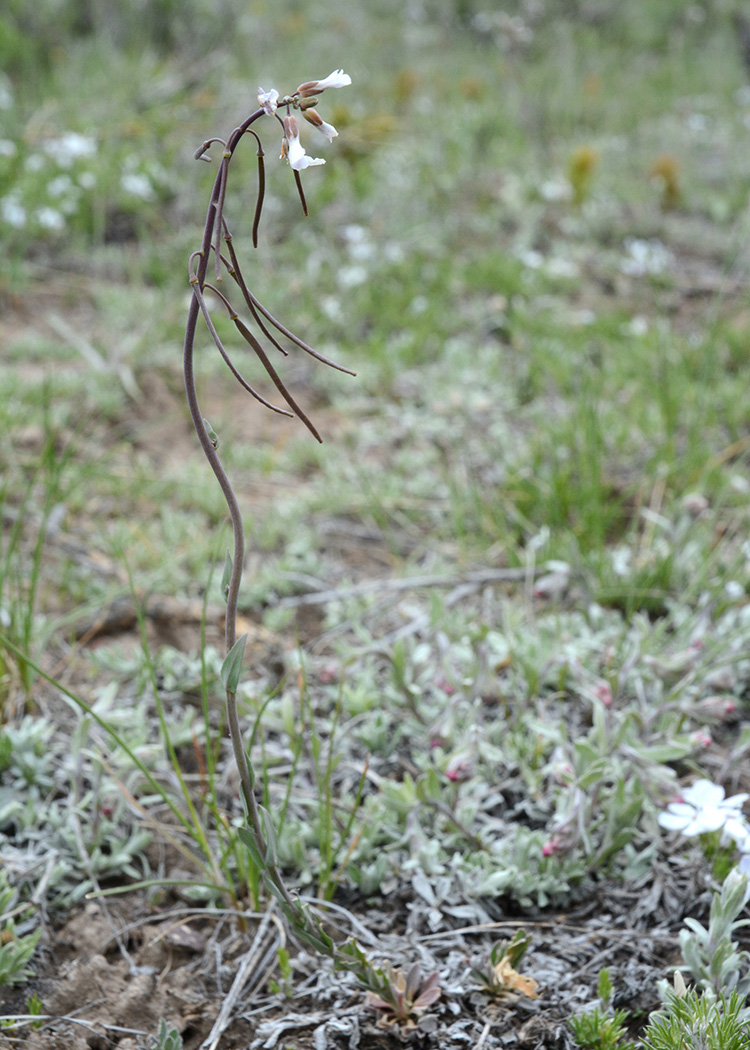
Rockcresses – Boechera spp – definitely have a complex. The authoritative Flora of North America states that Boechera is the most complex genus in all North America!
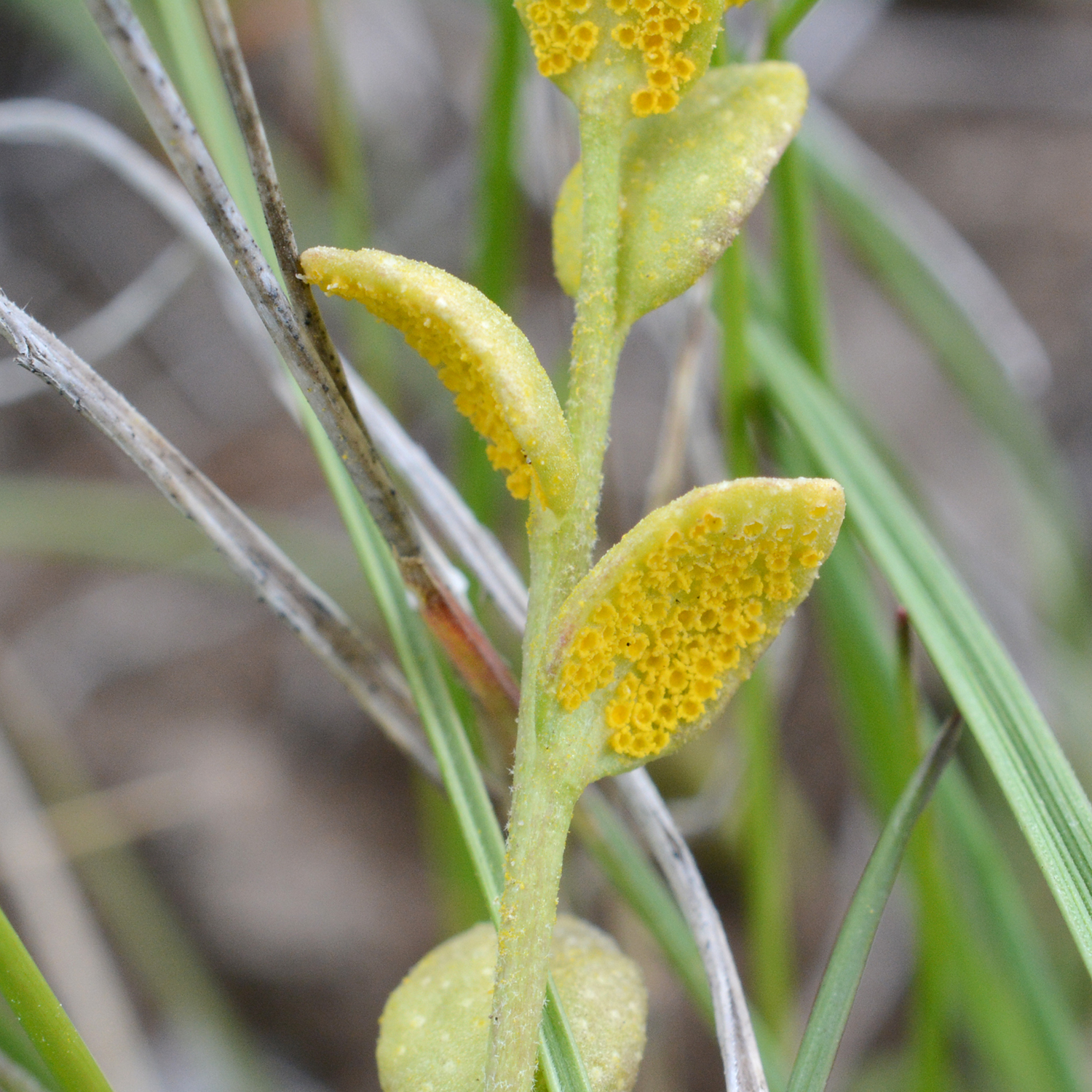
Furthermore, a rust fungus – Puccinia monoica – growing on immature plants can fool insects and us into thinking the plant is in bloom–right when we botanists are desperate for spring color.
The fungus alters the development process not only to have the same bright yellow colors and shape of many spring flowers including buttercups, but also to exude appealing fragrances and sugar rewards. This mimicry enables spores to be deliberately spread by pollinators to other host plants. (reference)
Here I hazard to say that the species shown is Boechera retrofracta, which currently combines several species (P. exilis, holboeillii) listed in Dorn’s Vascular Plant of Wyoming. Note the elongated descending fruits, are siliques – truly “sleek siliques”.
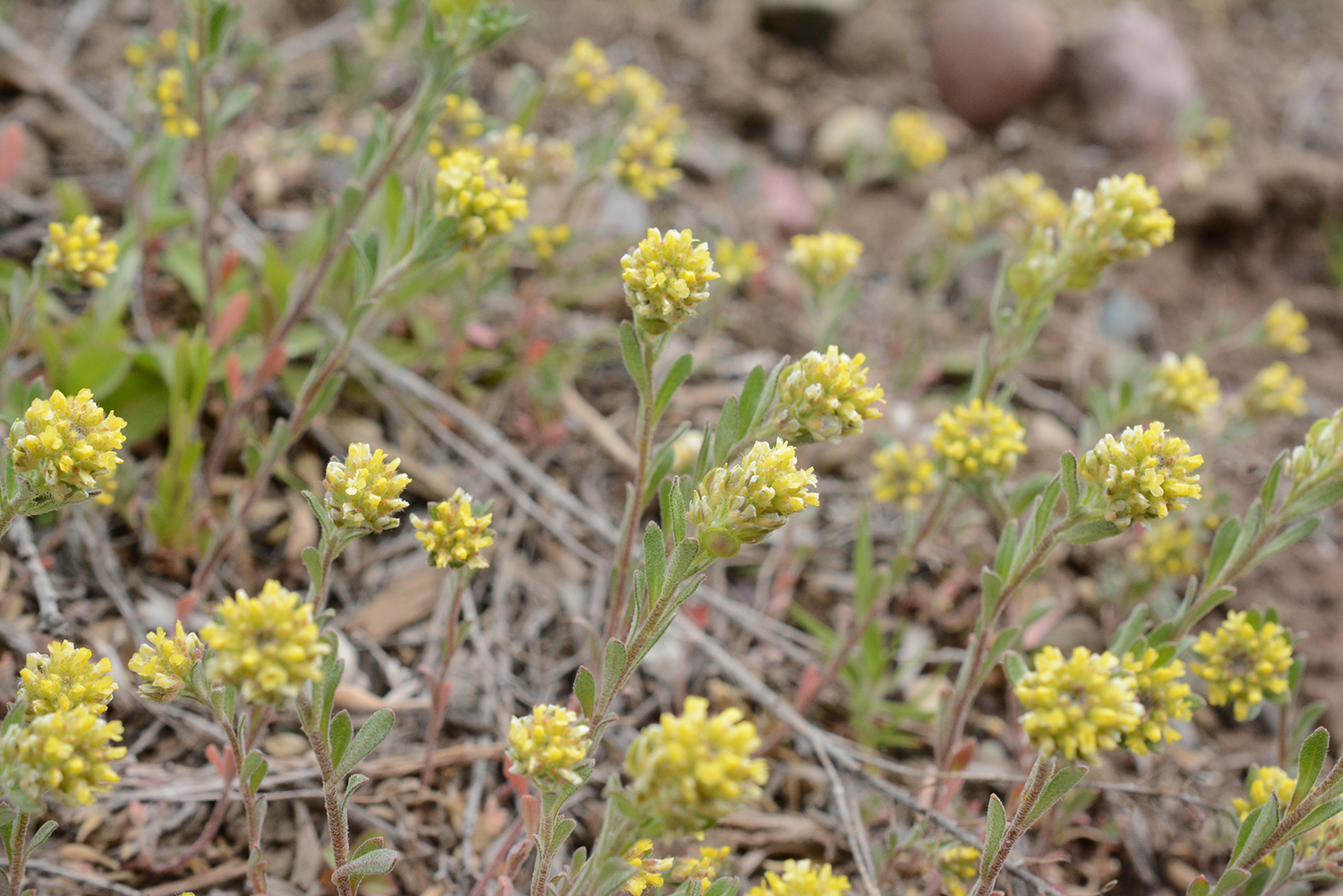
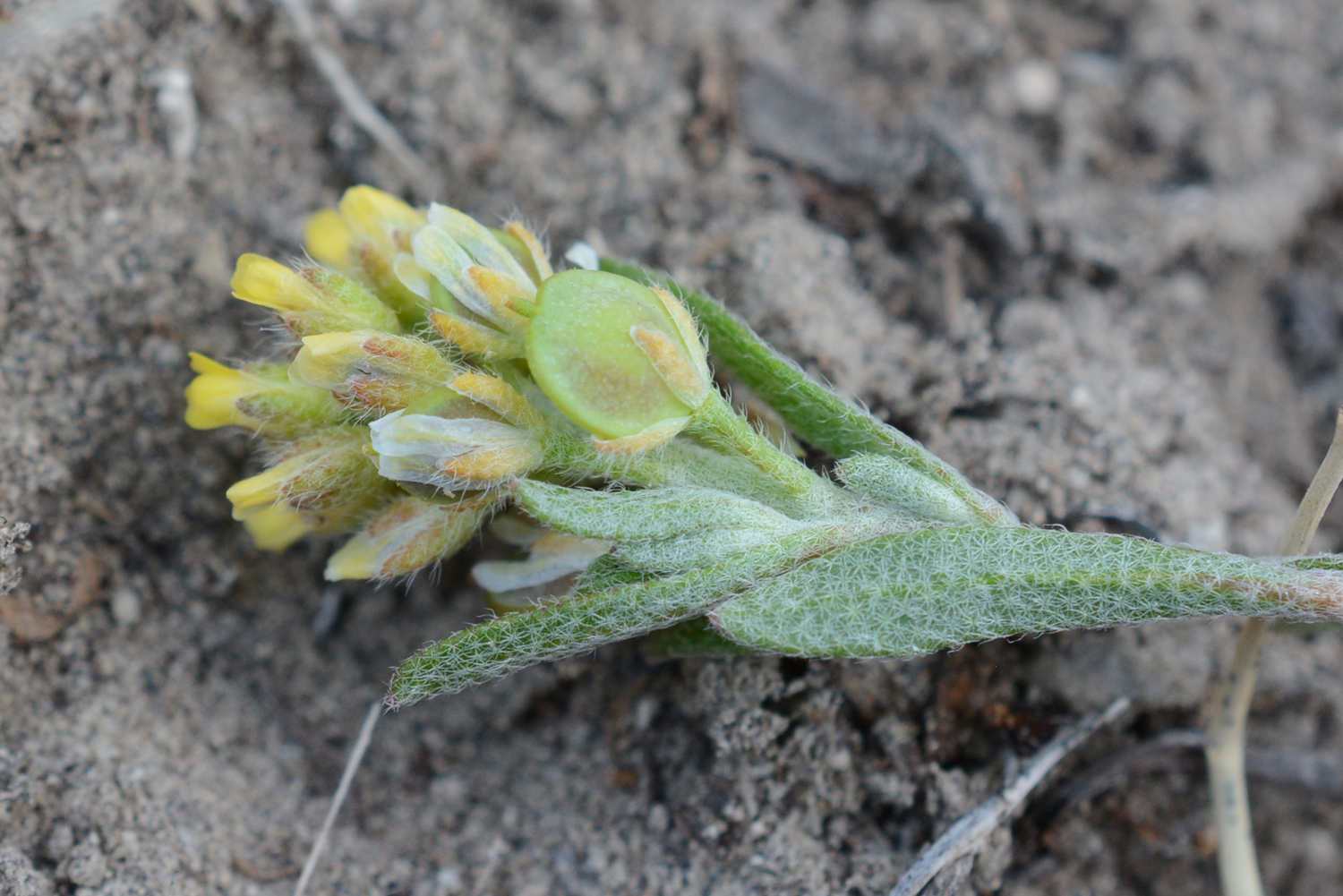
Desert Madwort – Alyssum desertorum – is a winter annual introduced from Europe and Asia on for its purported medicinal values: to cure hiccups, mental illness, and rabies “A-lyssum” means “away madness”. It can be plentiful in disturbed sites, such as around parking areas and along roadsides. (Reference) The species has been naturally incorporated into the diets of pronghorn and harvester ants with no known ill effects.
The yellowish flowers cluster along the upper 3-4” stem and produce flat, rounded, smooth fruits – silicles. Note the intricate hairs.
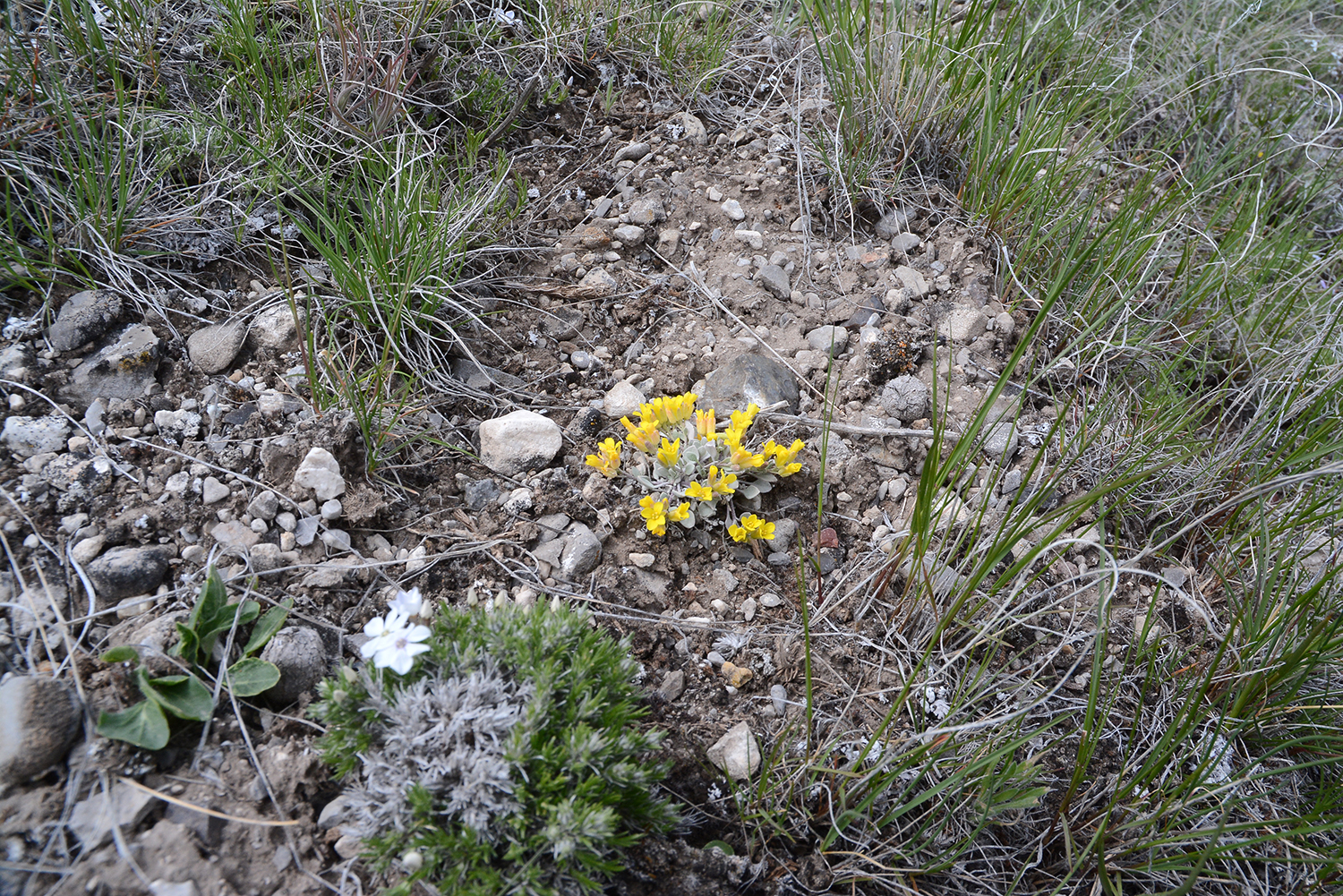
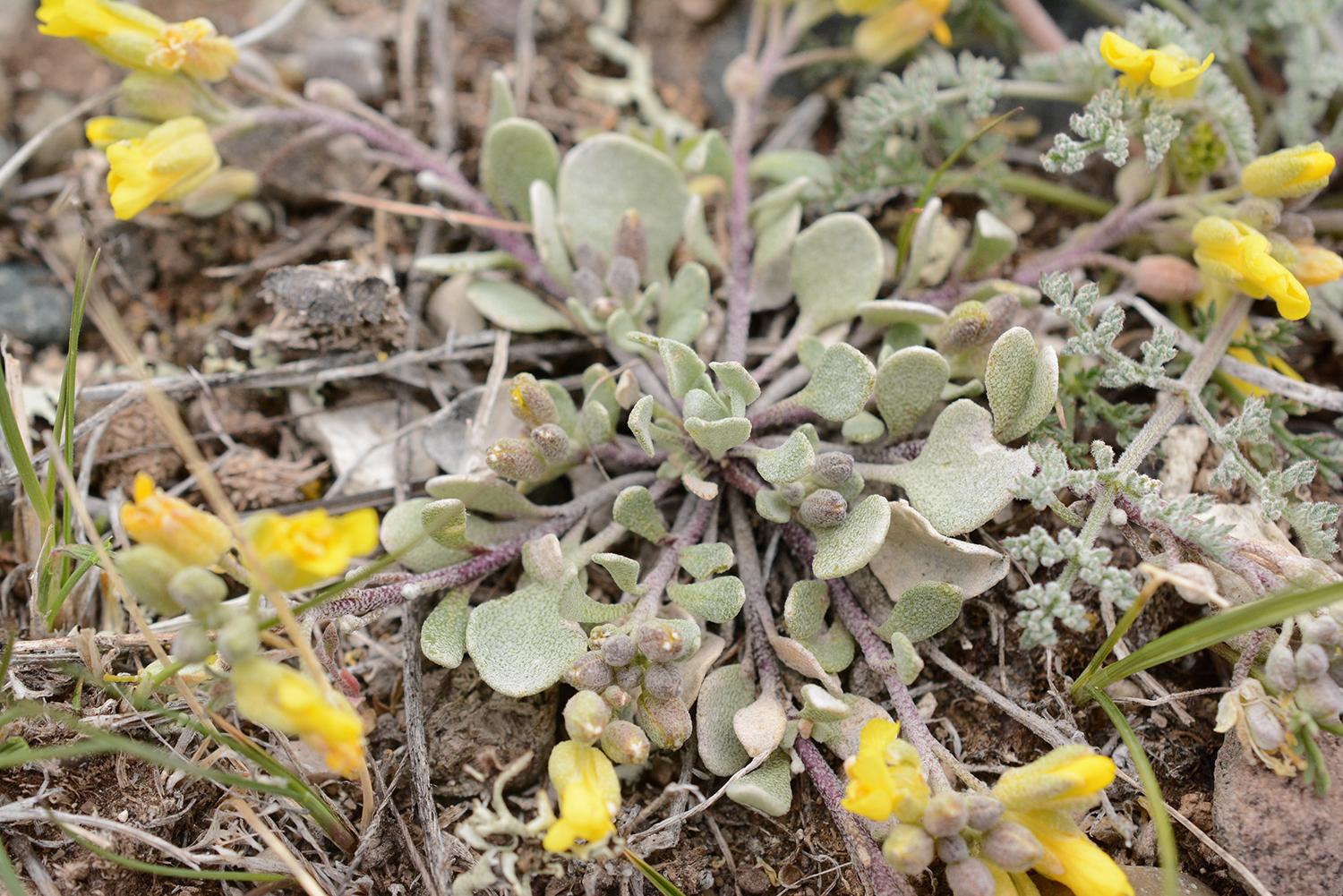
Twinpods – Physaria spp. – have bright yellow flowers and often silvery spade-shaped leaves. The hairs are star-like – stellate – which are fun to see with a 10x handlens. Positive ID needs to await until the fruits are fully ripe.
Found on dry knolls and slopes near Kelly, the species above appears to be forming flatish small fruits. As such it used to be in the Bladderpod – Lesquerella genus before the two genera were combined into Twinpods – Physaria spp. But again we have to wait and see. (And find the same plants again!)
In this Twinpod species the fruits are ballon-like. The number of seeds inside is a key ID feature. This is Physaria acutifolia or P. didymocarpa, but the fruits need to be dissected. In any case the fruits are cool!
Lowly early members of the Aster/Daisy Family – Asteraceae. The old name for this family was Compositae referring to the fact that many small flowers rest on a platform surrounded by protective bracts to form a flower head. Sunflowers are a classic example. Being the largest plant family in the world, composites have almost infinite variations on this theme. Here are two quite different species seen in early spring.
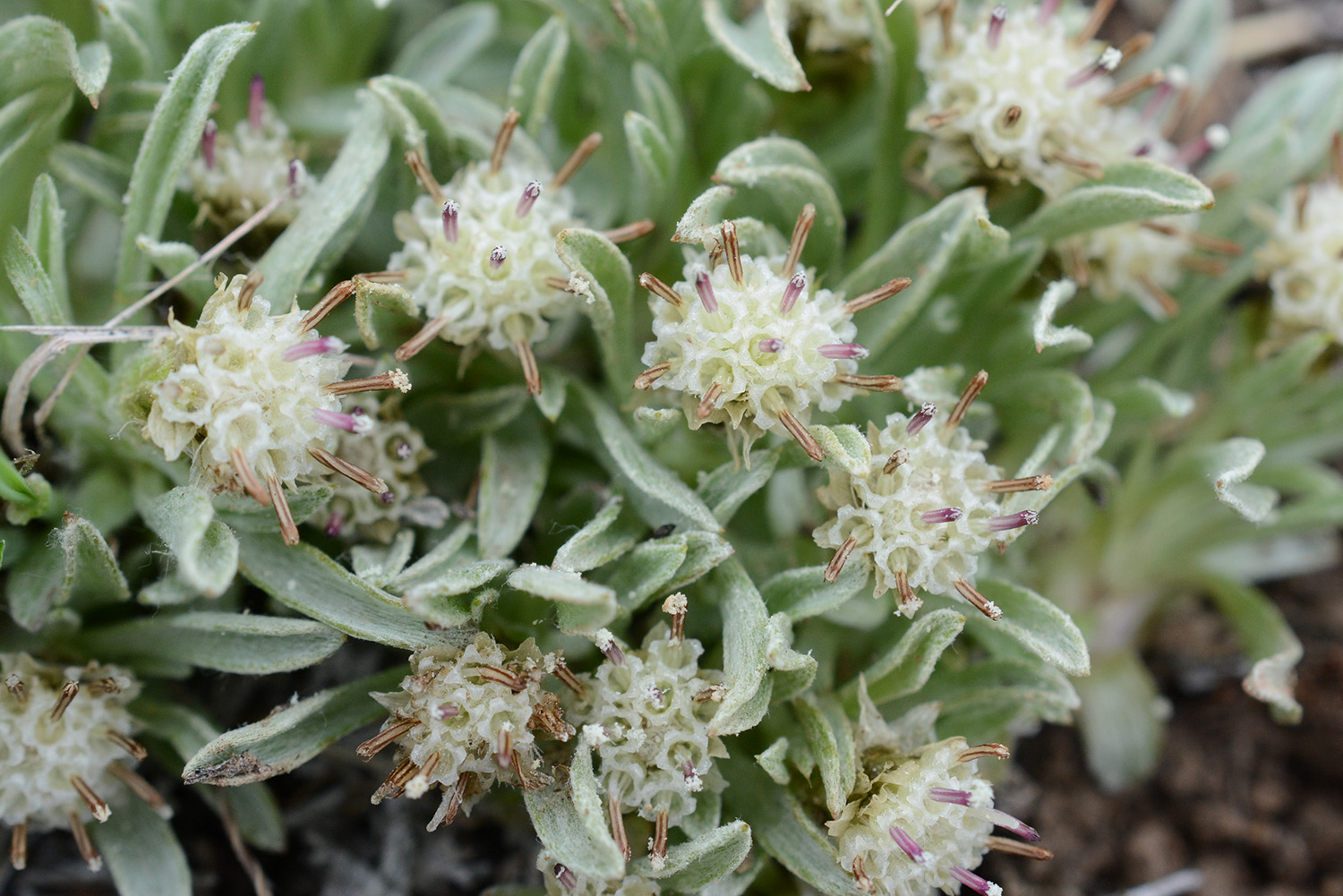
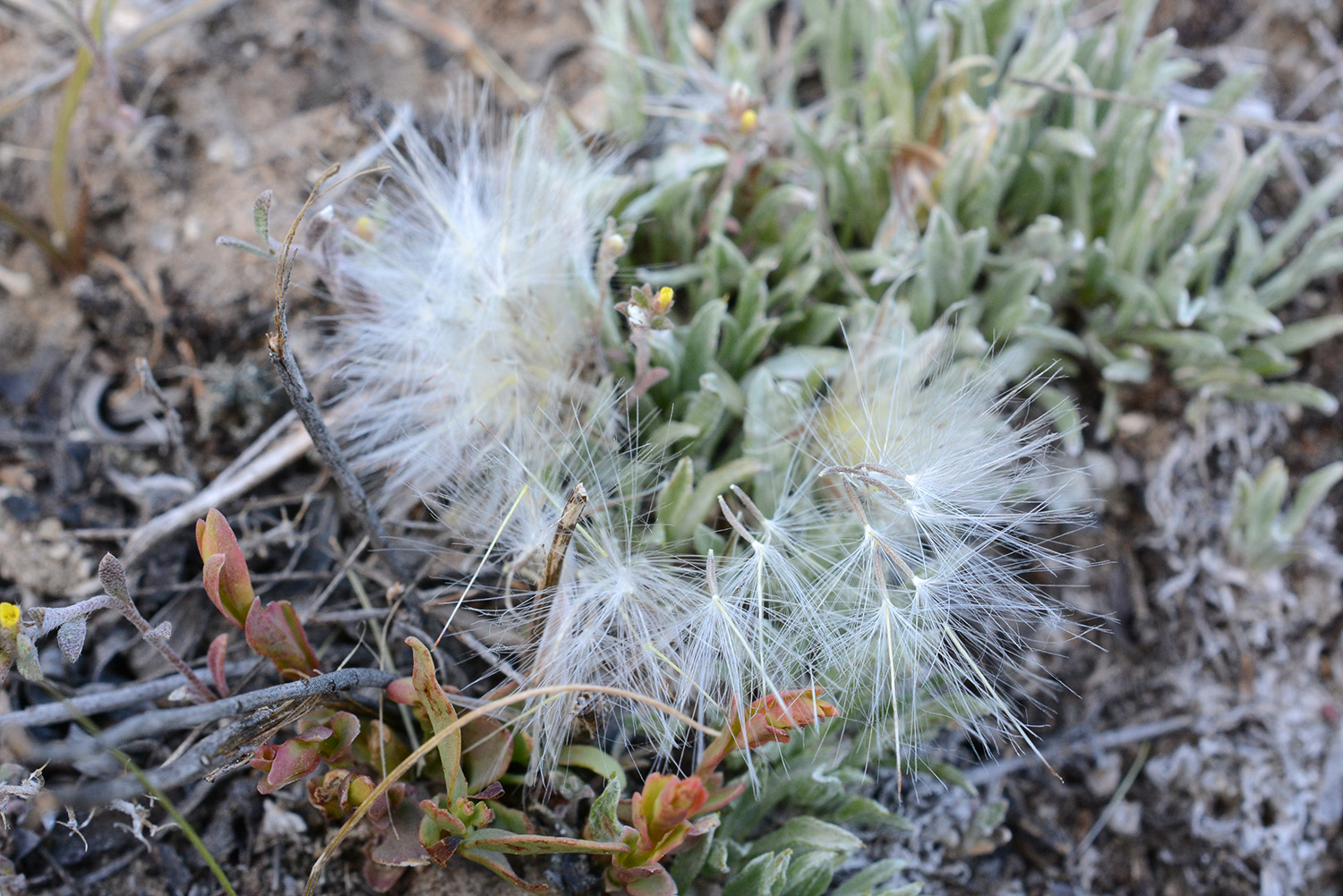
Low Pussytoes – Antennaria dimorpha – is our earliest and smallest pussytoes in the county. Mats of silvery hairy leaves almost hide the single flower heads.
Most of the flowers of Low Pussytoes are female and can self-fertilize. Otherwise, wind, bees, butterflies, and moths help transport pollen to the female flowers on separate plants.
Fruits are almost ready to disperse on the wind with the aid of silky hairs, techincally a pappus, or “fluff”.
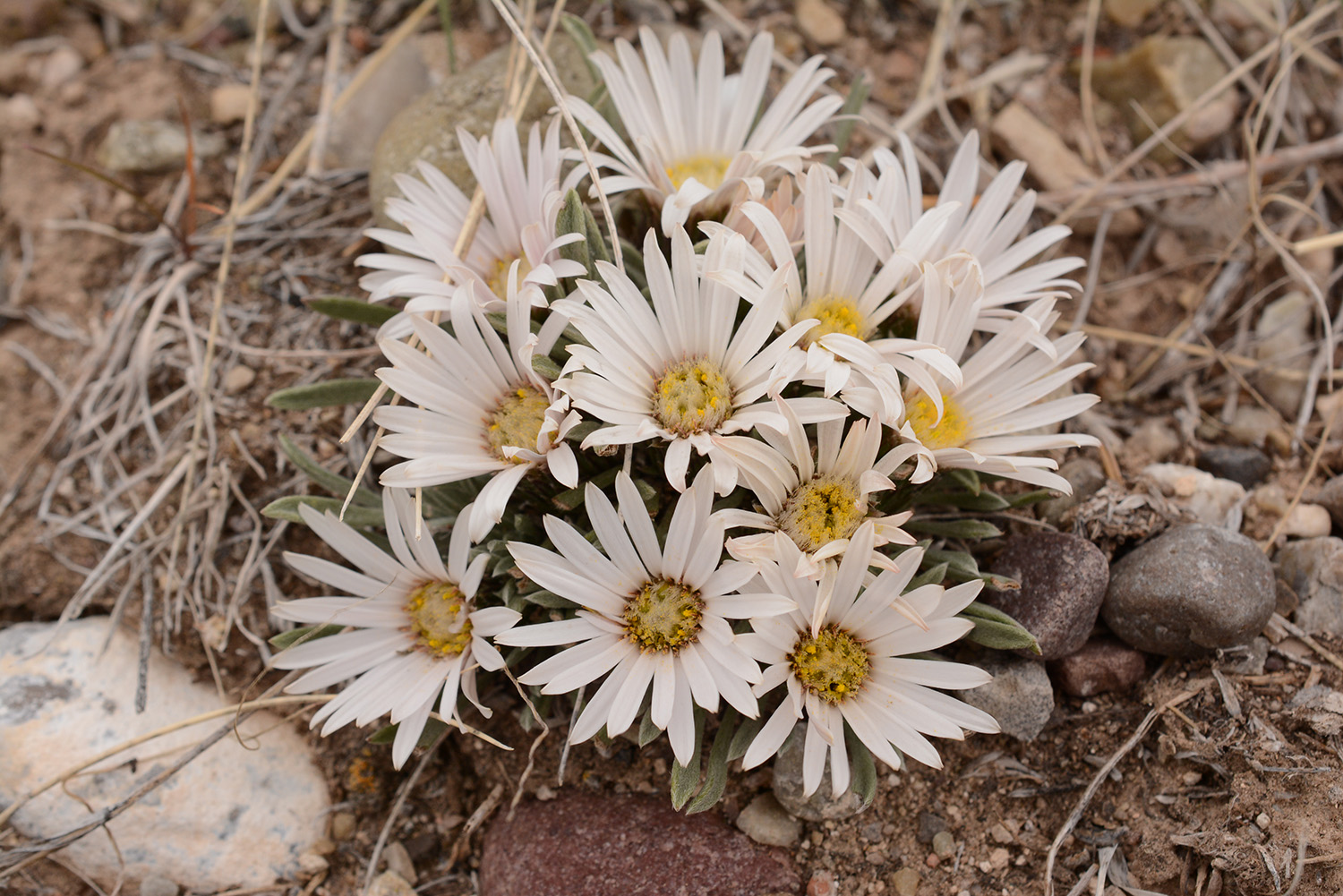
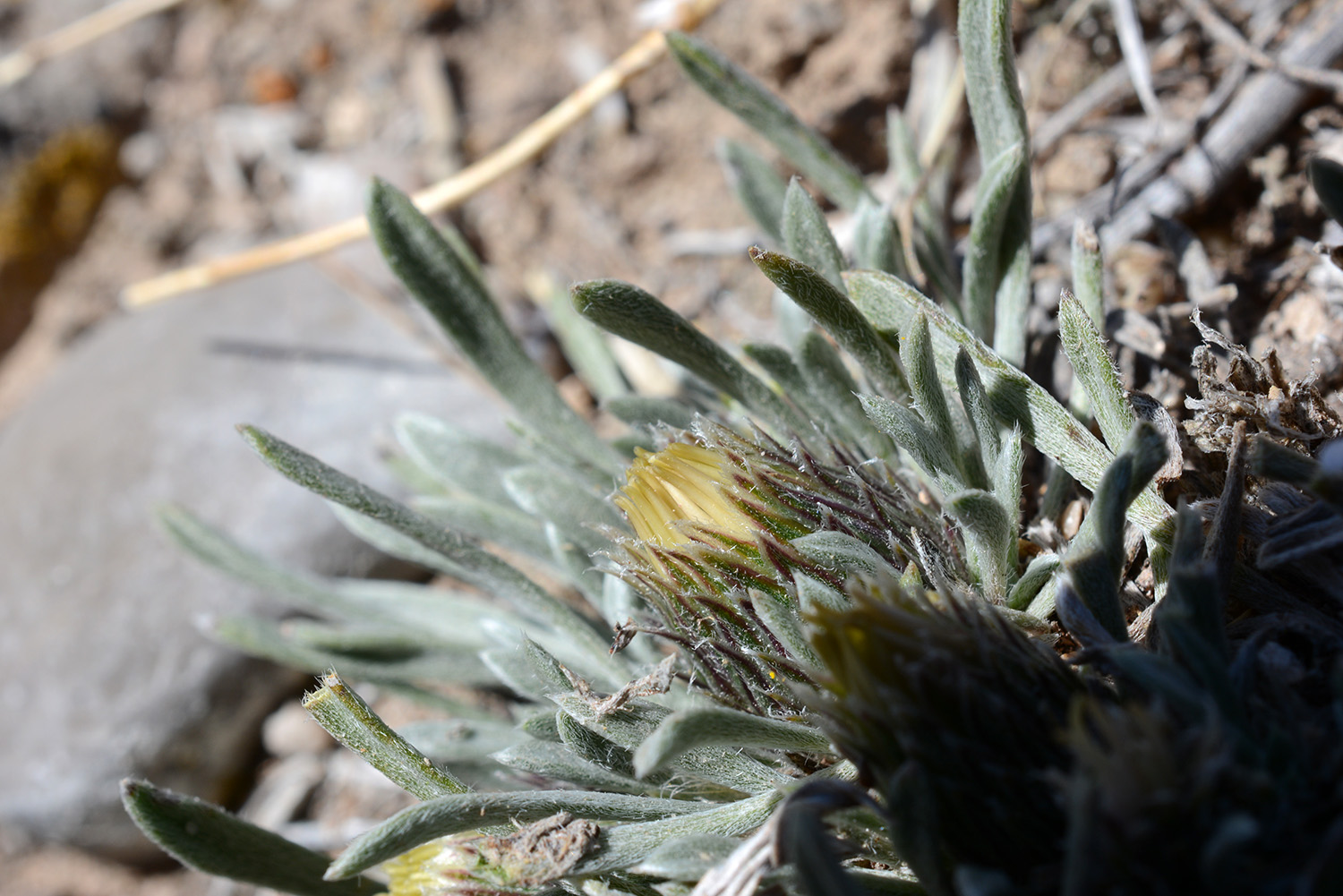
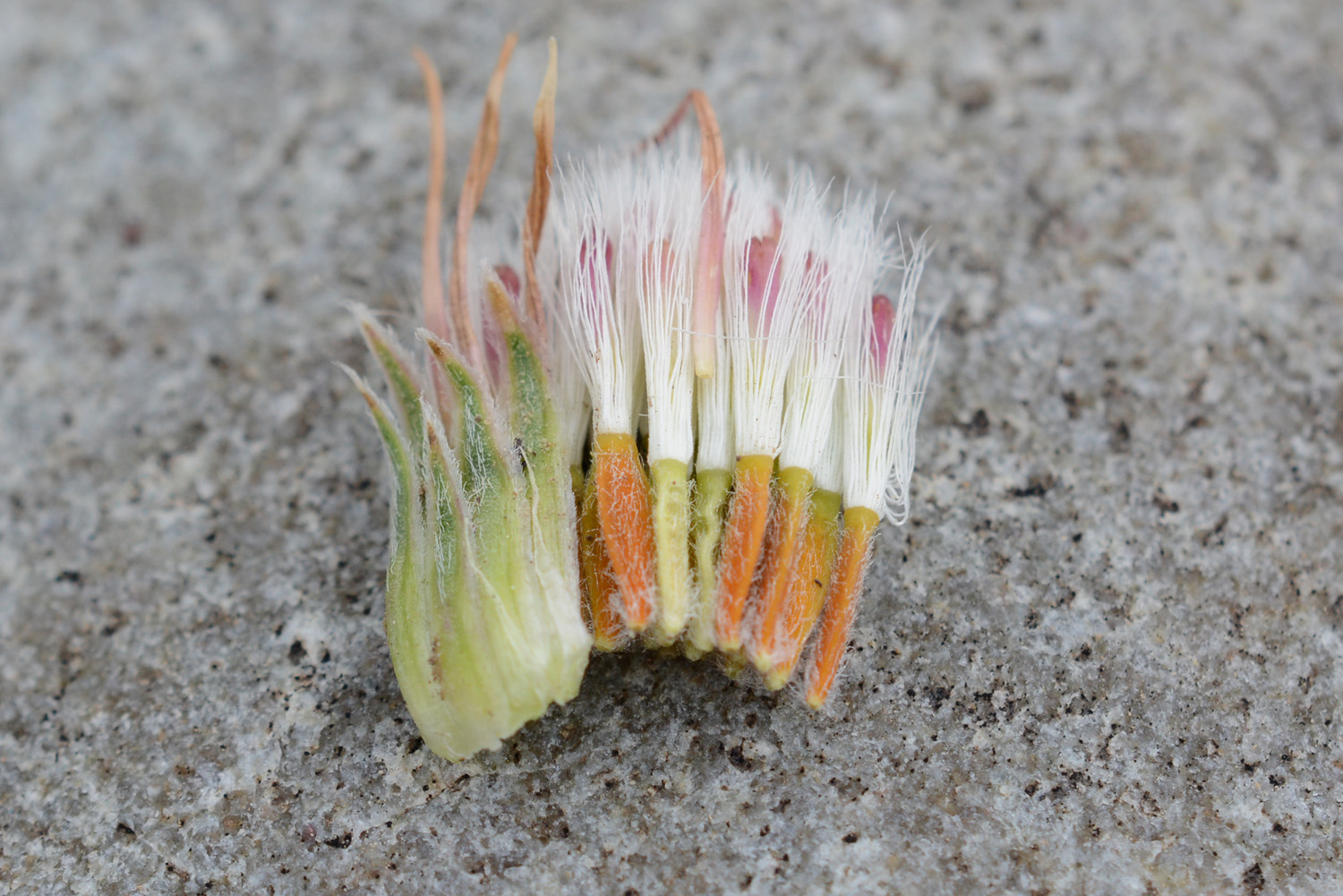
Tucked tight among rocks on dry slopes – Common Townsendia – Townsendii leptodes – is slowly opening its substantial, stemless flower heads. The outer petal-like white-to-pinkish ray flowers surround many yellow “disc” flowers.
The pointed bracts that protect each head are neatly overlapping like shingles on a roof. The silvery leaves are oblong, slightly hairy and bunched close to the ground.
As with the many members of the Aster Famiily, dandelions included, the fruits will fly off on a hairy pappus.
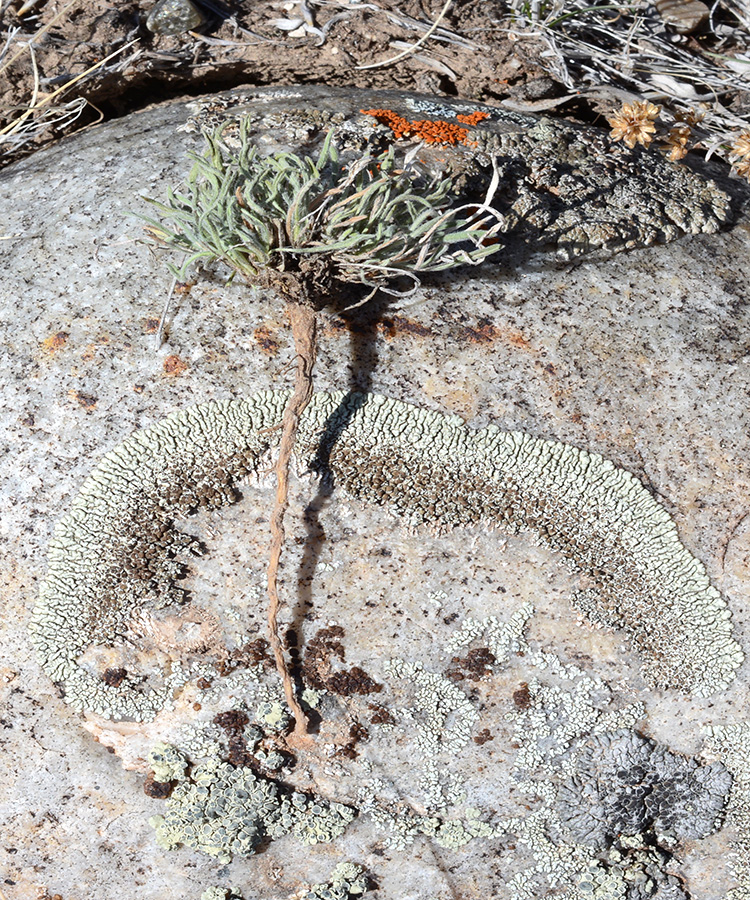
Tap roots extend deeply not only to reach much needed water, but also to anchor the plants on the steep slopes. Watch your step, please. These plants are hard to see and may be dozens of years old.
This old plant was dislodged along a steep rocky informal track.
The flowers in this posting may have come and gone in the southern part of the valley, but may still be seen at higher elevations or in northern parts of the park. It’s hard to keep up! We hope this post helps you to look, and to look again carefully to fully appreciate the wonder of plants.
Very soon many more flowers will open to greet pollinators – we will try to keep you posted.
Enjoy!
Teton Plants
As always, your comments and corrections are most welcome. We want to be as accurate as possible without being too technical. Thank you.
Everything appears to be in bloom!! The sagebrush steppe habitat and butte slopes are full of Sulphur Buckwheat, Sticky Geraniums, lupines, Scarlet Gilia, and yellow composites such as Little Sunflowers! One may call it a superbloom spring!
It has been hard to keep up (some of the info below is now dated)–the show keeps on changing! Some flowers in the south end of Jackson Hole and Grand Teton National Park may be fading while the same species are fresh in the north-end of the park up through Rockefeller Parkway. Yellowstone National Park roadsides are also flourishing. Below are the most common species seen right now.
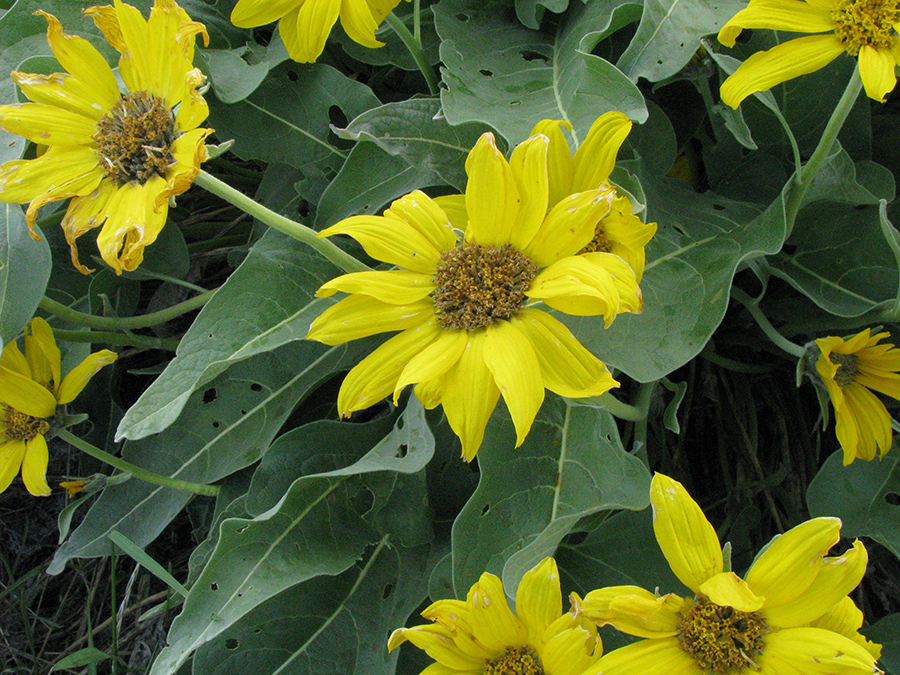
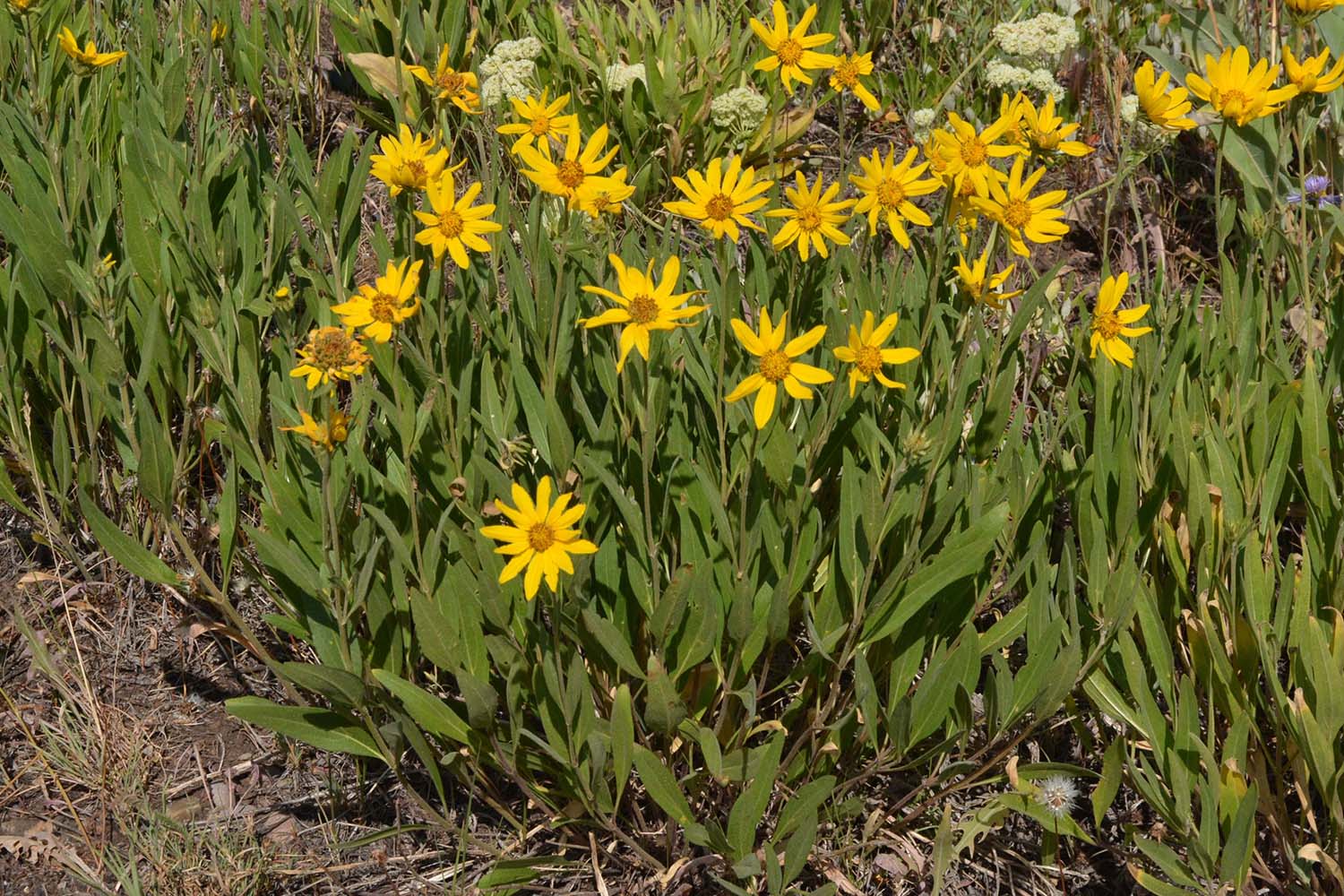
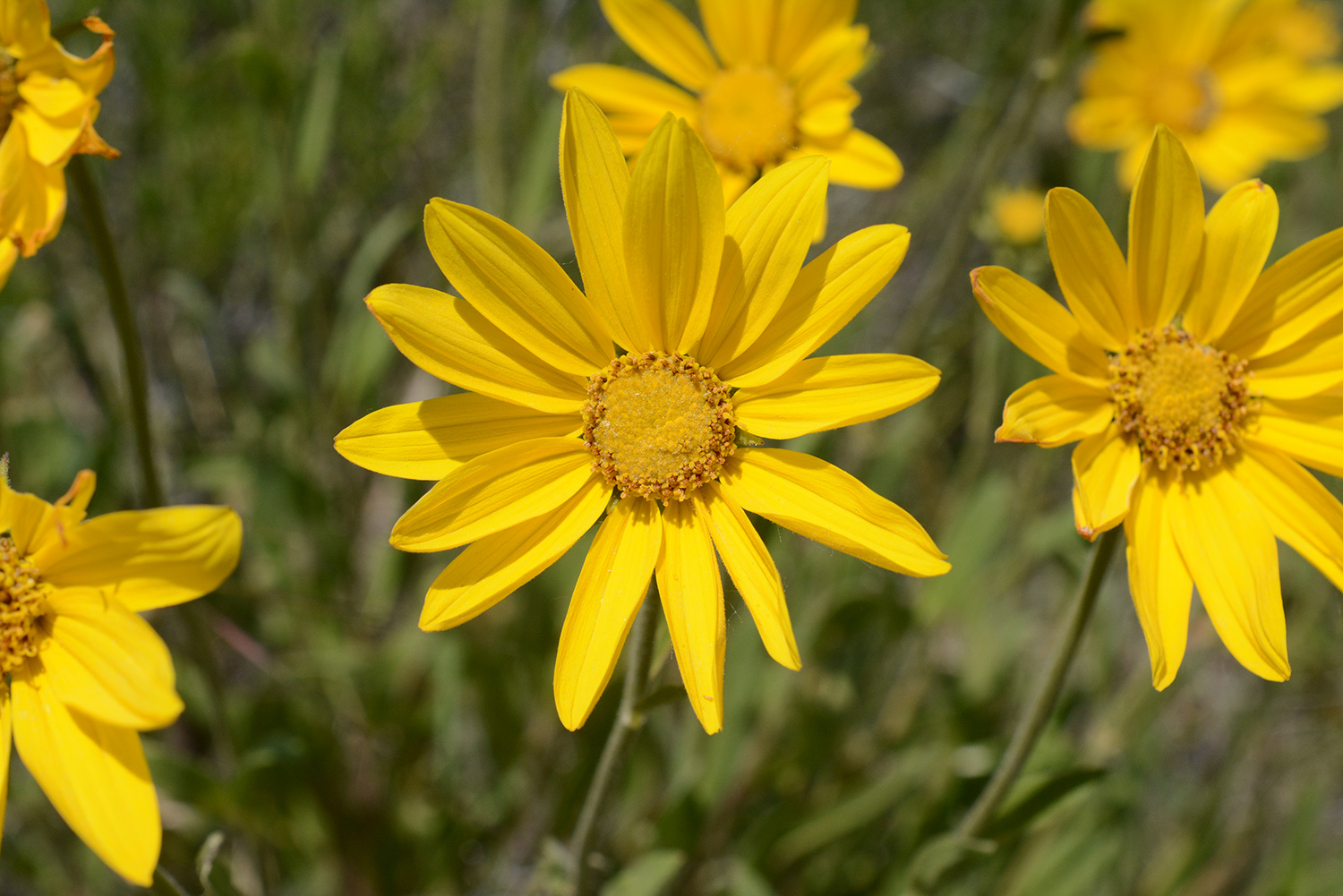
This has been an exceptional year for Arrowleaf Balsamroot – Balsamorhiza sagittata – which has been going strong these past couple of weeks on Signal Mountain, around Antelope Flats, and along Grand Teton park road, everywhere! They have arrow-shaped, grayish hairy leaves and flower heads arise from the base of the plants.
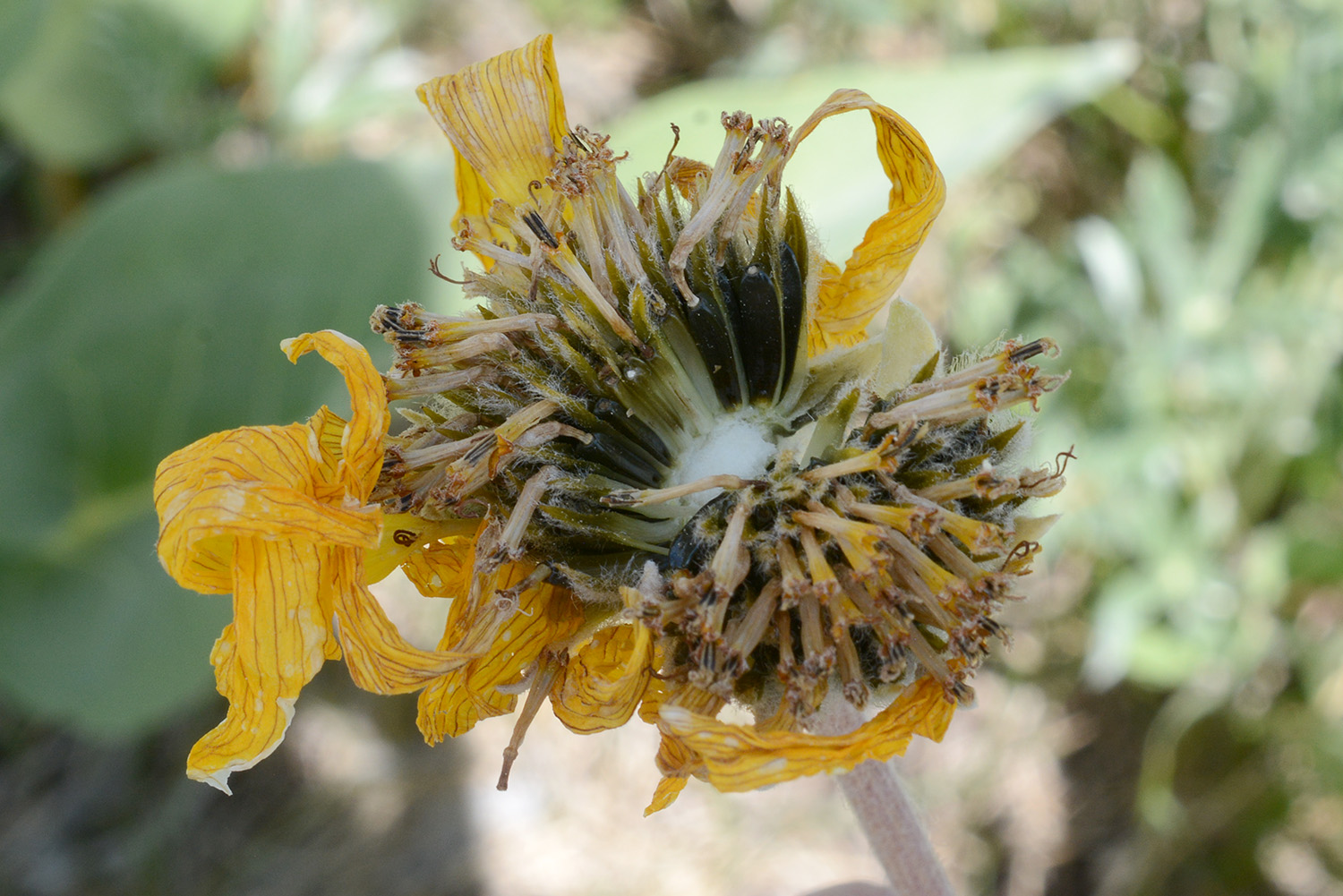
In some areas the flowers are already producing seeds that will feed birds, small mammals, and insects. The heads themselves may be alive with different grubs.
Its less common cousin, Mule’s-ears – Wyethia amplexicaulis – is coming into even bolder bloom with deeper orange-yellow flowers and dark green, oval smooth leaves near the northwest end of Blacktail Butte near the bike path, and in spots by the Oxbow Bend, and slopes elsewhere. Flowers and leaves alternate up stems and the surrounding protective bracts of the heads are greener and smooth compared to balsamroot.
Single-flowered Little Sunflower – Helianthella unfilfora – is filling in where balsamroot is fading. The truly “sunflower” looking heads are borne singly on top of 2-3′-high stems with alternating-to-opposite leaves, usually with 3 clear nerves.
It is fascinating to see the individual flowers (remember “composite” flowers have many, many little flowers on a platform forming a “head”) start blooming from the outside edge and spiral toward the center over time. Look up “fibonacci sequence”.
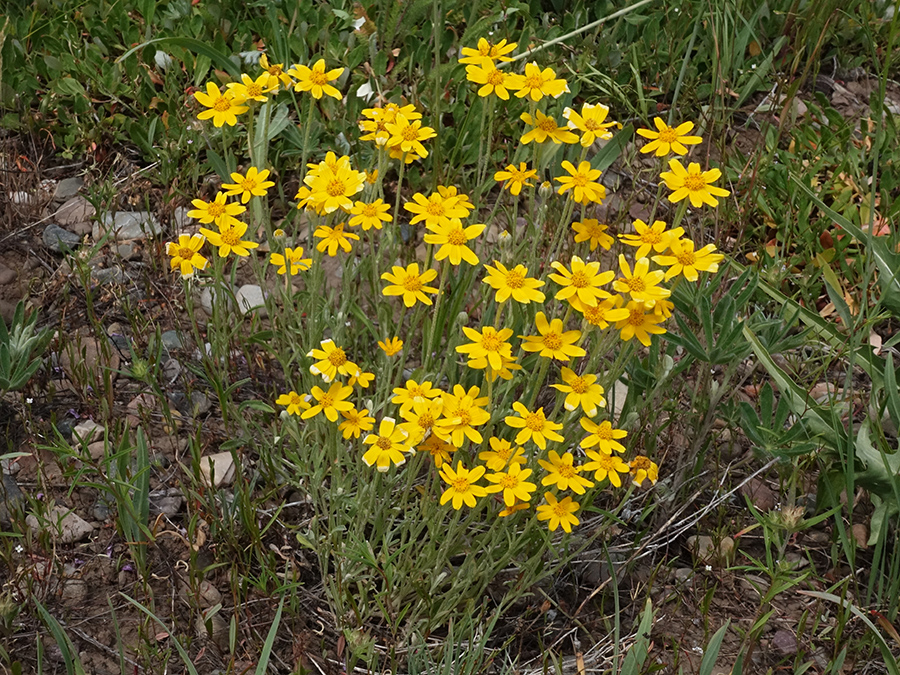
Tucked down under the taller yellow composites are 6-8″ Woolly Sunflowers – Eriophyllum lantatum.
The bracts surrounding the head of both broad ray flowers and smaller disc flowers – are indeed woolly.
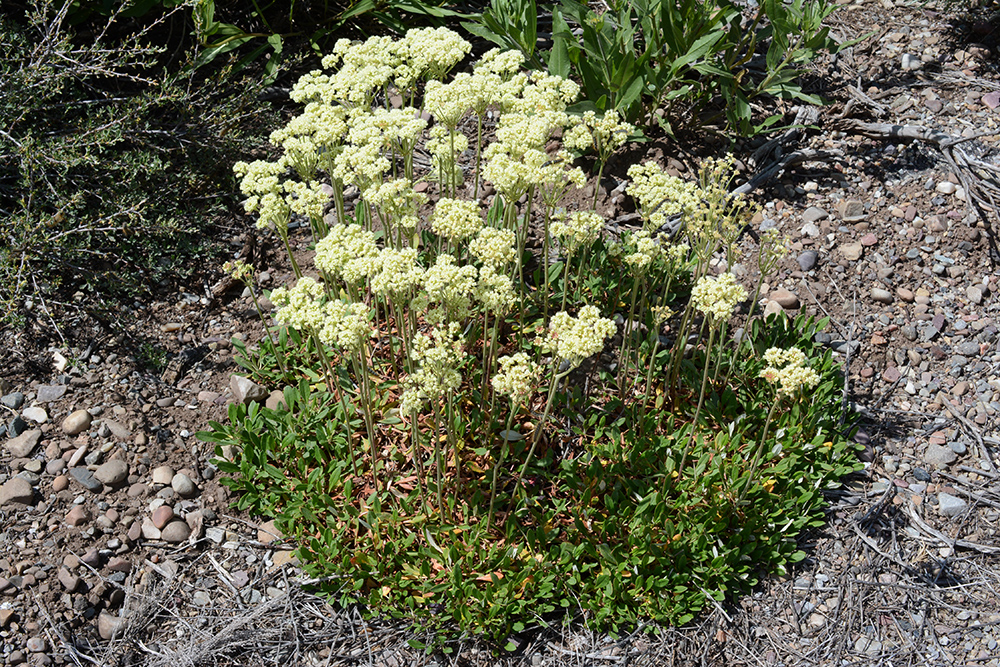
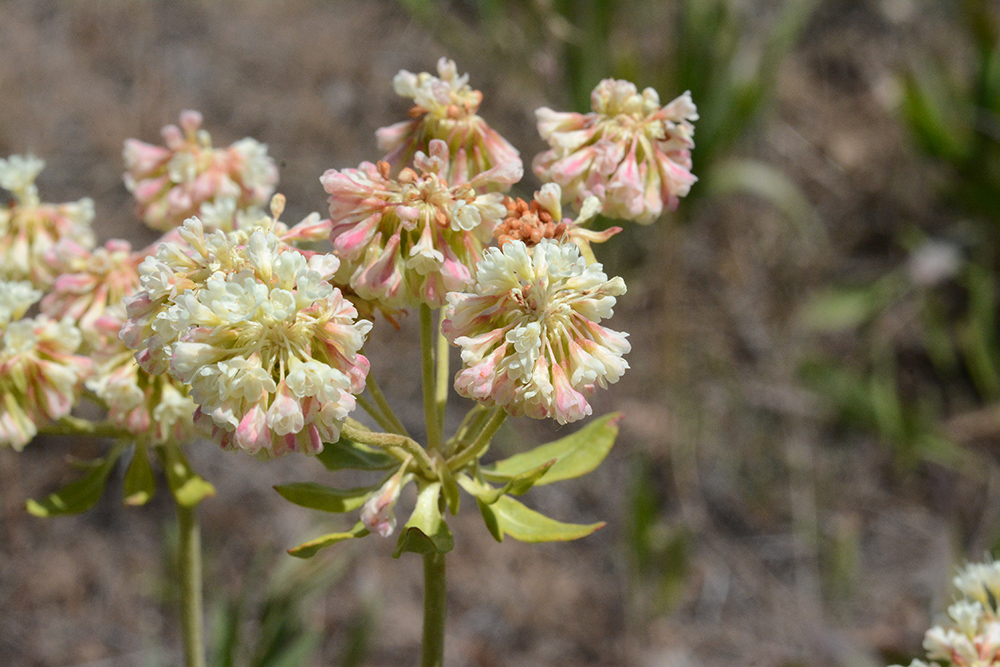
Common associates at their peak right include creamy heads of Sulphur Buckwheat – Eriogonum umbellatum. Note the more-or-less oval leaves form mats at the base, Their top surface is green, the underside pale hairy.
A ring or collar of leaves subtends the whorls of flowers arranged in an umbel. There are several other buckwheats in the valley, but these are the most common.
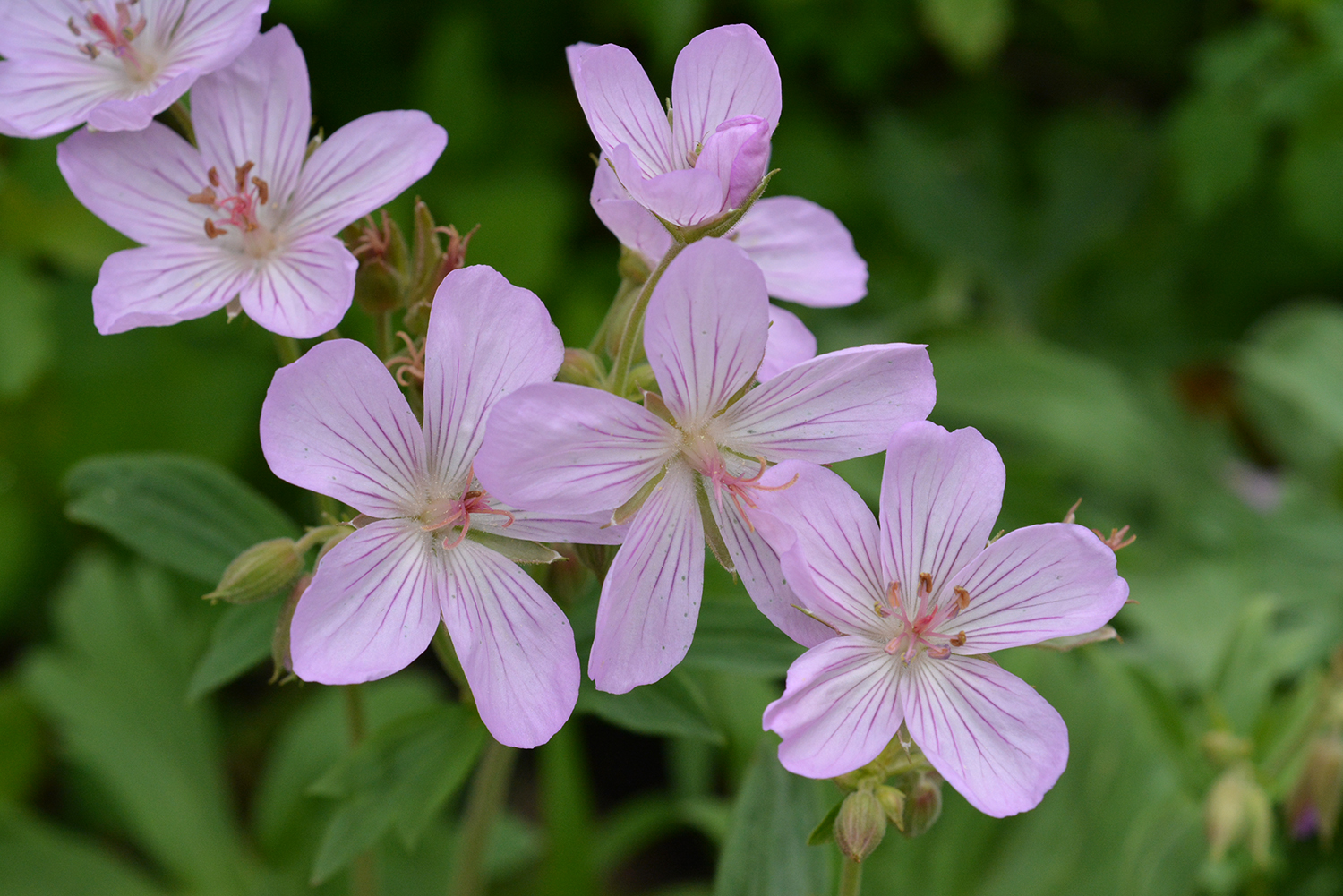
Blue-to-pink Sticky Geraniums – Geranium viscossissimum – are especially abundant this spring! The wide-open flowers attract generalist pollinators: its easy for different sizes and types of flying insects to land on the broad platform formed by the petals. Fine “nectar guides” or lines direct pollinators to the center where the nectar lies.
When nudging into the center, the insect may get pollen dumped upon it from the 10 over-arching male anthers (upper right flower). Going on to a more mature flower, the insect may rub against one of the 5 sticky female stigmas (left flower) at the top the female pistils, thereby pollinating the flower. The pollen grain will be stimulated to grow by the chemistry of the stigma, grow a tube down the style to the base where the sperm will fertilize the egg inside the ovary.
Once fertilized, the seed will begin to form, later to be catapulted by the dried fruit into the beyond.
Elsewhere, there are bunches of white-to-blue-to pinkish Longleaf Phlox – Phlox longifolia – with 6-8″ stems and narrow opposite leaves. All phlox species are extremely fragrant, attracting pollinators.
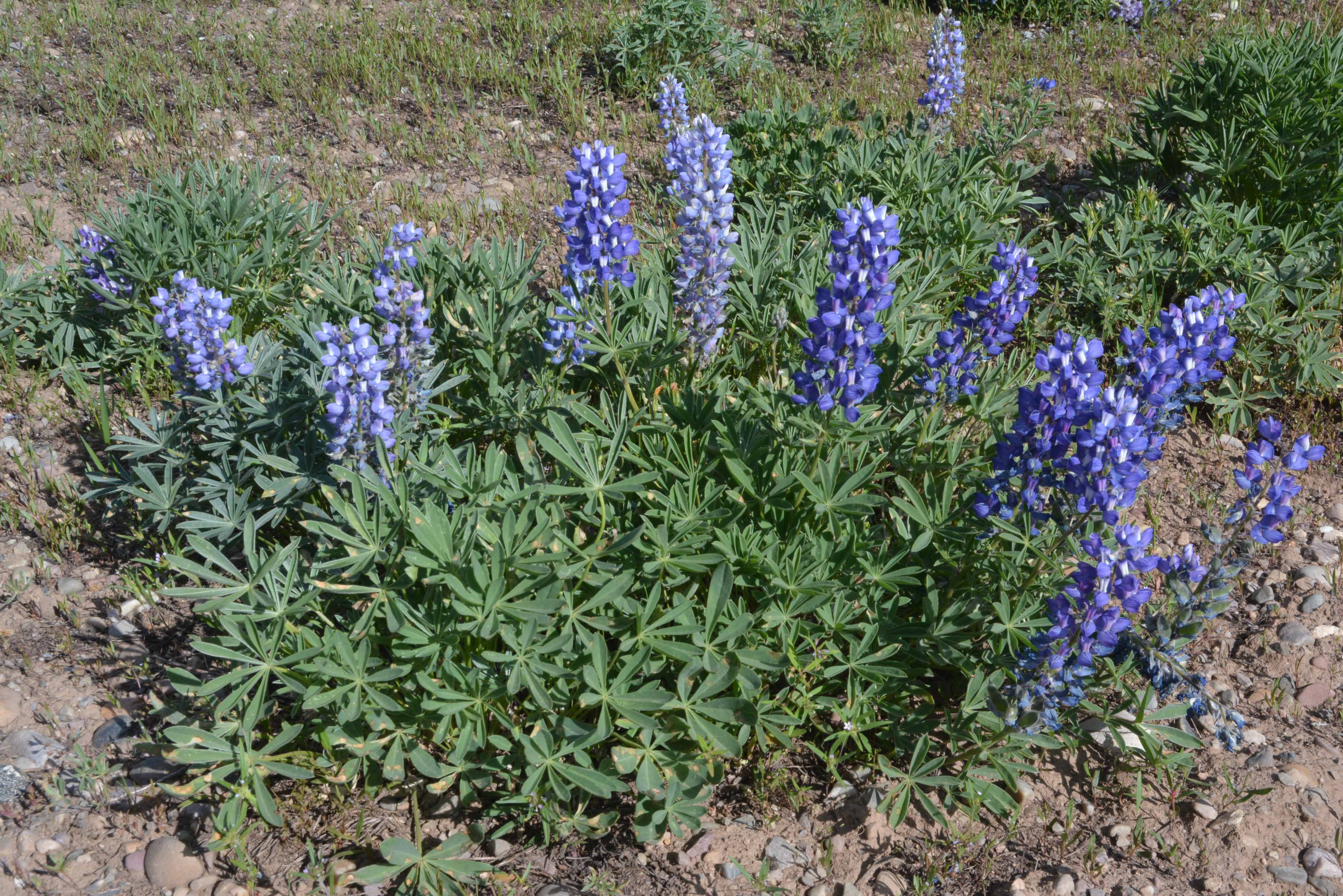
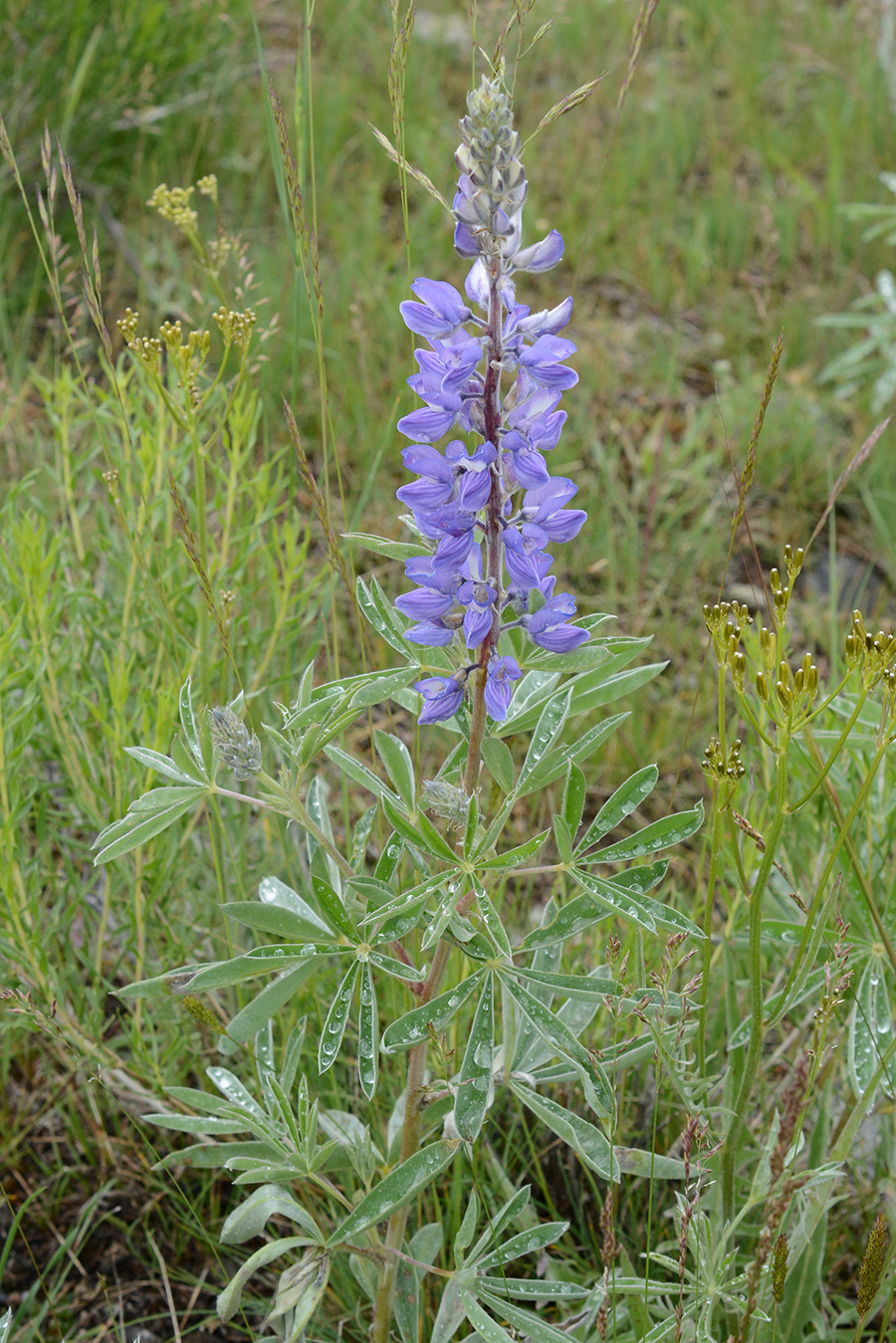
Our three common lupines are extending their spires of pea-like blue flowers in different habitats.
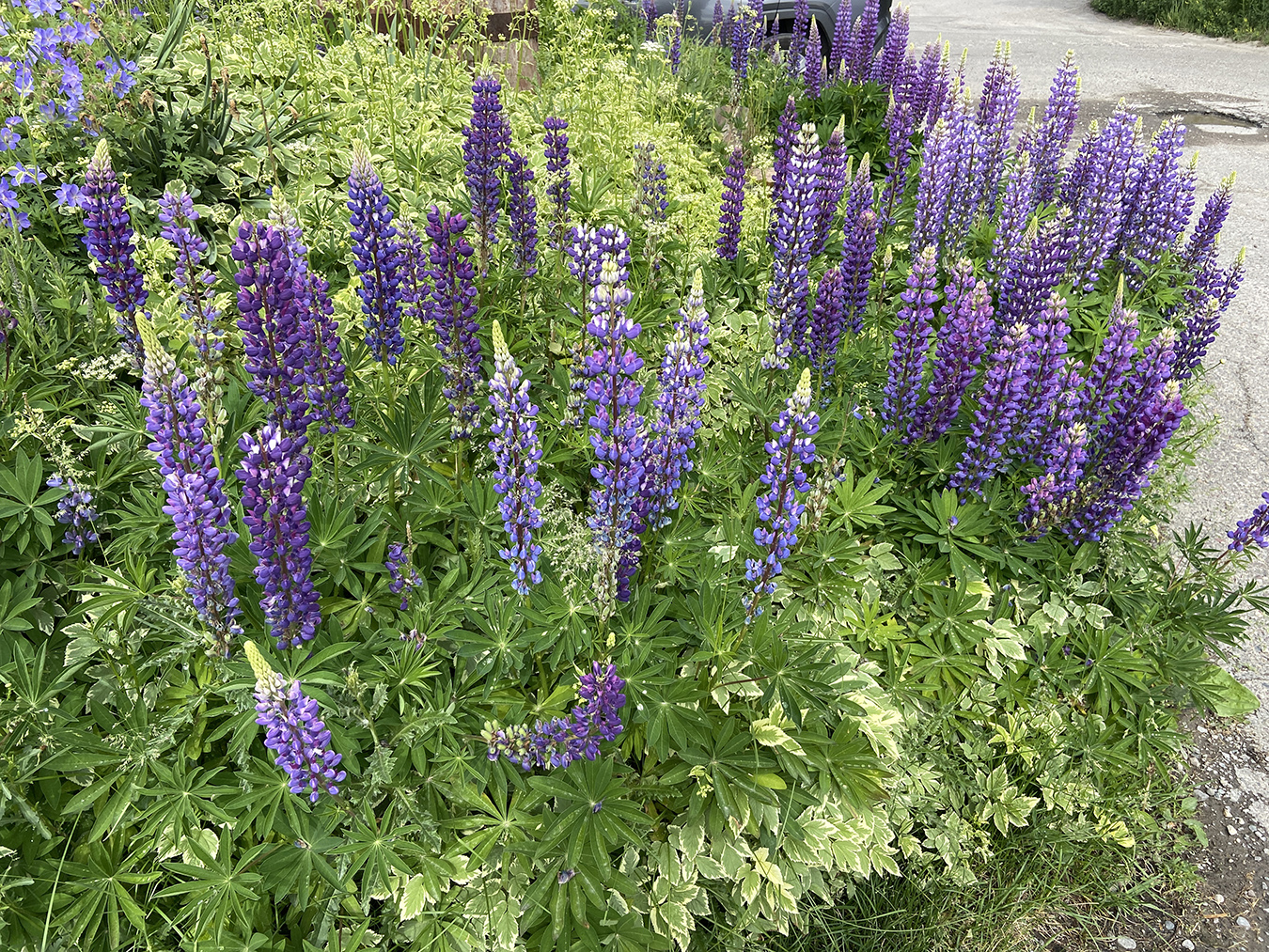
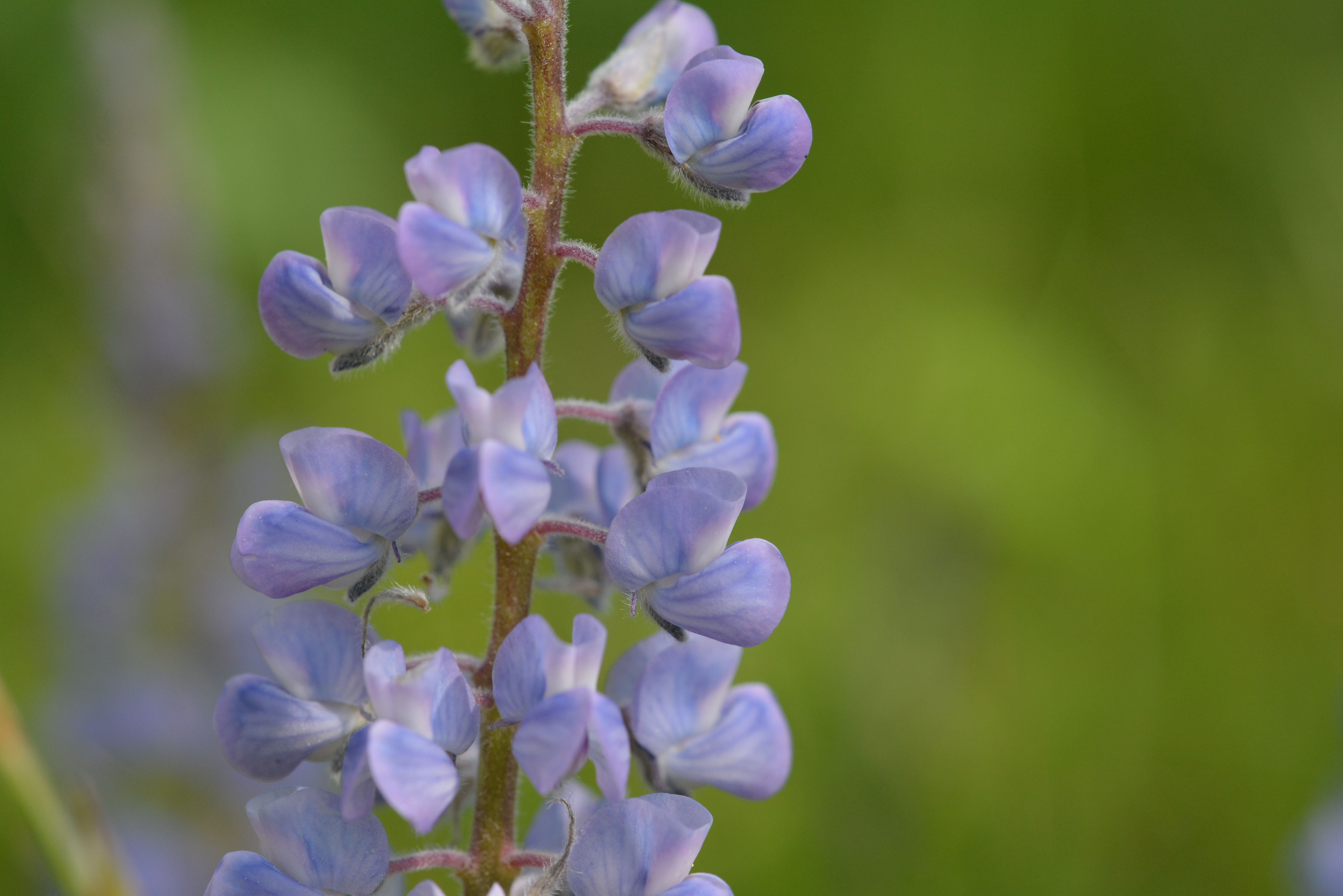
Meadow Lupine – Lupinus polyphyllus var. humicola – grows most often on relatively rocky, well-drained sites. The leaves may have 7-12 leaflets and the flowers are wide open with bold white spots at their base to guide in pollinators. As with other lupines, once pollinated the spot may become purple to signal to the pollinator to pass-it by–the nectar is gone or dried up.
Note this is our native species, not the cultivated hybrid cousin Lupinus polyphyllus var. polyphyllus – which has become invasive not only in the U.S., but also into Europe and Asia.
The invasive flowers are larger, the palmate leaves have 9-17 leaflets, and the flowers have no fragrance.
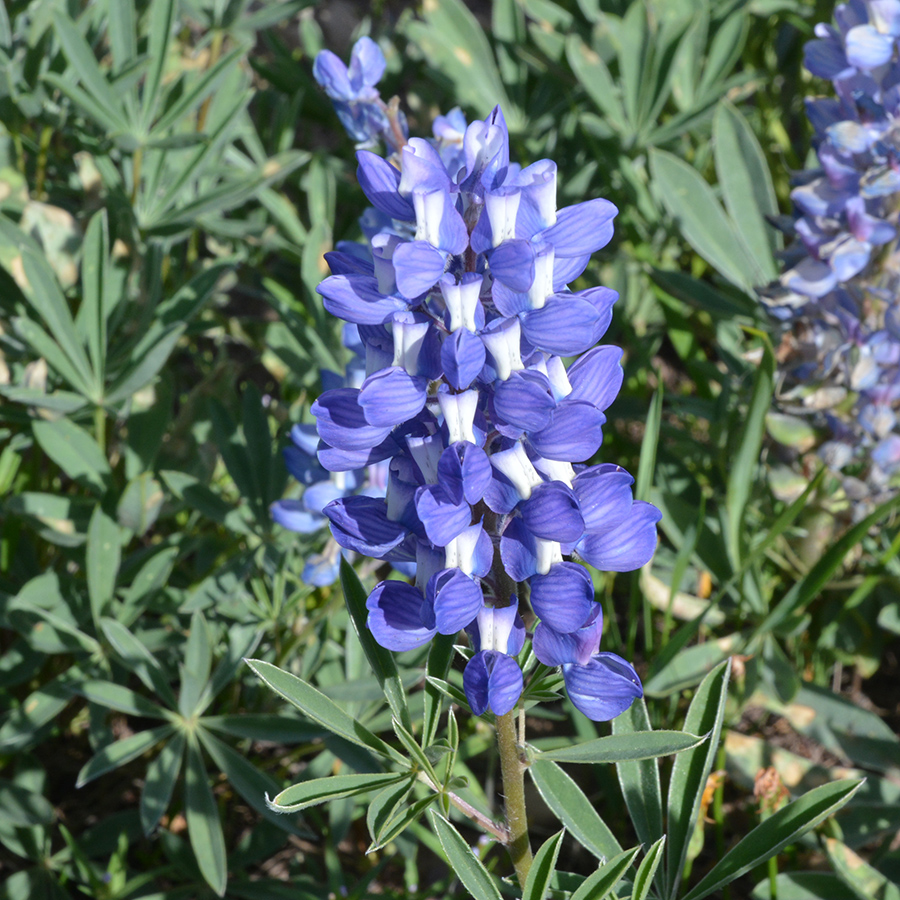
Silky Lupine – Lupinus sericeus – has silvery, hairy leaves and also hairs on the back of the upright “banner” petal.
The silvery hairs help to reflect intense light and reduce water loss, an adaptation for growing out on the sunny sageflats.
Silvery Lupine – Lupinus argenteus – often forms an understory in lodgepole pine forests, such as seen along Moose-Wilson Road and Signal Mountain. Its leaves are much less hairy and the back of the banner is hairless.
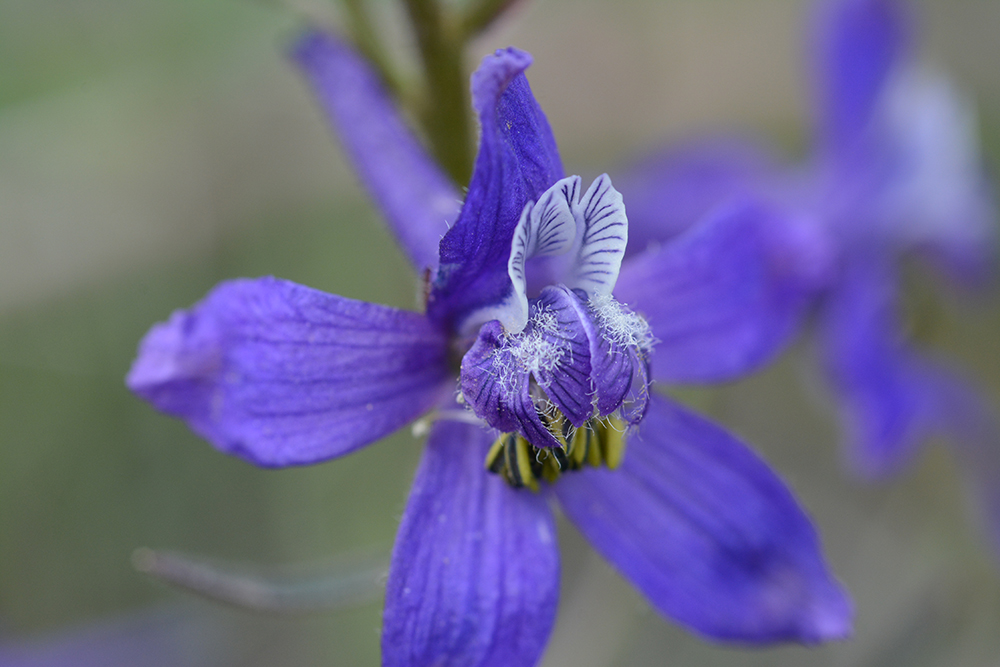
Low Larkspur – Delphinum nuttalianum – has been blooming strong over the past few weeks. Early-arriving hummingbirds hover in front of the flowers, extend their tongues deep into the back of the petal spurs to get nectar that fuels their flight. So doing, the birds get a shower of male pollen on their heads. When going on to a more mature flower, the hummingbird may reach again into the long tube for nectar, thereby, dropping off the pollen upon three protruding female stigmas. Once the flower is pollinated, it is ready to form seeds inside three maturing capsules! Large bumblebees with long probosci are active pollinators as well.
Lewis’ Flax‘s – Linum lewisii – sky-blue flowers wave about on thin but particularly strong 1-1.5′ stems. Its European relative – Linum usitatissimum (translated as “most useful”) – was one of the first fiber plants. It was used by the Phoenicians to make canvas sails and Egyptians to wrap mummies before burials in pyramids. Later peoples created a more refined linen and manufactured day-to-day linoleum and linseed oil. North American natives used Lewis’ Flax also for cordage and the seeds for health purposes. Bees and flies are common pollinators.
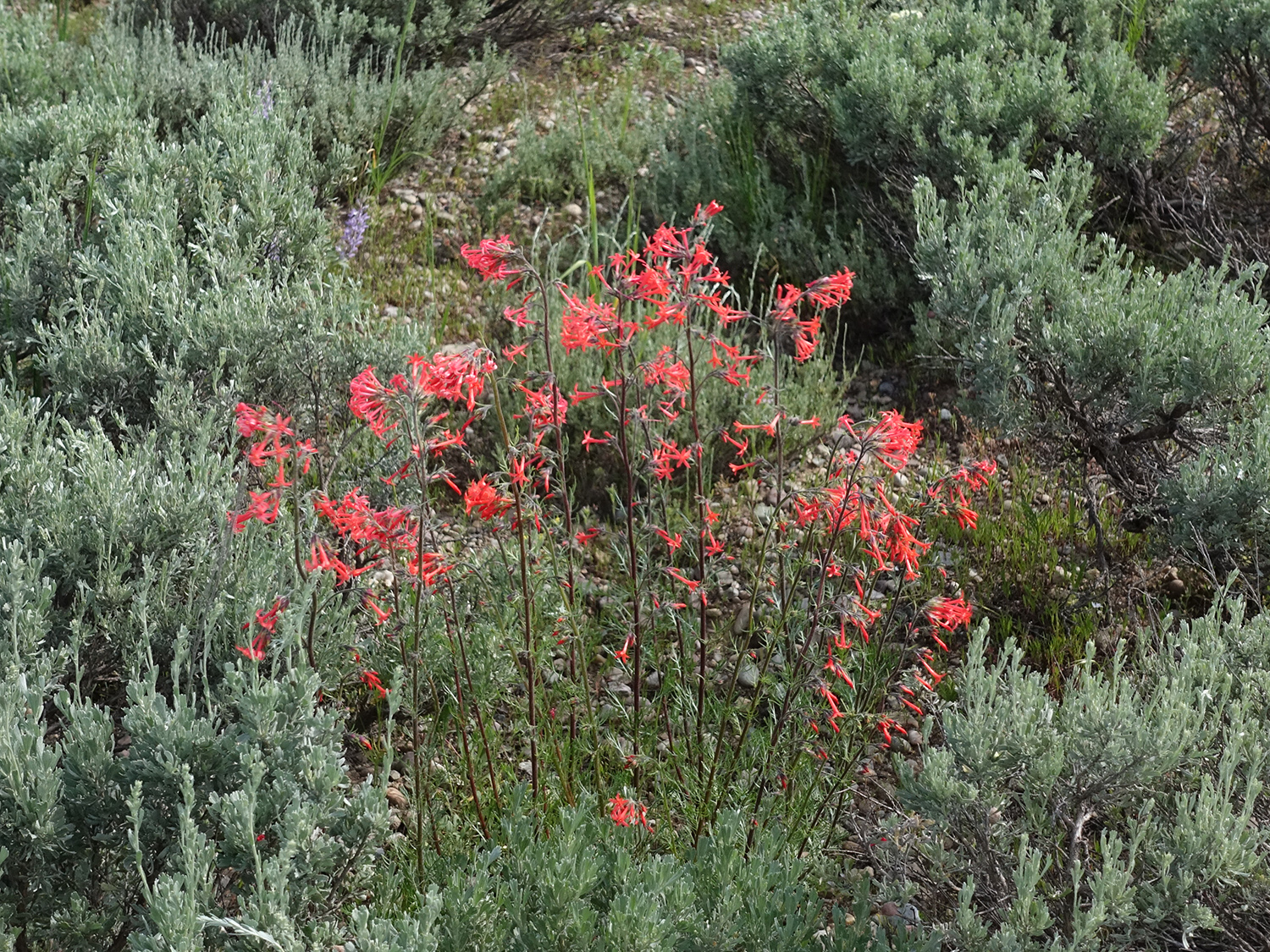
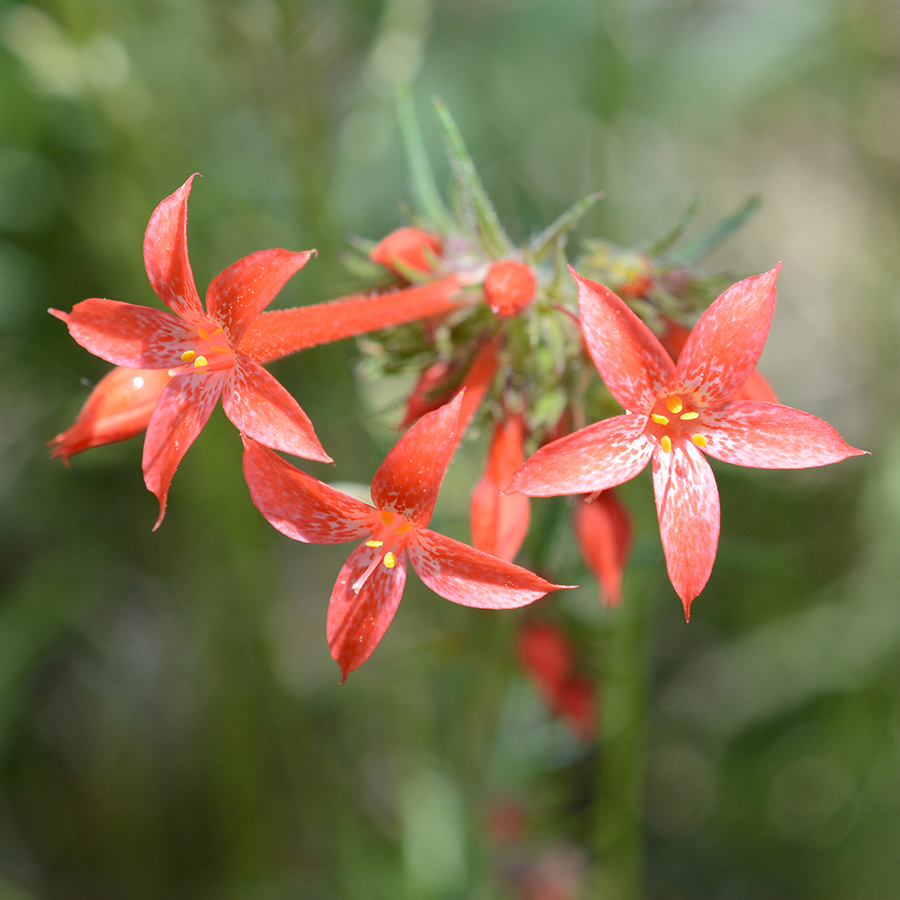
Scarlet Gilia – Ipomopsis aggregata – is remarkably abundant this year. The bright-red tubular flowers are particularly alluring to hummingbirds who readily see red, unlike many insects. Again, the acrobatic hummingbird hovers, extends its tongue way back into the tube, laps up nectar, and concurrently bonks its head gathering up pollen grains which at another flower the bird bumps off onto an extended stigma.
Later flowers may be paler in an appeal to moths which also can hover and have long probosci – mouth parts – to reach deep into the tubes. After flowering, plants may or may not survive another year, but the seeds will form rosettes that can survive over winter and increase in size over a couple of years.
Members of the Parsley Family continue to spread their umbels. Bright-yellow sprays of Spring Parsley – Lomatium ambiguum – still lace the flats and slopes to the north.
Also, look for the the pale-yellow Nine-leaf Biscuitroot – Lomatium simplex.
Lomatium seeds are flattened “schizocarps”–they will split and the two halves held out on a little hanger until they fly off on the wind.
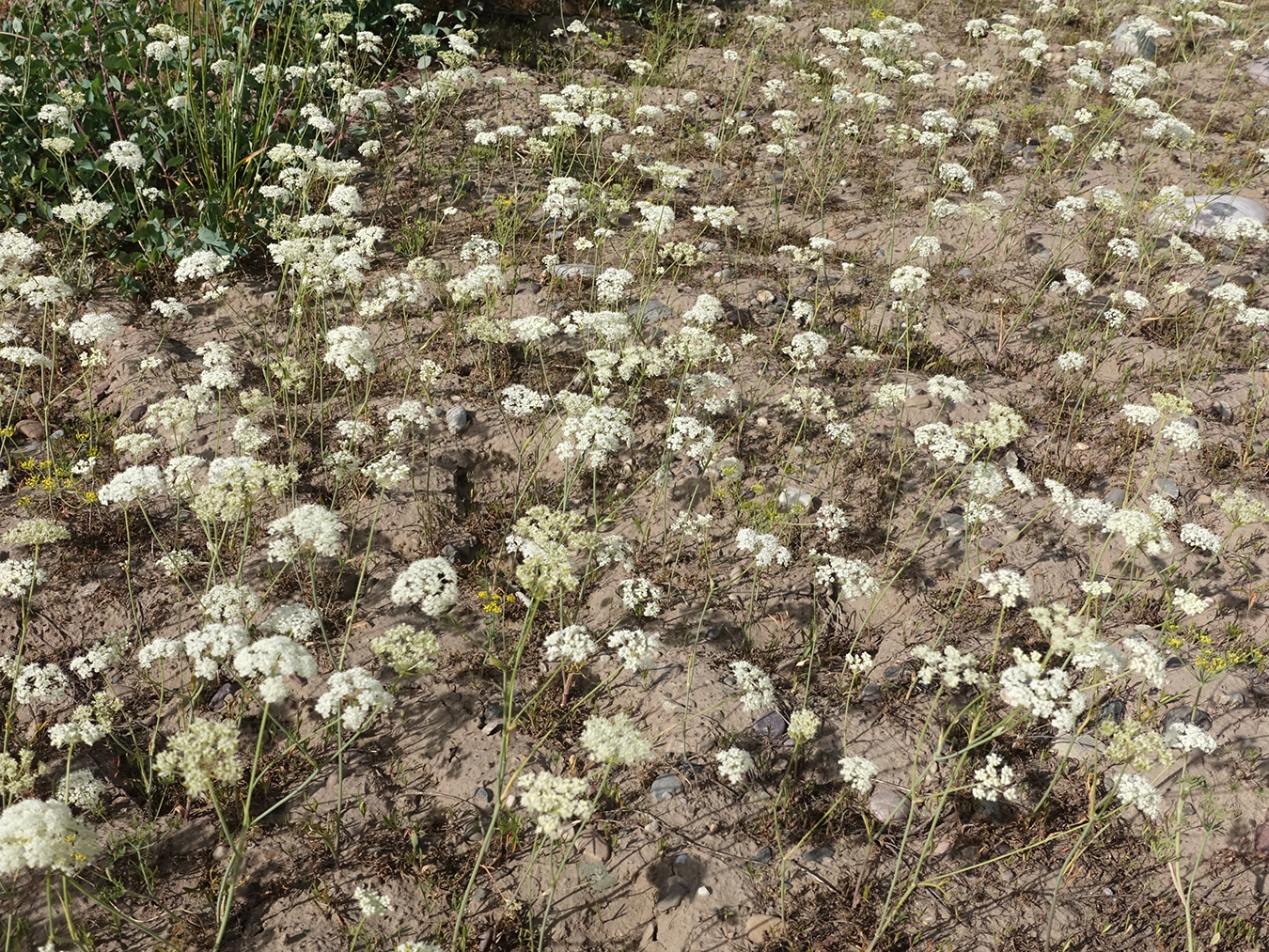
Delicate white umbels of Bolander’s Yampah – Perideridia bolanderi – are thick along the north end of Moose-Wilson Road.
They differ from the later blooming, more common Mountain or Gairdner’s Yampah – P. montana/gairdneriii – in their leaf-shape—more dissected, swollen petiole, and relatively elongate fruits.
The swollen roots of yampah and biscuit-roots are important forage for ground squirrels, pocket gophers, bears, and more.
Hawksbeards – Crepis sp. – are shooting up bunches of “liguate” flower heads above groups of mostly basal groups of deeply lobed, grayish leaves. Tapertip Hawksbeard – Crepis acuminata – is one of several local species.
Shrubs are also coming and going:
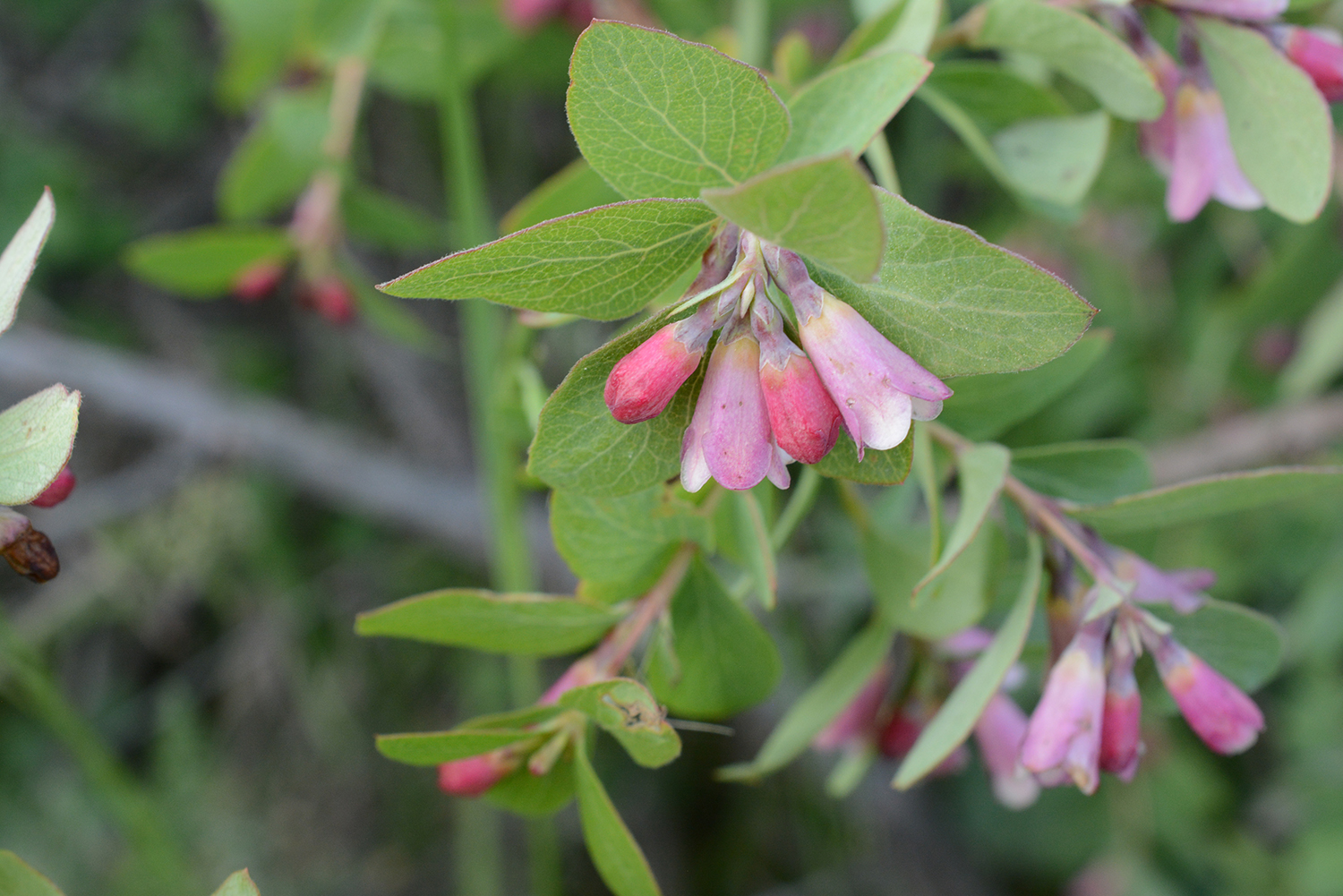
Utah Snowberry – Symphiocarpus oreophilus var. utahensis is blooming in the sage flats and up on Munger Mountain.
Other shrubs have attracted the attention of pollinators, but are fading fast: The highly fragrant yellow flowers of Antelopebrush– Purshia tridentata – attract dozens of bees. Note the leaves are dark green on top and hairy and lighter on the underside of the .5-1” -long, three-lobed leaves. (compare with sagebrush).
The fruits will be dry capsules that will split open to release seeds in the fall–critters from ants to small rodents thrive on these seeds and help plant them. Moose heavily browse plants in fall and winter. It also provides for many other insects and larger wildlife.
Surprisingly to this botanist, Antelopebrush “fixes nitrogen”–I think of the Pea Family as excelling at such, whereas the Rose Family is known for producing many of the fruits we and the wildlife eat, However, a few members of the large Rose Family in Teton County – our alpine Mountain Avens – Dryas octopetala – and our cliffhanger Mountain Mahogony – Cercocarpus lediflfolius – also fix nitrogen. So much to learn about plans!
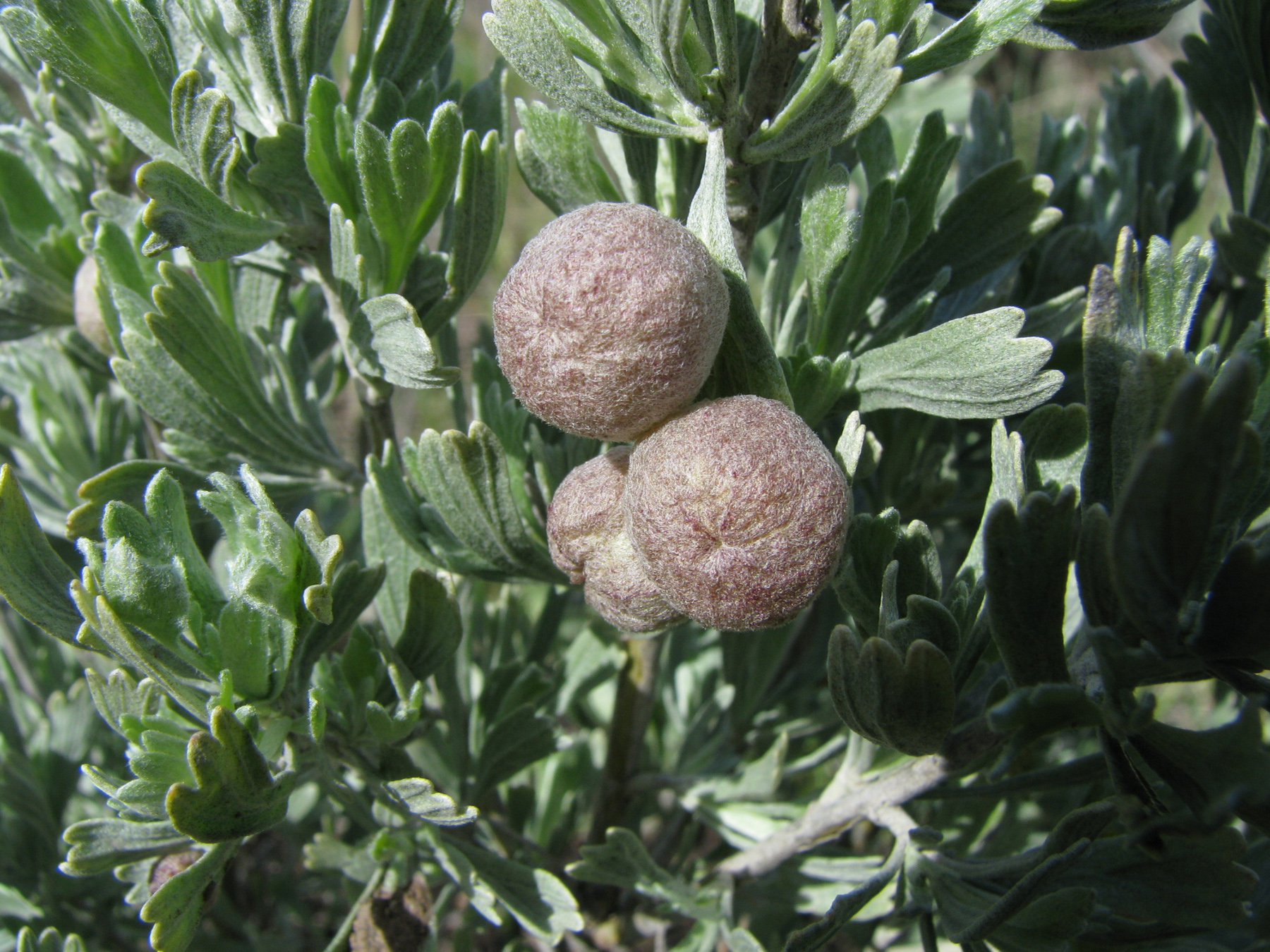
Antelopebrush plants (dark green) often mingle with silvery Mountain Big Sagebrushes – Artemisia tridentata var. vaseyana, which won’t extend their wind-pollinated flower stalks until fall. However, at this time, look for galls growing on the fresh, fragrant silvery leaves—galls are made from plant cells that are stimulated by the deposit of the eggs of gall midges. (Two good references – WenatcheeNaturalist and BodieHills.)
The insect chews or injects compounds similar to the plant’s hormones. In this case, the plant cells are redirected to form a globular safe-haven for the tiny gall larvae growing slowly inside. Over 32 midge and aphid species can stimulate sagebrush to form galls in our region. The one above looks like the sponge gall midge – Rhopalomyia pomum.
This has also been an abundant flowering year for Serviceberry – Amelanchier alnifolia, and
more recently Chokecherry – Prunus virginiana. This bodes well for an abundance of berries for bears come August and September.
While all seems overwhelming now, there are yet more flowers to come. Enjoy being outside as much as you can!
Frances Clark
Wilson, Wyoming
As always, questions and corrections are welcome. Email tetonplants@gmail.com, and we will respond when we aren’t out looking at plants!
(Original posting on 7.26.26 was corrected on 7.28.26)