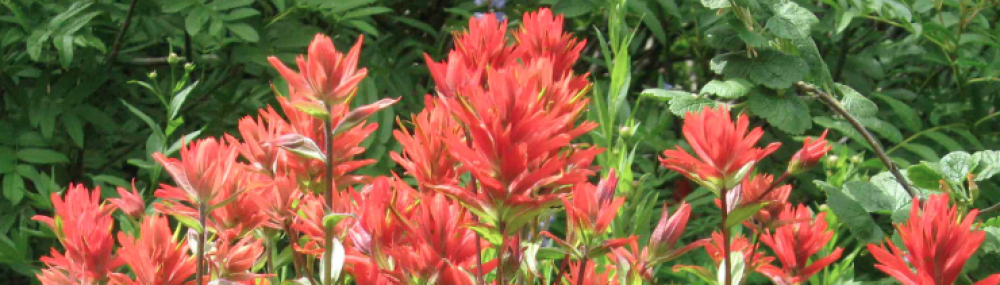
The Valley is full of flowers in June. So many so that here we present them by type—here are the shrubs, which come into their own when in full flower. Separately, we will post Wildflowers in Sageflats and Hills/Sun and Wildflowers in Forests/shade.
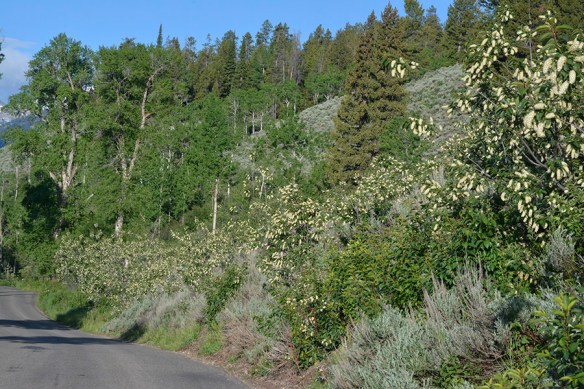
Most shrubs are most appreciated in spring when they bloom, although some will have colorful foliage and fruits for a short time in fall. The rest of the year, shrubs are usually overlooked as just green bushes or just twigs. So now is the time to celebrate shrubs.
Note: Shrubs are woody plants usually between 6”-20’ tall with multiple stems vs. 1 or 2 trunks of a tree.
The following are more or less in flower sequence within their group.
First to Start:
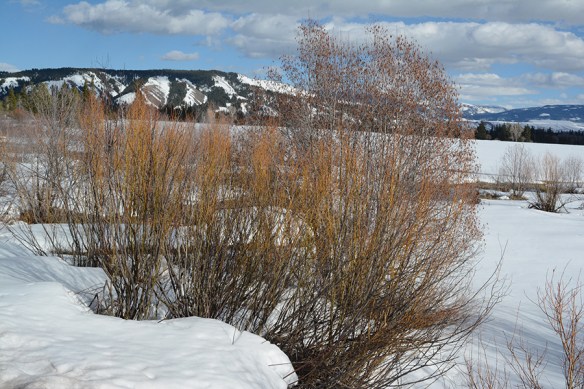
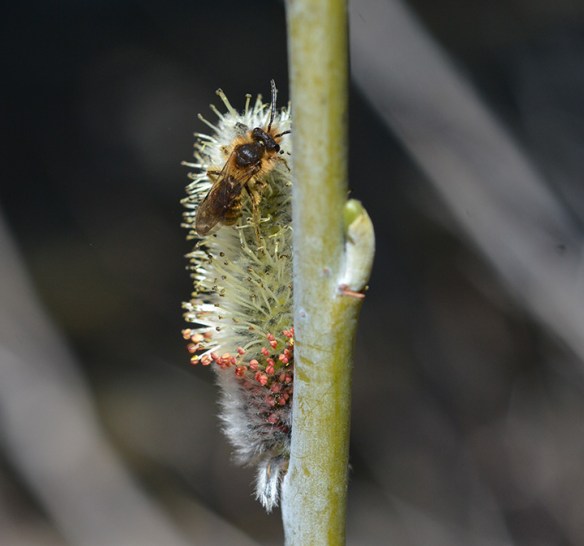
Willows – Salix sp. – There are many, many types of willows of all sizes. They are very important for wildlife: pollinating bees, nesting birds, browsing moose, and dam-building beaver to name a few.
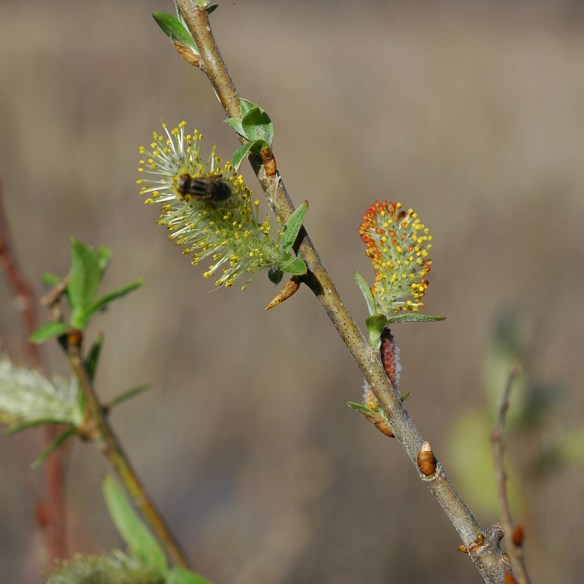
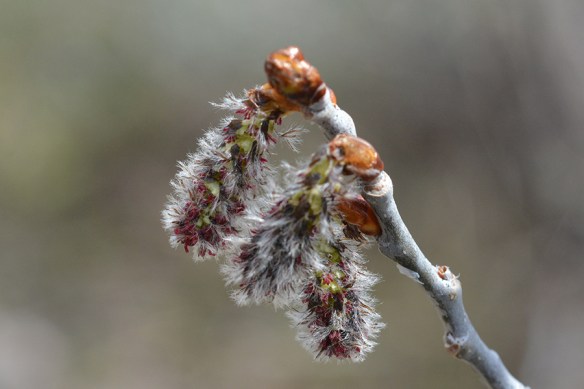
We usually welcome their early spring catkins—pussy willows. They come in male and female versions, are pollinated by insects (not by wind, as previously thought) starting in April. By late June the female capsules are bursting with thousands of seeds attached to a tufts of fluff being dispersed by wind. Along with their relatives the cottonwoods, they are creating blizzards.
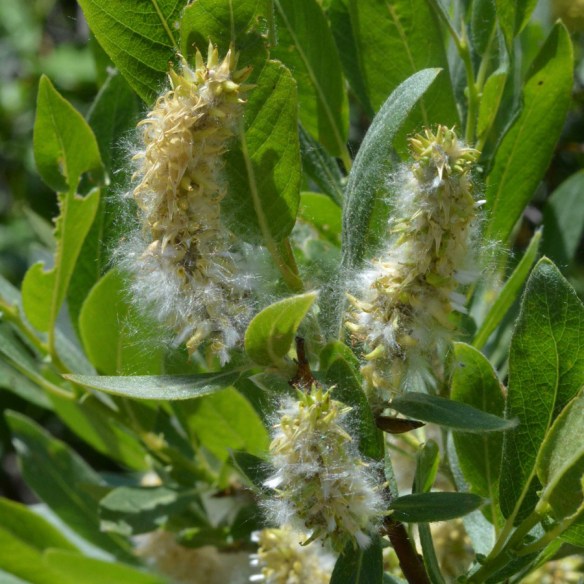
The teensie seeds are viable for only a few days, and they must land on moist open ground to germinate. Only a couple of seeds out of a million will sprout and grow up at all. Plants, though, can propagate vegetatively from broken stems stuck in the mud, as along flooded rivers or around beaver ponds.
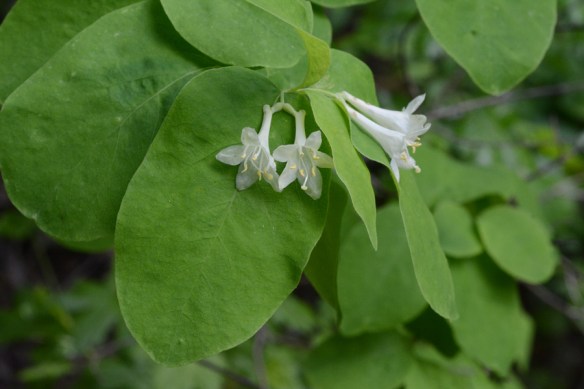
Utah Honeysuckle – Lonicera utahensis – has oval leaves that are arranged opposite each other on the stems. The trumpet-like, pale yellow flowers are found in pairs, their ovaries attached at the very base. Later twin red berries will loll upon the green of the leaves…but not until late July.
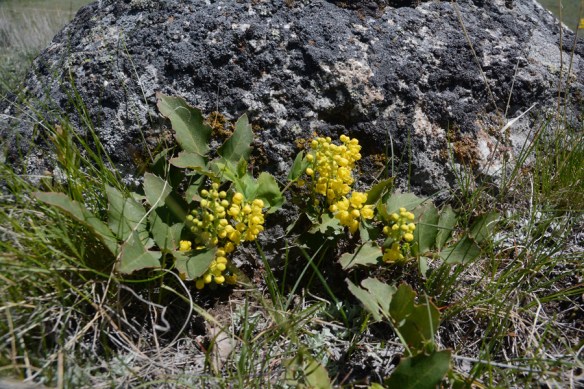
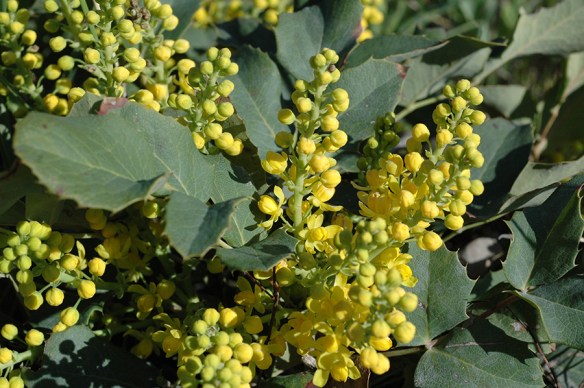
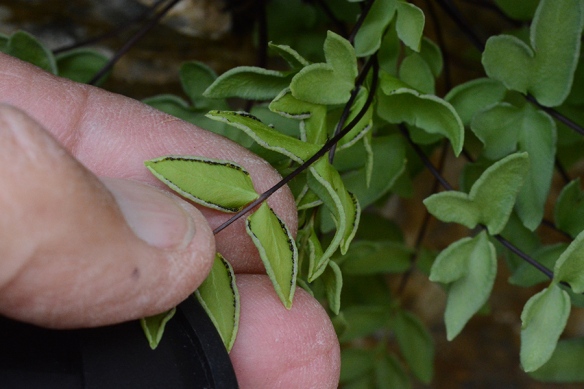
Oregon Grape – Mahonia repens – is one of our few evergreen shrubs and is particularly tough. It grows in sun or shade, often on very rocky soils. Several thick holly-like leaflets form along the central petiole to comprise a compound leaf. In spring the “evergreen” leaves remain, although a bit tattered, until the new leaves replace them. The flowers are remarkably fragrant and last a long time. The underlying bark is yellow with “berberine” which has medicinal properties.
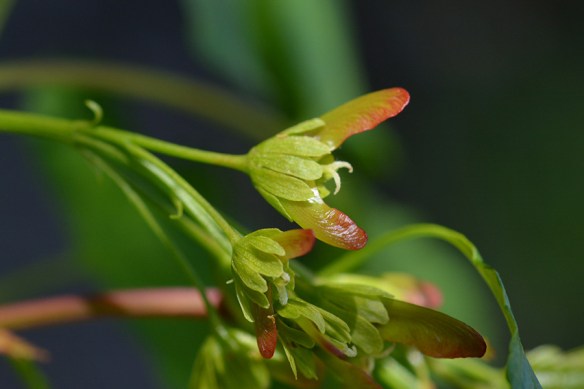
Mountain Maple – Acer glabrum – has inconspicuous flowers that are pollinated by wind or perhaps some insects? Each flower is usually male or female to prevent self-pollination. By now in late June you can see the beginning of the fruits forming – the double winged samaras – that will twirl to new realms later in the fall.
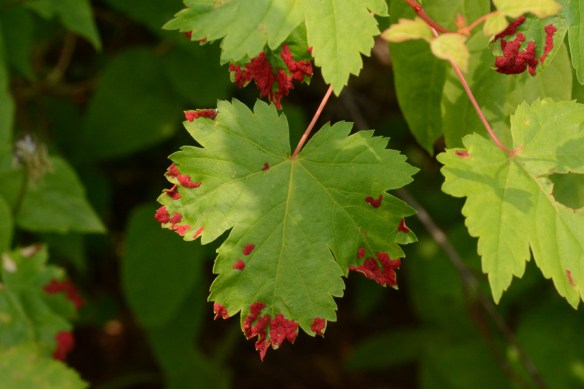
The leaves are 3-5 lobed, with some saw-like teeth along the edges. Often I see the leaves mottled with a deep red “fungus”. The velvet red splotches are actually formed by tiny galls created by mites: https://www.canr.msu.edu/news/velvet_galls_caused_by_tiny_eriophyid_mites
A June Parade of White Blooms in the Rose Family:
These common shrubs grow from a few feet to up to almost 20’ tall. They all have five green sepals, five white petals, and anthers (the pollen bearing parts) in multiples of 5. These three whorls merge into a cup-like hypanthium that will later swell and protect the seeds. Hypanthium structures are common in the Rose Family. In the very center of this cup-like feature, sit the female ovaries and eggs that will form the seeds. The fruits will be a combination of swollen protective hypanthiums and the mature seeds in the center. (image wikipedia)

All these plants are related to cultivated fruits we eat: apples, plums, pears, peaches—also in the Rose Family. Our native roses blooms in July–very soon! and produce “hips” – the tough hypanthium with dry fruits/seeds inside.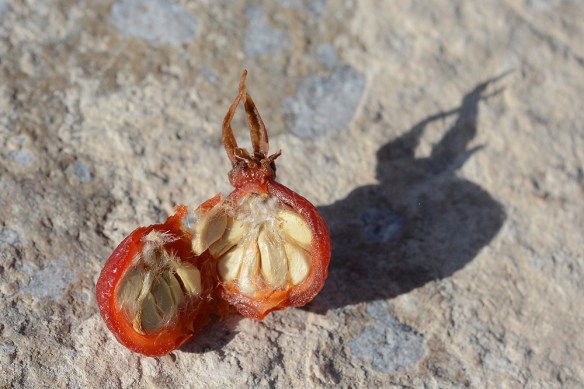
More or less in order of bloom:
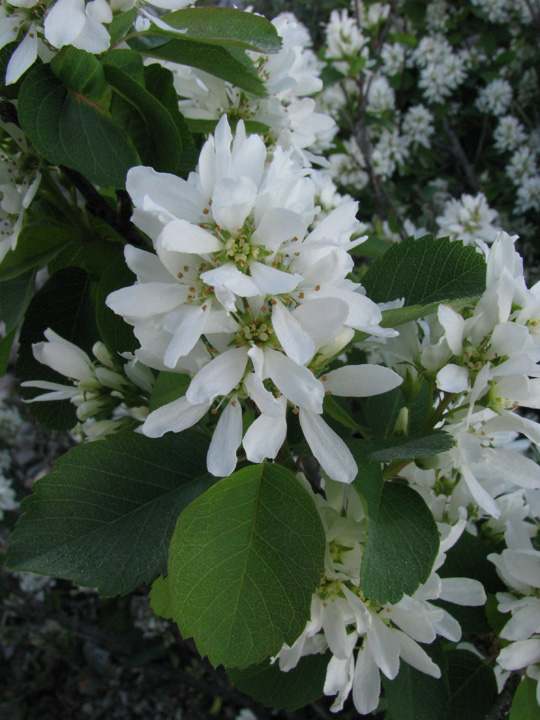
Serviceberry/Saskatoon – Amelanchier alnifolia – has oval 1-1.5” leaves with a few teeth arrayed around the upper ½. Flowers are arranged along a central stalk. Being one of the earliest to bloom, it will also be the earliest to fruit.
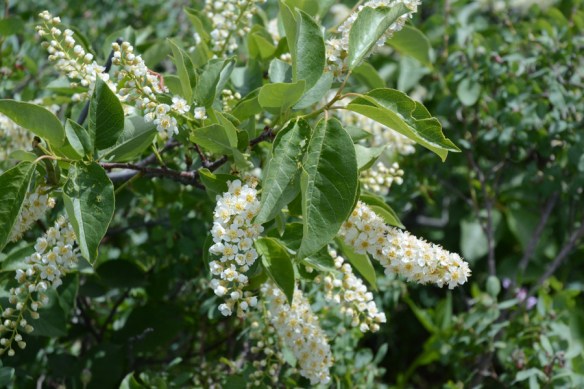
Chokecherry – Prunus virginiana – has 4-5” oblong, pointed leaves with fine teeth all along the edges. The dozens of flowers are stiffly arranged on the long central stalk. All the parts of the plant have a chemicals that can produce poisonous cyanide under certain conditions. For instance, if cattle eat too many of the spring leaves they can become very sick. Amateur entomologists have used the leaves and bark in jars to kill insect specimens. On the other hand, western tent caterpillars thrive in their branches, and birds and other mammals will eat the fruits come fall (the particularly toxic pits pass on through).
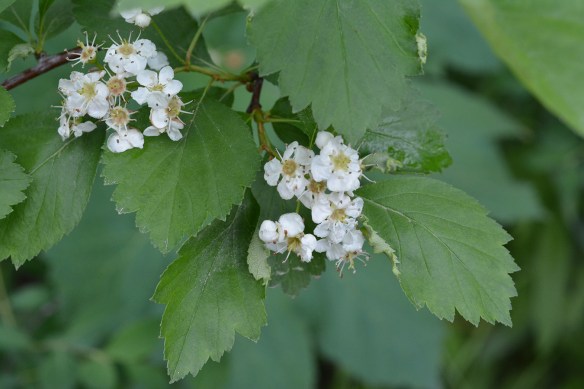
Black Hawthorn – Crataegus douglasii – are easy to ID with their ½-1” thorns. The broad oval leaves are coarsely toothed. The flowers are in branching bunches or cymes. In August, the Moose-Wilson Road is often closed due to bears feasting on the berries.
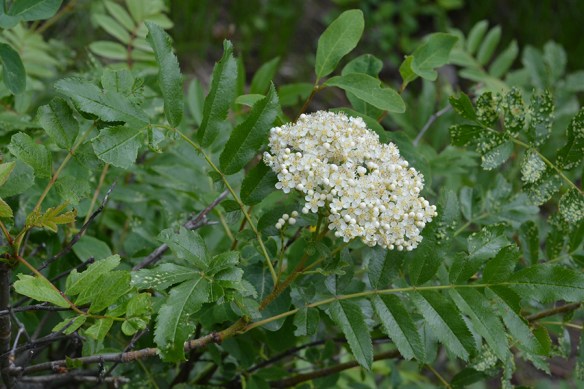
Mountain Ash/Greene’s Ash – Sorbus scoparia – begins to bloom in late June in slightly cooler locations. The leaves are “compound” with many leaflets coming off a central stalk. The stalk then attaches to the twig. The tiny flowers form a great puff of creamy white flowers at the end of the stems.
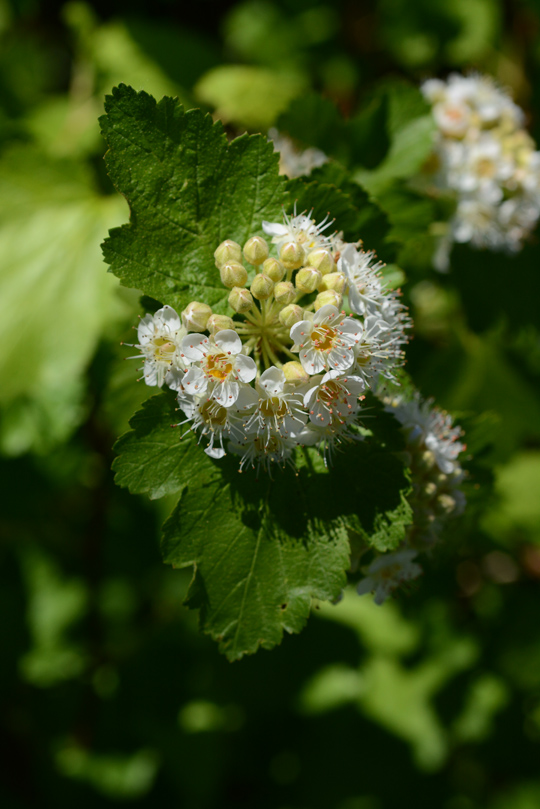
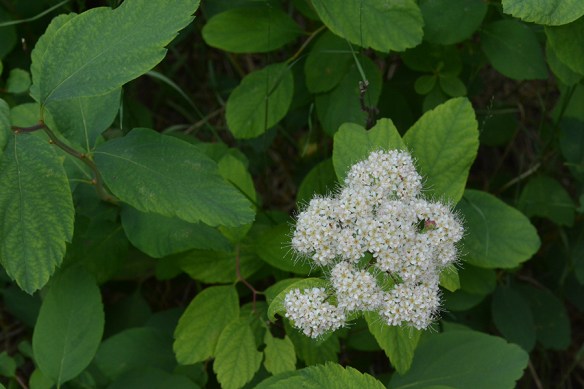
Ninebark – Physocarpus malvaceus – is found in the southern part of Jackson Hole flowering at the end of June. Unlike other white bloomers above, it will have dry fruits. Leaves are slightly lobed and toothed.
Yellow Members of the Rose Family Join In the Parade of Bloom:
Not all members of the very large Rose Family make luscious fruits. While also having hypanthiums, the cups remain thin and brown cradling dry seed-like fruits (achenes) inside. For now enjoy the flowers.
Antelopebrush/Bitterbrush – Purshia tridentata – is especially abundant this year. You can smell the sweet yellow flowers before you come over the rise of an open hillside. Plants are often intermixed with sagebrush, growing about the same size.
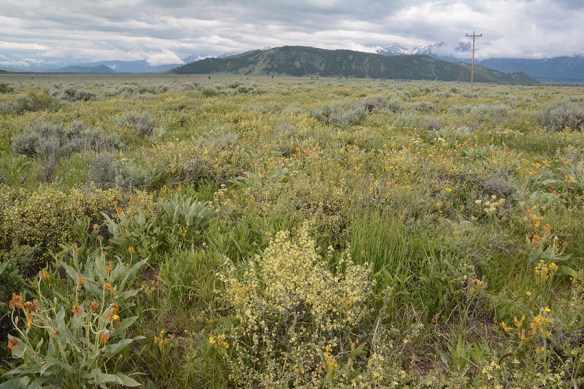
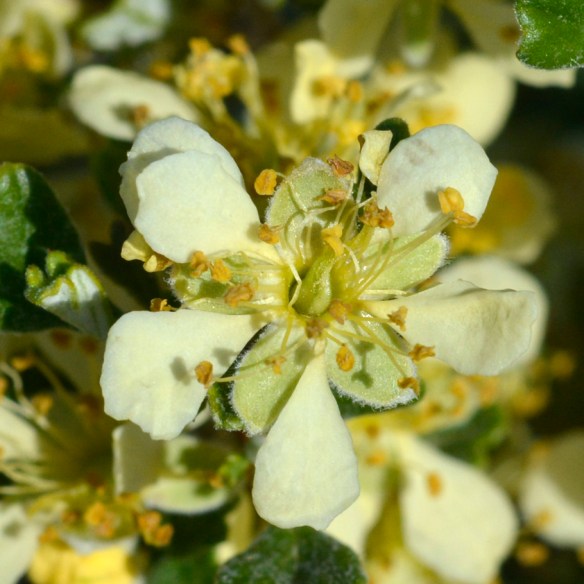
The nutritious plants are valued wildlife browse throughout the year, but particularly in late fall and winter by moose. Ants and mice relish the seeds. Also these plants can fix their own nitrogen with the help of bacteria growing in the roots. Therefore, these shrubs can grow in many tough conditions. Note their small leaves are three-tipped like those of sagebrush, but they are greener overall, and the edges curl under.
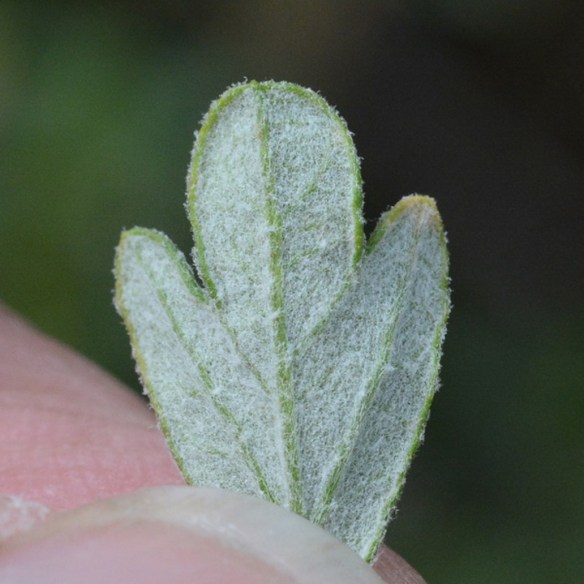
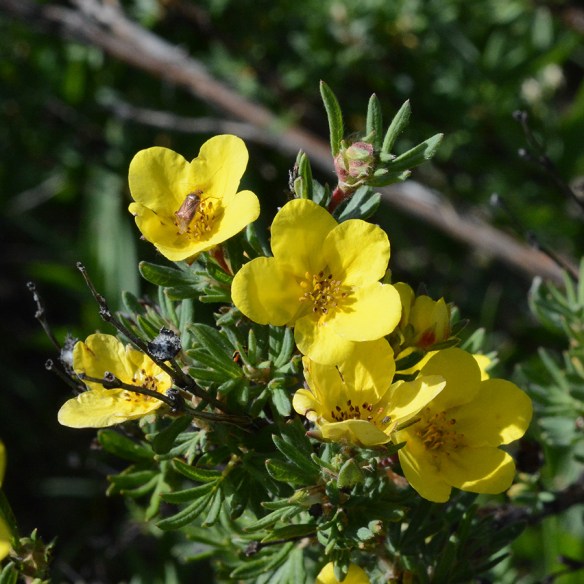
Shrubby Cinquefoil – Potentilla/Diasphora fucticosa/Pentaplylloides floribunda – is a favored landscape plant for its yellow flowers in early to mid-summer and its low maintenance. It can grow in a variety of soils from sun to shade – but prefers a bit of moisture, especially when in sun.
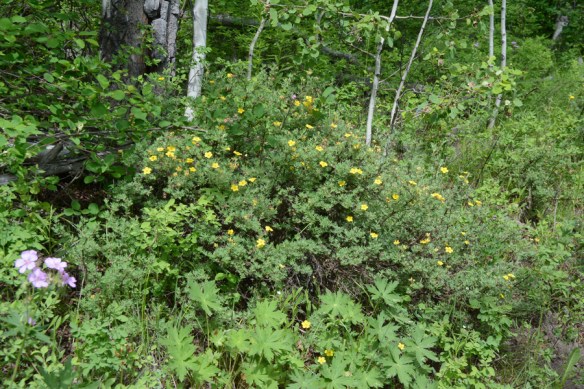
Nurseries sell a range “cultivars” with white to deep orange flowers. Our wild native is yellow.
More June Shrubs of Various Sorts –
These four shrubs prefer more or less moist and/or cool areas and grow into substantial plants.
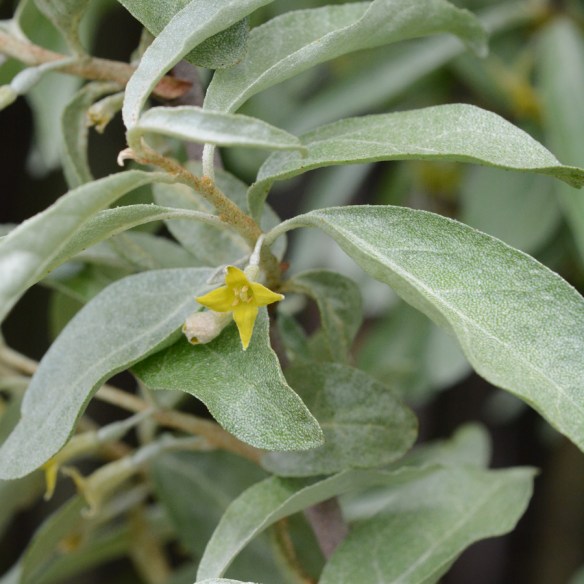
Silverberry – Eleagnus commutata – has been flowering under the cottonwoods along the Snake and Gros Ventre Rivers from Wilson north. They are easily seen from the dikes and from Fall Creek Road.
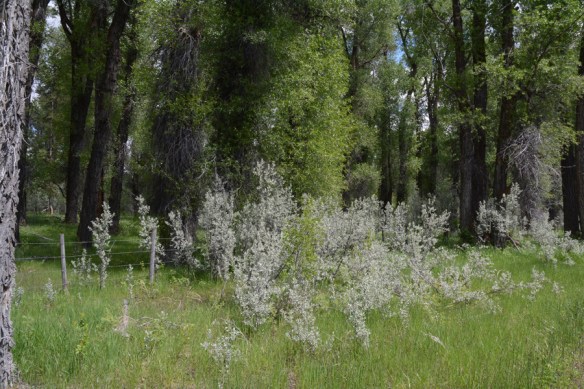
The 2-3” silvery oblong leaves stand out in the shade on 6’-tall, erect colonial plants. Hidden in the foliage are yellowish, highly fragrant tubular flowers.
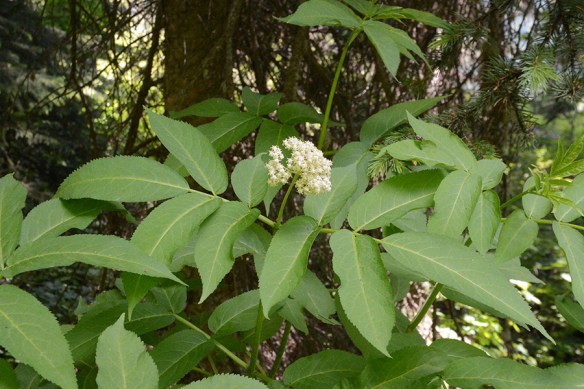
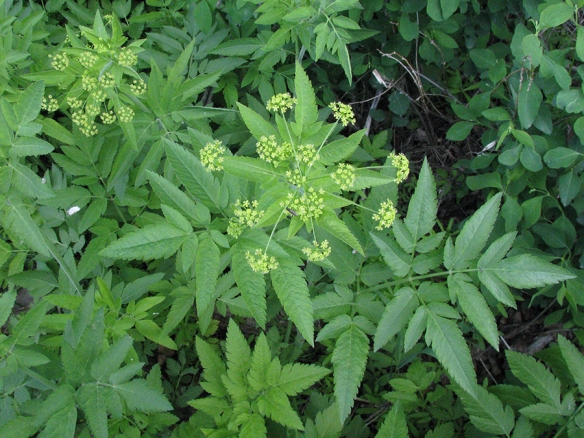
Red Elderberry – Sambucus racemosa – looks at first glance like Mountain Ash with its white bunches of small flowers and compound leaves. However, it is overall heftier with thicker stems and heavier leaves, and notably the compound leaves are opposite each other, not alternate up the stems. Also, plants have a foul odor if pinched or crushed. Its European relative – Sambucus nigra – is the source of sambucol, the anti-viral flu mediation.
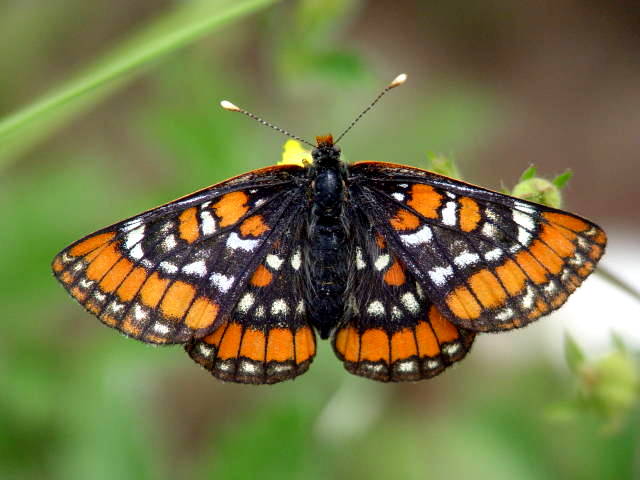
Twinberry – Lonicera involucrata – is also a substantial shrub usually found near water. The 3-6” oval leaves are opposite on the stem, and the flowers are formed in pairs. (It is a relative of the early flowering relative Utah honeysuckle – see above.) Flowers are mostly yellowish and hairy with a “bract” at their base that can be greenish yellow but later turns deep maroon. 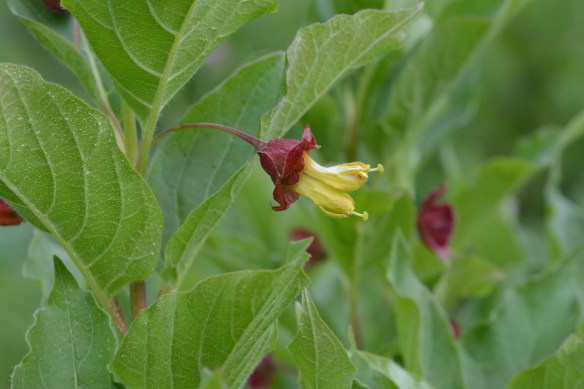 Keep an eye out for caterpillars of Gillette’s Checkerspot butterfly (photo credit: Wikipedia) which require this species for their host.
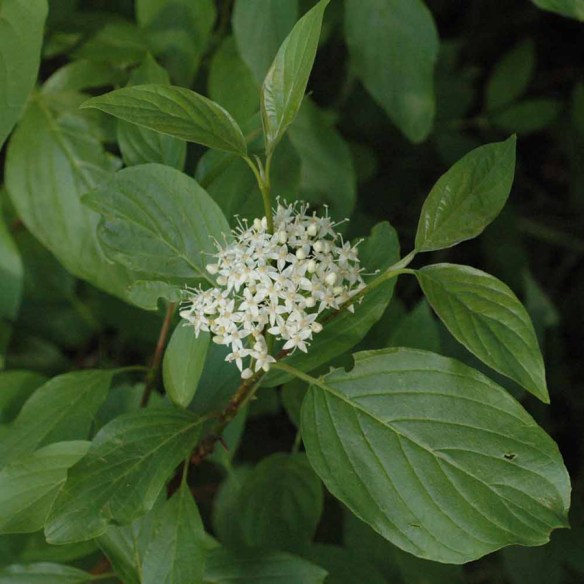
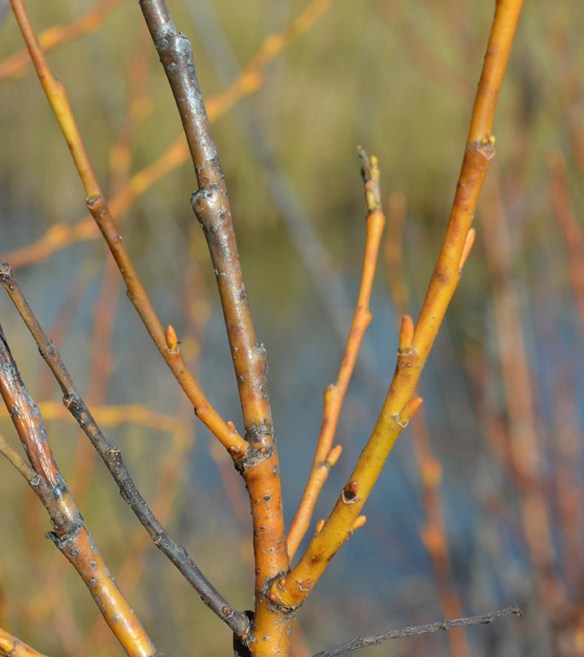
Red-stemmed Dogwood – Cornus stolonifera – is loved by moose, other wildlife, and landscapers. In fact it is an appealing “ornamental” plant for its tidy oval leaves set opposite each other on the red stems, bunches of white flowers, and later white berries. Red winter twigs are a cheerful contrast against snow. “Cultivars” have been selected with brighter red stems, variegated leaves, bigger flowers and berries. The moose relish it as is, and the birds will carry off the fruits when ready. A great plant for a “wildlife friendly” garden.
Unnotables:
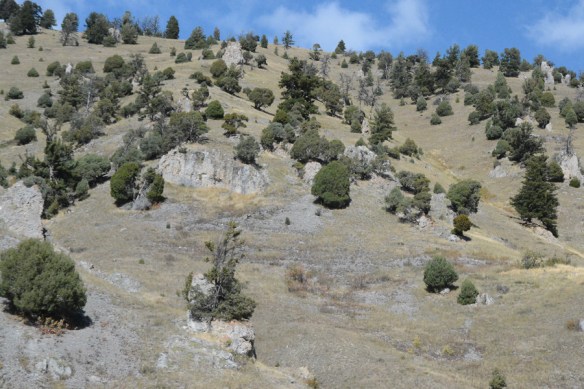
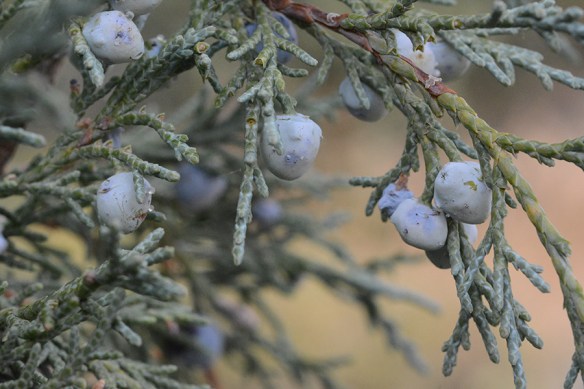
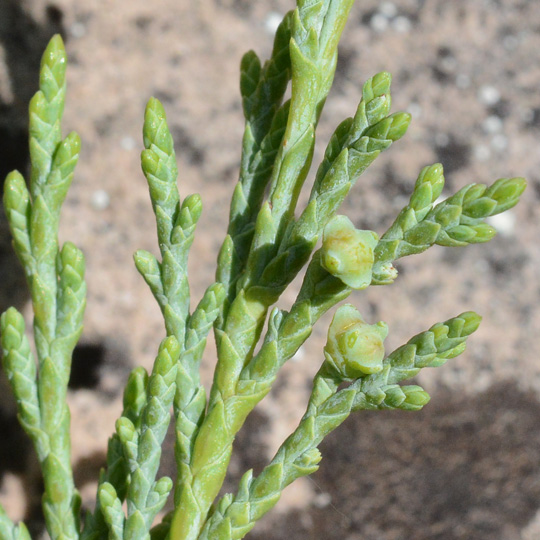
Junipers are evergreen conifers. The tree-like Western Juniper – Juniperus scopulorum – grows in all shapes and sizes on our dry buttes.
This species has scale-like leaves.
 The sprawling Common Juniper – J. communis – has sharp needles that are in whorls of 3 and grows here and there in sunny spots.
 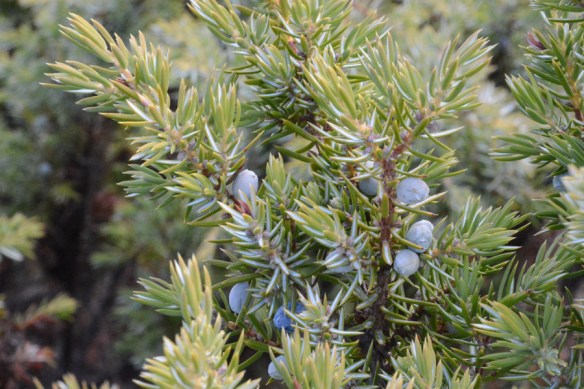 Both produce “berries” which are technically fleshy cones that are relished by Townsend’s Solitaires and Cedar Waxwings. However, few realize that the cones take 18 months to form, starting in June, and only on “female” plants.
Not to get into the complications of “naked seed” plants and their evolution, suffice it to say that pollen is released from tiny structures,
 and with luck land on females cones of a different plant. You need a microscope to really see what is going on, but with a handlens, you can observe the first bulge of reproduction.
Others shrubs not mentioned: The gooseberries/currants – Ribes sp., various huckleberry relatives – Vaccinium sp., and a few inconspicuous wind pollinated species. We save those for later.
Enjoy the shrubs of spring…more to come this summer!
Frances Clark, Program Coordinator
Wilson, WY
June 26, 2020
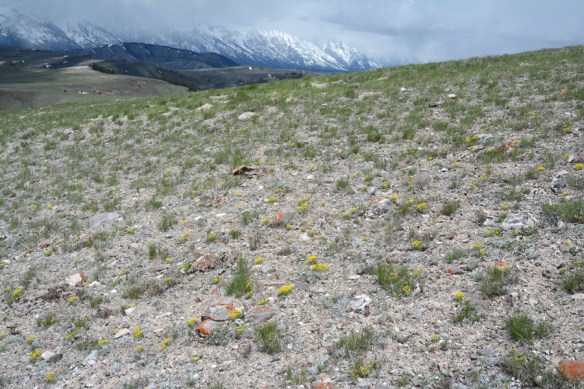 As I write, some of our regular haunts in Grand Teton National Park are still closed (but about to open!). However, there are many other places for botanical forays.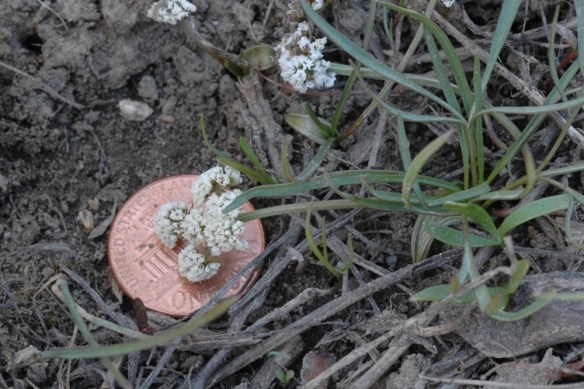


 Goosefoot Violet – Viola purpurea – is easy to ID because of its distinctive webbed-foot leaves.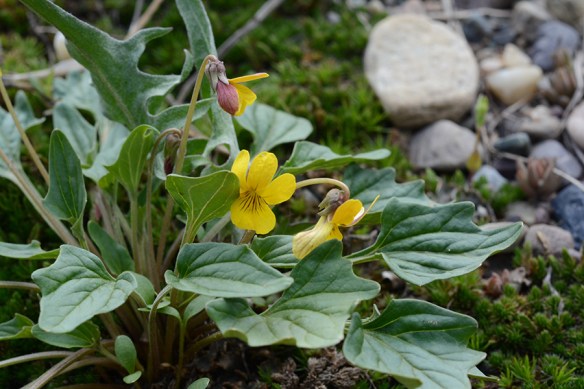

 Happy Spring.
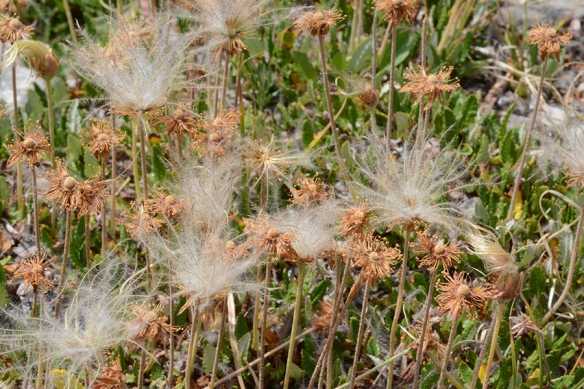
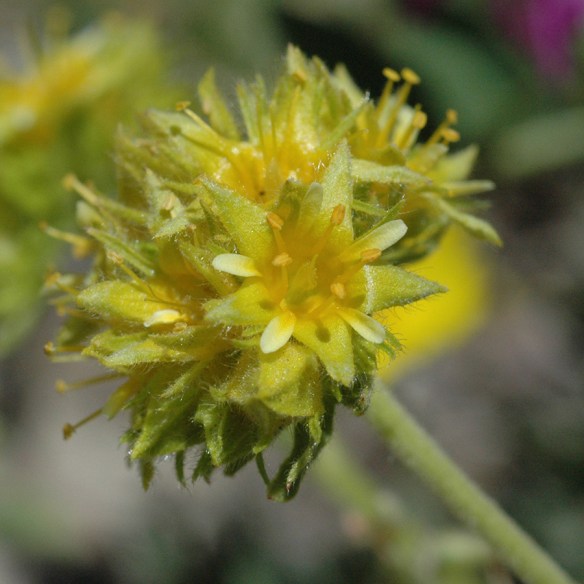
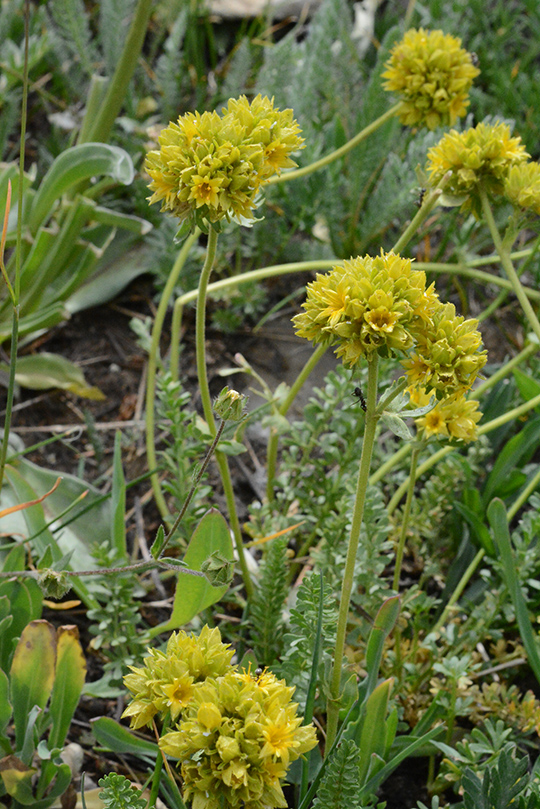
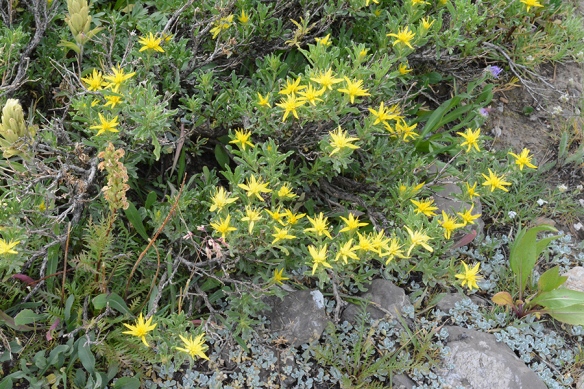
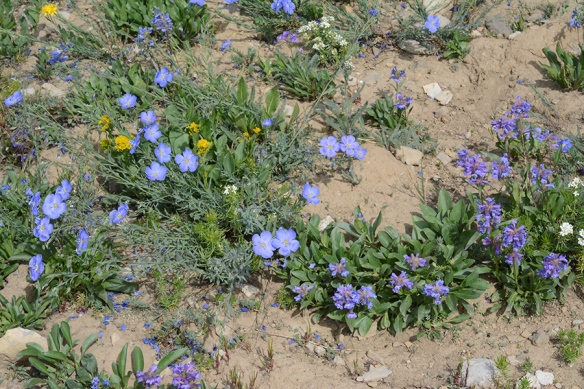
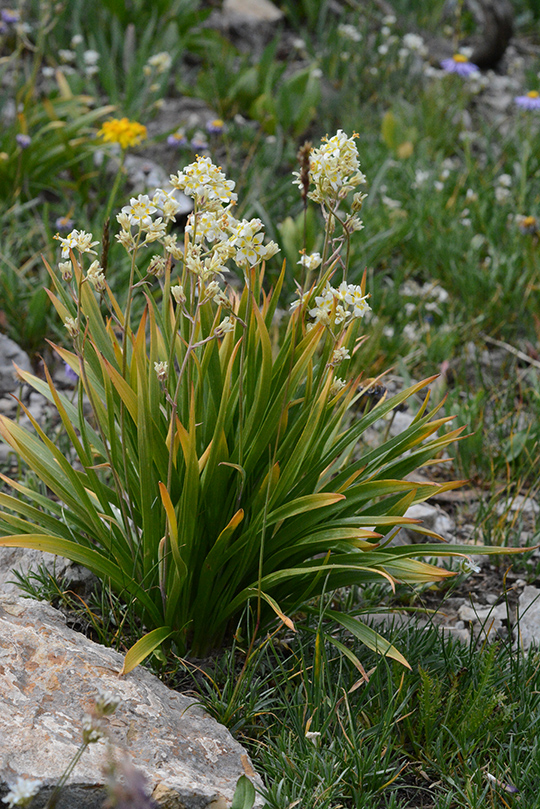
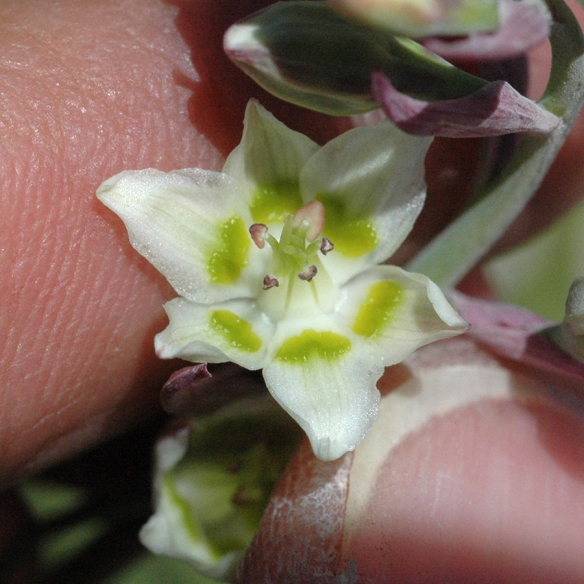
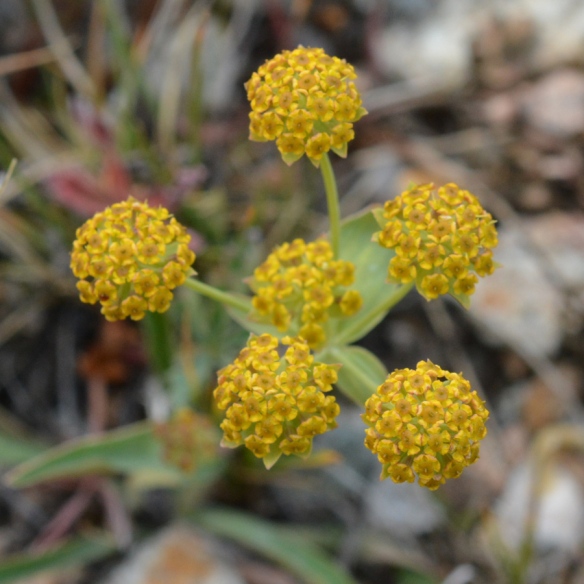

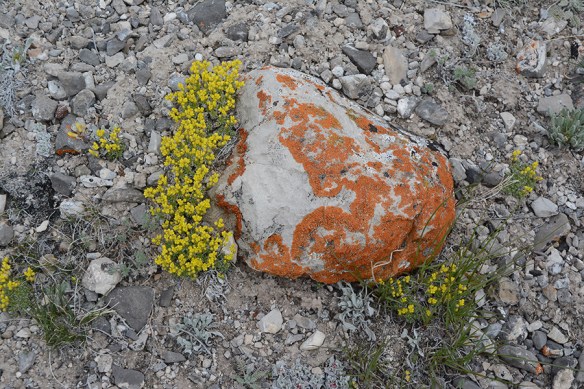
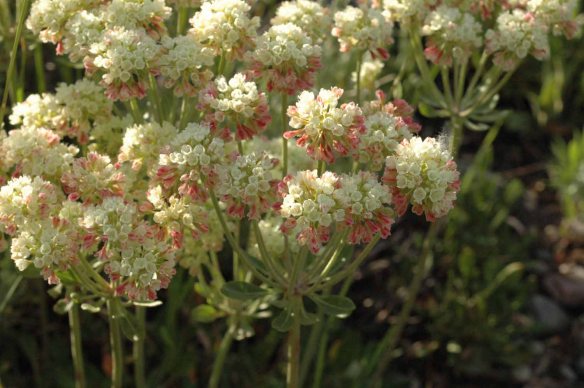
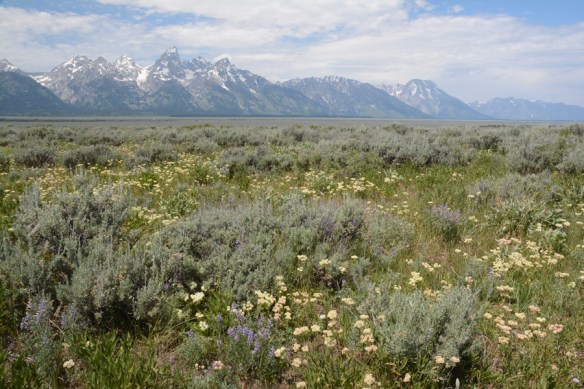 A drive along Antelope Flats Road or inner Park Road rewards one with clouds of Sulphur Wild Buckwheat – Eriogonum umbellatum.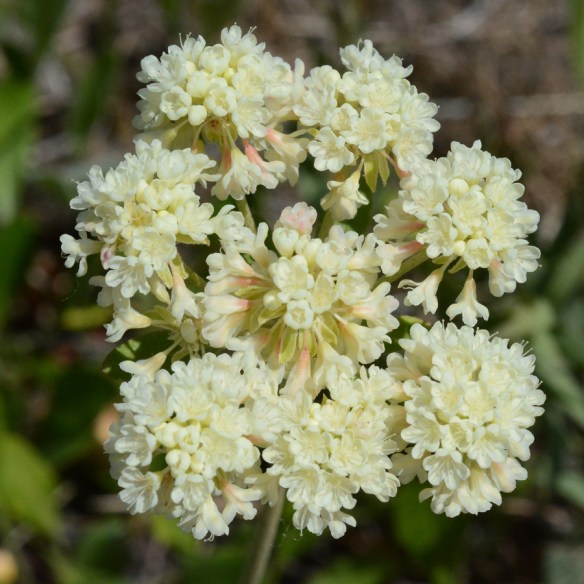
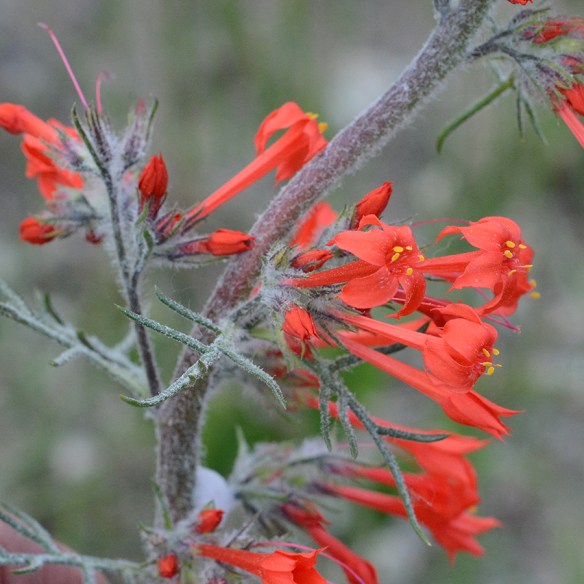
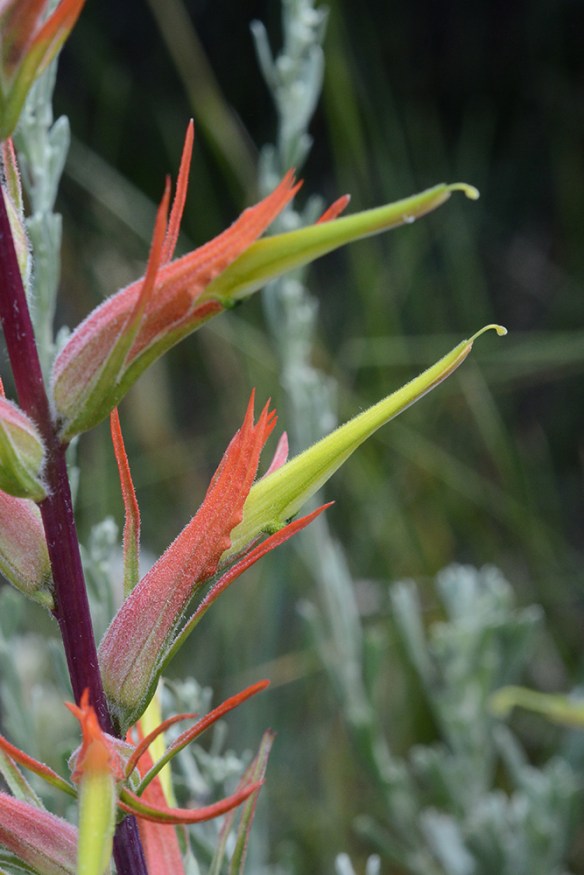
 In some areas such as near Oxbow Bend or up Old Pass Road, Scarlet Gilia — Ipomopsis aggregata — appears particularly abundant this year. In other areas, it stands more or less among sagebrush.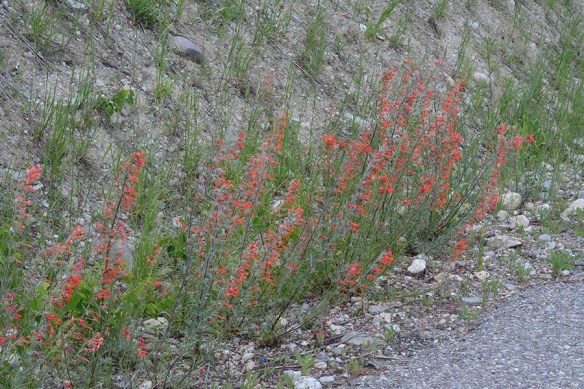
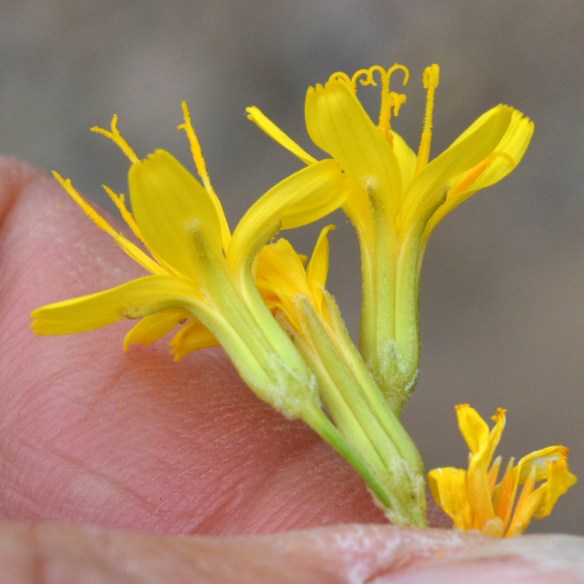 Leaves have several deep, sharply toothed lobes and are a bit fuzzy or “tomentose”.
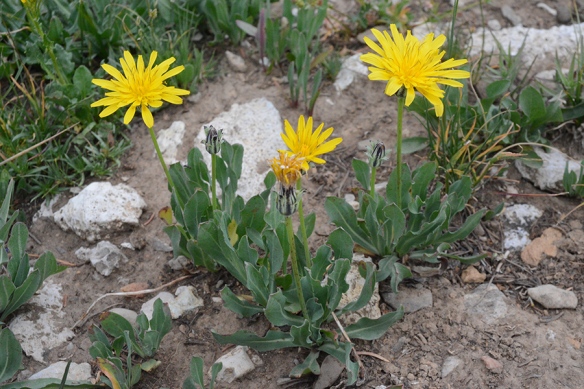
 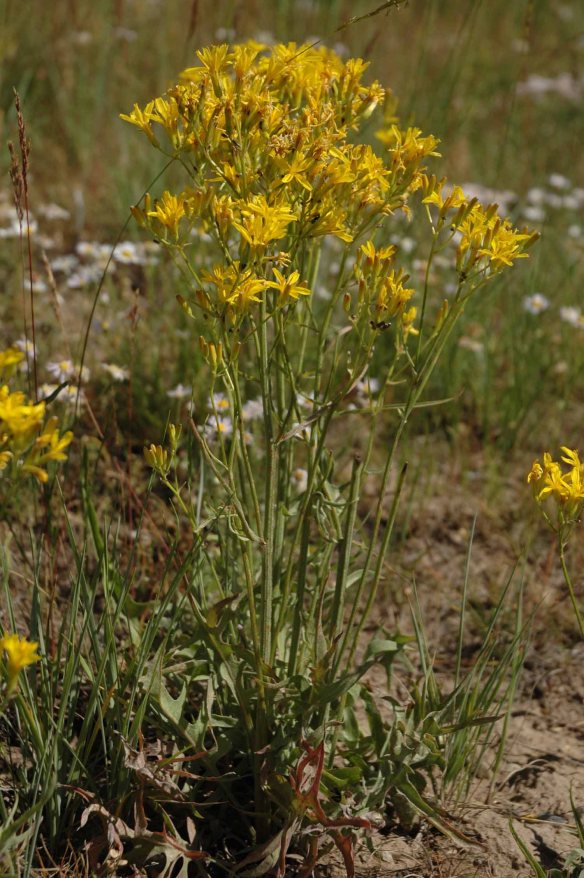 Modoc Hawksbeard – C. modocensis – has fewer flower heads (up to 40/plant) but each has more than 10-60 ray flowers and the bracts are stippled with black stiff hairs. Leaves and stem are very hairy. See if you can find these two species and discern the differences. There are other look-alike species as well.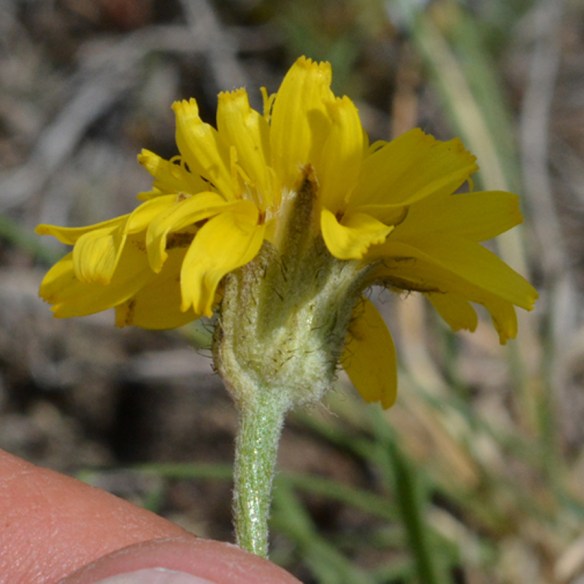
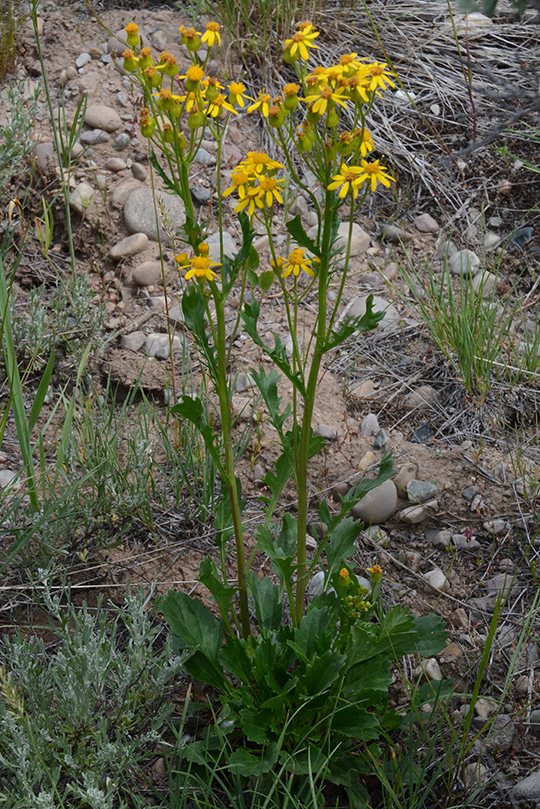
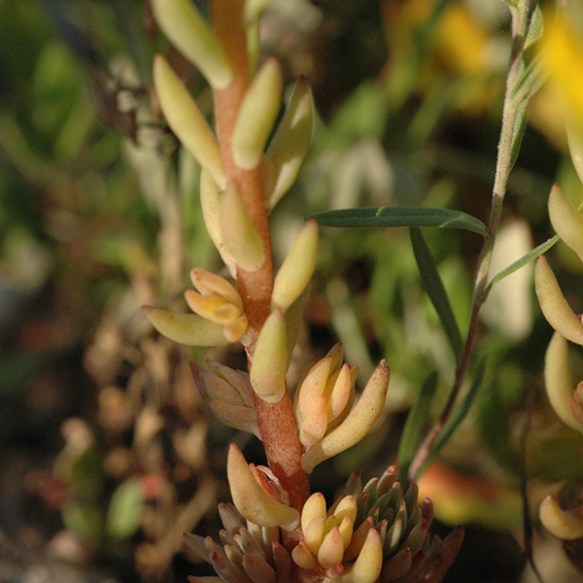
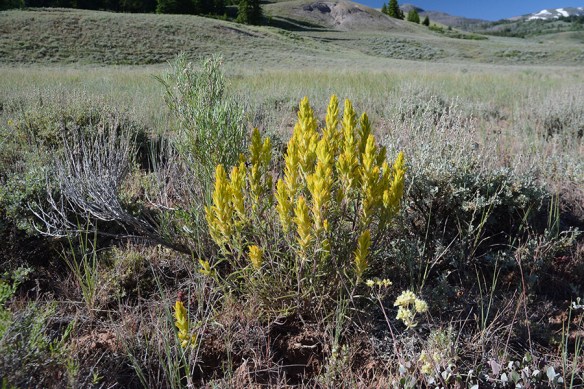 Note the arrangement of its flowers: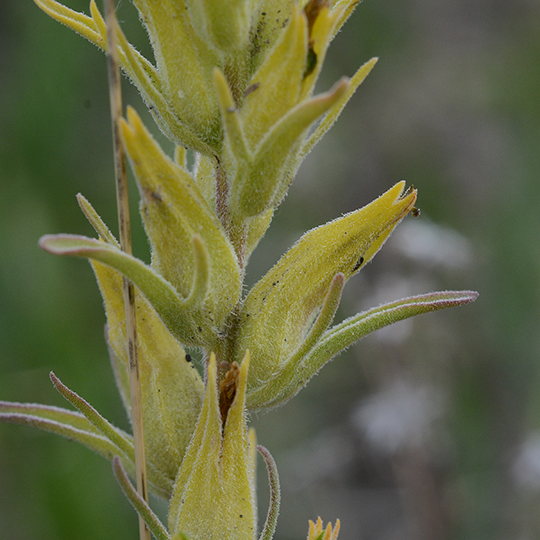
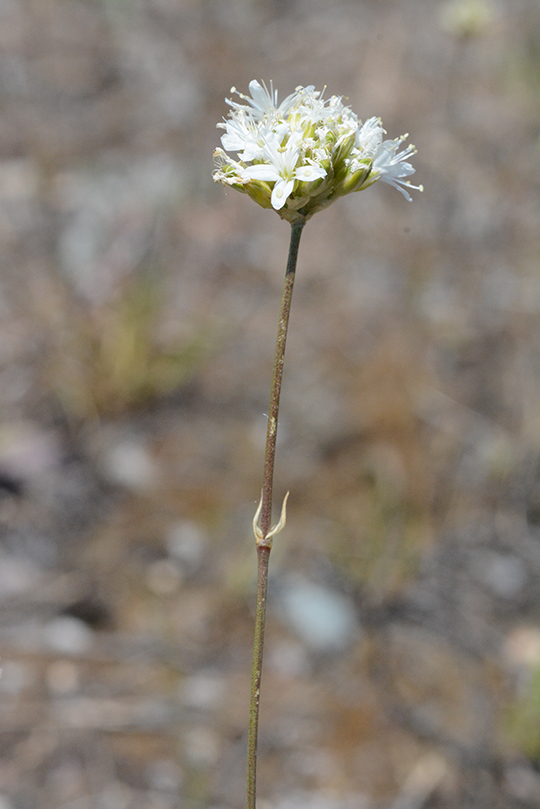
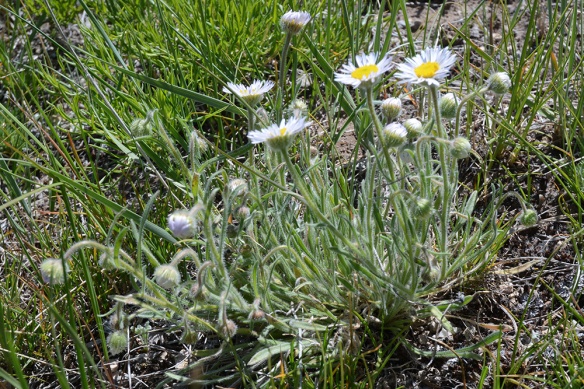
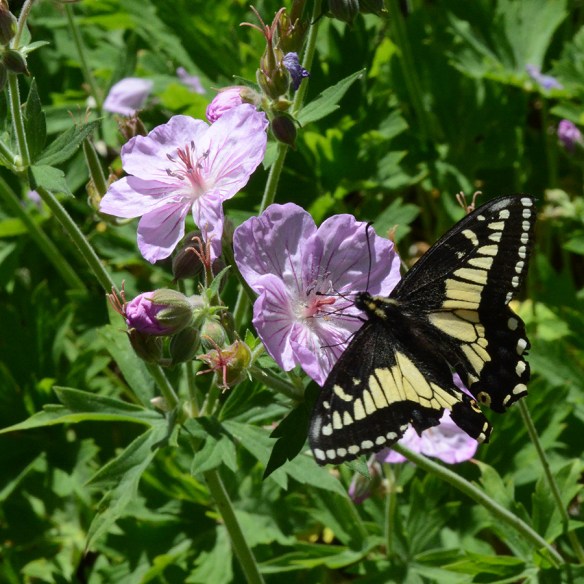
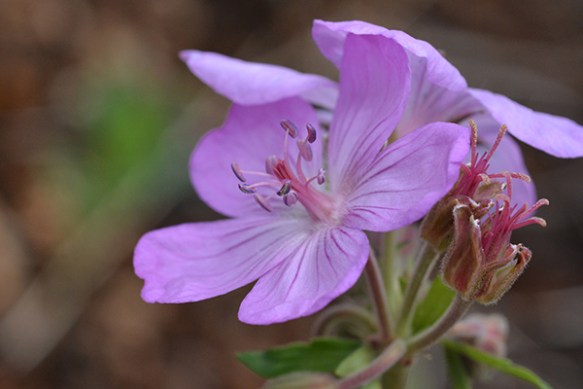
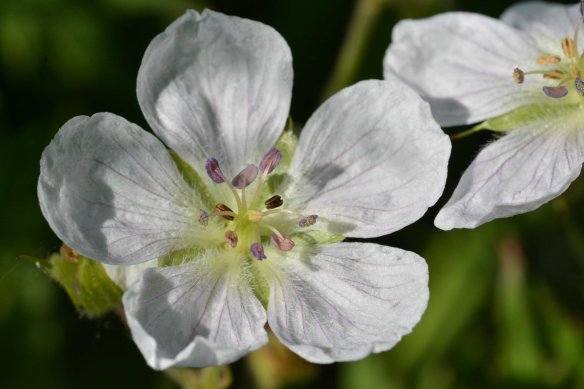
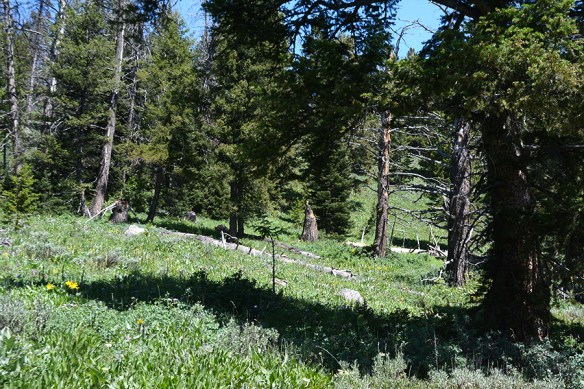 Sticky Geraniums – Geranium viscosissimum — are abundant. Here is a swallow-tail butterfly sucking up nectar. Anyone know which species?
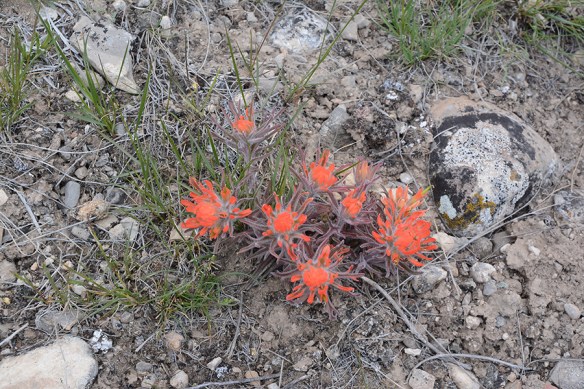
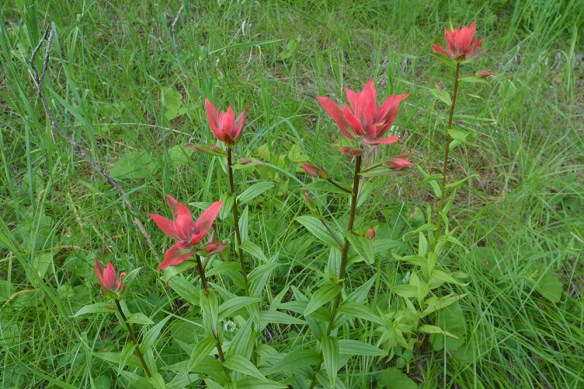
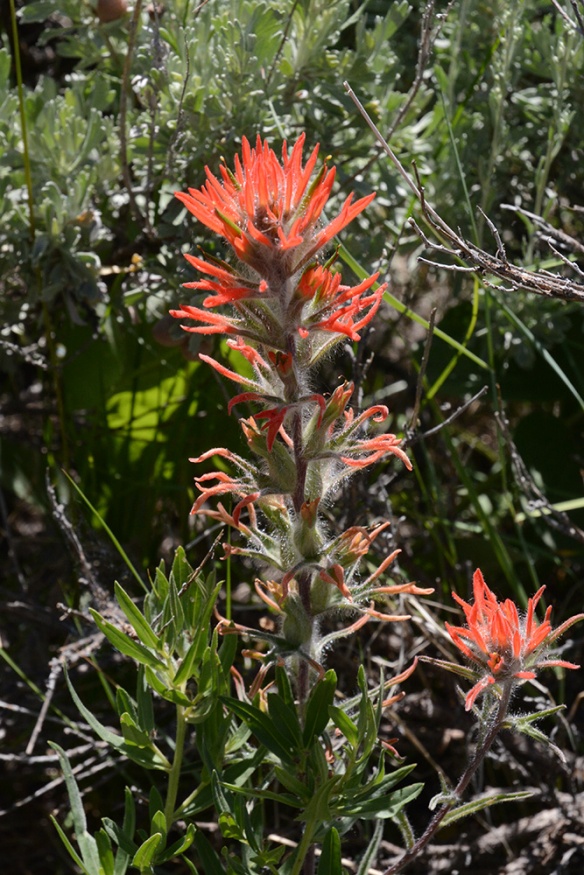
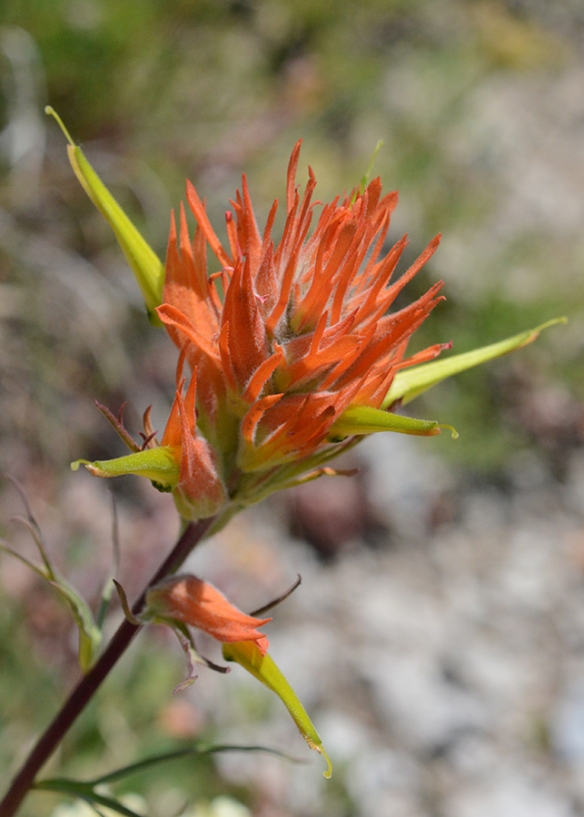
 Scarlet Paintbrush – Castilleja miniata – is emerging.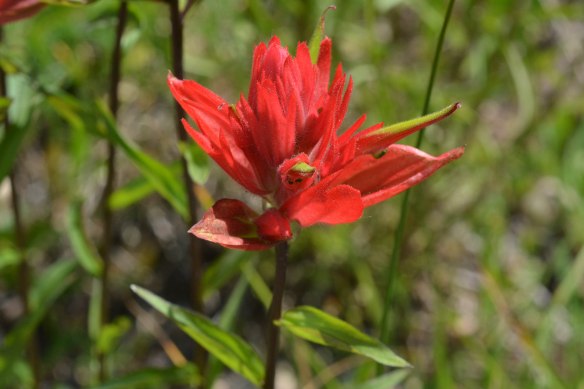
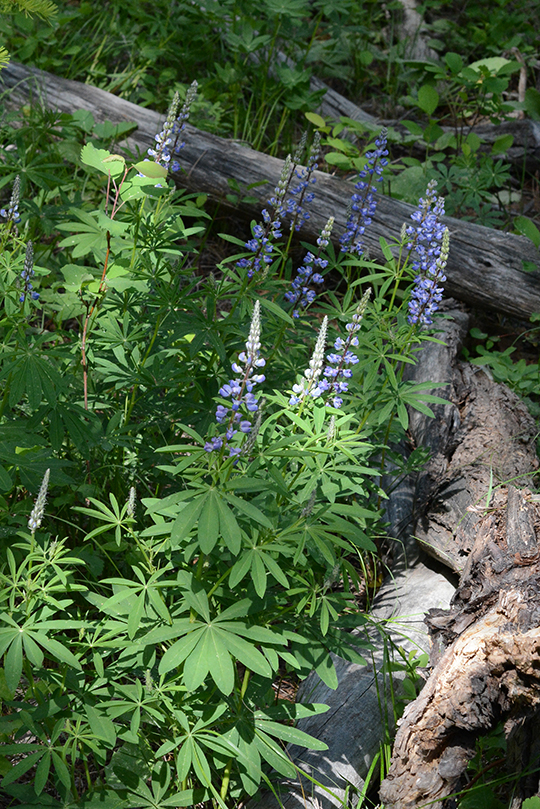
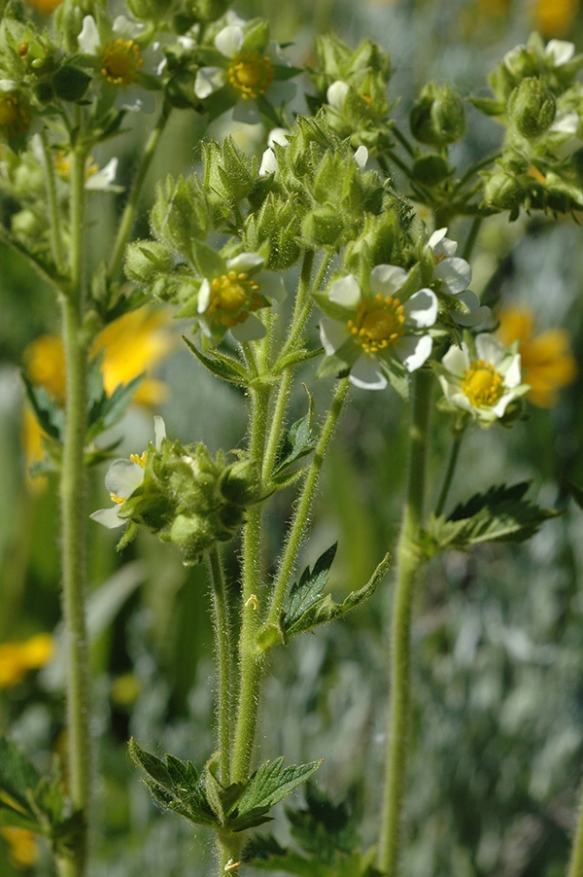
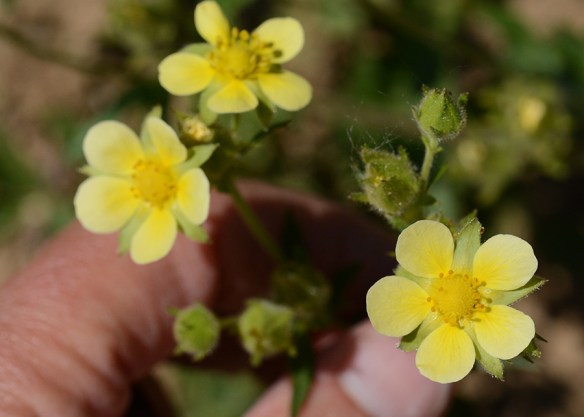
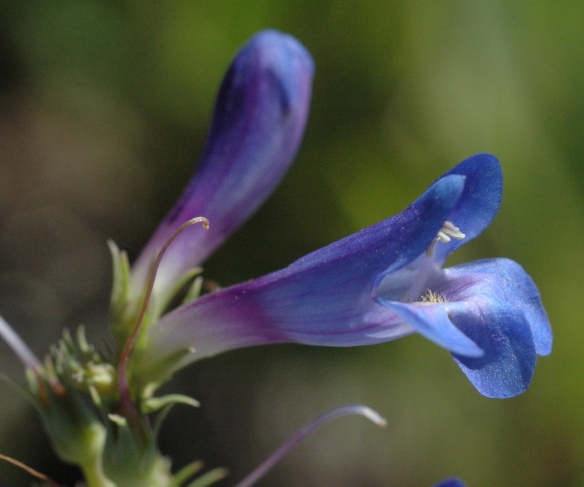
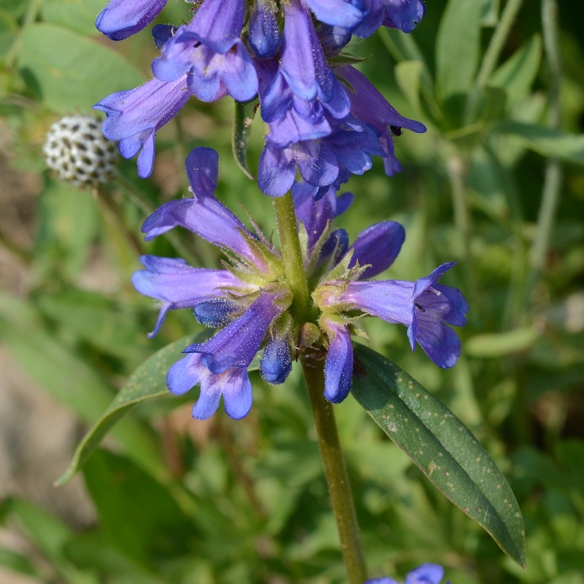
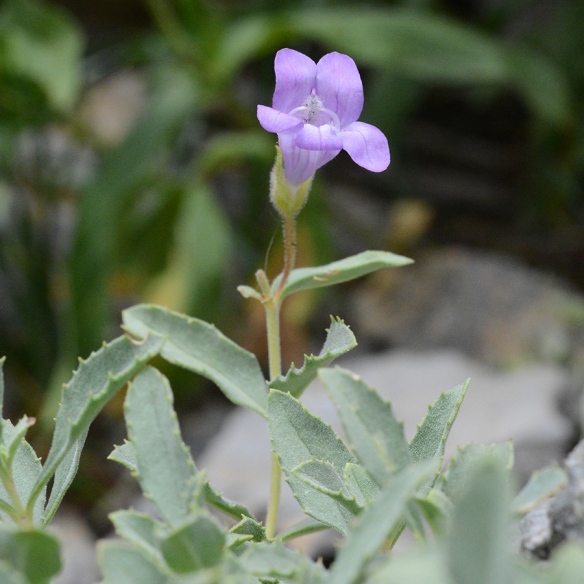
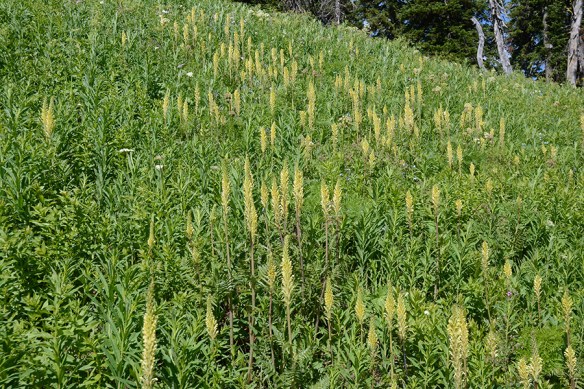
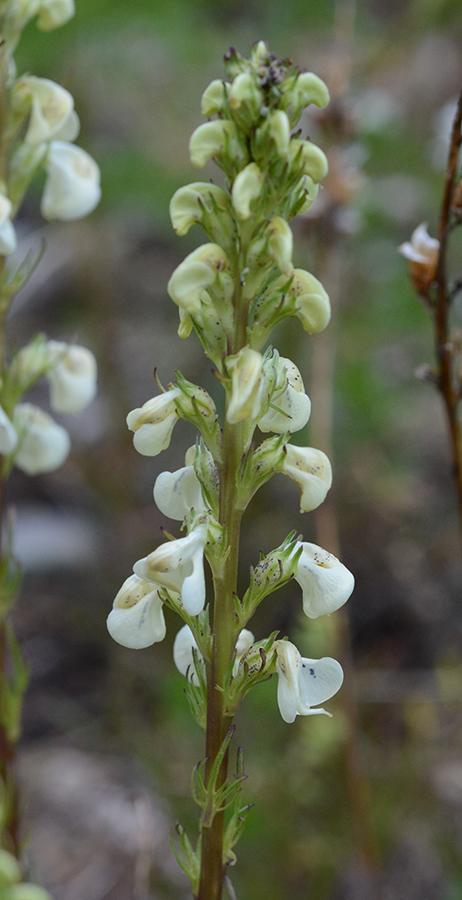
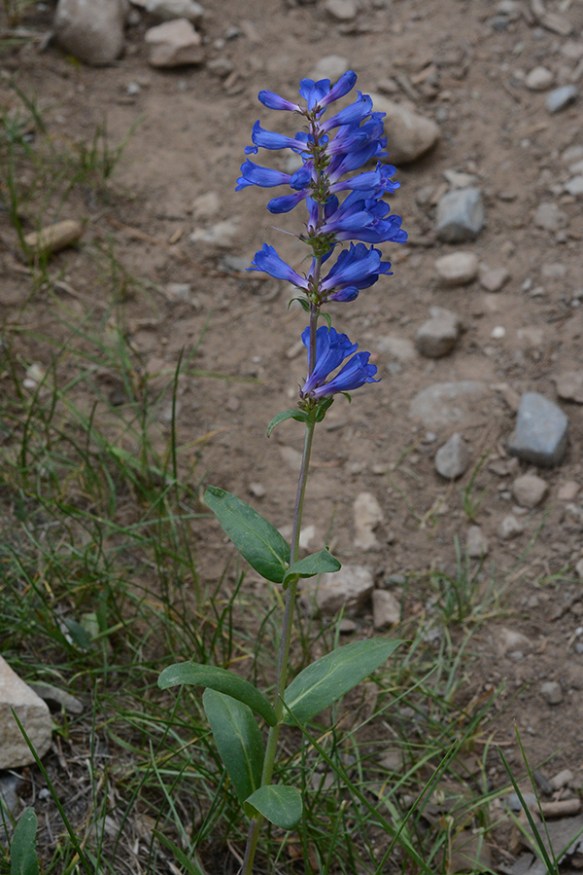 This species found along the Ski Lake Trail keyed out to Wasatch Beardstongue — P. cyananthus.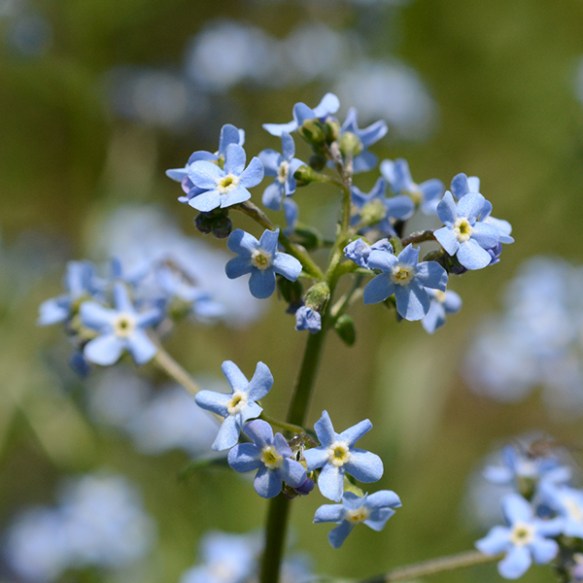
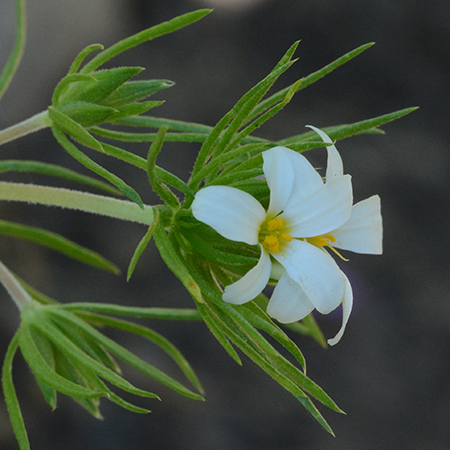 Flowers are extremely fragrant. Bend over for a whiff. It is also related to Scarlet Gilia.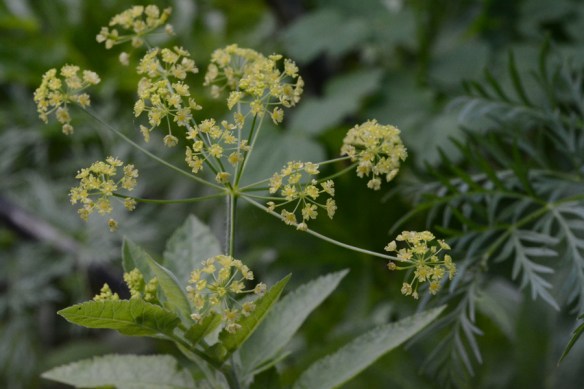
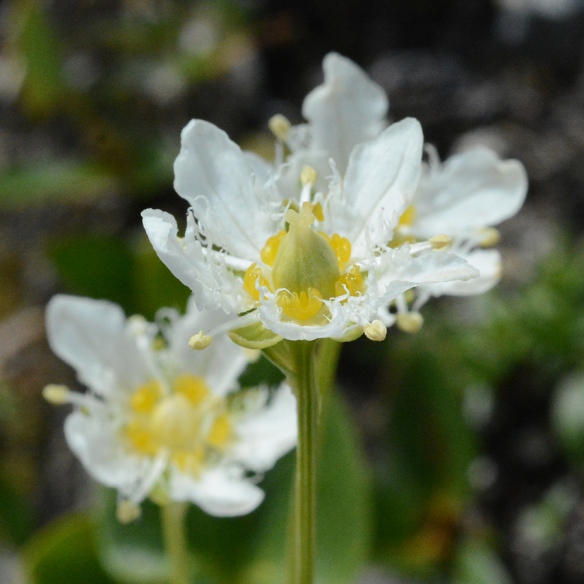
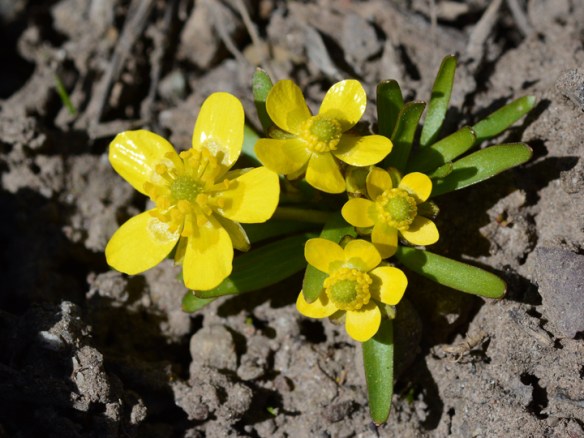
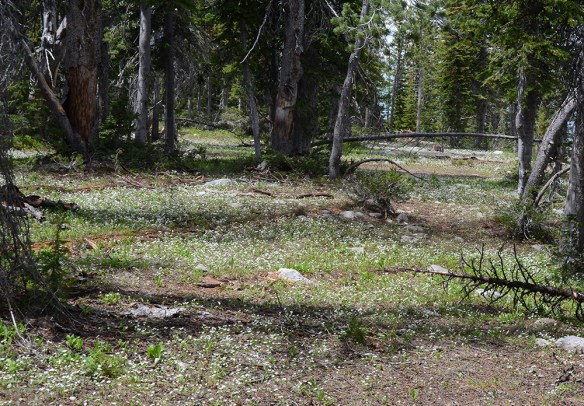 Species particularly adapted to very short growing seasons are also blooming where snow has just melted. Patches of Rocky Mountain Snow Buttercups – Ranunculus adoneus – are frequent. Note their fine leaves.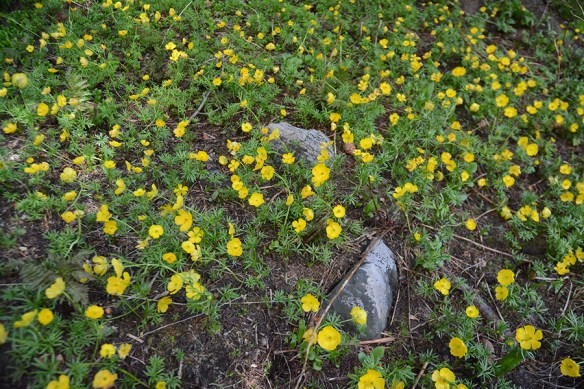
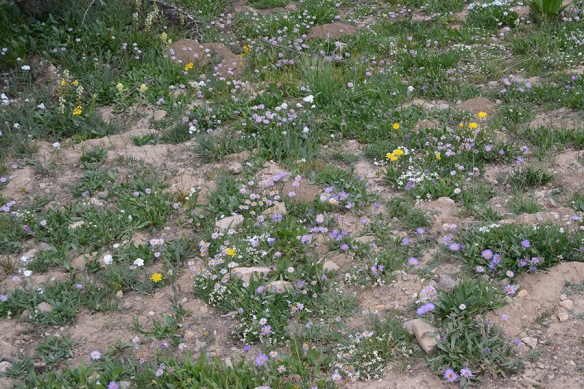
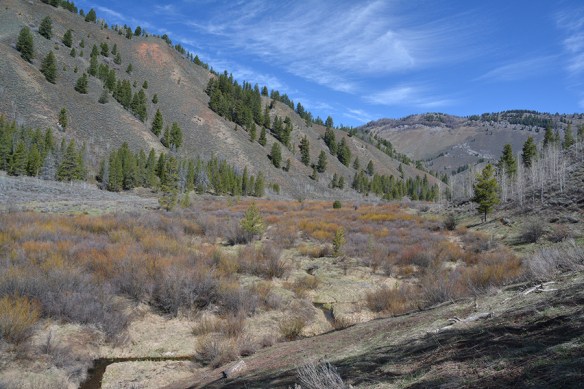 Spring sun is warming south-facing slopes of buttes and hillsides. Snow along Grand Teton National Park roads is finally retreating. Wetlands are warming. Bugs and birds are flying about. The delight is in the details of small flowers; no big show yet.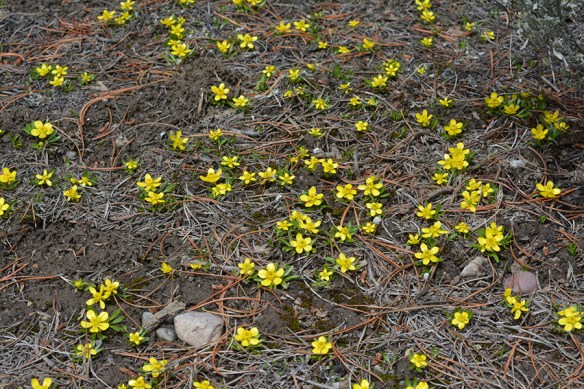
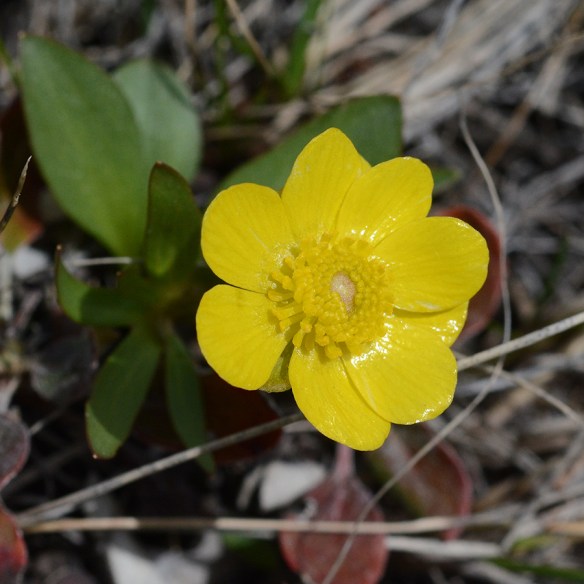
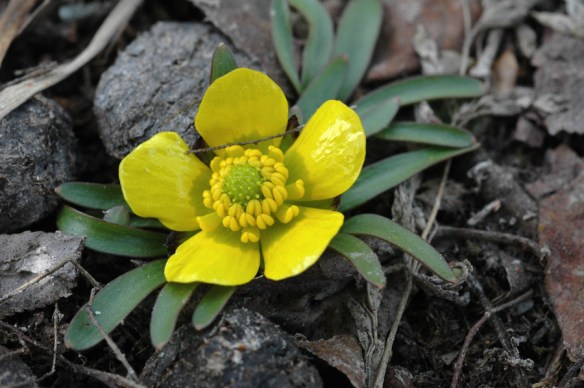
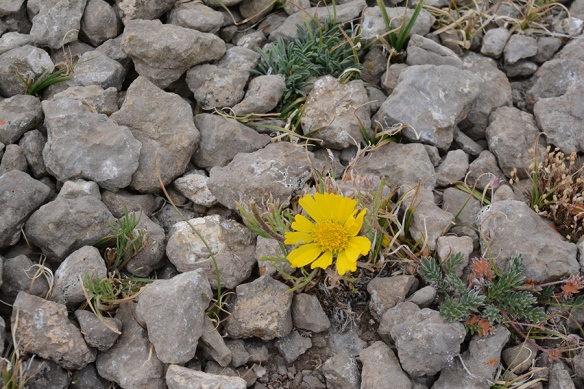
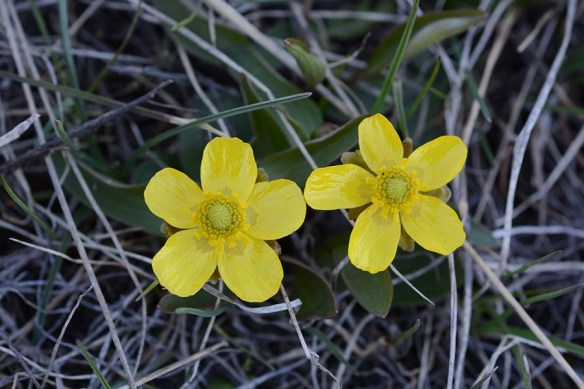
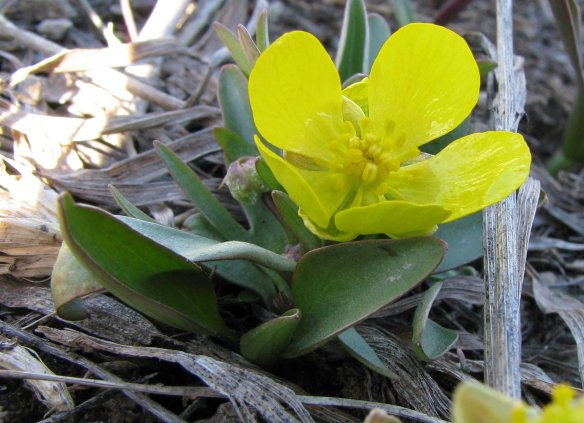 The lowest leaf of Sagebrush Buttercup – Ranunculus glaberrimus – is unlobed, the upper leaves are 3-lobed. It is a denizen of sage flats.
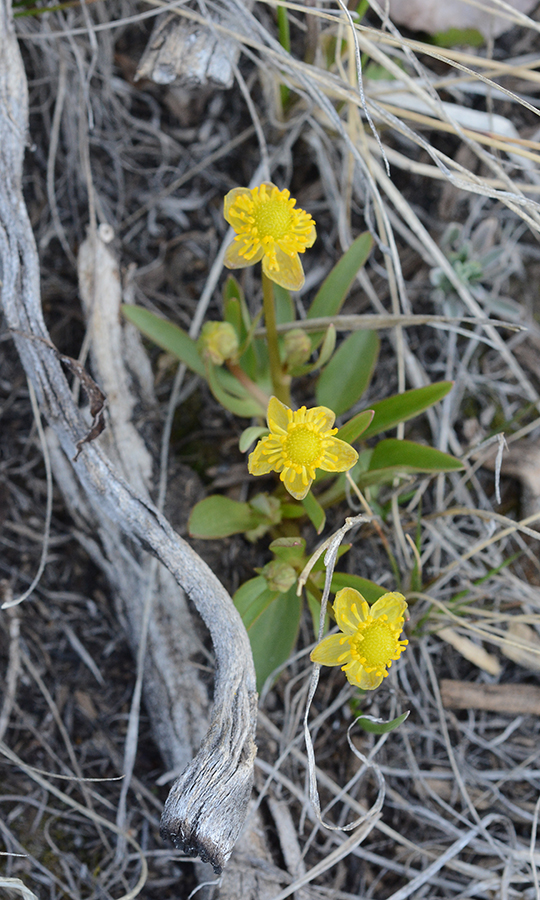 Some individual Sagebrush Buttercups don’t have petals, only sepals. I dont’ know why the flashy petals aren’t there.
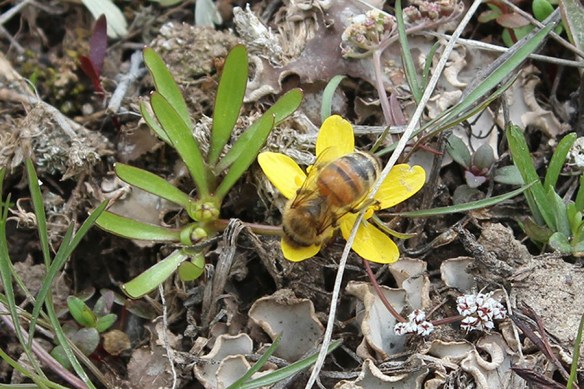
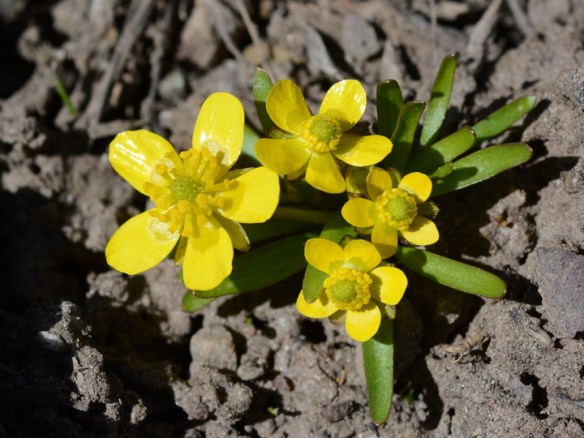 In Utah Buttercup – R. jovis – both the lower and upper leaves are lobed into three parts. Note buttercups have many separate anthers and stigmas—a common characteristic of this family. It is found in relatively moist locations, including woodland edges and openings.
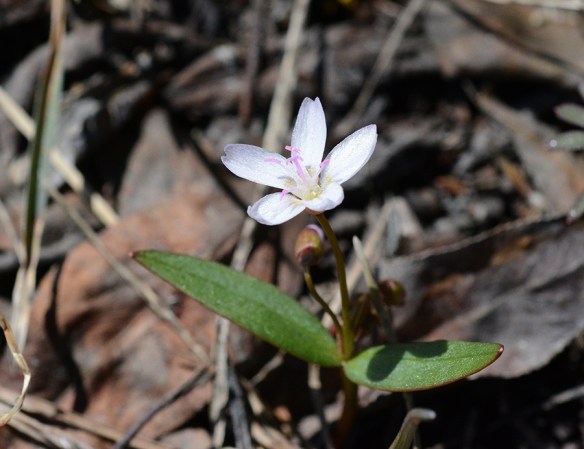
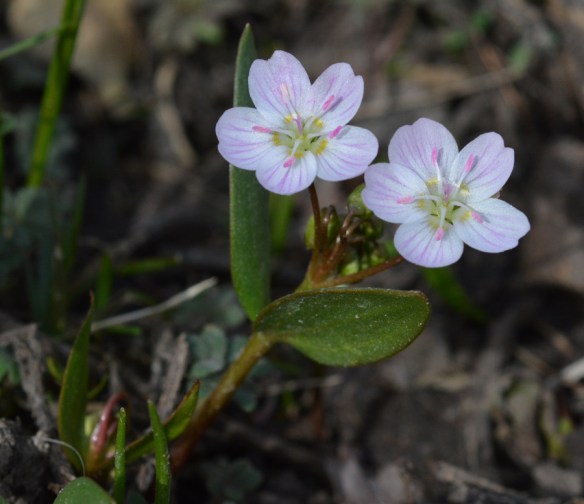
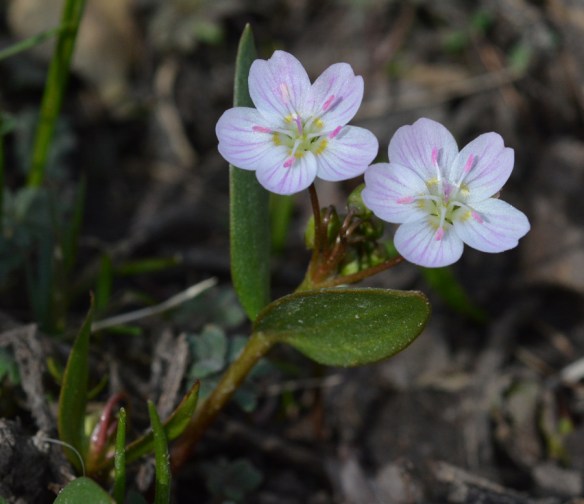 Springbeauties – Claytonia lanceolata — grow in scattered in patches. Some blooms exhibit obvious pinkish veins that direct pollinators to yellow nectaries in the center. Pollinators bump against the anthers and get dusted with pollen.
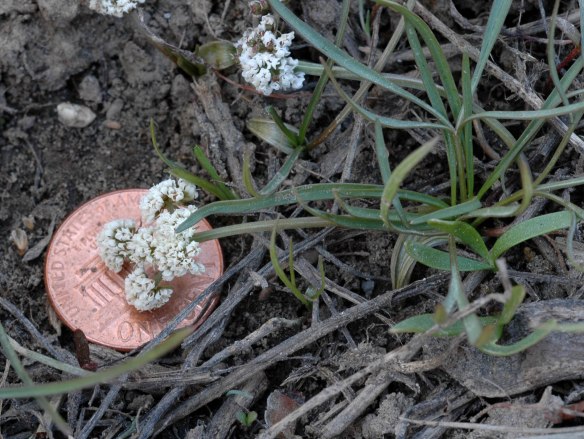
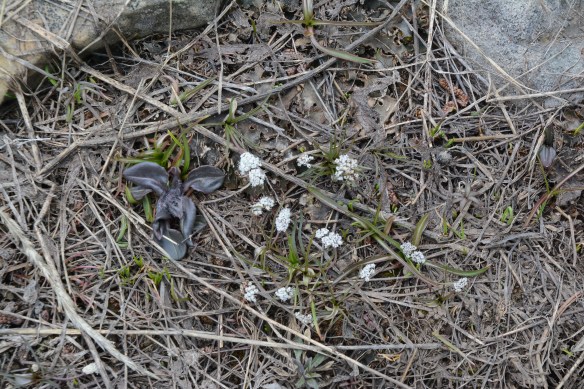 It is easy to step on Turkey Peas – Orogenia lineariifolia. The plants look like bits of lichen or stone, nothing to think about.
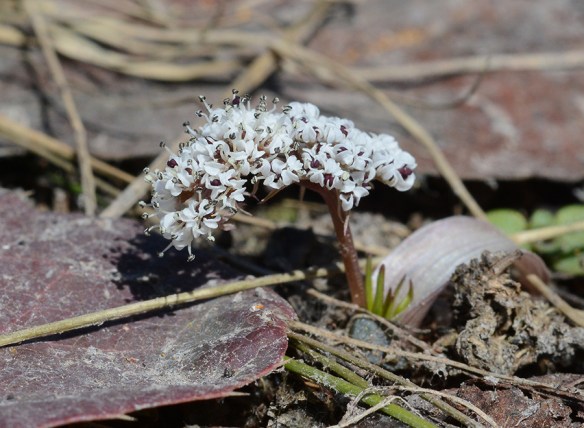 However, Turkey Peas are more interesting if you take a close look at their tiny white flower with maroon centers that together form clusters barely an inch long. Think about what tiny insects must pollinate them–likey small flies and bees.
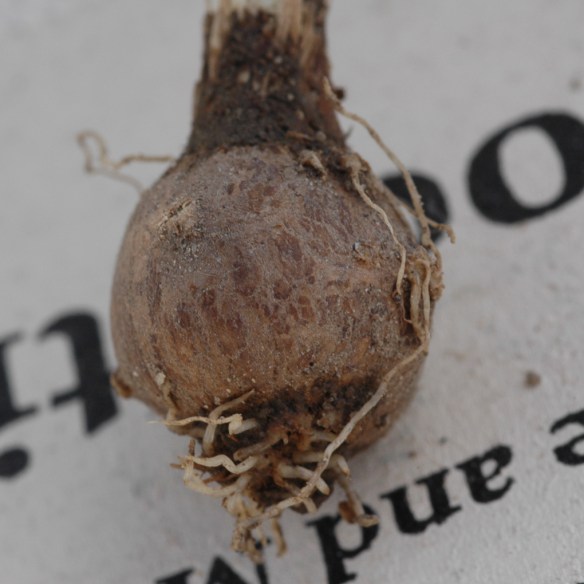
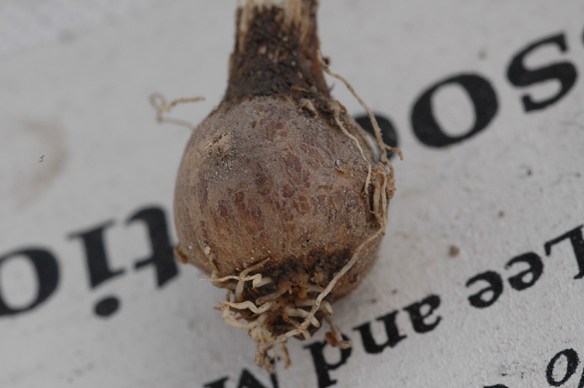 Sandhill cranes, bears, and rodents seek out the thumb-sized bulbs (“peas”) for food. (Turkeys would likely eat the bulbs if they lived in Jackson.)
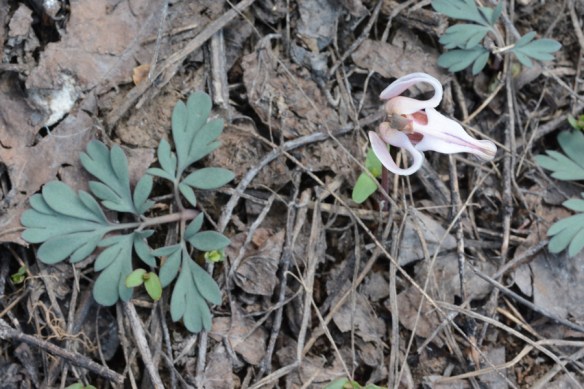
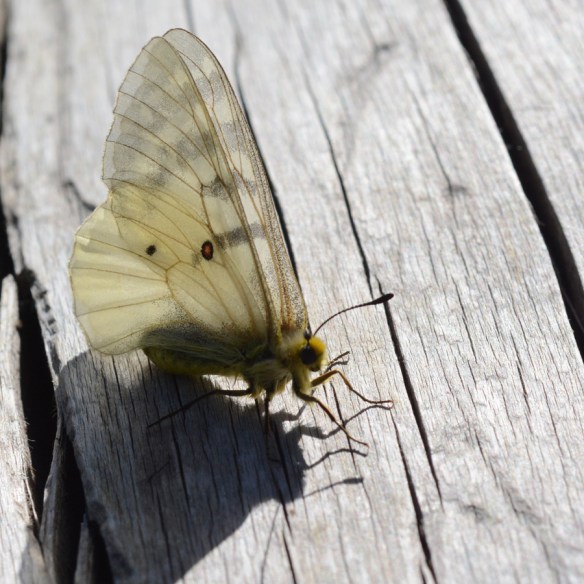
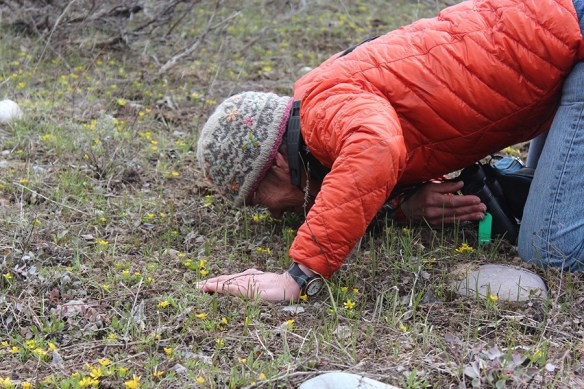
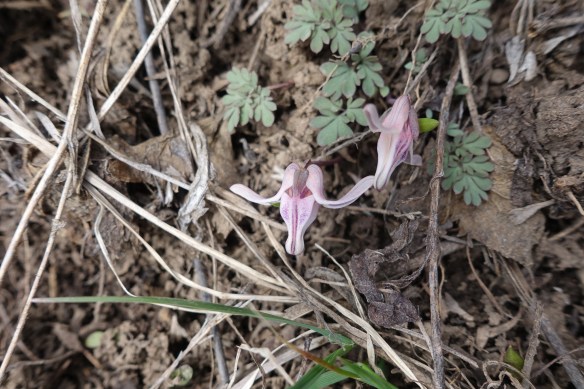
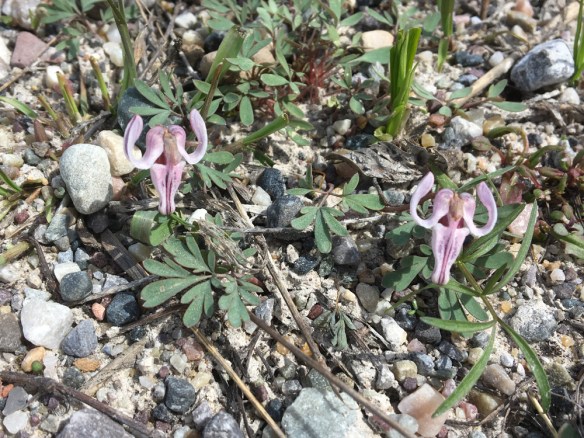 The quintessential western plant Steer’s-head – Dicentra uniflora – requires some belly botany. Scan an area for divided leaves and then get down to stare at the steer-like flowers. This is the larval host plant for the Parnassian butterfly Parnassius clodius, which Dr. Debrinski from MSU is researching in Grant Teton National Park (more info on her research below).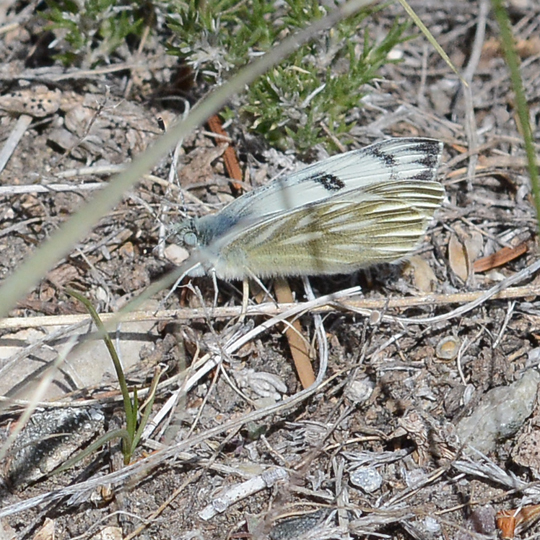
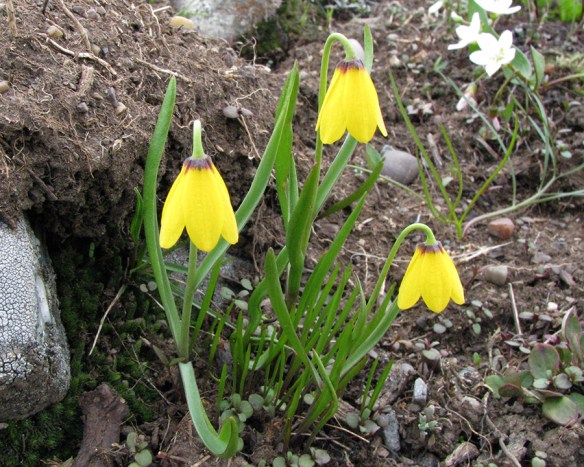
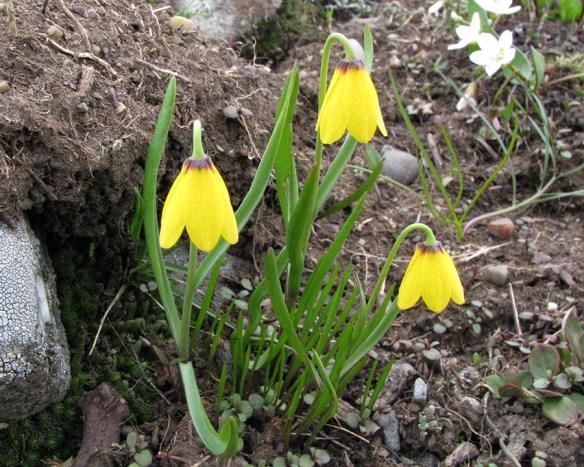 Yellowbells – Fritillaria pudica – are always cheerful! The 6-8”-high plants sprout from miniature scaly bulbs. The base of the 6 yellow tepals is said to change from red to green depending on pollination, but I can’t see any consistent difference happening to the outside flower color or anthers and pistil on the inside. Maybe you can.
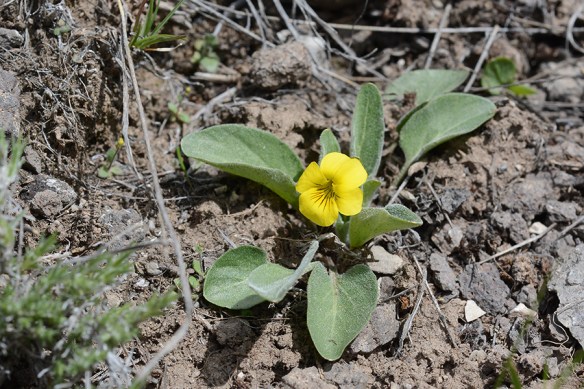
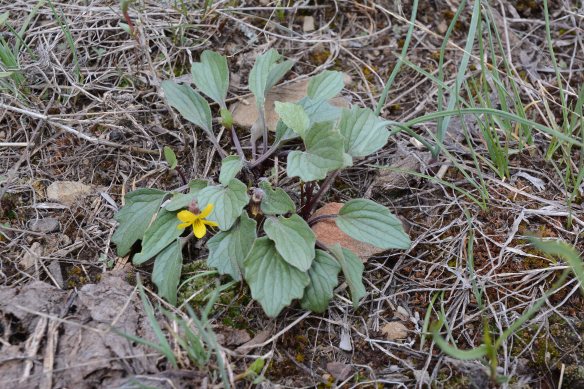 Goosefoot Violet – Viola purpurea var. venosa – has leaves shaped like goose feet with a few more toes. The back of the leaves and yellow petals are often purple, hence “purpurea” in its botanical name. Note the dark center of the flower and the convenient landing pad of petals for pollinators.
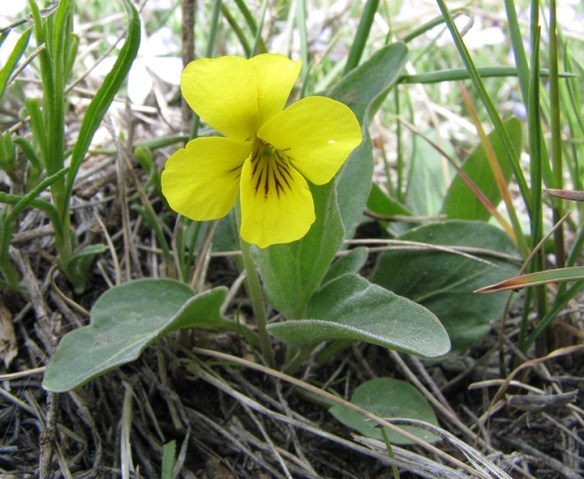 Several yellow violets intergrade in leaf features which confuse me and other botanists trying to sort out the names. This cheerful specimen is one of three look-alike species – V. vallicola, V. praemorsa, or V. nuttalii. Leaf ratios, shapes, and hairiness, as well as ultimately seed-capsule sizes, determine identification.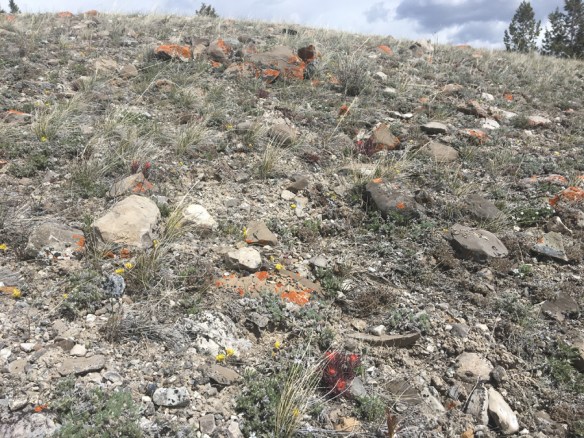
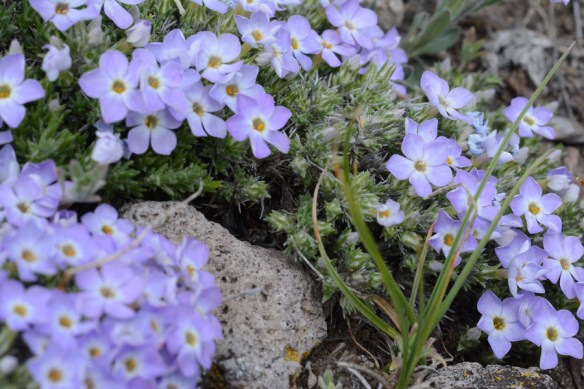
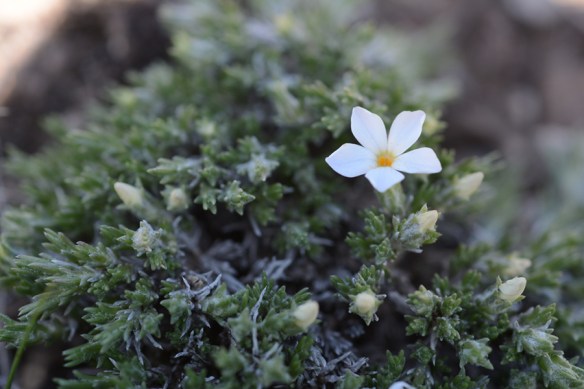 Hood’s Phlox – Phlox hoodii – is often the first out, with its white to bluish flowers. Bees and flies pick up on the sweet fragrance. They come in and land on the flared petal tips and dip their long tongues deep down the center tube for nectar. They then carry the orange pollen off to other flowers nearby. The leaves of Hood’s Phlox are opposite, very small and tight on very slow growing stems that collectively form a cushion shape. Plants inches wide can be decades old.
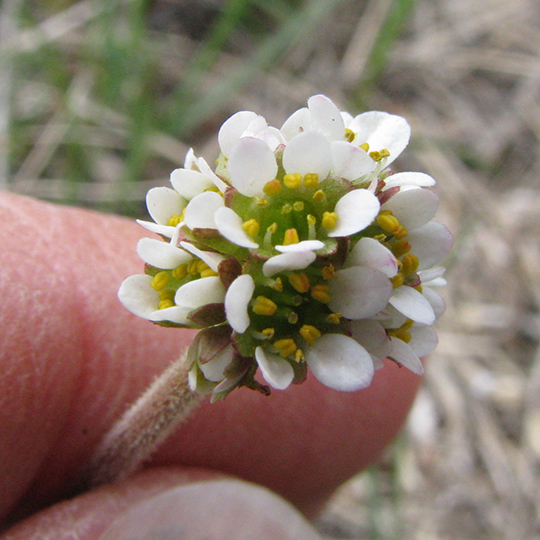
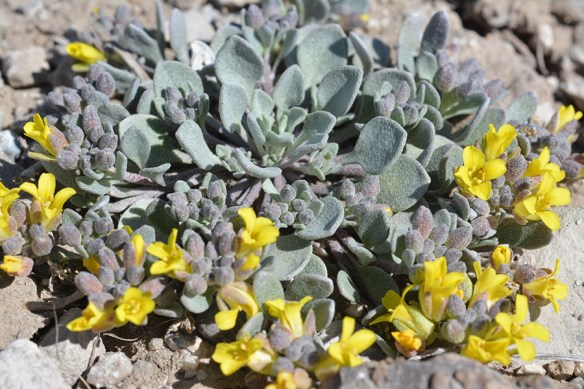 Nearby, Twinpods – Physaria didymocarpa – feature bright-yellow, 4-petalled flowers at the end of sprawling 3-4” stems. Spade-shaped, silvery leaves help identify this member of the Mustard Family. Mustards usually have 4 petals, 6 anthers (2 short, 4 long), and one 2-parted pistil.
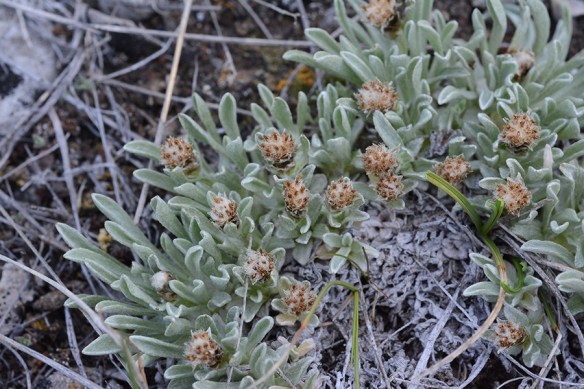
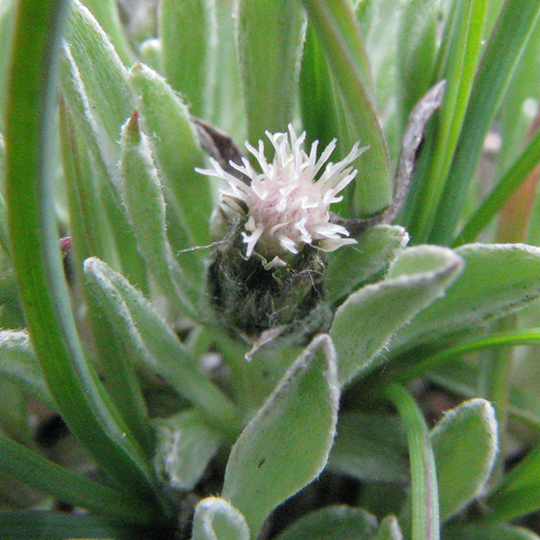
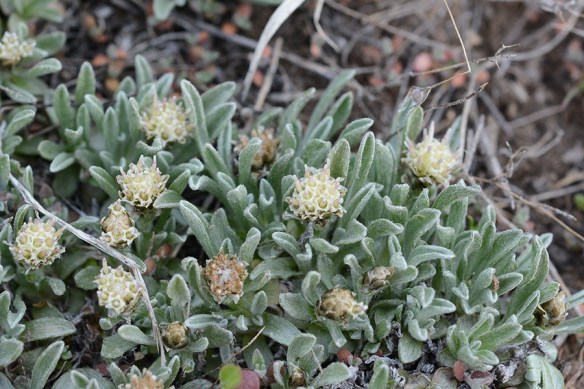 The first pussytoes to bloom is Low Pussytoes – Antennaria dimorpha. The tiny gray, finely hairy leaves form mats on the ground. Look closely for the flowers.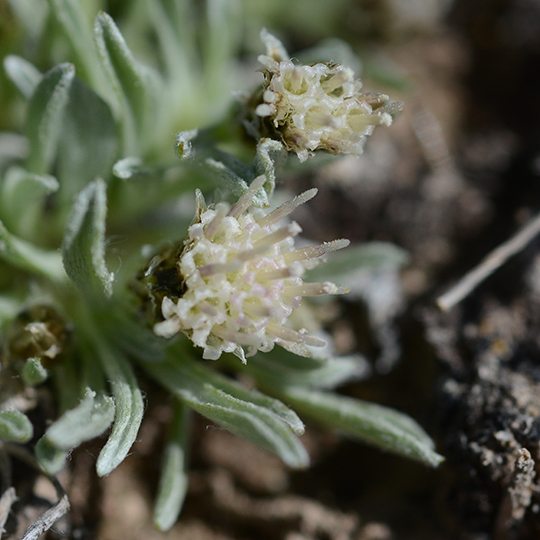
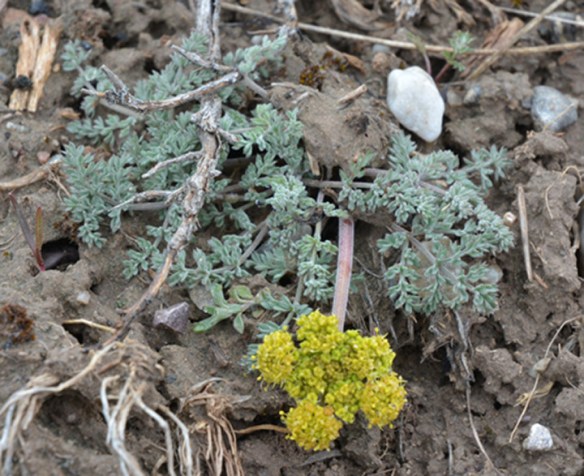 Sprawling Cymopteris – Cymopteris longipes – is spreading its whorl of dissected silvery leaves low to the ground. As a member of the Carrot Family, plants have umbels, in this case with yellow flowers.
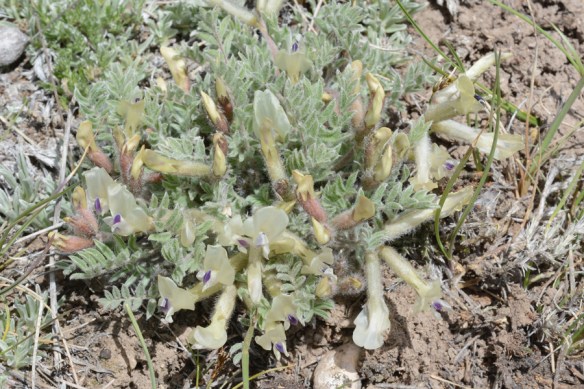
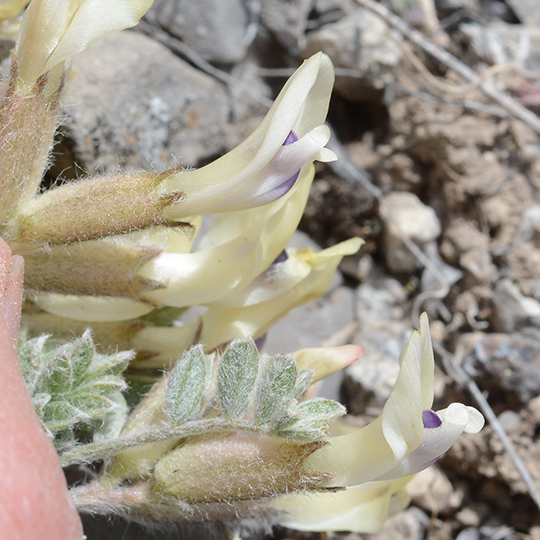
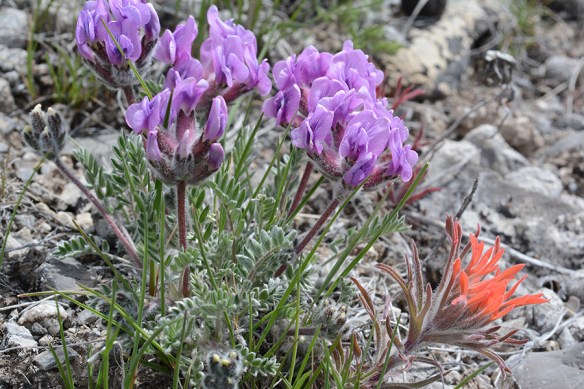
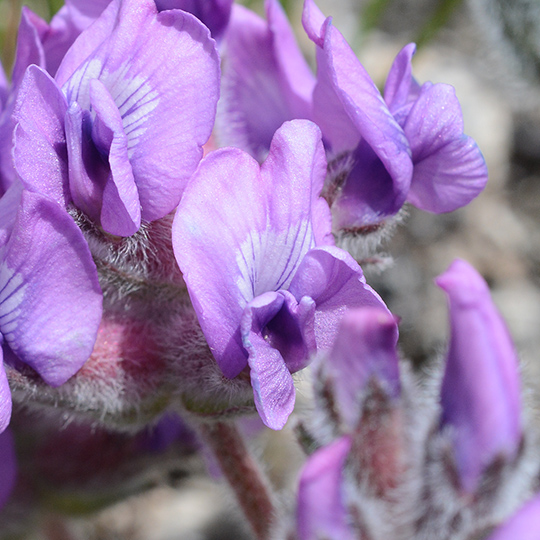
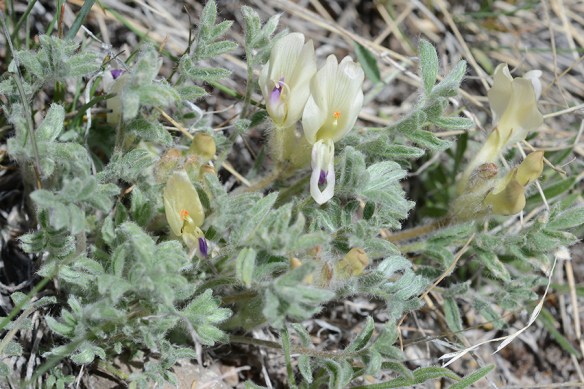 Pursh’s Milkvetch – Astragalus purshii – is also just beginning to flower on dry knolls. The pea-like flowers are slightly yellow to white with a blue bow to the keel (lower two petals). Some flowers open wide for pollinator business. Note the pinnately divided leaves are silvery hairy.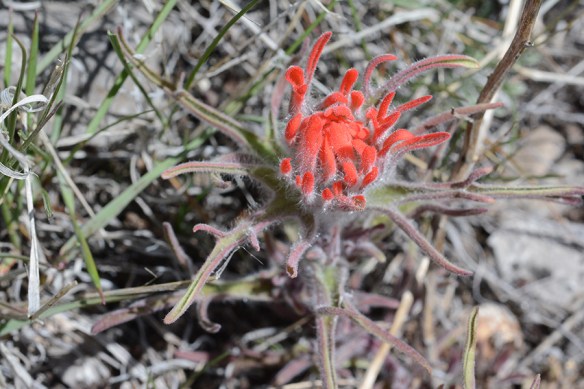
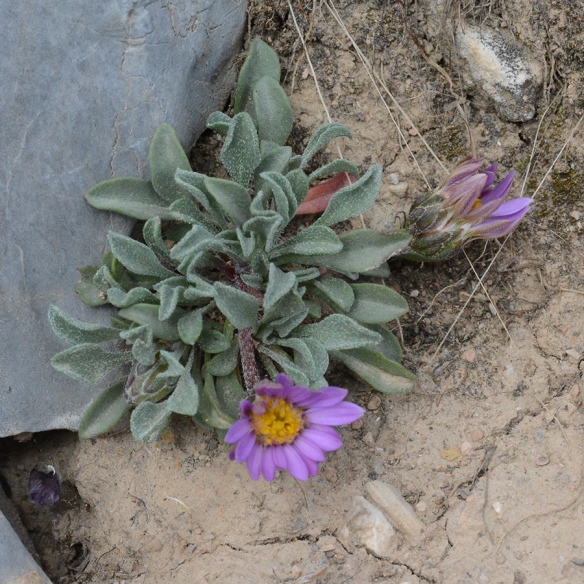
 Our local Townsendias belong to a beautiful but often confusing genus. This plant has all the features of T. leptotes: narrow leaves, whitish petals, a whorl of 4-5 rows of pointed bracts tinged with color. Apparently this species and T. montana can hybridize or self-fertilize to the point that some experts say separating the two species appears “arbitrary.” I say, let’s just enjoy the flowers if you can find them. They are pretty rare.
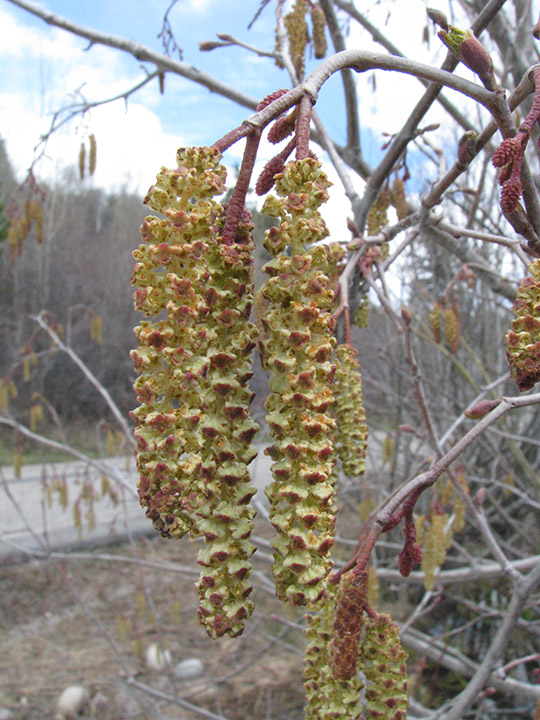
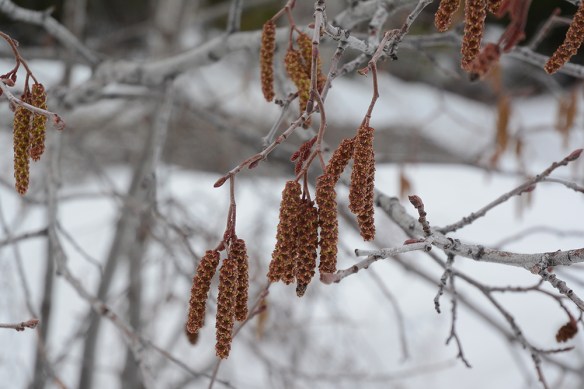 Shrub swamps throughout the valley are warming up. Ducks, moose, and beaver are moving through the waters under dangling catkins of alders and amidst thickets of pussywillows.
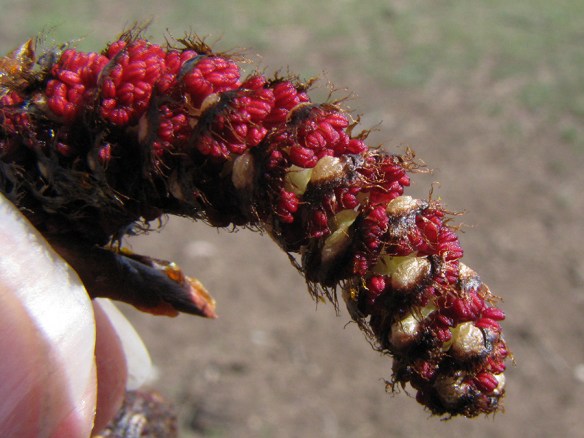
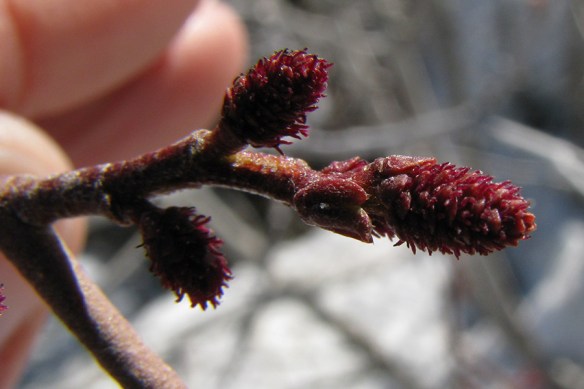
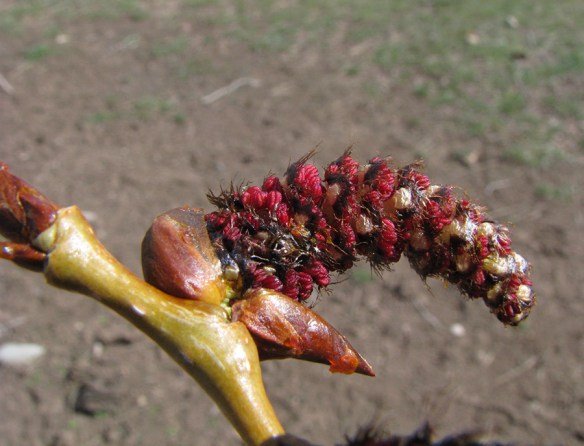
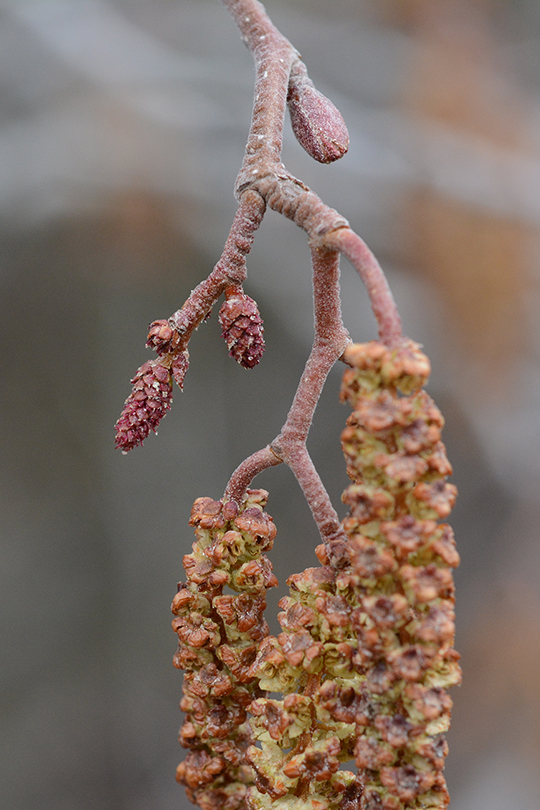 Male catkins of mountain alders – Alnus incana var. occidentalis – elongate: their pollen is released upon the wind to meet up – purely by chance – with the stigmas of female flowers (above left in photo) in separate, stout “cones.”
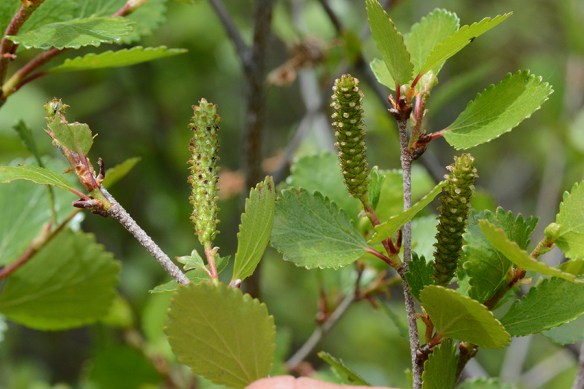 Later in May, its relative Bog Birch – Betula glandulosa – will bloom after its leaves have filled out.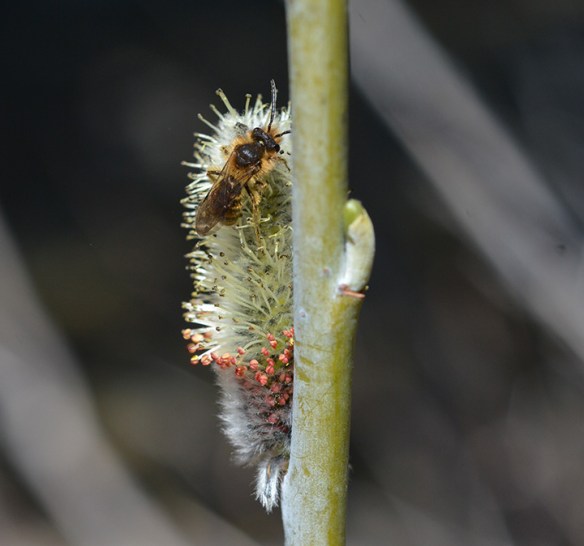
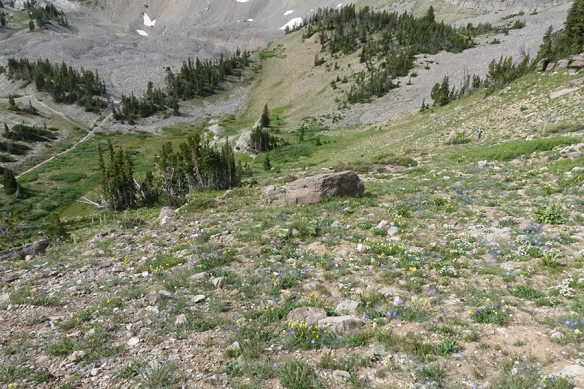
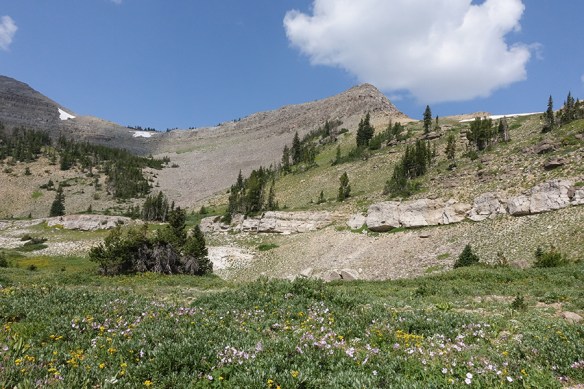 Wildflower seekers are hiking above 8,000’, even 9,000′, for colorful displays of flowers found earlier at lower elevations. It is also time to search for unusual subalpine to alpine flowers above 9,500′ to 10,500′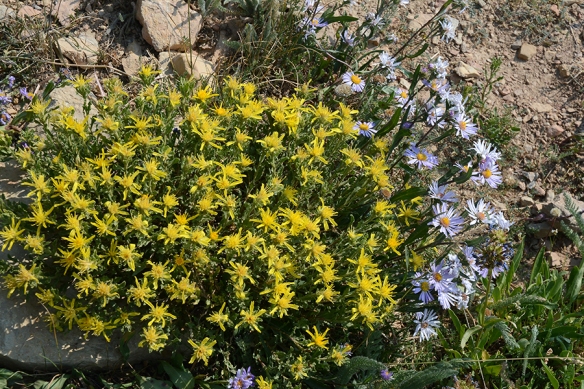
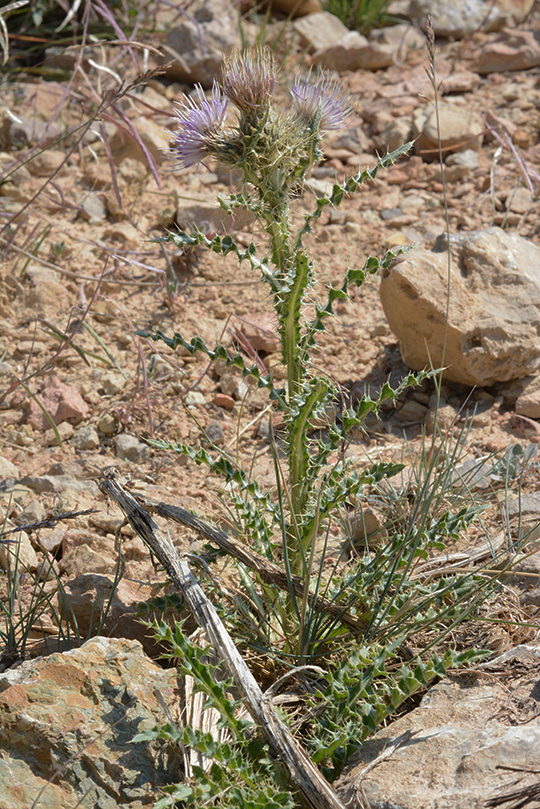
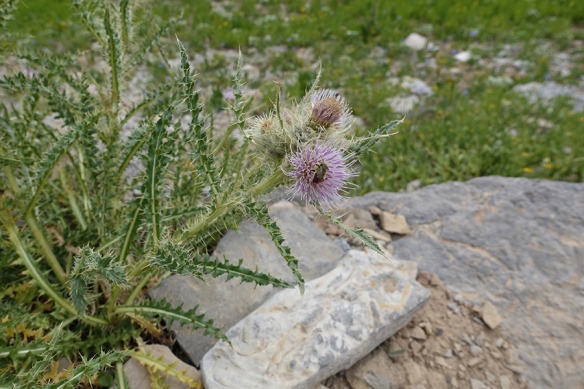
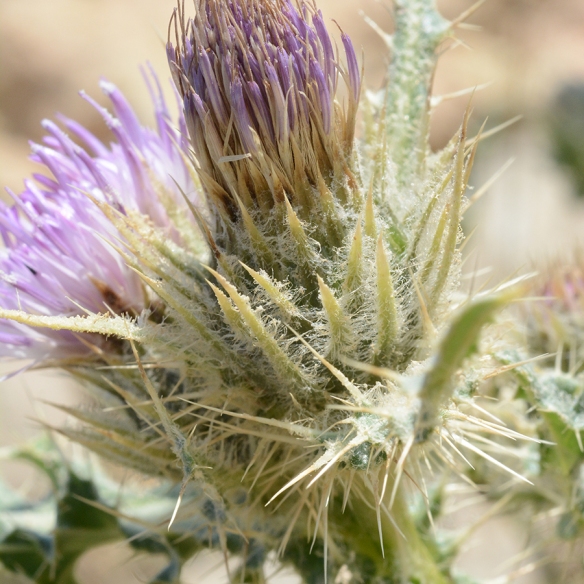 Leaves are 6-8” long, toothed to lobed, wavy, and spine-tipped. Notably, petioles run down the stem (decurrent). Tweedy’s thistle is deemed “unresolved” by the authoritative Flora of North America: it is not even considered a variety. However, the authors note that there is much post-glacial hybridization among formerly isolated populations of this complex genus.
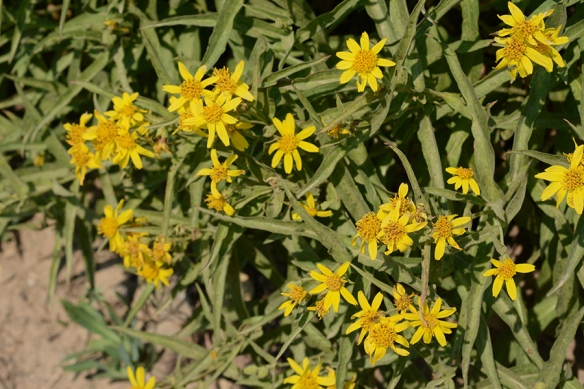
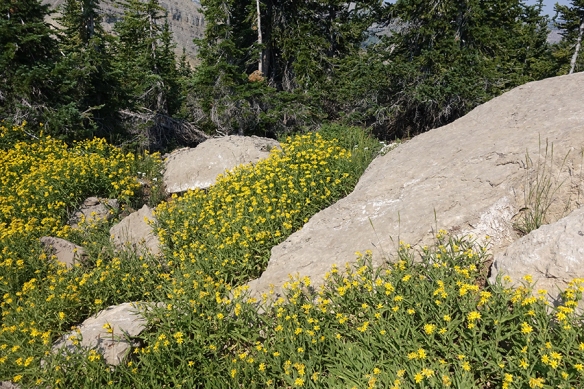
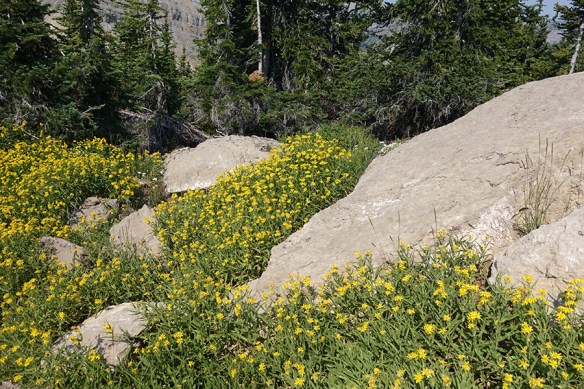 Bright yellow Long-leaved Arnica – Arnica longifolia – grows in cheerful drifts.
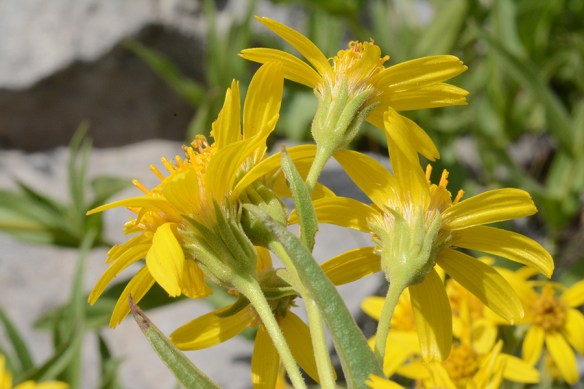 The 1-1.5’ stems feature several pairs of elongate leaves, as well as many yellow heads surrounded by equal-length bracts. The plant is overall glandular hairy with a strong odor.
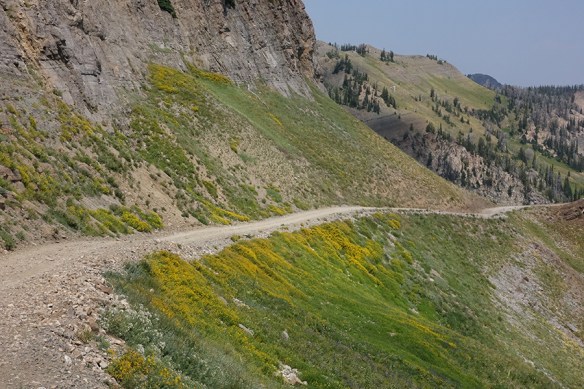 It is common as you continue down the mountain road and seen from the tram.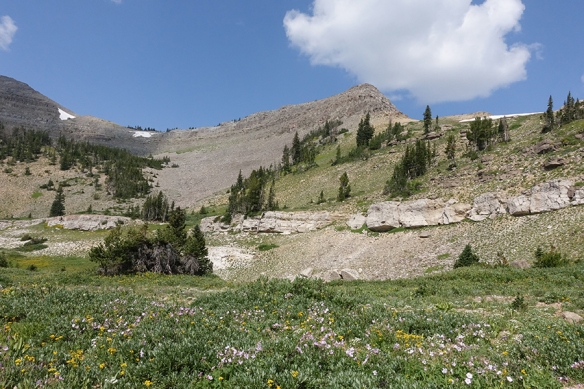
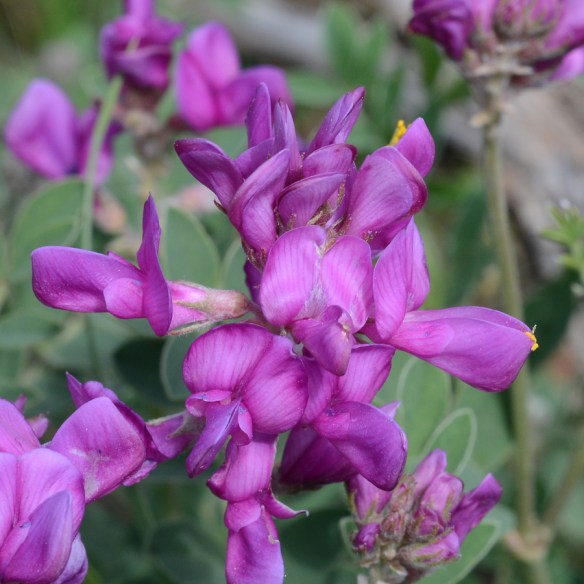
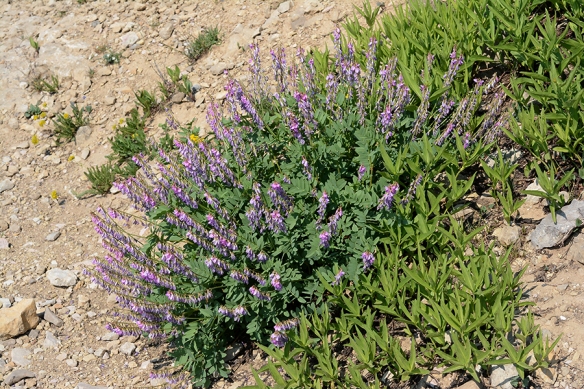 Alpine sweetvetch – Hedysarum alpinum var. americanum – has many deep violet- red, pea-like flowers (its in the pea family) dangling from one side of the inflorescence (photos above and below).
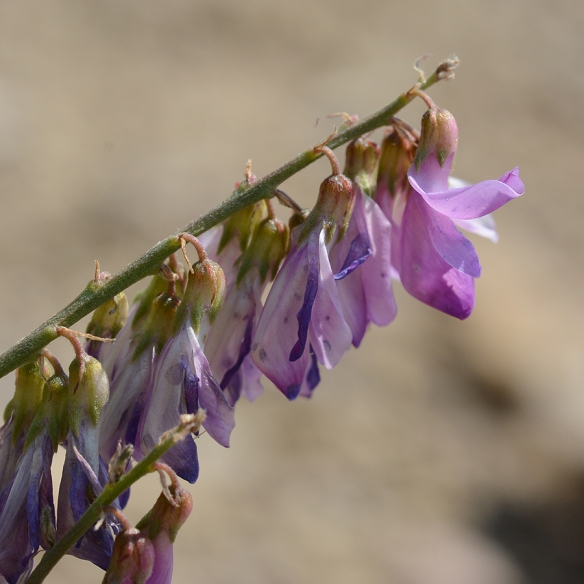 Bluish-green leaves are pinnately divided into oval leaflets. Careful measurements of flowers (9-15mm) distinguish it from the slightly larger flowered (17-22 mm) Western Sweetvetch (H. occidentale). (Not all taxonomists agree with this separation!)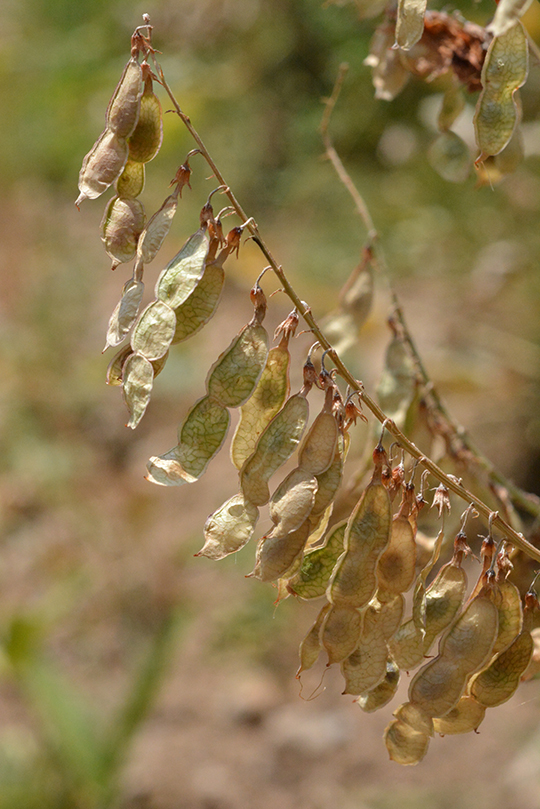
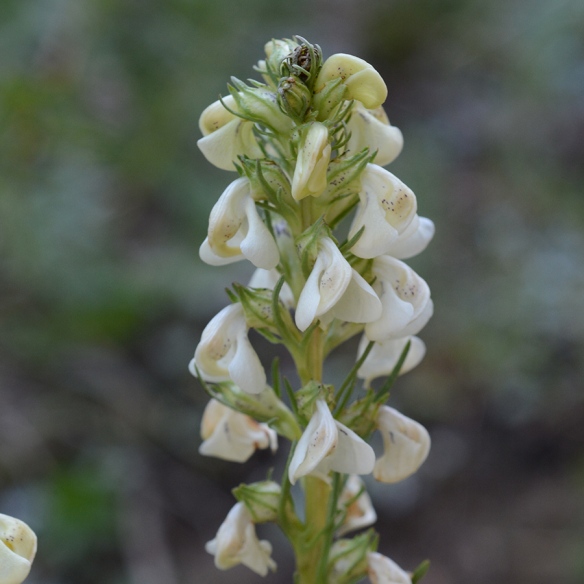
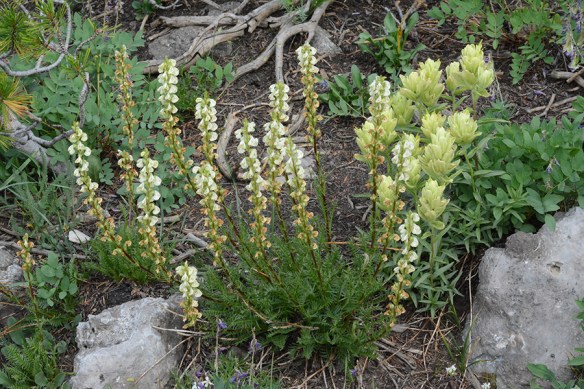
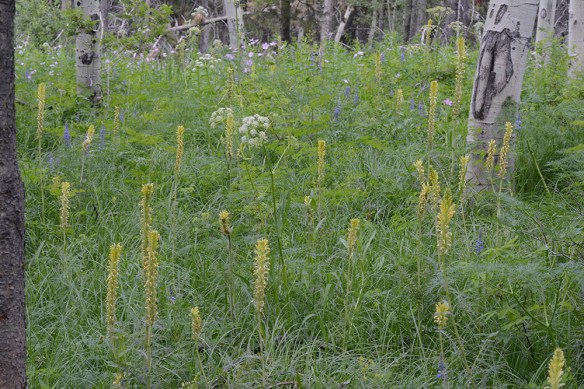
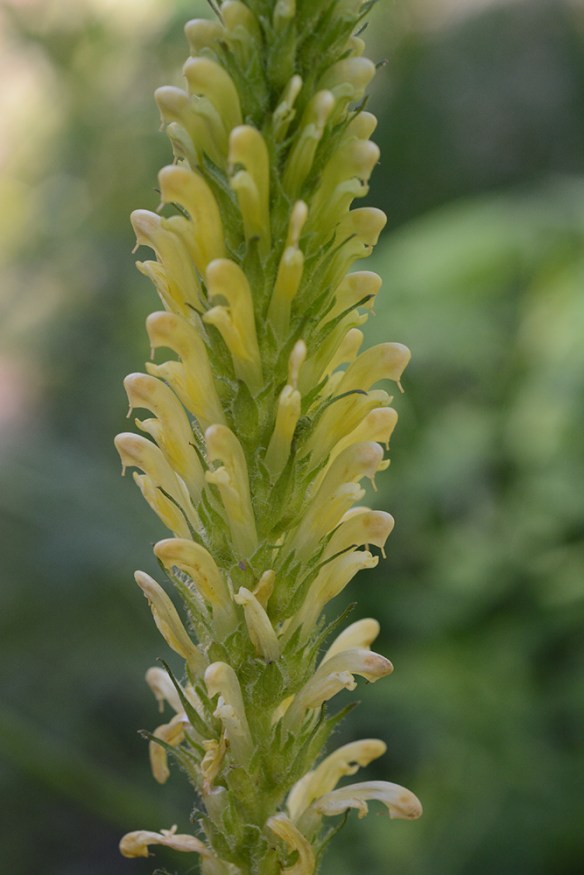
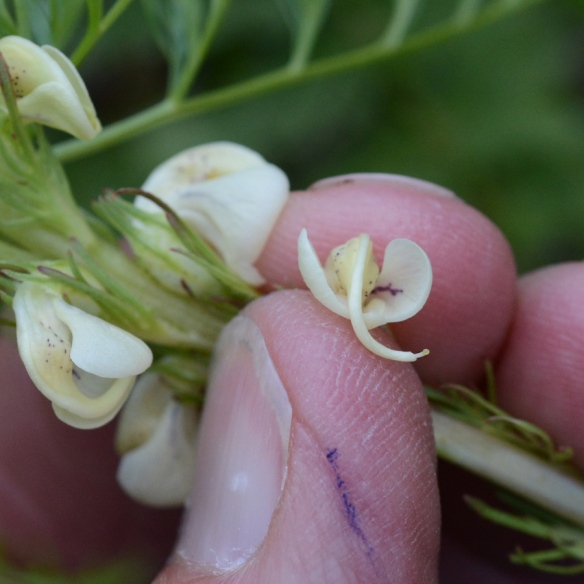 The 1’ plants have divided, mostly basal leaves, which helps distinguish it from a similar, more lower-elevation species: Parrot’s Beak – P. racemosa – which has with toothed but not lobed leaves. White-coiled lousewort is shown below.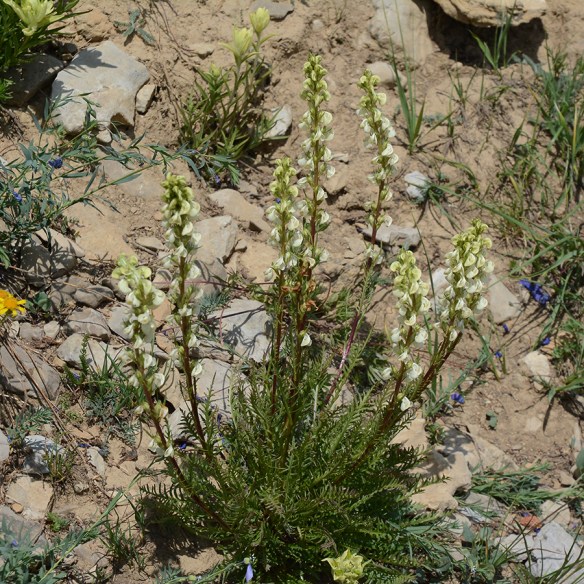
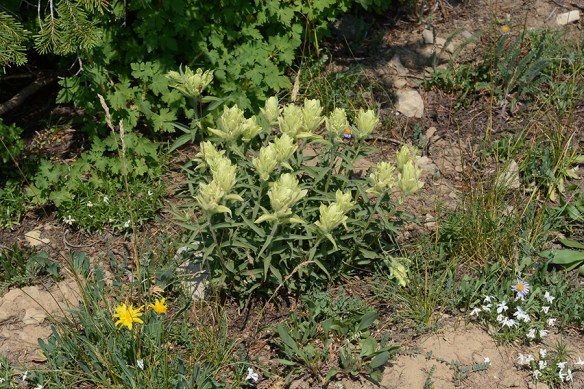
 Undulating, slightly toothed, slightly succulent or waxy leaves clasp the 1-2’ stems (below).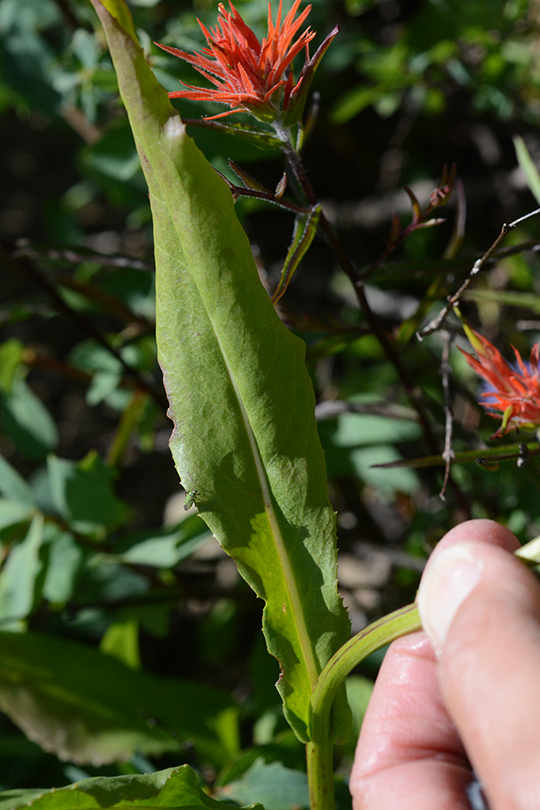
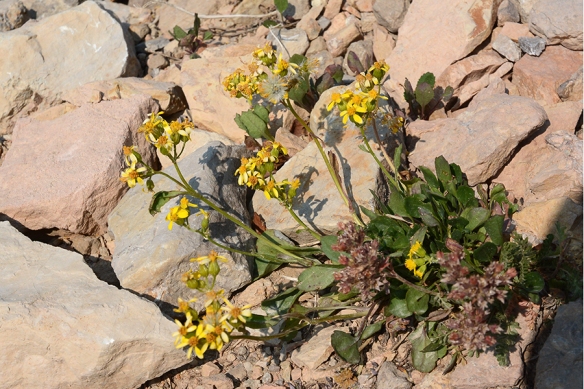
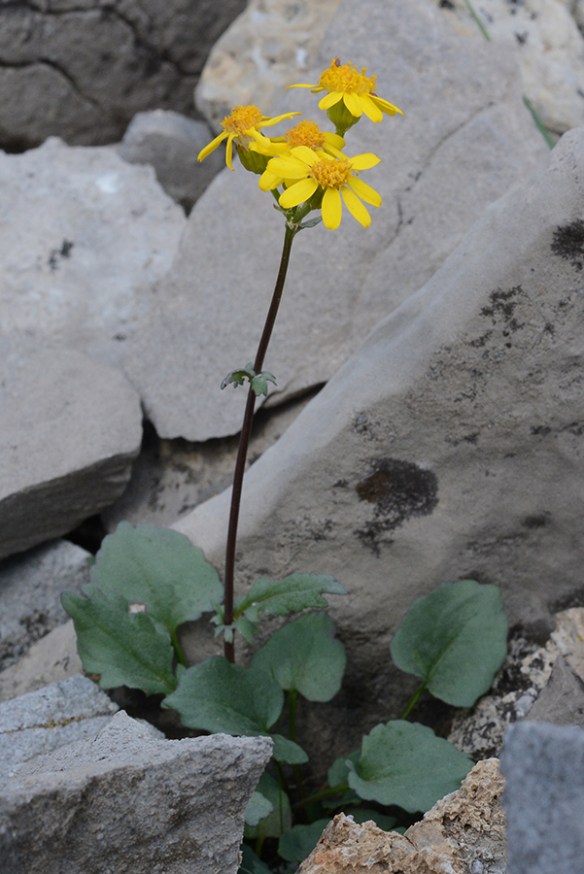
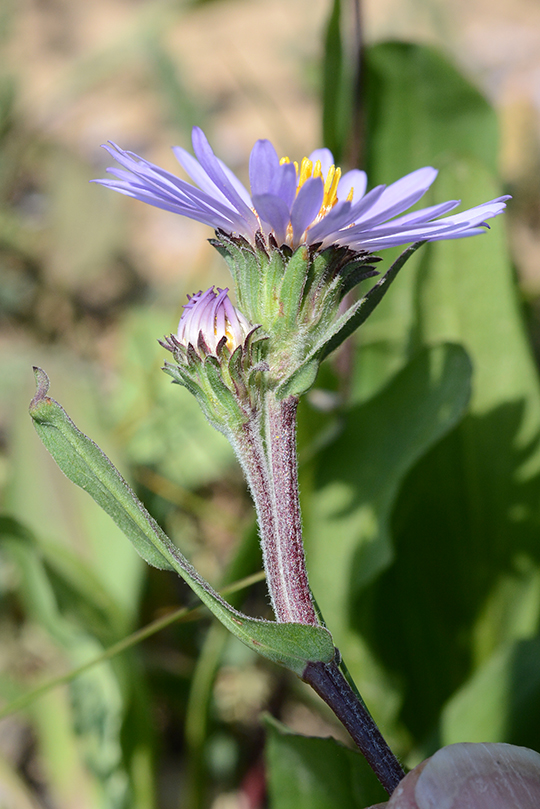
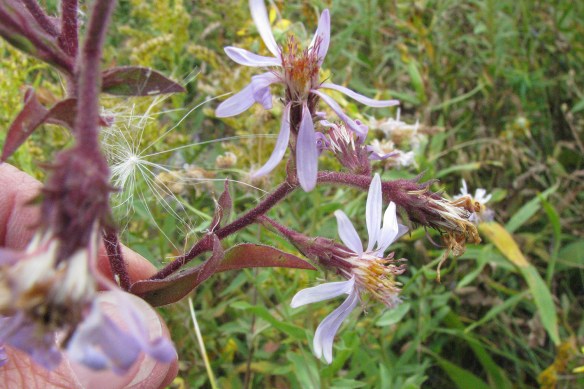
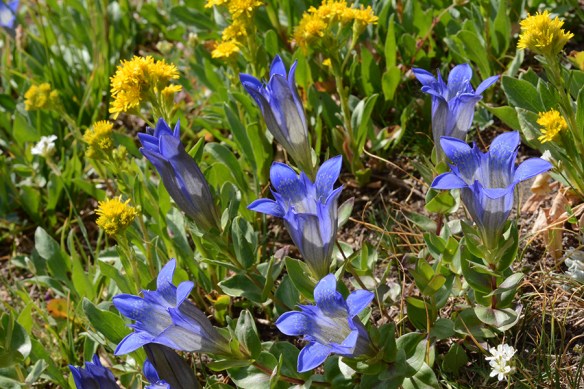
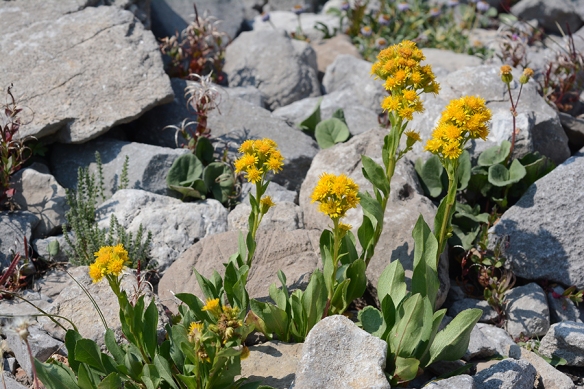
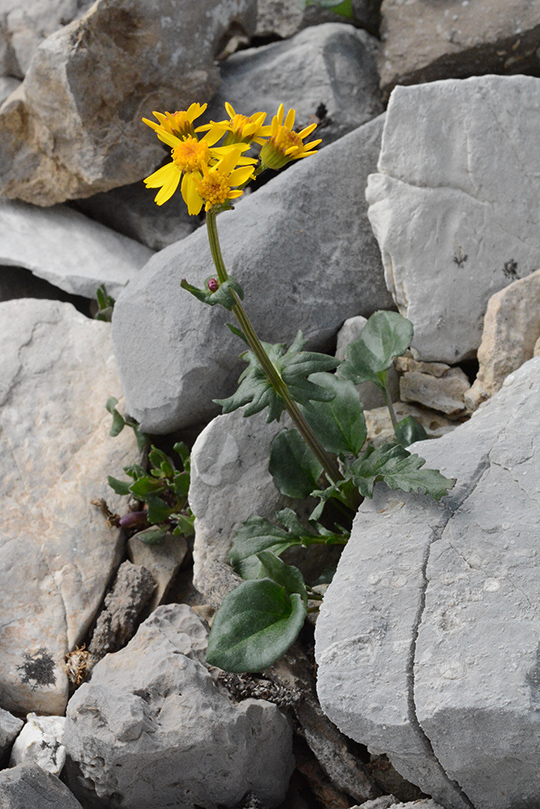
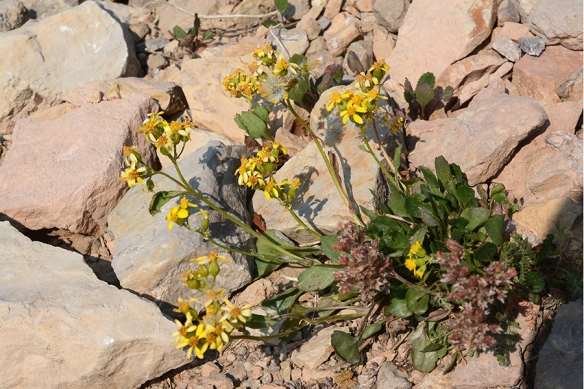
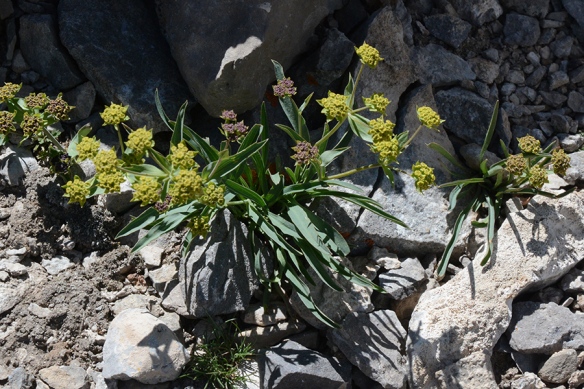
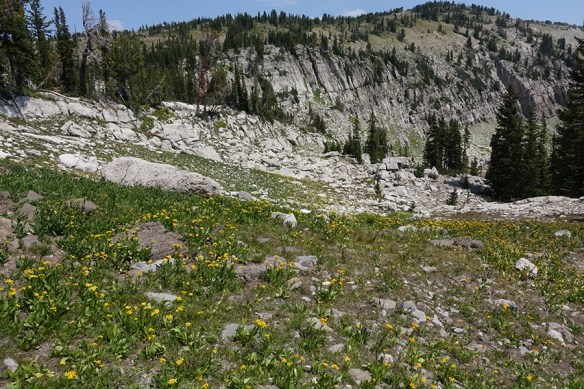
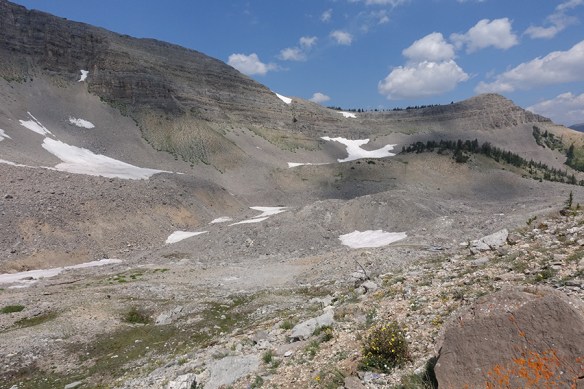 The rocky talus of Cody Bowl has several speciality flowers that seem to be able to grow out of rock.
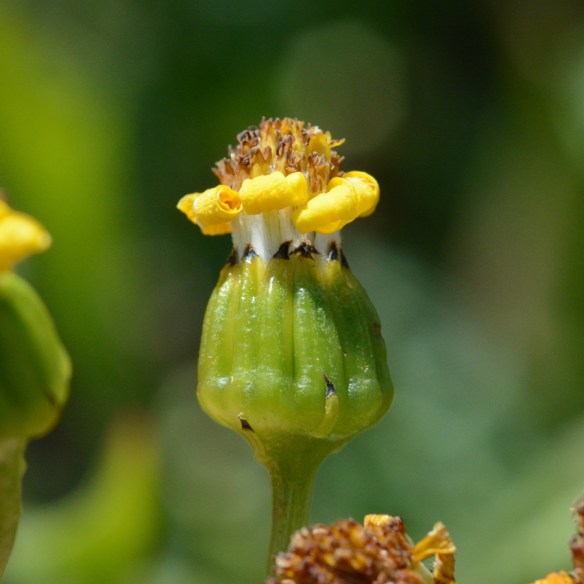
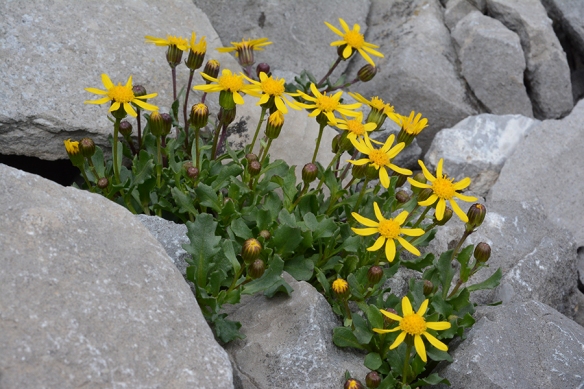 Fremont Groundsel – Senecio fremontii – has single flowers with the indicative row of waxy bracts. The small leaves are toothed and arranged along the stem: not clustered at the base (although some plants with short stems look like they have basal leaves). The flowers are single and appear large compared to the leafy body of the plant.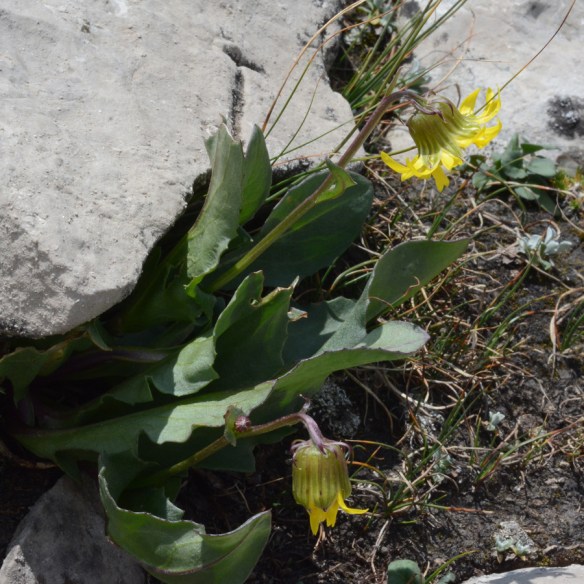
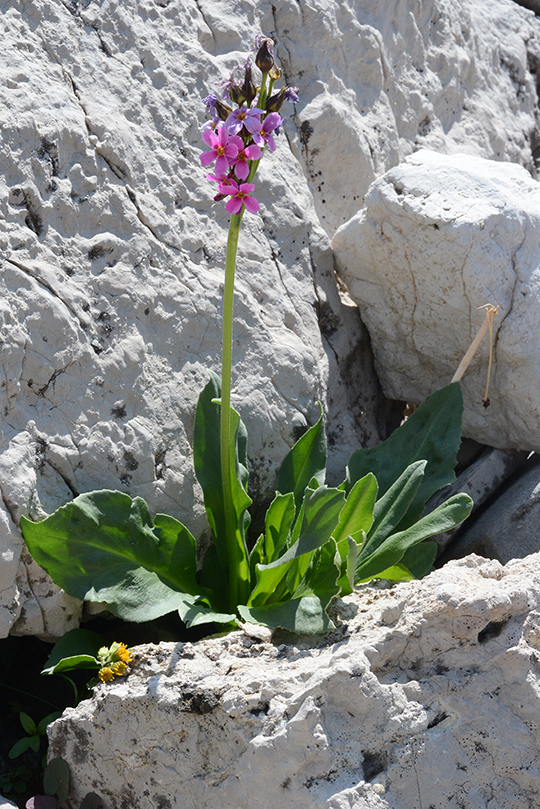
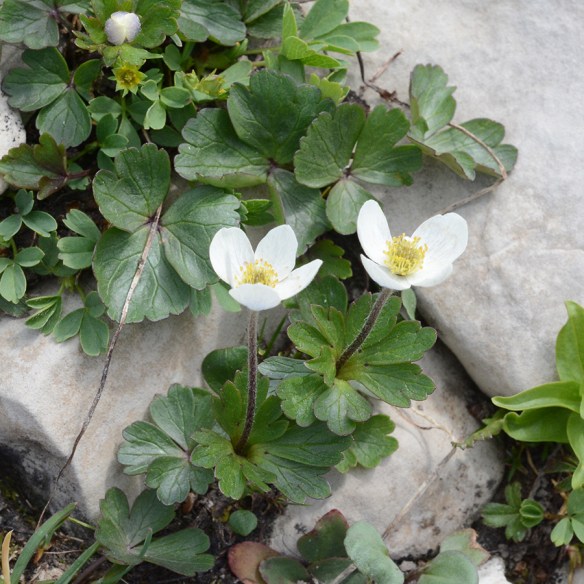 Small-flowered Anemone – Anemone parviflora – is only inches tall with tidy whorled leaves.
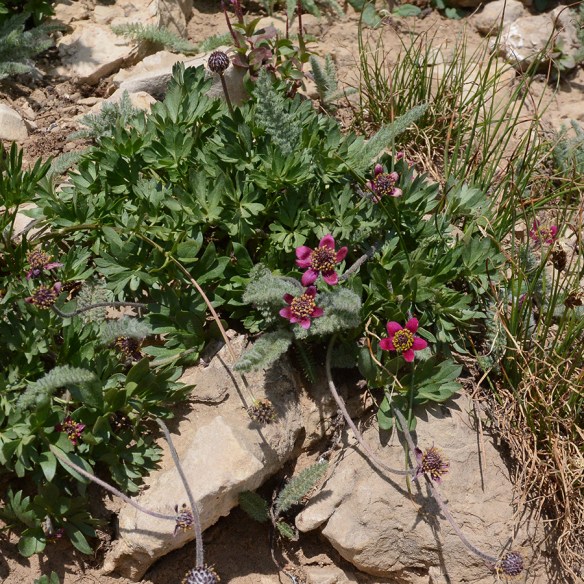 And nearby, the deep-pink Teton Anemone – Anemone tetonensis.
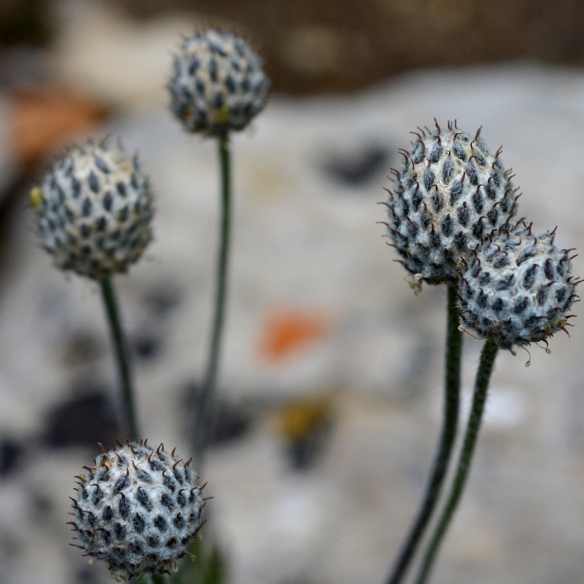 Some anemones are already setting seeds!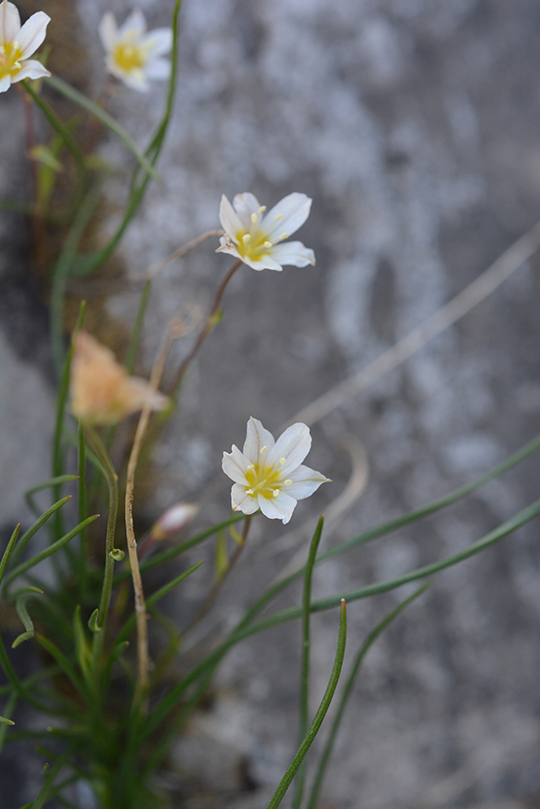
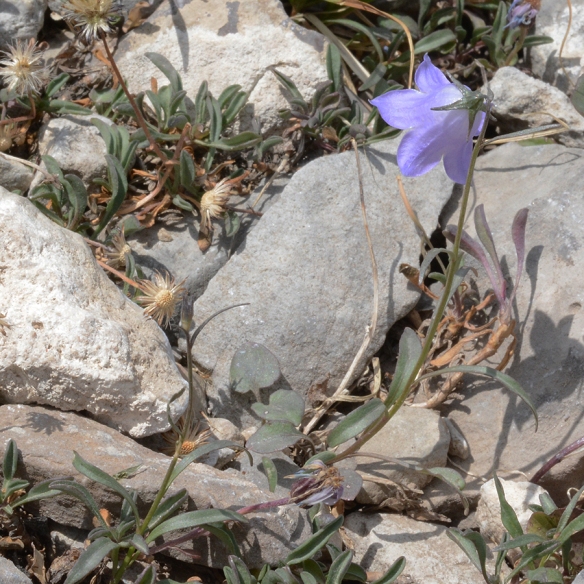 Similar in size is the Alpine Harebell – Campanula uniflora. Instead of many bell-like flowers per stem found in the more common harebell, this species has only one flower per stem, as the Latin name uni-flora aptly describes.
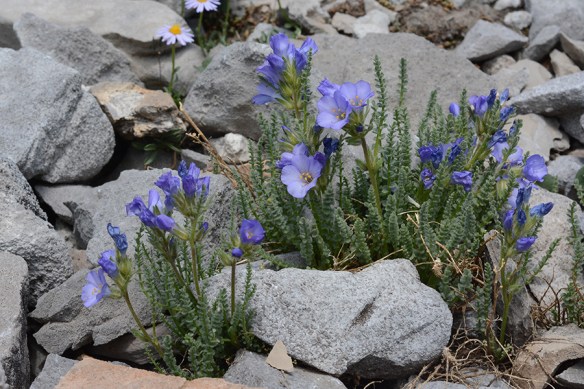 You may smell this plant before you see it’s blue flowers: Skypilot or Skunkflower – Polemonium viscosum. It ranges in size from 5-12” high.
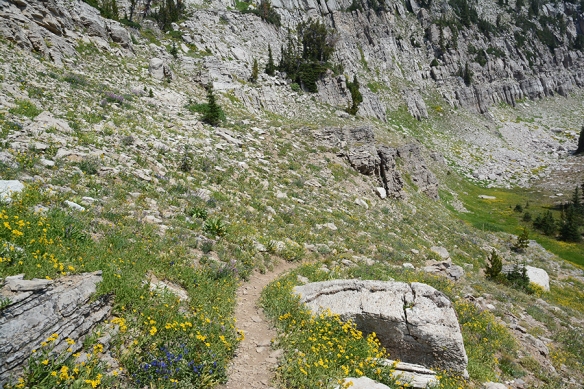 Snow Buttercups – Ranunculus adoneus – are blooming brightly in recently melted snowpatches. The leaves are divided 1-2x into narrow lobes (photo below).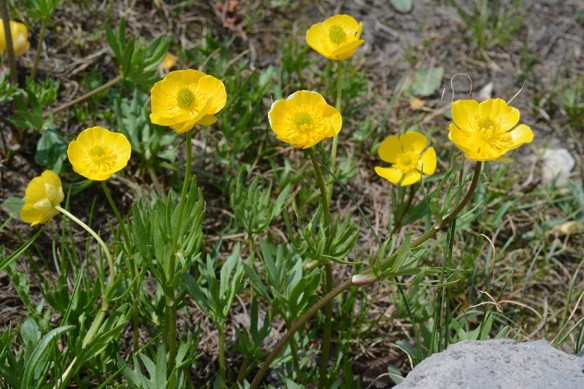
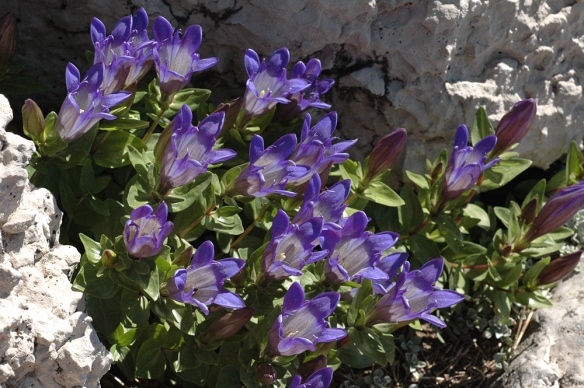
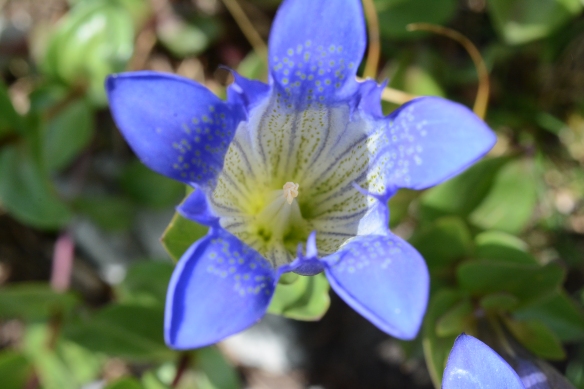
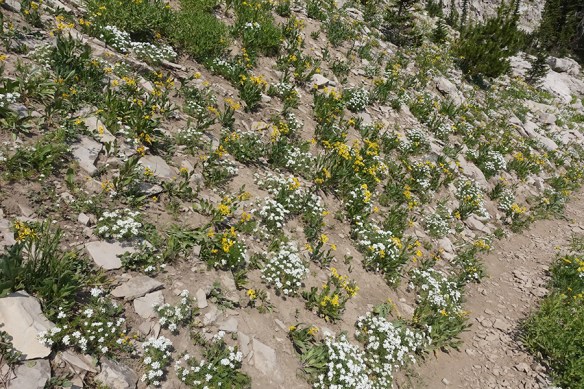 Another combination includes Sulphur paintbrush, Bog Gentian, and Coiled-beak Lousewort: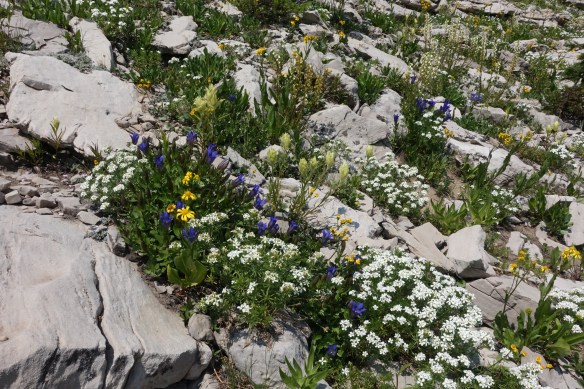
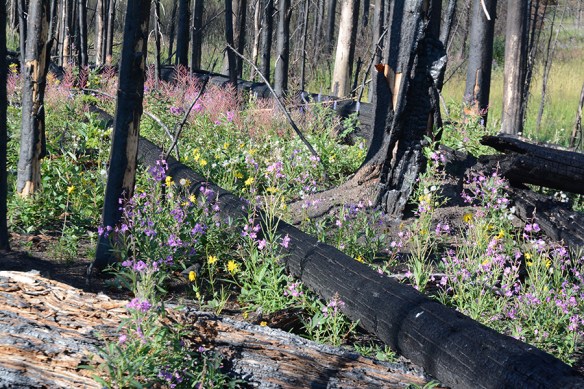
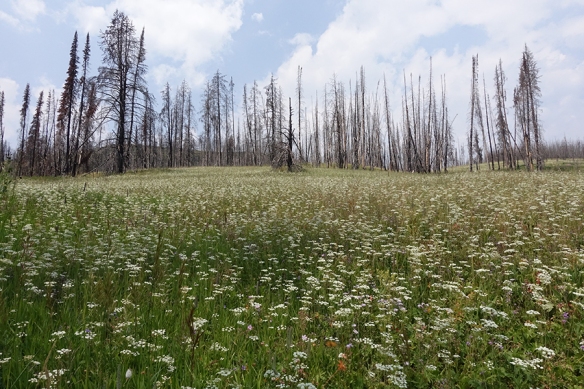 Forest fires can appear devastating at first, but for the most part nature has its systems for resilience. Depending on how hot the fire was and what plants were present both above and below ground and nearby, vegetation will return in its own due course. In some cases, plants sprout that have not been noticed in years, and indeed are triggered to flower after the heat of the moment. Others take advantage of the open ground and fly in with fresh seeds. Still others have stored seed until the magic moment. Wildlife also takes advantage of the changes.
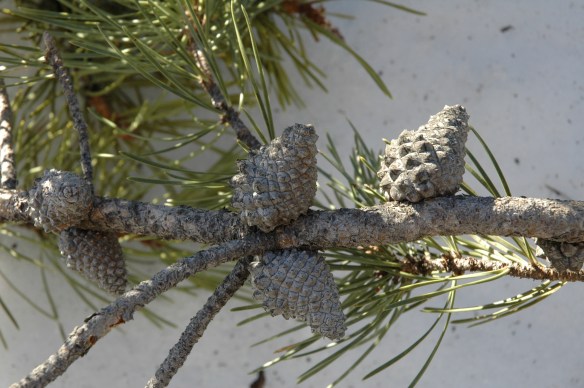 Their cones have thick scales with spine tips which protect the seeds inside from mauraders and weather for years. When a fire comes through, the resin that has sealed the scales shut melts, and cone scales open wide, releasing winged seeds upon the wind. The delicate embryos fall onto newly exposed soil, which may be enhanced by ash, and quickly germinate. Ash often contains recycled nutrients and retains warmth which helps the seeds grow. Seeds germinate quickly, giving them a headstart among competing plants. Pines in fact need sun to grow well. A truly fire adapated species!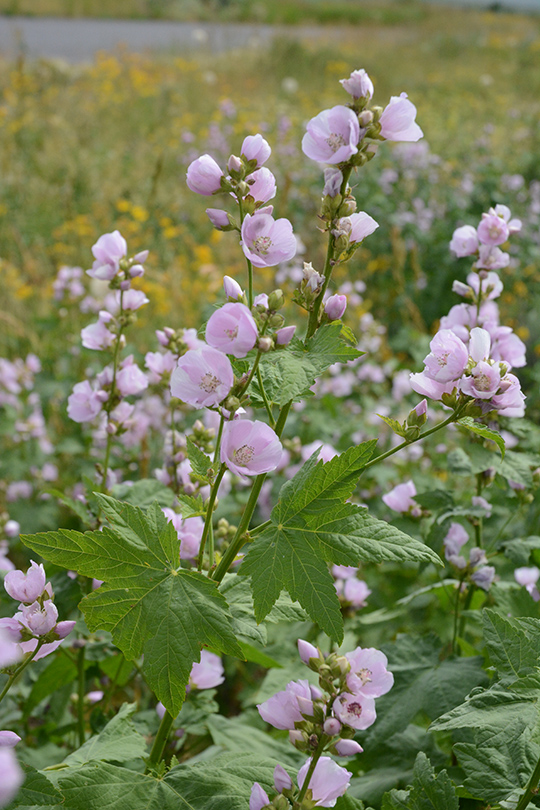
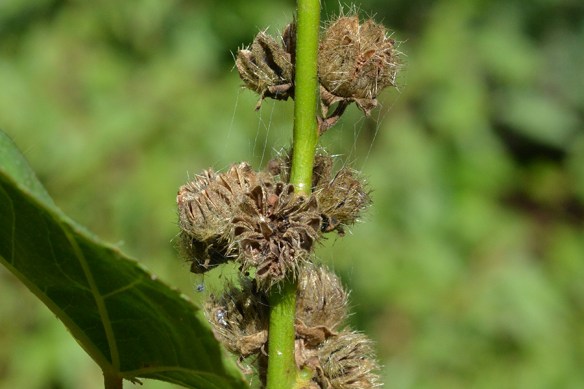
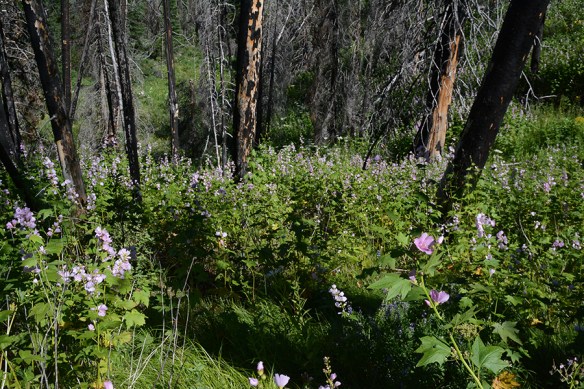 Due to a prescribed burn south of Hoback, the slopes along the trail up Palmer Creek are now covered with 4-5’ flowering Mountain Mallow plants (photo above taken 7.13.18). Soon fruits, which look like peeled hairy tangerines, will split to release seeds for the next generation decades in the future (photo below).
 Note: In mountain mallow the seedbank is in the soil, in lodgepole pine, the seedbank is in the air.
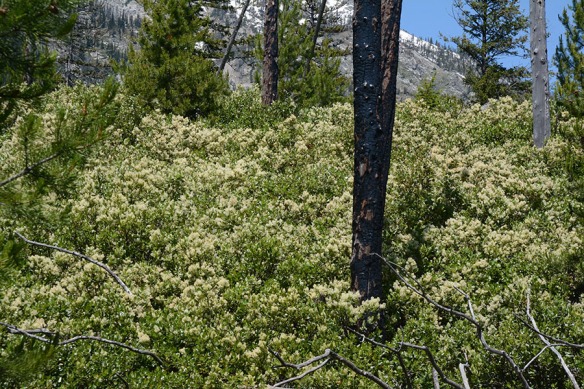 This evergreen, resinous, sprawling shrub will shoot up new branches from old roots after a light fire. After heavy burns, it can also sprout from “Rip-van-Winkle” seeds.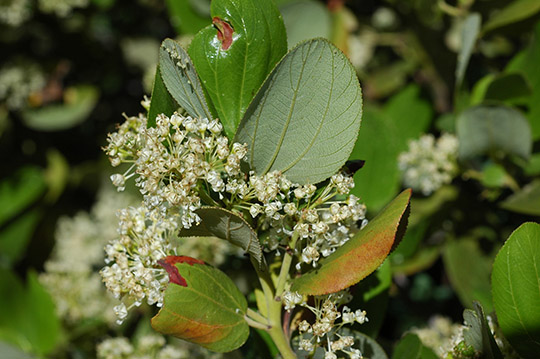
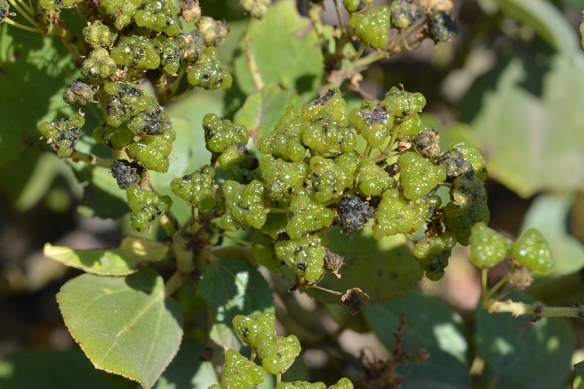
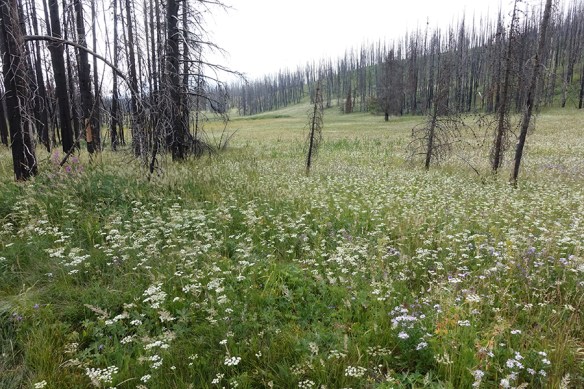 Notably, in some areas it burned through lodgepole stands that were recolonizing from a fire only a few years before. Ecologists and foresters are concerned that this unusual short “return” interval will be the pattern of future fires in this era of climate disruption.
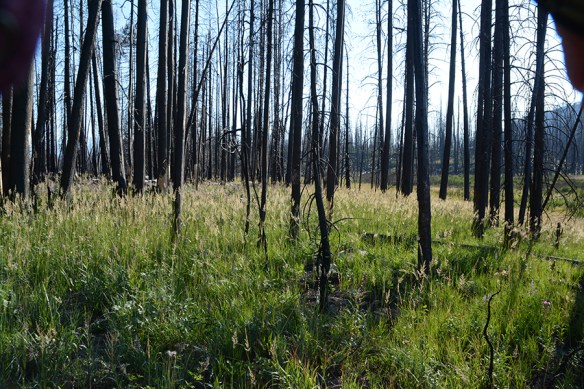 Deep fibrous roots of Pinegrass are important for holding soils, especially when soils are vulnerable to erosion after fires. Plants are blooming in profusion near the parkway.
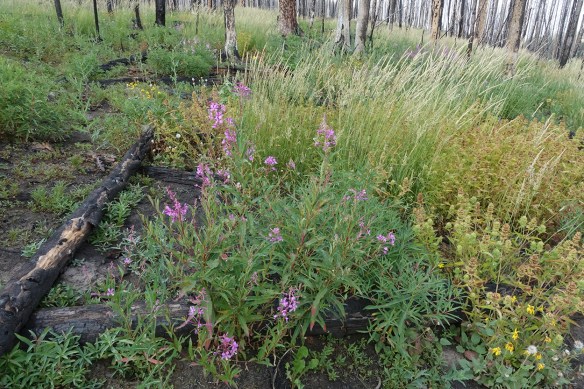 Fireweed – Epilobium/Chamerion angustifolia – is well known for showing up after fires. In the insulating soil, rhizomatous (underground creeping) stems growing 4-6” deep may have survived the above-ground heat to sprout again. Even one surviving plant can shed 1000s of seeds that can catch upon the wind, land, and germinate quickly on exposed ground. (Photo above shows both Fireweed and Pinegrass.)
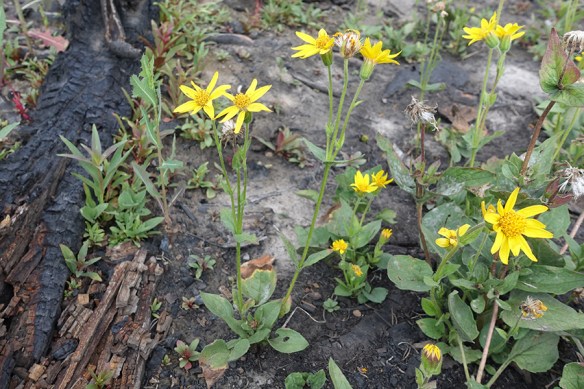 Cheerful patches of Broadleaf Arnica – Arnica latifolia – and a strange hybrid, likely Arnica X diversifolia – a cross between Heartleaf and Broadleaf arnica, are growing in charred soils (photo above).
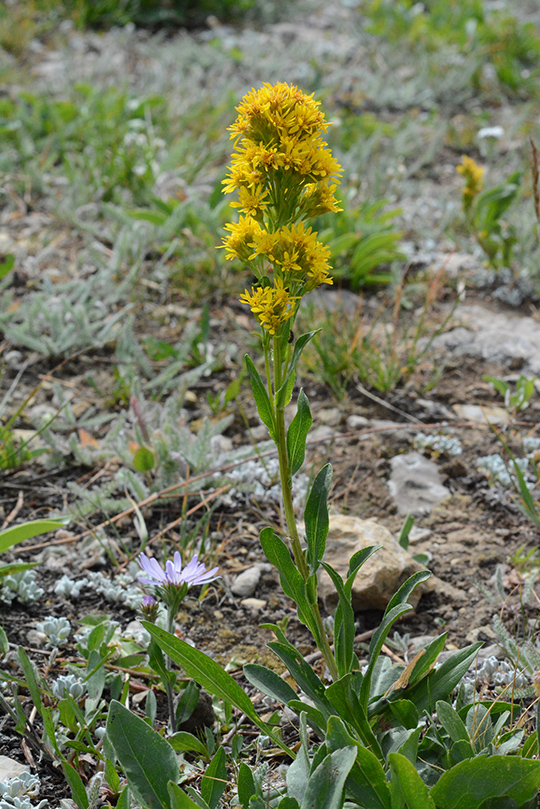
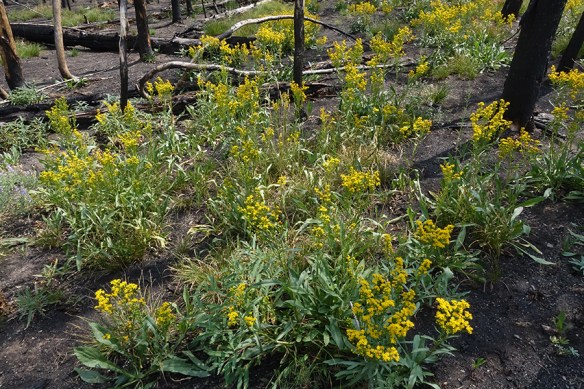 Large clumps of yellow Missouri Goldenrod – Solidago missouriensis – was dense along Grassy Lake Road, brightening the dark scene (photo above).
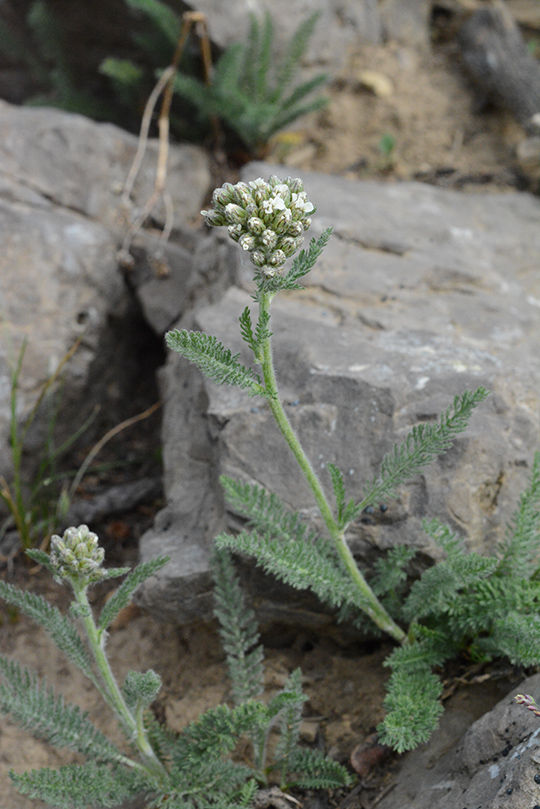
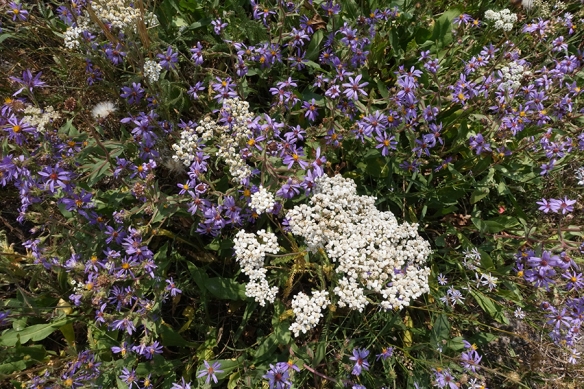 A mix of Yarrow – Achillea millefolium – and Thickstem Aster – Eurybia integrifolia – are common in fields right now, but they are also flourishing in the sun under dead lodgepole pine trees along Grassy Lake Road (photo above).
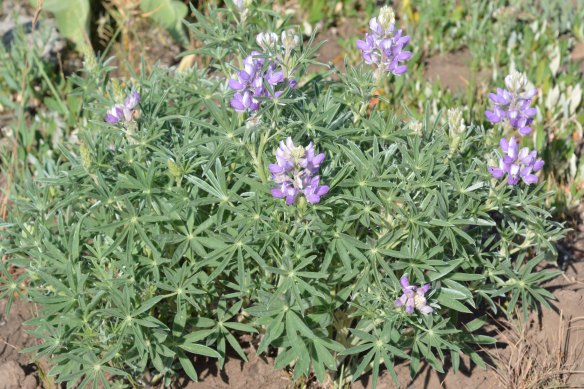
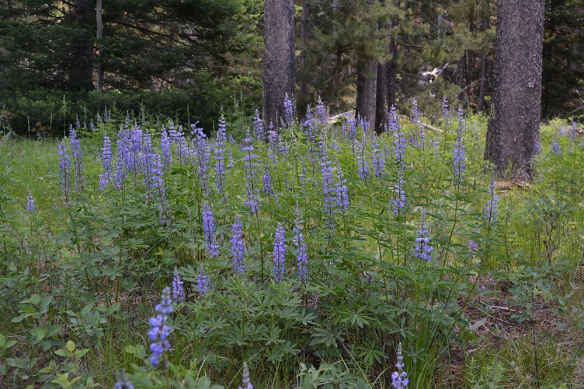
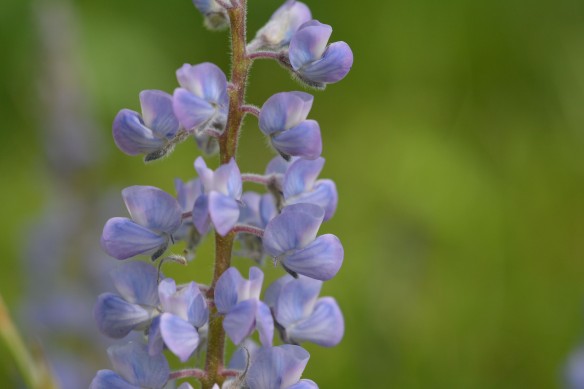
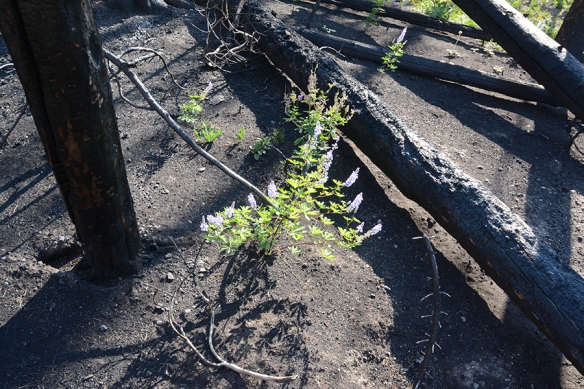 Silvery Lupine – Lupinus argenteus – seeds are “scarified” by the heat of fire, enabling buried seeds to germinate relatively quickly. As a legume, lupines have a mutually beneficial relationship with bacteria in their root nodules that can “fix” nitrogen. This provides lupines an advantage in colonizing poor soils (photo above). Their heavy seeds pop out of their pea-pod like fruits.
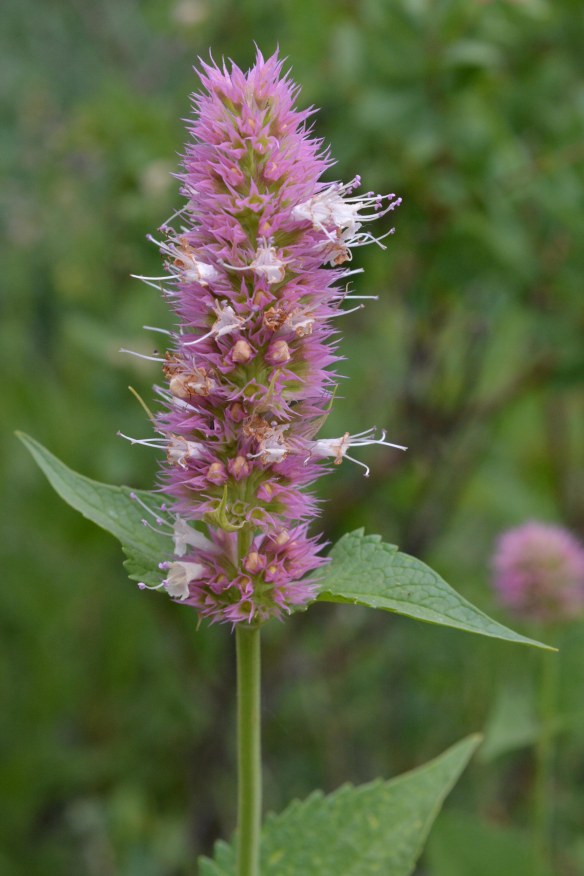
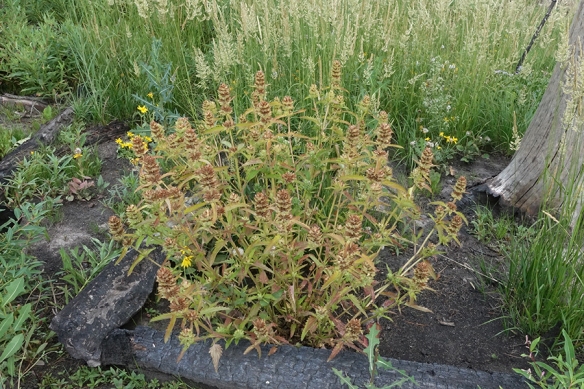 A robust member of the Mint Family – Dragonhead – Dracocephalum parviflorum – (photo above) was a new species to this botanist. Apparently it thrives in disturbed soils.
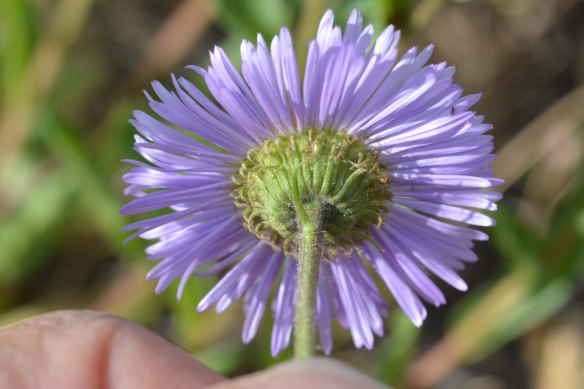
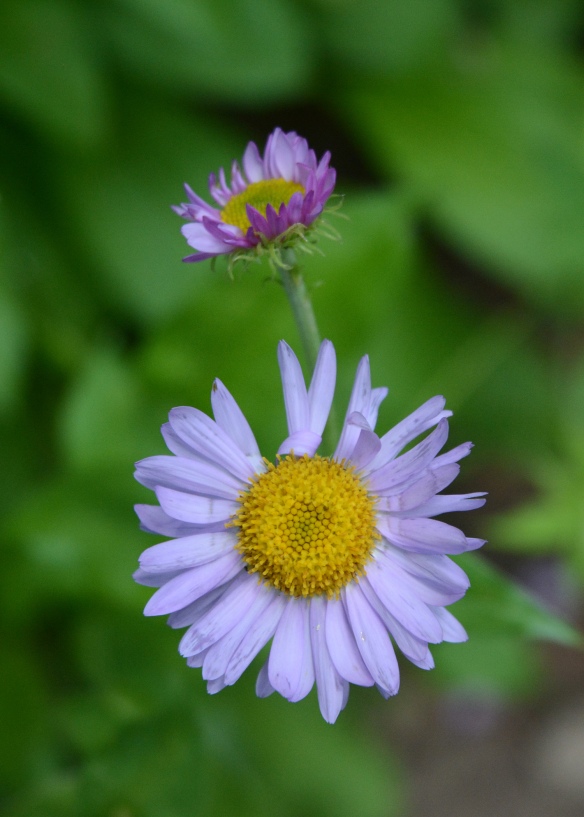
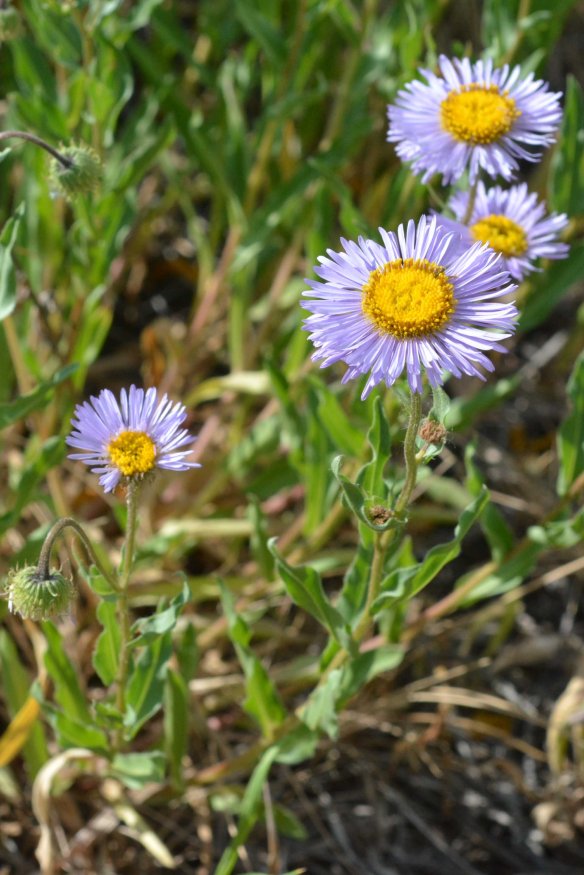
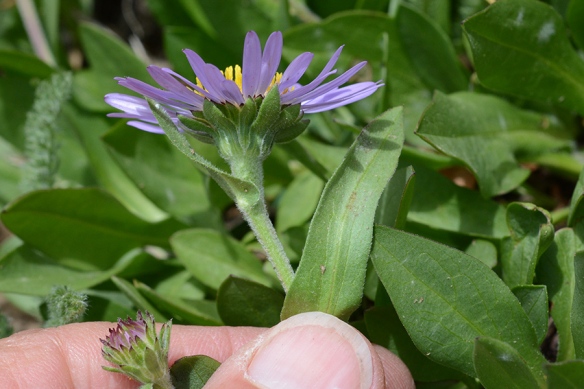
 Patches of other common meadow flowers have retained a niche as well, including Oregon Daisy – Erigeron speciosus – (photo above) with its many narrow, lavender ray flowers (ray flowers look like petals). Many perennials have deep storage roots that are often insulated by soils to heat of fire (or the cold of winter.)
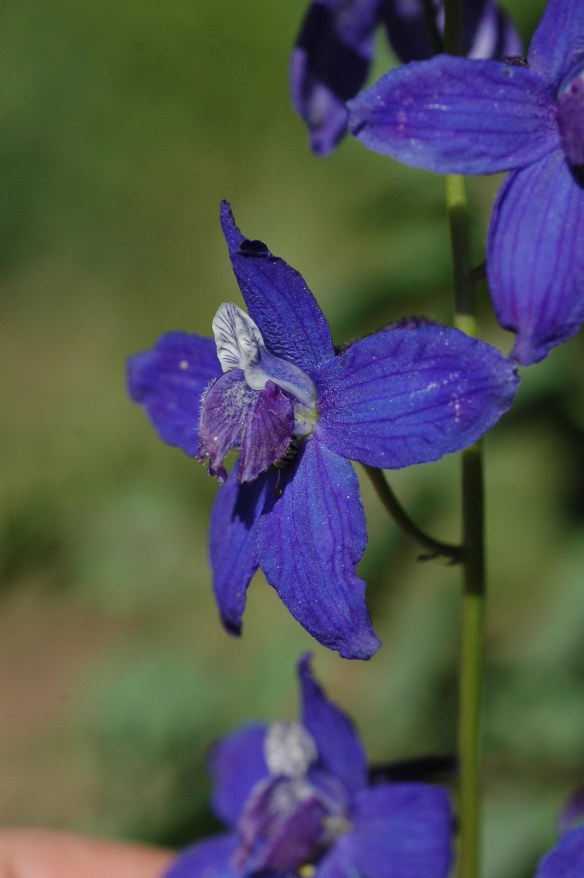
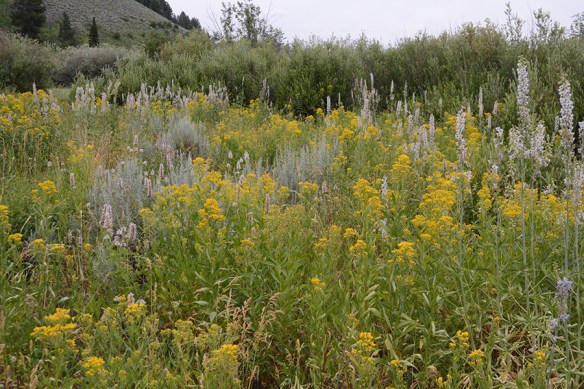
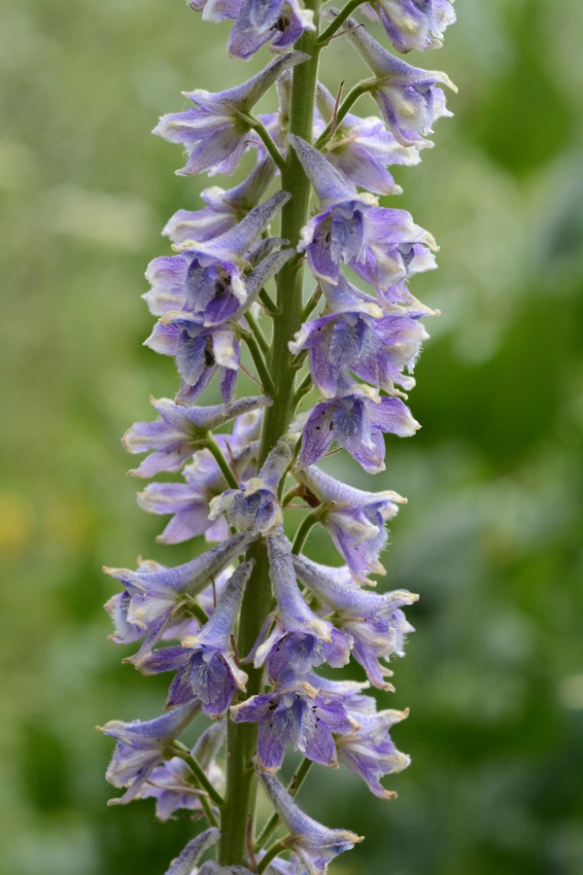
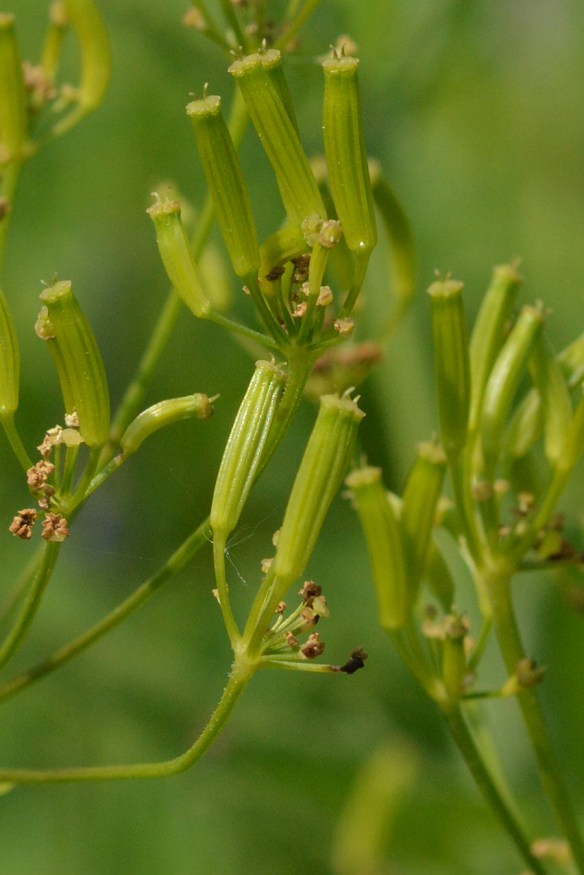
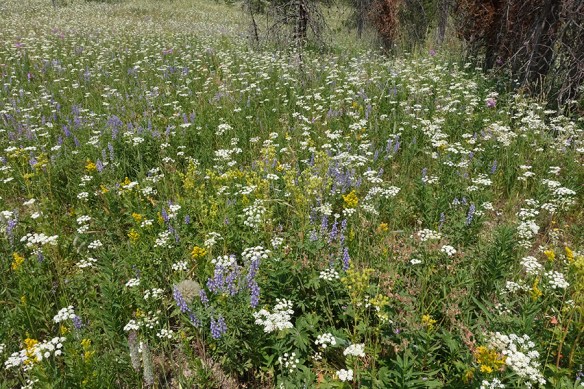 Common Yampa – Perideridia montana – has created a tapestry of white. Upon a walk through the area, one can see that many late-summer flowers which are common elsewhere as here as well: a hidden layer of Sticky Geranium – Geranium viscossimum, blue spires of Tall Delphinium – Delphinium occidentale, yellow sprays of Cinquefoil – Potentilla spp., orange-yellow Rocky Mountain Golendrod – Solidago multiradiata, and spikes of blue Silvery Lupine mix in.
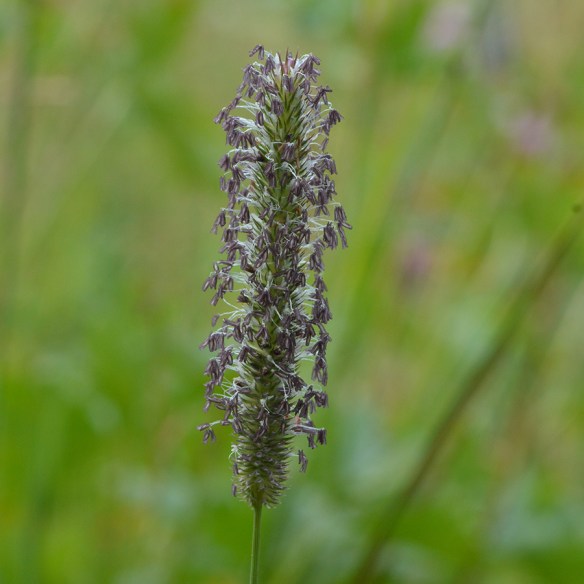 Mountain Brome – Bromus carinatus (photo below),
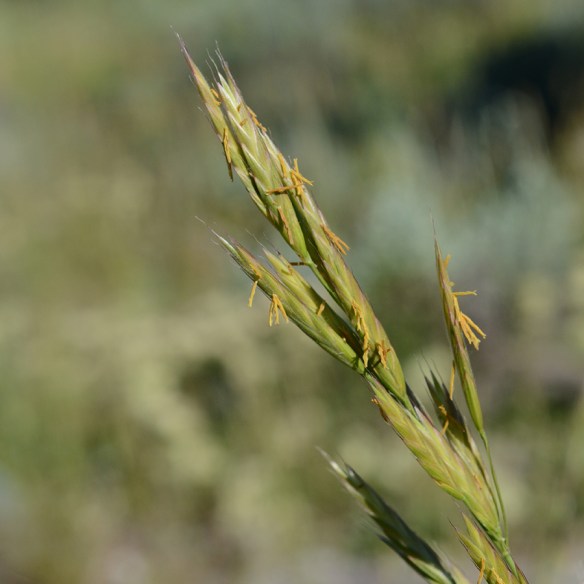 and elegant spikelets of Oniongrass – Melica spectabilis (photo below):
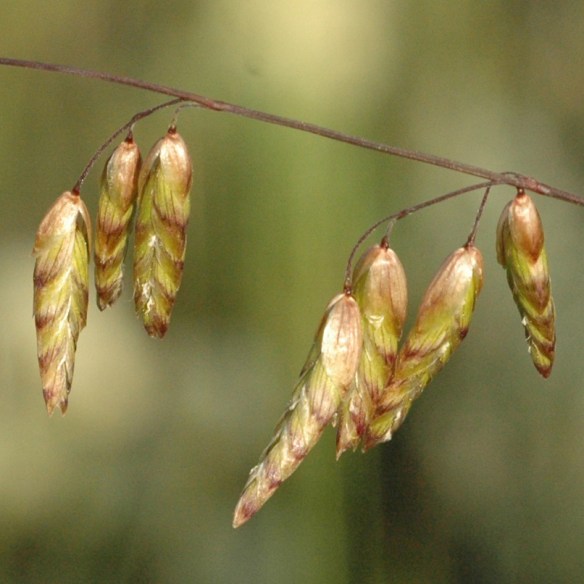 (Note all the grasses pictured above are in bloom)
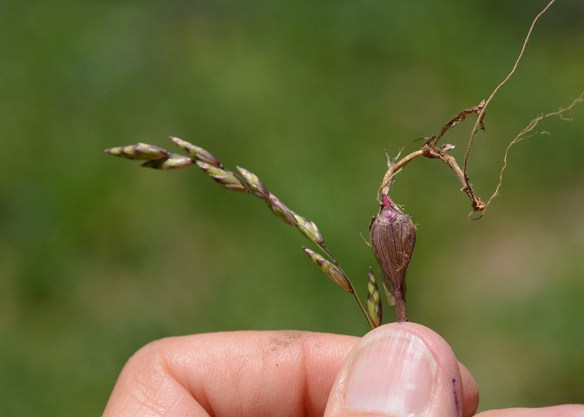 Grasses have evolved to sprout from buds at the base of their leaves – an adaptation to both browsing and fire.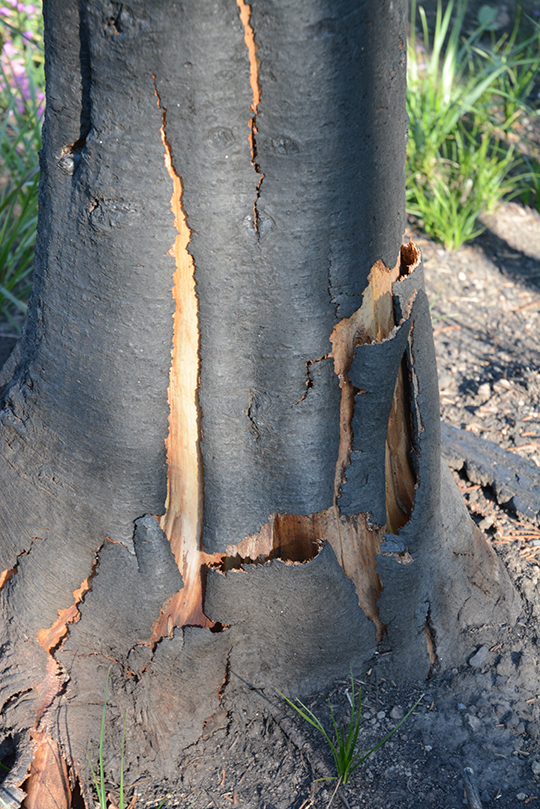
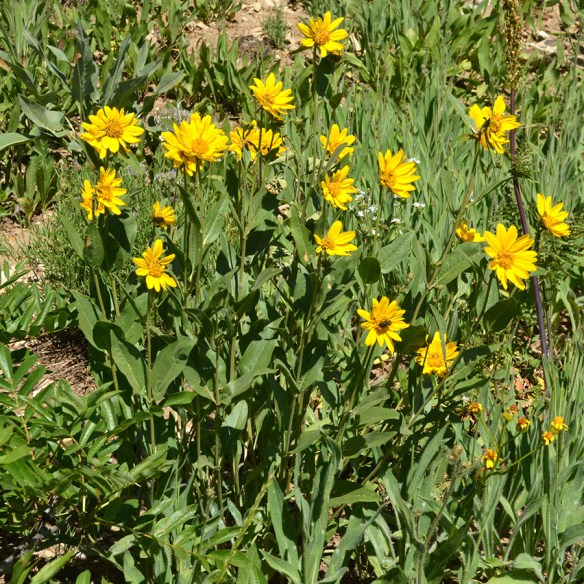
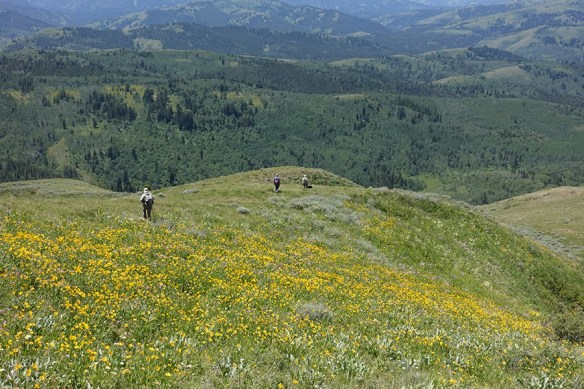
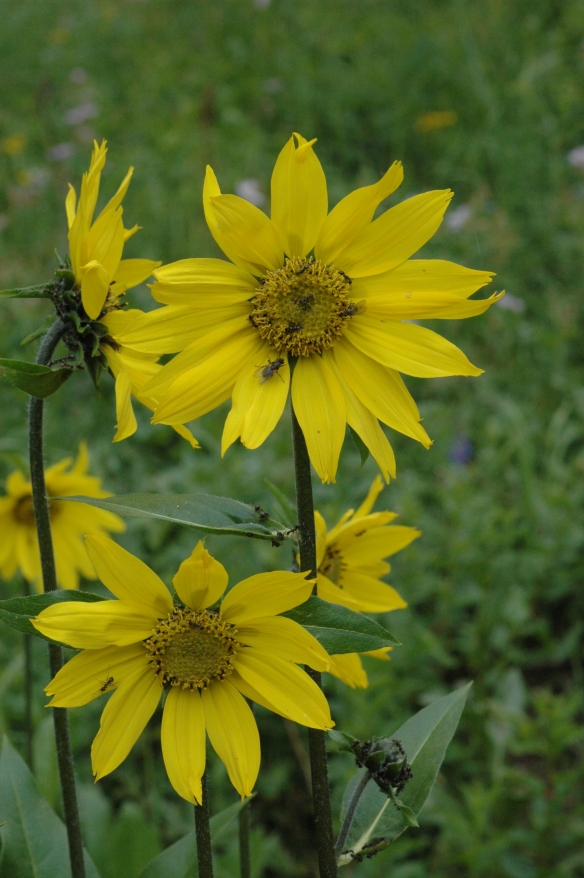
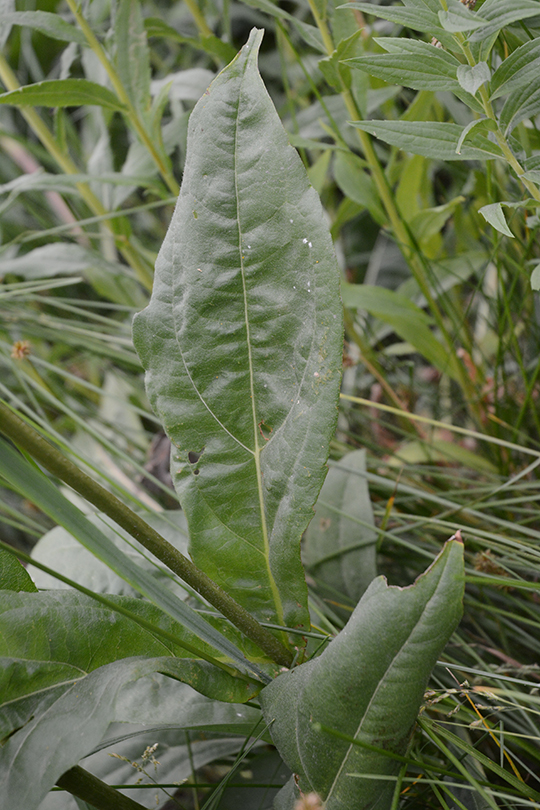
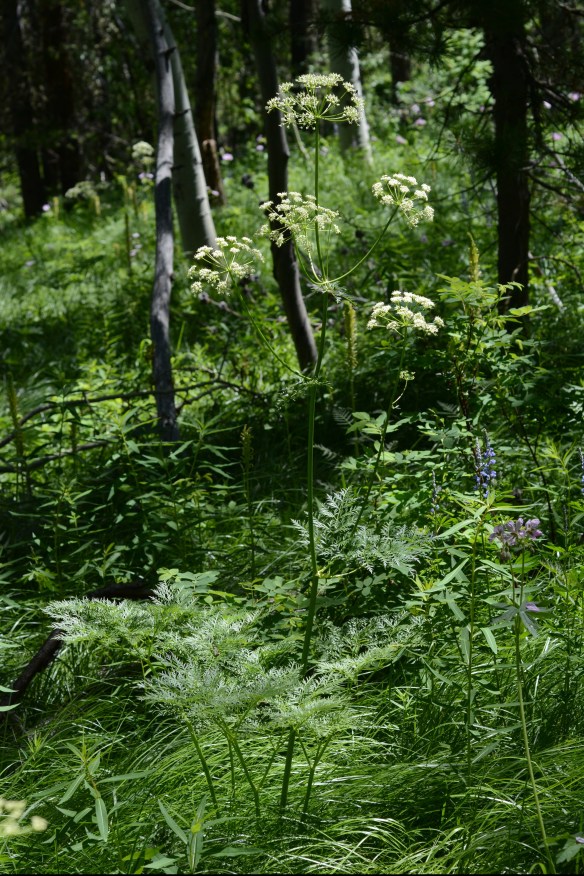
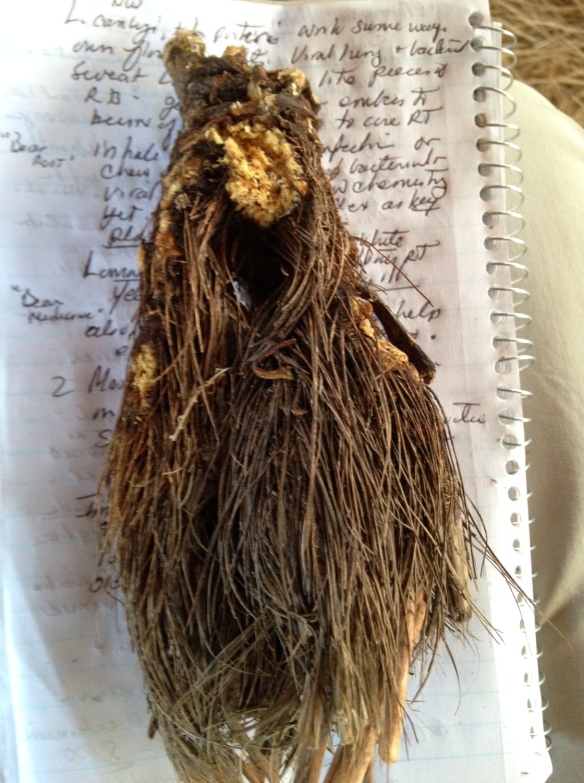
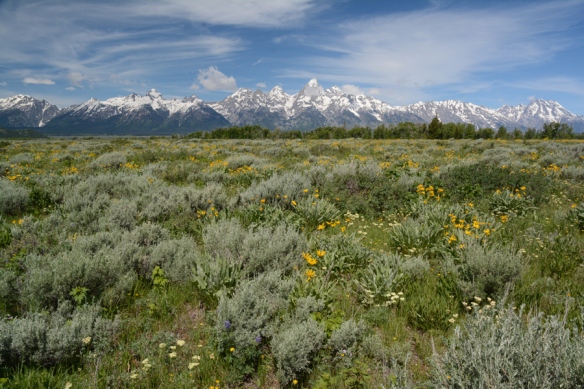
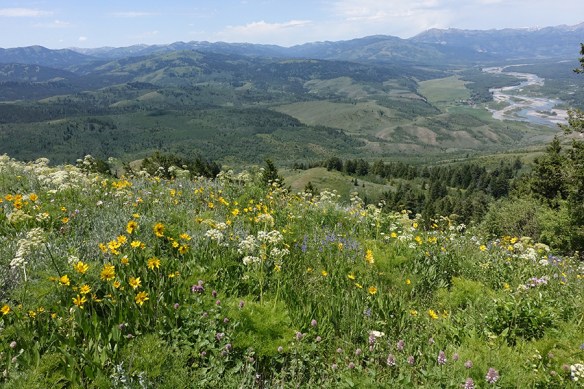 With summer strong, flowers are blooming everywhere in and around Jackson Hole. Here are a favorite dozen (plus!) wildflowers seen on hikes this past week: around Phelps Lake and up Munger Mountain (above); the start of the Ski Lake Trail; just south of Teton Pass; and the north end of Grand Teton National Park. Lower elevations fade first while upper elevations are just emerging.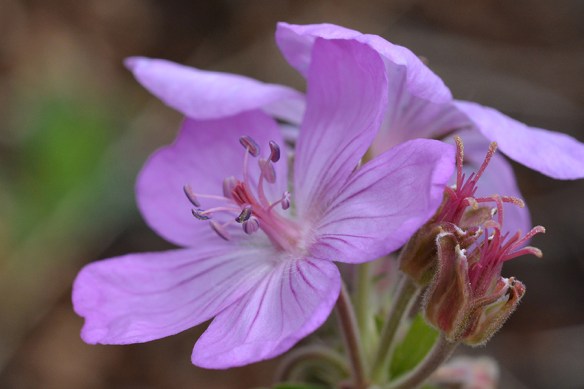
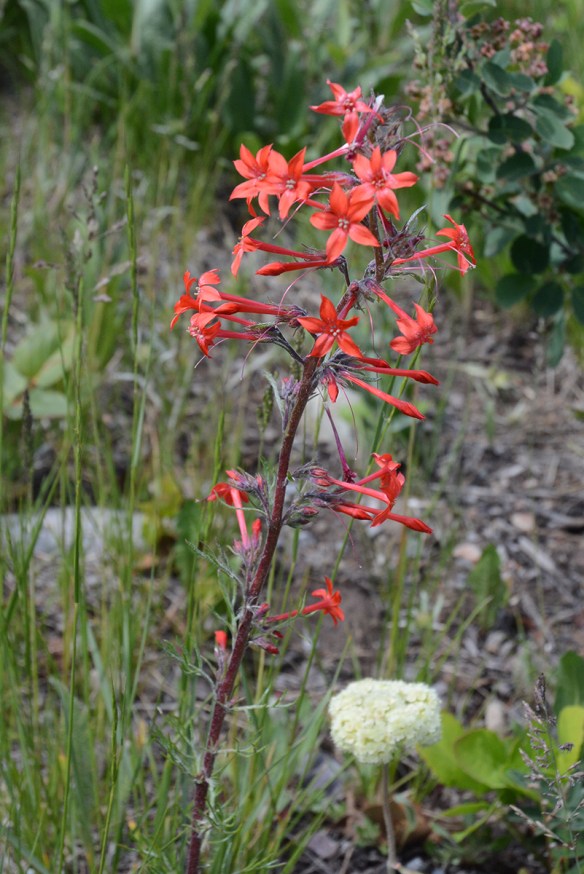 The 1-2” red trumpet flowers attract hummingbirds, which are able to hover and extend their long tongues into the deep tube to lap up (not sip) nectar. A bird’s head may be doused in pollen on one visit. On the next stop, it is poked with a sticky stigma that will collect the pollen to make seeds. Pinkish flowers later in the season attract long-tongued sphinx moths, which provide a similar pollination service.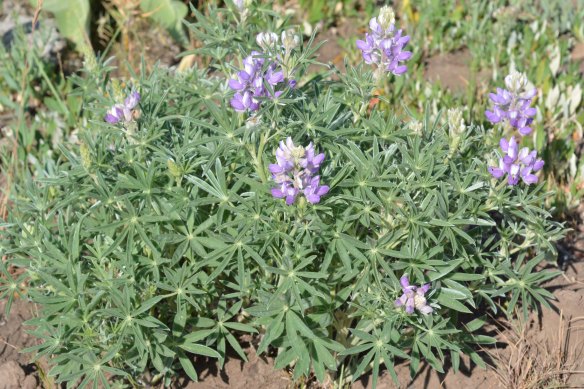
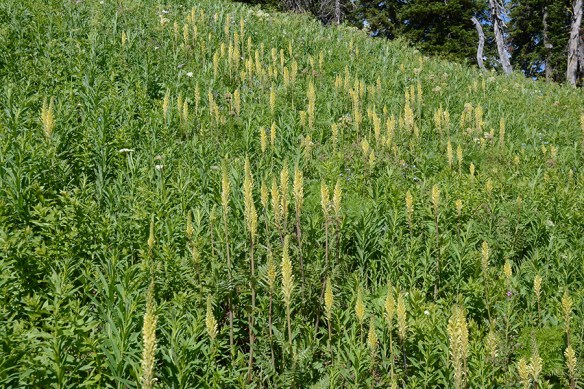 These laterally flattened, irregular flowers require bumblebees to pollinate them. Bumblebees are strong and smart enough to land on the lower lip of the flowers and push and prod their way into the throat to find nectar. In so doing, the bee gets a bunch of pollen on its body. At another flower, it distributes pollen to the stigma protruding from the top of the upper lip.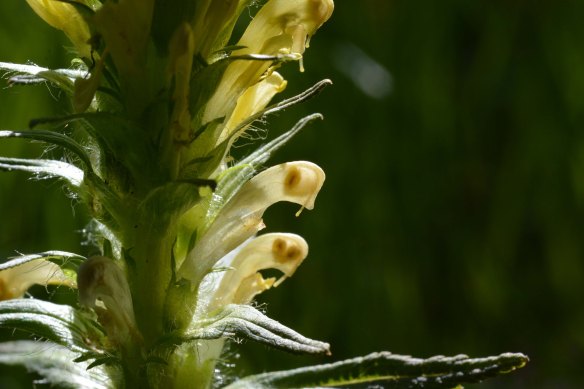


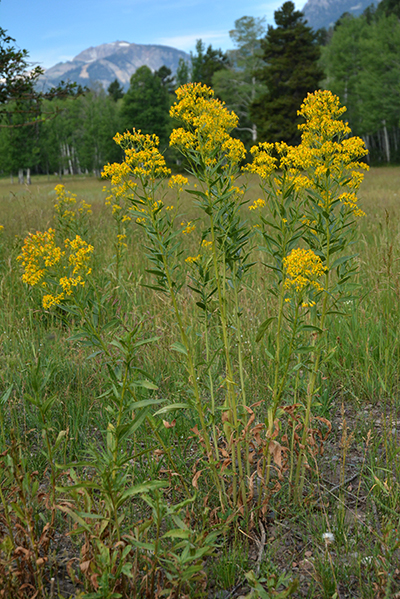
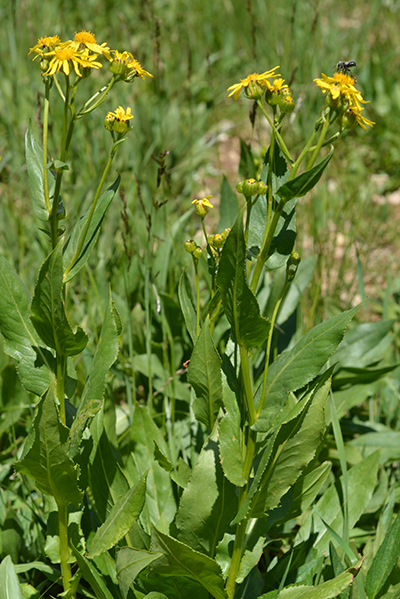
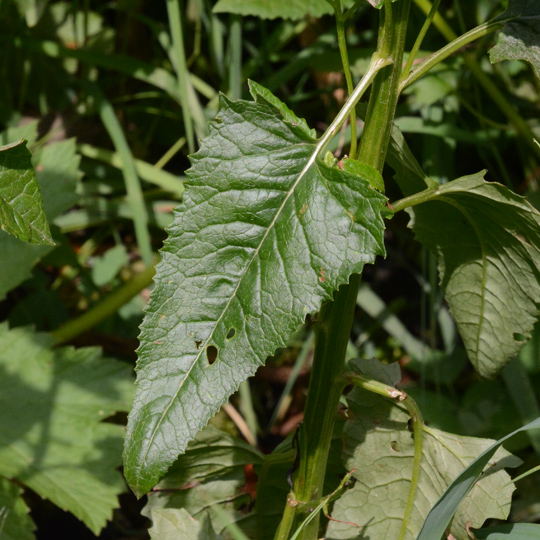
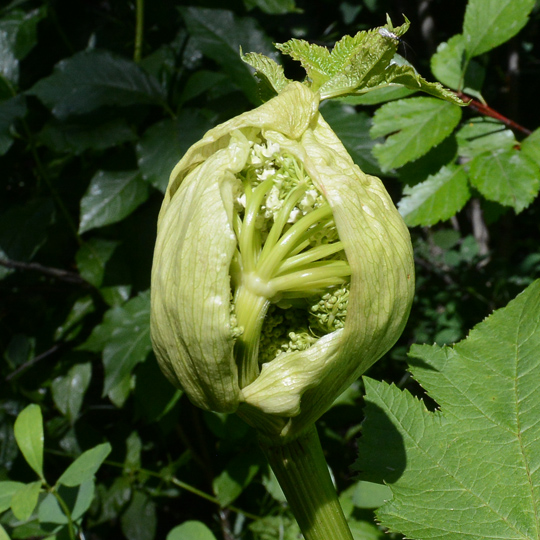


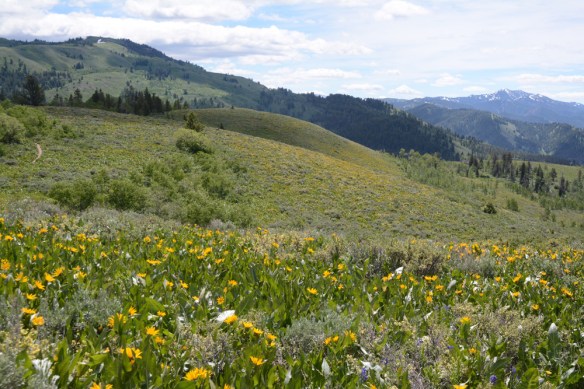
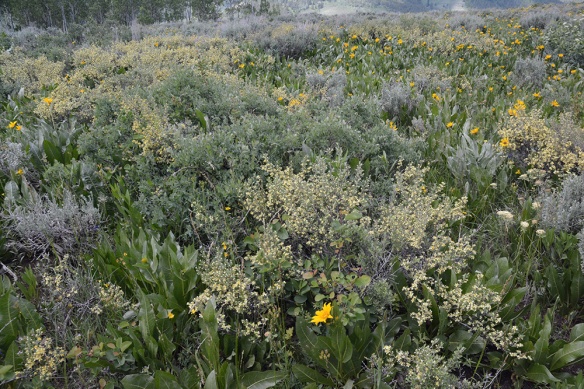
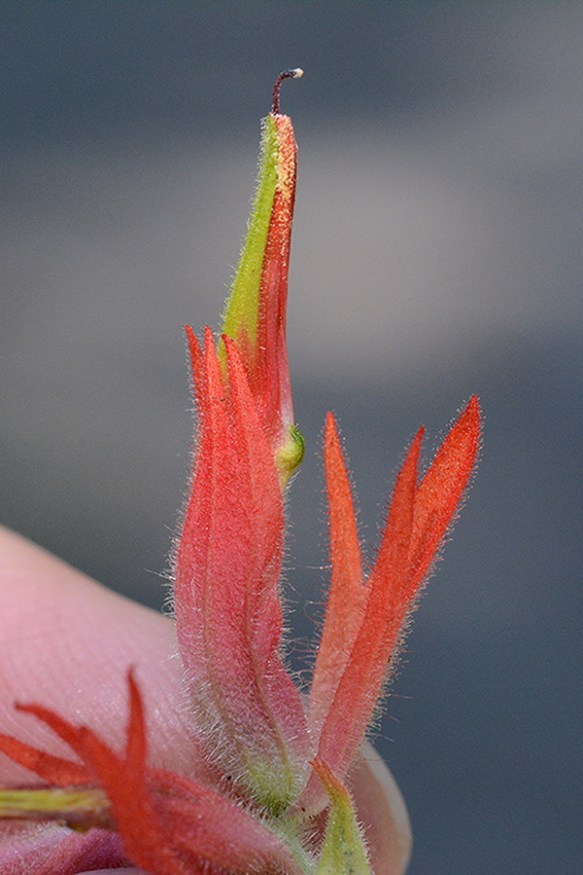
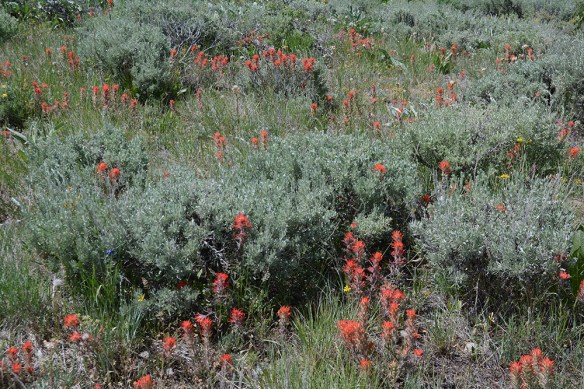
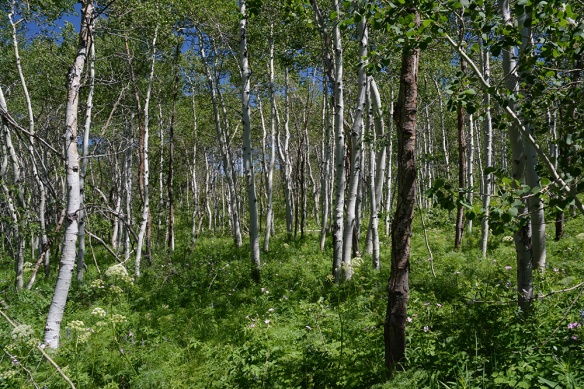 With light shade, greater moister, and more nutrients recycled from the deciduous aspen leaves, wildflowers are able to flourish at this time of year.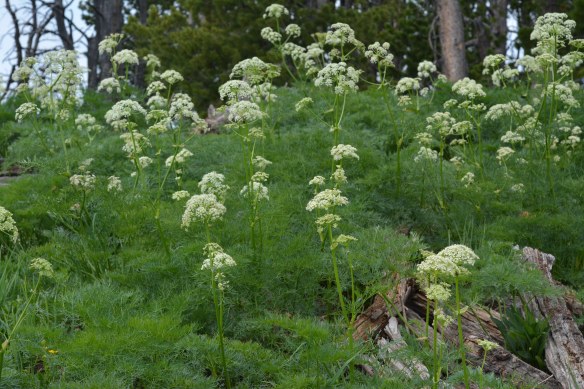

 Teton Plants