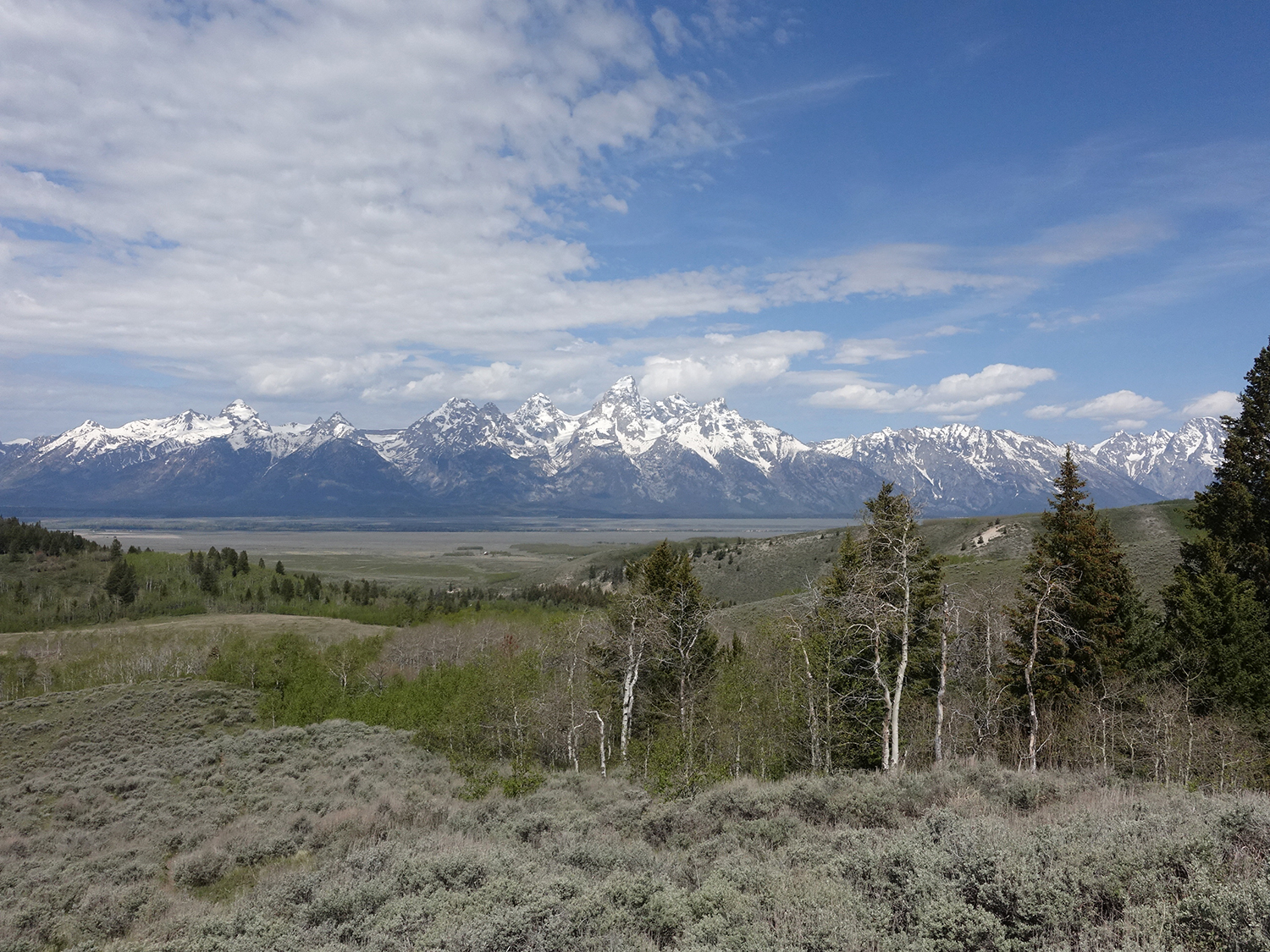
This spring in Jackson Hole has been unusual with a dry winter, early warmth, then cold, little rain, then warm, a freeze to mid-teens in mid May and then hot and windy. Flowers on dry knolls and hills have mostly faded with some bright exceptions, and new flowers in the sage flats seem delayed or sparse. And a couple appear relatively abundant. Here are some plants you may be seeing on your hikes at lower, more open elevations.
We try to provide ID details to help you really look and learn the species and then also some facts that make knowing the plant more interesting. Skim through the pictures or give a thorough read as time and curiosity permit.
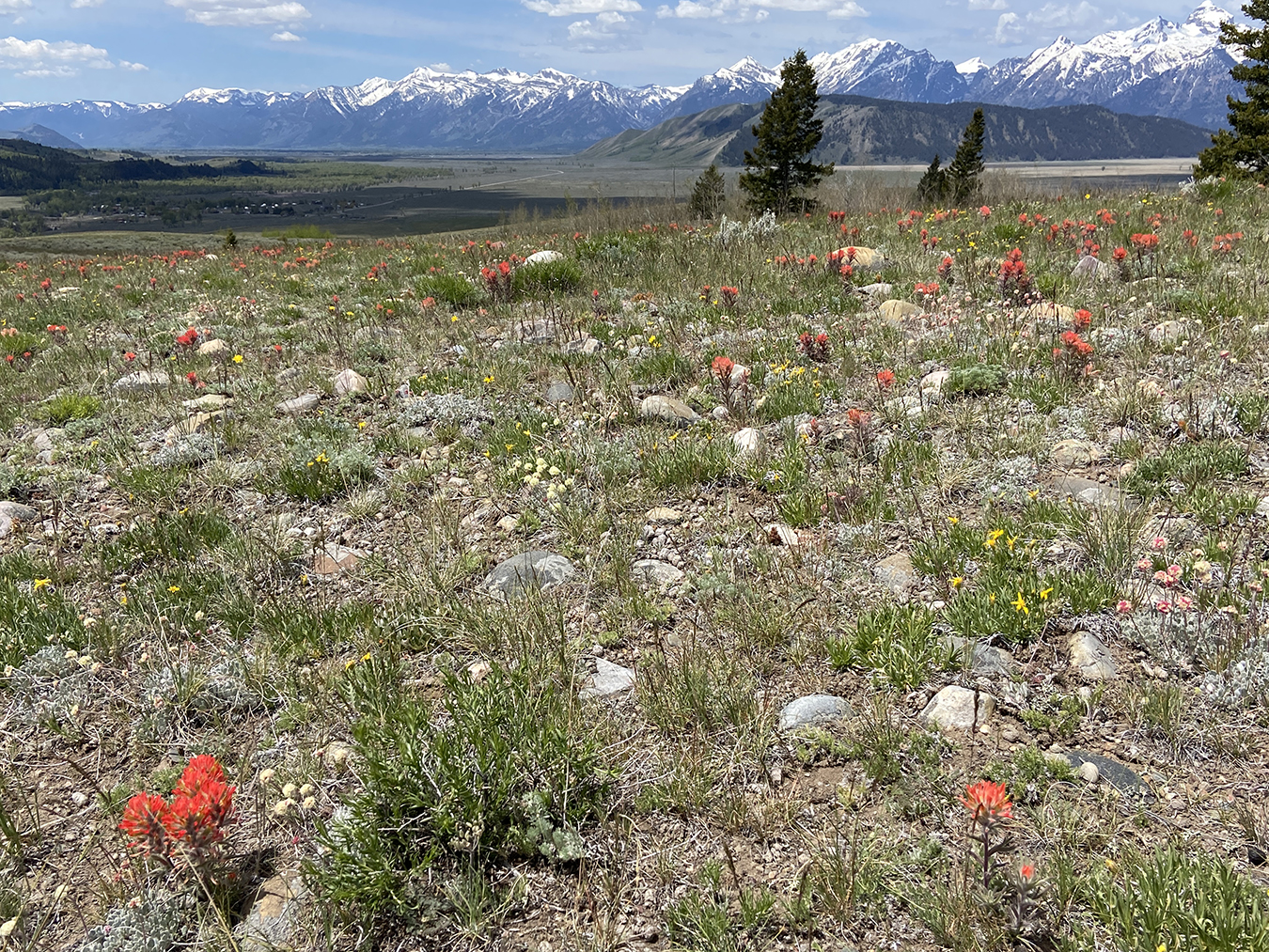
Dry sites:
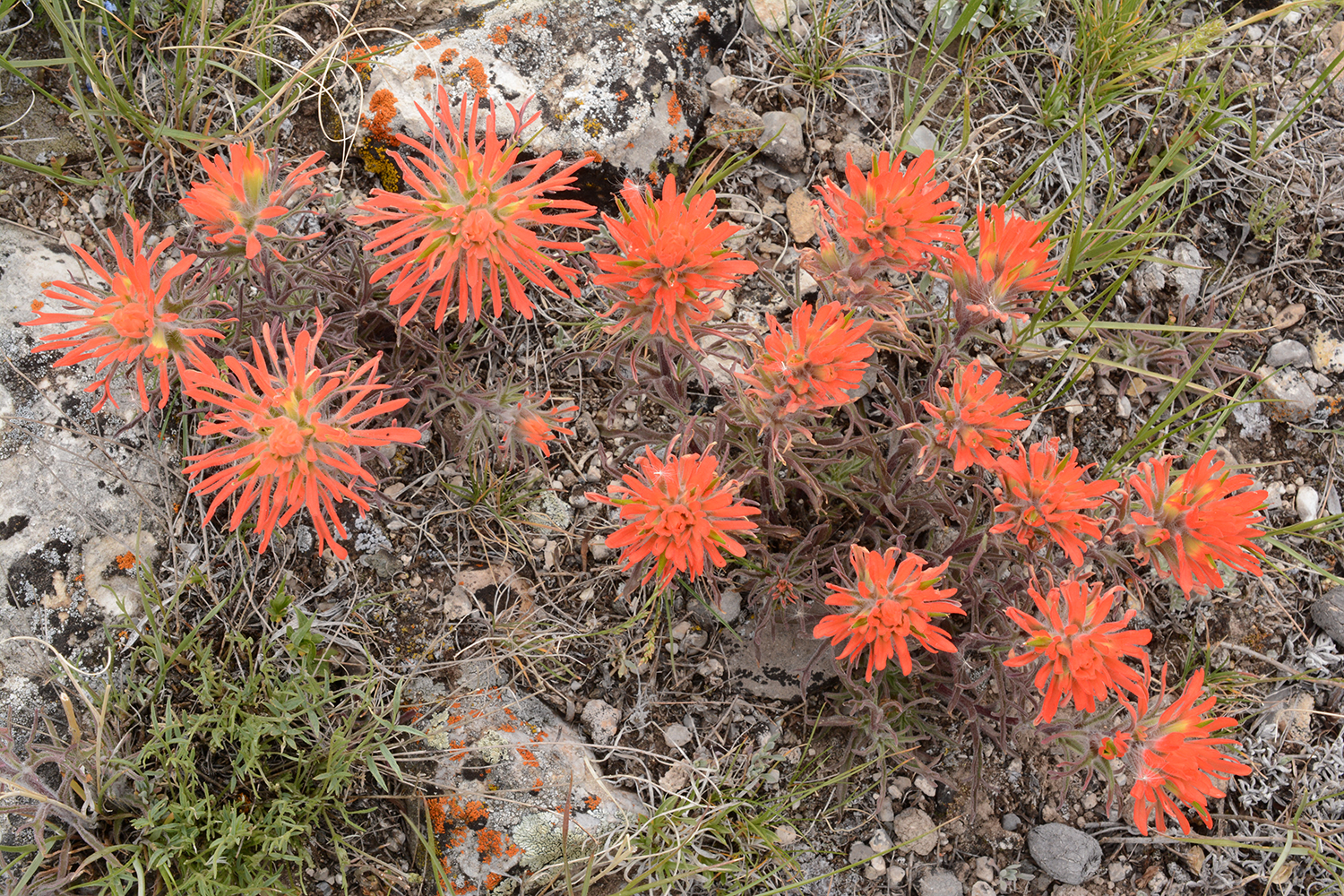
Desert Paintbrushes – Castilleja chromosa – are still blooming on dry hills. This early paintbrush is particularly hairy and stout compared to later red paintbrushes and it seems to glow. The red flowers attract hummingbirds and some bees. The plant stretches taller as it forms fruit. All paintbrushes are hemi parasitic on a range of plants including grasses and sagebrush. “Haustonia” – they look like little suckers – attach to cells in the host-plant roots and draw out nutrients which help paintbrushes produce more seeds.
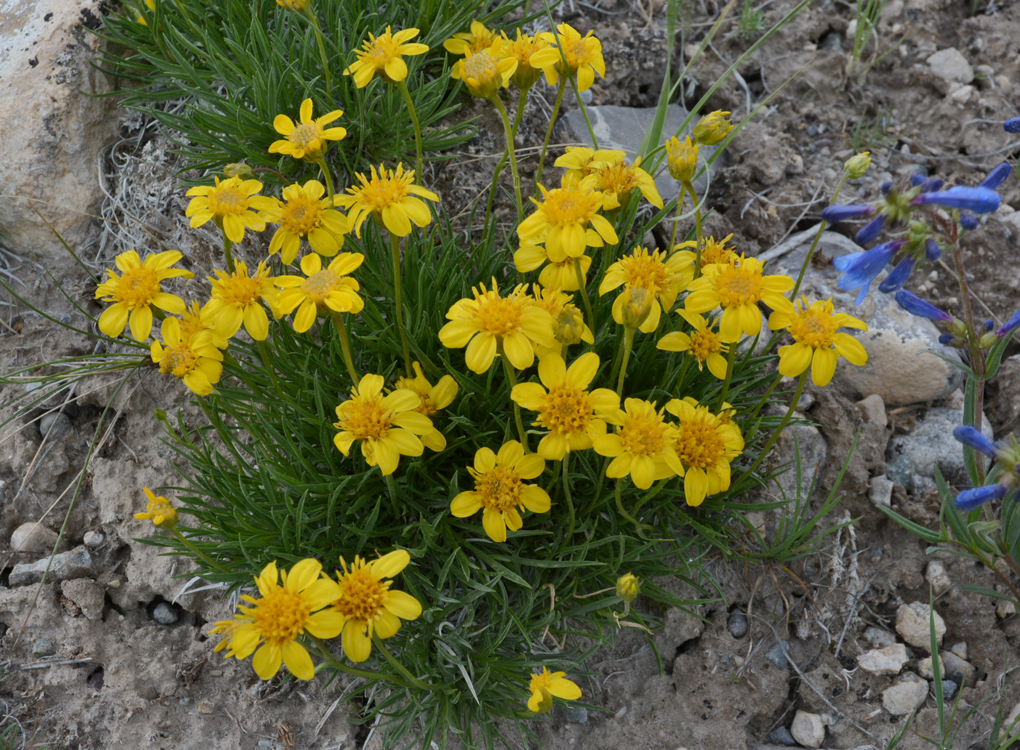
Stemless Goldenweed – Stenotus acaule – is a common yellow composite growing to 4-6” with green, slightly stiff lance-shaped leaves growing mostly from base forming mats.

Oval-leaf Buckwheat – Eriogonum ovalifolium – is a great example of protection from water loss in hot, dry, windy sites. This Buckwheat has tiny, silvery, hairy spade-shaped leaves tucked into a tight mat. The silvery matted hairs reflect the harsh sun. During the day, plants lose over 90% of their water through tiny stomates which open to let in CO2 and release H20 (transpiration) in the process of photosynthesis. Hairs serve to increase humidity on the leaf surface as the water transpires while also reducing wind which can wick out moisture, an elegant adaptation for growing in hot, windy dry conditions.
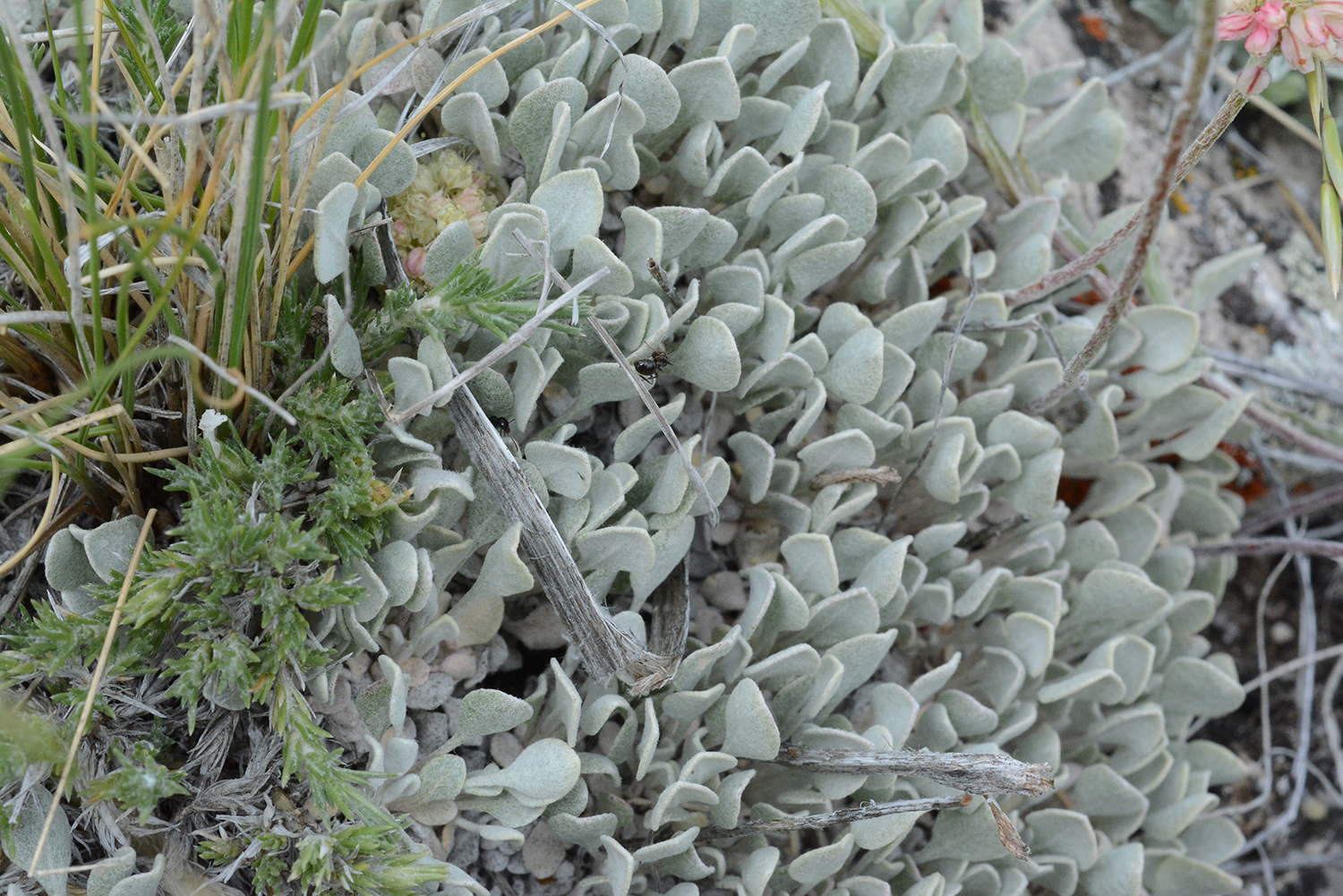
Even the angle of the leaves affects the amount of direct sun the surface receives and being tightly clustered also reduces the force of drying wind.
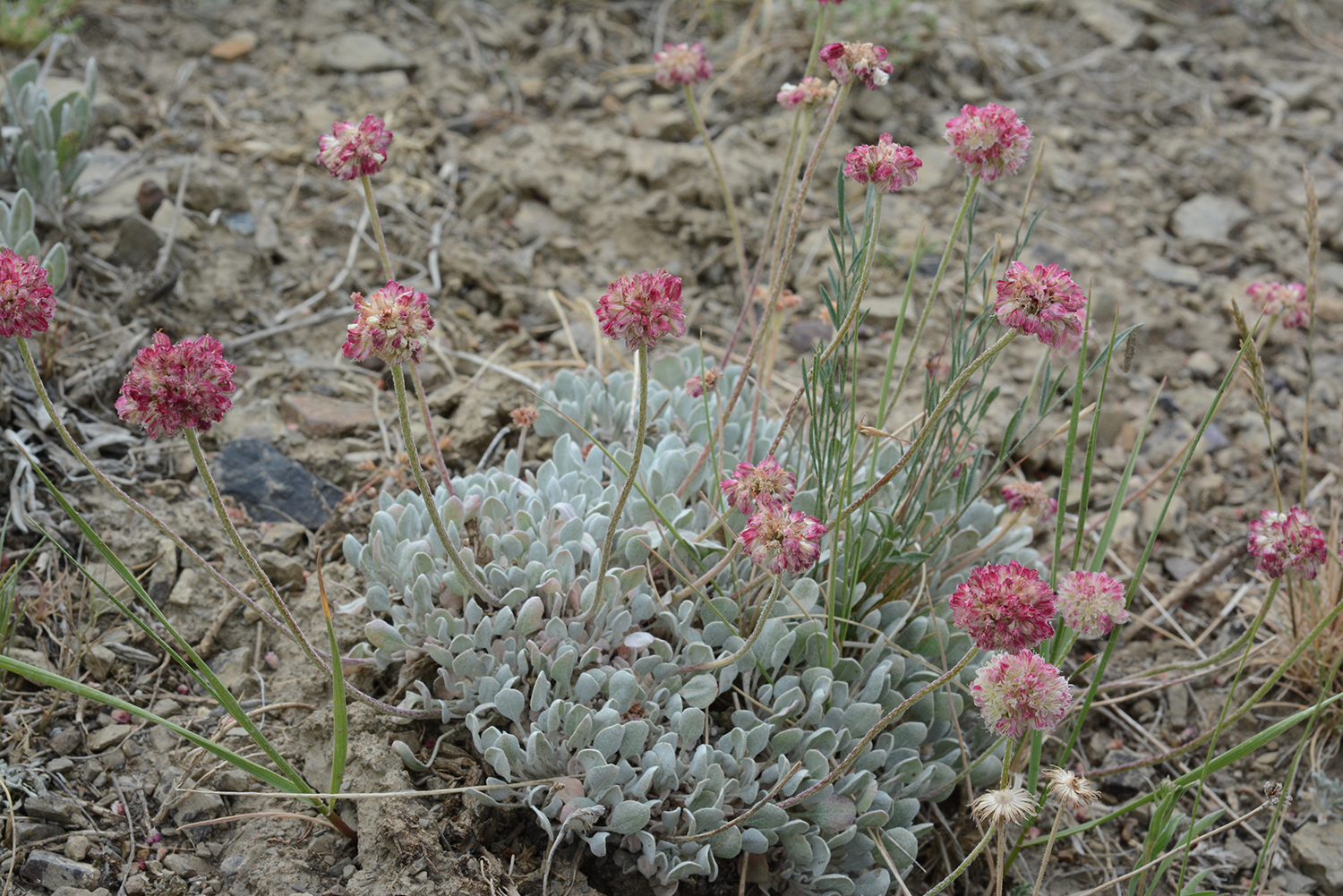
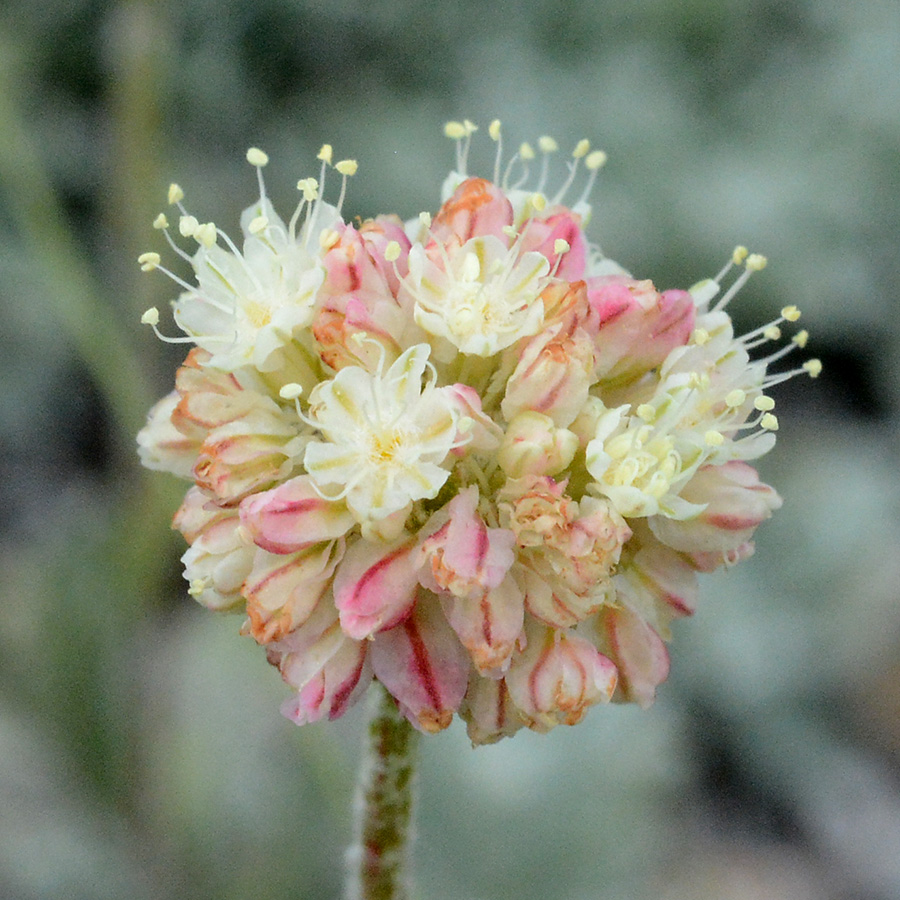
Flowers start as tight red buds nestled in the leaves then stretch up. A cluster of flowers are held out in umbels. They are in the Buckwheat or Polygonaceae Family. There are several other buckwheats that thrive in dry locations.
Wooly Groundsel – Packera/Senecio canus – also has very hairy, silvery leaves bunched at base; but this species in the Aster Family has bright yellow composite flowers.
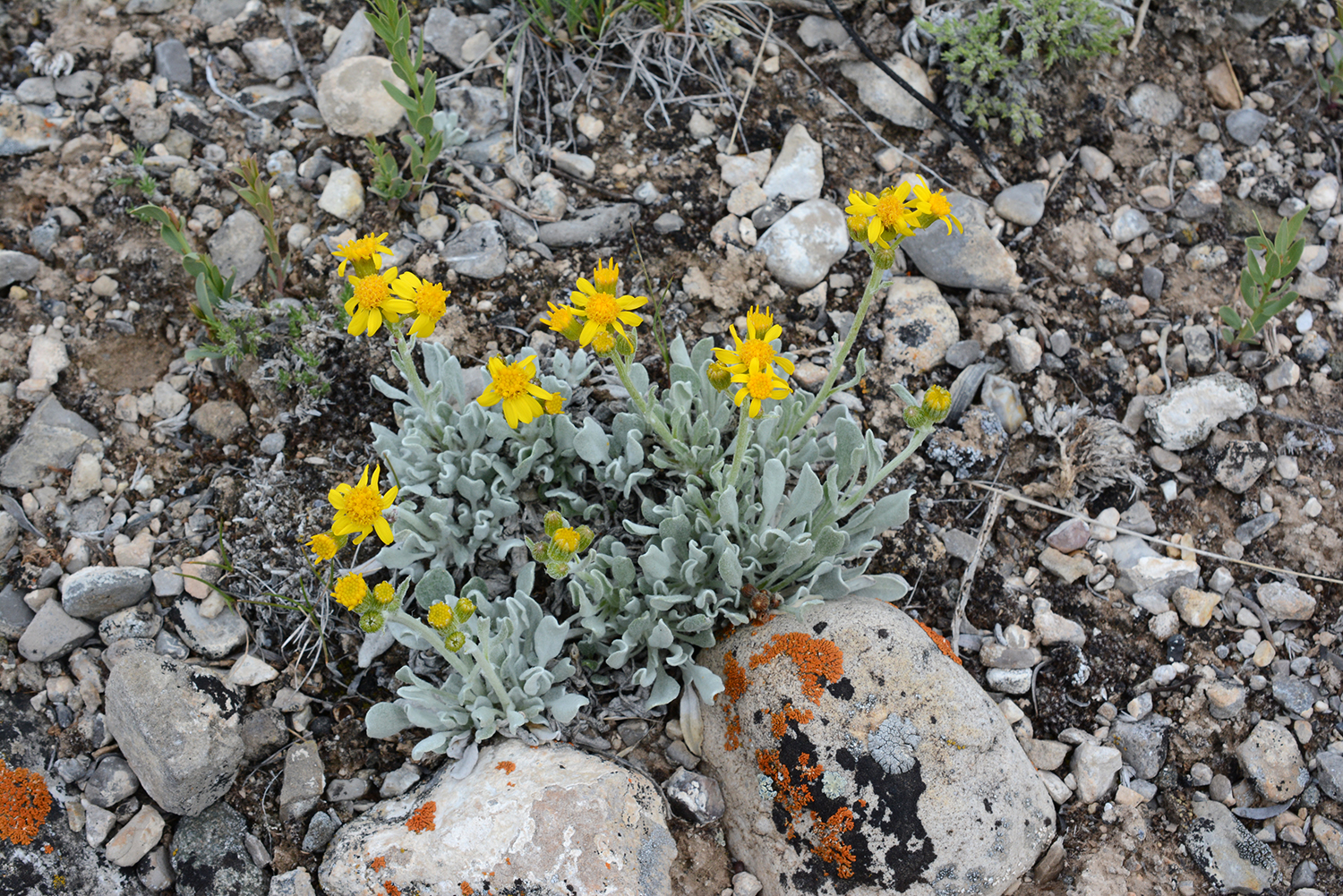
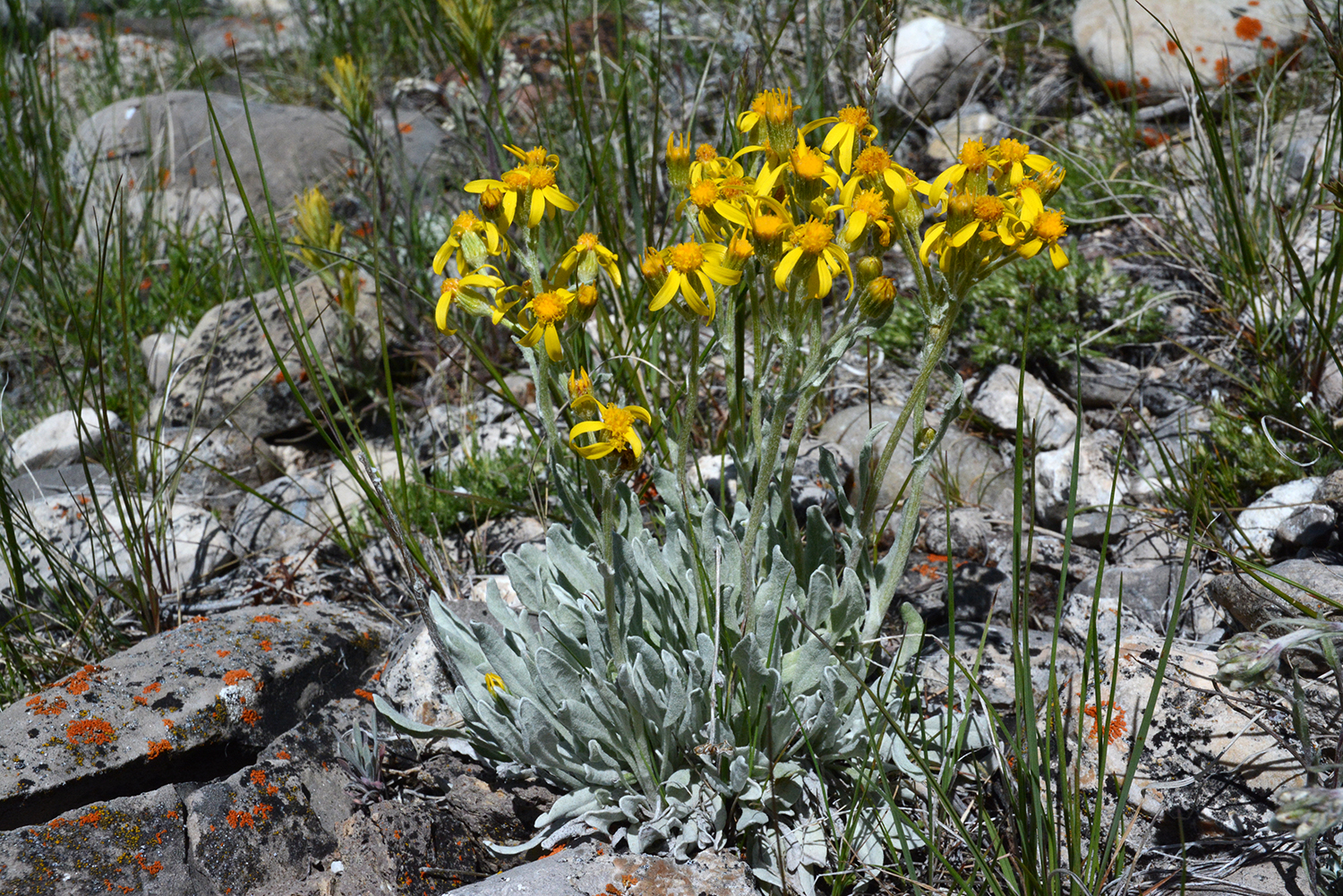
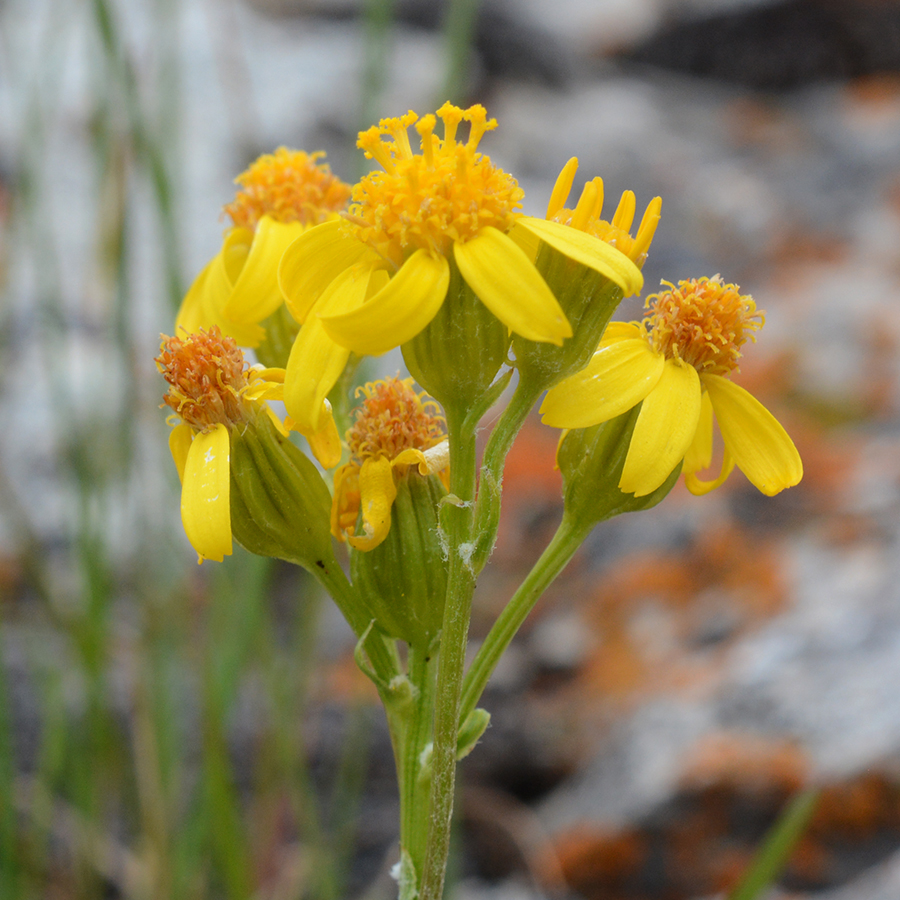
Flower heads are similar to Western Groundsels (see below), as they are closely related. Note the smooth involucral bracts without black tips, a few yellow ray flowers, and several disc flowers.
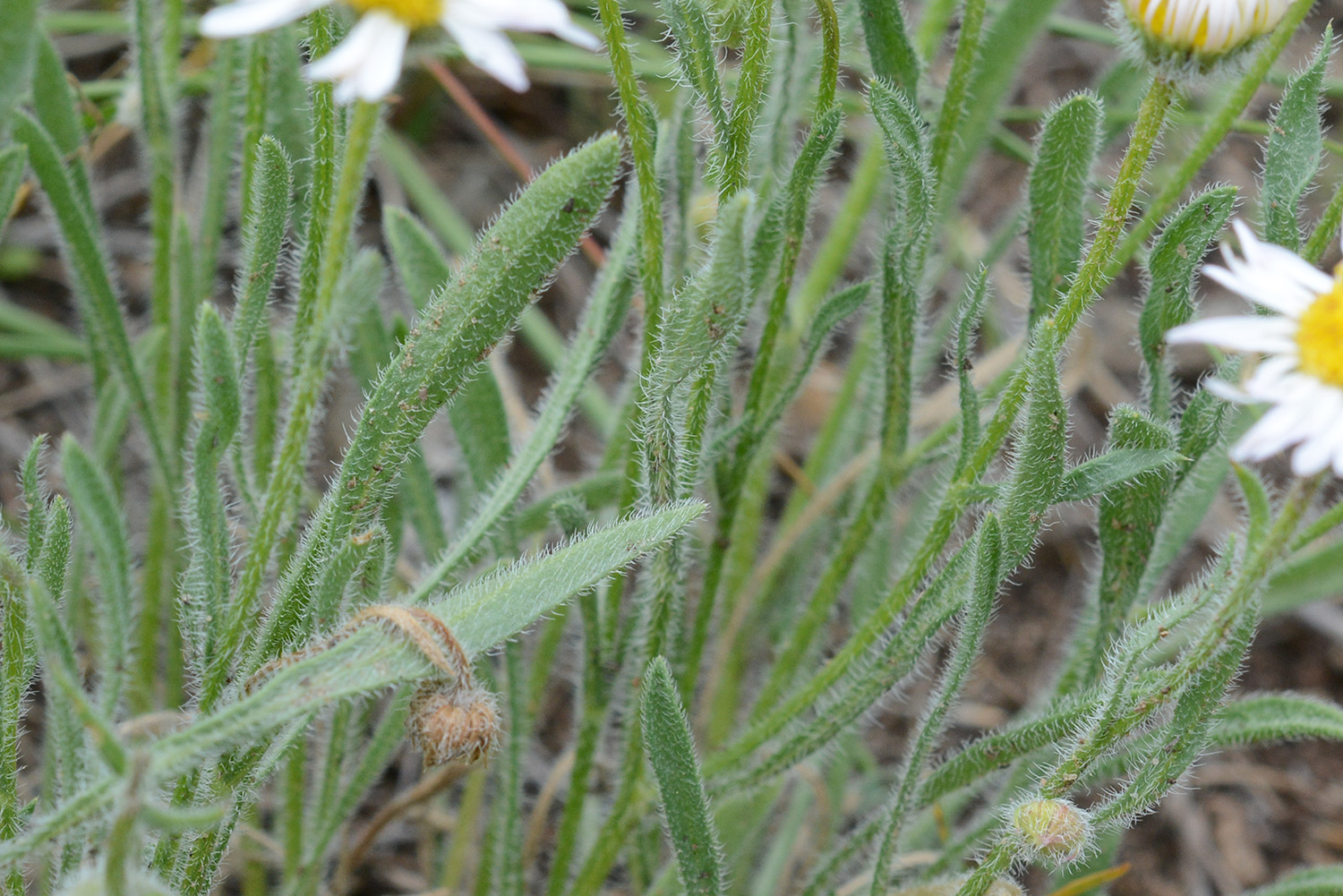
Shaggy Fleabane – Erigeron pumilus – has spreading “scaredy cat” hairs on 4-6” stems and narrow, entire 1” leaves.
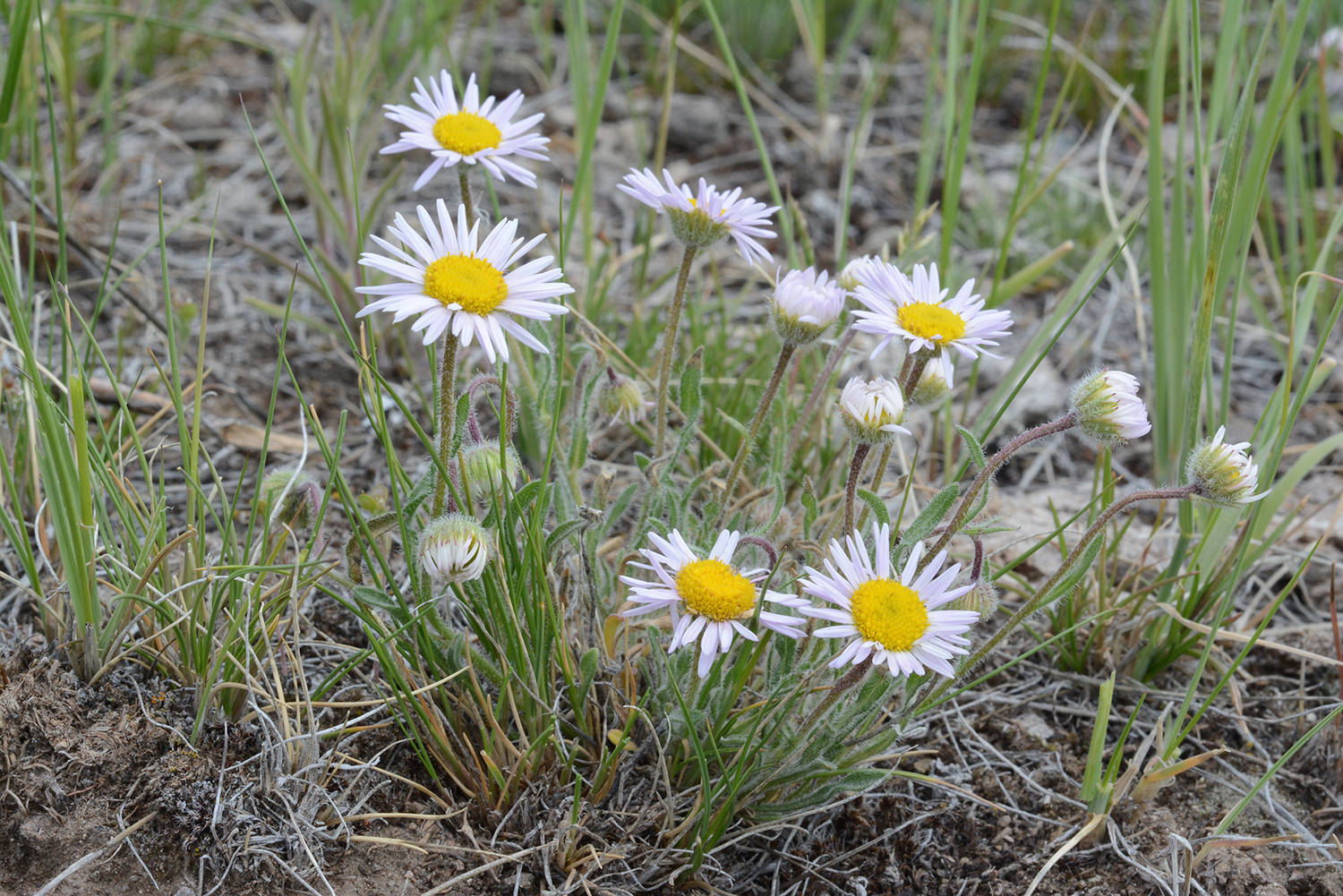
The composite head includes many yellow disc flowers ringed by many white ray flowers. The whole head is surrounded by shaggy equal-length bracts.
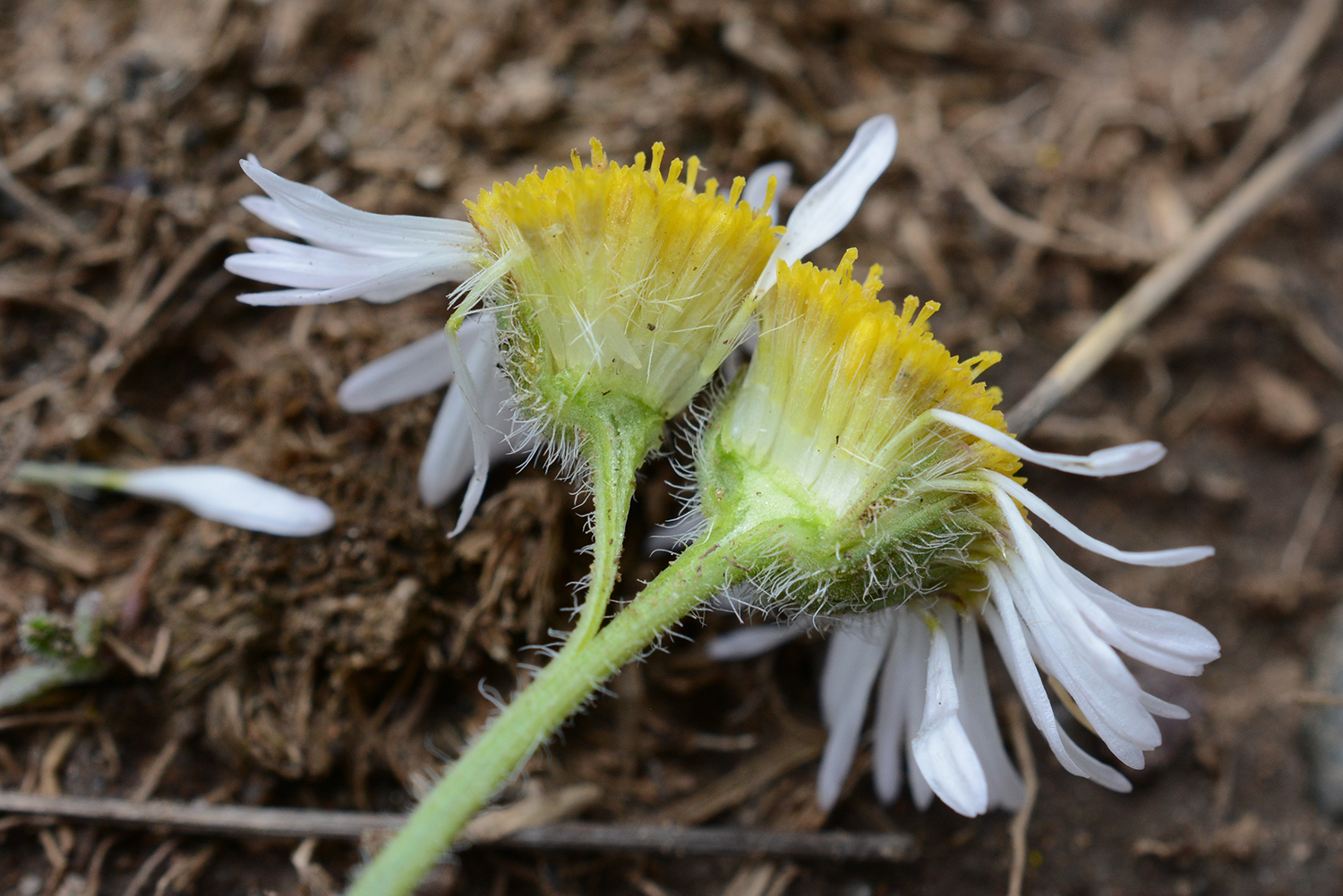
Again, the hairs serve to reduce loss of water, and may hinder creeping insects as well.
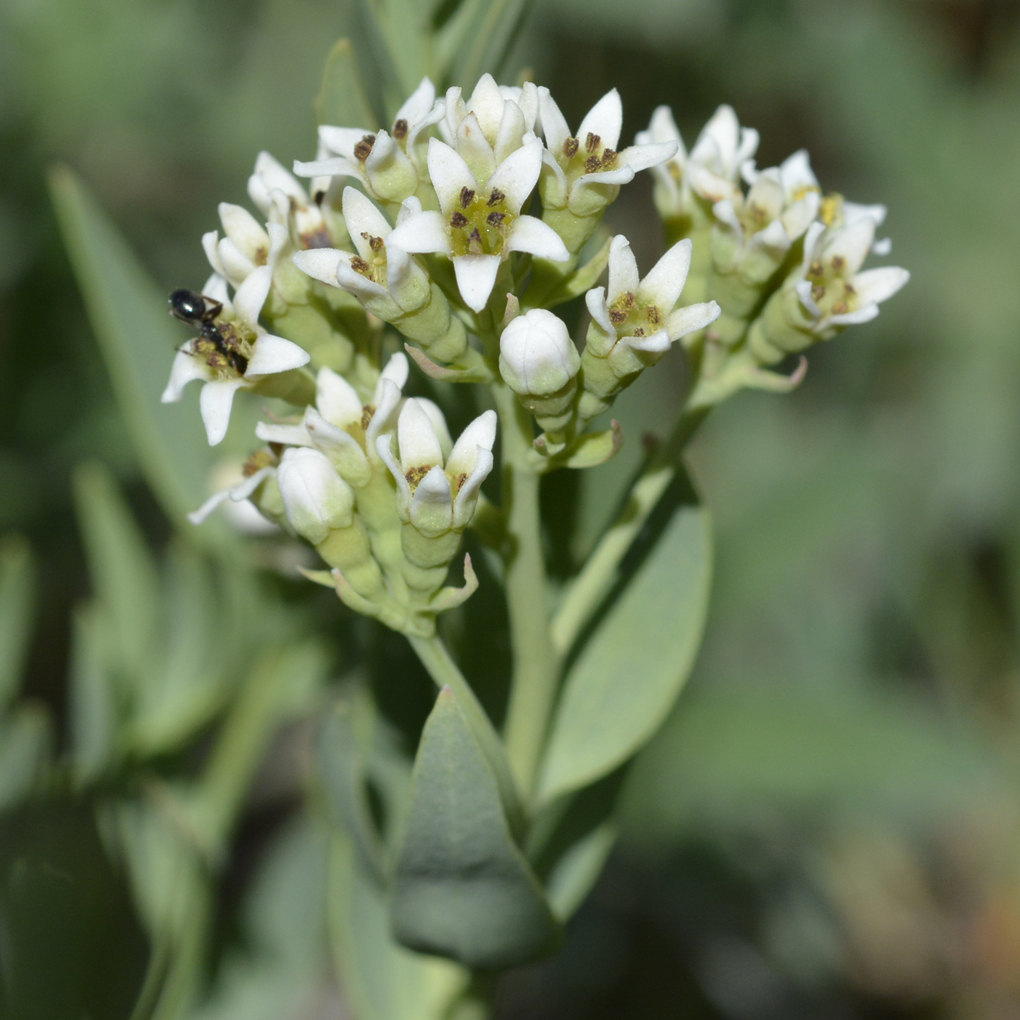
Pale Toadflax – Commandra umbellata – is a curious species. First, it is the only member of the more tropical Sandlewood Family found in Wyoming.
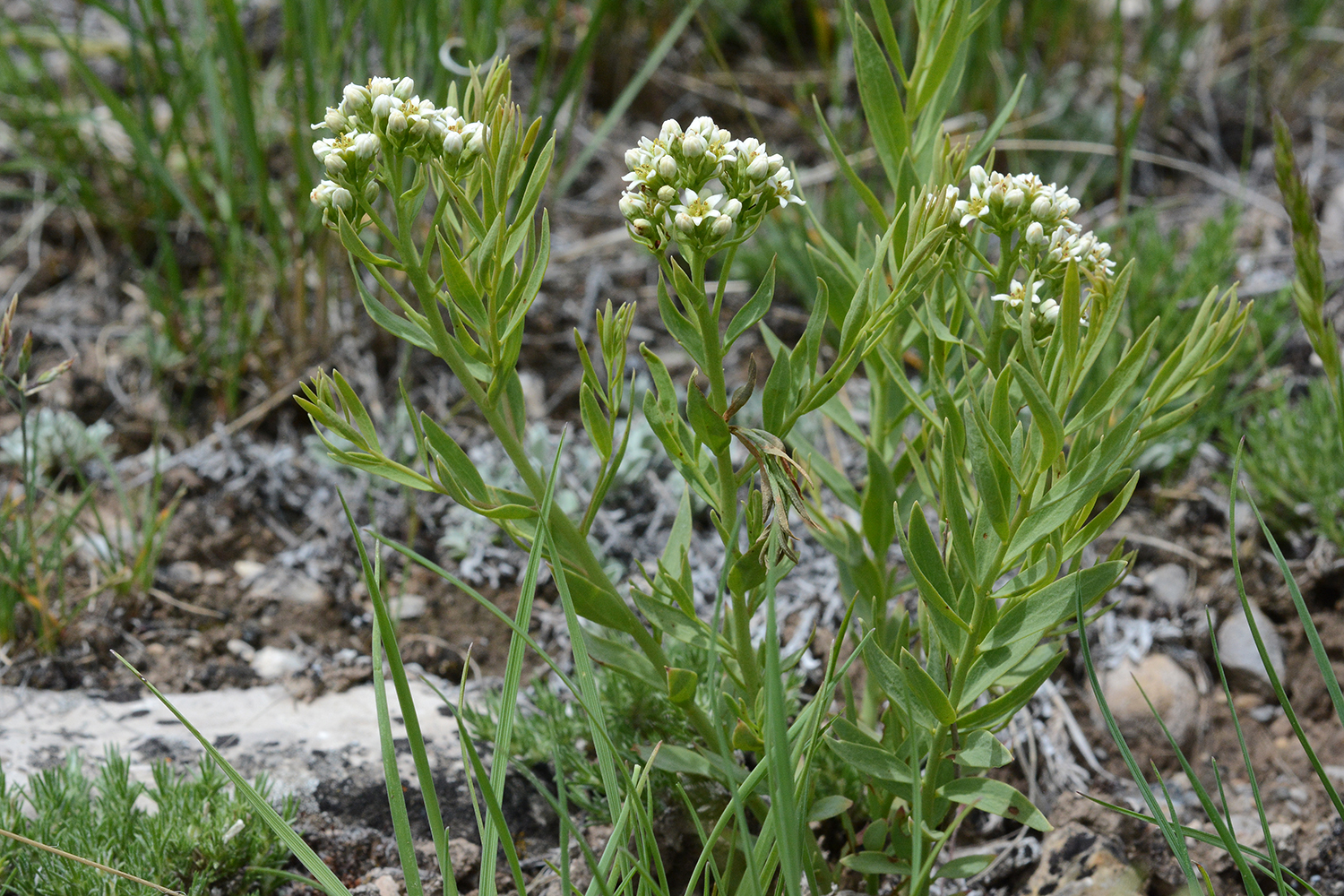
It is a hemi-parasite on many different species of plants: its roots attach to another plant’s roots to siphon off extra nutrients.
It is the alternate host to Commandra Blister Rust—a fungus—that can affect lodgepole pines here. The fungus alternates between the two species to complete its lifecycle. In midsummer to early fall, spores appear on the Toadflax and are carried by the wind to infect pine needles and shoots of pines. The fungus then spreads into the inner bark. One to three years later, the first evidence of the disease appears: small drops of thick, sticky, reddish-orange liquid on the diseased bark–ooze.
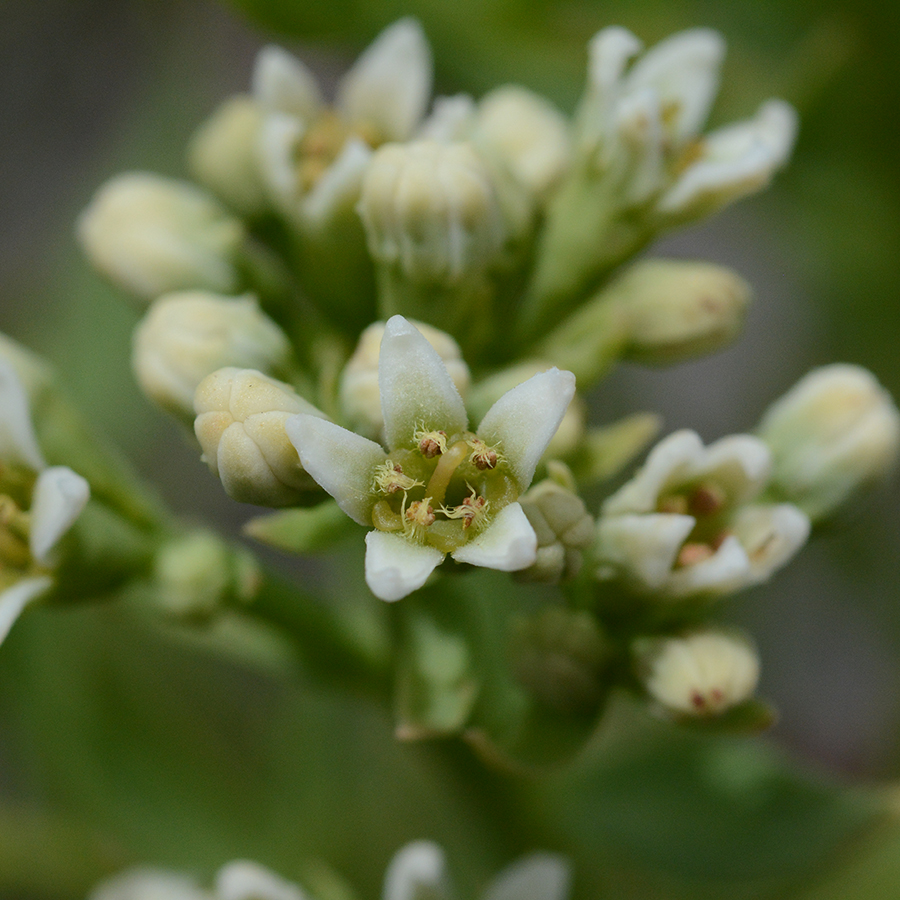
And Pale Toadflax has hairy anthers!
Sage flats and grasslands
Antelopebrush – Purshia tridentata – are in full bloom right now in sage flats and slopes.
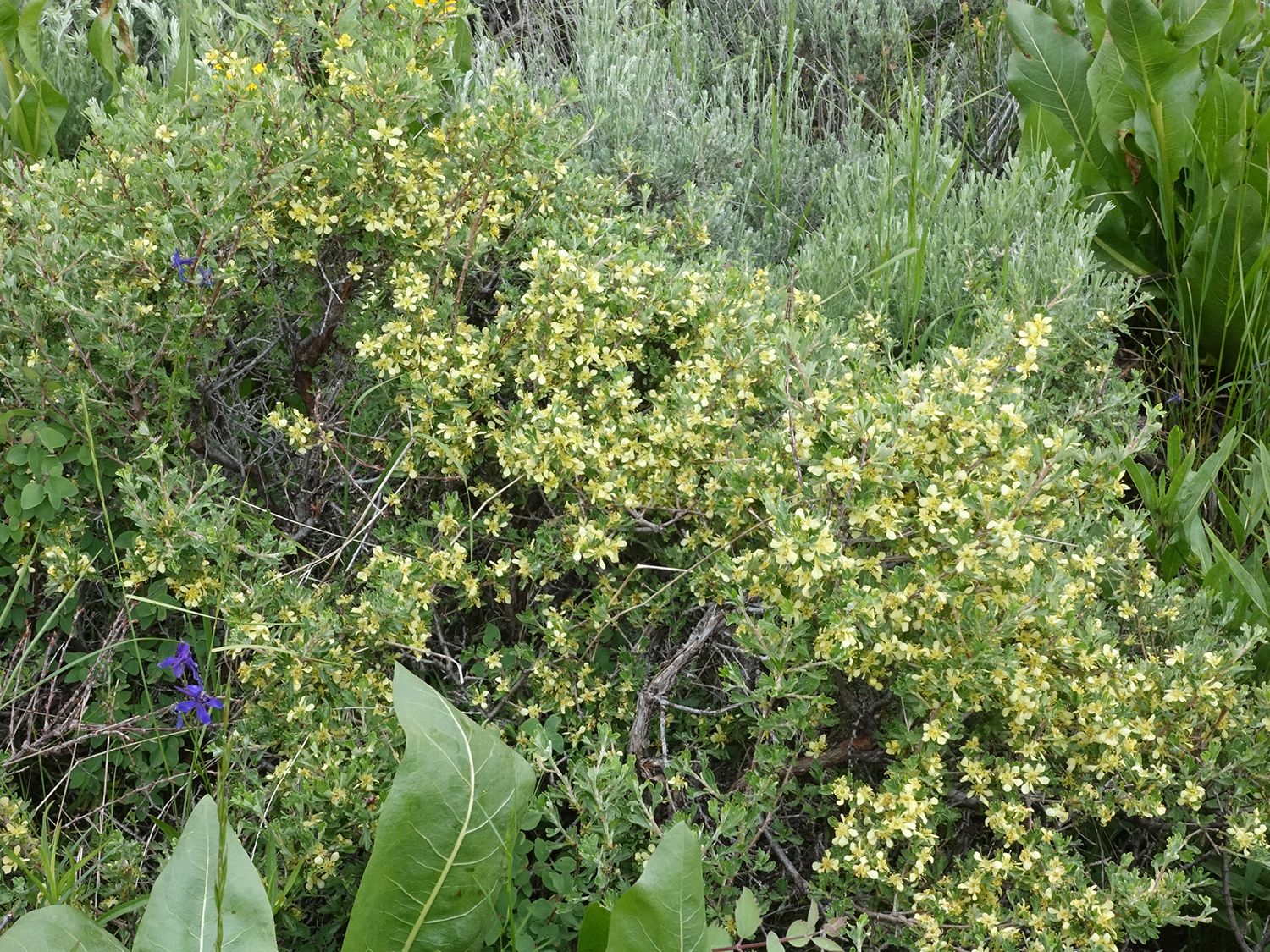
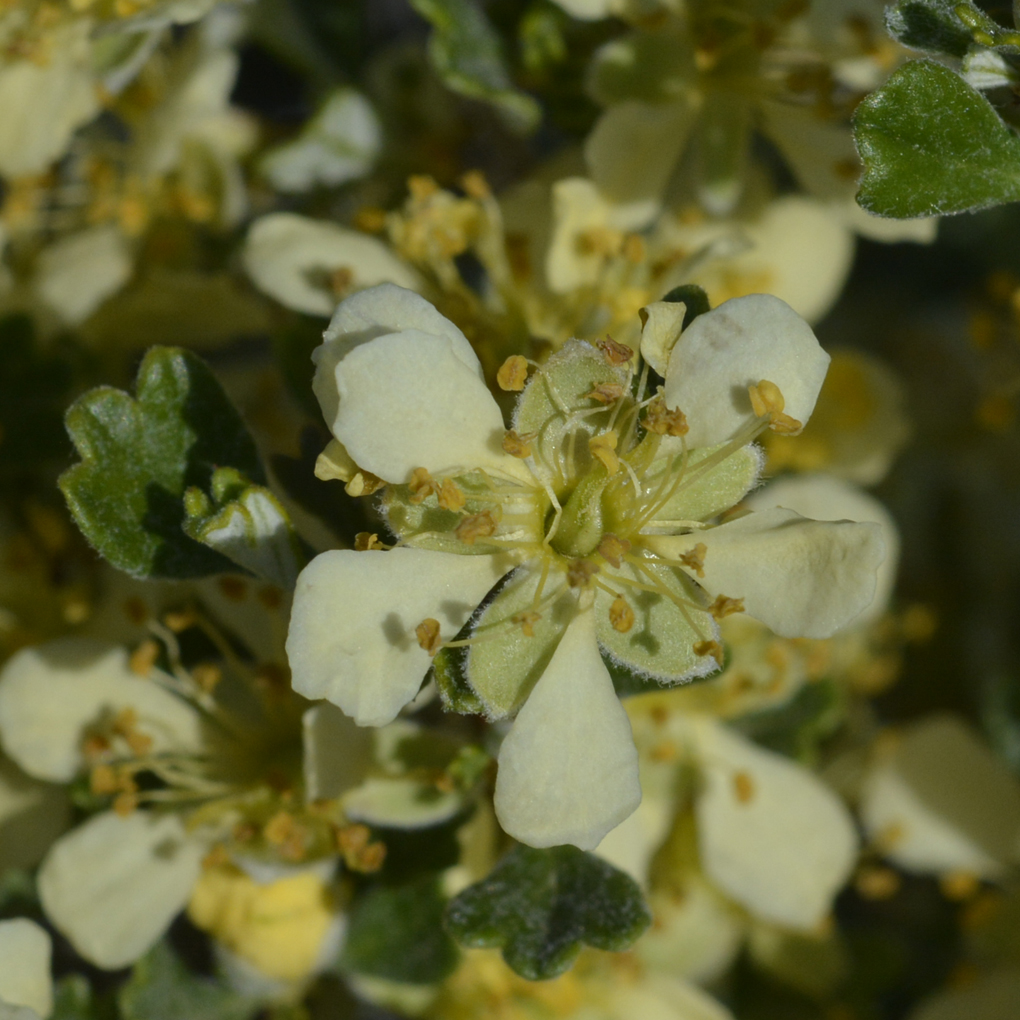
This 3-4 foot shrub has five-petalled, pale yellow, very fragrant flowers with five petals, many stamens, and a central pistil.
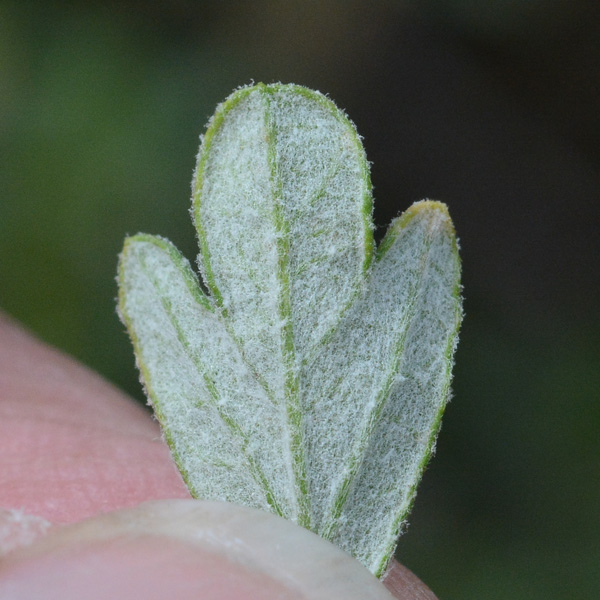
The ½” leaves have three lobes at their tips; the leaves are dark green on top and have pale, hairy undersides. Plants blend with mountain big sagebrush both in size and shape of leaves.
Antelopebrushes are favored and nutritious browse of wildlife, such as moose, especially in fall. Fruits have are dry achenes in center. The seeds are often transported by ants. It is in the Rose Family.
A most obvious wildflower in the sage flats and hills sides at this time of year is usually Arrowleaf Balsamroot – Balsamorhiza sagittata.
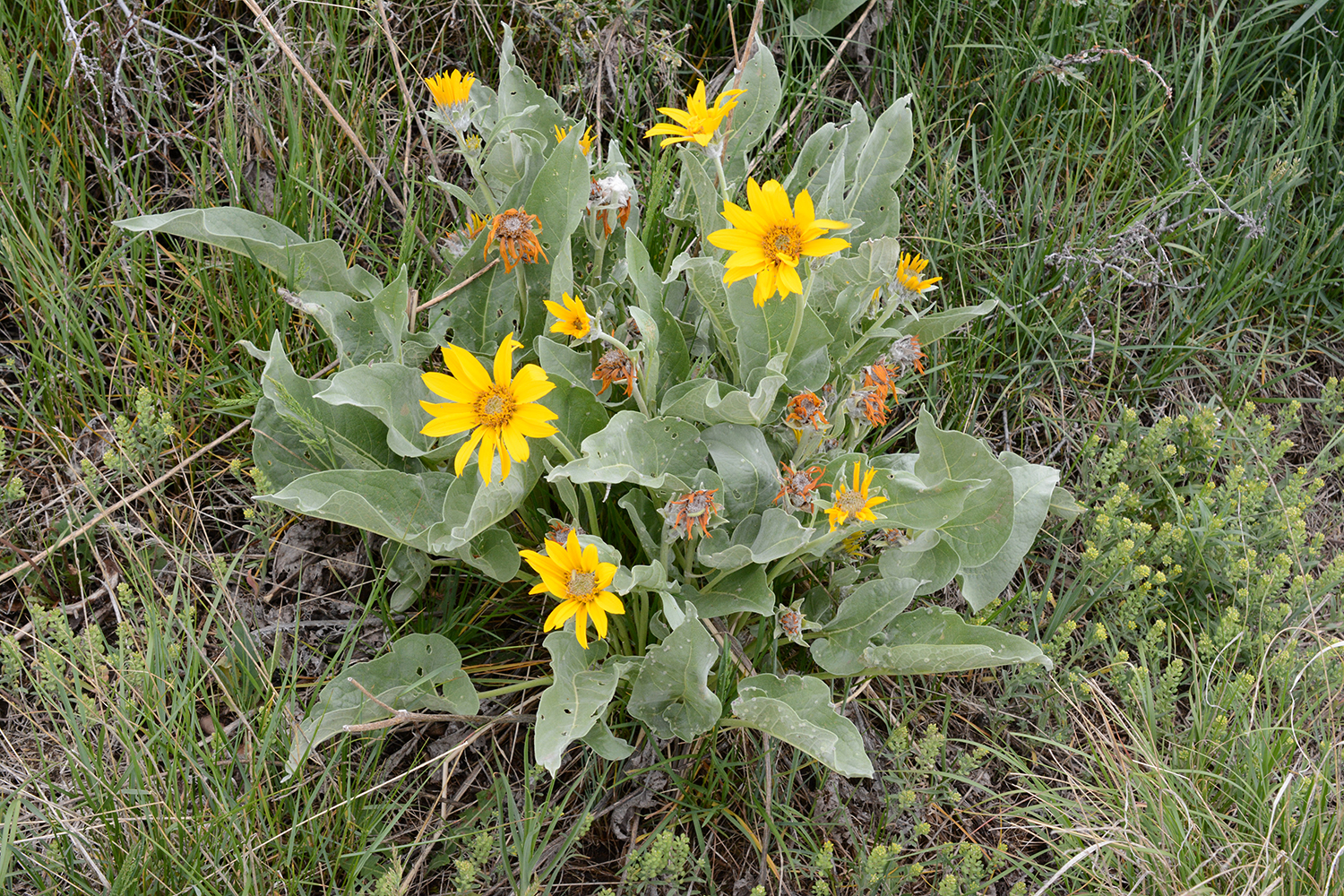
We are familiar with its large arrow-shaped, greyish basal leaves and usually many large yellow sun-flower like heads. It is unclear what is happening to the bloom this year: Flowers appear to be dried out due to drought and wind or were likely frosted during freezing temperatures of May after emerging early due to extra warm April.

Nuttall’s Delphinium – Delphinium nuttallii – is scattered among sagebrush and in grasslands. It grows about a foot tall with palmately dissected leaves alternating up its stem.
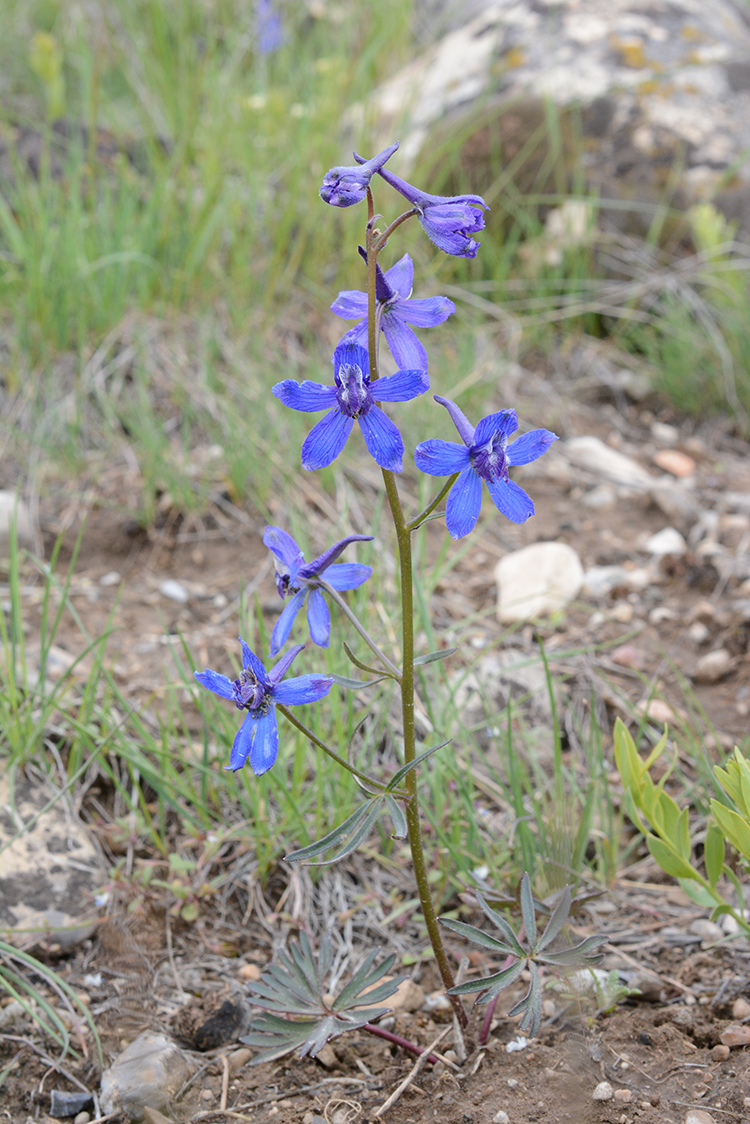
Take a close look at the flowers—and if there are many flowers about (and you are not in the National Park!), and you are curious, take time to dissect a flower to see how it all works—a story of design and success:
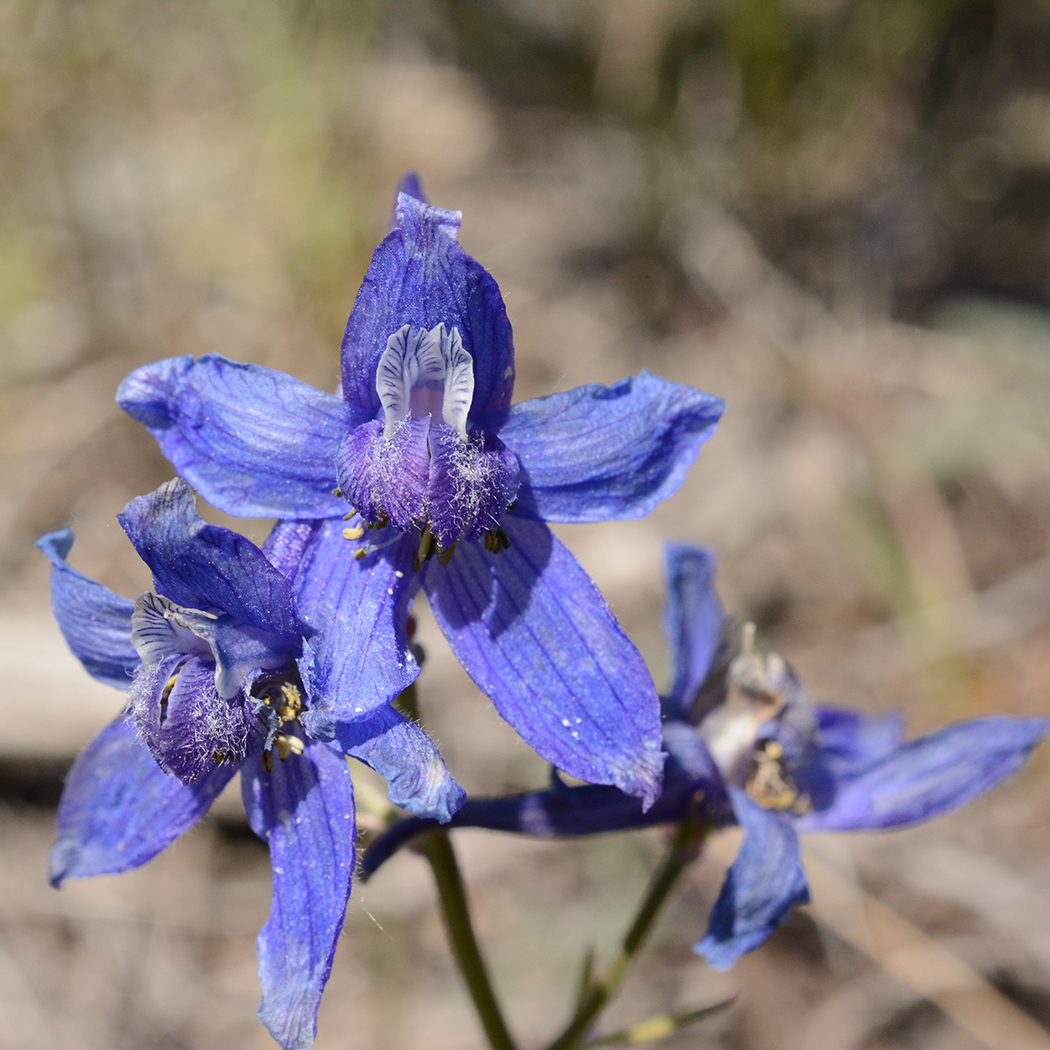
The “irregular” blue flowers have 5 outer blue sepals that look like petals. One upright blue sepal forms a spur out the back and four more sepals flare out to the sides and bottom. They surround 4 petals: two petals are upright and stiff, whitish with blue nectar guides. These two petals each form a tube with nectar and are tucked into the spur of the upper sepal. Two other “guard” petals droop down over a mop of yellow anthers and hidden stigmas. These also have lines and are hairy. All of this is to attract pollinators, douse them with pollen and reward them with nectar, thereby encouraging them to find another similar flower. Pollen is produced first, then the anthers shrivel and the stigmas mature. With luck a pollinator flies from a plant with pollen to a slightly more matured flower with protruding sticky stigmas. Pollen grains are thus relayed to stigmas, and stimulated by the chemistry of the stigmas grow tubes down the stigma, produce sperm and fertilize the eggs inside the ovary.
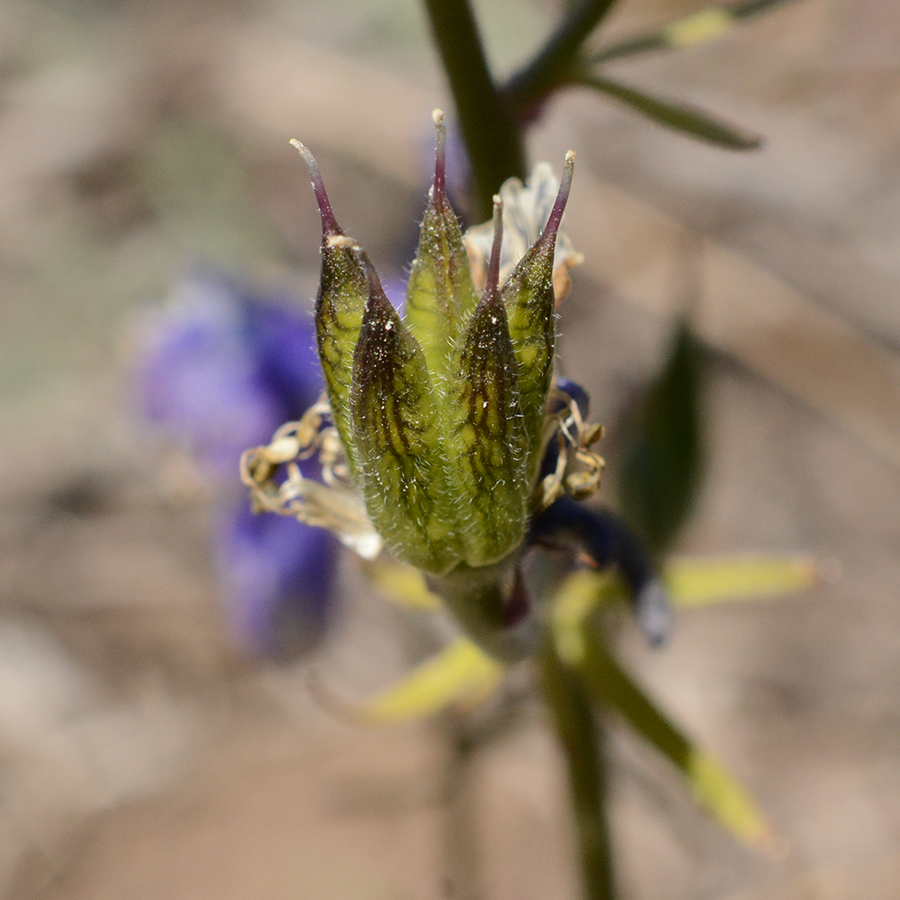
Voilà, fruits with seeds can form: 3-5 upright fruits (follicles) will dry and split open to spill out seeds.
Pollinators: Broad-billed hummingbirds depend on the nectar while migrating, along with local queen bumblebees, butterflies, and other bees and flies which relish the nectar and/or pollen for their daily needs.
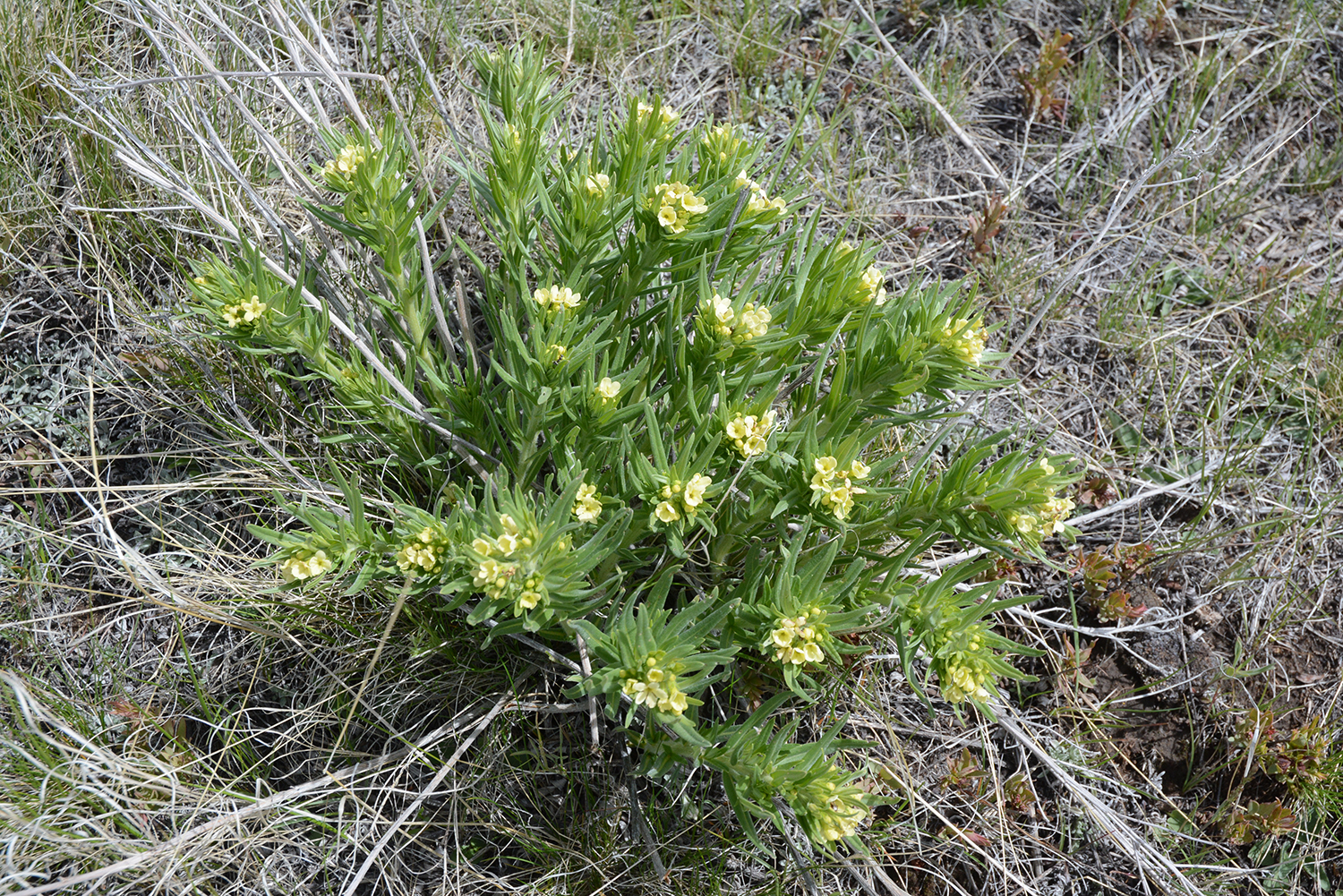
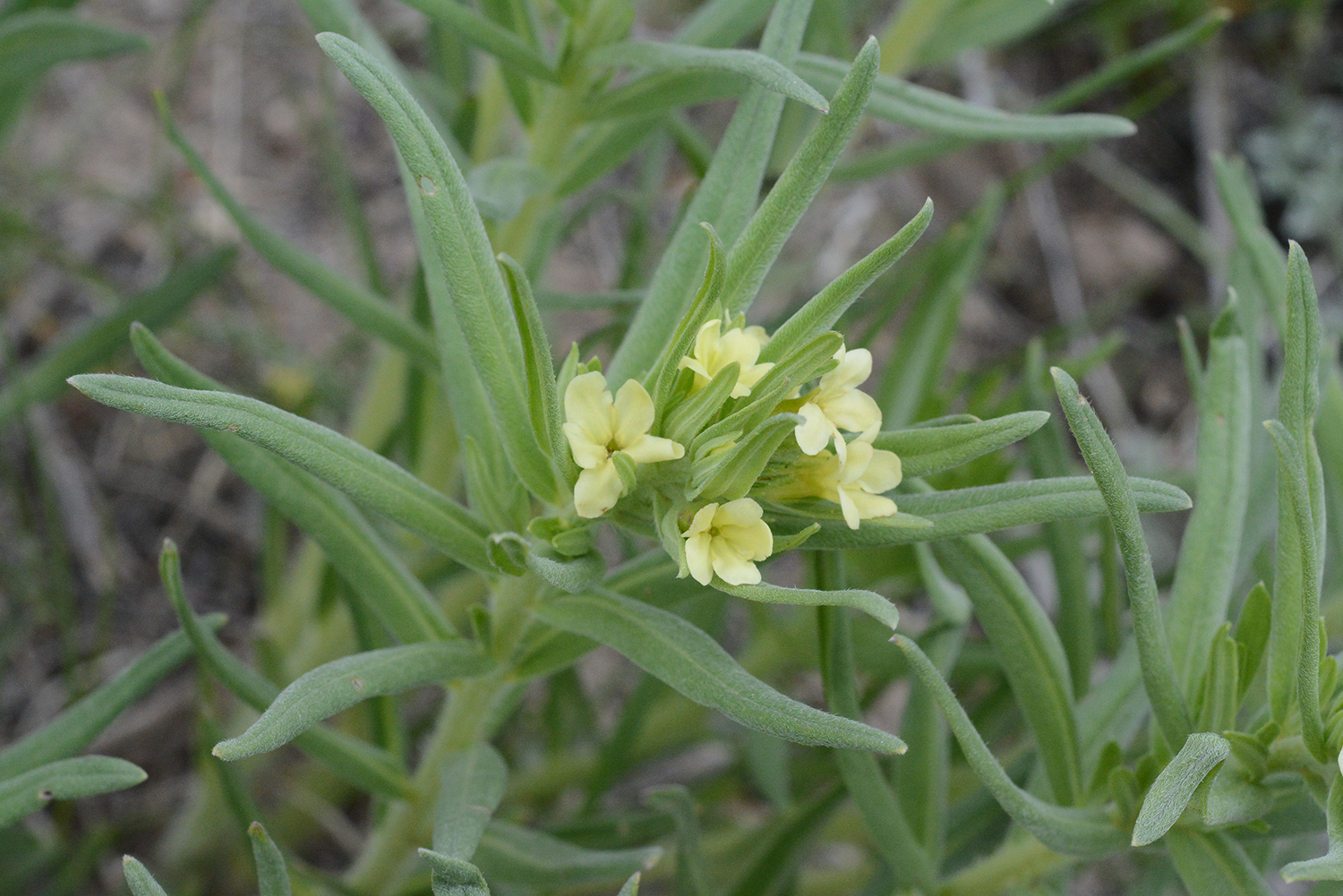
Stoneseed, Puccoon, Gromwell – Lithosperum ruderale –– are robust plants with stiff 1-2’ stems and 2-3” slightly hairy elongate leaves. Pale yellow, fragrant, tubular flowers form in the axils of the leaves.
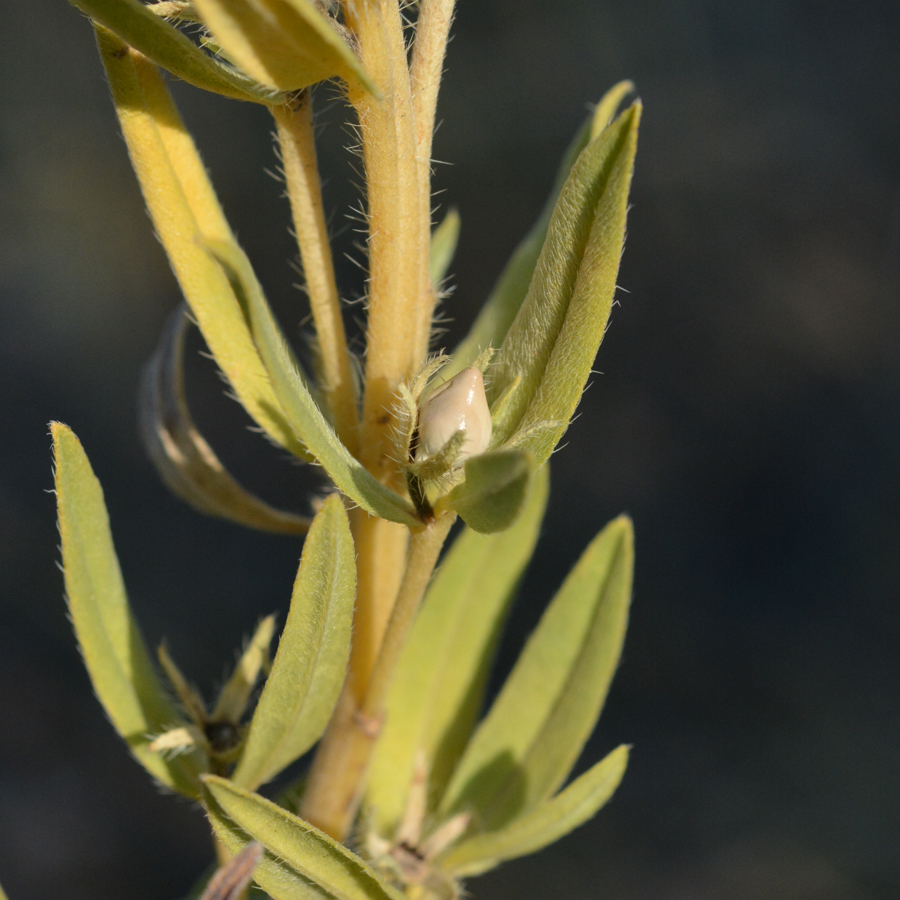
Fruits are white and hard, giving it the name stoneseed. Plants were used by indigenous people for fertility and respiratory matters, as well as food.
Sulphur Buckwheat – Eriogonum umbellatum – is still in mostly tight bud.
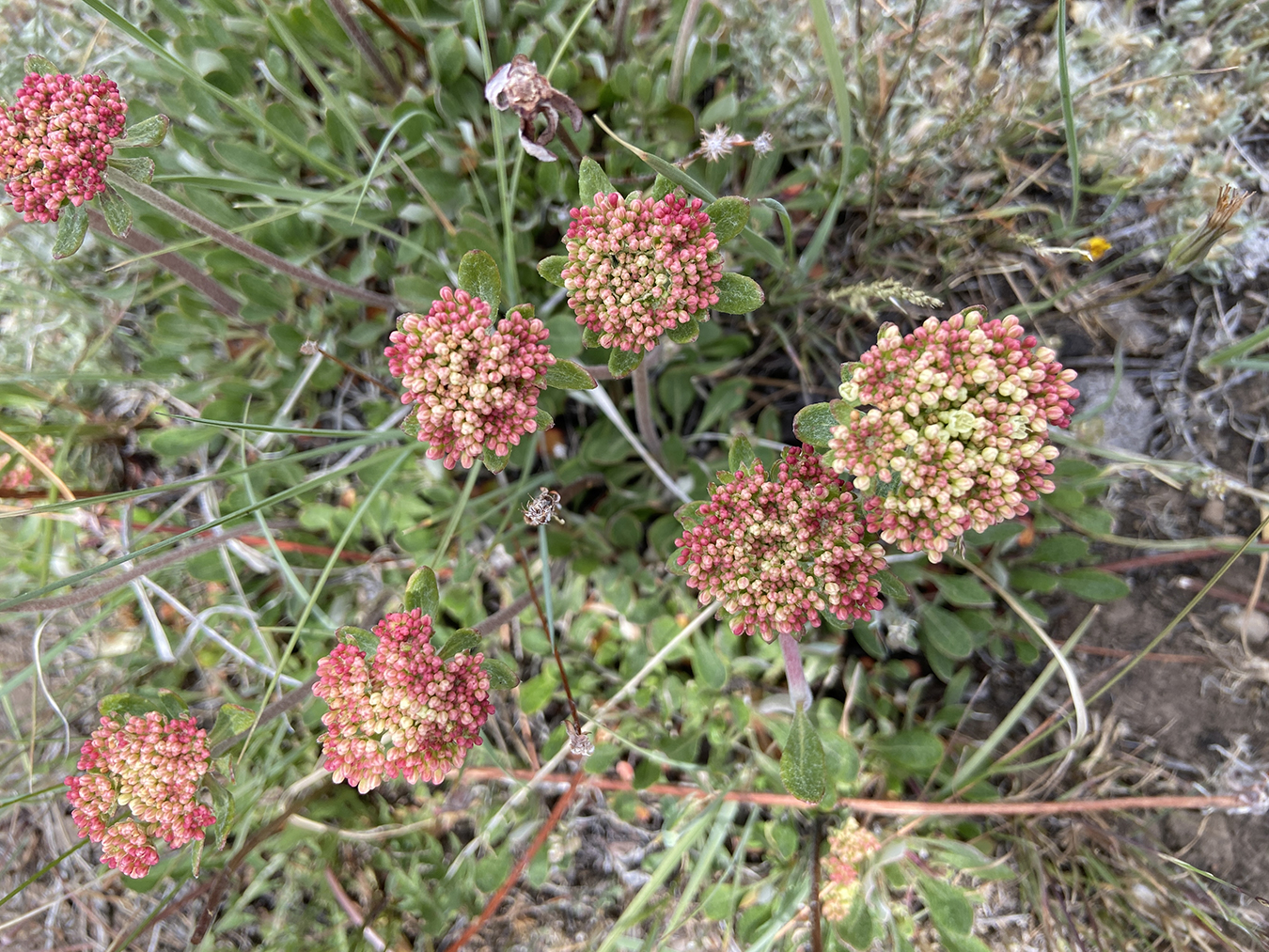
Over the next week or so many cream-colored flowers cluster together on top of to 12” stalks.
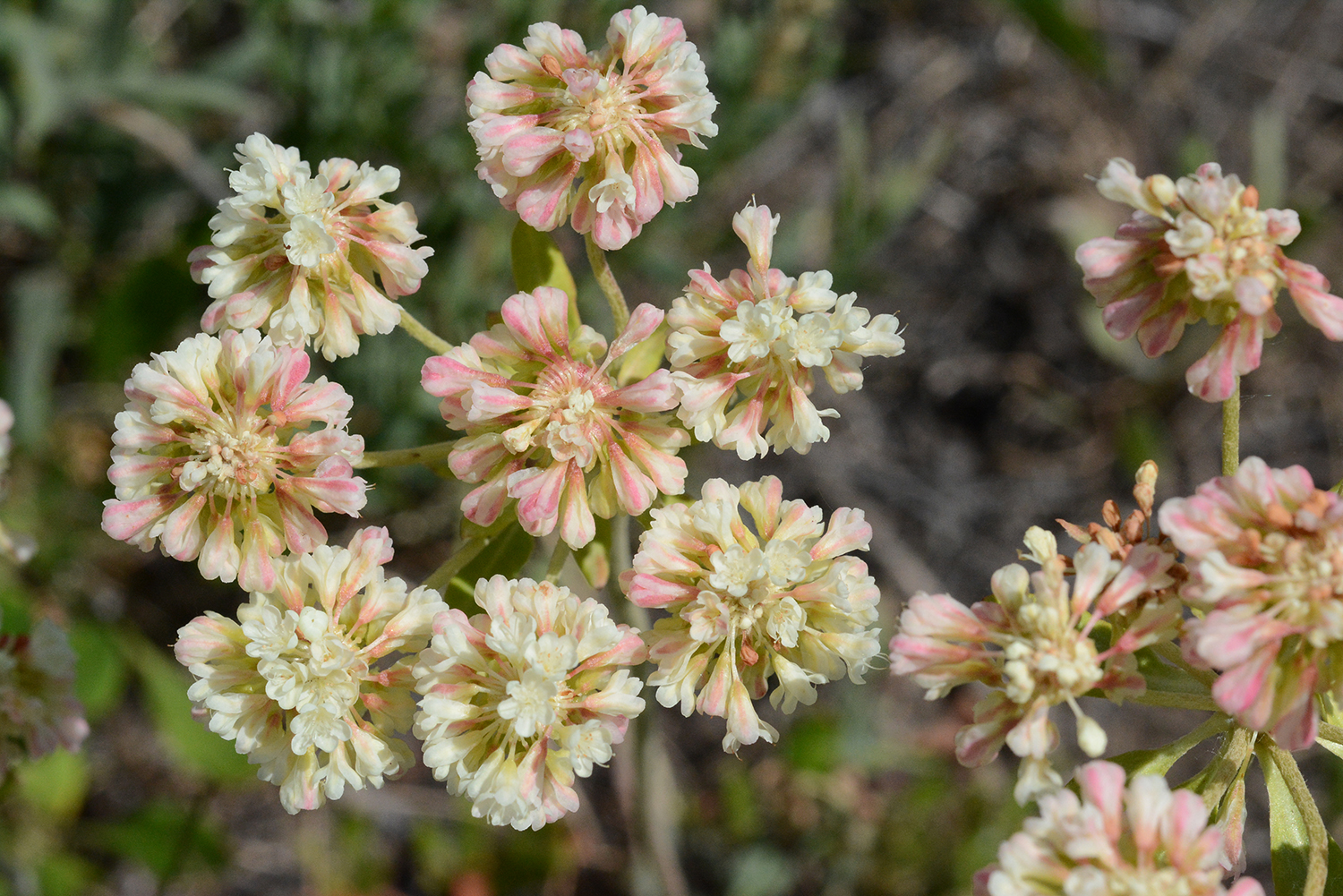
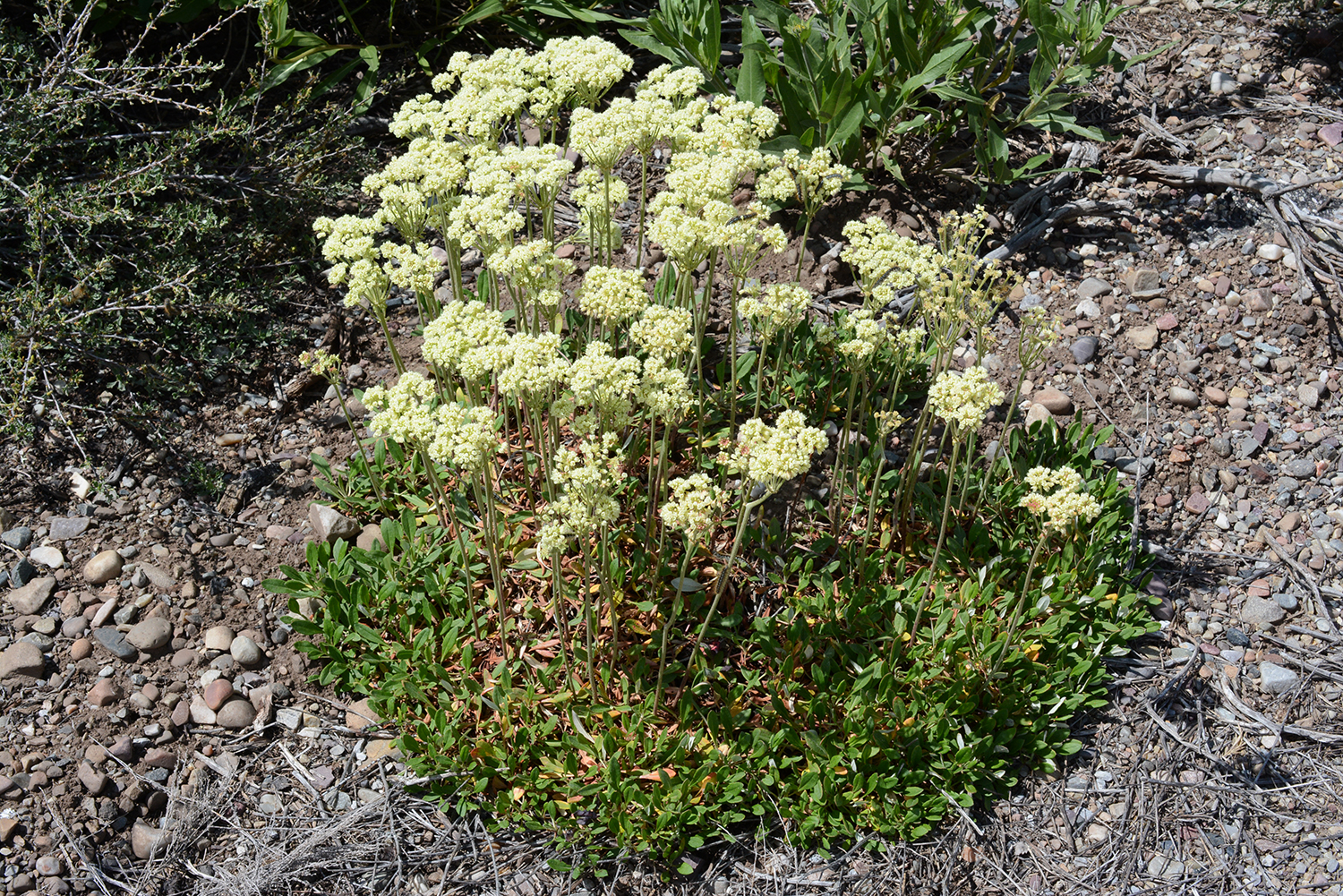
The oval basal leaves on creeping stems form extensive 1’ wide or more mats. Very common in sage flats.
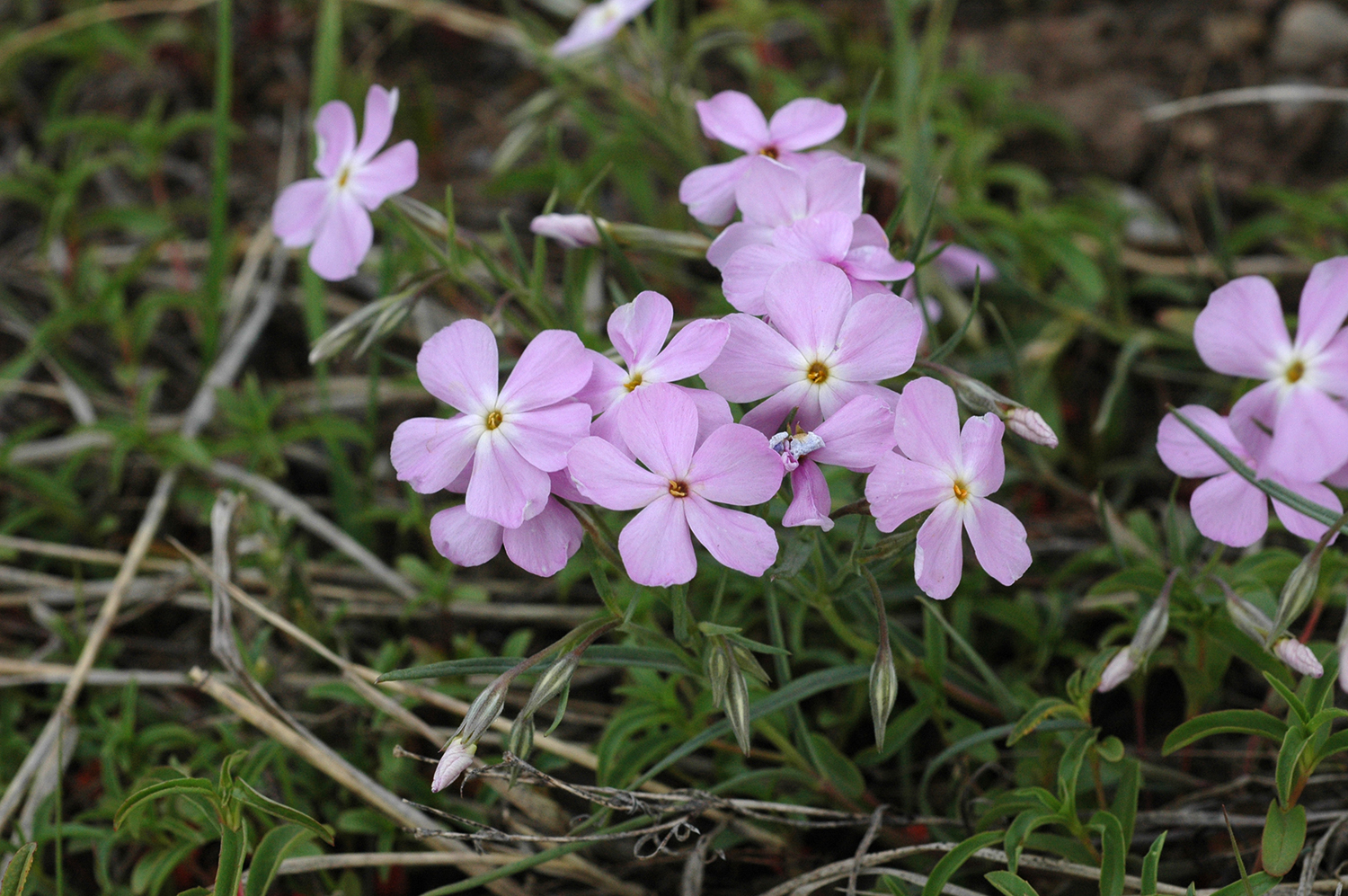
Long-leaved phlox – Phlox longifolia – are relatively lanky plants compared to their local relatives. They have white-to pink to bluish tubular fragrant flowers similar to other phlox. However their stems are around 6″ or more long with obvious opposite linear leaves. The fragrance attracts pollinators to the tubular flowers flare at the top providing landing pads for butterflies and moths whose mouth parts can reach deep down into the long tube for extra rich nectar, and in the process pick up pollen to dispense to another flower.
Prairie Smoke – Geum triflorum – is a plant typical of prairies and other grasslands.
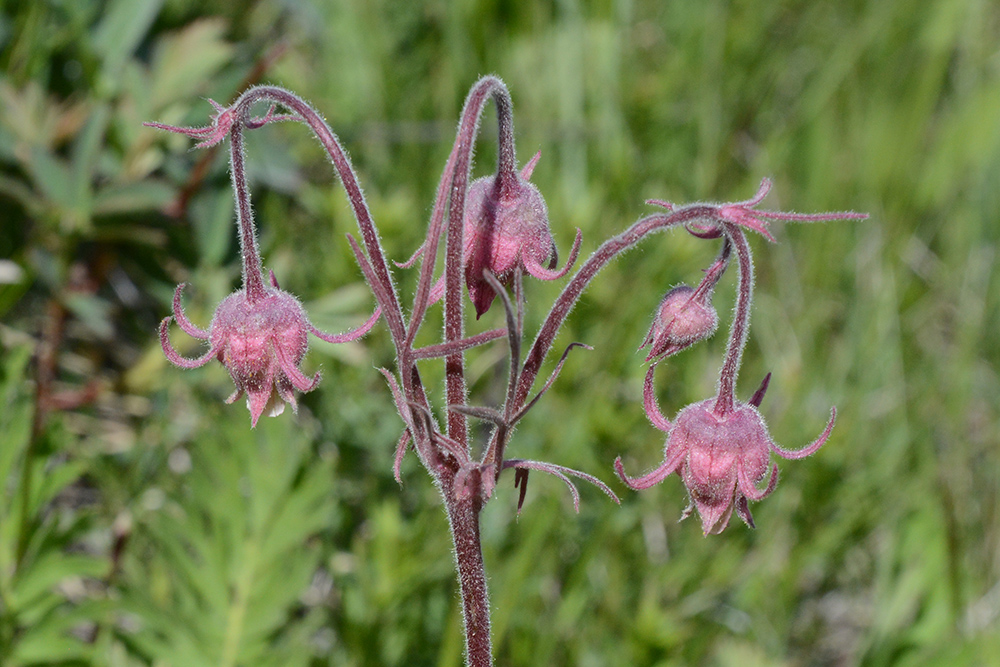
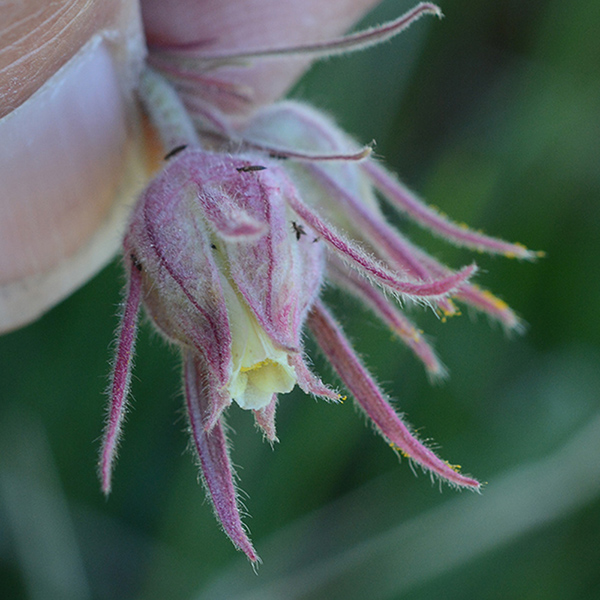
Usually three flowers dangle from 12” arching stems – the outer tube of rosy sepals protect the emerging yellow petals.
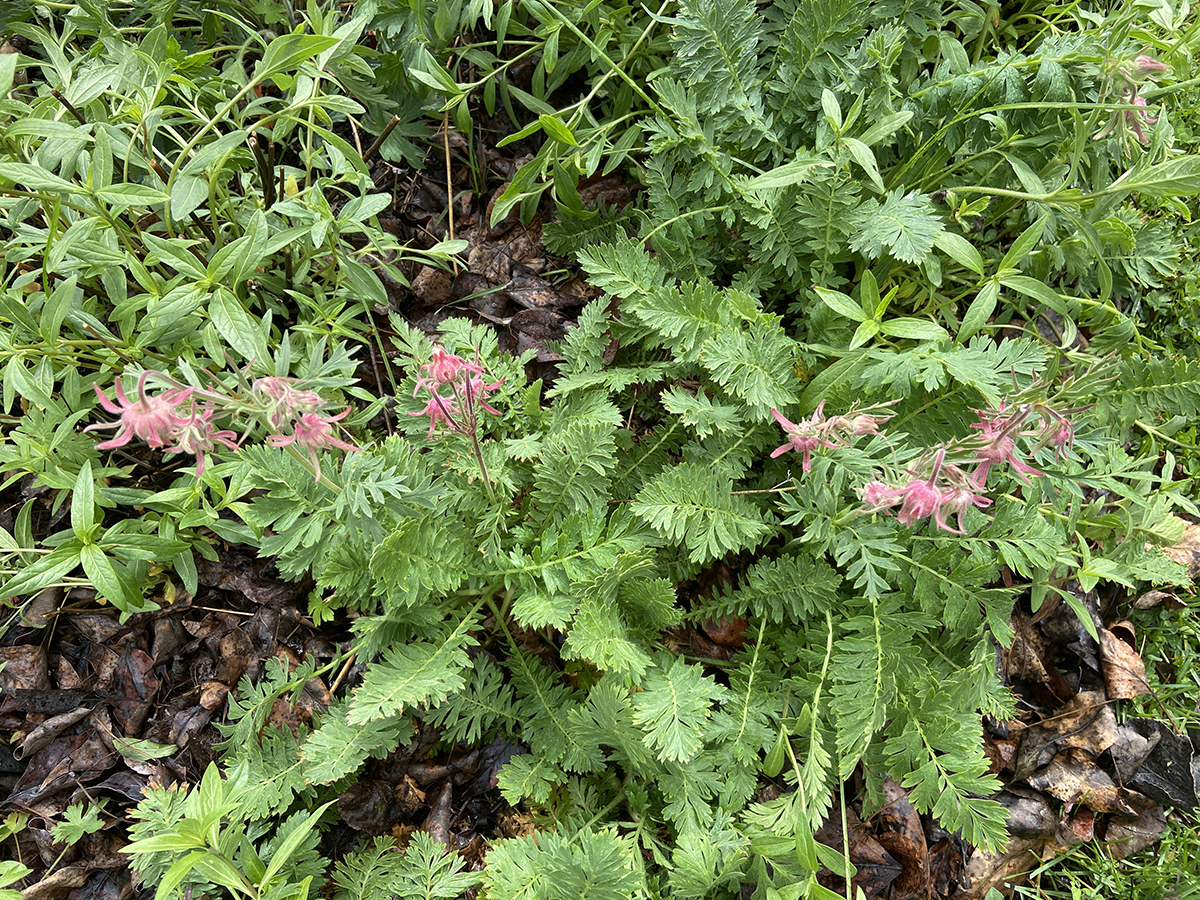
The 4-6” leaves are clustered at the base and are pinnately (like a feather) divided.
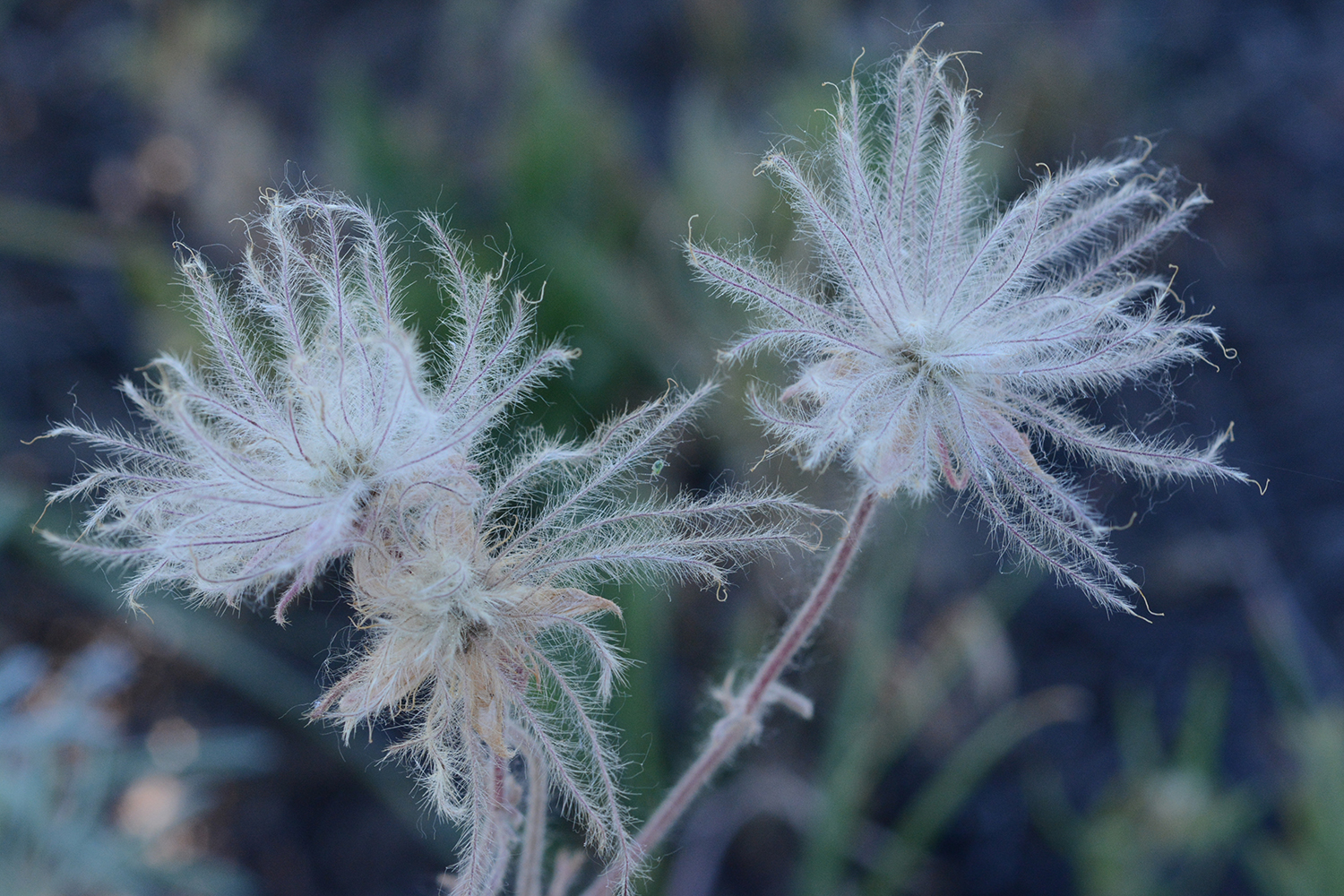
A long, curly, fluffy stigma which aids in wind dispersal is attached to each of the tiny fruits. This smoky look and its typical grassland habitat provide its common name Prairie Smoke It is the Rose Family.
This is the beginning of season for confusing yellow composites; Below are some photos and text to start you looking at the details, and if desired to do the ID. Better puzzles than Sudoko for the brain.
Basic ID featrues: Many tiny flowers sit on a platform surrounded by a protective ring of greenish structures called “bracts”. Together this is called a flower “head” – typical of a composite flower. Being the largest family in the world, there are many variations of plant size; leaf shape and arrangement; flower details of ray flowers vs. disc flowers, color, and surrounding involucral bracts. Here are a few species out now to help get a sense of the details.
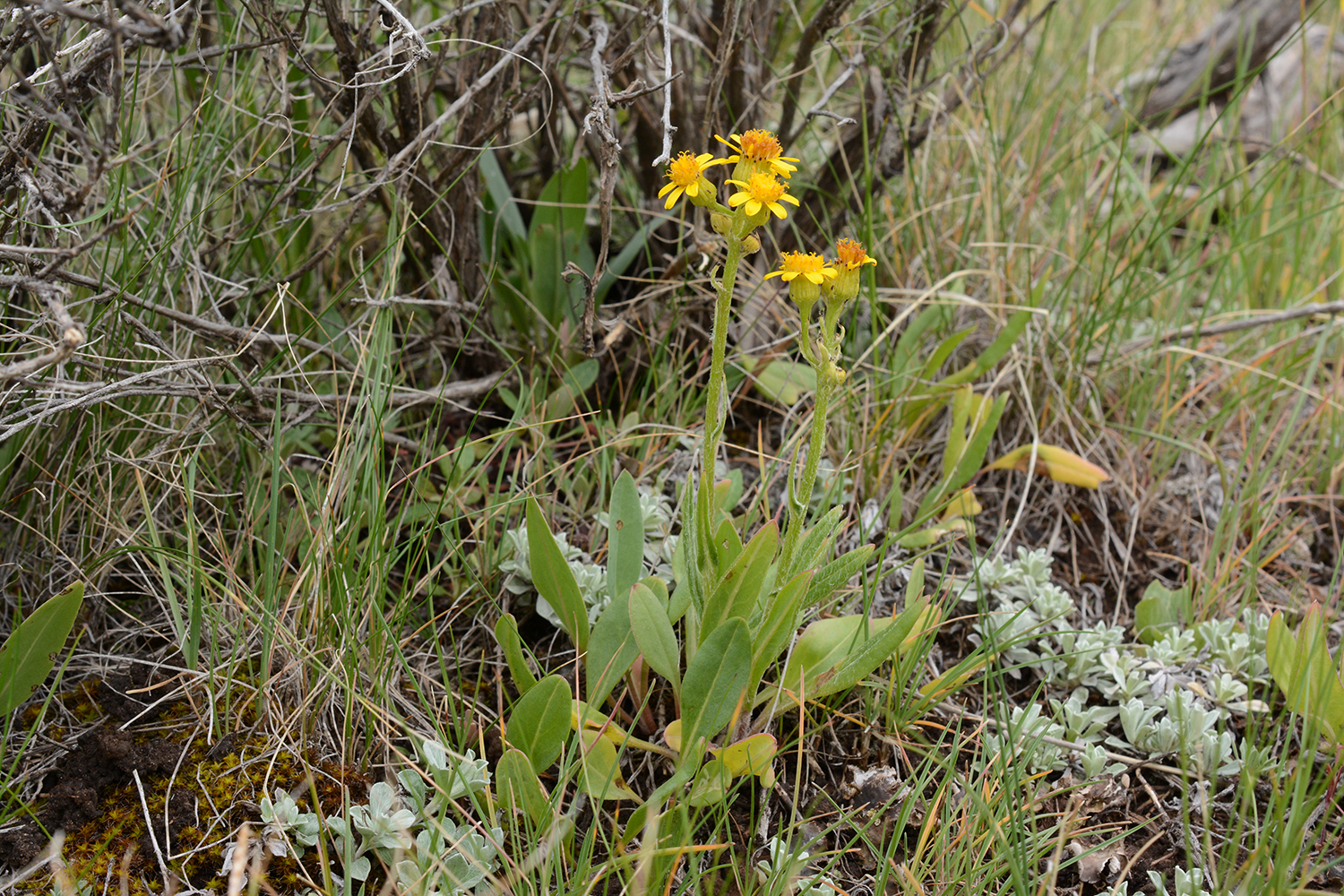
Western Groundsel – Senecio integerrimus – has several heads clustered at the top of 1-2’ tall stems. Cobwebby hairs more or less cover the 2” leaves and stem. Several larger leaves are at the base.
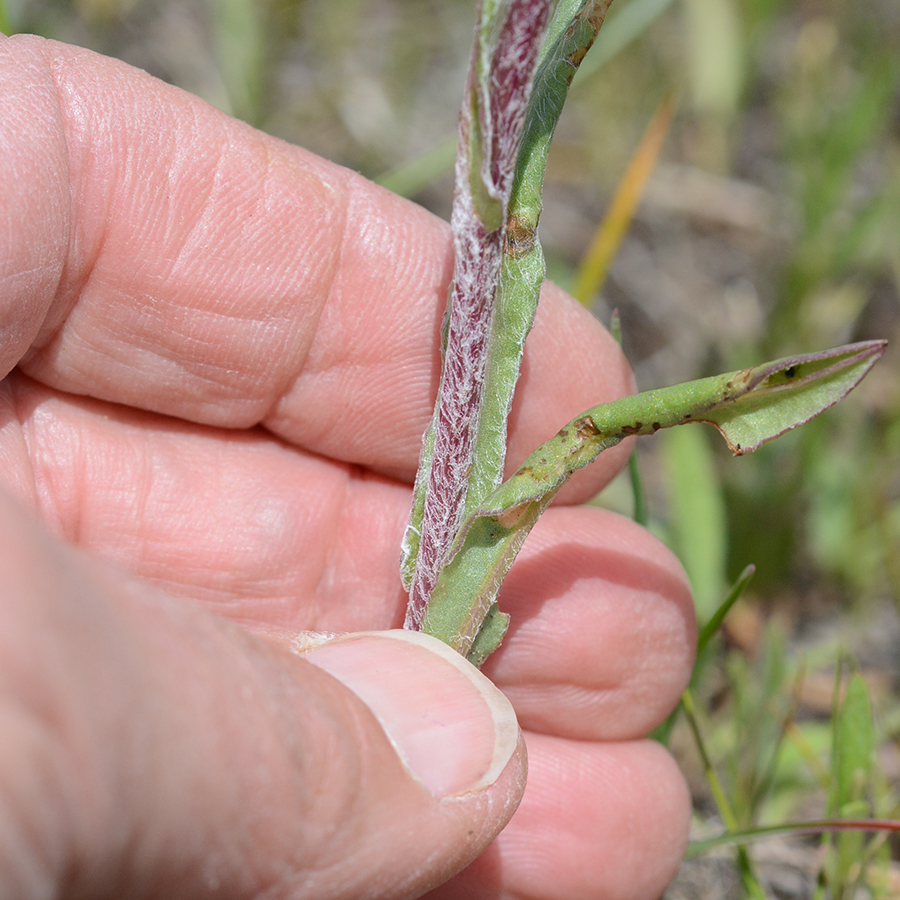
The hairy stems are topped by several heads.
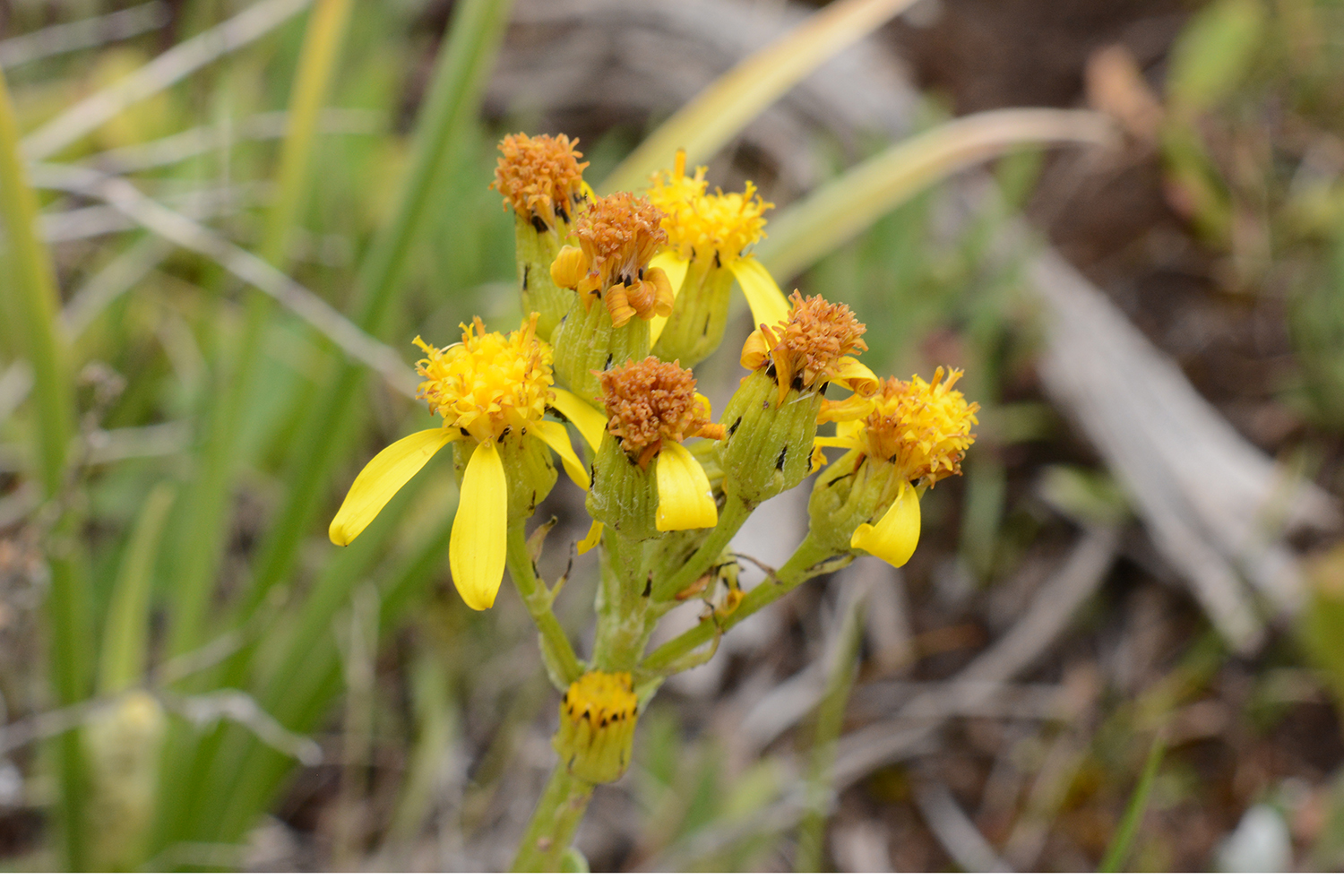
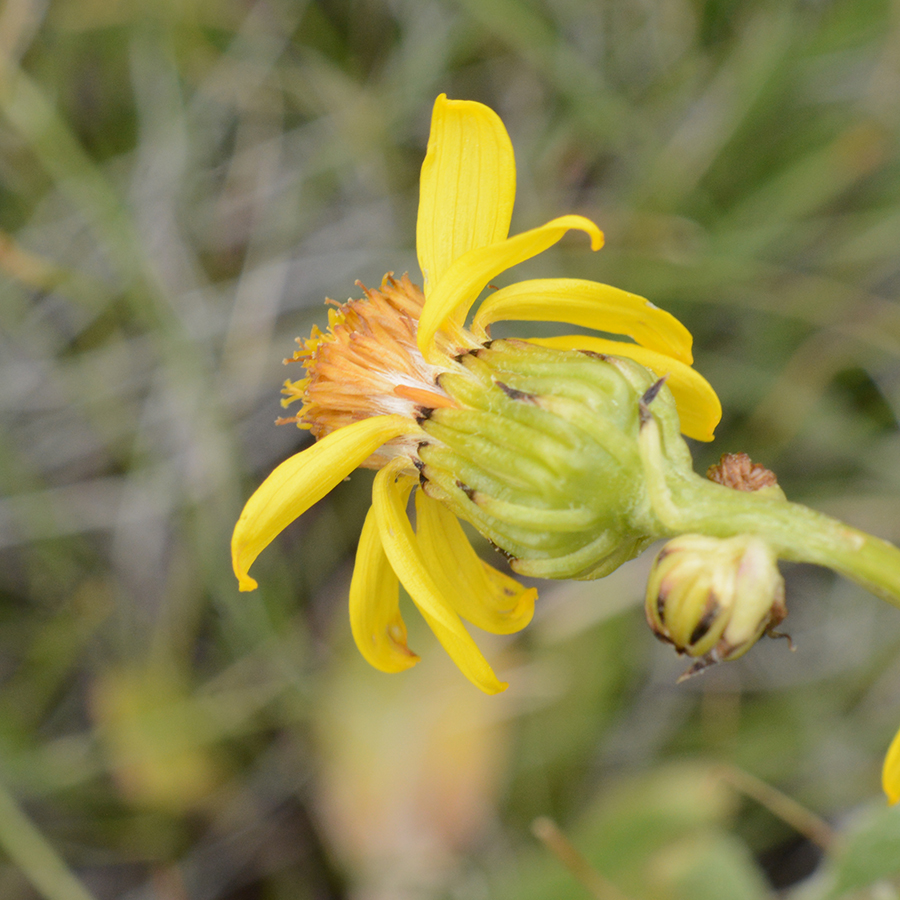
Each head has outer broad “ray” flowers–here five petals are merged together to look like one flat big petal. In the center are many tubular “disc” flowers – also with 5 petals but formed into a tiny tube. “Involucral bracts” surround and protect the broad ray and tiny disc flowers. Here the bracts are smooth and distinctly black tipped.
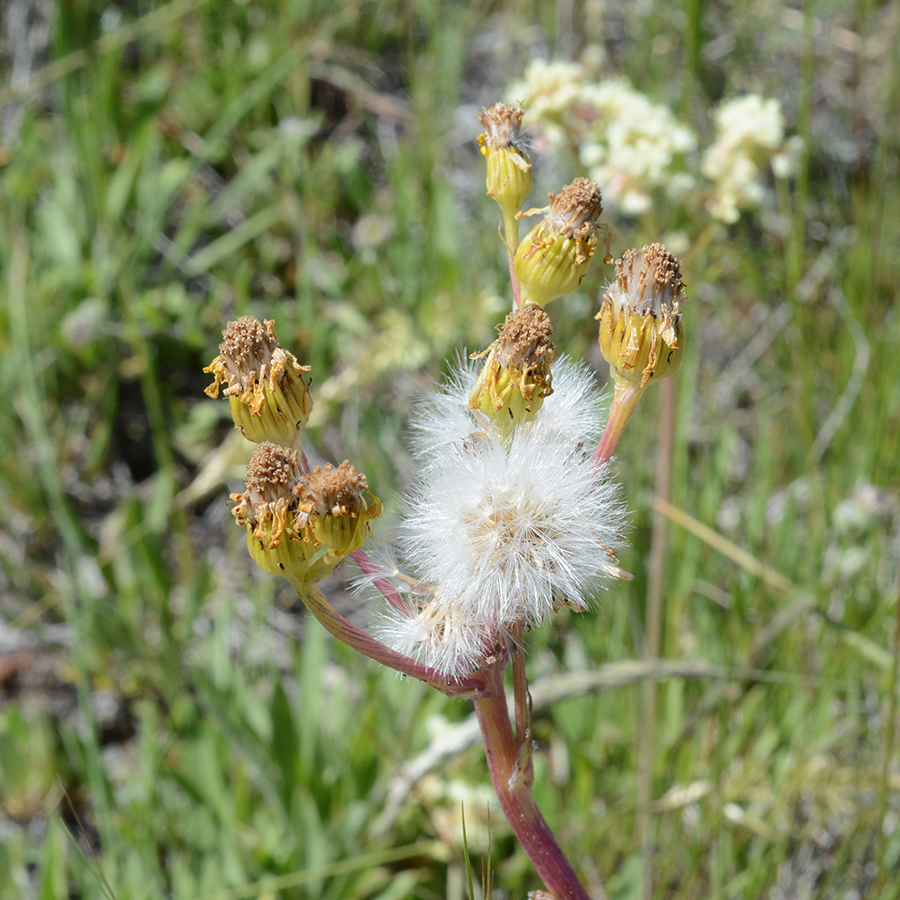
By late summer if pollinated, each individual flower produces a single tiny fruit with “fluff” at the top to help the seed disperse upon the wind.
On top of a 6-12″ stem, False Dandelion – Agoseris glauca var. dasycephala – has one yellow flower head with all yellow ray flowers. Leaves are all at the base and are relatively wide, toothed or not. Another variety – A. g.var. laciniata/pauciflora has narrower toothed leaves.
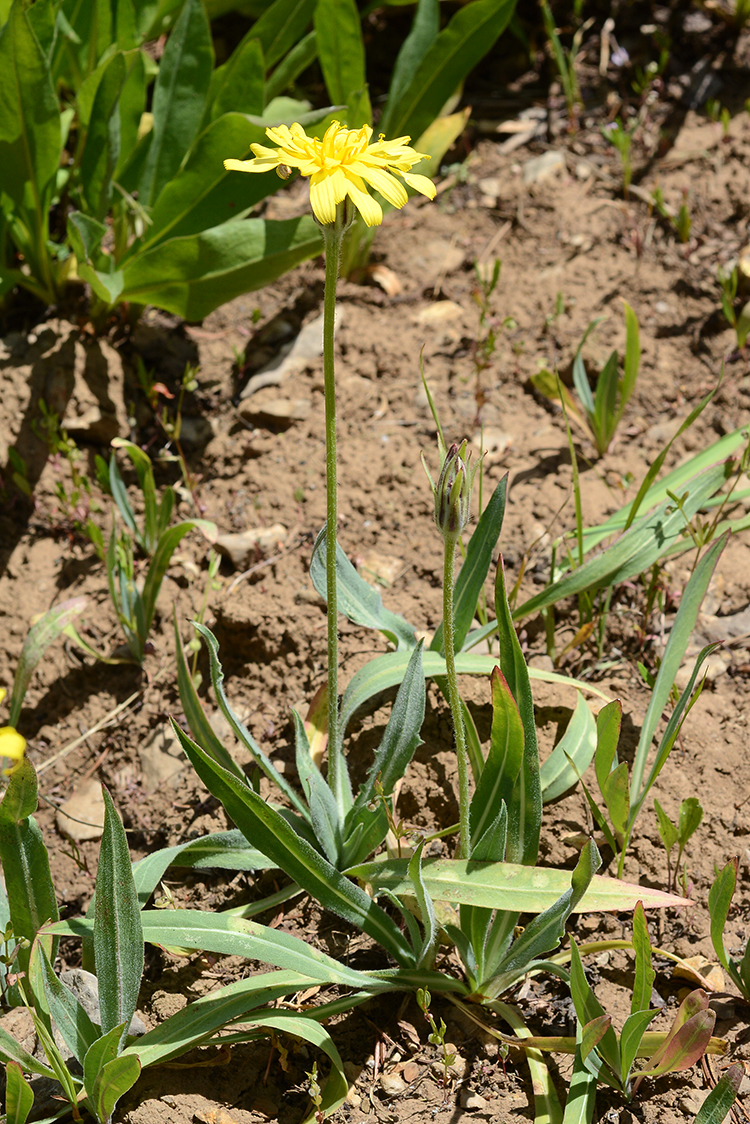
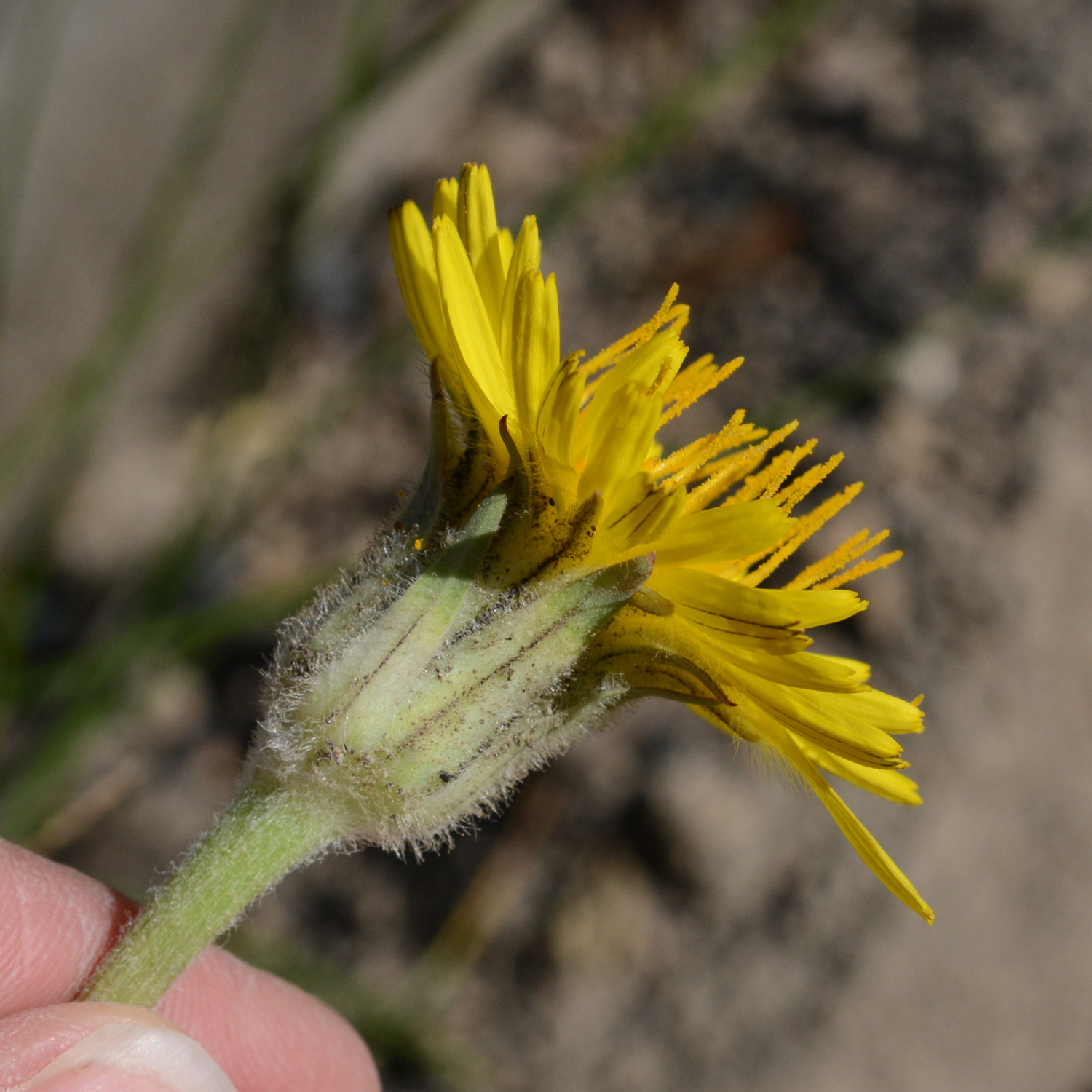
The involucral bracts are hairy and relatively broad. In the photo below, note the long slender stigmas with pollen all over them. The long stigmas, still closed, rose through a tube of inward-facing anthers, pushing out the pollen for insects to come and get it. This is called plunger pollination. Later the sigmas will unfurl into two arcs and hopefully be brought pollen from another plant or if need be, pick up remaining pollen from its own self.
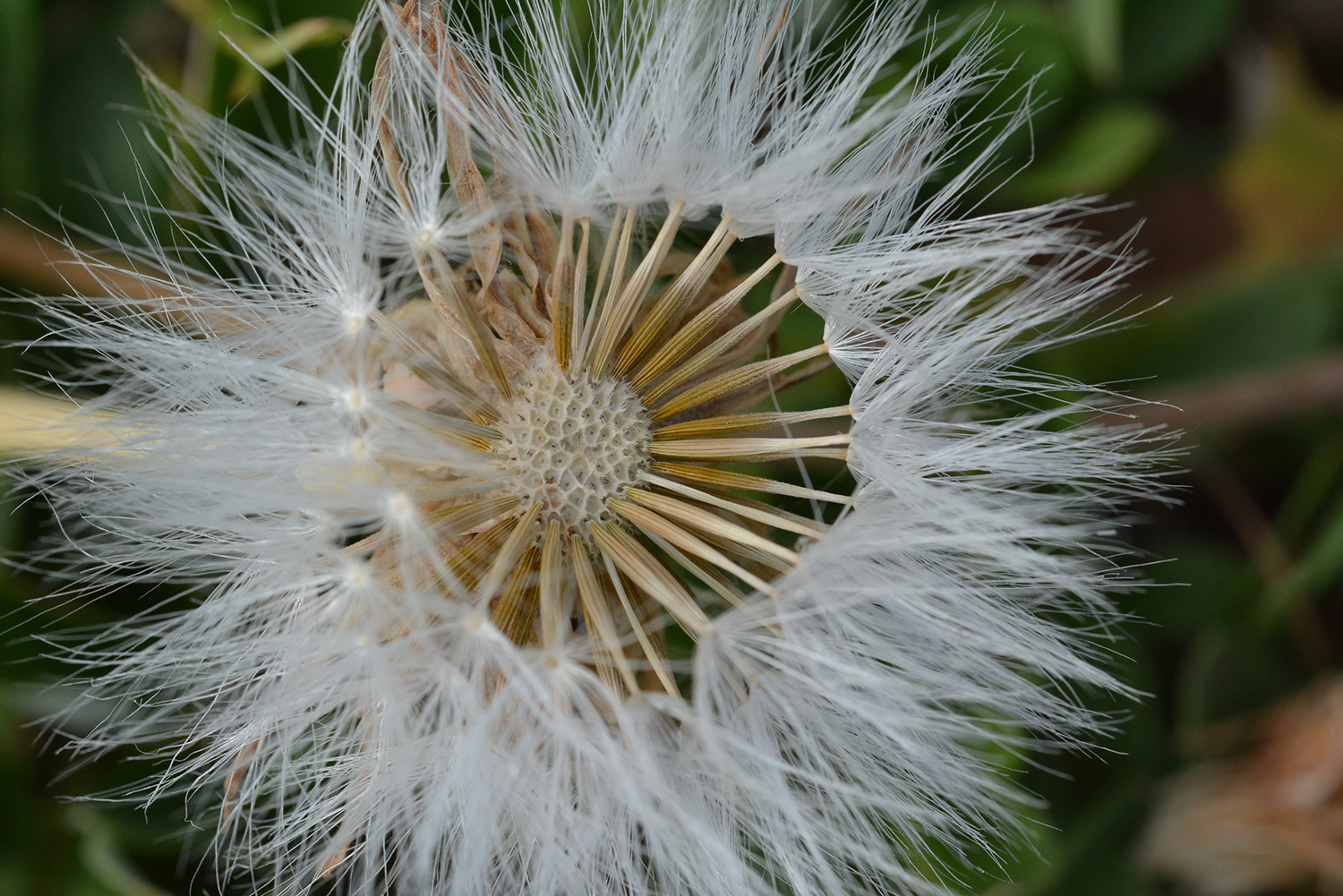
The elongated fruits are each derived from a single flower. A hairy pappus is attached at the tip to help in wind dispersal. Both the shape of the fruit and design of the pappus help in ID. Below are the spindle shaped fruits of A. glauca var. laciniata
Nothocalais – Nothocalais nigrescens – Also has yellow flower heads at the tip of individual stalks and the leaves are clustered at the base; however these are very narrow linear leaves, sometimes slightly toothed. Note the buds stand up straight.
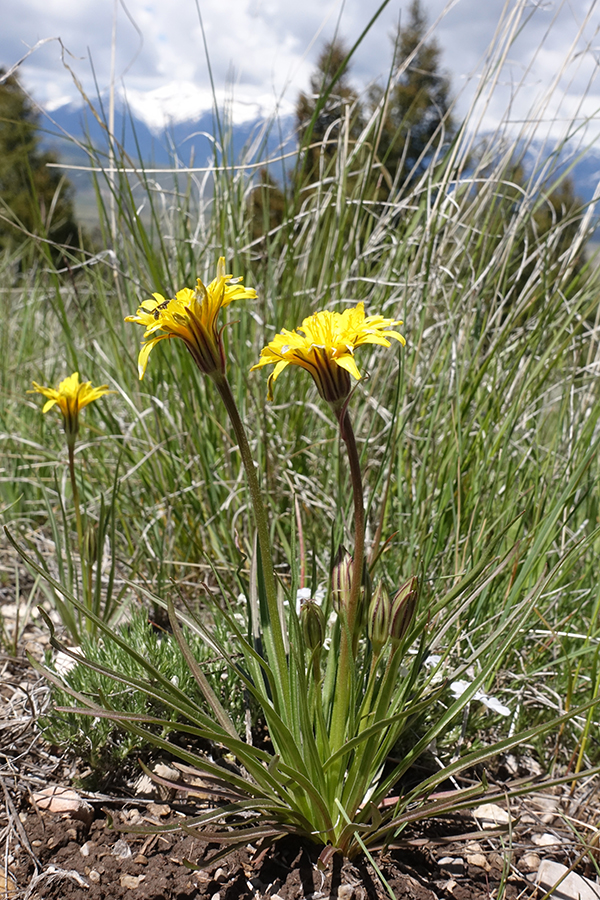
Bracts are all of a similar length, and often with a purplish stripe to them.Here is an example of the involucral bracts protecting the fruits as they develop on the left and on the right many fruits with fluff about to take off upon the wind.
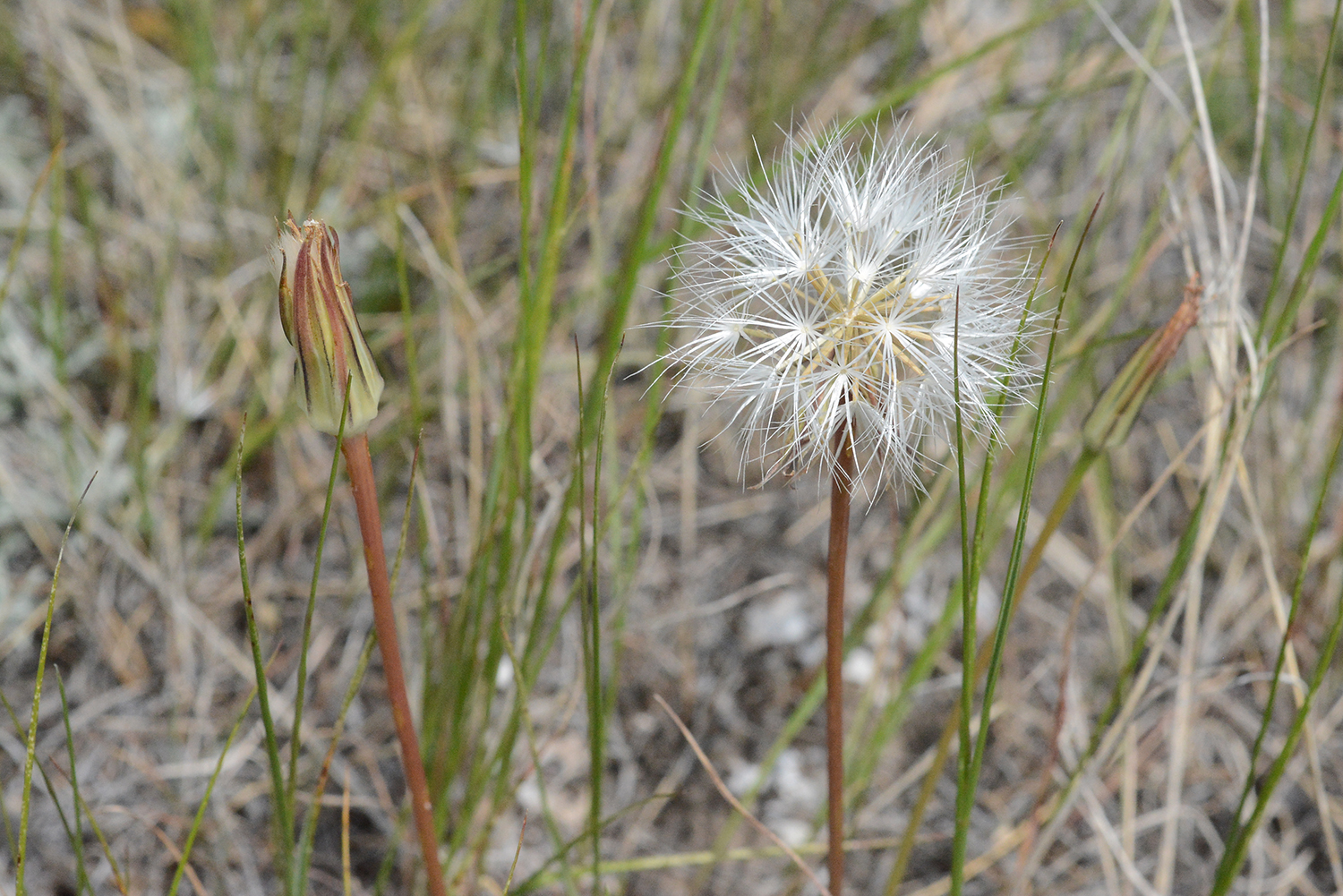
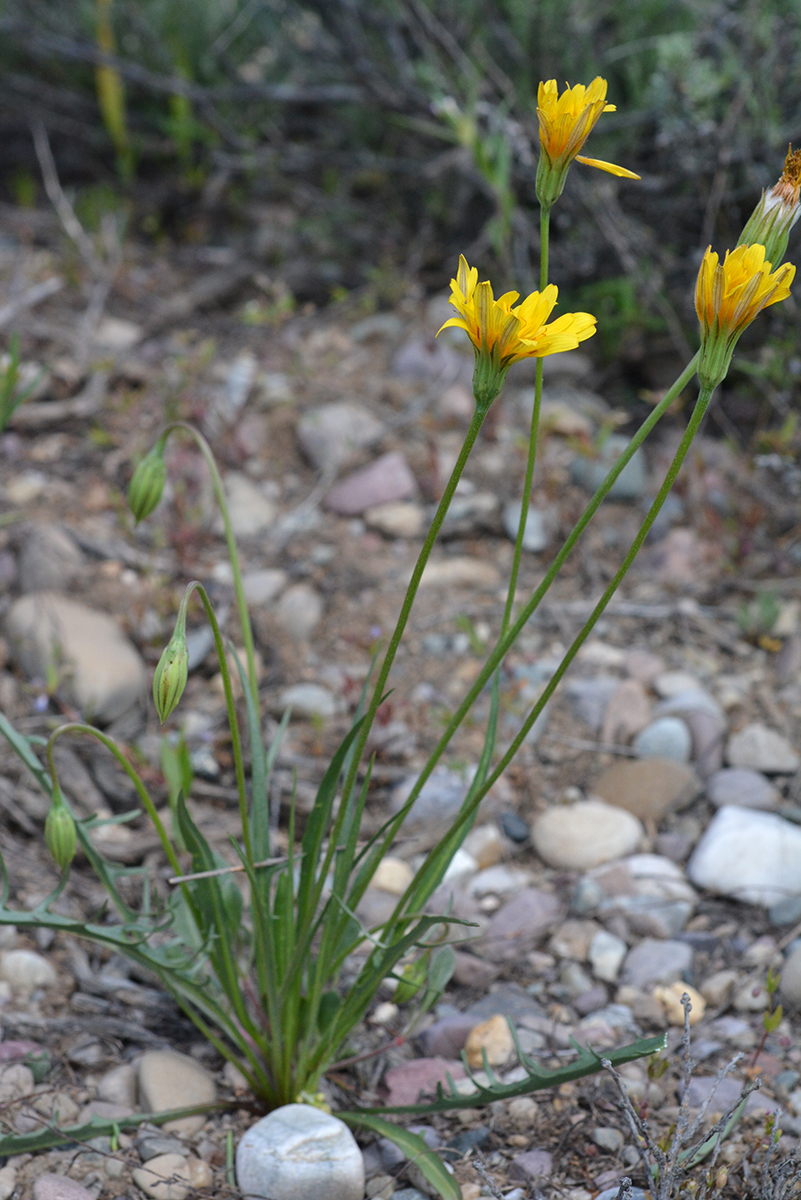
Nodding Microseris – Microseris nutans – is plentiful this year so its worth knowing.

It is very easily confused with Nothocalais (reviewd above): They both have very thin, long leaves mostly at the base, and single heads with all ray flowers. However, Nodding Microseris may have some slender leaves alternating up the stem and may be slightly toothed. Notably, the buds nod, giving it its common name.
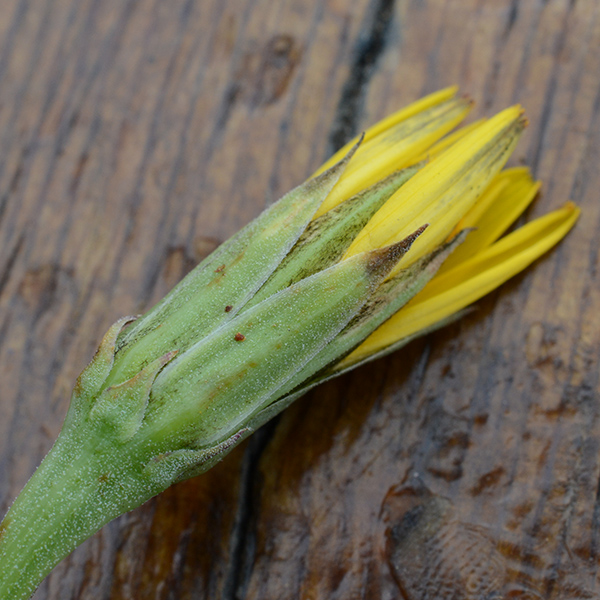
Also, each head has a few short bracts surrounding a row or two of several broad longer bracts.
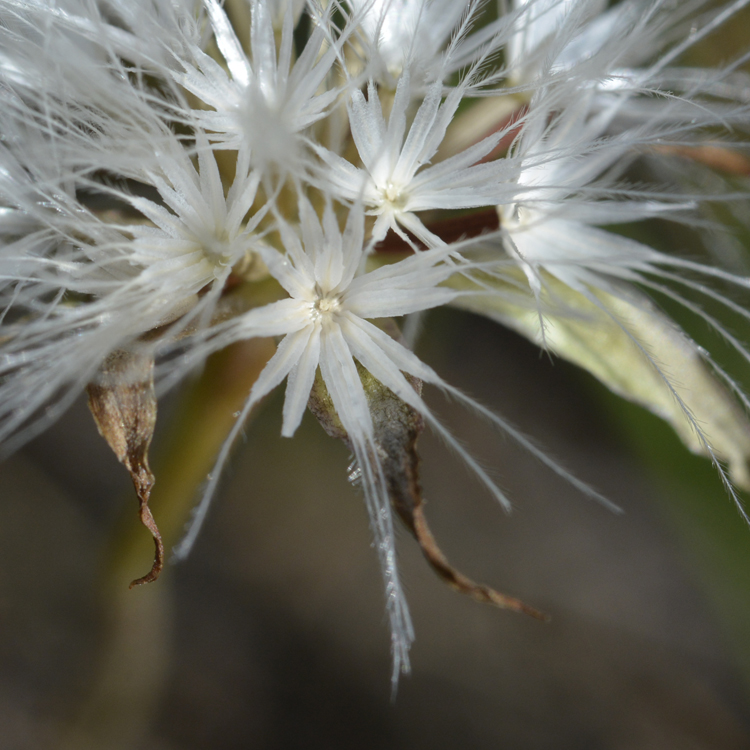
Most exceptional, the pappus of each fruit is broad at the base on Nodding Microseris,
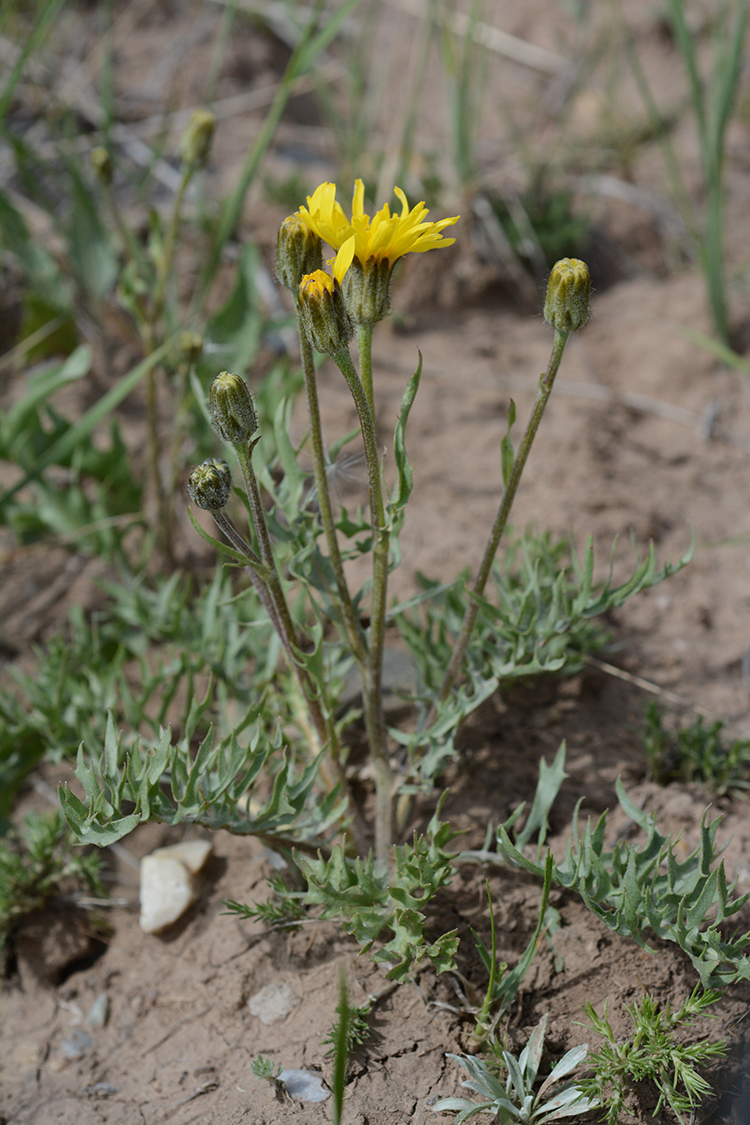
Hawksbeards – Crepis spp. – are just beginning to bloom in most places, therefore, are just mentioned here. Hawksbeards have several to many yellow flower heads, and many toothed-to-lobed leaves not only at the base and but also alternating up the branching stems. Here is an example of just one:
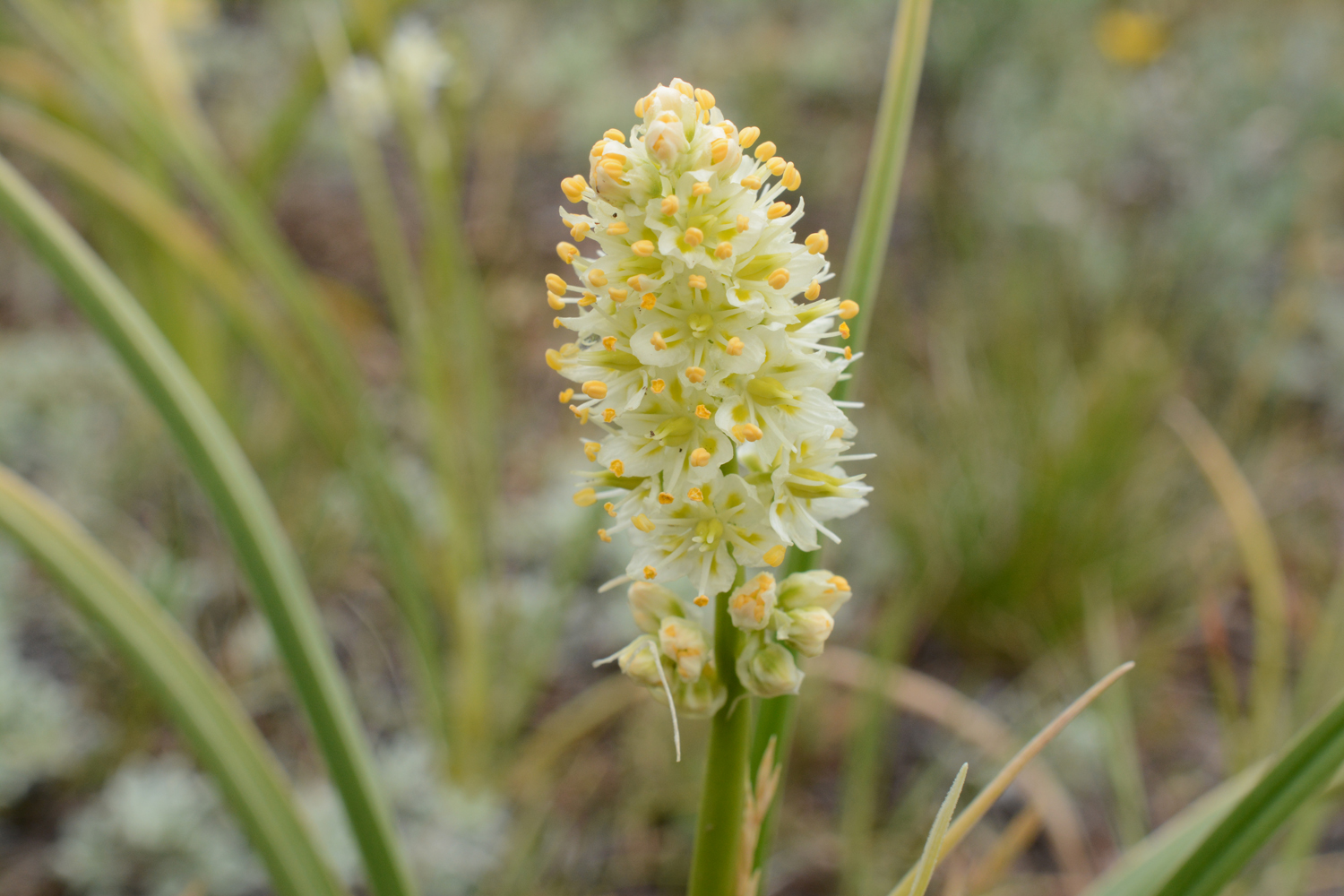
Finally, Death Camas – Toxicoscordian/Zigadenus venosum var. gramineus – is truly poisonous and has been confused with wild onions by foragers. Plants contain zygacine which causes severe gastrointestinal and cardiovascular effects if eaten. If grazed, it can also cause death to sheep and other livestock. So Death Camas truly deserves it name.
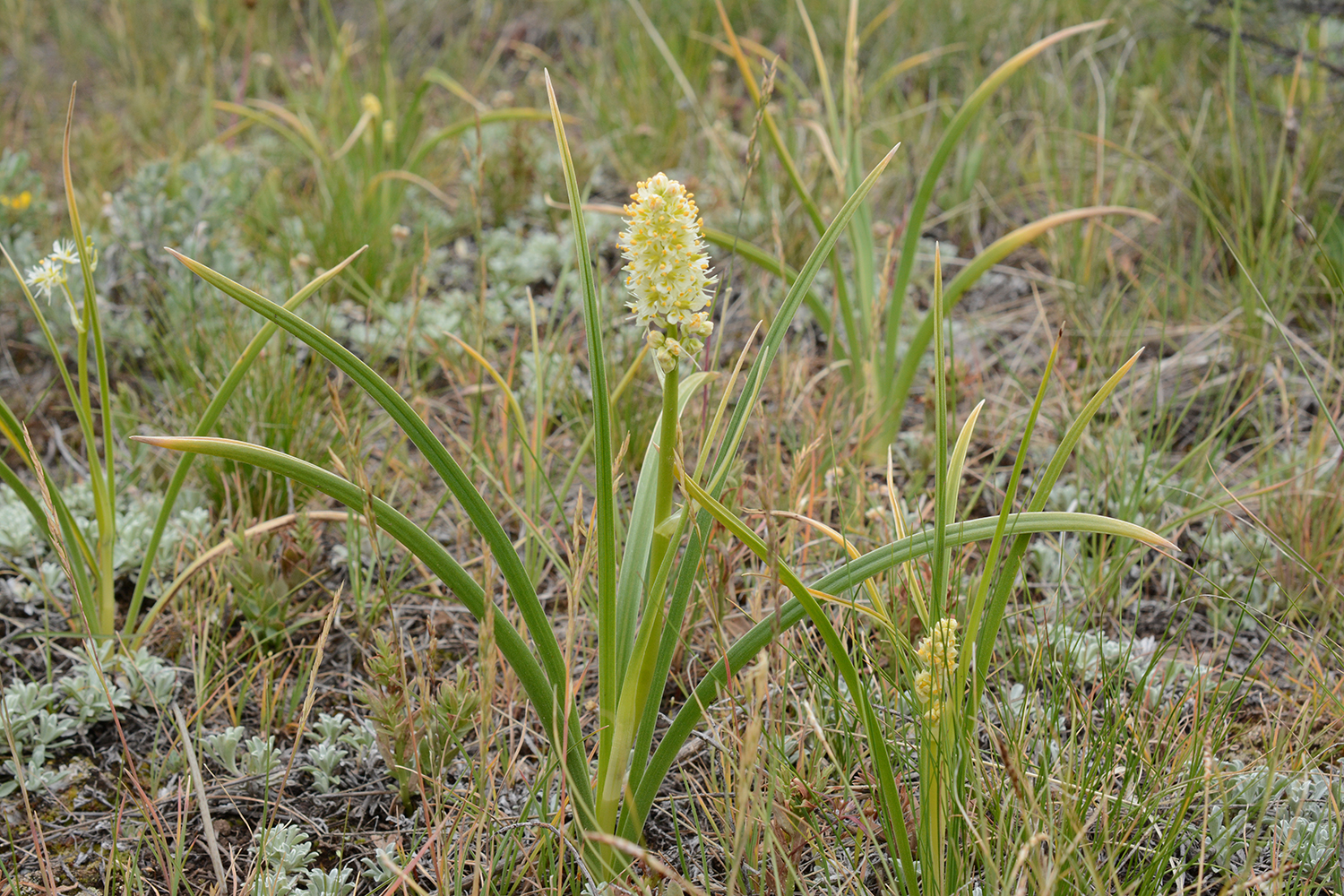
However, it is still lovely to look at!
There are other plants blooming around the valley and many more to come. Serviceberry – Amelanchier alnifolia, Chokecherry – Prunus virginiana – are two notable shrubs in bloom now often seen on the edges of the dry zones. but enough for now! Do check out our past “What’s in Bloom” posts for plants seen around this time in years past.
Thank you for your interest. As always we appreciate your questions and corrections.
Frances Clark
May 31, 2026
 Teton Plants